
Monetary and
Fiscal Policy of
India
Dr.D.Ravinder, Associate Professor, Vaagdevi College of Engineering, WGL.
By
Dr.D.Ravinder
MBA,Mcom,MHRM,Mphil,PhD.
31-10-2019 1
Monetary
Policy
31-10-2019 Dr.D.Ravinder, Associate Professor, Vaagdevi College of Engineering, WGL. 2
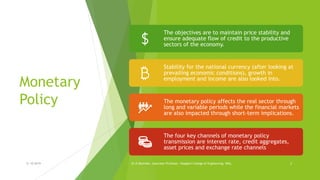
The objectives are to maintain price stability and
ensure adequate flow of credit to the productive
sectors of the economy.
Stability for the national currency (after looking at
prevailing economic conditions), growth in
employment and income are also looked into.
The monetary policy affects the real sector through
long and variable periods while the financial markets
are also impacted through short-term implications.
The four key channels of monetary policy
transmission are interest rate, credit aggregates,
asset prices and exchange rate channels
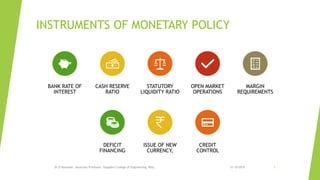
INSTRUMENTS OF MONETARY POLICY
Dr.D.Ravinder, Associate Professor, Vaagdevi College of Engineering, WGL. 31-10-2019 3
BANK RATE OF
INTEREST
CASH RESERVE
RATIO
STATUTORY
LIQUIDITY RATIO
OPEN MARKET
OPERATIONS
MARGIN
REQUIREMENTS
DEFICIT
FINANCING
ISSUE OF NEW
CURRENCY,
CREDIT
CONTROL
Inflation
Dr.D.Ravinder, Associate Professor, Vaagdevi College of Engineering, WGL. 31-10-2019 4
Inflation is a rise in the
general level of prices
of goods and services in
an economy over a
period of time.
When the price level
rises, each unit of
currency buys fewer
goods and services.
A chief measure of price
inflation is the inflation
rate.
When Prices rise the
Value of Money falls.
Fiscal Policy
Dr.D.Ravinder, Associate Professor, Vaagdevi College of Engineering, WGL. 31-10-2019 5
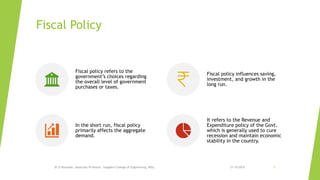
Fiscal policy refers to the
government’s choices regarding
the overall level of government
purchases or taxes.
Fiscal policy influences saving,
investment, and growth in the
long run.
In the short run, fiscal policy
primarily affects the aggregate
demand.
It refers to the Revenue and
Expenditure policy of the Govt.
which is generally used to cure
recession and maintain economic
stability in the country.
Instruments
of Fiscal
Policy
31-10-2019 Dr.D.Ravinder, Associate Professor, Vaagdevi College of Engineering, WGL. 6
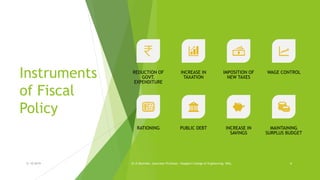
REDUCTION OF
GOVT.
EXPENDITURE
INCREASE IN
TAXATION
IMPOSITION OF
NEW TAXES
WAGE CONTROL
RATIONING PUBLIC DEBT INCREASE IN
SAVINGS
MAINTAINING
SURPLUS BUDGET
Other measures of Fiscal Policy
Dr.D.Ravinder, Associate Professor, Vaagdevi College of Engineering, WGL. 31-10-2019 7
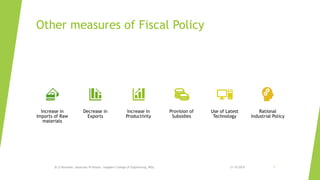
Increase in
Imports of Raw
materials
Decrease in
Exports
Increase in
Productivity
Provision of
Subsidies
Use of Latest
Technology
Rational
Industrial Policy
Thank you
Dr.D.Ravinder, Associate Professor, Vaagdevi College of
Engineering, WGL. 31-10-2019 8

Fiscal and monitory policy

  • 1.
    Monetary and Fiscal Policyof India Dr.D.Ravinder, Associate Professor, Vaagdevi College of Engineering, WGL. By Dr.D.Ravinder MBA,Mcom,MHRM,Mphil,PhD. 31-10-2019 1
  • 2.
    Monetary Policy 31-10-2019 Dr.D.Ravinder, AssociateProfessor, Vaagdevi College of Engineering, WGL. 2 The objectives are to maintain price stability and ensure adequate flow of credit to the productive sectors of the economy. Stability for the national currency (after looking at prevailing economic conditions), growth in employment and income are also looked into. The monetary policy affects the real sector through long and variable periods while the financial markets are also impacted through short-term implications. The four key channels of monetary policy transmission are interest rate, credit aggregates, asset prices and exchange rate channels
  • 3.
    INSTRUMENTS OF MONETARYPOLICY Dr.D.Ravinder, Associate Professor, Vaagdevi College of Engineering, WGL. 31-10-2019 3 BANK RATE OF INTEREST CASH RESERVE RATIO STATUTORY LIQUIDITY RATIO OPEN MARKET OPERATIONS MARGIN REQUIREMENTS DEFICIT FINANCING ISSUE OF NEW CURRENCY, CREDIT CONTROL
  • 4.
    Inflation Dr.D.Ravinder, Associate Professor,Vaagdevi College of Engineering, WGL. 31-10-2019 4 Inflation is a rise in the general level of prices of goods and services in an economy over a period of time. When the price level rises, each unit of currency buys fewer goods and services. A chief measure of price inflation is the inflation rate. When Prices rise the Value of Money falls.
  • 5.
    Fiscal Policy Dr.D.Ravinder, AssociateProfessor, Vaagdevi College of Engineering, WGL. 31-10-2019 5 Fiscal policy refers to the government’s choices regarding the overall level of government purchases or taxes. Fiscal policy influences saving, investment, and growth in the long run. In the short run, fiscal policy primarily affects the aggregate demand. It refers to the Revenue and Expenditure policy of the Govt. which is generally used to cure recession and maintain economic stability in the country.
  • 6.
    Instruments of Fiscal Policy 31-10-2019 Dr.D.Ravinder,Associate Professor, Vaagdevi College of Engineering, WGL. 6 REDUCTION OF GOVT. EXPENDITURE INCREASE IN TAXATION IMPOSITION OF NEW TAXES WAGE CONTROL RATIONING PUBLIC DEBT INCREASE IN SAVINGS MAINTAINING SURPLUS BUDGET
  • 7.
    Other measures ofFiscal Policy Dr.D.Ravinder, Associate Professor, Vaagdevi College of Engineering, WGL. 31-10-2019 7 Increase in Imports of Raw materials Decrease in Exports Increase in Productivity Provision of Subsidies Use of Latest Technology Rational Industrial Policy
  • 8.
    Thank you Dr.D.Ravinder, AssociateProfessor, Vaagdevi College of Engineering, WGL. 31-10-2019 8