First audit for Eco School programme. School in Jaworznia, Poland.
Number os students:253
Number of teachers:30, other staff 8
Location : countryside , surrounded by green areas
Size: 1527 square metres, 13 classrooms
Built in 1963
Weak points Strong points
Classroom
1. Too little numer of rooms in the
building
2. Long period of heating (6 months)
with coal
3. Not possible to stop heating for
short time, eg for opening the
windows
4. Used: - fluorescent lamps, energy-
efficient
-fluorescent lamps in fittings raster
- LED bulbs 40 -60 Wat
Toilet (6 toilet rooms, 10 washbasins)
1. No signs to remind close taps or
switch off light
2. No measure on water waste or
savings
3. Lack of aerators on taps
1. Led lights in classrooms (12 fluorescents in
class, 14 desks, 3 windows to west or
south-west)
2. 140 hours of full sun light per month
3. Many windows, light rooms
4. Recycling bins, collecting waste
5. Printing on 2 sides, making use of recycled
paper
1. No leaking taps
2. Rational use of paper towels, made of
recycled paper
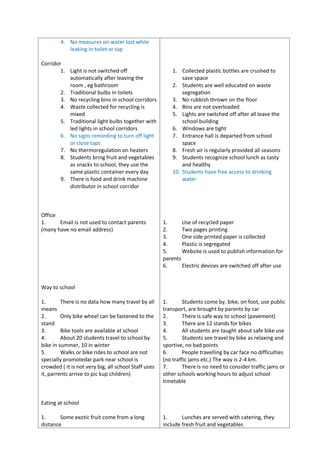
4. No measures on water lost while
leaking in toilet or tap
Corridor
1. Light is not switched off
automatically after leaving the
room , eg bathroom
2. Traditional bulbs in toilets
3. No recycling bins in school corridors
4. Waste collected for recycling is
mixed
5. Traditional light bulbs together with
led lights in school corridors
6. No signs reminding to turn off light
or close taps
7. No thermoregulation on heaters
8. Students bring fruit and vegetables
as snacks to school, they use the
same plastic container every day
9. There is food and drink machine
distributor in school corridor
Office
1. Email is not used to contact parents
(many have no email address)
Way to school
1. There is no data how many travel by all
means
2. Only bike wheel can be fastened to the
stand
3. Bike tools are available at school
4. About 20 students travel to school by
bike in summer, 10 in winter
5. Walks or bike rides to school are not
specially promotedar park near school is
crowded ( it is not very big, all school Staff uses
it, parrents arrive to pic kup children)
Eating at school
1. Some exotic fruit come from a long
distance
1. Collected plastic bottles are crushed to
save space
2. Students are well educated on waste
segregation
3. No rubbish thrown on the floor
4. Bins are not overloaded
5. Lights are switched off after all leave the
school building
6. Windows are tight
7. Entrance hall is departed from school
space
8. Fresh air is regularly provided all seasons
9. Students recognize school lunch as tasty
and healthy
10. Students have free access to drinking
water
1. Use of recycled paper
2. Two pages printing
3. One side printed paper is collected
4. Plastic is segregated
5. Website is used to publish information for
parents
6. Electric devices are switched off after use
1. Students come by, bike, on foot, use public
transport, are brought by parents by car
2. There is safe way to school (pavement)
3. There are 12 stands for bikes
4. All students are taught about safe bike use
5. Students see travel by bike as relaxing and
sportive, no bad points
6. People travelling by car face no difficulties
(no traffic jams etc.) The way is 2-4 km.
7. There is no need to consider traffic jams or
other schools working hours to adjust school
timetable
1. Lunches are served with catering, they
include fresh fruit and vegetables
2. Products served are not certified as Bio
or Fair Trade
3. Special meals are not served
(vegetarian, gluten free , sugar free)
4. There is no choice meal type nor
amount
5. Students preferences do not influence
the menu
6. Food is not labeled with ingredients list
7. Choice on special diet is not possible
8. Dishes are disposable , due to sanitary
requirements
9. There is no school shop
School ground
1. No students garden
2. No students’ plants in classrooms
No special place for lessons e.g. educational
garden, observational, educational path,
"Green class" (gazebo with seats
to perform technical work,
or to sit)
3. No veggies or herbs planted – students
are not willing to work on it
4. No animals live in school ground, except
small birds
5. No composter
6. Rain water is not collected nor used
7. There are not sources of renewable
energy used
2. Waste is collected and given to animals
owners or citizens
3. Plastic is segregated
4. Polish fruit and vegetables are used
5. 6 kg waste is produced a day
6. Parents and students opinions are
considered
7. Electric devices are A class (fridge and
cooker)
8. There is no school shop
1. 1/5 trees,bushes
2. 1/10 garden
3. 1/3 wild plants
4. ¼ playground
5. 1/5 car park
6. PE lessons conducted outside, sometimes
Science
7. Birds Feeders around the school, pheasant
booth
8. Many bushes and trees - for example,
cotoneaster, perukowiec, barberry,
juniper, thujas, cypresses, hawthorn, wild
rose.
9. No rubbish, enough bins
10. No illegal dump around
11. The ligtning is not on photocell, but
switched off

First audit for eco school programme summary

  • 1.
    First audit forEco School programme. School in Jaworznia, Poland. Number os students:253 Number of teachers:30, other staff 8 Location : countryside , surrounded by green areas Size: 1527 square metres, 13 classrooms Built in 1963 Weak points Strong points Classroom 1. Too little numer of rooms in the building 2. Long period of heating (6 months) with coal 3. Not possible to stop heating for short time, eg for opening the windows 4. Used: - fluorescent lamps, energy- efficient -fluorescent lamps in fittings raster - LED bulbs 40 -60 Wat Toilet (6 toilet rooms, 10 washbasins) 1. No signs to remind close taps or switch off light 2. No measure on water waste or savings 3. Lack of aerators on taps 1. Led lights in classrooms (12 fluorescents in class, 14 desks, 3 windows to west or south-west) 2. 140 hours of full sun light per month 3. Many windows, light rooms 4. Recycling bins, collecting waste 5. Printing on 2 sides, making use of recycled paper 1. No leaking taps 2. Rational use of paper towels, made of recycled paper
  • 2.
    4. No measureson water lost while leaking in toilet or tap Corridor 1. Light is not switched off automatically after leaving the room , eg bathroom 2. Traditional bulbs in toilets 3. No recycling bins in school corridors 4. Waste collected for recycling is mixed 5. Traditional light bulbs together with led lights in school corridors 6. No signs reminding to turn off light or close taps 7. No thermoregulation on heaters 8. Students bring fruit and vegetables as snacks to school, they use the same plastic container every day 9. There is food and drink machine distributor in school corridor Office 1. Email is not used to contact parents (many have no email address) Way to school 1. There is no data how many travel by all means 2. Only bike wheel can be fastened to the stand 3. Bike tools are available at school 4. About 20 students travel to school by bike in summer, 10 in winter 5. Walks or bike rides to school are not specially promotedar park near school is crowded ( it is not very big, all school Staff uses it, parrents arrive to pic kup children) Eating at school 1. Some exotic fruit come from a long distance 1. Collected plastic bottles are crushed to save space 2. Students are well educated on waste segregation 3. No rubbish thrown on the floor 4. Bins are not overloaded 5. Lights are switched off after all leave the school building 6. Windows are tight 7. Entrance hall is departed from school space 8. Fresh air is regularly provided all seasons 9. Students recognize school lunch as tasty and healthy 10. Students have free access to drinking water 1. Use of recycled paper 2. Two pages printing 3. One side printed paper is collected 4. Plastic is segregated 5. Website is used to publish information for parents 6. Electric devices are switched off after use 1. Students come by, bike, on foot, use public transport, are brought by parents by car 2. There is safe way to school (pavement) 3. There are 12 stands for bikes 4. All students are taught about safe bike use 5. Students see travel by bike as relaxing and sportive, no bad points 6. People travelling by car face no difficulties (no traffic jams etc.) The way is 2-4 km. 7. There is no need to consider traffic jams or other schools working hours to adjust school timetable 1. Lunches are served with catering, they include fresh fruit and vegetables
  • 3.
    2. Products servedare not certified as Bio or Fair Trade 3. Special meals are not served (vegetarian, gluten free , sugar free) 4. There is no choice meal type nor amount 5. Students preferences do not influence the menu 6. Food is not labeled with ingredients list 7. Choice on special diet is not possible 8. Dishes are disposable , due to sanitary requirements 9. There is no school shop School ground 1. No students garden 2. No students’ plants in classrooms No special place for lessons e.g. educational garden, observational, educational path, "Green class" (gazebo with seats to perform technical work, or to sit) 3. No veggies or herbs planted – students are not willing to work on it 4. No animals live in school ground, except small birds 5. No composter 6. Rain water is not collected nor used 7. There are not sources of renewable energy used 2. Waste is collected and given to animals owners or citizens 3. Plastic is segregated 4. Polish fruit and vegetables are used 5. 6 kg waste is produced a day 6. Parents and students opinions are considered 7. Electric devices are A class (fridge and cooker) 8. There is no school shop 1. 1/5 trees,bushes 2. 1/10 garden 3. 1/3 wild plants 4. ¼ playground 5. 1/5 car park 6. PE lessons conducted outside, sometimes Science 7. Birds Feeders around the school, pheasant booth 8. Many bushes and trees - for example, cotoneaster, perukowiec, barberry, juniper, thujas, cypresses, hawthorn, wild rose. 9. No rubbish, enough bins 10. No illegal dump around 11. The ligtning is not on photocell, but switched off