LITERATURE STUDY
NET CASE STUDY
SUBMITTED TO
AR. KAPIL VALMIKI
SUBMITTED BY
HARSHVARDHAN SING
B.ARCH IV SEM
A PRIMARY SCHOOL IS A SCHOOL IN WHICH
CHILDREN RECEIVEPRIMARY EDUCATION
FROM THE AGE ABOUT FIVE TO TWELVE,
COMING AFTER PRESCHOOL AND BEFORE
SECONDARY SCHOOL. IN MOST PARTS OF
THE WORLD, PRIMARY EDUCATION IS THE
FIRST STAGE OF COMPULSARY
EDUCATION, AND IS NORMALLY AVAILABLE
WITHOUT CHARGE.
 EDUCATION
 ADMINISTRATIONS
 RECREATION
 CLASSROOMS
 LIBRARY
 COMMON ROOM
 COMPUTER LAB
 WASHROOMS
 CHANGING ROOM/ LOCKER ROOM/ CLOAK
ROOM
 PRINCIPAL’S ROOM
 VICE PRINCIPLE’S ROOM
 TEACHER’S ROOM
 CASH RECEPTIONIST
 INFORMATION/IT ROOM
 SERVICE ROOM
 DOCTOR’S CHAMBER
 PARENT’S WAITING ROOM
 PARENT’S MEETING ROOM
 EXAM CONTROL ROOM
 CONFERENCE ROOM
 PANTRY
 CLEANER’S ROOM
 ELECTRIC ROOM
 ASSEMBLY HALL
 CANTEEN
 HALL ROOM
 PRAYER ROOM
 PLAY GROUND
 CAR/ BUS PARKING
 AUDITORIUM
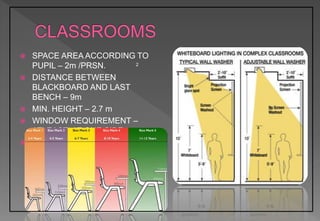
 SPACE AREA ACCORDING TO
PUPIL – 2m /PRSN.
 DISTANCE BETWEEN
BLACKBOARD AND LAST
BENCH – 9m
 MIN. HEIGHT – 2.7 m
 WINDOW REQUIREMENT –
ATLEAST AT ONE SIDE
 COAT HOOKS- 750-900MM
HEIGHT
2
 FLOOR AREA PER
PERSON – 0.40 m MIN.
 MULTIPURPOSE AREA
 OFFICE
 NEWPAPER READING
AREA
 LENDING DESK
 RACKS
 CLOAK ROOM/ LOCKERS
2
40 BOYS 1 W/C 2 URINALS
20 GIRLS 1 W/C -
15 MALE
TEACHERS
1 W/C 1 URINAL
10 FEMALE
TEACHERS
1 W/C -
 CORRIDORS MI. 2M
WIDTH/180 PRSN.
 WIDTH OF STAIRS-
0.80M/PRSN.
 MINIMUM WIDTH-
1.25M
 MAXIMUM WIDTH-
2.50M
 2R + T = 60
280-425
150-170
MAX 12 RISERS IF GOING LESS THA
MAX 18 RISERS IF GOING 350MM OR
 350-450MM DEEP
 CLOAK ROOM/
LOCKERS OUTSIDE
EVERY CLASSROOM
 CLOAK ROOM/
LOCKER IN LIBRARY
 SAFE FOR CHILDREN
OF ALL AGES.
 DIFFERENT PLAYING
EQUIPMENTS TO BE
INSTALLED SUCH AS
SEE-SAW
TYPE RECOMMENDED PARKING STANDARD
CARS 1 space per teaching member of staff plus
2 spaces per 3 non-teaching staff2 .
Disabled parking should be counted as
5% of the above allocation or a minimum
of 1 space.
CYCLES 1 scooter space per 10 pupils plus 1 cycle
space per 20 pupils.
PREFERRED PARKING
BAY SIZE
LENGTH WIDTH
CARS 5M 2.5M
POWERED TWO
WHEELERS
2.5M 1.5M
MINIBUSES 8M 4M
LIGHT GOOD BUSES 7.5M 3.5M
COACHES 14M 4M
WASHROOMS
TEACHER’S TABLE
 NATURAL LIGHTING
 NATURAL VENTILATIONS/ CROSS
VENTILATIONS
 ACOUSTICS
• ARCHITECTS MASS DESIGN GROUP
• LOCATION KIGALI, RWANDA
• ARCHITECT IN CHARGE MASS DESIGN GROUP
• AREA 900.0 SQM
• PROJECT YEAR 2010
 REQUIREMENTS GIVE POOR CHILDREN
BEST EDUCATIONAL ENVIRONMENT &
 FACILITY WITHIN MINIMUM COST.
 NUMBER OF STUDENTS 300
 NUMBER OF CLASS ROOMS 9
 FOR VILLAGERS & STUDENTS OF AGE
RANGE 5-12 YEARS
 LOCATED 1°58’S AND 30°07’E, KIGALI IS ALMOST ON THE
EQUATOR.
 THE ALTITUDE OF THE CITY (1,400 M AVERAGE) DEFINES
A PARTICULAR CLIMATE.
 THE CITY IS GREEN AND RAINFALLS ARE SIGNIFICANT
ALL THROUGH THE YEAR.
 THE TEMPERATURE AVERAGES BETWEEN 18°C AND
20°C, MAXIMUM BEING AROUND 27°C AND MINIMUM
UNDER 10°C.
 TWO RAINY SEASONS EXIST (SHORT AND LONG).
 RAINFALL IS STEADY AND NOT HEAVY DURING THE
 THE SCHOOL CONTAINS SEVEN BUILDING
HOUSES, NINE CLASSES AND A LIBRARY IN
A SLOPING SITE.
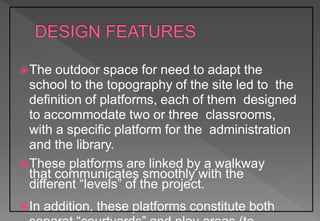
The outdoor space for need to adapt the
school to the topography of the site led to the
definition of platforms, each of them designed
to accommodate two or three classrooms,
with a specific platform for the administration
and the library.
These platforms are linked by a walkway
that communicates smoothly with the
different “levels” of the project.
In addition, these platforms constitute both
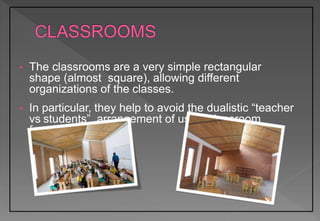
• The classrooms are a very simple rectangular
shape (almost square), allowing different
organizations of the classes.
• In particular, they help to avoid the dualistic “teacher
vs students” arrangement of usual classroom
furniture.
 A specific platform is dedicated to the
administration and the library, which has been
designed to accommodate a computer center.
 Infill materials
 The infill walls also play a
structural role. They are made of
stabilized-earth bricks.
 Doors are made of metal frames with
thatching infills.
 Reed ceilings are installed in every
room.
 Most of the walls are not plastered
and are similar to the majority of
unplastered walls in Rwanda.
 Lights used to penetrate through the brick hollows and also
make interesting effect at afternoon. Also penetrate through
the ceiling and window.
 Though the ventilation was tough due to the hill against
north-east wall of the building and slope of the site. So direct
cross ventilation can not be provided.

Primary school literature study

  • 1.
    LITERATURE STUDY NET CASESTUDY SUBMITTED TO AR. KAPIL VALMIKI SUBMITTED BY HARSHVARDHAN SING B.ARCH IV SEM
  • 2.
    A PRIMARY SCHOOLIS A SCHOOL IN WHICH CHILDREN RECEIVEPRIMARY EDUCATION FROM THE AGE ABOUT FIVE TO TWELVE, COMING AFTER PRESCHOOL AND BEFORE SECONDARY SCHOOL. IN MOST PARTS OF THE WORLD, PRIMARY EDUCATION IS THE FIRST STAGE OF COMPULSARY EDUCATION, AND IS NORMALLY AVAILABLE WITHOUT CHARGE.
  • 3.
  • 4.
     CLASSROOMS  LIBRARY COMMON ROOM  COMPUTER LAB  WASHROOMS  CHANGING ROOM/ LOCKER ROOM/ CLOAK ROOM
  • 5.
     PRINCIPAL’S ROOM VICE PRINCIPLE’S ROOM  TEACHER’S ROOM  CASH RECEPTIONIST  INFORMATION/IT ROOM  SERVICE ROOM  DOCTOR’S CHAMBER  PARENT’S WAITING ROOM  PARENT’S MEETING ROOM  EXAM CONTROL ROOM  CONFERENCE ROOM  PANTRY  CLEANER’S ROOM  ELECTRIC ROOM
  • 6.
     ASSEMBLY HALL CANTEEN  HALL ROOM  PRAYER ROOM  PLAY GROUND  CAR/ BUS PARKING  AUDITORIUM
  • 7.
     SPACE AREAACCORDING TO PUPIL – 2m /PRSN.  DISTANCE BETWEEN BLACKBOARD AND LAST BENCH – 9m  MIN. HEIGHT – 2.7 m  WINDOW REQUIREMENT – ATLEAST AT ONE SIDE  COAT HOOKS- 750-900MM HEIGHT 2
  • 8.
     FLOOR AREAPER PERSON – 0.40 m MIN.  MULTIPURPOSE AREA  OFFICE  NEWPAPER READING AREA  LENDING DESK  RACKS  CLOAK ROOM/ LOCKERS 2
  • 9.
    40 BOYS 1W/C 2 URINALS 20 GIRLS 1 W/C - 15 MALE TEACHERS 1 W/C 1 URINAL 10 FEMALE TEACHERS 1 W/C -
  • 10.
     CORRIDORS MI.2M WIDTH/180 PRSN.  WIDTH OF STAIRS- 0.80M/PRSN.  MINIMUM WIDTH- 1.25M  MAXIMUM WIDTH- 2.50M  2R + T = 60 280-425 150-170 MAX 12 RISERS IF GOING LESS THA MAX 18 RISERS IF GOING 350MM OR
  • 11.
     350-450MM DEEP CLOAK ROOM/ LOCKERS OUTSIDE EVERY CLASSROOM  CLOAK ROOM/ LOCKER IN LIBRARY
  • 12.
     SAFE FORCHILDREN OF ALL AGES.  DIFFERENT PLAYING EQUIPMENTS TO BE INSTALLED SUCH AS SEE-SAW
  • 13.
    TYPE RECOMMENDED PARKINGSTANDARD CARS 1 space per teaching member of staff plus 2 spaces per 3 non-teaching staff2 . Disabled parking should be counted as 5% of the above allocation or a minimum of 1 space. CYCLES 1 scooter space per 10 pupils plus 1 cycle space per 20 pupils. PREFERRED PARKING BAY SIZE LENGTH WIDTH CARS 5M 2.5M POWERED TWO WHEELERS 2.5M 1.5M MINIBUSES 8M 4M LIGHT GOOD BUSES 7.5M 3.5M COACHES 14M 4M
  • 14.
  • 16.
     NATURAL LIGHTING NATURAL VENTILATIONS/ CROSS VENTILATIONS  ACOUSTICS
  • 17.
    • ARCHITECTS MASSDESIGN GROUP • LOCATION KIGALI, RWANDA • ARCHITECT IN CHARGE MASS DESIGN GROUP • AREA 900.0 SQM • PROJECT YEAR 2010
  • 18.
     REQUIREMENTS GIVEPOOR CHILDREN BEST EDUCATIONAL ENVIRONMENT &  FACILITY WITHIN MINIMUM COST.  NUMBER OF STUDENTS 300  NUMBER OF CLASS ROOMS 9  FOR VILLAGERS & STUDENTS OF AGE RANGE 5-12 YEARS
  • 19.
     LOCATED 1°58’SAND 30°07’E, KIGALI IS ALMOST ON THE EQUATOR.  THE ALTITUDE OF THE CITY (1,400 M AVERAGE) DEFINES A PARTICULAR CLIMATE.  THE CITY IS GREEN AND RAINFALLS ARE SIGNIFICANT ALL THROUGH THE YEAR.  THE TEMPERATURE AVERAGES BETWEEN 18°C AND 20°C, MAXIMUM BEING AROUND 27°C AND MINIMUM UNDER 10°C.  TWO RAINY SEASONS EXIST (SHORT AND LONG).  RAINFALL IS STEADY AND NOT HEAVY DURING THE
  • 20.
     THE SCHOOLCONTAINS SEVEN BUILDING HOUSES, NINE CLASSES AND A LIBRARY IN A SLOPING SITE.
  • 23.
    The outdoor spacefor need to adapt the school to the topography of the site led to the definition of platforms, each of them designed to accommodate two or three classrooms, with a specific platform for the administration and the library. These platforms are linked by a walkway that communicates smoothly with the different “levels” of the project. In addition, these platforms constitute both
  • 25.
    • The classroomsare a very simple rectangular shape (almost square), allowing different organizations of the classes. • In particular, they help to avoid the dualistic “teacher vs students” arrangement of usual classroom furniture.
  • 26.
     A specificplatform is dedicated to the administration and the library, which has been designed to accommodate a computer center.
  • 27.
     Infill materials The infill walls also play a structural role. They are made of stabilized-earth bricks.  Doors are made of metal frames with thatching infills.  Reed ceilings are installed in every room.  Most of the walls are not plastered and are similar to the majority of unplastered walls in Rwanda.
  • 28.
     Lights usedto penetrate through the brick hollows and also make interesting effect at afternoon. Also penetrate through the ceiling and window.  Though the ventilation was tough due to the hill against north-east wall of the building and slope of the site. So direct cross ventilation can not be provided.