We are one of the leading First Aid Refresher Course Broome, WA. Contact us to book your course and certification to become a lifeguard trainer in Western Australia! https://westcoastfirstaid.au/first-aid-courses-in-broome-wa/
• CPR, orcardiopulmonary resuscitation, involves chest
compressions and rescue breaths to revive someone
who has stopped breathing. Compressions should be
hard and fast, at a rate of 100-120 per minute. Proper
technique and timing are crucial for effectiveness.
CPR techniques
5.
• To assista person choking, use the Heimlich maneuver.
Stand behind them, wrap your arms around their waist,
and make thrusting motions inward and upward until the
object is dislodged. Knowing this life-saving technique is
vital in emergency situations.
Choking relief methods
6.
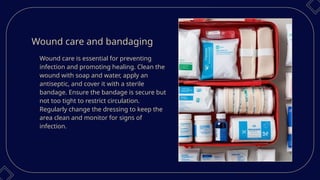
Wound care andbandaging
Wound care is essential for preventing
infection and promoting healing. Clean the
wound with soap and water, apply an
antiseptic, and cover it with a sterile
bandage. Ensure the bandage is secure but
not too tight to restrict circulation.
Regularly change the dressing to keep the
area clean and monitor for signs of
infection.
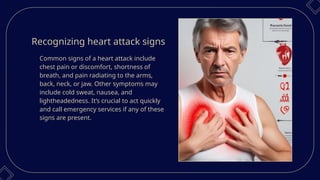
Recognizing heart attacksigns
Common signs of a heart attack include
chest pain or discomfort, shortness of
breath, and pain radiating to the arms,
back, neck, or jaw. Other symptoms may
include cold sweat, nausea, and
lightheadedness. It’s crucial to act quickly
and call emergency services if any of these
signs are present.
9.
• Recognizing strokesymptoms is vital for timely intervention.
Use the acronym FAST: Face drooping, Arm weakness,
Speech difficulties, and Time to call emergency services.
Stroke treatment is most effective when administered within
the first few hours of symptoms appearing.
Responding to strokes
10.
• For fractures,immobilize the injured area to prevent
movement and seek medical assistance. If a sprain occurs,
follow the RICE method: Rest, Ice, Compression, and
Elevation. This aids in reducing swelling and promoting
recovery while waiting for professional evaluation.
Managing fractures and sprains
11.
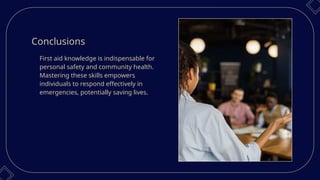
Conclusions
First aid knowledgeis indispensable for
personal safety and community health.
Mastering these skills empowers
individuals to respond effectively in
emergencies, potentially saving lives.