Firewall Auditing
2
What is a firewall?
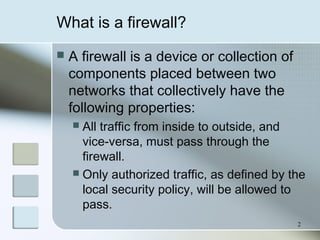
 A firewall is a device or collection of
components placed between two
networks that collectively have the
following properties:
 All traffic from inside to outside, and
vice-versa, must pass through the
firewall.
 Only authorized traffic, as defined by the
local security policy, will be allowed to
pass.
3
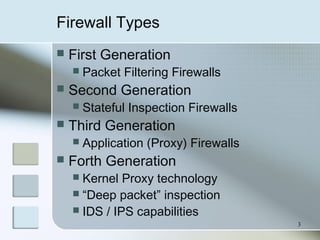
Firewall Types
 First Generation
 Packet Filtering Firewalls
 Second Generation
 Stateful Inspection Firewalls
 Third Generation
 Application (Proxy) Firewalls
 Forth Generation
 Kernel Proxy technology
 “Deep packet” inspection
 IDS / IPS capabilities
4
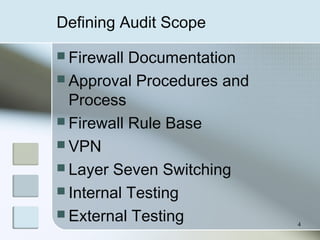
Defining Audit Scope
 Firewall Documentation
 Approval Procedures and
Process
 Firewall Rule Base
 VPN
 Layer Seven Switching
 Internal Testing
 External Testing
5
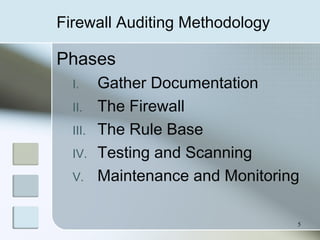
Firewall Auditing Methodology
Phases
I. Gather Documentation
II. The Firewall
III. The Rule Base
IV. Testing and Scanning
V. Maintenance and Monitoring
6
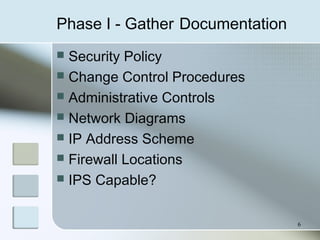
Phase I - Gather Documentation
 Security Policy
 Change Control Procedures
 Administrative Controls
 Network Diagrams
 IP Address Scheme
 Firewall Locations
 IPS Capable?
7
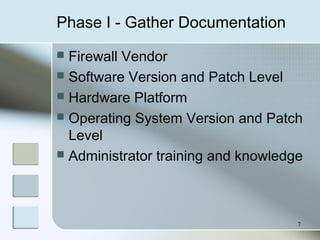
Phase I - Gather Documentation
 Firewall Vendor
 Software Version and Patch Level
 Hardware Platform
 Operating System Version and Patch
Level
 Administrator training and knowledge
8
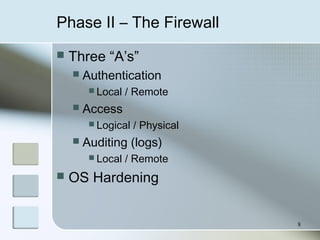
Phase II – The Firewall
 Three “A’s”
 Authentication
 Local / Remote
 Access
 Logical / Physical
 Auditing (logs)
 Local / Remote
 OS Hardening
9
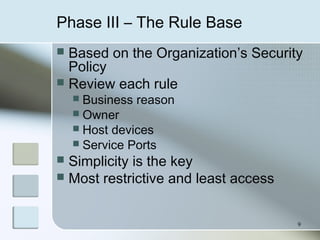
Phase III – The Rule Base
 Based on the Organization’s Security
Policy
 Review each rule
 Business reason
 Owner
 Host devices
 Service Ports
 Simplicity is the key
 Most restrictive and least access
10
Phase III – The Rule Base
 Rule order (first out)
 Administration Rule
 ICMP Rule
 Stealth Rule
 Cleanup Rule
 Egress Rules
 Logging
11
Phase IV – Testing & Scanning
 Determine & Set Expectations
 Scan the firewall
 Nmap
 Firewalk
 Scan host behind the firewall
 Nessus
 ISS
 Ensure results match expectations
12
Phase V – Maintenance &
Monitoring
 Change Management and Approval
 Is the process documented?
 Is the process being followed?
 Is there evidence of process?
 Disaster Recovery Plan
 Formal?
 Backup and Recovery Procedures
 Firewall Logs
 Reviews
 Storage and archival
13
Demo
14
Questions???
15
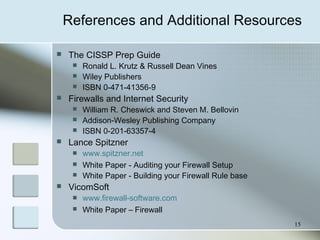
References and Additional Resources
 The CISSP Prep Guide
 Ronald L. Krutz & Russell Dean Vines
 Wiley Publishers
 ISBN 0-471-41356-9
 Firewalls and Internet Security
 William R. Cheswick and Steven M. Bellovin
 Addison-Wesley Publishing Company
 ISBN 0-201-63357-4
 Lance Spitzner
 www.spitzner.net
 White Paper - Auditing your Firewall Setup
 White Paper - Building your Firewall Rule base
 VicomSoft
 www.firewall-software.com
 White Paper – Firewall

Firewall audit

  • 1.
  • 2.
    2 What is afirewall?  A firewall is a device or collection of components placed between two networks that collectively have the following properties:  All traffic from inside to outside, and vice-versa, must pass through the firewall.  Only authorized traffic, as defined by the local security policy, will be allowed to pass.
  • 3.
    3 Firewall Types  FirstGeneration  Packet Filtering Firewalls  Second Generation  Stateful Inspection Firewalls  Third Generation  Application (Proxy) Firewalls  Forth Generation  Kernel Proxy technology  “Deep packet” inspection  IDS / IPS capabilities
  • 4.
    4 Defining Audit Scope Firewall Documentation  Approval Procedures and Process  Firewall Rule Base  VPN  Layer Seven Switching  Internal Testing  External Testing
  • 5.
    5 Firewall Auditing Methodology Phases I.Gather Documentation II. The Firewall III. The Rule Base IV. Testing and Scanning V. Maintenance and Monitoring
  • 6.
    6 Phase I -Gather Documentation  Security Policy  Change Control Procedures  Administrative Controls  Network Diagrams  IP Address Scheme  Firewall Locations  IPS Capable?
  • 7.
    7 Phase I -Gather Documentation  Firewall Vendor  Software Version and Patch Level  Hardware Platform  Operating System Version and Patch Level  Administrator training and knowledge
  • 8.
    8 Phase II –The Firewall  Three “A’s”  Authentication  Local / Remote  Access  Logical / Physical  Auditing (logs)  Local / Remote  OS Hardening
  • 9.
    9 Phase III –The Rule Base  Based on the Organization’s Security Policy  Review each rule  Business reason  Owner  Host devices  Service Ports  Simplicity is the key  Most restrictive and least access
  • 10.
    10 Phase III –The Rule Base  Rule order (first out)  Administration Rule  ICMP Rule  Stealth Rule  Cleanup Rule  Egress Rules  Logging
  • 11.
    11 Phase IV –Testing & Scanning  Determine & Set Expectations  Scan the firewall  Nmap  Firewalk  Scan host behind the firewall  Nessus  ISS  Ensure results match expectations
  • 12.
    12 Phase V –Maintenance & Monitoring  Change Management and Approval  Is the process documented?  Is the process being followed?  Is there evidence of process?  Disaster Recovery Plan  Formal?  Backup and Recovery Procedures  Firewall Logs  Reviews  Storage and archival
  • 13.
  • 14.
  • 15.
    15 References and AdditionalResources  The CISSP Prep Guide  Ronald L. Krutz & Russell Dean Vines  Wiley Publishers  ISBN 0-471-41356-9  Firewalls and Internet Security  William R. Cheswick and Steven M. Bellovin  Addison-Wesley Publishing Company  ISBN 0-201-63357-4  Lance Spitzner  www.spitzner.net  White Paper - Auditing your Firewall Setup  White Paper - Building your Firewall Rule base  VicomSoft  www.firewall-software.com  White Paper – Firewall