Historical Economic Data Sources
& Economic Time Travel
August 21, 2013
Pamela Campbell
pamela.d.campbell@stls.frb.org
Federal Reserve Bank of St. Louis
The views expressed in the presentation are my own and not the views of the Federal
Reserve Bank of St. Louis or the Federal Reserve System.
Brought to you by the North Carolina Library
Association’s Government Resources Section.
Join us! http://www.nclaonline.org/government-
resources
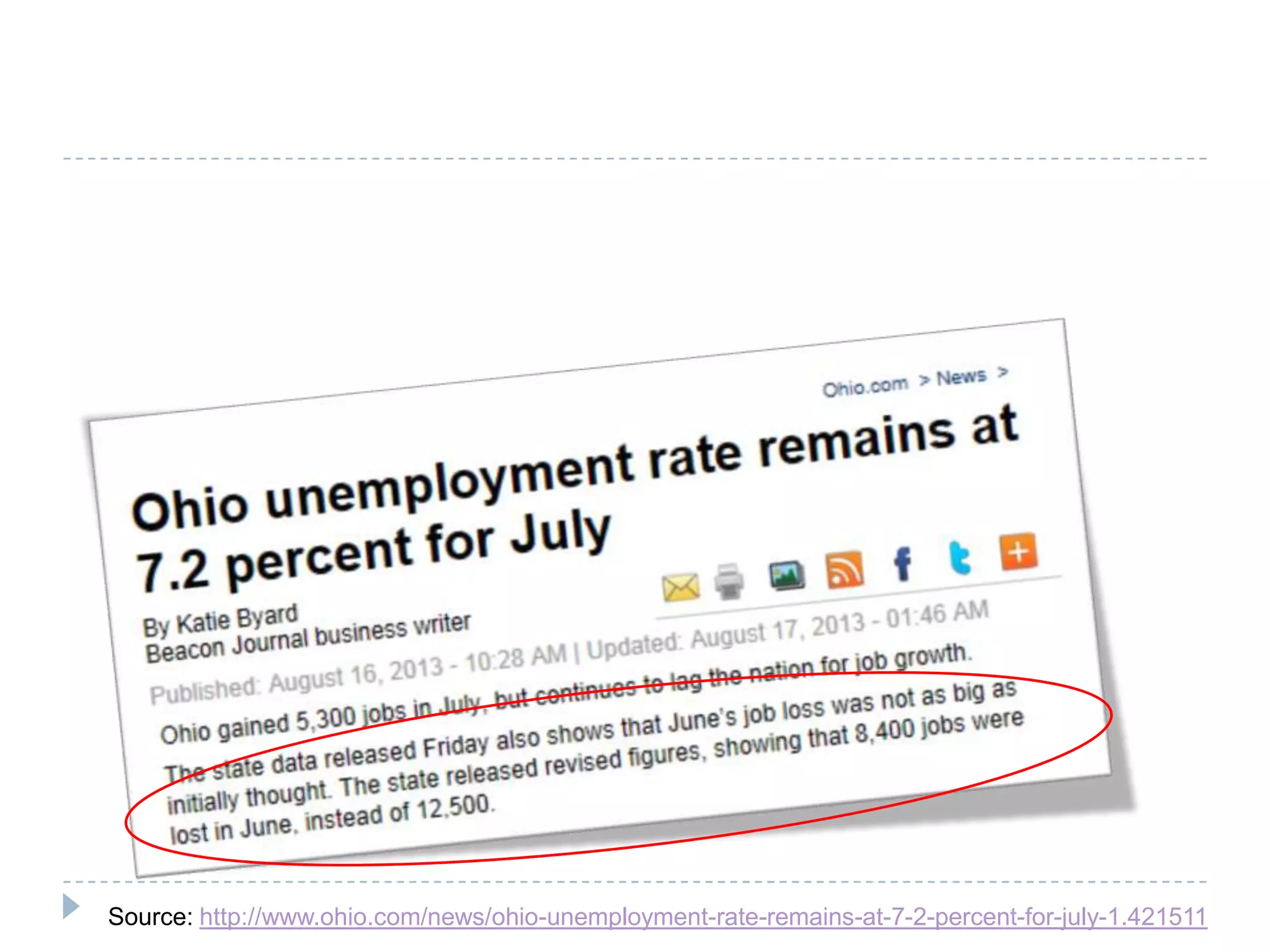
Source: http://www.ohio.com/news/ohio-unemployment-rate-remains-at-7-2-percent-for-july-1.421511
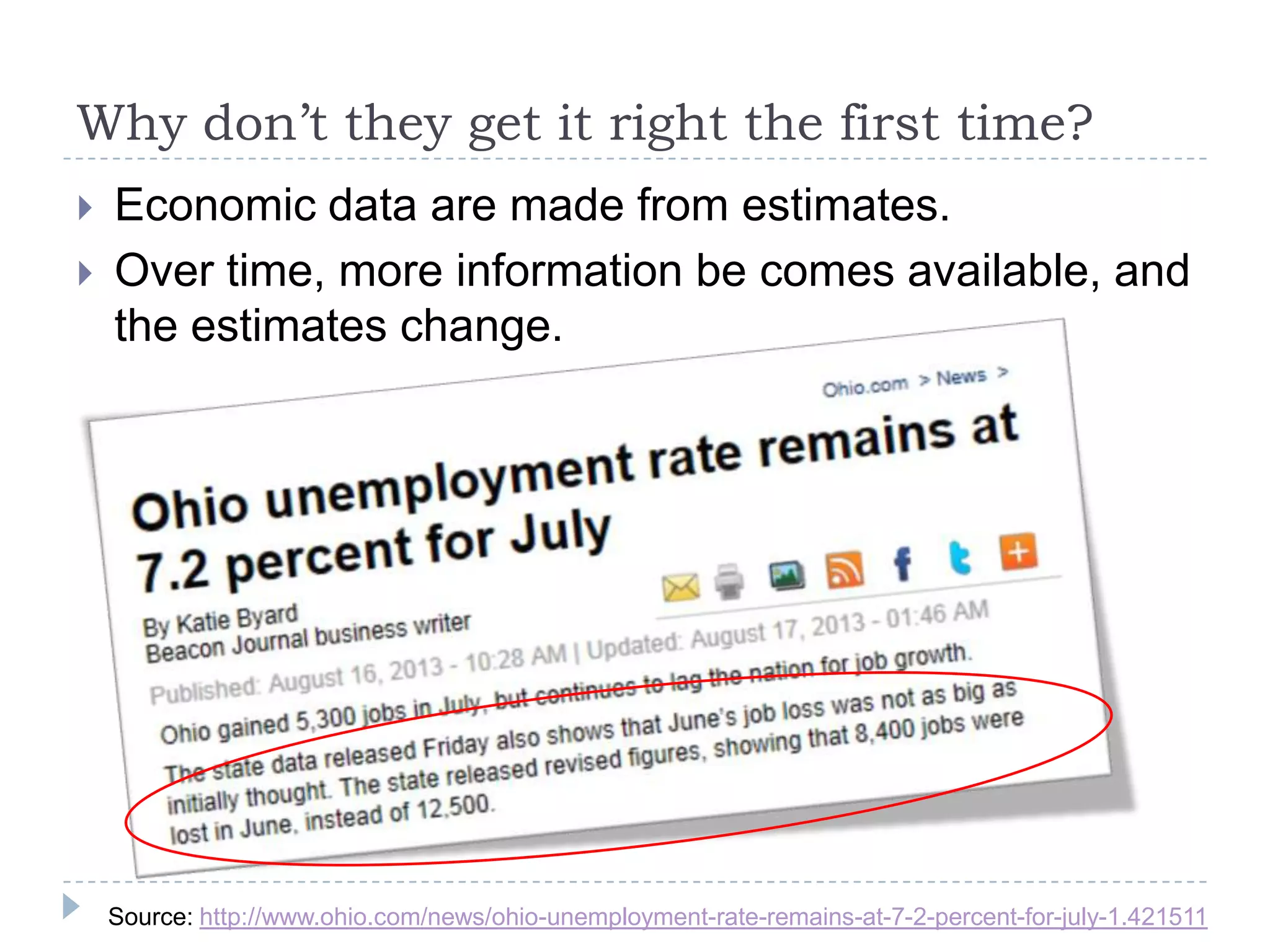
Why don’t they get it right the first time?
 Economic data are made from estimates.
 Over time, more information be comes available, and
the estimates change.
Source: http://www.ohio.com/news/ohio-unemployment-rate-remains-at-7-2-percent-for-july-1.421511
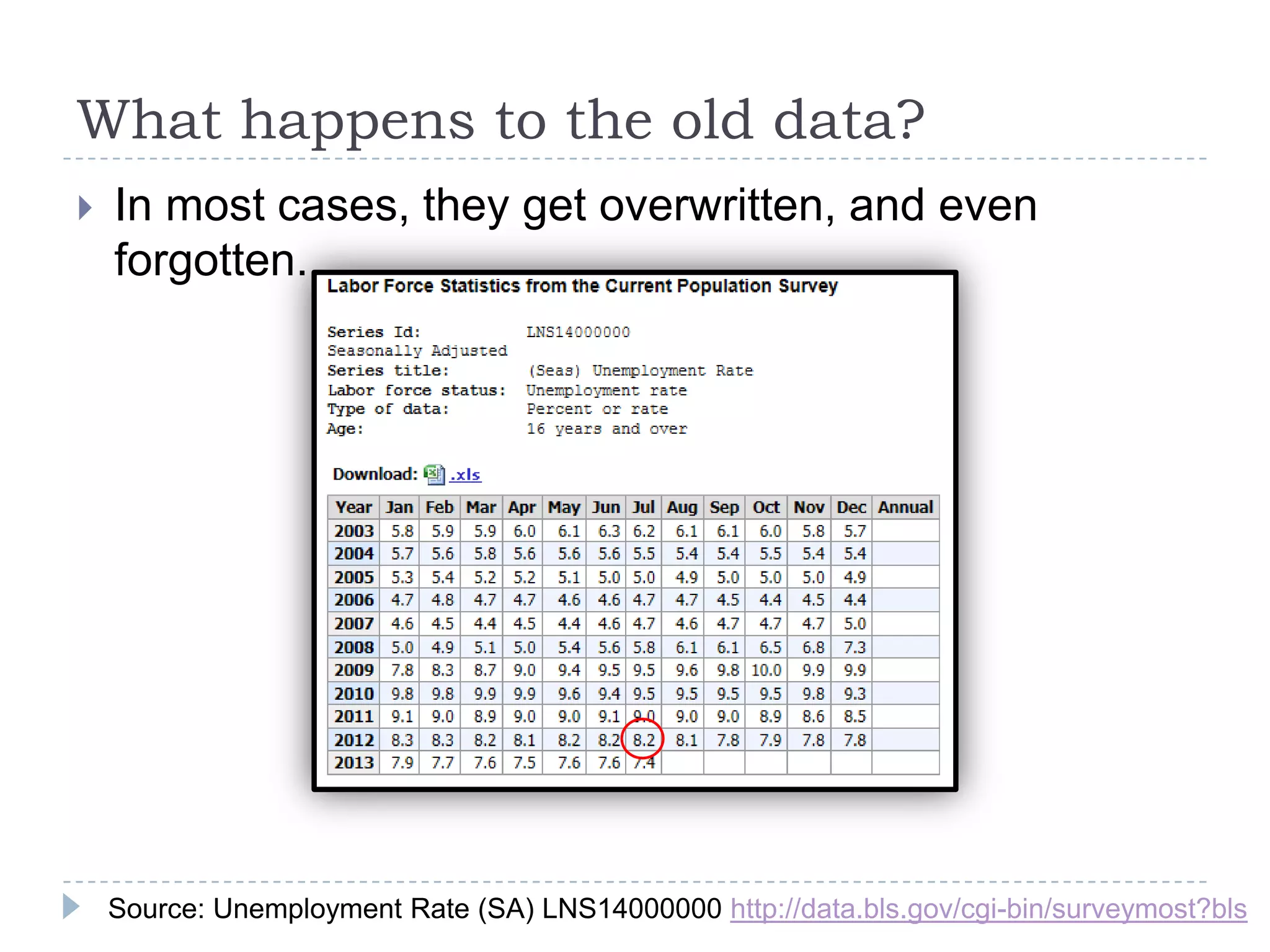
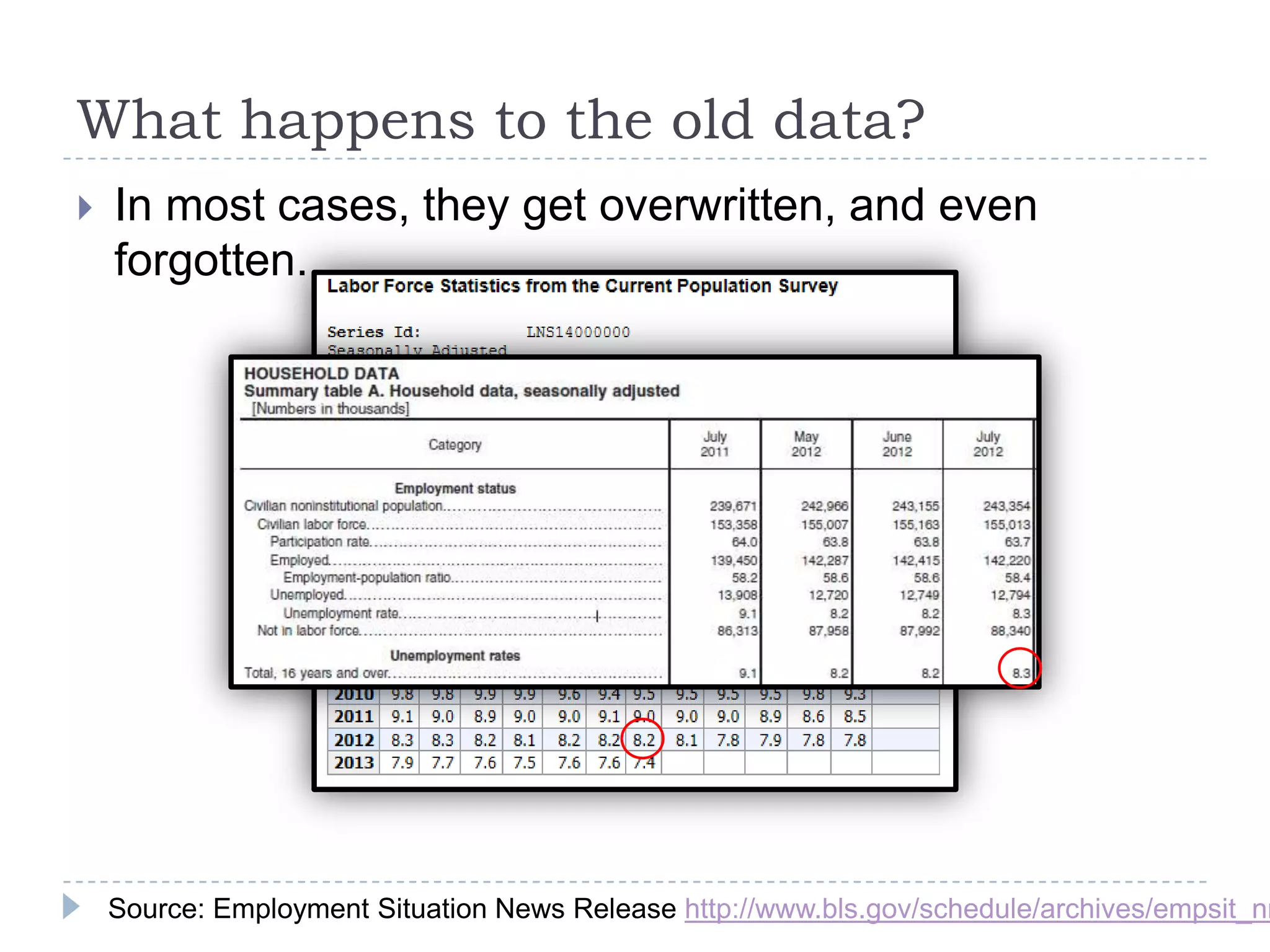
What happens to the old data?
 In most cases, they get overwritten, and even
forgotten.
Source: Unemployment Rate (SA) LNS14000000 http://data.bls.gov/cgi-bin/surveymost?bls
What happens to the old data?
 In most cases, they get overwritten, and even
forgotten.
Source: Employment Situation News Release http://www.bls.gov/schedule/archives/empsit_nr
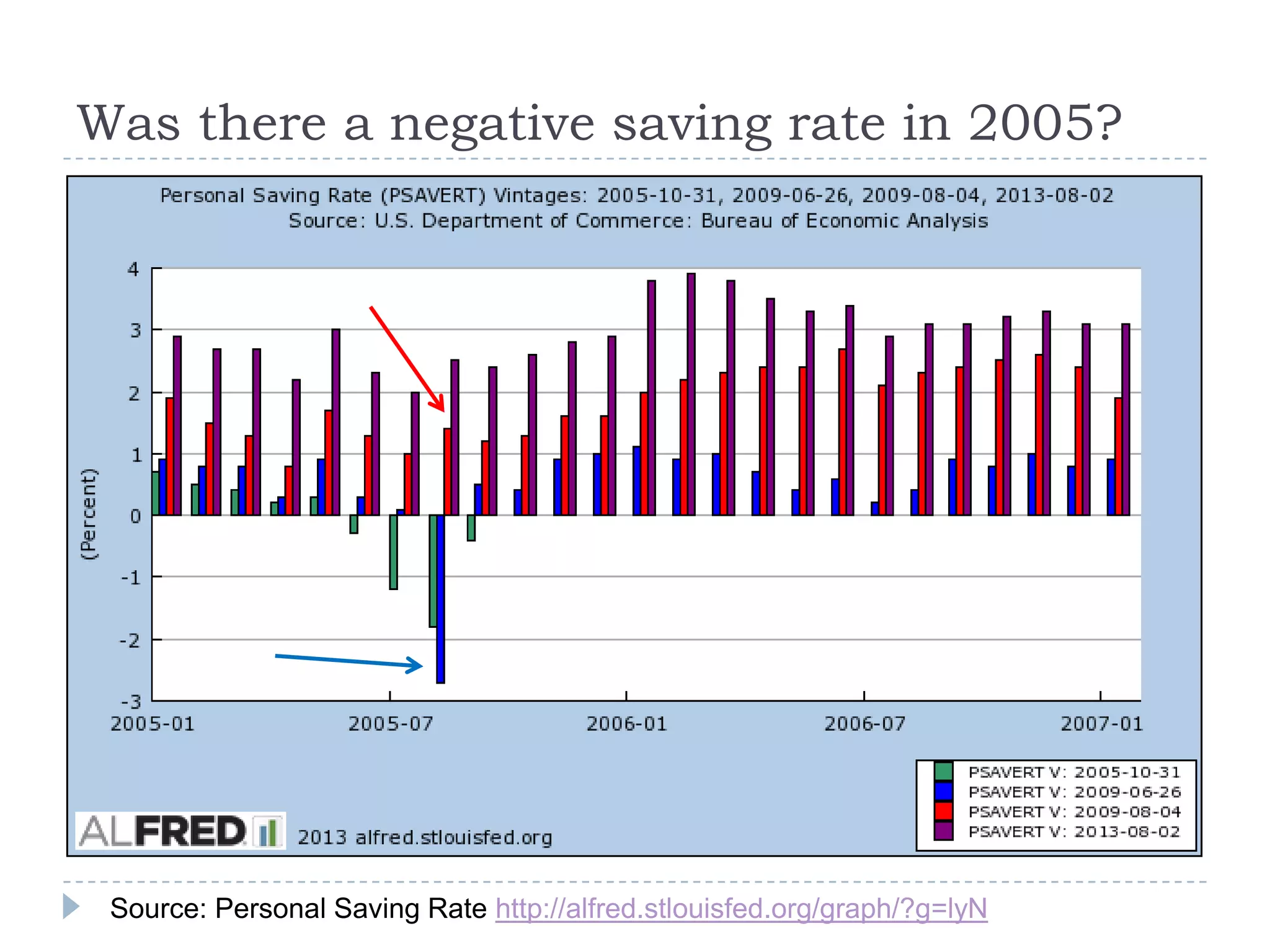
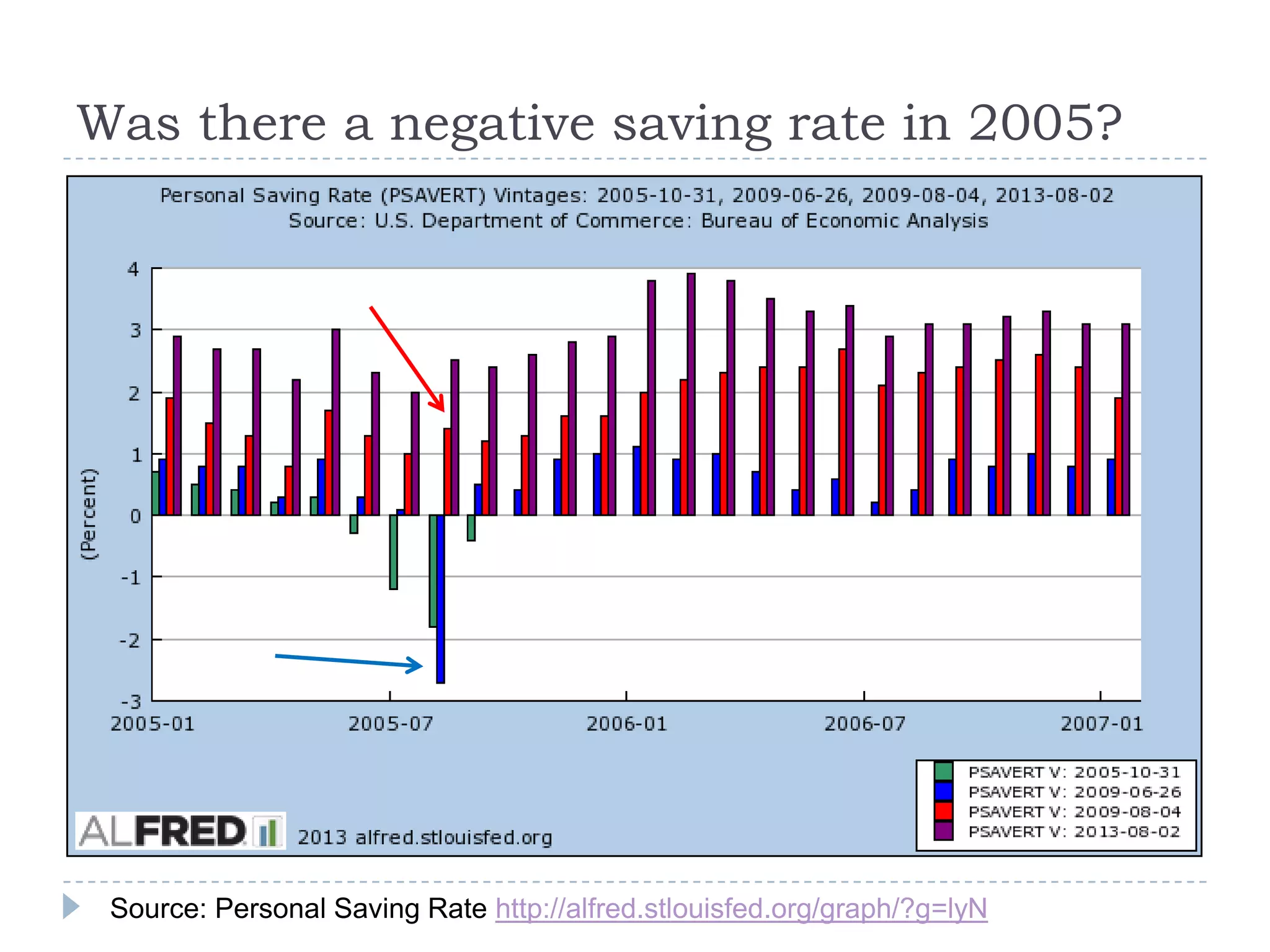
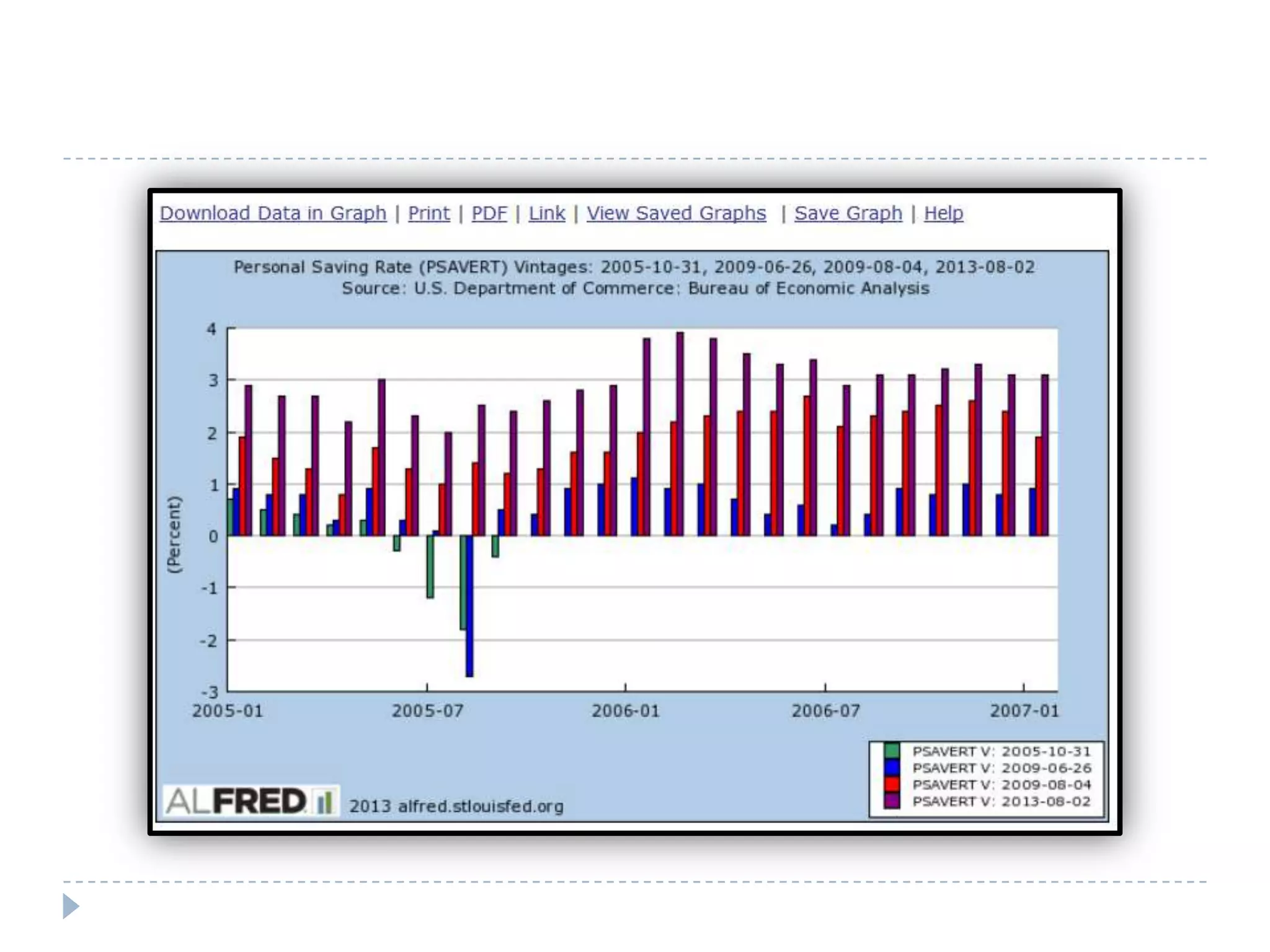
Was there a negative saving rate in 2005?
Source: Personal Saving Rate http://alfred.stlouisfed.org/graph/?g=lyN
Changes to the NIPAs
 A comprehensive revision of the National Income and
Product Accounts (NIPAs), was released on July 31,
2009.
 “Upward revisions to disposable personal income (DPI)
beginning with 1994 are larger than upward revisions to
personal outlays, resulting in upward revisions to
personal saving and to the personal saving rate (personal
saving as a percentage of DPI) (table 2).”
 Eugene P. Seskin and Shelly Smith, “Improved Estimates of the
National Income and Product Accounts: Results of the 2009
Comprehensive Revision,” Survey of Current Business
(September 2009): 15
(http://www.bea.gov/scb/pdf/2009/09%20September/0909_nipa
_text.pdf)
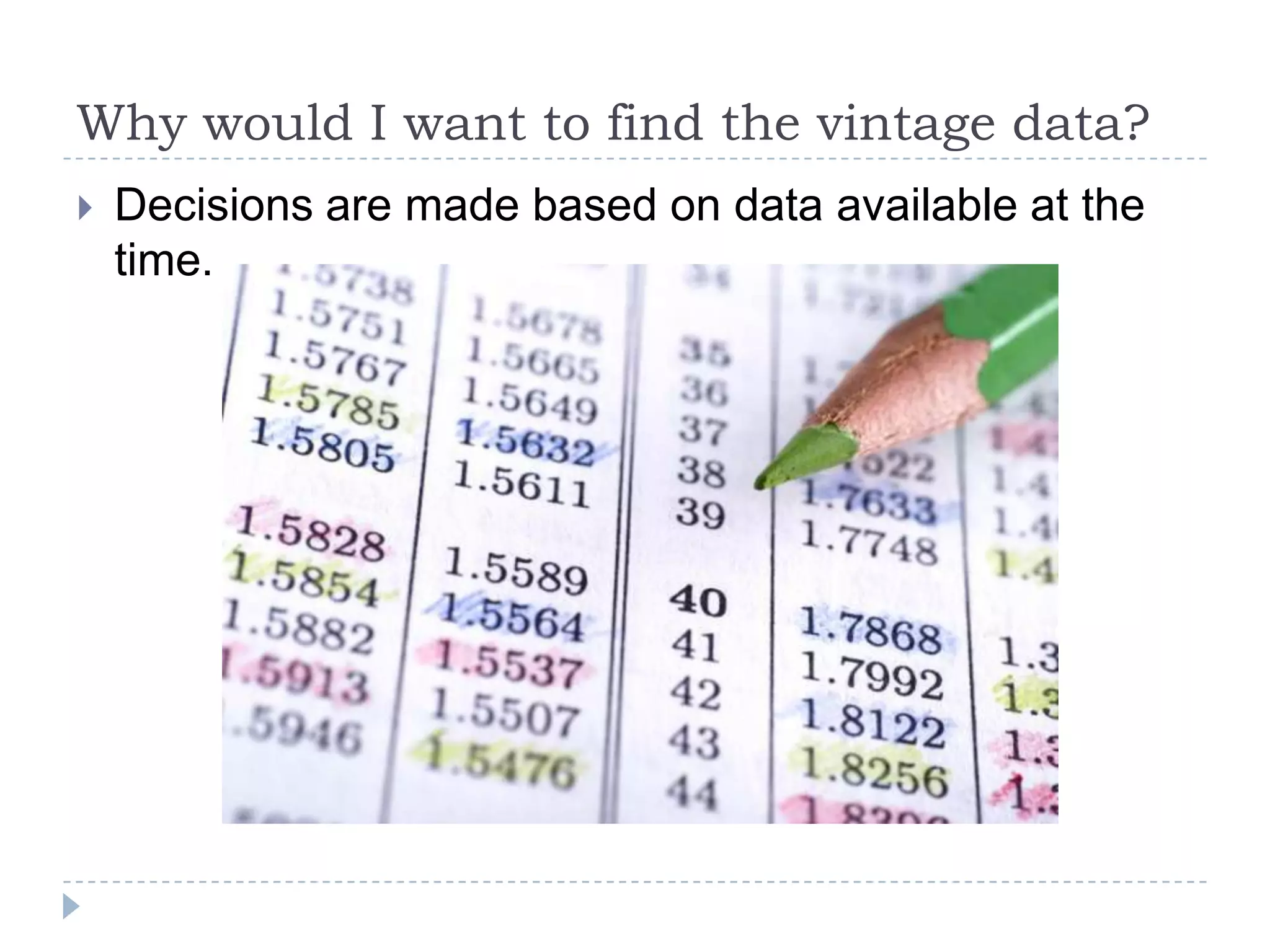
Why would I want to find the vintage data?
 Decisions are made based on data available at the
time.
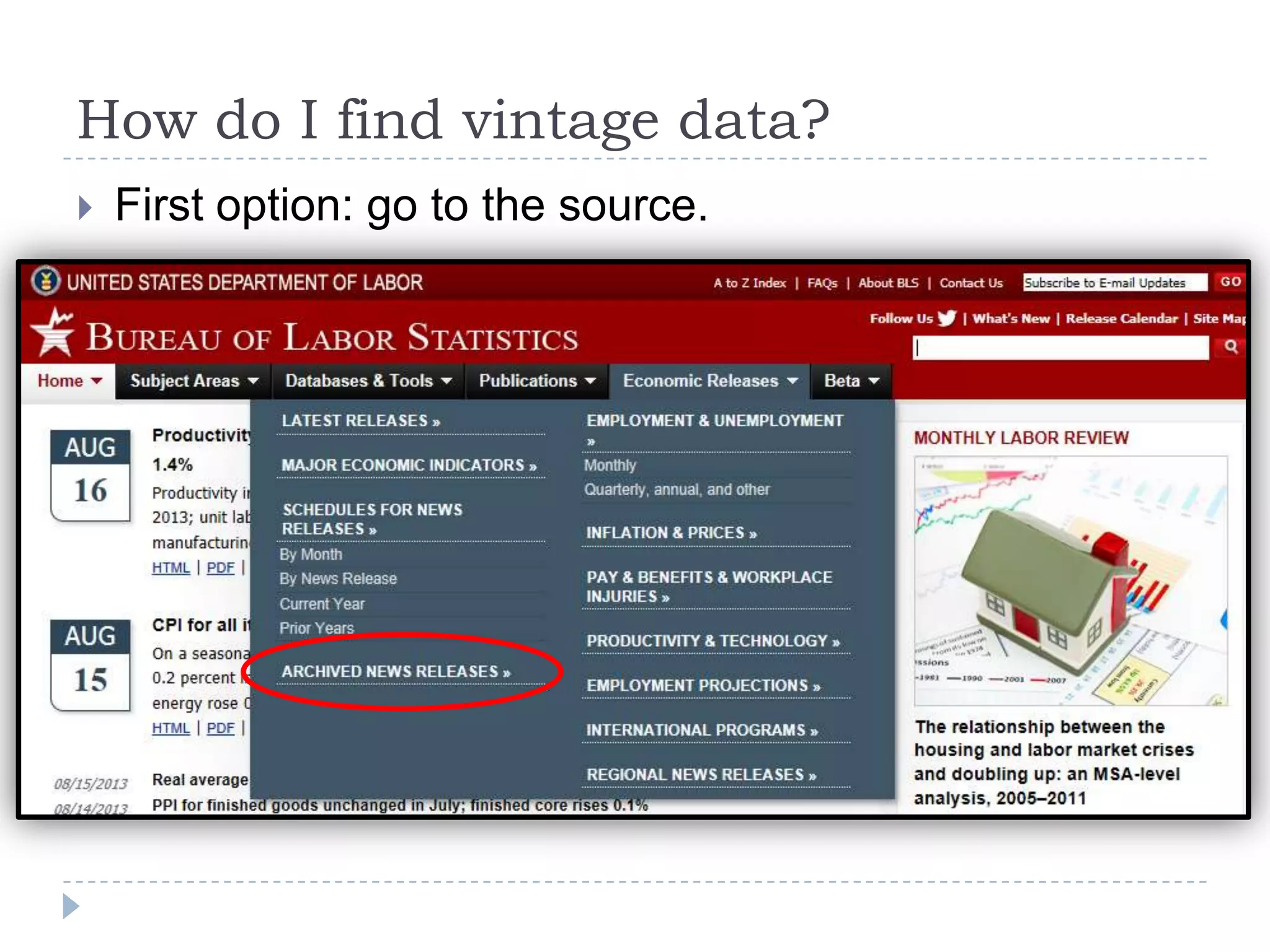
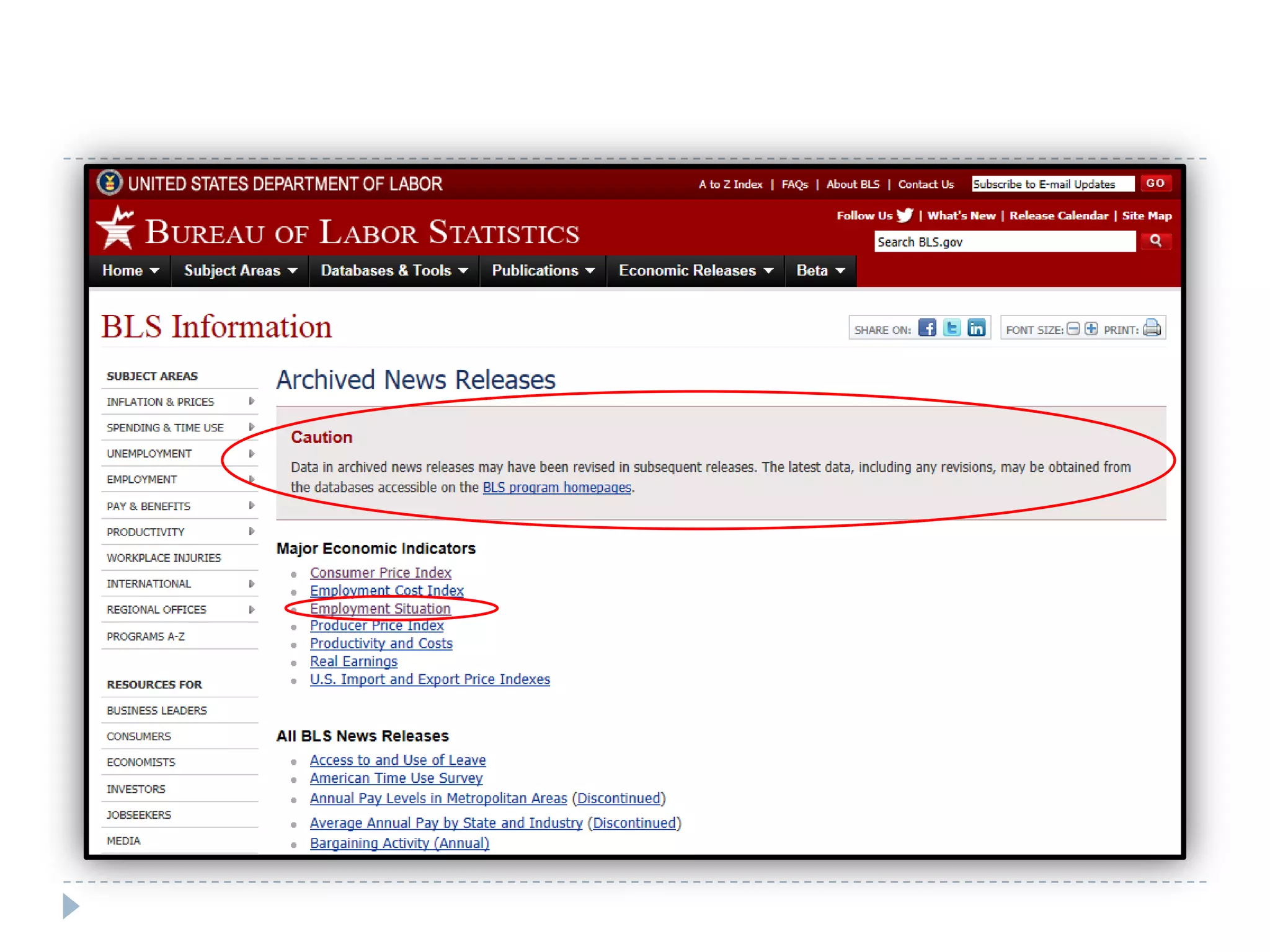
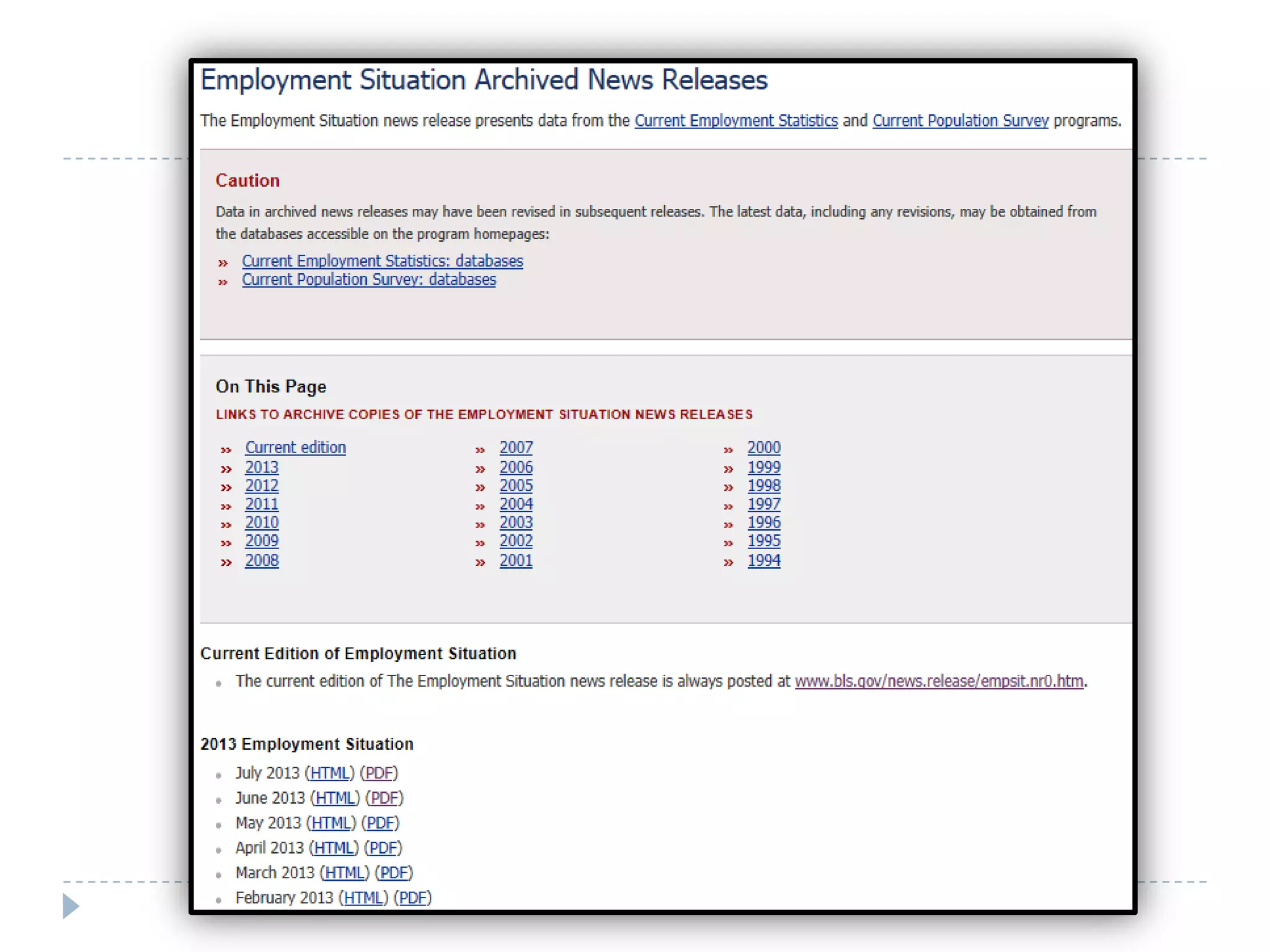
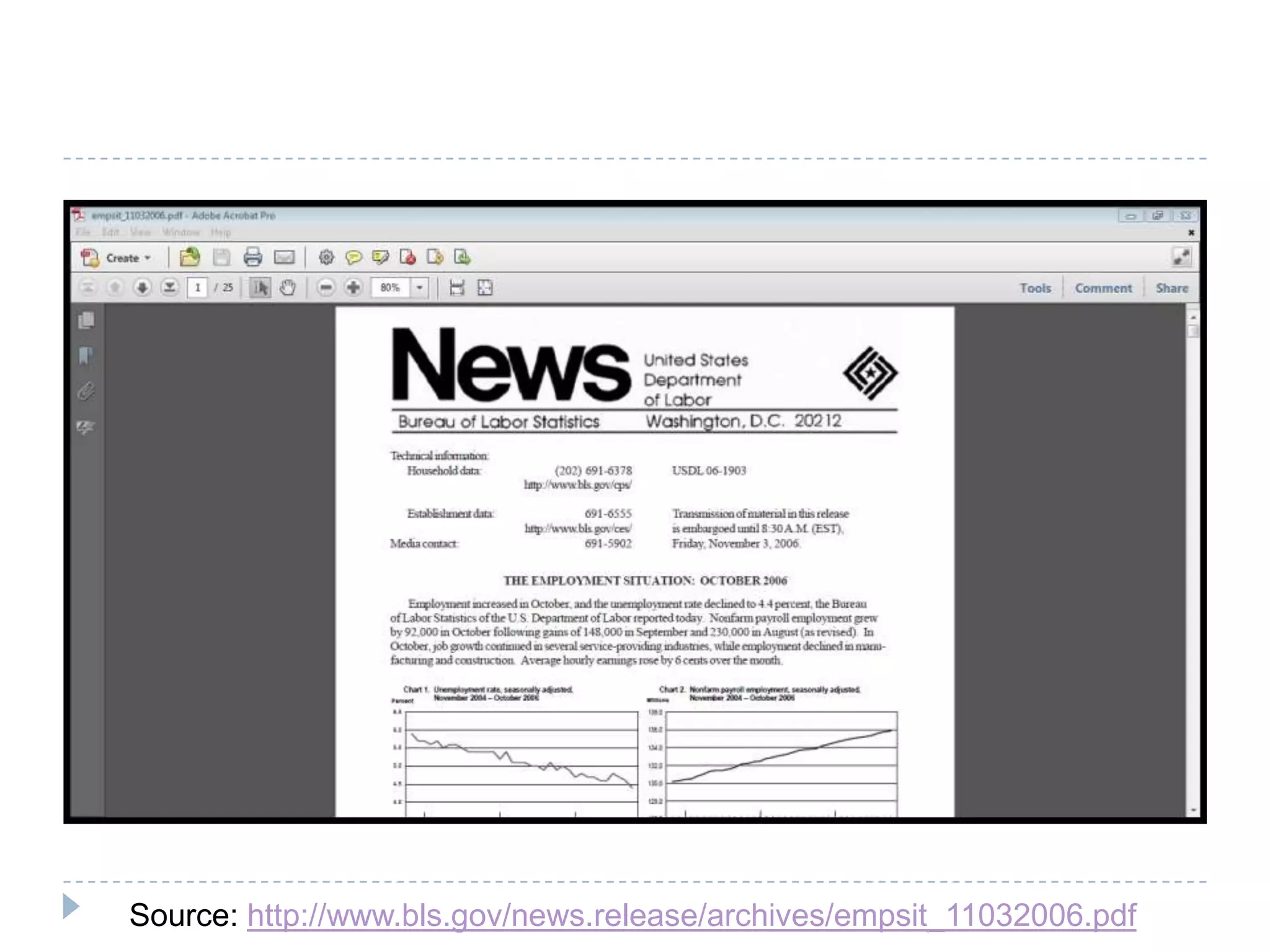
How do I find vintage data?
 First option: go to the source.
Source: http://www.bls.gov/news.release/archives/empsit_11032006.pdf
The difficulty of finding vintage data
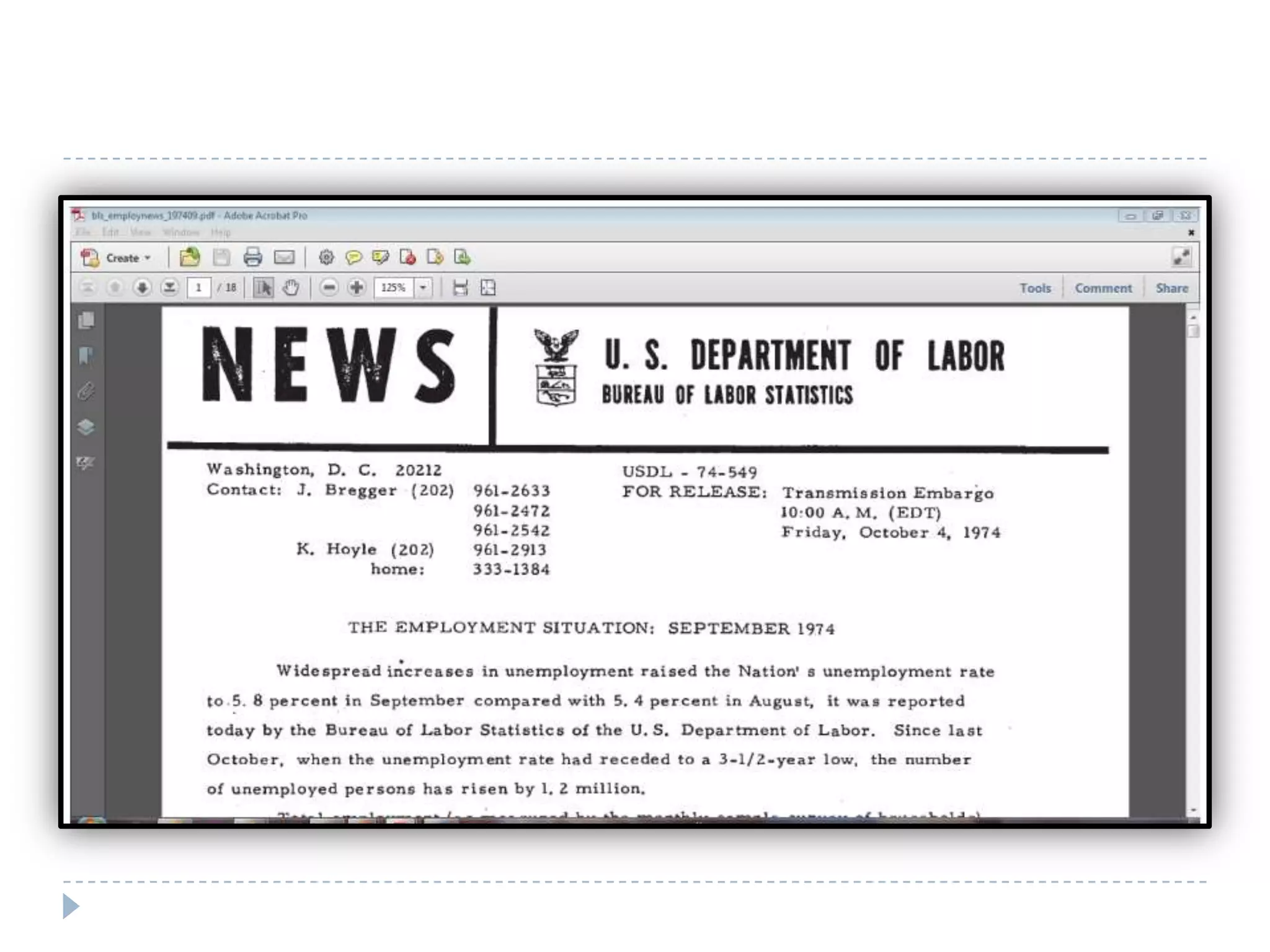
 Agencies historically wrote over the data, as the
computing storage costs were high
 Libraries discarded news releases when the final
versions were published
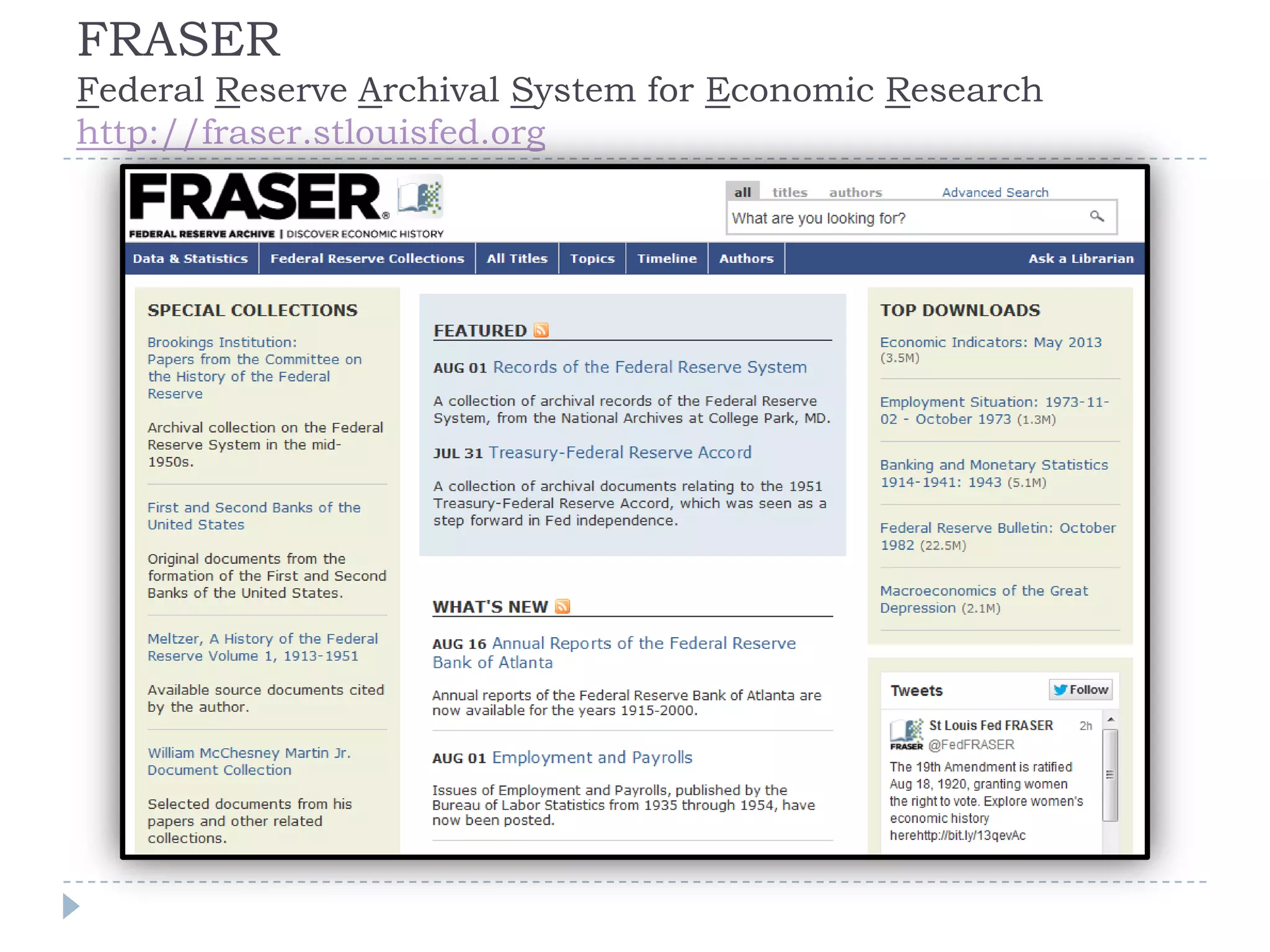
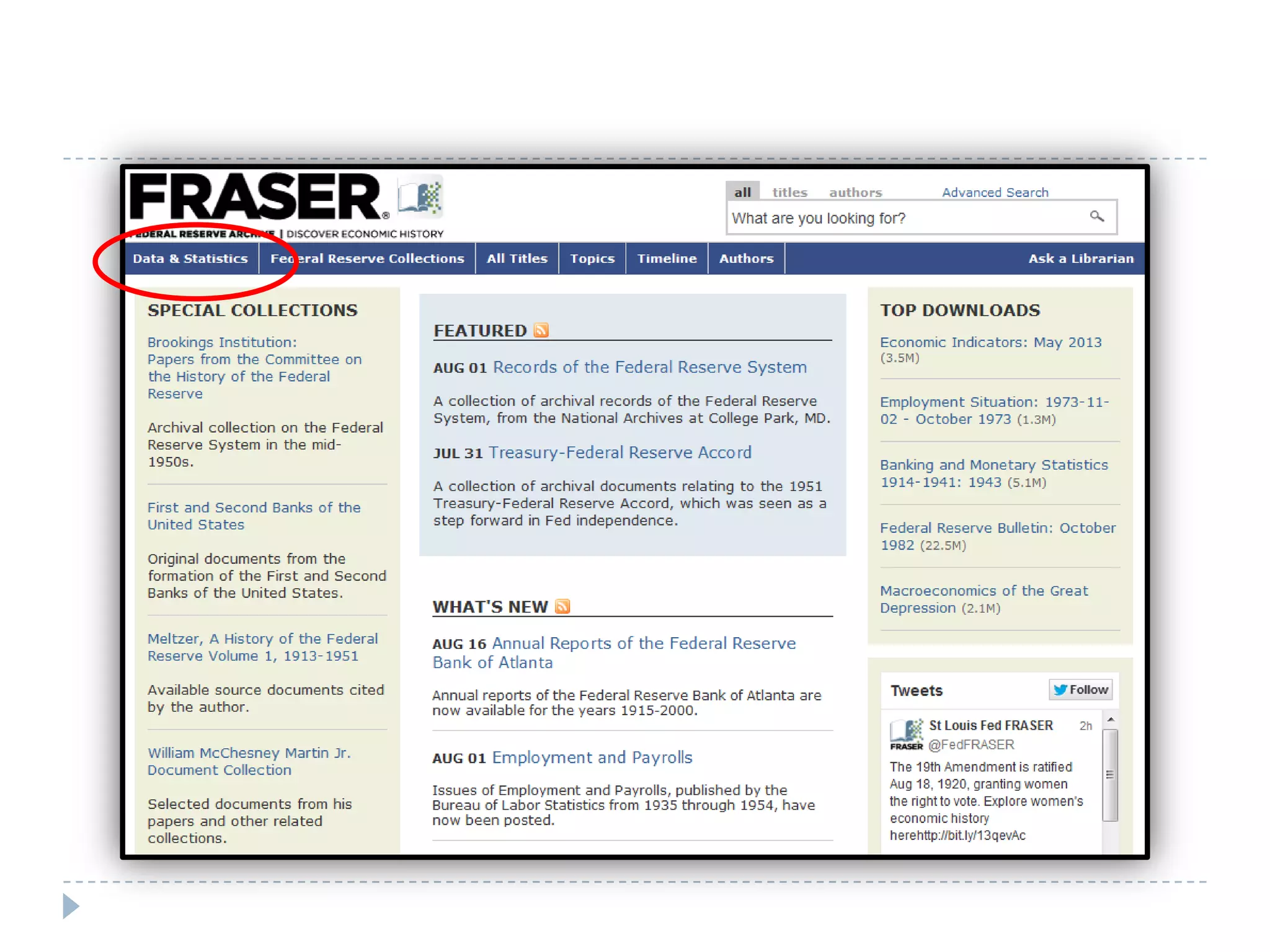
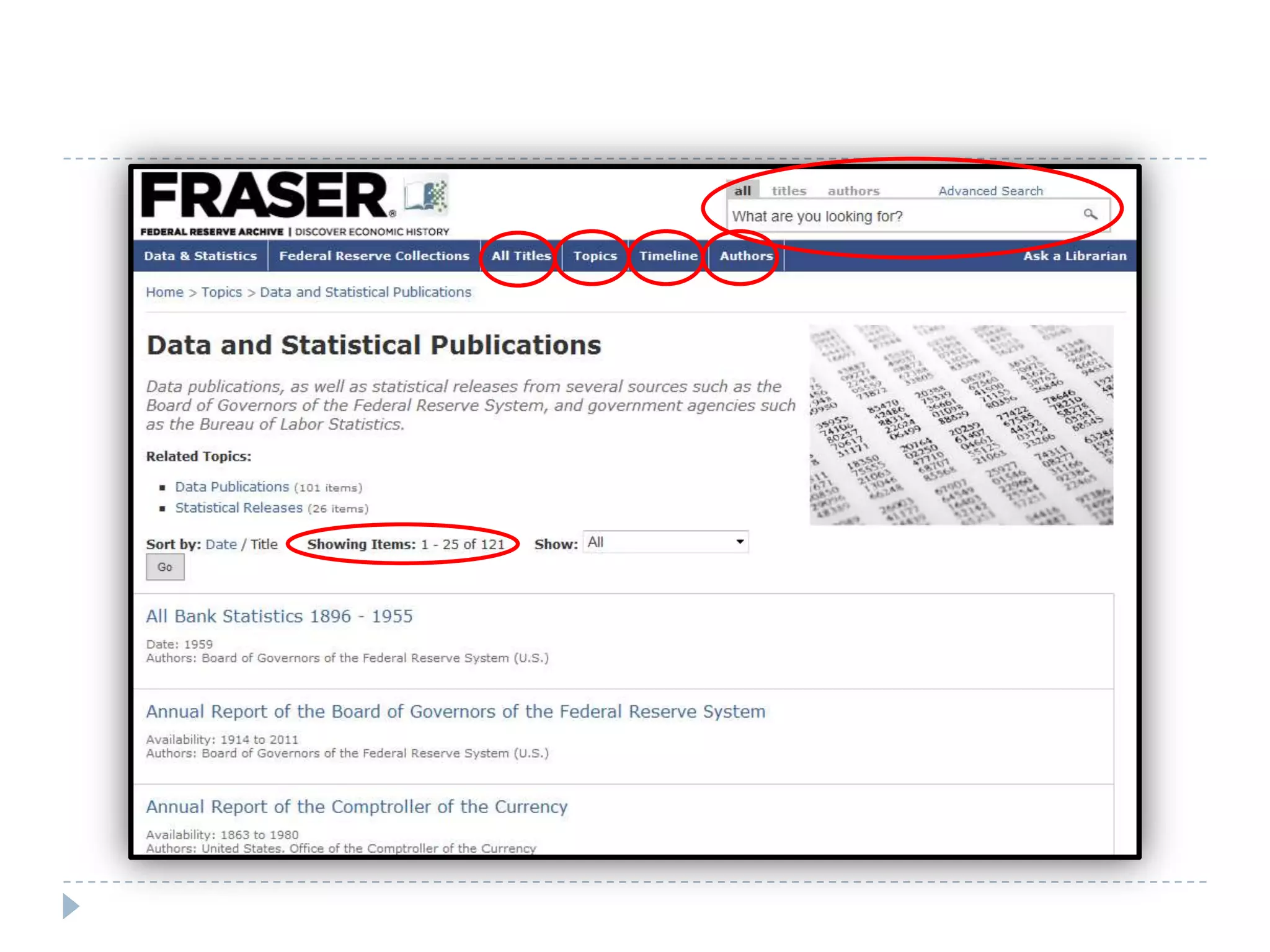
FRASER
Federal Reserve Archival System for Economic Research
http://fraser.stlouisfed.org
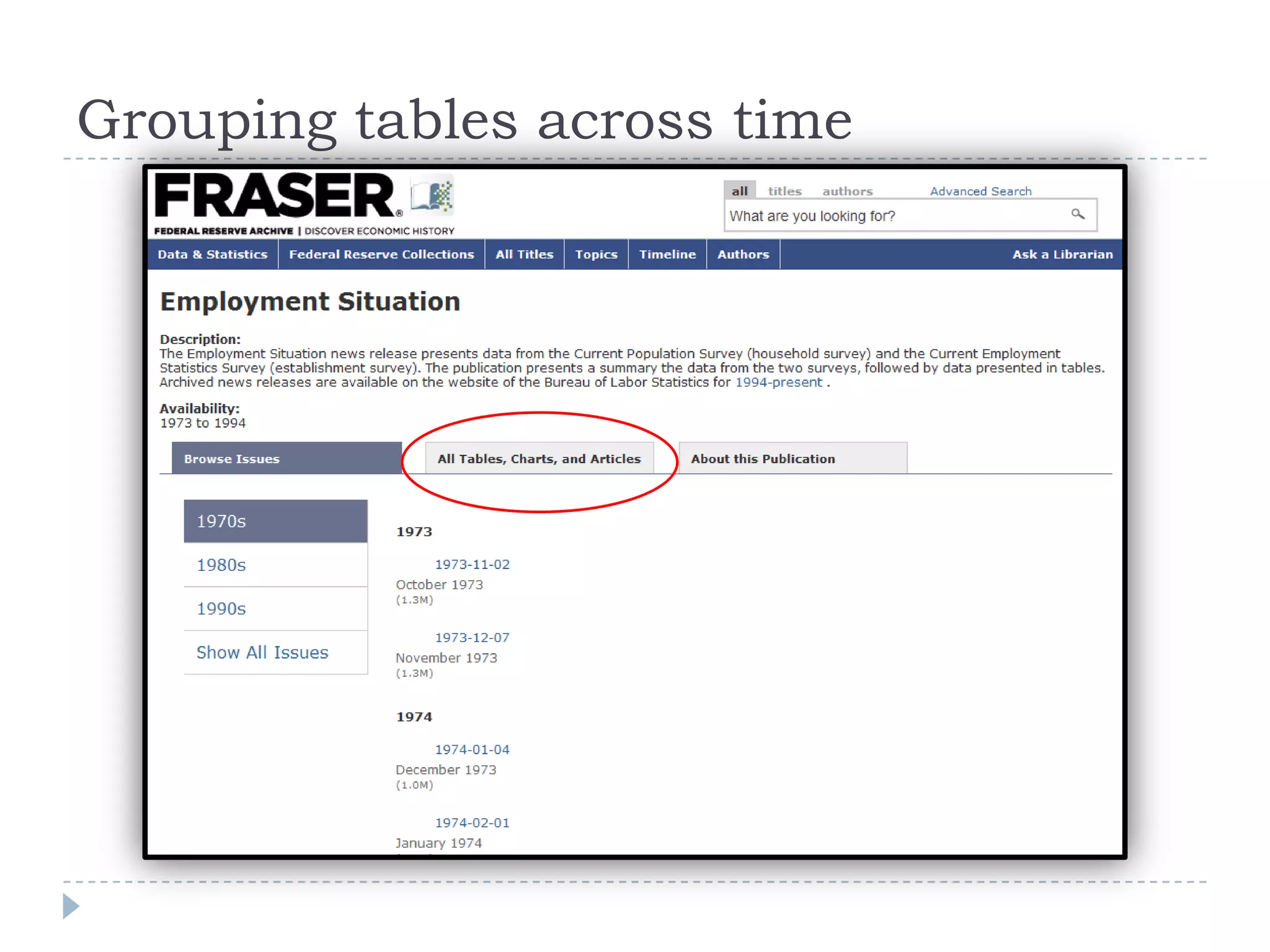
Types of documents available on FRASER
 Publications of the Board of Governors of the
Federal Reserve System
 Publications of District Federal Reserve Banks
 Statements and speeches of Fed policymakers
 Archival materials of Fed policymakers
 Government data publications
 Statistical releases
 Congressional hearings
 Books
 Reports by various organizations
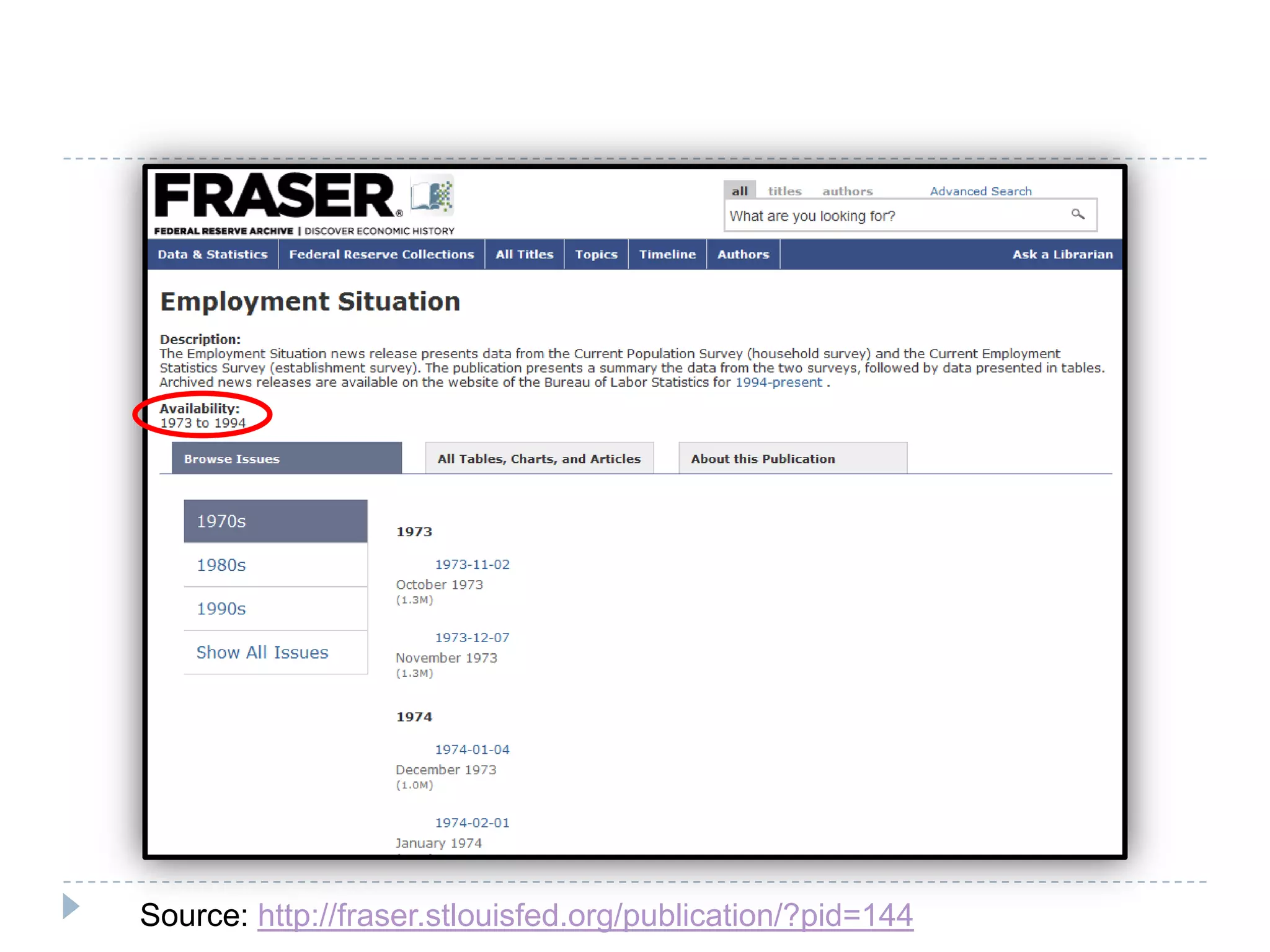
Source: http://fraser.stlouisfed.org/publication/?pid=144
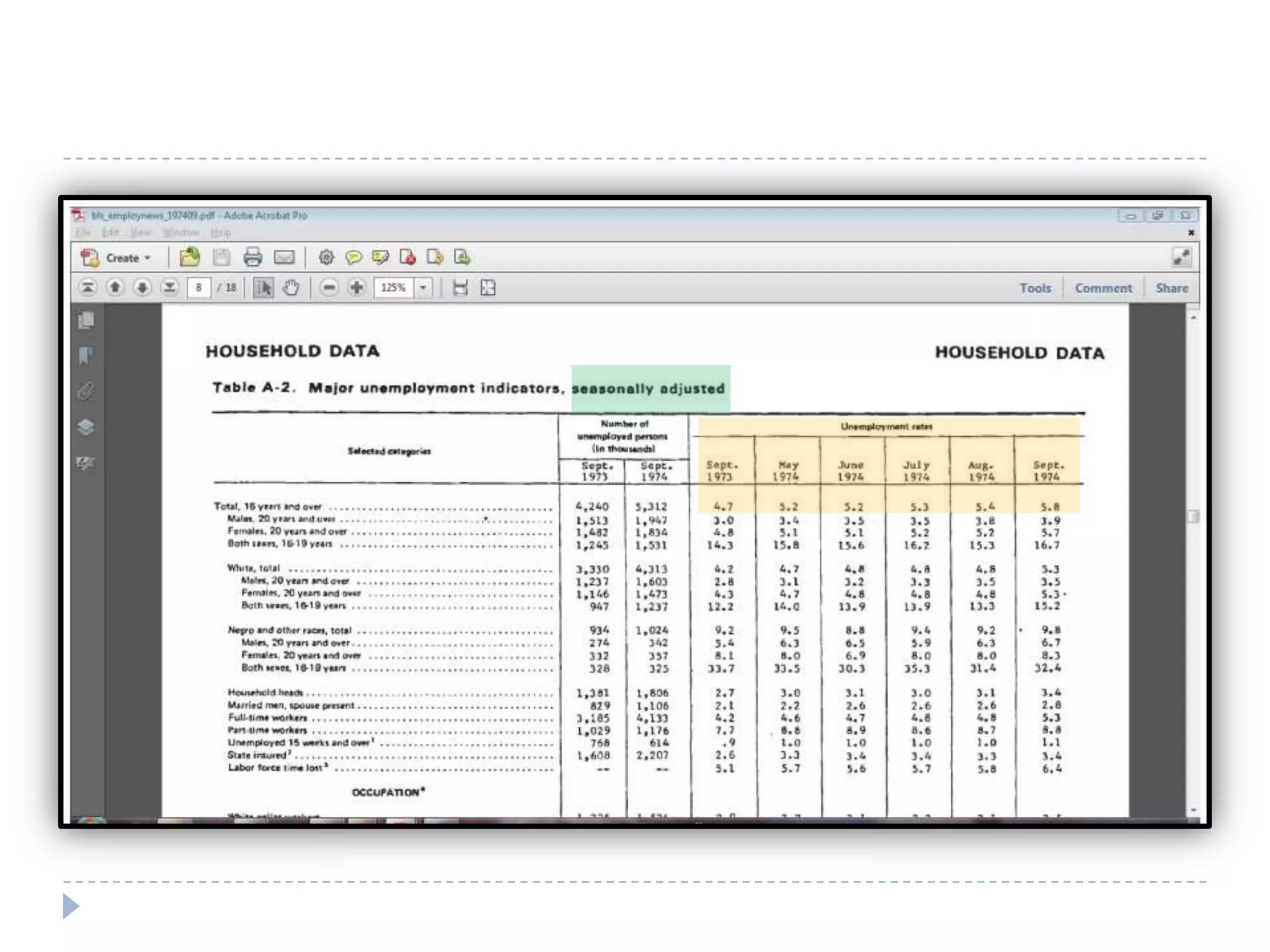
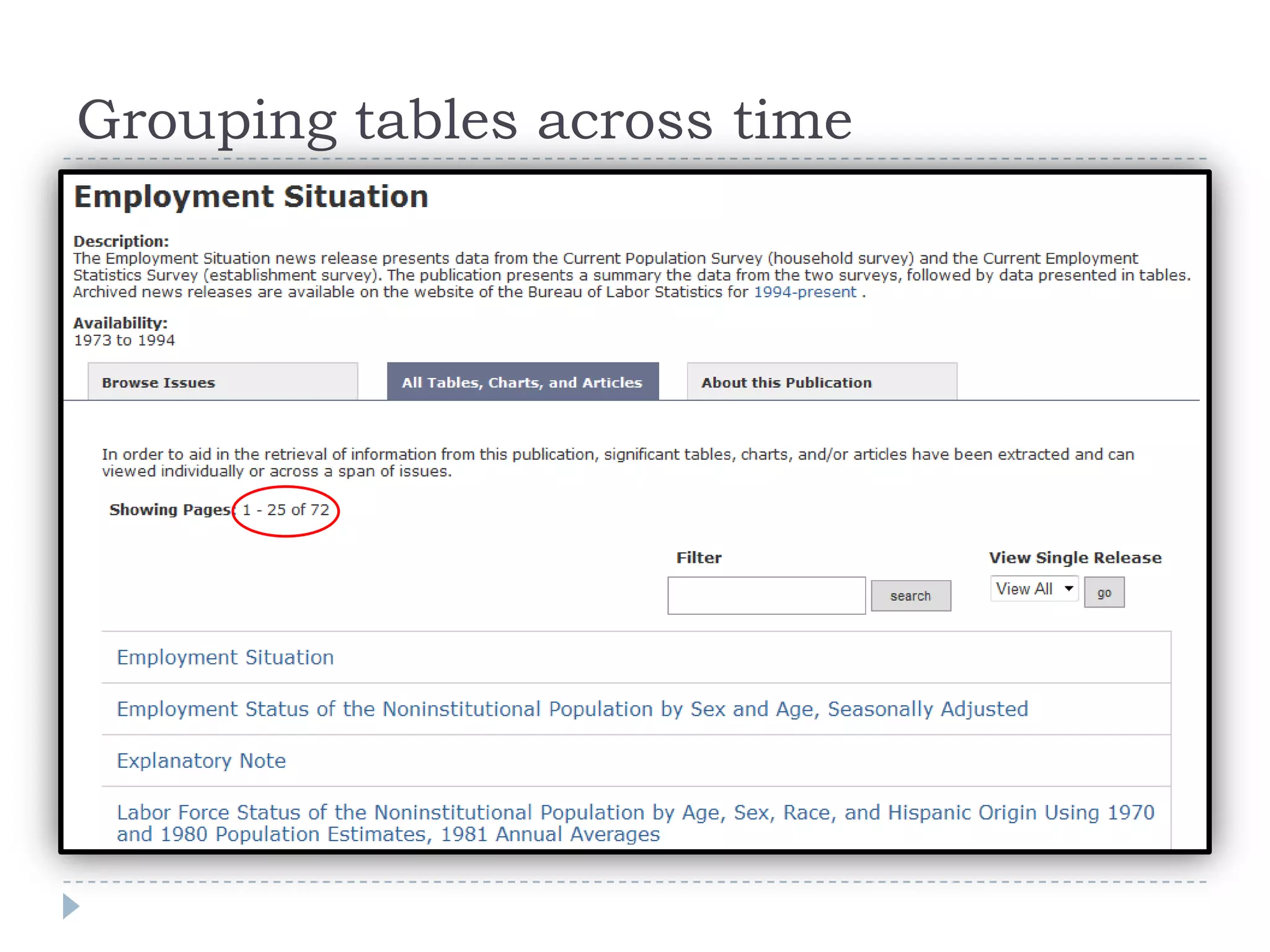
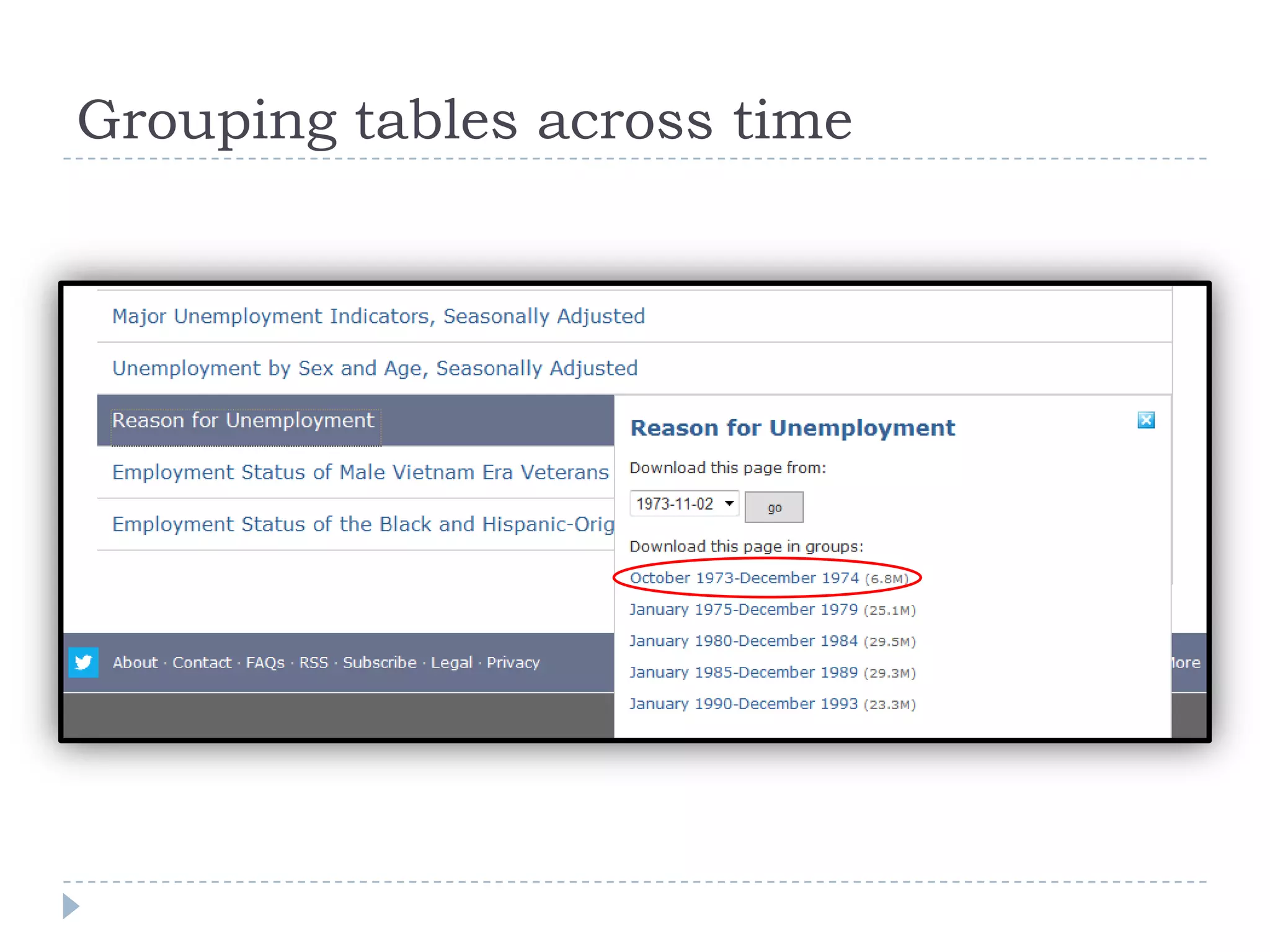
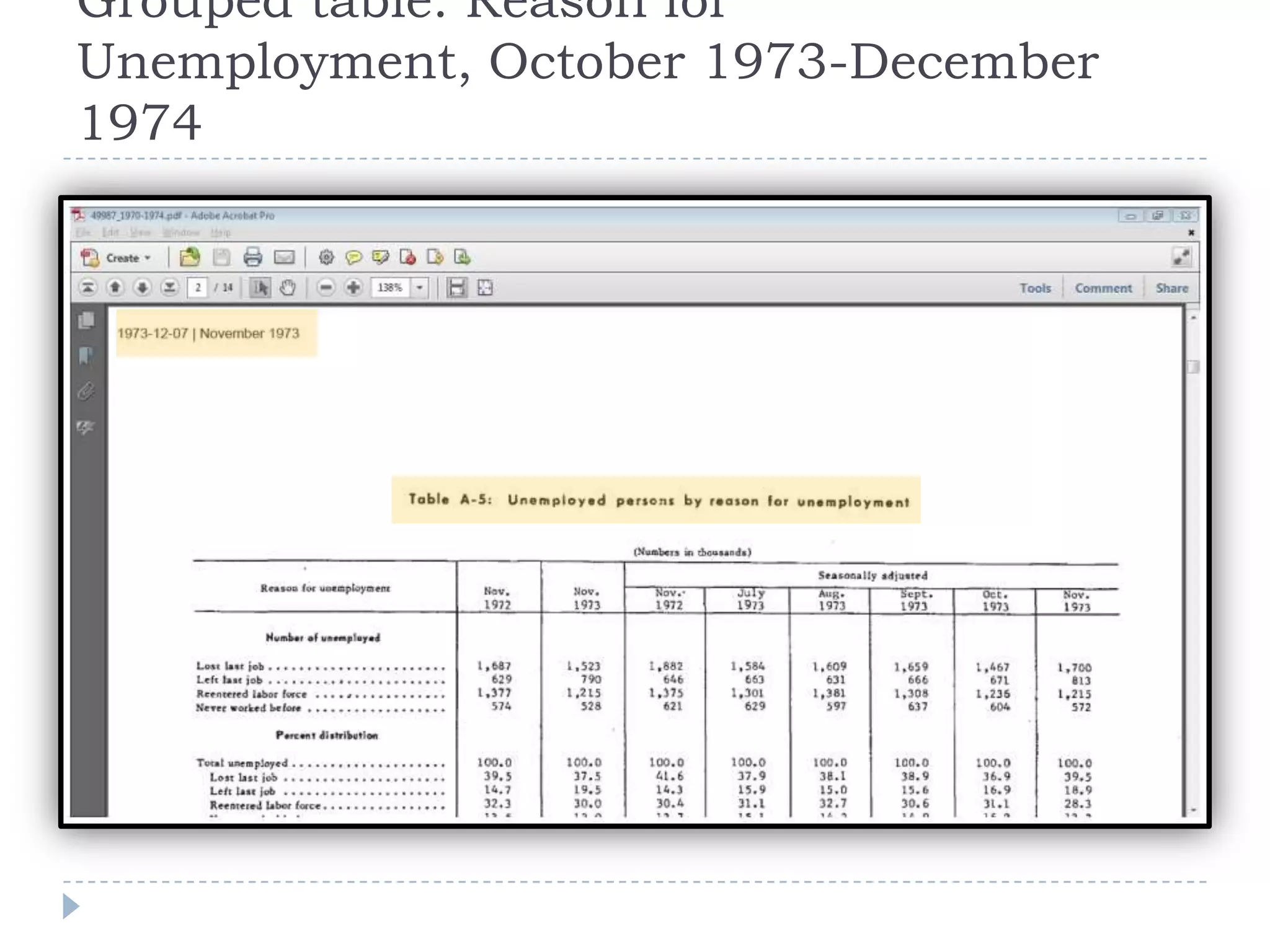
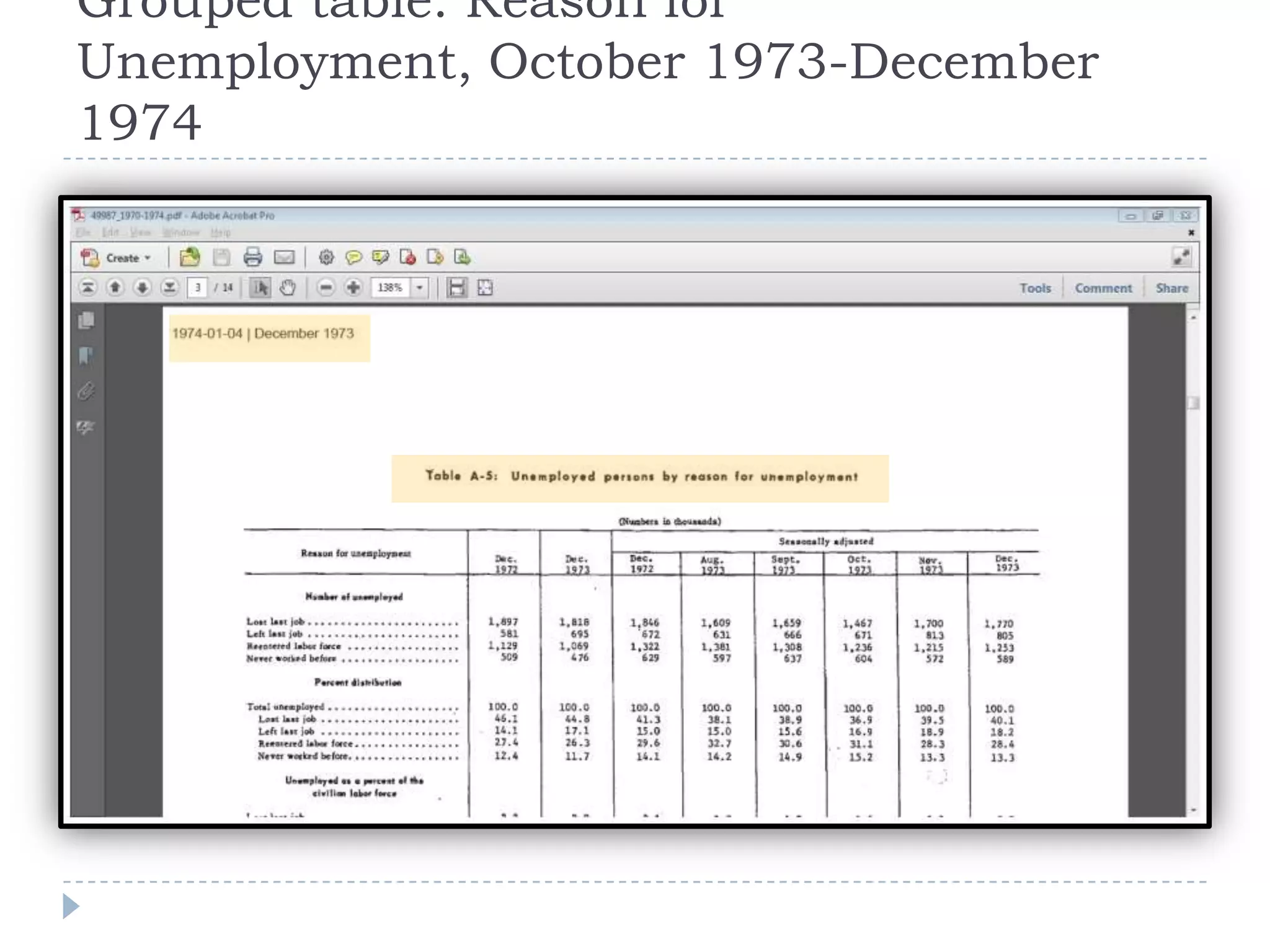
Grouping tables across time
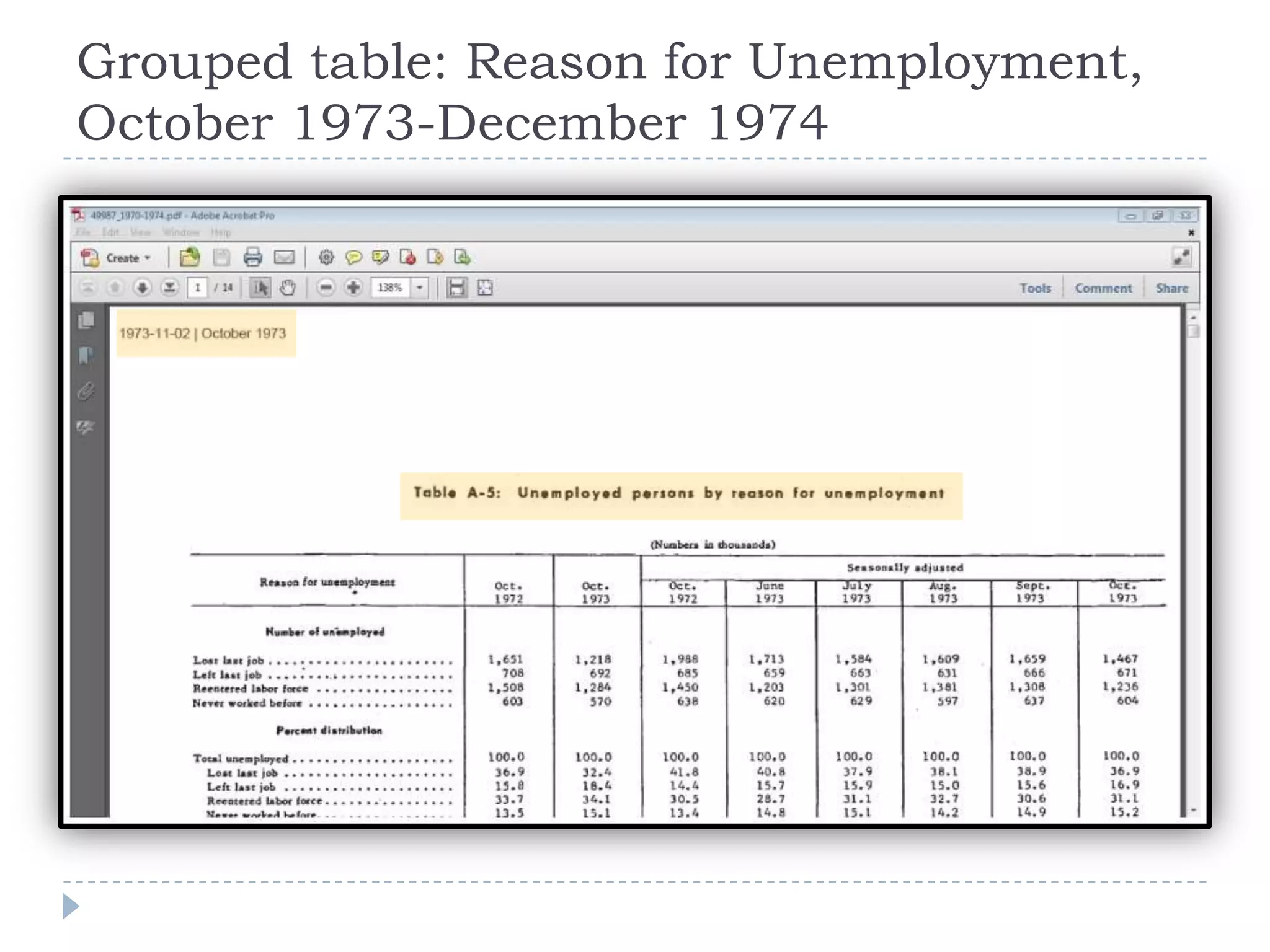
Grouped table: Reason for Unemployment,
October 1973-December 1974
Grouped table: Reason for
Unemployment, October 1973-December
1974
Grouped table: Reason for
Unemployment, October 1973-December
1974
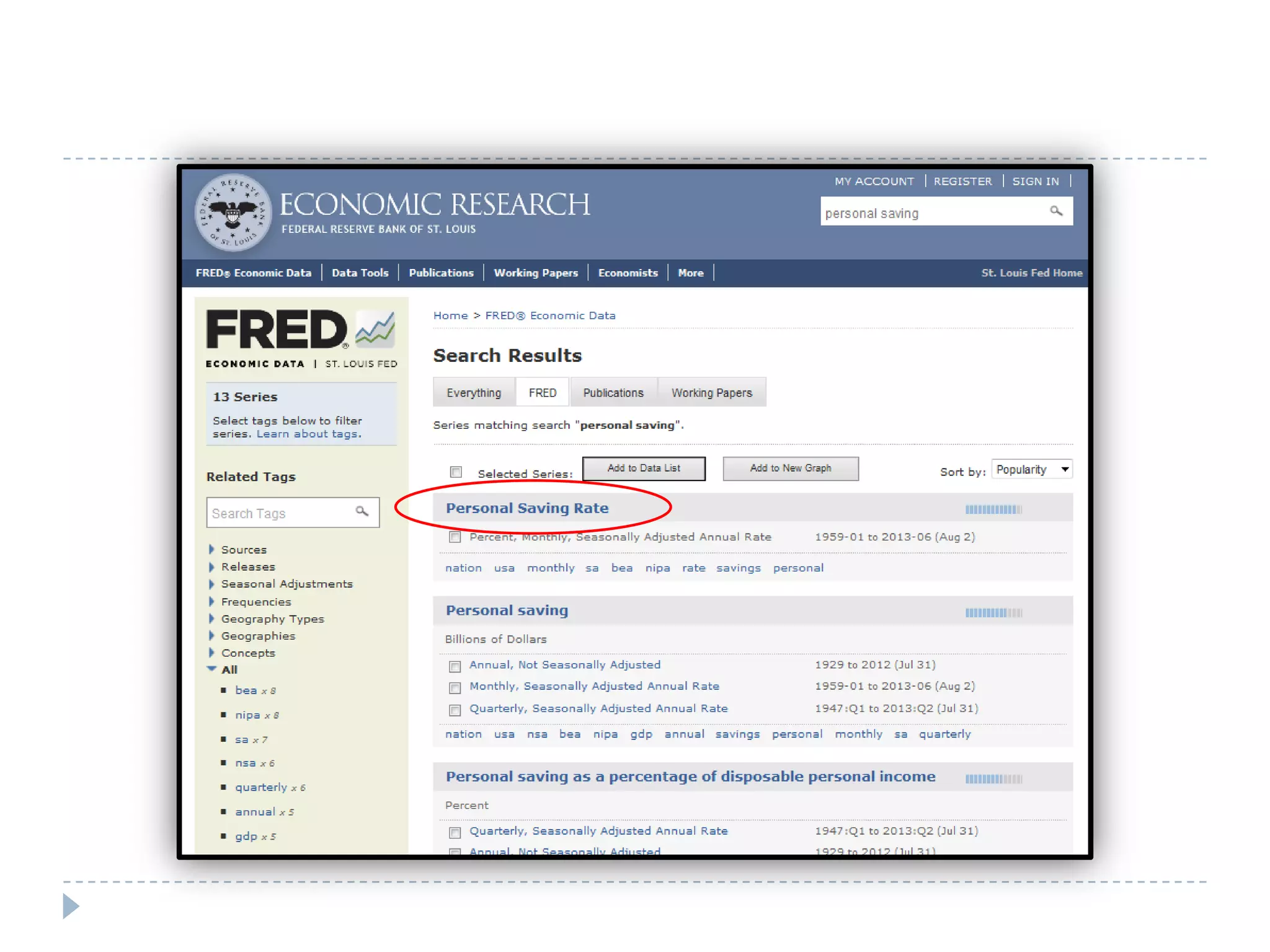
There has to be a better way
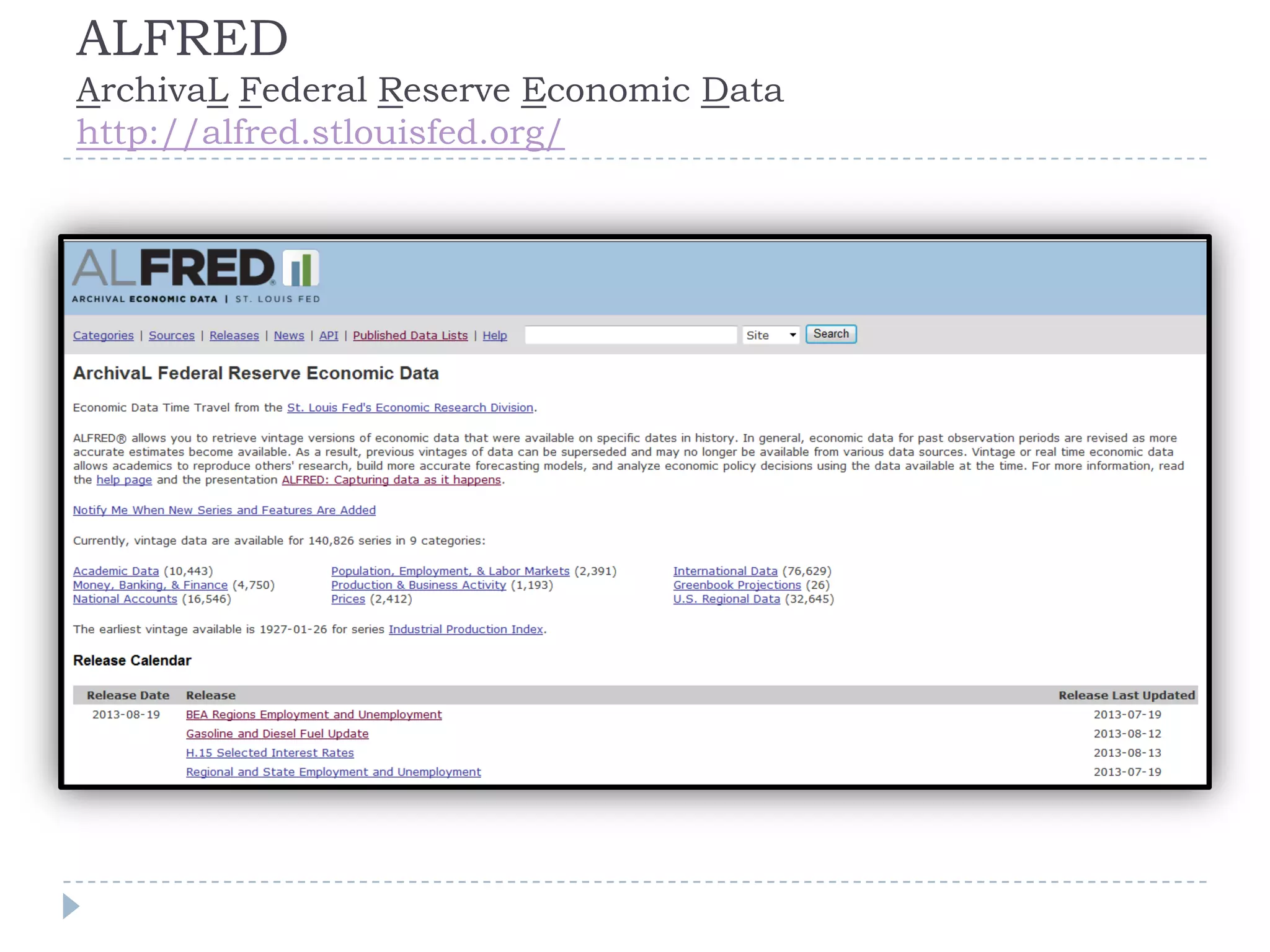
ALFRED
ArchivaL Federal Reserve Economic Data
http://alfred.stlouisfed.org/
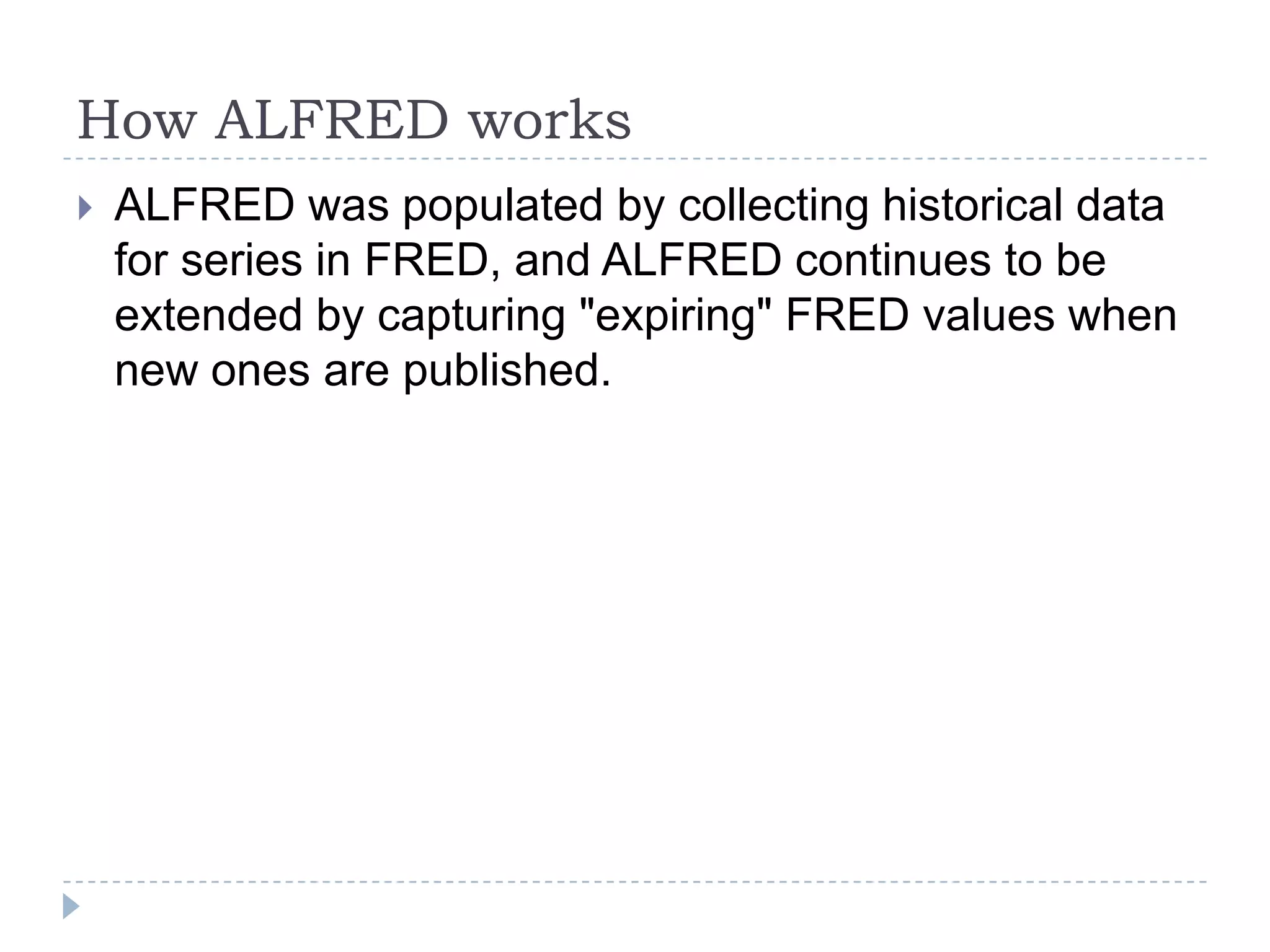
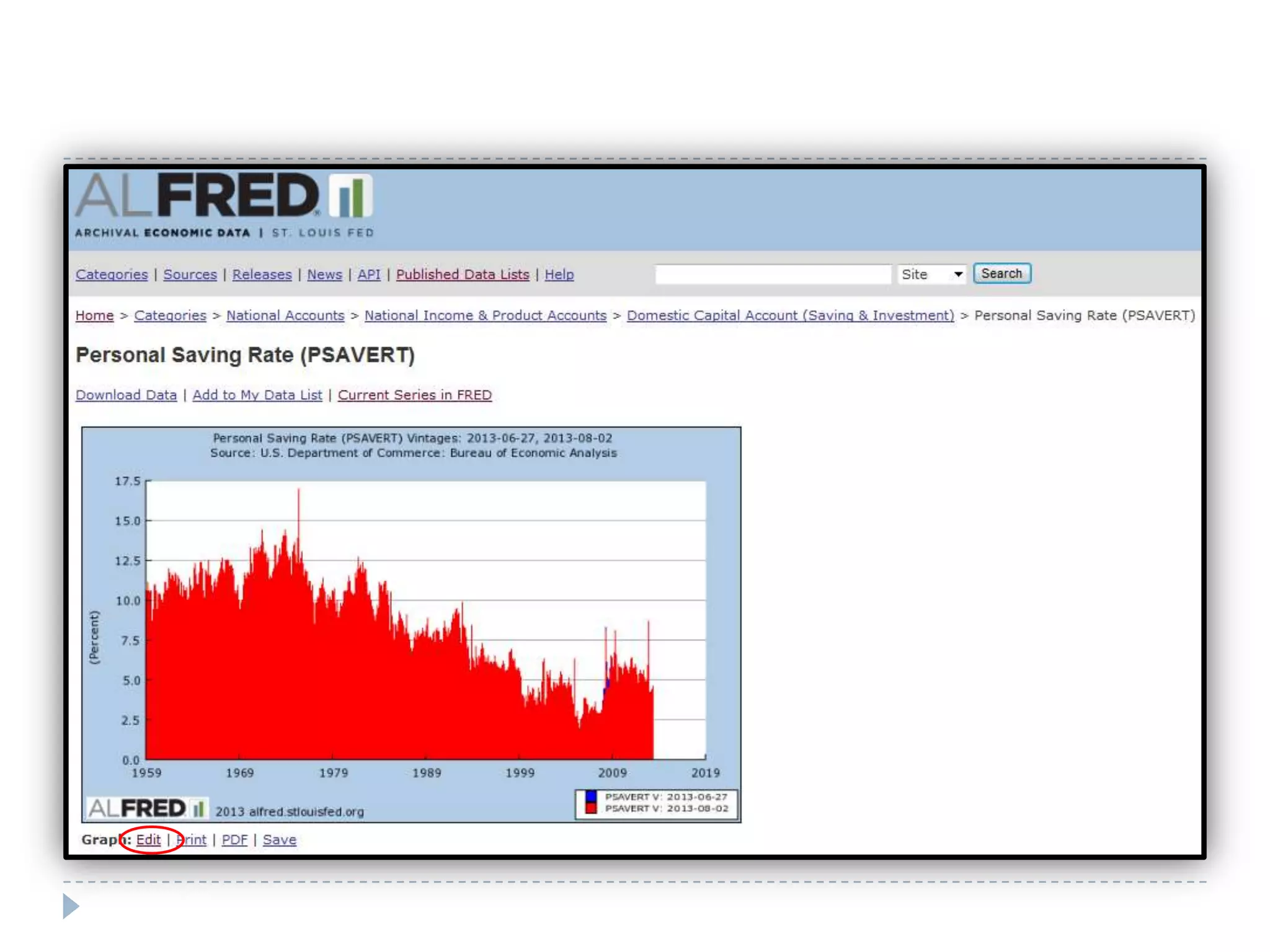
How ALFRED works
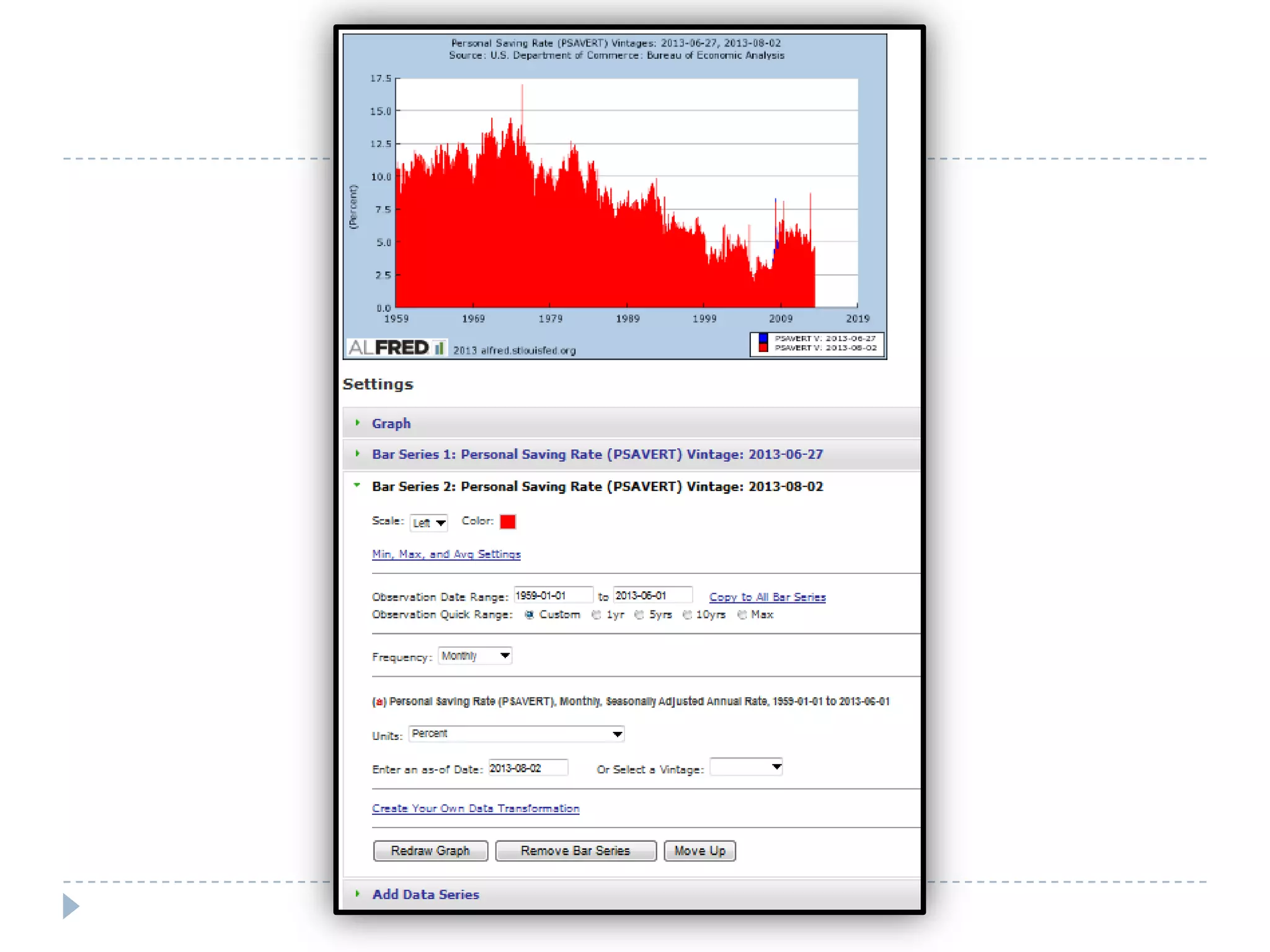
 ALFRED was populated by collecting historical data
for series in FRED, and ALFRED continues to be
extended by capturing "expiring" FRED values when
new ones are published.
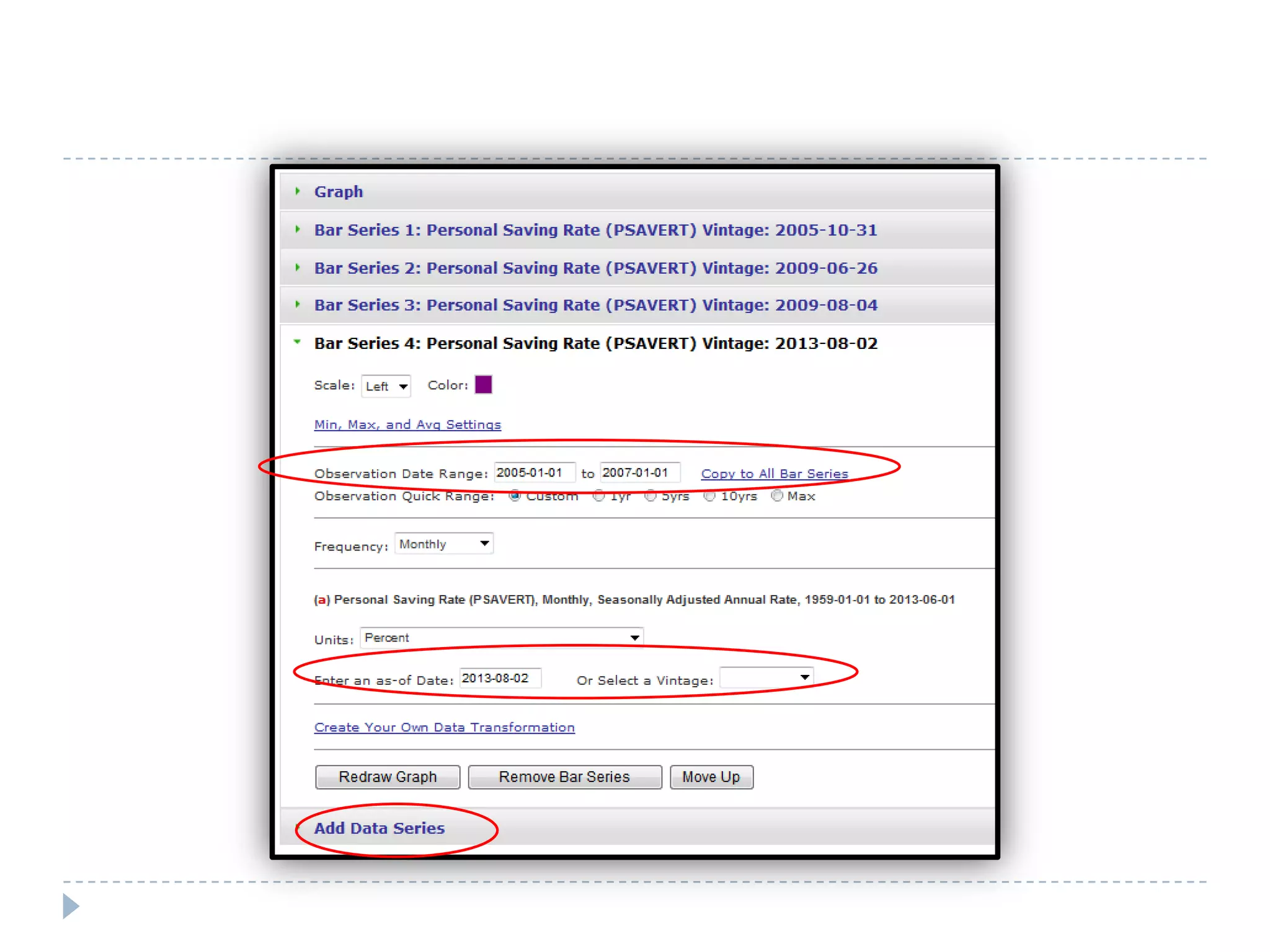
Was there a negative saving rate in 2005?
Source: Personal Saving Rate http://alfred.stlouisfed.org/graph/?g=lyN
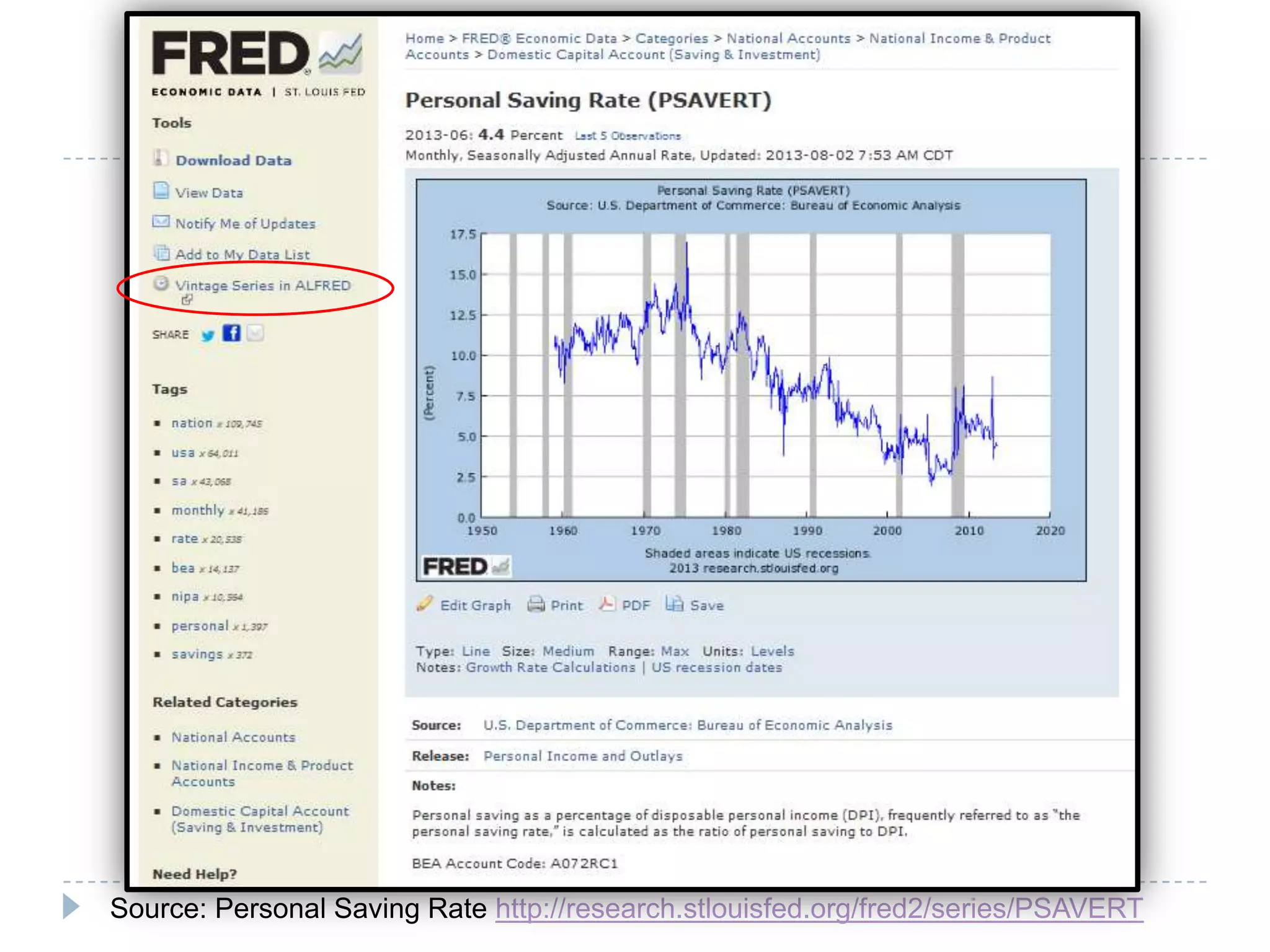
Source: Personal Saving Rate http://research.stlouisfed.org/fred2/series/PSAVERT
Call to action
 Donate news releases
 Include FRASER, ALFRED, and FRED in your
libguides
Questions?
Pamela Campbell
pamela.d.campbell@stls.frb.org
Federal Reserve Bank of St. Louis
Upcoming Accidental Librarian Webinars
 September 25: Gov Info Tour with Alex Simons
 October 16-18: NCLA Biennial Conference
 Brought to you by the North Carolina Library Association’s
Government Resources Section. Join us!
http://www.nclaonline.org/government-resources

Finding Historic Economic Data

  • 1.
    Historical Economic DataSources & Economic Time Travel August 21, 2013 Pamela Campbell pamela.d.campbell@stls.frb.org Federal Reserve Bank of St. Louis The views expressed in the presentation are my own and not the views of the Federal Reserve Bank of St. Louis or the Federal Reserve System. Brought to you by the North Carolina Library Association’s Government Resources Section. Join us! http://www.nclaonline.org/government- resources
  • 2.
  • 3.
    Why don’t theyget it right the first time?  Economic data are made from estimates.  Over time, more information be comes available, and the estimates change. Source: http://www.ohio.com/news/ohio-unemployment-rate-remains-at-7-2-percent-for-july-1.421511
  • 4.
    What happens tothe old data?  In most cases, they get overwritten, and even forgotten. Source: Unemployment Rate (SA) LNS14000000 http://data.bls.gov/cgi-bin/surveymost?bls
  • 5.
    What happens tothe old data?  In most cases, they get overwritten, and even forgotten. Source: Employment Situation News Release http://www.bls.gov/schedule/archives/empsit_nr
  • 6.
    Was there anegative saving rate in 2005? Source: Personal Saving Rate http://alfred.stlouisfed.org/graph/?g=lyN
  • 7.
    Changes to theNIPAs  A comprehensive revision of the National Income and Product Accounts (NIPAs), was released on July 31, 2009.  “Upward revisions to disposable personal income (DPI) beginning with 1994 are larger than upward revisions to personal outlays, resulting in upward revisions to personal saving and to the personal saving rate (personal saving as a percentage of DPI) (table 2).”  Eugene P. Seskin and Shelly Smith, “Improved Estimates of the National Income and Product Accounts: Results of the 2009 Comprehensive Revision,” Survey of Current Business (September 2009): 15 (http://www.bea.gov/scb/pdf/2009/09%20September/0909_nipa _text.pdf)
  • 8.
    Why would Iwant to find the vintage data?  Decisions are made based on data available at the time.
  • 9.
    How do Ifind vintage data?  First option: go to the source.
  • 12.
  • 13.
    The difficulty offinding vintage data  Agencies historically wrote over the data, as the computing storage costs were high  Libraries discarded news releases when the final versions were published
  • 14.
    FRASER Federal Reserve ArchivalSystem for Economic Research http://fraser.stlouisfed.org
  • 15.
    Types of documentsavailable on FRASER  Publications of the Board of Governors of the Federal Reserve System  Publications of District Federal Reserve Banks  Statements and speeches of Fed policymakers  Archival materials of Fed policymakers  Government data publications  Statistical releases  Congressional hearings  Books  Reports by various organizations
  • 18.
  • 21.
  • 22.
  • 23.
  • 24.
    Grouped table: Reasonfor Unemployment, October 1973-December 1974
  • 25.
    Grouped table: Reasonfor Unemployment, October 1973-December 1974
  • 26.
    Grouped table: Reasonfor Unemployment, October 1973-December 1974
  • 27.
    There has tobe a better way
  • 28.
    ALFRED ArchivaL Federal ReserveEconomic Data http://alfred.stlouisfed.org/
  • 29.
    How ALFRED works ALFRED was populated by collecting historical data for series in FRED, and ALFRED continues to be extended by capturing "expiring" FRED values when new ones are published.
  • 30.
    Was there anegative saving rate in 2005? Source: Personal Saving Rate http://alfred.stlouisfed.org/graph/?g=lyN
  • 32.
    Source: Personal SavingRate http://research.stlouisfed.org/fred2/series/PSAVERT
  • 37.
    Call to action Donate news releases  Include FRASER, ALFRED, and FRED in your libguides
  • 38.
  • 39.
    Upcoming Accidental LibrarianWebinars  September 25: Gov Info Tour with Alex Simons  October 16-18: NCLA Biennial Conference  Brought to you by the North Carolina Library Association’s Government Resources Section. Join us! http://www.nclaonline.org/government-resources