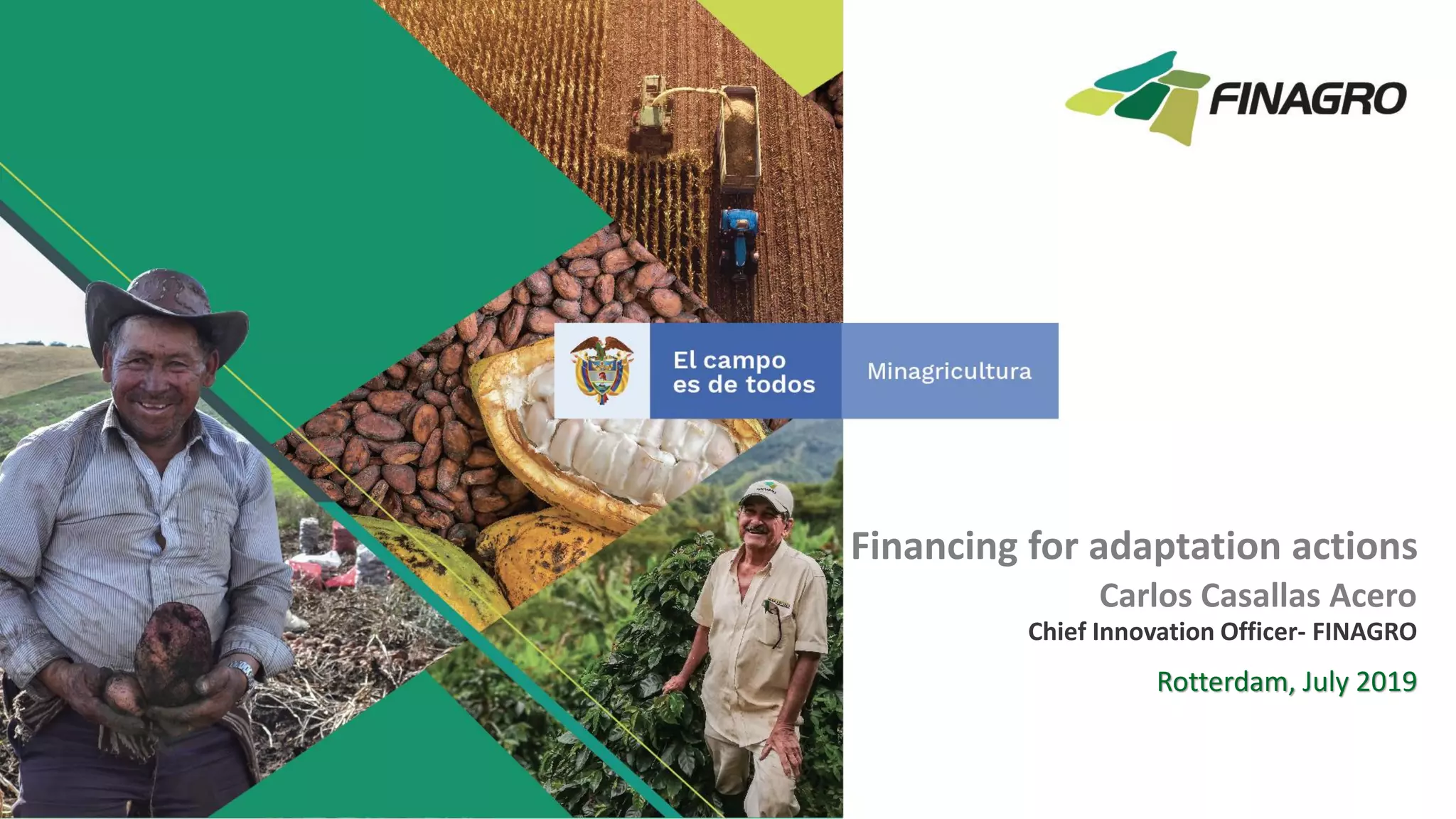
Financing for adaptation actions
Carlos Casallas Acero
Chief Innovation Officer- FINAGRO
Rotterdam, July 2019
Contenido
▪ Colombia – Agricultural Sector
▪ FINAGRO overview
▪ Financing adaptation climate change – A case
of study
▪ Financial (and some non financial) barriers
▪ What financial institutions are doing?
▪ What should be the role of government?
Topics
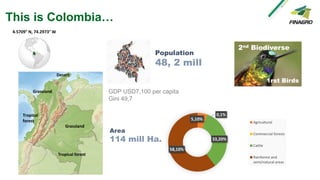
This is Colombia…
4.5709° N, 74.2973° W
Population
48, 2 mill
5,10%
0,1%
33,20%
58,10%
Agricultural
Commercial forests
Cattle
Rainforest and
semi/natural areas
Area
114 mill Ha.
Grassland
Tropical forest
Grassland
Tropical
forest
Desert
GDP USD7,100 per capita
Gini 49,7
2nd Biodiverse
1rst Birds
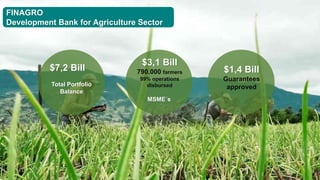
FINAGRO
Development Bank for Agriculture Sector
$7,2 Bill
Total Portfolio
Balance
$3,1 Bill
790.000 farmers
99% operations
disbursed
MSME´s
$1,4 Bill
Guarantees
approved
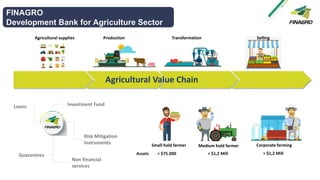
FINAGRO
Development Bank for Agriculture Sector
Agricultural supplies
Agricultural Value Chain
Production Transformation Selling
Loans
Guarantees
Investment Fund
Risk Mitigation
Instruments Small hold farmer Medium hold farmer Corporate farming
Assets < $75.000 < $1,2 Mill > $1,2 Mill
Non financial
services
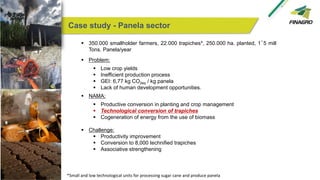
Case of study – NAMA Panela
▪ 350.000 smallholder farmers, 22.000 trapiches*, 250.000 ha. planted, 1´5 mill
Tons. Panela/year
▪ Problem:
▪ Low crop yields
▪ Inefficient production process
▪ GEI: 6,77 kg CO2eq / kg panela
▪ Lack of human development opportunities.
▪ NAMA:
▪ Productive conversion in planting and crop management
▪ Technological conversion of trapiches
▪ Cogeneration of energy from the use of biomass
▪ Challenge:
▪ Productivity improvement
▪ Conversion to 8,000 technified trapiches
▪ Associative strengthening
*Small and low technological units for processing sugar cane and produce panela
Case study - Panela sector
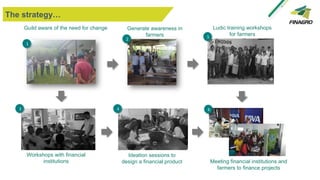
Guild aware of the need for change
The strategy…
1
Generate awareness in
farmers
2
Workshops with financial
institutions
3
Ideation sessions to
design a financial product
4
5
Ludic training workshops
for farmers
Meeting financial institutions and
farmers to finance projects
6
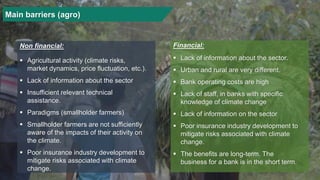
Main barriers (agro)
▪ Agricultural activity (climate risks,
market dynamics, price fluctuation, etc.).
▪ Lack of information about the sector
▪ Insufficient relevant technical
assistance.
▪ Paradigms (smallholder farmers)
▪ Smallholder farmers are not sufficiently
aware of the impacts of their activity on
the climate.
▪ Poor insurance industry development to
mitigate risks associated with climate
change.
Non financial:
▪ Lack of information about the sector.
▪ Urban and rural are very different.
▪ Bank operating costs are high
▪ Lack of staff, in banks with specific
knowledge of climate change
▪ Lack of information on the sector
▪ Poor insurance industry development to
mitigate risks associated with climate
change.
▪ The benefits are long-term. The
business for a bank is in the short term.
Financial:
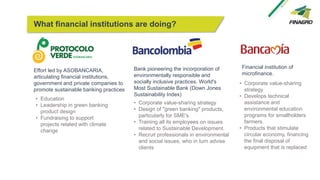
Effort led by ASOBANCARIA,
articulating financial institutions,
government and private companies to
promote sustainable banking practices
What financial institutions are doing?
• Education
• Leadership in green banking
product design
• Fundraising to support
projects related with climate
change
Bank pioneering the incorporation of
environmentally responsible and
socially inclusive practices. World's
Most Sustainable Bank (Down Jones
Sustainability Index)
• Corporate value-sharing strategy
• Design of "green banking" products,
particularly for SME's
• Training all its employees on issues
related to Sustainable Development.
• Recruit professionals in environmental
and social issues, who in turn advise
clients
Financial institution of
microfinance.
• Corporate value-sharing
strategy
• Develops technical
assistance and
environmental education
programs for smallholders
farmers.
• Products that stimulate
circular economy, financing
the final disposal of
equipment that is replaced
What should be the role of government?
Information
provider
Guarantees
for small
farmers
Stimulating
alternative
financing
channels
(Fintech)
Improve its
ability to attract
funding to
generate
incentives, for
the ecosystem
Stimulating the
insurance and
climate risk
management
industry
Gracias

Financing for adaptation actions

  • 1.
    Financing for adaptationactions Carlos Casallas Acero Chief Innovation Officer- FINAGRO Rotterdam, July 2019
  • 2.
    Contenido ▪ Colombia –Agricultural Sector ▪ FINAGRO overview ▪ Financing adaptation climate change – A case of study ▪ Financial (and some non financial) barriers ▪ What financial institutions are doing? ▪ What should be the role of government? Topics
  • 3.
    This is Colombia… 4.5709°N, 74.2973° W Population 48, 2 mill 5,10% 0,1% 33,20% 58,10% Agricultural Commercial forests Cattle Rainforest and semi/natural areas Area 114 mill Ha. Grassland Tropical forest Grassland Tropical forest Desert GDP USD7,100 per capita Gini 49,7 2nd Biodiverse 1rst Birds
  • 4.
    FINAGRO Development Bank forAgriculture Sector $7,2 Bill Total Portfolio Balance $3,1 Bill 790.000 farmers 99% operations disbursed MSME´s $1,4 Bill Guarantees approved
  • 5.
    FINAGRO Development Bank forAgriculture Sector Agricultural supplies Agricultural Value Chain Production Transformation Selling Loans Guarantees Investment Fund Risk Mitigation Instruments Small hold farmer Medium hold farmer Corporate farming Assets < $75.000 < $1,2 Mill > $1,2 Mill Non financial services
  • 6.
    Case of study– NAMA Panela ▪ 350.000 smallholder farmers, 22.000 trapiches*, 250.000 ha. planted, 1´5 mill Tons. Panela/year ▪ Problem: ▪ Low crop yields ▪ Inefficient production process ▪ GEI: 6,77 kg CO2eq / kg panela ▪ Lack of human development opportunities. ▪ NAMA: ▪ Productive conversion in planting and crop management ▪ Technological conversion of trapiches ▪ Cogeneration of energy from the use of biomass ▪ Challenge: ▪ Productivity improvement ▪ Conversion to 8,000 technified trapiches ▪ Associative strengthening *Small and low technological units for processing sugar cane and produce panela Case study - Panela sector
  • 7.
    Guild aware ofthe need for change The strategy… 1 Generate awareness in farmers 2 Workshops with financial institutions 3 Ideation sessions to design a financial product 4 5 Ludic training workshops for farmers Meeting financial institutions and farmers to finance projects 6
  • 8.
    Main barriers (agro) ▪Agricultural activity (climate risks, market dynamics, price fluctuation, etc.). ▪ Lack of information about the sector ▪ Insufficient relevant technical assistance. ▪ Paradigms (smallholder farmers) ▪ Smallholder farmers are not sufficiently aware of the impacts of their activity on the climate. ▪ Poor insurance industry development to mitigate risks associated with climate change. Non financial: ▪ Lack of information about the sector. ▪ Urban and rural are very different. ▪ Bank operating costs are high ▪ Lack of staff, in banks with specific knowledge of climate change ▪ Lack of information on the sector ▪ Poor insurance industry development to mitigate risks associated with climate change. ▪ The benefits are long-term. The business for a bank is in the short term. Financial:
  • 9.
    Effort led byASOBANCARIA, articulating financial institutions, government and private companies to promote sustainable banking practices What financial institutions are doing? • Education • Leadership in green banking product design • Fundraising to support projects related with climate change Bank pioneering the incorporation of environmentally responsible and socially inclusive practices. World's Most Sustainable Bank (Down Jones Sustainability Index) • Corporate value-sharing strategy • Design of "green banking" products, particularly for SME's • Training all its employees on issues related to Sustainable Development. • Recruit professionals in environmental and social issues, who in turn advise clients Financial institution of microfinance. • Corporate value-sharing strategy • Develops technical assistance and environmental education programs for smallholders farmers. • Products that stimulate circular economy, financing the final disposal of equipment that is replaced
  • 10.
    What should bethe role of government? Information provider Guarantees for small farmers Stimulating alternative financing channels (Fintech) Improve its ability to attract funding to generate incentives, for the ecosystem Stimulating the insurance and climate risk management industry
  • 11.