What	
  are	
  the	
  financing	
  possibilities	
  
       for	
  CSA	
  in	
  Africa	
  and	
  what	
  role	
  might	
  
       there	
  be	
  for	
  carbon	
  finance?	


Seth	
  Shames	
  
EcoAgriculture	
  Partners	


December	
  3,	
  2011	
  
Agriculture	
  and	
  Rural	
  Development	
  
Day	


Durban,	
  South	
  Africa	


Overview	
  
       	
  1)	
  The	
  climate-­‐smart	
  agriculture	
  finance	
  disconnect	
  
       	
  2)	
  Status	
  of	
  Climate	
  and	
  Agricultural	
  Finance	
  
       	
  3)	
  Constraints	
  of	
  the	
  current	
  finance	
  structure	


  4)	
  	
  Options	
  for	
  Sustainable	
  Agriculture	
  in	
  a	
  Changing	
  
                Climate	
  (SACC)	
  project	
  in	
  western	
  Kenya	
  
       	
  5)	
  Steps	
  towards	
  finance	
  integration	


The	
  CSA	
  finance	
  disconnect	


   ●  Funds	
  for	
  agricultural,	
  food	
  security,	
  mitigation	
  and	
  adaptation	
  generally	
  come	
  
        from	
  different	
  sources	
  though	
  these	
  goals	
  are	
  inextricably	
  linked	
  in	
  agricultural	
  
        systems	


    ●  SACC	
  project	
  designed	
  for	
  voluntary	
  carbon	
  market	


    ●  Project’s	
  primary	
  objective	
  is	
  livelihood	
  development	
  and	
  resilience	
  to	
  climate	
  
       change	
  for	
  farmers	
  

    ●  Given	
  the	
  current	
  low	
  price	
  of	
  carbon,	
  relatively	
  low-­‐sequestration	
  potential,	
  
       costs	
  of	
  project	
  implementation	
  and	
  the	
  length	
  of	
  time	
  required	
  for	
  credit	
  
       development,	
  carbon	
  revenues	
  are	
  far	
  less	
  than	
  the	
  full	
  costs	
  of	
  the	
  project	
  
Status	
  of	
  climate	
  finance	
  for	
  agriculture	
  
● Green	
  Climate	
  Fund	
  
● Multilateral	
  funds	
  
● Carbon	
  markets:	
  regulated	
  and	
  voluntary	
  
● NAMAs	
  
● Company	
  supply	
  chains	
  standards	
  
● Philanthropic	
  
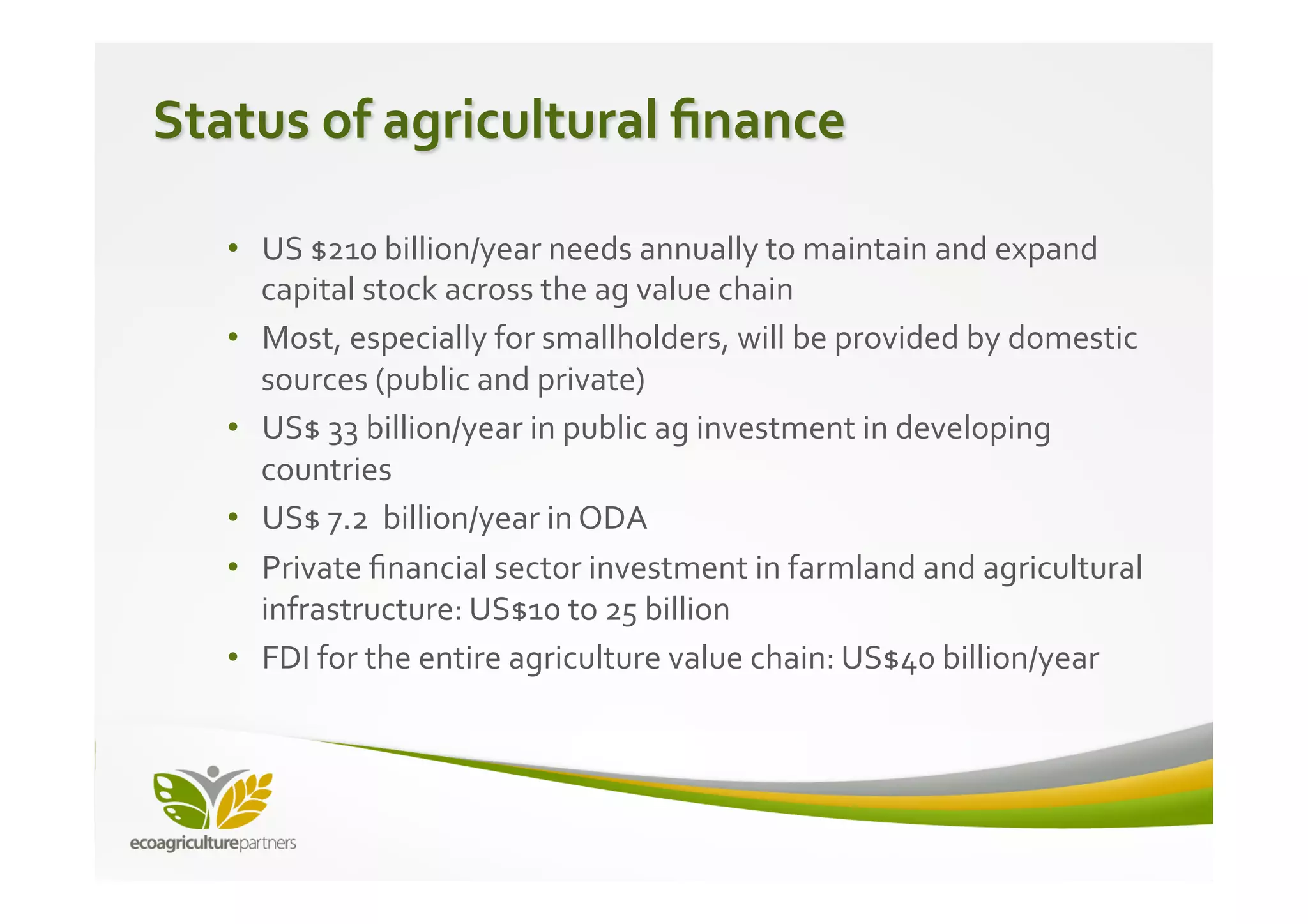
Status	
  of	
  agricultural	
  finance	
  

    •  US	
  $210	
  billion/year	
  needs	
  annually	
  to	
  maintain	
  and	
  expand	
  
       capital	
  stock	
  across	
  the	
  ag	
  value	
  chain	
  
    •  Most,	
  especially	
  for	
  smallholders,	
  will	
  be	
  provided	
  by	
  domestic	
  
       sources	
  (public	
  and	
  private)	
  
    •  US$	
  33	
  billion/year	
  in	
  public	
  ag	
  investment	
  in	
  developing	
  
       countries	
  
    •  US$	
  7.2	
  	
  billion/year	
  in	
  ODA	
  
    •  Private	
  financial	
  sector	
  investment	
  in	
  farmland	
  and	
  agricultural	
  
       infrastructure:	
  US$10	
  to	
  25	
  billion	
  	
  
    •  FDI	
  for	
  the	
  entire	
  agriculture	
  value	
  chain:	
  US$40	
  billion/year	
  
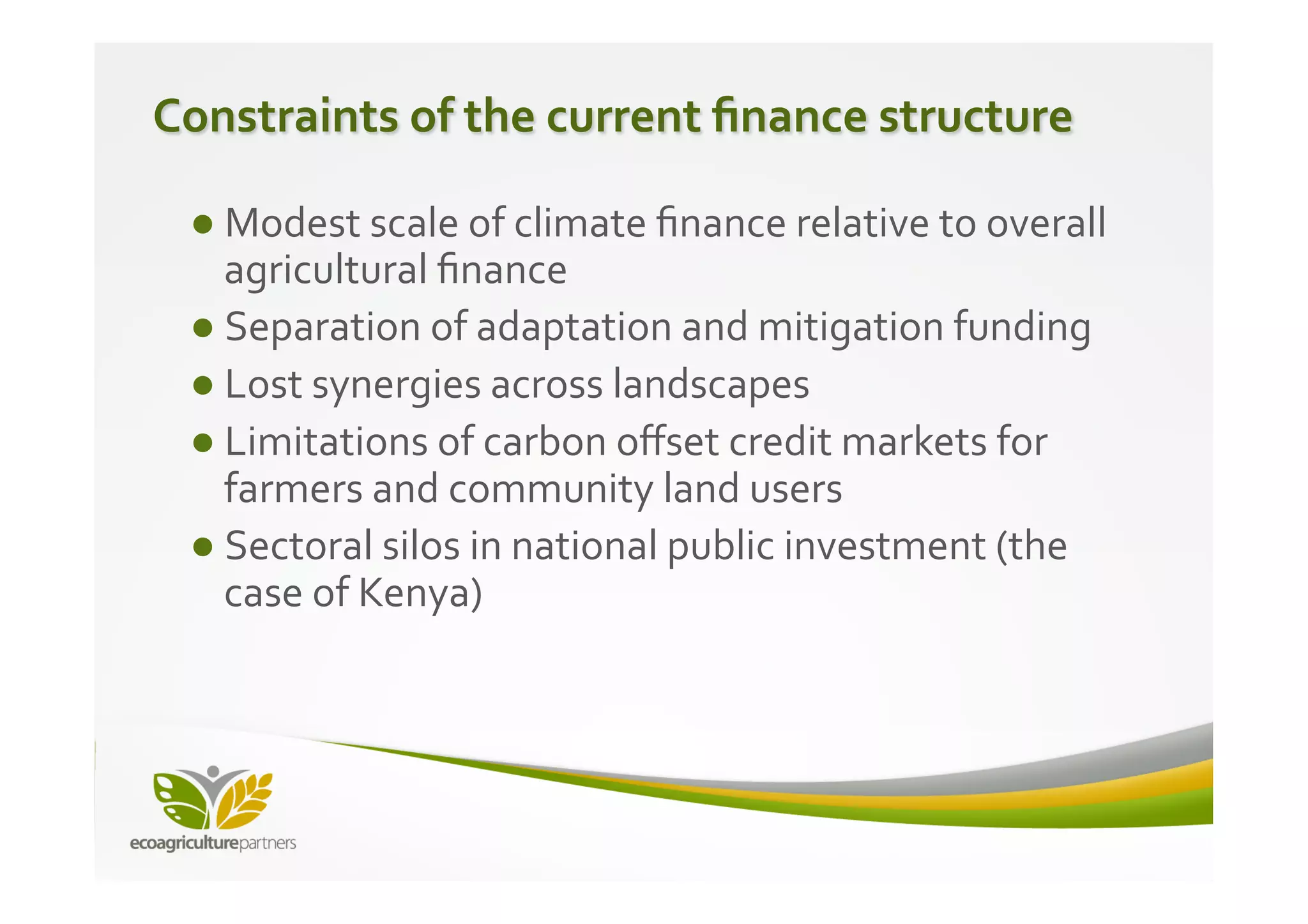
Constraints	
  of	
  the	
  current	
  finance	
  structure	
  

  ● Modest	
  scale	
  of	
  climate	
  finance	
  relative	
  to	
  overall	
  
    agricultural	
  finance	
  
  ● Separation	
  of	
  adaptation	
  and	
  mitigation	
  funding	
  
  ● Lost	
  synergies	
  across	
  landscapes	
  
  ● Limitations	
  of	
  carbon	
  offset	
  credit	
  markets	
  for	
  
    farmers	
  and	
  community	
  land	
  users	
  
  ● Sectoral	
  silos	
  in	
  national	
  public	
  investment	
  (the	
  
    case	
  of	
  Kenya)	
  
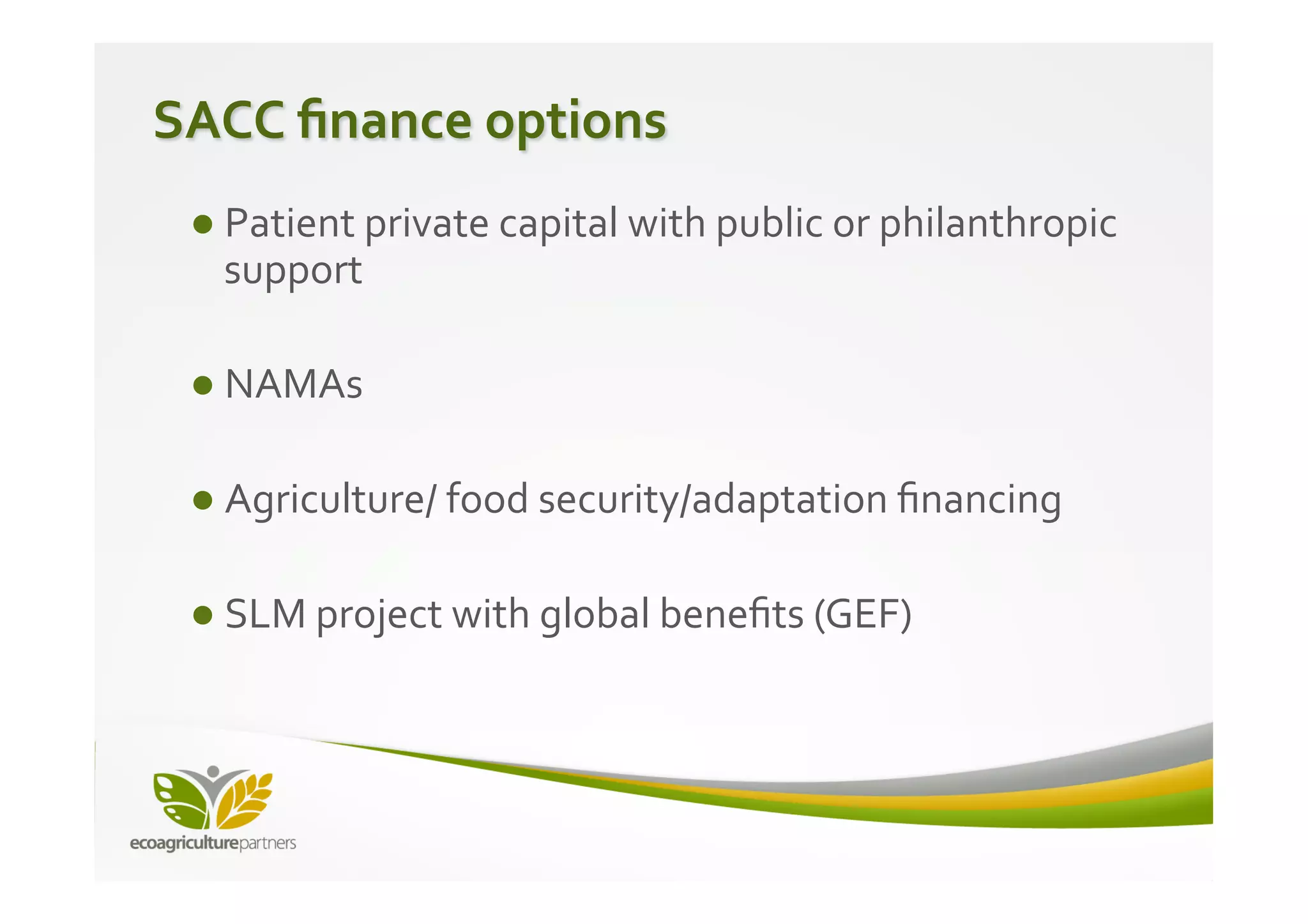
SACC	
  finance	
  options	
  
  ● Patient	
  private	
  capital	
  with	
  public	
  or	
  philanthropic	
  
       support	


  ● NAMAs	


  ● Agriculture/	
  food	
  security/adaptation	
  financing	


  ● SLM	
  project	
  with	
  global	
  benefits	
  (GEF)	


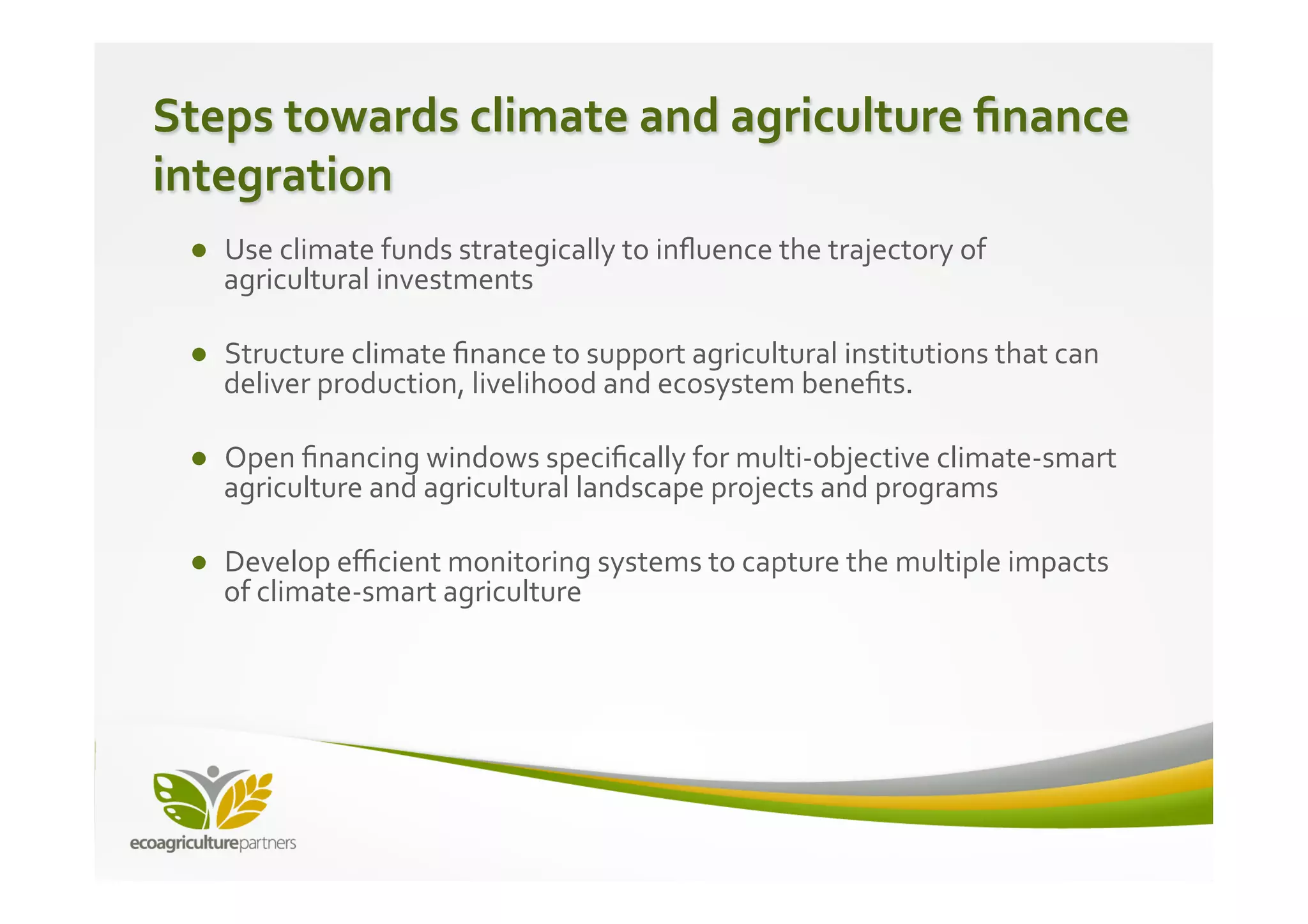
Steps	
  towards	
  climate	
  and	
  agriculture	
  finance	
  
integration	
  
	
   ●  Use	
  climate	
  funds	
  strategically	
  to	
  influence	
  the	
  trajectory	
  of	
  
	
   agricultural	
  investments	
  
   ●  Structure	
  climate	
  finance	
  to	
  support	
  agricultural	
  institutions	
  that	
  can	
  
      deliver	
  production,	
  livelihood	
  and	
  ecosystem	
  benefits.	
  

   ●  Open	
  financing	
  windows	
  specifically	
  for	
  multi-­‐objective	
  climate-­‐smart	
  
      agriculture	
  and	
  agricultural	
  landscape	
  projects	
  and	
  programs	
  

   ●  Develop	
  efficient	
  monitoring	
  systems	
  to	
  capture	
  the	
  multiple	
  impacts	
  
      of	
  climate-­‐smart	
  agriculture	
  
Thank	
  you	


Seth	
  Shames	
  
EcoAgriculture	
  Partners	
  
sshames@ecoagriculture.org	
  
www.ecoagriculture.og	


Learning Event No 2, Session 1 from Agriculture and Rural Development Day (ARDD) 2011

  • 1.
    What  are  the  financing  possibilities   for  CSA  in  Africa  and  what  role  might   there  be  for  carbon  finance?   Seth  Shames   EcoAgriculture  Partners     December  3,  2011   Agriculture  and  Rural  Development   Day     Durban,  South  Africa    
  • 2.
    Overview    1)  The  climate-­‐smart  agriculture  finance  disconnect    2)  Status  of  Climate  and  Agricultural  Finance    3)  Constraints  of  the  current  finance  structure          4)    Options  for  Sustainable  Agriculture  in  a  Changing   Climate  (SACC)  project  in  western  Kenya    5)  Steps  towards  finance  integration      
  • 3.
    The  CSA  finance  disconnect       ●  Funds  for  agricultural,  food  security,  mitigation  and  adaptation  generally  come   from  different  sources  though  these  goals  are  inextricably  linked  in  agricultural   systems       ●  SACC  project  designed  for  voluntary  carbon  market     ●  Project’s  primary  objective  is  livelihood  development  and  resilience  to  climate   change  for  farmers   ●  Given  the  current  low  price  of  carbon,  relatively  low-­‐sequestration  potential,   costs  of  project  implementation  and  the  length  of  time  required  for  credit   development,  carbon  revenues  are  far  less  than  the  full  costs  of  the  project  
  • 4.
    Status  of  climate  finance  for  agriculture   ● Green  Climate  Fund   ● Multilateral  funds   ● Carbon  markets:  regulated  and  voluntary   ● NAMAs   ● Company  supply  chains  standards   ● Philanthropic  
  • 5.
    Status  of  agricultural  finance   •  US  $210  billion/year  needs  annually  to  maintain  and  expand   capital  stock  across  the  ag  value  chain   •  Most,  especially  for  smallholders,  will  be  provided  by  domestic   sources  (public  and  private)   •  US$  33  billion/year  in  public  ag  investment  in  developing   countries   •  US$  7.2    billion/year  in  ODA   •  Private  financial  sector  investment  in  farmland  and  agricultural   infrastructure:  US$10  to  25  billion     •  FDI  for  the  entire  agriculture  value  chain:  US$40  billion/year  
  • 6.
    Constraints  of  the  current  finance  structure   ● Modest  scale  of  climate  finance  relative  to  overall   agricultural  finance   ● Separation  of  adaptation  and  mitigation  funding   ● Lost  synergies  across  landscapes   ● Limitations  of  carbon  offset  credit  markets  for   farmers  and  community  land  users   ● Sectoral  silos  in  national  public  investment  (the   case  of  Kenya)  
  • 7.
    SACC  finance  options   ● Patient  private  capital  with  public  or  philanthropic   support     ● NAMAs     ● Agriculture/  food  security/adaptation  financing     ● SLM  project  with  global  benefits  (GEF)        
  • 8.
    Steps  towards  climate  and  agriculture  finance   integration     ●  Use  climate  funds  strategically  to  influence  the  trajectory  of     agricultural  investments   ●  Structure  climate  finance  to  support  agricultural  institutions  that  can   deliver  production,  livelihood  and  ecosystem  benefits.   ●  Open  financing  windows  specifically  for  multi-­‐objective  climate-­‐smart   agriculture  and  agricultural  landscape  projects  and  programs   ●  Develop  efficient  monitoring  systems  to  capture  the  multiple  impacts   of  climate-­‐smart  agriculture  
  • 9.
    Thank  you   Seth  Shames   EcoAgriculture  Partners   sshames@ecoagriculture.org   www.ecoagriculture.og