
Kushal Gurung
WindPower Nepal Pvt Ltd- CEO
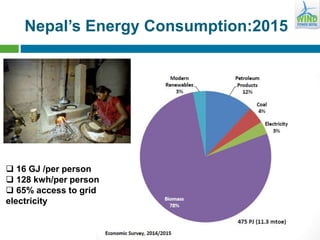
Nepal’s Energy Consumption:2015
 16 GJ /per person
 128 kwh/per person
 65% access to grid
electricity
Clean Energy sources in Nepal
 Hydro: 83,000MW
 Solar: 2100MW (2% of land)
 Wind: 3000MW
 Bioenergy: Biogas, Improved cooking stoves
 Waste to Energy: Municipal Solid Waste
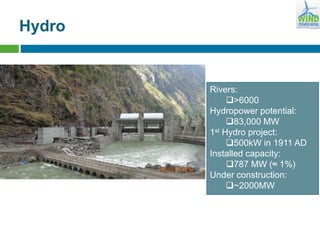
Rivers:
>6000
Hydropower potential:
83,000 MW
1st Hydro project:
500kW in 1911 AD
Installed capacity:
787 MW (≈ 1%)
Under construction:
~2000MW
Hydro
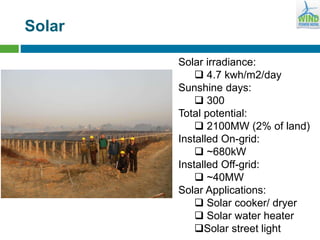
Solar
Solar irradiance:
 4.7 kwh/m2/day
Sunshine days:
 300
Total potential:
 2100MW (2% of land)
Installed On-grid:
 ~680kW
Installed Off-grid:
 ~40MW
Solar Applications:
 Solar cooker/ dryer
 Solar water heater
Solar street light
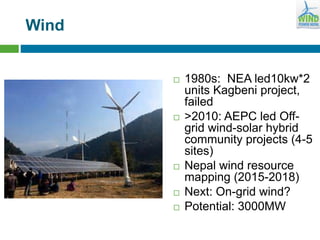
Wind
 1980s: NEA led10kw*2
units Kagbeni project,
failed
 >2010: AEPC led Off-
grid wind-solar hybrid
community projects (4-5
sites)
 Nepal wind resource
mapping (2015-2018)
 Next: On-grid wind?
 Potential: 3000MW
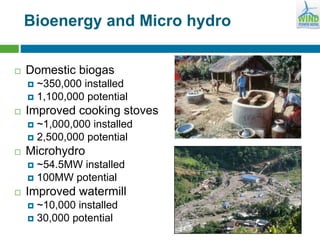
Bioenergy and Micro hydro
 Domestic biogas
 ~350,000 installed
 1,100,000 potential
 Improved cooking stoves
 ~1,000,000 installed
 2,500,000 potential
 Microhydro
 ~54.5MW installed
 100MW potential
 Improved watermill
 ~10,000 installed
 30,000 potential
Policies
 Endorsed Global initiatives by Nepal: SE4ALL; SDGs (No 7)
 NEA (Ministry of Energy): State Utility
 On-grid hydro: 35 year PPA; Tax breaks
 On-grid solar and wind: in-pipeline (no clear policy yet)
 AEPC (Ministry of Population and Environment): Subsidy
driven
 Biomass- Improved cooking system
 solar home system- Urban/Solar/Institutional
 Rural off-grid community electrification system
 Micro-hydro
 Wind-solar hybrid system
 Biogas- Residential/Community/Large scale/Commercial biogas
 Waste to Energy
 Investment Board of Nepal
 Single window approach for FDI on big energy projects
Financing in Clean Energy-
Government
Approach: Subsidy, Grant and Technical Assistance
 National Rural & Renewable Energy Programme
(AEPC)
 Single programme modality, from 2012-2017
 Budget: $170.1 million, including $40 million of TA
 Included energy sources: solar, biogas, biomass
 Renewable Energy for Rural Livelihood (AEPC)
 2014-2019, supported by UNDP & GEF, Budget: $5
million
 To develop 10 MW from mini and micro hydropower
plants, 2.5 MW of solar PV systems and establishment of
mini grids connecting Micro-Hydro Plants of 300 kW
Financing in Clean Energy-
Government
 Scaling Up Renewable Energy Program
(AEPC)
 Extended Biogas Project, 2014-2019
 World Bank funded, Budget: $ 7.1 million
 Target: support large scale off-grid biogas projects
for thermal application and electricity generation
 Grid Solar and Energy Efficiency Project (NEA)
 World Bank funded, 2014-2020, $138 million
 Grid-connected Solar PV Farms Development; and
Distribution System Planning and Loss Reduction
 NEA working on 25MW on-gird solar EPC tender
Financing in Clean Energy-
Government
 South Asia Sub-regional Economic
Cooperation project: Power System
Expansion (NEA/AEPC)
 Funded by ADB; 2014-2022
 ~$440 million as Loan, Grant and Technical
Assistance
 On-grid: executed by NEA; Off-grid: executed by
AEPC
 Off-grid plan: 4.3MW of mini hydro and up to 500
KW of mini-grid based solar or solar/wind hybrid
systems; $5 million loan, $10 million grant
Financing in Clean Energy-
Government
 Ministry of Federal Affairs and Local
Development
 Public Participation Based Solar Street Light
Programme, i.e. ministry, local bodies and users’
committees bear 60, 25 and 15 % respectively
 45,308 solar street lights within 2073/74 ; ~$10
million
Financing in Clean Energy- Non-
govt
 NGOs: Grant driven
 Rural applications- solar water pump, biogas,
improved cooking stoves
 WWF Hariyo Ban Program, Winrock, CRT/N, etc
 Private Sector
 Business model: most of them are Vendors and
EPCs
 Emerging model: Energy Service Company
(ESCOs)
Opportunities
 >30% population have no access to grid, i.e. 90
lakhs*100watt = 900MW off-grid opportunity
 On-grid: Peak demand is up to 1400MW, while
installed capacity is less than 900MW =500MW
 Growing demand for electricity: 10% annual
growth
 Nepal wants to become Developing Country by
2022 (Bangladesh’s per capita electricity
consumption is 258kwh), i.e. more electricity
needed
 Modernised Agriculture: solar water pump,
Bottle necks
 On-grid
 Unclear policy for renewables, other than hydro
 Off-grid
 Mostly subsidy driven- EPC model
 Size limit up to 100kW system (2073)
 Unclear policy for ESCO business
 Rural population have low electricity consumption
 Access to finance
 Unclear law for innovative financing instruments-
crowdfunding
 Project financing at promoters’ risks
 Bureaucratic hurdles in channelling FDI
Way Forward
 More pilot projects esp for on-grid
 Conducive renewable energy policies
 Net metering, Feed-in-Tarrif
 Attractive financial schemes and tax breaks
 Accelerated Depreciation Tax
 Production Tax Credits
 Push for local manufacturing
 Conducive policies for FDI
© WindPower Nepal Pvt. Ltd.
THANK YOU!

Financing clean energy projects in nepal: A practitioner’s perspective

  • 1.
  • 2.
    Nepal’s Energy Consumption:2015 16 GJ /per person  128 kwh/per person  65% access to grid electricity
  • 3.
    Clean Energy sourcesin Nepal  Hydro: 83,000MW  Solar: 2100MW (2% of land)  Wind: 3000MW  Bioenergy: Biogas, Improved cooking stoves  Waste to Energy: Municipal Solid Waste
  • 4.
    Rivers: >6000 Hydropower potential: 83,000 MW 1stHydro project: 500kW in 1911 AD Installed capacity: 787 MW (≈ 1%) Under construction: ~2000MW Hydro
  • 5.
    Solar Solar irradiance:  4.7kwh/m2/day Sunshine days:  300 Total potential:  2100MW (2% of land) Installed On-grid:  ~680kW Installed Off-grid:  ~40MW Solar Applications:  Solar cooker/ dryer  Solar water heater Solar street light
  • 6.
    Wind  1980s: NEAled10kw*2 units Kagbeni project, failed  >2010: AEPC led Off- grid wind-solar hybrid community projects (4-5 sites)  Nepal wind resource mapping (2015-2018)  Next: On-grid wind?  Potential: 3000MW
  • 7.
    Bioenergy and Microhydro  Domestic biogas  ~350,000 installed  1,100,000 potential  Improved cooking stoves  ~1,000,000 installed  2,500,000 potential  Microhydro  ~54.5MW installed  100MW potential  Improved watermill  ~10,000 installed  30,000 potential
  • 8.
    Policies  Endorsed Globalinitiatives by Nepal: SE4ALL; SDGs (No 7)  NEA (Ministry of Energy): State Utility  On-grid hydro: 35 year PPA; Tax breaks  On-grid solar and wind: in-pipeline (no clear policy yet)  AEPC (Ministry of Population and Environment): Subsidy driven  Biomass- Improved cooking system  solar home system- Urban/Solar/Institutional  Rural off-grid community electrification system  Micro-hydro  Wind-solar hybrid system  Biogas- Residential/Community/Large scale/Commercial biogas  Waste to Energy  Investment Board of Nepal  Single window approach for FDI on big energy projects
  • 9.
    Financing in CleanEnergy- Government Approach: Subsidy, Grant and Technical Assistance  National Rural & Renewable Energy Programme (AEPC)  Single programme modality, from 2012-2017  Budget: $170.1 million, including $40 million of TA  Included energy sources: solar, biogas, biomass  Renewable Energy for Rural Livelihood (AEPC)  2014-2019, supported by UNDP & GEF, Budget: $5 million  To develop 10 MW from mini and micro hydropower plants, 2.5 MW of solar PV systems and establishment of mini grids connecting Micro-Hydro Plants of 300 kW
  • 10.
    Financing in CleanEnergy- Government  Scaling Up Renewable Energy Program (AEPC)  Extended Biogas Project, 2014-2019  World Bank funded, Budget: $ 7.1 million  Target: support large scale off-grid biogas projects for thermal application and electricity generation  Grid Solar and Energy Efficiency Project (NEA)  World Bank funded, 2014-2020, $138 million  Grid-connected Solar PV Farms Development; and Distribution System Planning and Loss Reduction  NEA working on 25MW on-gird solar EPC tender
  • 11.
    Financing in CleanEnergy- Government  South Asia Sub-regional Economic Cooperation project: Power System Expansion (NEA/AEPC)  Funded by ADB; 2014-2022  ~$440 million as Loan, Grant and Technical Assistance  On-grid: executed by NEA; Off-grid: executed by AEPC  Off-grid plan: 4.3MW of mini hydro and up to 500 KW of mini-grid based solar or solar/wind hybrid systems; $5 million loan, $10 million grant
  • 12.
    Financing in CleanEnergy- Government  Ministry of Federal Affairs and Local Development  Public Participation Based Solar Street Light Programme, i.e. ministry, local bodies and users’ committees bear 60, 25 and 15 % respectively  45,308 solar street lights within 2073/74 ; ~$10 million
  • 13.
    Financing in CleanEnergy- Non- govt  NGOs: Grant driven  Rural applications- solar water pump, biogas, improved cooking stoves  WWF Hariyo Ban Program, Winrock, CRT/N, etc  Private Sector  Business model: most of them are Vendors and EPCs  Emerging model: Energy Service Company (ESCOs)
  • 14.
    Opportunities  >30% populationhave no access to grid, i.e. 90 lakhs*100watt = 900MW off-grid opportunity  On-grid: Peak demand is up to 1400MW, while installed capacity is less than 900MW =500MW  Growing demand for electricity: 10% annual growth  Nepal wants to become Developing Country by 2022 (Bangladesh’s per capita electricity consumption is 258kwh), i.e. more electricity needed  Modernised Agriculture: solar water pump,
  • 15.
    Bottle necks  On-grid Unclear policy for renewables, other than hydro  Off-grid  Mostly subsidy driven- EPC model  Size limit up to 100kW system (2073)  Unclear policy for ESCO business  Rural population have low electricity consumption  Access to finance  Unclear law for innovative financing instruments- crowdfunding  Project financing at promoters’ risks  Bureaucratic hurdles in channelling FDI
  • 16.
    Way Forward  Morepilot projects esp for on-grid  Conducive renewable energy policies  Net metering, Feed-in-Tarrif  Attractive financial schemes and tax breaks  Accelerated Depreciation Tax  Production Tax Credits  Push for local manufacturing  Conducive policies for FDI
  • 17.
    © WindPower NepalPvt. Ltd. THANK YOU!

Editor's Notes

  • #5 River system-Hydro potential