Downloaded 46 times






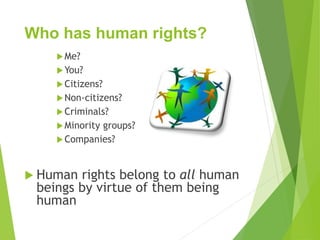
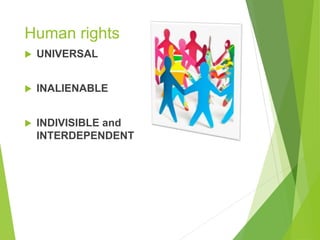



The document discusses different types of rights theory, including natural law, natural rights, and human rights. It notes that Cyrus the Great freed slaves in Babylon in 539 BC, establishing racial equality and freedom of religion. The document defines rights as entitlements to perform certain actions or be in certain states. It explains that human rights belong to all humans by virtue of their humanity, and are universal, inalienable, and indivisible. The document outlines different types of human rights and concepts of rights, including negative rights to noninterference and positive rights to well-being.


