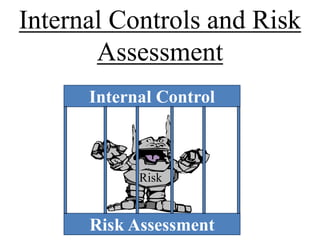
Internal Controls and Risk
Assessment
Internal Control
Risk Assessment
Risk
.
Poor
Management
Information
System Demanding
Targets and
linked
Rewards
Arrogance &
Resistance
Poor
Accounting
Controls
Lack of
TransparencyGreed
Complex
Organizationa
l Structure
Complacency
Lack of Clear
Moral
Direction
Non
Independent
Internal Audit
Department
10 Reasons why fraud occurs
All people committed towards a common goal
Systems Design and Internal Controls
Finally the spirit to overcome the odds
A successful organization needs three
things
Key Components of Managements’
Assessment of Internal Control
Management must
evaluate the design of
internal control over
financial reporting.
Management must test
the operating
effectiveness of those
controls.
What is Internal Control?
Internal control is a process, effected by an entity’s
board of Directors, management and other personnel,
designed to provide reasonable assurance regarding the
achievement of objectives in the following categories:
 Effectiveness and Efficiency of operations
 Reliability of financial reporting
 Compliance with applicable laws and regulations
Internal Controls “Can”
 Promote reliable internal and external financial reporting
 Help safeguard assets
 Promote compliance with laws and regulations
 Help a company achieve its performance and profitability
targets
Nature of Risk
 R= risk is relative because perception of downside and
upside risk is individual, and that applies to people and
organizations.
 I= risk is intuitive because we learn with experience
and time.
 S= risk is significant because everything we do has
positive and negative consequences.
 K= risk is kinetic because it changes relative to
situations, events, time and space.
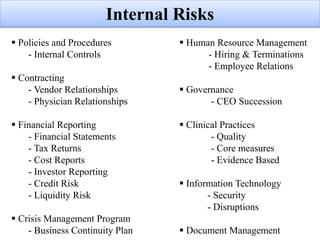
Internal Risks
 Policies and Procedures
- Internal Controls
 Contracting
- Vendor Relationships
- Physician Relationships
 Financial Reporting
- Financial Statements
- Tax Returns
- Cost Reports
- Investor Reporting
- Credit Risk
- Liquidity Risk
 Crisis Management Program
- Business Continuity Plan
 Human Resource Management
- Hiring & Terminations
- Employee Relations
 Governance
- CEO Succession
 Clinical Practices
- Quality
- Core measures
- Evidence Based
 Information Technology
- Security
- Disruptions
 Document Management
What Affects Risk?
 Organizational Cultures and Ethics
 Financial Pressures
 Technology
 Competition
 Business Strategy i.e. joint ventures, mergers, acquitions
 Central, State and International Laws
Change= Risk
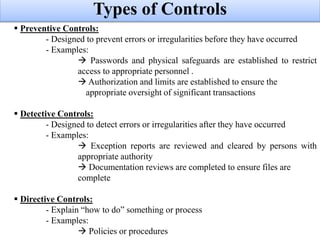
Types of Controls
 Preventive Controls:
- Designed to prevent errors or irregularities before they have occurred
- Examples:
 Passwords and physical safeguards are established to restrict
access to appropriate personnel .
 Authorization and limits are established to ensure the
appropriate oversight of significant transactions
 Detective Controls:
- Designed to detect errors or irregularities after they have occurred
- Examples:
 Exception reports are reviewed and cleared by persons with
appropriate authority
 Documentation reviews are completed to ensure files are
complete
 Directive Controls:
- Explain “how to do” something or process
- Examples:
 Policies or procedures
Internal Controls
It’s Good for Your Fiscal Health
– Effectiveness and Efficiency of Operations
– Reliability of Financial Reporting
– Compliance with Laws and Regulations
It’s Good for Your Physical Health
– Balanced Diet
– Exercise
– Good balance of leisure and work-mental health
Thank You

Final presentation internal controls

  • 1.
    Internal Controls andRisk Assessment Internal Control Risk Assessment Risk .
  • 2.
    Poor Management Information System Demanding Targets and linked Rewards Arrogance& Resistance Poor Accounting Controls Lack of TransparencyGreed Complex Organizationa l Structure Complacency Lack of Clear Moral Direction Non Independent Internal Audit Department 10 Reasons why fraud occurs
  • 3.
    All people committedtowards a common goal Systems Design and Internal Controls Finally the spirit to overcome the odds A successful organization needs three things
  • 4.
    Key Components ofManagements’ Assessment of Internal Control Management must evaluate the design of internal control over financial reporting. Management must test the operating effectiveness of those controls.
  • 5.
    What is InternalControl? Internal control is a process, effected by an entity’s board of Directors, management and other personnel, designed to provide reasonable assurance regarding the achievement of objectives in the following categories:  Effectiveness and Efficiency of operations  Reliability of financial reporting  Compliance with applicable laws and regulations
  • 6.
    Internal Controls “Can” Promote reliable internal and external financial reporting  Help safeguard assets  Promote compliance with laws and regulations  Help a company achieve its performance and profitability targets
  • 7.
    Nature of Risk R= risk is relative because perception of downside and upside risk is individual, and that applies to people and organizations.  I= risk is intuitive because we learn with experience and time.  S= risk is significant because everything we do has positive and negative consequences.  K= risk is kinetic because it changes relative to situations, events, time and space.
  • 8.
    Internal Risks  Policiesand Procedures - Internal Controls  Contracting - Vendor Relationships - Physician Relationships  Financial Reporting - Financial Statements - Tax Returns - Cost Reports - Investor Reporting - Credit Risk - Liquidity Risk  Crisis Management Program - Business Continuity Plan  Human Resource Management - Hiring & Terminations - Employee Relations  Governance - CEO Succession  Clinical Practices - Quality - Core measures - Evidence Based  Information Technology - Security - Disruptions  Document Management
  • 9.
    What Affects Risk? Organizational Cultures and Ethics  Financial Pressures  Technology  Competition  Business Strategy i.e. joint ventures, mergers, acquitions  Central, State and International Laws Change= Risk
  • 10.
    Types of Controls Preventive Controls: - Designed to prevent errors or irregularities before they have occurred - Examples:  Passwords and physical safeguards are established to restrict access to appropriate personnel .  Authorization and limits are established to ensure the appropriate oversight of significant transactions  Detective Controls: - Designed to detect errors or irregularities after they have occurred - Examples:  Exception reports are reviewed and cleared by persons with appropriate authority  Documentation reviews are completed to ensure files are complete  Directive Controls: - Explain “how to do” something or process - Examples:  Policies or procedures
  • 11.
    Internal Controls It’s Goodfor Your Fiscal Health – Effectiveness and Efficiency of Operations – Reliability of Financial Reporting – Compliance with Laws and Regulations It’s Good for Your Physical Health – Balanced Diet – Exercise – Good balance of leisure and work-mental health
  • 12.