Film Poster
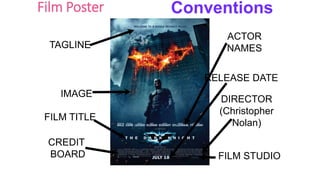
TAGLINE
MAIN (striking)
IMAGE
ACTOR
NAMES
RELEASE DATE
FILM TITLE
FILM STUDIO
DIRECTOR
(Christopher
Nolan)
CREDIT
BOARD
Conventions
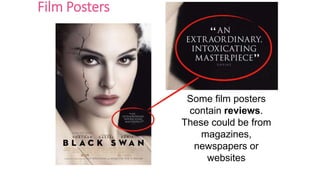
Film Posters
Some film posters
contain reviews.
These could be from
magazines,
newspapers or
websites
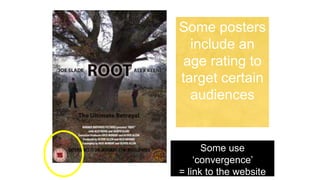
Some posters
include an
age rating to
target certain
audiences
Some use
‘convergence’
= link to the website
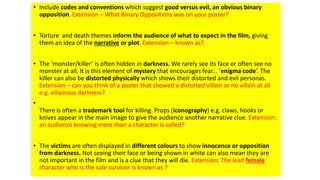
• Include codes and conventions which suggest good versus evil, an obvious binary
opposition. Extension – What Binary Oppositions was on your poster?
• Torture and death themes inform the audience of what to expect in the film, giving
them an idea of the narrative or plot. Extension – known as?
• The ‘monster/killer’ is often hidden in darkness. We rarely see its face or often see no
monster at all. It is this element of mystery that encourages fear... ‘enigma code’. The
killer can also be distorted physically which shows their distorted and evil personas.
Extension – can you think of a poster that showed a distorted villain or no villain at all
e.g. villainous darkness?
•
There is often a trademark tool for killing. Props (iconography) e.g. claws, hooks or
knives appear in the main image to give the audience another narrative clue. Extension:
an audience knowing more than a character is called?
• The victims are often displayed in different colours to show innocence or opposition
from darkness. Not seeing their face or being shown in white can also mean they are
not important in the film and is a clue that they will die. Extension: The lead female
character who is the sole survivor is known as ?
Analyse your poster in terms of mise-en-scene:
• Lighting
• Title (design and name)
• Tagline
• Main image
• shot type
• Colour
• Setting
• Character (type, body language, action, costume)
• Director
• credit board
• age rating
• Release date
Town’s example analysis based on past poster:
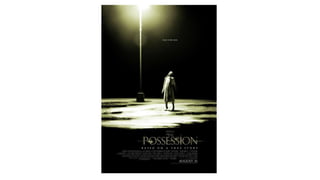
• The poster is an extreme long shot, the character is alone in the isolated
setting, this is typical of horror films.
• The colour scheme is dark and bleak suggesting no hope, there is ghostly
light coming from the streetlamp which indicates a godly or ghostly
presence, connotations of heaven V hell or near death experience.
• The character is a young blonde innocent girl, a recurring theme in horror
featuring children is a juxtaposition of evil and innocence; saints and
sinners.
• In addition, her body is thrust forward as if she is about to contort herself,
this is typical behaviour of people who are possessed indicating the genre
and making reference to the title of the film.
• Words “Based on a true story” is intended to scare the audience. It makes
them believe such activity exists and could happen to you, (realism),
another reason why horror films use un-established actors.
• Tagline, “Pray for Her” is interactive between film and audience, it is a
command which directly instructs the audience to save her soul, and it
suggests there is little hope (religious undertones). It suggests there is an
evil force which is that binary opposition between good and evil.
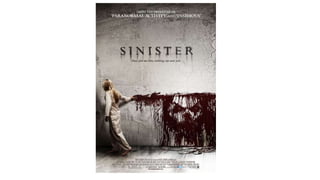
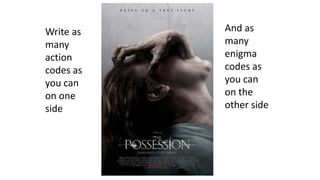
• The colour scheme is dark and bleak apart from the red blood
which the girl is smearing on the wall. This indicates danger and
is a narrative clue of the gore you expect to see.
• The title and typography looks as if blood is seeping out of it
which is used to emphasise theme of death and pain.
• The image of a distorted face of a monster fits into the
conventions of distorted characters and a paranormal presence
aimed to add mystery and fear ‘also referred to as him’-who is
he?-enigma.
• Character – Propp’s Character Type – Princess. Little blonde girl
in panamas and bare feet =sweet and innocent. She should not
be there, awkward clash = juxtaposition. Makes audience feel
unnerved.
• The setting is cold and unwelcoming and because of this the
character is isolated, vulnerable and misplaced in her pyjamas
wiping blood on the wall ‘blood is on her hands!’
Write as
many
action
codes as
you can
on one
side
And as
many
enigma
codes as
you can
on the
other side
Possible answers
• She has been possessed! – action
• She needs an exorcism! - action
• There is an evil force at work!- action
• Who does that hand belong to? – enigma
• How did it get inside her? – enigma
• Will she live or die? – enigma
It could also be said that as she is a young girl, she is stereotypically
weaker, which leads us onto Propp’s theory of character types.
‘Character Theory’ was created by
Russian Theorist, Vladimir Propp. He
studied fairy tales and said that there
are 8 character types always present in
fairy tales. However, these types are
often seen in other stories and genres
too.
Example answer
• The main image indicates that the protagonist is the victim. She is the
princess because she plays the damsel in distress. The hand is the
villain. The film has conformed to stereotypical horror conventions
and Propp’s theory of Character Types by having a female victim as
they are seen as weaker and more defenceless against the villain.
Propp’s character types (Proppian)
• The Villain - Fights the hero in the struggle between good and evil
• The Hero - Main character, the good in the fight between good and evil.
• The Donor - Helps or prepares the hero, provides significant object
• The Helper - Aids the hero on their journey
• The Princess - The hero's object of desire, the prize for his defeat against the villain
• The father of the princess - Sets the hero his task to save his daughter
• The dispatcher - This character initially sets the character on his way
• The false hero - Tries to take the reward of the hero or falsely present himself as the hero
• The ones in bold are the ones I want you to copy down as they may crop up in our film posters.
Dyer’s Star Theory
• Richard Dyer says that all stars display 3 qualities to ensure they stay
in the public eye.
1. The way they are constructed – They deliberately look a certain way
to get noticed. Their looks are their USP i.e. Gaga in her meat dress.
2. They are all commodities – They can be bought and sold. This is
important for your coursework as magazines and film posters will
quite often feature someone famous as a money making scheme!
3. They all have an ideology – a message they stand by or send out
(even if this is not actually what they believe)

Film poster analysis

  • 1.
    Film Poster TAGLINE MAIN (striking) IMAGE ACTOR NAMES RELEASEDATE FILM TITLE FILM STUDIO DIRECTOR (Christopher Nolan) CREDIT BOARD Conventions
  • 2.
    Film Posters Some filmposters contain reviews. These could be from magazines, newspapers or websites
  • 3.
    Some posters include an agerating to target certain audiences Some use ‘convergence’ = link to the website
  • 4.
    • Include codesand conventions which suggest good versus evil, an obvious binary opposition. Extension – What Binary Oppositions was on your poster? • Torture and death themes inform the audience of what to expect in the film, giving them an idea of the narrative or plot. Extension – known as? • The ‘monster/killer’ is often hidden in darkness. We rarely see its face or often see no monster at all. It is this element of mystery that encourages fear... ‘enigma code’. The killer can also be distorted physically which shows their distorted and evil personas. Extension – can you think of a poster that showed a distorted villain or no villain at all e.g. villainous darkness? • There is often a trademark tool for killing. Props (iconography) e.g. claws, hooks or knives appear in the main image to give the audience another narrative clue. Extension: an audience knowing more than a character is called? • The victims are often displayed in different colours to show innocence or opposition from darkness. Not seeing their face or being shown in white can also mean they are not important in the film and is a clue that they will die. Extension: The lead female character who is the sole survivor is known as ?
  • 5.
    Analyse your posterin terms of mise-en-scene: • Lighting • Title (design and name) • Tagline • Main image • shot type • Colour • Setting • Character (type, body language, action, costume) • Director • credit board • age rating • Release date
  • 7.
    Town’s example analysisbased on past poster: • The poster is an extreme long shot, the character is alone in the isolated setting, this is typical of horror films. • The colour scheme is dark and bleak suggesting no hope, there is ghostly light coming from the streetlamp which indicates a godly or ghostly presence, connotations of heaven V hell or near death experience. • The character is a young blonde innocent girl, a recurring theme in horror featuring children is a juxtaposition of evil and innocence; saints and sinners. • In addition, her body is thrust forward as if she is about to contort herself, this is typical behaviour of people who are possessed indicating the genre and making reference to the title of the film. • Words “Based on a true story” is intended to scare the audience. It makes them believe such activity exists and could happen to you, (realism), another reason why horror films use un-established actors. • Tagline, “Pray for Her” is interactive between film and audience, it is a command which directly instructs the audience to save her soul, and it suggests there is little hope (religious undertones). It suggests there is an evil force which is that binary opposition between good and evil.
  • 9.
    • The colourscheme is dark and bleak apart from the red blood which the girl is smearing on the wall. This indicates danger and is a narrative clue of the gore you expect to see. • The title and typography looks as if blood is seeping out of it which is used to emphasise theme of death and pain. • The image of a distorted face of a monster fits into the conventions of distorted characters and a paranormal presence aimed to add mystery and fear ‘also referred to as him’-who is he?-enigma. • Character – Propp’s Character Type – Princess. Little blonde girl in panamas and bare feet =sweet and innocent. She should not be there, awkward clash = juxtaposition. Makes audience feel unnerved. • The setting is cold and unwelcoming and because of this the character is isolated, vulnerable and misplaced in her pyjamas wiping blood on the wall ‘blood is on her hands!’
  • 10.
    Write as many action codes as youcan on one side And as many enigma codes as you can on the other side
  • 11.
    Possible answers • Shehas been possessed! – action • She needs an exorcism! - action • There is an evil force at work!- action • Who does that hand belong to? – enigma • How did it get inside her? – enigma • Will she live or die? – enigma It could also be said that as she is a young girl, she is stereotypically weaker, which leads us onto Propp’s theory of character types.
  • 12.
    ‘Character Theory’ wascreated by Russian Theorist, Vladimir Propp. He studied fairy tales and said that there are 8 character types always present in fairy tales. However, these types are often seen in other stories and genres too.
  • 13.
    Example answer • Themain image indicates that the protagonist is the victim. She is the princess because she plays the damsel in distress. The hand is the villain. The film has conformed to stereotypical horror conventions and Propp’s theory of Character Types by having a female victim as they are seen as weaker and more defenceless against the villain.
  • 14.
    Propp’s character types(Proppian) • The Villain - Fights the hero in the struggle between good and evil • The Hero - Main character, the good in the fight between good and evil. • The Donor - Helps or prepares the hero, provides significant object • The Helper - Aids the hero on their journey • The Princess - The hero's object of desire, the prize for his defeat against the villain • The father of the princess - Sets the hero his task to save his daughter • The dispatcher - This character initially sets the character on his way • The false hero - Tries to take the reward of the hero or falsely present himself as the hero • The ones in bold are the ones I want you to copy down as they may crop up in our film posters.
  • 15.
    Dyer’s Star Theory •Richard Dyer says that all stars display 3 qualities to ensure they stay in the public eye. 1. The way they are constructed – They deliberately look a certain way to get noticed. Their looks are their USP i.e. Gaga in her meat dress. 2. They are all commodities – They can be bought and sold. This is important for your coursework as magazines and film posters will quite often feature someone famous as a money making scheme! 3. They all have an ideology – a message they stand by or send out (even if this is not actually what they believe)

Editor's Notes

  • #2 List on these conventions on your own Batman poster