REPRESENTATION IN ACTION
ADVENTURE FILMS
e:
ctiv
bje
gO
rnin
ea
L
To

identify

stereo

types
To e x p
lore re
presen
A c ti o n
tation i
Adven
n
ture Fi
lms
Traditional stereotypes
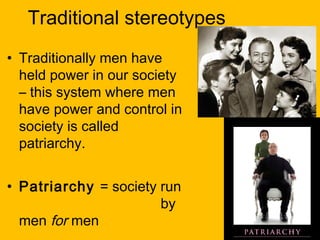
• Traditionally men have
held power in our society
– this system where men
have power and control in
society is called
patriarchy.
• Patriarchy = society run
by
men for men
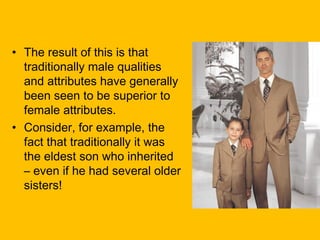
• The result of this is that
traditionally male qualities
and attributes have generally
been seen to be superior to
female attributes.
• Consider, for example, the
fact that traditionally it was
the eldest son who inherited
– even if he had several older
sisters!
• This was often reflected in the media, as
most media companies were run by men!
• Masculinity was often represented in ways
that were shown to be superior to feminine
qualities. Men were often shown to be more
important and powerful than women.
• Women were often shown in roles that suited
men and which kept them from challenging
men for power.
• In other words, the media showed men and
women how men wanted them to be!
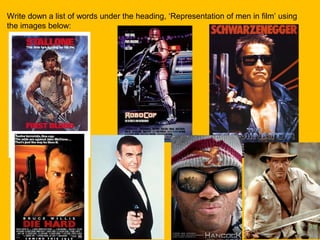
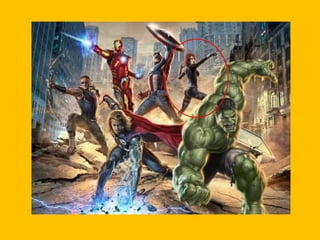
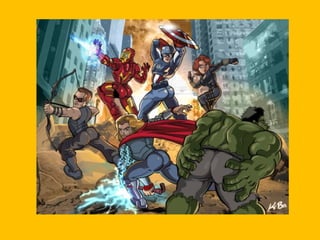
Write down a list of words under the heading, ‘Representation of men in film’ using
the images below:
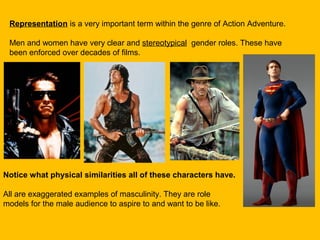
Representation is a very important term within the genre of Action Adventure.
Men and women have very clear and stereotypical gender roles. These have
been enforced over decades of films.

Notice what physical similarities all of these characters have.
All are exaggerated examples of masculinity. They are role
models for the male audience to aspire to and want to be like.
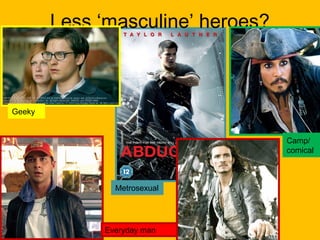
Less ‘masculine’ heroes?

Geeky

Camp/
comical

Metrosexual

Everyday man
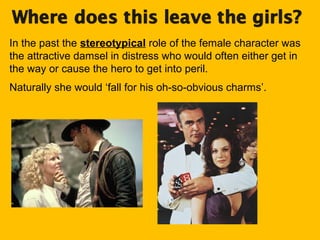
In the past the stereotypical role of the female character was
the attractive damsel in distress who would often either get in
the way or cause the hero to get into peril.
Naturally she would ‘fall for his oh-so-obvious charms’.
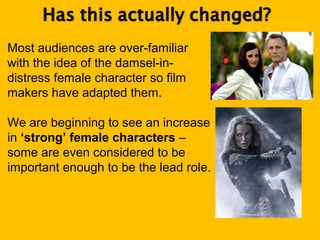
Most audiences are over-familiar
with the idea of the damsel-indistress female character so film
makers have adapted them.
We are beginning to see an increase
in ‘strong’ female characters –
some are even considered to be
important enough to be the lead role.
Diamond 9
In pairs – re-arrange the diamond shape
putting what type of female character is
represented as being the strongest.
You’ll need to discuss with your partner
and perhaps compromise to reach an
agreement. Be ready to explain your
reasons.
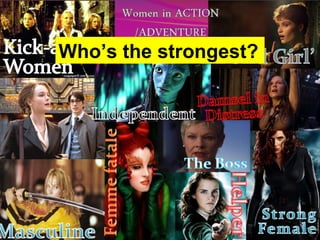
Who’s the strongest?
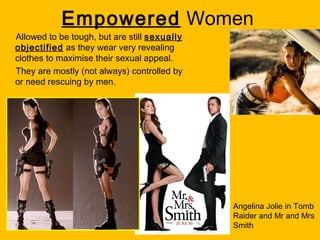
Empowered Women
Allowed to be tough, but are still sexually
objectified as they wear very revealing
clothes to maximise their sexual appeal.
They are mostly (not always) controlled by
or need rescuing by men.

Angelina Jolie in Tomb
Raider and Mr and Mrs
Smith
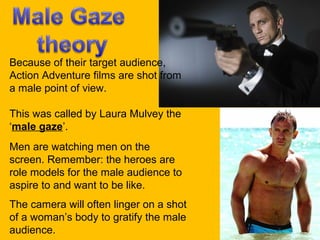
Because of their target audience,
Action Adventure films are shot from
a male point of view.
This was called by Laura Mulvey the
‘male gaze’.
Men are watching men on the
screen. Remember: the heroes are
role models for the male audience to
aspire to and want to be like.
The camera will often linger on a shot
of a woman’s body to gratify the male
audience.
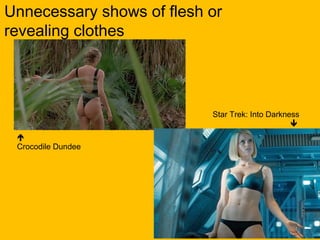
Unnecessary shows of flesh or
revealing clothes

Star Trek: Into Darkness


Crocodile Dundee
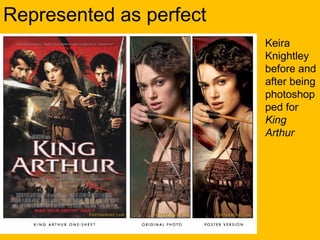
Represented as perfect
Keira
Knightley
before and
after being
photoshop
ped for
King
Arthur
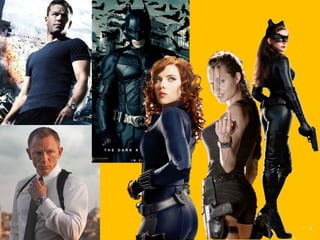
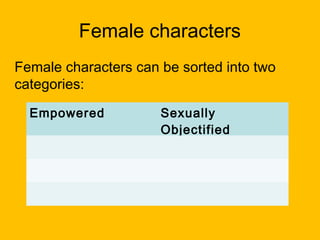
Female characters
Female characters can be sorted into two
categories:
Empowered

Sexually
Objectified
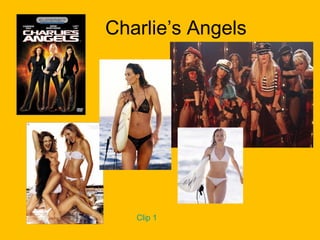
Charlie’s Angels

Clip 1
Write a response to the following question:

Some critics argue that action adventure films feed into
sexist stereotypes about the roles and men and women.
To what extent would you agree or disagree?
You should think about what we have talked about this lesson and make sure
you refer to representation in Charlie’s Angels.

Stereotype

Representation
Audience

Gender

Target

Expectation
Roles
Male Gaze
For years, the roles of men and women are almost always very clear and defined within
Action Adventure films...
Ethnicity
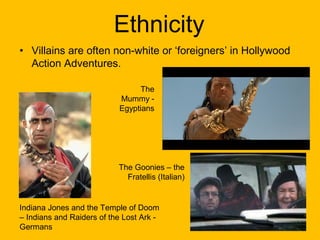
• Villains are often non-white or ‘foreigners’ in Hollywood
Action Adventures.
The
Mummy Egyptians

The Goonies – the
Fratellis (Italian)

Indiana Jones and the Temple of Doom
– Indians and Raiders of the Lost Ark Germans
Ethnicity
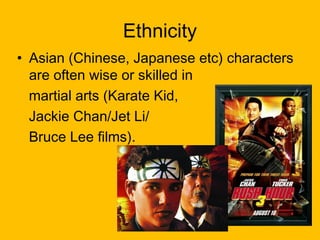
• Asian (Chinese, Japanese etc) characters
are often wise or skilled in
martial arts (Karate Kid,
Jackie Chan/Jet Li/
Bruce Lee films).
Blaxploitation
•

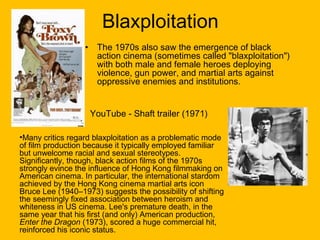
The 1970s also saw the emergence of black
action cinema (sometimes called "blaxploitation")
with both male and female heroes deploying
violence, gun power, and martial arts against
oppressive enemies and institutions.
YouTube - Shaft trailer (1971)

•Many critics regard blaxploitation as a problematic mode
of film production because it typically employed familiar
but unwelcome racial and sexual stereotypes.
Significantly, though, black action films of the 1970s
strongly evince the influence of Hong Kong filmmaking on
American cinema. In particular, the international stardom
achieved by the Hong Kong cinema martial arts icon
Bruce Lee (1940–1973) suggests the possibility of shifting
the seemingly fixed association between heroism and
whiteness in US cinema. Lee's premature death, in the
same year that his first (and only) American production,
Enter the Dragon (1973), scored a huge commercial hit,
reinforced his iconic status.
•

Biracial casting

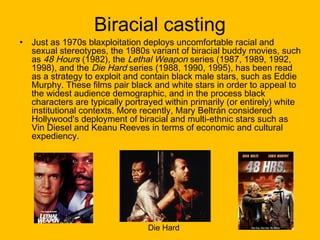
Just as 1970s blaxploitation deploys uncomfortable racial and
sexual stereotypes, the 1980s variant of biracial buddy movies, such
as 48 Hours (1982), the Lethal Weapon series (1987, 1989, 1992,
1998), and the Die Hard series (1988, 1990, 1995), has been read
as a strategy to exploit and contain black male stars, such as Eddie
Murphy. These films pair black and white stars in order to appeal to
the widest audience demographic, and in the process black
characters are typically portrayed within primarily (or entirely) white
institutional contexts. More recently, Mary Beltrán considered
Hollywood's deployment of biracial and multi-ethnic stars such as
Vin Diesel and Keanu Reeves in terms of economic and cultural
expediency.

Die Hard
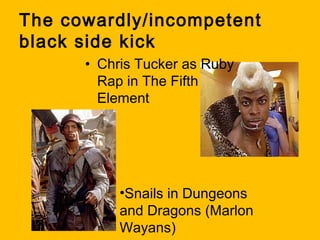
The cowardly/incompetent
black side kick
• Chris Tucker as Ruby
Rap in The Fifth
Element

•Snails in Dungeons
and Dragons (Marlon
Wayans)
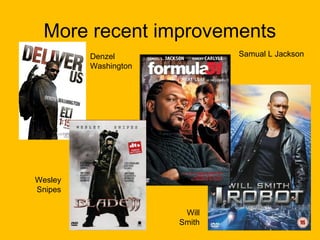
More recent improvements
Samual L Jackson

Denzel
Washington

Wesley
Snipes
Will
Smith

GCSE Media Action Adventure Lesson 7 - Representation

  • 1.
    REPRESENTATION IN ACTION ADVENTUREFILMS e: ctiv bje gO rnin ea L To identify stereo types To e x p lore re presen A c ti o n tation i Adven n ture Fi lms
  • 2.
    Traditional stereotypes • Traditionallymen have held power in our society – this system where men have power and control in society is called patriarchy. • Patriarchy = society run by men for men
  • 3.
    • The resultof this is that traditionally male qualities and attributes have generally been seen to be superior to female attributes. • Consider, for example, the fact that traditionally it was the eldest son who inherited – even if he had several older sisters!
  • 4.
    • This wasoften reflected in the media, as most media companies were run by men! • Masculinity was often represented in ways that were shown to be superior to feminine qualities. Men were often shown to be more important and powerful than women. • Women were often shown in roles that suited men and which kept them from challenging men for power. • In other words, the media showed men and women how men wanted them to be!
  • 5.
    Write down alist of words under the heading, ‘Representation of men in film’ using the images below:
  • 6.
    Representation is avery important term within the genre of Action Adventure. Men and women have very clear and stereotypical gender roles. These have been enforced over decades of films. Notice what physical similarities all of these characters have. All are exaggerated examples of masculinity. They are role models for the male audience to aspire to and want to be like.
  • 7.
  • 8.
    In the pastthe stereotypical role of the female character was the attractive damsel in distress who would often either get in the way or cause the hero to get into peril. Naturally she would ‘fall for his oh-so-obvious charms’.
  • 9.
    Most audiences areover-familiar with the idea of the damsel-indistress female character so film makers have adapted them. We are beginning to see an increase in ‘strong’ female characters – some are even considered to be important enough to be the lead role.
  • 10.
    Diamond 9 In pairs– re-arrange the diamond shape putting what type of female character is represented as being the strongest. You’ll need to discuss with your partner and perhaps compromise to reach an agreement. Be ready to explain your reasons.
  • 11.
  • 15.
    Empowered Women Allowed tobe tough, but are still sexually objectified as they wear very revealing clothes to maximise their sexual appeal. They are mostly (not always) controlled by or need rescuing by men. Angelina Jolie in Tomb Raider and Mr and Mrs Smith
  • 16.
    Because of theirtarget audience, Action Adventure films are shot from a male point of view. This was called by Laura Mulvey the ‘male gaze’. Men are watching men on the screen. Remember: the heroes are role models for the male audience to aspire to and want to be like. The camera will often linger on a shot of a woman’s body to gratify the male audience.
  • 17.
    Unnecessary shows offlesh or revealing clothes Star Trek: Into Darkness   Crocodile Dundee
  • 18.
    Represented as perfect Keira Knightley beforeand after being photoshop ped for King Arthur
  • 19.
    Female characters Female characterscan be sorted into two categories: Empowered Sexually Objectified
  • 20.
  • 22.
    Write a responseto the following question: Some critics argue that action adventure films feed into sexist stereotypes about the roles and men and women. To what extent would you agree or disagree? You should think about what we have talked about this lesson and make sure you refer to representation in Charlie’s Angels. Stereotype Representation Audience Gender Target Expectation Roles Male Gaze For years, the roles of men and women are almost always very clear and defined within Action Adventure films...
  • 24.
    Ethnicity • Villains areoften non-white or ‘foreigners’ in Hollywood Action Adventures. The Mummy Egyptians The Goonies – the Fratellis (Italian) Indiana Jones and the Temple of Doom – Indians and Raiders of the Lost Ark Germans
  • 25.
    Ethnicity • Asian (Chinese,Japanese etc) characters are often wise or skilled in martial arts (Karate Kid, Jackie Chan/Jet Li/ Bruce Lee films).
  • 26.
    Blaxploitation • The 1970s alsosaw the emergence of black action cinema (sometimes called "blaxploitation") with both male and female heroes deploying violence, gun power, and martial arts against oppressive enemies and institutions. YouTube - Shaft trailer (1971) •Many critics regard blaxploitation as a problematic mode of film production because it typically employed familiar but unwelcome racial and sexual stereotypes. Significantly, though, black action films of the 1970s strongly evince the influence of Hong Kong filmmaking on American cinema. In particular, the international stardom achieved by the Hong Kong cinema martial arts icon Bruce Lee (1940–1973) suggests the possibility of shifting the seemingly fixed association between heroism and whiteness in US cinema. Lee's premature death, in the same year that his first (and only) American production, Enter the Dragon (1973), scored a huge commercial hit, reinforced his iconic status.
  • 27.
    • Biracial casting Just as1970s blaxploitation deploys uncomfortable racial and sexual stereotypes, the 1980s variant of biracial buddy movies, such as 48 Hours (1982), the Lethal Weapon series (1987, 1989, 1992, 1998), and the Die Hard series (1988, 1990, 1995), has been read as a strategy to exploit and contain black male stars, such as Eddie Murphy. These films pair black and white stars in order to appeal to the widest audience demographic, and in the process black characters are typically portrayed within primarily (or entirely) white institutional contexts. More recently, Mary Beltrán considered Hollywood's deployment of biracial and multi-ethnic stars such as Vin Diesel and Keanu Reeves in terms of economic and cultural expediency. Die Hard
  • 28.
    The cowardly/incompetent black sidekick • Chris Tucker as Ruby Rap in The Fifth Element •Snails in Dungeons and Dragons (Marlon Wayans)
  • 29.
    More recent improvements SamualL Jackson Denzel Washington Wesley Snipes Will Smith

Editor's Notes

  • #20 Rearrange their diamond 9 into the two categories… who is left? The Boss. Typically ‘unfeminine’ because of her age.