Conventions of film
openings
By Emily May
The Purpose
• Ultimately, the purpose of a film opening to set the scene and capture the audience so
they are hooked into the film.
• From the opening scene, it is likely that the audience will be introduced to the genre of
the film. Therefore, you will likely see either the protagonist or antagonist present.
Conventions
• A film opening is roughly 3 minutes long but major blockbusters can take up to 5
minutes.
• Additionally, this is also the point of the film in which the main characters are
introduced (antagonist, protagonist, sidekick etc).
• With the main characters present, the plot begins to form and narrative has started.
• Overall, the first scene establishes the ‘mise en scene’ of the film.
Conventions
• Also, it is common for the main actors and film producers to have credit in a film
opening.
• It usually starts with the main problem/equilibrium.
• Non diegetic sound.
Equilibrium
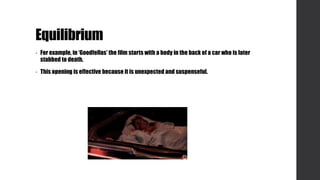
• For example, in ‘Goodfellas’ the film starts with a body in the back of a car who is later
stabbed to death.
• This opening is effective because it is unexpected and suspenseful.
Goodfellas
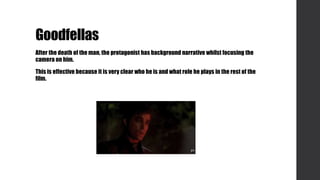
After the death of the man, the protagonist has background narrative whilst focusing the
camera on him.
This is effective because it is very clear who he is and what role he plays in the rest of the
film.
Landscape
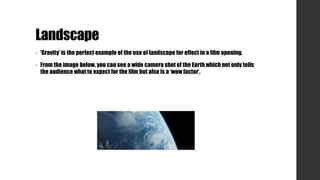
• ‘Gravity’ is the perfect example of the use of landscape for effect in a film opening.
• From the image below, you can see a wide camera shot of the Earth which not only tells
the audience what to expect for the film but also is a ‘wow factor’.
Titlesequence
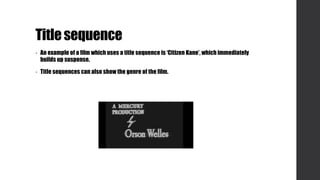
• An example of a film which uses a title sequence is ‘Citizen Kane’, which immediately
builds up suspense.
• Title sequences can also show the genre of the film.
Flashback
• Flashbacks are also effective as they introduce a key event which is later explained
further in the movie.
Chasescene
• This is similar to an action scene which also grasps the audience’s attention. It makes
the audience feel a part of the chase and see what happens afterwards.
Animations
• Some films are introduced with animations which portrays the film as creative and
visibly shows the difference between the film itself and the opening sequence. For
example, ‘Juno’.
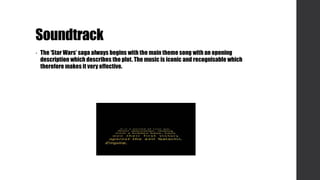
Soundtrack
• The ‘Star Wars’ saga always begins with the main theme song with an opening
description which describes the plot. The music is iconic and recognisable which
therefore makes it very effective.
Conventions of-film-openings-1rnrexg

Conventions of-film-openings-1rnrexg

  • 1.
  • 2.
    The Purpose • Ultimately,the purpose of a film opening to set the scene and capture the audience so they are hooked into the film. • From the opening scene, it is likely that the audience will be introduced to the genre of the film. Therefore, you will likely see either the protagonist or antagonist present.
  • 3.
    Conventions • A filmopening is roughly 3 minutes long but major blockbusters can take up to 5 minutes. • Additionally, this is also the point of the film in which the main characters are introduced (antagonist, protagonist, sidekick etc). • With the main characters present, the plot begins to form and narrative has started. • Overall, the first scene establishes the ‘mise en scene’ of the film.
  • 4.
    Conventions • Also, itis common for the main actors and film producers to have credit in a film opening. • It usually starts with the main problem/equilibrium. • Non diegetic sound.
  • 5.
    Equilibrium • For example,in ‘Goodfellas’ the film starts with a body in the back of a car who is later stabbed to death. • This opening is effective because it is unexpected and suspenseful.
  • 6.
    Goodfellas After the deathof the man, the protagonist has background narrative whilst focusing the camera on him. This is effective because it is very clear who he is and what role he plays in the rest of the film.
  • 7.
    Landscape • ‘Gravity’ isthe perfect example of the use of landscape for effect in a film opening. • From the image below, you can see a wide camera shot of the Earth which not only tells the audience what to expect for the film but also is a ‘wow factor’.
  • 8.
    Titlesequence • An exampleof a film which uses a title sequence is ‘Citizen Kane’, which immediately builds up suspense. • Title sequences can also show the genre of the film.
  • 9.
    Flashback • Flashbacks arealso effective as they introduce a key event which is later explained further in the movie.
  • 10.
    Chasescene • This issimilar to an action scene which also grasps the audience’s attention. It makes the audience feel a part of the chase and see what happens afterwards.
  • 11.
    Animations • Some filmsare introduced with animations which portrays the film as creative and visibly shows the difference between the film itself and the opening sequence. For example, ‘Juno’.
  • 12.
    Soundtrack • The ‘StarWars’ saga always begins with the main theme song with an opening description which describes the plot. The music is iconic and recognisable which therefore makes it very effective.