Film Certification
History of Film Certification 
The British Board of Film Classification introduced the film certification 
in 1912. Before this film classifications were decided by the local 
councils. Ratings were introduced for safety reasons. To begin with 
there was only 2 classifications. These were ‘U’ for universal, which 
were suitable for everyone and ‘A’ for adult. IN 1932 the ‘H’ category 
was introduced. This stood for horror and meant that only people of 
16 years and older could watch it. The ‘A’ certificate was divided into 3 
categories in 1970, the ‘A’ for 5’s and over, the ‘AA’ which was for 
aged 14 years and older, or the ‘X’ category, 18 years and older. 
During 1982 the ‘PG’ rating was introduced in which it was for general 
viewing films but may have certain scenes of unsuitable viewing for 
children. The ‘AA’ was updated to 15 years and above too. ‘X’ was 
also renamed to ’18’. In 1985 the BBFC became legally responsible 
for rating films. Those underage of the certificate were not allowed to 
buy or rent films of that rating. Due to a large gap between the ‘PG’ 
rating and ‘15’ rating, a ‘12’ and a ‘12A’ certificate was released in 
2002.
The different ratings 
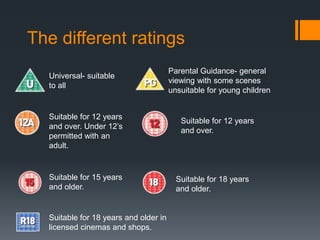
Universal- suitable 
to all 
Parental Guidance- general 
viewing with some scenes 
unsuitable for young children 
Suitable for 12 years 
and over. Under 12’s 
permitted with an 
adult. 
Suitable for 12 years 
and over. 
Suitable for 15 years 
and older. 
Suitable for 18 years 
and older. 
Suitable for 18 years and older in 
licensed cinemas and shops.
Audience Impact 
These ratings can prevent audiences from seeing the films 
they want to see. The ratings are based on the films target 
audience and how they will respond to certain scenes. It then 
limits the audience which can reduce sales and the popularity 
of the film.
Variation 
The certificates previously shown are for the UK only. Other 
countries have different rules and regulations regarding film 
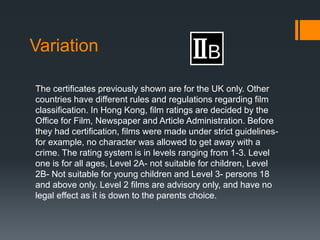
classification. In Hong Kong, film ratings are decided by the 
Office for Film, Newspaper and Article Administration. Before 
they had certification, films were made under strict guidelines-for 
example, no character was allowed to get away with a 
crime. The rating system is in levels ranging from 1-3. Level 
one is for all ages, Level 2A- not suitable for children, Level 
2B- Not suitable for young children and Level 3- persons 18 
and above only. Level 2 films are advisory only, and have no 
legal effect as it is down to the parents choice.
Example of Effect 
Spider-Man is an example of a films success been limited by 
the BBFC. It was rated a 12 film and this limited the people 
who wanted to go and watch the film. It was targeted as a film 
for children, and much of its audience was under 12 years old. 
This damaged the success of the film as many people who 
wanted to go and watch it, couldn’t. The BBFC received many 
complaints about this and this contributed to the introduction of 
the ‘12A’ certificate. This allowed under 12’s to see the film if 
accompanied by an adult.

Film certification

  • 1.
  • 2.
    History of FilmCertification The British Board of Film Classification introduced the film certification in 1912. Before this film classifications were decided by the local councils. Ratings were introduced for safety reasons. To begin with there was only 2 classifications. These were ‘U’ for universal, which were suitable for everyone and ‘A’ for adult. IN 1932 the ‘H’ category was introduced. This stood for horror and meant that only people of 16 years and older could watch it. The ‘A’ certificate was divided into 3 categories in 1970, the ‘A’ for 5’s and over, the ‘AA’ which was for aged 14 years and older, or the ‘X’ category, 18 years and older. During 1982 the ‘PG’ rating was introduced in which it was for general viewing films but may have certain scenes of unsuitable viewing for children. The ‘AA’ was updated to 15 years and above too. ‘X’ was also renamed to ’18’. In 1985 the BBFC became legally responsible for rating films. Those underage of the certificate were not allowed to buy or rent films of that rating. Due to a large gap between the ‘PG’ rating and ‘15’ rating, a ‘12’ and a ‘12A’ certificate was released in 2002.
  • 3.
    The different ratings Universal- suitable to all Parental Guidance- general viewing with some scenes unsuitable for young children Suitable for 12 years and over. Under 12’s permitted with an adult. Suitable for 12 years and over. Suitable for 15 years and older. Suitable for 18 years and older. Suitable for 18 years and older in licensed cinemas and shops.
  • 4.
    Audience Impact Theseratings can prevent audiences from seeing the films they want to see. The ratings are based on the films target audience and how they will respond to certain scenes. It then limits the audience which can reduce sales and the popularity of the film.
  • 5.
    Variation The certificatespreviously shown are for the UK only. Other countries have different rules and regulations regarding film classification. In Hong Kong, film ratings are decided by the Office for Film, Newspaper and Article Administration. Before they had certification, films were made under strict guidelines-for example, no character was allowed to get away with a crime. The rating system is in levels ranging from 1-3. Level one is for all ages, Level 2A- not suitable for children, Level 2B- Not suitable for young children and Level 3- persons 18 and above only. Level 2 films are advisory only, and have no legal effect as it is down to the parents choice.
  • 6.
    Example of Effect Spider-Man is an example of a films success been limited by the BBFC. It was rated a 12 film and this limited the people who wanted to go and watch the film. It was targeted as a film for children, and much of its audience was under 12 years old. This damaged the success of the film as many people who wanted to go and watch it, couldn’t. The BBFC received many complaints about this and this contributed to the introduction of the ‘12A’ certificate. This allowed under 12’s to see the film if accompanied by an adult.