mmSurvey of Filipino
Values
Prepared by:
MAR JOHN A. GALLEGO
M.A.Ed. (Social Studies)
Filipino Positive Values
Joyful
We are known for
our smiles that can
warmth the hearts of
anyone. We have an
innate sense of happiness
and we can even find
humor in our problems.
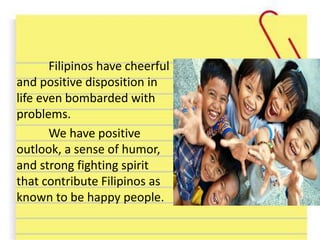
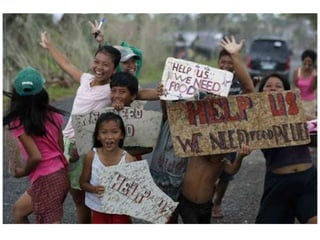
Filipinos have cheerful
and positive disposition in
life even bombarded with
problems.
We have positive
outlook, a sense of humor,
and strong fighting spirit
that contribute Filipinos as
known to be happy people.
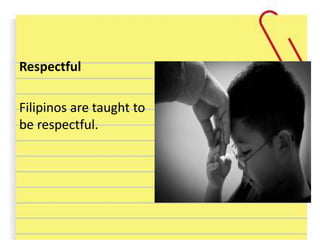
Respectful
Filipinos are taught to
be respectful.
We usually use “Po” and “Opo” when
addressing someone older than us.
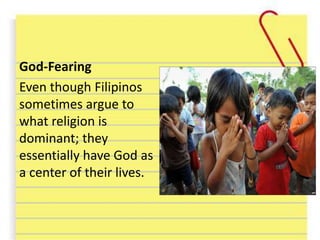
God-Fearing
Even though Filipinos
sometimes argue to
what religion is
dominant; they
essentially have God as
a center of their lives.
Filipinos have deep faith
in God.
Our innate religiosity
enables us to comprehend and
genuinely accept reality in the
context of God’s will and plan.
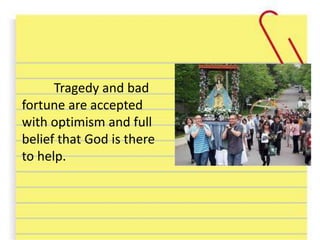
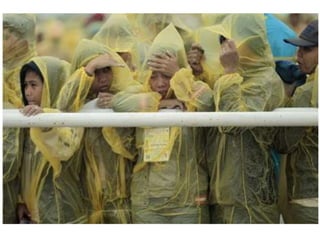
Tragedy and bad
fortune are accepted
with optimism and full
belief that God is there
to help.
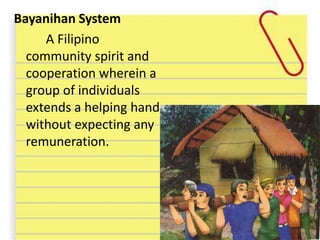
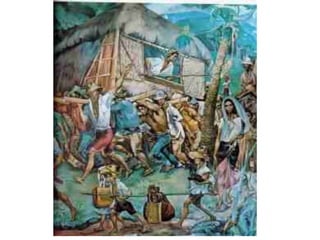
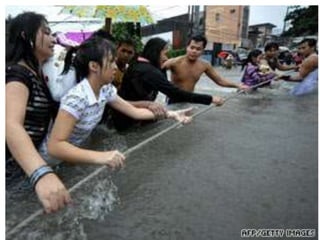
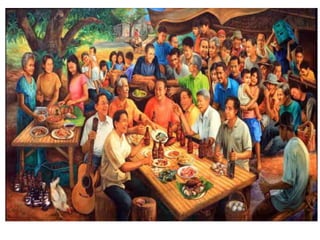
Bayanihan System
A Filipino
community spirit and
cooperation wherein a
group of individuals
extends a helping hand
without expecting any
remuneration.
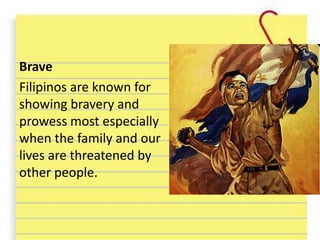
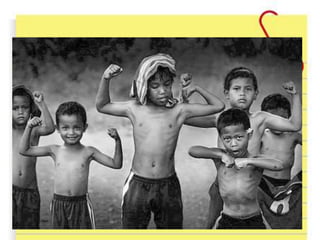
Brave
Filipinos are known for
showing bravery and
prowess most especially
when the family and our
lives are threatened by
other people.
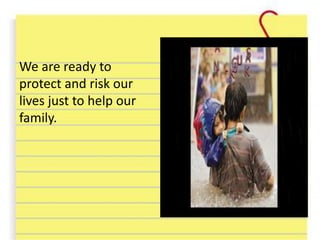
We are ready to
protect and risk our
lives just to help our
family.
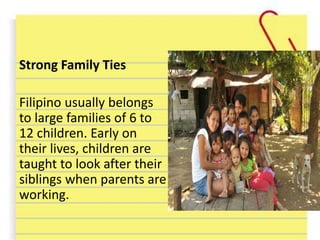
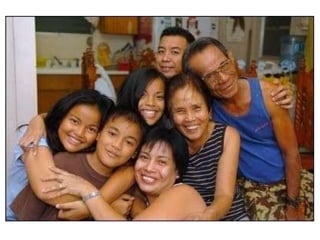
Strong Family Ties
Filipino usually belongs
to large families of 6 to
12 children. Early on
their lives, children are
taught to look after their
siblings when parents are
working.
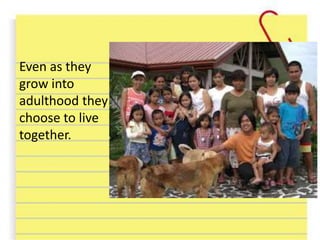
Even as they
grow into
adulthood they
choose to live
together.
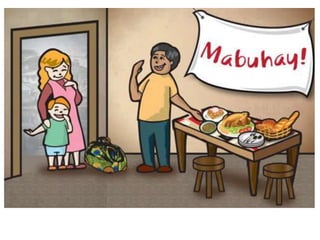
Hospitality
Filipino trait of being
receptive and
generous to guests.
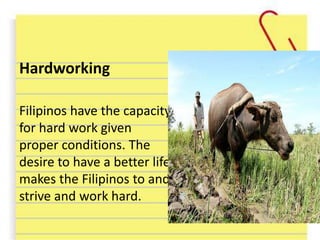
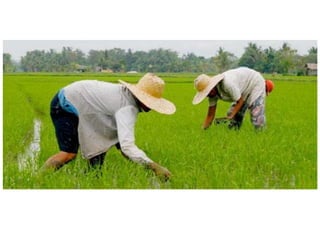
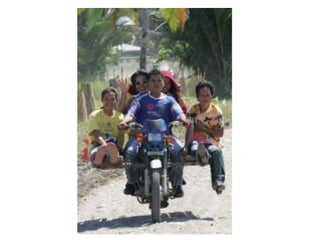
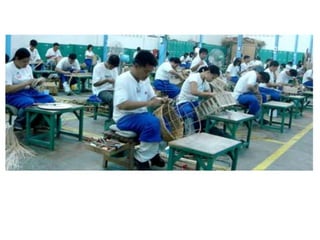
Hardworking
Filipinos have the capacity
for hard work given
proper conditions. The
desire to have a better life
makes the Filipinos to and
strive and work hard.
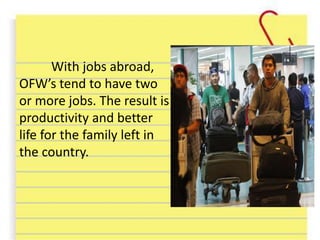
With jobs abroad,
OFW’s tend to have two
or more jobs. The result is
productivity and better
life for the family left in
the country.
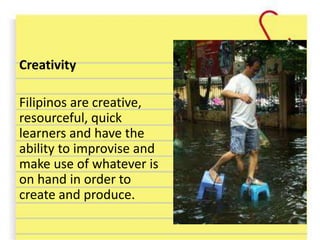
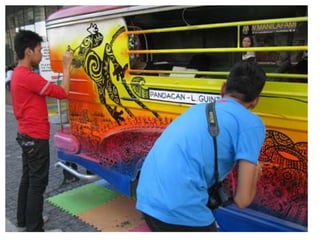
Creativity
Filipinos are creative,
resourceful, quick
learners and have the
ability to improvise and
make use of whatever is
on hand in order to
create and produce.
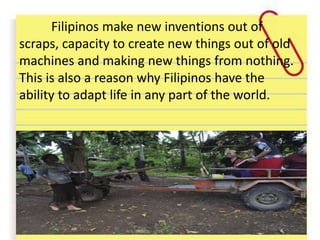
Filipinos make new inventions out of
scraps, capacity to create new things out of old
machines and making new things from nothing.
This is also a reason why Filipinos have the
ability to adapt life in any part of the world.
Filipino Negative Values
Laziness
It the most common trait
in Filipinos today.
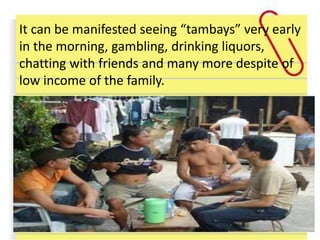
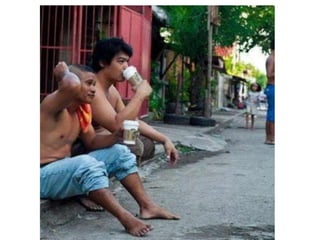
It can be manifested seeing “tambays” very early
in the morning, gambling, drinking liquors,
chatting with friends and many more despite of
low income of the family.
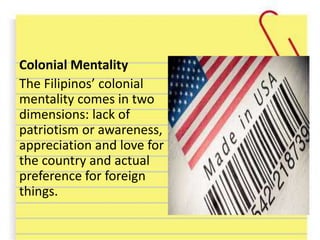
Colonial Mentality
The Filipinos’ colonial
mentality comes in two
dimensions: lack of
patriotism or awareness,
appreciation and love for
the country and actual
preference for foreign
things.
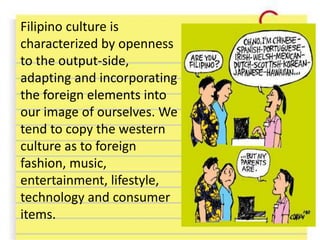
Filipino culture is
characterized by openness
to the output-side,
adapting and incorporating
the foreign elements into
our image of ourselves. We
tend to copy the western
culture as to foreign
fashion, music,
entertainment, lifestyle,
technology and consumer
items.
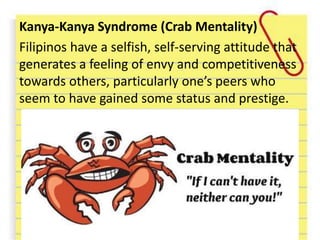
Kanya-Kanya Syndrome (Crab Mentality)
Filipinos have a selfish, self-serving attitude that
generates a feeling of envy and competitiveness

towards others, particularly one’s peers who
seem to have gained some status and prestige.
Seeing others
became
successful, we
tend to get
jealous and make
a move to put
that person
down.
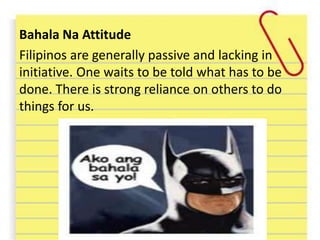
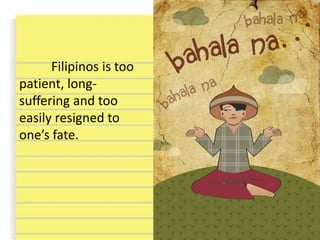
Bahala Na Attitude
Filipinos are generally passive and lacking in
initiative. One waits to be told what has to be
done. There is strong reliance on others to do
things for us.
Filipinos is too
patient, long-
suffering and too
easily resigned to
one’s fate.
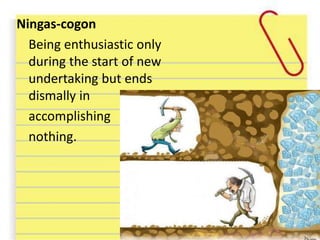
Ningas-cogon
Being enthusiastic only
during the start of new
undertaking but ends
dismally in
accomplishing
nothing.
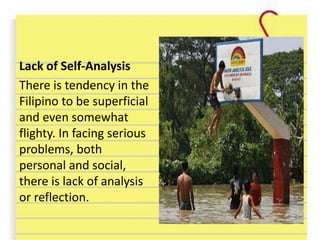
Lack of Self-Analysis
There is tendency in the
Filipino to be superficial
and even somewhat
flighty. In facing serious
problems, both
personal and social,
there is lack of analysis
or reflection.
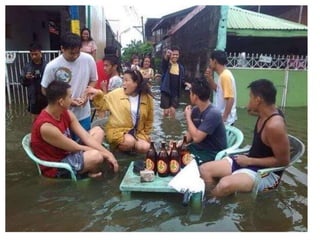
We joke about the most
serious matters and this
prevents looking deeply
into the problem.
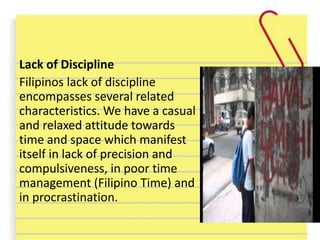
Lack of Discipline
Filipinos lack of discipline
encompasses several related
characteristics. We have a casual
and relaxed attitude towards
time and space which manifest
itself in lack of precision and
compulsiveness, in poor time
management (Filipino Time) and
in procrastination.
We have an aversion in following strictly a set of
procedures and this results in lack of
standardization and quality control. We are
impatient towards making decisions resulting to
use of short-cuts.
Reference
Magpoc, Kate S. (2013). Filipino Values.
Retrieved April 17, 2015.
http://www.slideshare.net/Kate_JRG/filipino-
values-22162229?related=1
Thank You!!!

Filipino Values

  • 1.
    mmSurvey of Filipino Values Preparedby: MAR JOHN A. GALLEGO M.A.Ed. (Social Studies)
  • 2.
  • 3.
    Joyful We are knownfor our smiles that can warmth the hearts of anyone. We have an innate sense of happiness and we can even find humor in our problems.
  • 4.
    Filipinos have cheerful andpositive disposition in life even bombarded with problems. We have positive outlook, a sense of humor, and strong fighting spirit that contribute Filipinos as known to be happy people.
  • 9.
  • 10.
    We usually use“Po” and “Opo” when addressing someone older than us.
  • 11.
    God-Fearing Even though Filipinos sometimesargue to what religion is dominant; they essentially have God as a center of their lives.
  • 12.
    Filipinos have deepfaith in God. Our innate religiosity enables us to comprehend and genuinely accept reality in the context of God’s will and plan.
  • 13.
    Tragedy and bad fortuneare accepted with optimism and full belief that God is there to help.
  • 15.
    Bayanihan System A Filipino communityspirit and cooperation wherein a group of individuals extends a helping hand without expecting any remuneration.
  • 18.
    Brave Filipinos are knownfor showing bravery and prowess most especially when the family and our lives are threatened by other people.
  • 20.
    We are readyto protect and risk our lives just to help our family.
  • 23.
    Strong Family Ties Filipinousually belongs to large families of 6 to 12 children. Early on their lives, children are taught to look after their siblings when parents are working.
  • 25.
    Even as they growinto adulthood they choose to live together.
  • 26.
    Hospitality Filipino trait ofbeing receptive and generous to guests.
  • 29.
    Hardworking Filipinos have thecapacity for hard work given proper conditions. The desire to have a better life makes the Filipinos to and strive and work hard.
  • 31.
    With jobs abroad, OFW’stend to have two or more jobs. The result is productivity and better life for the family left in the country.
  • 34.
    Creativity Filipinos are creative, resourceful,quick learners and have the ability to improvise and make use of whatever is on hand in order to create and produce.
  • 36.
    Filipinos make newinventions out of scraps, capacity to create new things out of old machines and making new things from nothing. This is also a reason why Filipinos have the ability to adapt life in any part of the world.
  • 40.
  • 41.
    Laziness It the mostcommon trait in Filipinos today.
  • 43.
    It can bemanifested seeing “tambays” very early in the morning, gambling, drinking liquors, chatting with friends and many more despite of low income of the family.
  • 45.
    Colonial Mentality The Filipinos’colonial mentality comes in two dimensions: lack of patriotism or awareness, appreciation and love for the country and actual preference for foreign things.
  • 46.
    Filipino culture is characterizedby openness to the output-side, adapting and incorporating the foreign elements into our image of ourselves. We tend to copy the western culture as to foreign fashion, music, entertainment, lifestyle, technology and consumer items.
  • 48.
    Kanya-Kanya Syndrome (CrabMentality) Filipinos have a selfish, self-serving attitude that generates a feeling of envy and competitiveness towards others, particularly one’s peers who seem to have gained some status and prestige.
  • 49.
    Seeing others became successful, we tendto get jealous and make a move to put that person down.
  • 50.
    Bahala Na Attitude Filipinosare generally passive and lacking in initiative. One waits to be told what has to be done. There is strong reliance on others to do things for us.
  • 51.
    Filipinos is too patient,long- suffering and too easily resigned to one’s fate.
  • 52.
    Ningas-cogon Being enthusiastic only duringthe start of new undertaking but ends dismally in accomplishing nothing.
  • 53.
    Lack of Self-Analysis Thereis tendency in the Filipino to be superficial and even somewhat flighty. In facing serious problems, both personal and social, there is lack of analysis or reflection.
  • 55.
    We joke aboutthe most serious matters and this prevents looking deeply into the problem.
  • 56.
    Lack of Discipline Filipinoslack of discipline encompasses several related characteristics. We have a casual and relaxed attitude towards time and space which manifest itself in lack of precision and compulsiveness, in poor time management (Filipino Time) and in procrastination.
  • 58.
    We have anaversion in following strictly a set of procedures and this results in lack of standardization and quality control. We are impatient towards making decisions resulting to use of short-cuts.
  • 59.
    Reference Magpoc, Kate S.(2013). Filipino Values. Retrieved April 17, 2015. http://www.slideshare.net/Kate_JRG/filipino- values-22162229?related=1
  • 60.