Tarek nasrallah, MD
Ass. Professor of rheumatology
AL AZHAR
Fibromyalgia Syndrome
TWO GREAT TRUTHS
We will not adequately treat what we
cannot diagnose.
If we do not know how to diagnose
Fibromyalgia then this lecture is useless.
WHAT IS FIBROMYALGIA SYNDROME?
Is it a musculo-skeletal disorder?
Is it a mental condition ?
Is it an illness of the central nervous system?
Fibromyalgia Controversies
► Is it real?
► What is the relationship with other functional somatic
syndromes?
► Can it be reliably diagnosed?
► Is it physical or psychological?
► Is there any effective treatment?
► Is a diagnosis helpful or harmful?
► What is role of rheumatology?
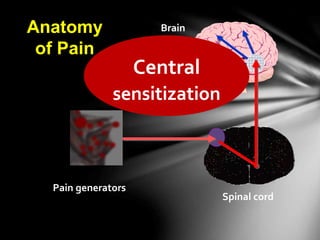
Pain generators
Spinal cord
BrainAnatomy
of Pain
Central
sensitization
Fibromyalgia
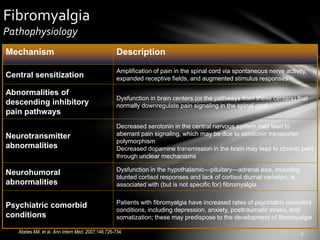
Pathophysiology
Abeles AM, et al. Ann Intern Med. 2007;146:726-734.
Mechanism Description
Central sensitization
Amplification of pain in the spinal cord via spontaneous nerve activity,
expanded receptive fields, and augmented stimulus responses
Abnormalities of
descending inhibitory
pain pathways
Dysfunction in brain centers (or the pathways from these centers) that
normally downregulate pain signaling in the spinal cord
Neurotransmitter
abnormalities
Decreased serotonin in the central nervous system may lead to
aberrant pain signaling, which may be due to serotonin transporter
polymorphism
Decreased dopamine transmission in the brain may lead to chronic pain
through unclear mechanisms
Neurohumoral
abnormalities
Dysfunction in the hypothalamic—pituitary—adrenal axis, including
blunted cortisol responses and lack of cortisol diurnal variation, is
associated with (but is not specific for) fibromyalgia
Psychiatric comorbid
conditions
Patients with fibromyalgia have increased rates of psychiatric comorbid
conditions, including depression, anxiety, posttraumatic stress, and
somatization; these may predispose to the development of fibromyalgia
Fibromyalgia
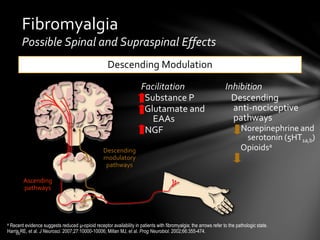
Possible Spinal and Supraspinal Effects
Descending Modulation
Facilitation
Substance P
Glutamate and
EAAs
NGF
Inhibition
Descending
anti-nociceptive
pathways
Norepinephrine and
serotonin (5HT1a,b)
Opioidsa
Ascending
pathways
Descending
modulatory
pathways
a Recent evidence suggests reduced µ-opioid receptor availability in patients with fibromyalgia; the arrows refer to the pathologic state.
Harris RE, et al. J Neurosci. 2007;27:10000-10006; Millan MJ, et al. Prog Neurobiol. 2002;66:355-474.
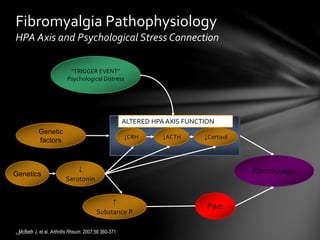
Fibromyalgia Pathophysiology
HPA Axis and Psychological Stress Connection
McBeth J, et al. Arthritis Rheum. 2007;56:360-371.
“TRIGGER EVENT”
Psychological Distress
Genetic
factors
Genetics
↓
Serotonin
↑
Substance P
Pain
Fibromyalgia
↓CRH ↓ACTH ↓Cortisol
ALTERED HPAAXIS FUNCTION
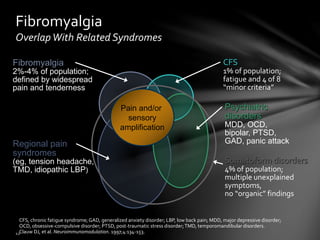
CFS, chronic fatigue syndrome; GAD, generalized anxiety disorder; LBP, low back pain; MDD, major depressive disorder;
OCD, obsessive-compulsive disorder; PTSD, post-traumatic stress disorder;TMD, temporomandibular disorders.
Clauw DJ, et al. Neuroimmunomodulation. 1997;4:134-153.
Fibromyalgia
2%-4% of population;
defined by widespread
pain and tenderness
CFS
1% of population;
fatigue and 4 of 8
“minor criteria”
Somatoform disorders
4% of population;
multiple unexplained
symptoms,
no “organic” findings
Regional pain
syndromes
(eg, tension headache,
TMD, idiopathic LBP)
Psychiatric
disorders
MDD, OCD,
bipolar, PTSD,
GAD, panic attack
Fibromyalgia
OverlapWith Related Syndromes
Pain and/or
sensory
amplification
Strong genetic predisposition and similar
comorbidity
Coaggregation in families
Cognitive disturbances
Dysfunction of the HPA axis
Chronic stress-induced cytokine expression in the
brain
Central monoaminergic neurotransmission
Fibromyalgia
Shared Features With Depression
http://www.medscape.com/viewprogram/17278_pnt. FPO
• fatigue
• sleep disturbances
• morning stiffness
• headaches
• irritable bowel syndrome
• painful menstrual periods
• numbness or tingling of the extremities
• restless legs syndrome
• temperature sensitivity
• cognitive/memory problems (“fibro fog”)
• difficulty concentrating
Fibromyalgia Syndrome:
Symptoms Other Than PAIN
FIBROMYALGIA is a diagnosis of
EXCLUSION.
That is why FMS is a “Syndrome” and not a
“Disease”. There is no specific test for
FMS.
Diagnosing FMS take the good old
fashioned hard work of a good
HISTORY AND PHYSICAL EXAM
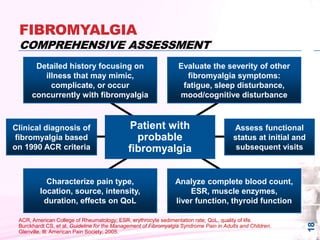
FIBROMYALGIA
COMPREHENSIVE ASSESSMENT
18
ACR, American College of Rheumatology; ESR, erythrocyte sedimentation rate; QoL, quality of life.
Burckhardt CS, et al. Guideline for the Management of Fibromyalgia Syndrome Pain in Adults and Children.
Glenville, Ill: American Pain Society; 2005.
Patient with
probable
fibromyalgia
Detailed history focusing on
illness that may mimic,
complicate, or occur
concurrently with fibromyalgia
Clinical diagnosis of
fibromyalgia based
on 1990 ACR criteria
Evaluate the severity of other
fibromyalgia symptoms:
fatigue, sleep disturbance,
mood/cognitive disturbance
Assess functional
status at initial and
subsequent visits
Characterize pain type,
location, source, intensity,
duration, effects on QoL
Analyze complete blood count,
ESR, muscle enzymes,
liver function, thyroid function
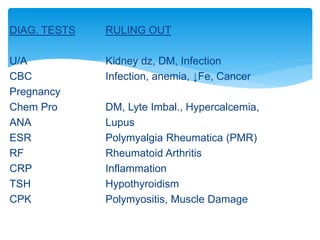
DIAG. TESTS RULING OUT
U/A Kidney dz, DM, Infection
CBC Infection, anemia, ↓Fe, Cancer
Pregnancy
Chem Pro DM, Lyte Imbal., Hypercalcemia,
ANA Lupus
ESR Polymyalgia Rheumatica (PMR)
RF Rheumatoid Arthritis
CRP Inflammation
TSH Hypothyroidism
CPK Polymyositis, Muscle Damage
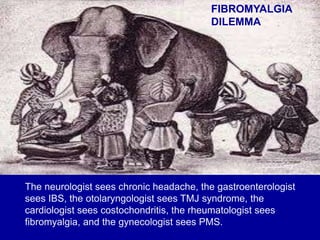
The neurologist sees chronic headache, the gastroenterologist
sees IBS, the otolaryngologist sees TMJ syndrome, the
cardiologist sees costochondritis, the rheumatologist sees
fibromyalgia, and the gynecologist sees PMS.
Cartoon of a
thoroughly
examined elephant
removed
FIBROMYALGIA
DILEMMA
P – PLAN
THE TREATMENT OF FIBROMYALGIA
INVOLVES:
A. Treating Fibromyalgia Pain
B. Treating Anxiety and Depression
C. Improve Sleep Architecture
P – PLAN
THE TREATMENTOF FIBROMYALGIA
INVOLVES:
A. Treating Fibromyalgia Pain
B. Treating Anxiety and Depression
C. Improve Sleep Architecture
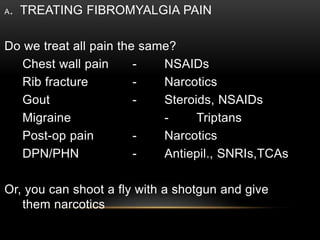
A. TREATING FIBROMYALGIA PAIN
Do we treat all pain the same?
Chest wall pain - NSAIDs
Rib fracture - Narcotics
Gout - Steroids, NSAIDs
Migraine - Triptans
Post-op pain - Narcotics
DPN/PHN - Antiepil., SNRIs,TCAs
Or, you can shoot a fly with a shotgun and give
them narcotics
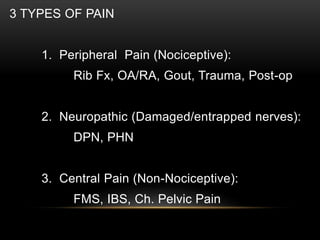
3 TYPES OF PAIN
1. Peripheral Pain (Nociceptive):
Rib Fx, OA/RA, Gout, Trauma, Post-op
2. Neuropathic (Damaged/entrapped nerves):
DPN, PHN
3. Central Pain (Non-Nociceptive):
FMS, IBS, Ch. Pelvic Pain
A. TREATING FIBROMYALGIA PAIN
Because we now know more about the
pathophysiology of Fibromyalgia pain, we will
target our approach:
1. Target ASCENDING pain pathways
2. Target inhibitory, DESCENDING pathways
A. TREATING FIBROMYALGIA PAIN
1. Target ASCENDING pain pathways.
HOW?
Decrease spinal neuron hyperexcitability with
anticonvulsants
a. α-2-δ (alpha-2-delta) ligand anticonvulsants
1. Pregabalin (Lyrica) – FDA approved
for Fibromyalgia
2. Gabapentin (Neurontin)
b. Other anticonvulsant/antiepileptic drugs
A. TREATING FIBROMYALGIA PAIN
2. Target inhibitory, DESCENDING pain
pathways. HOW?
a. Raise Serotonin-Norepinephrine levels
1. Serotonin-Norepinephrine Reuptake Inhibitors
a. Venlafaxine (Effexor), Desvenlafaxine (Pristiq)
b. Duloxatine (Cymbalta) – FDA approved for FMS
c. Milnacipran (Savella) – FDA approved for FMS,
inhibits Norepinephrine reuptake with a 3 fold
higher potency that serotonin.
A. TREATING FIBROMYALGIA PAIN
2. Target inhibitory, DESCENDING pain
pathways. HOW?
a. Raise Serotonin-Norepinephrine levels
2. Tricyclic Antidepressants (TCAs)
a. Amitriptylline (Elavil)
b. Nortriptylline (Pamelor)
c. Imipramine
d. Others
A. TREATING FIBROMYALGIA PAIN
2. Target inhibitory, DESCENDING pain
pathways. HOW?
a. Raise Serotonin-Norepinephrine levels
3. Muscle Relaxers
a. Cyclobenzeprine (Flexeril)
A. TREATING FIBROMYALGIA PAIN
2. Target inhibitory, DESCENDING pain
pathways. HOW?
a. Raise Serotonin-Norepinephrine levels
4. Tramadol (Ultram, Ultram ER, Ultracet) – Has
SNRI properties as well as weak μ (mu)
opioid-receptor agonist properties
5. Exercise – Endorphins are pain inhibitors
P – PLAN
THE TREATMENTOF FIBROMYALGIA
INVOLVES:
A. Treating Fibromyalgia Pain
B. Treating Anxiety and Depression
C. Improve Sleep Architecture
B. TREAT ANXIETY AND DEPRESSION
1. Raise Serotonin-Norepinephrine levels
a. SNRIs
1. Venlafaxine (Effexor) – Cheaper, generic
2. Duloxatine (Cymbalta) – FDA approved for FMS
and anxiety and depression
3. Milnacipran (Savella) – FDA approved for FMS,
inhibits Norepinephrine reuptake with a 3 fold
higher potency that serotonin. You need the
serotonin reuptake inhibition to treat anxiety.
B. TREAT ANXIETY AND DEPRESSION
1. Raise Serotonin-Norepinephrine levels
b. Tricyclic Antidepressants (TCAs)
Remember: TCAs are too anticholenergic and
sedation at high enough doses to treat anxiety
and depression
B. TREAT ANXIETY AND DEPRESSION
2. Anti-Epileptic Drugs
a. Pregabalin (Lyrica) – FDA approved for FMS,
Seizure d/o,PHN, DPN, and in Europe approved
for anxiety.
b. Gabapentin (Neurontin)
c. Valproaic Acid (Depakote)
d. Carbamazepine (Tregretol) – both used for years
for mood disorders
B. TREAT ANXIETY AND DEPRESSION
3. What NOT to use:
a. Benzodiazepines – They increase depressionand
increase pain scores.
b. Narcotics – Kills a fly with a shotgun.
Morpheus – the Greek god of dreams
P – PLAN
THE TREATMENTOF FIBROMYALGIA INVOLVES:
A. Treating Fibromyalgia Pain
B. Treating Anxiety and Depression
C. Improve Sleep Architecture
C. IMPROVE SLEEP ARCHITECTURE
80% of FMS patients report Non-Restorative Sleep.
So, poor sleep increases pain and fibrositis symptoms.
That is why Fibromyalgia is thought to be an illness of the NEURO-ENDOCRINE
SYSTEM.
C. IMPROVE SLEEP ARCHITECTURE
1. Antiepileptic Drugs – Improve pain and sleep
a. Pregabalin (Lyrica)
1. Has a sedative effect
2. Enhances slow wave delta sleep
b. Gabapentin (neurontin)
C. IMPROVE SLEEP ARCHITECTURE
2. Tricyclic Antidepressants (TCAs) – Improve pain, depression and sleep.
a. Amitriptylline (Elavil)
b. Imipramine (Tofranil)
c. Many others
C. IMPROVE SLEEP ARCHITECTURE
3. Non-Benzodiazepine Sedatives – Improve sleep.
a. Zolpidem (Ambien)
b. Zaleplon (Sonata)
c. Eszopiclone (Lunesta)
d. DO NOT use benzo’s
4. Teach sleep hygiene
5. Treat depression and anxiety
6. Exercising/Stretching not within 3 hours of sleep
Which of the FDA approved medications would you want to start first?
FMS pain with Fatigue dominant: Savella
FMS pain with Depression dominant: Cymbalta
FMS pain with Insomnia dominant: Lyrica
P – PLAN
THE TREATMENTOF FIBROMYALGIA INVOLVES:
A. Treating Fibromyalgia Pain
B. Treating Anxiety and Depression
CImprove Sleep Architecture
D. Other Nurse Practitioner Treatments
(that other healthcare providers probably won’t do)
.1Patient Education – Explain it
.2Instill a sense of self-worth
.3Avoid disability and narcotics
.4Establish anxiety reducing measures
.1Prayer
.2Exercise
D. Other Nurse Practitioner Treatments
5. Exercising and stretching – Staying active
6. Address underlying psycho-social issues and stressors , Cognitive
Behavioral Therapy (CBT) referral.
7. Medications
8. Referral – Physical Therapy, Rheumatologist, Neurologist, Pain
Management
9. Hugs
BIG PICTURE PRECAUTIONS
SEIZURES: Tricyclic Antidepressants (TCAs), Tramadol, and bupropion
(Welbutrin) lower the seizure threshold in people who may have never had a
seizure. Caution using together.
SEROTONIN SYNDROME: Keep in mind the doses of concomitant use of
traditional SNRIs and other medications with SNRI effect like TCAs and
Tramadol. No need to add an SSRI.
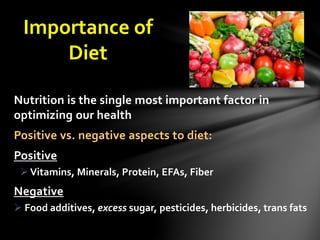
Importance of
Diet
Nutrition is the single most important factor in
optimizing our health
Positive vs. negative aspects to diet:
Positive
Vitamins, Minerals, Protein, EFAs, Fiber
Negative
 Food additives, excess sugar, pesticides, herbicides, trans fats
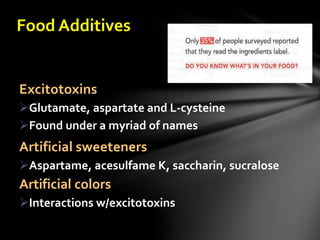
Food Additives
Excitotoxins
Glutamate, aspartate and L-cysteine
Found under a myriad of names
Artificial sweeteners
Aspartame, acesulfame K, saccharin, sucralose
Artificial colors
Interactions w/excitotoxins
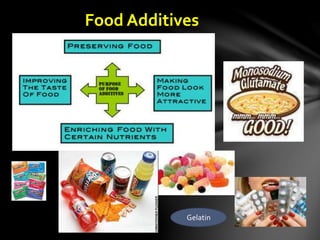
Food Additives
Gelatin
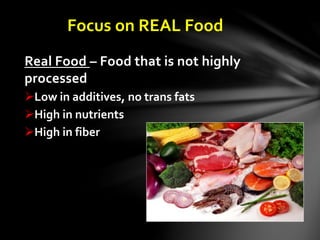
Focus on REAL Food
Real Food – Food that is not highly
processed
Low in additives, no trans fats
High in nutrients
High in fiber
What Nutritional Factors are Important
for Optimal Glutamatergic Function?
 Adequate protein and low sugar
 Antioxidants - Vitamins C & E
 Vitamin D
 Omega-3 Fatty Acids
 Magnesium
 Zinc
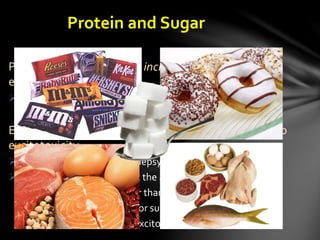
Protein and Sugar
Protein deficiency causes increased susceptibility to
excitotoxicity
Has been linked to increased prevalence of epilepsy in
developing countries
Excess sugar in the diet also increases susceptibility to
excitotoxicity
Ketogenic diet is used in epilepsy to counter this effect
Artificial sweeteners are not the answer!
Hundreds of times sweeter than sugar
Cause increased cravings for sugar (& alter taste Rs)
Can also cause increased excitotoxicity themselves
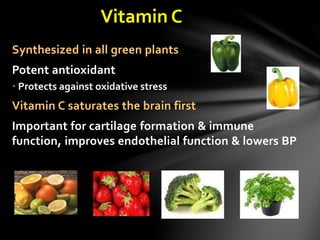
Vitamin C
Synthesized in all green plants
Potent antioxidant
• Protects against oxidative stress
Vitamin C saturates the brain first
Important for cartilage formation & immune
function, improves endothelial function & lowers BP
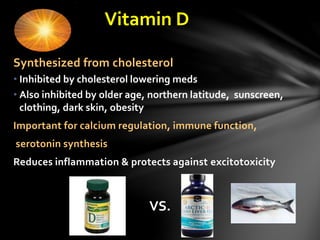
Vitamin D
VS.
Synthesized from cholesterol
• Inhibited by cholesterol lowering meds
• Also inhibited by older age, northern latitude, sunscreen,
clothing, dark skin, obesity
Important for calcium regulation, immune function,
serotonin synthesis
Reduces inflammation & protects against excitotoxicity
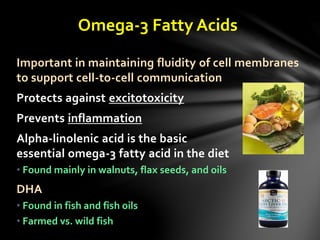
Omega-3 Fatty Acids
Important in maintaining fluidity of cell membranes
to support cell-to-cell communication
Protects against excitotoxicity
Prevents inflammation
Alpha-linolenic acid is the basic
essential omega-3 fatty acid in the diet
• Found mainly in walnuts, flax seeds, and oils
DHA
• Found in fish and fish oils
• Farmed vs. wild fish
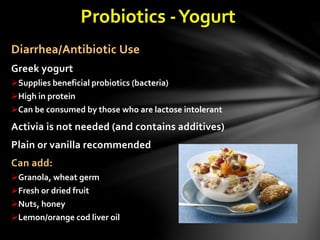
Probiotics -Yogurt
Diarrhea/Antibiotic Use
Greek yogurt
Supplies beneficial probiotics (bacteria)
High in protein
Can be consumed by those who are lactose intolerant
Activia is not needed (and contains additives)
Plain or vanilla recommended
Can add:
Granola, wheat germ
Fresh or dried fruit
Nuts, honey
Lemon/orange cod liver oil
Mediterranean Diet
Bulgur
57
57
CAM, complementary and alternative medicine; SNRI, serotonin–norepinephrine reuptake inhibitor;
TCA, tricyclic antidepressant.
Burckhardt CS, et al. Guideline for the Management of Fibromyalgia Syndrome Pain in Adults and Children.
Glenville, Ill: American Pain Society; 2005.
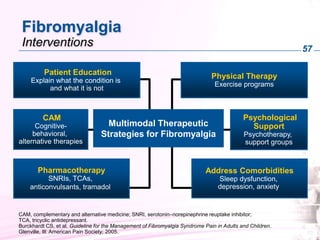
Fibromyalgia
Interventions
CAM
Cognitive-
behavioral,
alternative therapies
Psychological
Support
Psychotherapy,
support groups
Multimodal Therapeutic
Strategies for Fibromyalgia
Patient Education
Explain what the condition is
and what it is not
Physical Therapy
Exercise programs
Pharmacotherapy
SNRIs, TCAs,
anticonvulsants, tramadol
Address Comorbidities
Sleep dysfunction,
depression, anxiety
58
58
Fibromyalgia
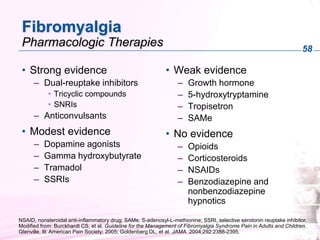
Pharmacologic Therapies
• Strong evidence
– Dual-reuptake inhibitors
• Tricyclic compounds
• SNRIs
– Anticonvulsants
• Modest evidence
– Dopamine agonists
– Gamma hydroxybutyrate
– Tramadol
– SSRIs
• Weak evidence
– Growth hormone
– 5-hydroxytryptamine
– Tropisetron
– SAMe
• No evidence
– Opioids
– Corticosteroids
– NSAIDs
– Benzodiazepine and
nonbenzodiazepine
hypnotics
NSAID, nonsteroidal anti-inflammatory drug; SAMe, S-adenosyl-L-methionine; SSRI, selective serotonin reuptake inhibitor.
Modified from: Burckhardt CS, et al. Guideline for the Management of Fibromyalgia Syndrome Pain in Adults and Children.
Glenville, Ill: American Pain Society; 2005; Goldenberg DL, et al. JAMA. 2004;292:2388-2395.
The End

Fibromyalgia

  • 1.
    Tarek nasrallah, MD Ass.Professor of rheumatology AL AZHAR Fibromyalgia Syndrome
  • 3.
    TWO GREAT TRUTHS Wewill not adequately treat what we cannot diagnose. If we do not know how to diagnose Fibromyalgia then this lecture is useless.
  • 4.
    WHAT IS FIBROMYALGIASYNDROME? Is it a musculo-skeletal disorder? Is it a mental condition ? Is it an illness of the central nervous system?
  • 5.
    Fibromyalgia Controversies ► Isit real? ► What is the relationship with other functional somatic syndromes? ► Can it be reliably diagnosed? ► Is it physical or psychological? ► Is there any effective treatment? ► Is a diagnosis helpful or harmful? ► What is role of rheumatology?
  • 8.
  • 9.
    Fibromyalgia Pathophysiology Abeles AM, etal. Ann Intern Med. 2007;146:726-734. Mechanism Description Central sensitization Amplification of pain in the spinal cord via spontaneous nerve activity, expanded receptive fields, and augmented stimulus responses Abnormalities of descending inhibitory pain pathways Dysfunction in brain centers (or the pathways from these centers) that normally downregulate pain signaling in the spinal cord Neurotransmitter abnormalities Decreased serotonin in the central nervous system may lead to aberrant pain signaling, which may be due to serotonin transporter polymorphism Decreased dopamine transmission in the brain may lead to chronic pain through unclear mechanisms Neurohumoral abnormalities Dysfunction in the hypothalamic—pituitary—adrenal axis, including blunted cortisol responses and lack of cortisol diurnal variation, is associated with (but is not specific for) fibromyalgia Psychiatric comorbid conditions Patients with fibromyalgia have increased rates of psychiatric comorbid conditions, including depression, anxiety, posttraumatic stress, and somatization; these may predispose to the development of fibromyalgia
  • 10.
    Fibromyalgia Possible Spinal andSupraspinal Effects Descending Modulation Facilitation Substance P Glutamate and EAAs NGF Inhibition Descending anti-nociceptive pathways Norepinephrine and serotonin (5HT1a,b) Opioidsa Ascending pathways Descending modulatory pathways a Recent evidence suggests reduced µ-opioid receptor availability in patients with fibromyalgia; the arrows refer to the pathologic state. Harris RE, et al. J Neurosci. 2007;27:10000-10006; Millan MJ, et al. Prog Neurobiol. 2002;66:355-474.
  • 11.
    Fibromyalgia Pathophysiology HPA Axisand Psychological Stress Connection McBeth J, et al. Arthritis Rheum. 2007;56:360-371. “TRIGGER EVENT” Psychological Distress Genetic factors Genetics ↓ Serotonin ↑ Substance P Pain Fibromyalgia ↓CRH ↓ACTH ↓Cortisol ALTERED HPAAXIS FUNCTION
  • 12.
    CFS, chronic fatiguesyndrome; GAD, generalized anxiety disorder; LBP, low back pain; MDD, major depressive disorder; OCD, obsessive-compulsive disorder; PTSD, post-traumatic stress disorder;TMD, temporomandibular disorders. Clauw DJ, et al. Neuroimmunomodulation. 1997;4:134-153. Fibromyalgia 2%-4% of population; defined by widespread pain and tenderness CFS 1% of population; fatigue and 4 of 8 “minor criteria” Somatoform disorders 4% of population; multiple unexplained symptoms, no “organic” findings Regional pain syndromes (eg, tension headache, TMD, idiopathic LBP) Psychiatric disorders MDD, OCD, bipolar, PTSD, GAD, panic attack Fibromyalgia OverlapWith Related Syndromes Pain and/or sensory amplification
  • 13.
    Strong genetic predispositionand similar comorbidity Coaggregation in families Cognitive disturbances Dysfunction of the HPA axis Chronic stress-induced cytokine expression in the brain Central monoaminergic neurotransmission Fibromyalgia Shared Features With Depression http://www.medscape.com/viewprogram/17278_pnt. FPO
  • 15.
    • fatigue • sleepdisturbances • morning stiffness • headaches • irritable bowel syndrome • painful menstrual periods • numbness or tingling of the extremities • restless legs syndrome • temperature sensitivity • cognitive/memory problems (“fibro fog”) • difficulty concentrating Fibromyalgia Syndrome: Symptoms Other Than PAIN
  • 17.
    FIBROMYALGIA is adiagnosis of EXCLUSION. That is why FMS is a “Syndrome” and not a “Disease”. There is no specific test for FMS. Diagnosing FMS take the good old fashioned hard work of a good HISTORY AND PHYSICAL EXAM
  • 18.
    FIBROMYALGIA COMPREHENSIVE ASSESSMENT 18 ACR, AmericanCollege of Rheumatology; ESR, erythrocyte sedimentation rate; QoL, quality of life. Burckhardt CS, et al. Guideline for the Management of Fibromyalgia Syndrome Pain in Adults and Children. Glenville, Ill: American Pain Society; 2005. Patient with probable fibromyalgia Detailed history focusing on illness that may mimic, complicate, or occur concurrently with fibromyalgia Clinical diagnosis of fibromyalgia based on 1990 ACR criteria Evaluate the severity of other fibromyalgia symptoms: fatigue, sleep disturbance, mood/cognitive disturbance Assess functional status at initial and subsequent visits Characterize pain type, location, source, intensity, duration, effects on QoL Analyze complete blood count, ESR, muscle enzymes, liver function, thyroid function
  • 19.
    DIAG. TESTS RULINGOUT U/A Kidney dz, DM, Infection CBC Infection, anemia, ↓Fe, Cancer Pregnancy Chem Pro DM, Lyte Imbal., Hypercalcemia, ANA Lupus ESR Polymyalgia Rheumatica (PMR) RF Rheumatoid Arthritis CRP Inflammation TSH Hypothyroidism CPK Polymyositis, Muscle Damage
  • 20.
    The neurologist seeschronic headache, the gastroenterologist sees IBS, the otolaryngologist sees TMJ syndrome, the cardiologist sees costochondritis, the rheumatologist sees fibromyalgia, and the gynecologist sees PMS. Cartoon of a thoroughly examined elephant removed FIBROMYALGIA DILEMMA
  • 21.
    P – PLAN THETREATMENT OF FIBROMYALGIA INVOLVES: A. Treating Fibromyalgia Pain B. Treating Anxiety and Depression C. Improve Sleep Architecture
  • 22.
    P – PLAN THETREATMENTOF FIBROMYALGIA INVOLVES: A. Treating Fibromyalgia Pain B. Treating Anxiety and Depression C. Improve Sleep Architecture
  • 23.
    A. TREATING FIBROMYALGIAPAIN Do we treat all pain the same? Chest wall pain - NSAIDs Rib fracture - Narcotics Gout - Steroids, NSAIDs Migraine - Triptans Post-op pain - Narcotics DPN/PHN - Antiepil., SNRIs,TCAs Or, you can shoot a fly with a shotgun and give them narcotics
  • 24.
    3 TYPES OFPAIN 1. Peripheral Pain (Nociceptive): Rib Fx, OA/RA, Gout, Trauma, Post-op 2. Neuropathic (Damaged/entrapped nerves): DPN, PHN 3. Central Pain (Non-Nociceptive): FMS, IBS, Ch. Pelvic Pain
  • 25.
    A. TREATING FIBROMYALGIAPAIN Because we now know more about the pathophysiology of Fibromyalgia pain, we will target our approach: 1. Target ASCENDING pain pathways 2. Target inhibitory, DESCENDING pathways
  • 26.
    A. TREATING FIBROMYALGIAPAIN 1. Target ASCENDING pain pathways. HOW? Decrease spinal neuron hyperexcitability with anticonvulsants a. α-2-δ (alpha-2-delta) ligand anticonvulsants 1. Pregabalin (Lyrica) – FDA approved for Fibromyalgia 2. Gabapentin (Neurontin) b. Other anticonvulsant/antiepileptic drugs
  • 27.
    A. TREATING FIBROMYALGIAPAIN 2. Target inhibitory, DESCENDING pain pathways. HOW? a. Raise Serotonin-Norepinephrine levels 1. Serotonin-Norepinephrine Reuptake Inhibitors a. Venlafaxine (Effexor), Desvenlafaxine (Pristiq) b. Duloxatine (Cymbalta) – FDA approved for FMS c. Milnacipran (Savella) – FDA approved for FMS, inhibits Norepinephrine reuptake with a 3 fold higher potency that serotonin.
  • 28.
    A. TREATING FIBROMYALGIAPAIN 2. Target inhibitory, DESCENDING pain pathways. HOW? a. Raise Serotonin-Norepinephrine levels 2. Tricyclic Antidepressants (TCAs) a. Amitriptylline (Elavil) b. Nortriptylline (Pamelor) c. Imipramine d. Others
  • 29.
    A. TREATING FIBROMYALGIAPAIN 2. Target inhibitory, DESCENDING pain pathways. HOW? a. Raise Serotonin-Norepinephrine levels 3. Muscle Relaxers a. Cyclobenzeprine (Flexeril)
  • 30.
    A. TREATING FIBROMYALGIAPAIN 2. Target inhibitory, DESCENDING pain pathways. HOW? a. Raise Serotonin-Norepinephrine levels 4. Tramadol (Ultram, Ultram ER, Ultracet) – Has SNRI properties as well as weak μ (mu) opioid-receptor agonist properties 5. Exercise – Endorphins are pain inhibitors
  • 31.
    P – PLAN THETREATMENTOF FIBROMYALGIA INVOLVES: A. Treating Fibromyalgia Pain B. Treating Anxiety and Depression C. Improve Sleep Architecture
  • 32.
    B. TREAT ANXIETYAND DEPRESSION 1. Raise Serotonin-Norepinephrine levels a. SNRIs 1. Venlafaxine (Effexor) – Cheaper, generic 2. Duloxatine (Cymbalta) – FDA approved for FMS and anxiety and depression 3. Milnacipran (Savella) – FDA approved for FMS, inhibits Norepinephrine reuptake with a 3 fold higher potency that serotonin. You need the serotonin reuptake inhibition to treat anxiety.
  • 33.
    B. TREAT ANXIETYAND DEPRESSION 1. Raise Serotonin-Norepinephrine levels b. Tricyclic Antidepressants (TCAs) Remember: TCAs are too anticholenergic and sedation at high enough doses to treat anxiety and depression
  • 34.
    B. TREAT ANXIETYAND DEPRESSION 2. Anti-Epileptic Drugs a. Pregabalin (Lyrica) – FDA approved for FMS, Seizure d/o,PHN, DPN, and in Europe approved for anxiety. b. Gabapentin (Neurontin) c. Valproaic Acid (Depakote) d. Carbamazepine (Tregretol) – both used for years for mood disorders
  • 35.
    B. TREAT ANXIETYAND DEPRESSION 3. What NOT to use: a. Benzodiazepines – They increase depressionand increase pain scores. b. Narcotics – Kills a fly with a shotgun. Morpheus – the Greek god of dreams
  • 36.
    P – PLAN THETREATMENTOF FIBROMYALGIA INVOLVES: A. Treating Fibromyalgia Pain B. Treating Anxiety and Depression C. Improve Sleep Architecture
  • 37.
    C. IMPROVE SLEEPARCHITECTURE 80% of FMS patients report Non-Restorative Sleep. So, poor sleep increases pain and fibrositis symptoms. That is why Fibromyalgia is thought to be an illness of the NEURO-ENDOCRINE SYSTEM.
  • 38.
    C. IMPROVE SLEEPARCHITECTURE 1. Antiepileptic Drugs – Improve pain and sleep a. Pregabalin (Lyrica) 1. Has a sedative effect 2. Enhances slow wave delta sleep b. Gabapentin (neurontin)
  • 39.
    C. IMPROVE SLEEPARCHITECTURE 2. Tricyclic Antidepressants (TCAs) – Improve pain, depression and sleep. a. Amitriptylline (Elavil) b. Imipramine (Tofranil) c. Many others
  • 40.
    C. IMPROVE SLEEPARCHITECTURE 3. Non-Benzodiazepine Sedatives – Improve sleep. a. Zolpidem (Ambien) b. Zaleplon (Sonata) c. Eszopiclone (Lunesta) d. DO NOT use benzo’s 4. Teach sleep hygiene 5. Treat depression and anxiety 6. Exercising/Stretching not within 3 hours of sleep
  • 41.
    Which of theFDA approved medications would you want to start first? FMS pain with Fatigue dominant: Savella FMS pain with Depression dominant: Cymbalta FMS pain with Insomnia dominant: Lyrica
  • 42.
    P – PLAN THETREATMENTOF FIBROMYALGIA INVOLVES: A. Treating Fibromyalgia Pain B. Treating Anxiety and Depression CImprove Sleep Architecture D. Other Nurse Practitioner Treatments
  • 43.
    D. Other NursePractitioner Treatments (that other healthcare providers probably won’t do) .1Patient Education – Explain it .2Instill a sense of self-worth .3Avoid disability and narcotics .4Establish anxiety reducing measures .1Prayer .2Exercise
  • 44.
    D. Other NursePractitioner Treatments 5. Exercising and stretching – Staying active 6. Address underlying psycho-social issues and stressors , Cognitive Behavioral Therapy (CBT) referral. 7. Medications 8. Referral – Physical Therapy, Rheumatologist, Neurologist, Pain Management 9. Hugs
  • 45.
    BIG PICTURE PRECAUTIONS SEIZURES:Tricyclic Antidepressants (TCAs), Tramadol, and bupropion (Welbutrin) lower the seizure threshold in people who may have never had a seizure. Caution using together. SEROTONIN SYNDROME: Keep in mind the doses of concomitant use of traditional SNRIs and other medications with SNRI effect like TCAs and Tramadol. No need to add an SSRI.
  • 46.
    Importance of Diet Nutrition isthe single most important factor in optimizing our health Positive vs. negative aspects to diet: Positive Vitamins, Minerals, Protein, EFAs, Fiber Negative  Food additives, excess sugar, pesticides, herbicides, trans fats
  • 47.
    Food Additives Excitotoxins Glutamate, aspartateand L-cysteine Found under a myriad of names Artificial sweeteners Aspartame, acesulfame K, saccharin, sucralose Artificial colors Interactions w/excitotoxins
  • 48.
  • 49.
    Focus on REALFood Real Food – Food that is not highly processed Low in additives, no trans fats High in nutrients High in fiber
  • 50.
    What Nutritional Factorsare Important for Optimal Glutamatergic Function?  Adequate protein and low sugar  Antioxidants - Vitamins C & E  Vitamin D  Omega-3 Fatty Acids  Magnesium  Zinc
  • 51.
    Protein and Sugar Proteindeficiency causes increased susceptibility to excitotoxicity Has been linked to increased prevalence of epilepsy in developing countries Excess sugar in the diet also increases susceptibility to excitotoxicity Ketogenic diet is used in epilepsy to counter this effect Artificial sweeteners are not the answer! Hundreds of times sweeter than sugar Cause increased cravings for sugar (& alter taste Rs) Can also cause increased excitotoxicity themselves
  • 52.
    Vitamin C Synthesized inall green plants Potent antioxidant • Protects against oxidative stress Vitamin C saturates the brain first Important for cartilage formation & immune function, improves endothelial function & lowers BP
  • 53.
    Vitamin D VS. Synthesized fromcholesterol • Inhibited by cholesterol lowering meds • Also inhibited by older age, northern latitude, sunscreen, clothing, dark skin, obesity Important for calcium regulation, immune function, serotonin synthesis Reduces inflammation & protects against excitotoxicity
  • 54.
    Omega-3 Fatty Acids Importantin maintaining fluidity of cell membranes to support cell-to-cell communication Protects against excitotoxicity Prevents inflammation Alpha-linolenic acid is the basic essential omega-3 fatty acid in the diet • Found mainly in walnuts, flax seeds, and oils DHA • Found in fish and fish oils • Farmed vs. wild fish
  • 55.
    Probiotics -Yogurt Diarrhea/Antibiotic Use Greekyogurt Supplies beneficial probiotics (bacteria) High in protein Can be consumed by those who are lactose intolerant Activia is not needed (and contains additives) Plain or vanilla recommended Can add: Granola, wheat germ Fresh or dried fruit Nuts, honey Lemon/orange cod liver oil
  • 56.
  • 57.
    57 57 CAM, complementary andalternative medicine; SNRI, serotonin–norepinephrine reuptake inhibitor; TCA, tricyclic antidepressant. Burckhardt CS, et al. Guideline for the Management of Fibromyalgia Syndrome Pain in Adults and Children. Glenville, Ill: American Pain Society; 2005. Fibromyalgia Interventions CAM Cognitive- behavioral, alternative therapies Psychological Support Psychotherapy, support groups Multimodal Therapeutic Strategies for Fibromyalgia Patient Education Explain what the condition is and what it is not Physical Therapy Exercise programs Pharmacotherapy SNRIs, TCAs, anticonvulsants, tramadol Address Comorbidities Sleep dysfunction, depression, anxiety
  • 58.
    58 58 Fibromyalgia Pharmacologic Therapies • Strongevidence – Dual-reuptake inhibitors • Tricyclic compounds • SNRIs – Anticonvulsants • Modest evidence – Dopamine agonists – Gamma hydroxybutyrate – Tramadol – SSRIs • Weak evidence – Growth hormone – 5-hydroxytryptamine – Tropisetron – SAMe • No evidence – Opioids – Corticosteroids – NSAIDs – Benzodiazepine and nonbenzodiazepine hypnotics NSAID, nonsteroidal anti-inflammatory drug; SAMe, S-adenosyl-L-methionine; SSRI, selective serotonin reuptake inhibitor. Modified from: Burckhardt CS, et al. Guideline for the Management of Fibromyalgia Syndrome Pain in Adults and Children. Glenville, Ill: American Pain Society; 2005; Goldenberg DL, et al. JAMA. 2004;292:2388-2395.
  • 59.