DPT Final year
LIHS-LCPS
CONTENTS
• Introduction
• Types
• Classification
• Symptoms
• Etiology
• Pathophysiology
• Treatment
• Role of Physical therapist
 A common Non-articular rheumatic syndrome
Characterized by myalgia and multiple points
of focal muscle tenderness to palpation
(trigger points).
 Muscle pain is typically aggravated by inactivity
or exposure to cold.
 This condition is often associated with
General Symptoms,
Fibromyalgia may arise as a primary or secondary
disease process. It is most frequent in females
aged 20 to 50 years.
such as
• Sleep disturbances,
• Fatigue,
• Stiffness,
• Memory and mood issues.
• Headaches, and
• Occasionally DEPRESSION.
• There is significant overlap between
Fibromyalgia and The Chronic
Fatigue Syndrome.
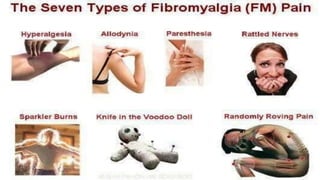
Types
Classification
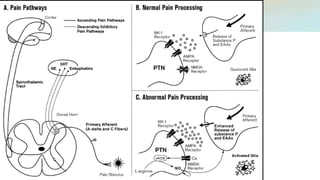
Fibromyalgia is classed as a disorder of pain processing due to
abnormalities in how pain signals are processed in the central nervous
system.
 The American College of Rheumatology classifies fibromyalgia as being a f
unctional somatic syndrome.
 The expert committee of the European League Against Rheumatism classif
-ies fibromyalgia as a neurobiological disorder and as a result, exclusively
give pharmacotherapy their highest level of support.
 The International Classification of Diseases (ICD-10) lists fibromyalgia as a
diagnosable disease under "Diseases of the musculoskeletal system and
connective tissue," and states that fibromyalgia syndrome should be
classified as a functional somatic syndrome rather than a mental disorder.
Continue..
fibromyalgia subtypes
A 2007 review divides individuals with fibromyalgia into four groups as well
as "mixed types"
 "extreme sensitivity to pain but no associated psychiatric conditions“
 "fibromyalgia and comorbid, pain-related depression"
 "depression with concomitant fibromyalgia syndrome“
 "fibromyalgia due to somatization"
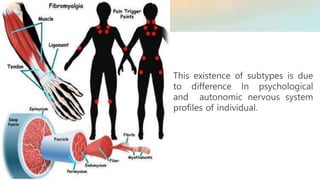
This existence of subtypes is due
to difference In psychological
and autonomic nervous system
profiles of individual.
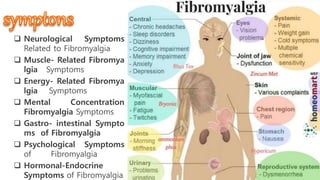
Symptoms
 Neurological Symptoms
Related to Fibromyalgia
 Muscle- Related Fibromya
lgia Symptoms
 Energy- Related Fibromya
lgia Symptoms
 Mental Concentration
Fibromyalgia Symptoms
 Gastro- intestinal Sympto
ms of Fibromyalgia
 Psychological Symptoms
of Fibromyalgia
 Hormonal-Endocrine
Symptoms of Fibromyalgia
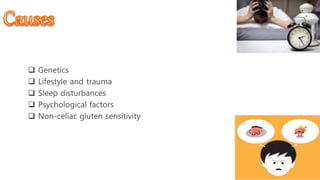
Causes
 Genetics
 Lifestyle and trauma
 Sleep disturbances
 Psychological factors
 Non-celiac gluten sensitivity
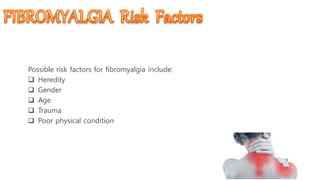
Possible risk factors for fibromyalgia include:
 Heredity
 Gender
 Age
 Trauma
 Poor physical condition
 Pain processing abnormalities
 Neuroendocrine system
 Autonomic nervous system
 Sleep
 Neuroimaging
 Immune system
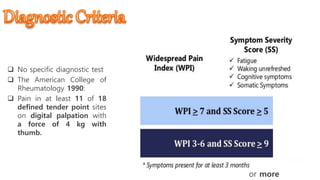
 No specific diagnostic test
 The American College of
Rheumatology 1990:
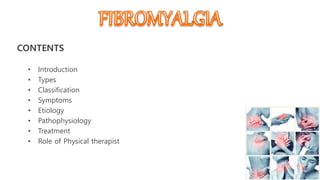
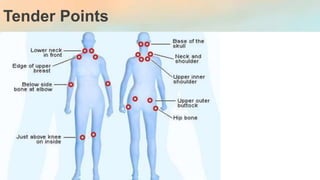
 Pain in at least 11 of 18
defined tender point sites
on digital palpation with
a force of 4 kg with
thumb.
or more
Tender Points
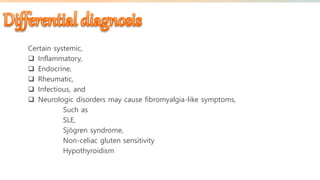
Certain systemic,
 Inflammatory,
 Endocrine,
 Rheumatic,
 Infectious, and
 Neurologic disorders may cause fibromyalgia-like symptoms,
Such as
SLE,
Sjögren syndrome,
Non-celiac gluten sensitivity
Hypothyroidism
Pain relievers
Antidepressants
Anticonvulsants
Vitamin D
Exercise
Biofeedback
Tai chi
Massage therapy
Cognitive behavior therapy (CBT)
Physical therapy
Acupuncture
If you have fibromyalgia, this allows the therapist to develop specific
Stretching and strengthening programs to meet your individual needs.
• While there is no known cure for fibromyalgia,
• physical therapy may help ease the symptoms of pain.
• It can also help reduce stiffness and fatigue.
• In addition to exercise, physical therapists use a wide range of resources --
From deep tissue massage to ice and heat packs for hydrotherapy.
• With these tools, physical therapists can help people with fibromyalgia use
their muscles, stretch for flexibility, and move their joints through range-
of- motion exercises
Deep tissue massage. The application of intense pressure to reach deep
tissues and ease muscle tensions.
Ultrasound. Ultrasound uses sound waves to help promote blood flow to
affected tissues and in turn relieve pain.
Transcutaneous electrical nerve stimulation or TENS. The TENS machine
blocks pain signals and encourages the release of endorphins, hence
helping ease muscle pain and stiffness.
Controlled resistance exercise. These exercises help you improve muscle
strength and flexibility without putting additional pressure on affected joints
Heat therapy. This procedure is simple and can also be done at home. Dry
or damp hot towels are used to soothe painful muscles and joints.
Another way to relieve sore muscles is by soaking in a tub of warm water.
Doing this before bedtime can also help improve quality of your sleep.
That’s All about Fibromyalgia
Thank you

Fibromyalgia-wide spread pain

  • 1.
  • 2.
    CONTENTS • Introduction • Types •Classification • Symptoms • Etiology • Pathophysiology • Treatment • Role of Physical therapist
  • 3.
     A commonNon-articular rheumatic syndrome Characterized by myalgia and multiple points of focal muscle tenderness to palpation (trigger points).  Muscle pain is typically aggravated by inactivity or exposure to cold.  This condition is often associated with General Symptoms, Fibromyalgia may arise as a primary or secondary disease process. It is most frequent in females aged 20 to 50 years. such as • Sleep disturbances, • Fatigue, • Stiffness, • Memory and mood issues. • Headaches, and • Occasionally DEPRESSION. • There is significant overlap between Fibromyalgia and The Chronic Fatigue Syndrome.
  • 4.
  • 5.
    Classification Fibromyalgia is classedas a disorder of pain processing due to abnormalities in how pain signals are processed in the central nervous system.  The American College of Rheumatology classifies fibromyalgia as being a f unctional somatic syndrome.  The expert committee of the European League Against Rheumatism classif -ies fibromyalgia as a neurobiological disorder and as a result, exclusively give pharmacotherapy their highest level of support.  The International Classification of Diseases (ICD-10) lists fibromyalgia as a diagnosable disease under "Diseases of the musculoskeletal system and connective tissue," and states that fibromyalgia syndrome should be classified as a functional somatic syndrome rather than a mental disorder.
  • 6.
    Continue.. fibromyalgia subtypes A 2007review divides individuals with fibromyalgia into four groups as well as "mixed types"  "extreme sensitivity to pain but no associated psychiatric conditions“  "fibromyalgia and comorbid, pain-related depression"  "depression with concomitant fibromyalgia syndrome“  "fibromyalgia due to somatization"
  • 7.
    This existence ofsubtypes is due to difference In psychological and autonomic nervous system profiles of individual.
  • 8.
    Symptoms  Neurological Symptoms Relatedto Fibromyalgia  Muscle- Related Fibromya lgia Symptoms  Energy- Related Fibromya lgia Symptoms  Mental Concentration Fibromyalgia Symptoms  Gastro- intestinal Sympto ms of Fibromyalgia  Psychological Symptoms of Fibromyalgia  Hormonal-Endocrine Symptoms of Fibromyalgia
  • 10.
    Causes  Genetics  Lifestyleand trauma  Sleep disturbances  Psychological factors  Non-celiac gluten sensitivity
  • 11.
    Possible risk factorsfor fibromyalgia include:  Heredity  Gender  Age  Trauma  Poor physical condition
  • 12.
     Pain processingabnormalities  Neuroendocrine system  Autonomic nervous system  Sleep  Neuroimaging  Immune system
  • 14.
     No specificdiagnostic test  The American College of Rheumatology 1990:  Pain in at least 11 of 18 defined tender point sites on digital palpation with a force of 4 kg with thumb. or more
  • 15.
  • 16.
    Certain systemic,  Inflammatory, Endocrine,  Rheumatic,  Infectious, and  Neurologic disorders may cause fibromyalgia-like symptoms, Such as SLE, Sjögren syndrome, Non-celiac gluten sensitivity Hypothyroidism
  • 17.
    Pain relievers Antidepressants Anticonvulsants Vitamin D Exercise Biofeedback Taichi Massage therapy Cognitive behavior therapy (CBT) Physical therapy Acupuncture
  • 18.
    If you havefibromyalgia, this allows the therapist to develop specific Stretching and strengthening programs to meet your individual needs. • While there is no known cure for fibromyalgia, • physical therapy may help ease the symptoms of pain. • It can also help reduce stiffness and fatigue. • In addition to exercise, physical therapists use a wide range of resources -- From deep tissue massage to ice and heat packs for hydrotherapy. • With these tools, physical therapists can help people with fibromyalgia use their muscles, stretch for flexibility, and move their joints through range- of- motion exercises
  • 19.
    Deep tissue massage.The application of intense pressure to reach deep tissues and ease muscle tensions. Ultrasound. Ultrasound uses sound waves to help promote blood flow to affected tissues and in turn relieve pain. Transcutaneous electrical nerve stimulation or TENS. The TENS machine blocks pain signals and encourages the release of endorphins, hence helping ease muscle pain and stiffness. Controlled resistance exercise. These exercises help you improve muscle strength and flexibility without putting additional pressure on affected joints Heat therapy. This procedure is simple and can also be done at home. Dry or damp hot towels are used to soothe painful muscles and joints. Another way to relieve sore muscles is by soaking in a tub of warm water. Doing this before bedtime can also help improve quality of your sleep.
  • 20.
    That’s All aboutFibromyalgia Thank you

Editor's Notes

  • #18 REFFERENCE OF TREATMENT OPTIONS https://www.healthline.com/health/fibromyalgia-treatments-for-pain#treat-fatigue