Endocannabinoide
  1) Werden bei Bedarf produziert
  2) Aktivieren die lokalen Cannabinoidrezeptoren
  3) Werden sofort metabolisiert
                                                            Phospholipid Remodeling

                                                                  R1O
                                                    O             O           O-R2                        O
                                                                                                                 O-R3
            Phospholipid                                N
                                                                O P O
                                                                                                              O CH
                                                        H           O-                                           OH
       Ausgangsprodukte
                                         NAPE-PLD                                                     DAG Lipase
                                                            O                                         O
                                                                         OH                                   OH

        Endocannabinoide                                        N
                                                                H
                                                                                                          O CH
                                                                                                              OH
                                              Anandamide                             2-Arachidonoyl-glycerol
                                                        Fatty Acid Amide Hydrolase            MAG Lipase
                                                                                 O
                                                                                                   OH
            Abbauprodukte               H2N
                                                OH                                    OH       HO CH
                                                                                                   OH


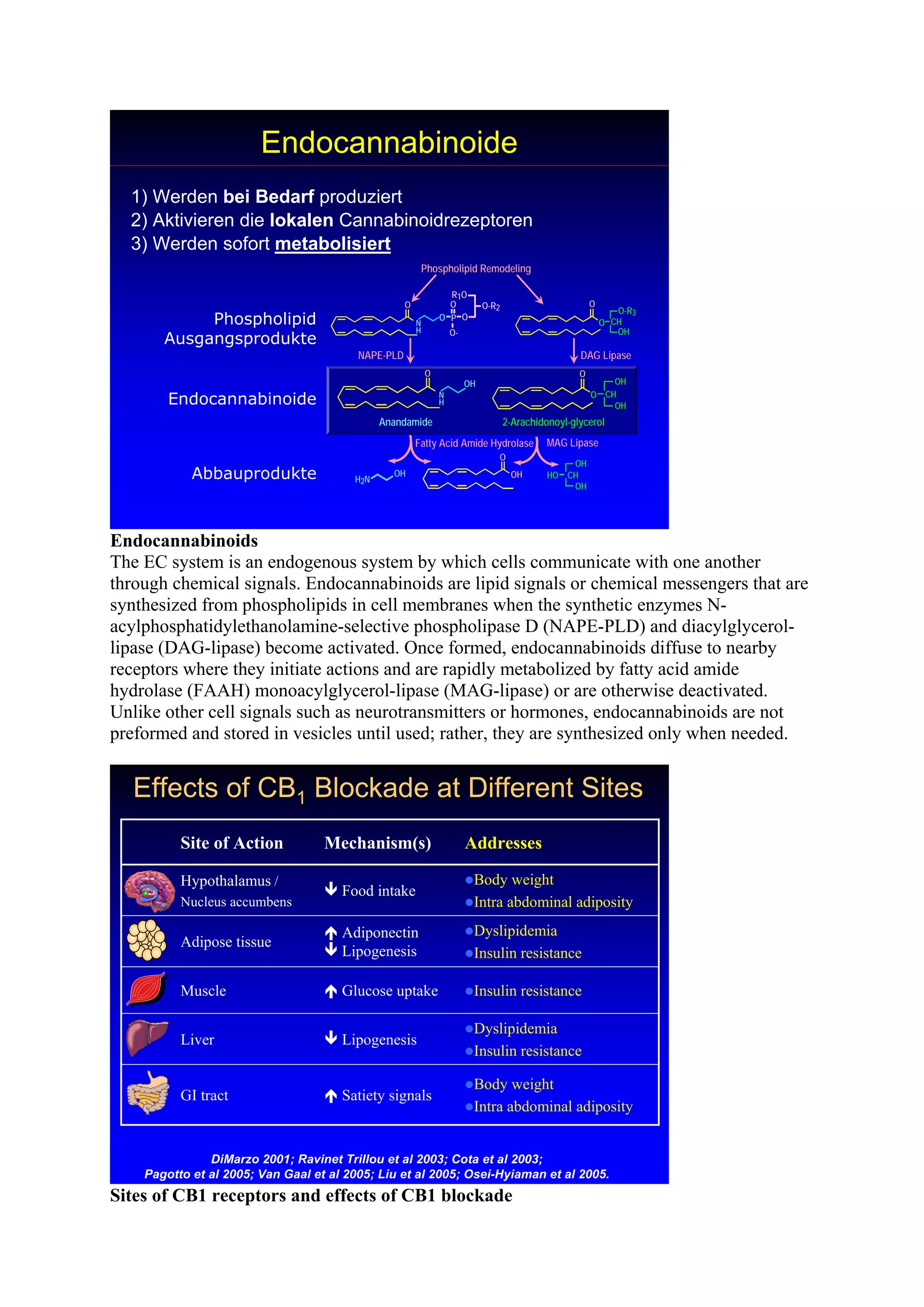
Endocannabinoids
The EC system is an endogenous system by which cells communicate with one another
through chemical signals. Endocannabinoids are lipid signals or chemical messengers that are
synthesized from phospholipids in cell membranes when the synthetic enzymes N-
acylphosphatidylethanolamine-selective phospholipase D (NAPE-PLD) and diacylglycerol-
lipase (DAG-lipase) become activated. Once formed, endocannabinoids diffuse to nearby
receptors where they initiate actions and are rapidly metabolized by fatty acid amide
hydrolase (FAAH) monoacylglycerol-lipase (MAG-lipase) or are otherwise deactivated.
Unlike other cell signals such as neurotransmitters or hormones, endocannabinoids are not
preformed and stored in vesicles until used; rather, they are synthesized only when needed.


   Effects of CB1 Blockade at Different Sites
          Site of Action           Mechanism(s)                          Addresses

          Hypothalamus /                                                  Body weight
                                      Food intake
          Nucleus accumbens                                               Intra abdominal adiposity
                                      Adiponectin                         Dyslipidemia
          Adipose tissue
                                      Lipogenesis                         Insulin resistance

          Muscle                      Glucose uptake                      Insulin resistance

                                                                          Dyslipidemia
          Liver                       Lipogenesis
                                                                          Insulin resistance

                                                                          Body weight
          GI tract                    Satiety signals
                                                                          Intra abdominal adiposity


               DiMarzo 2001; Ravinet Trillou et al 2003; Cota et al 2003;
    Pagotto et al 2005; Van Gaal et al 2005; Liu et al 2005; Osei-Hyiaman et al 2005.
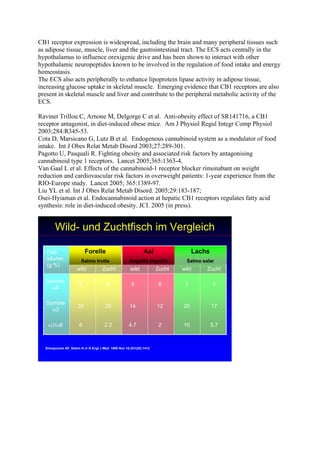
Sites of CB1 receptors and effects of CB1 blockade
CB1 receptor expression is widespread, including the brain and many peripheral tissues such
as adipose tissue, muscle, liver and the gastrointestinal tract. The ECS acts centrally in the
hypothalamus to influence orexigenic drive and has been shown to interact with other
hypothalamic neuropeptides known to be involved in the regulation of food intake and energy
homeostasis.
The ECS also acts peripherally to enhance lipoprotein lipase activity in adipose tissue,
increasing glucose uptake in skeletal muscle. Emerging evidence that CB1 receptors are also
present in skeletal muscle and liver and contribute to the peripheral metabolic activity of the
ECS.

Ravinet Trillou C, Arnone M, Delgorge C et al. Anti-obesity effect of SR141716, a CB1
receptor antagonist, in diet-induced obese mice. Am J Physiol Regul Integr Comp Physiol
2003;284:R345-53.
Cota D, Marsicano G, Lutz B et al. Endogenous cannabinoid system as a modulator of food
intake. Int J Obes Relat Metab Disord 2003;27:289-301.
Pagotto U, Pasquali R. Fighting obesity and associated risk factors by antagonising
cannabinoid type 1 receptors. Lancet 2005;365:1363-4.
Van Gaal L et al. Effects of the cannabinoid-1 receptor blocker rimonabant on weight
reduction and cardiovascular risk factors in overweight patients: 1-year experience from the
RIO-Europe study. Lancet 2005; 365:1389-97.
Liu YL et al. Int J Obes Relat Metab Disord. 2005;29:183-187;
Osei-Hyiaman et al. Endocannabinoid action at hepatic CB1 receptors regulates fatty acid
synthesis: role in diet-induced obesity. JCI. 2005 (in press).


       Wild- und Zuchtfisch im Vergleich

   Fett-                  Forelle                             Aal                 Lachs
   säuren              Salmo trutta                  Anguilla anguilla         Salmo salar
   (g %)
                     wild           Zucht             wild           Zucht   wild      Zucht

   Summe
                      5                9              3               6       2           3
     ω6

   Summe
                     30               20             14              12      20           17
     ω3

    ω3/ω6             6               2.2            4.7              2      10           5.7


  Simopoulos AP, Salem N Jr N Engl J Med. 1989 Nov 16;321(20):1412
Fettsäuren im Eigelb

                                            Griechische              Hühnereier von
      Fettsäuren pro
                                          Hühnereier von             Käfighaltungs-
      Gramm Eigelb
                                          Freilaufhühnern               hühnern

         Gesättigte FS                              100.66                80.65
     Einfach ungesättigt                            142.78               115.36
         ω6 Fettsäuren                               23.02                33.81
         ω3 Fettsäuren                               17.66                1.73
               ω6/ω3                                   1.3                19.4


  Simopoulos AP, Salem N Jr N Engl J Med. 1989 Nov 16;321(20):1412


N Engl J Med. 1989 Nov 16;321(20):1412. Links
n-3 fatty acids in eggs from range-fed Greek chickens.
Simopoulos AP,
Salem N Jr.
PMID: 2811950 [PubMed - indexed for MEDLINE]

Fettsäuren und Gesundheit Text

  • 1.
    Endocannabinoide 1)Werden bei Bedarf produziert 2) Aktivieren die lokalen Cannabinoidrezeptoren 3) Werden sofort metabolisiert Phospholipid Remodeling R1O O O O-R2 O O-R3 Phospholipid N O P O O CH H O- OH Ausgangsprodukte NAPE-PLD DAG Lipase O O OH OH Endocannabinoide N H O CH OH Anandamide 2-Arachidonoyl-glycerol Fatty Acid Amide Hydrolase MAG Lipase O OH Abbauprodukte H2N OH OH HO CH OH Endocannabinoids The EC system is an endogenous system by which cells communicate with one another through chemical signals. Endocannabinoids are lipid signals or chemical messengers that are synthesized from phospholipids in cell membranes when the synthetic enzymes N- acylphosphatidylethanolamine-selective phospholipase D (NAPE-PLD) and diacylglycerol- lipase (DAG-lipase) become activated. Once formed, endocannabinoids diffuse to nearby receptors where they initiate actions and are rapidly metabolized by fatty acid amide hydrolase (FAAH) monoacylglycerol-lipase (MAG-lipase) or are otherwise deactivated. Unlike other cell signals such as neurotransmitters or hormones, endocannabinoids are not preformed and stored in vesicles until used; rather, they are synthesized only when needed. Effects of CB1 Blockade at Different Sites Site of Action Mechanism(s) Addresses Hypothalamus / Body weight Food intake Nucleus accumbens Intra abdominal adiposity Adiponectin Dyslipidemia Adipose tissue Lipogenesis Insulin resistance Muscle Glucose uptake Insulin resistance Dyslipidemia Liver Lipogenesis Insulin resistance Body weight GI tract Satiety signals Intra abdominal adiposity DiMarzo 2001; Ravinet Trillou et al 2003; Cota et al 2003; Pagotto et al 2005; Van Gaal et al 2005; Liu et al 2005; Osei-Hyiaman et al 2005. Sites of CB1 receptors and effects of CB1 blockade
  • 2.
    CB1 receptor expressionis widespread, including the brain and many peripheral tissues such as adipose tissue, muscle, liver and the gastrointestinal tract. The ECS acts centrally in the hypothalamus to influence orexigenic drive and has been shown to interact with other hypothalamic neuropeptides known to be involved in the regulation of food intake and energy homeostasis. The ECS also acts peripherally to enhance lipoprotein lipase activity in adipose tissue, increasing glucose uptake in skeletal muscle. Emerging evidence that CB1 receptors are also present in skeletal muscle and liver and contribute to the peripheral metabolic activity of the ECS. Ravinet Trillou C, Arnone M, Delgorge C et al. Anti-obesity effect of SR141716, a CB1 receptor antagonist, in diet-induced obese mice. Am J Physiol Regul Integr Comp Physiol 2003;284:R345-53. Cota D, Marsicano G, Lutz B et al. Endogenous cannabinoid system as a modulator of food intake. Int J Obes Relat Metab Disord 2003;27:289-301. Pagotto U, Pasquali R. Fighting obesity and associated risk factors by antagonising cannabinoid type 1 receptors. Lancet 2005;365:1363-4. Van Gaal L et al. Effects of the cannabinoid-1 receptor blocker rimonabant on weight reduction and cardiovascular risk factors in overweight patients: 1-year experience from the RIO-Europe study. Lancet 2005; 365:1389-97. Liu YL et al. Int J Obes Relat Metab Disord. 2005;29:183-187; Osei-Hyiaman et al. Endocannabinoid action at hepatic CB1 receptors regulates fatty acid synthesis: role in diet-induced obesity. JCI. 2005 (in press). Wild- und Zuchtfisch im Vergleich Fett- Forelle Aal Lachs säuren Salmo trutta Anguilla anguilla Salmo salar (g %) wild Zucht wild Zucht wild Zucht Summe 5 9 3 6 2 3 ω6 Summe 30 20 14 12 20 17 ω3 ω3/ω6 6 2.2 4.7 2 10 5.7 Simopoulos AP, Salem N Jr N Engl J Med. 1989 Nov 16;321(20):1412
  • 3.
    Fettsäuren im Eigelb Griechische Hühnereier von Fettsäuren pro Hühnereier von Käfighaltungs- Gramm Eigelb Freilaufhühnern hühnern Gesättigte FS 100.66 80.65 Einfach ungesättigt 142.78 115.36 ω6 Fettsäuren 23.02 33.81 ω3 Fettsäuren 17.66 1.73 ω6/ω3 1.3 19.4 Simopoulos AP, Salem N Jr N Engl J Med. 1989 Nov 16;321(20):1412 N Engl J Med. 1989 Nov 16;321(20):1412. Links n-3 fatty acids in eggs from range-fed Greek chickens. Simopoulos AP, Salem N Jr. PMID: 2811950 [PubMed - indexed for MEDLINE]