 Meaning of feedback
 Feedbackasresourceorientation
 The importanceof feedback
 Barriers of feedback
 Conclusion
⦿ Communication is the exchange and flow of information
and ideas from one person to another. It involves a sender
transmitting an idea, information, or feeling to a receiver.
Effective communication occurs only if the receiver
understands the exact information or idea that the sender
intended to transmit.
⦿ The communication has a vicious cycle which continues
even after sending message to the respondents. The
audience or the respondents may or get the same intended
message as the speaker intends to send. This cycle ends
only when they share their understandings and comments
to the speaker about what they have understood. This
process is called feedback.
 Feedback is audience‘s response, which enables
you to evaluate the effectiveness of your
message.
 One is constantly communicating back to other
thus, The return process is called feedback. And it
plays a very important role in family
communication network.
 Feedback is the final step in the communication
process.
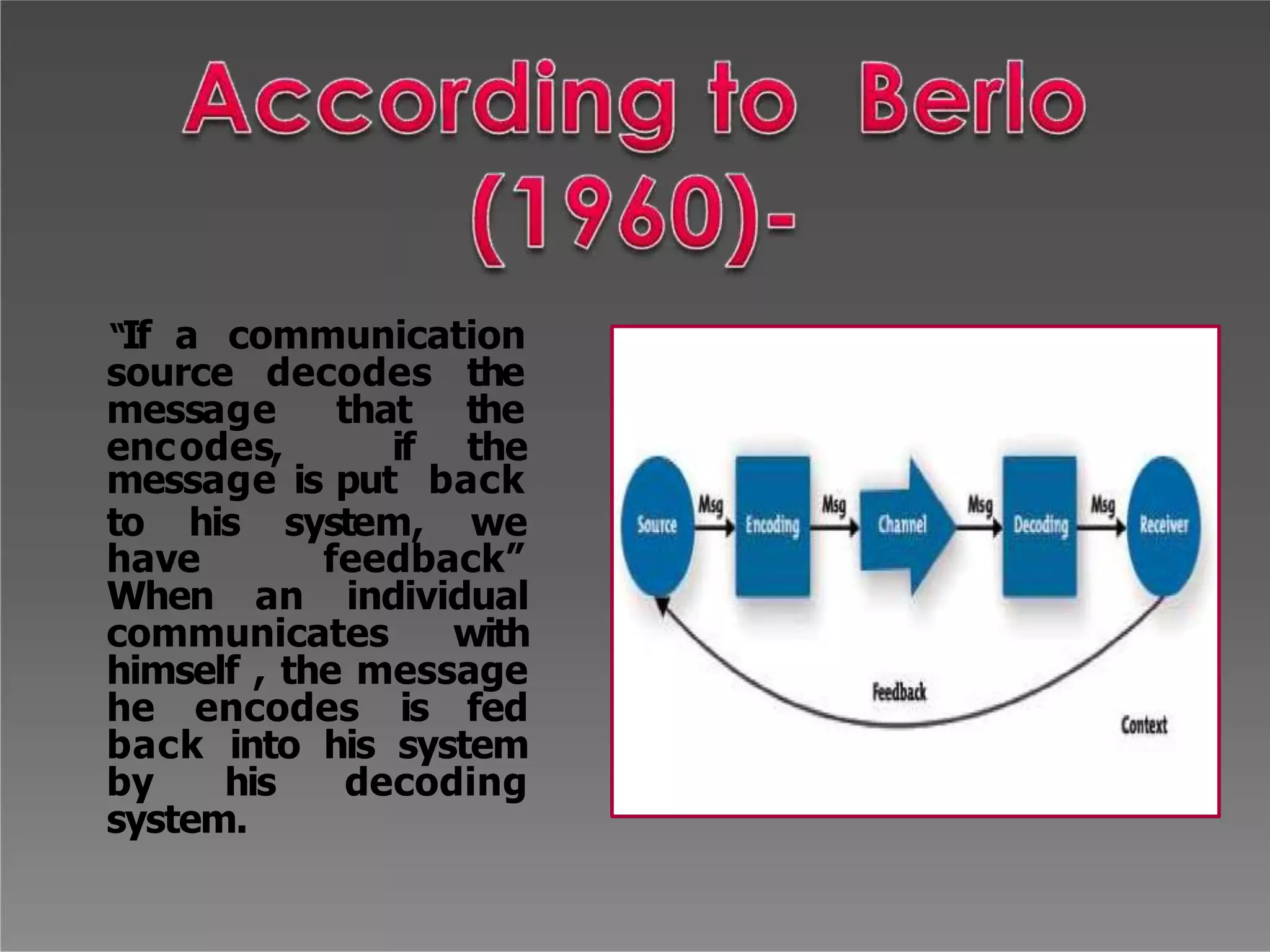
“If a communication
source decodes the
message that the
encodes, if the
message is put back
to his system, we
have feedback”
When an individual
communicates with
himself , the message
he encodes is fed
back into his system
by his decoding
system.
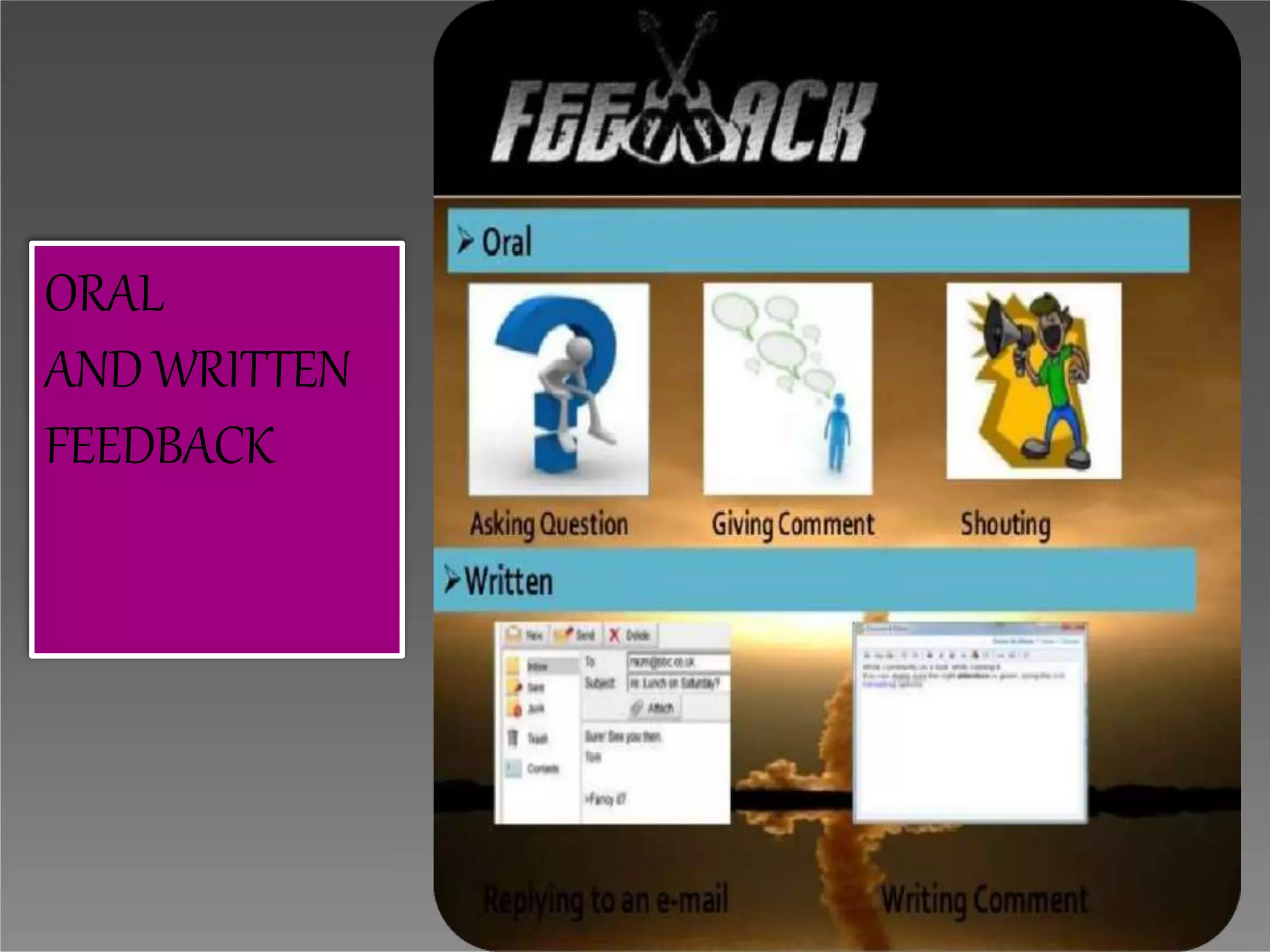
Sometimes a feedback could be a non-verbal, smiles,
sighs and other times, it is oral. It can also be written like
replying to an e-mail, etc.
ORAL
ANDWRITTEN
FEEDBACK
The concept of feedback is usually used to reflect a resource
orientation, rather than a receiver orientation or a process
orientation.
when we talk about the receiver’s response as feedback for
the source, we are observing a communication situation
from the point of view of the source.
‘Free flow pattern of feedback’ has been found to be most
effective in communicating messages to audience as
compared with other levels of feedback on the basis of a
knowledge and confidence score.
 A limited answer pattern
of feedback has been
proved to be the second
best way of
disseminating
information.
 Thus it can be concluded
that gain in knowledge is
directly proportional to
the amount of feedback.
 In other words, gain in
knowledge is the
function of feedback in
the process of
communication.
• Feedback makes
communication meaningful.
Feed back
• It sustain the communication
process
Feed back
• It tells communication is making
sense or not.
Feed back
Ithelps to plan what next to be one or say.
Itcomplete the whole process of communication and makes it continuous.
communication will be useless without feedback.
Itis a basis for measuring the effectiveness of communication.
feedback paves way for new idea generation.
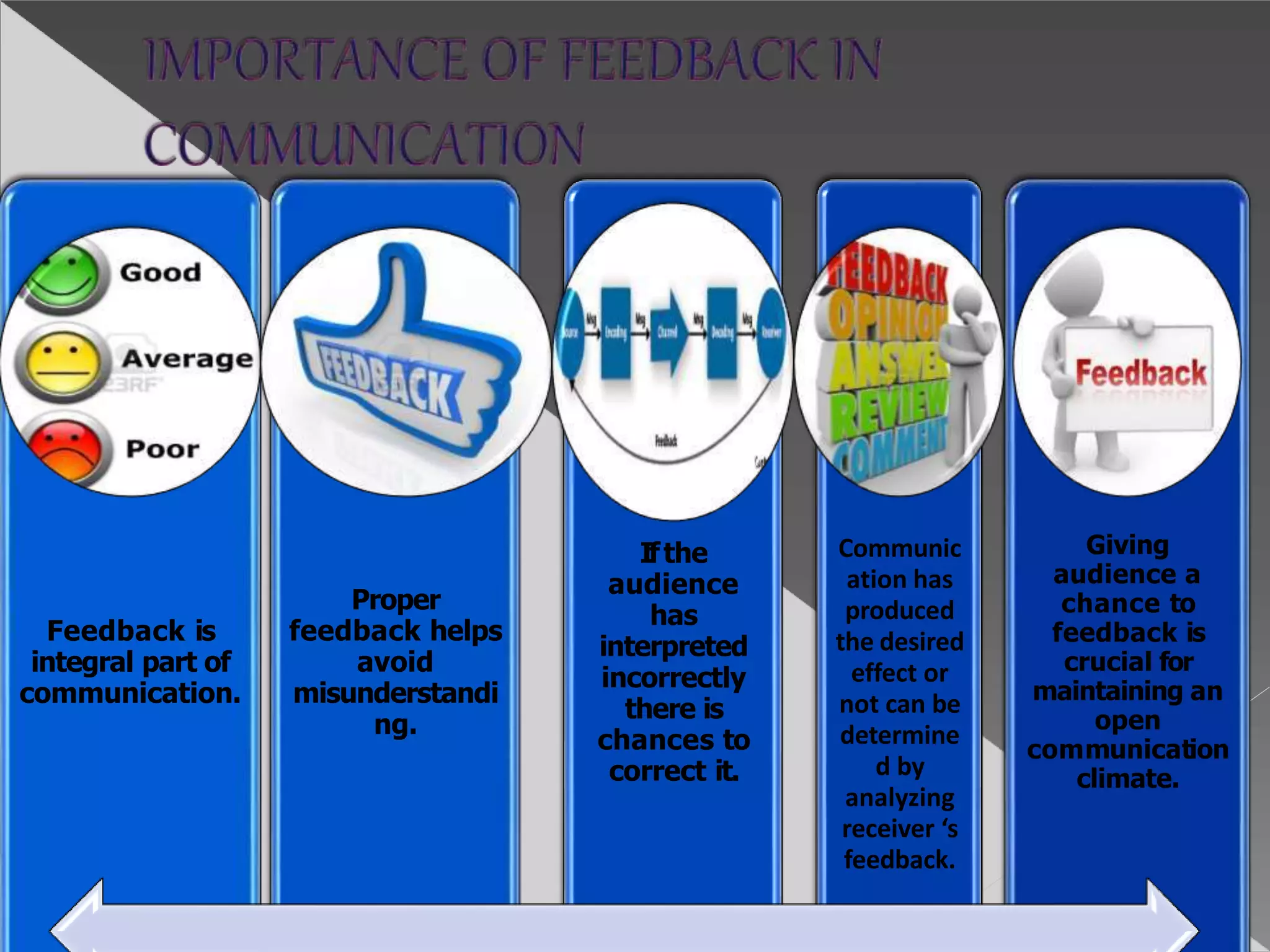
Feedback is
integral part of
communication.
Proper
feedback helps
avoid
misunderstandi
ng.
Ifthe
audience
has
interpreted
incorrectly
there is
chances to
correct it.
Communic
ation has
produced
the desired
effect or
not can be
determine
d by
analyzing
receiver ‘s
feedback.
Giving
audience a
chance to
feedback is
crucial for
maintaining an
open
communication
climate.
 There may be secular reasons why message are not understood
or you get inadequate feedback.
 It is important that both senders and receivers understand
these barriers so we can ask for clarification to both give and
get proper feedback.
 Physical barriers often occur in business, necessitating long
distance communication methods without the benefit of seeing
reaction, language and cultural barriers also are common as
business expand globally.
 Other barriers include distractions, stereotypes and even a lack
of confidence that the other person may not want to convey.
⦿ From the above information we can concluded
that ‘ though the last but the most important key
or principle to effective communication is to
obtain feedback from the receiver.
part
⦿ Feedback
feedback
is an essential
is important, because
of learning.
it is like
constructive criticism.
⦿ It helps us to see our strengths and weakness we
may not know exist.
Feedback.pptx
Feedback.pptx

Feedback.pptx

  • 3.
     Meaning offeedback  Feedbackasresourceorientation  The importanceof feedback  Barriers of feedback  Conclusion
  • 4.
    ⦿ Communication isthe exchange and flow of information and ideas from one person to another. It involves a sender transmitting an idea, information, or feeling to a receiver. Effective communication occurs only if the receiver understands the exact information or idea that the sender intended to transmit. ⦿ The communication has a vicious cycle which continues even after sending message to the respondents. The audience or the respondents may or get the same intended message as the speaker intends to send. This cycle ends only when they share their understandings and comments to the speaker about what they have understood. This process is called feedback.
  • 5.
     Feedback isaudience‘s response, which enables you to evaluate the effectiveness of your message.  One is constantly communicating back to other thus, The return process is called feedback. And it plays a very important role in family communication network.  Feedback is the final step in the communication process.
  • 6.
    “If a communication sourcedecodes the message that the encodes, if the message is put back to his system, we have feedback” When an individual communicates with himself , the message he encodes is fed back into his system by his decoding system.
  • 7.
    Sometimes a feedbackcould be a non-verbal, smiles, sighs and other times, it is oral. It can also be written like replying to an e-mail, etc.
  • 8.
  • 9.
    The concept offeedback is usually used to reflect a resource orientation, rather than a receiver orientation or a process orientation. when we talk about the receiver’s response as feedback for the source, we are observing a communication situation from the point of view of the source. ‘Free flow pattern of feedback’ has been found to be most effective in communicating messages to audience as compared with other levels of feedback on the basis of a knowledge and confidence score.
  • 10.
     A limitedanswer pattern of feedback has been proved to be the second best way of disseminating information.  Thus it can be concluded that gain in knowledge is directly proportional to the amount of feedback.  In other words, gain in knowledge is the function of feedback in the process of communication.
  • 11.
    • Feedback makes communicationmeaningful. Feed back • It sustain the communication process Feed back • It tells communication is making sense or not. Feed back
  • 12.
    Ithelps to planwhat next to be one or say. Itcomplete the whole process of communication and makes it continuous. communication will be useless without feedback. Itis a basis for measuring the effectiveness of communication. feedback paves way for new idea generation.
  • 13.
    Feedback is integral partof communication. Proper feedback helps avoid misunderstandi ng. Ifthe audience has interpreted incorrectly there is chances to correct it. Communic ation has produced the desired effect or not can be determine d by analyzing receiver ‘s feedback. Giving audience a chance to feedback is crucial for maintaining an open communication climate.
  • 14.
     There maybe secular reasons why message are not understood or you get inadequate feedback.  It is important that both senders and receivers understand these barriers so we can ask for clarification to both give and get proper feedback.  Physical barriers often occur in business, necessitating long distance communication methods without the benefit of seeing reaction, language and cultural barriers also are common as business expand globally.  Other barriers include distractions, stereotypes and even a lack of confidence that the other person may not want to convey.
  • 15.
    ⦿ From theabove information we can concluded that ‘ though the last but the most important key or principle to effective communication is to obtain feedback from the receiver. part ⦿ Feedback feedback is an essential is important, because of learning. it is like constructive criticism. ⦿ It helps us to see our strengths and weakness we may not know exist.