Federalism:Federalism:
The division oF PowerThe division oF Power
How did the US Constitution
create a federal system of
government?
• The Constitution organized government
in a new way.
• It created a federal system of
government.
The Constitution gives certain powers
only to the national government
and certain powers only to the states.
Federal System
• There are also certain powers that
federal and state government share
powers.
• All other powers are kept by the
people.
What is a federal system of
government?
• According to the natural
rights philosophy, the people
have a right to create a
government.
Photo from iep.utm.edu
What was the name of the philosopher whose natural
rights philosophy influenced the Founding Fathers?
John Locke
“We the People…”
• The Constitution begins with the words “We the
People”.
• The people have created a government and have
given it the authority to govern them.
• In return, government is responsible for protecting
the people’s rights to...
• Life
• Liberty
• Property
The
People
The Constitution
protects the
rights of the
people from the
government.
Constitution
The
People
Government
The constitution is a social contract
between We the People and the
government.
The Constitution
creates limits and
guidelines for the
government in order
to protect the people
from an abuse of
power.
It all starts with the
people…
Sovereign
• The people remain sovereign at all
times.
What does sovereign mean?
• Sovereign means to have the highest
rank of authority.
• The people have ultimate authority to
control government.
• This is where the term “popular
sovereignty” comes from.
So how is power divide between the
federal and state governments?
• There are different kinds of powers:
• Expressed powers
• Powers that are listed
• Reserved powers
• Powers specifically given the state government
• Concurrent powers
• Powers shared by the federal and state
governments
• Powers denied
Expressed PowersExpressed Powers
Powers Granted
Expressed:
Spelled out in the Constitution
•Article I, Section 8
•18 clauses giving 27 powers
•Tax
•Coin money
•Regulate trade
•Declare war
•Grant patents
Powers of the
Federal Government
Article I, Section 8
What About Article I, Section 8,What About Article I, Section 8,
Clause 18?Clause 18?
This is what is known as the
“elastic clause” or implied powers.
Implied:
Not written in Constitution, but
reasonably suggested
•Article I, Section 8, Clause 18
•“necessary and proper”
•The Elastic Clause
•Build dams
•Highways & roads
•Determine crimes
Article I, Section 8,
Clause 18
To make all Laws which
shall be necessary and
proper for carrying into
Execution the foregoing
Powers, and all other Powers
vested by this Constitution in
the Government of the United
States, or in any Department
or Officer thereof.
Question for Discussion:
Why might some people have a
problem with the “elastic clause”?
Reserved PowersReserved Powers
Reserved Powers:
10th
Amendment
•Not granted to Federal, but not denied to
states.
•Legal marriage age
•Drinking age
•Professional license
•Confiscate property
The power of the state to protect and promote
public health, the public morals, the public
safety, and the general welfare.
Powers of the State
Governments
Amendment X (10)
Concurrent PowersConcurrent Powers
Concurrent:
The national and
state governments
share these powers
May be exercised
separately and
simultaneously
•Collect taxes
•Define crimes
•Condemn or take
private property for
public use
Powers of
the Federal
Government
Article I,
Section 8
Powers of the
State
Governments
Amendment X
(10)
Concurrent
Powers
•Collect
taxes
•Define
crimes
•Condemn
or take
private
property for
public use
Powers are expressly given to the federal
government and reserved to the states.
Concurrent powers are where the national
and state government meet in the middle
and share power.
Powers DeniedPowers Denied
Denied Federal Government:
Expressly denied:
•Infringe on rights (speech, press,
etc.)
Silence in Constitution:
•Only has delegated powers
Denied in Federal System:
•Cannot tax states
Denied State Governments:
Constitution denies certain
powers to state, because they
are NOT a federal
government.
•Make treaties
•Print money
•Deny rights to citizens
Denied Both:
Both state governments and national government have been denied the
power to violate rights of citizens
What protects the rights of the people from the government?
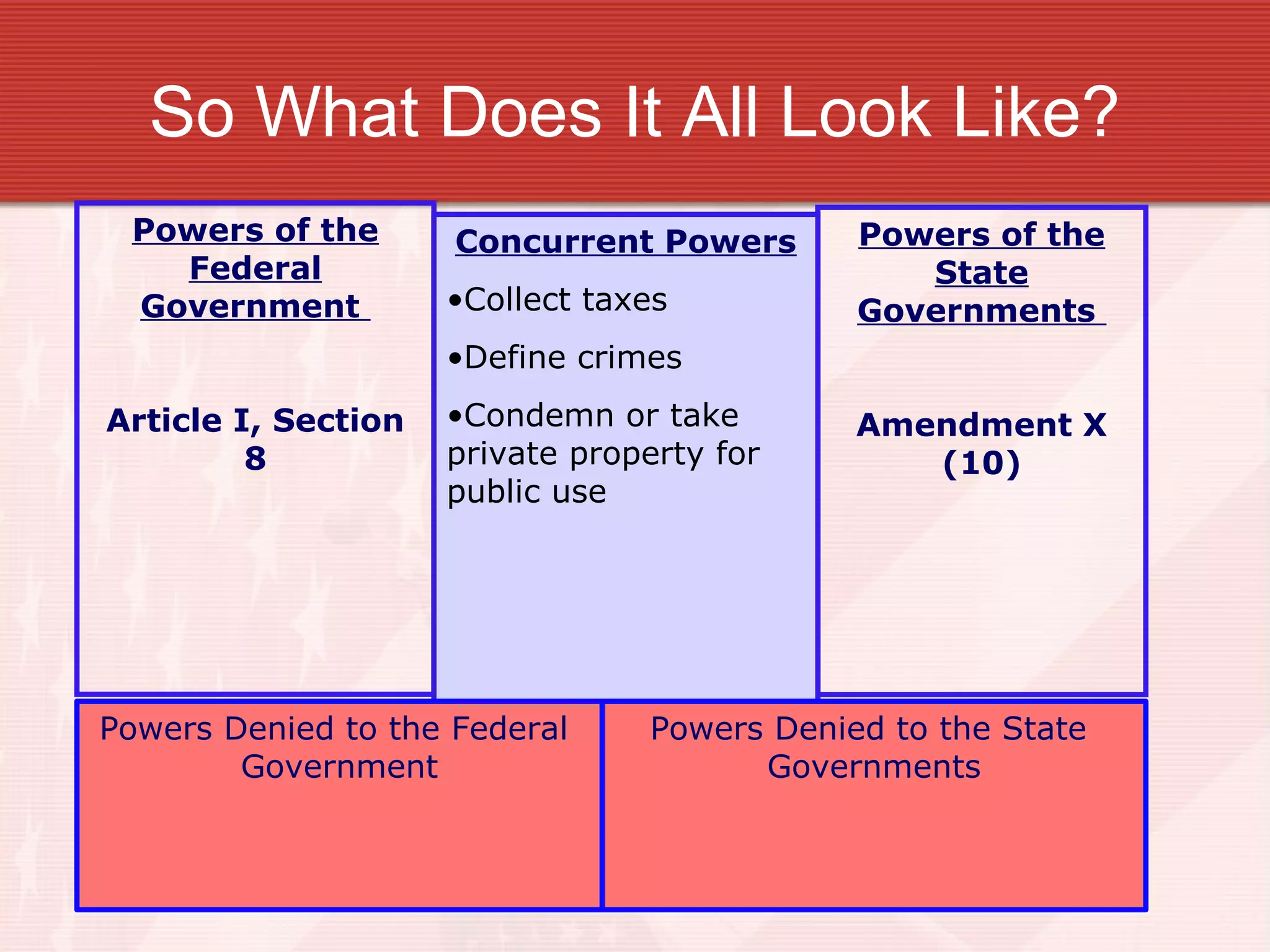
So What Does It All Look Like?
Powers of the
Federal
Government
Article I, Section
8
Powers of the
State
Governments
Amendment X
(10)
Concurrent Powers
•Collect taxes
•Define crimes
•Condemn or take
private property for
public use
Powers Denied to the Federal
Government
Powers Denied to the State
Governments
The Supremacy ClauseThe Supremacy Clause
(Article VI, Section 2)(Article VI, Section 2)
City and County
Laws
State Statues
(laws)
State
Constitutions
Acts of
Congress
United States
Constitution
The U.S.The U.S.
ConstitutionConstitution
is theis the
“Supreme“Supreme
Law of theLaw of the
Land.”Land.”
If there is a
conflict between
a lower law and
a higher one,
the higher one
“wins.”

Federalism

  • 1.
    Federalism:Federalism: The division oFPowerThe division oF Power
  • 2.
    How did theUS Constitution create a federal system of government? • The Constitution organized government in a new way. • It created a federal system of government. The Constitution gives certain powers only to the national government and certain powers only to the states.
  • 3.
    Federal System • Thereare also certain powers that federal and state government share powers. • All other powers are kept by the people.
  • 4.
    What is afederal system of government? • According to the natural rights philosophy, the people have a right to create a government. Photo from iep.utm.edu What was the name of the philosopher whose natural rights philosophy influenced the Founding Fathers? John Locke
  • 5.
    “We the People…” •The Constitution begins with the words “We the People”. • The people have created a government and have given it the authority to govern them. • In return, government is responsible for protecting the people’s rights to... • Life • Liberty • Property
  • 6.
    The People The Constitution protects the rightsof the people from the government. Constitution The People Government The constitution is a social contract between We the People and the government. The Constitution creates limits and guidelines for the government in order to protect the people from an abuse of power. It all starts with the people…
  • 7.
    Sovereign • The peopleremain sovereign at all times. What does sovereign mean? • Sovereign means to have the highest rank of authority. • The people have ultimate authority to control government. • This is where the term “popular sovereignty” comes from.
  • 8.
    So how ispower divide between the federal and state governments? • There are different kinds of powers: • Expressed powers • Powers that are listed • Reserved powers • Powers specifically given the state government • Concurrent powers • Powers shared by the federal and state governments • Powers denied
  • 9.
    Expressed PowersExpressed Powers PowersGranted Expressed: Spelled out in the Constitution •Article I, Section 8 •18 clauses giving 27 powers •Tax •Coin money •Regulate trade •Declare war •Grant patents Powers of the Federal Government Article I, Section 8
  • 10.
    What About ArticleI, Section 8,What About Article I, Section 8, Clause 18?Clause 18? This is what is known as the “elastic clause” or implied powers. Implied: Not written in Constitution, but reasonably suggested •Article I, Section 8, Clause 18 •“necessary and proper” •The Elastic Clause •Build dams •Highways & roads •Determine crimes Article I, Section 8, Clause 18 To make all Laws which shall be necessary and proper for carrying into Execution the foregoing Powers, and all other Powers vested by this Constitution in the Government of the United States, or in any Department or Officer thereof. Question for Discussion: Why might some people have a problem with the “elastic clause”?
  • 11.
    Reserved PowersReserved Powers ReservedPowers: 10th Amendment •Not granted to Federal, but not denied to states. •Legal marriage age •Drinking age •Professional license •Confiscate property The power of the state to protect and promote public health, the public morals, the public safety, and the general welfare. Powers of the State Governments Amendment X (10)
  • 12.
    Concurrent PowersConcurrent Powers Concurrent: Thenational and state governments share these powers May be exercised separately and simultaneously •Collect taxes •Define crimes •Condemn or take private property for public use Powers of the Federal Government Article I, Section 8 Powers of the State Governments Amendment X (10) Concurrent Powers •Collect taxes •Define crimes •Condemn or take private property for public use Powers are expressly given to the federal government and reserved to the states. Concurrent powers are where the national and state government meet in the middle and share power.
  • 13.
    Powers DeniedPowers Denied DeniedFederal Government: Expressly denied: •Infringe on rights (speech, press, etc.) Silence in Constitution: •Only has delegated powers Denied in Federal System: •Cannot tax states Denied State Governments: Constitution denies certain powers to state, because they are NOT a federal government. •Make treaties •Print money •Deny rights to citizens Denied Both: Both state governments and national government have been denied the power to violate rights of citizens What protects the rights of the people from the government?
  • 14.
    So What DoesIt All Look Like? Powers of the Federal Government Article I, Section 8 Powers of the State Governments Amendment X (10) Concurrent Powers •Collect taxes •Define crimes •Condemn or take private property for public use Powers Denied to the Federal Government Powers Denied to the State Governments
  • 15.
    The Supremacy ClauseTheSupremacy Clause (Article VI, Section 2)(Article VI, Section 2) City and County Laws State Statues (laws) State Constitutions Acts of Congress United States Constitution The U.S.The U.S. ConstitutionConstitution is theis the “Supreme“Supreme Law of theLaw of the Land.”Land.” If there is a conflict between a lower law and a higher one, the higher one “wins.”

Editor's Notes

  • #7 This slide will look at CONSTITUTIONAL GOVERNMENTS Distribute student handout “What is a Constitution?” Students will complete their handout as the PowerPoint progresses. Remind students to check and see if they are on the correct section – Constitutional Government. The first step in a “constitutional government” is the establishment of a social contract between the people and the government. The result of that social contract is a constitution that will outline the limits and guidelines placed on government and the rights of the people to be protected from the government.
  • #9 Ask students what they think each kind of power means prior to revealing the definition.