Fast and Provably Good Seedings for k-Means
O. Bachem, M. Lucic, S. Hassani, A. Krause
Presented by Kimikazu Kato,
Silver Egg Technology Co., Ltd.
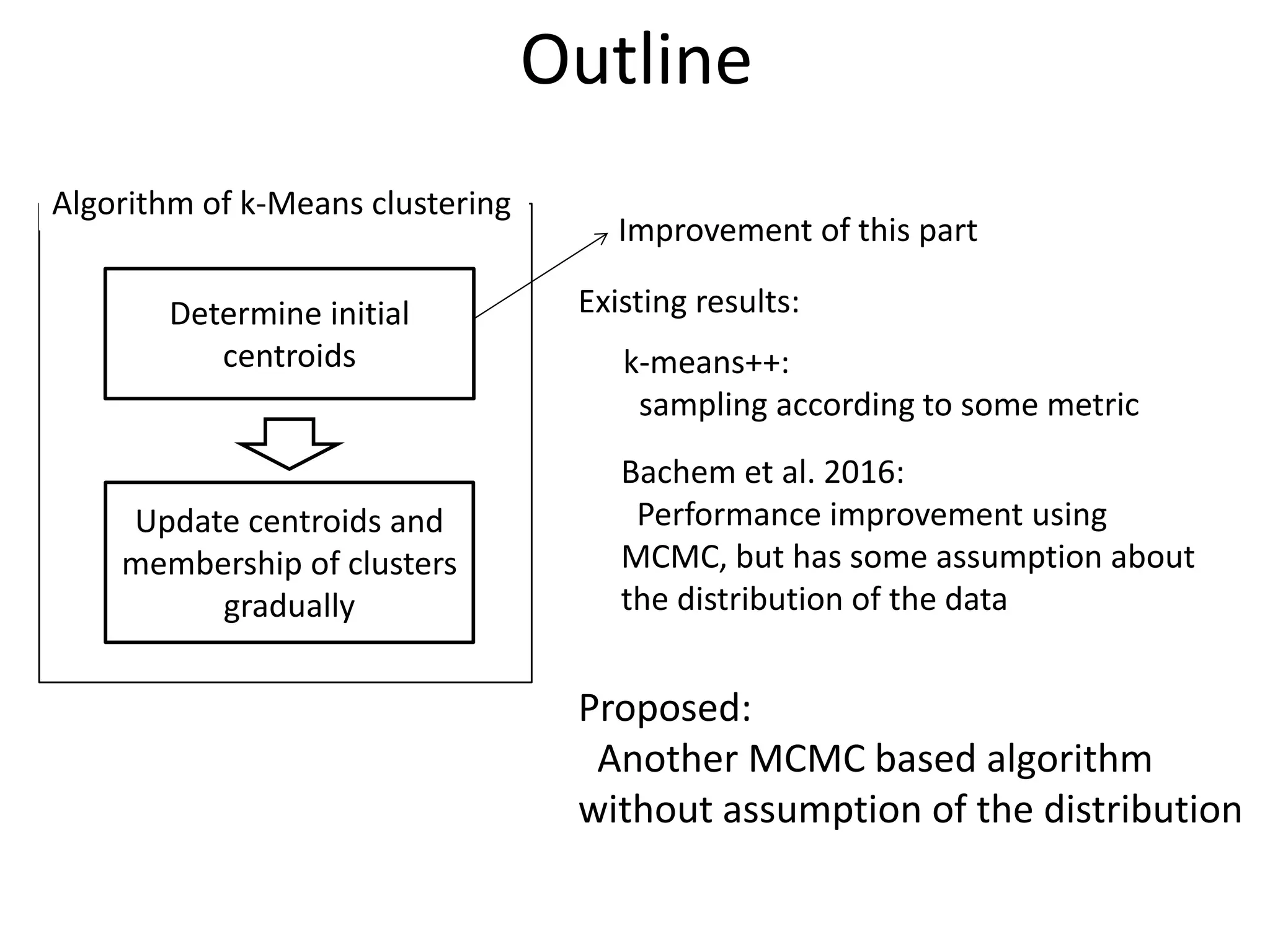
Algorithm of k-Means clustering
Determine initial
centroids
Update centroids and
membership of clusters
gradually
Improvement of this part
Existing results:
k-means++:
sampling according to some metric
Bachem et al. 2016:
Performance improvement using
MCMC, but has some assumption about
the distribution of the data
Proposed:
Another MCMC based algorithm
without assumption of the distribution
Outline
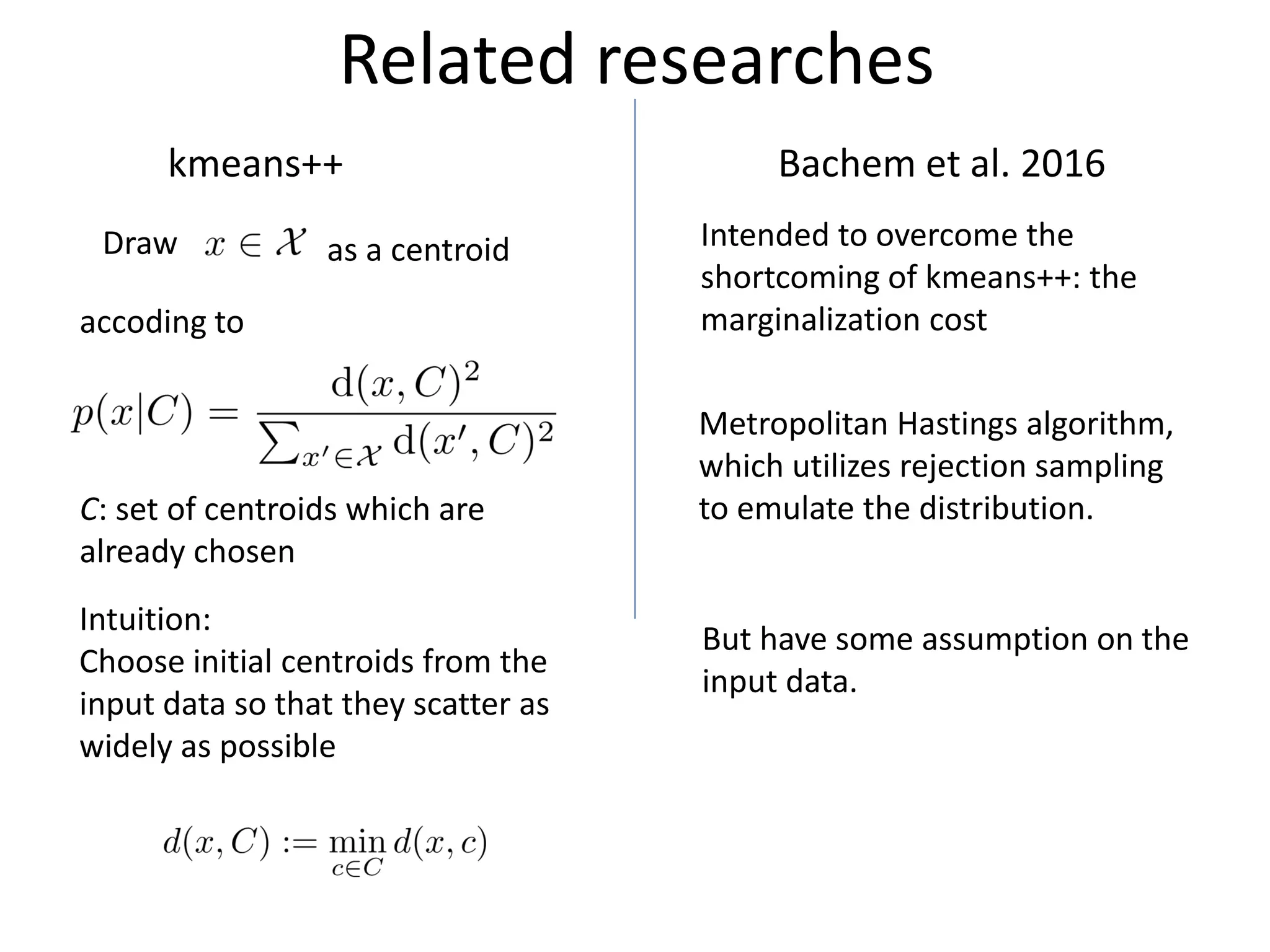
Related researches
kmeans++
Draw
accoding to
Intuition:
Choose initial centroids from the
input data so that they scatter as
widely as possible
Bachem et al. 2016
Intended to overcome the
shortcoming of kmeans++: the
marginalization cost
Metropolitan Hastings algorithm,
which utilizes rejection sampling
to emulate the distribution.
But have some assumption on the
input data.
as a centroid
C: set of centroids which are
already chosen
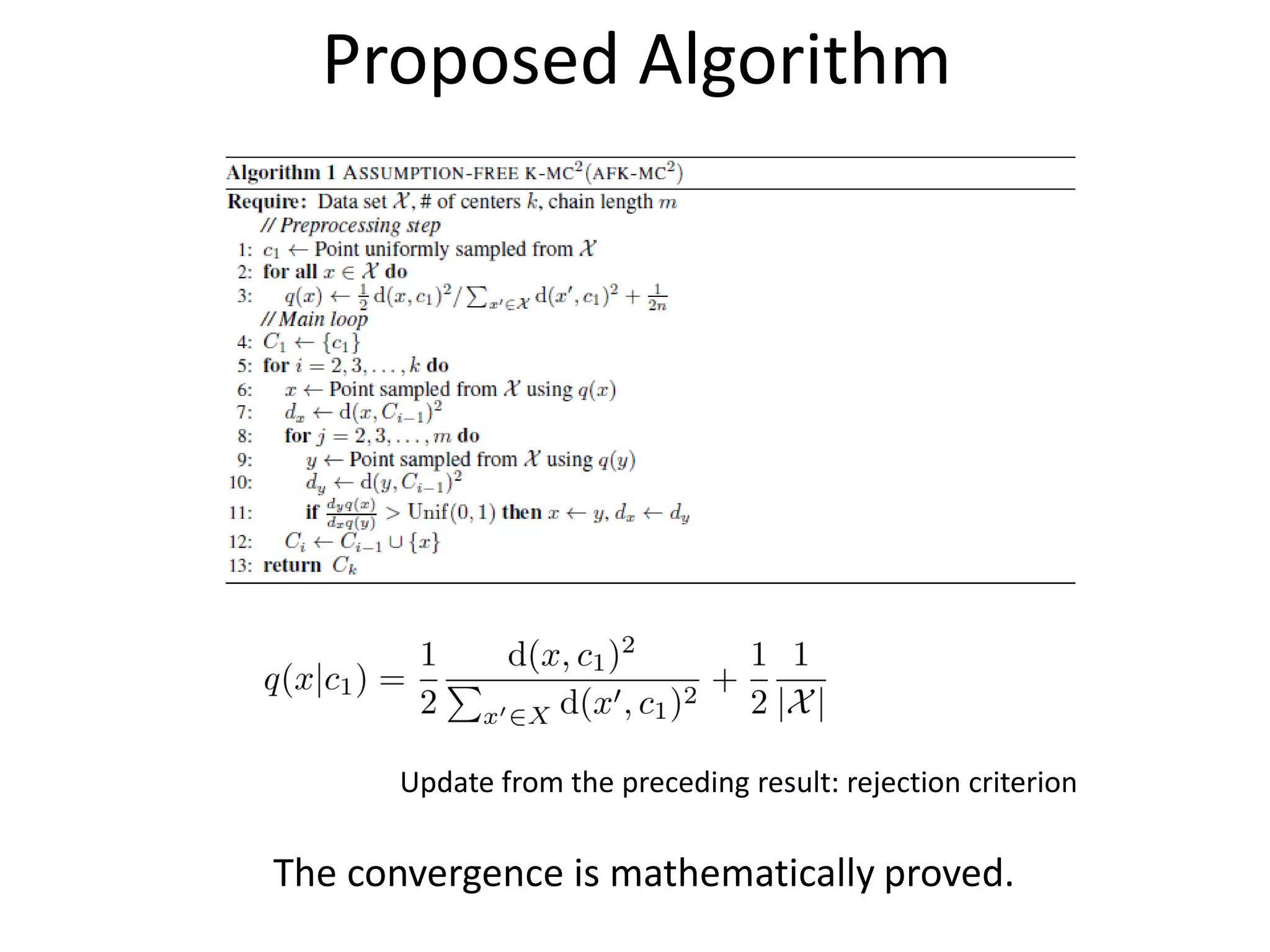
Proposed Algorithm
Update from the preceding result: rejection criterion
The convergence is mathematically proved.
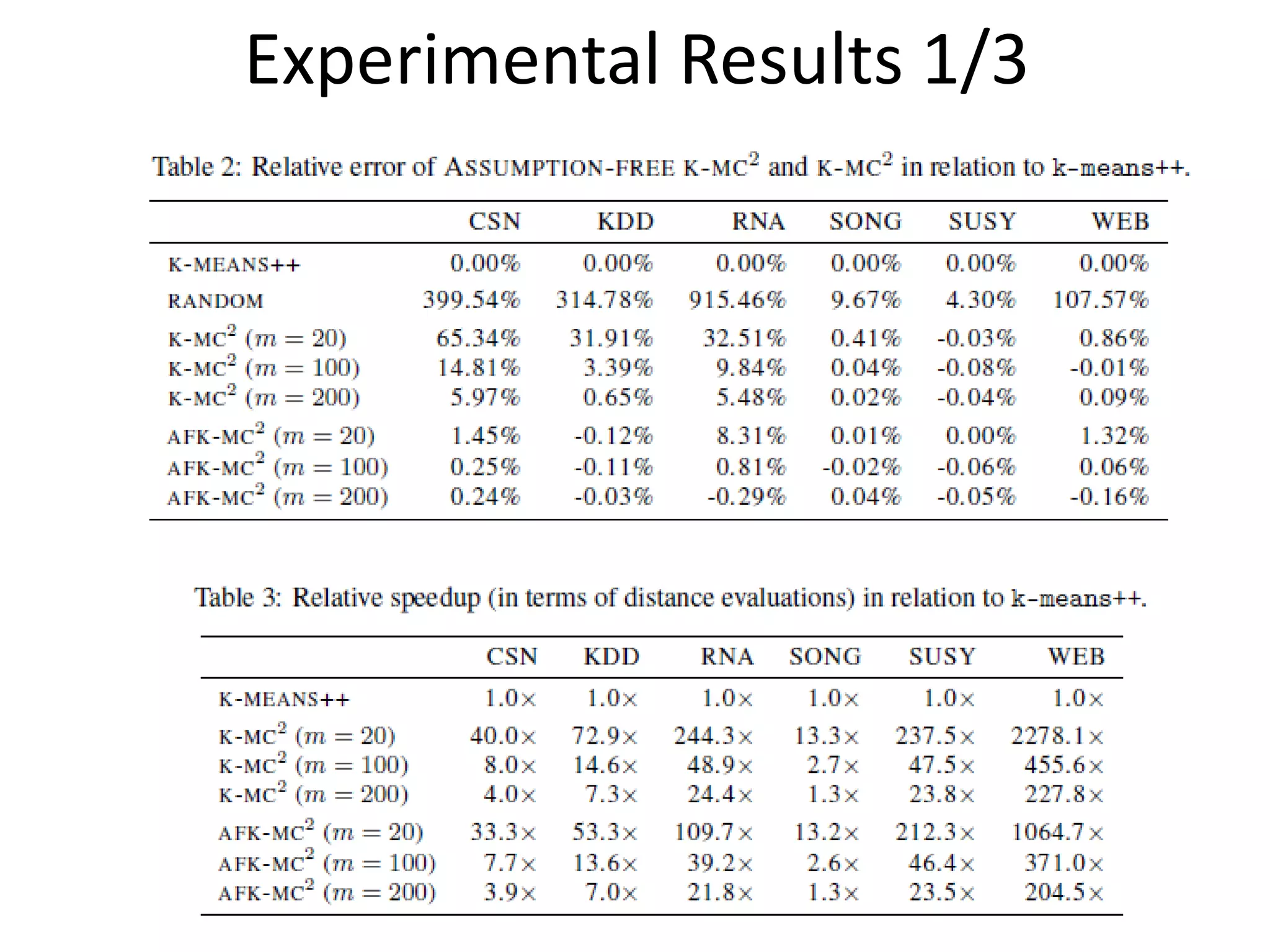
Experimental Results 1/3
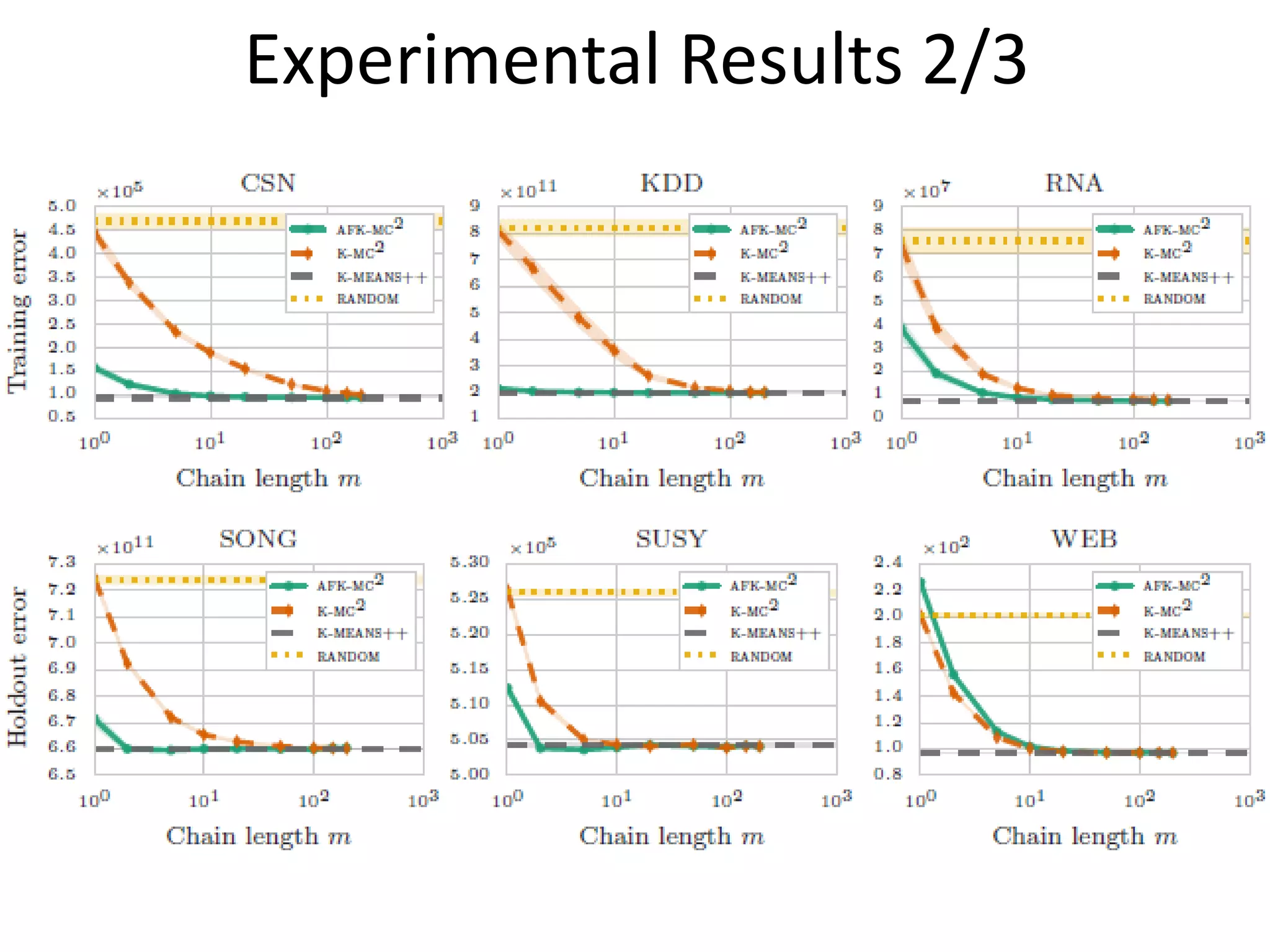
Experimental Results 2/3
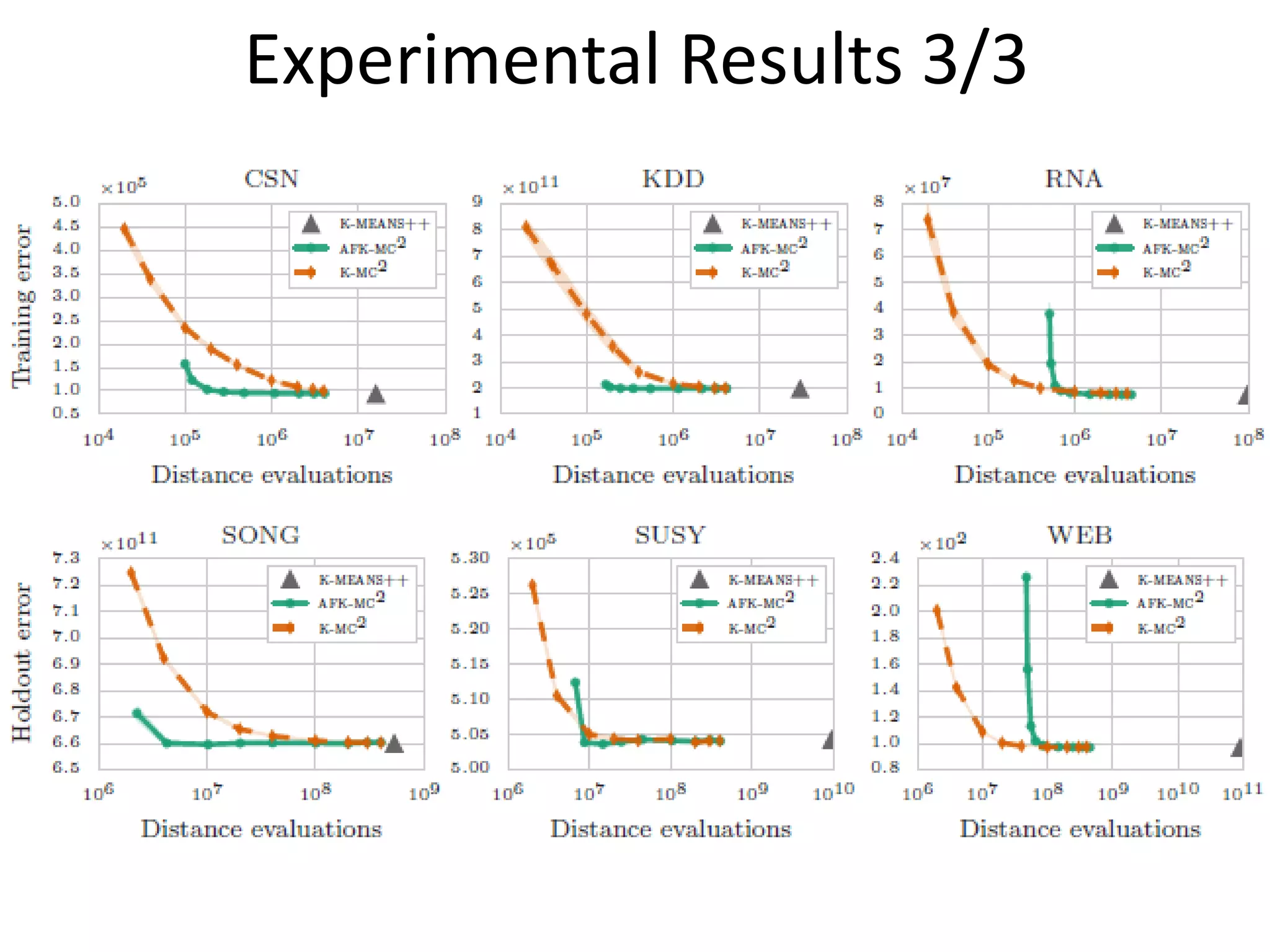
Experimental Results 3/3
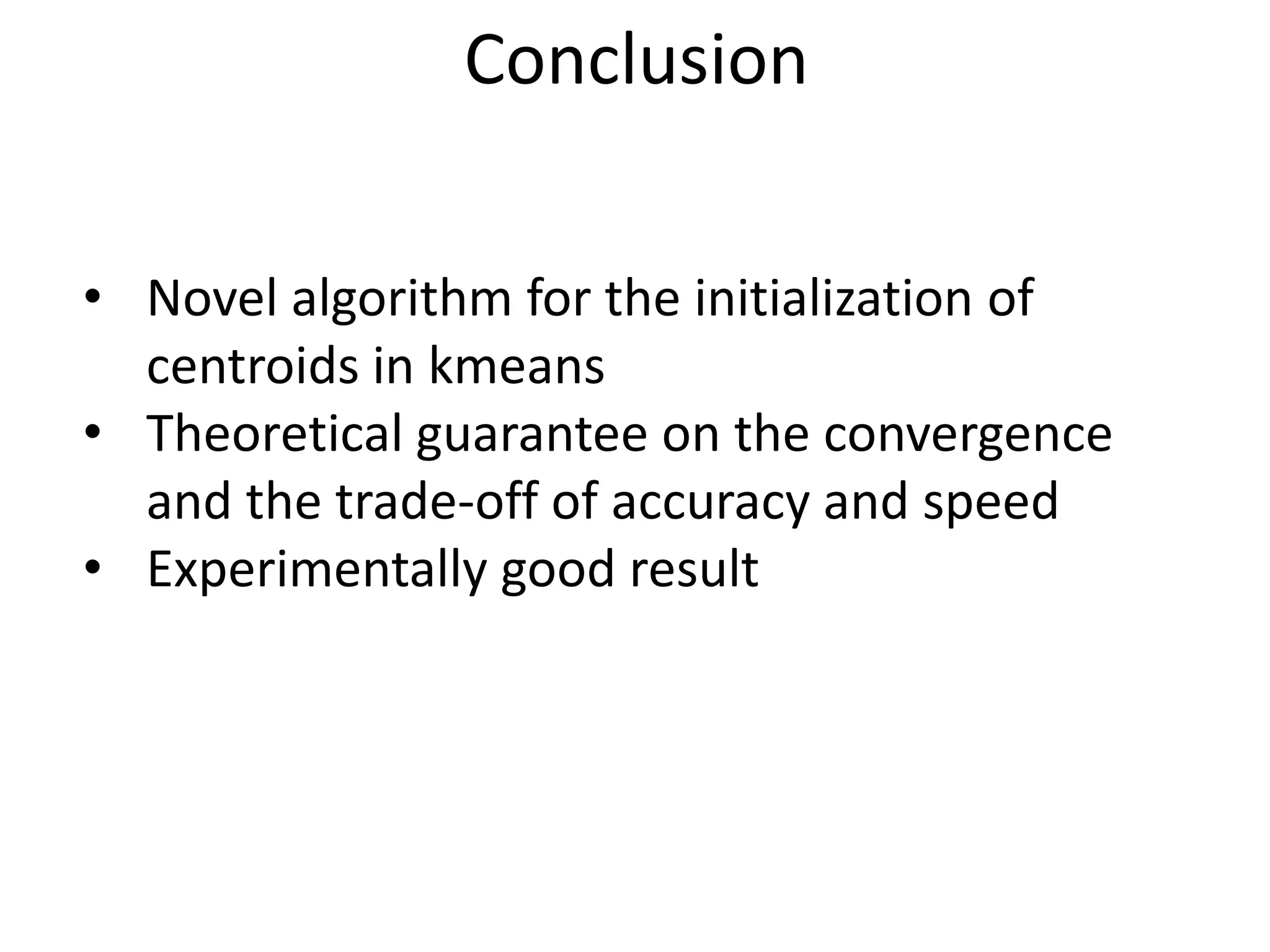
Conclusion
• Novel algorithm for the initialization of
centroids in kmeans
• Theoretical guarantee on the convergence
and the trade-off of accuracy and speed
• Experimentally good result

Fast and Probvably Seedings for k-Means

  • 1.
    Fast and ProvablyGood Seedings for k-Means O. Bachem, M. Lucic, S. Hassani, A. Krause Presented by Kimikazu Kato, Silver Egg Technology Co., Ltd.
  • 2.
    Algorithm of k-Meansclustering Determine initial centroids Update centroids and membership of clusters gradually Improvement of this part Existing results: k-means++: sampling according to some metric Bachem et al. 2016: Performance improvement using MCMC, but has some assumption about the distribution of the data Proposed: Another MCMC based algorithm without assumption of the distribution Outline
  • 3.
    Related researches kmeans++ Draw accoding to Intuition: Chooseinitial centroids from the input data so that they scatter as widely as possible Bachem et al. 2016 Intended to overcome the shortcoming of kmeans++: the marginalization cost Metropolitan Hastings algorithm, which utilizes rejection sampling to emulate the distribution. But have some assumption on the input data. as a centroid C: set of centroids which are already chosen
  • 4.
    Proposed Algorithm Update fromthe preceding result: rejection criterion The convergence is mathematically proved.
  • 5.
  • 6.
  • 7.
  • 8.
    Conclusion • Novel algorithmfor the initialization of centroids in kmeans • Theoretical guarantee on the convergence and the trade-off of accuracy and speed • Experimentally good result