Brad Redlin, Director IWLA Agricultural Programs Upper Mississippi River Initiative Missouri River Initiative Agricultural Conservation Introduction to the  Farm Bill
IWLA Agricultural Programs 1. Background 2. Federal Farm Bill 3. Agricultural Conservation
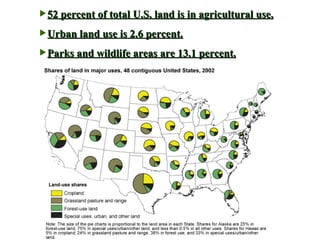
52 percent of total U.S. land is in agricultural use. Urban land use is 2.6 percent. Parks and wildlife areas are 13.1 percent.
 
 
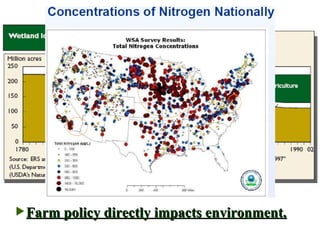
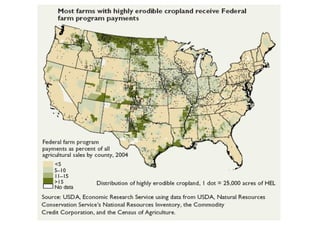
Farm policy directly impacts environment.
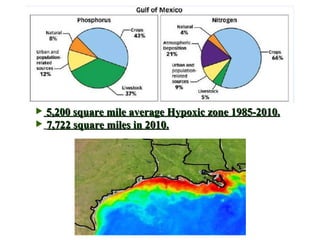
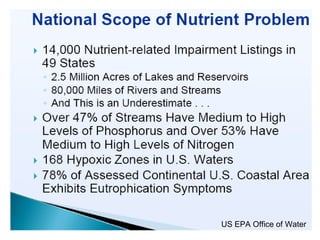
5,200 square mile average Hypoxic zone 1985-2010. 7,722 square miles in 2010.
US EPA Office of Water
IWLA Agricultural Programs 1. Background 2. Federal Farm Bill 3. Agricultural Conservation
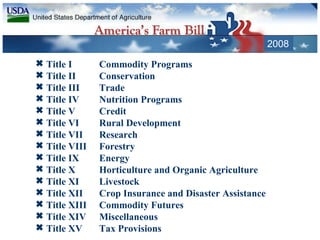
Title I Commodity Programs Title II Conservation Title III Trade Title IV Nutrition Programs Title V Credit Title VI Rural Development Title VII Research Title VIII Forestry Title IX Energy Title X Horticulture and Organic Agriculture Title XI Livestock Title XII Crop Insurance and Disaster Assistance Title XIII Commodity Futures Title XIV Miscellaneous Title XV Tax Provisions 2008
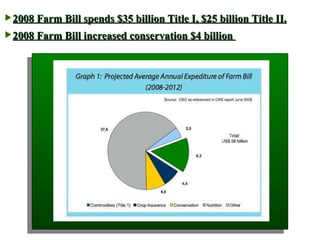
2008 Farm Bill spends $35 billion Title I, $25 billion Title II. 2008 Farm Bill increased conservation $4 billion
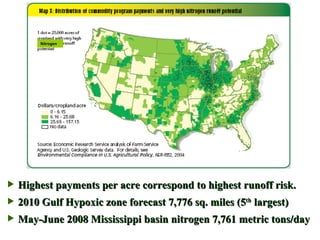
Highest payments per acre correspond to highest runoff risk. 2010 Gulf Hypoxic zone forecast 7,776 sq. miles (5 th  largest) May-June 2008 Mississippi basin nitrogen 7,761 metric tons/day Nitrogen
 
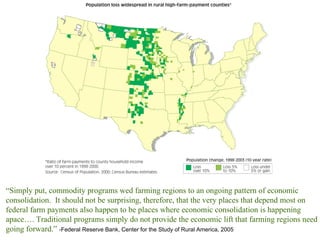
“ Simply put, commodity programs wed farming regions to an ongoing pattern of economic consolidation.  It should not be surprising, therefore, that the very places that depend most on federal farm payments also happen to be places where economic consolidation is happening apace…. Traditional programs simply do not provide the economic lift that farming regions need going forward.”  -Federal Reserve Bank, Center for the Study of Rural America, 2005
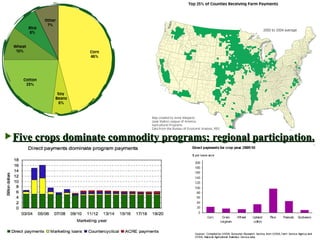
Five crops dominate commodity programs; regional participation.


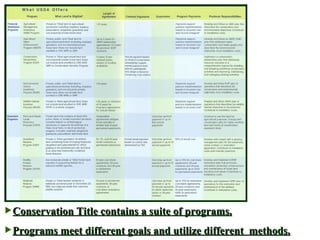
Conservation Title contains a suite of programs. Programs meet different goals and utilize different  methods.
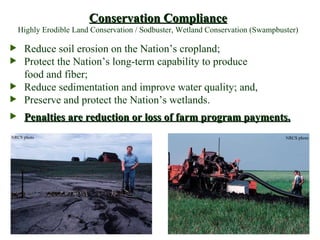
Conservation Compliance Highly Erodible Land Conservation / Sodbuster, Wetland Conservation (Swampbuster) Reduce soil erosion on the Nation’s cropland; Protect the Nation’s long-term capability to produce food and fiber; Reduce sedimentation and improve water quality; and, Preserve and protect the Nation’s wetlands. Penalties are reduction or loss of farm program payments. Ducks Unlimited photo NRCS photo NRCS photo
 
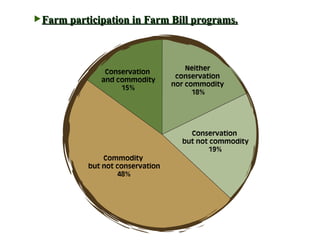
Farm participation in Farm Bill programs.
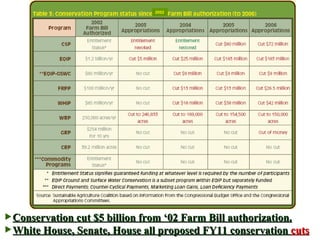
Conservation cut $5 billion from ‘02 Farm Bill authorization. White House, Senate, House all proposed FY11 conservation  cuts 2002
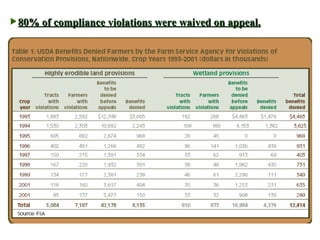
80% of compliance violations were waived on appeal.
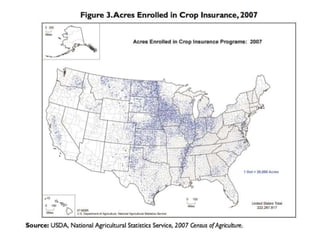
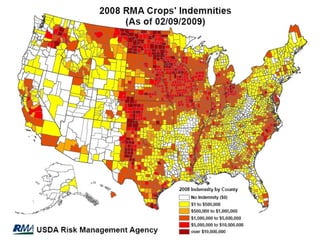
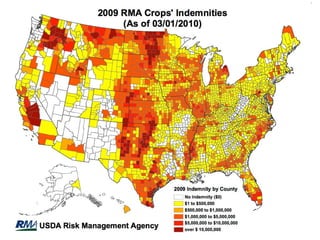
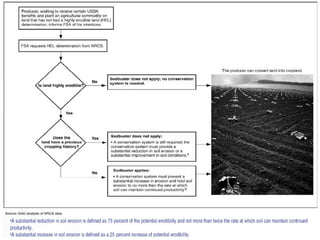
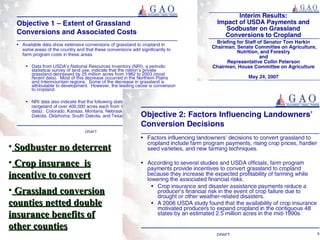
Sodbuster no deterrent Crop insurance  is incentive to convert Grassland conversion counties netted double insurance benefits of other counties
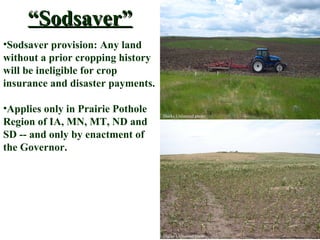
“ Sodsaver” Sodsaver provision: Any land without a prior cropping history will be ineligible for crop insurance and disaster payments. Applies only in Prairie Pothole Region of IA, MN, MT, ND and SD -- and only by enactment of the Governor. Ducks Unlimited photo Ducks Unlimited photo
Ethanol Dependency  --  2-2-09  A new South Dakota State University study highlights the ethanol industry and its importance for economic viability. In  South Dakota, 60% of the corn produced went into ethanol production. In  Iowa, that figure is 50% .  Forty percent of Nebraska's  corn goes to ethanol production; in  Minnesota and Illinois, that figure is 30% . SDSU economists say this study implies a growing level of dependency on the ethanol industry for the health of the rural economy.
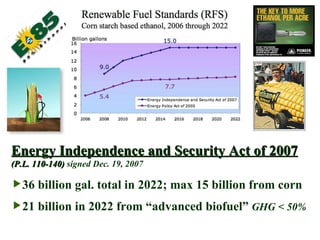
Energy Independence and Security Act of 2007   (P.L. 110-140)  signed Dec. 19, 2007 36 billion gal. total in 2022; max 15 billion from corn 21 billion in 2022 from “advanced biofuel”  GHG < 50%
IWLA Agricultural Programs 1. Background 2. Federal Farm Bill 3. Agricultural Conservation
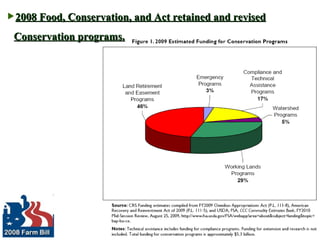
2008 Food, Conservation, and Act retained and revised Conservation programs.
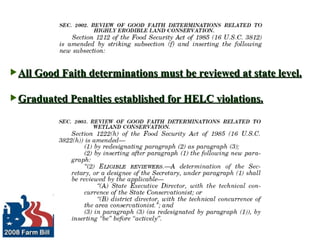
All Good Faith determinations must be reviewed at state level. Graduated Penalties established for HELC violations.
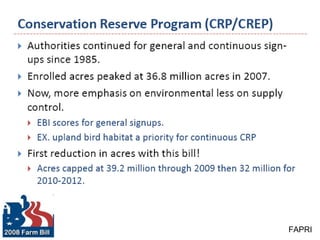
FAPRI
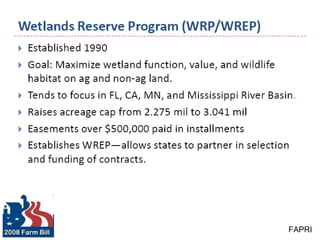
FAPRI
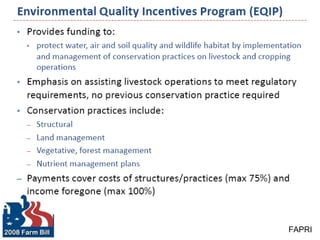
FAPRI
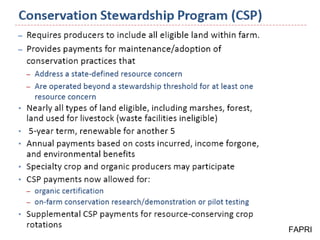
FAPRI
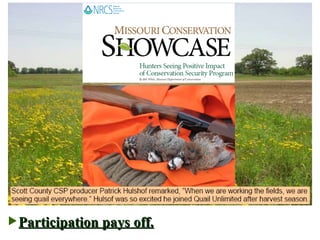
Participation pays off.
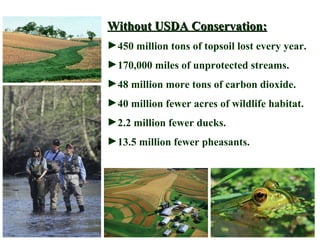
Without USDA Conservation: 450 million tons of topsoil lost every year. 170,000 miles of unprotected streams. 48 million more tons of carbon dioxide. 40 million fewer acres of wildlife habitat. 2.2 million fewer ducks. 13.5 million fewer pheasants.
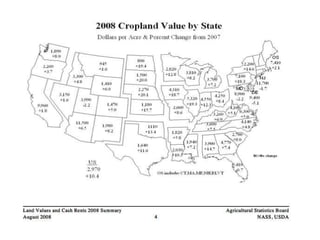
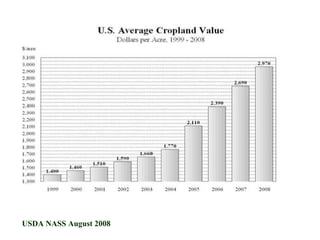
USDA NASS August 2008
 
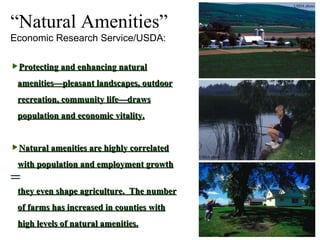
“ Natural Amenities” Economic Research Service/USDA: Protecting and enhancing natural amenities—pleasant landscapes, outdoor recreation, community life—draws population and economic vitality. Natural amenities are highly correlated with population and employment growth— they even shape agriculture.  The number of farms has increased in counties with high levels of natural amenities. USDA photo USDA photo USDA photo
www.iwla.org Stewardship, Prosperity, and Fairness The Izaak Walton League of America’s values-based vision of agriculture for all of America Brad Redlin Director, Agricultural Programs 651.649.1446 ex 13 [email_address]
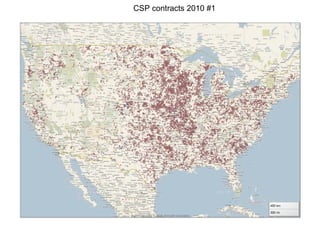
CSP contracts 2010 #1

Farm bill 5 22-10

  • 1.
    Brad Redlin, DirectorIWLA Agricultural Programs Upper Mississippi River Initiative Missouri River Initiative Agricultural Conservation Introduction to the Farm Bill
  • 2.
    IWLA Agricultural Programs1. Background 2. Federal Farm Bill 3. Agricultural Conservation
  • 3.
    52 percent oftotal U.S. land is in agricultural use. Urban land use is 2.6 percent. Parks and wildlife areas are 13.1 percent.
  • 4.
  • 5.
  • 6.
    Farm policy directlyimpacts environment.
  • 7.
    5,200 square mileaverage Hypoxic zone 1985-2010. 7,722 square miles in 2010.
  • 8.
    US EPA Officeof Water
  • 9.
    IWLA Agricultural Programs1. Background 2. Federal Farm Bill 3. Agricultural Conservation
  • 10.
    Title I CommodityPrograms Title II Conservation Title III Trade Title IV Nutrition Programs Title V Credit Title VI Rural Development Title VII Research Title VIII Forestry Title IX Energy Title X Horticulture and Organic Agriculture Title XI Livestock Title XII Crop Insurance and Disaster Assistance Title XIII Commodity Futures Title XIV Miscellaneous Title XV Tax Provisions 2008
  • 11.
    2008 Farm Billspends $35 billion Title I, $25 billion Title II. 2008 Farm Bill increased conservation $4 billion
  • 12.
    Highest payments peracre correspond to highest runoff risk. 2010 Gulf Hypoxic zone forecast 7,776 sq. miles (5 th largest) May-June 2008 Mississippi basin nitrogen 7,761 metric tons/day Nitrogen
  • 13.
  • 14.
    “ Simply put,commodity programs wed farming regions to an ongoing pattern of economic consolidation. It should not be surprising, therefore, that the very places that depend most on federal farm payments also happen to be places where economic consolidation is happening apace…. Traditional programs simply do not provide the economic lift that farming regions need going forward.” -Federal Reserve Bank, Center for the Study of Rural America, 2005
  • 15.
    Five crops dominatecommodity programs; regional participation.
  • 16.
  • 17.
  • 18.
  • 19.
    Conservation Title containsa suite of programs. Programs meet different goals and utilize different methods.
  • 20.
    Conservation Compliance HighlyErodible Land Conservation / Sodbuster, Wetland Conservation (Swampbuster) Reduce soil erosion on the Nation’s cropland; Protect the Nation’s long-term capability to produce food and fiber; Reduce sedimentation and improve water quality; and, Preserve and protect the Nation’s wetlands. Penalties are reduction or loss of farm program payments. Ducks Unlimited photo NRCS photo NRCS photo
  • 21.
  • 22.
    Farm participation inFarm Bill programs.
  • 23.
    Conservation cut $5billion from ‘02 Farm Bill authorization. White House, Senate, House all proposed FY11 conservation cuts 2002
  • 24.
    80% of complianceviolations were waived on appeal.
  • 25.
    Sodbuster no deterrentCrop insurance is incentive to convert Grassland conversion counties netted double insurance benefits of other counties
  • 26.
    “ Sodsaver” Sodsaverprovision: Any land without a prior cropping history will be ineligible for crop insurance and disaster payments. Applies only in Prairie Pothole Region of IA, MN, MT, ND and SD -- and only by enactment of the Governor. Ducks Unlimited photo Ducks Unlimited photo
  • 27.
    Ethanol Dependency -- 2-2-09 A new South Dakota State University study highlights the ethanol industry and its importance for economic viability. In South Dakota, 60% of the corn produced went into ethanol production. In Iowa, that figure is 50% . Forty percent of Nebraska's corn goes to ethanol production; in Minnesota and Illinois, that figure is 30% . SDSU economists say this study implies a growing level of dependency on the ethanol industry for the health of the rural economy.
  • 28.
    Energy Independence andSecurity Act of 2007 (P.L. 110-140) signed Dec. 19, 2007 36 billion gal. total in 2022; max 15 billion from corn 21 billion in 2022 from “advanced biofuel” GHG < 50%
  • 29.
    IWLA Agricultural Programs1. Background 2. Federal Farm Bill 3. Agricultural Conservation
  • 30.
    2008 Food, Conservation,and Act retained and revised Conservation programs.
  • 31.
    All Good Faithdeterminations must be reviewed at state level. Graduated Penalties established for HELC violations.
  • 32.
  • 33.
  • 34.
  • 35.
  • 36.
  • 37.
    Without USDA Conservation:450 million tons of topsoil lost every year. 170,000 miles of unprotected streams. 48 million more tons of carbon dioxide. 40 million fewer acres of wildlife habitat. 2.2 million fewer ducks. 13.5 million fewer pheasants.
  • 38.
  • 39.
  • 40.
    “ Natural Amenities”Economic Research Service/USDA: Protecting and enhancing natural amenities—pleasant landscapes, outdoor recreation, community life—draws population and economic vitality. Natural amenities are highly correlated with population and employment growth— they even shape agriculture. The number of farms has increased in counties with high levels of natural amenities. USDA photo USDA photo USDA photo
  • 41.
    www.iwla.org Stewardship, Prosperity,and Fairness The Izaak Walton League of America’s values-based vision of agriculture for all of America Brad Redlin Director, Agricultural Programs 651.649.1446 ex 13 [email_address]
  • 42.