Fake News, Real Concerns: What
Can Librarians Do to Improve
Information Literacy in the Age of
the Social Media Noise Machine?
Donald A. Barclay
University of California, Merced Library
Who am I?
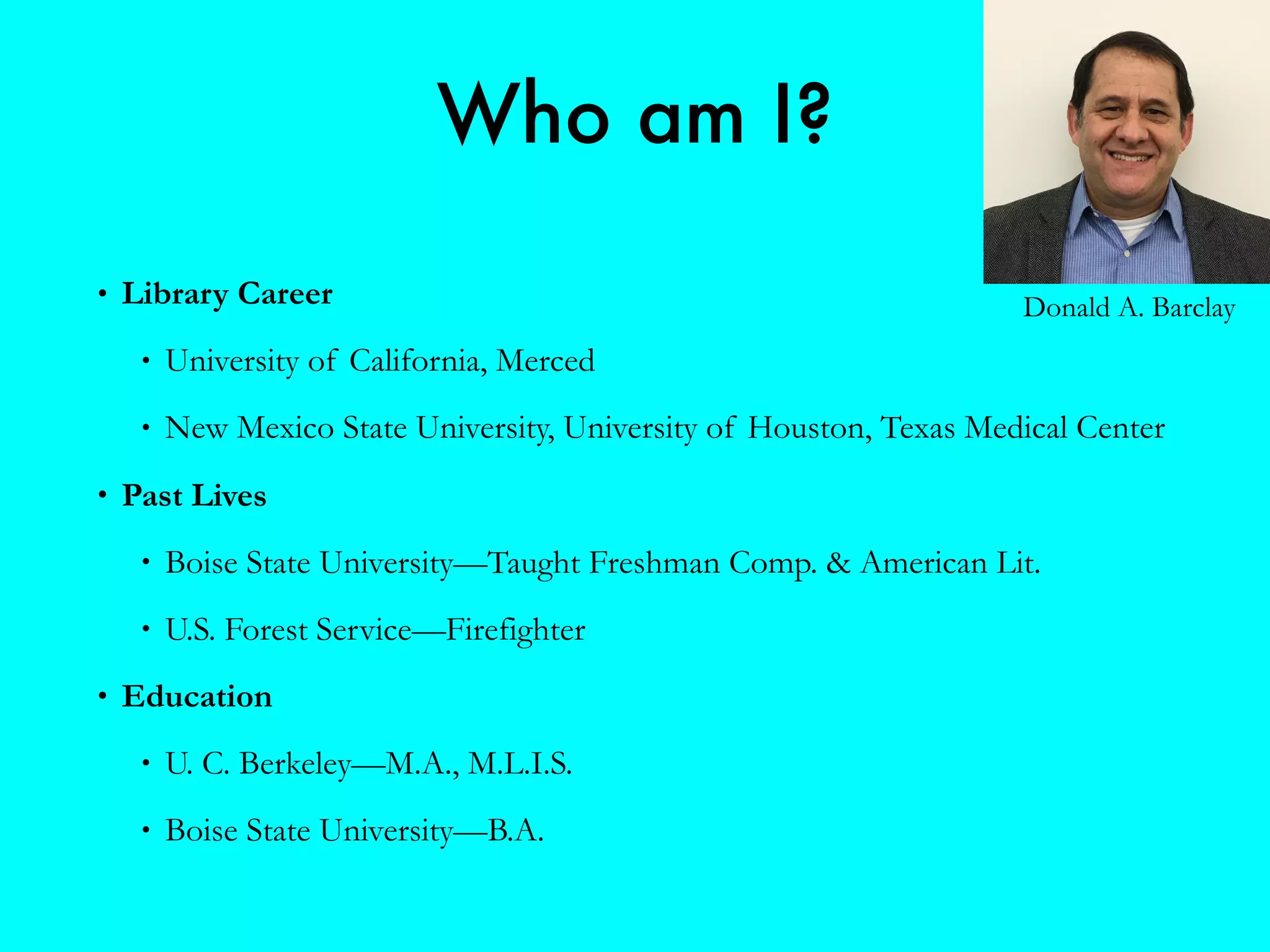
• Library Career
• University of California, Merced
• New Mexico State University, University of Houston, Texas Medical Center
• Past Lives
• Boise State University—Taught Freshman Comp. & American Lit.
• U.S. Forest Service—Firefighter
• Education
• U. C. Berkeley—M.A., M.L.I.S.
• Boise State University—B.A.
Donald A. Barclay
Who died and made Donald
the king of fake news?
An alternative history
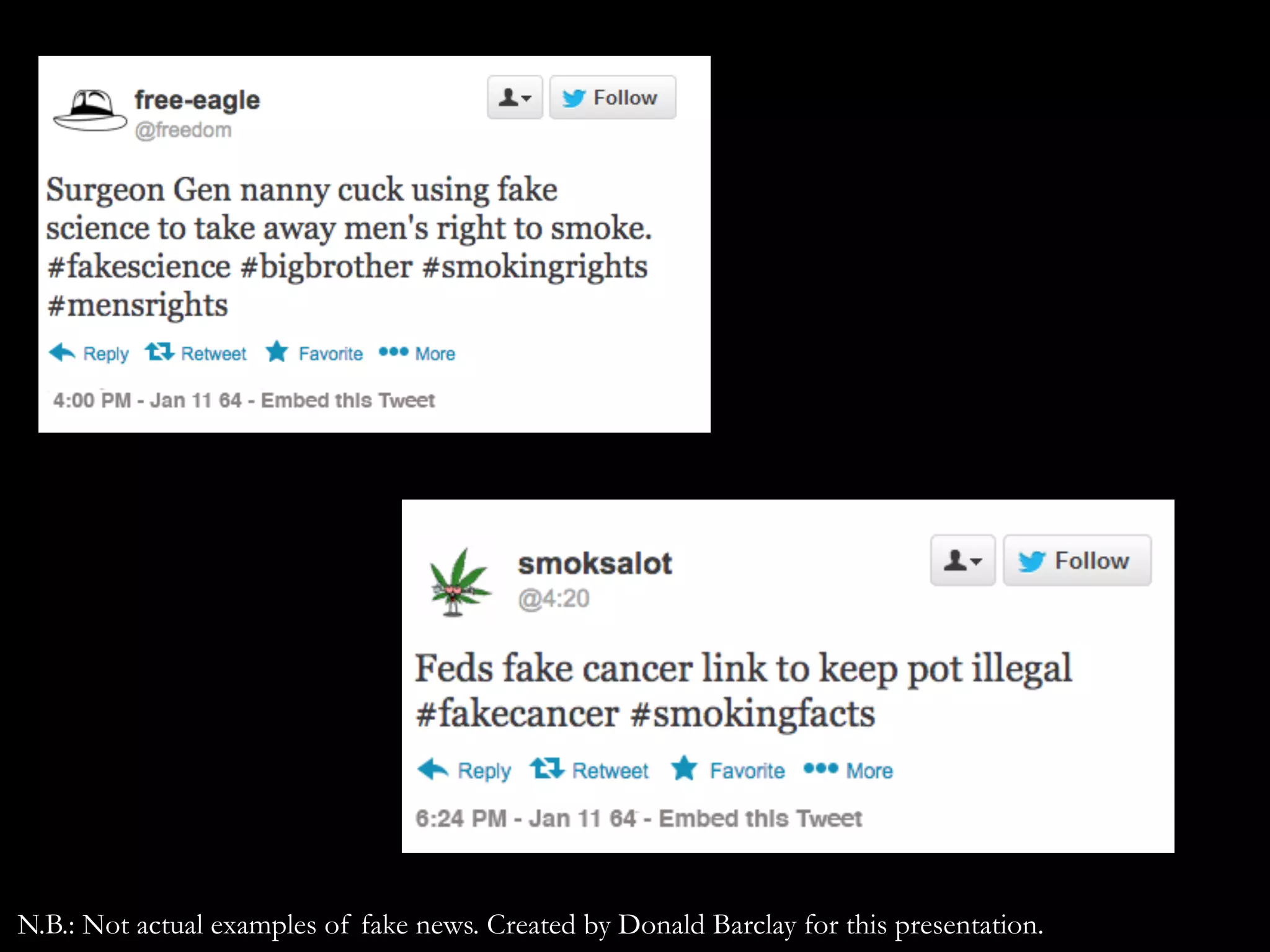
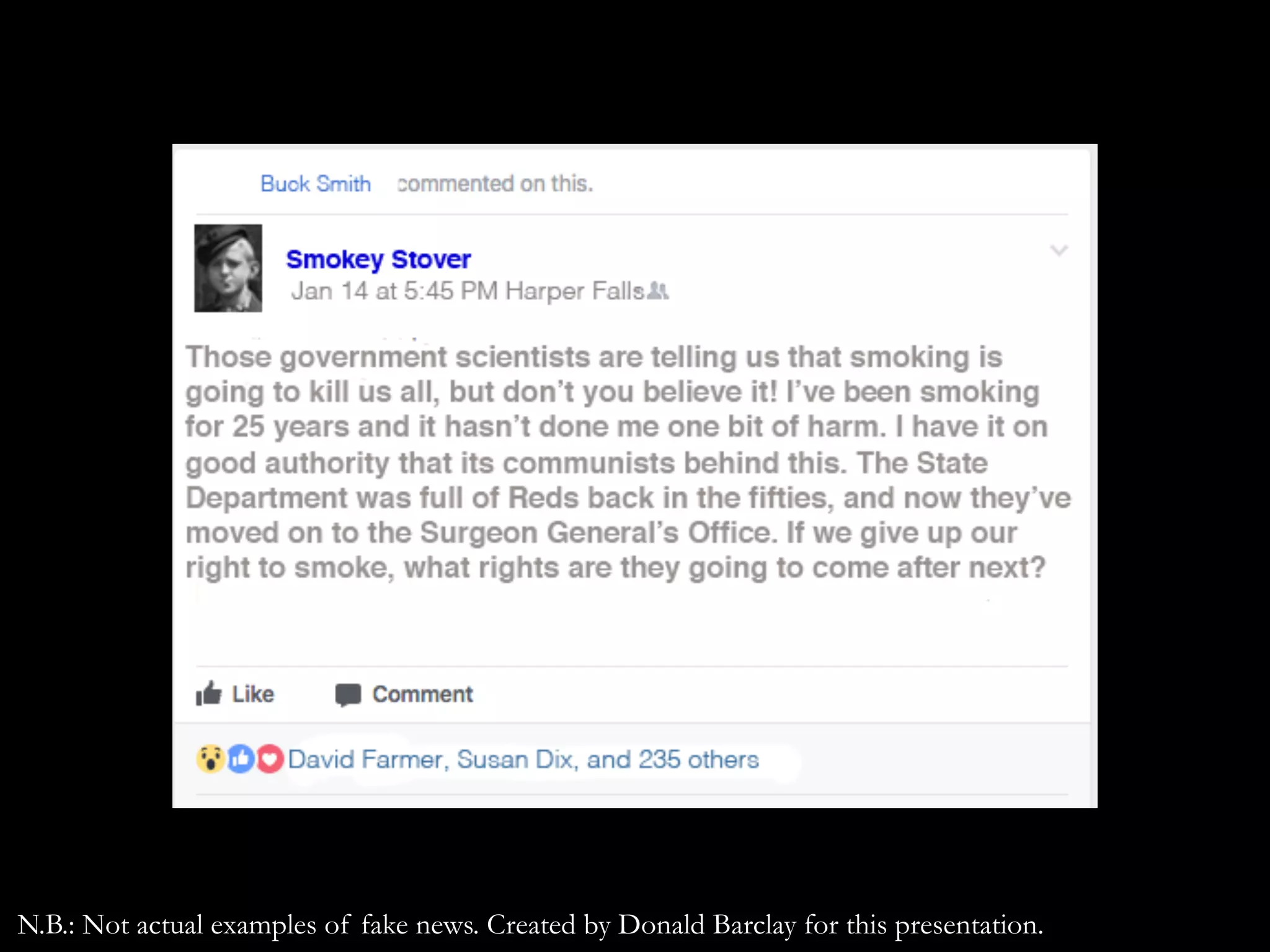
N.B.: Not actual examples of fake news. Created by Donald Barclay for this presentation.
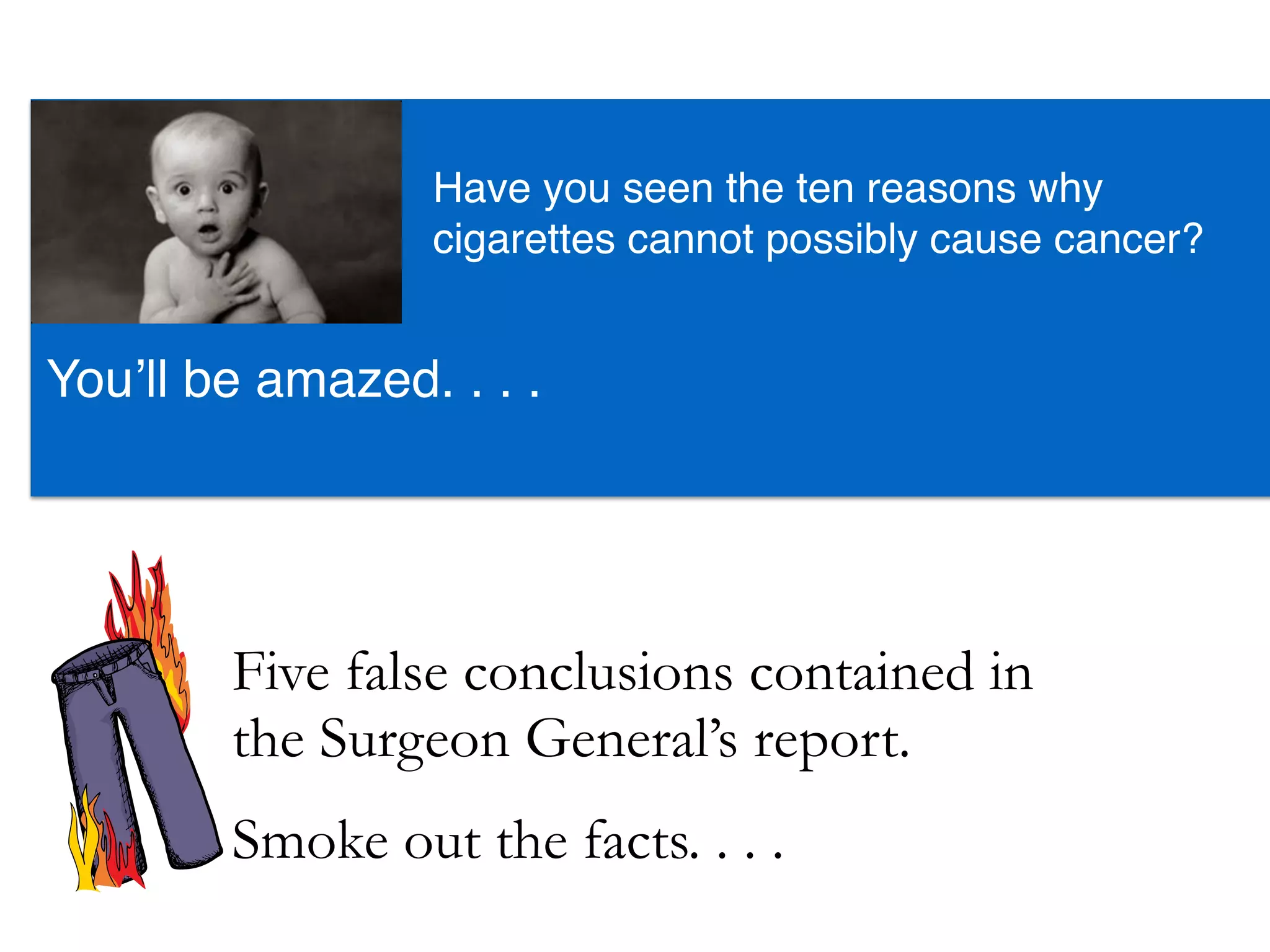
Five false conclusions contained in
the Surgeon General’s report.
You’ll be amazed. . . .
Have you seen the ten reasons why
cigarettes cannot possibly cause cancer?
Smoke out the facts. . . .
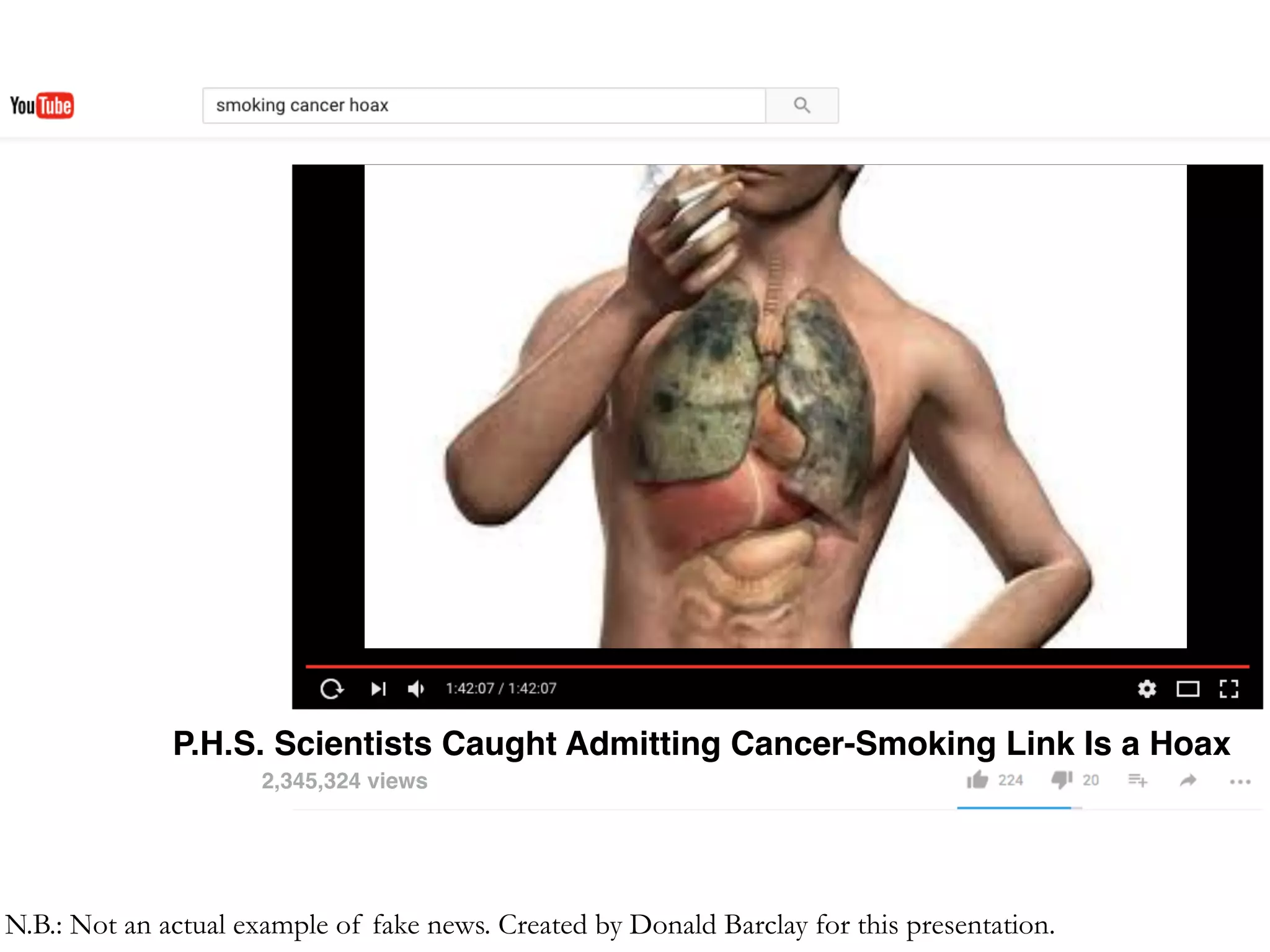
P.H.S. Scientists Caught Admitting Cancer-Smoking Link Is a Hoax
2,345,324 views
N.B.: Not an actual example of fake news. Created by Donald Barclay for this presentation.
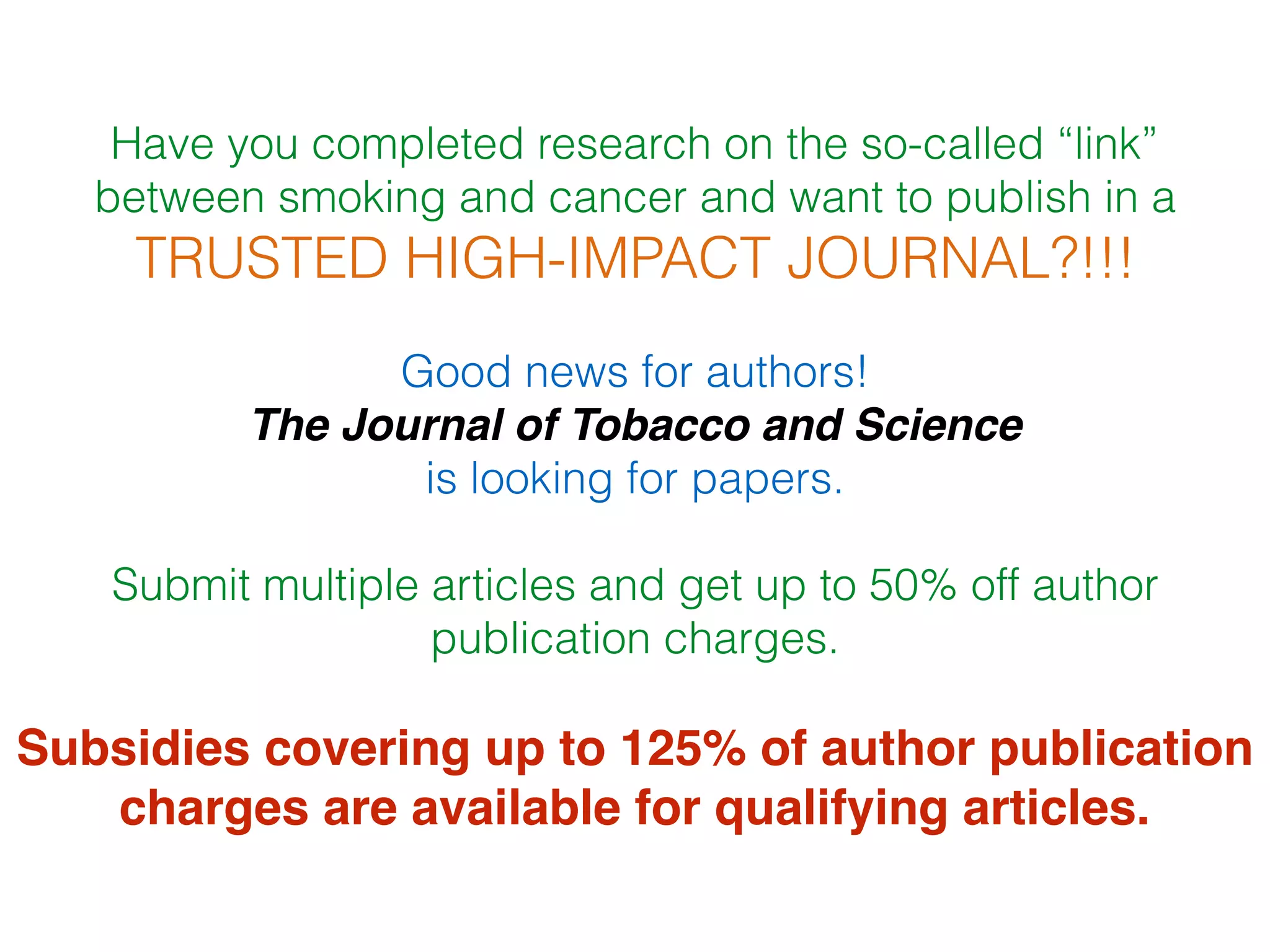
Have you completed research on the so-called “link”
between smoking and cancer and want to publish in a
TRUSTED HIGH-IMPACT JOURNAL?!!!
Good news for authors!
The Journal of Tobacco and Science
is looking for papers.
Submit multiple articles and get up to 50% off author
publication charges.
Subsidies covering up to 125% of author publication
charges are available for qualifying articles.
N.B.: Not an actual example of fake news. Created by Donald Barclay for this presentation.
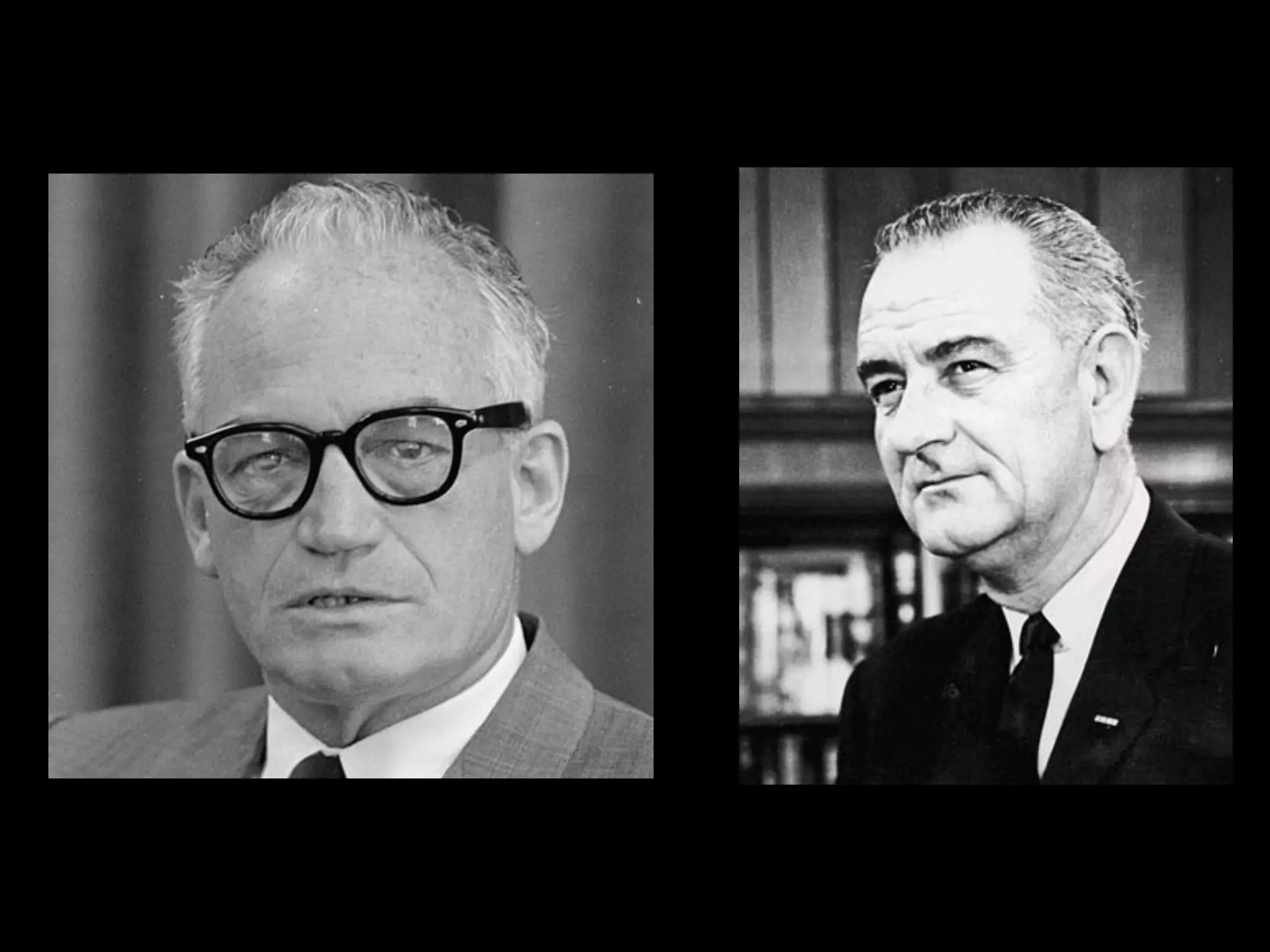
Non-alternative history
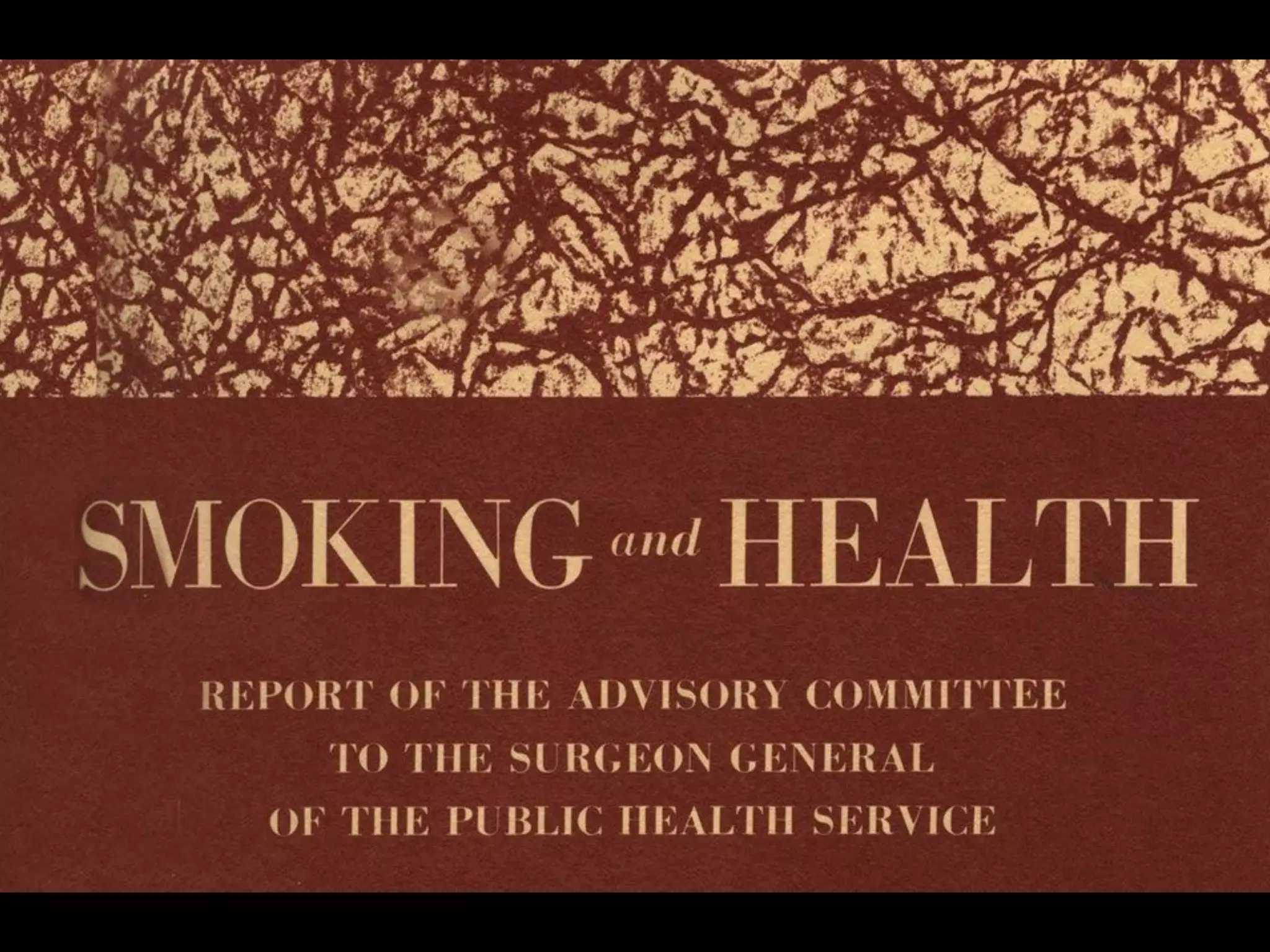
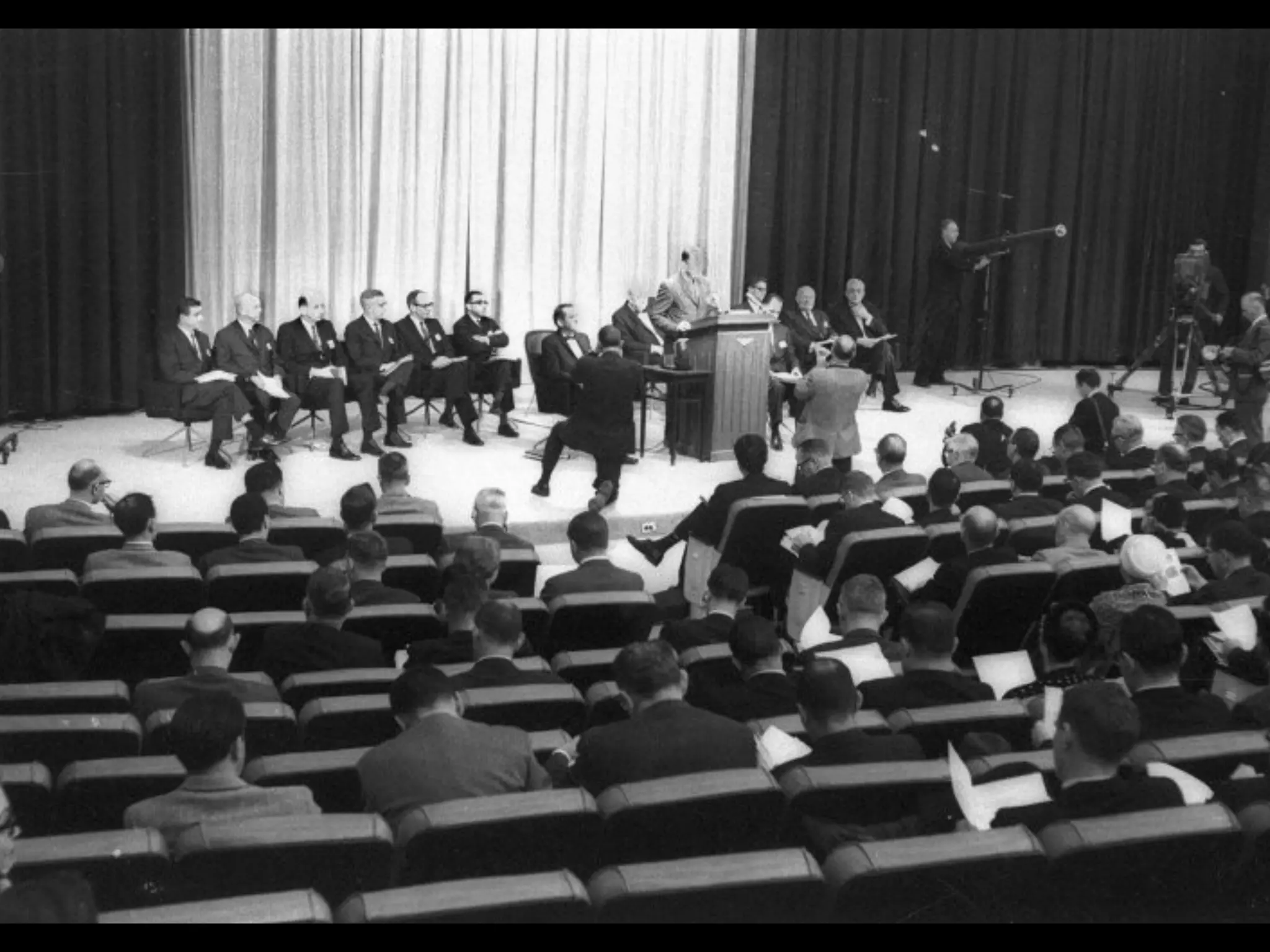
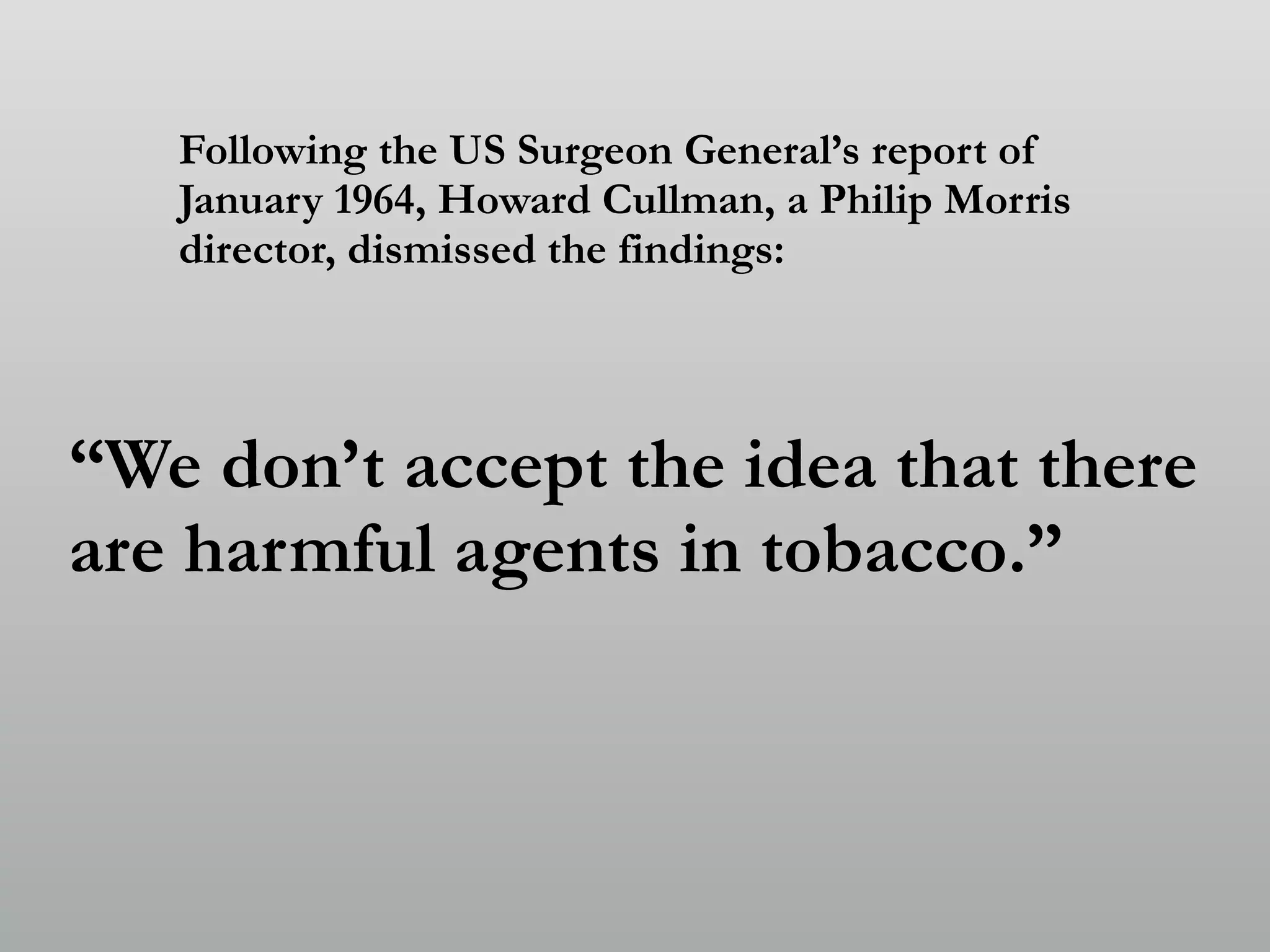
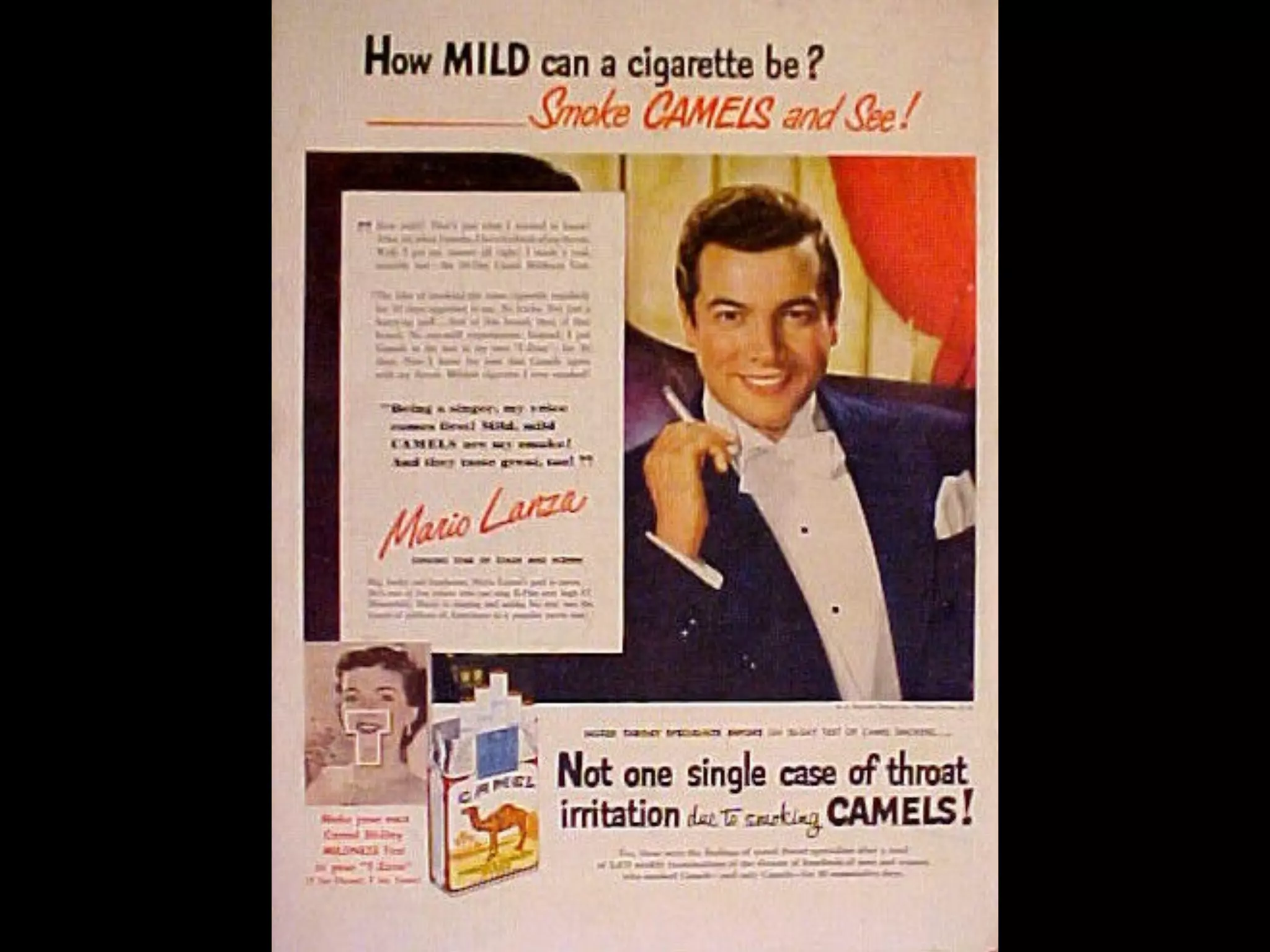
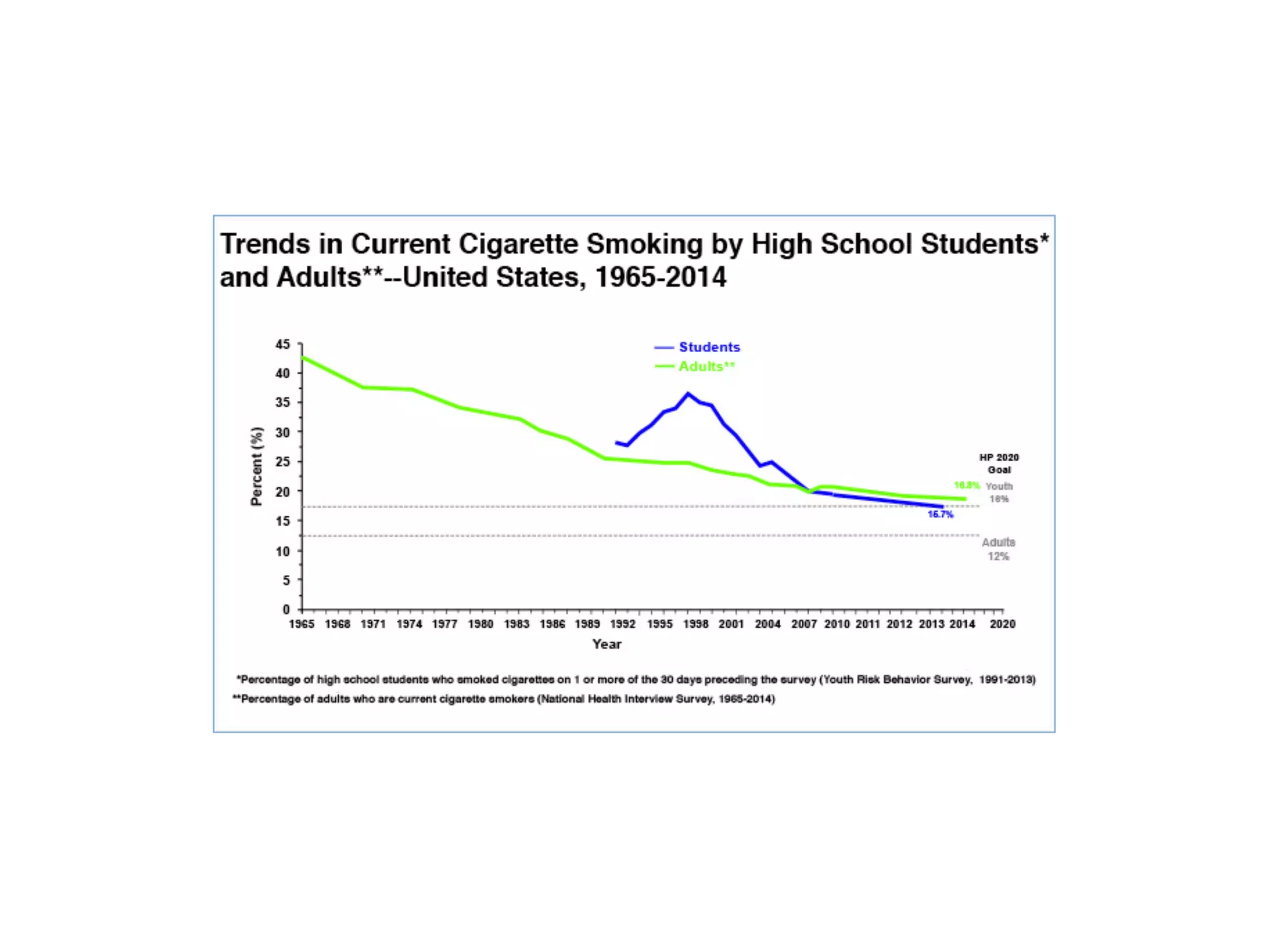
Following the US Surgeon General’s report of
January 1964, Howard Cullman, a Philip Morris
director, dismissed the findings:
“We don’t accept the idea that there
are harmful agents in tobacco.”
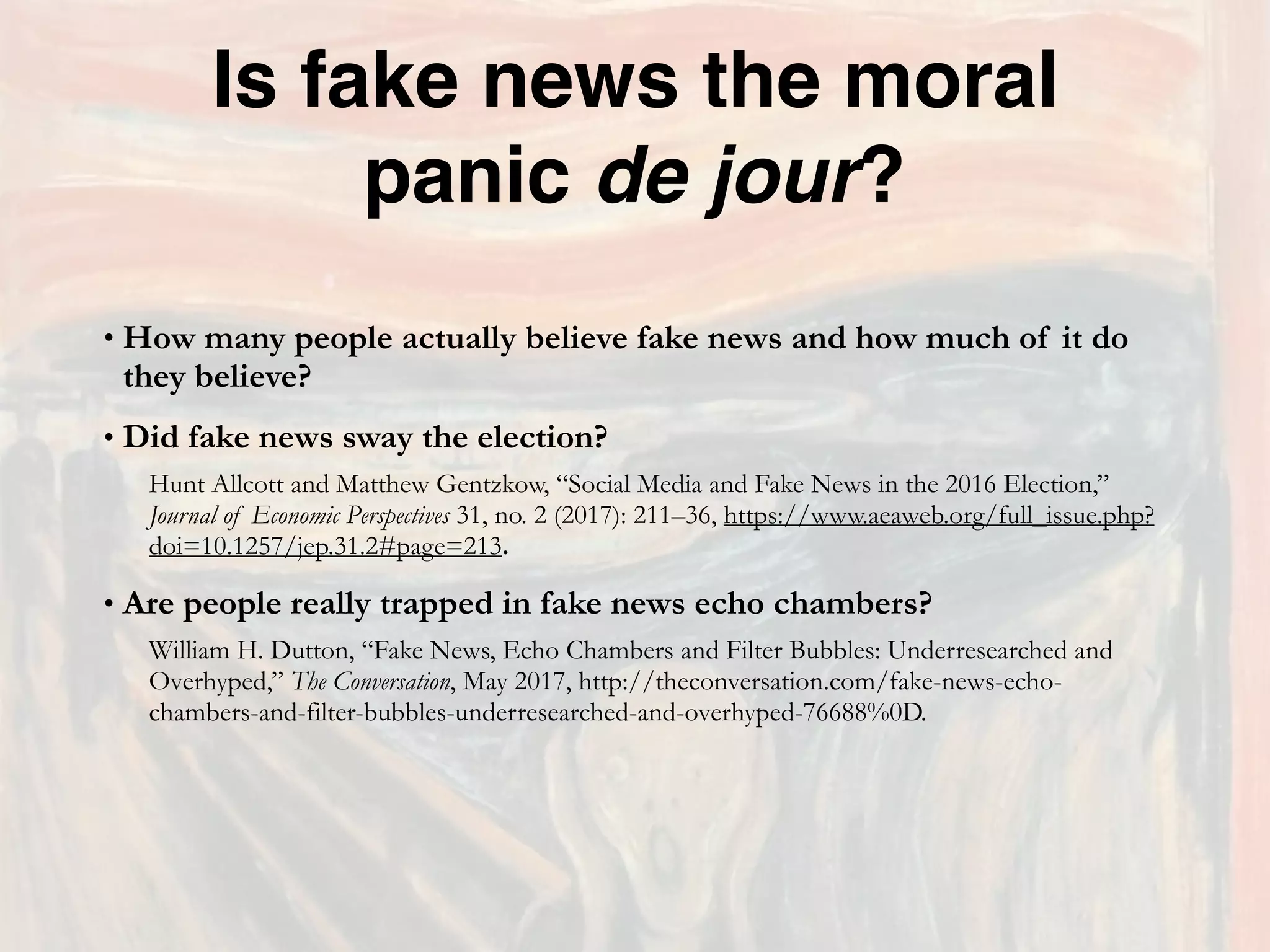
Is fake news the moral
panic de jour?
• How many people actually believe fake news and how much of it do
they believe?
• Did fake news sway the election?
Hunt Allcott and Matthew Gentzkow, “Social Media and Fake News in the 2016 Election,”
Journal of Economic Perspectives 31, no. 2 (2017): 211–36, https://www.aeaweb.org/full_issue.php?
doi=10.1257/jep.31.2#page=213.
• Are people really trapped in fake news echo chambers?
William H. Dutton, “Fake News, Echo Chambers and Filter Bubbles: Underresearched and
Overhyped,” The Conversation, May 2017, http://theconversation.com/fake-news-echo-
chambers-and-filter-bubbles-underresearched-and-overhyped-76688%0D.
What is fake news?
. . . whatever you don’t want to hear.
. . . something entirely new.
Fake news is not
• Lying
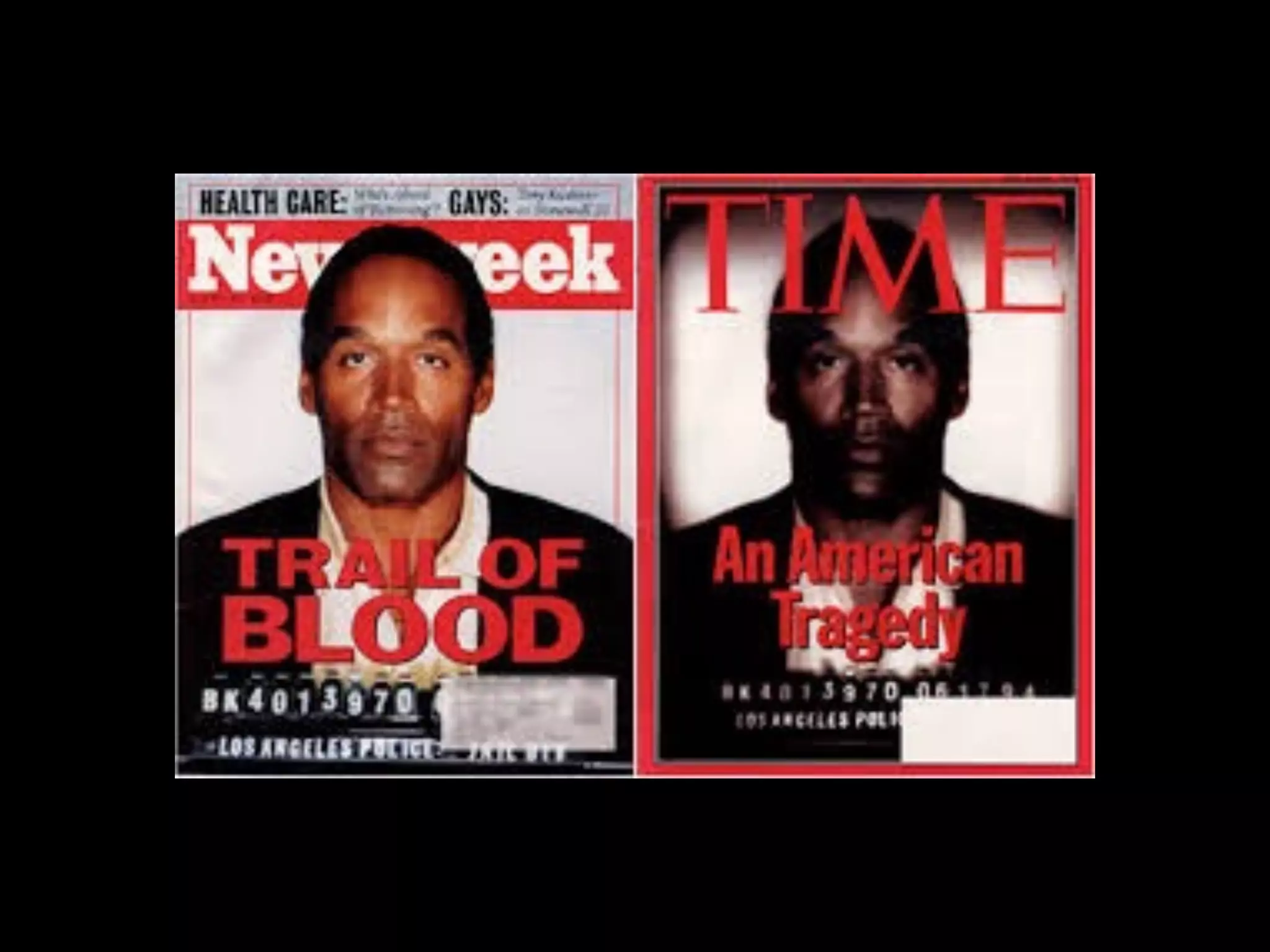
• Mercenary Fake News
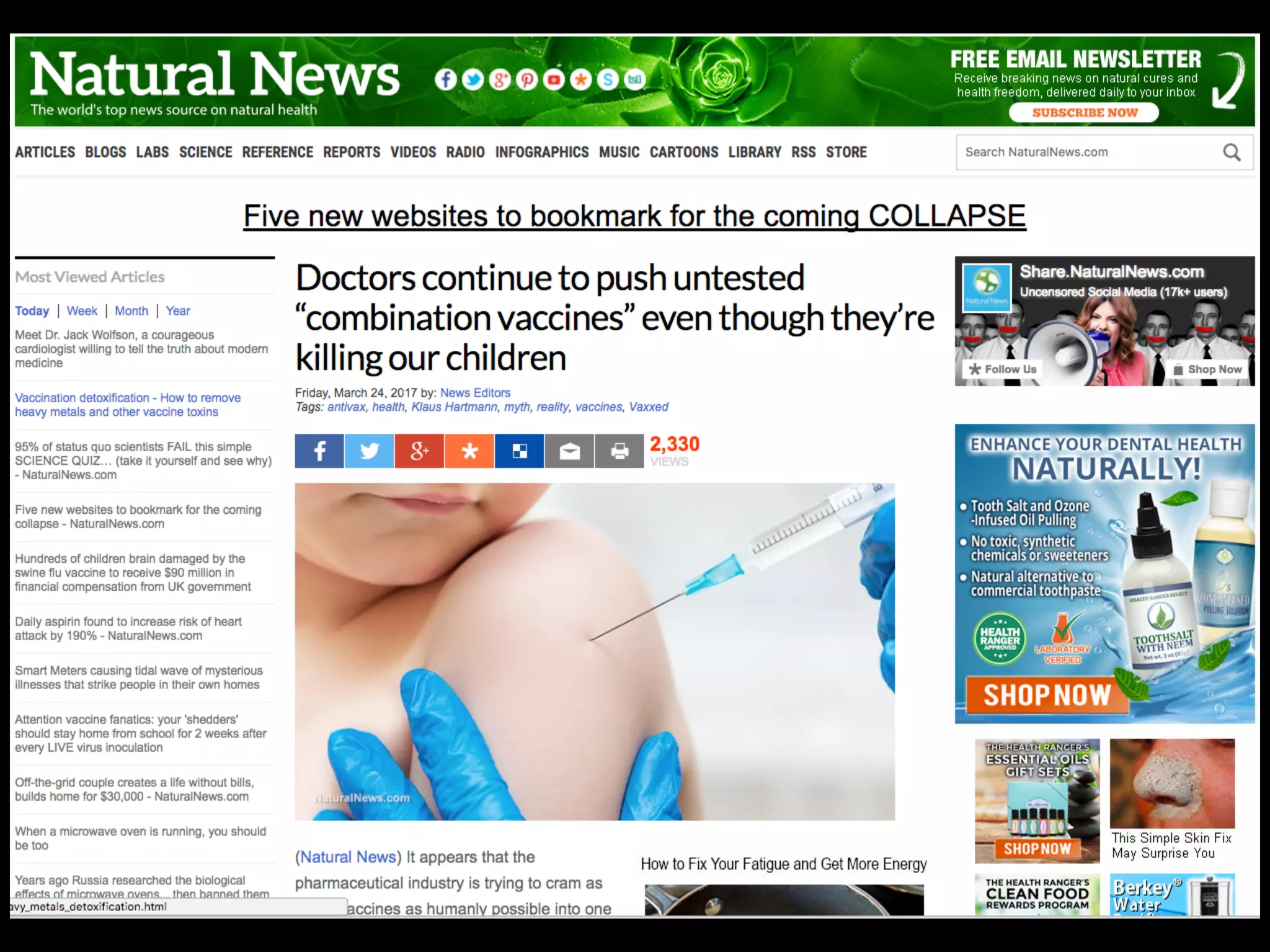
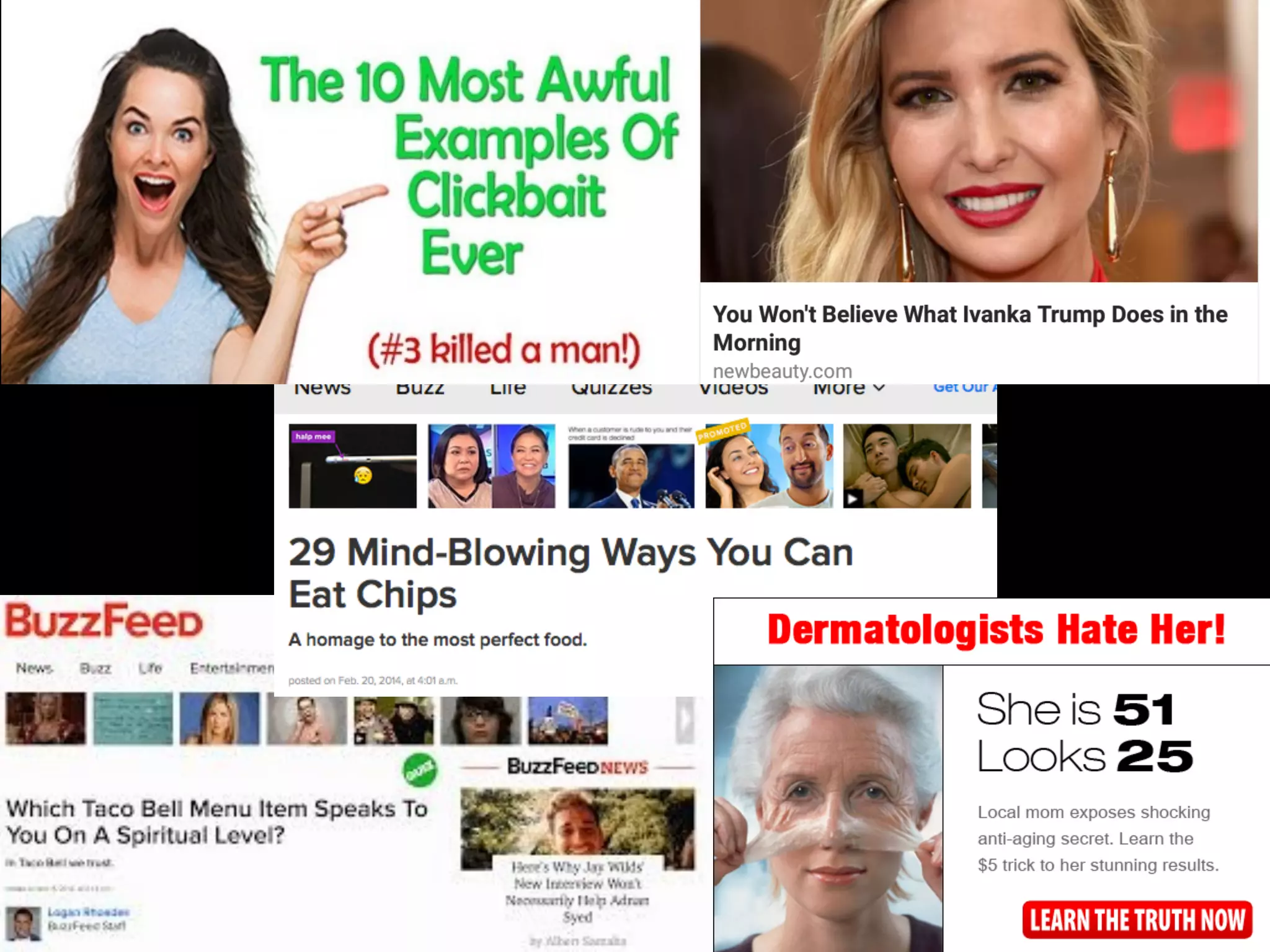
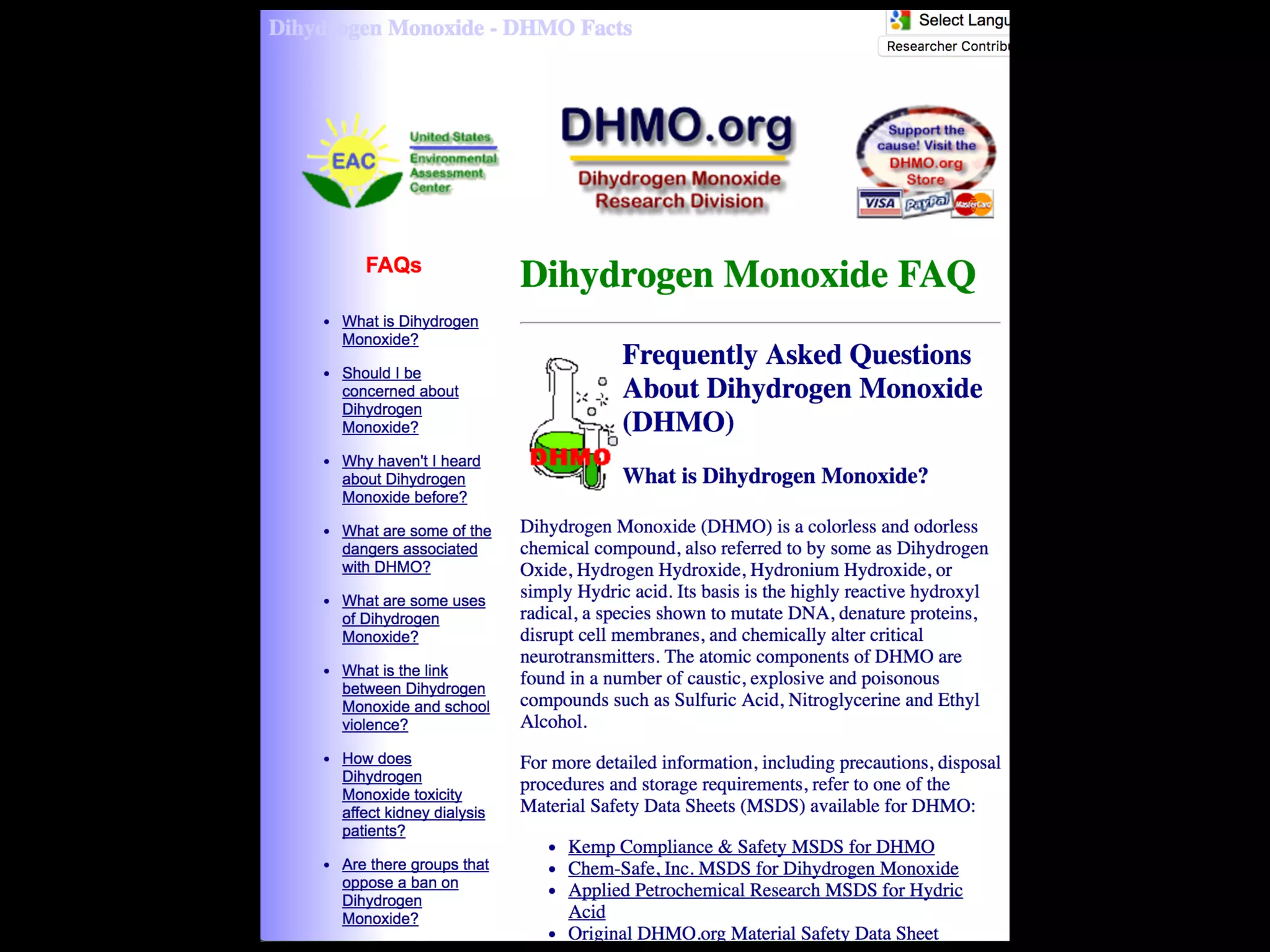
• Clickbait
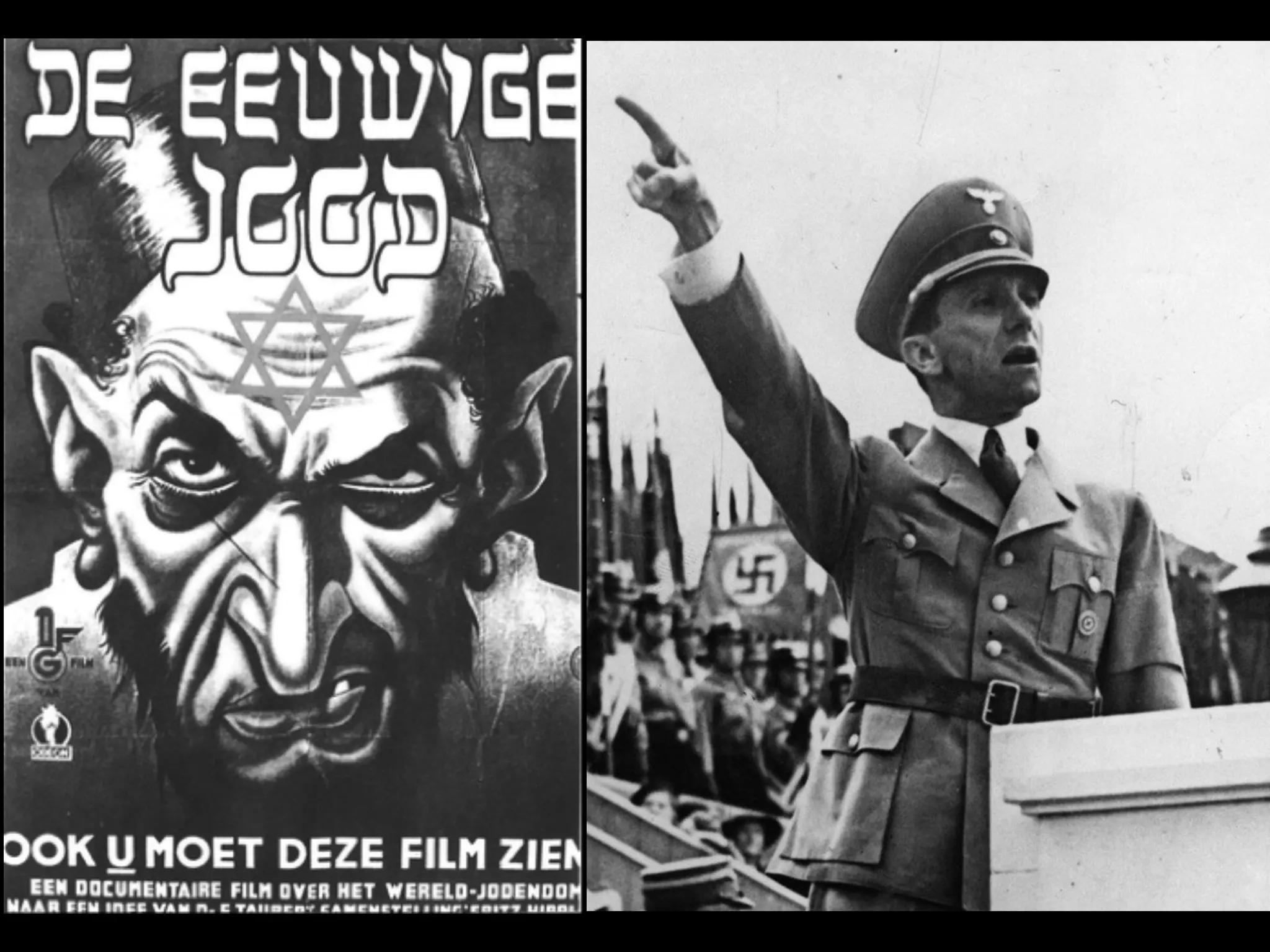
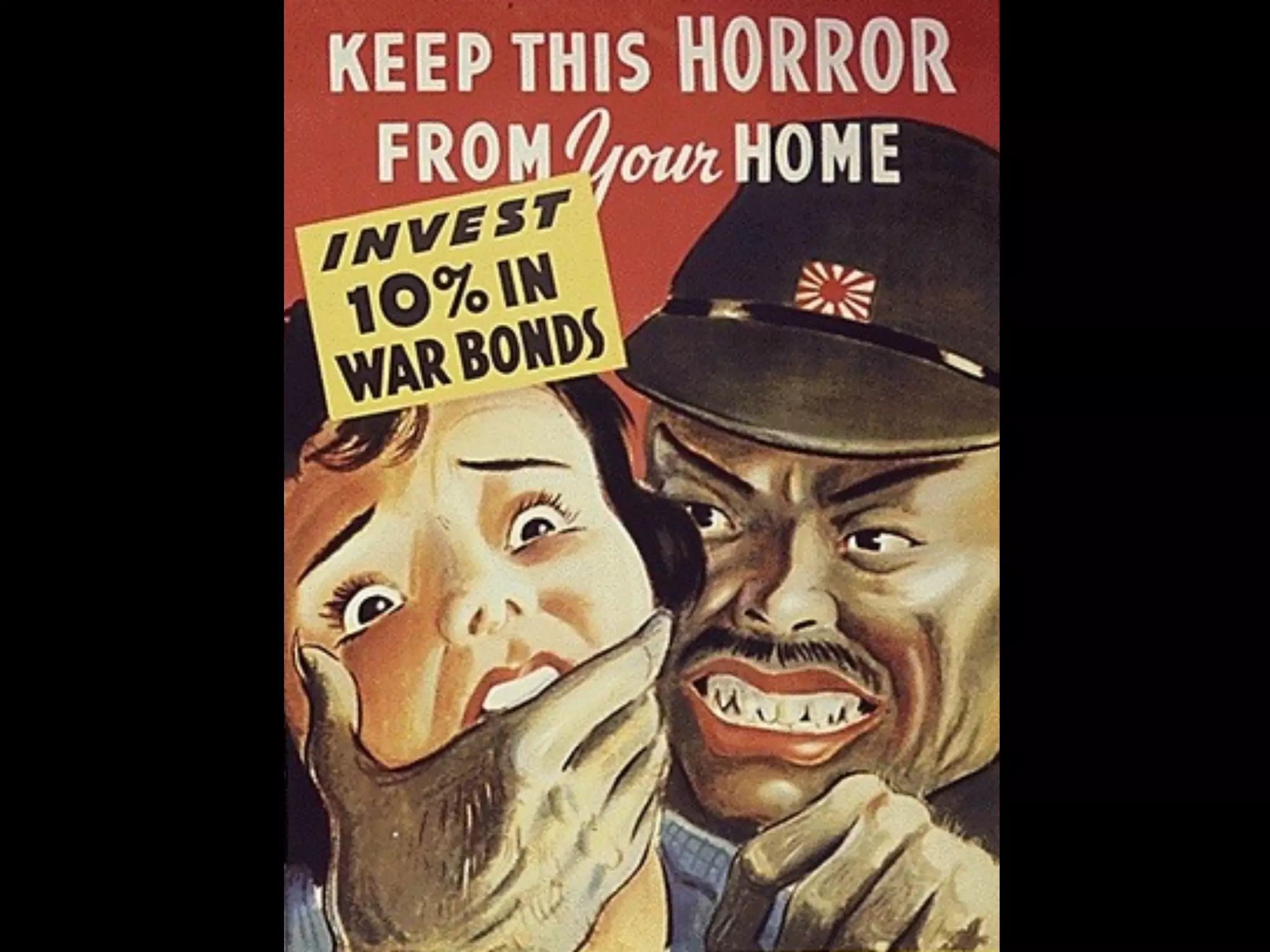
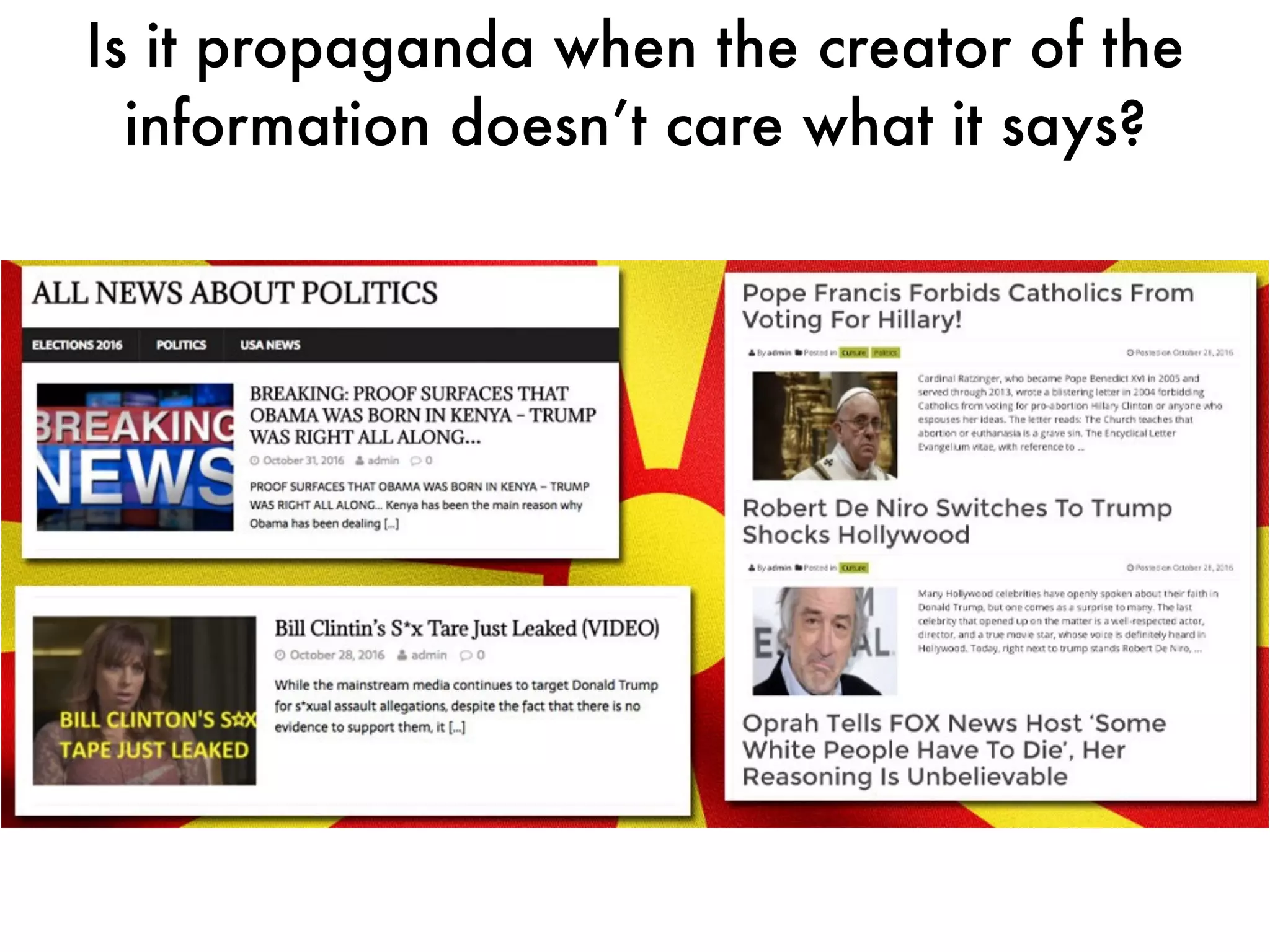
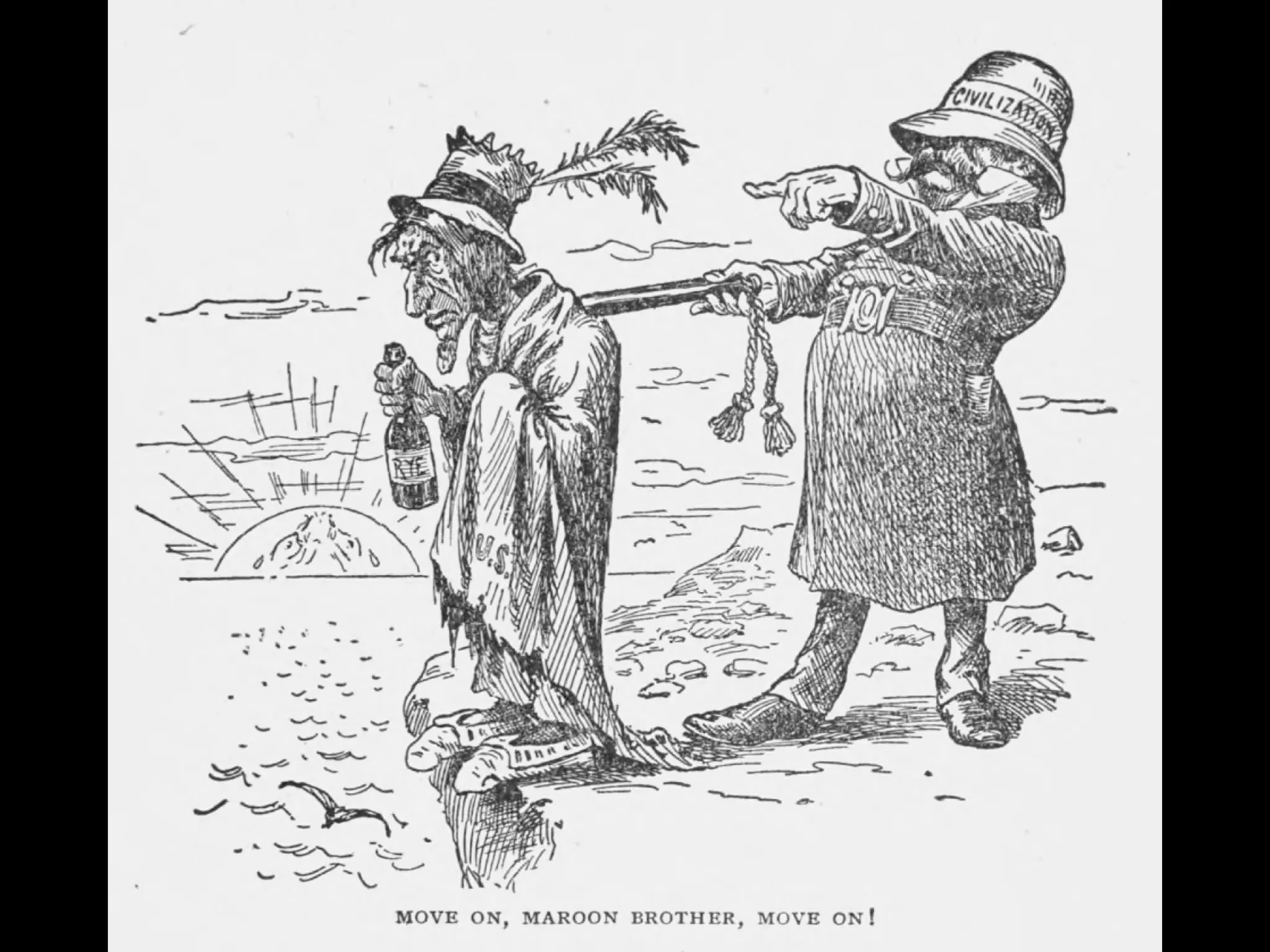
• Propaganda
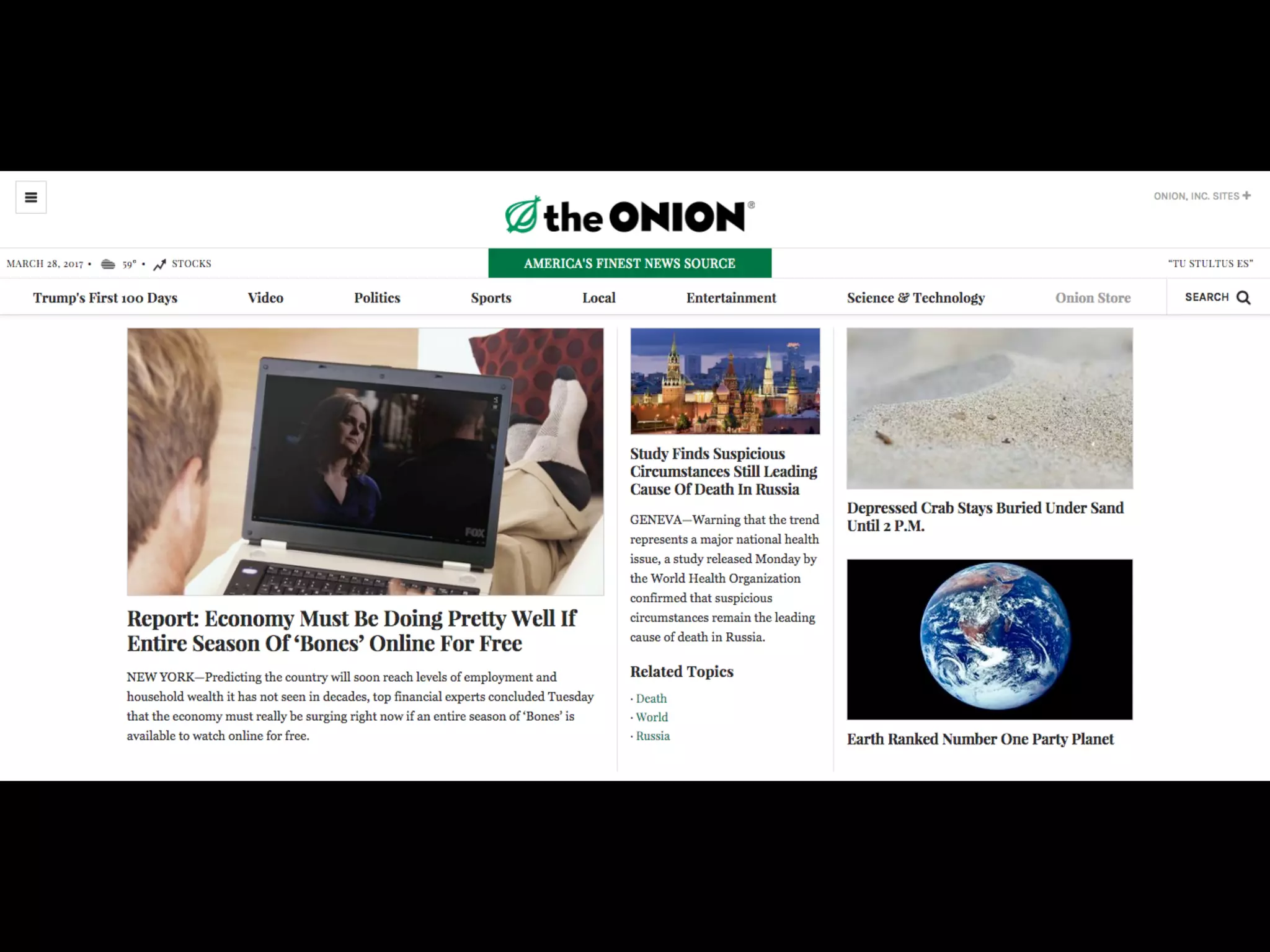
• Humor
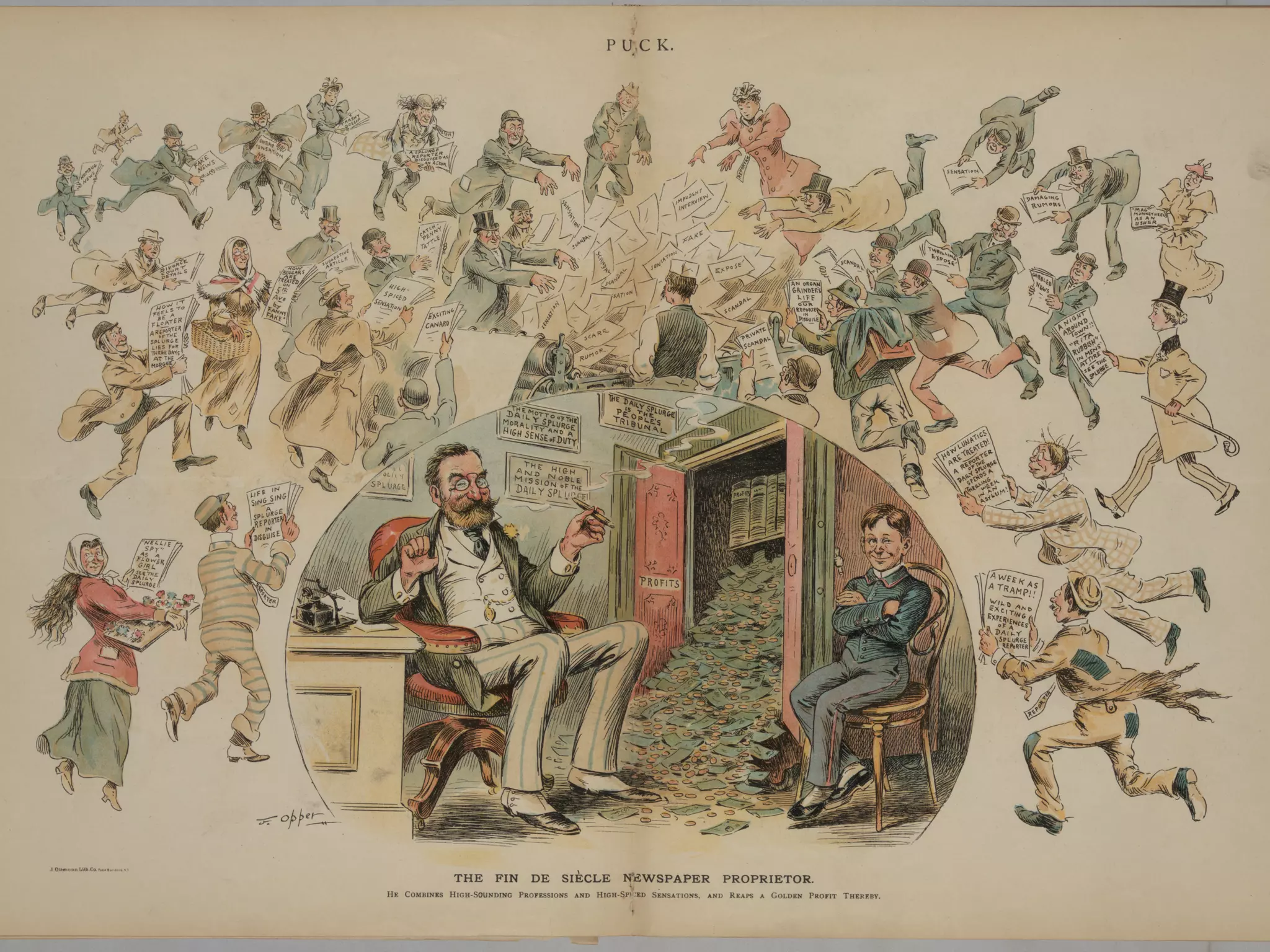
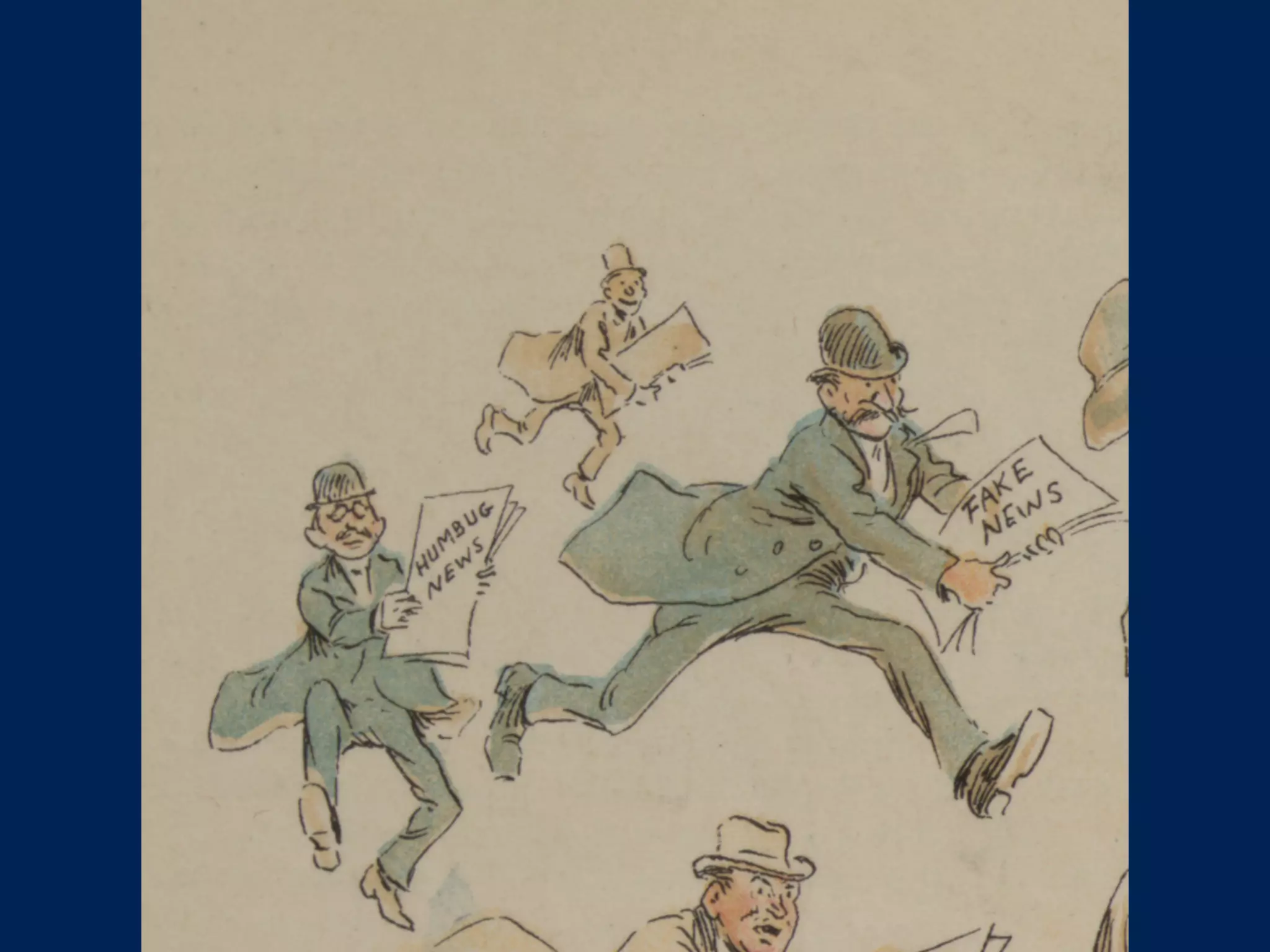
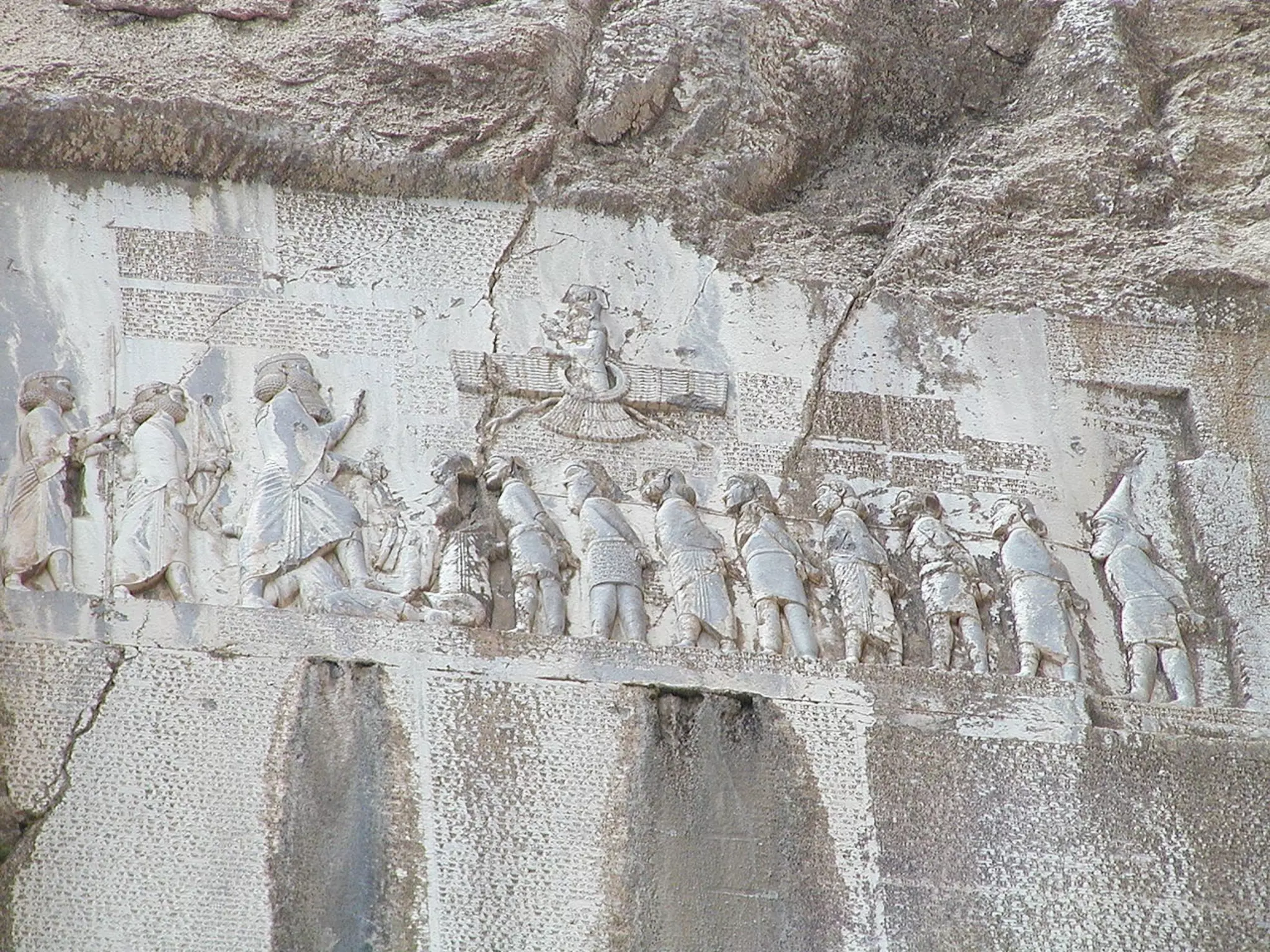
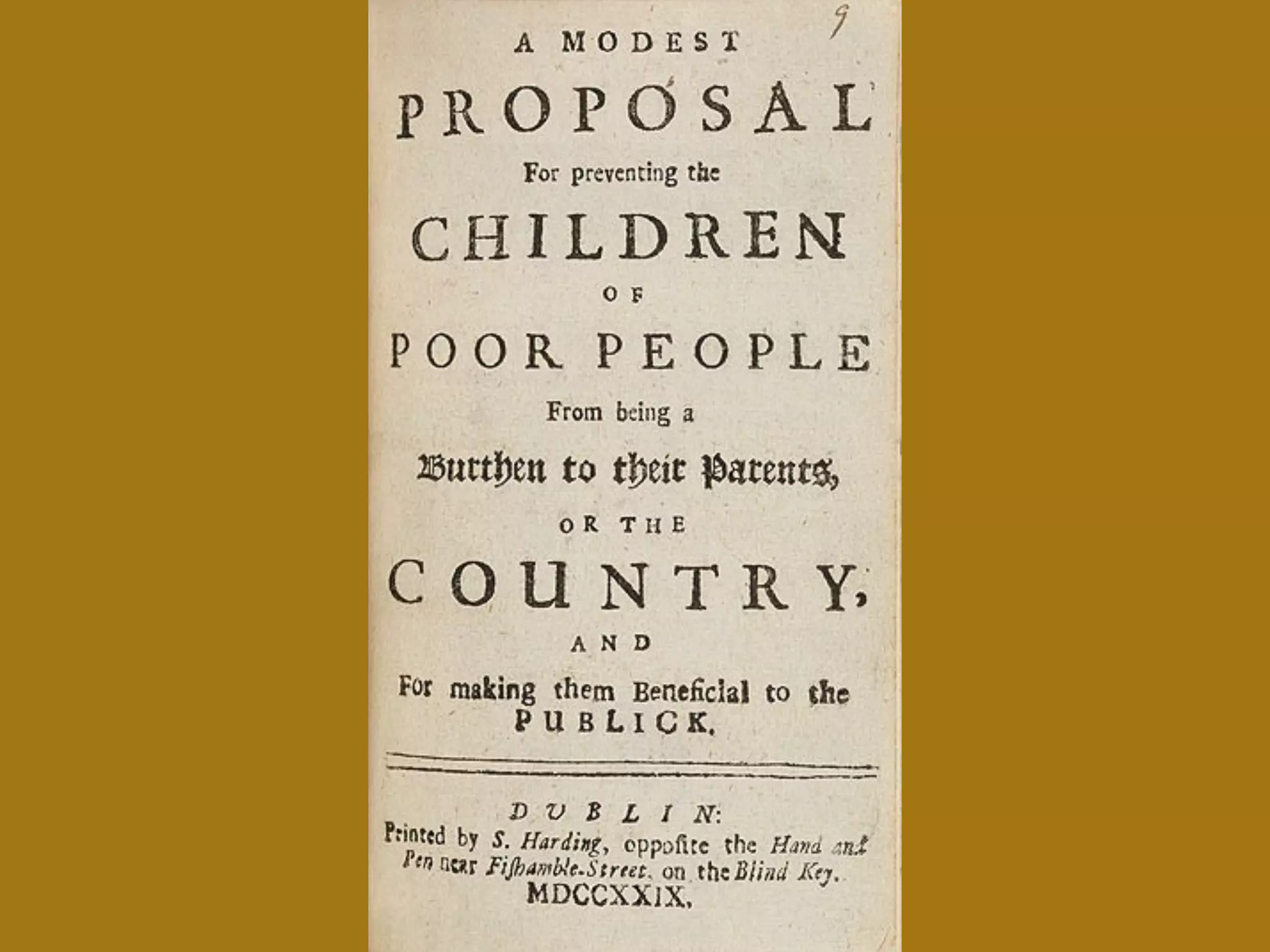
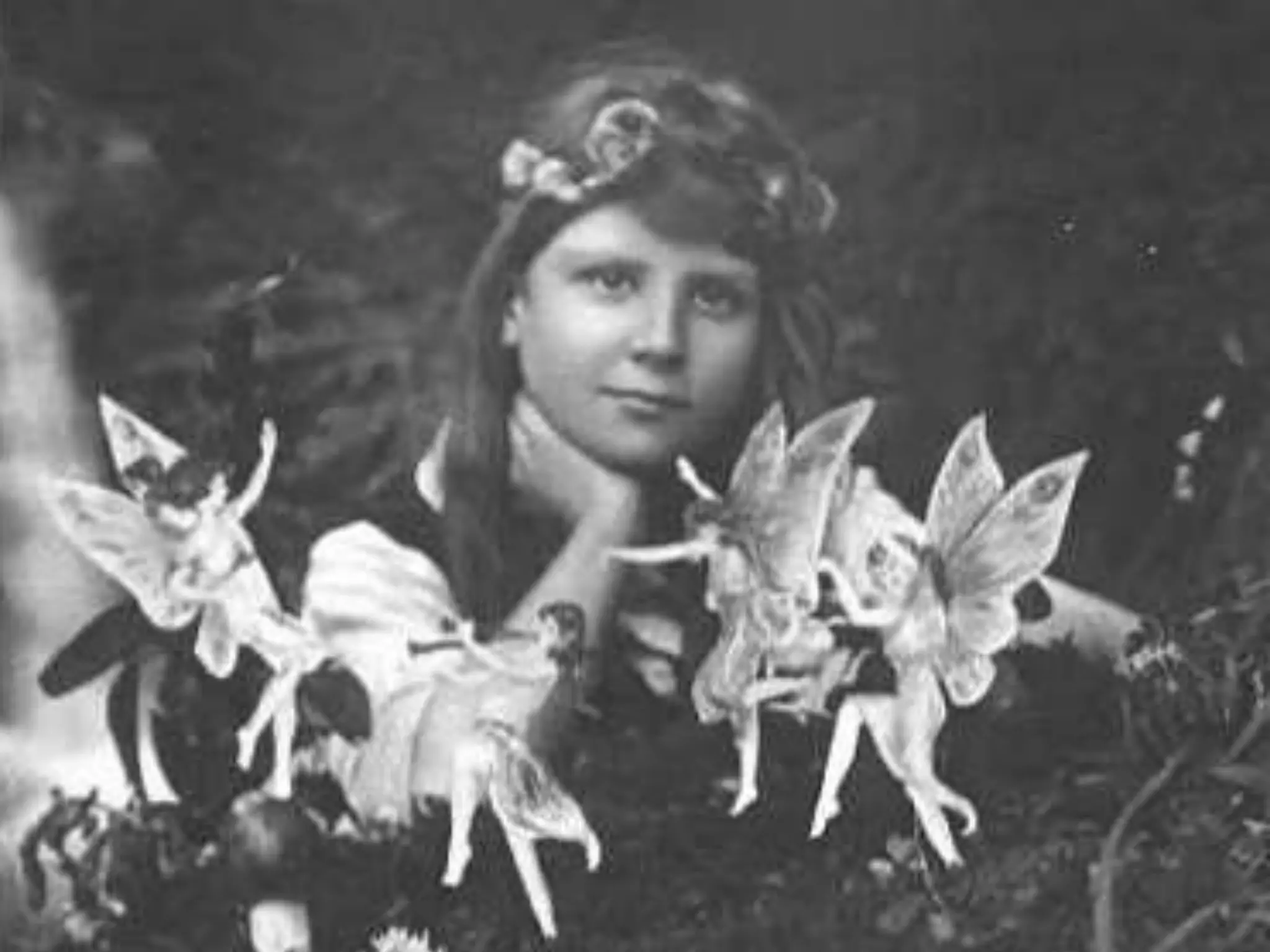
Fake news is old news
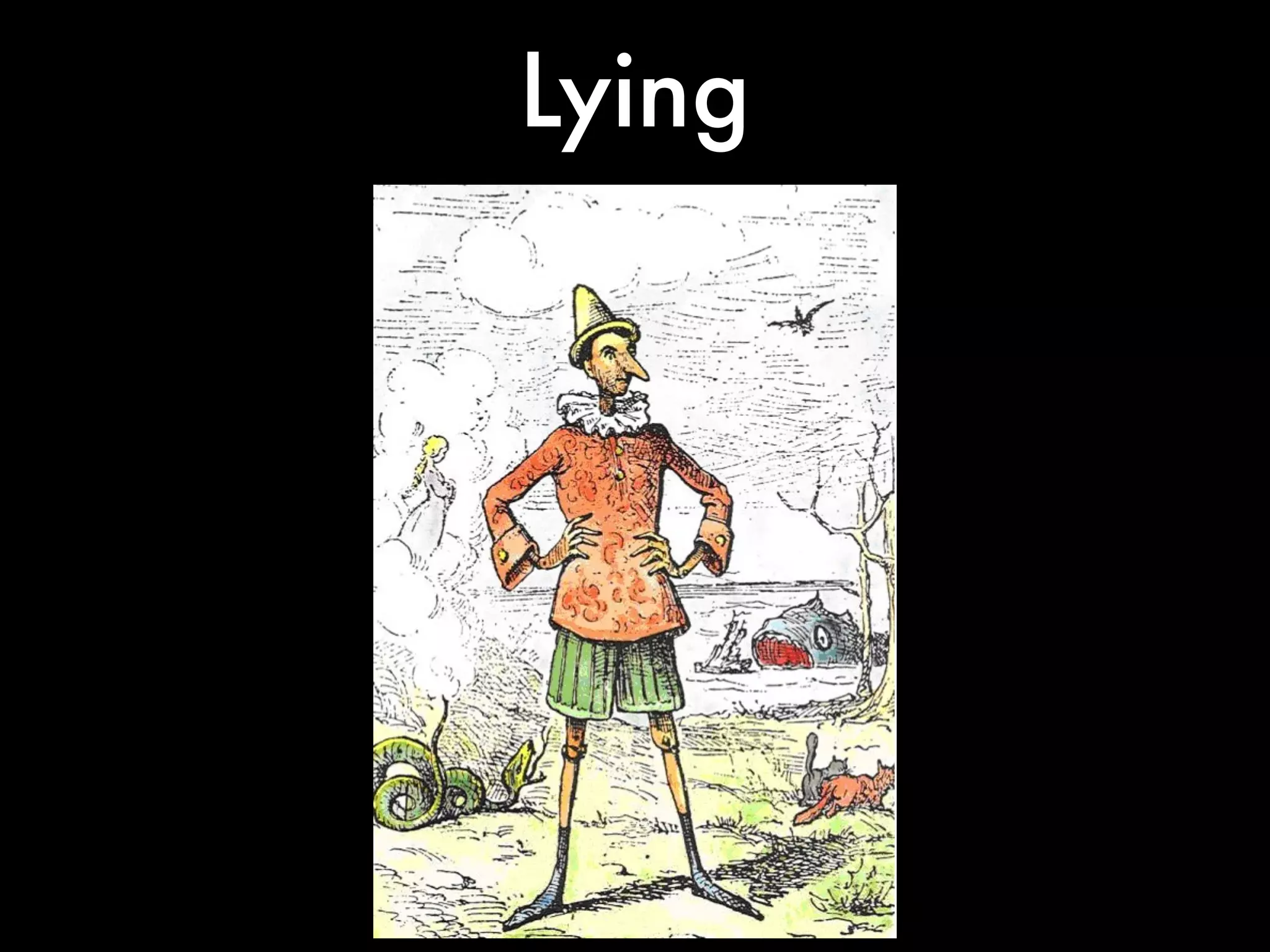
Lying
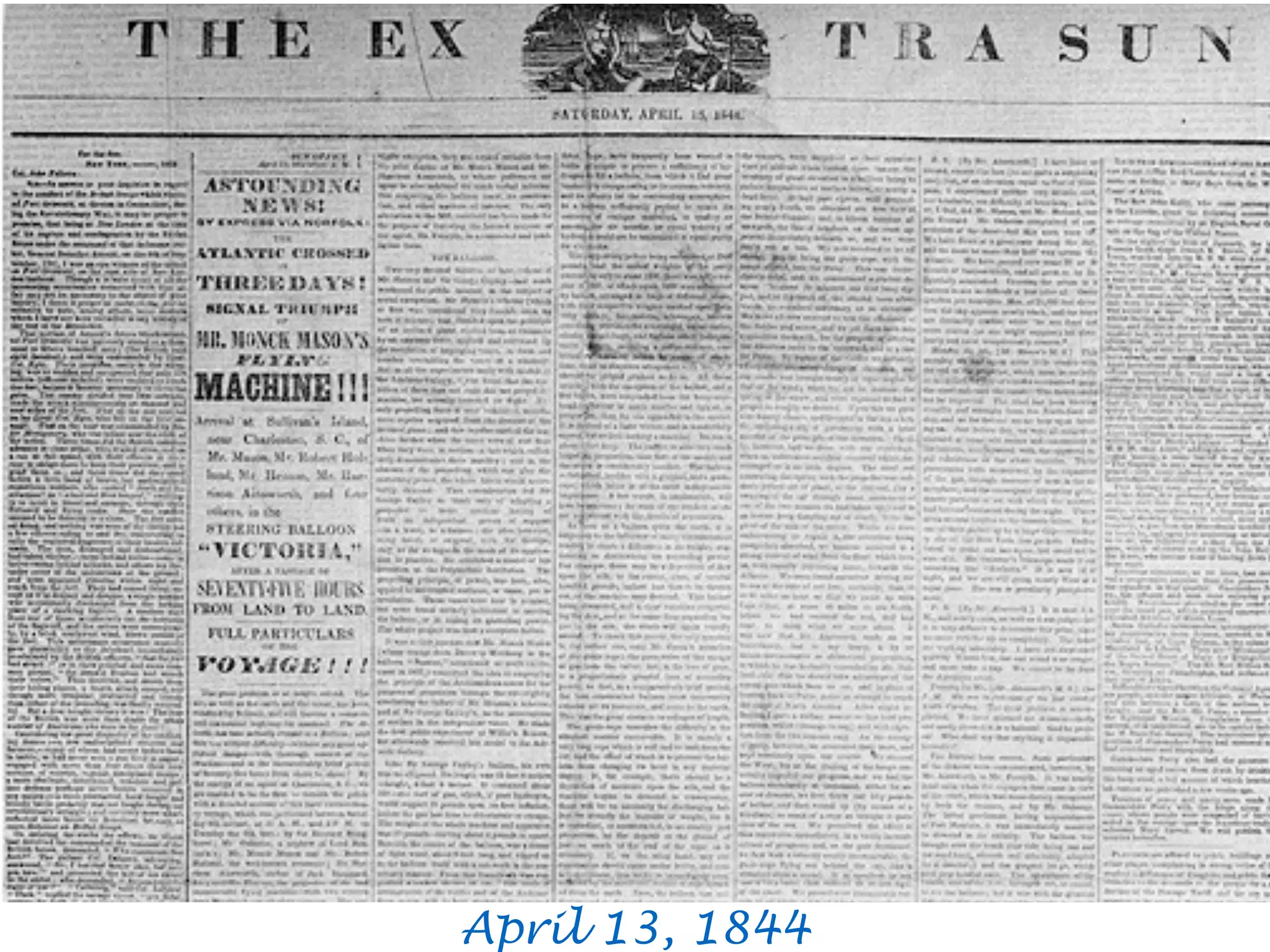
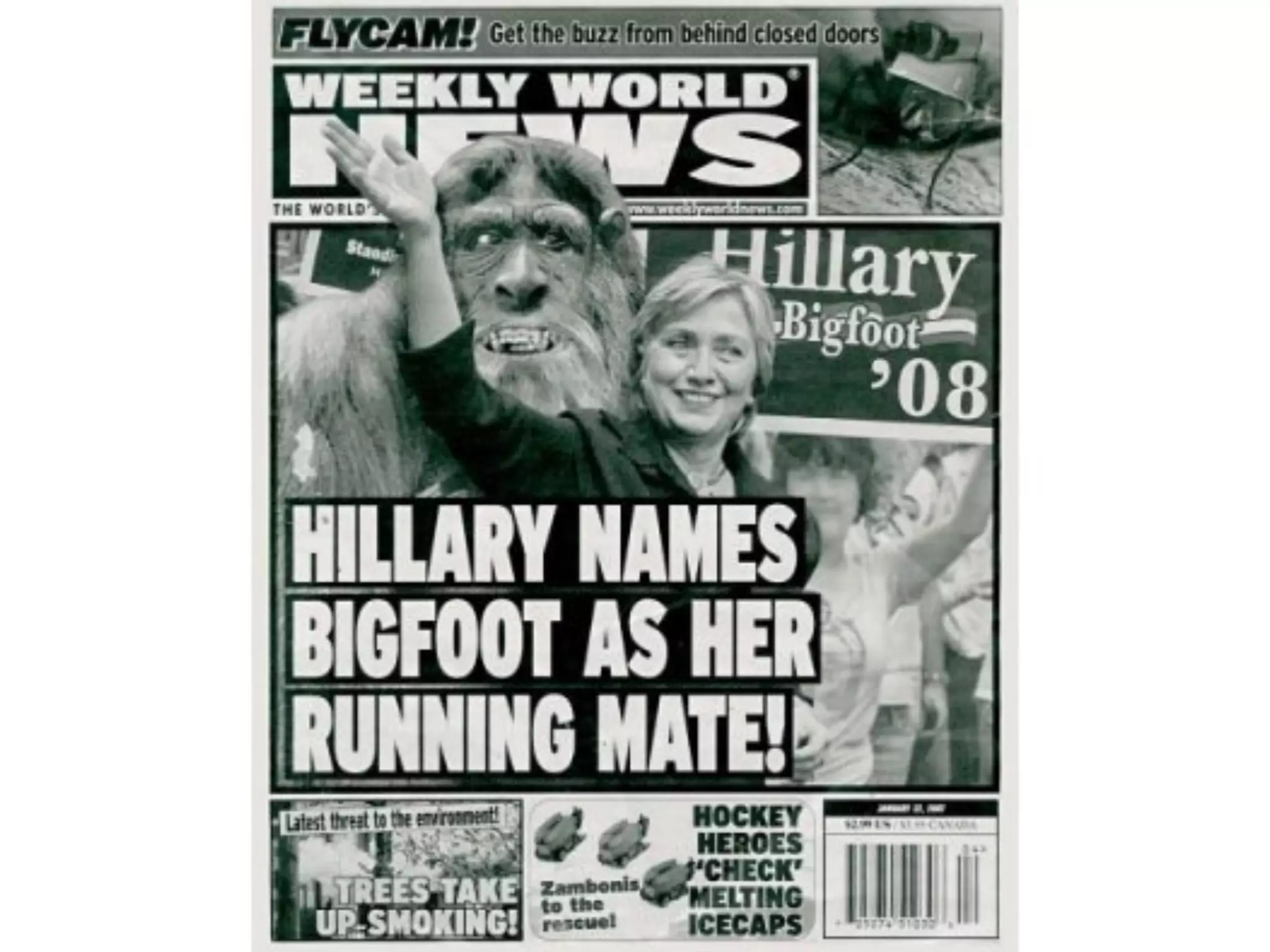
Mercenary fake news
April 13, 1844
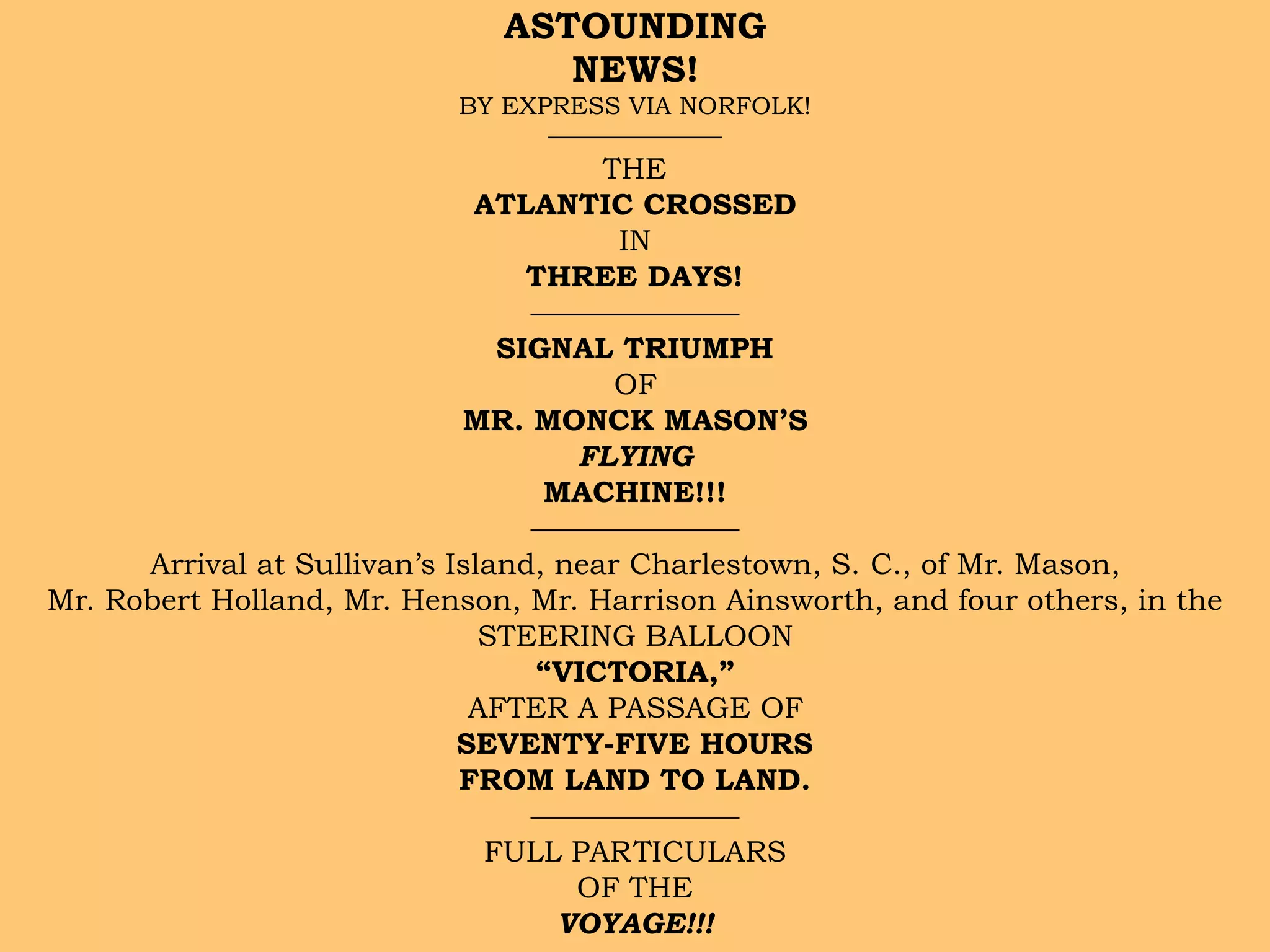
ASTOUNDING 

NEWS!
BY EXPRESS VIA NORFOLK!
———————
THE
ATLANTIC CROSSED
IN
THREE DAYS!
———————
SIGNAL TRIUMPH
OF
MR. MONCK MASON’S
FLYING
MACHINE!!!
———————
Arrival at Sullivan’s Island, near Charlestown, S. C., of Mr. Mason,
Mr. Robert Holland, Mr. Henson, Mr. Harrison Ainsworth, and four others, in the
STEERING BALLOON
“VICTORIA,”
AFTER A PASSAGE OF
SEVENTY-FIVE HOURS
FROM LAND TO LAND.
———————
FULL PARTICULARS
OF THE
VOYAGE!!!
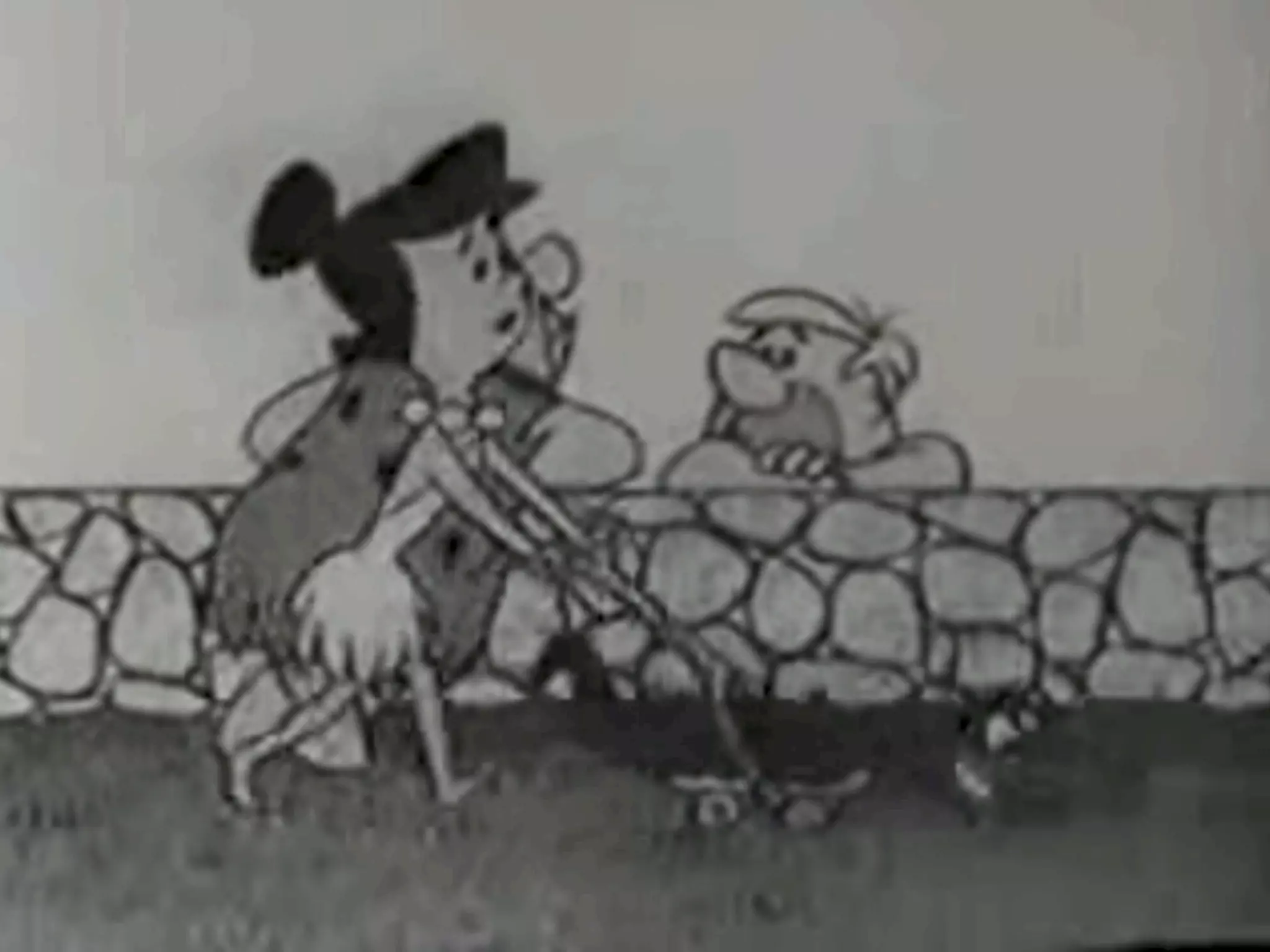
Yabba-Dabba
Death!
Propaganda
Clickbait
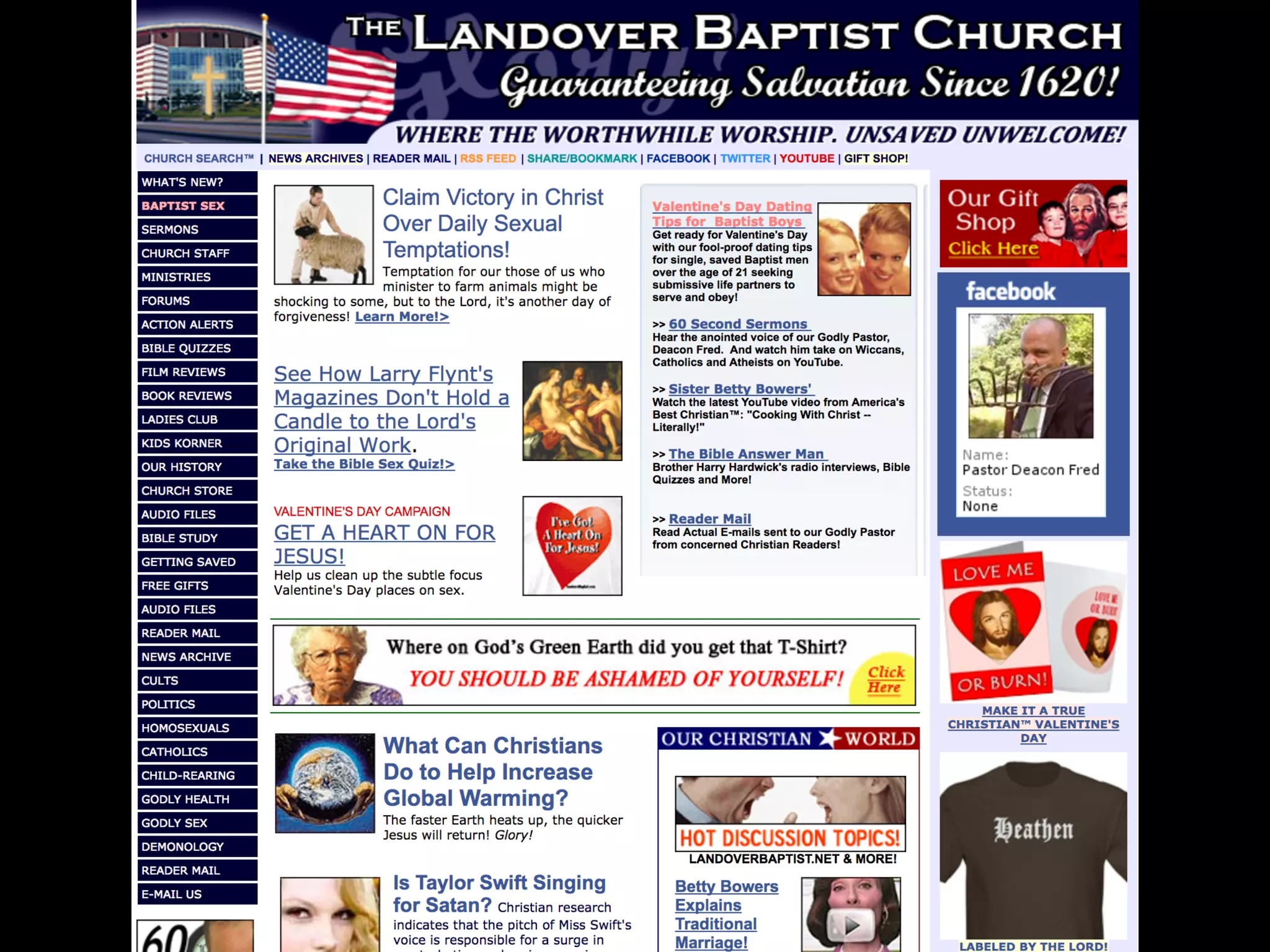
Is it propaganda when the creator of the
information doesn’t care what it says?
Humor
• Lying
• Mercenary Fake News
• Clickbait
• Propaganda
• Humor
Fake news is old news
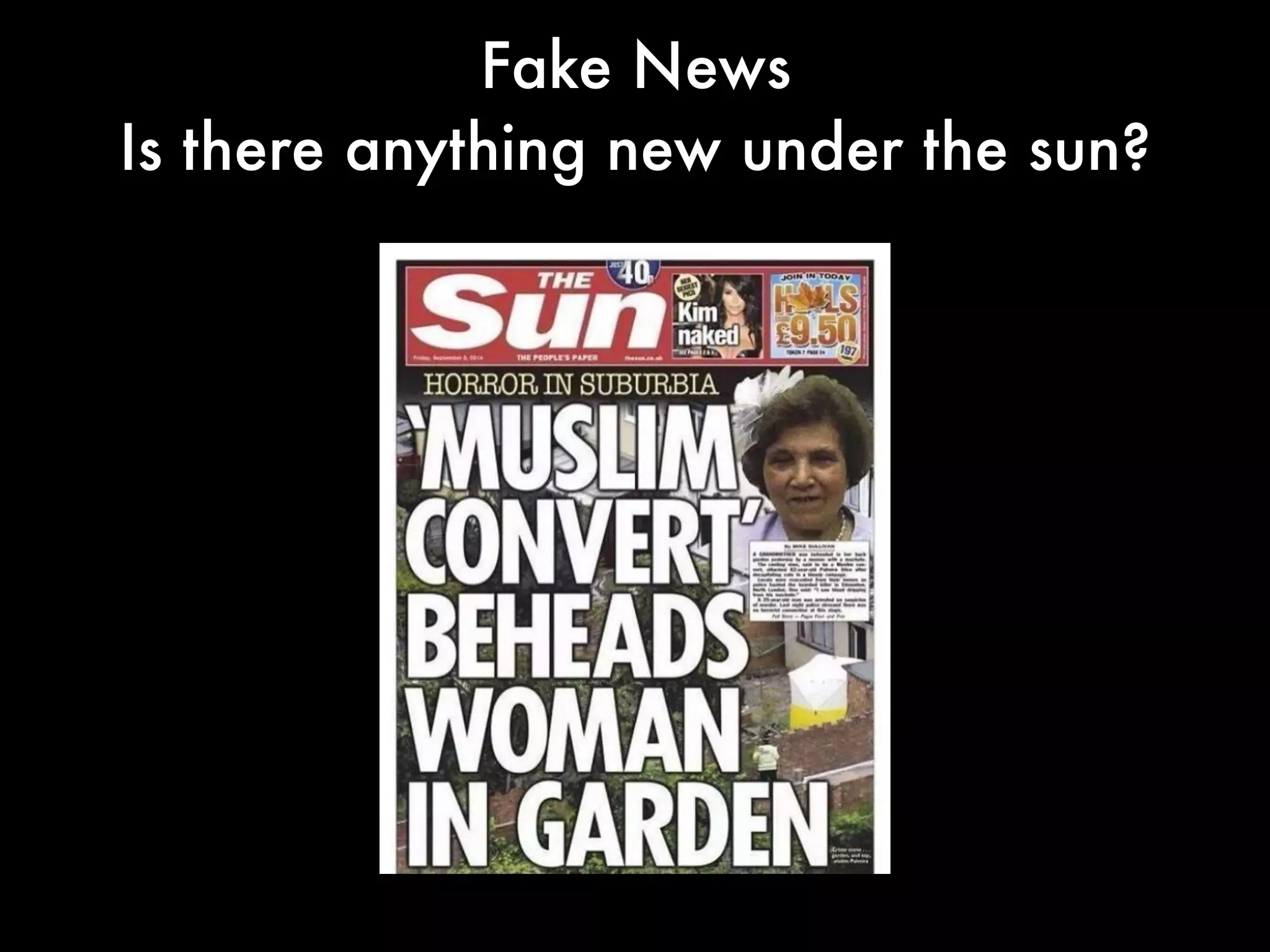
Fake News
Is there anything new under the sun?
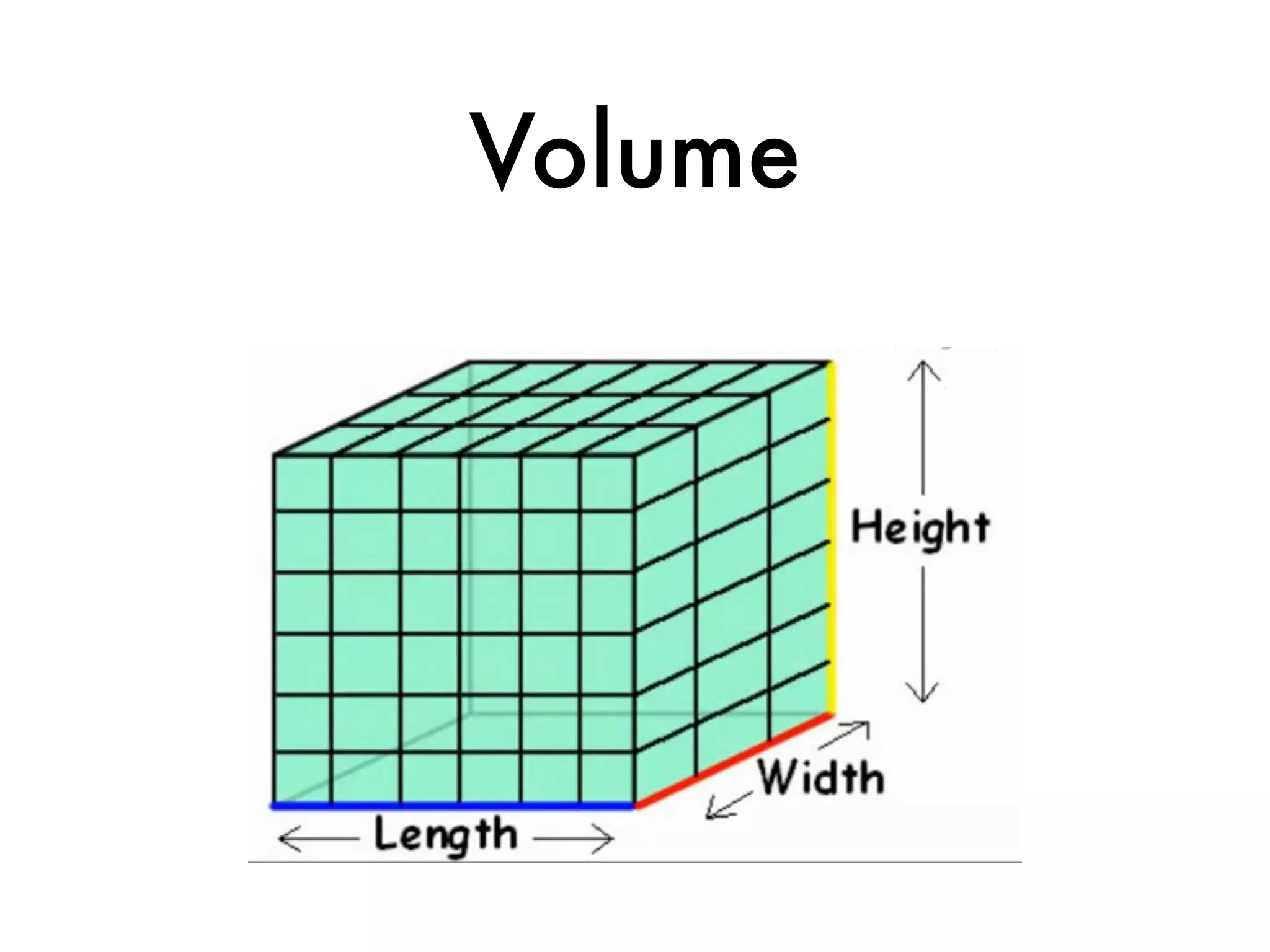
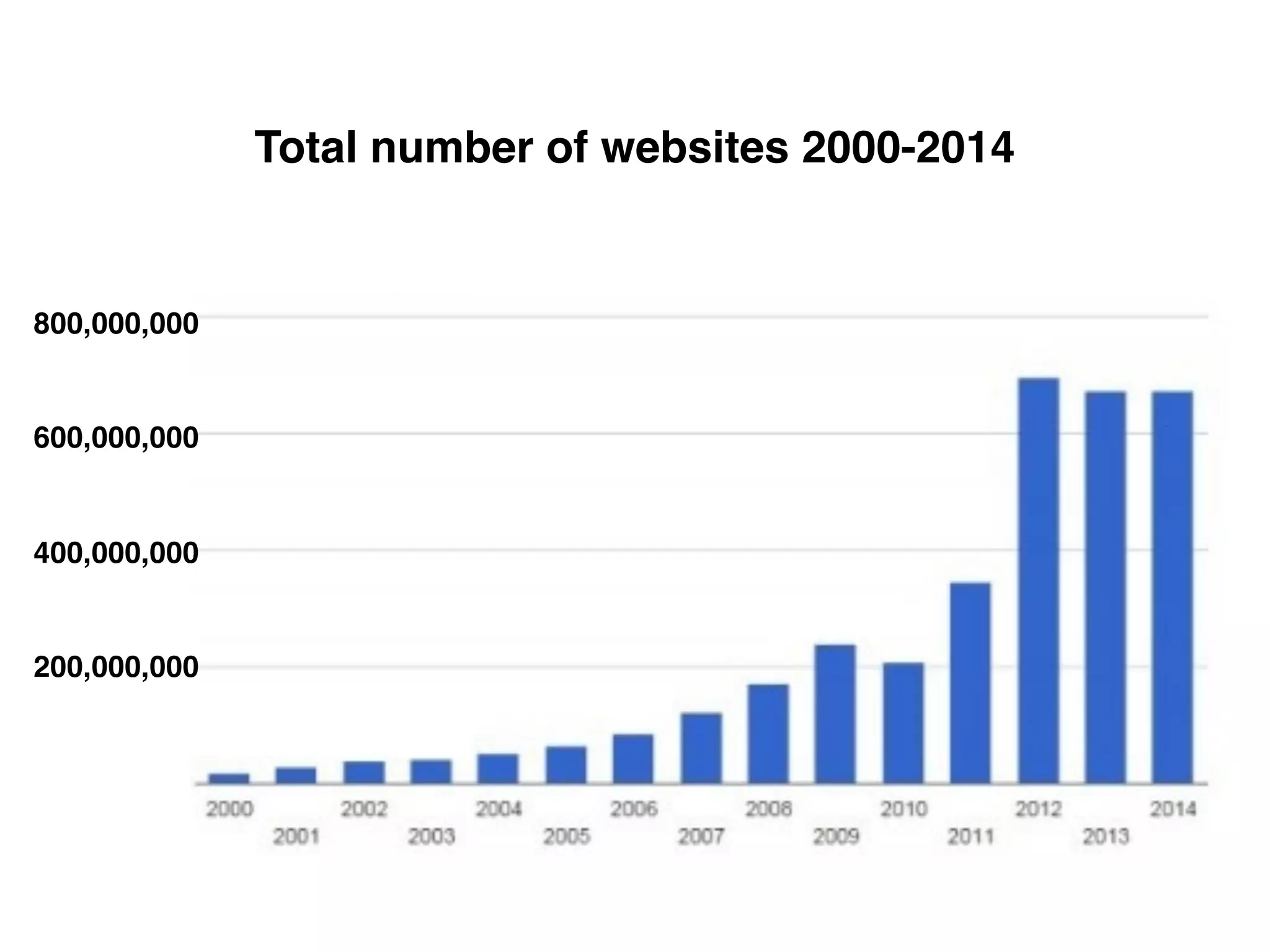
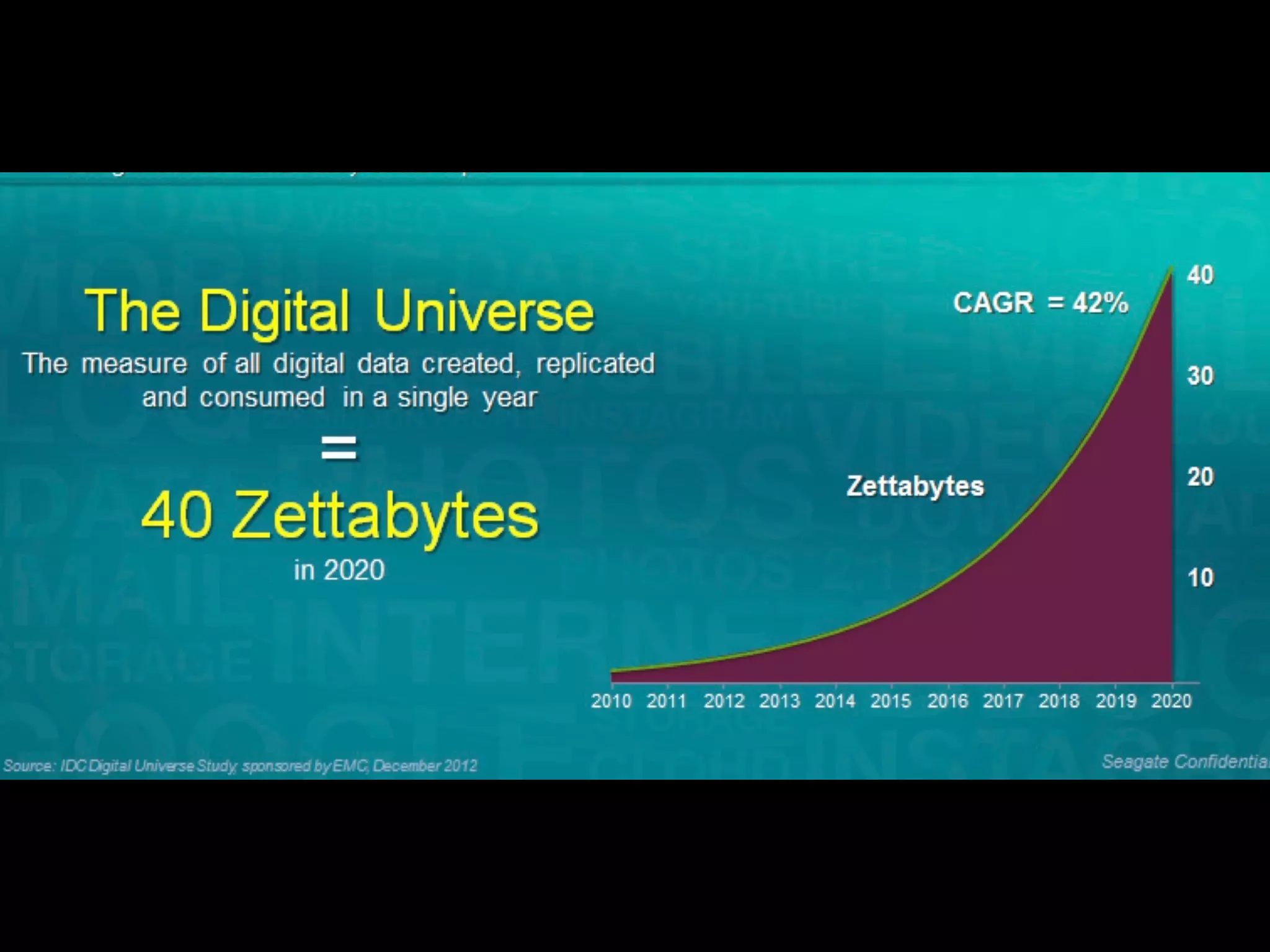
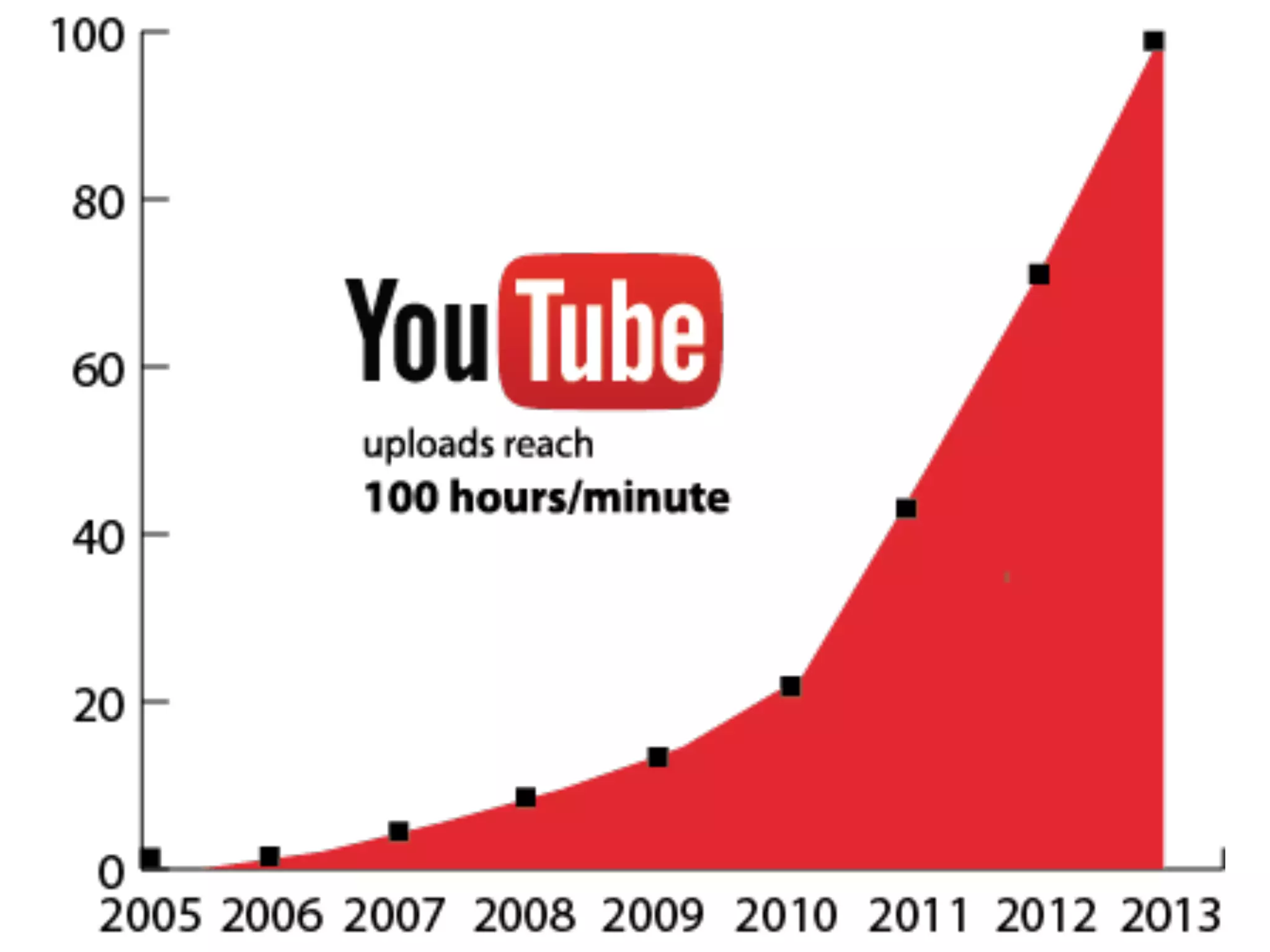
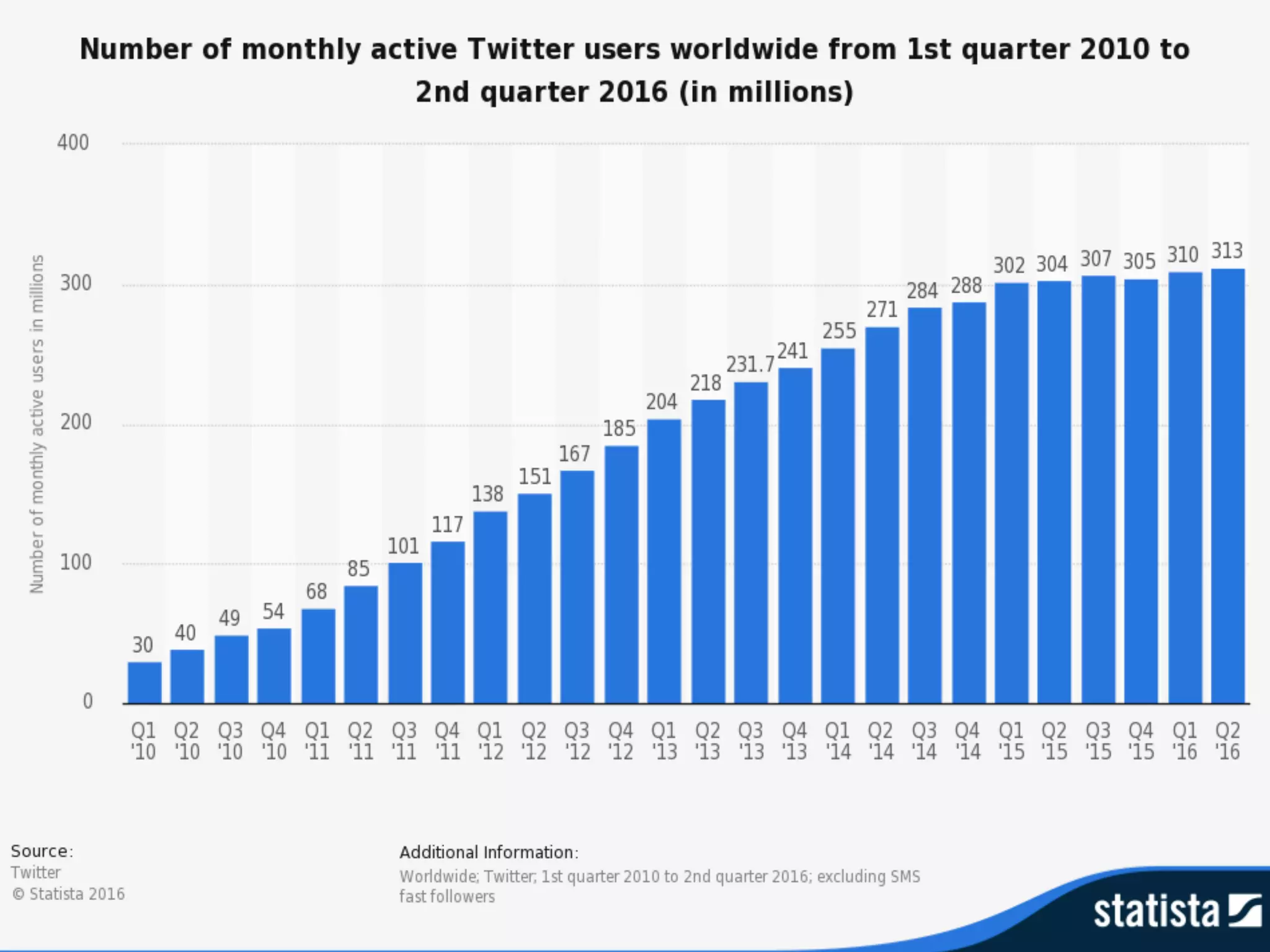
Volume
Total number of websites 2000-2014
800,000,000
600,000,000
400,000,000
200,000,000
Distribution
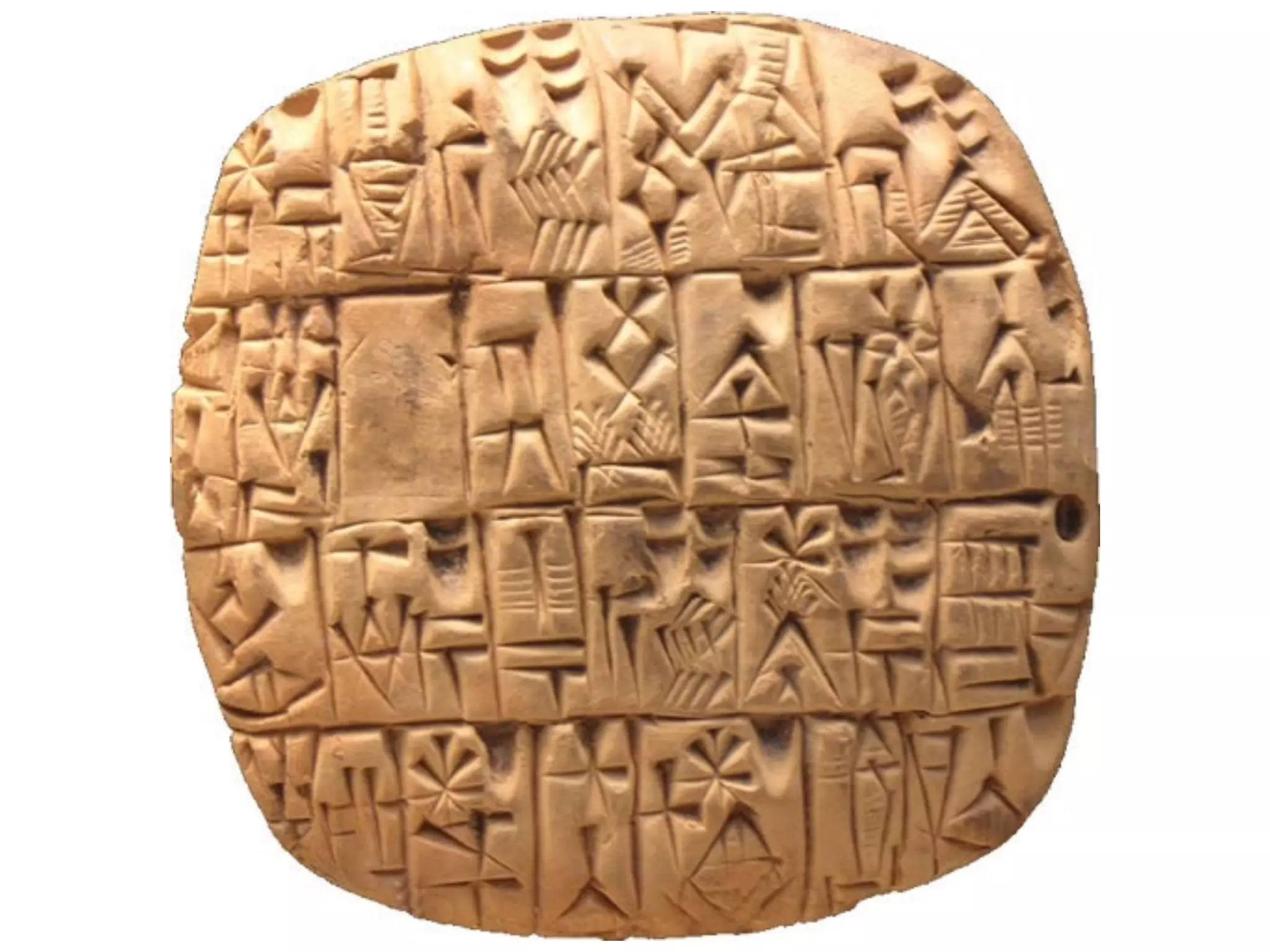
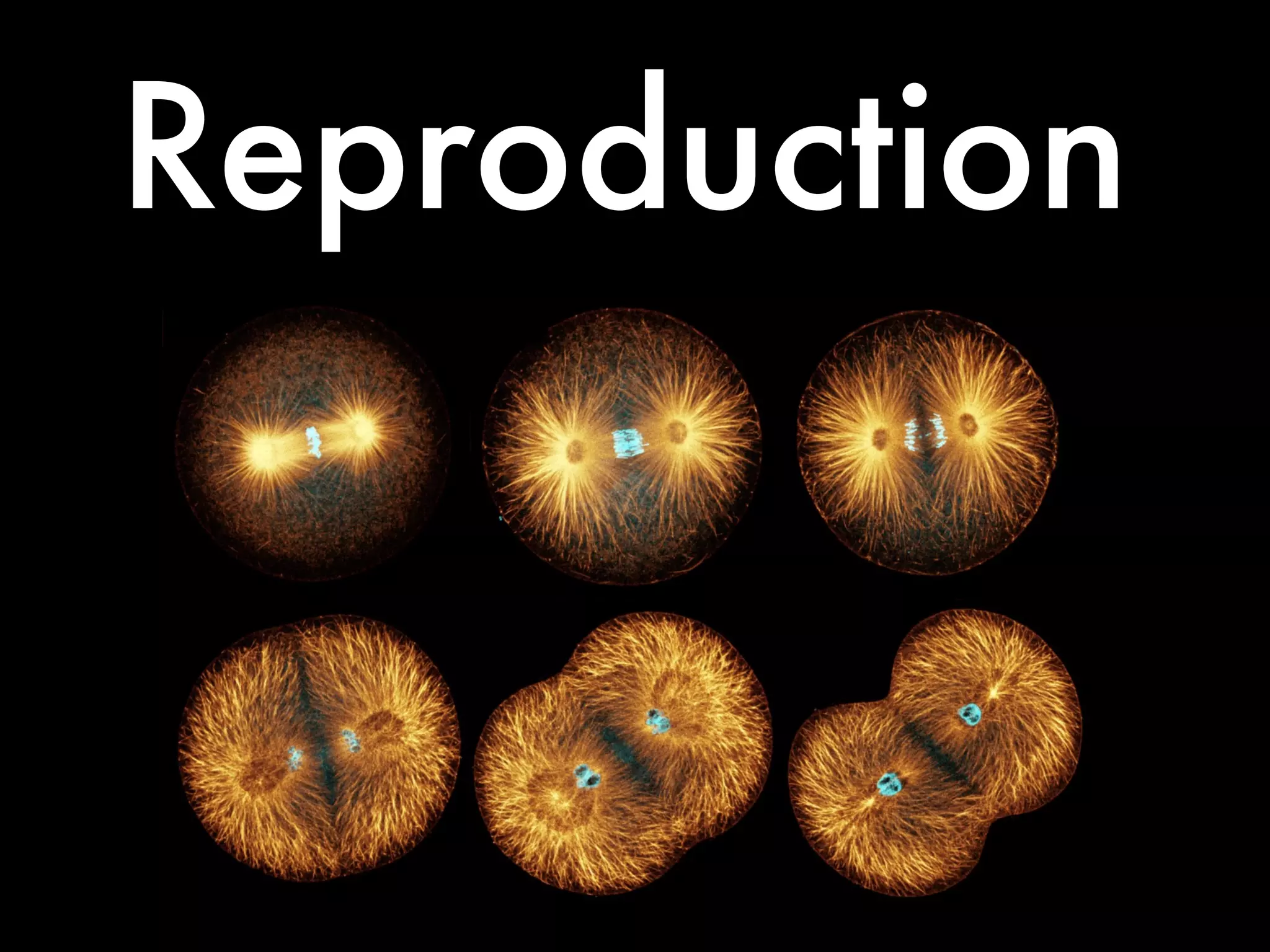
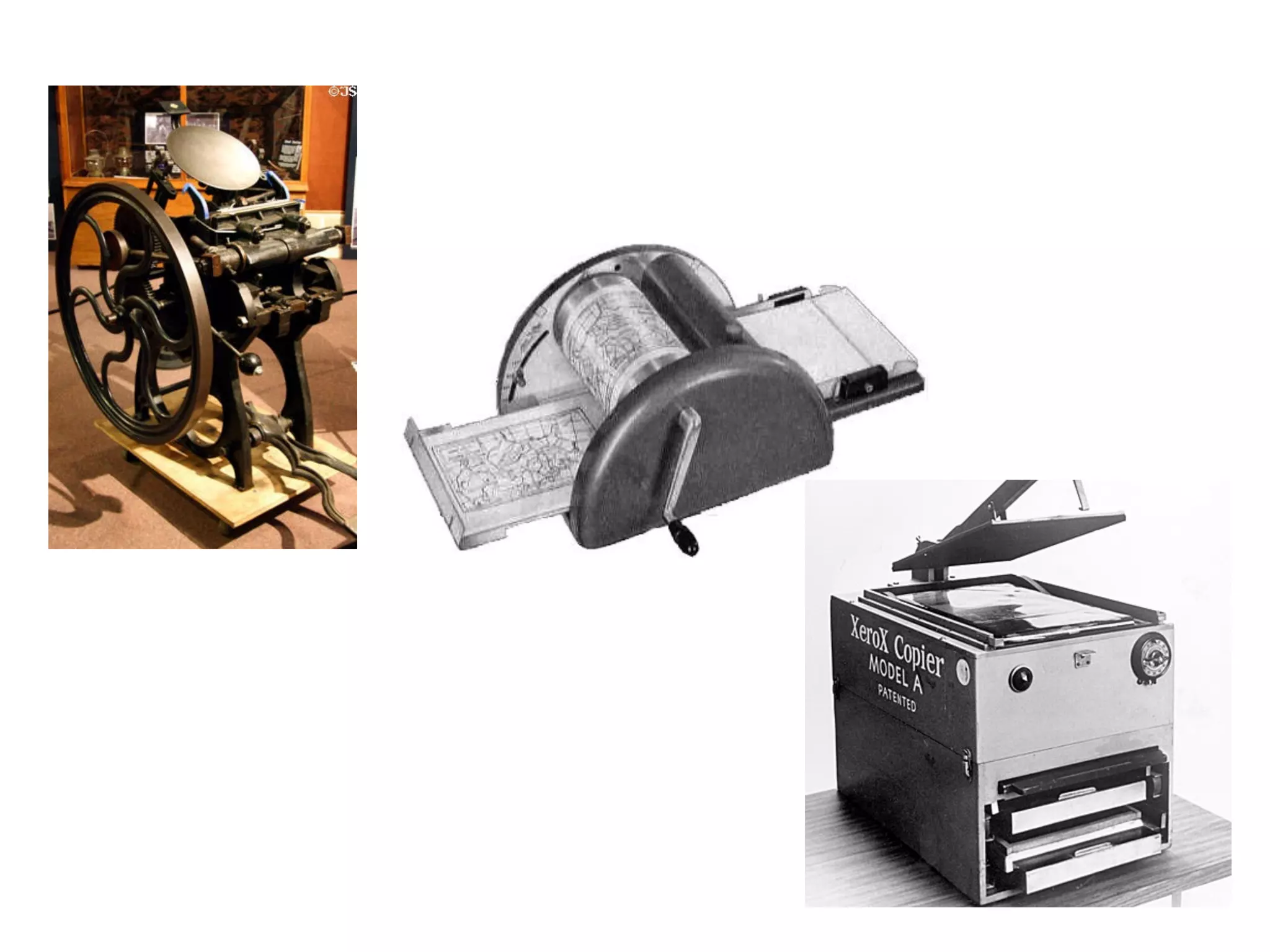
Reproduction
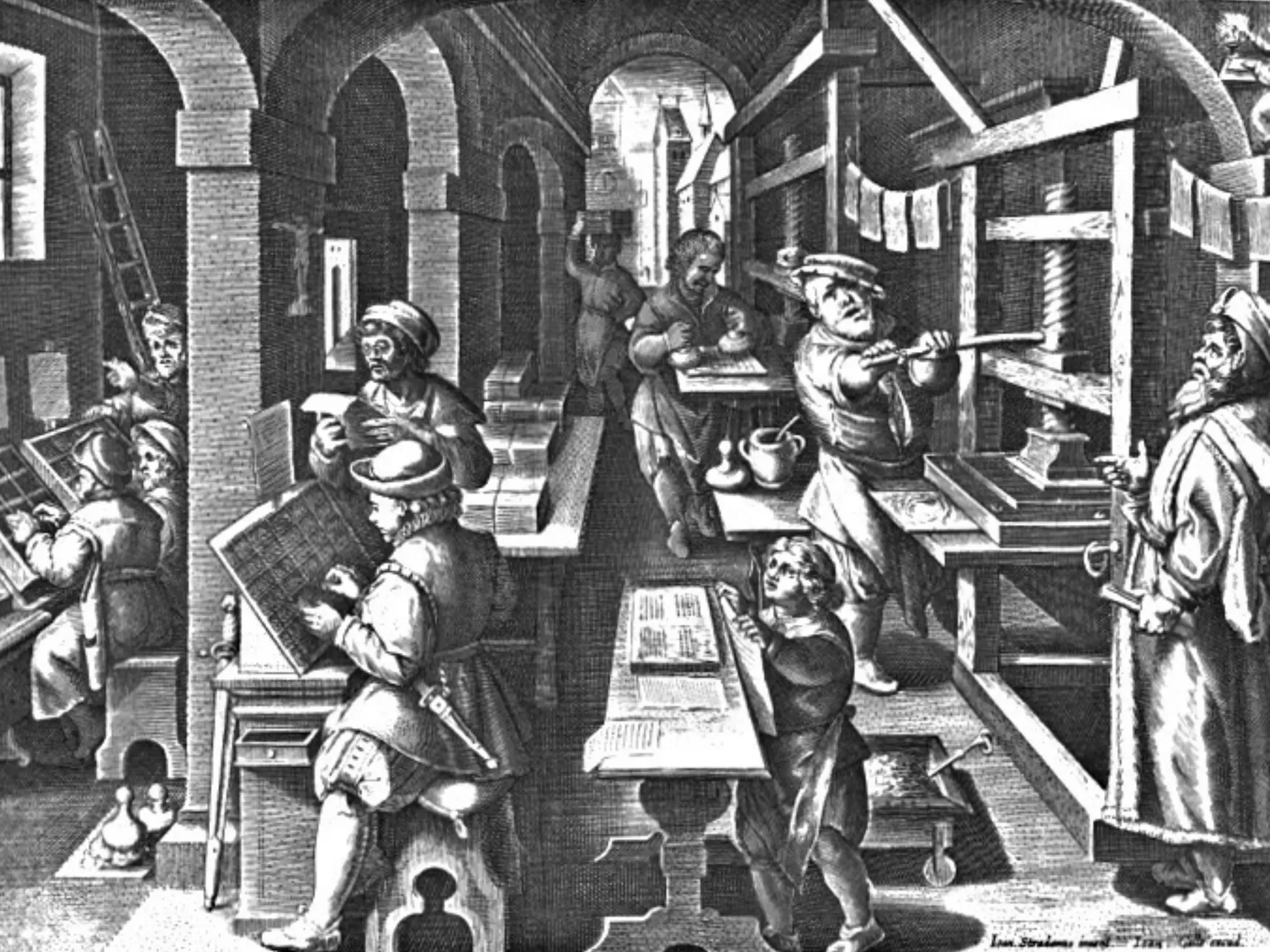
Alteration
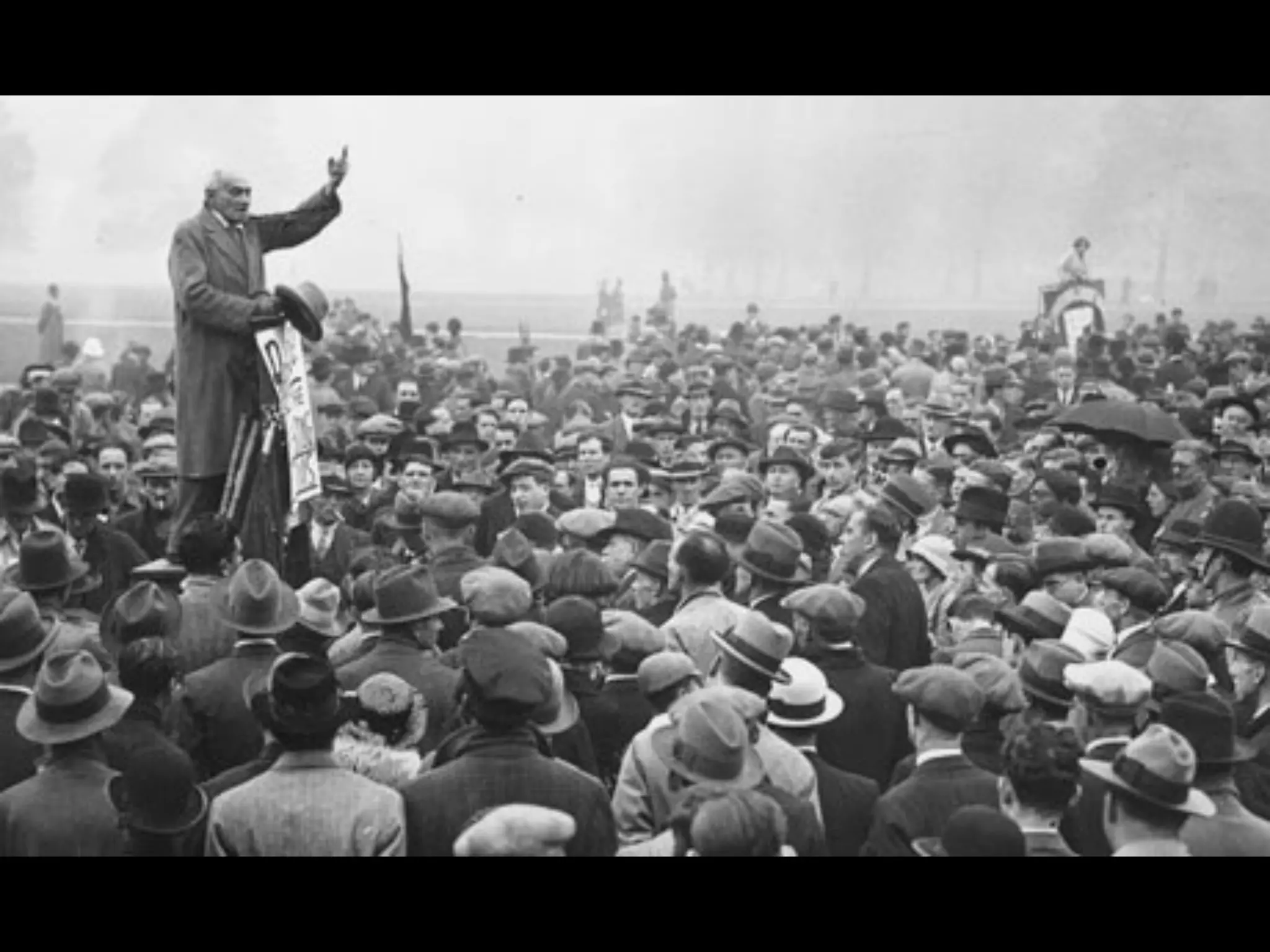
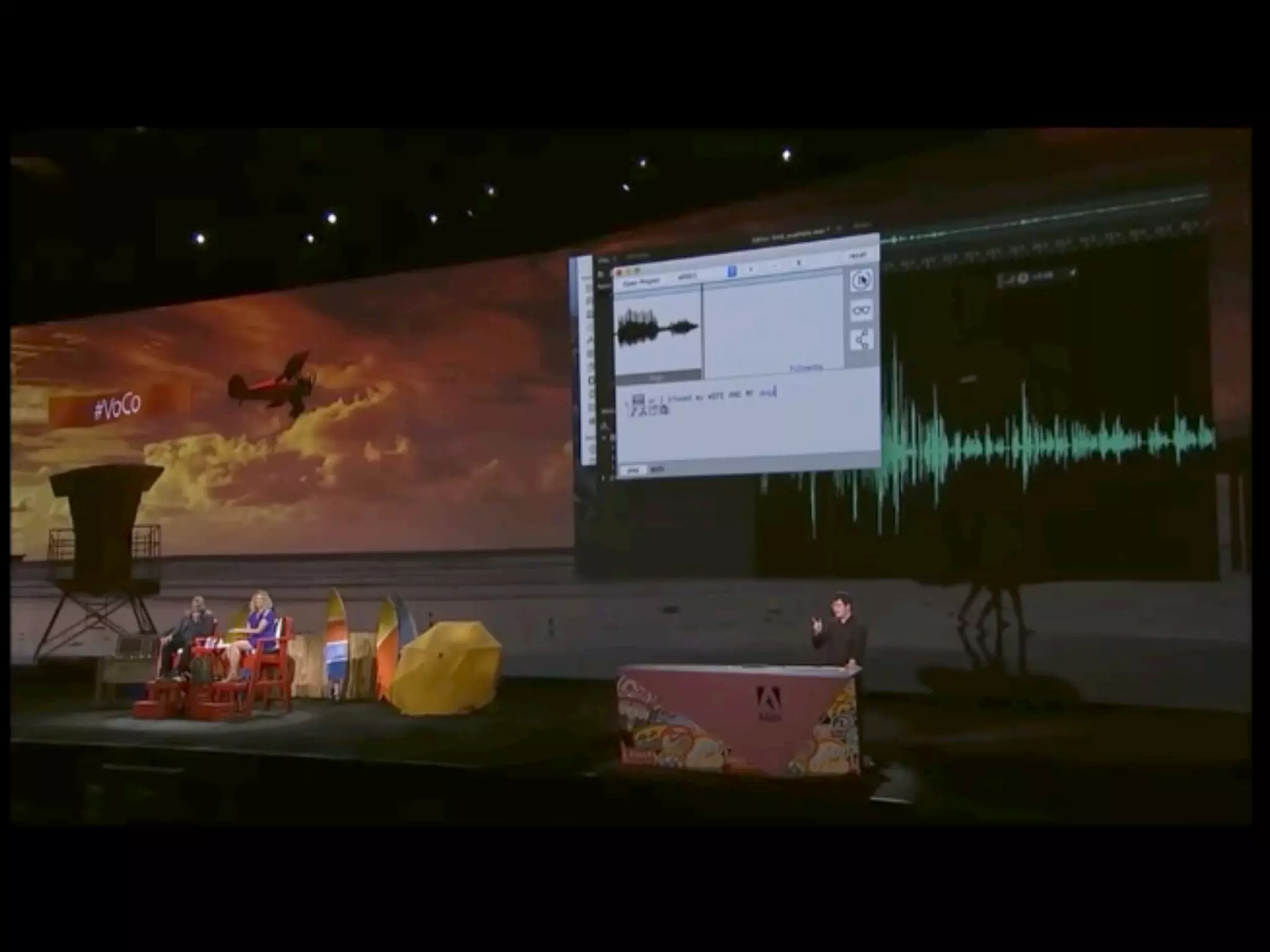
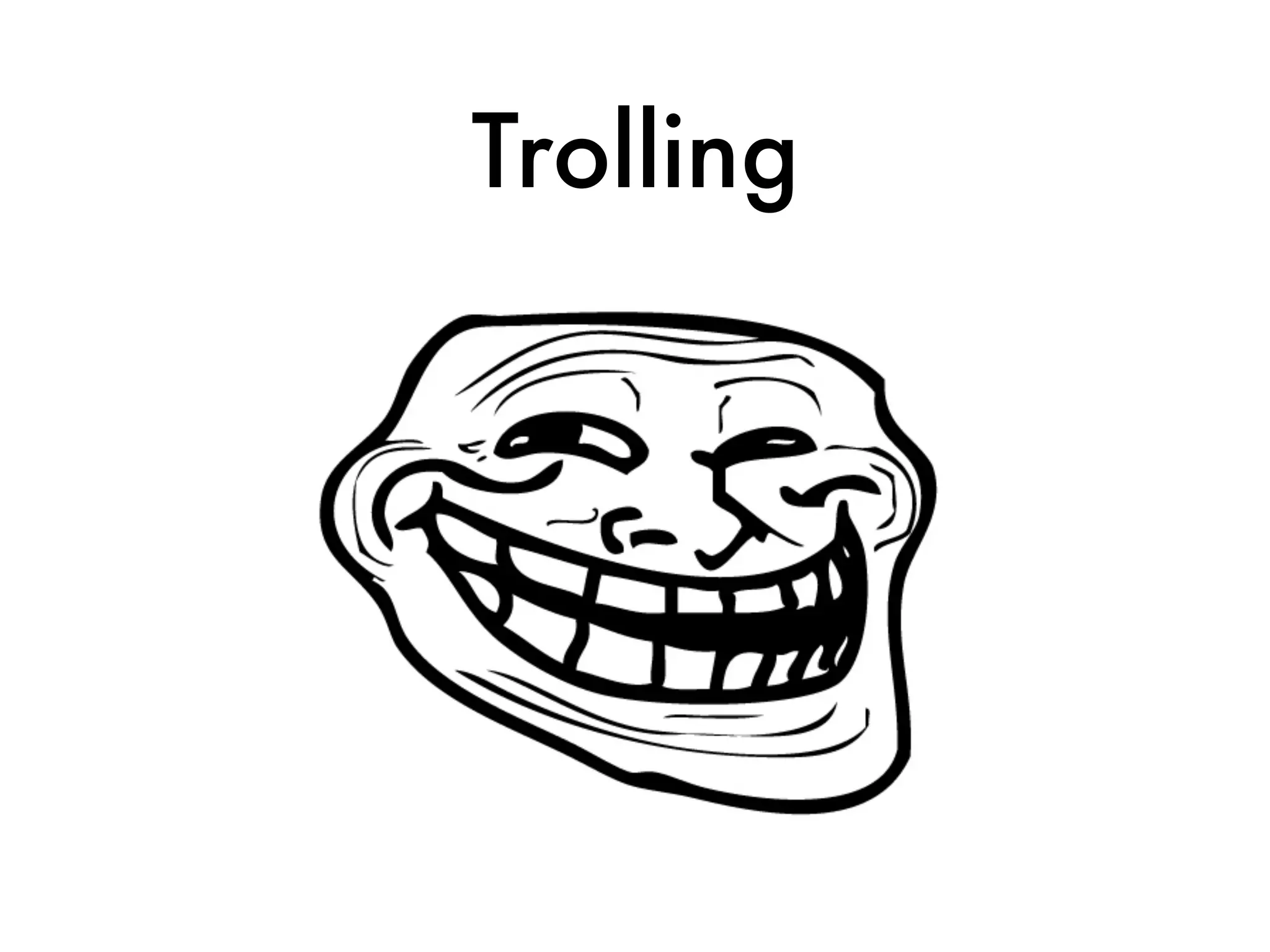
Trolling
What is new about fake news?
• Volume
• Distribution
• Reproduction
• Alteration
• Trolling
• Rate of new information being produced
• Continuous news culture (speed over quality)
• Ease of duplication and transmission
• More channels of incoming information
• Ever-increasing amounts of historical information to
dig through
• Contradictions and inaccuracies in available
information
• A low signal-to-noise ratio
• No method for comparing and processing different
kinds of information
• Information unrelated or lacking context
Information Overload
Coping with fake news is an
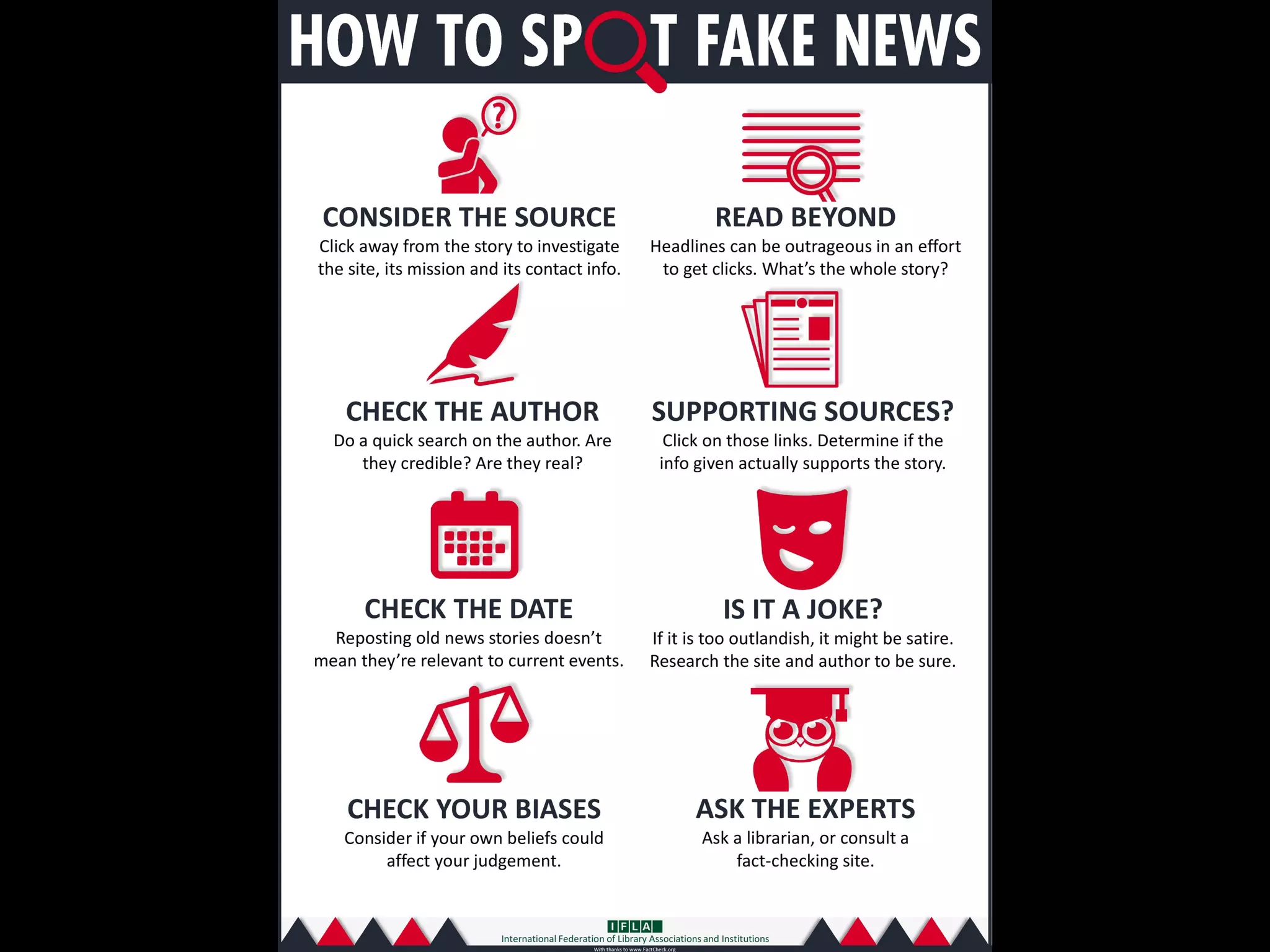
information literacy issue.
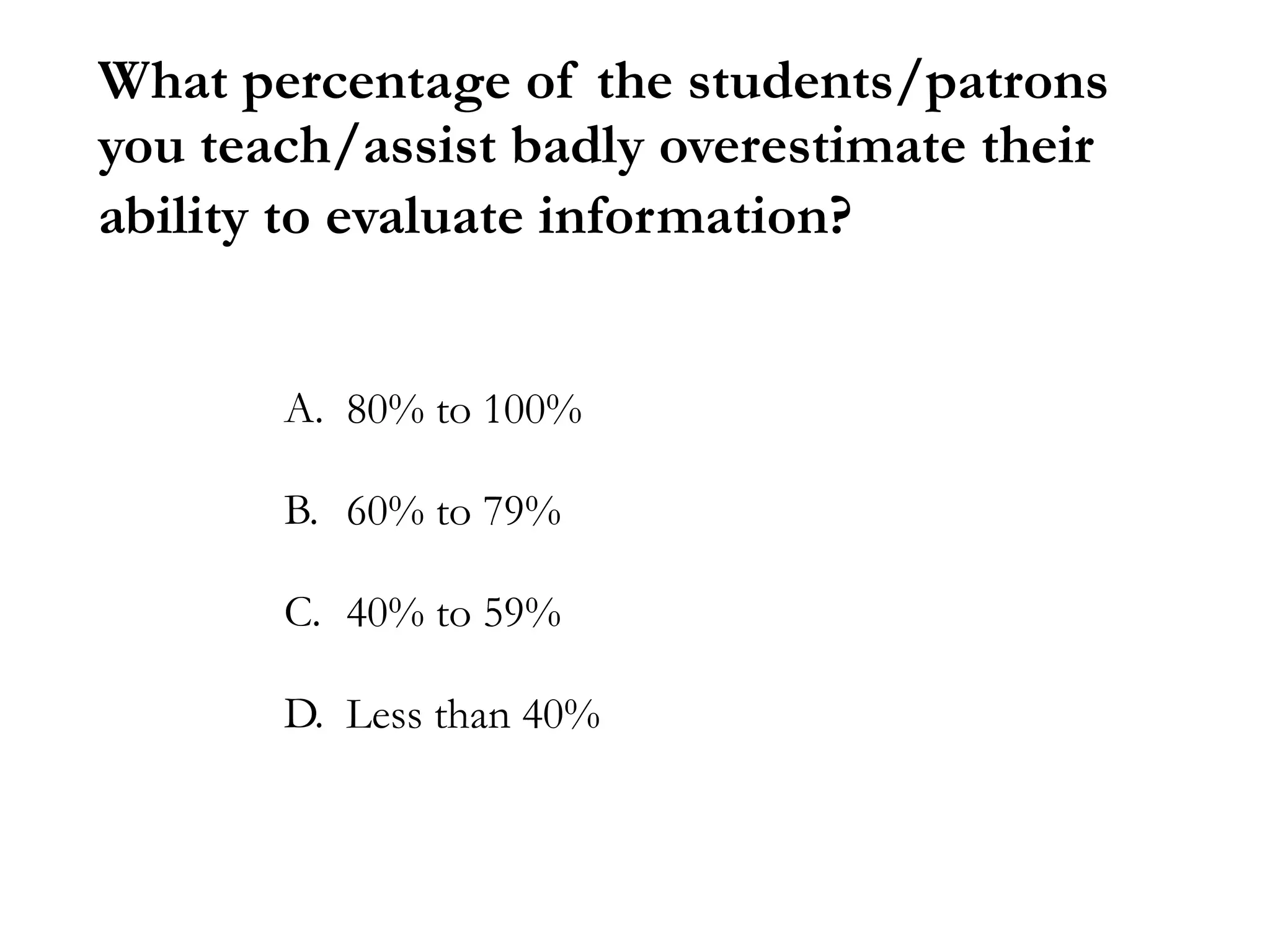
What percentage of the students/patrons
you teach/assist badly overestimate their
ability to evaluate information?
A. 80% to 100%
B. 60% to 79%
C. 40% to 59%
D. Less than 40%
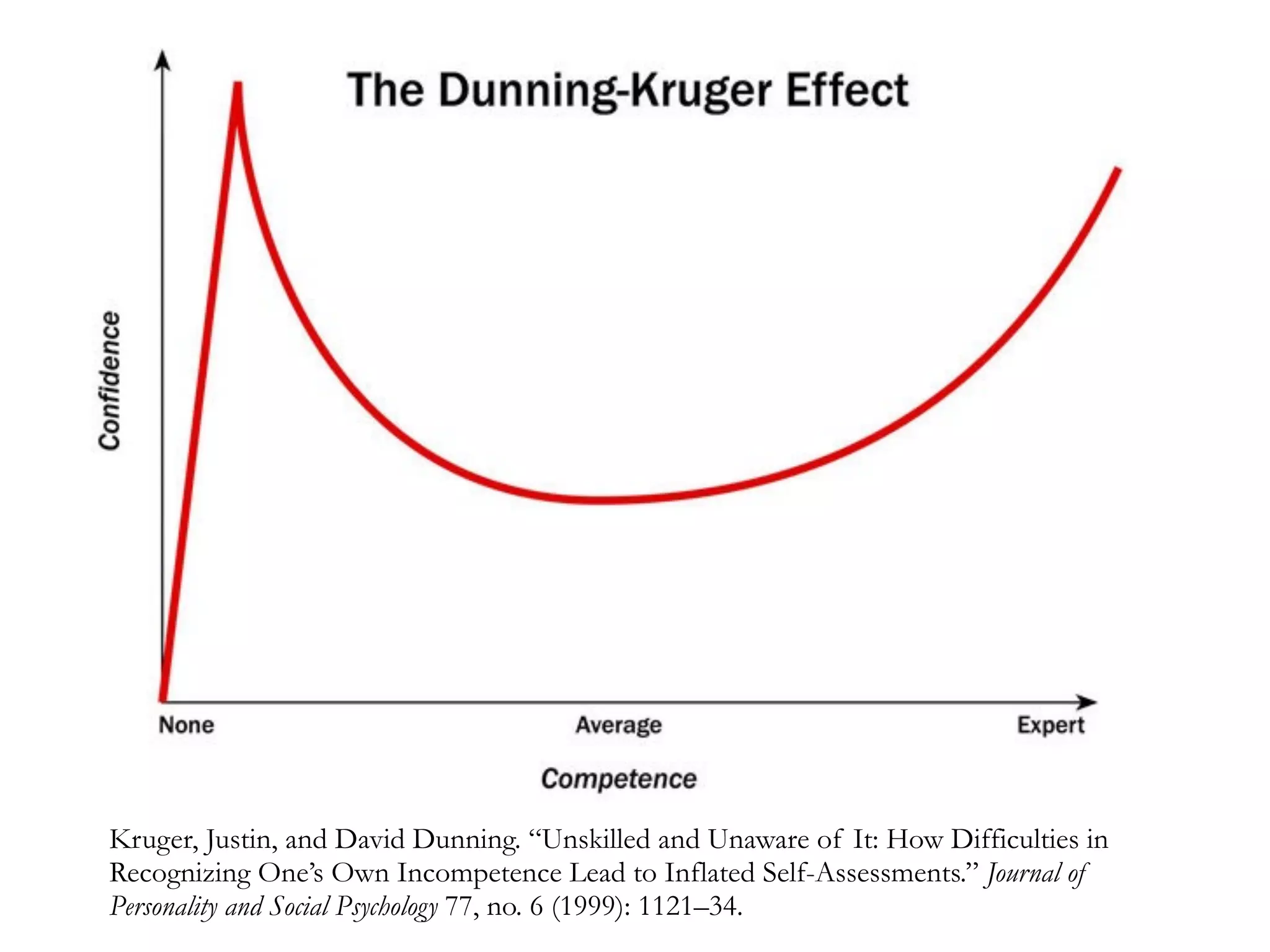
Kruger, Justin, and David Dunning. “Unskilled and Unaware of It: How Difficulties in
Recognizing One’s Own Incompetence Lead to Inflated Self-Assessments.” Journal of
Personality and Social Psychology 77, no. 6 (1999): 1121–34.
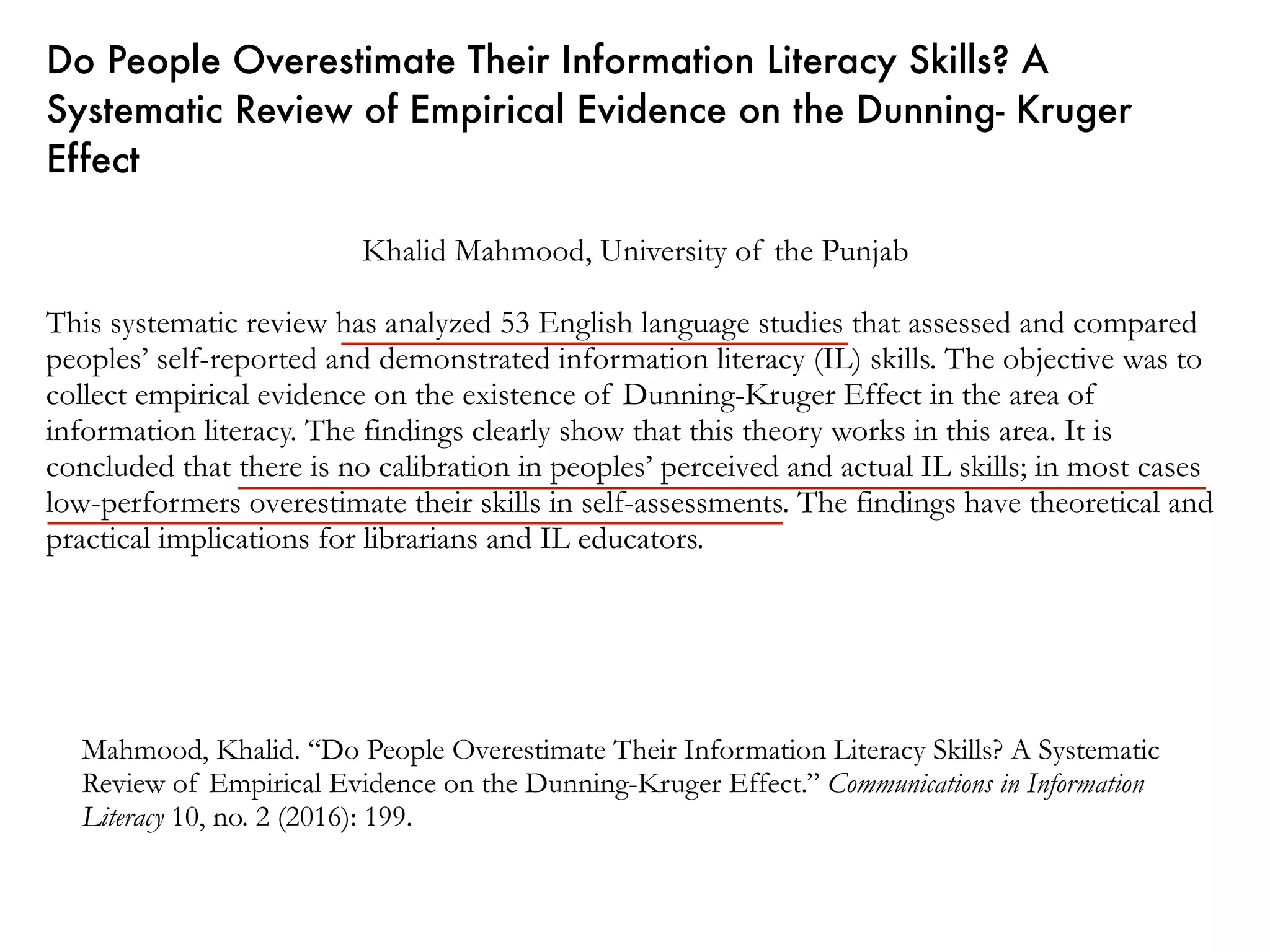
Do People Overestimate Their Information Literacy Skills? A
Systematic Review of Empirical Evidence on the Dunning- Kruger
Effect
Khalid Mahmood, University of the Punjab
This systematic review has analyzed 53 English language studies that assessed and compared
peoples’ self-reported and demonstrated information literacy (IL) skills. The objective was to
collect empirical evidence on the existence of Dunning-Kruger Effect in the area of
information literacy. The findings clearly show that this theory works in this area. It is
concluded that there is no calibration in peoples’ perceived and actual IL skills; in most cases
low-performers overestimate their skills in self-assessments. The findings have theoretical and
practical implications for librarians and IL educators.
Mahmood, Khalid. “Do People Overestimate Their Information Literacy Skills? A Systematic
Review of Empirical Evidence on the Dunning-Kruger Effect.” Communications in Information
Literacy 10, no. 2 (2016): 199.
What can librarians do about
fake news?
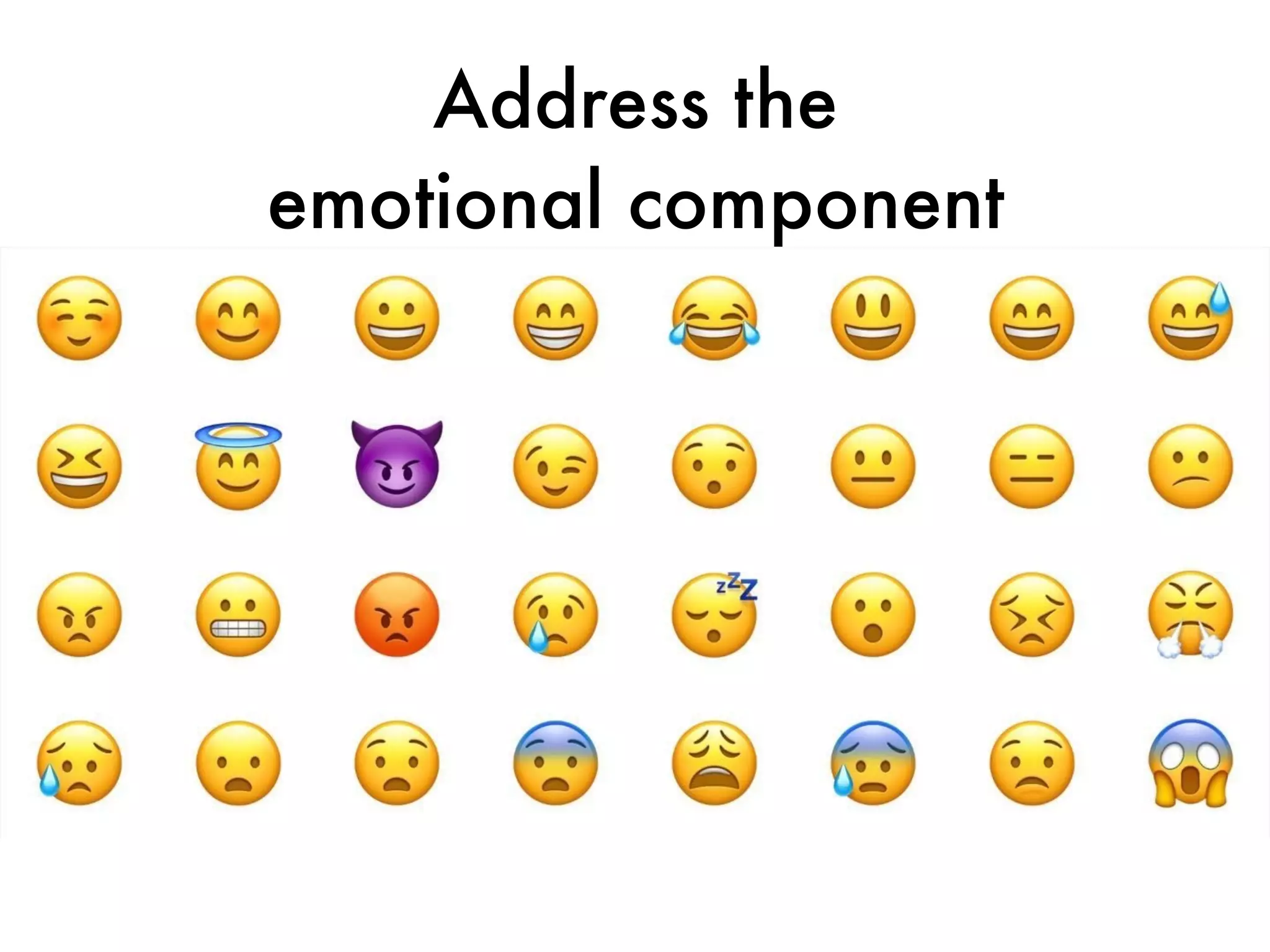
Address the
emotional component
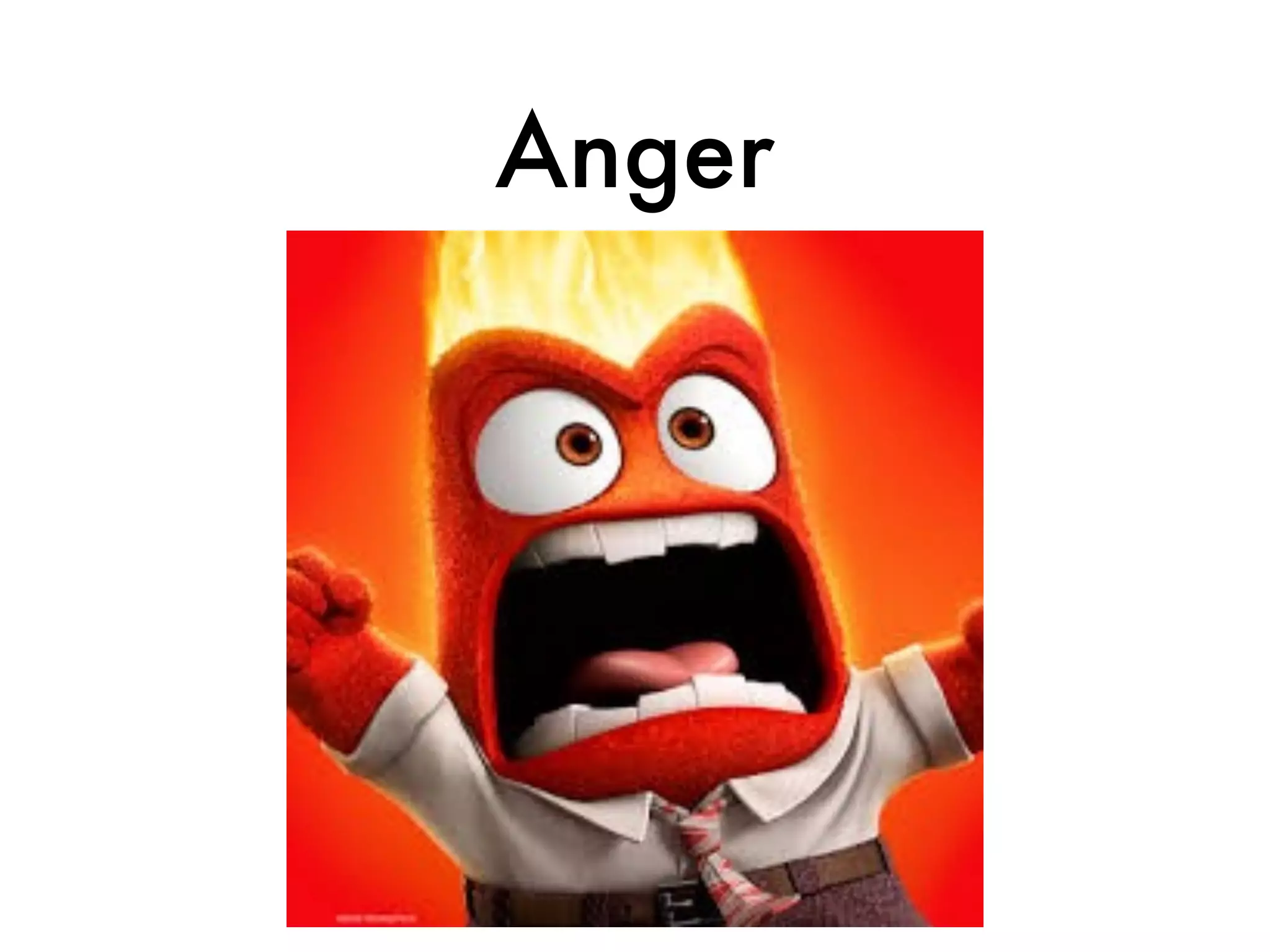
Anger
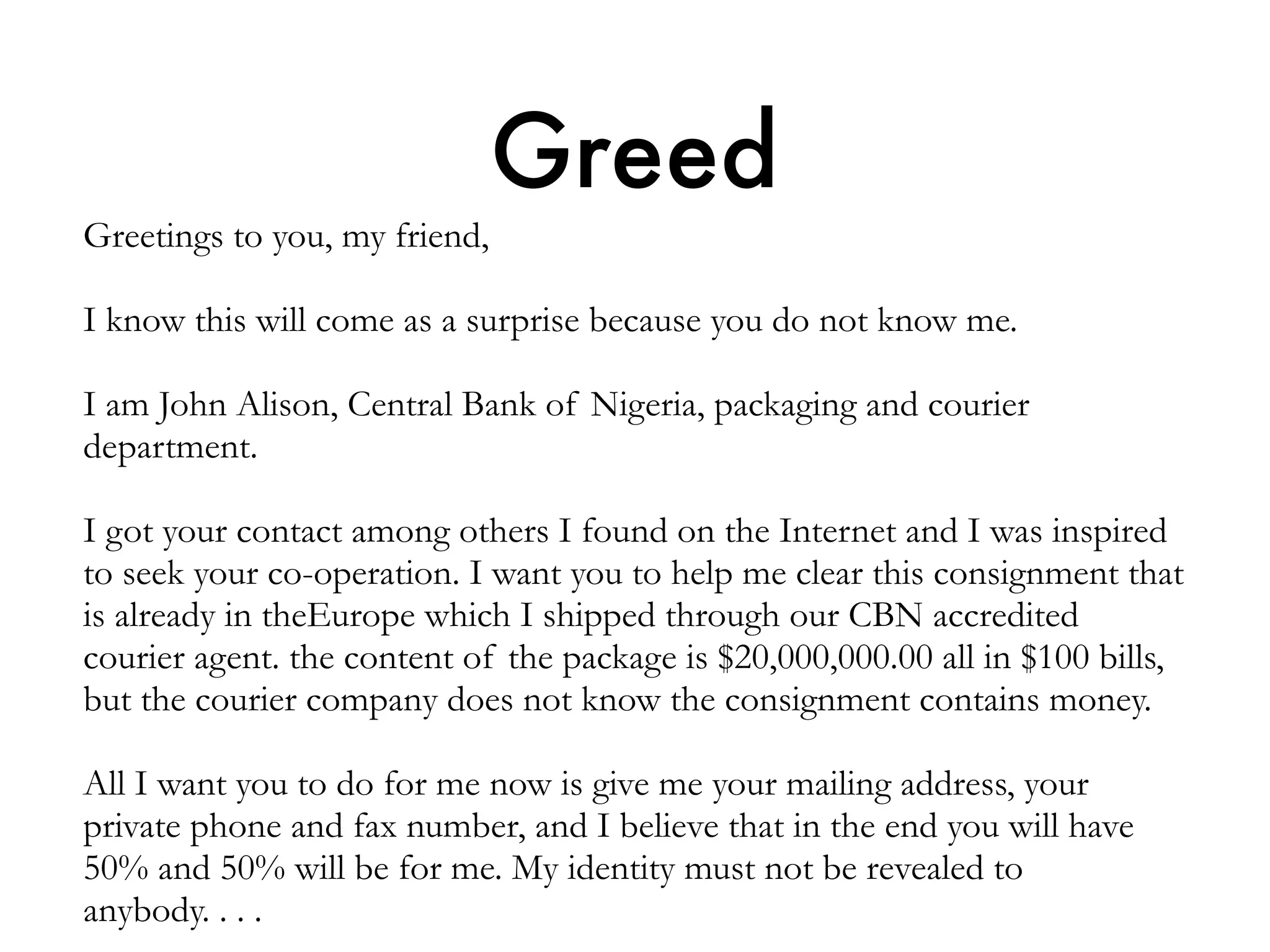
Greed
Greetings to you, my friend,
I know this will come as a surprise because you do not know me.
I am John Alison, Central Bank of Nigeria, packaging and courier
department.
I got your contact among others I found on the Internet and I was inspired
to seek your co-operation. I want you to help me clear this consignment that
is already in theEurope which I shipped through our CBN accredited
courier agent. the content of the package is $20,000,000.00 all in $100 bills,
but the courier company does not know the consignment contains money.
All I want you to do for me now is give me your mailing address, your
private phone and fax number, and I believe that in the end you will have
50% and 50% will be for me. My identity must not be revealed to
anybody. . . .
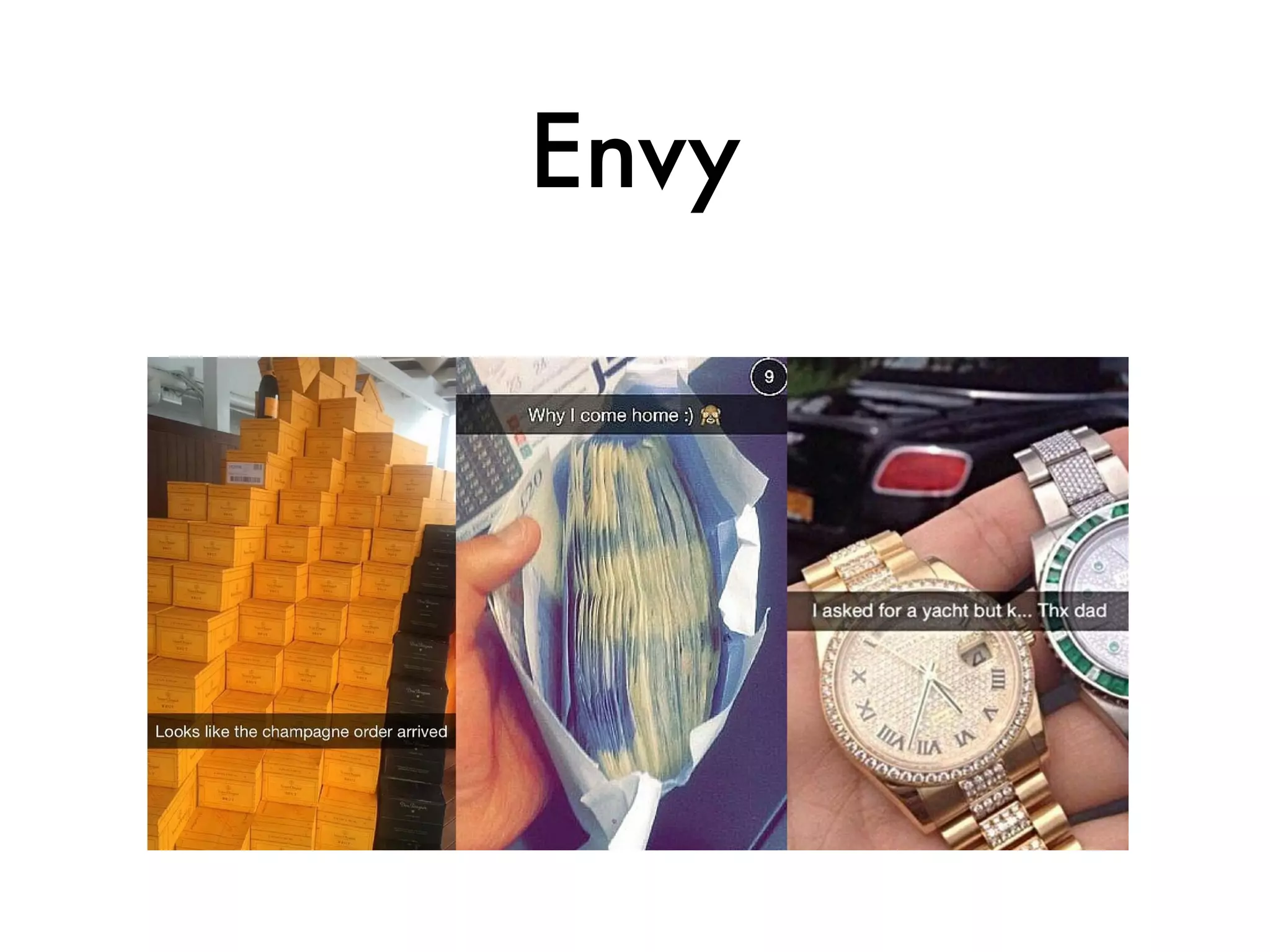
Envy
Pride
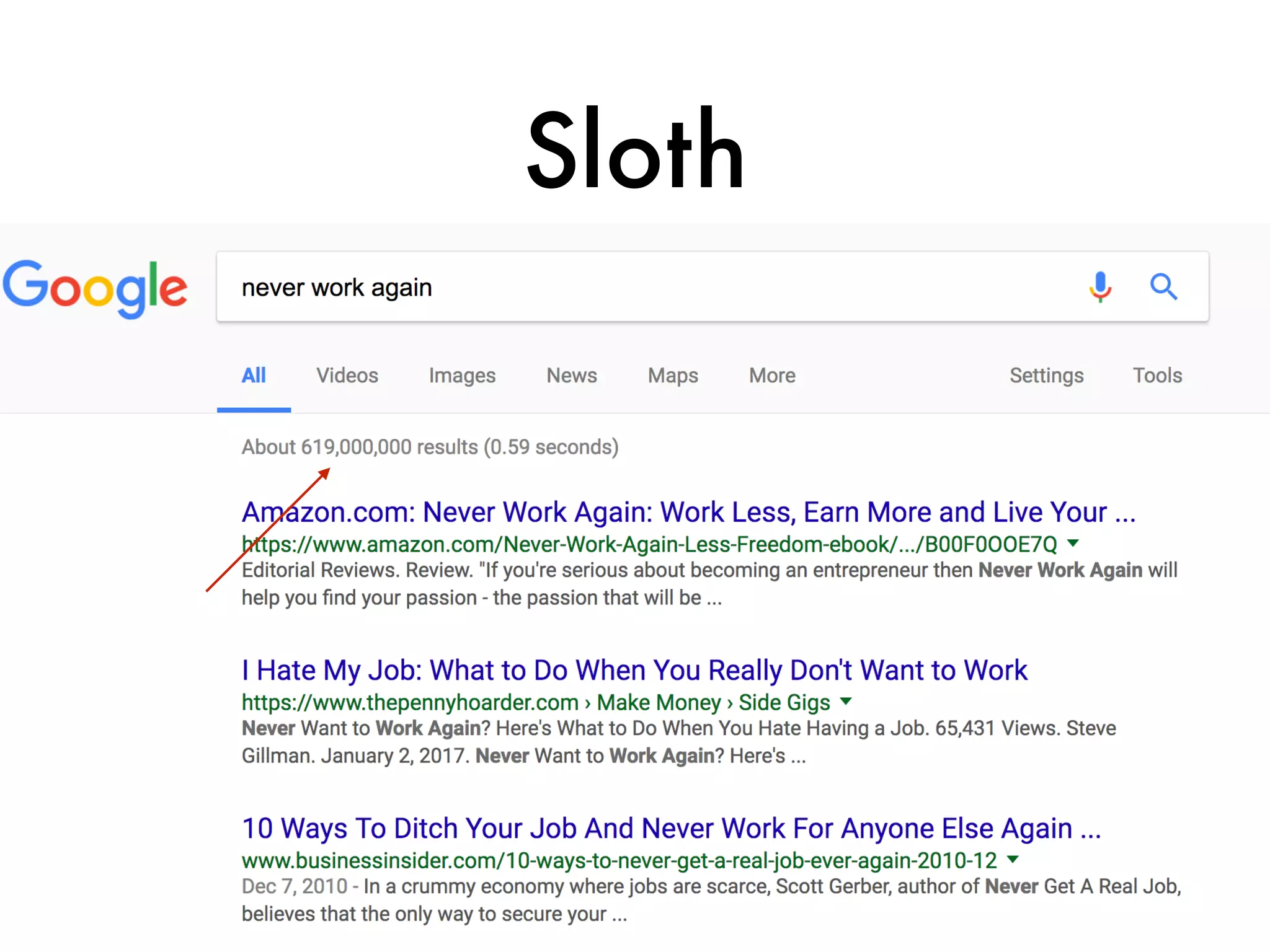
Sloth
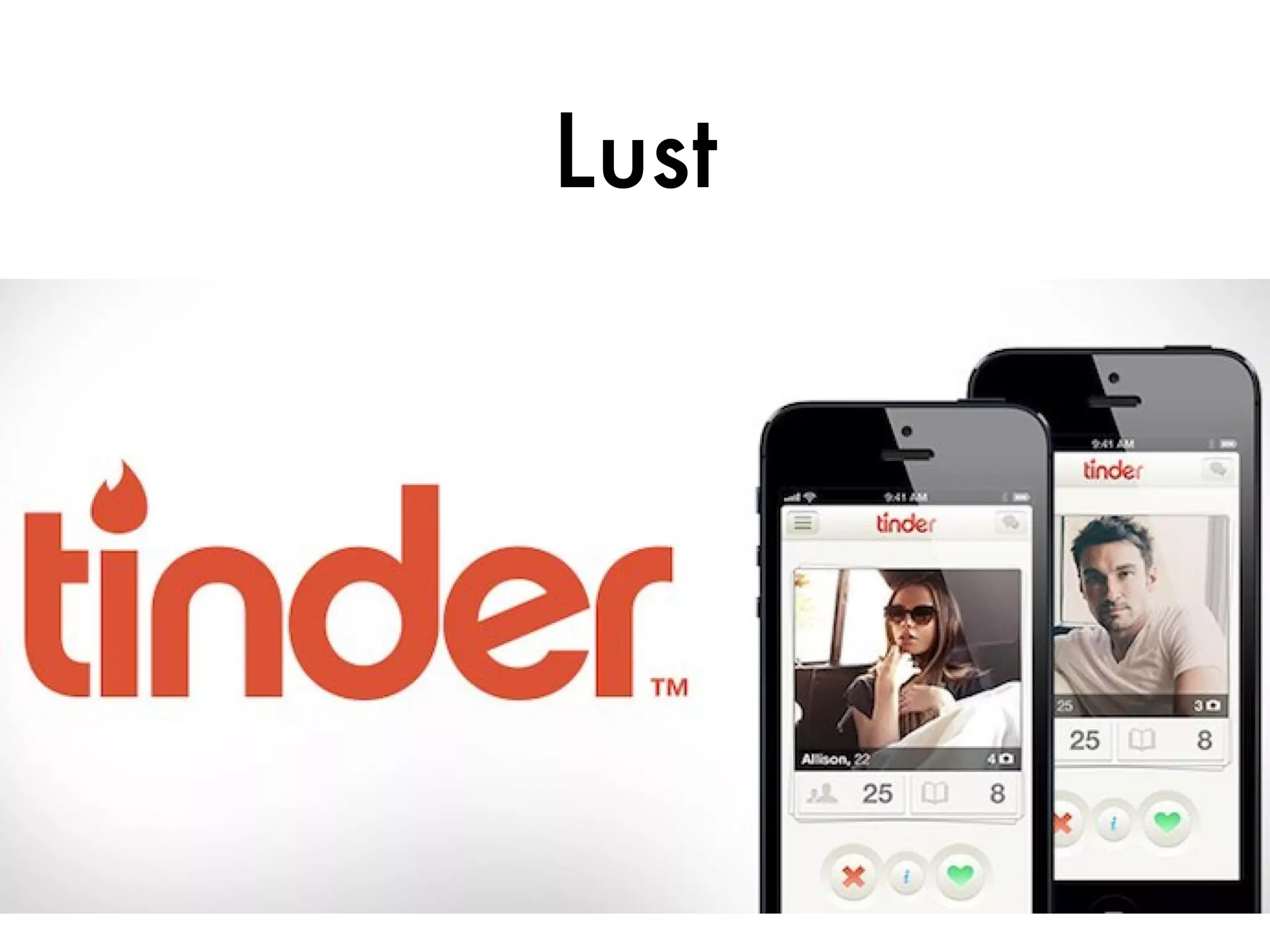
Lust
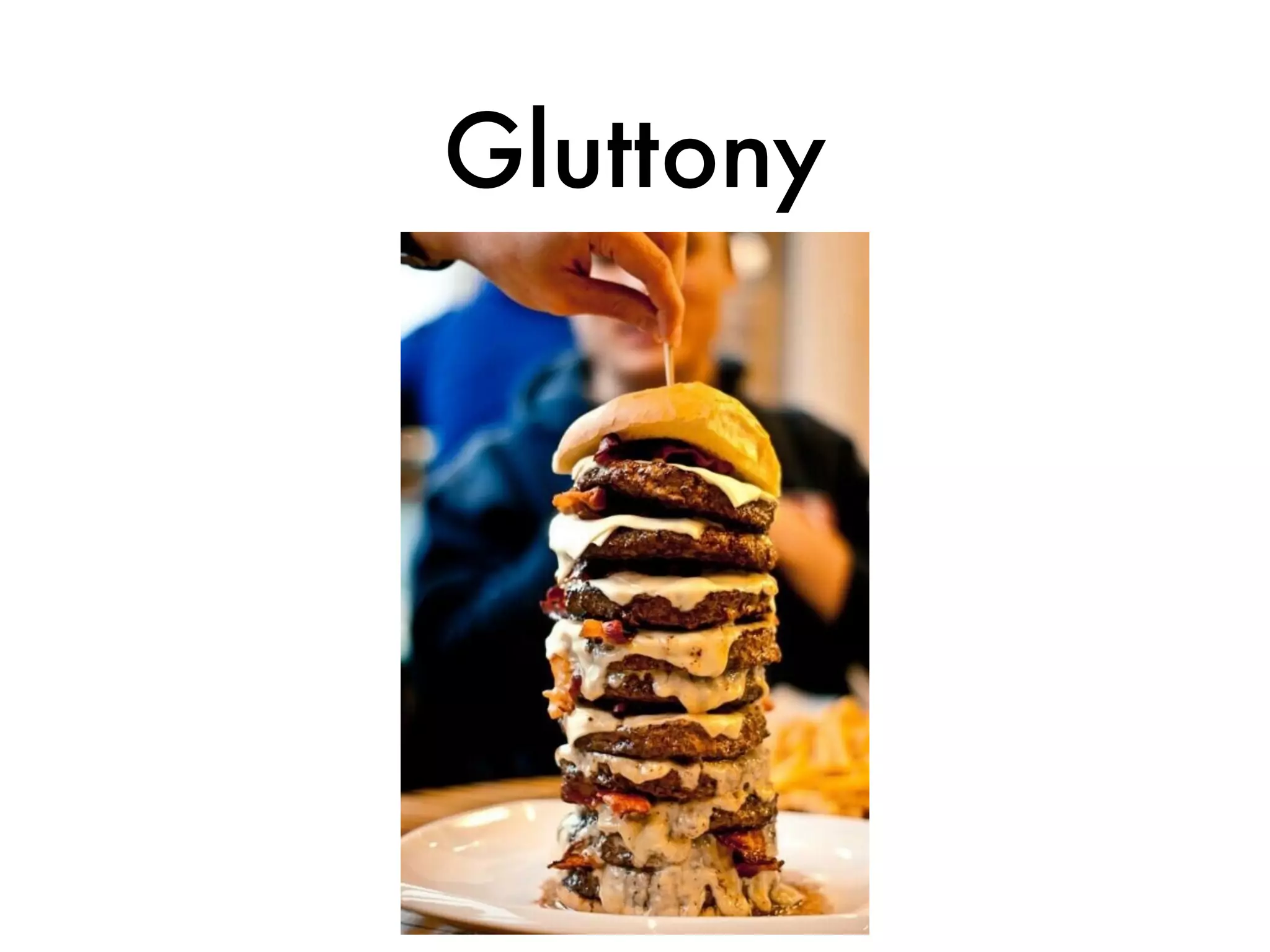
Gluttony
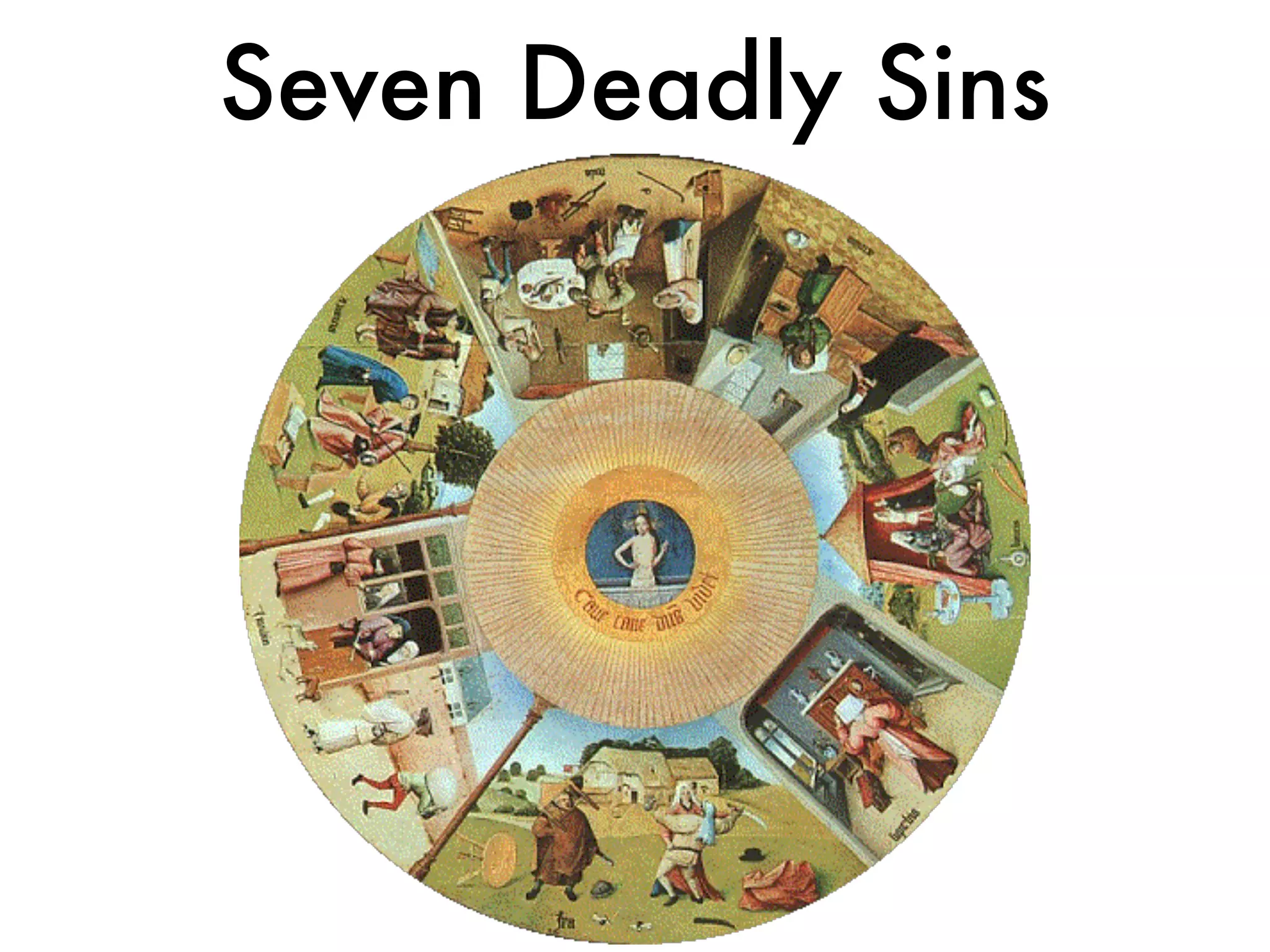
Seven Deadly Sins
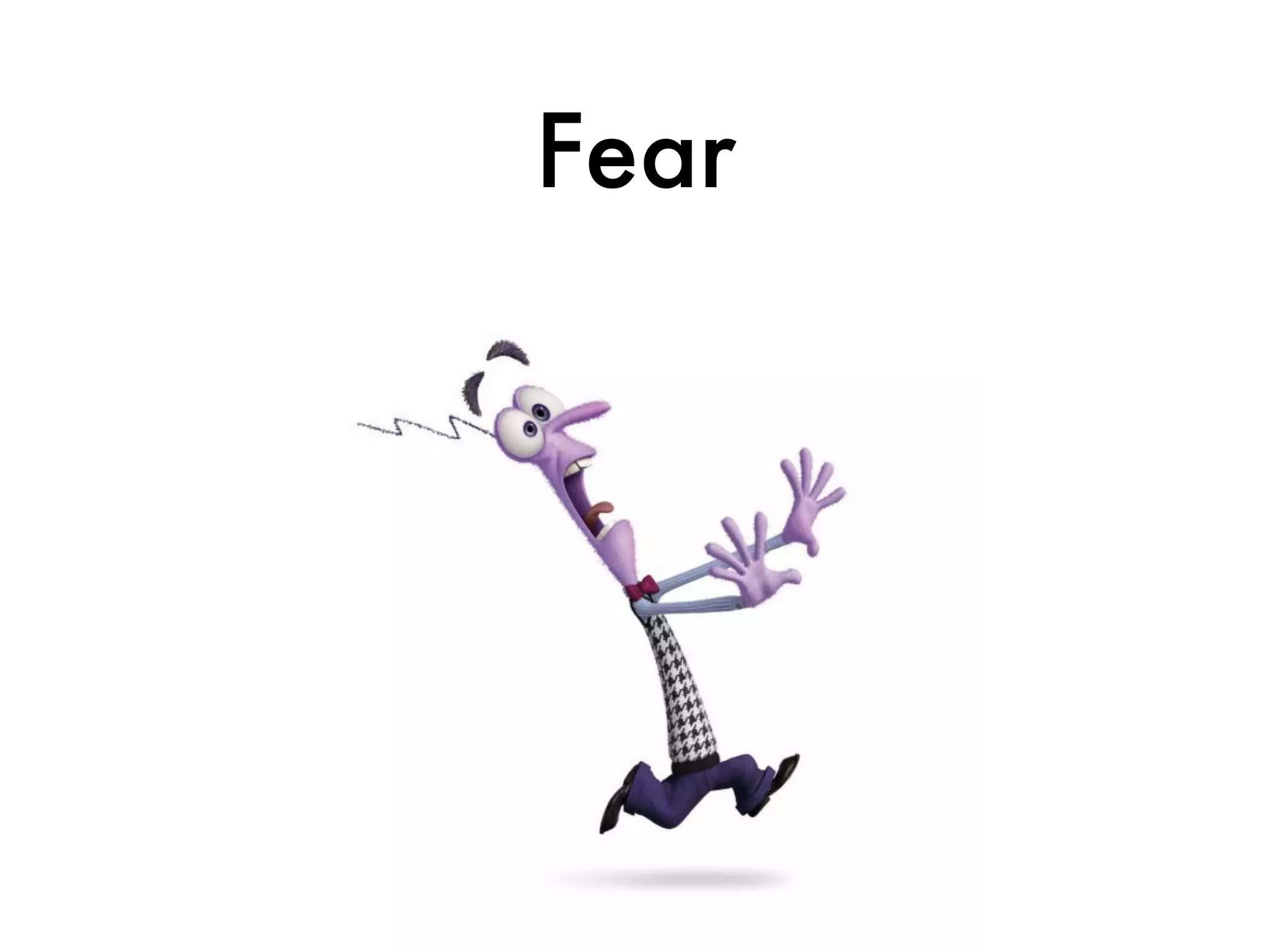
Fear
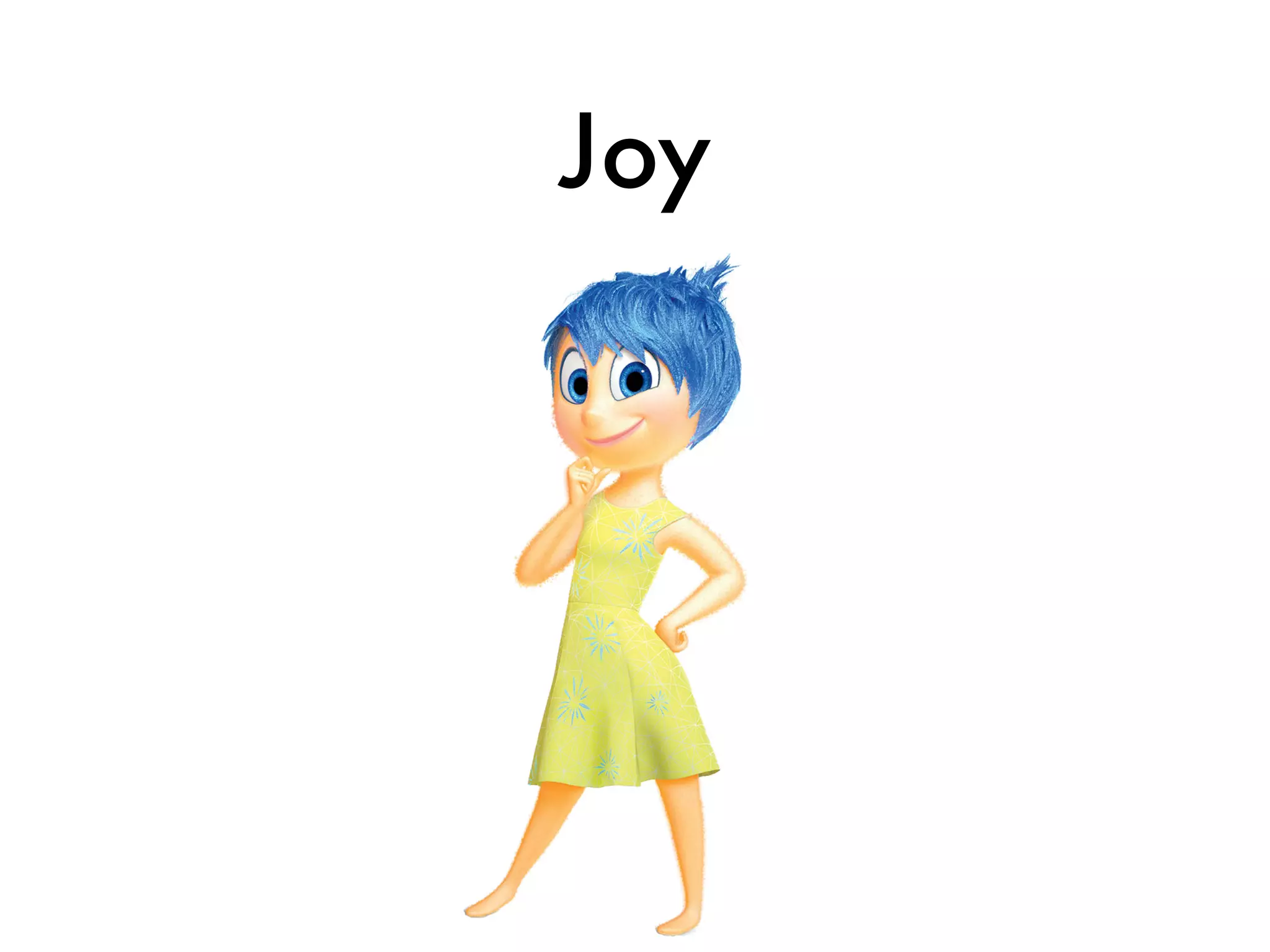
Joy
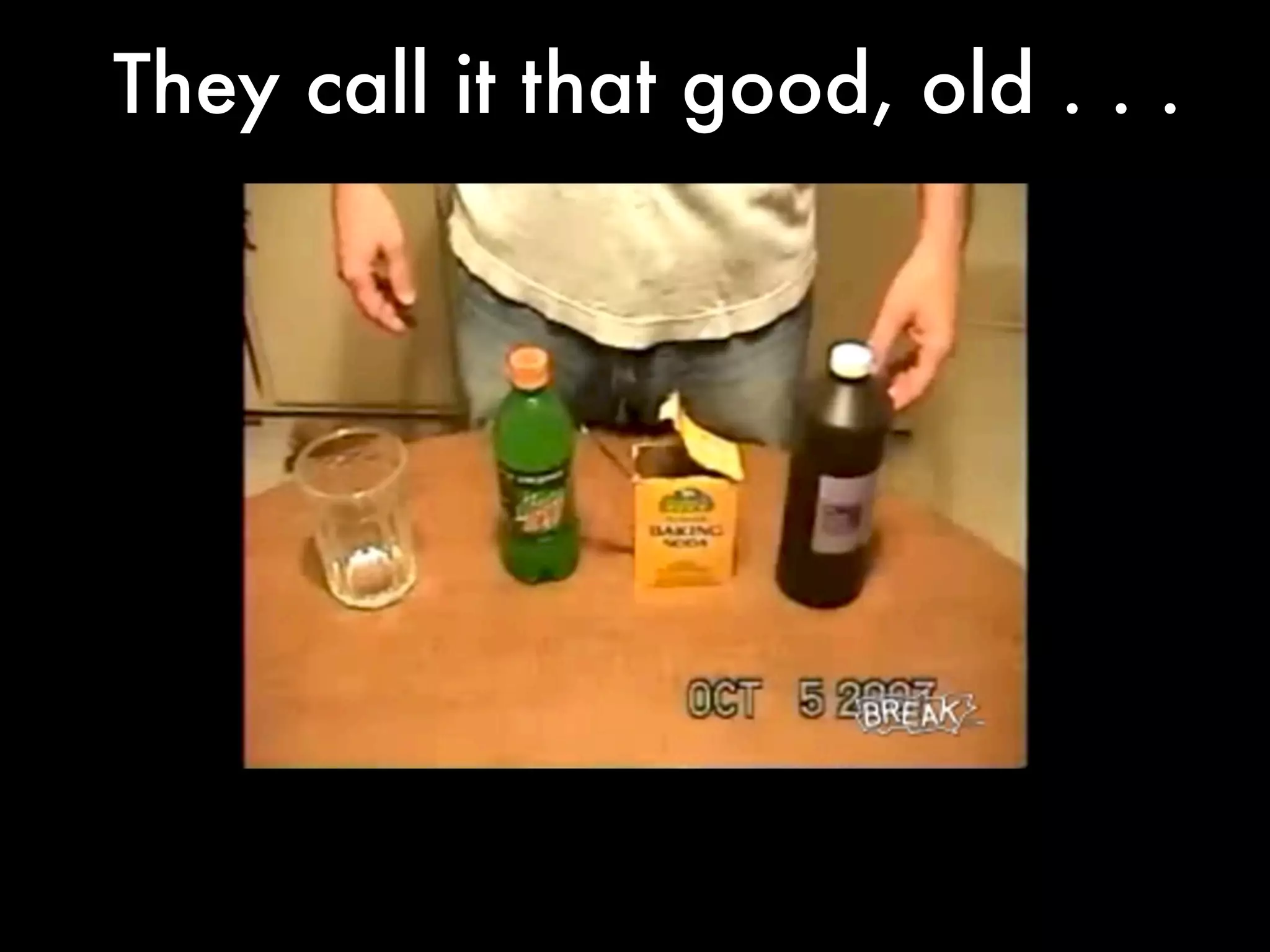
They call it that good, old . . .
If we are going to teach
people about evaluating
information, we need to
address the emotional
factors as well as the logical.
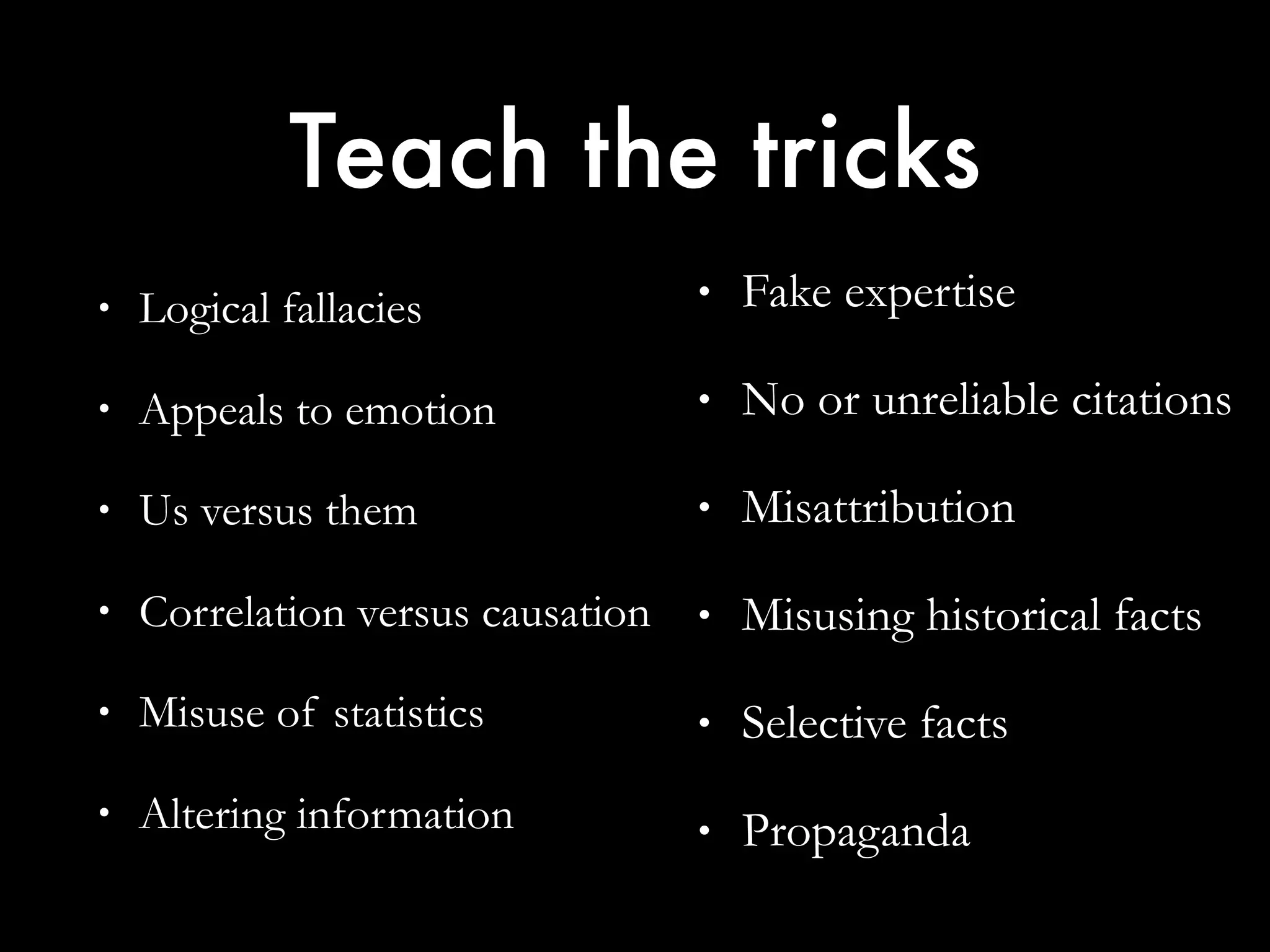
Teach the tricks
• Logical fallacies
• Appeals to emotion
• Us versus them
• Correlation versus causation
• Misuse of statistics
• Altering information
• Fake expertise
• No or unreliable citations
• Misattribution
• Misusing historical facts
• Selective facts
• Propaganda
Using the framework
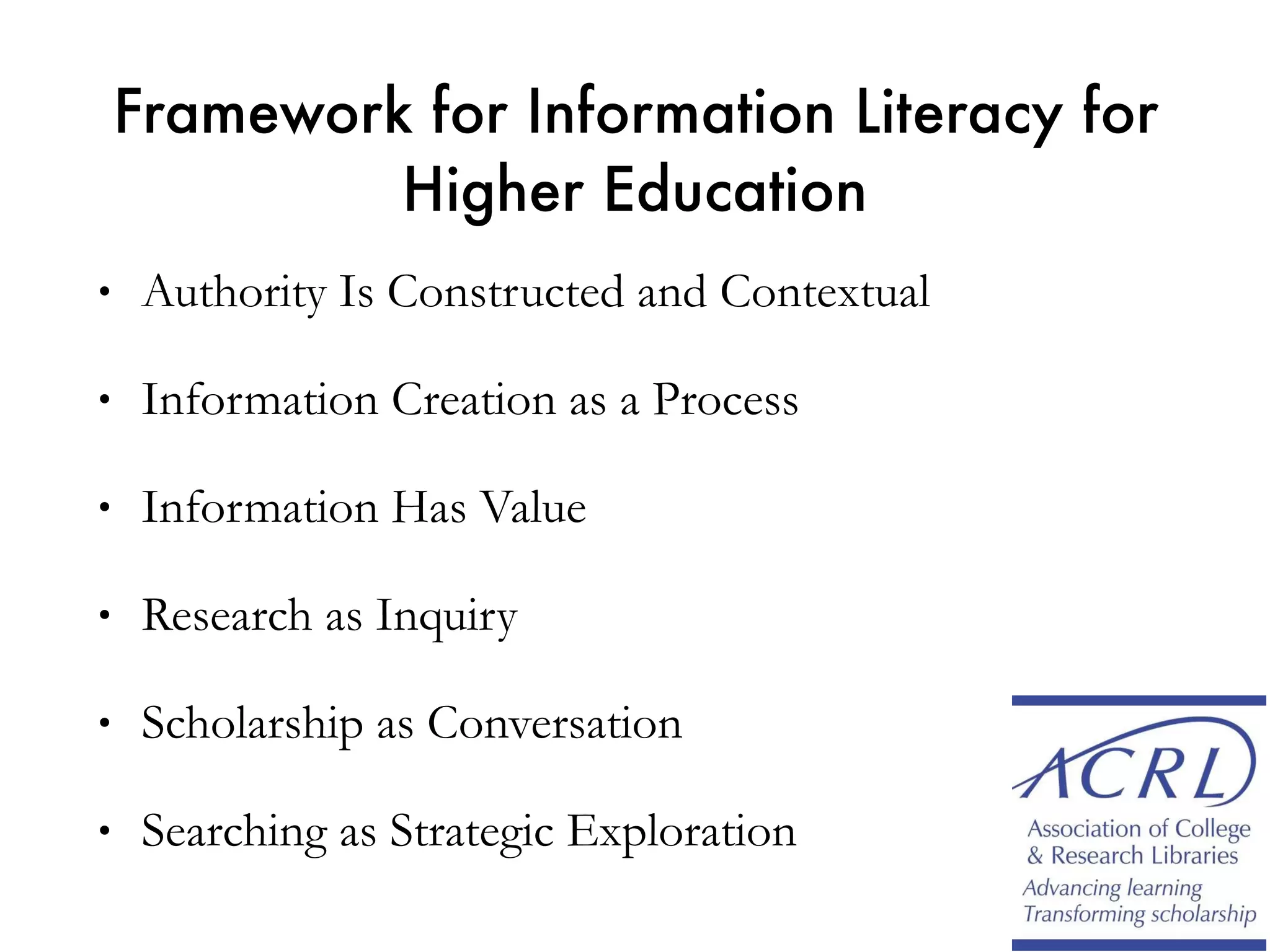
Framework for Information Literacy for
Higher Education
• Authority Is Constructed and Contextual
• Information Creation as a Process
• Information Has Value
• Research as Inquiry
• Scholarship as Conversation
• Searching as Strategic Exploration
• Authority Is Constructed and Contextual
• Information Creation as a Process
• Information Has Value
• Research as Inquiry
• Scholarship as Conversation
• Searching as Strategic Exploration
Framework for Information Literacy for
Higher Education
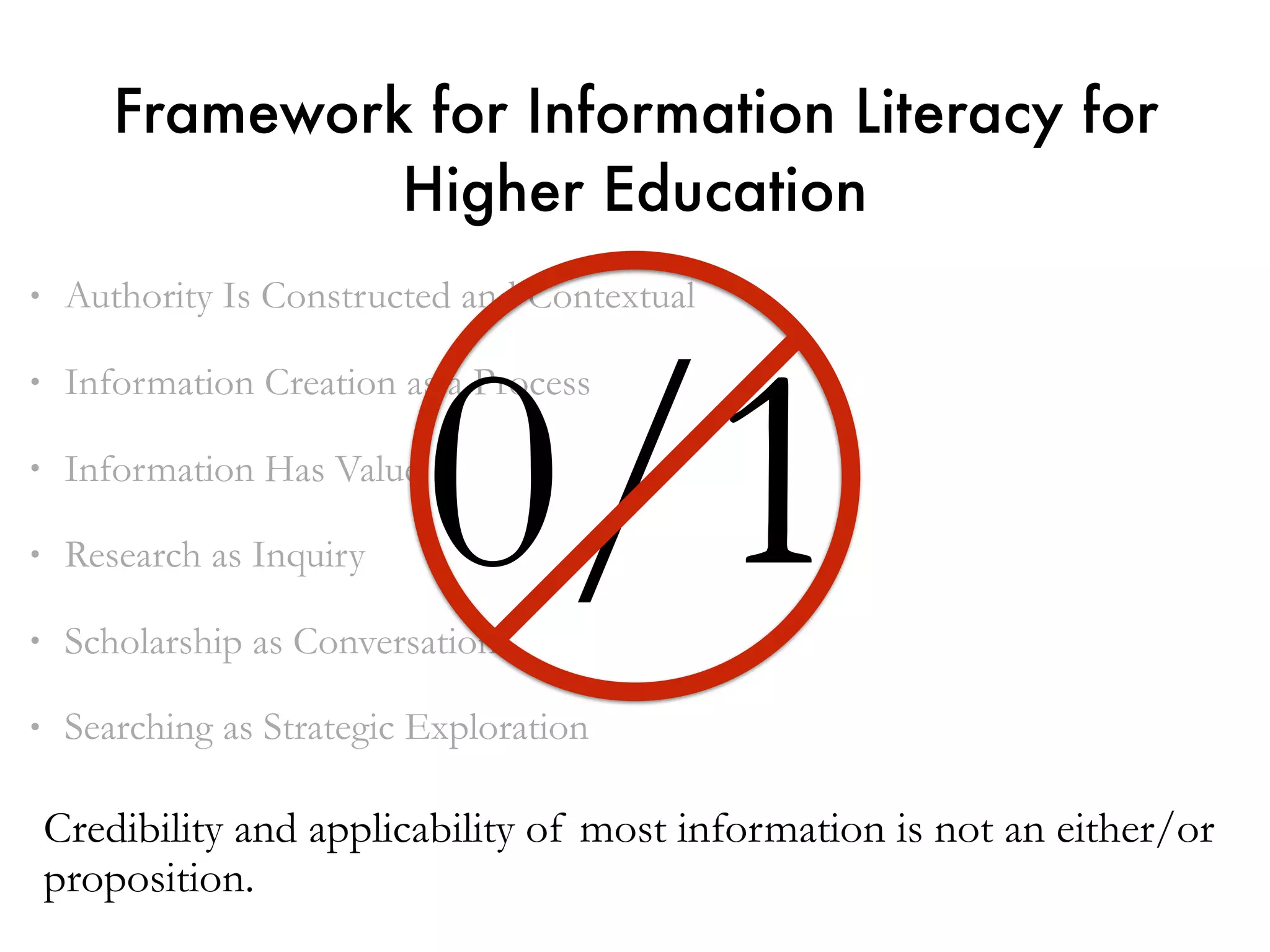
0/1
Credibility and applicability of most information is not an either/or
proposition.
Framework for Information Literacy for
Higher Education
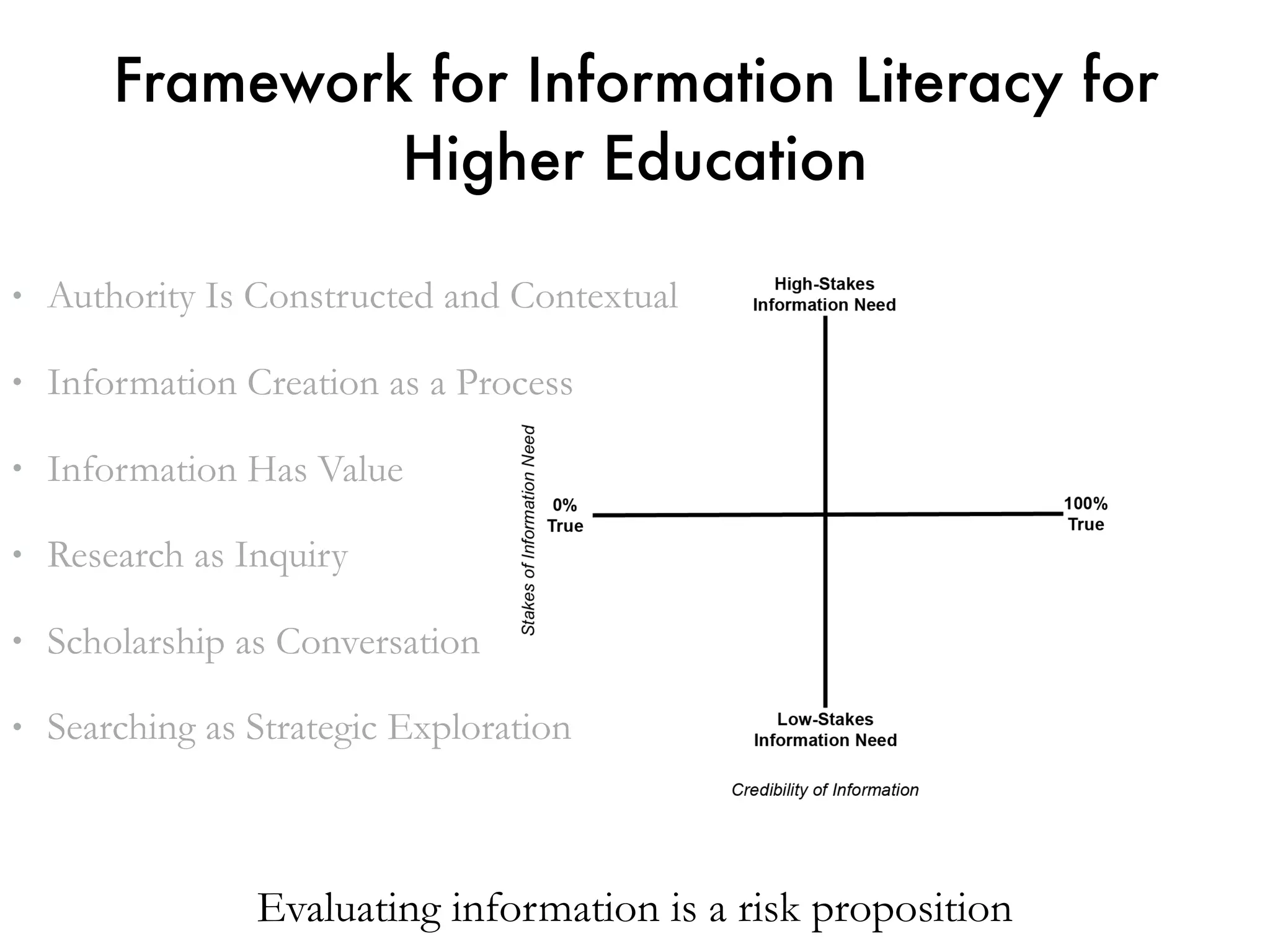
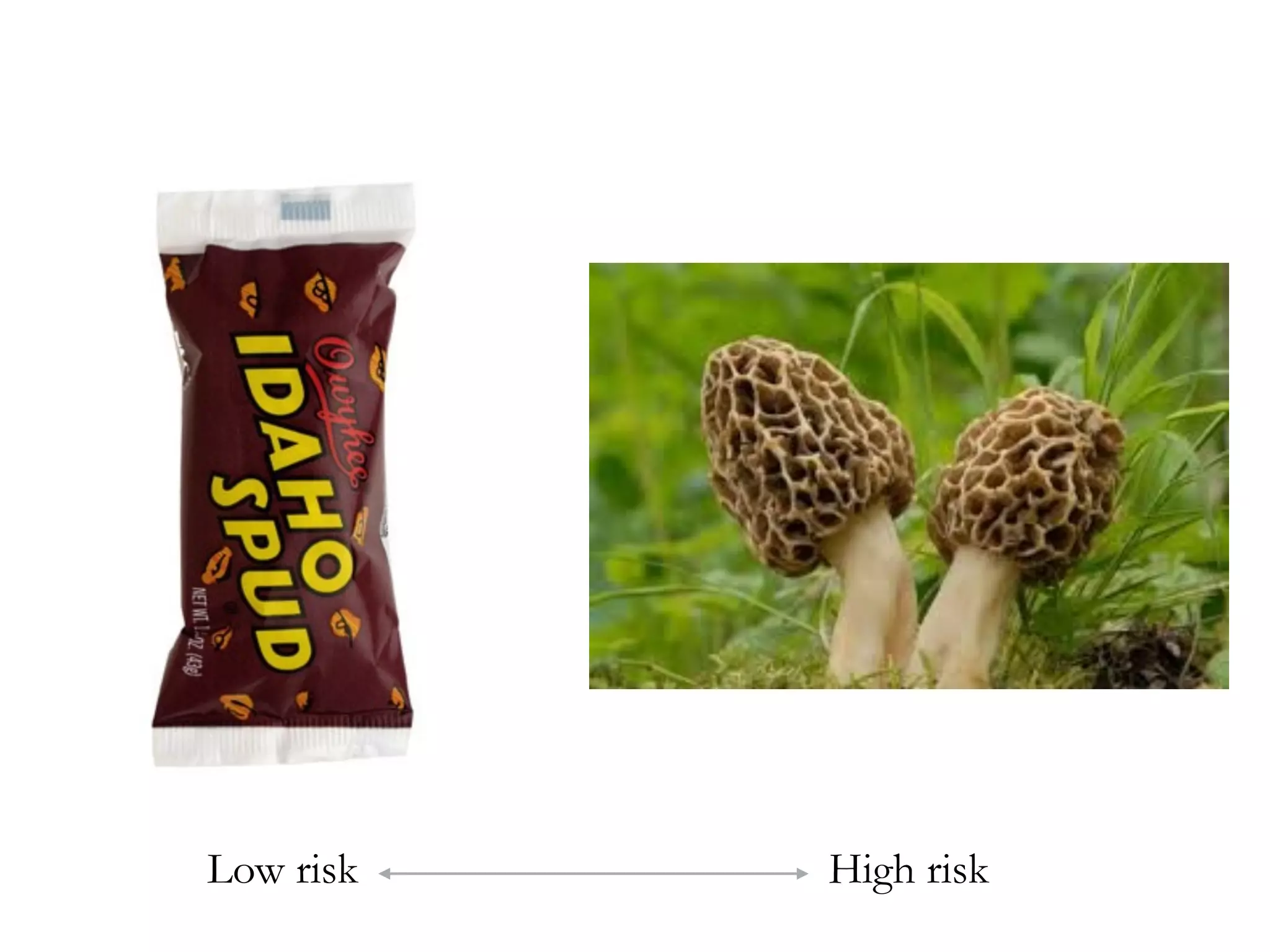
Evaluating information is a risk proposition
• Authority Is Constructed and Contextual
• Information Creation as a Process
• Information Has Value
• Research as Inquiry
• Scholarship as Conversation
• Searching as Strategic Exploration
Low risk High risk
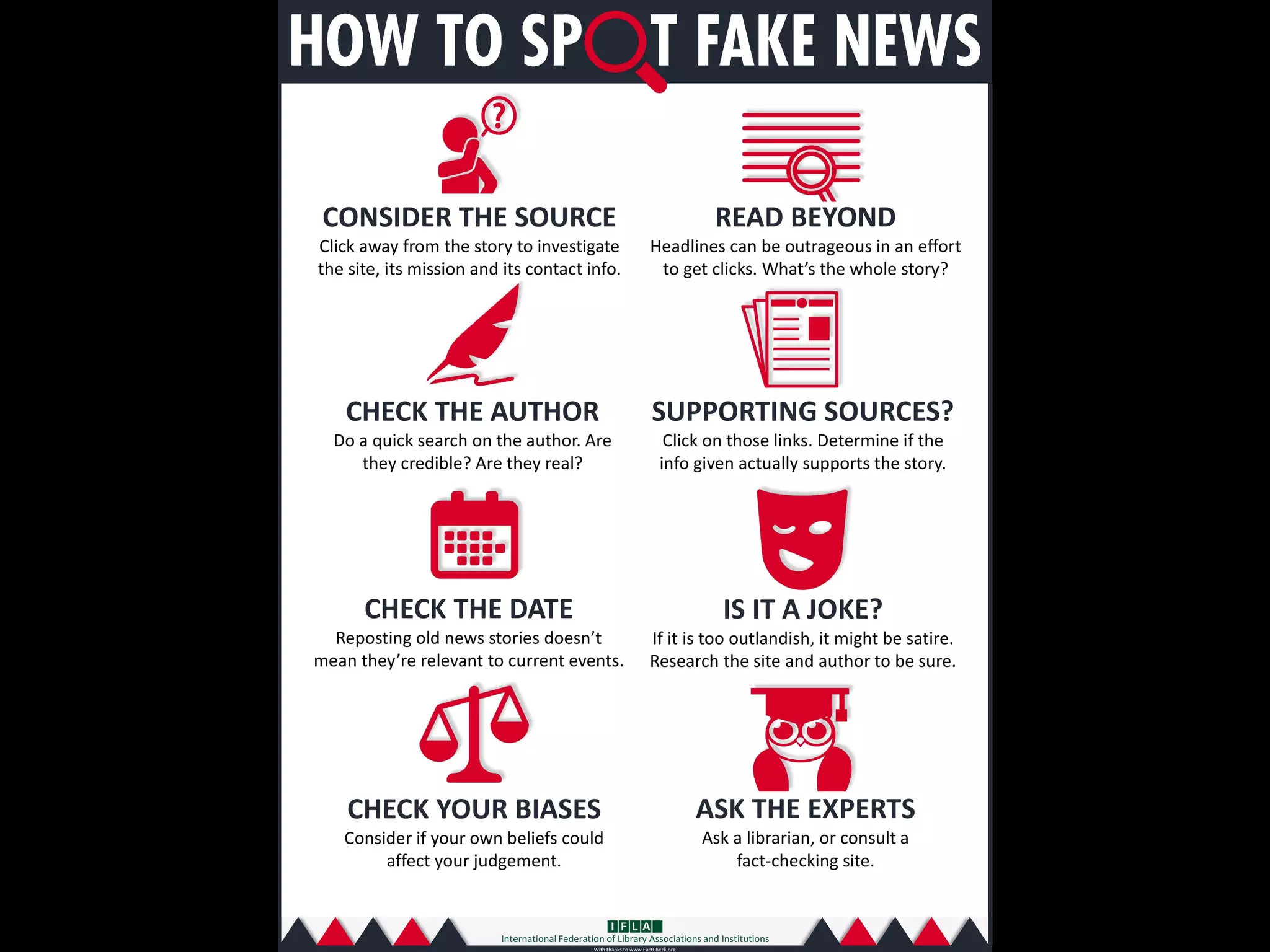
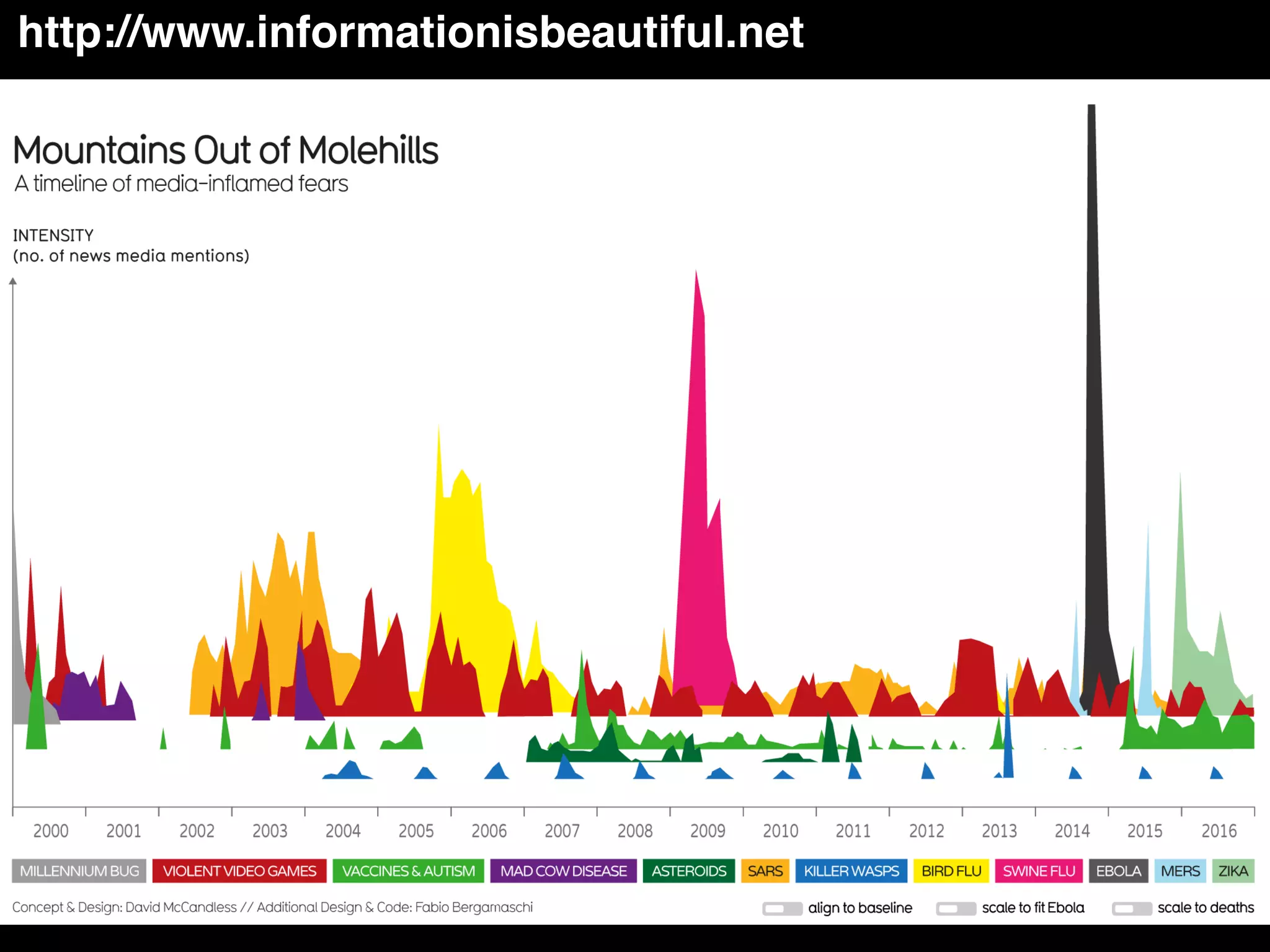
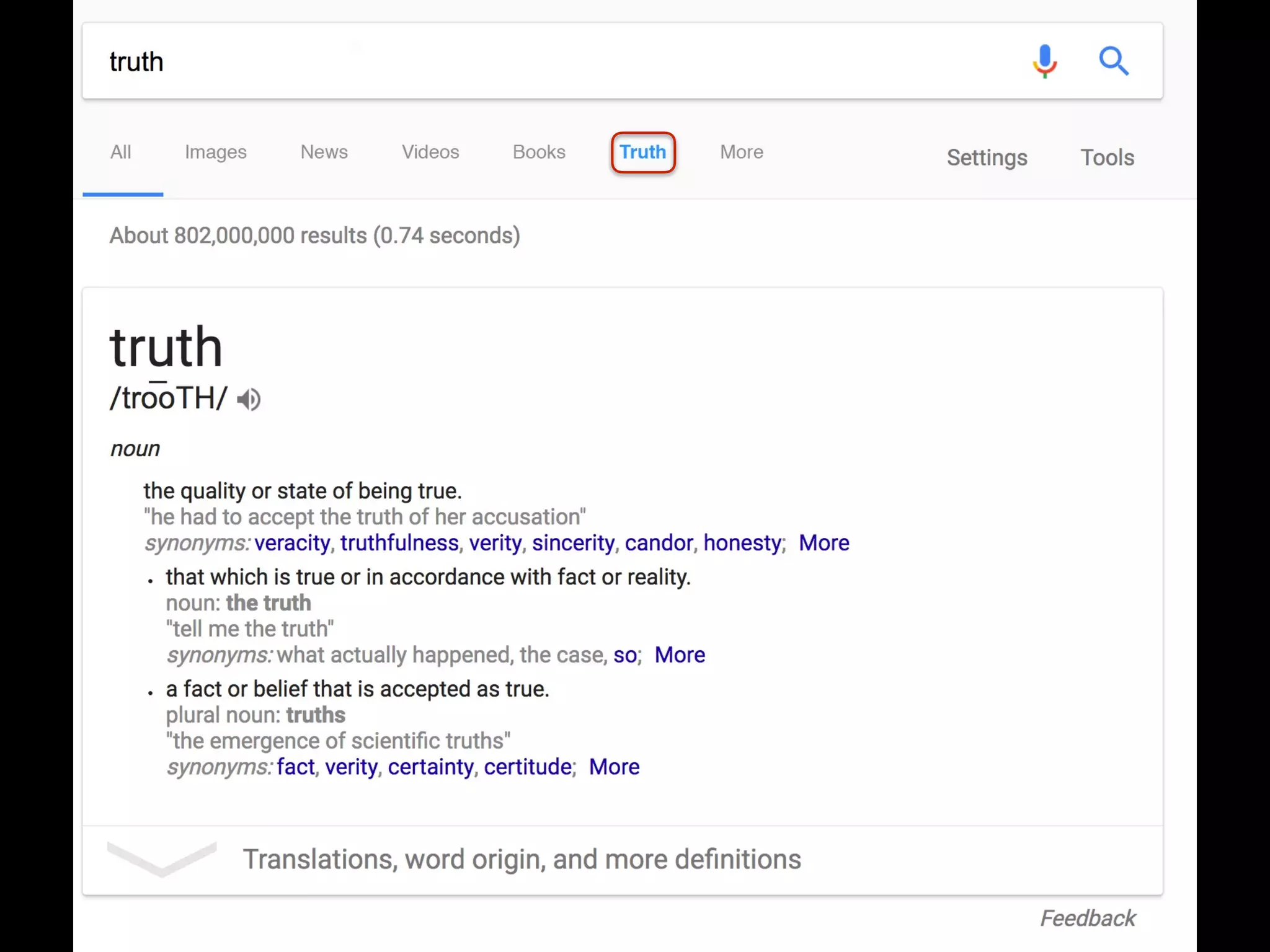
Teach Rules and Tools
http://www.informationisbeautiful.net
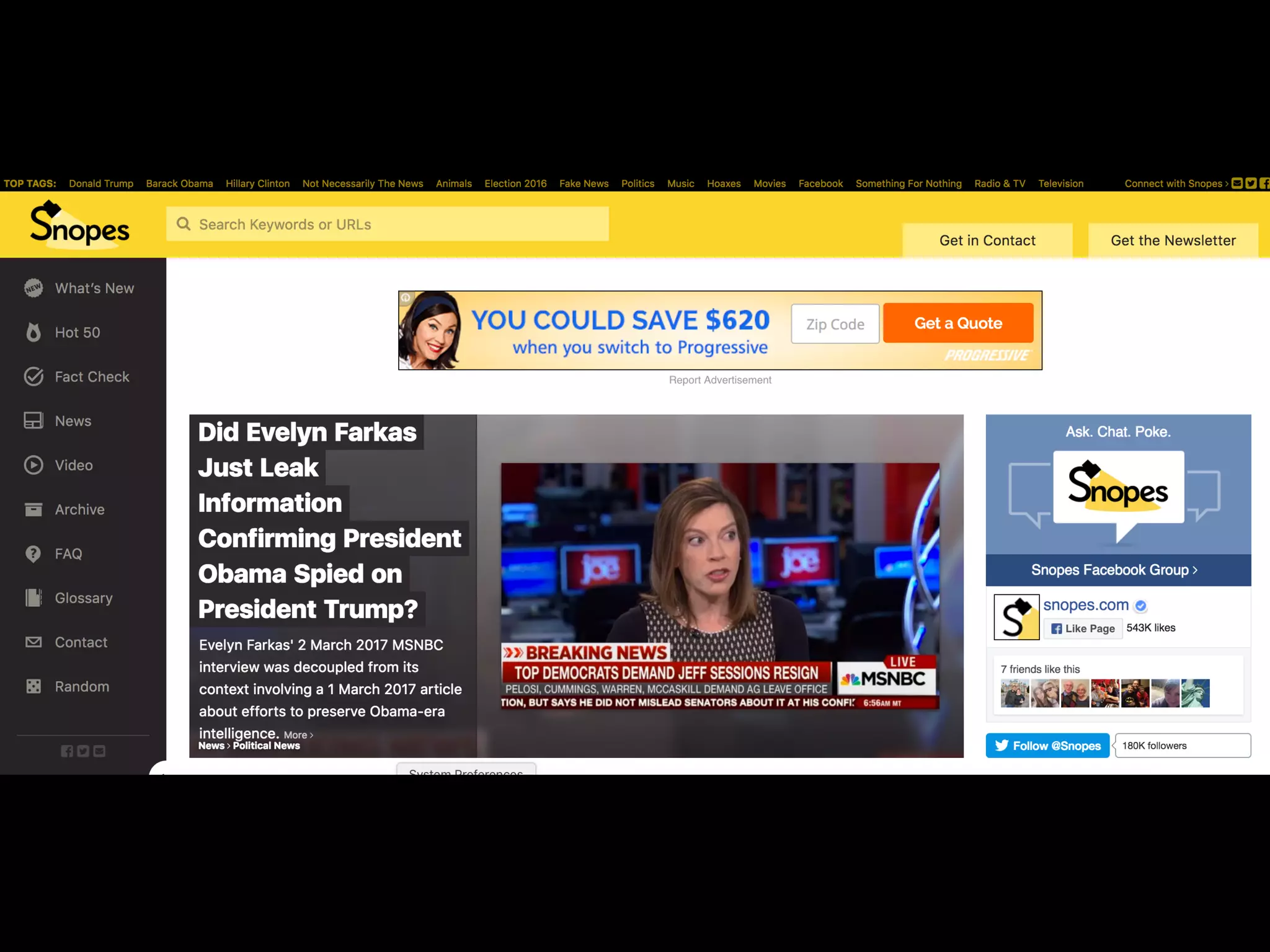
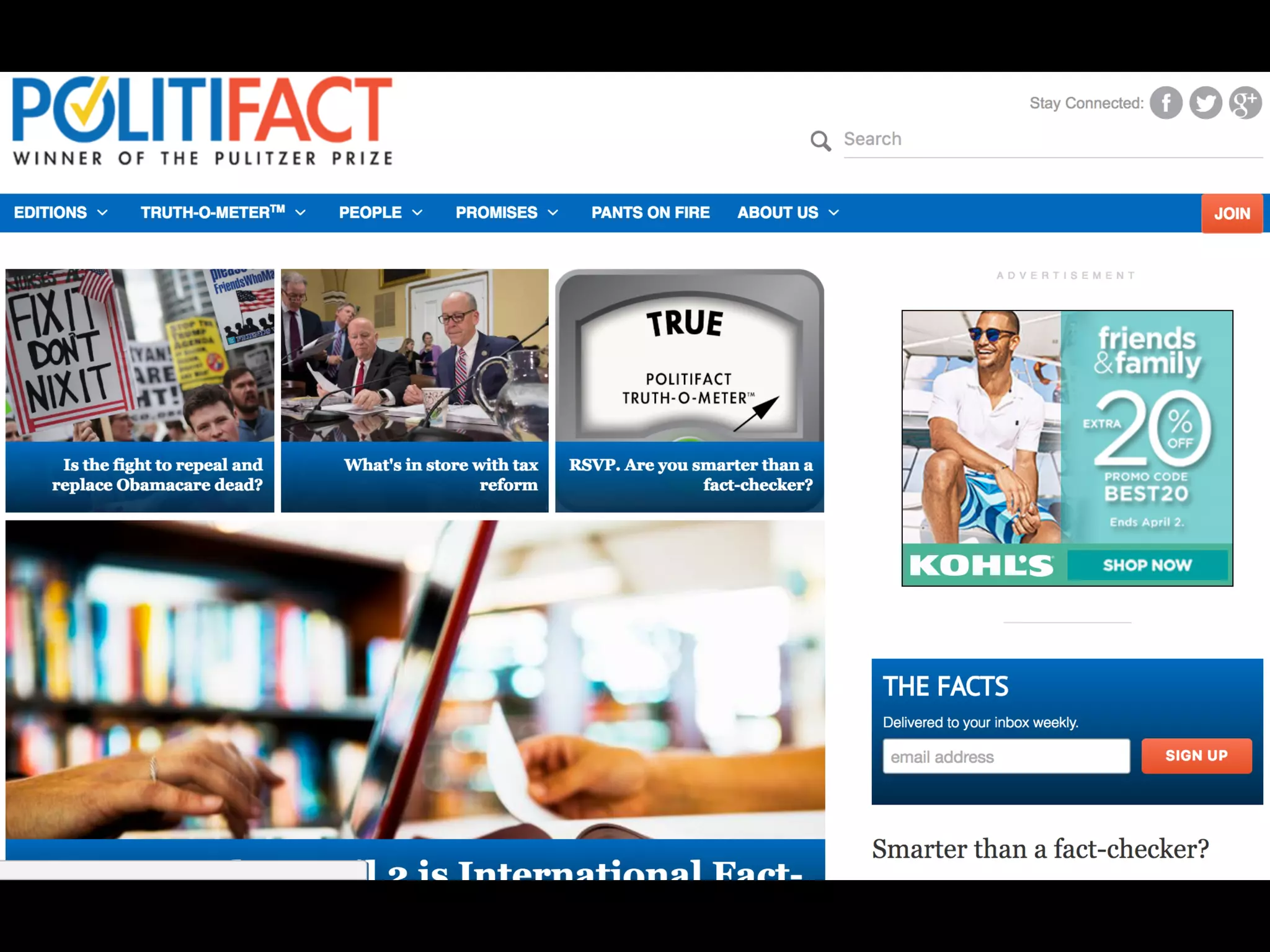
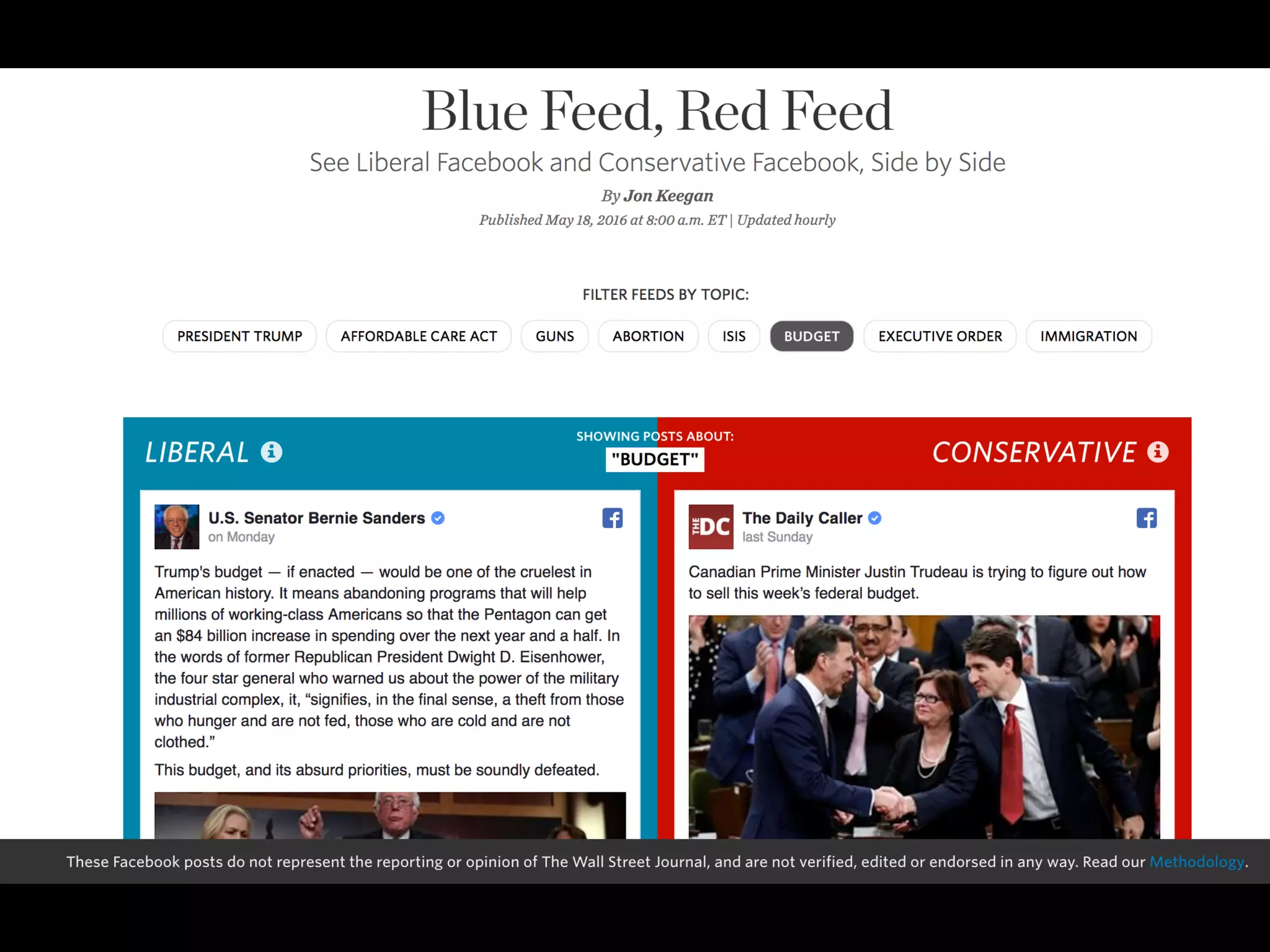
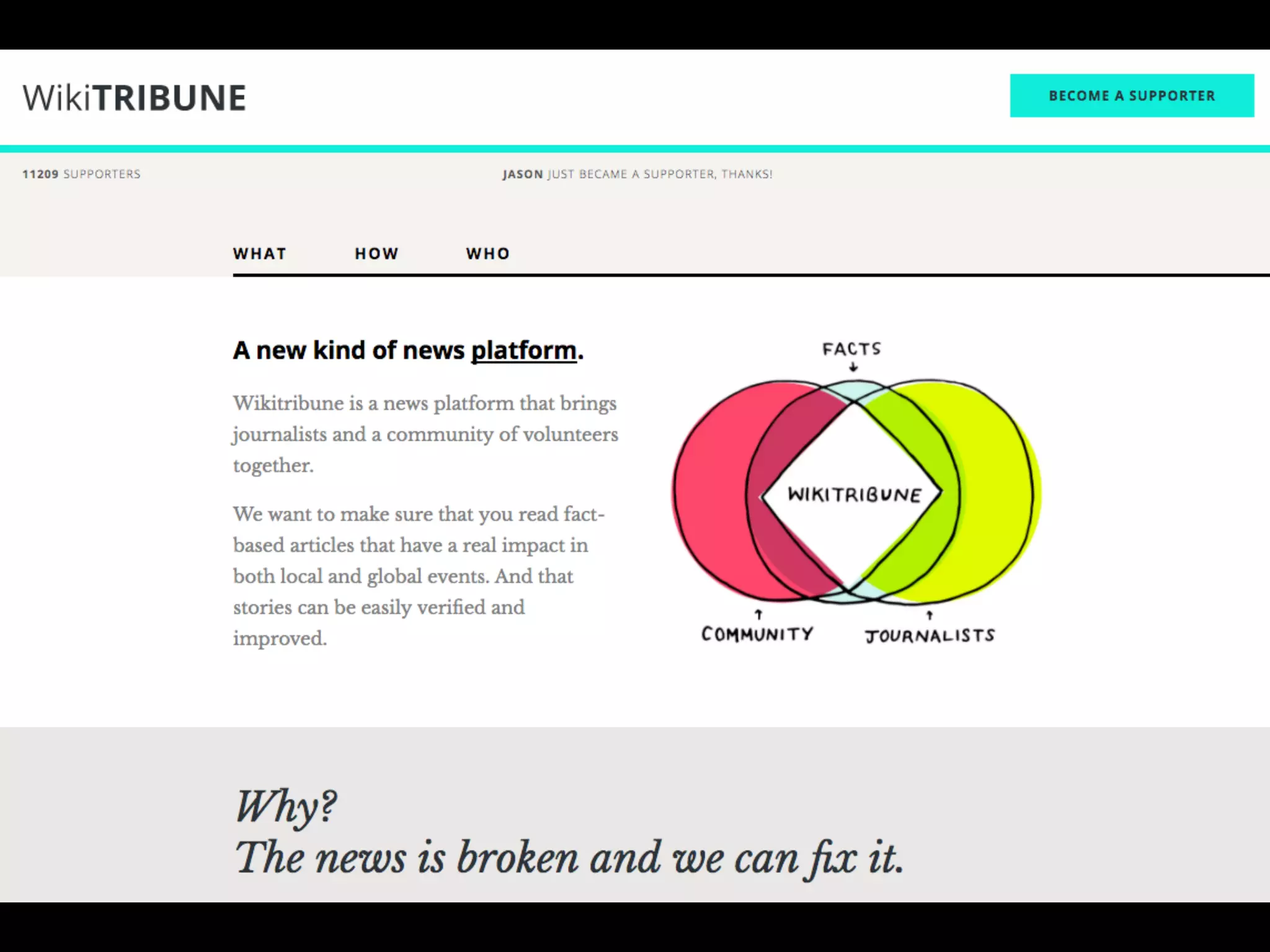
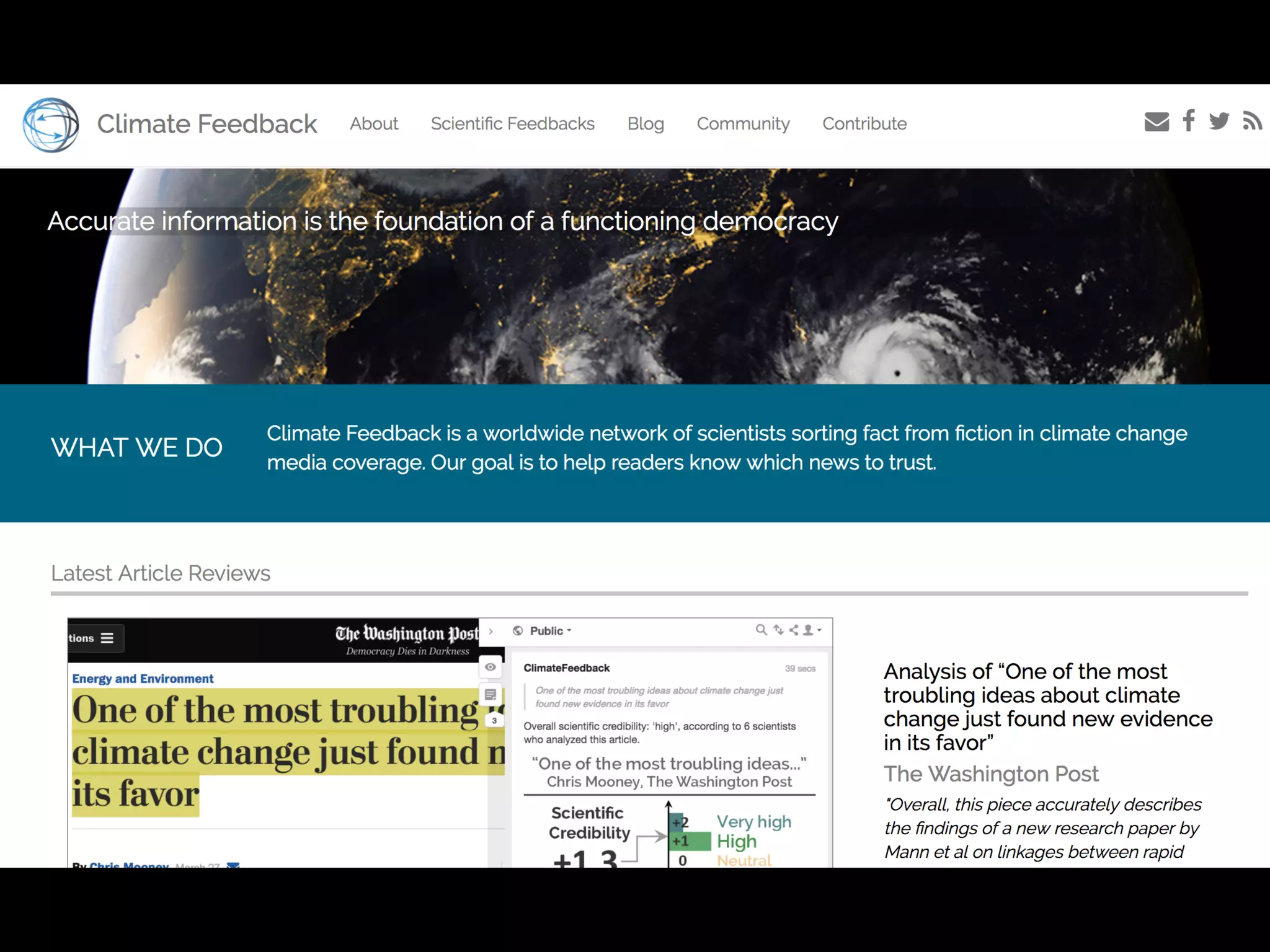
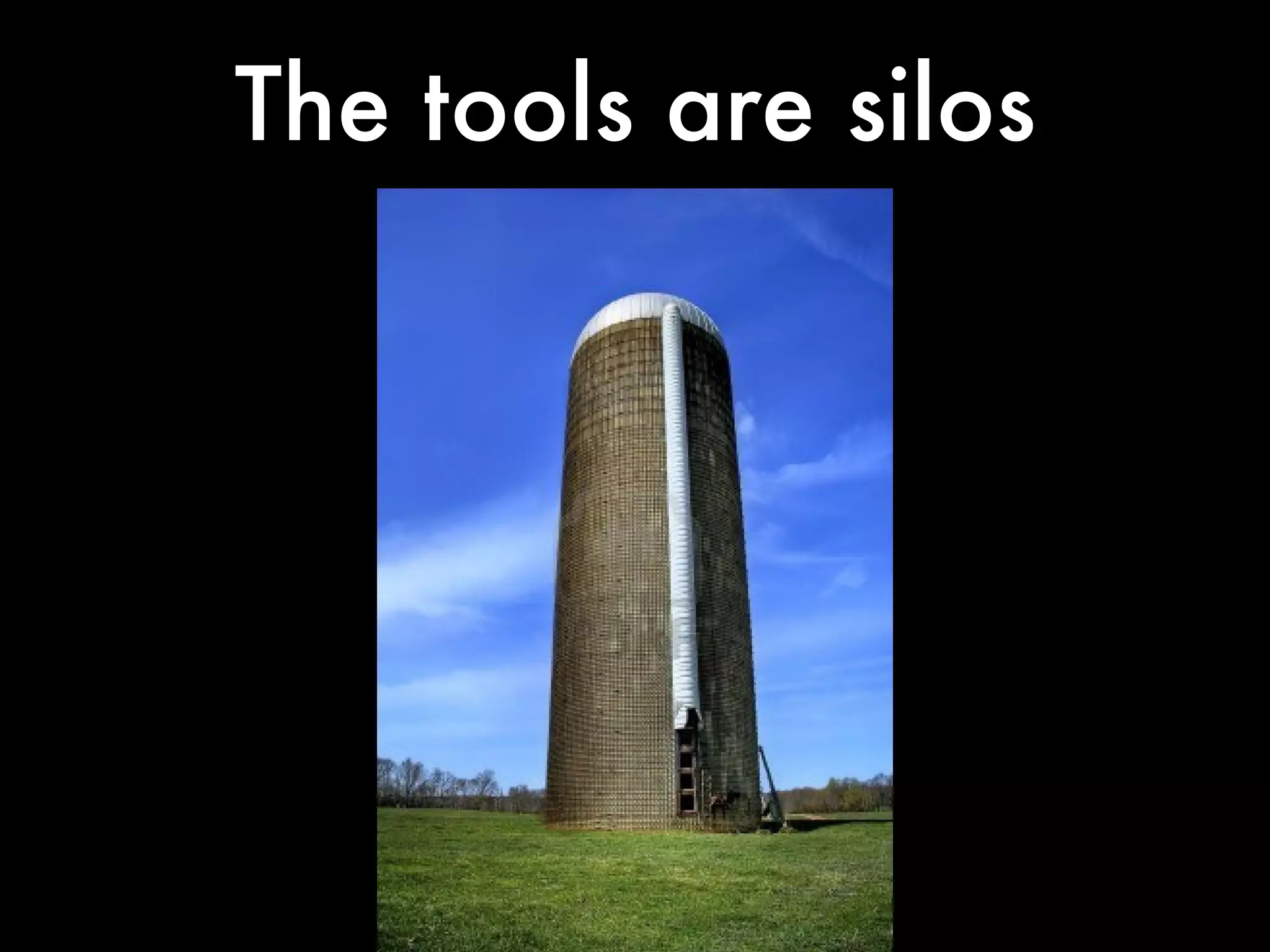
The tools are silos
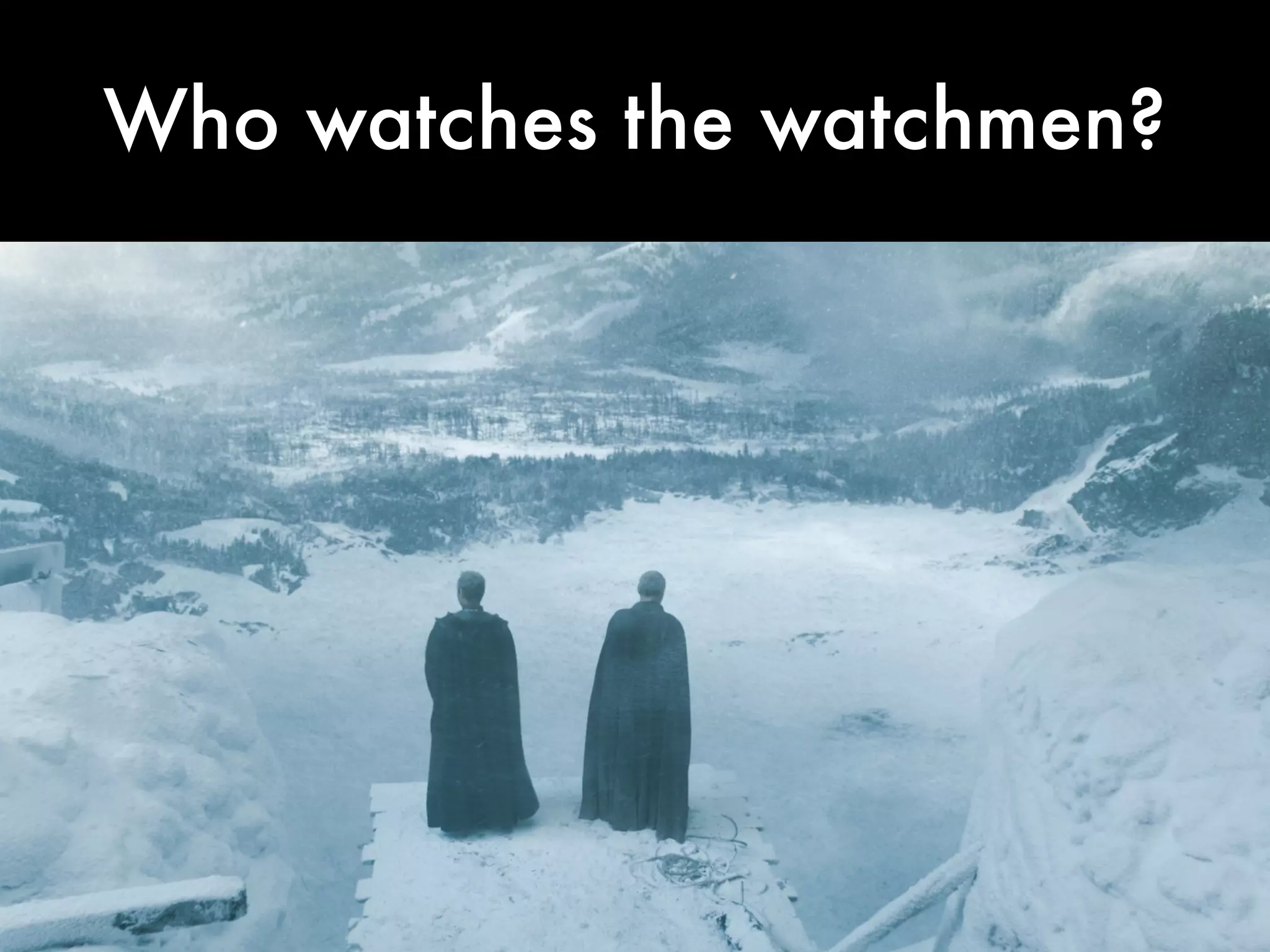
Who watches the watchmen?
Too big for librarians alone
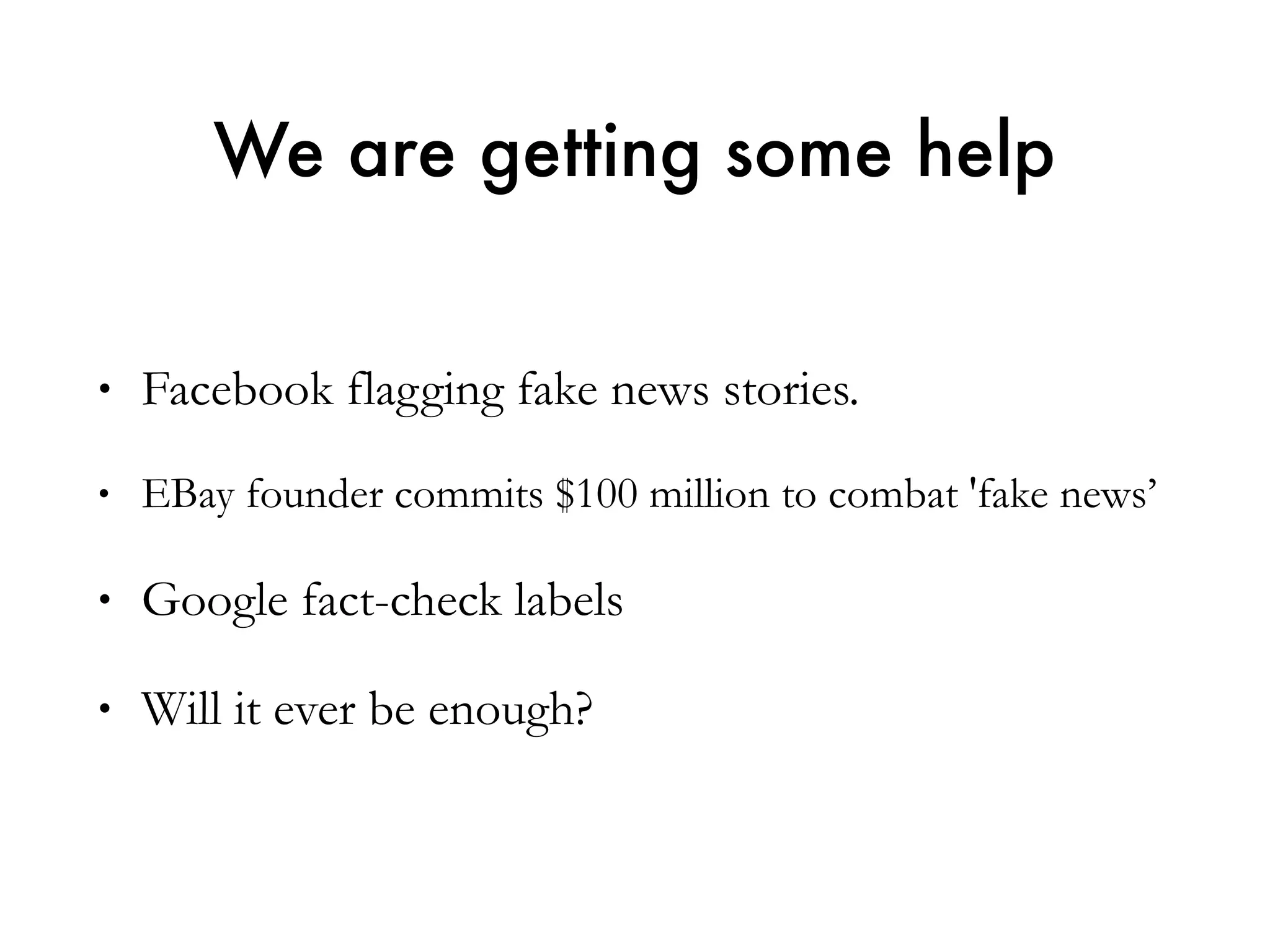
• Facebook flagging fake news stories.
• EBay founder commits $100 million to combat 'fake news’
• Google fact-check labels
• Will it ever be enough?
We are getting some help
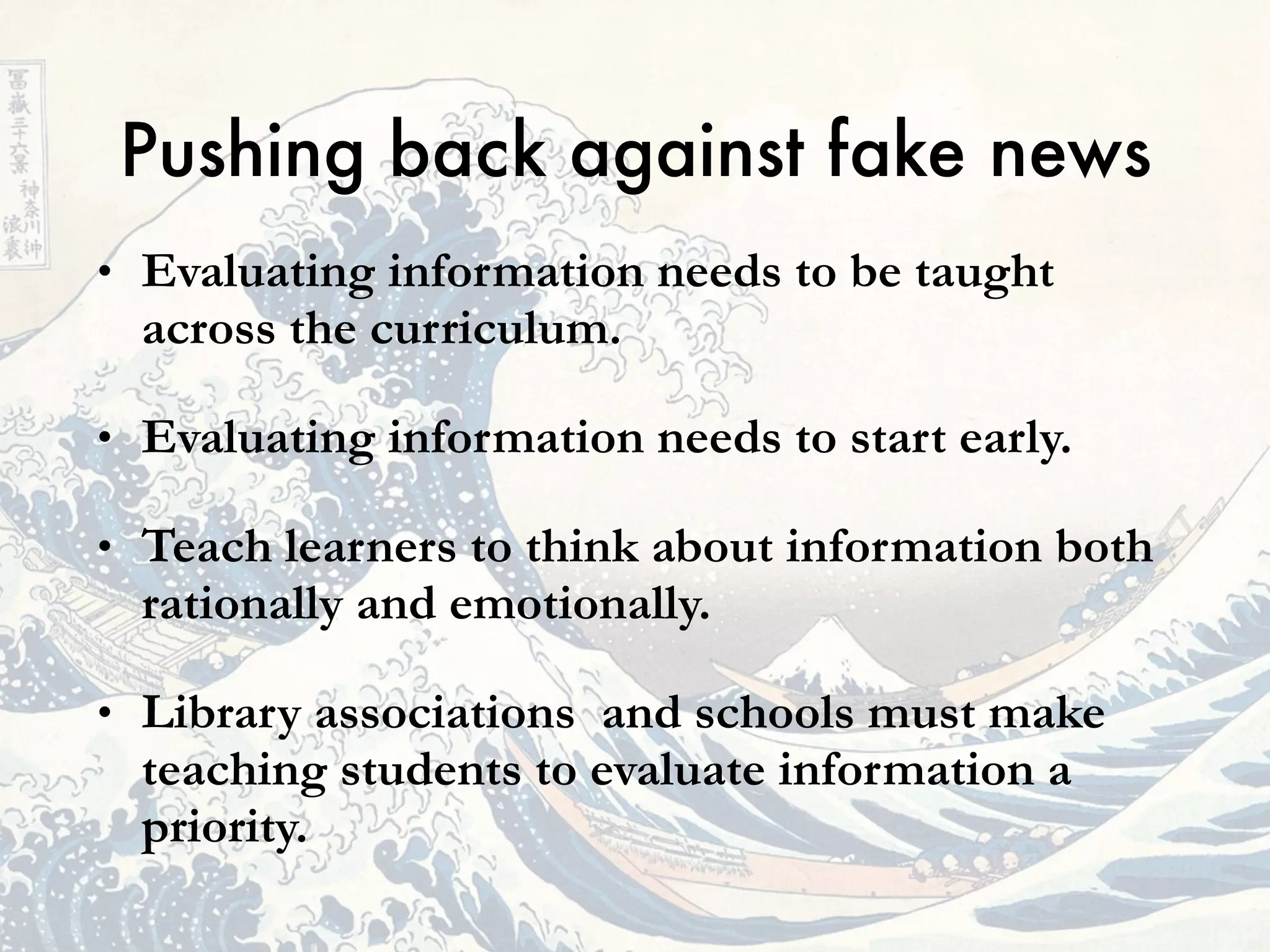
• Evaluating information needs to be taught
across the curriculum.
• Evaluating information needs to start early.
• Teach learners to think about information both
rationally and emotionally.
• Library associations and schools must make
teaching students to evaluate information a
priority.
Pushing back against fake news
Donald A. Barclay
University of California, Merced Library
dbarclay@ucmerced.edu

Fake News, Real Concerns: Developing Information Literate Students

  • 1.
    Fake News, RealConcerns: What Can Librarians Do to Improve Information Literacy in the Age of the Social Media Noise Machine? Donald A. Barclay University of California, Merced Library
  • 2.
    Who am I? •Library Career • University of California, Merced • New Mexico State University, University of Houston, Texas Medical Center • Past Lives • Boise State University—Taught Freshman Comp. & American Lit. • U.S. Forest Service—Firefighter • Education • U. C. Berkeley—M.A., M.L.I.S. • Boise State University—B.A. Donald A. Barclay
  • 3.
    Who died andmade Donald the king of fake news?
  • 6.
  • 10.
    N.B.: Not actualexamples of fake news. Created by Donald Barclay for this presentation.
  • 11.
    N.B.: Not actualexamples of fake news. Created by Donald Barclay for this presentation.
  • 12.
    Five false conclusionscontained in the Surgeon General’s report. You’ll be amazed. . . . Have you seen the ten reasons why cigarettes cannot possibly cause cancer? Smoke out the facts. . . .
  • 13.
    P.H.S. Scientists CaughtAdmitting Cancer-Smoking Link Is a Hoax 2,345,324 views N.B.: Not an actual example of fake news. Created by Donald Barclay for this presentation.
  • 14.
    Have you completedresearch on the so-called “link” between smoking and cancer and want to publish in a TRUSTED HIGH-IMPACT JOURNAL?!!! Good news for authors! The Journal of Tobacco and Science is looking for papers. Submit multiple articles and get up to 50% off author publication charges. Subsidies covering up to 125% of author publication charges are available for qualifying articles.
  • 15.
    N.B.: Not anactual example of fake news. Created by Donald Barclay for this presentation.
  • 17.
  • 18.
    Following the USSurgeon General’s report of January 1964, Howard Cullman, a Philip Morris director, dismissed the findings: “We don’t accept the idea that there are harmful agents in tobacco.”
  • 21.
    Is fake newsthe moral panic de jour? • How many people actually believe fake news and how much of it do they believe? • Did fake news sway the election? Hunt Allcott and Matthew Gentzkow, “Social Media and Fake News in the 2016 Election,” Journal of Economic Perspectives 31, no. 2 (2017): 211–36, https://www.aeaweb.org/full_issue.php? doi=10.1257/jep.31.2#page=213. • Are people really trapped in fake news echo chambers? William H. Dutton, “Fake News, Echo Chambers and Filter Bubbles: Underresearched and Overhyped,” The Conversation, May 2017, http://theconversation.com/fake-news-echo- chambers-and-filter-bubbles-underresearched-and-overhyped-76688%0D.
  • 23.
  • 24.
    . . .whatever you don’t want to hear. . . . something entirely new. Fake news is not
  • 25.
    • Lying • MercenaryFake News • Clickbait • Propaganda • Humor Fake news is old news
  • 26.
  • 27.
  • 28.
  • 29.
    ASTOUNDING 
 NEWS! BY EXPRESS VIANORFOLK! ——————— THE ATLANTIC CROSSED IN THREE DAYS! ——————— SIGNAL TRIUMPH OF MR. MONCK MASON’S FLYING MACHINE!!! ——————— Arrival at Sullivan’s Island, near Charlestown, S. C., of Mr. Mason, Mr. Robert Holland, Mr. Henson, Mr. Harrison Ainsworth, and four others, in the STEERING BALLOON “VICTORIA,” AFTER A PASSAGE OF SEVENTY-FIVE HOURS FROM LAND TO LAND. ——————— FULL PARTICULARS OF THE VOYAGE!!!
  • 34.
  • 36.
  • 41.
  • 45.
    Is it propagandawhen the creator of the information doesn’t care what it says?
  • 46.
  • 52.
    • Lying • MercenaryFake News • Clickbait • Propaganda • Humor Fake news is old news
  • 53.
    Fake News Is thereanything new under the sun?
  • 54.
  • 55.
    Total number ofwebsites 2000-2014 800,000,000 600,000,000 400,000,000 200,000,000
  • 59.
  • 67.
  • 70.
  • 75.
  • 76.
    What is newabout fake news? • Volume • Distribution • Reproduction • Alteration • Trolling
  • 77.
    • Rate ofnew information being produced • Continuous news culture (speed over quality) • Ease of duplication and transmission • More channels of incoming information • Ever-increasing amounts of historical information to dig through • Contradictions and inaccuracies in available information • A low signal-to-noise ratio • No method for comparing and processing different kinds of information • Information unrelated or lacking context Information Overload
  • 78.
    Coping with fakenews is an information literacy issue.
  • 79.
    What percentage ofthe students/patrons you teach/assist badly overestimate their ability to evaluate information? A. 80% to 100% B. 60% to 79% C. 40% to 59% D. Less than 40%
  • 80.
    Kruger, Justin, andDavid Dunning. “Unskilled and Unaware of It: How Difficulties in Recognizing One’s Own Incompetence Lead to Inflated Self-Assessments.” Journal of Personality and Social Psychology 77, no. 6 (1999): 1121–34.
  • 81.
    Do People OverestimateTheir Information Literacy Skills? A Systematic Review of Empirical Evidence on the Dunning- Kruger Effect Khalid Mahmood, University of the Punjab This systematic review has analyzed 53 English language studies that assessed and compared peoples’ self-reported and demonstrated information literacy (IL) skills. The objective was to collect empirical evidence on the existence of Dunning-Kruger Effect in the area of information literacy. The findings clearly show that this theory works in this area. It is concluded that there is no calibration in peoples’ perceived and actual IL skills; in most cases low-performers overestimate their skills in self-assessments. The findings have theoretical and practical implications for librarians and IL educators. Mahmood, Khalid. “Do People Overestimate Their Information Literacy Skills? A Systematic Review of Empirical Evidence on the Dunning-Kruger Effect.” Communications in Information Literacy 10, no. 2 (2016): 199.
  • 82.
    What can librariansdo about fake news?
  • 83.
  • 84.
  • 85.
    Greed Greetings to you,my friend, I know this will come as a surprise because you do not know me. I am John Alison, Central Bank of Nigeria, packaging and courier department. I got your contact among others I found on the Internet and I was inspired to seek your co-operation. I want you to help me clear this consignment that is already in theEurope which I shipped through our CBN accredited courier agent. the content of the package is $20,000,000.00 all in $100 bills, but the courier company does not know the consignment contains money. All I want you to do for me now is give me your mailing address, your private phone and fax number, and I believe that in the end you will have 50% and 50% will be for me. My identity must not be revealed to anybody. . . .
  • 86.
  • 87.
  • 88.
  • 89.
  • 90.
  • 91.
  • 92.
  • 93.
  • 94.
    They call itthat good, old . . .
  • 95.
    If we aregoing to teach people about evaluating information, we need to address the emotional factors as well as the logical.
  • 96.
    Teach the tricks •Logical fallacies • Appeals to emotion • Us versus them • Correlation versus causation • Misuse of statistics • Altering information • Fake expertise • No or unreliable citations • Misattribution • Misusing historical facts • Selective facts • Propaganda
  • 97.
  • 98.
    Framework for InformationLiteracy for Higher Education • Authority Is Constructed and Contextual • Information Creation as a Process • Information Has Value • Research as Inquiry • Scholarship as Conversation • Searching as Strategic Exploration
  • 99.
    • Authority IsConstructed and Contextual • Information Creation as a Process • Information Has Value • Research as Inquiry • Scholarship as Conversation • Searching as Strategic Exploration Framework for Information Literacy for Higher Education 0/1 Credibility and applicability of most information is not an either/or proposition.
  • 100.
    Framework for InformationLiteracy for Higher Education Evaluating information is a risk proposition • Authority Is Constructed and Contextual • Information Creation as a Process • Information Has Value • Research as Inquiry • Scholarship as Conversation • Searching as Strategic Exploration
  • 101.
  • 103.
  • 110.
  • 111.
  • 112.
    Who watches thewatchmen?
  • 114.
    Too big forlibrarians alone
  • 116.
    • Facebook flaggingfake news stories. • EBay founder commits $100 million to combat 'fake news’ • Google fact-check labels • Will it ever be enough? We are getting some help
  • 117.
    • Evaluating informationneeds to be taught across the curriculum. • Evaluating information needs to start early. • Teach learners to think about information both rationally and emotionally. • Library associations and schools must make teaching students to evaluate information a priority. Pushing back against fake news
  • 119.
    Donald A. Barclay Universityof California, Merced Library dbarclay@ucmerced.edu