@OK_Maps
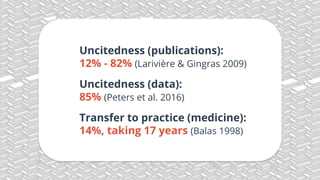
Uncitedness (publications):
12% - 82% (Larivière & Gingras 2009)
Uncitedness (data):
85% (Peters et al. 2016)
Transfer to practice (medicine):
14%, taking 17 years (Balas 1998)
Who we are
Open Knowledge Maps is
a charitable non-profit organization
dedicated to dramatically
improving the visibility
of scientific knowledge
for science and society alike
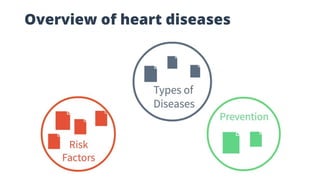
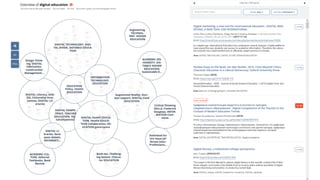
Overview of heart diseases
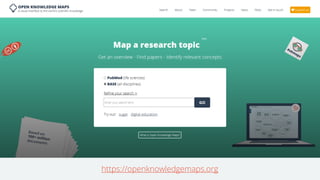
https://openknowledgemaps.org
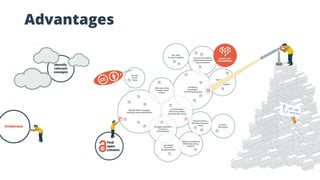
Advantages
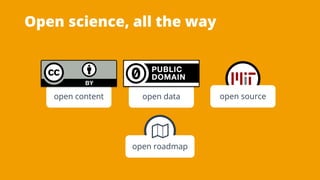
Open science, all the way
open sourceopen content open data
open roadmap
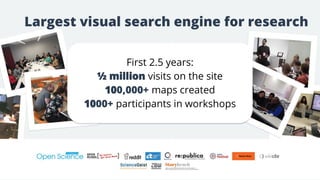
Largest visual search engine for research
First 2.5 years:
½ million visits on the site
100,000+ maps created
1000+ participants in workshops
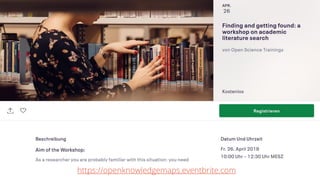
https://openknowledgemaps.eventbrite.com
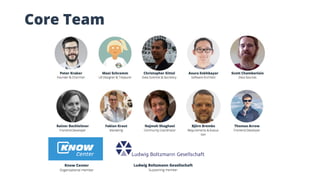
Core Team
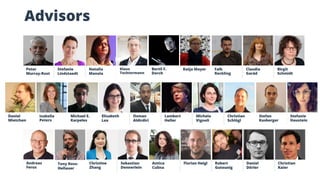
Advisors
Enthusiasts
Partners
Networks
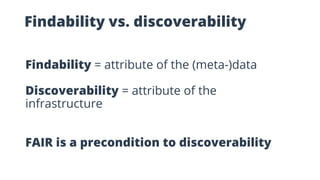
Findability vs. discoverability
Findability = attribute of the (meta-)data
Discoverability = attribute of the
infrastructure
FAIR is a precondition to discoverability
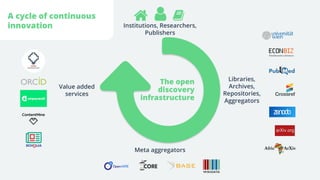
The open
discovery
infrastructure
Libraries,
Archives,
Repositories,
Aggregators
Meta aggregators
Institutions, Researchers,
Publishers
Value added
services
A cycle of continuous
innovation
DISCOVERY
Discovery IN – Rationale
Discoverability is a key challenge: up to 85% of research
data is not reused
Lack of adequate user interfaces for data discovery
Many market entrants following a closed/proprietary
model
o Prevents reuse
o Takes away control and governance from the
researchers and research institutions
Discovery IN – Purpose & Objective
Provide user interfaces and other user-facing services for
data discovery across disciplines
Explore new and innovative ways of enabling discovery
Apply user involvement and participatory design, going
beyond academia
Create FAIR and open infrastructures
Discovery IN – Workplan
Stocktaking of relevant use cases as well as indices,
interfaces and services
Structuring: Defining the standards and structure of an
open ecosystem for discovery that fulfils the use cases
Implementation: Working towards implementation of the
ecosystem

FAIR discovery - Open Knowledge Maps - Kraker Peter