FACTORS AFFECTING RECRUITMENT

                       TANDEL SHUBHAM B
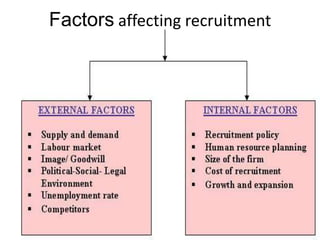
Factors affecting recruitment
Internal factors
Recruitment policy
• The recruitment policy of an organization
  specifies the objectives of recruitment and
  provides a framework for implementation of
  recruitment programme.
• It may involve organizational system to be
  developed for implementing recruitment
  programmes and procedures by filling up
  vacancies with best qualified people.
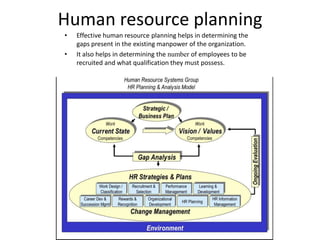
Human resource planning
•   Effective human resource planning helps in determining the
    gaps present in the existing manpower of the organization.
•   It also helps in determining the number of employees to be
    recruited and what qualification they must possess.
Size of firm
• The size of the firm is an important factor in
  recruitment process. If the organization is
  planning to increase its operations and expand
  its business, it will think of hiring more
  personnel, which will handle its operations.
Cost

• Recruitment incur cost to the employer,
  therefore, organizations try to employ that
  source of recruitment which will bear a lower
  cost of recruitment to the organization for
  each candidate.
Growth and Expansion

• Organization will employ or think of
  employing more personnel if it is expanding
  it’s operations.
External factors
Supply and demand
• The availability of manpower both within and
  outside the organization is an important
  determinant in the recruitment process.
• If the company has a demand for more
  professionals and there is limited supply in the
  market for the professionals demanded by the
  company, then the company will have to depend
  upon internal sources by providing them special
  training and development programs.
Labour market
• Employment conditions in the community
  where the organization is located will
  influence the recruiting efforts of the
  organization. If there is surplus of manpower
  at the time of recruitment, even informal
  attempts at the time of recruiting like notice
  boards display of the requisition or
  announcement in the meeting etc will attract
  more than enough applicants.
Image/Goodwill
• Image of the employer can work as a potential
  constraint for recruitment. An organization with
  positive image and goodwill as an employer finds it
  easier to attract and retain employees than an
  organization with negative image.
• Image of a company is based on what organization
  does and affected by industry.
Political-social-legal environment
• Various government regulations prohibiting discrimination in
  hiring and employment have direct impact on recruitment
  practices. For example, Government of India has introduced
  legislation for reservation in employment for scheduled
  castes, scheduled tribes, physically handicapped etc. Also,
  trade unions play important role in recruitment.
• This restricts management freedom to select those individuals
  who it believes would be the best performers. If the candidate
  can’t meet criteria stipulated by the union but union
  regulations can restrict recruitment sources.
Unemployment rate
• One of the factors that influence the
  availability of applicants is the growth of the
  economy (whether economy is growing or not
  and its rate). When the company is not
  creating new jobs, there is often oversupply of
  qualified labour which in turn leads to
  unemployment.
Competitors
• The recruitment policies of the competitors
  also effect the recruitment function of the
  organisations. To face the competition, many a
  times the organisations have to change their
  recruitment policies according to the policies
  being followed by the competitors.
Resources

 http://www.wikipedia.org/
MANAGEMENT BOOK-PEARSON
   FROM SOMEONE’S PPT
Factors tht affect recruitment[ppt]

Factors tht affect recruitment[ppt]

  • 1.
  • 2.
  • 3.
  • 4.
    Recruitment policy • Therecruitment policy of an organization specifies the objectives of recruitment and provides a framework for implementation of recruitment programme. • It may involve organizational system to be developed for implementing recruitment programmes and procedures by filling up vacancies with best qualified people.
  • 5.
    Human resource planning • Effective human resource planning helps in determining the gaps present in the existing manpower of the organization. • It also helps in determining the number of employees to be recruited and what qualification they must possess.
  • 6.
    Size of firm •The size of the firm is an important factor in recruitment process. If the organization is planning to increase its operations and expand its business, it will think of hiring more personnel, which will handle its operations.
  • 7.
    Cost • Recruitment incurcost to the employer, therefore, organizations try to employ that source of recruitment which will bear a lower cost of recruitment to the organization for each candidate.
  • 8.
    Growth and Expansion •Organization will employ or think of employing more personnel if it is expanding it’s operations.
  • 9.
  • 10.
    Supply and demand •The availability of manpower both within and outside the organization is an important determinant in the recruitment process. • If the company has a demand for more professionals and there is limited supply in the market for the professionals demanded by the company, then the company will have to depend upon internal sources by providing them special training and development programs.
  • 11.
    Labour market • Employmentconditions in the community where the organization is located will influence the recruiting efforts of the organization. If there is surplus of manpower at the time of recruitment, even informal attempts at the time of recruiting like notice boards display of the requisition or announcement in the meeting etc will attract more than enough applicants.
  • 12.
    Image/Goodwill • Image ofthe employer can work as a potential constraint for recruitment. An organization with positive image and goodwill as an employer finds it easier to attract and retain employees than an organization with negative image. • Image of a company is based on what organization does and affected by industry.
  • 13.
    Political-social-legal environment • Variousgovernment regulations prohibiting discrimination in hiring and employment have direct impact on recruitment practices. For example, Government of India has introduced legislation for reservation in employment for scheduled castes, scheduled tribes, physically handicapped etc. Also, trade unions play important role in recruitment. • This restricts management freedom to select those individuals who it believes would be the best performers. If the candidate can’t meet criteria stipulated by the union but union regulations can restrict recruitment sources.
  • 14.
    Unemployment rate • Oneof the factors that influence the availability of applicants is the growth of the economy (whether economy is growing or not and its rate). When the company is not creating new jobs, there is often oversupply of qualified labour which in turn leads to unemployment.
  • 15.
    Competitors • The recruitmentpolicies of the competitors also effect the recruitment function of the organisations. To face the competition, many a times the organisations have to change their recruitment policies according to the policies being followed by the competitors.
  • 16.