Extreme Programming
Kiran Pamnany
Extreme Programming (XP)
Formulated in 1999 by Kent Beck, Ward
Cunningham and Ron Jeffries
Agile software development
methodology (others: Scrum, DSDM)
Developed in reaction to high ceremony
methodologies
XP: Why?
 Previously:
 Get all the requirements before starting design
 Freeze the requirements before starting
development
 Resist changes: they will lengthen schedule
 Build a change control process to ensure that
proposed changes are looked at carefully and no
change is made without intense scrutiny
 Deliver a product that is obsolete on release
XP: Embrace Change
 Recognize that:
 All requirements will not be known at the beginning
 Requirements will change
 Use tools to accommodate change as a
natural process
 Do the simplest thing that could possibly work
and refactor mercilessly
 Emphasize values and principles rather than
process
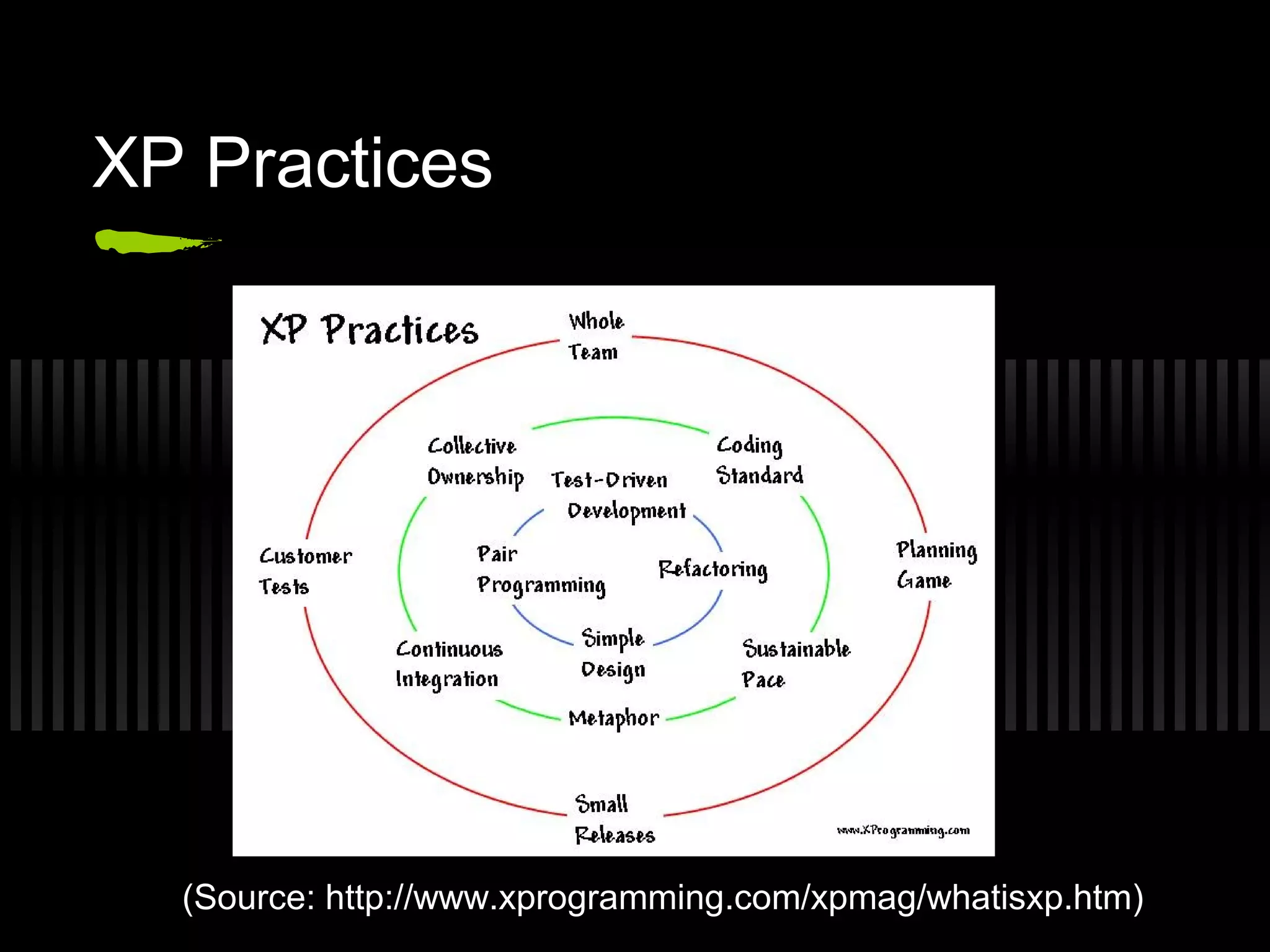
XP Practices
(Source: http://www.xprogramming.com/xpmag/whatisxp.htm)
XP Practices: Whole Team
 All contributors to an XP project are one team
 Must include a business representative--the
‘Customer’
 Provides requirements
 Sets priorities
 Steers project
 Team members are programmers, testers,
analysts, coach, manager
 Best XP teams have no specialists
XP Practices: Planning Game
 Two key questions in software development:
 Predict what will be accomplished by the due date
 Determine what to do next
 Need is to steer the project
 Exact prediction (which is difficult) is not
necessary
XP Practices: Planning Game
 XP Release Planning
 Customer presents required features
 Programmers estimate difficulty
 Imprecise but revised regularly
 XP Iteration Planning
 Two week iterations
 Customer presents features required
 Programmers break features down into tasks
 Team members sign up for tasks
 Running software at end of each iteration
XP Practices: Customer Tests
 The Customer defines one or more automated
acceptance tests for a feature
 Team builds these tests to verify that a feature
is implemented correctly
 Once the test runs, the team ensures that it
keeps running correctly thereafter
 System always improves, never backslides
XP Practices: Small Releases
 Team releases running, tested software every
iteration
 Releases are small and functional
 The Customer can evaluate or in turn, release
to end users, and provide feedback
 Important thing is that the software is visible
and given to the Customer at the end of every
iteration
XP Practices: Simple Design
 Build software to a simple design
 Through programmer testing and design
improvement, keep the software simple and
the design suited to current functionality
 Not a one-time thing nor an up-front thing
 Design steps in release planning and iteration
planning.
XP Practices: Pair Programming
 All production software is built by two
programmers, sitting side by side, at the same
machine
 All production code is therefore reviewed by at
least one other programmer
 Pairing also communicates knowledge
throughout the team
XP Practices: Test-Driven
Development
 Easy to produce code with 100 percent test
coverage
 These programmer tests or unit tests are all
collected together
 Each time a pair releases code to the
repository, every test must run correctly
XP Practices: Design
Improvement
 Continuous design improvement process
called ‘refactoring’:
 Removal of duplication
 Increase cohesion
 Reduce coupling
 Refactoring is supported by comprehensive
testing--customer tests and programmer tests
XP Practices: Continuous
Integration
Teams keep the system fully integrated
at all times
Daily, or multiple times a day builds
Avoid ‘integration hell’
Avoid code freezes
XP Practices: Collective Code
Ownership
 Any pair of programmers can improve any
code at any time
 No ‘secure workspaces’
 All code gets the benefit of many people’s
attention
 Avoid duplication
 Programmer tests catch mistakes
 Pair with expert when working on unfamiliar
code
XP Practices: Coding Standard
Use common coding standard
All code in the system must look as
though written by an individual
Code must look familiar, to support
collective code ownership
XP Practices: Metaphor
 XP Teams develop a common vision of the
system
 With or without imagery, define common
system of names
 Ensure everyone understands how the system
works, where to look for functionality, or where
to add functionality
XP Practices: Sustainable Pace
Team will produce high quality product
when not overly exerted
Avoid overtime, maintain 40 hour weeks
Work at a pace that can be sustained
indefinitely
XP Values
Communication
Simplicity
Feedback
Courage
XP Values: Communication
 Poor communication in software teams is one
of the root causes of failure of a project
 Stress on good communication between all
stakeholders--customers, team members,
project managers
 Customer representative always on site
 Paired programming
XP Values: Simplicity
 ‘Do the Simplest Thing That Could Possibly
Work’
 Implement a new capability in the simplest
possible way
 Refactor the system to be the simplest possible
code with the current feature set
 ‘You Aren’t Going to Need It’
 Never implement a feature you don’t need now
XP Values: Feedback
Always a running system that delivers
information about itself in a reliable way
The system and the code provides
feedback on the state of development
Catalyst for change and an indicator of
progress
XP Values: Courage
Projects are people-centric
Ingenuity of people and not any process
that causes a project to succeed
XP Criticism
 Unrealistic--programmer centric, not business
focused
 Detailed specifications are not written
 Design after testing
 Constant refactoring
 Customer availability
 12 practices are too interdependent
XP Thoughts
 The best design is the code.
 Testing is good. Write tests before code. Code
is complete when it passes tests.
 Simple code is better. Write only code that is
needed. Reduce complexity and duplication.
 Keep code simple. Refactor.
 Keep iterations short. Constant feedback.

extreme programming

  • 1.
  • 2.
    Extreme Programming (XP) Formulatedin 1999 by Kent Beck, Ward Cunningham and Ron Jeffries Agile software development methodology (others: Scrum, DSDM) Developed in reaction to high ceremony methodologies
  • 3.
    XP: Why?  Previously: Get all the requirements before starting design  Freeze the requirements before starting development  Resist changes: they will lengthen schedule  Build a change control process to ensure that proposed changes are looked at carefully and no change is made without intense scrutiny  Deliver a product that is obsolete on release
  • 4.
    XP: Embrace Change Recognize that:  All requirements will not be known at the beginning  Requirements will change  Use tools to accommodate change as a natural process  Do the simplest thing that could possibly work and refactor mercilessly  Emphasize values and principles rather than process
  • 5.
  • 6.
    XP Practices: WholeTeam  All contributors to an XP project are one team  Must include a business representative--the ‘Customer’  Provides requirements  Sets priorities  Steers project  Team members are programmers, testers, analysts, coach, manager  Best XP teams have no specialists
  • 7.
    XP Practices: PlanningGame  Two key questions in software development:  Predict what will be accomplished by the due date  Determine what to do next  Need is to steer the project  Exact prediction (which is difficult) is not necessary
  • 8.
    XP Practices: PlanningGame  XP Release Planning  Customer presents required features  Programmers estimate difficulty  Imprecise but revised regularly  XP Iteration Planning  Two week iterations  Customer presents features required  Programmers break features down into tasks  Team members sign up for tasks  Running software at end of each iteration
  • 9.
    XP Practices: CustomerTests  The Customer defines one or more automated acceptance tests for a feature  Team builds these tests to verify that a feature is implemented correctly  Once the test runs, the team ensures that it keeps running correctly thereafter  System always improves, never backslides
  • 10.
    XP Practices: SmallReleases  Team releases running, tested software every iteration  Releases are small and functional  The Customer can evaluate or in turn, release to end users, and provide feedback  Important thing is that the software is visible and given to the Customer at the end of every iteration
  • 11.
    XP Practices: SimpleDesign  Build software to a simple design  Through programmer testing and design improvement, keep the software simple and the design suited to current functionality  Not a one-time thing nor an up-front thing  Design steps in release planning and iteration planning.
  • 12.
    XP Practices: PairProgramming  All production software is built by two programmers, sitting side by side, at the same machine  All production code is therefore reviewed by at least one other programmer  Pairing also communicates knowledge throughout the team
  • 13.
    XP Practices: Test-Driven Development Easy to produce code with 100 percent test coverage  These programmer tests or unit tests are all collected together  Each time a pair releases code to the repository, every test must run correctly
  • 14.
    XP Practices: Design Improvement Continuous design improvement process called ‘refactoring’:  Removal of duplication  Increase cohesion  Reduce coupling  Refactoring is supported by comprehensive testing--customer tests and programmer tests
  • 15.
    XP Practices: Continuous Integration Teamskeep the system fully integrated at all times Daily, or multiple times a day builds Avoid ‘integration hell’ Avoid code freezes
  • 16.
    XP Practices: CollectiveCode Ownership  Any pair of programmers can improve any code at any time  No ‘secure workspaces’  All code gets the benefit of many people’s attention  Avoid duplication  Programmer tests catch mistakes  Pair with expert when working on unfamiliar code
  • 17.
    XP Practices: CodingStandard Use common coding standard All code in the system must look as though written by an individual Code must look familiar, to support collective code ownership
  • 18.
    XP Practices: Metaphor XP Teams develop a common vision of the system  With or without imagery, define common system of names  Ensure everyone understands how the system works, where to look for functionality, or where to add functionality
  • 19.
    XP Practices: SustainablePace Team will produce high quality product when not overly exerted Avoid overtime, maintain 40 hour weeks Work at a pace that can be sustained indefinitely
  • 20.
  • 21.
    XP Values: Communication Poor communication in software teams is one of the root causes of failure of a project  Stress on good communication between all stakeholders--customers, team members, project managers  Customer representative always on site  Paired programming
  • 22.
    XP Values: Simplicity ‘Do the Simplest Thing That Could Possibly Work’  Implement a new capability in the simplest possible way  Refactor the system to be the simplest possible code with the current feature set  ‘You Aren’t Going to Need It’  Never implement a feature you don’t need now
  • 23.
    XP Values: Feedback Alwaysa running system that delivers information about itself in a reliable way The system and the code provides feedback on the state of development Catalyst for change and an indicator of progress
  • 24.
    XP Values: Courage Projectsare people-centric Ingenuity of people and not any process that causes a project to succeed
  • 25.
    XP Criticism  Unrealistic--programmercentric, not business focused  Detailed specifications are not written  Design after testing  Constant refactoring  Customer availability  12 practices are too interdependent
  • 26.
    XP Thoughts  Thebest design is the code.  Testing is good. Write tests before code. Code is complete when it passes tests.  Simple code is better. Write only code that is needed. Reduce complexity and duplication.  Keep code simple. Refactor.  Keep iterations short. Constant feedback.