Open Data in Practice: Five Years of Lessons Learned and Best Practice in achieving value and success 
Andrew Stott 
UK Transparency Board 
Senior Consultant, 
World Bank 
Hyderabad, India 
04 Sep 2014 
@dirdigeng 
andrew.stott@dirdigeng.com
Lessons Learned 
2
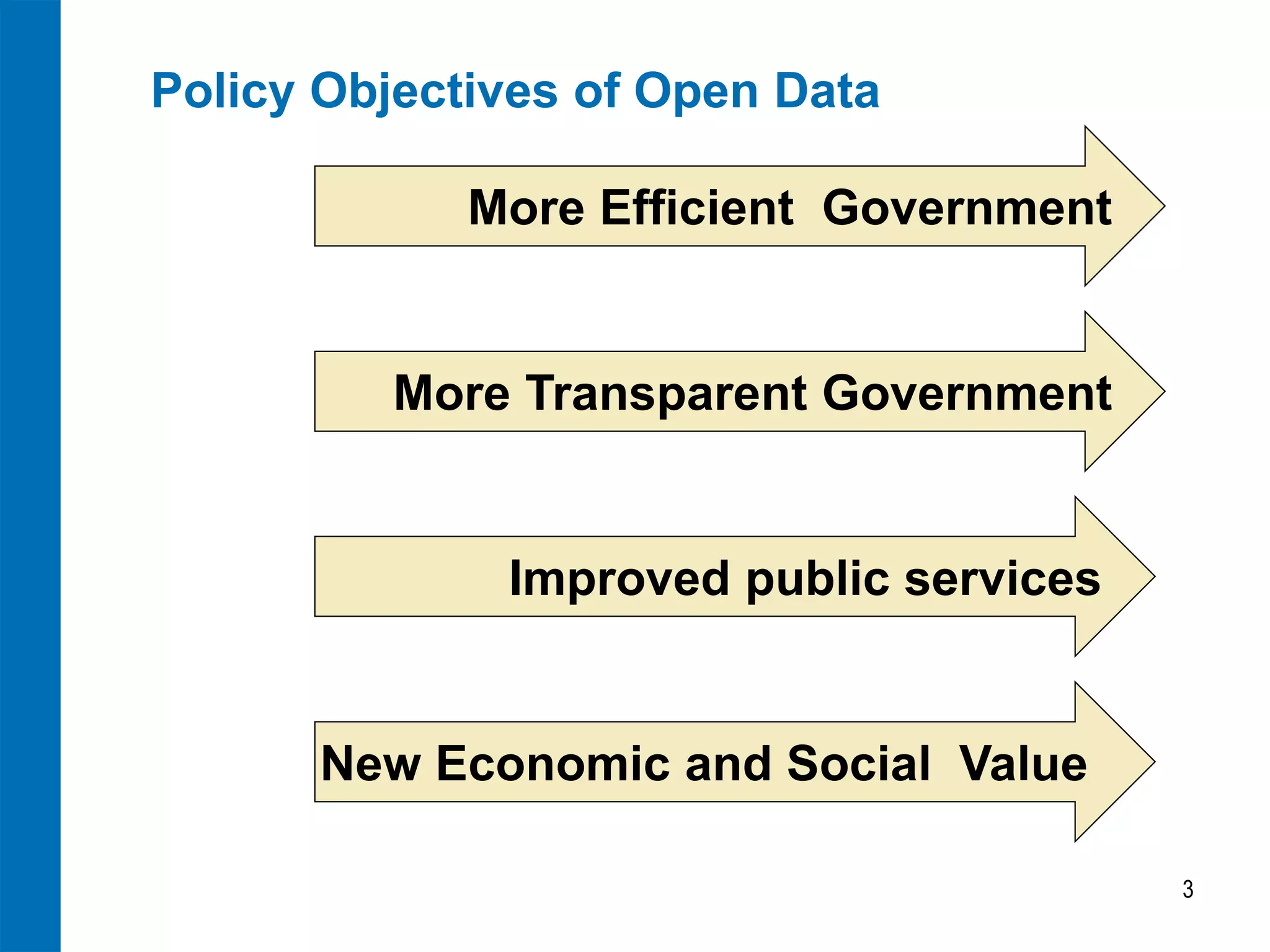
Policy Objectives of Open Data 
3 
New Economic and Social Value 
Improved public services 
More Transparent Government 
More Efficient Government
Open Data can help public policy and service delivery 
4
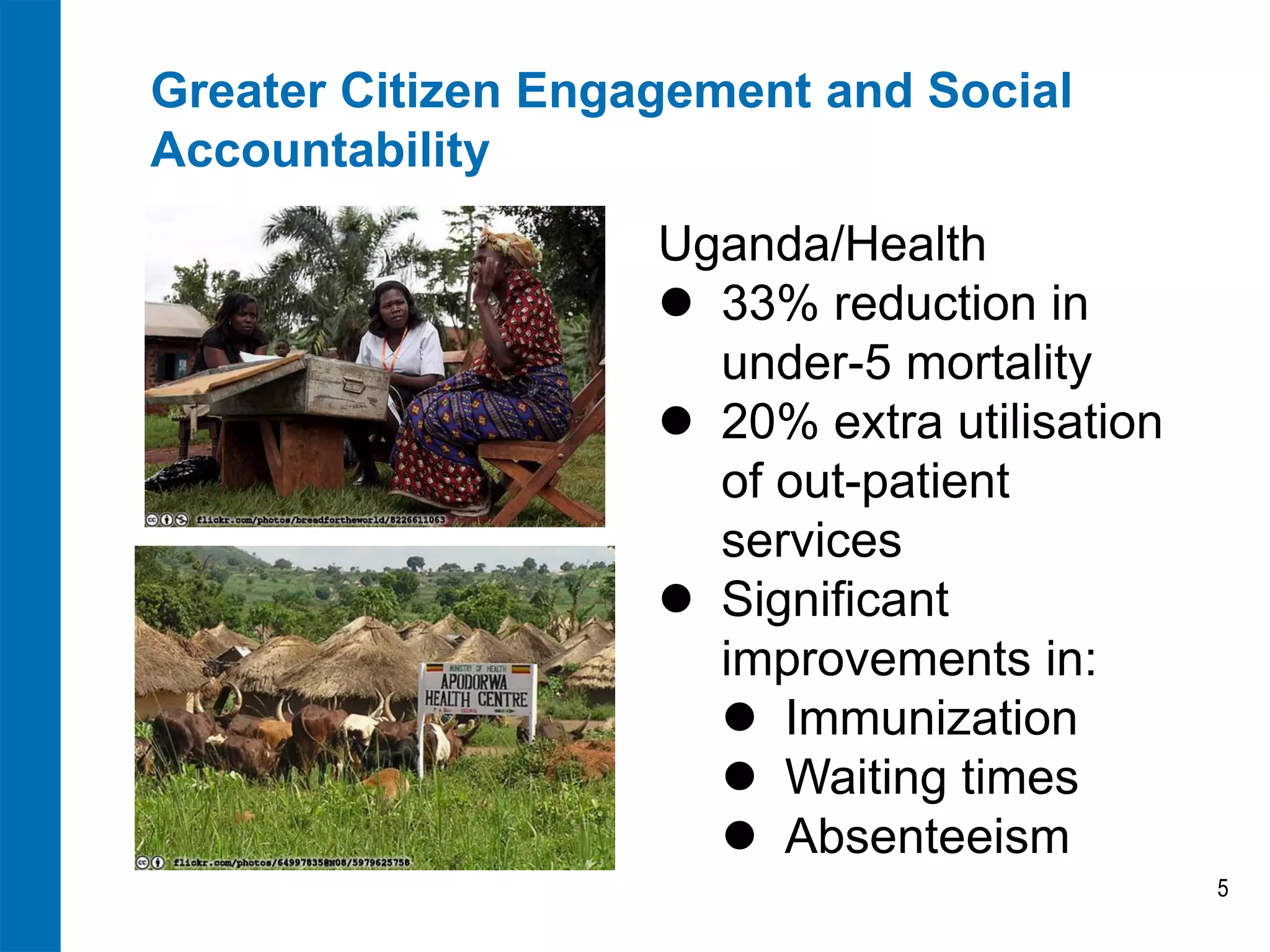
Greater Citizen Engagement and Social Accountability 
5 
Uganda/Health 
33% reduction in under-5 mortality 
20% extra utilisation of out-patient services 
Significant improvements in: 
Immunization 
Waiting times 
Absenteeism
6 
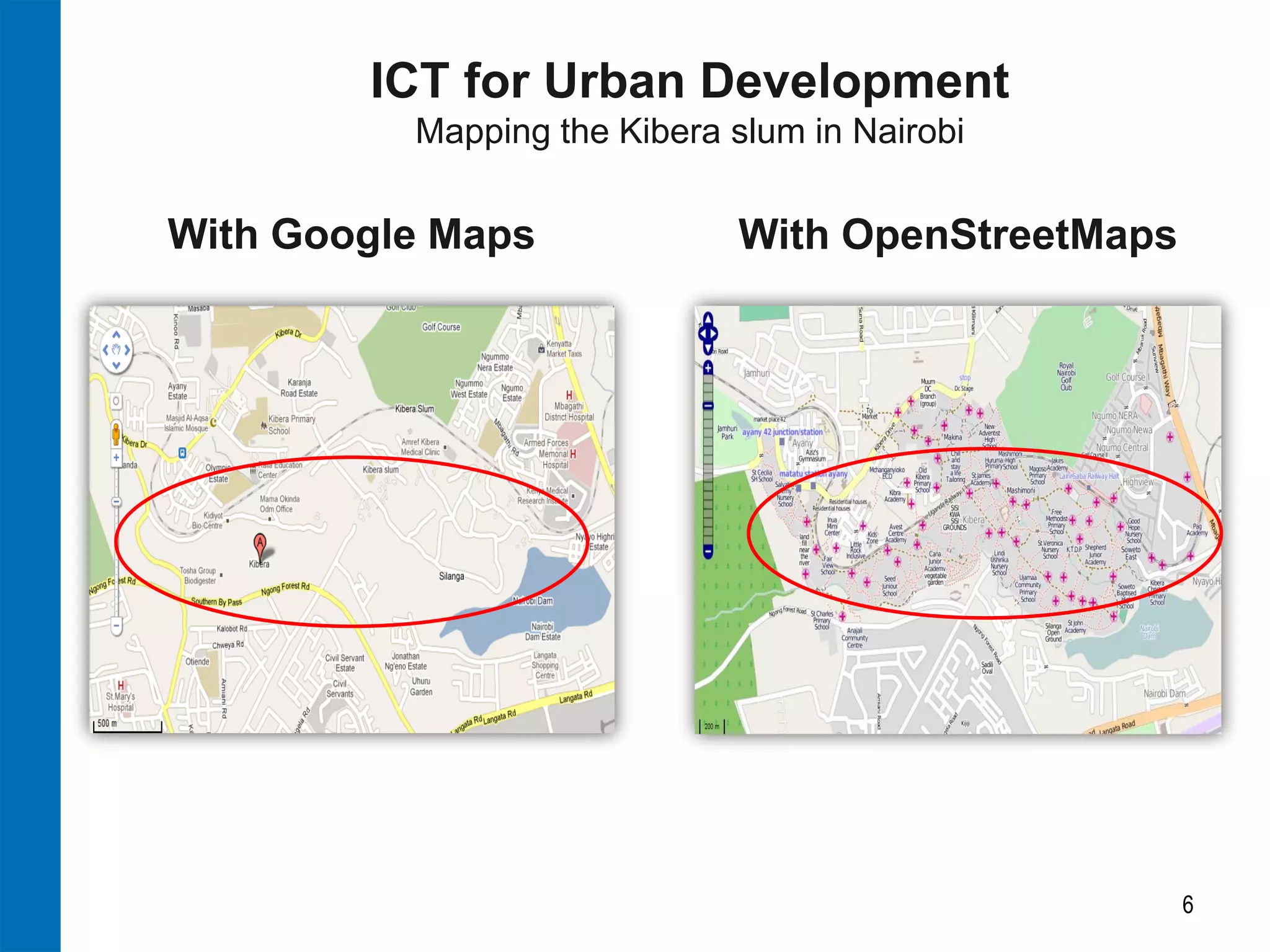
With OpenStreetMaps 
With Google Maps 
ICT for Urban Development 
Mapping the Kibera slum in Nairobi
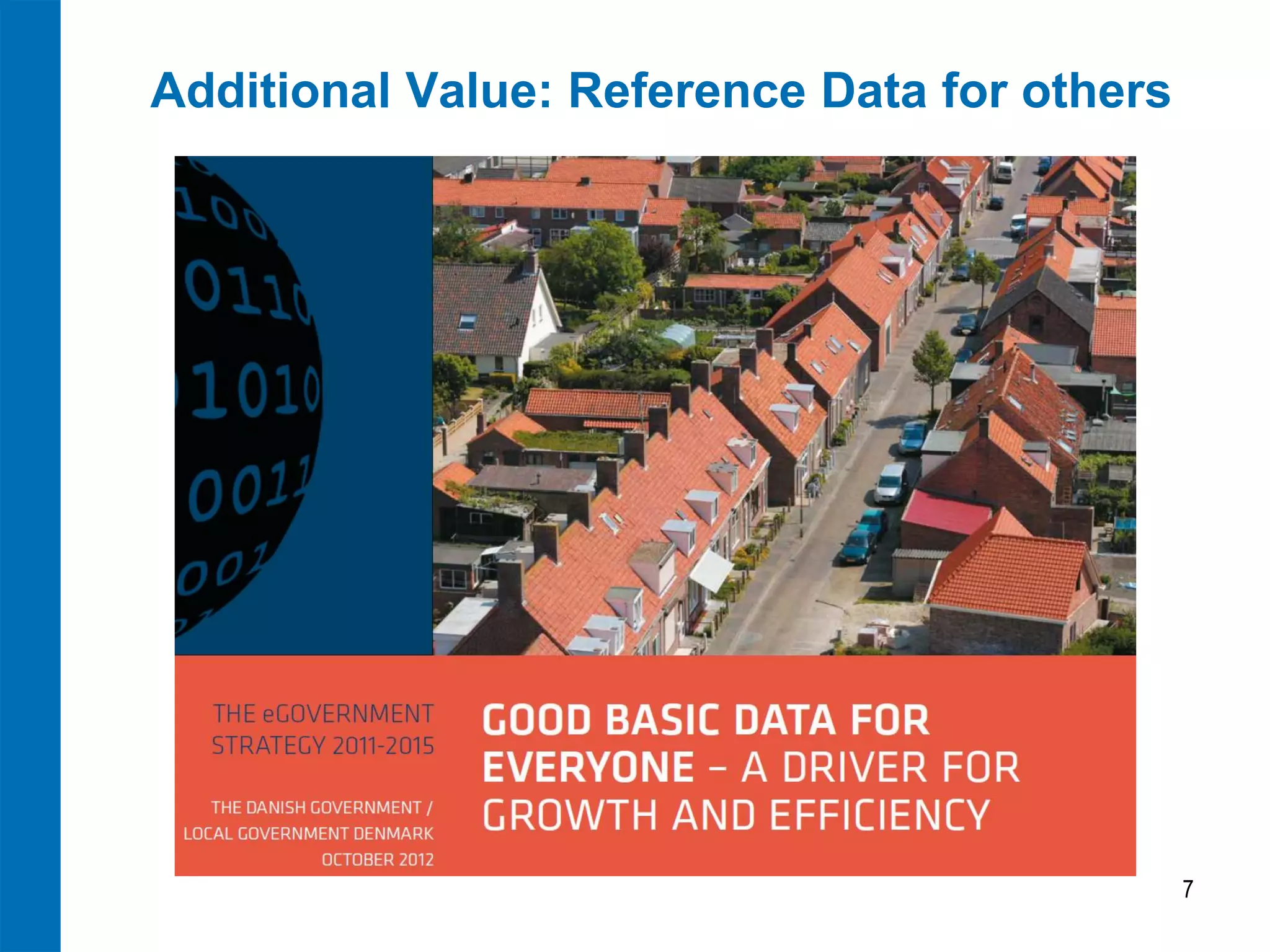
Additional Value: Reference Data for others 
7
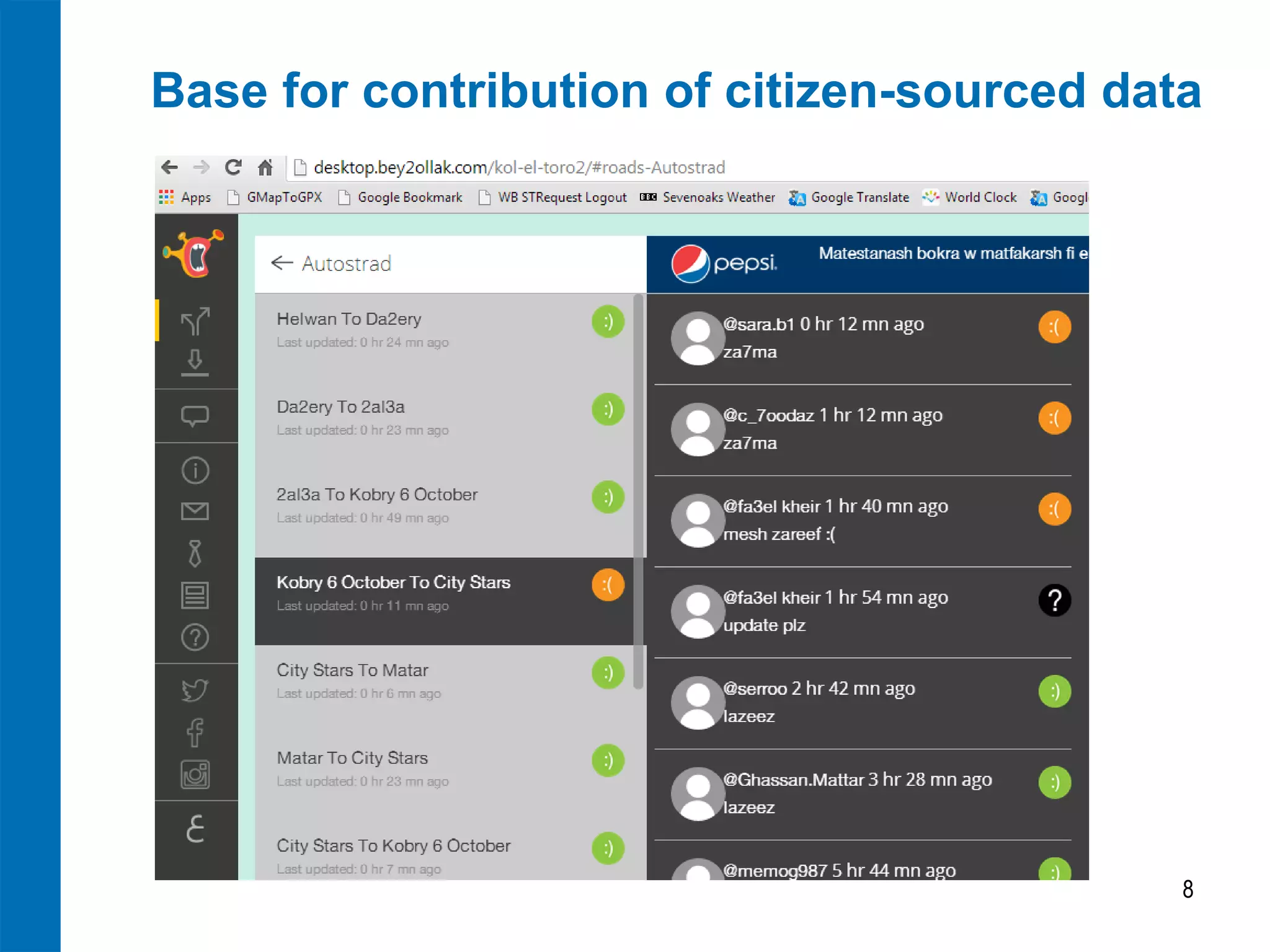
Base for contribution of citizen-sourced data 
8
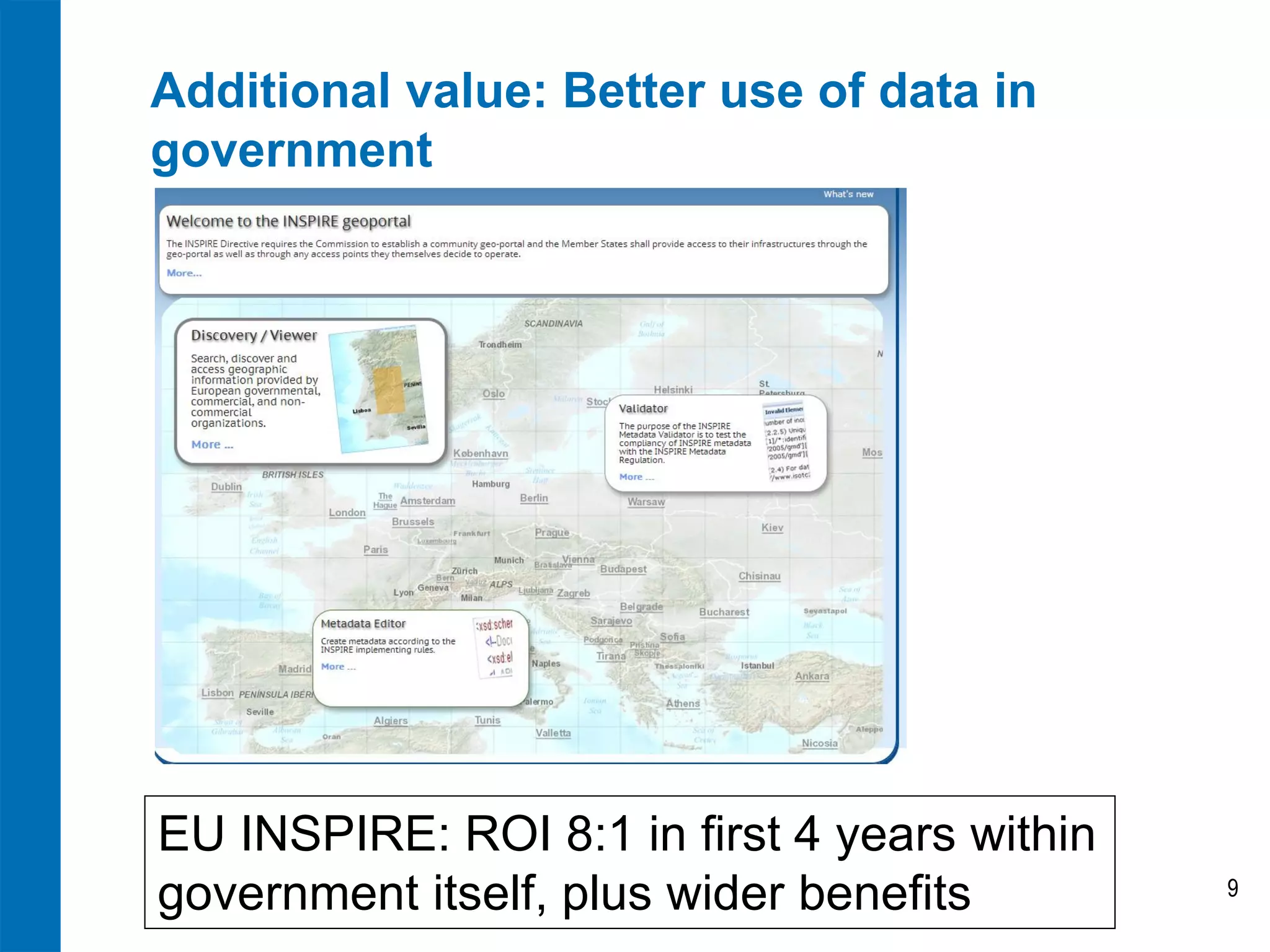
Additional value: Better use of data in government 
9 
EU INSPIRE: ROI 8:1 in first 4 years within government itself, plus wider benefits
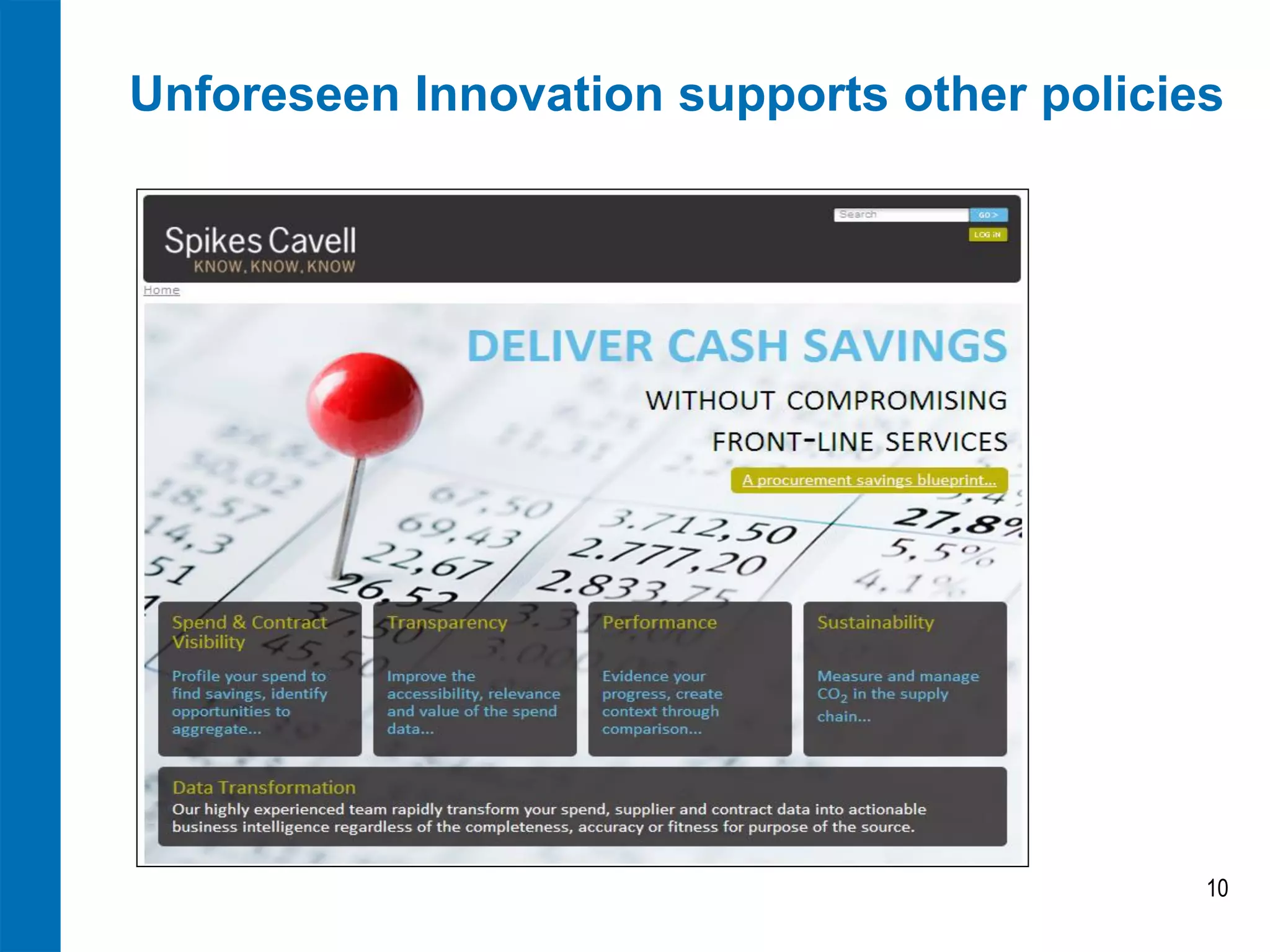
Unforeseen Innovation supports other policies 
10
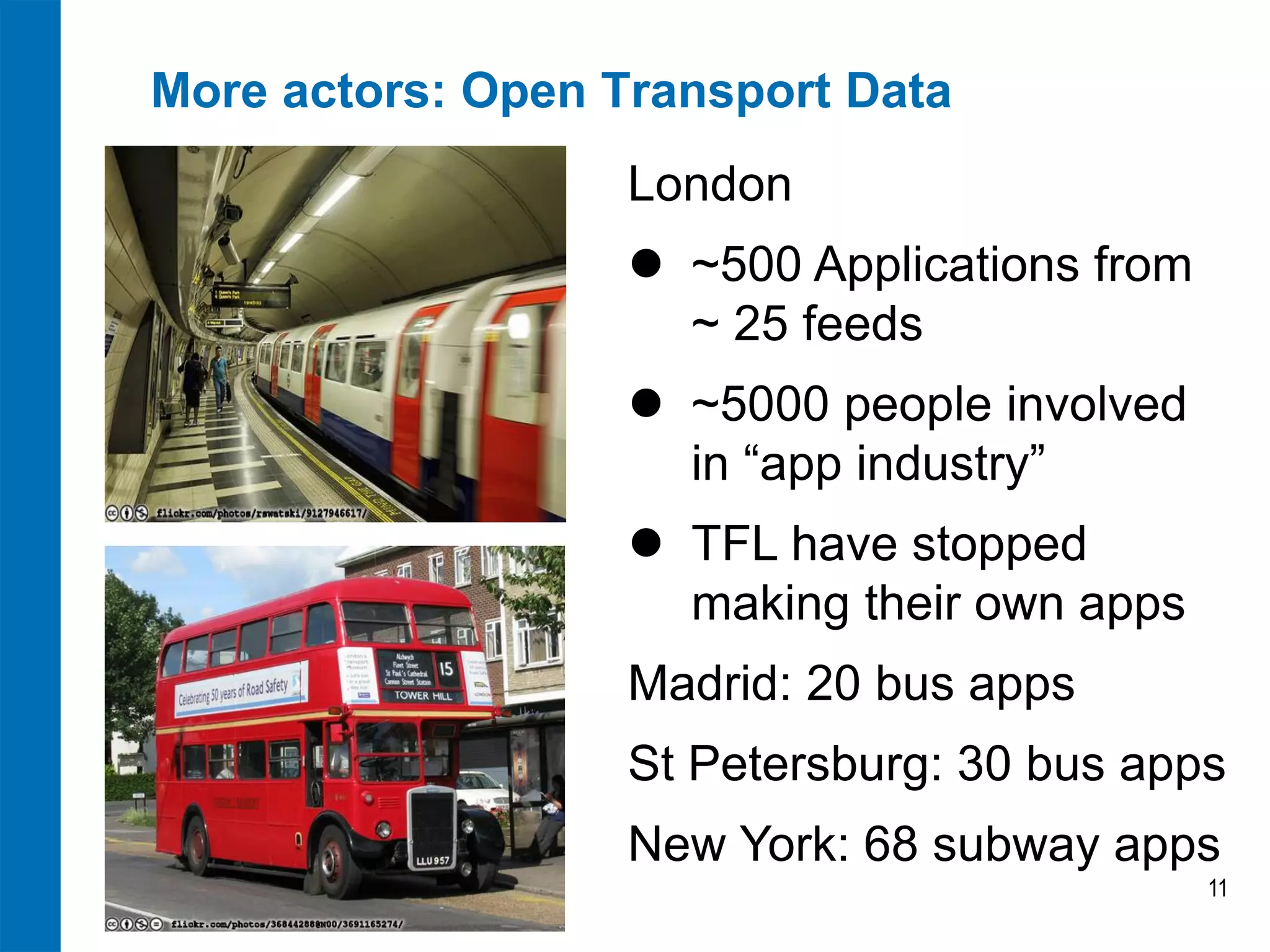
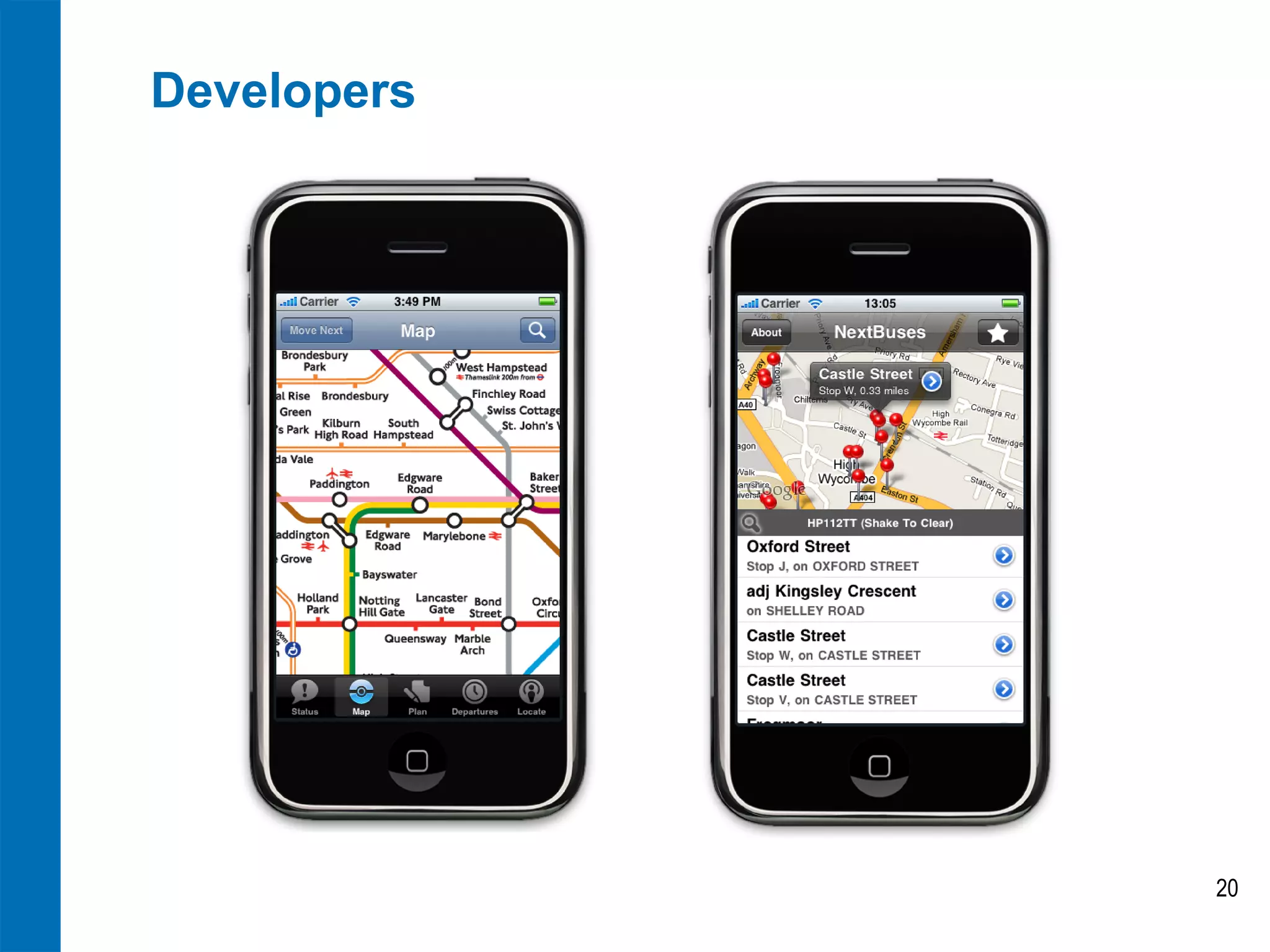
More actors: Open Transport Data 
11 
London 
~500 Applications from ~ 25 feeds 
~5000 people involved in “app industry” 
TFL have stopped making their own apps Madrid: 20 bus apps St Petersburg: 30 bus apps New York: 68 subway apps
Combining Data adds new insights 
12
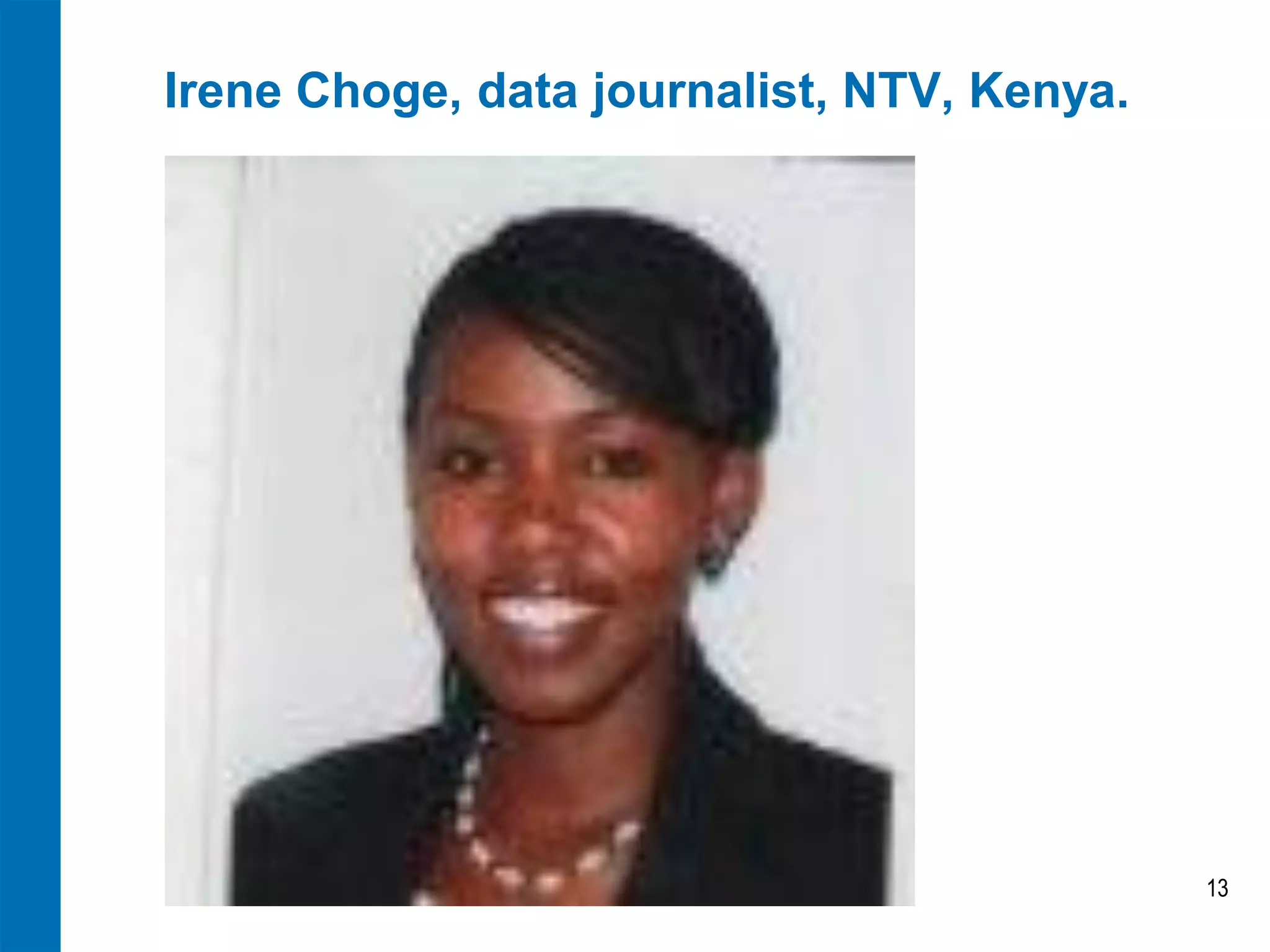
Irene Choge, data journalist, NTV, Kenya. 
13
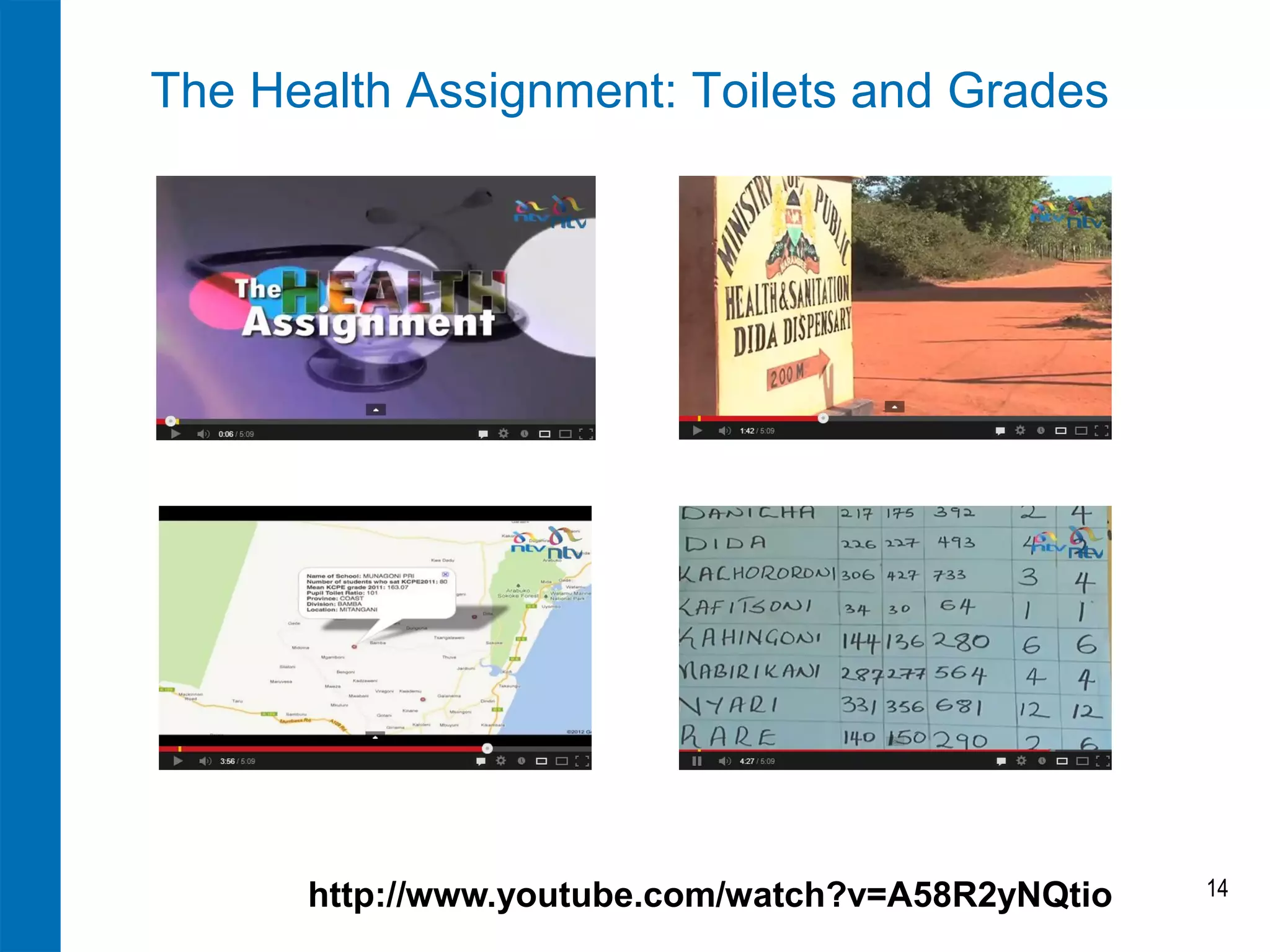
The Health Assignment: Toilets and Grades 
14 
http://www.youtube.com/watch?v=A58R2yNQtio
Opening data means the data is used much more 
15
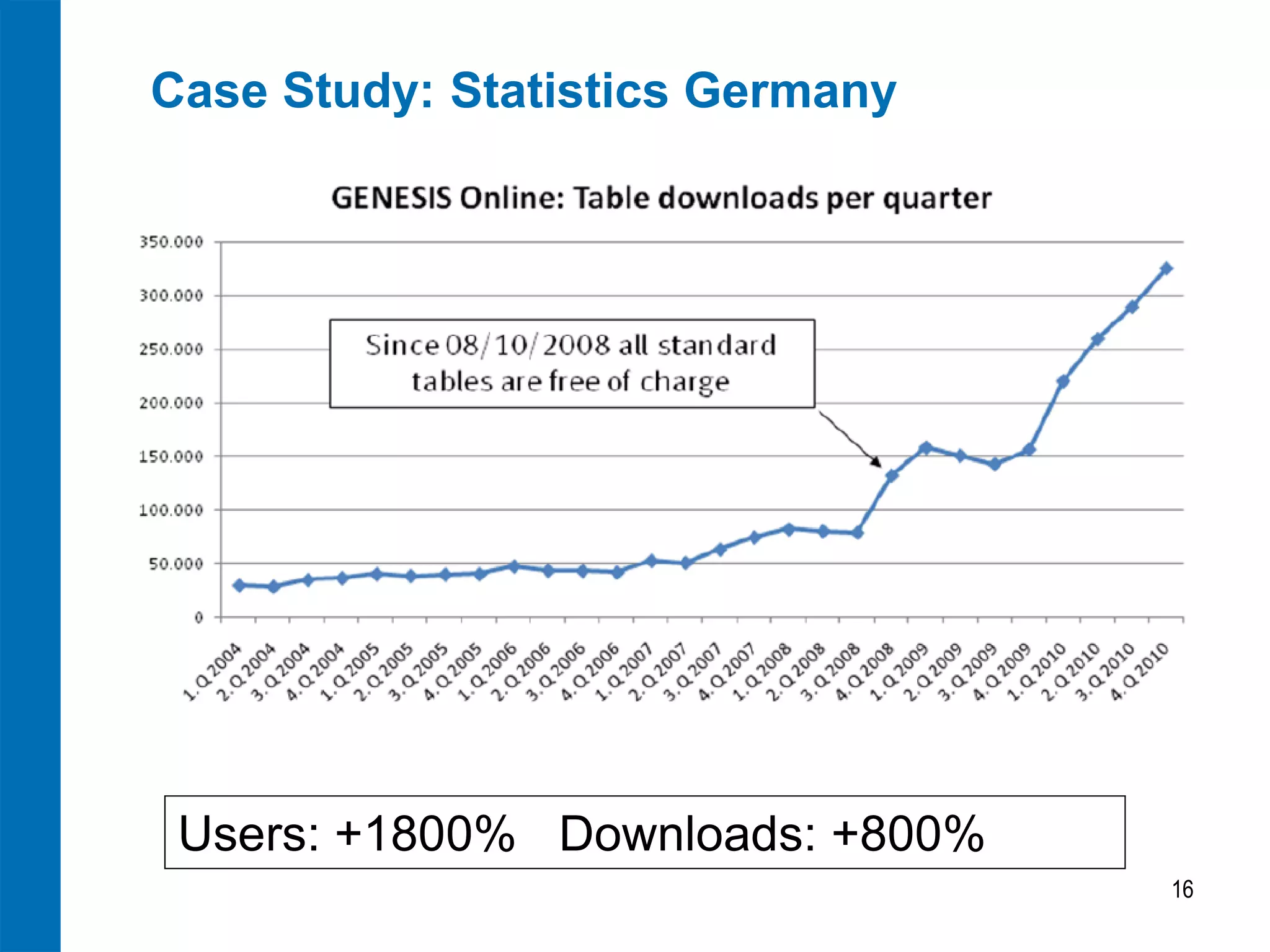
Case Study: Statistics Germany 
16 
Users: +1800% Downloads: +800%
Opening Data means it is used much more 
“Where PSBs moved to marginal and zero cost charging, the number of re-users increased by between 1,000% and 10,000%.” 
“Lowering charges may attract new types of re-users, in particular SMEs.” 
“Once re-use facilitation processes are properly organized … they become embedded in the PSB's public task-funded activities at no extra cost.” 
-Deloitte/POPSIS study for EU 
17
What are the Open Data Businesses 
18
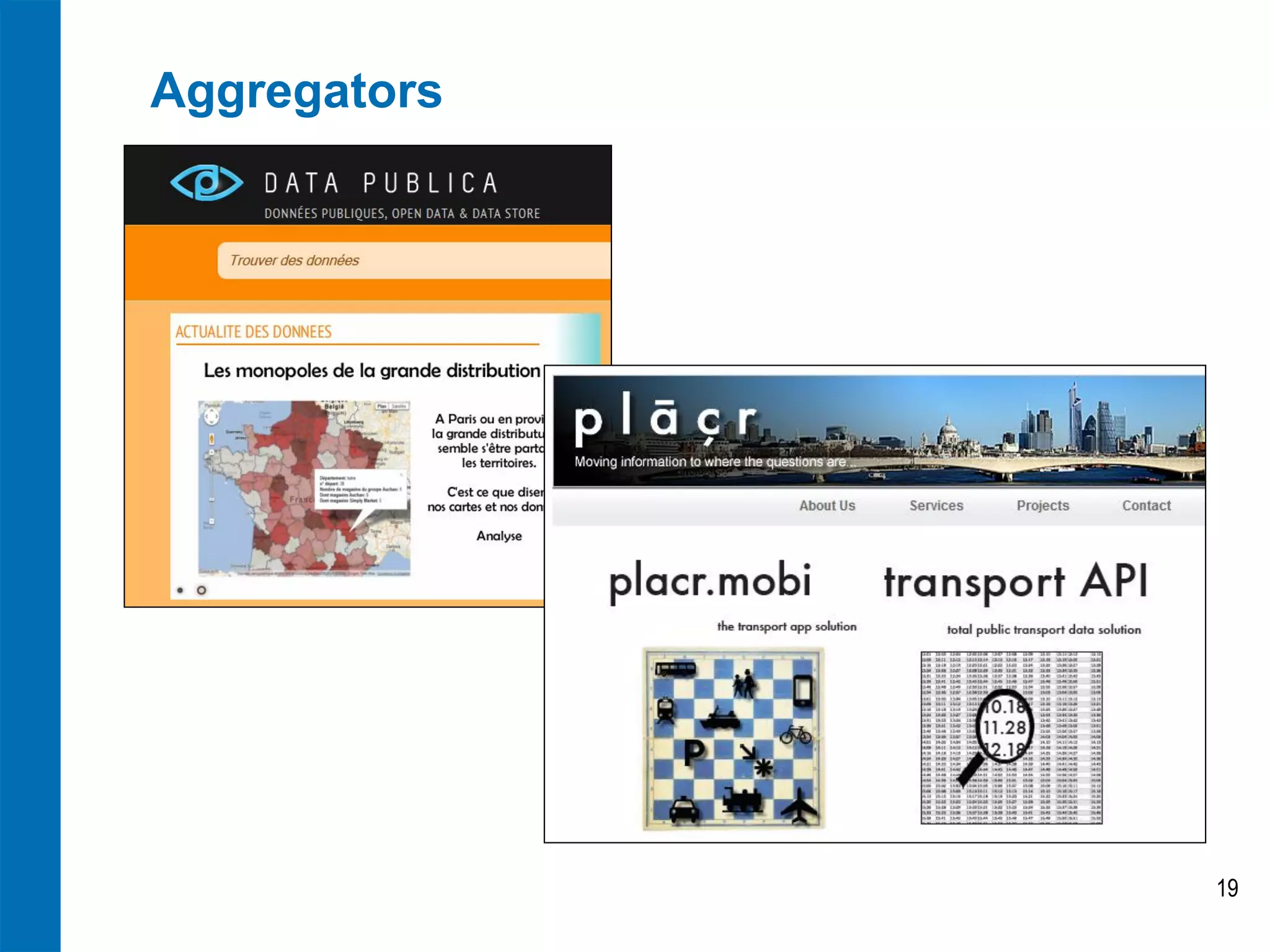
Aggregators 
19
Developers 
20
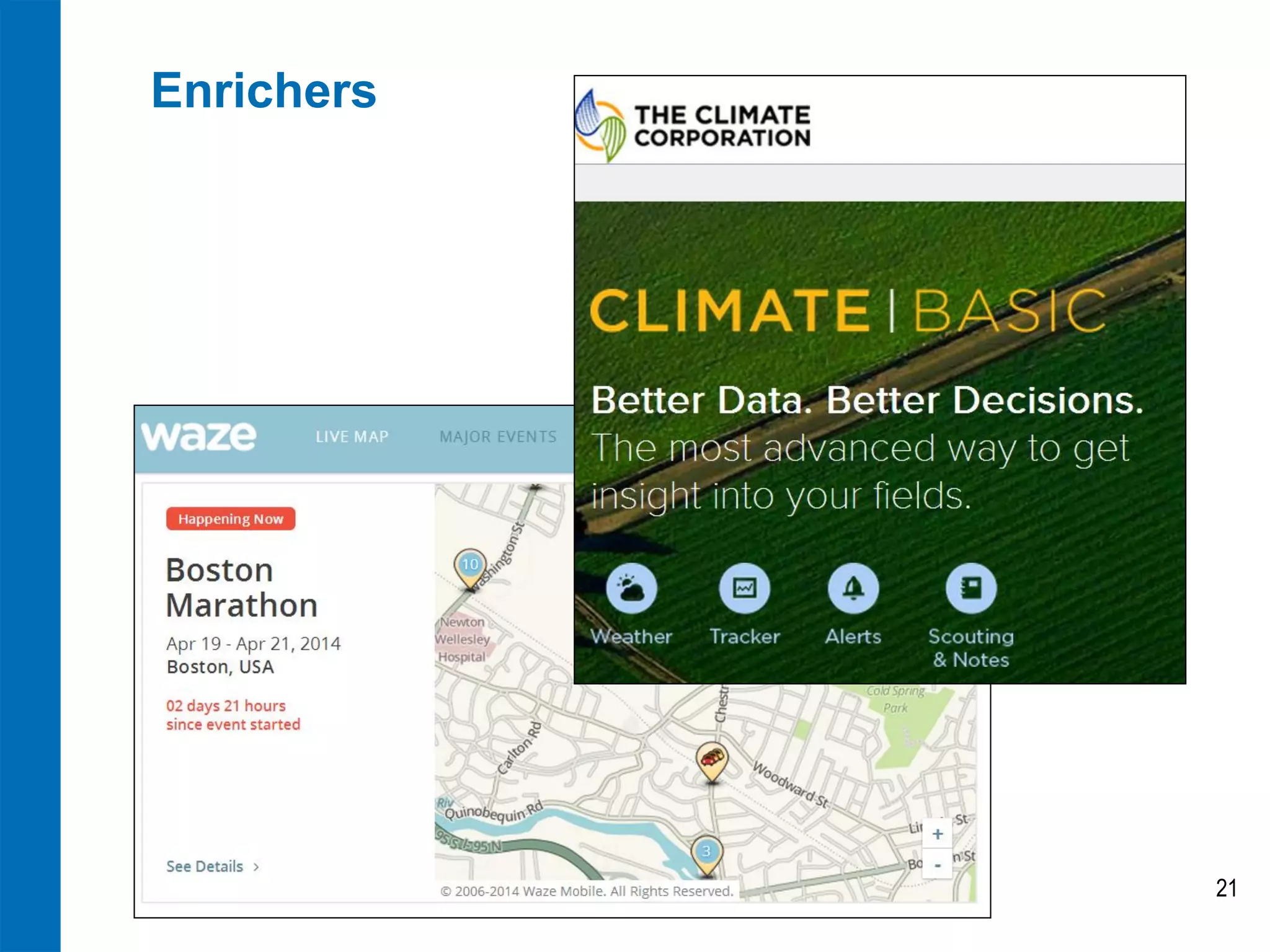
Enrichers 
21
Enablers 
22
Which data is most valuable or most widely valuable? 
23
Census and other detailed statistics 
24
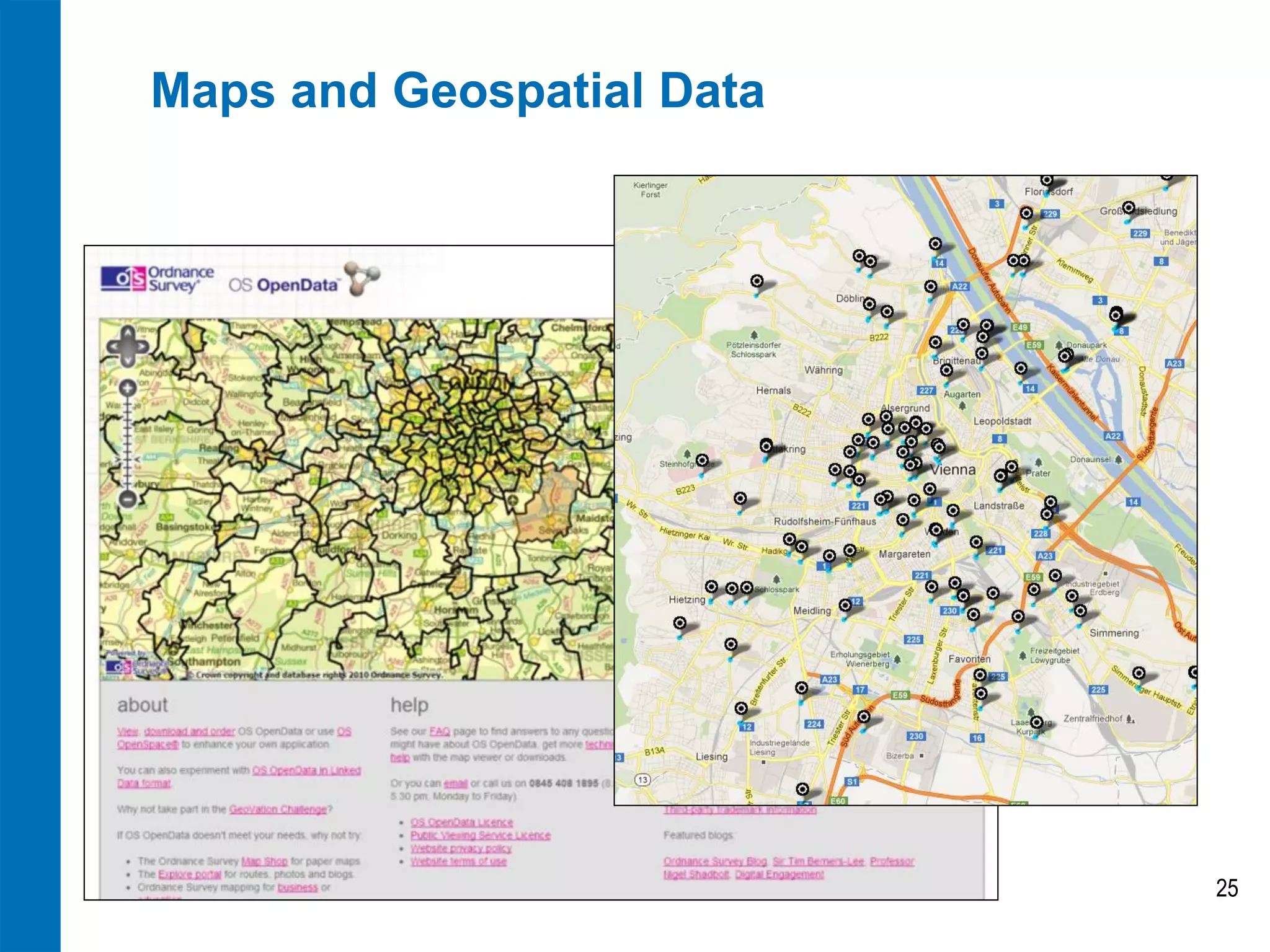
Maps and Geospatial Data 
25
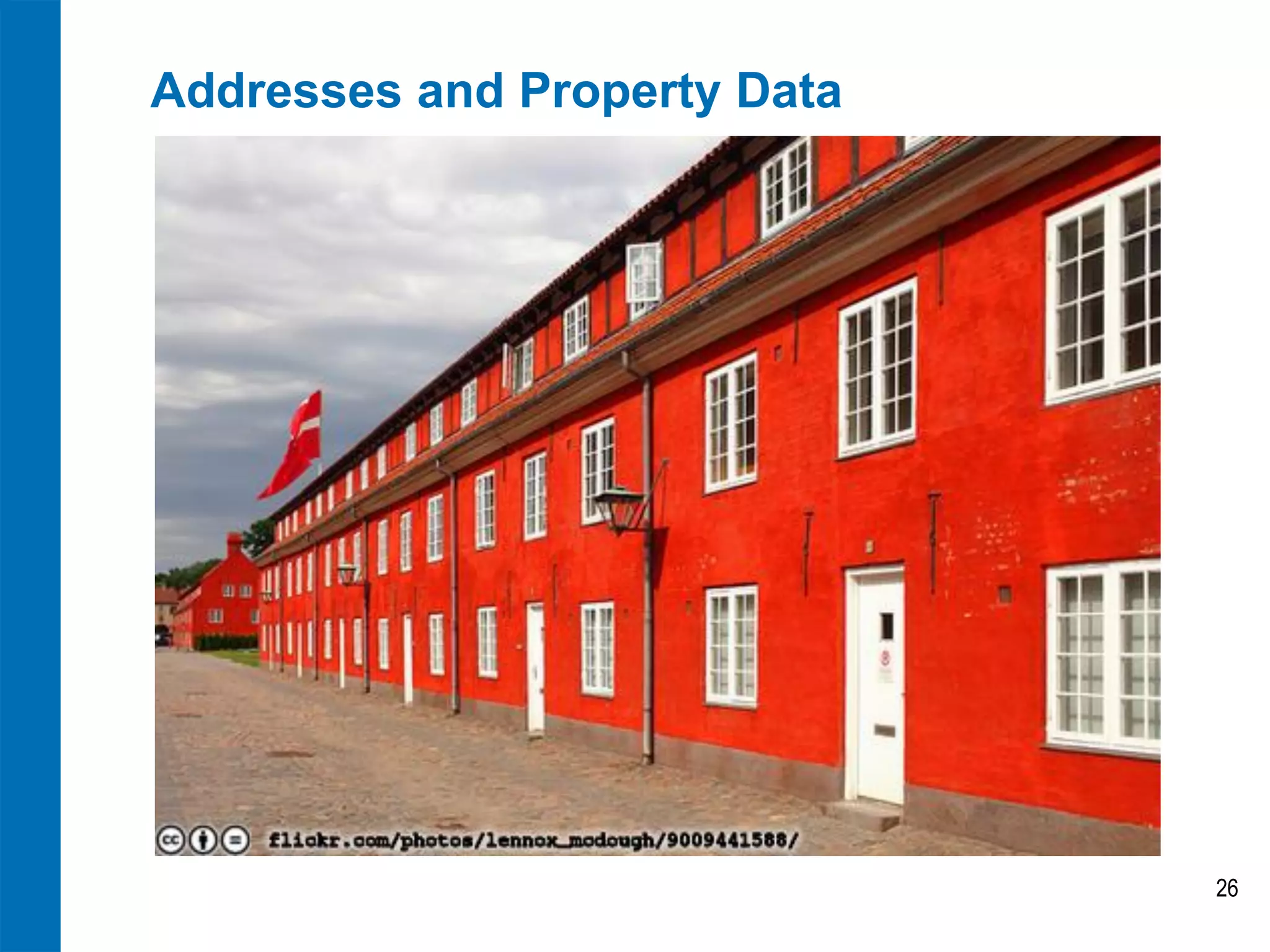
Addresses and Property Data 
26
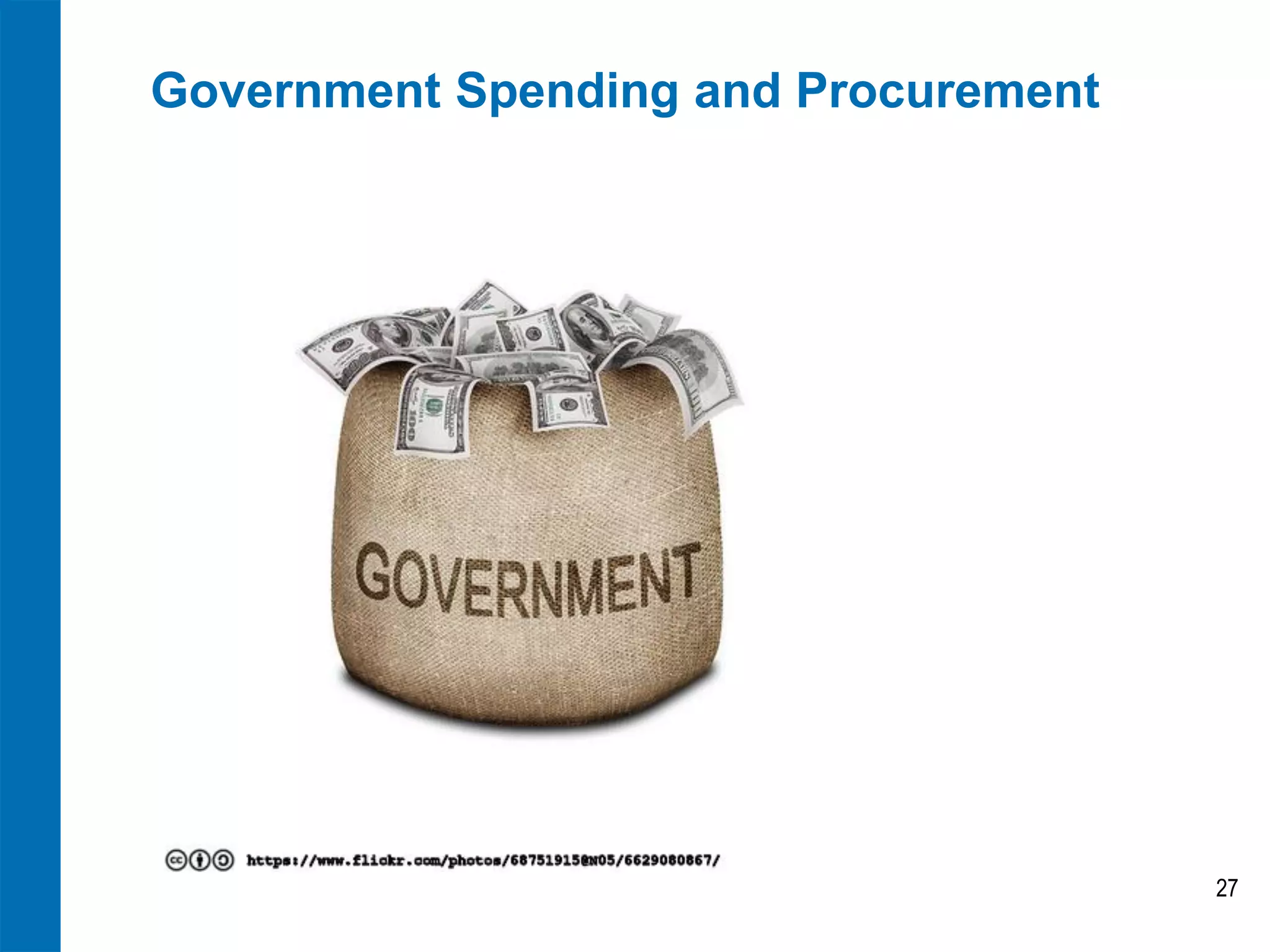
Government Spending and Procurement 
27
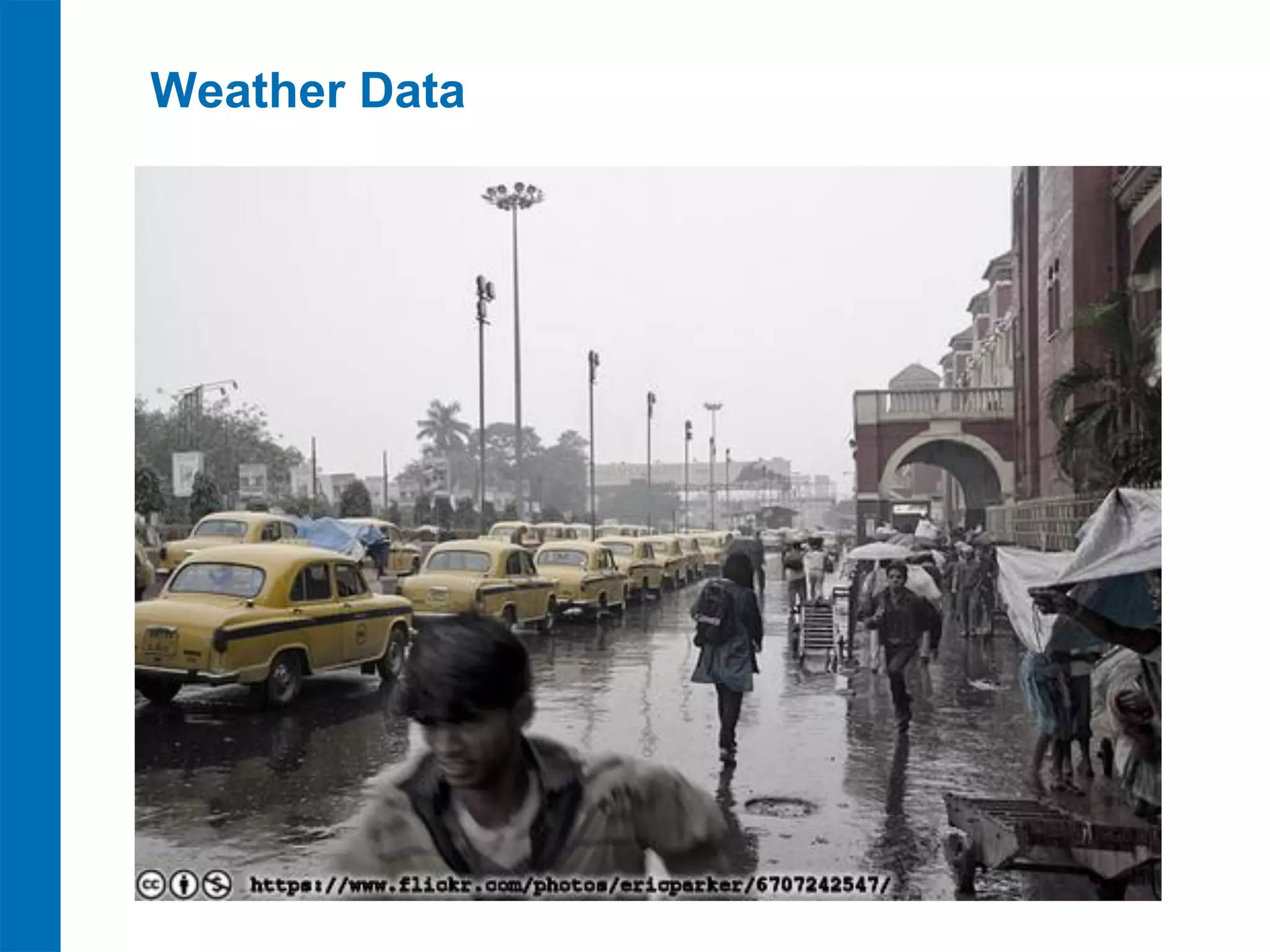
Weather Data
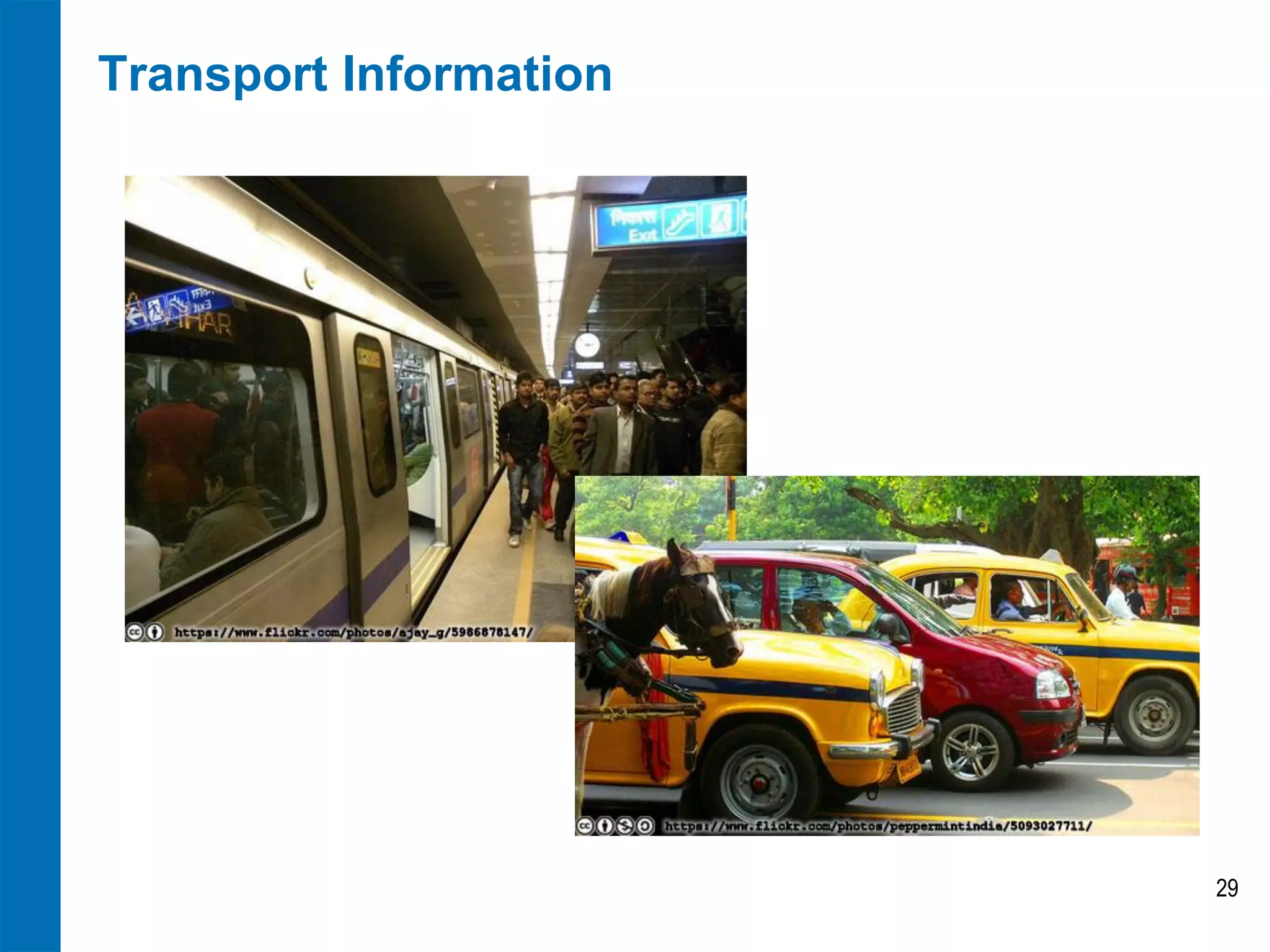
Transport Information 
29
It’s not just about new data 
Scope for “Open Data” also includes data previously “published” but … 
in non-reusable format 
with restricted licence 
only aimed at specialist groups 
only for payment 
only in response to requests 
difficult to find 
30
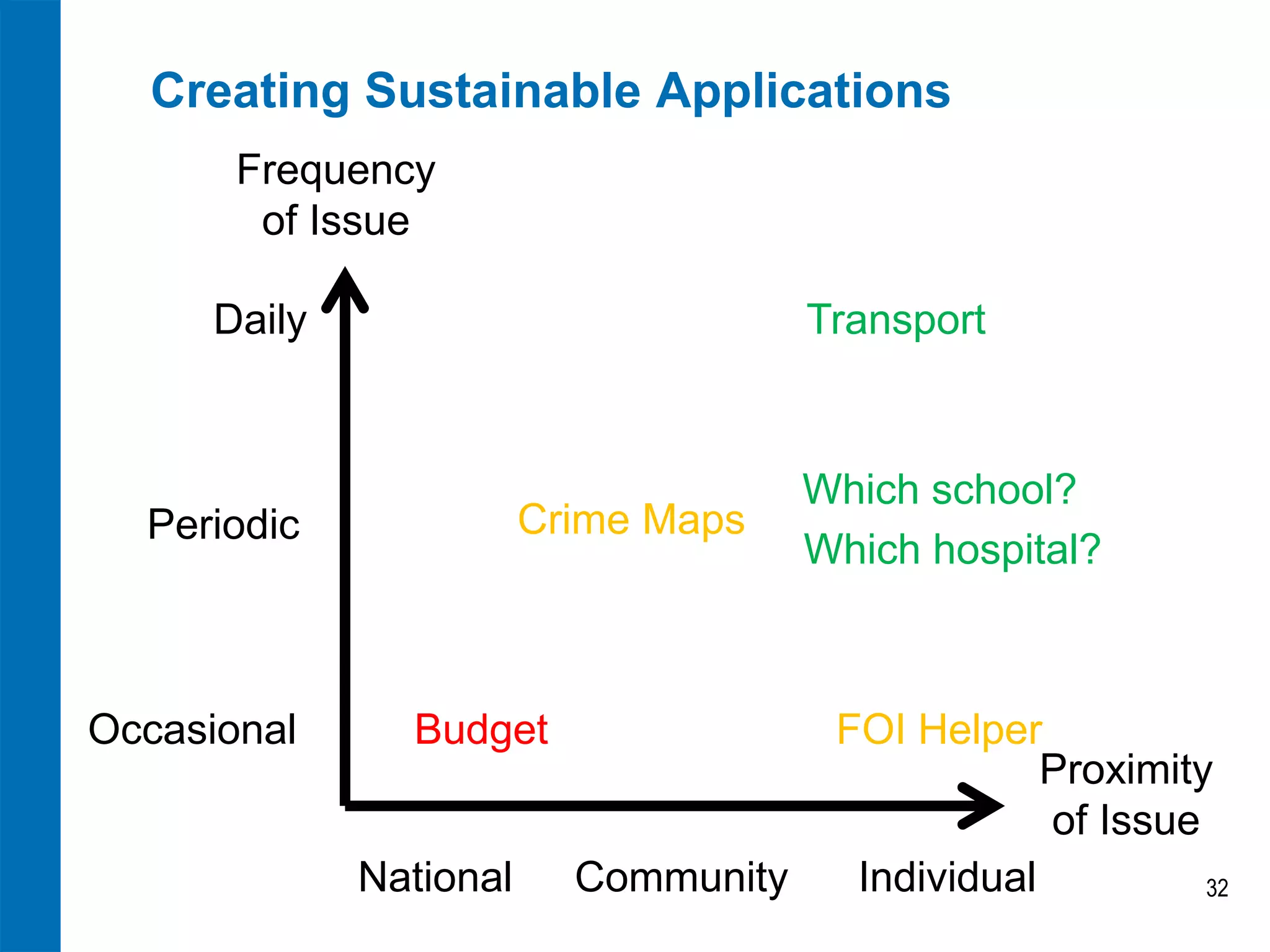
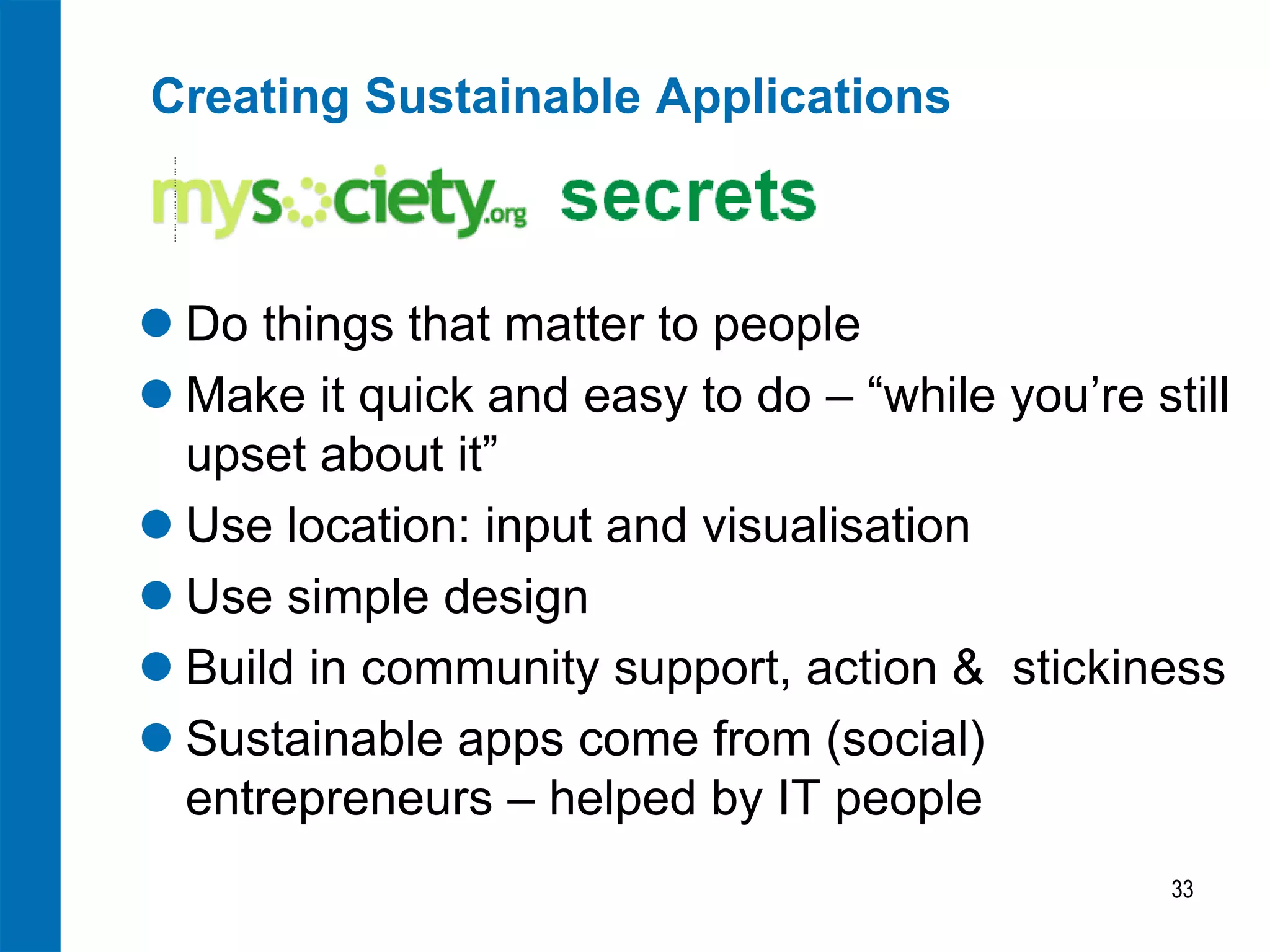
Creating Sustainable Applications 
31
Creating Sustainable Applications 
32 
Individual 
Community 
National 
Daily 
Periodic 
Occasional 
Frequency 
of Issue 
Proximity 
of Issue 
Transport 
Budget 
Which school? 
Which hospital? 
Crime Maps 
FOI Helper
Creating Sustainable Applications 
Do things that matter to people 
Make it quick and easy to do – “while you’re still upset about it” 
Use location: input and visualisation 
Use simple design 
Build in community support, action & stickiness 
Sustainable apps come from (social) entrepreneurs – helped by IT people 
33
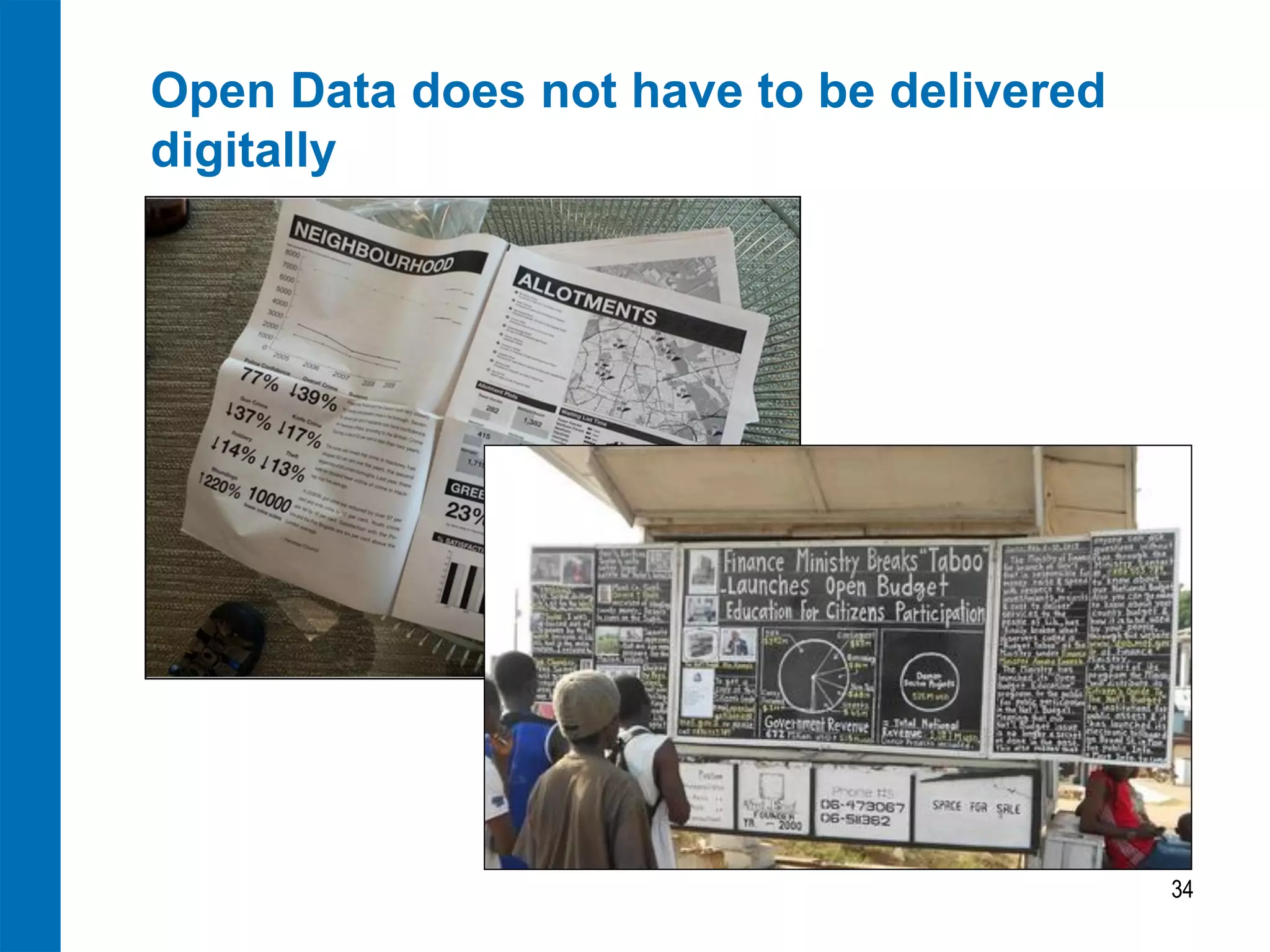
Open Data does not have to be delivered digitally 
34
Best Practices 
35
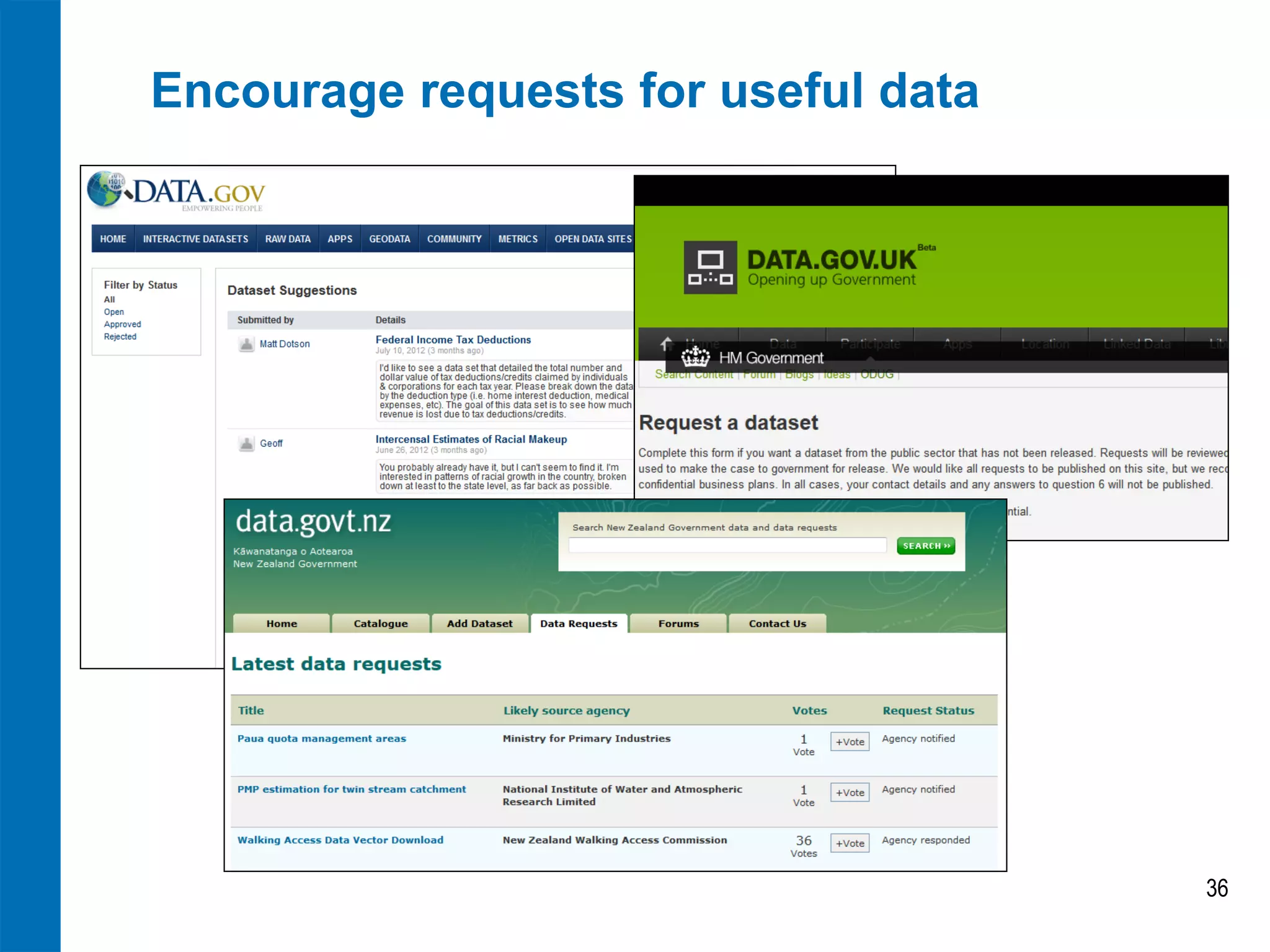
Encourage requests for useful data 
36
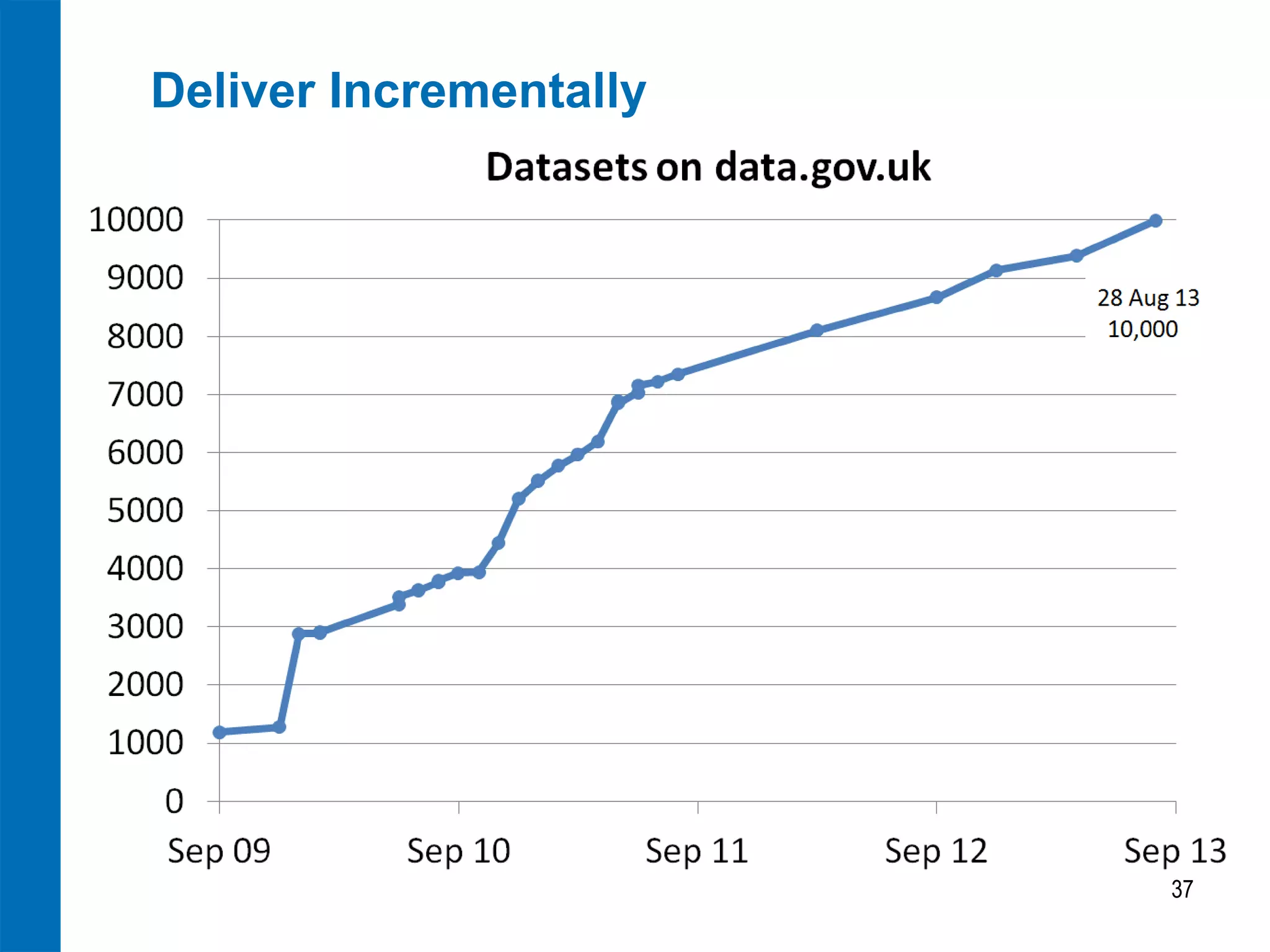
Deliver Incrementally 
37
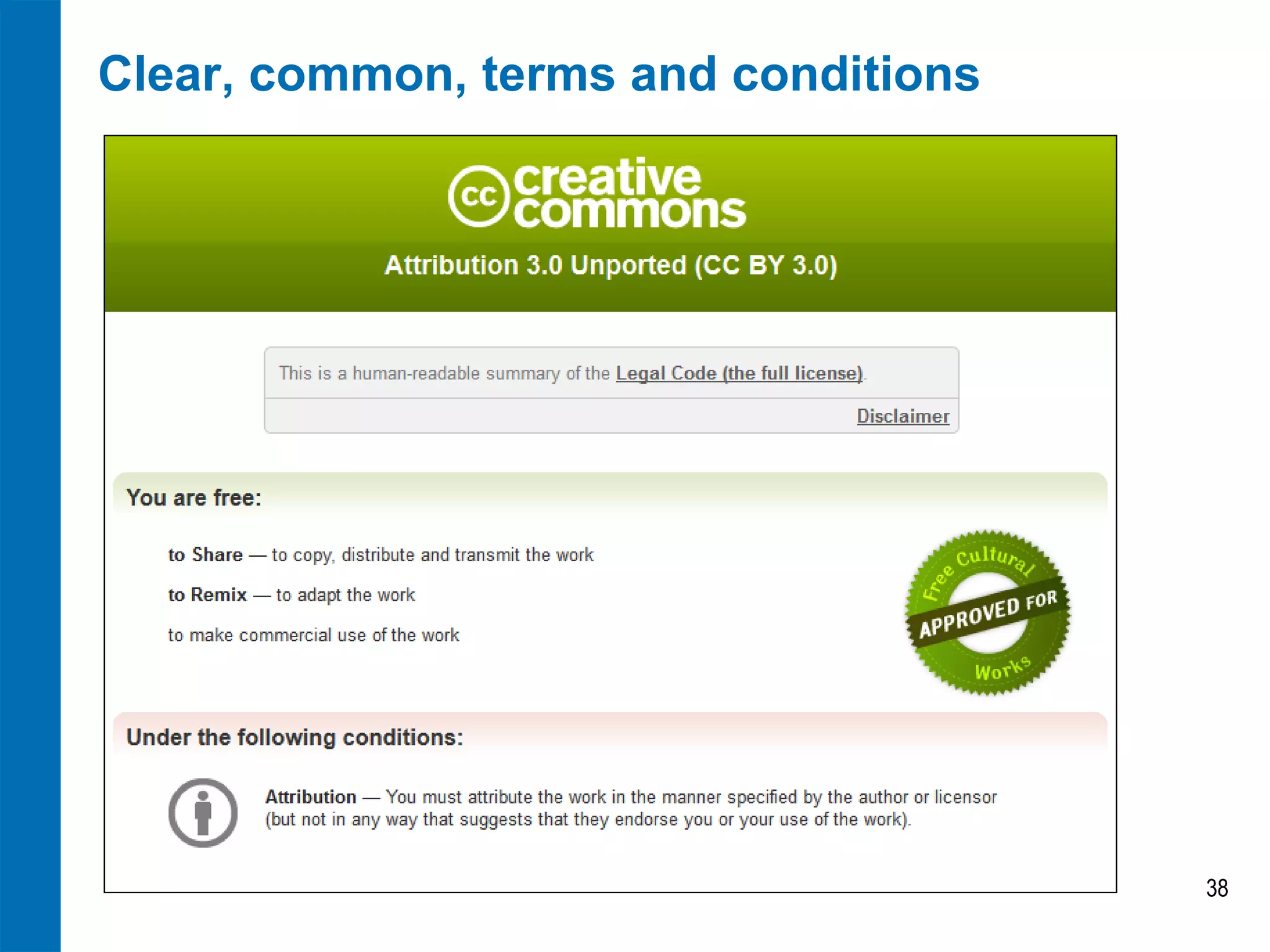
Clear, common, terms and conditions 
38
Consider Privacy of Personal Data 
39
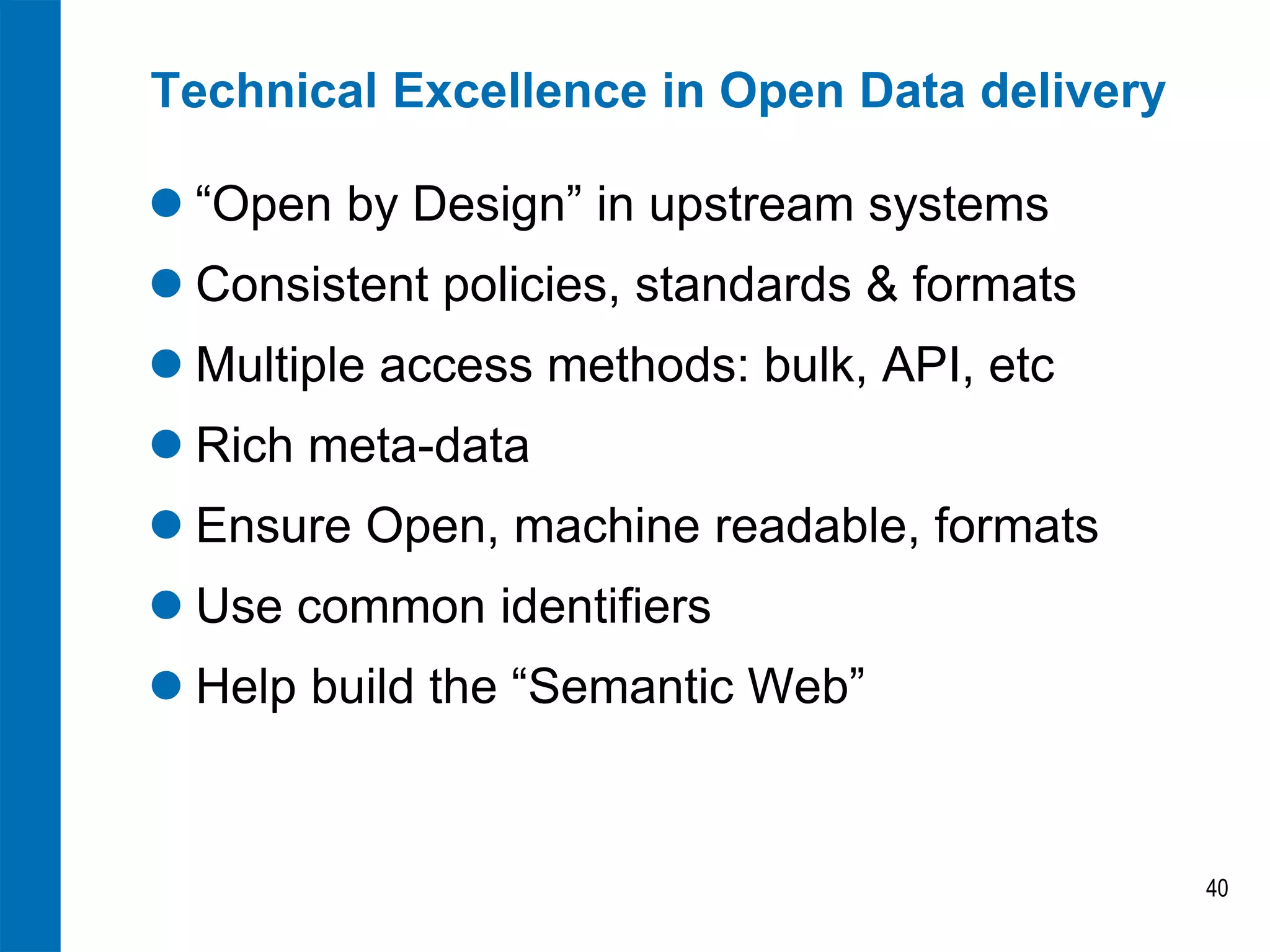
Technical Excellence in Open Data delivery 
“Open by Design” in upstream systems 
Consistent policies, standards & formats 
Multiple access methods: bulk, API, etc 
Rich meta-data 
Ensure Open, machine readable, formats 
Use common identifiers 
Help build the “Semantic Web” 
40
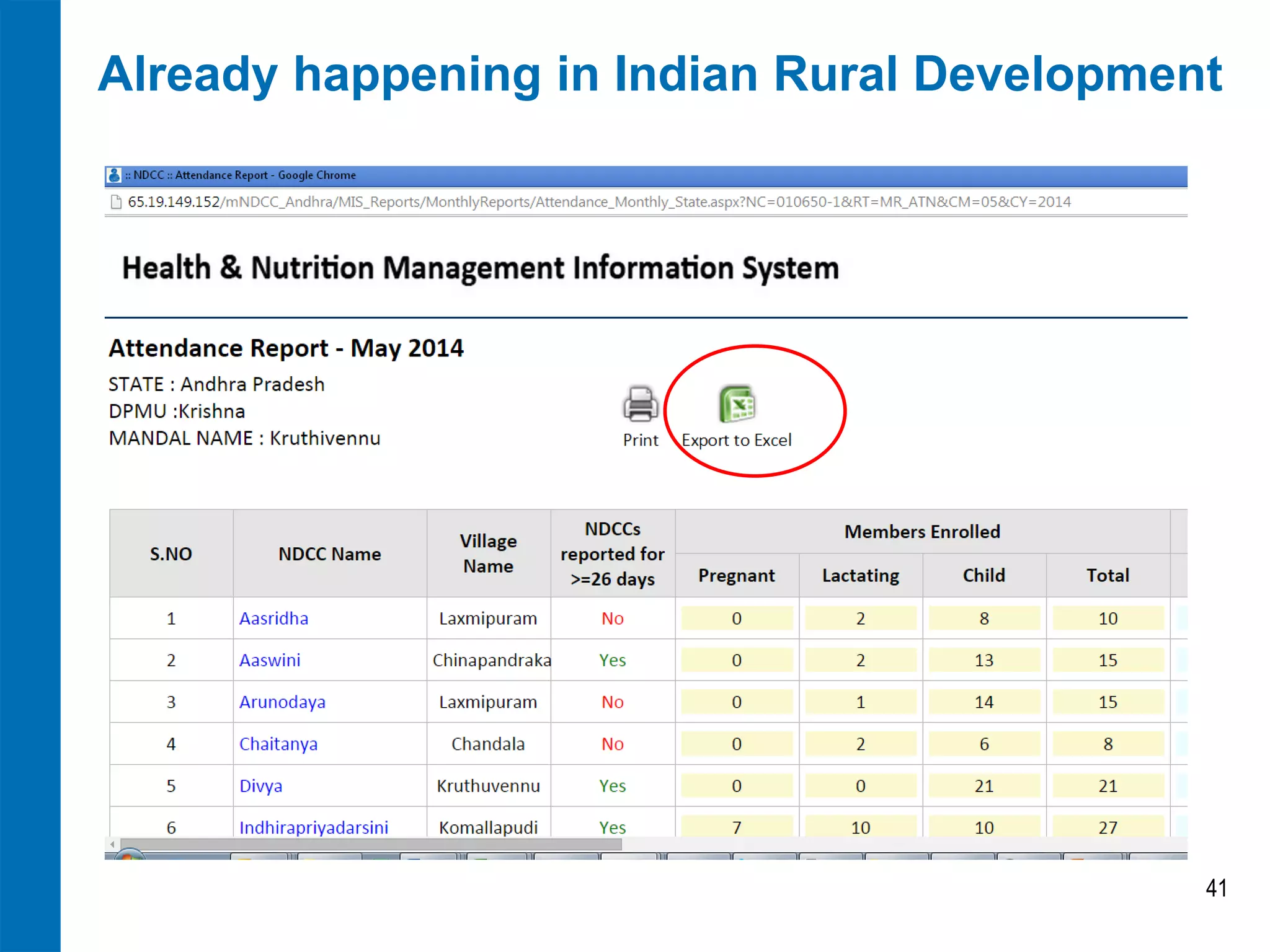
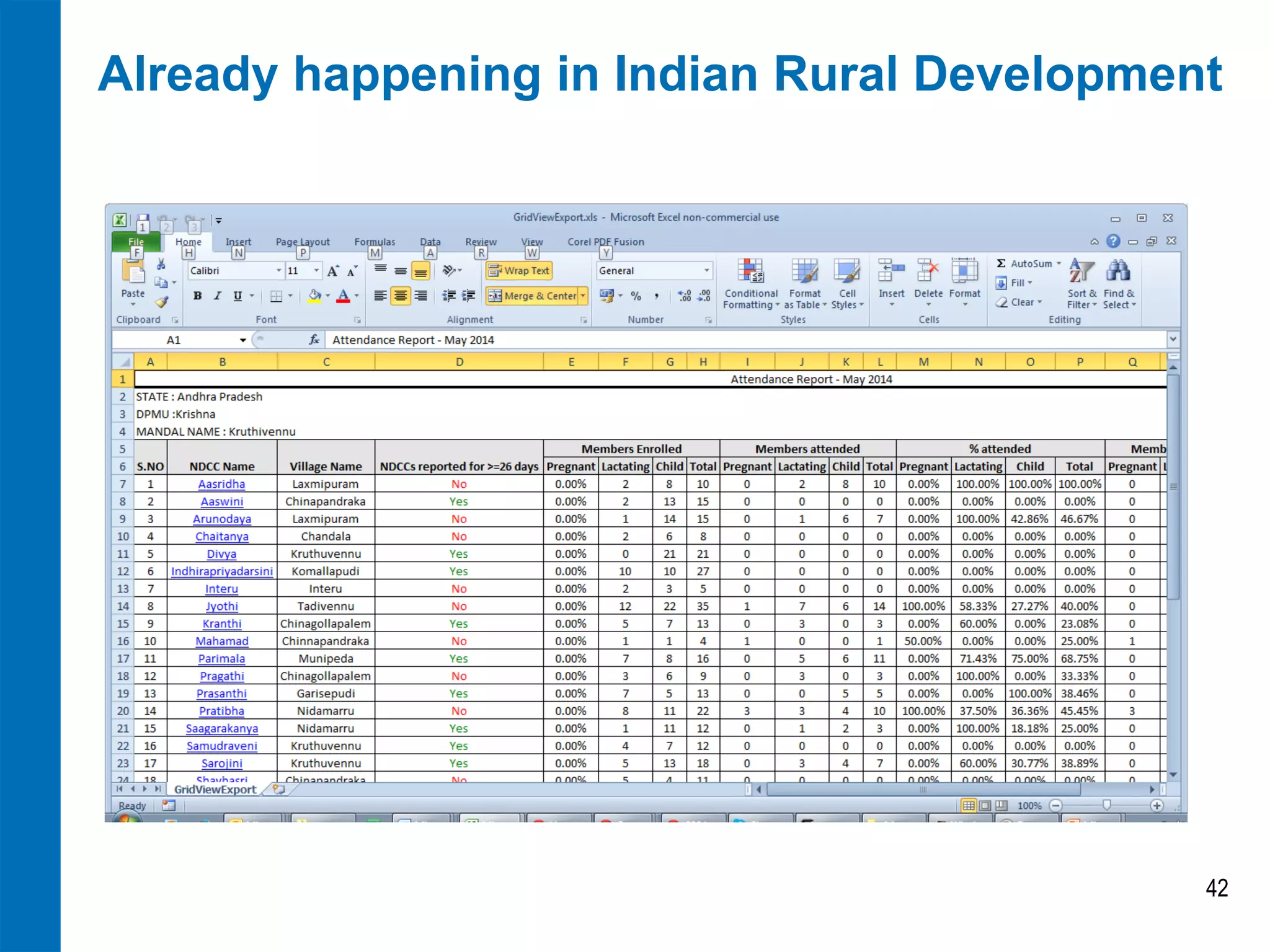
Already happening in Indian Rural Development 
41
Already happening in Indian Rural Development 
42
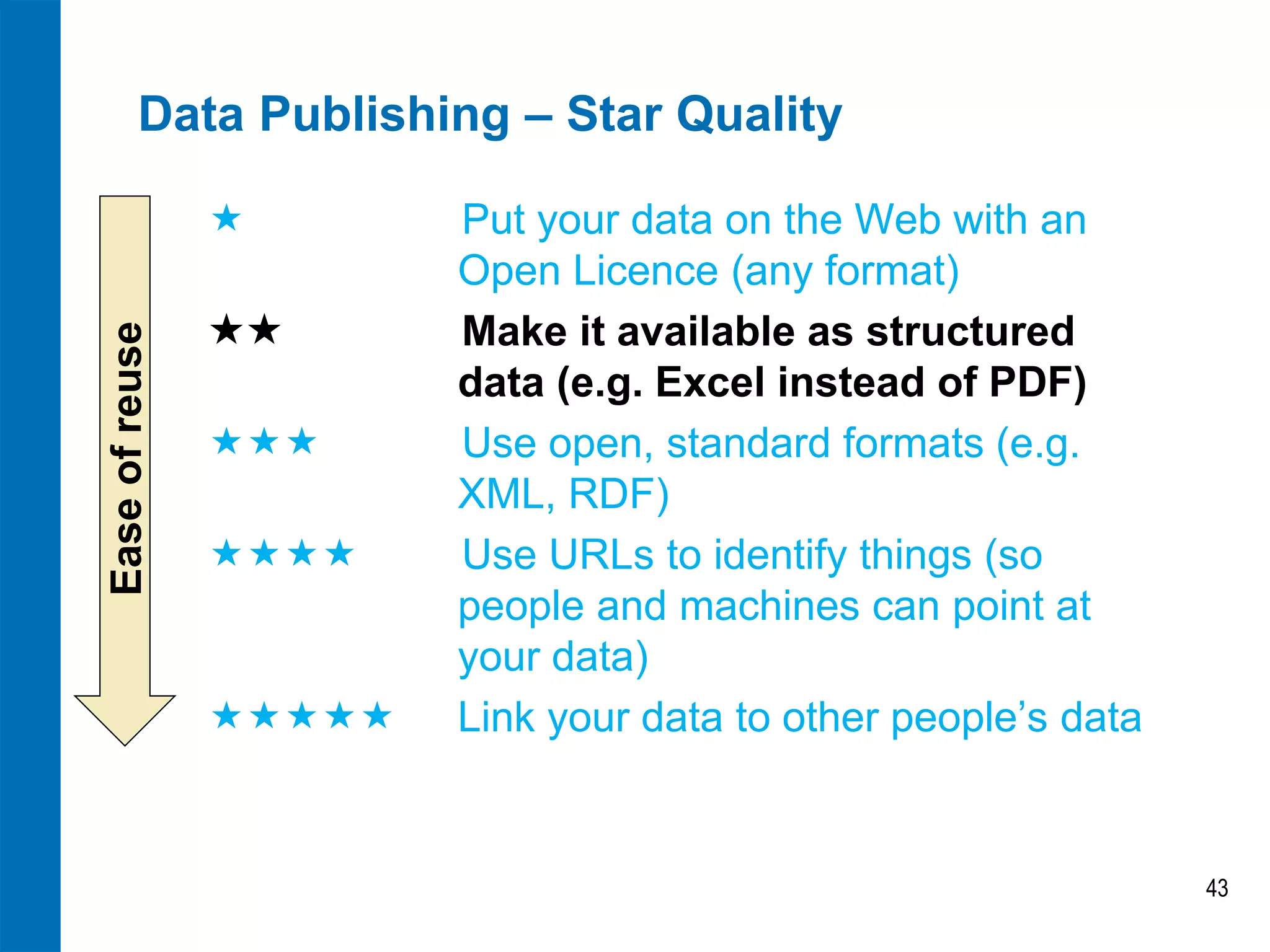
Data Publishing – Star Quality 
 Put your data on the Web with an Open Licence (any format) 
 Make it available as structured data (e.g. Excel instead of PDF) 
 Use open, standard formats (e.g. XML, RDF) 
 Use URLs to identify things (so people and machines can point at your data) 
 Link your data to other people’s data 
43 
Ease of reuse
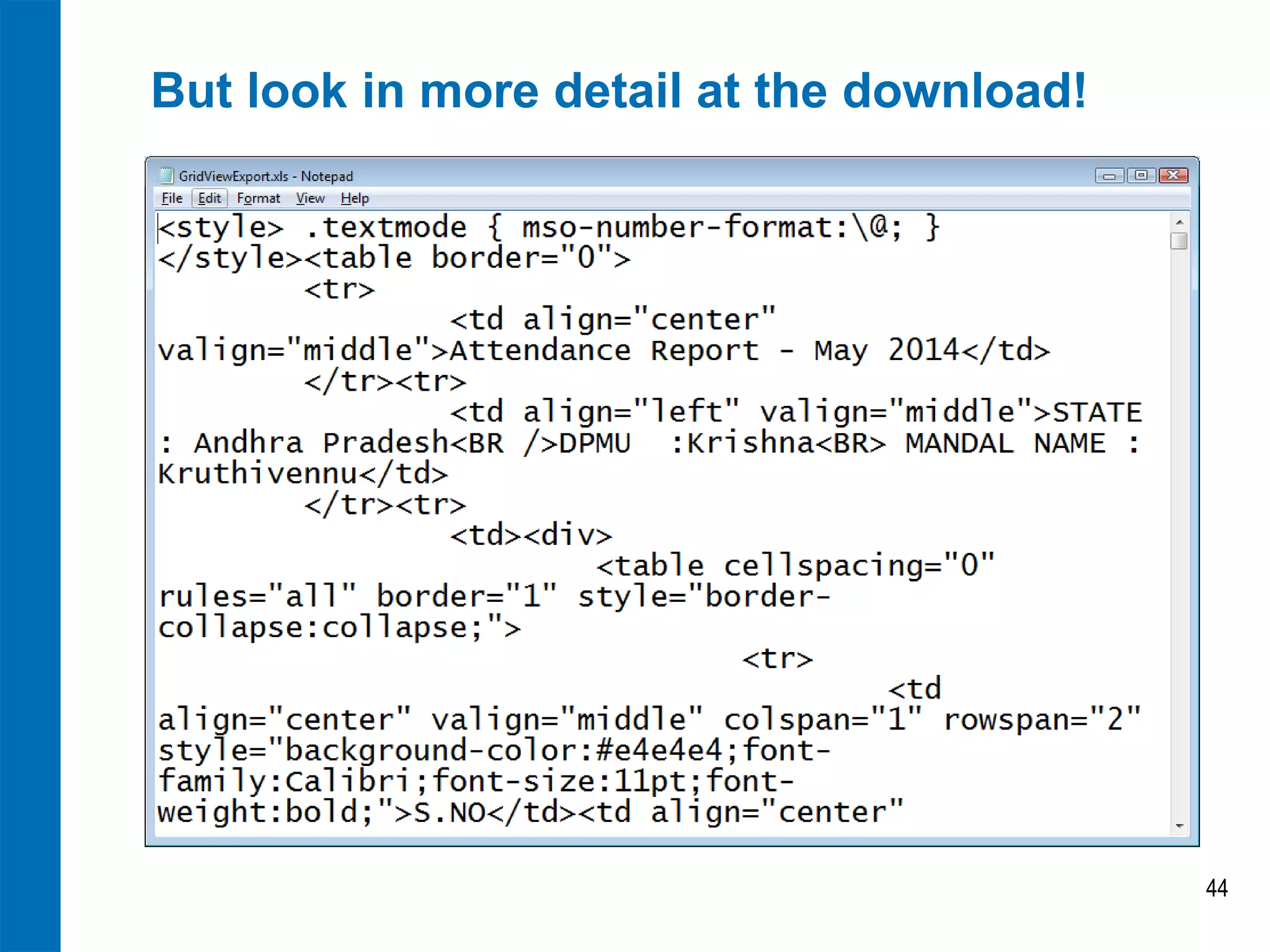
But look in more detail at the download! 
44
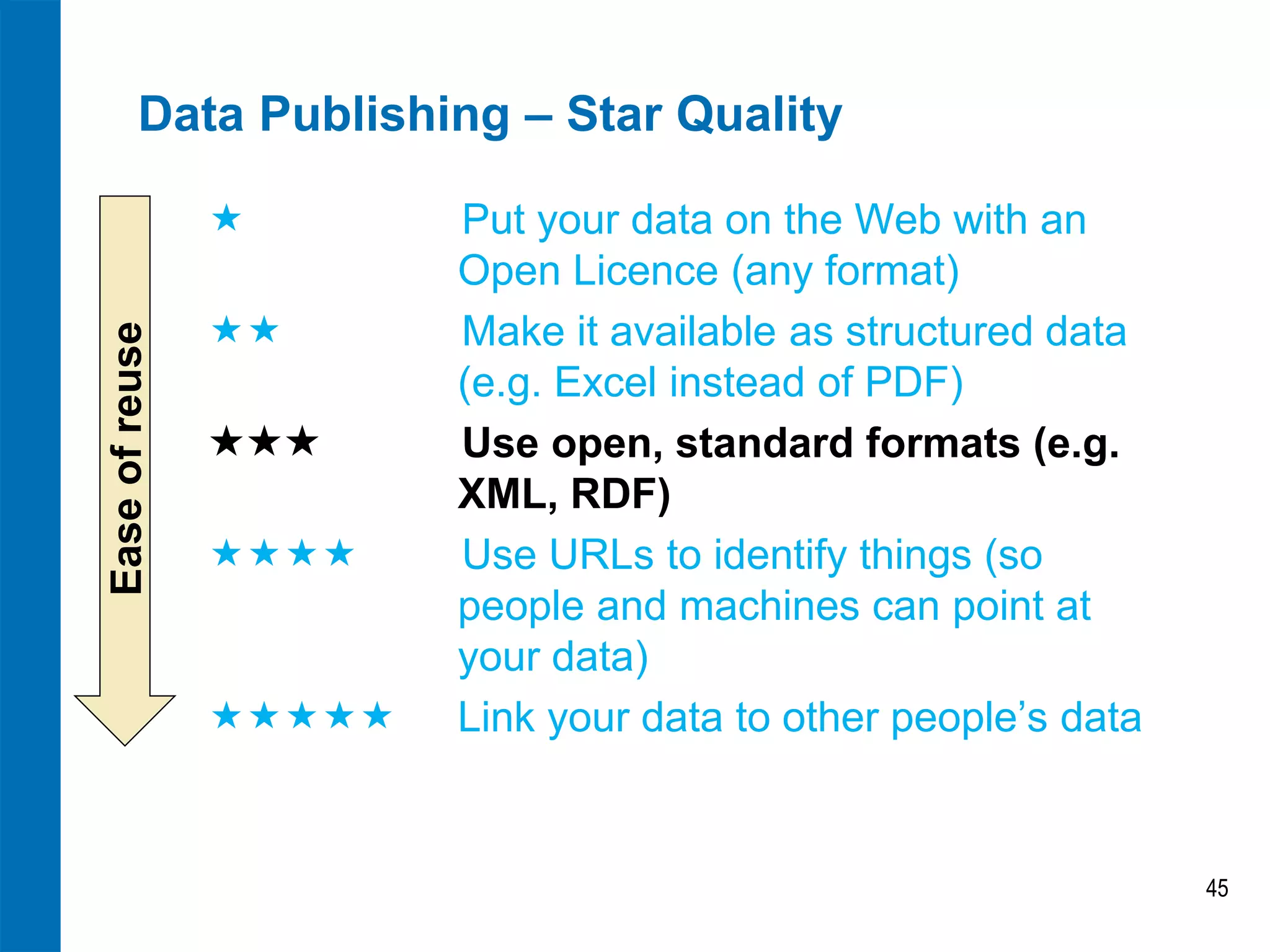
Data Publishing – Star Quality 
 Put your data on the Web with an Open Licence (any format) 
 Make it available as structured data (e.g. Excel instead of PDF) 
 Use open, standard formats (e.g. XML, RDF) 
 Use URLs to identify things (so people and machines can point at your data) 
 Link your data to other people’s data 
45 
Ease of reuse
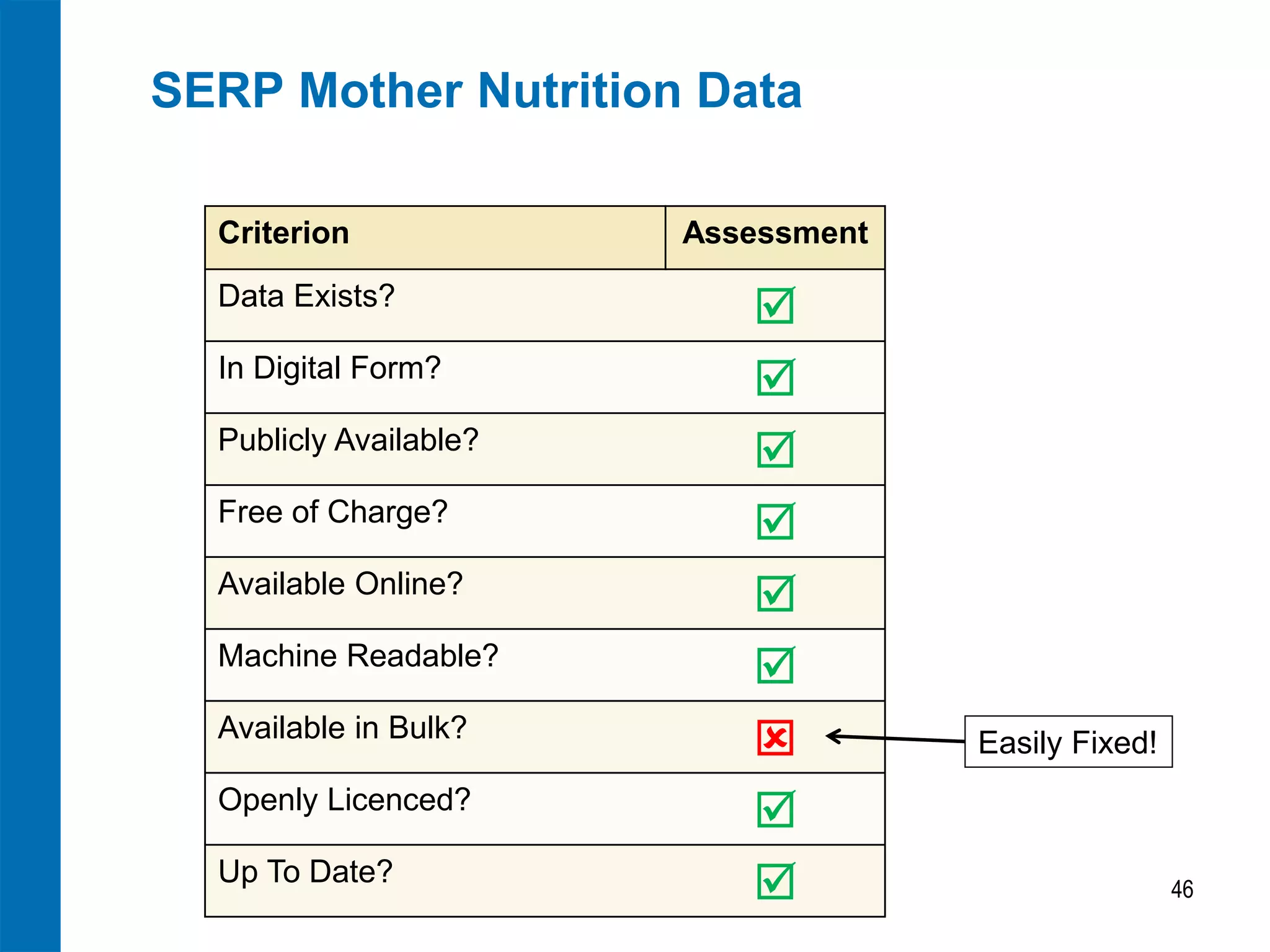
SERP Mother Nutrition Data 
46 
Criterion 
Assessment 
Data Exists? 
 
In Digital Form? 
 
Publicly Available? 
 
Free of Charge? 
 
Available Online? 
 
Machine Readable? 
 
Available in Bulk? 
 
Openly Licenced? 
 
Up To Date? 
 
Easily Fixed!
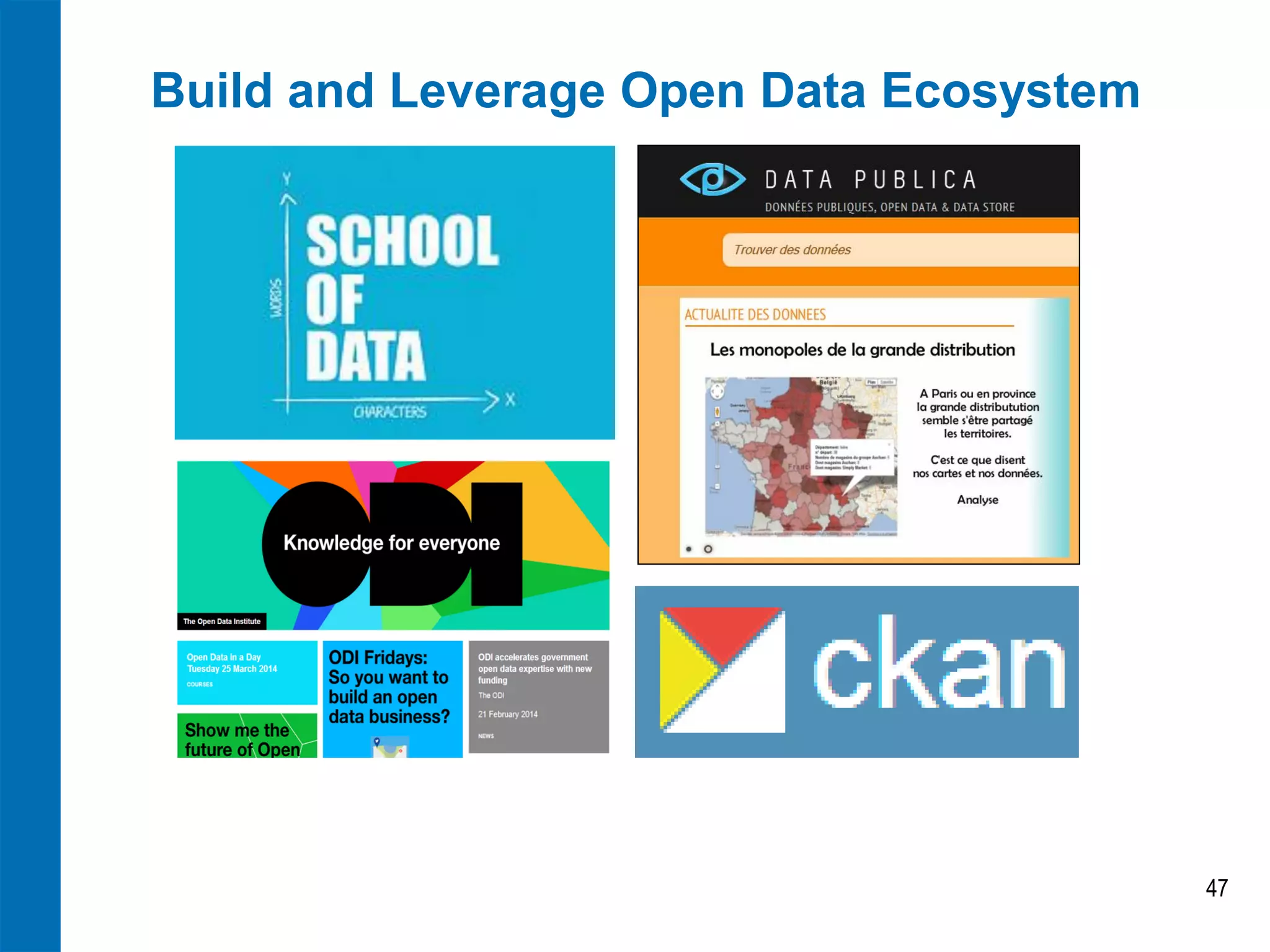
Build and Leverage Open Data Ecosystem 
47
Government needs to play multiple roles 
48
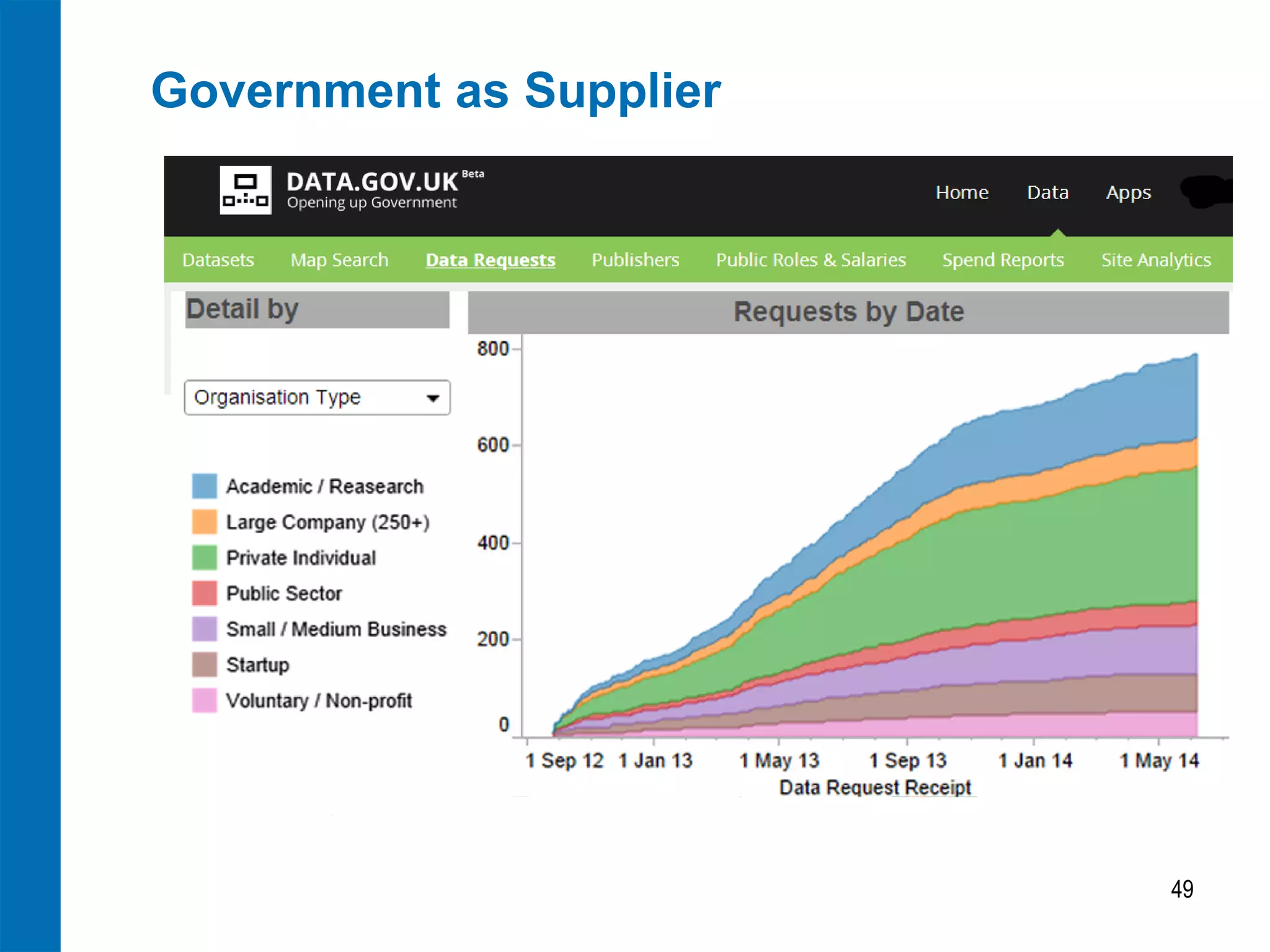
Government as Supplier 
49
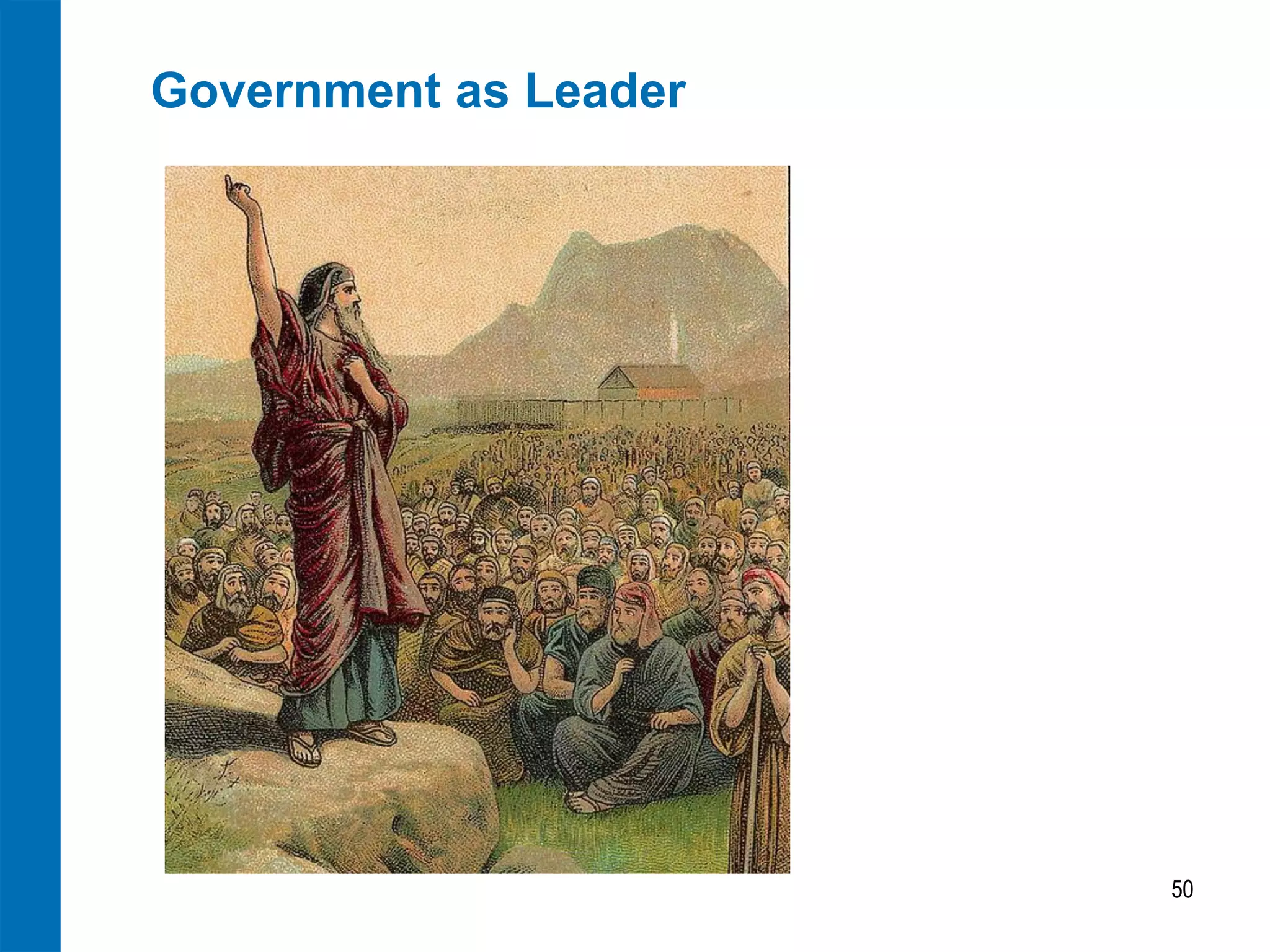
Government as Leader 
50
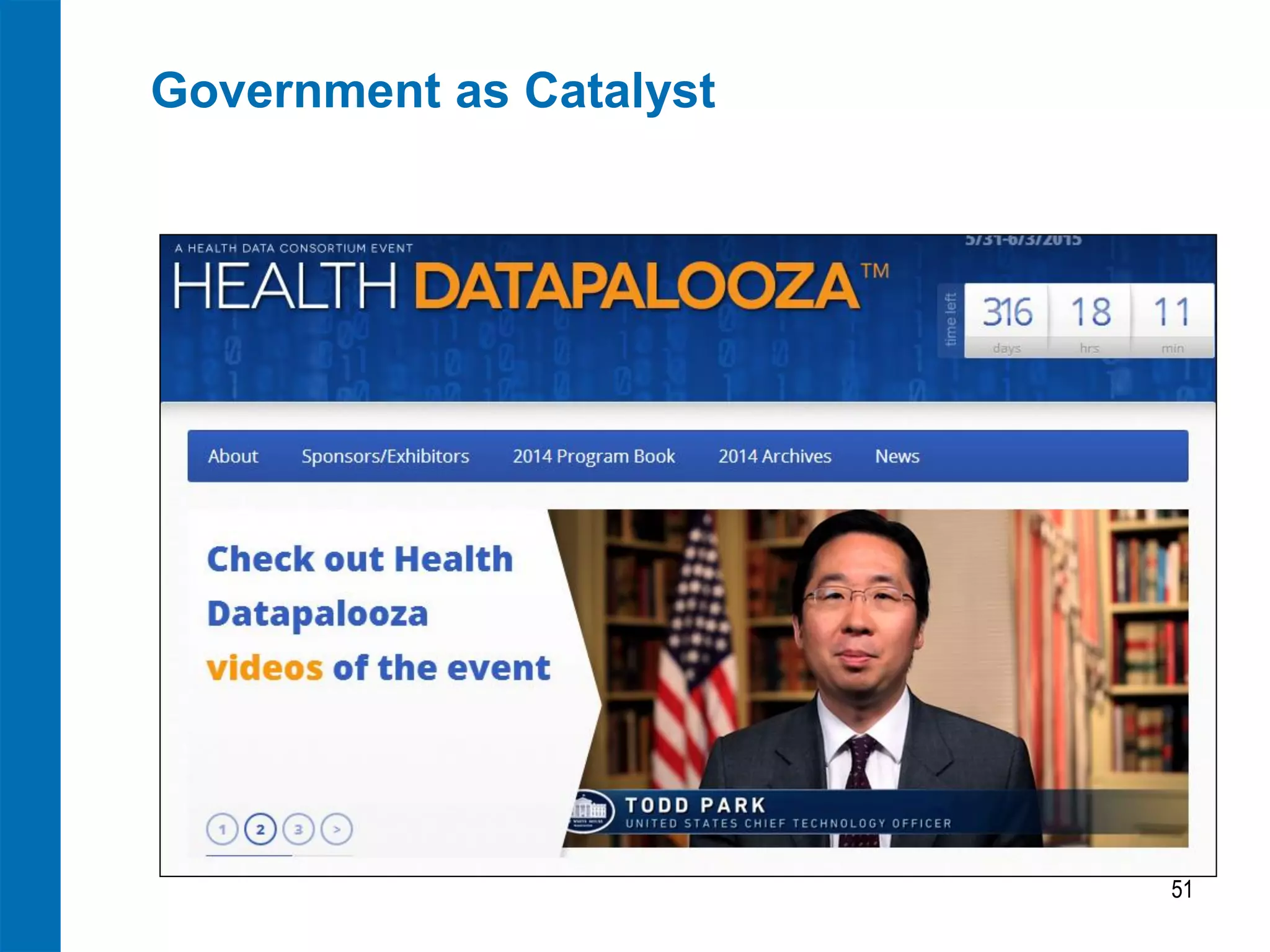
Government as Catalyst 
51
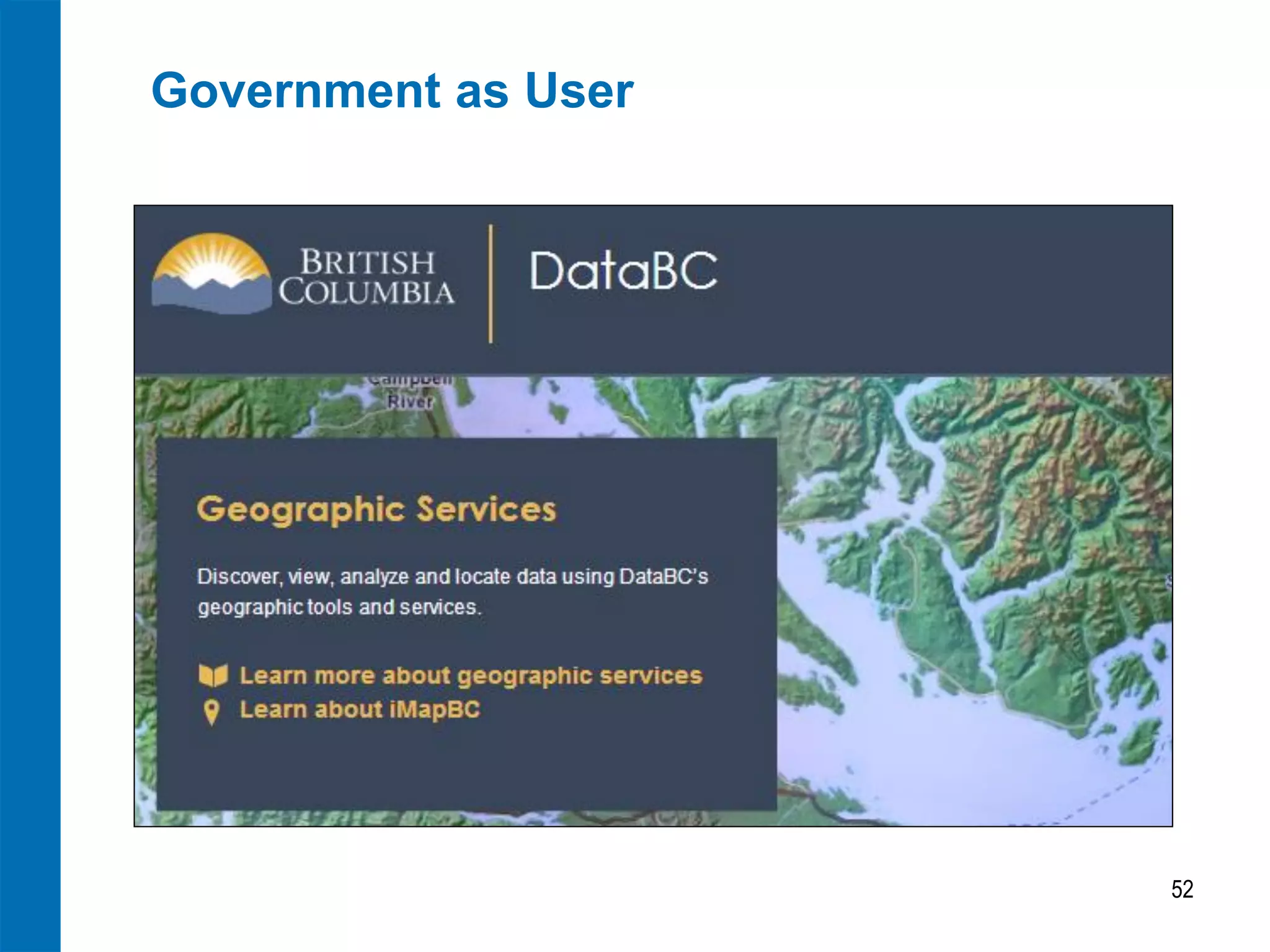
Government as User 
52
Thank You 
53
54

Open Data in Practice: Five Years of Lessons Learned and Best Practice in achieving value and success

  • 1.
    Open Data inPractice: Five Years of Lessons Learned and Best Practice in achieving value and success Andrew Stott UK Transparency Board Senior Consultant, World Bank Hyderabad, India 04 Sep 2014 @dirdigeng andrew.stott@dirdigeng.com
  • 2.
  • 3.
    Policy Objectives ofOpen Data 3 New Economic and Social Value Improved public services More Transparent Government More Efficient Government
  • 4.
    Open Data canhelp public policy and service delivery 4
  • 5.
    Greater Citizen Engagementand Social Accountability 5 Uganda/Health 33% reduction in under-5 mortality 20% extra utilisation of out-patient services Significant improvements in: Immunization Waiting times Absenteeism
  • 6.
    6 With OpenStreetMaps With Google Maps ICT for Urban Development Mapping the Kibera slum in Nairobi
  • 7.
    Additional Value: ReferenceData for others 7
  • 8.
    Base for contributionof citizen-sourced data 8
  • 9.
    Additional value: Betteruse of data in government 9 EU INSPIRE: ROI 8:1 in first 4 years within government itself, plus wider benefits
  • 10.
  • 11.
    More actors: OpenTransport Data 11 London ~500 Applications from ~ 25 feeds ~5000 people involved in “app industry” TFL have stopped making their own apps Madrid: 20 bus apps St Petersburg: 30 bus apps New York: 68 subway apps
  • 12.
    Combining Data addsnew insights 12
  • 13.
    Irene Choge, datajournalist, NTV, Kenya. 13
  • 14.
    The Health Assignment:Toilets and Grades 14 http://www.youtube.com/watch?v=A58R2yNQtio
  • 15.
    Opening data meansthe data is used much more 15
  • 16.
    Case Study: StatisticsGermany 16 Users: +1800% Downloads: +800%
  • 17.
    Opening Data meansit is used much more “Where PSBs moved to marginal and zero cost charging, the number of re-users increased by between 1,000% and 10,000%.” “Lowering charges may attract new types of re-users, in particular SMEs.” “Once re-use facilitation processes are properly organized … they become embedded in the PSB's public task-funded activities at no extra cost.” -Deloitte/POPSIS study for EU 17
  • 18.
    What are theOpen Data Businesses 18
  • 19.
  • 20.
  • 21.
  • 22.
  • 23.
    Which data ismost valuable or most widely valuable? 23
  • 24.
    Census and otherdetailed statistics 24
  • 25.
  • 26.
  • 27.
  • 28.
  • 29.
  • 30.
    It’s not justabout new data Scope for “Open Data” also includes data previously “published” but … in non-reusable format with restricted licence only aimed at specialist groups only for payment only in response to requests difficult to find 30
  • 31.
  • 32.
    Creating Sustainable Applications 32 Individual Community National Daily Periodic Occasional Frequency of Issue Proximity of Issue Transport Budget Which school? Which hospital? Crime Maps FOI Helper
  • 33.
    Creating Sustainable Applications Do things that matter to people Make it quick and easy to do – “while you’re still upset about it” Use location: input and visualisation Use simple design Build in community support, action & stickiness Sustainable apps come from (social) entrepreneurs – helped by IT people 33
  • 34.
    Open Data doesnot have to be delivered digitally 34
  • 35.
  • 36.
    Encourage requests foruseful data 36
  • 37.
  • 38.
    Clear, common, termsand conditions 38
  • 39.
    Consider Privacy ofPersonal Data 39
  • 40.
    Technical Excellence inOpen Data delivery “Open by Design” in upstream systems Consistent policies, standards & formats Multiple access methods: bulk, API, etc Rich meta-data Ensure Open, machine readable, formats Use common identifiers Help build the “Semantic Web” 40
  • 41.
    Already happening inIndian Rural Development 41
  • 42.
    Already happening inIndian Rural Development 42
  • 43.
    Data Publishing –Star Quality  Put your data on the Web with an Open Licence (any format)  Make it available as structured data (e.g. Excel instead of PDF)  Use open, standard formats (e.g. XML, RDF)  Use URLs to identify things (so people and machines can point at your data)  Link your data to other people’s data 43 Ease of reuse
  • 44.
    But look inmore detail at the download! 44
  • 45.
    Data Publishing –Star Quality  Put your data on the Web with an Open Licence (any format)  Make it available as structured data (e.g. Excel instead of PDF)  Use open, standard formats (e.g. XML, RDF)  Use URLs to identify things (so people and machines can point at your data)  Link your data to other people’s data 45 Ease of reuse
  • 46.
    SERP Mother NutritionData 46 Criterion Assessment Data Exists?  In Digital Form?  Publicly Available?  Free of Charge?  Available Online?  Machine Readable?  Available in Bulk?  Openly Licenced?  Up To Date?  Easily Fixed!
  • 47.
    Build and LeverageOpen Data Ecosystem 47
  • 48.
    Government needs toplay multiple roles 48
  • 49.
  • 50.
  • 51.
  • 52.
  • 53.
  • 54.