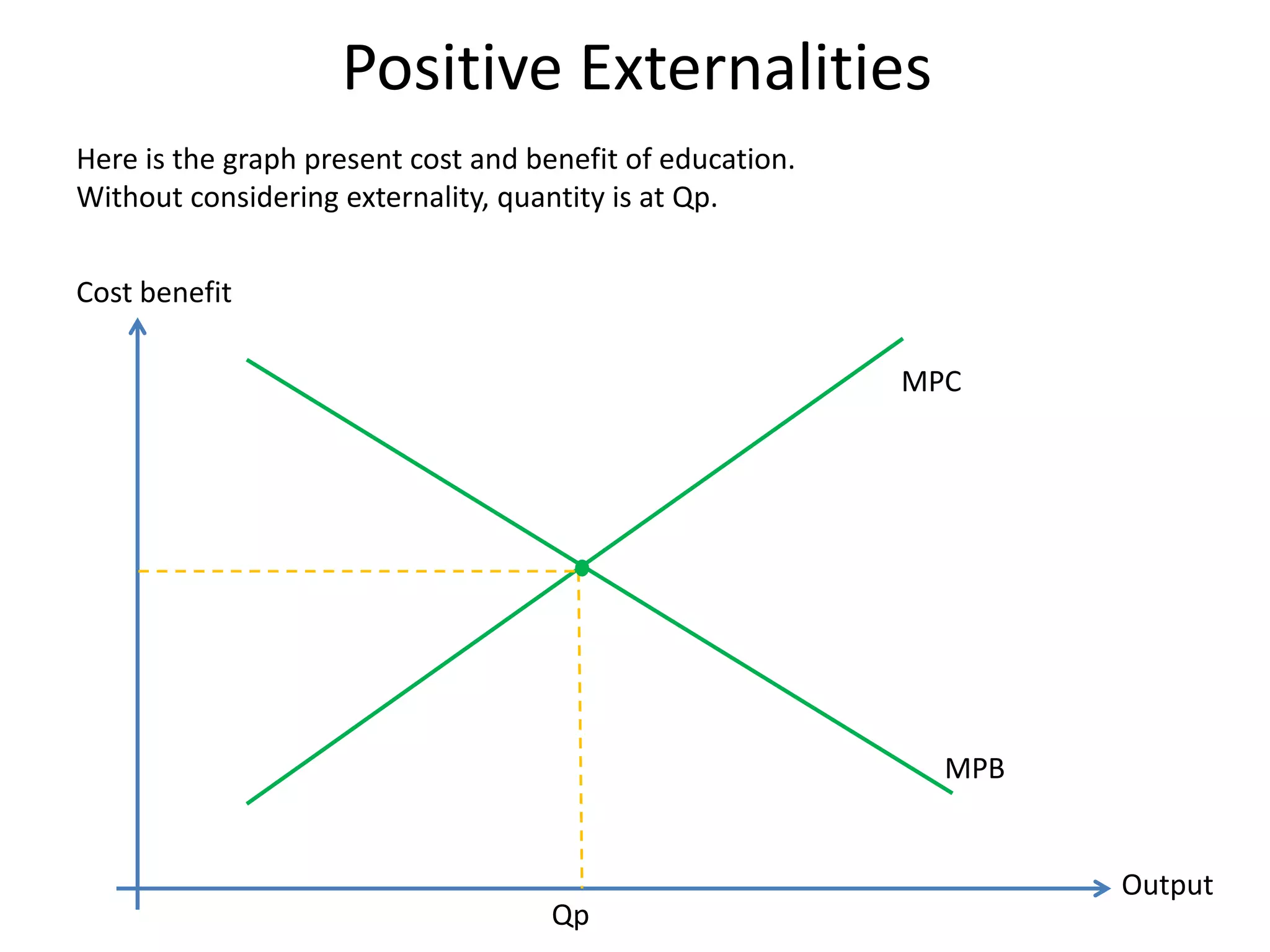
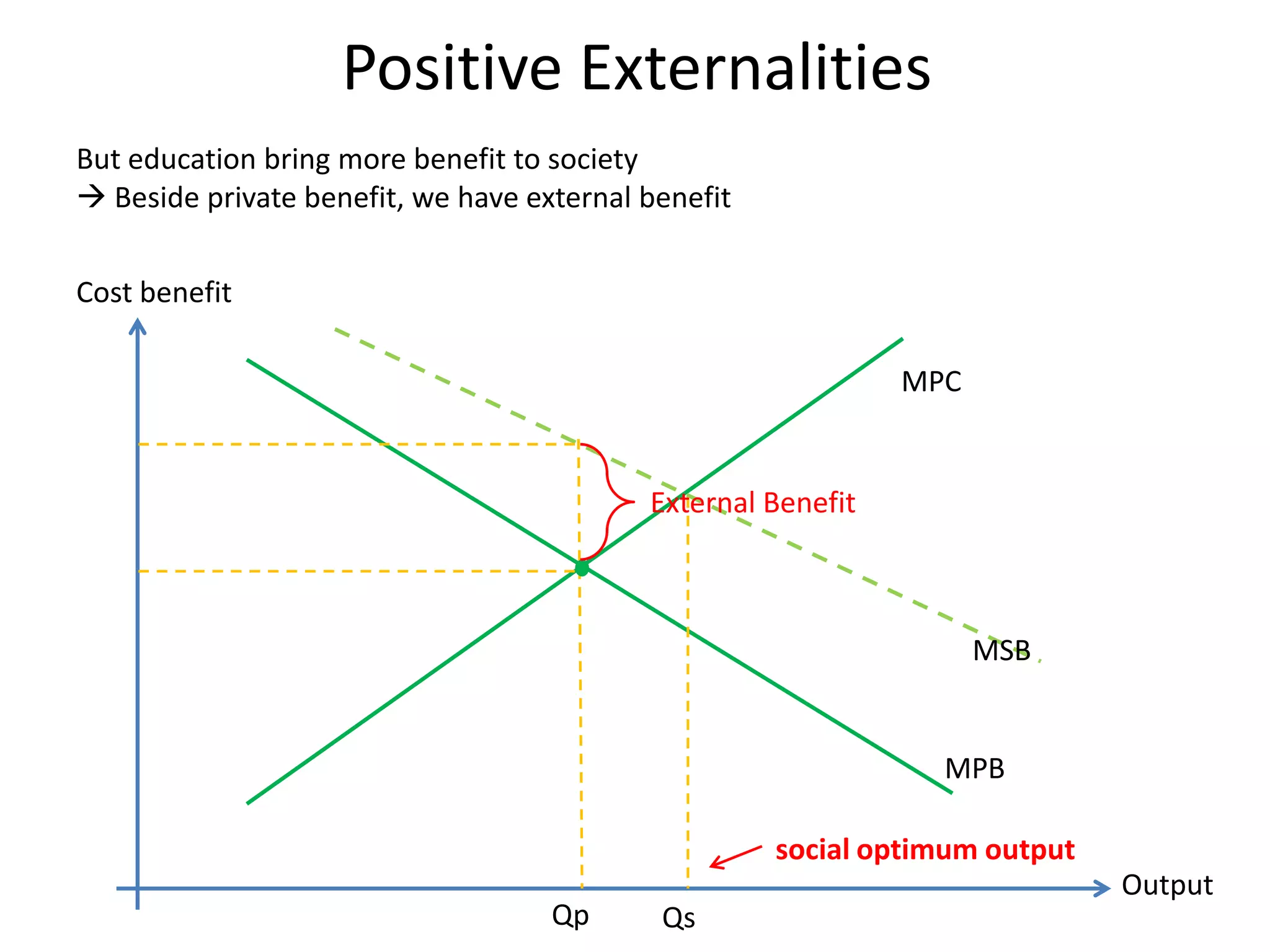
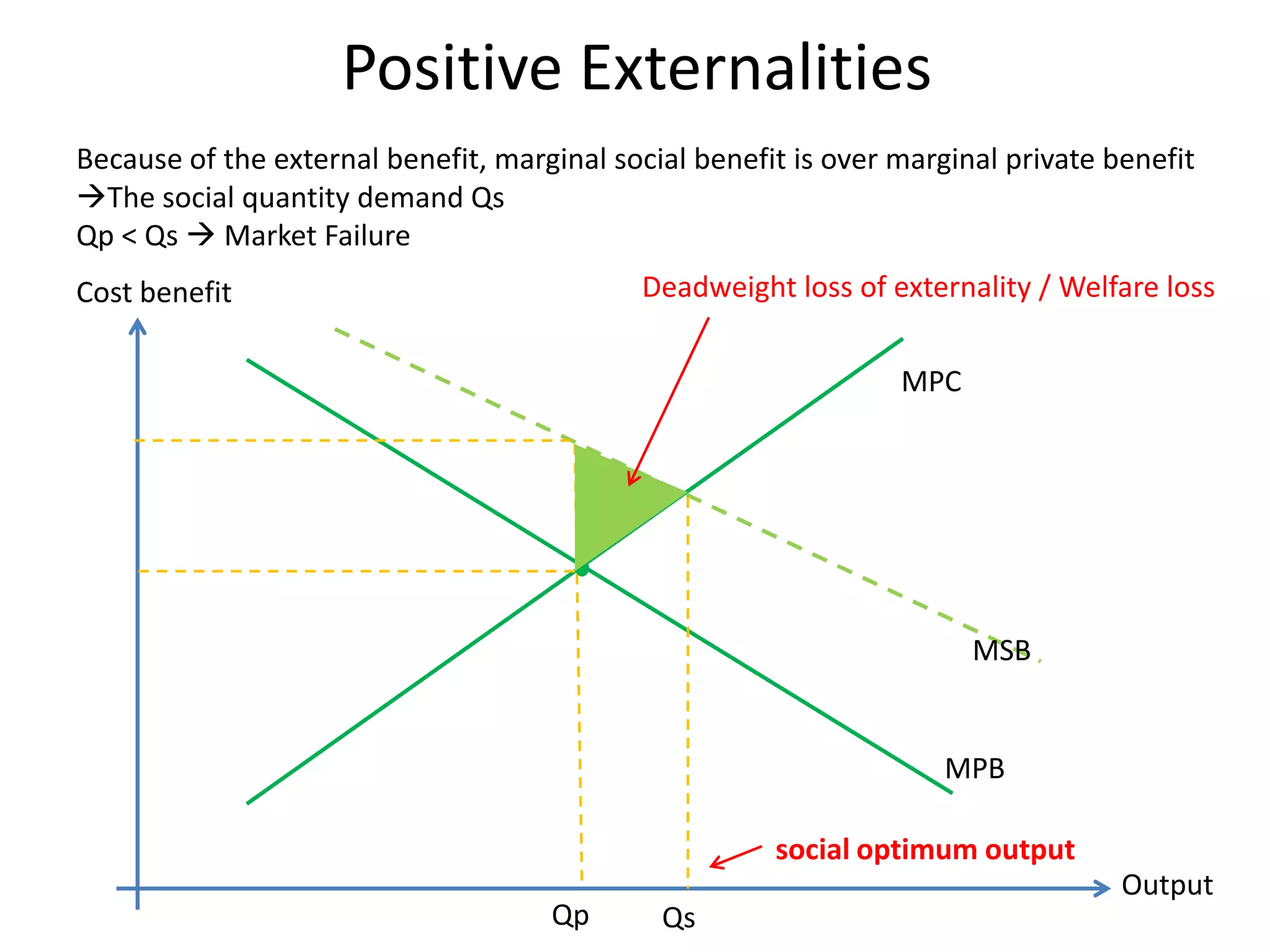
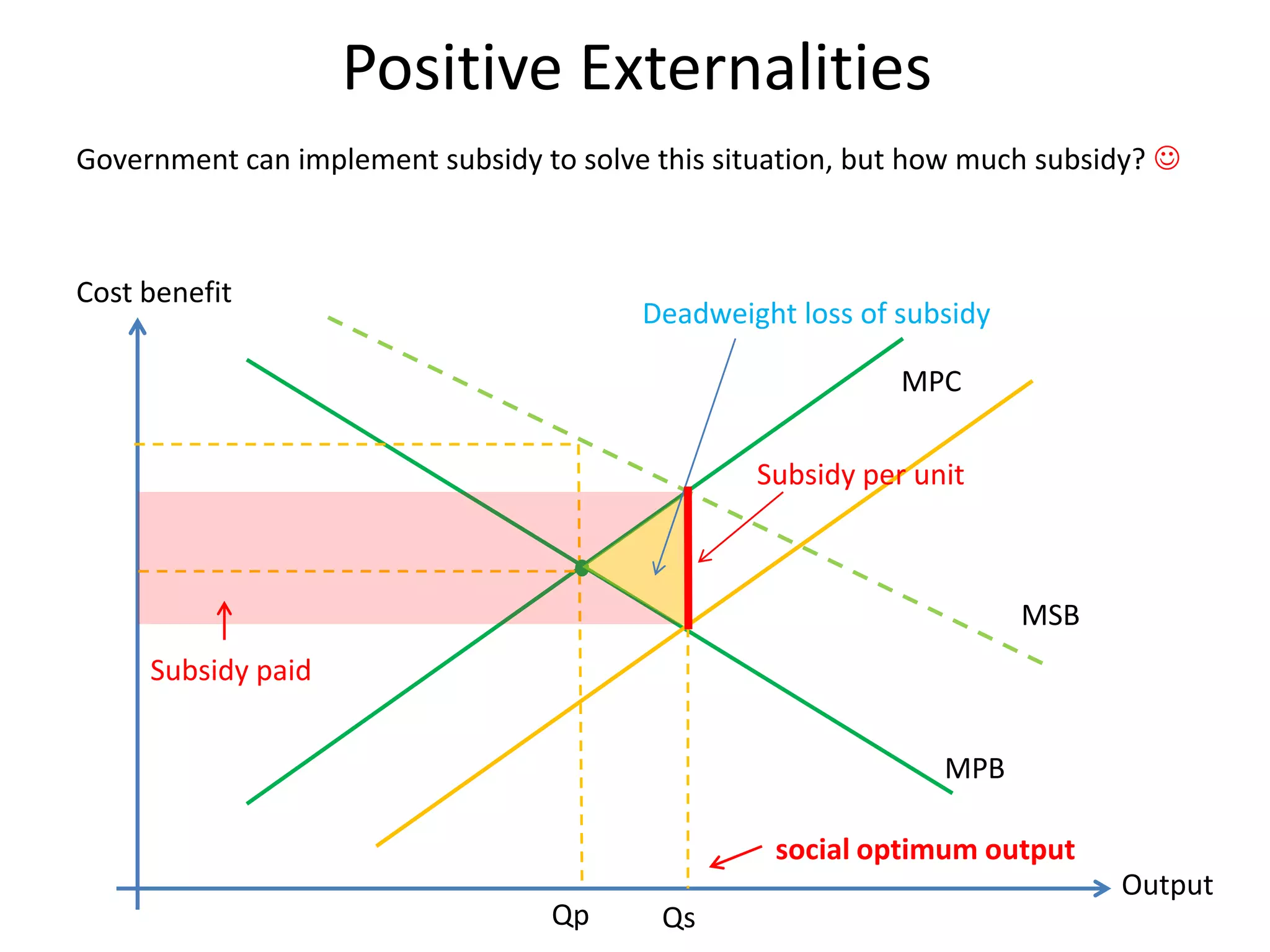
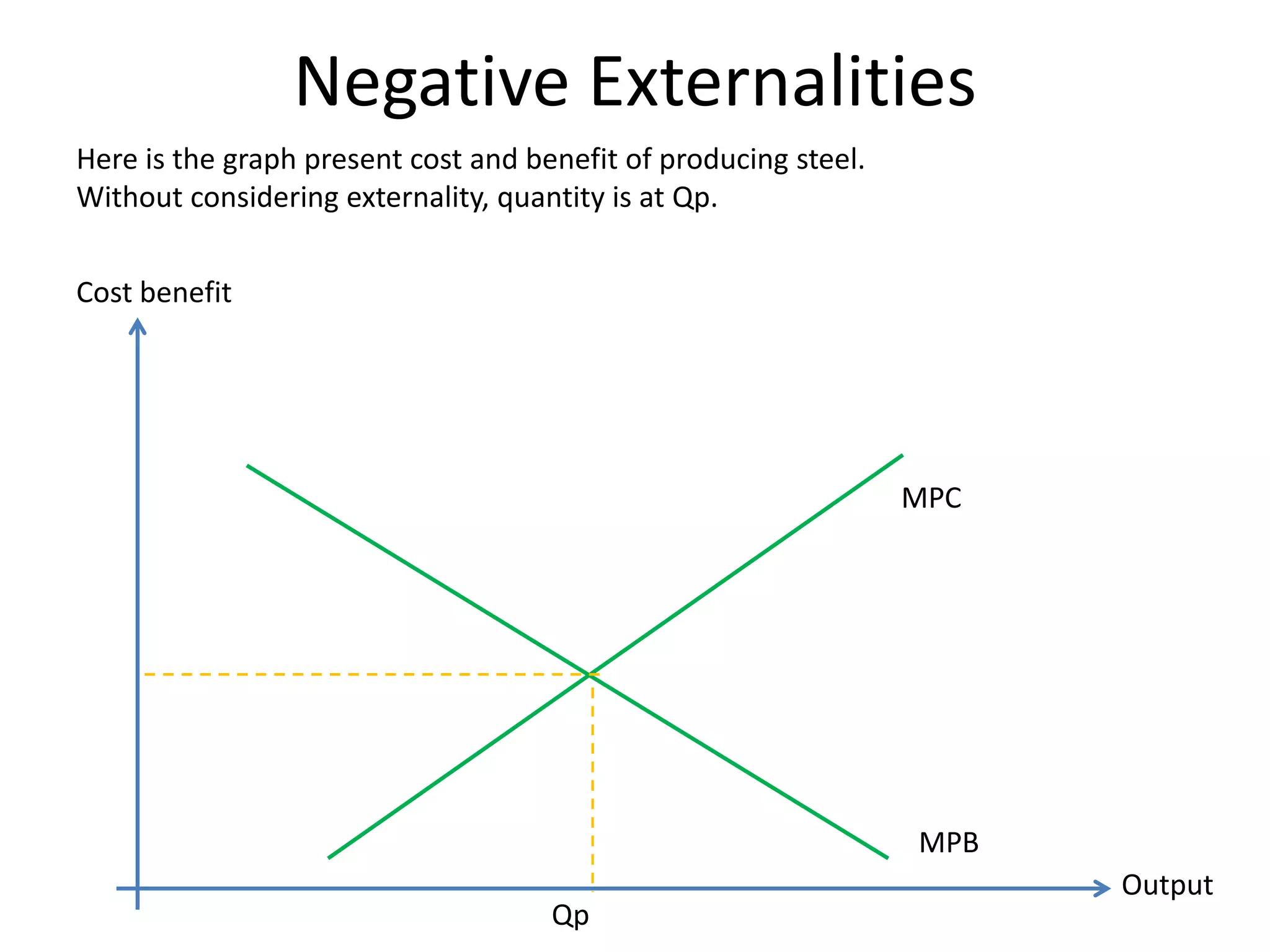
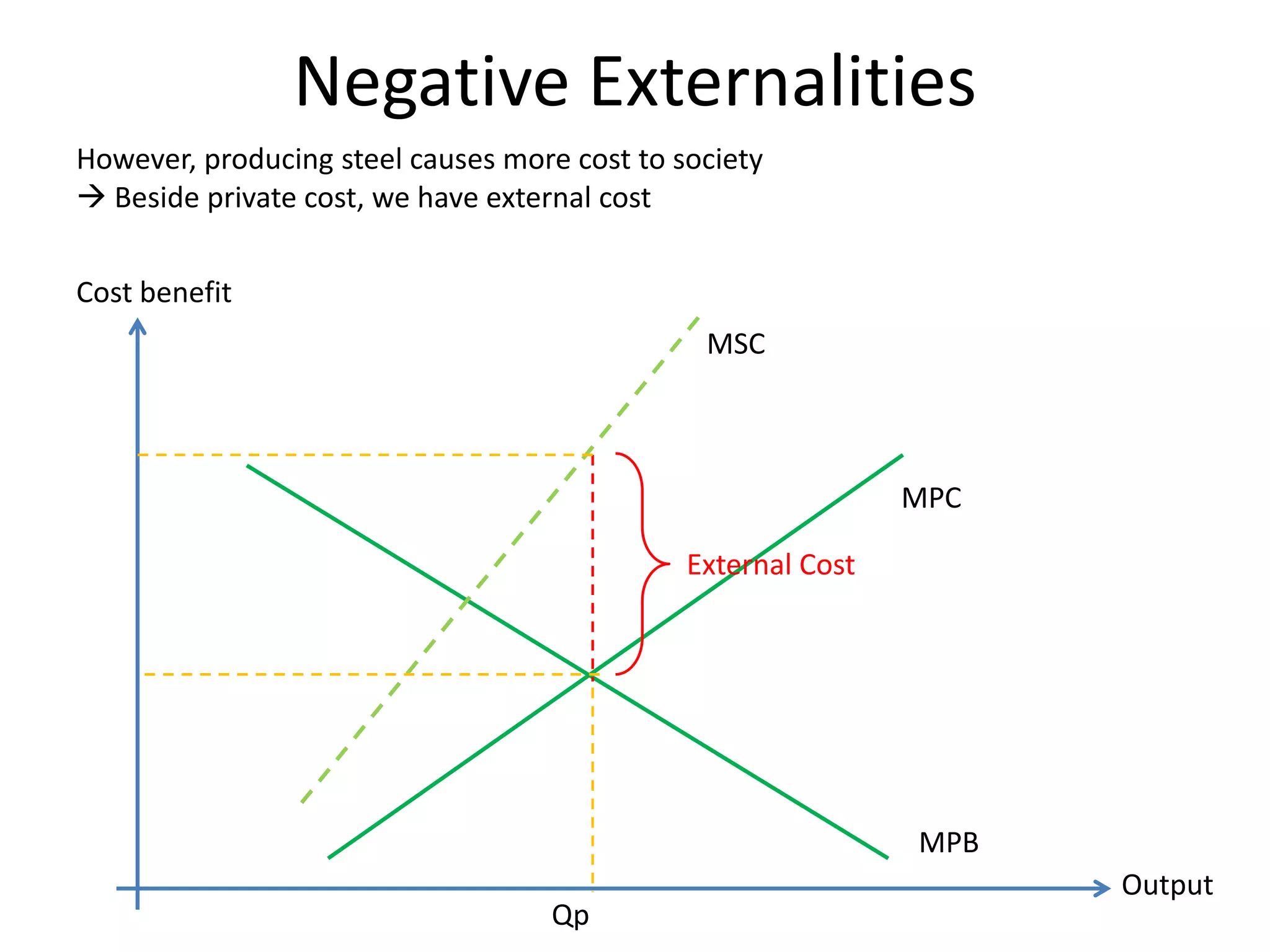
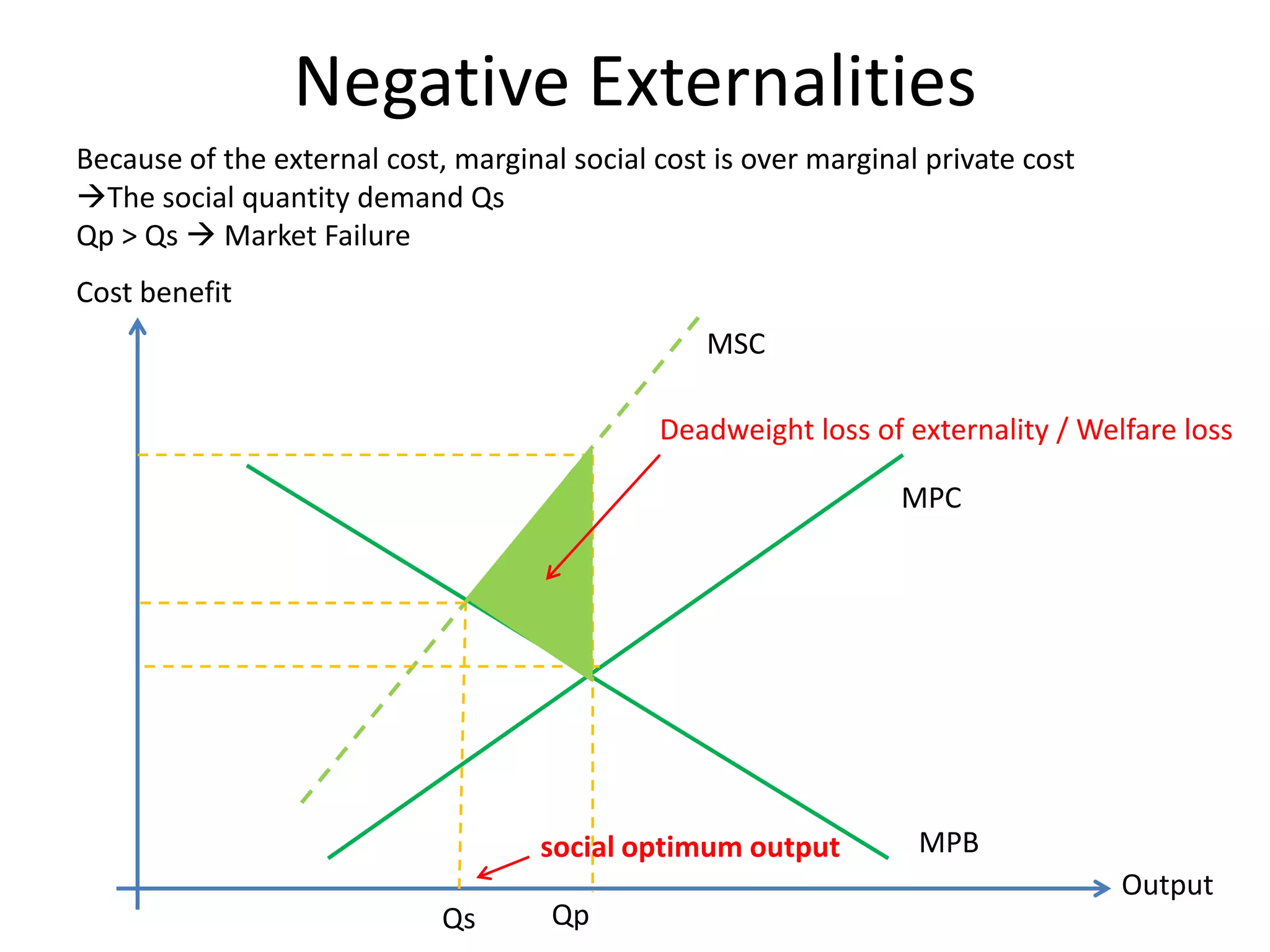
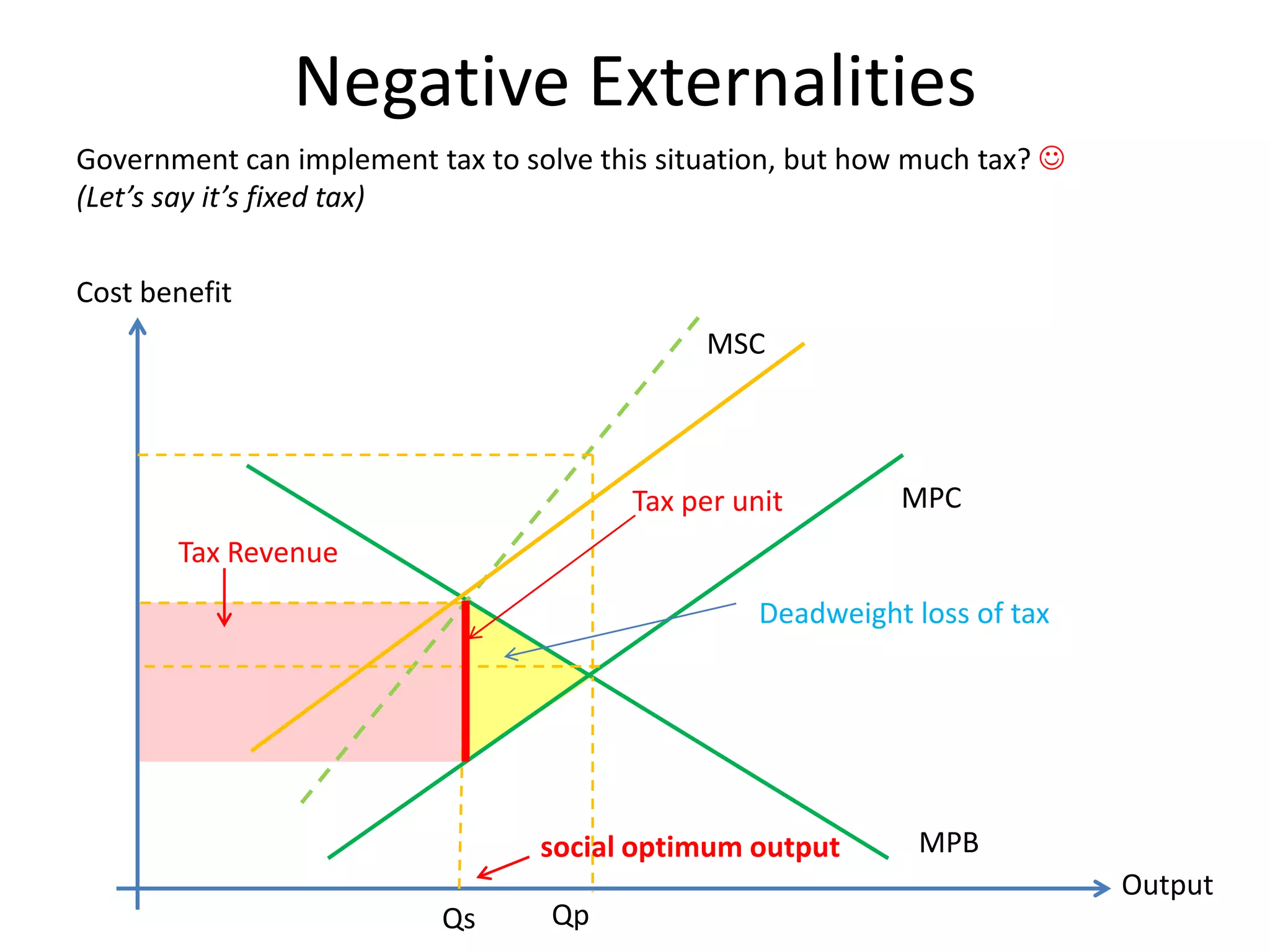
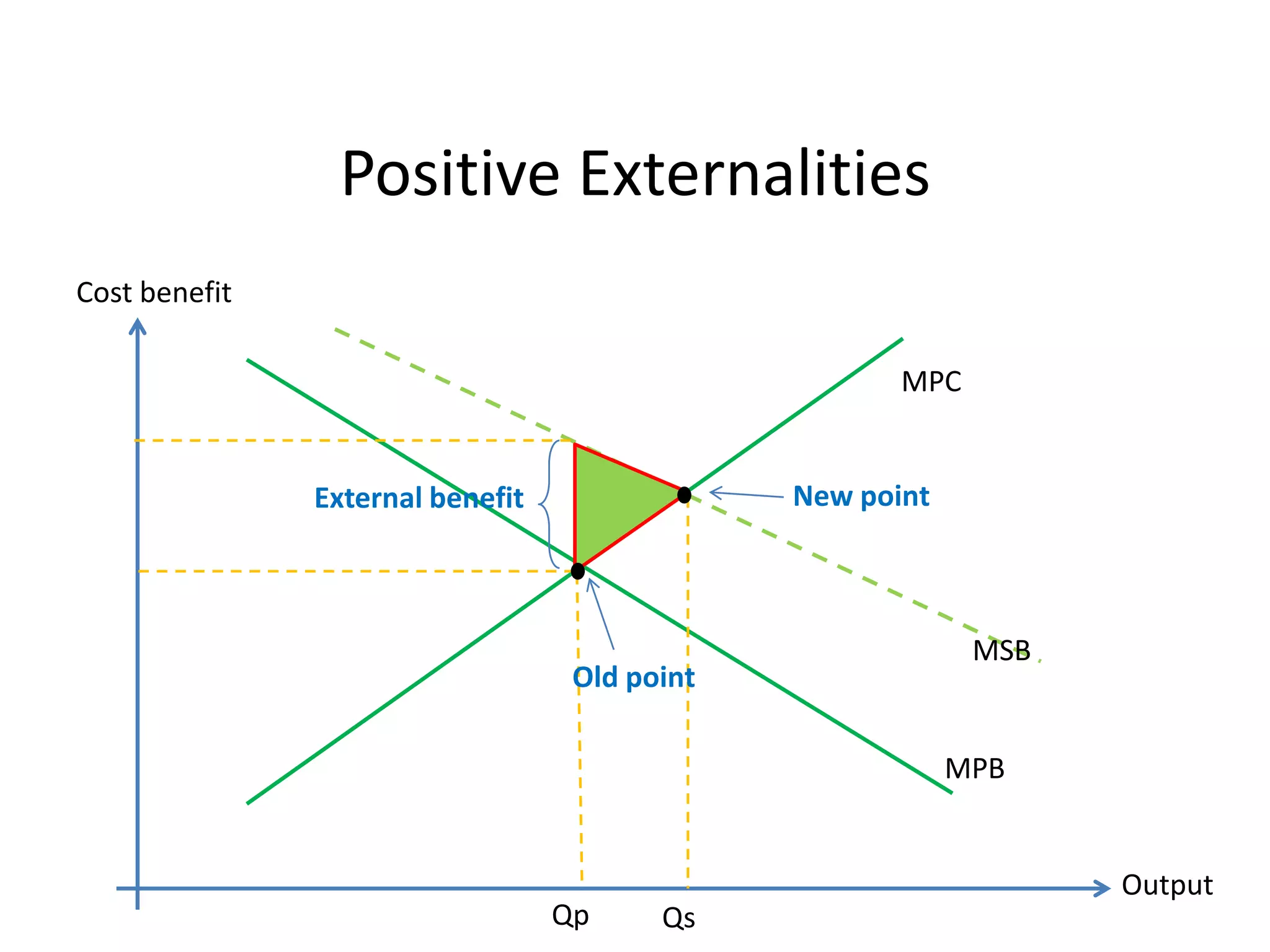
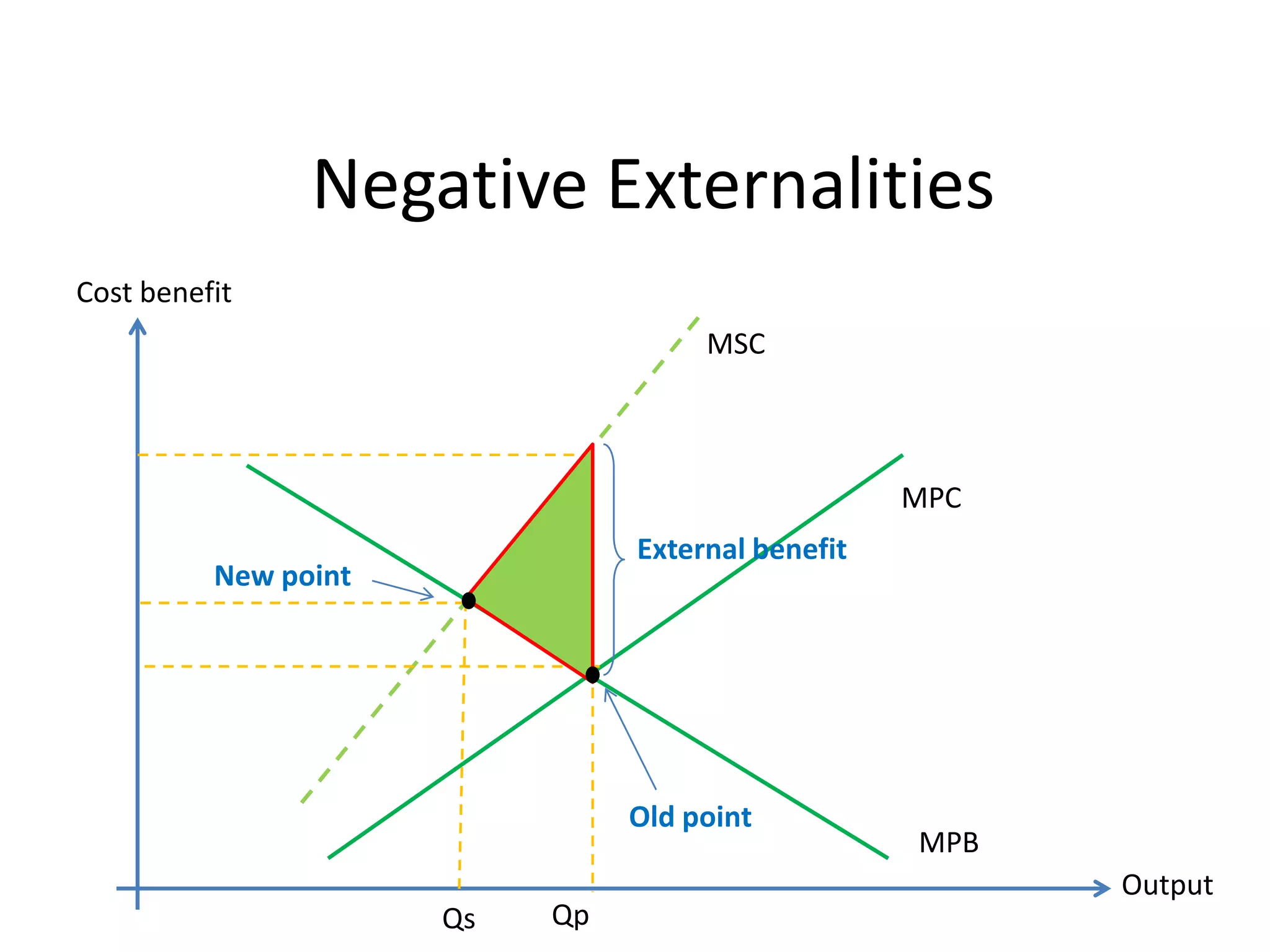
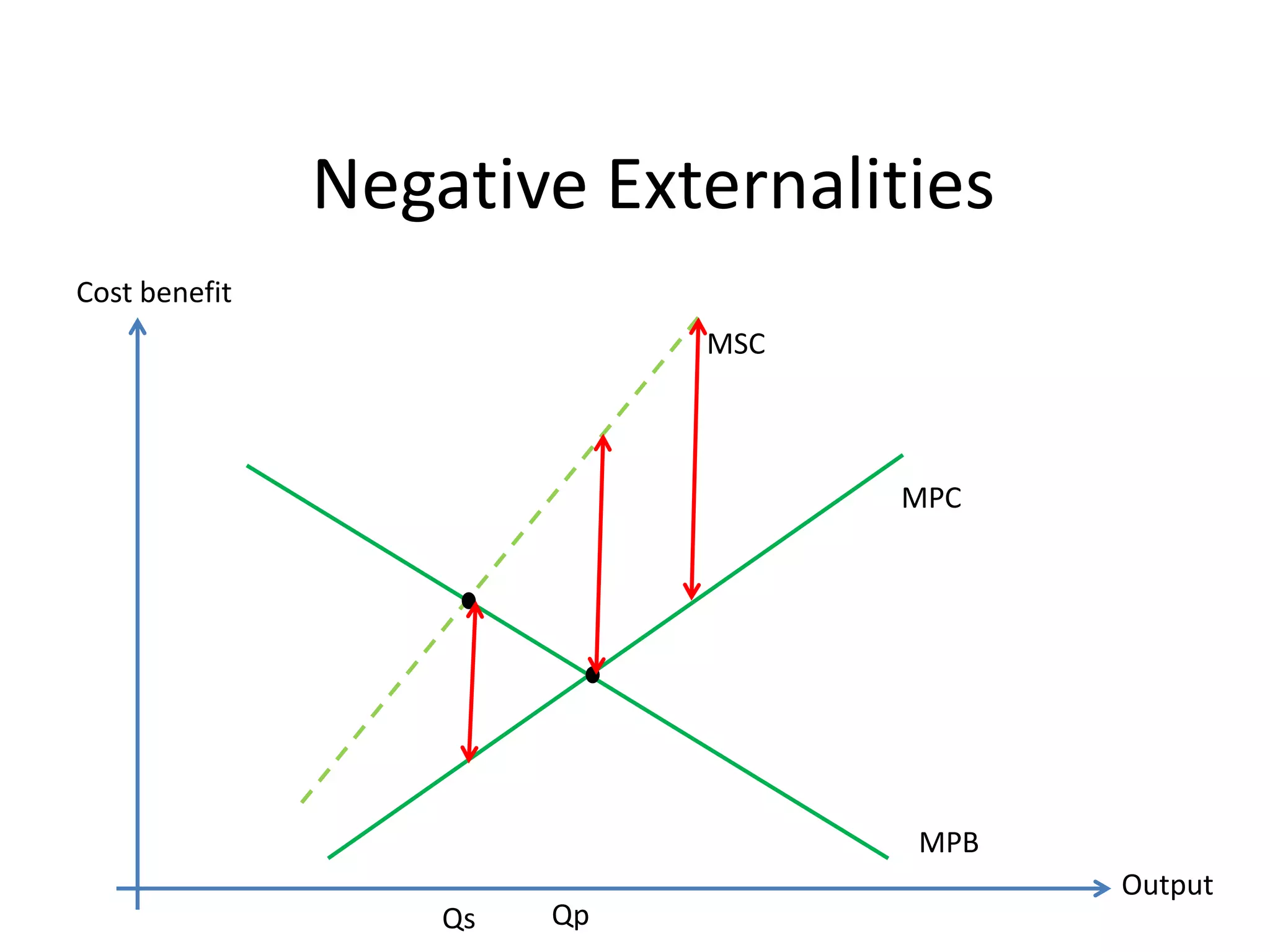
This document discusses positive and negative externalities through examples and graphs. For positive externalities like education, the social benefit is greater than the private benefit, leading the market equilibrium to be less than the socially optimal level. For negative externalities like pollution from steel production, the social cost is greater than the private cost, so the market equilibrium is greater than the optimal level. The document explains how government policies like subsidies or taxes can help correct these market failures by aligning private and social costs/benefits. It concludes by asking for feedback to improve the author's understanding of externalities graphs.