Integrating External
     Content in
    Blackboard

      Michael Anderson
      Assistant Director
  University of Texas System
           TeleCampus
Why Use External Content?

 High-quality and diverse usually beyond the
  means of institutions
 Multi-modal learning experiences for students
 Allows instructor to focus on designing the
  learning experience
 Saves time and money
 You wouldn’t write a textbook would you?
Where to begin: Selecting Content
What kind of content would add value?
   Multi-modal or media-rich presentations
   Simulations and interactivity
and is appropriate?
    Academic Integrity
    Bandwidth and Accessibility
    Support and Reliability
    Design and Usability
    Rights of Use
    Costs
What content would help achieve course
 goals and learning outcomes?
Wide Range of Sources

Commercial Sources
 Print publishers (course cartridges)
 Course vendors (Thinkwell, SIRIUS/McGraw-Hill)
 Supplement providers (WebAssign, Curriculum
  Pathways)
Non-Profit & OER Sources
 Courses (NROC, MIT-OCW, CMU-OLI, SOFIA)
 Repositories (Wisconsin)
 Referatories (MERLOT)
Institutions and Colleagues
 Communities of Practice (TLT Groups)
 Local Initiatives (Orange Grove, SCORE)
Sources: Commercial

Print Publishers
     Vetted high-quality content (confidence in
      editorial quality saves time)
     More costly, per student charges
     Textbook specific materials usually provided as
      course cartridges at fee to students
     Often lacks media-rich content
     Lack of flexibility for instructor customization and
      hosting
Sources: Commercial

Course Vendors (i.e., Thinkwell)
   Vetted high-quality content (confidence in
     editorial quality saves time)
   More costly, per student charges
   Services in addition to courses
   Lack of flexibility for instructor customization
     and hosting
Sources: Commercial
 Supplement Providers (i.e., Curriculum Pathways,
  United Streaming)
     Vetted, permissioned content
     Search and choose
     Flexibility to download (United Streaming) or
      access in hosted environment (CP)
     Breadth of coverage
     Transaction model for the content (license,
      statewide purchase, student purchase, etc.)
Sources: Non-Profits & OERs

Course and Content Developers (i.e., NROC,
  MIT-OCW, SOFIA)
   Vetted content at affordable prices
   Some sources require additional review
   Flexibility for customization and hosting
   Inclusion of media-rich, multi-modal content
     varies significantly
   Commitment and funding
   Educational non-profits provide balance
     between vetted content, flexibility and cost
Sources: Non-Profit Organizations

Learning Object Repositories & Referatories (LORs)
    Low cost or gratis access to content
    Contributed by dedicated academics
    Academic integrity, but single perspective
    Flexibility varies significantly (format of the
     content)
    Usually not vetted (uneven quality)
    Usually requires time commitment to visit to
     multiple sources
    Technology incompatibilities
Strategies for Evaluating Online
Content

Does the content and technology fit the design
   philosophy of the online program?

      Objectives and outcomes
      Instructional design philosophy
      Flexibility to fit within the course format
      Institutional branding
      Transparency
      Development process
Strategies for Evaluating Online
Content

Is it easy for instructors to use?
      Transparent technology
      Technology support staff and training
      Instructional design staff and training
      Support and feedback loop with the
       developer
Strategies for Evaluating Online
Content

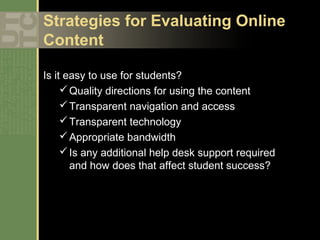
Is it easy to use for students?
      Quality directions for using the content
      Transparent navigation and access
      Transparent technology
      Appropriate bandwidth
      Is any additional help desk support required
       and how does that affect student success?
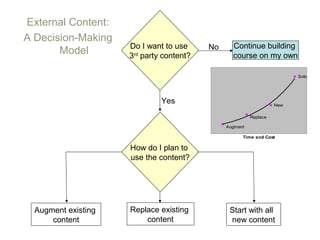
External Content:
A Decision-Making
                     Do I want to use     No     Continue building
       Model         3rd party content?          course on my own

                                                                         Solo


                              Yes                                  New

                                                         Replace

                                               Augment

                                                     Time and Cost

                     How do I plan to
                     use the content?


  Augment existing   Replace existing           Start with all
      content            content                new content
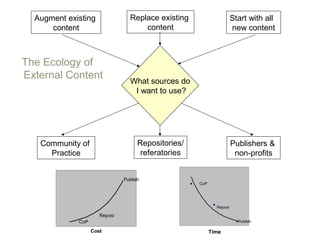
Augment existing               Replace existing                          Start with all
      content                        content                               new content


The Ecology of
External Content                  What sources do
                                   I want to use?


   Community of                      Repositories/                         Publishers &
     Practice                         referatories                          non-profits


                               Publish
                                                     CoP


                                                                  Reposi

                      Reposi
             CoP                                                             Publish
                                                           Time

                   Cost                                    Time
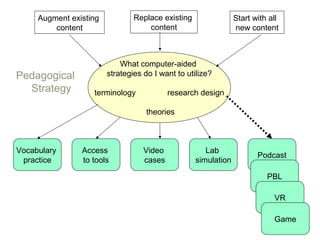
Augment existing           Replace existing                Start with all
         content                    content                     new content


                            What computer-aided
Pedagogical             strategies do I want to utilize?
  Strategy         terminology             research design

                                    theories


Vocabulary      Access             Video              Lab
                                                                       Podcast
 practice       to tools           cases           simulation

                                                                          PBL

                                                                            VR

                                                                            Game
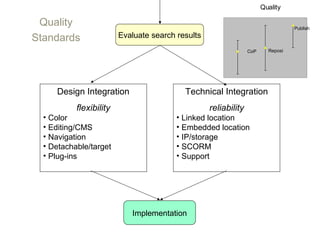
Quality

 Quality                                                                          Publish

Standards                Evaluate search results
                                                                 CoP     Reposi


     Design Integration                    Technical Integration
           flexibility                             reliability
  • Color                                • Linked location
  • Editing/CMS                          • Embedded location
  • Navigation                           • IP/storage
  • Detachable/target                    • SCORM
  • Plug-ins                             • Support


                            Implementation
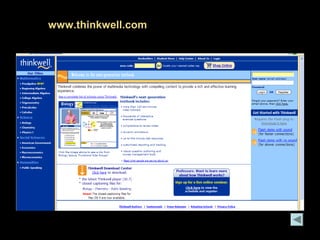
www.thinkwell.com
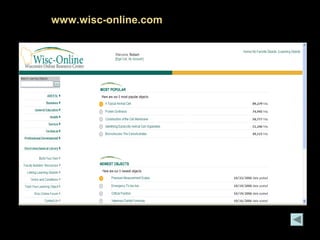
www.wisc-online.com
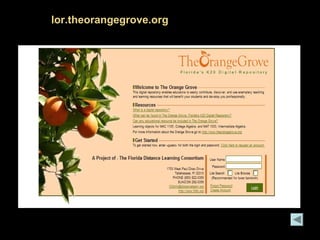
lor.theorangegrove.org

External Resources

  • 1.
    Integrating External Content in Blackboard Michael Anderson Assistant Director University of Texas System TeleCampus
  • 2.
    Why Use ExternalContent?  High-quality and diverse usually beyond the means of institutions  Multi-modal learning experiences for students  Allows instructor to focus on designing the learning experience  Saves time and money  You wouldn’t write a textbook would you?
  • 3.
    Where to begin:Selecting Content What kind of content would add value?  Multi-modal or media-rich presentations  Simulations and interactivity and is appropriate?  Academic Integrity  Bandwidth and Accessibility  Support and Reliability  Design and Usability  Rights of Use  Costs What content would help achieve course goals and learning outcomes?
  • 4.
    Wide Range ofSources Commercial Sources  Print publishers (course cartridges)  Course vendors (Thinkwell, SIRIUS/McGraw-Hill)  Supplement providers (WebAssign, Curriculum Pathways) Non-Profit & OER Sources  Courses (NROC, MIT-OCW, CMU-OLI, SOFIA)  Repositories (Wisconsin)  Referatories (MERLOT) Institutions and Colleagues  Communities of Practice (TLT Groups)  Local Initiatives (Orange Grove, SCORE)
  • 5.
    Sources: Commercial Print Publishers  Vetted high-quality content (confidence in editorial quality saves time)  More costly, per student charges  Textbook specific materials usually provided as course cartridges at fee to students  Often lacks media-rich content  Lack of flexibility for instructor customization and hosting
  • 6.
    Sources: Commercial Course Vendors(i.e., Thinkwell)  Vetted high-quality content (confidence in editorial quality saves time)  More costly, per student charges  Services in addition to courses  Lack of flexibility for instructor customization and hosting
  • 7.
    Sources: Commercial SupplementProviders (i.e., Curriculum Pathways, United Streaming)  Vetted, permissioned content  Search and choose  Flexibility to download (United Streaming) or access in hosted environment (CP)  Breadth of coverage  Transaction model for the content (license, statewide purchase, student purchase, etc.)
  • 8.
    Sources: Non-Profits &OERs Course and Content Developers (i.e., NROC, MIT-OCW, SOFIA)  Vetted content at affordable prices  Some sources require additional review  Flexibility for customization and hosting  Inclusion of media-rich, multi-modal content varies significantly  Commitment and funding  Educational non-profits provide balance between vetted content, flexibility and cost
  • 9.
    Sources: Non-Profit Organizations LearningObject Repositories & Referatories (LORs)  Low cost or gratis access to content  Contributed by dedicated academics  Academic integrity, but single perspective  Flexibility varies significantly (format of the content)  Usually not vetted (uneven quality)  Usually requires time commitment to visit to multiple sources  Technology incompatibilities
  • 10.
    Strategies for EvaluatingOnline Content Does the content and technology fit the design philosophy of the online program?  Objectives and outcomes  Instructional design philosophy  Flexibility to fit within the course format  Institutional branding  Transparency  Development process
  • 11.
    Strategies for EvaluatingOnline Content Is it easy for instructors to use?  Transparent technology  Technology support staff and training  Instructional design staff and training  Support and feedback loop with the developer
  • 12.
    Strategies for EvaluatingOnline Content Is it easy to use for students?  Quality directions for using the content  Transparent navigation and access  Transparent technology  Appropriate bandwidth  Is any additional help desk support required and how does that affect student success?
  • 13.
    External Content: A Decision-Making Do I want to use No Continue building Model 3rd party content? course on my own Solo Yes New Replace Augment Time and Cost How do I plan to use the content? Augment existing Replace existing Start with all content content new content
  • 14.
    Augment existing Replace existing Start with all content content new content The Ecology of External Content What sources do I want to use? Community of Repositories/ Publishers & Practice referatories non-profits Publish CoP Reposi Reposi CoP Publish Time Cost Time
  • 15.
    Augment existing Replace existing Start with all content content new content What computer-aided Pedagogical strategies do I want to utilize? Strategy terminology research design theories Vocabulary Access Video Lab Podcast practice to tools cases simulation PBL VR Game
  • 16.
    Quality Quality Publish Standards Evaluate search results CoP Reposi Design Integration Technical Integration flexibility reliability • Color • Linked location • Editing/CMS • Embedded location • Navigation • IP/storage • Detachable/target • SCORM • Plug-ins • Support Implementation
  • 18.
  • 19.
  • 20.