THE LAND GRANT UNIVERSITY SYSTEM:  EXTENSION, RESEARCH, AND SERVICE ROLES IN ENVIRONMENTAL POLICY ELI SAGOR [email_address]
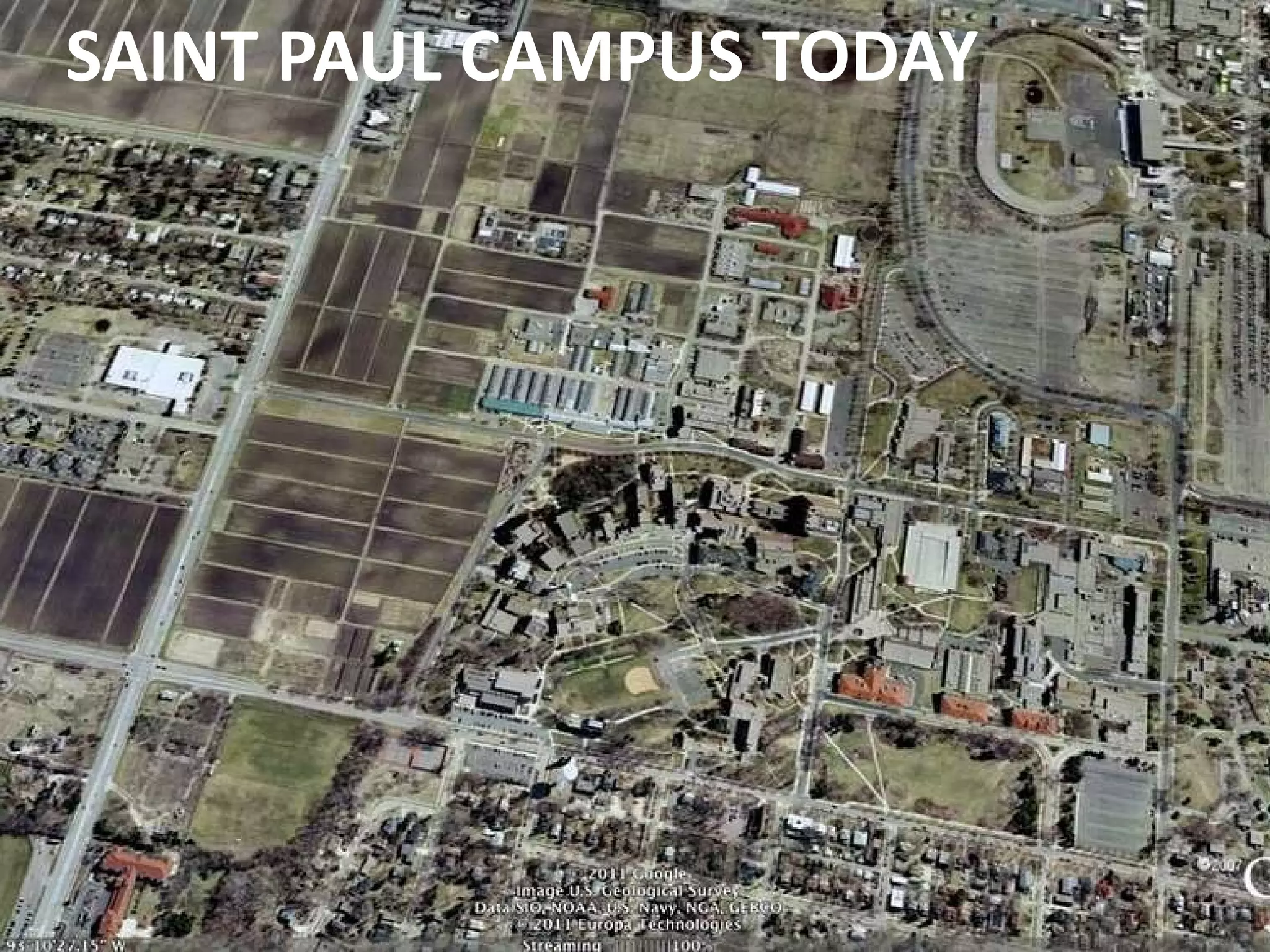
SAINT PAUL CAMPUS TODAY Flickr CC-licensed photo by Mika Marttila:  http://flic.kr/p/9cgV7T
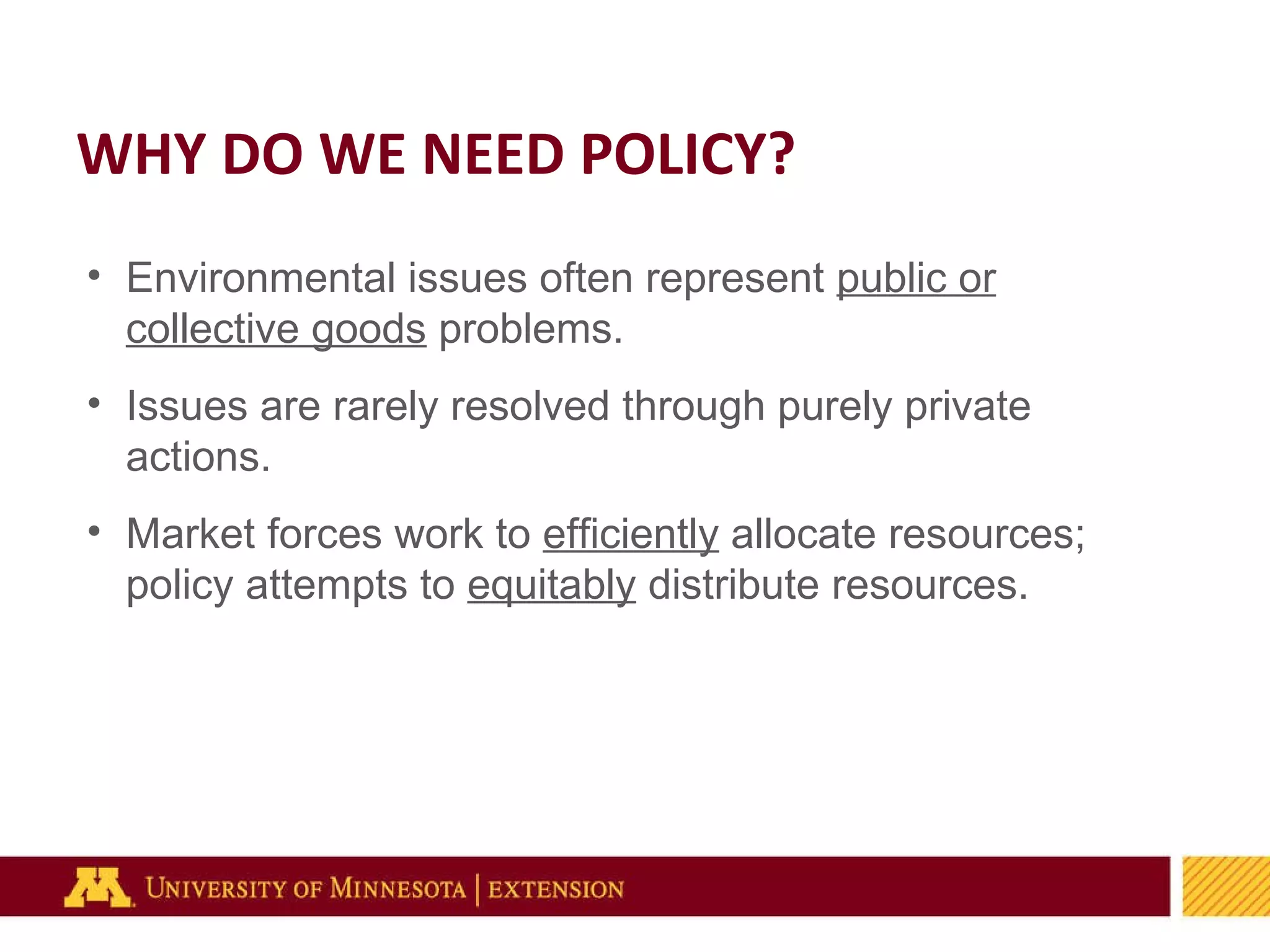
Environmental issues often represent  public or collective goods  problems. Issues are rarely resolved through purely private actions. Market forces work to  efficiently  allocate resources; policy attempts to  equitably  distribute resources. WHY DO WE NEED POLICY?
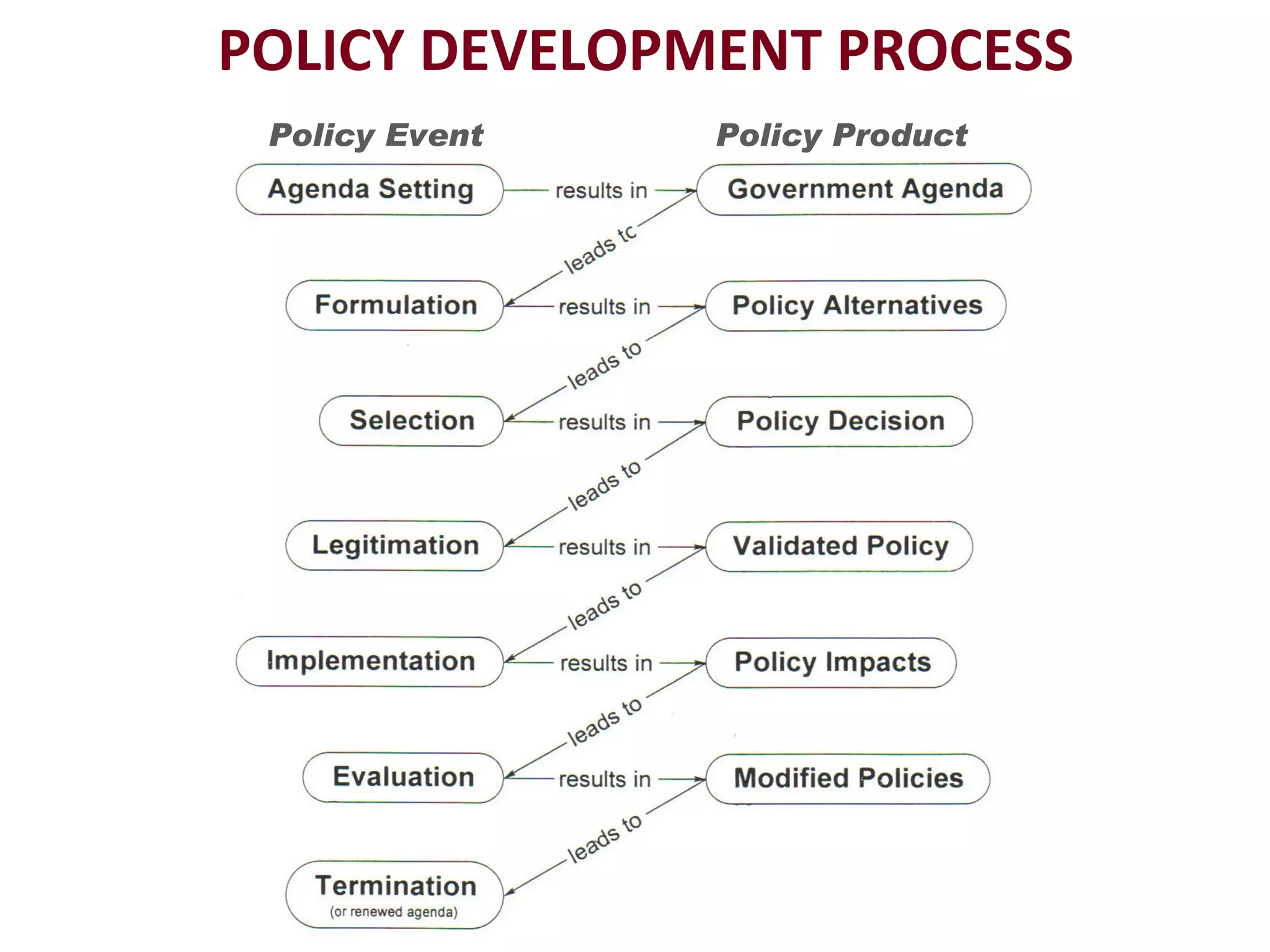
Policy Event Policy Product POLICY DEVELOPMENT PROCESS
How do service programs like education, research, and technical assistance influence public policy? How are they a reflection of public policy?
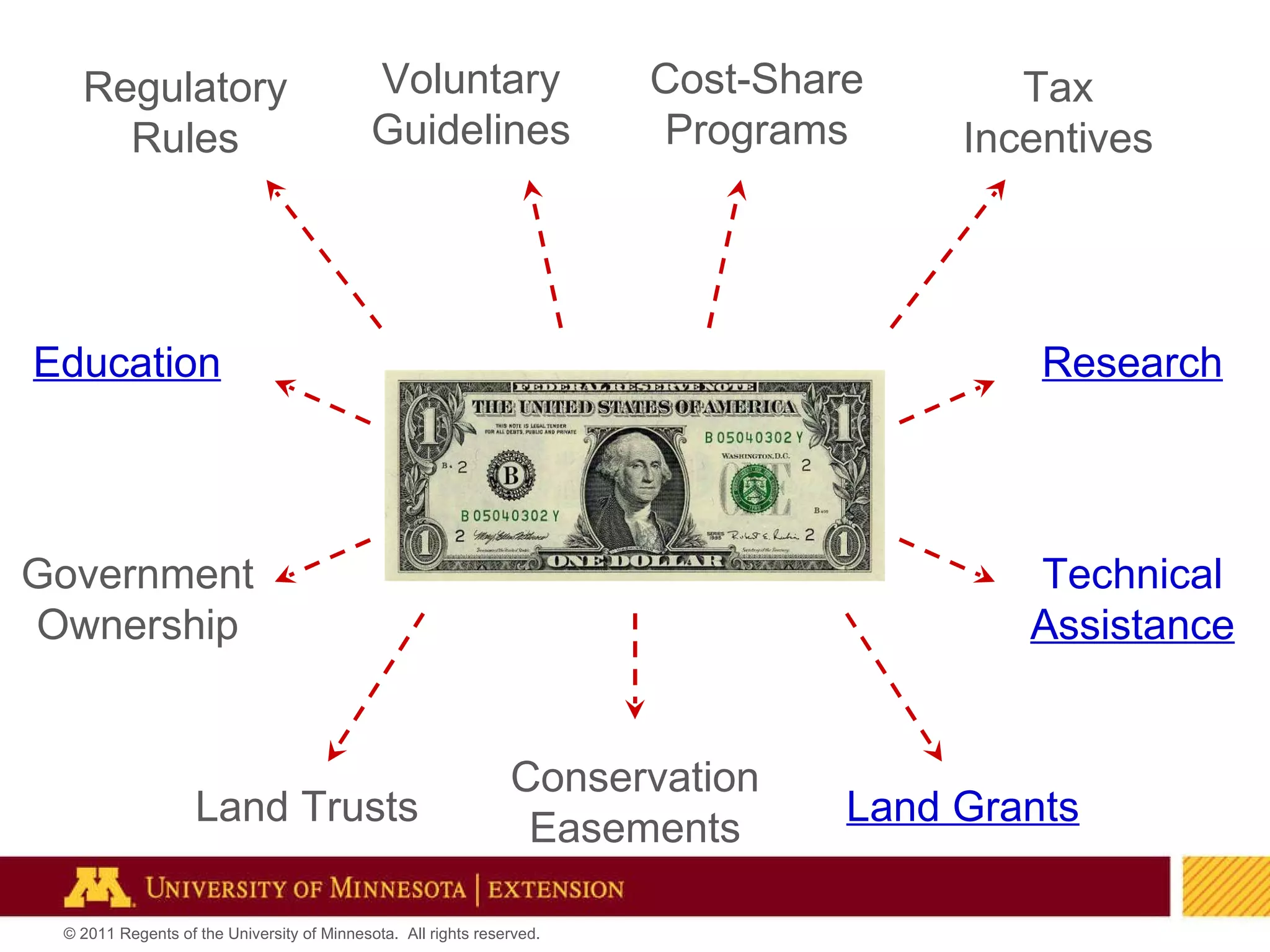
Land Trusts Land Grants Conservation Easements Regulatory Rules Tax Incentives Cost-Share Programs Government Ownership Education Technical Assistance Research Voluntary Guidelines
OUTLINE Public service programs and the land grant university system Extension, research, and service contributions Today: The U budget and the land grant mission
PUBLICLY FUNDED SERVICE PROGRAMS Public Education: Agency environmental educators K-8 curriculum development Public service announcements (PSA) on radio and TV Research: Colleges and universities (land grant, primarily) National research laboratories Agency scientists (USDA, DOI, DOE) Technical Assistance and Extension: Brochures, interpretive pamphlets, websites Conferences, short courses, field tours, workshops, 4H Demonstration projects Which have you been involved with in the past?
THE LAND GRANT UNIVERSITY SYSTEM Source:  http://bit.ly/fx8dyS   States were granted (given) land by the federal government to establish and endow "land grant" colleges.  Mission: to focus on the teaching of agriculture, science and engineering rather than higher education's historic core of classical studies.
SAINT PAUL CAMPUS TODAY
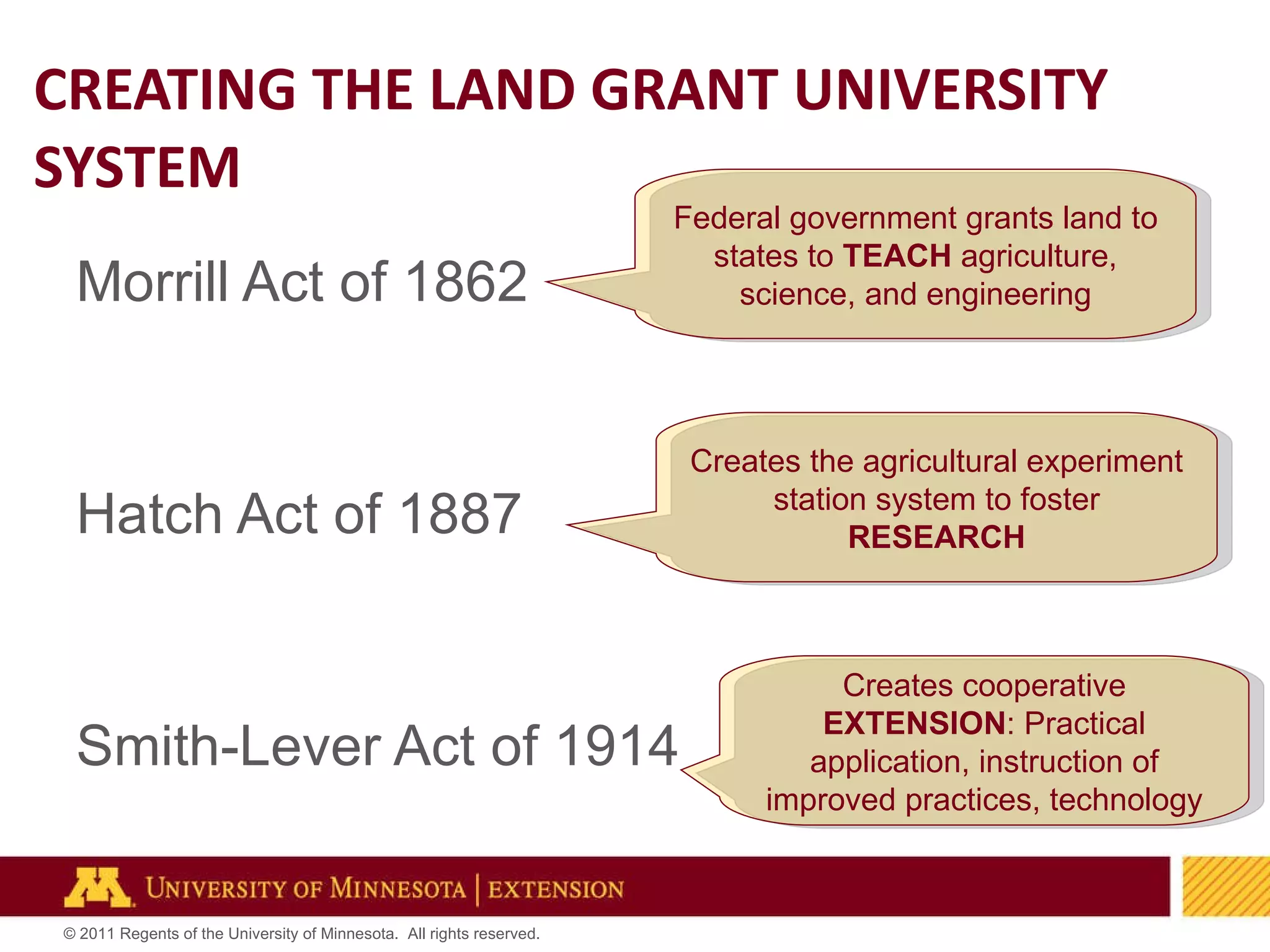
CREATING THE LAND GRANT UNIVERSITY SYSTEM Morrill Act of 1862 Hatch Act of 1887 Smith-Lever Act of 1914 Federal government grants land to states to  TEACH  agriculture, science, and engineering Creates the agricultural experiment station system to foster  RESEARCH Creates cooperative  EXTENSION : Practical application, instruction of improved practices, technology
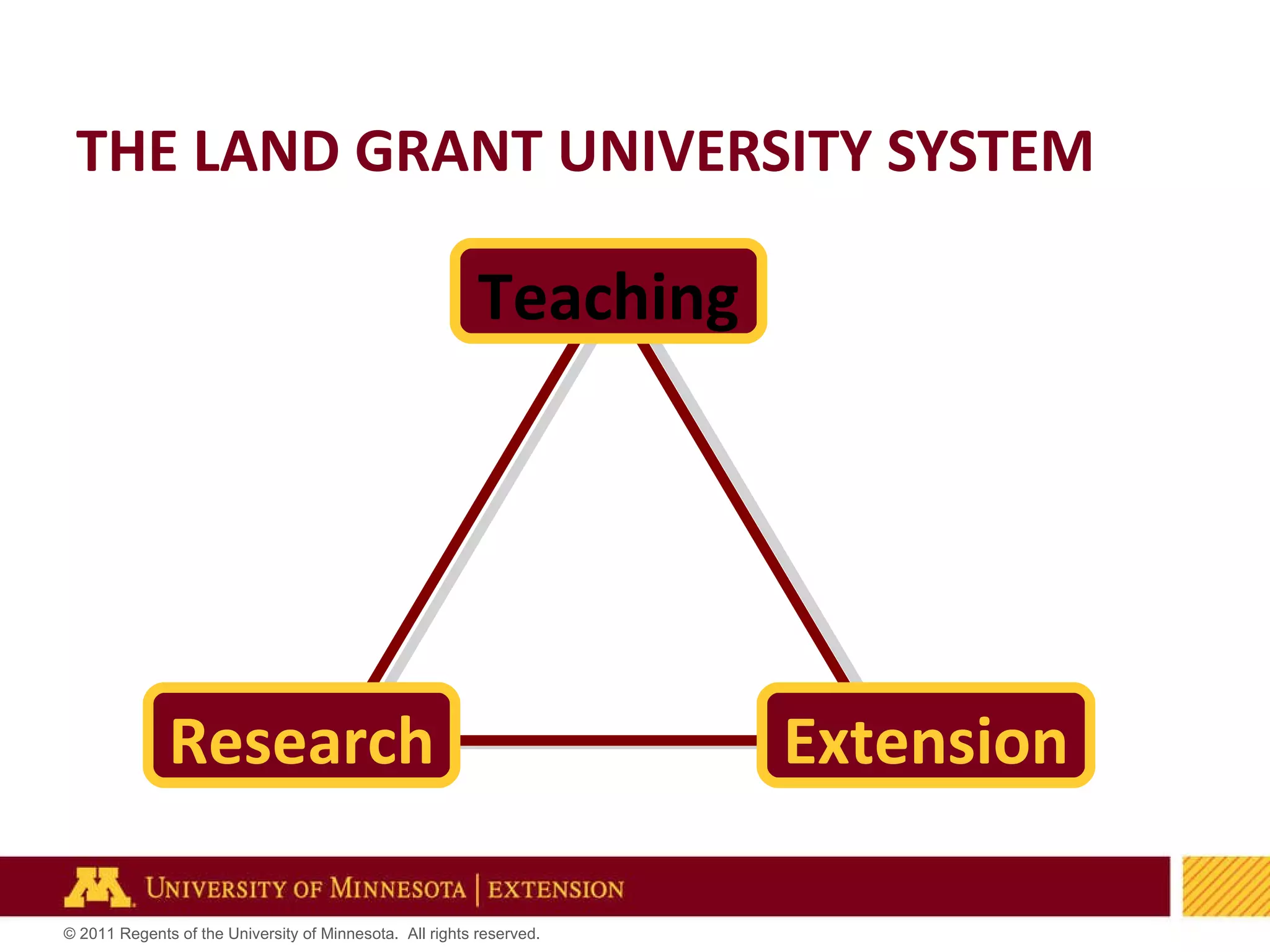
THE LAND GRANT UNIVERSITY SYSTEM Teaching Extension Research
PUBLIC SERVICE MISSION AND IDENTITY Public service is deeply embedded in the culture and identity of land grant universities.
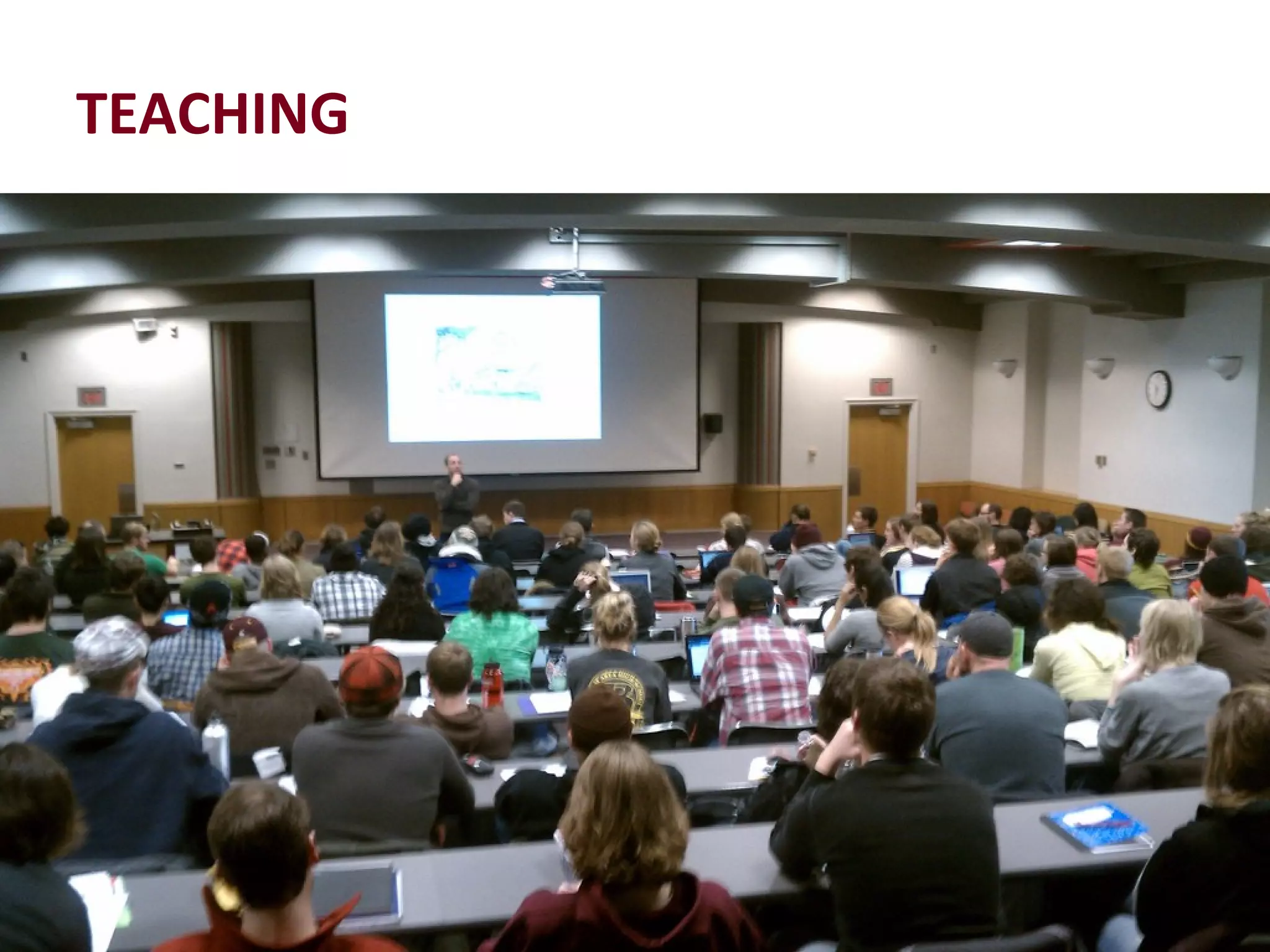
UMN photo library TEACHING
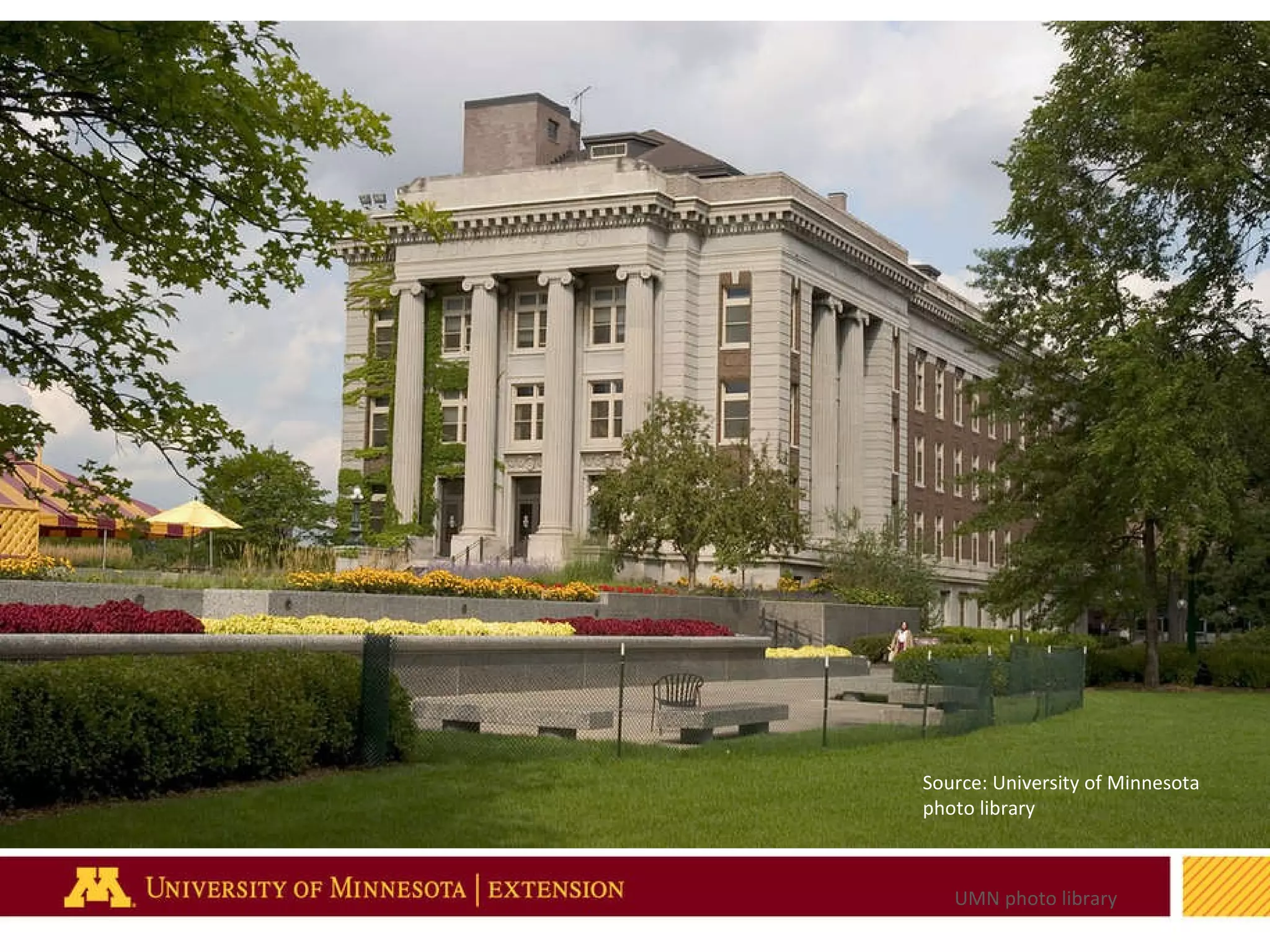
Morrill Hall UMN photo library Source: University of Minnesota photo library
RESEARCH
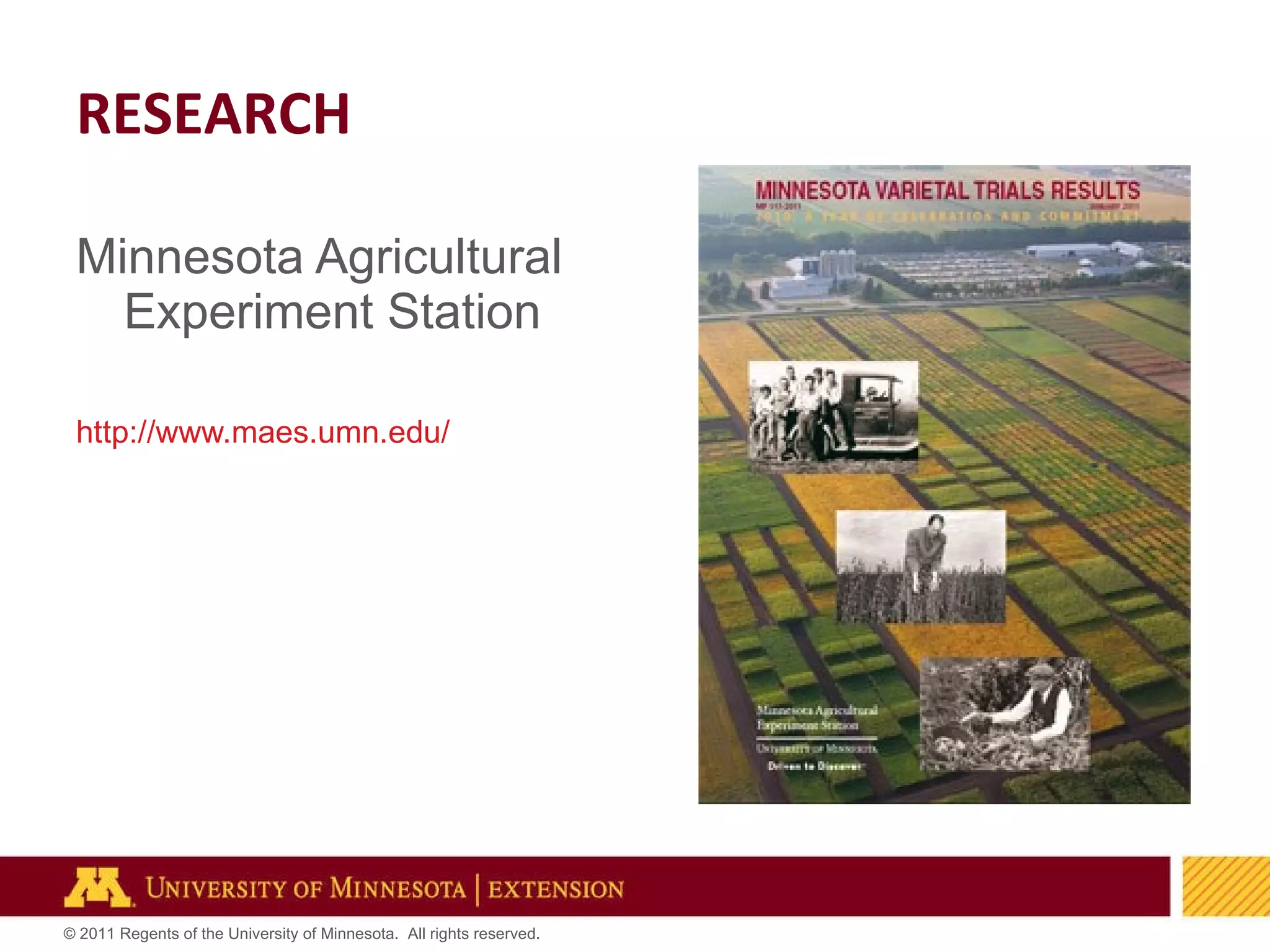
Minnesota Agricultural Experiment Station http://www.maes.umn.edu/   RESEARCH
RESEARCH
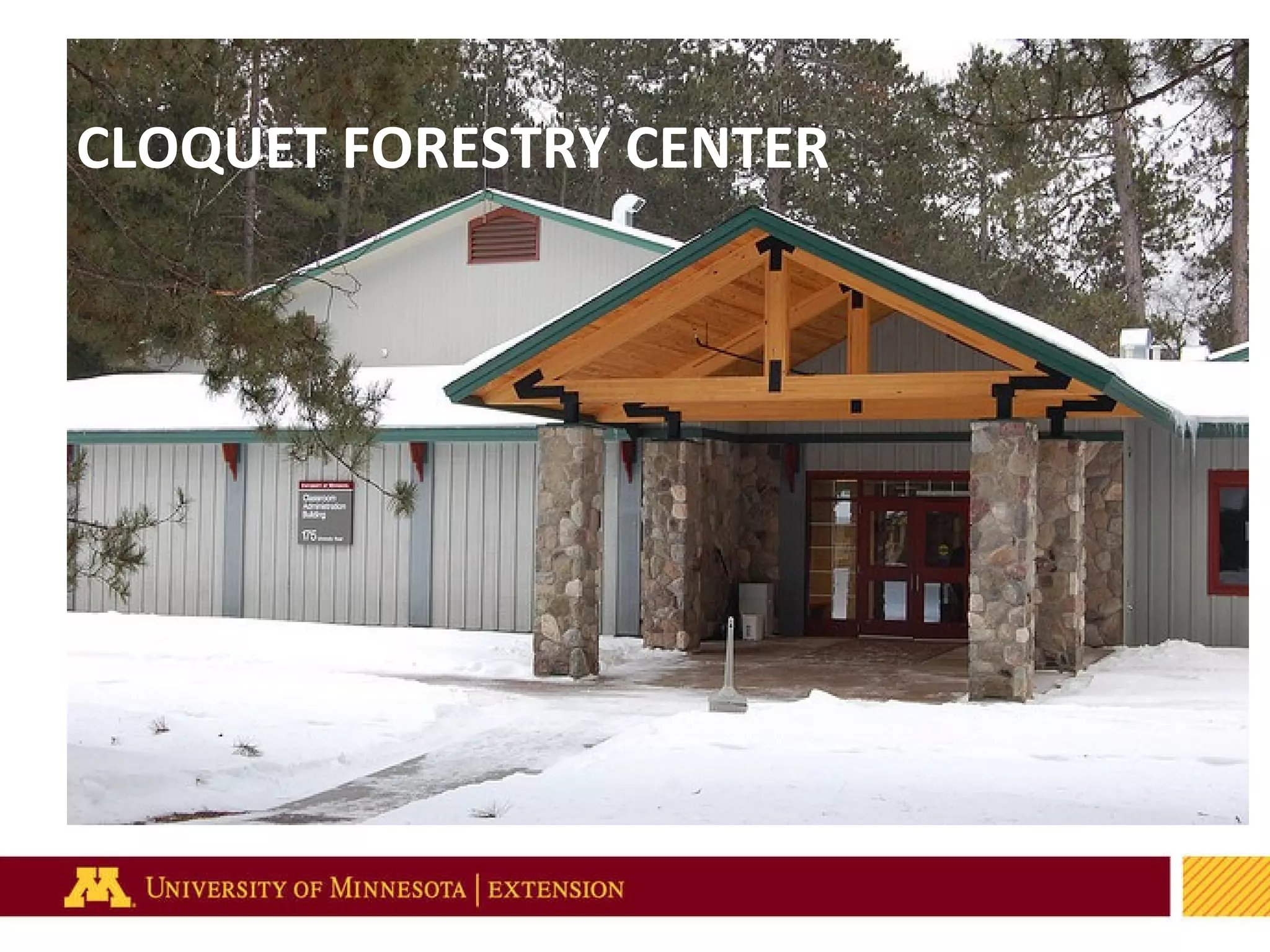
CLOQUET FORESTRY CENTER
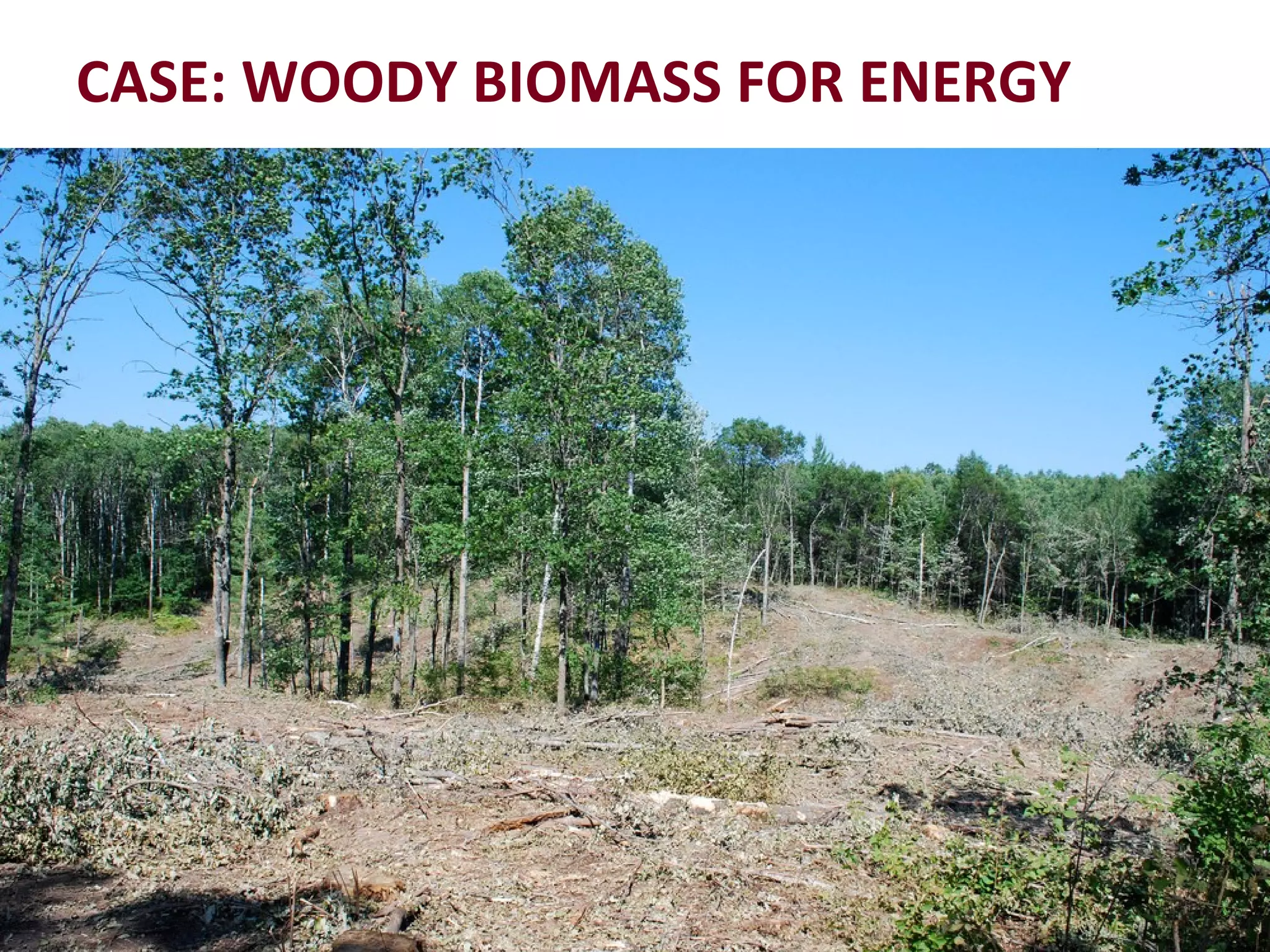
CASE: WOODY BIOMASS FOR ENERGY
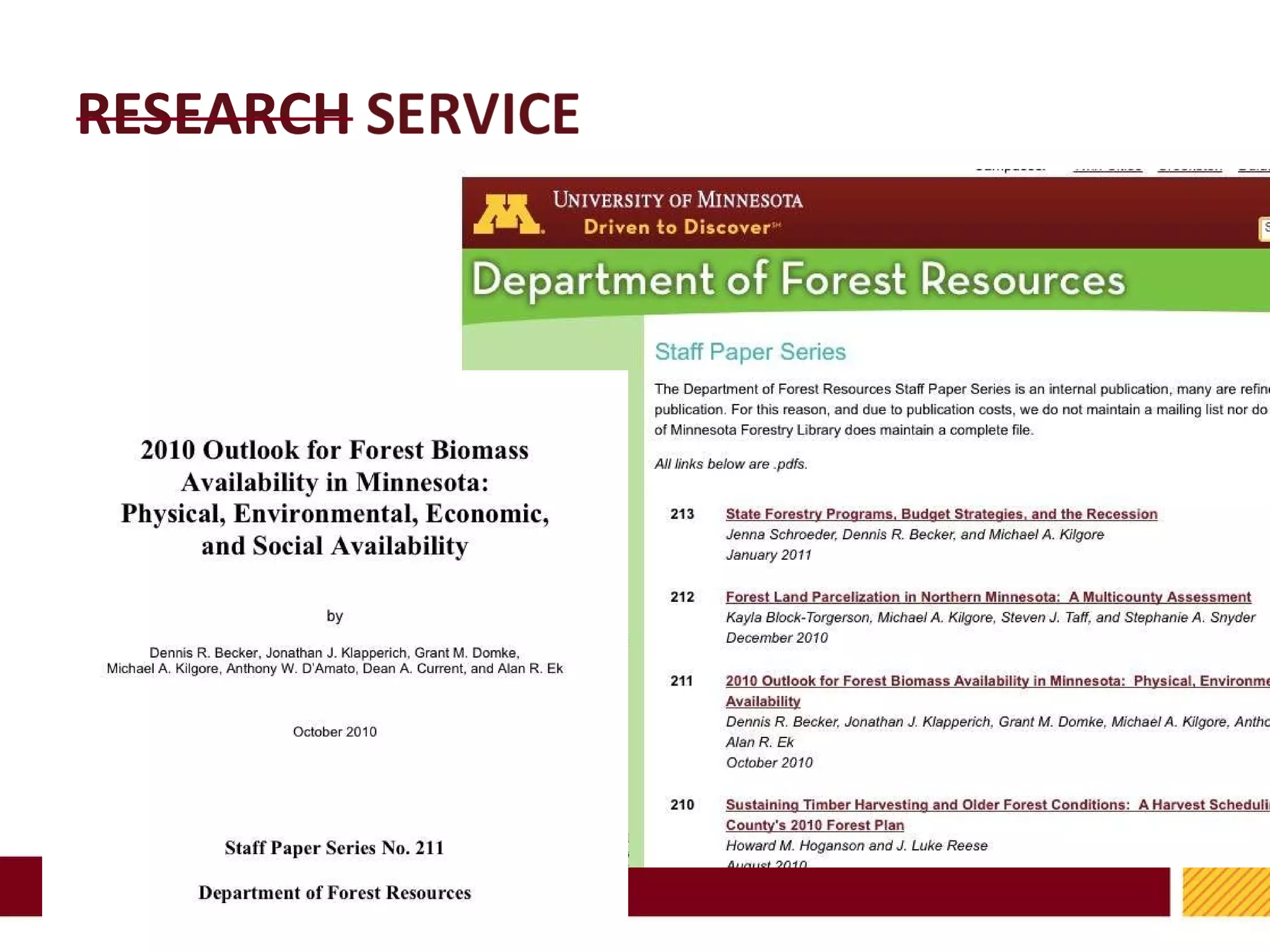
RESEARCH
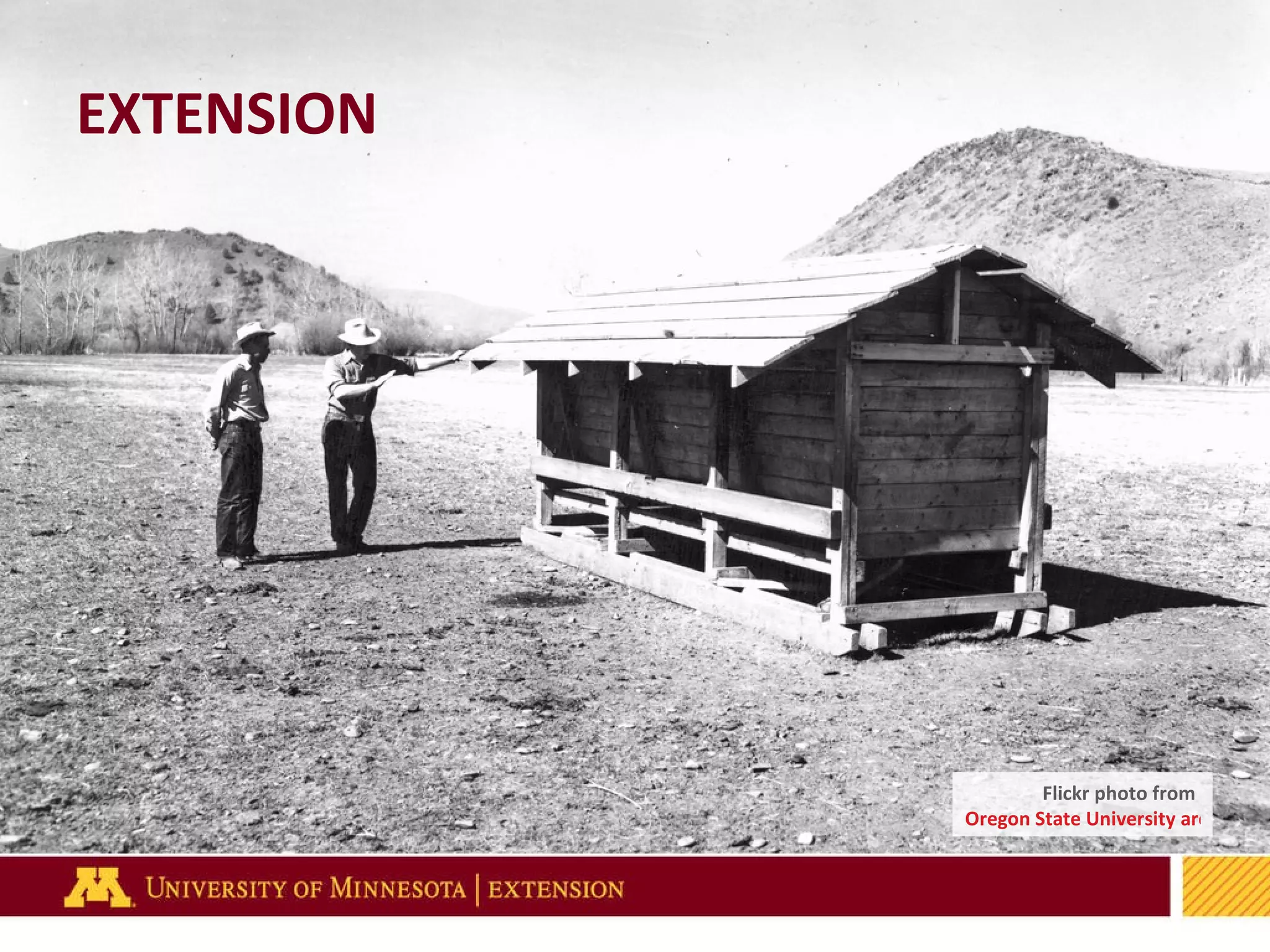
EXTENSION Flickr photo from  Oregon State University archives
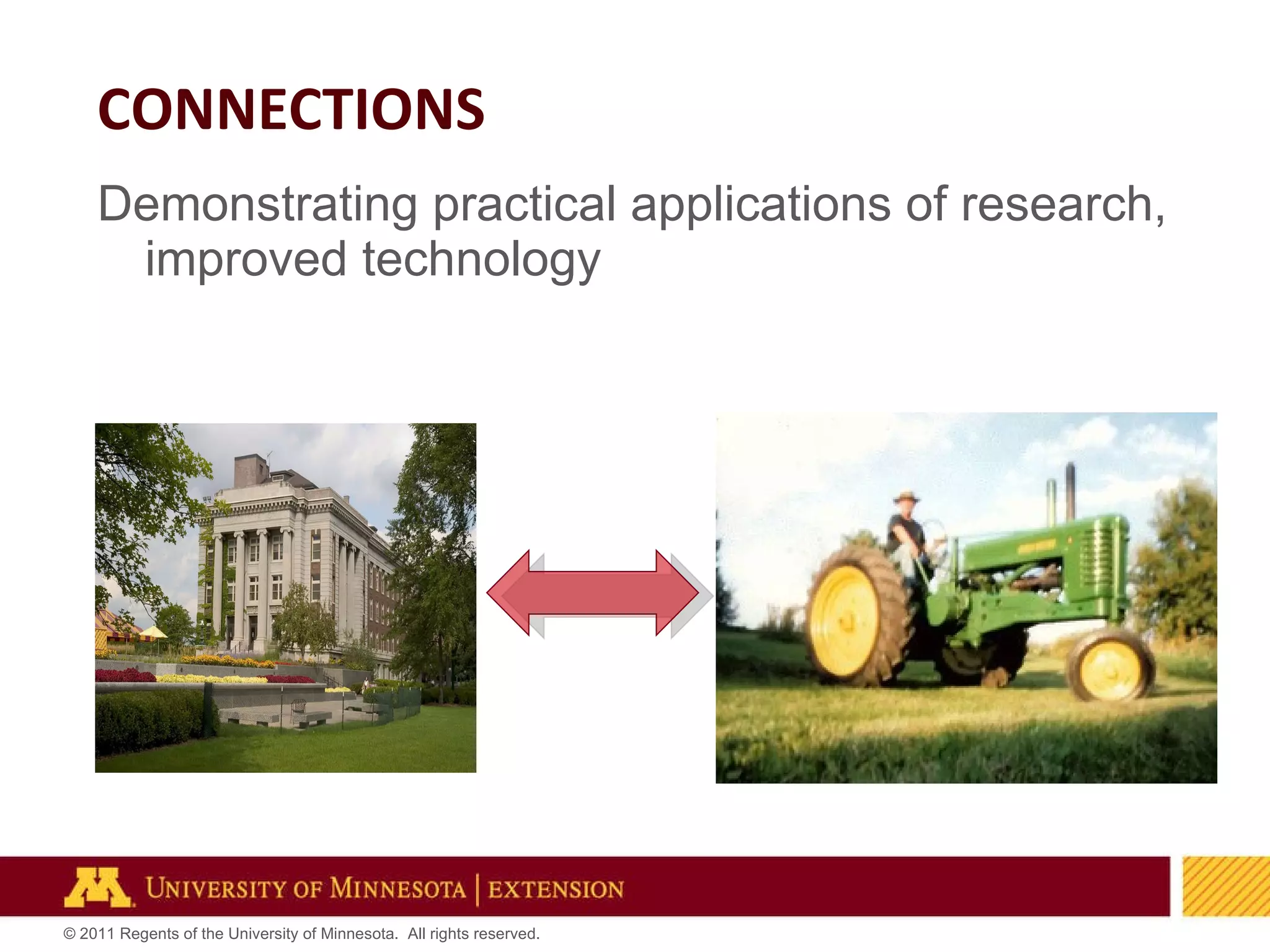
Demonstrating practical applications of research, improved technology CONNECTIONS
EXTENSION Flickr photo from  Oregon State University archives
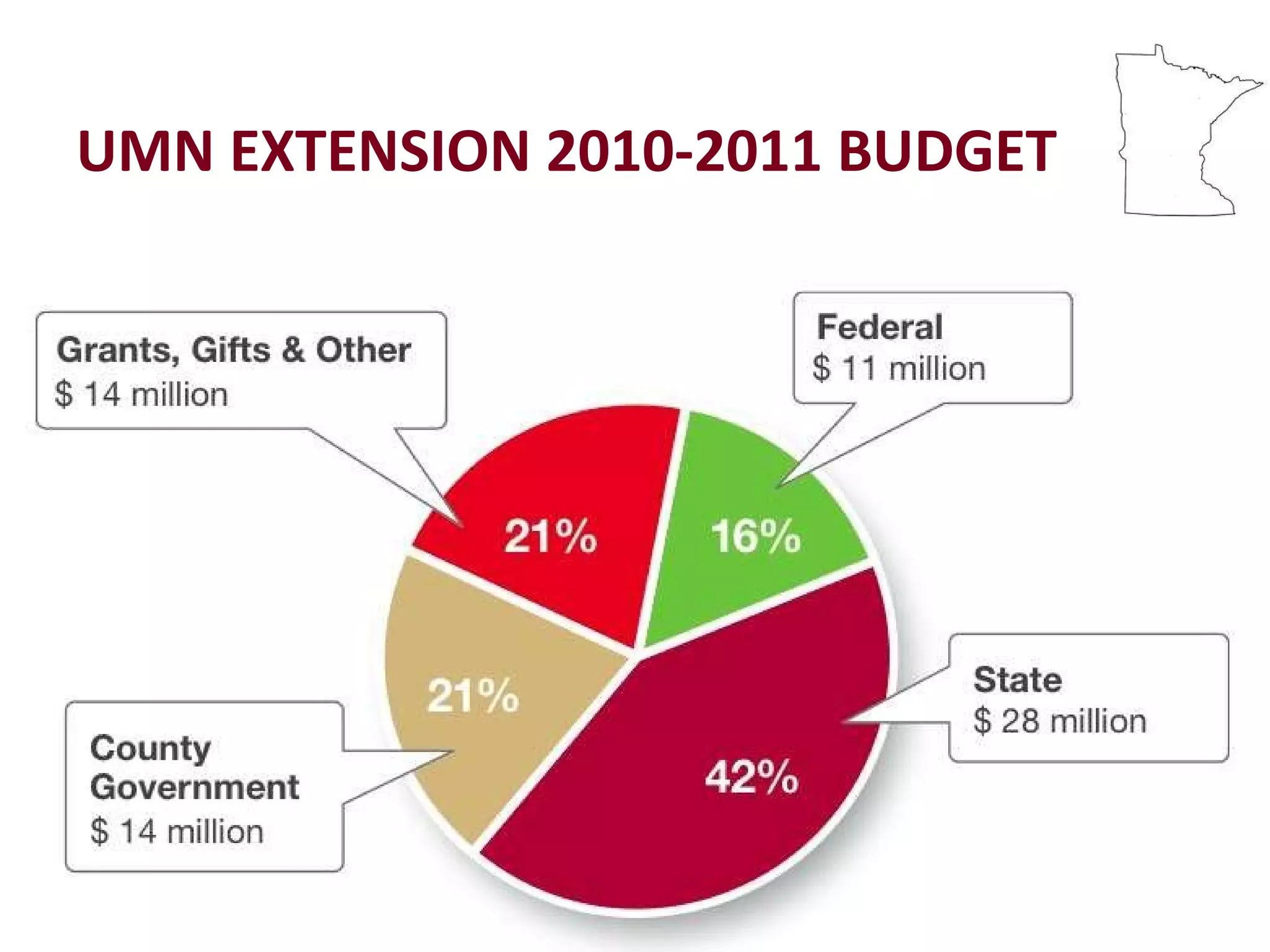
UMN EXTENSION 2010-2011 BUDGET
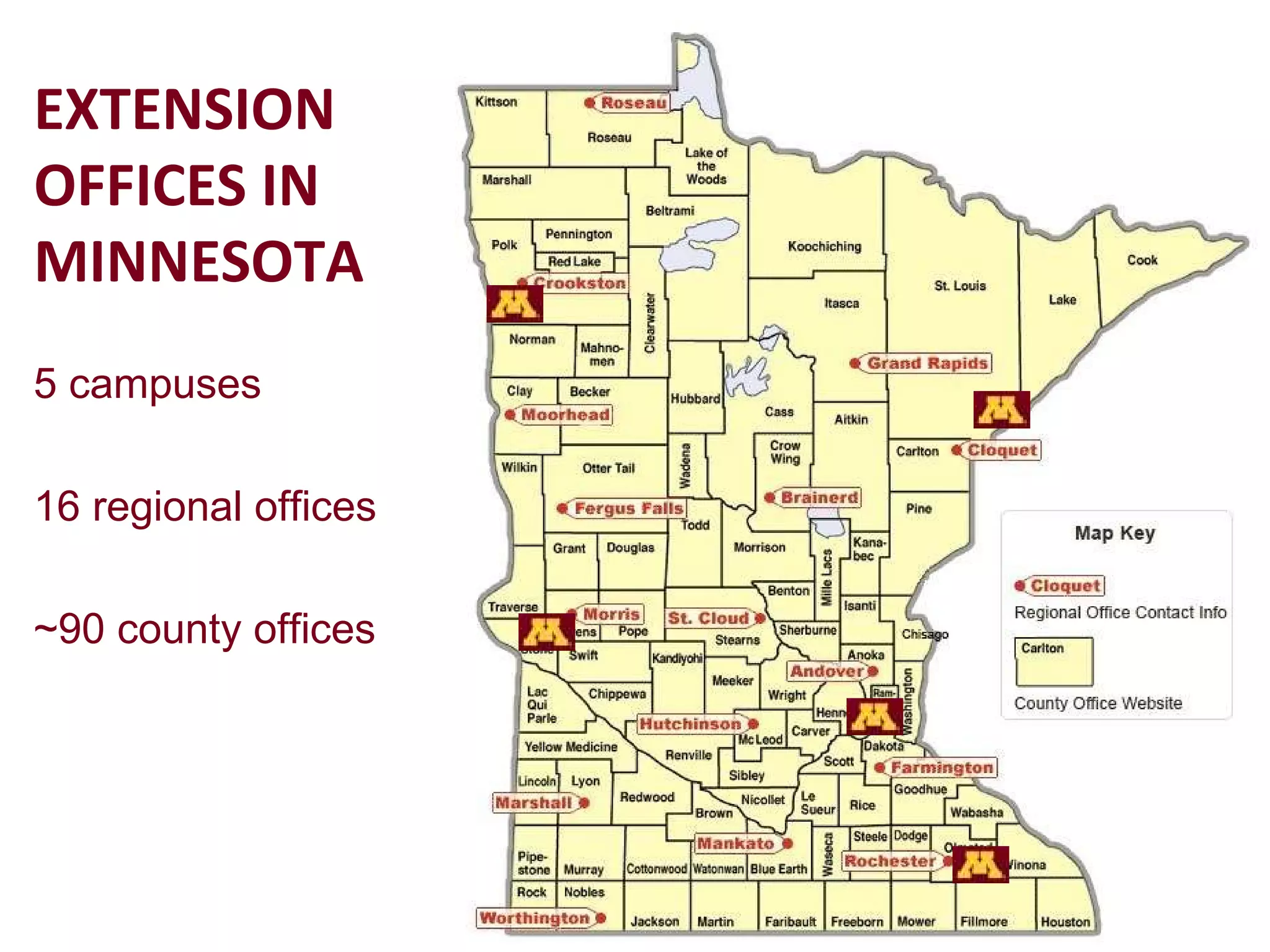
EXTENSION OFFICES IN MINNESOTA 5 campuses 16 regional offices ~90 county offices
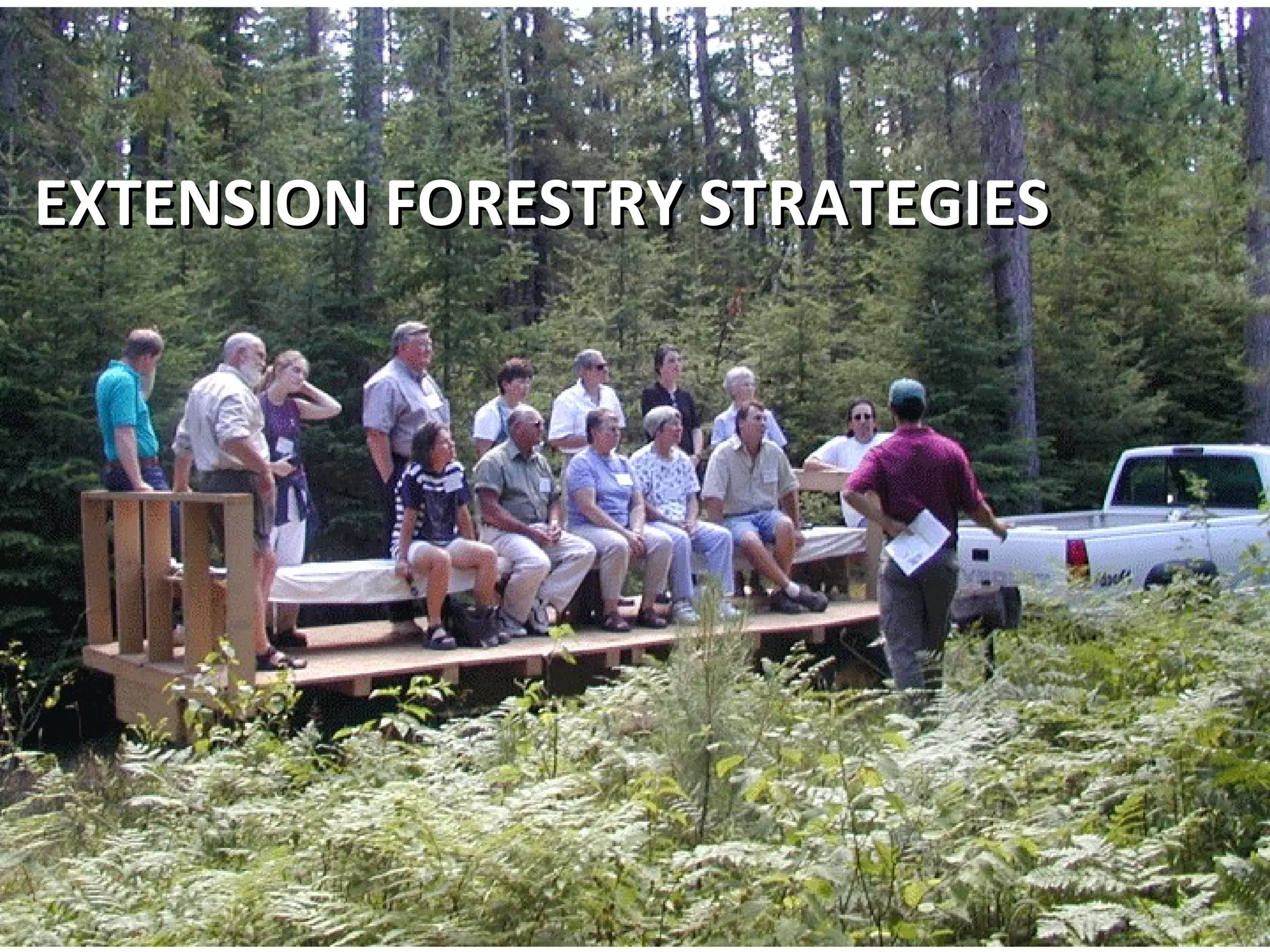
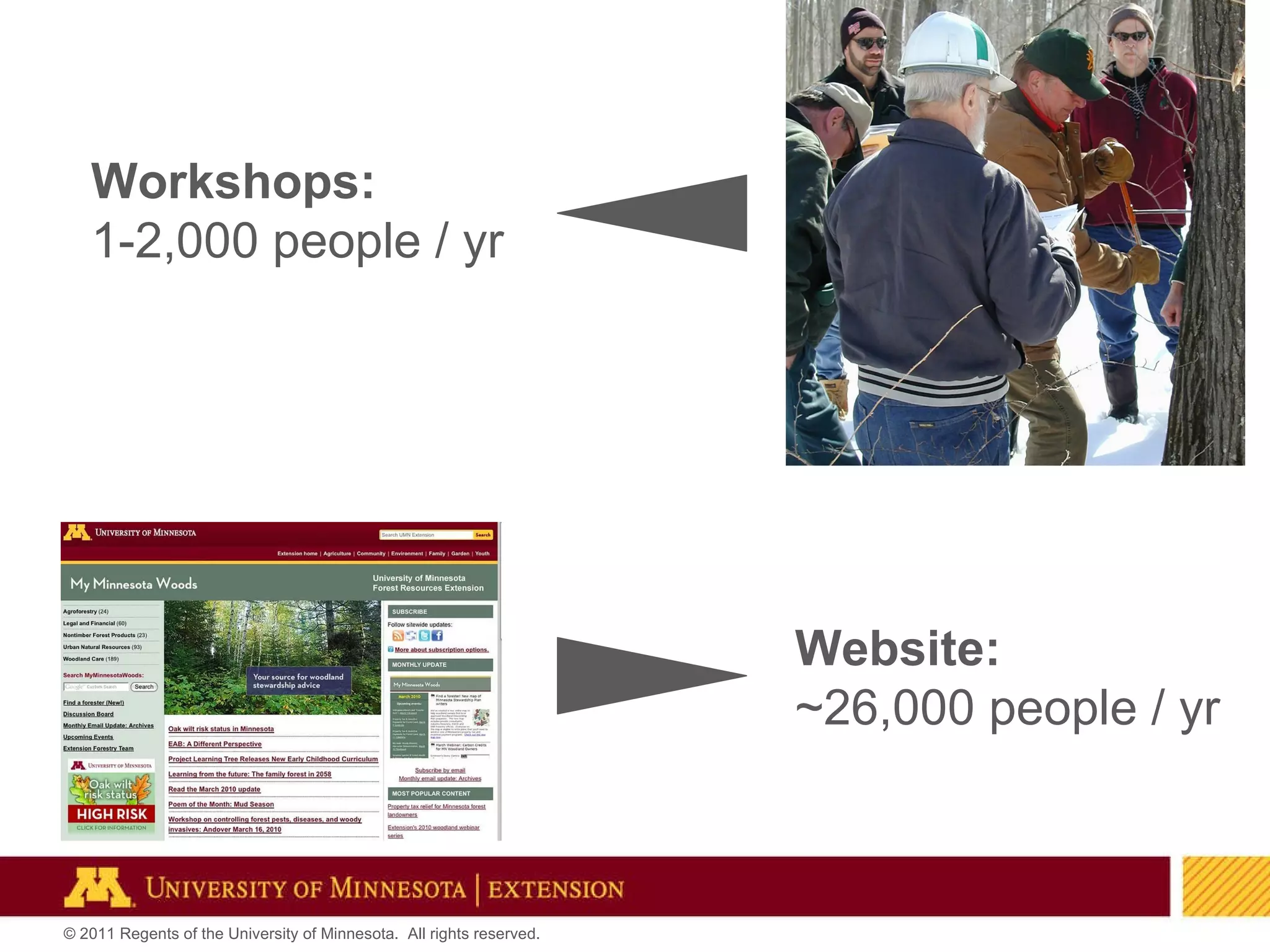
WORKSHOPS EXTENSION FORESTRY STRATEGIES
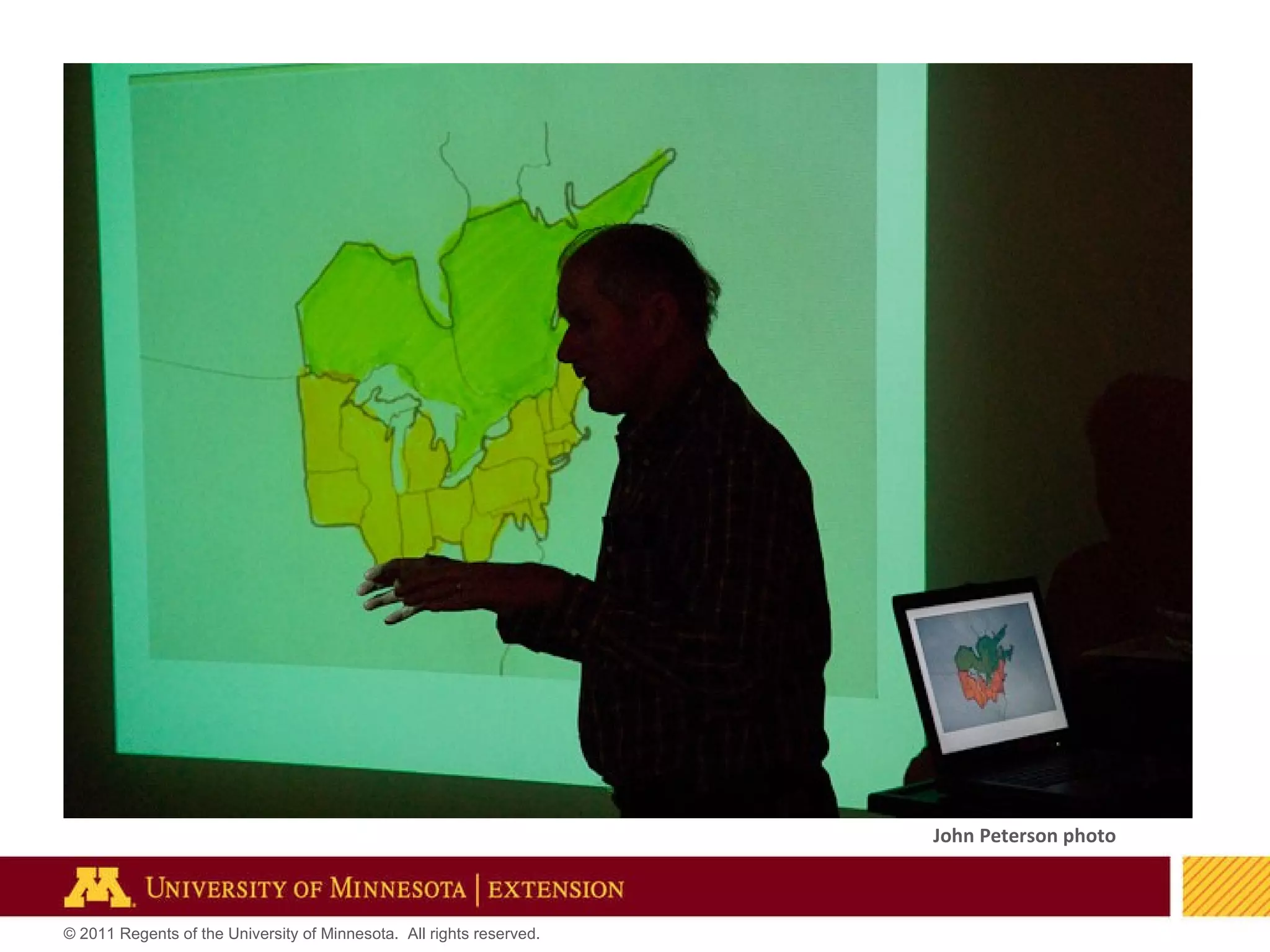
WORKSHOPS John Peterson photo
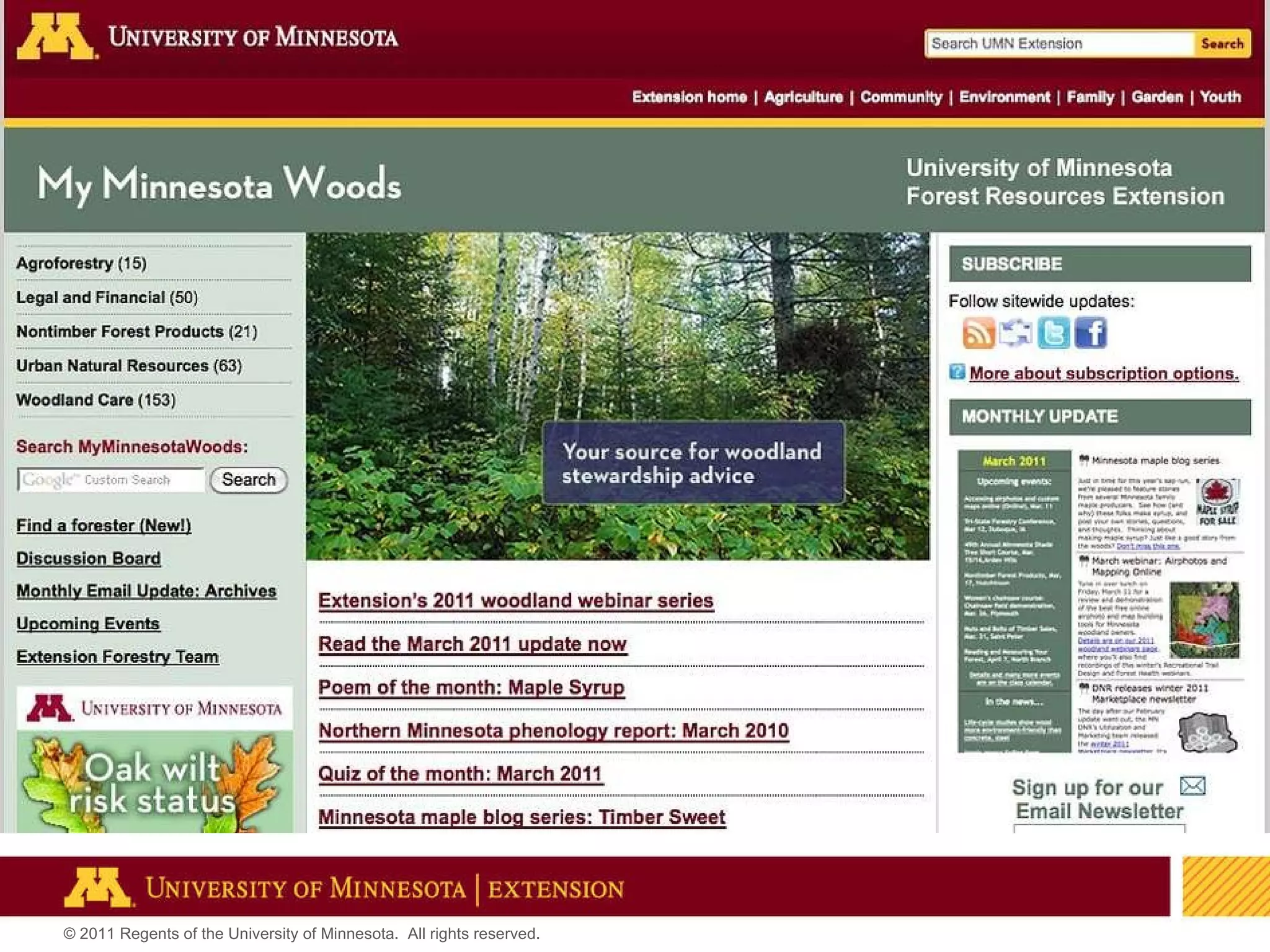
WEBSITES
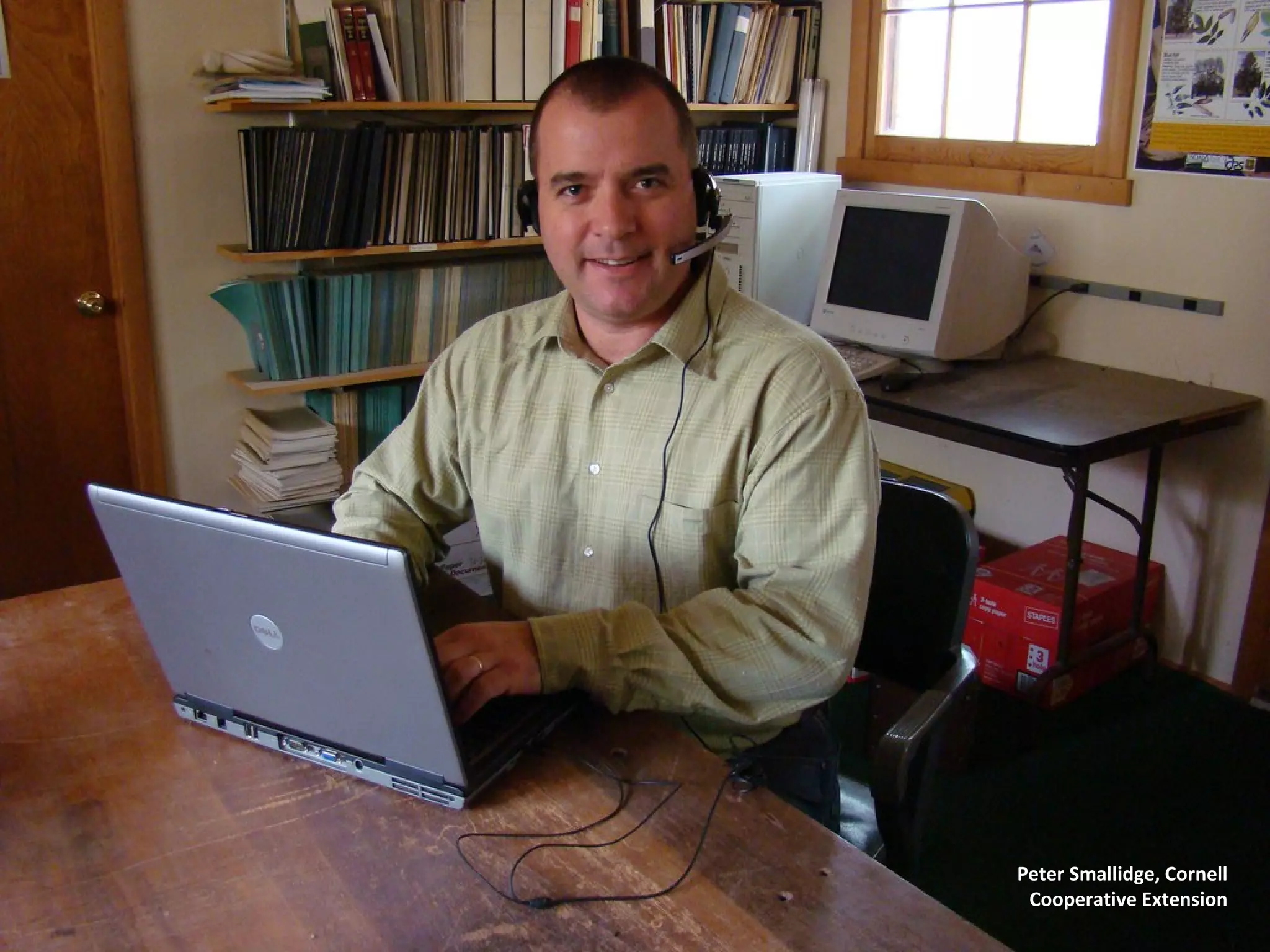
WEBINARS Peter Smallidge, Cornell Cooperative Extension
WORKSHOPS VS. WEB: STATS Workshops: 1-2,000 people / yr Website: ~26,000 people / yr
CASE: MN Forest Resources Council MFRC is a state council established by the Sustainable Forest Resources Act (SFRA) of 1995 to promote long-term sustainable management of Minnesota’s forests.  Pursue the sustainable management, use, and protection of the state’s forest resources. Encourage cooperation and collaboration. Consider forest resource issues, concerns and impacts. Establish processes and mechanisms that seek diverse perspectives and incorporate them into planning and management.  INFORMING THE POLICY PROCESS
89A.03 MINNESOTA FOREST RESOURCES COUNCIL. Subdivision 1.  Membership. The governor must appoint a chair and 15 other members.… two representatives from [environmental] organizations; a representative from a [game species management] organization; a representative from a conservation organization; a representative from an association representing forest products industry; a commercial logging contractor; a representative the resort and tourism industry; a faculty or researcher of a MN research or higher educational institution ; [two owners] of nonindustrial, private forest land; a representative from the [DNR]; a county land commissioner; a representative from the US Forest Service; a representative from a labor organization active in forest resource issues; a representative from a wood products manufacturing organization; and a chair. FOREST RESOURCES COUNCIL MEMBERS
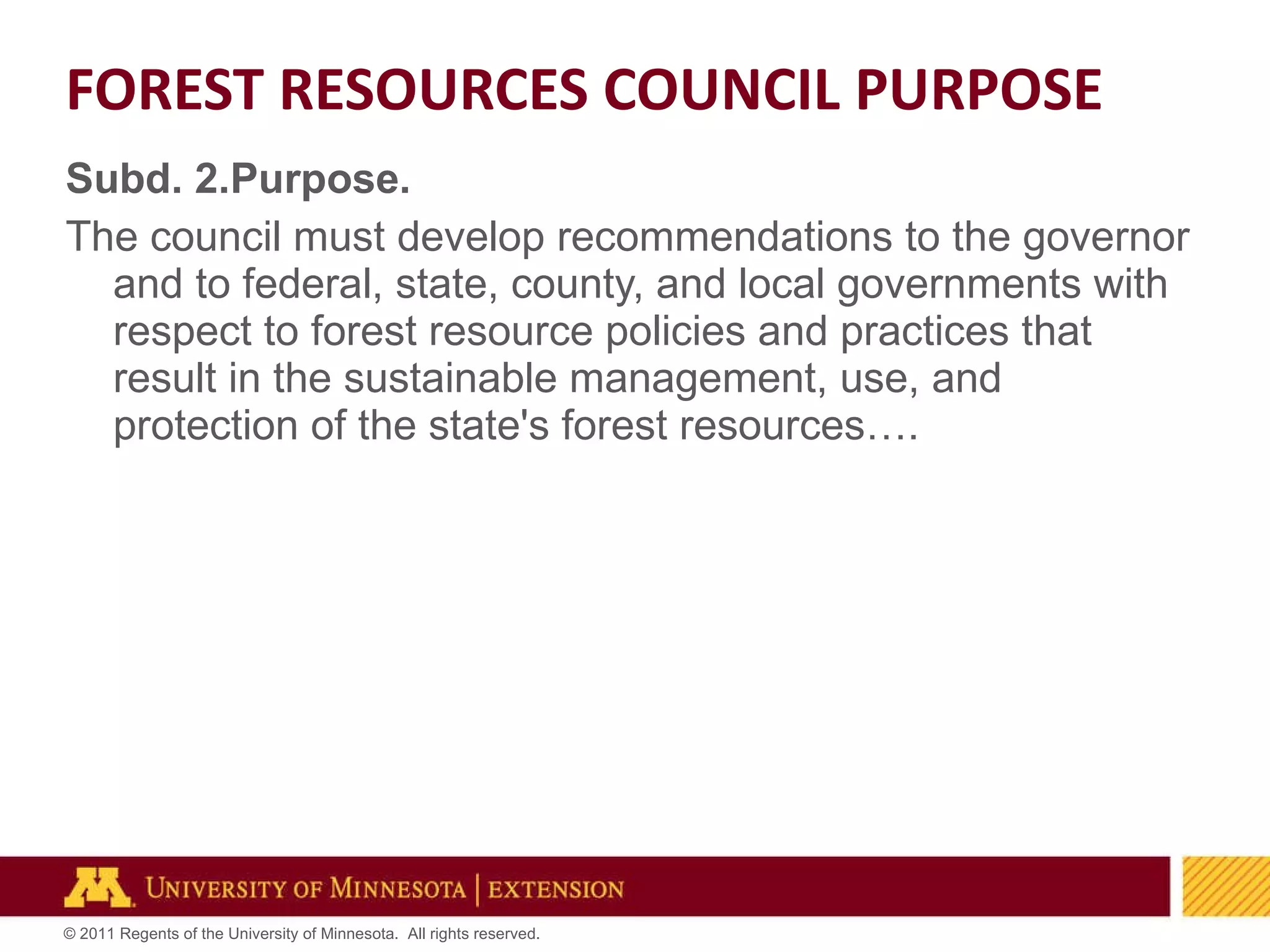
Subd. 2.Purpose. The council must develop recommendations to the governor and to federal, state, county, and local governments with respect to forest resource policies and practices that result in the sustainable management, use, and protection of the state's forest resources…. FOREST RESOURCES COUNCIL PURPOSE
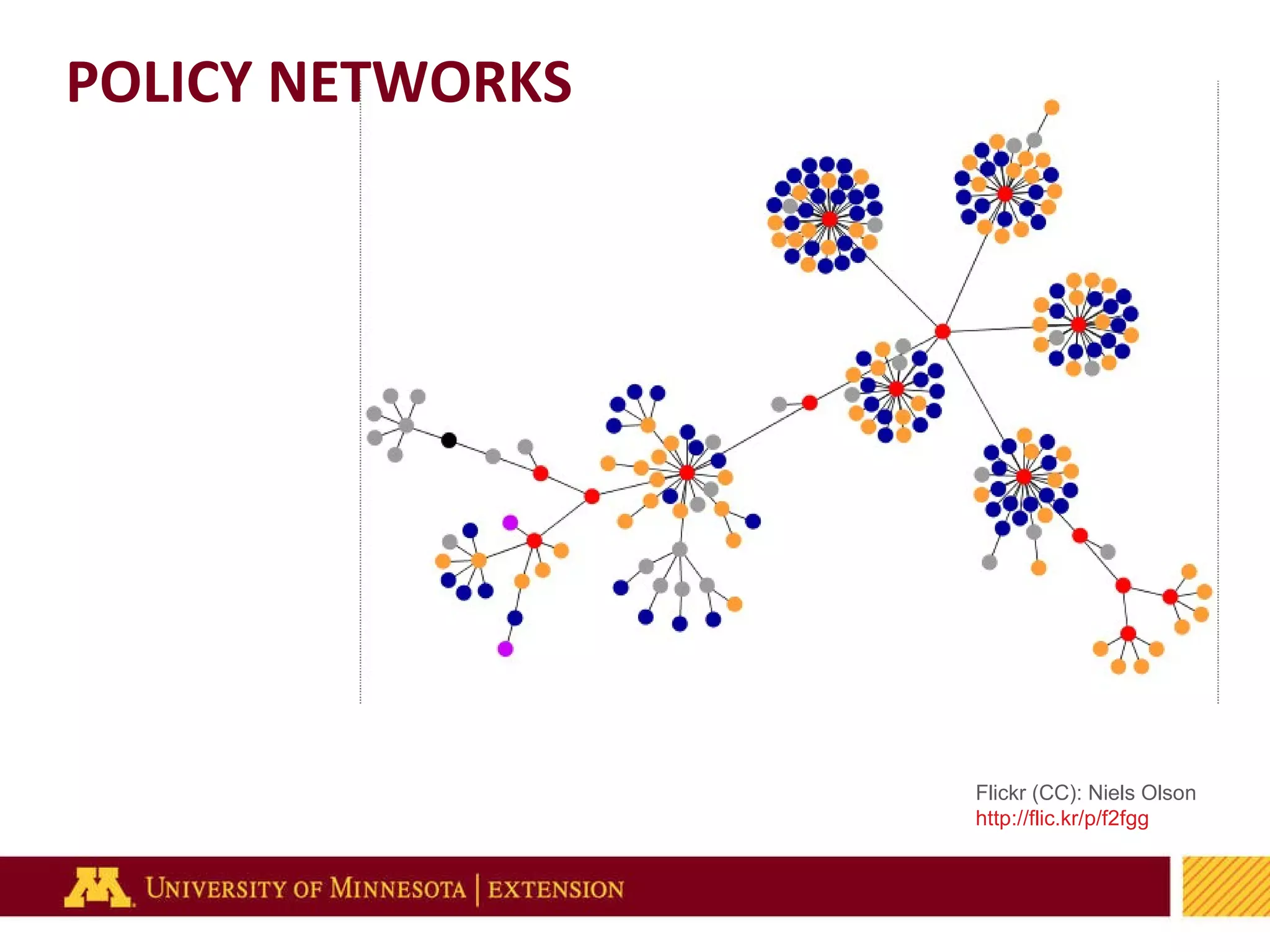
Flickr (CC): Niels Olson  http://flic.kr/p/f2fgg   POLICY NETWORKS
CASE: State & Private Forestry The State and Private Forestry (S&PF) organization of the USDA Forest Service reaches out to States, Tribes, communities and private landowners. S&PF is the federal leader in providing technical and financial assistance to landowners and resource managers to help sustain forests and protect communities and the environment from wildland fires.   State and Private Forestry programs bring  forest management assistance and expertise  to a diversity of landowners, including small  woodlot, tribal, state, and federal, through cost- effective, non-regulatory partnerships.  TECHNICAL ASSISTANCE PROGRAMS
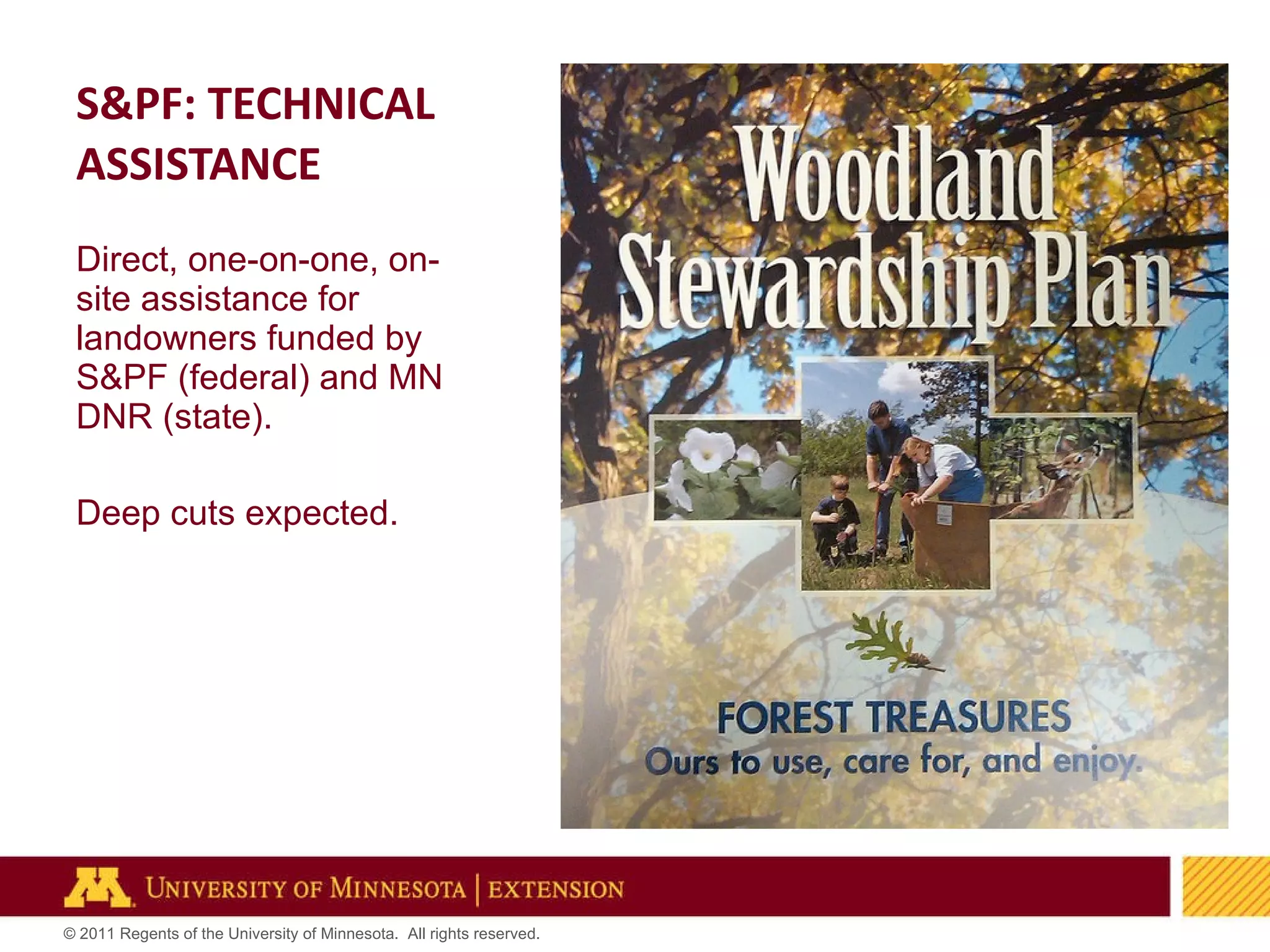
S&PF: TECHNICAL ASSISTANCE Direct, one-on-one, on-site assistance for landowners funded by S&PF (federal) and MN DNR (state). Deep cuts expected.
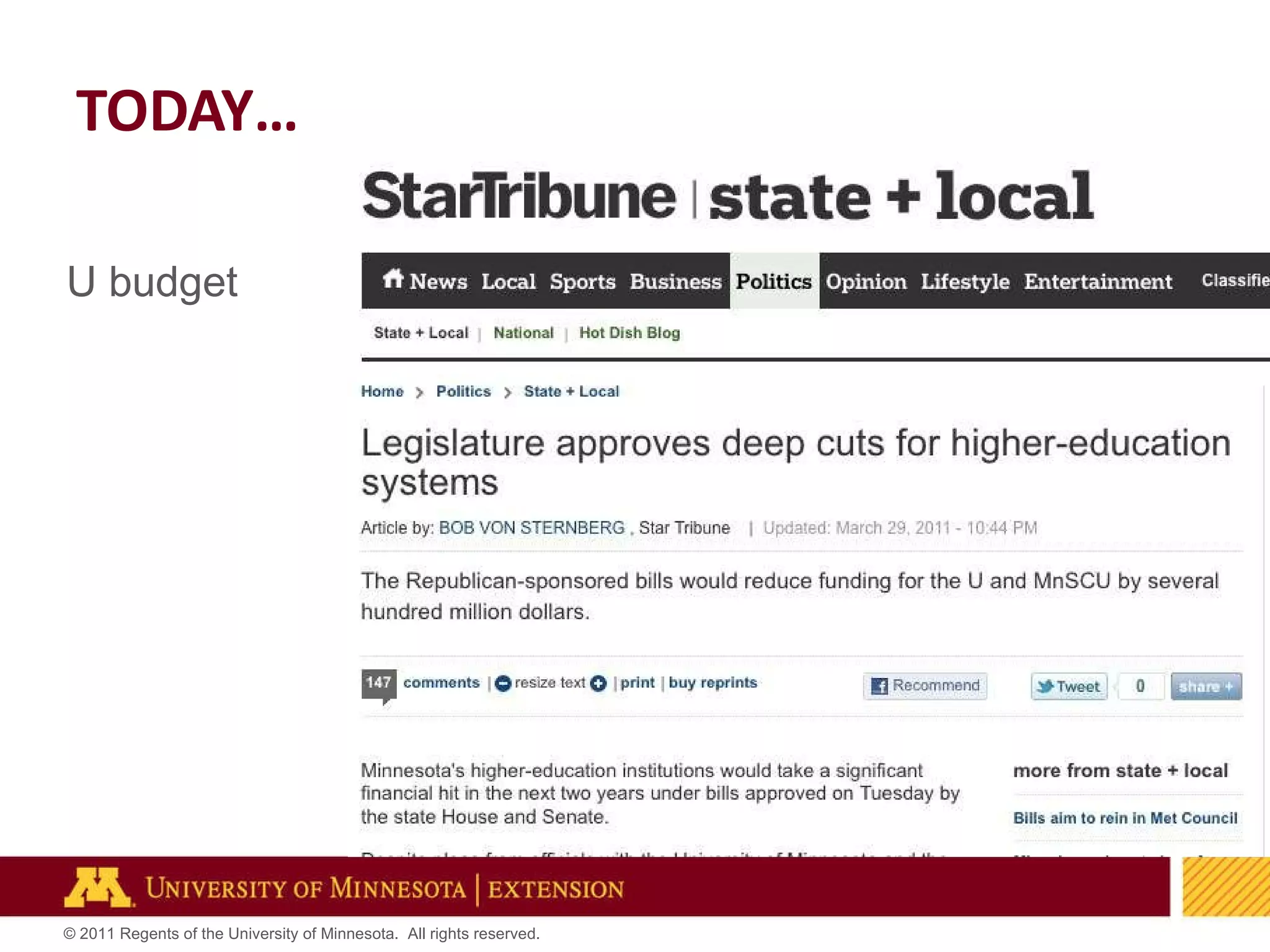
TODAY… U budget
INDIVIDUAL REFLECTION, THEN REPORT Budget challenges are real, and must be addressed at some point. Role of government and policy in natural resources and the environment now? What would you do?
CHALLENGES FOR SERVICE PROGRAMS
Are these interventions warranted? Who receives the benefits? Should private or public interests provide these services? How are limited resources allocated across education, research, and technical assistance needs?  Which issues receive funding and how much? How are service programs linked with other programs, like cost-sharing initiatives? CHALLENGES FOR SERVICE PROGRAMS
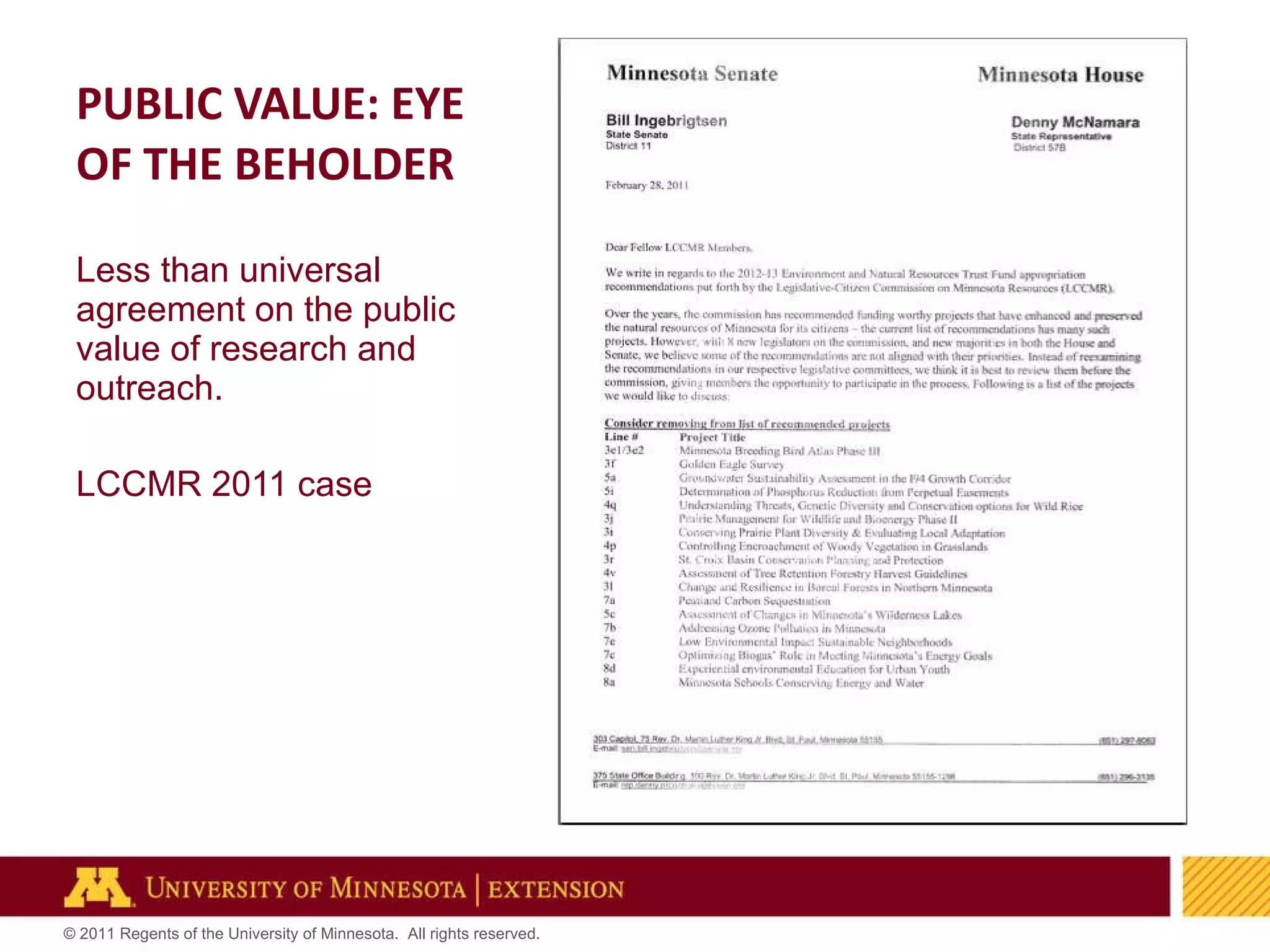
PUBLIC VALUE: EYE OF THE BEHOLDER Less than universal agreement on the public value of research and outreach. LCCMR 2011 case
Services not generally provided via the private sector but deemed important for society. Education, research, and technical assistance programs  influence  public policy, BUT Education, research, and technical assistance programs are also a  reflection  of public policy.

Extension, research, and service as policy tools

  • 1.
    THE LAND GRANTUNIVERSITY SYSTEM: EXTENSION, RESEARCH, AND SERVICE ROLES IN ENVIRONMENTAL POLICY ELI SAGOR [email_address]
  • 2.
    SAINT PAUL CAMPUSTODAY Flickr CC-licensed photo by Mika Marttila: http://flic.kr/p/9cgV7T
  • 3.
    Environmental issues oftenrepresent public or collective goods problems. Issues are rarely resolved through purely private actions. Market forces work to efficiently allocate resources; policy attempts to equitably distribute resources. WHY DO WE NEED POLICY?
  • 4.
    Policy Event PolicyProduct POLICY DEVELOPMENT PROCESS
  • 5.
    How do serviceprograms like education, research, and technical assistance influence public policy? How are they a reflection of public policy?
  • 6.
    Land Trusts LandGrants Conservation Easements Regulatory Rules Tax Incentives Cost-Share Programs Government Ownership Education Technical Assistance Research Voluntary Guidelines
  • 7.
    OUTLINE Public serviceprograms and the land grant university system Extension, research, and service contributions Today: The U budget and the land grant mission
  • 8.
    PUBLICLY FUNDED SERVICEPROGRAMS Public Education: Agency environmental educators K-8 curriculum development Public service announcements (PSA) on radio and TV Research: Colleges and universities (land grant, primarily) National research laboratories Agency scientists (USDA, DOI, DOE) Technical Assistance and Extension: Brochures, interpretive pamphlets, websites Conferences, short courses, field tours, workshops, 4H Demonstration projects Which have you been involved with in the past?
  • 9.
    THE LAND GRANTUNIVERSITY SYSTEM Source: http://bit.ly/fx8dyS States were granted (given) land by the federal government to establish and endow "land grant" colleges. Mission: to focus on the teaching of agriculture, science and engineering rather than higher education's historic core of classical studies.
  • 10.
  • 11.
    CREATING THE LANDGRANT UNIVERSITY SYSTEM Morrill Act of 1862 Hatch Act of 1887 Smith-Lever Act of 1914 Federal government grants land to states to TEACH agriculture, science, and engineering Creates the agricultural experiment station system to foster RESEARCH Creates cooperative EXTENSION : Practical application, instruction of improved practices, technology
  • 12.
    THE LAND GRANTUNIVERSITY SYSTEM Teaching Extension Research
  • 13.
    PUBLIC SERVICE MISSIONAND IDENTITY Public service is deeply embedded in the culture and identity of land grant universities.
  • 14.
  • 15.
    Morrill Hall UMNphoto library Source: University of Minnesota photo library
  • 16.
  • 17.
    Minnesota Agricultural ExperimentStation http://www.maes.umn.edu/ RESEARCH
  • 18.
  • 19.
  • 20.
  • 21.
  • 22.
    EXTENSION Flickr photofrom Oregon State University archives
  • 23.
    Demonstrating practical applicationsof research, improved technology CONNECTIONS
  • 24.
    EXTENSION Flickr photofrom Oregon State University archives
  • 25.
  • 26.
    EXTENSION OFFICES INMINNESOTA 5 campuses 16 regional offices ~90 county offices
  • 27.
  • 28.
  • 29.
  • 30.
    WEBINARS Peter Smallidge,Cornell Cooperative Extension
  • 31.
    WORKSHOPS VS. WEB:STATS Workshops: 1-2,000 people / yr Website: ~26,000 people / yr
  • 32.
    CASE: MN ForestResources Council MFRC is a state council established by the Sustainable Forest Resources Act (SFRA) of 1995 to promote long-term sustainable management of Minnesota’s forests.  Pursue the sustainable management, use, and protection of the state’s forest resources. Encourage cooperation and collaboration. Consider forest resource issues, concerns and impacts. Establish processes and mechanisms that seek diverse perspectives and incorporate them into planning and management. INFORMING THE POLICY PROCESS
  • 33.
    89A.03 MINNESOTA FORESTRESOURCES COUNCIL. Subdivision 1. Membership. The governor must appoint a chair and 15 other members.… two representatives from [environmental] organizations; a representative from a [game species management] organization; a representative from a conservation organization; a representative from an association representing forest products industry; a commercial logging contractor; a representative the resort and tourism industry; a faculty or researcher of a MN research or higher educational institution ; [two owners] of nonindustrial, private forest land; a representative from the [DNR]; a county land commissioner; a representative from the US Forest Service; a representative from a labor organization active in forest resource issues; a representative from a wood products manufacturing organization; and a chair. FOREST RESOURCES COUNCIL MEMBERS
  • 34.
    Subd. 2.Purpose. Thecouncil must develop recommendations to the governor and to federal, state, county, and local governments with respect to forest resource policies and practices that result in the sustainable management, use, and protection of the state's forest resources…. FOREST RESOURCES COUNCIL PURPOSE
  • 35.
    Flickr (CC): NielsOlson http://flic.kr/p/f2fgg POLICY NETWORKS
  • 36.
    CASE: State &Private Forestry The State and Private Forestry (S&PF) organization of the USDA Forest Service reaches out to States, Tribes, communities and private landowners. S&PF is the federal leader in providing technical and financial assistance to landowners and resource managers to help sustain forests and protect communities and the environment from wildland fires. State and Private Forestry programs bring forest management assistance and expertise to a diversity of landowners, including small woodlot, tribal, state, and federal, through cost- effective, non-regulatory partnerships. TECHNICAL ASSISTANCE PROGRAMS
  • 37.
    S&PF: TECHNICAL ASSISTANCEDirect, one-on-one, on-site assistance for landowners funded by S&PF (federal) and MN DNR (state). Deep cuts expected.
  • 38.
  • 39.
    INDIVIDUAL REFLECTION, THENREPORT Budget challenges are real, and must be addressed at some point. Role of government and policy in natural resources and the environment now? What would you do?
  • 40.
  • 41.
    Are these interventionswarranted? Who receives the benefits? Should private or public interests provide these services? How are limited resources allocated across education, research, and technical assistance needs? Which issues receive funding and how much? How are service programs linked with other programs, like cost-sharing initiatives? CHALLENGES FOR SERVICE PROGRAMS
  • 42.
    PUBLIC VALUE: EYEOF THE BEHOLDER Less than universal agreement on the public value of research and outreach. LCCMR 2011 case
  • 43.
    Services not generallyprovided via the private sector but deemed important for society. Education, research, and technical assistance programs influence public policy, BUT Education, research, and technical assistance programs are also a reflection of public policy.

Editor's Notes

  • #2 This version of the presentation was delivered as a guest lecture to the University of Minnesota’s ESPM 3241/5241, Natural Resource and Environmental Policy course in April 2011.
  • #3 The importance of applied research to the purpose and identity of the University of Minnesota as a land grant institution is clearly evident from this aerial photo showing active agricultural fields and research sites north of the Saint Paul campus. Image source: Google Earth.
  • #11 The importance of applied research to the purpose and identity of the University of Minnesota as a land grant institution is clearly evident from this aerial photo showing active agricultural fields and research sites north of the Saint Paul campus. Image source: Google Earth.
  • #12 Three foundational pieces of federal legislation creating the land grant university system as we know it today.
  • #13 Teaching, research, and Extension: The three pillars of the land grant university system.
  • #16 Morrill Hall, on the UMN Minneapolis East Bank campus. This is the administrative center of the University of Minnesota Twin Cities campus.
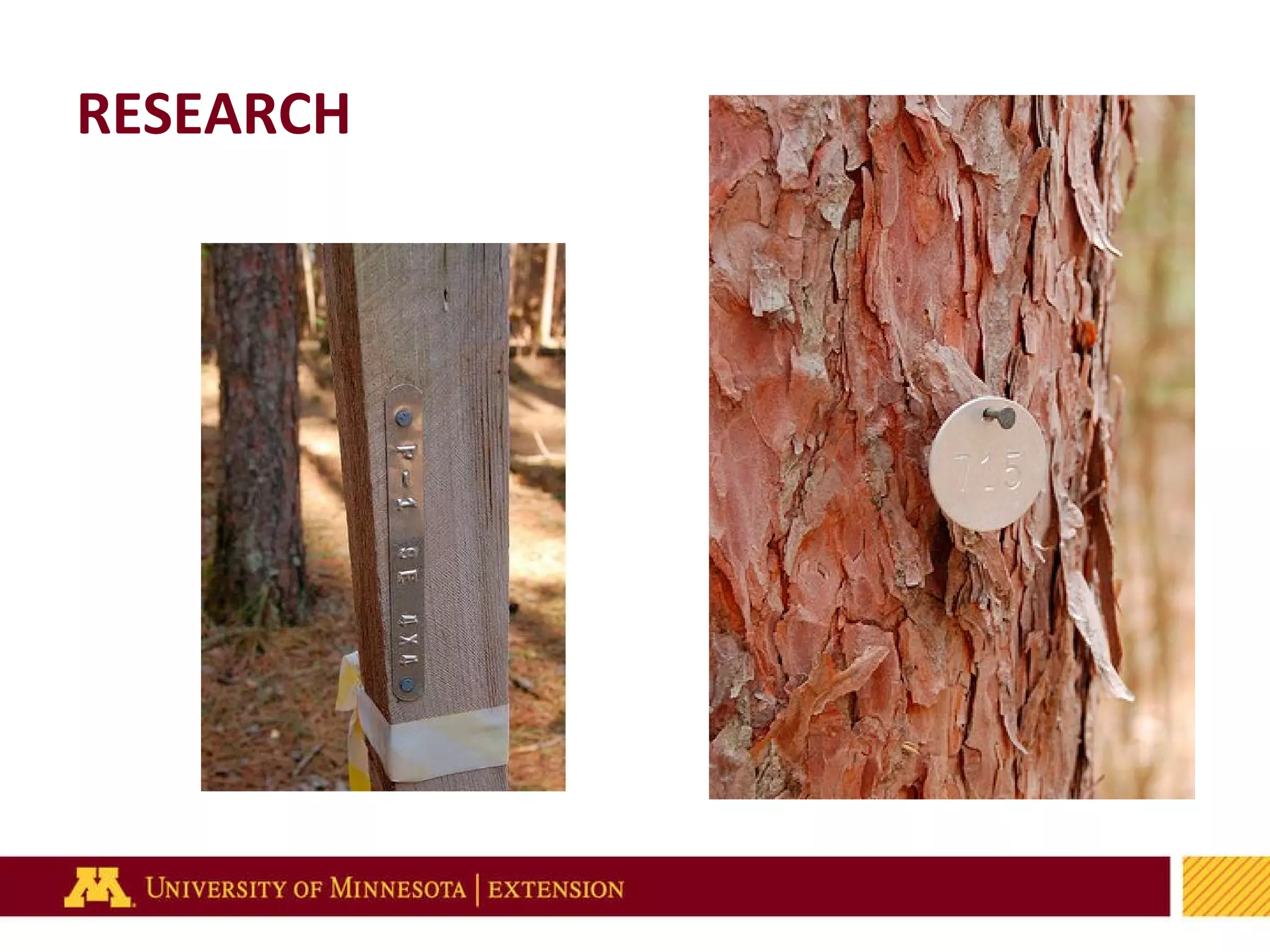
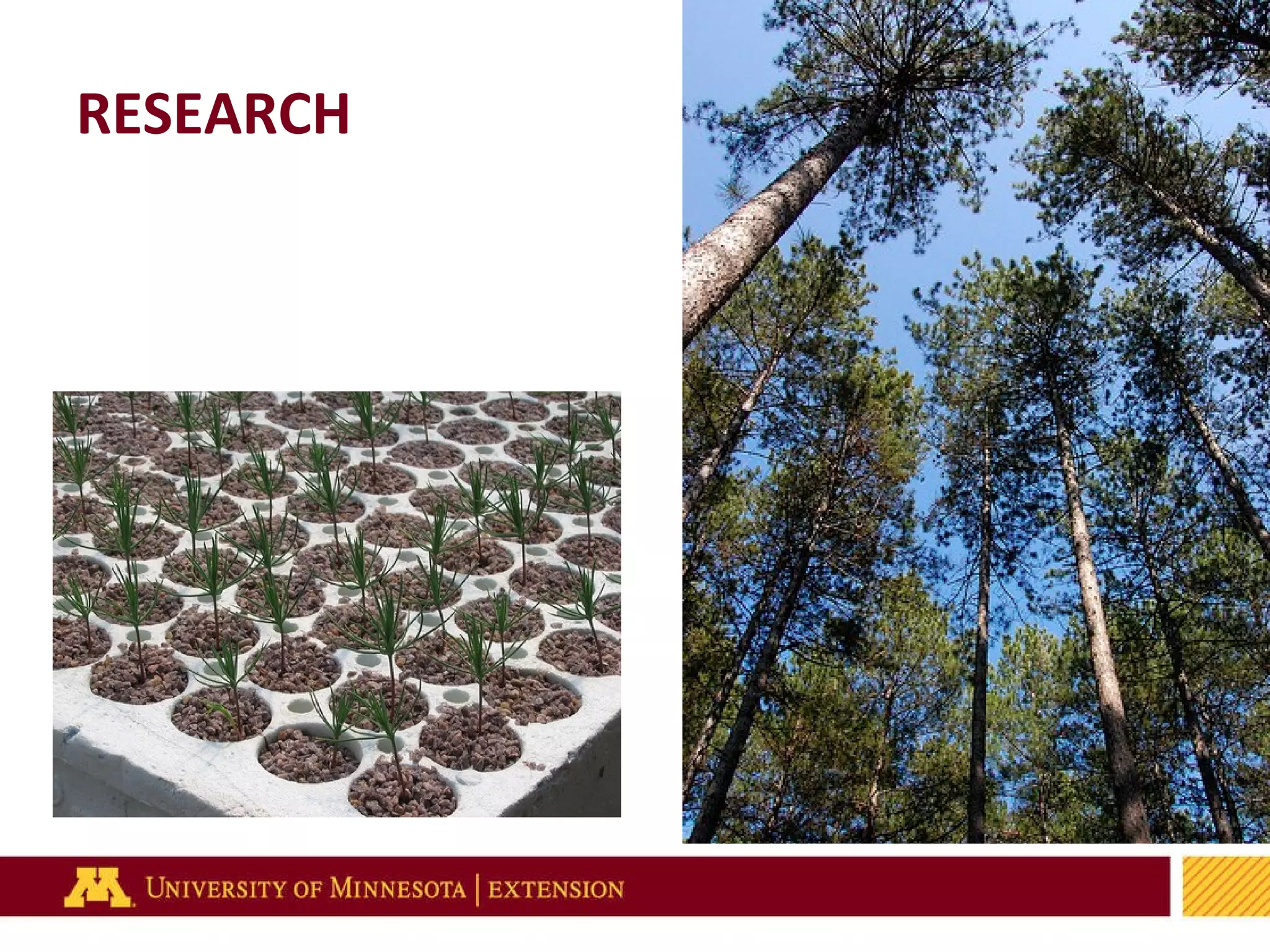
  • #19 Research at CFC addresses everything from tree establishment to the ecology and management of mature stands, including many considerations (wildlife, water quality, forest economics, and much more) in between.
  • #20 The Cloquet Forestry Center is an important center of forestry research, teaching, and Extension at the University of Minnesota.
  • #21 Research at CFC addresses everything from tree establishment to the ecology and management of mature stands, including many considerations (wildlife, water quality, forest economics, and much more) in between.
  • #22 Research at CFC addresses everything from tree establishment to the ecology and management of mature stands, including many considerations (wildlife, water quality, forest economics, and much more) in between.
  • #25 A typical forestry Extension program at the Cloquet Forestry Center.
  • #26 Cooperative Extension funding comes from a variety of sources. The only source that’s growing is grants, gifts, and other. Formula funds from federal and state governments have been flat or in slight decline in recent years.
  • #27 By maintaining a presence in every Minnesota county, Extension makes resources from the University of Minnesota far more available and accessible to citizens, businesses, farmers, and others than it would otherwise be.
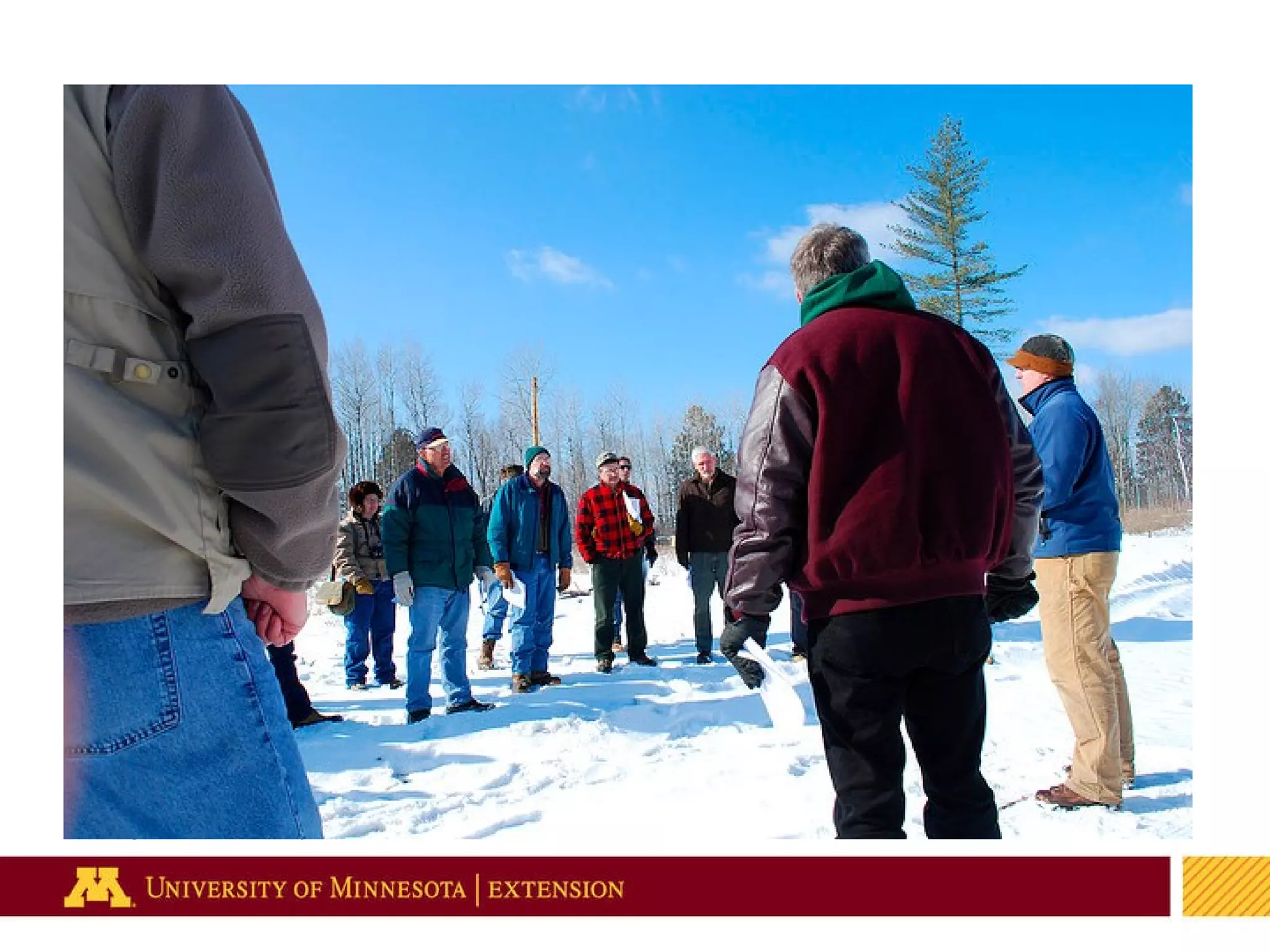
  • #28 Typical field workshop, perhaps the most common approach in our Extension forestry team. We offer 60-110 workshops per year, reaching about 1000 participants per year, many of whom attend more than one workshop. Workshops offer a high-touch, relatively high impact learning opportunity, but are costly to offer and inconvenient to attend, particularly for landowners who live far from the workshop location.
  • #29 Not all workshops are field-based. Presentations like this one by Carl Vogt offer a different kind of learning opportunity, better suited to some types of content.
  • #30 MyMinnesotaWoods: A UMN Extension forestry website. This site is a hub for just about everything our Extension forestry team does online and/or in digital formats. It’s meant to be a single site, aggregating Extension and non-Extension content, moderated and curated by our Extension forestry team.
  • #31 Increasingly, digital content is adding to the Extension forestry repertoire. Peter Smallidge at Cornell Cooperative Extension is one of the pioneers and leaders in offering quality forestry-related web-based presentations, or “webinars,” to forest landowners and professionals. Webinars are recorded, giving learners far more convenience in when and where they access presentation content.
  • #32 While higher-impact learning may take place during the longer, more personal interaction at a workshop, websites may be a more effective way to remind learners that we exist and can help them, so that when the time comes they will seek out Extension and their land grant university system.
  • #39 We also work hard to help landowners improve the health and productivity (broadly defined) of their forested land. The topics on the slide are some topical focus areas related to forest health and productivity