i
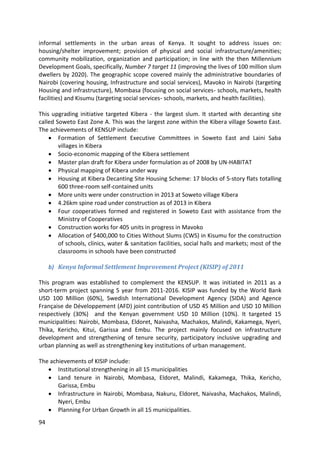
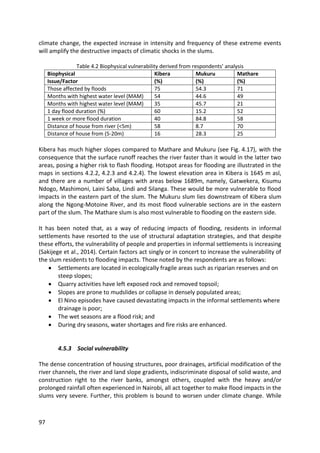
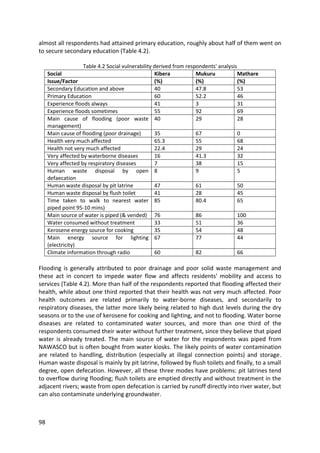
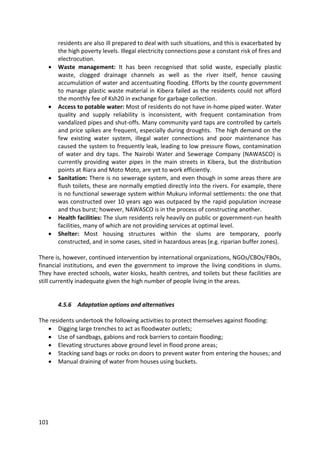
Research, Analysis of Climate Resilience
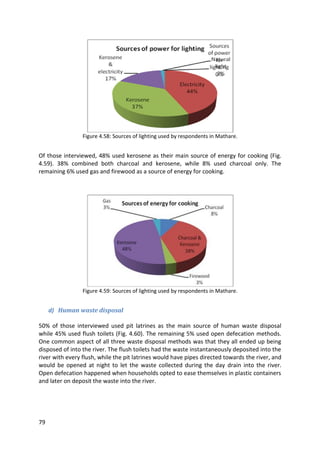
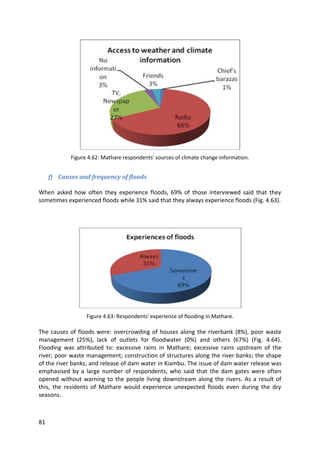
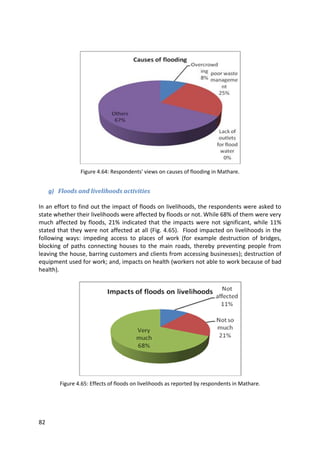
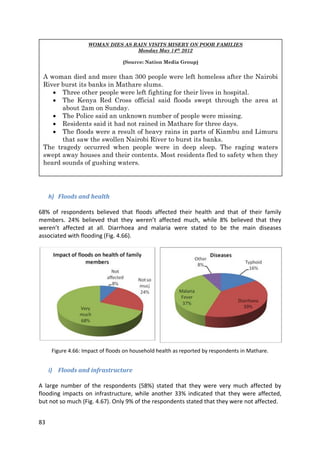
Options for Nairobi Slums and Informal
Settlements
FINAL REPORT
BY:
Africa Collaborative Centre for Earth Systems Science
(ACCESS)
&
Institute for Climate Change and Adaptation (ICCA)
University of Nairobi
Chiromo Campus
Riverside Drive
P.O. Box 30197-00100
Nairobi – KENYA
FOR:
Maji na Ufanisi (MnU)
Nairobi, Kenya
(Contract No. MnU/CA/ACC 1.1 2015)
April 2016
ii
PROJECT TEAM
(1) Researchers:
Prof. Daniel Olago - Overall Project Coordinator
Ms. Christine Omuombo - Field Coordinator and Biophysical Lead
Prof. Eric Odada - Internal Reviewer/Facilitator
Dr. Alfred Opere - Climate Lead
Prof. Shem Wandiga - Policy Lead
Dr. Lydia Olaka - GIS Lead
Ms. Eunice Ongoro - Socio-economic Lead
Mr. Stanley Atonya - GIS
(2) MCCA Students from the ICCA, University of Nairobi:
Rosemary Barasa (Media Research Assistant)
Dinah Ogara (Policy Research Assistant)
Purity Mueni (Climate Risk Analysis Research Assistant)
Godwin Mnyika (Biophysical - Kibera)
Wentland Muhatia (Biophysical - Mukuru)
Edwin Ruto (Biophysical - Mathare)
Jessica Omukuti (Socio-economic - Mathare)
Sharon Baraza (Socio-economic - Kibera)
Tinashe Masimbe (Socio-economic - Mukuru)
The students are acknowledged for their assistance in data mining and collation and/or
carrying out and reporting on the fieldwork in December 2015.
iii
EXECUTIVE SUMMARY
Climate change is challenging the livelihoods of the residents of the informal settlements in
Nairobi. The direct impacts of climate change include loss of human lives, physical injuries
to humans, loss of property and assets, disruption and loss of normal livelihoods,
permanent or temporary displacement, increased incidences and outbreaks of diseases, and
damage to infrastructure. and its impacts are enhanced by the high density population, poor
or lack of urban planning, location, socio-political marginalization and exclusion, poverty,
and unstable social networks. This occurs against the backdrop of: lack of capacities of
national agencies, county government and vulnerable communities to effectively develop
coping mechanisms and strategies on adaptation and disaster risk management.
The overall objective of the study was "to contribute to the body of knowledge on climate
change in Nairobi’s informal settlements and opportunities, provide knowledge on climate
change adaptation strategies that have worked elsewhere and create awareness that
informs policy". An extensive literature review was undertaken and covered the biophysical
and socio-economic factors that underlie vulnerability to climate change driven flooding
events with particular reference to informal settlements. Field surveys to identify the
biophysical and socioeconomic factors that contribute to vulnerability to flooding were
conducted in the three informal settlements from 14th
to 18th
December 2015 and focused
on the riparian residents of those settlements. This work was supported by climate risk and
GIS analyses. Several policy, planning, and regulatory documents were reviewed with a view
to pointing out the gaps and opportunities that they provide for climate resilience building
in informal settlements with particular reference to those in Nairobi. Media reports on
flooding impacts in the informal settlements were sourced from the Nation Media Group
archives, covering the period 1985 to 2015.
This study found that there is a very high population density along the stretches of the rivers
running through the three slums, and that this is one primary reason why flood impacts are
severe within the slums. Significant extreme events of rainfall have been found in the four
stations that best capture the rainfall situation within the three slums in this study. They
show that flooding occurs mainly during the two rainy seasons, and tend to be associated
with extreme and short duration rainfall events, as well the El Nino Southern Oscillation
(ENSO) related rains. Flooding hotspot areas and villages have been identified and all these
occur on the eastern sides of the three settlements. However, some non-climatic factors act
singly or in concert to increase the vulnerability of the slum residents to flooding impacts,
and these include settlements in ecologically fragile areas such as riparian reserves, steep
slopes, and former quarrying fields. Flooding is generally attributed to poor drainage and
poor solid waste management where these act in concert to impede water flow and affects
residents' mobility and access to services, as well as their health. The respondents indicated
that their vulnerability is accentuated by other factors such as: lack of access to essential
sanitation and water services and lack of adequate and safe infrastructure including bridges.
There are many projects being implemented by both governmental and non-governmental
agencies within the slum areas, with a view to improving their living conditions and
livelihoods, but to a large extent they are not coordinated (no inter-agency collaboration),
duplicate efforts, do not spread the benefits equitably, and some have stalled. The majority
of the respondents were not aware of County Government and NGO projects that were
iv
being undertaken to mitigate flood impacts, and this information suggests that measures
being undertaken by the County Government and NGOs are not reaching most of the
residents and that projects need to be better coordinated and that strategies need to be
devised to have a more equitable distribution of projects and their associated benefits.
Some of the national policy framework and the county agenda have very rich strategies and
programmes laid out to benefit the poor in informal settlements, while others are quite
deficient. A number of challenges were noted and relate to: flood protection, disaster
management, waste management, WASH, access to potable water, inadequate health
facilities, and poor housing.
The following are the recommended adaptation actions, which should be implemented with
careful consideration of possible unintended negative impacts, or maladaptation, for which
strategies should be in place beforehand on how to circumvent them: (1) Focus on climate-
proofed housing; (2) Implement an effective flood early warning system, (3) Construct
appropriate climate-proofed infrastructure; (4) Facilitate cooperative and integrated actions
between government agencies, NGOs and affected communities; (5) Strengthen existing
institutions to manage and respond to disasters; (6) Strengthen existing policy and
regulatory framework for disaster management and upgrading programmes for informal
settlements; (7) Design and implement an education and awareness raising strategy on risk
reduction; and (8) Implement non-structural adaptation options along with the on-going
focus on structural adaptation measures. In order to effectively implement these adaptation
options, there is need to identify and plan how to deal with any potential negative
outcomes to avoid maladaptation. Data is needed to support these activities and to
measure their performance and so should also underpin a strong monitoring and evaluation
system. Downscaled future climate scenarios are required for better impact assessments to
guide both structural and non-structural interventions. Collaborative agreements which
clearly identify roles and responsibilities can be instituted by government agencies in order
to circumvent the existing duplication and overlapping of mandates which may take a long
time to correct and consequently delay actions that are needed today. NGOs can similarly
come together, through collaborative agreements, to ensure that their efforts have a wider
reach and that benefits are more equitably spread within the informal settlements. The
media should be involved in disaster risk reduction efforts. All organisations and agencies
working within the informal settlements should fully involve the residents, through their
representatives such as political and religious leaders, CBOs and other groupings that also
represent the youth, women and other vulnerable groups, in the planning and decision
making process to improve the conditions in the slums. Finally, basic poverty reduction and
sustainable development goals should be addressed in all implemented projects as these
will support the building of resilience to potentially adverse climate change impacts.
v
TABLE OF CONTENTS
PROJECT TEAM................................................................................................................................................... II
EXECUTIVE SUMMARY.......................................................................................................................................III
TABLE OF CONTENTS....................................................................................................................................... V
1. INTRODUCTION AND TERMS OF REFERENCE ...........................................................................................7
1.1 BACKGROUND ...........................................................................................................................................7
1.2 OBJECTIVES OF THE STUDY...........................................................................................................................7
1.2.1 Overall Objective...............................................................................................................................7
1.2.2 Specific Objectives.............................................................................................................................8
1.3 FOCUS AND SCOPE OF THE TASK....................................................................................................................8
1.4 DELIVERABLES ...........................................................................................................................................9
2. METHODOLOGY ....................................................................................................................................10
3. LITERATURE REVIEW .............................................................................................................................13
3.1 THE VULNERABILITY OF THE URBAN POOR TO CLIMATE CHANGE .......................................................................13
3.1.1 Flooding ..............................................................................................................................................13
3.1.2 Constraints on Water and other Key Natural Resources.....................................................................15
3.1.3 High Temperatures and Heat Waves ..................................................................................................15
3.1.4 Gaps ....................................................................................................................................................16
3.2 NAIROBI INFORMAL SETTLEMENTS - TYPOLOGY OF MATHARE SLUM ..................................................................16
3.2.1 Introduction................................................................................................................................16
3.2.2 Context .......................................................................................................................................17
3.3 NAIROBI INFORMAL SETTLEMENTS - TYPOLOGY OF KIBERA SLUM ......................................................................21
3.3.1 Introduction................................................................................................................................21
3.3.2 Context .......................................................................................................................................21
3.4 NAIROBI INFORMAL SETTLEMENTS - TYPOLOGY OF MUKURU KWA NJENGA SLUM ................................................25
3.4.1 Introduction................................................................................................................................25
3.4.2 Context .......................................................................................................................................25
4. FINDINGS...............................................................................................................................................30
4.1 CLIMATE CHANGE AND VARIABILITY CONTEXT................................................................................................30
4.1.1 Time Series Analysis....................................................................................................................30
4.1.2 Monthly Precipitation Charts over Nairobi.................................................................................34
4.1.3 Storm Intensity Duration Frequency Analyses............................................................................36
4.1.4 Frequency Analysis of peak rainfall and generated runoff.........................................................37
4.2 THE BIOPHYSICAL CONTEXT........................................................................................................................42
4.2.1 Introduction................................................................................................................................42
4.2.2 General Features ........................................................................................................................43
4.2.3 Biophysical context for Kibera ....................................................................................................44
4.2.4 Biophysical context for Mukuru..................................................................................................49
4.2.5 Biophysical Context for Mathare................................................................................................55
4.3 THE SOCIO-ECONOMIC CONTEXT.................................................................................................................59
4.3.1 Socio-economic context for Kibera .............................................................................................59
4.3.2 Socio-economic context for Mukuru...........................................................................................66
4.3.3 Socio-economic context for Mathare .........................................................................................77
4.3.4 Common issues on Socioeconomic Context ........................................................................................87
4.4 THE POLICY CONTEXT ...............................................................................................................................87
4.4.1 Legal Framework........................................................................................................................88
4.5.2 Policy Framework .......................................................................................................................91
4.5.3 County Agenda ...........................................................................................................................93
4.5 VULNERABILITY, ADAPTATION OPTIONS AND ALTERNATIVES.............................................................................95
4.5.1 Demographic vulnerability .........................................................................................................95
4.5.2 Biophysical vulnerability.............................................................................................................96
vi
4.5.3 Social vulnerability......................................................................................................................97
4.5.4 Livelihoods vulnerability .............................................................................................................99
4.5.5 Institutional challenges ............................................................................................................100
4.5.6 Adaptation options and alternatives........................................................................................101
5. CONCLUSIONS AND RECOMMENDATIONS ..........................................................................................106
5.1 CONCLUSIONS .......................................................................................................................................106
5.2 RECOMMENDATIONS ..............................................................................................................................107
6. REFERENCES ........................................................................................................................................109
ANNEX 1: WORKPLAN.............................................................................................................................112
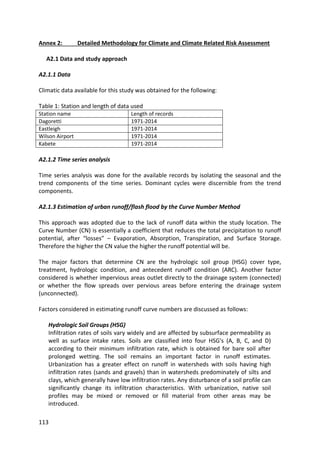
ANNEX 2: DETAILED METHODOLOGY FOR CLIMATE AND CLIMATE RELATED RISK ASSESSMENT.............113
A2.1 DATA AND STUDY APPROACH.........................................................................................................................113
A2.1.1 Data ................................................................................................................................................113
A2.1.2 Time series analysis ........................................................................................................................113
A2.1.3 Estimation of urban runoff/flash flood by the Curve Number Method...........................................113
A2.1.4 Storm and Flood Frequency Analysis ..............................................................................................115
A2.1.4 Flow duration curves.......................................................................................................................116
A2.1.5 Intensity-duration-frequency (IDF) analysis of rainfall ...................................................................117
ANNEX 3: FIELD QUESTIONNAIRES..........................................................................................................119
A3.1 BIOPHYSICAL QUESTIONNAIRE........................................................................................................................119
A3.2 SOCIO-ECONOMIC QUESTIONNAIRE.................................................................................................................123
A3.3 KEY INFORMANTS INTERVIEWS.......................................................................................................................127
7
1. INTRODUCTION AND TERMS OF REFERENCE
1.1 Background
Global warming is already altering the world's climate. Its impacts are felt in all sectors and
regions of society through changes in temperature and precipitation as well as through
changes in the frequency and intensity of climate extremes. Adverse impacts of climate
change will negatively affect progress toward development in a number of key areas
including agriculture and food security, water resources, coastal zones, public health,
climate-related disaster risk management and natural resources management. National
planning must take these impacts into account.
Climate change is challenging the livelihoods of the poor throughout Kenya, including in
Nairobi County. There is generally a low knowledge and awareness on climate change and
its effects. The impacts of climate change in Kenya include reduced availability of and access
to water causing rationing during droughts. Studies indicate that vulnerability to climate
change in informal settlements in Nairobi is enhanced by: increasing population, poor or
lack of urban planning, location, socio-political marginalization and exclusion; and poverty
and unstable social networks (Owuor, 2010). The direct impacts of climate change include
loss of human lives, physical injuries to humans, loss of property and assets, disruption and
loss of normal livelihoods, permanent or temporary displacement, increased incidences and
outbreaks of water-borne, vector-borne, rodent-borne and infectious diseases and damage
and destruction of infrastructure.
Lack of capacities of national agencies, county government and vulnerable communities to
effectively develop coping mechanisms and strategies on adaptation and disaster risk
management; lack of tools and systems to enable appropriate planning and implementation
of climate change adaptation; and a general lack of information on technological adaptation
and sustainable development options is common in Kenya. Adaptation to climate change is a
complementary strategy to mitigation to manage effectively climate change risks and must
be placed within the context of a country's sustainable development. Therefore, through
this study, Maji na Ufanisi contributes to the body of knowledge on climate change in
Nairobi’s informal settlements and opportunities, providing knowledge that informs policy
on climate change and adaptation in informal settlement areas.
1.2 Objectives of the Study
1.2.1 Overall Objective
The overall objective of the study was "to contribute to the body of knowledge on climate
change in Nairobi’s informal settlements and opportunities, provide knowledge on climate
change adaptation strategies that have worked elsewhere and create awareness that
informs policy".
8
1.2.2 Specific Objectives
The study objectives were as follows:
1. Identify the Climate Change indicators in Nairobi. Undertake a contextual analysis of
Climate Change trends in Nairobi, identifying the challenges for implementing
different adaptation actions currently being undertaken and opportunities for
climate resilience, with a focus on the livelihood of the poor.
2. Stock-take existing information, including analysis of the climate related impacts as
well as main barriers impeding implementation of immediate adaptation strategies
and measures.
3. Highlight adaptation opportunities and alternatives.
4. Current vulnerability assessment, characterization of current climate conditions and
natural hazards, impact of climate change in Nairobi County, including impact
considerations in National and County Integrated Development Plans and Policies
including comprehensive description of the main roles, regulatory issues, policies,
actors and planning processes relating to Nairobi County.
These will, inter alia, include:
1. Assessing current vulnerability of development objectives to climate change.
2. Assessment of current socio-economic conditions and vulnerability.
3. Future Climate-Risks Assessment
4. Assessing future climate change risks to development
5. Extrapolations of existing socio-economic trends
6. Expected/potential impacts on development
7. Economic and Financial impacts of climate change/ Climate Risk Analysis
1.3 Focus and Scope of the Task
The work is to be undertaken in the informal settlements in Nairobi, with a specific focus at
the following three informal settlements: Mukuru, Mathare, and Kibera slums. The scope of
sectors and biophysical issues that will be considered will be narrowed down to the most
critical based on assessment of previous studies in the informal settlements, and will
consider, in particular, vulnerability issues related to flooding and their related socio-
economic and biophysical impacts within the settlements. This analysis will be supported by
all the necessary data information, where possible.
9
1.4 Deliverables
1. One meeting with relevant stakeholders to launch the process (report).
2. Stock-take of the Climate Change situation in Nairobi, Current Vulnerability
Assessment and Future Climate-Risks Assessment.
3. An inception, draft and final report on Climate Change Resilience for the
Urban Poor in Nairobi.
4. A presentation of these reports to key stakeholders.
5. All deliverables shall be in both two soft copies and two hard copies.
10
2. METHODOLOGY
Desktop studies were carried out on existing literature to elucidate the baseline conditions,
current trends, and to identify knowledge gaps, and vulnerability factors, in the selected
informal settlements. A climate risk analysis was carried out by analyzing time series rainfall
data from 1972 to 2014 with special interest in the extreme events such as El Niño and
storm frequencies that pose threats to the identified vulnerable communities (see Annex
A2.1 for details on the time series analysis). A review of the existing and relevant national
and county policies and legislation was carried out to identify the institutional and
governance framework relating, in particular, to informal settlements. The biophysical
characteristics of the physical properties such as the topography, geomorphology and slope
were carried out in the ArcGIS environment. A 30m resolution Digital Elevation Model (DEM)
of Nairobi was used to characterize the geomorphological properties such as the
topography, river channel patterns and length profiles. This DEM was further used to study
the slope characteristics of the selected study areas.
The desktop studies informed the field surveys that were carried out in the three informal
settlements from 14th
to 18th
December 2015. The main objectives of the field survey were
to:
1. Carry out a questionnaire survey aimed at the identification of biophysical and socio-
economic indicators of vulnerability to flooding.
2. Evaluate impacts of flooding to the communities living along the main rivers in the
informal settlements.
3. Investigate the effectiveness of the flood prevention strategies adopted by different
stakeholders in the informal settlements.
This field survey was conducted along the main rivers (Ngong’ and Motoine rivers) that cut
across the settlements as those living close to the rivers were identified as the most
vulnerable to the biophysical and socioeconomic impacts of flooding from literature review
and scoping of documented incidents media reports. During the field survey, the students
generated primary data on resident/stakeholder perception on flood management,
pollution incidents and river changes. Observations made on the environmental impact of
the flooding in the different settlements were noted and GPS positions were taken. Key
Informants from the various villages within the slums were interviewed to provide
narratives supporting evidence collected from the household surveys. Details of the field
questionnaire administered are present in Annex 3.
The Daily Nation media articles that mainly focused around climate incidences and water
borne diseases in informal settlements in Nairobi were collected, covering a 30 year period
from 1985 to 2015, and with specific emphasis on study sites. The articles outline the
impacts of the incidences recorded as well as the responses made by the city management
and other agencies through the years. Nation Media Group is the largest media house in the
country with the Daily Nation Newspapers having an audience share of approximately 40%
11
of the market (Geopoll 2014). The Daily Nation is also the only media house with a digital
print media library that has the capacity to allow for this genre of research covering the
baseline of 30 years.
All these data together informed the proposed resilience framework that encompasses: the
understanding of local climate; strategies for reduction of vulnerabilities, risks and impacts;
and the assessment and prioritization of adaptation options that would enable the
implementation of measures that can be monitored and evaluated for effectiveness through
time as the strategies and programmes are rolled out.
Approach
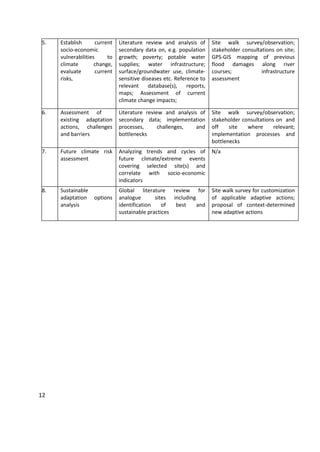
No. Study Aspects Desk-top Field based
1. Biophysical
description of
study site settings
Literature review, topographic and
other types of maps
Key informant interviews,
transect walks and
observations
2. Socio-economic
description of
study site settings;
identification and
mapping of key
actors
Literature review Key informant interviews,
transect walks and observations
3. Policy and
Regulatory
Framework and
analysis of national
and county
development
trajectories
Review of relevant policies and
legislation/regulations at National
and County levels
Key informant interviews with
stakeholders
4. Establish current
biophysical
vulnerabilities
to Climate
change, evaluate
current risks
Literature review; collection,
collation, and analysis of secondary
data on climate (rainfall,
temperature) from KMD and
hydrology from WRMA; Flood
mapping using GIS; flood frequency
analysis; pollution (air, water, land);
Assessment of current climate
change impacts: Identify factors
contributing to vulnerability and
compare across the three slum
areas.
Groundtruthing of GIS maps; site
walks for identification of high
flood levels and significant surface
runoff tracks influent into rivers
e.g. roads and pathways;
sanitation and drainage
12
5. Establish current
socio-economic
vulnerabilities to
climate change,
evaluate current
risks,
Literature review and analysis of
secondary data on, e.g. population
growth; poverty; potable water
supplies; water infrastructure;
surface/groundwater use, climate-
sensitive diseases etc. Reference to
relevant database(s), reports,
maps; Assessment of current
climate change impacts;
Site walk survey/observation;
stakeholder consultations on site;
GPS-GIS mapping of previous
flood damages along river
courses; infrastructure
assessment
6. Assessment of
existing adaptation
actions, challenges
and barriers
Literature review and analysis of
secondary data; implementation
processes, challenges, and
bottlenecks
Site walk survey/observation;
stakeholder consultations on and
off site where relevant;
implementation processes and
bottlenecks
7. Future climate risk
assessment
Analyzing trends and cycles of
future climate/extreme events
covering selected site(s) and
correlate with socio-economic
indicators
N/a
8. Sustainable
adaptation options
analysis
Global literature review for
analogue sites including
identification of best and
sustainable practices
Site walk survey for customization
of applicable adaptive actions;
proposal of context-determined
new adaptive actions
13
3. LITERATURE REVIEW
3.1 The Vulnerability of the Urban Poor to Climate Change
Cities in the developing world produce and consume at higher rates than rural areas per
capita. They thereby account for a disproportionate share of greenhouse gas emissions. At
the same time, with their concentration of economic activity and population, along with the
coastal location of many cities, they are disproportionately vulnerable to the effects of
climate change. In short, cities are at the heart of the problem both in terms of the source of
the carbon emissions and in terms of the effect that global warming will have on human
settlements.
The urban poor, and particularly those in informal settlements, are uniquely vulnerable.
They are the most likely to live in low-lying areas, on steep slopes, in ravines, and in other
risk prone areas. The quality of their housing is poorest and least resistant to extreme
weather events. They lack the resources, and often the information, to respond in ways to
mitigate their increasingly precarious situations. Poor communities tend to have more
limited adaptive capacities as climate change affects human settlement. First, the poor
cannot afford adaptive technologies, such as improved building materials. Second, their
ability to relocate to a less stressed environment is often limited by political/cultural
constraints and resources. Finally, they are more dependent on local water and food
supplies, with less ability to tap other markets when these local sources become less
productive. Among urban centers in low- and middle-income nations, perhaps the most
obvious increased risk comes from the likely increase in the number and intensity of
extreme weather events such as heavy rainstorms, floods and droughts (associated with dry
spells).
3.1.1 Flooding
Urban areas always present some risk of flooding when rainfall occurs. Buildings, roads,
infrastructure and other paved areas prevent rainfall from infiltrating into the soil – and so
produce more runoff. Heavy and/or prolonged rainfall produces very large volumes of
surface water in any city, which can easily overwhelm drainage systems. In well-governed
cities, this is rarely a problem because good provision for storm and surface drainage is
easily built into the urban fabric, with complementary measures to protect against flooding
– for instance the use of parks and other areas of open space to accommodate floodwaters
safely from unusually serious storms. In most cities, there is also scope for land-use
management and incremental adjustments to increase floodwater management capacity.
But in poorly governed cities, this does not happen. Most residential areas have no drainage
system installed and rely on natural drainage channels - and it is common for buildings or
infrastructure to be constructed that actually obstructs these drainage channels. The
problem of urban ‘flash’ floods is therefore a serious challenge and is bound to worsen with
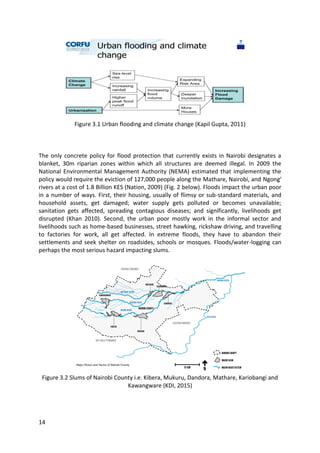
intense precipitation events. Figure 3.1 below shows the complexity between urbanization,
climate change and increased flooding.
14
Figure 3.1 Urban flooding and climate change (Kapil Gupta, 2011)
The only concrete policy for flood protection that currently exists in Nairobi designates a
blanket, 30m riparian zones within which all structures are deemed illegal. In 2009 the
National Environmental Management Authority (NEMA) estimated that implementing the
policy would require the eviction of 127,000 people along the Mathare, Nairobi, and Ngong'
rivers at a cost of 1.8 Billion KES (Nation, 2009) (Fig. 2 below). Floods impact the urban poor
in a number of ways. First, their housing, usually of flimsy or sub-standard materials, and
household assets, get damaged; water supply gets polluted or becomes unavailable;
sanitation gets affected, spreading contagious diseases; and significantly, livelihoods get
disrupted (Khan 2010). Second, the urban poor mostly work in the informal sector and
livelihoods such as home-based businesses, street hawking, rickshaw driving, and travelling
to factories for work, all get affected. In extreme floods, they have to abandon their
settlements and seek shelter on roadsides, schools or mosques. Floods/water-logging can
perhaps the most serious hazard impacting slums.
Figure 3.2 Slums of Nairobi County i.e. Kibera, Mukuru, Dandora, Mathare, Kariobangi and
Kawangware (KDI, 2015)
15
3.1.2 Constraints on Water and other Key Natural Resources
IPCC Working Group II noted that, in Africa, “by 2020, between 75 million and 250 million
people are projected to be exposed to an increase of water stress due to climate change”
(Adger et al., 2007) (high confidence). Many cities and their water catchments will get less
precipitation (and have more constrained fresh water sources) – which is particularly
problematic for growing cities and large cities already facing serious problems obtaining
sufficient fresh water supplies. Nairobi as a city has gone through cycles of freshwater
stress to meet the demand of its ever-increasing population. The drought of 2000, for
example, not only saw the collapse of the hydropower systems to operate normally; but
long queues were witnessed as residents struggle to get the precious commodity. The irony,
in these circumstances is that the poor in the slum settlements end up paying more for the
water. Rapid and unplanned urban growth and a range of human actions combine with the
natural hazards to exacerbate vulnerability, with compounded impacts on the urban poor.
Factors such as poor waste management and public health amplify the effects of hazards
and trigger a set of cascading secondary impacts such as floods and waterlogging.
3.1.3 High Temperatures and Heat Waves
In regard to urban heat islands, higher temperatures occur in urban areas than in outlying
rural areas because of diurnal cycles of absorption and later re-radiation of solar energy and
(to a much lesser extent) heat generation from built/paved physical structures. These
increase the frequency and severity of heat-stress events in cities and can affect the health,
labour productivity and leisure activities of the urban population. There are also economic
effects, such as the additional cost of climate-control within buildings, and environmental
effects, such as the formation of smog in cities and the degradation of green spaces – and
increased greenhouse gases if additional demand for cooling is met with electricity
generated from fossil fuels.
Incidences of fires are also common during the dry spells and because of the high density,
firefighting and evacuation are very difficult and it is common for slum residents to lose
household assets and belongings, an adversity that the poor are ill prepared to deal with.
Even if fire stations are nearby, the incessant traffic congestions and narrow roads in slums,
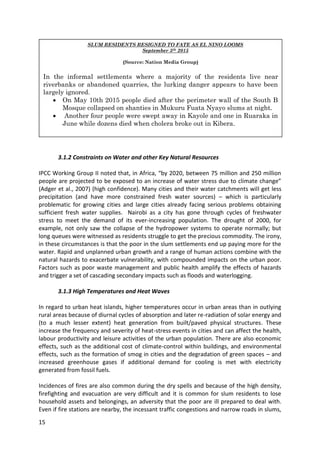
SLUM RESIDENTS RESIGNED TO FATE AS EL NINO LOOMS
September 5th 2015
(Source: Nation Media Group)
In the informal settlements where a majority of the residents live near
riverbanks or abandoned quarries, the lurking danger appears to have been
largely ignored.
 On May 10th 2015 people died after the perimeter wall of the South B
Mosque collapsed on shanties in Mukuru Fuata Nyayo slums at night.
 Another four people were swept away in Kayole and one in Ruaraka in
June while dozens died when cholera broke out in Kibera.
16
makes it almost impossible for fire wagons to reach the site on time. In addition, increasing
urban development and traffic will continue to contribute to the ‘urban heat island effect’
by generating more heat and adding to the climate change induced temperature rise, once
again with a range of implications for the urban poor including loss of productivity and
income, negative impacts on health and disrupted water and energy supplies. Such a
situation is conducive for the ignition and rapid spread of urban fires.
3.1.4 Gaps
There is a clear gap between the scale of the issue and the current knowledge and capacity-
to-respond within governmental and non-governmental organizations. A consistent
challenge is that community perspectives on these issues have rarely been integrated into
planning processes (Baker, 2012). There is great potential to consider how lower-cost, non-
structural approaches that support local resilience can create an integrated approach to
flood risk management alongside traditional spatial planning and policy responses (Jha et
al., 2012). Examples include early warning systems, flood awareness campaigns, flood
management committees and local emergency response centers (ibid). Figure 2 below
shows the major rivers and slums of Nairobi. The figure shows the proximity of the
settlements to the watercourses.
3.2 Nairobi Informal Settlements - Typology of Mathare Slum
3.2.1 Introduction
Mathare is one of the oldest and largest slums in Nairobi, a city where over half the
approximately 3.5 million residents live in many different slums. Residents in Nairobi’s slums
frequently suffer from tenure insecurity, while widespread poverty and violence further
increase their vulnerabilities. Like many informal settlements, Mathare is characterized by
unsafe and overcrowded housing, elevated exposure to environmental hazards, high
prevalence of communicable diseases, and a lack of access to essential services, such as
sanitation, water and electricity. Climate change further exacerbates these myriad of socio-
economic vulnerabilities in which people settled in such areas are already predisposed to.
17
Figure 3.3 Mukuru slum, Nairobi.
3.2.2 Context
Mathare Valley lies approximately 6 kilometers to the northeast of Nairobi’s central
business district and is bordered by Thika Road to the north and Juja Road to the south. The
settlement sits within a valley of the Mathare and Gitathuru Rivers. It is made up of 13
villages: Mashimoni, Mabatini, Village No. 10, Village 2, Kosovo, 3A, 3B, 3C, 4A, 4B,
Gitathuru, Kiamutisya, and Kwa Kariuki.
a) Population growth
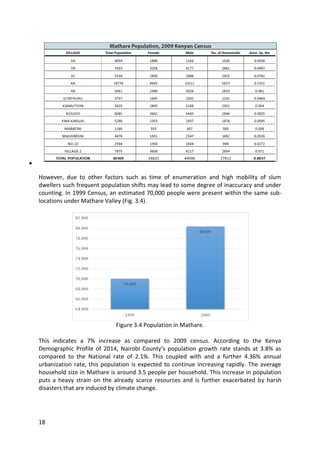
According to the Kenya Housing and Census report of 2009, the following population figures
were found for Mathare population:
18

However, due to other factors such as time of enumeration and high mobility of slum
dwellers such frequent population shifts may lead to some degree of inaccuracy and under
counting. In 1999 Census, an estimated 70,000 people were present within the same sub-
locations under Mathare Valley (Fig. 3.4).
Figure 3.4 Population in Mathare.
This indicates a 7% increase as compared to 2009 census. According to the Kenya
Demographic Profile of 2014, Nairobi County’s population growth rate stands at 3.8% as
compared to the National rate of 2.1%. This coupled with and a further 4.36% annual
urbanization rate, this population is expected to continue increasing rapidly. The average
household size in Mathare is around 3.5 people per household. This increase in population
puts a heavy strain on the already scarce resources and is further exacerbated by harsh
disasters that are induced by climate change.
19
b) Livelihood sources, Poverty and Income Levels
Kenya’s urban population stands at 24%. Poverty levels are high with the poor constitute
51.5% of Kenya’s urban population, which is one of the highest concentrations of urban
poverty within East Africa. Unemployment is remarkably high among the youth; and
especially high among women in Mathare Valley. Income distribution varies widely between
villages but on average earn Ksh. 2500-10,000 per month with average household monthly
expenditure. (Muungano Support Trust et al, 2011) household level data from Mathare
indicates that 87% of residents are employed in the informal sector, either through casual
labour or through small business, and only 10% of Mathare residents are formally
employed. Fewer than 40% can find employment outside of the Valley. Common casual
employment include clothes washing for women, which earns about Ksh 100 - 200 per day
and construction labour for men, which earns Ksh 200-250/day.
The unpredictable and inconsistent nature of casual labour leads to income fluctuations,
which in turn has a direct impact on household health and food security. This is because
such a situation creates susceptibilities to resource limitations for basic needs like food,
shelter and clothing. In this case, education, health and sanitation become luxuries.
c) Water infrastructure; surface water/ground water use
Water provision throughout Mathare Valley is generally either via stand points or water
kiosks, which are generally poorly distributed geographically. Populations pay on average
Ksh. 2 for a 20-litre jerry can from private sellers. Most of residents do not have in-home
piped water. Water quality & reliability is inconsistent, with frequent contamination from
vandalized pipes and shut-offs. Many community yard taps are controlled by cartels and
price spikes are frequent, especially during droughts. The high demand on the few existing
water system, illegal water connections and poor maintenance has caused the system to
frequently leak, leading to low pressure flows, contamination of water and dry taps.
d) Land and Environment
Water, sewage and other pollutants drain into the valley from surrounding communities &
facilities. There are settlements in ecologically fragile areas such as riparian reserves and
steep slopes. Such areas are prone to flooding during the rainy season. Quarry activities
have left exposed rock and removed topsoil. Lack of solid waste collection leads to large
exposed dumpsites. There are few open spaces and no green spaces for recreation in some
villages. Limited agriculture activities and keeping of livestock occurs along the riverbanks.
e) Sanitation
Solid waste/garbage pollution is a major concern for residents. There are very few public
toilets and pit latrines which are poorly distributed on space and difficult to use for women
and girls. Further, poor or non-existent sewerage systems, limited or no solid waste
management also greatly contribute to the deplorable sanitation conditions in the Slum. Pit-
latrines are mostly shared among households: during the rainy season, waste from the
latrines is carried by floods into residential areas causing water borne diseases. Unsafe,
20
unsanitary and unlit toilets are contributing to sexual violence against women at night
across Mathare.
f) Climate sensitive diseases
Mathare Valley is considered a high-risk area when it comes to health and climate sensitive
diseases. Most prevalent and high frequency disease cholera, dysentery and other water
borne and food borne diseases like bacterial and protozoal diarrhoea, hepatitis A and
typhoid fever. During climate induced varied weather patterns the most prevalent vector
borne diseases includes: Malaria, Dengue Fever and Rift Valley Fever. Water contact
diseases such as schistosomiasis also occur.
g) Social amenities e.g. dispensaries/ medical facilities
Urban poor rely heavily on public or government-run health facilities which are in a
dilapidated state. In Mathare, social amenities vary by spatial distribution per village but are
generally located and far distances, are overstretched in terms of long queues and time
taken to access services (poor doctor patient ratio), lack basic personnel and medication
required.
h) Type and size of houses/structures
Most housing structures within Mathare are temporary due to insecurity of tenure. Mathare
is an area where both more permanent dwellings, such as high-rise buildings (usually
between three and eight floors), and more temporary dwellings, such as mud-huts and tin-
shacks, intertwine. Two-thirds of the people interviewed in our survey live in tin-shacks or
mud-huts while approximately one third live in semi-permanent, permanent or high-rise
buildings. Permanent housing and high-rise buildings differ from tin-shacks in that they are
usually units with multiple apartments; however, the apartment size is similar to that of tin-
shacks (approximately 9 square meters). High-rise buildings have better access to services,
such as electricity, water and sewerage, however, the provision of these services is still very
infrequent. Majority of residents are renters while a minority own their structure. Typical
housing construction materials are iron sheet roof and walls with most having dirt floors.
Some of the villages are located on government owned and managed land. Other villages
have greater private and other land control.
i) Energy sources/ technologies
Access to electricity continues to be a major concern and struggle for many Mathare
residents. Mathare slums residents use electricity for lighting and powering of electronic
equipment and businesses. According to a survey done in 2014 by Spatial Collective on
Mathare demographics, only 9% of residents have a formal, metered electricity connection,
68% tap into the electric grid informally and 22% have no electricity at all. Households pay
an average of Ksh 403 (US$5) per month for electricity. Illegal electricity connections pose a
constant risk of fires and electrocution (due to haphazard connections). Charcoal & paraffin
are the most frequently used cooking fuels. Households pay an average of Ksh 1,368
(US$16) per month for cooking fuel.
21
j) Infrastructure
Mathare is bordered by two main highways of Juja Road and Thika Road. Traffic accidents
along Juja Road are frequent, creating health and safety hazards for the residents. The
accessibility within and between Mathare’s villages is poor, generating barriers for social
relations, economic activities and safety. Many pathways and roads do not have a safe and
grade-separated space for pedestrians, and almost all Mathare residents must walk to
obtain basic services.
k) Literacy levels
Majority of the population in Mathare are youth between the ages of 15-35. Due to the
economic situation most have attained only primary school education. The transition rate is
low to secondary and tertiary institutions.
3.3 Nairobi Informal Settlements - Typology of Kibera Slum
3.3.1 Introduction
Kibera is one of the largest slums in Africa with an average population of approximately
more than nine hundred thousand people. Like many informal settlements in Nairobi, slum
dwellers are frequently plagued by overcrowded housing, tenure insecurity, abject poverty
for some residents, forced evictions, elevated exposure to environmental hazards, high
prevalence of communicable diseases, lack of access to essential services, such as
sanitation, water and electricity, violence just to mention a few. Climate change further
exacerbates these myriads of socio-economic vulnerabilities.
3.3.2 Context
a) Population growth
Kibera settlement is located on two Nairobi divisional administrative areas; Dagoretti and
Lang’ata divisions. The slum is divided into 14 villages with varying populations as indicated
in the figure below. The slum is estimated at 2.5 square kilometres and is roughly 5
kilometres away from the city centre. Over the years, Kibera slums continued to grow from
as low as 6,000 people in 1965 to around one million today. Lack of reliable data on
population and growth parameters on Kibera slums has led to discrepancies on the size of
the slums as one of the largest in the continent. UN-Habitat estimates the total population
at between 350,000 to one million. International Housing Coalition estimates the population
to more than half a million people, while experts on urban slums give an estimate of more
than 800,000 people. Government statistics on the total population of Kibera slums is
around 200,000 people (KNBS, 2010).
22
Figure 3.5: Villages in Kibera.
b) Sources of livelihoods, incomes and poverty levels
A study conducted by Desgroppes and Taupin (2011) indicated that job insecurity is still a
real problem in Kibera. 45% of the employed population are self-employed though this
activity does not guarantee a regular income; households are still vulnerable and poor. The
main activity for women is self-employment (24%) with activities such as selling vegetable or
fish and cooking local food. Accordingly, the income per person in this study was calculated
by dividing the income per household by the number of individuals; for Kibera it is
estimated at 3,977 Kenyan Shillings (KShs) per person per month (39 USD). In 2003, UN-
HABITAT set the poverty level at KShs 2,645 per person per month (26 USD) in urban areas
in Kenya. This poverty level could be higher in recent times due to inflation. With an average
income of KShs 2,260 per person per month (22 USD), single women with children are the
most vulnerable. Another vulnerable category is individuals living in a nuclear family where
68 % live with less than KShs 2,645 per month. The study further indicated that people living
below the poverty line reside in the western part of Kibera, hence having the highest rates
of children possibly making it the poorest area.
c) Water infrastructure, surface water/ground water use
Most slum dwellers have three main concerns with water: access, cost and quality. There is
limited access to water points, which are often located far from residents’ houses, some
landlords ration water such that it is only available on specific days of the week and at
specific times (Water Sanitation Program, 2007). Those who have access to functional water
systems are burdened by the high cost of purchasing water. This is costly when especially
compared to income levels of the community. Furthermore, some Kibera slums dwellers use
23
sewerage water for bathing and washing. They also use borehole, rainwater, and sometimes
draw water from broken pipes. This water is highly contaminated. Kibera is heavily polluted
by human refuse, garbage, soot, dust, and other wastes; this further exacerbates the
already dire situation.
d) Sanitation
The lack of improved sanitation facilities, including toilets, showers, and sewage disposal has
been well documented in Kibera. 94% of the population in informal settlements do not have
access to adequate sanitation. Up to 60% of the population in Kibera must share pit latrines
with approximately 50 others. Even when toilet facilities are available, there are concerns
over the location of these facilities, the cleanliness is questionable or using them at night
poses security risks. Children are especially vulnerable to inadequate toilets usage as a
result of lacking access to household keys, which unlock the community toilets. With few
toilets and pit latrines availed, there has also been a continued growth of “flying toilets”.
The reality behind these flying toilets is the inaccessibility of toilet facilities especially during
late hours due to uneven distribution and lack of convenience resulting to insecurity. Most
toilets and pit latrines are owned and managed by community groups and also individual
businessmen who charge Ksh. 5 per person per every visit.
e) Climate sensitive diseases
Climate change impacts on slum dwellers in two ways: through floods and drainage
congestion and through heat stress. Most of slum inhabitants live on high-risk areas such as:
on the edges of ravines, flood prone embankments, slopes prone to mudslide or collapse or
in densely packed areas. Furthermore, these areas are susceptible to flooding, as well as
waterlogging. Studies indicate in such scenarios, the residents are prone to cholera,
dysentery and other water borne and food borne diseases like bacterial diarrhoea, hepatitis
A and typhoid fever and because of their close proximity, infection rates are elevated.
During climate induced varied weather patterns the vector borne diseases most prevalent
include malaria, Dengue and Rift Valley Fever.
f) Social amenities e.g. dispensaries/medical facilities
The residents in these areas live under deplorable conditions with lack of the most basic
needs and social amenities and face multi-dimensional challenges which require multi-
dimensional interventions such as clean water supply and improved sanitation, energy, solid
waste management, housing, schools, and hospitals. There is however a continued
intervention by international organizations, NGOs/CBOs/FBOs, financial institutions, and
even the government to improve the situation in this slum. These organizations have
erected schools, water kiosks, health centres, and toilets in different villages in Kibera slums
but these facilities are inadequate given the high number of people living in the area.
g) Type and size of houses/structures
There are more than 30,000 structures in Kibera slums, which are mud walled and thatched
with corrugated iron sheets (Amnesty International, 2009). This is as a result of land tenure
24
insecurity. A household in the slums comprises of seven members on average and usually
stands on a 12ft by 12ft structure costing almost US$15 per month. The local authorities
usually issue temporary occupation licenses to the owners. Around 10% of Kibera residents
own the structures and sub-let them to the remaining 90% (UN-Habitat, 2003). The
structures are owned by informal owners who are recognized by the tenants, but they have
no legal ownership. The tenants pay a monthly micro-lease to the owners.
h) Average number of people per household
According to a study done by Desgroppes and Taupin (2011), the villages situated in the
western part of Kibera have the highest household sizes: Kianda 3.5; Soweto West 4.5 and
Raila 4.2 (persons per household). This area of Kibera is mostly composed of young couples
from Western Province. The percentage of children (0-17 years) is around 50%, while the
average for Kibera is 36.5%.
i) Energy sources/ technologies
Kibera residents have to rely almost exclusively on firewood and charcoal. Mostly women
and girls have to walk for distances to look for firewood. Charcoal is often prepared for
commercial purposes. Entire trees are being carbonized and sold in sacks to the poor in
urban areas. More than 70% of the slums lack electricity.
j) Land and environment
Water, sewage and other pollutants drain into the valley from surrounding communities &
facilities. There are settlements in ecologically fragile areas such as riparian reserves and
steep slopes. Such areas are prone to flooding during the rainy season. Lack of solid waste
collection leads to large exposed dumpsites. There are few open spaces and no green spaces
for recreation in some villages.
k) Access to information/information flow
With the current government, opportunities are available to the youth. This has given the
youth different developmental areas such as opening of libraries, cyber cafes among others.
Therefore, these individuals have access to information to better themselves and their
families.
l) Infrastructure
Kibera slums have railway tracks and dirt roads. However, these are heavily polluted by
human refuse, garbage, soot, dust, and other wastes making it difficult to manoeuvre
especially when using the roads. Housing structures and shops erected in the area are in
close proximity to the railway making the surrounding communities prone to accidents.
25
m) Literacy levels
Majority of the population in Kibera are youth between the ages of 15-36. Due to the
economic situation most have attained primary school education.
3.4 Nairobi Informal Settlements - Typology of Mukuru Kwa Njenga Slum
3.4.1 Introduction
Mukuru kwa Njenga is a slum in the East of Nairobi, the capital of Kenya. It belongs
to Embakasi Constituency. The genesis of this settlement dates back to 1958. Part of the
place was an old quarry where most stones that built the factories were excavated. To solve
this problem, different villages were created in 2002 as a way of providing security, pointing
leaders in each village in order to have control over the affairs in the area. From then, the
area was sub divided into eight villages (zones): Sisal, Milimani, Vietnam, Riara, Moto Moto,
Wape Wape, Zone 48 and MCC. Most of the inhabitants are immigrants from rural areas
looking for job opportunities.
Sisal was the first area built up in 1984, followed by Milimani, Vietnam and the North part of
Zone 48 in the next ten years. These areas, built up as demand for shelter increased, are
characterized by high urban congestion, an organic and unplanned urban layout but also by
a more organized population. The other four villages started from a need of expansion of
the congested villages from 1998 to 2000. They were planned by the community and are
characterized by a more organized urban layout.
The name Mukuru Slum is coined from the Kikuyu word "Mukuru" meaning place of
depression. The other four villages started from a need of expansion of the congested
villages from 1998 to 2000. They were planned by the community and are characterized by
a more organized urban layout.
3.4.2 Context
Mukuru Kwa Njenga is part of the larger cluster of Mukuru informal settlements situated
about 8 km to the southeastern side of Nairobi’s central business district, along the
industrial area. Mukuru Kwa Njenga Settlement is strategically located, within 20-30 minute
drive from the city Centre of Nairobi. Its proximity to the city and to the industrial area gives
it numerous advantages. The slum is surrounded by three major roads: Mombasa Road on
the Southern Side, Outering Road on the North Eastern side and Airport North Road on the
South Eastern side. The settlement spreads over two sub locations, namely Imara Daima
Sub-location to the West and Mukuru Kwa Njenga Sub-location to the East [IEBC 2011].
26
a) Population growth
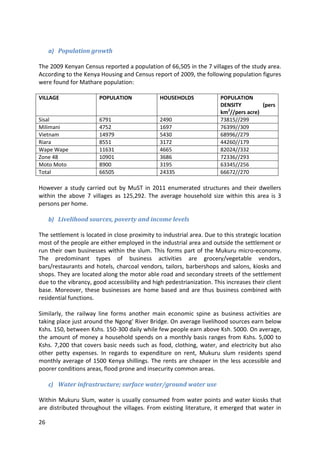
The 2009 Kenyan Census reported a population of 66,505 in the 7 villages of the study area.
According to the Kenya Housing and Census report of 2009, the following population figures
were found for Mathare population:
VILLAGE POPULATION HOUSEHOLDS POPULATION
DENSITY (pers
km2
//pers acre)
Sisal 6791 2490 73815//299
Milimani 4752 1697 76399//309
Vietnam 14979 5430 68996//279
Riara 8551 3172 44260//179
Wape Wape 11631 4665 82024//332
Zone 48 10901 3686 72336//293
Moto Moto 8900 3195 63345//256
Total 66505 24335 66672//270
However a study carried out by MuST in 2011 enumerated structures and their dwellers
within the above 7 villages as 125,292. The average household size within this area is 3
persons per home.
b) Livelihood sources, poverty and income levels
The settlement is located in close proximity to industrial area. Due to this strategic location
most of the people are either employed in the industrial area and outside the settlement or
run their own businesses within the slum. This forms part of the Mukuru micro-economy.
The predominant types of business activities are grocery/vegetable vendors,
bars/restaurants and hotels, charcoal vendors, tailors, barbershops and salons, kiosks and
shops. They are located along the motor able road and secondary streets of the settlement
due to the vibrancy, good accessibility and high pedestrianization. This increases their client
base. Moreover, these businesses are home based and are thus business combined with
residential functions.
Similarly, the railway line forms another main economic spine as business activities are
taking place just around the Ngong' River Bridge. On average livelihood sources earn below
Kshs. 150, between Kshs. 150-300 daily while few people earn above Ksh. 5000. On average,
the amount of money a household spends on a monthly basis ranges from Kshs. 5,000 to
Kshs. 7,200 that covers basic needs such as food, clothing, water, and electricity but also
other petty expenses. In regards to expenditure on rent, Mukuru slum residents spend
monthly average of 1500 Kenya shillings. The rents are cheaper in the less accessible and
poorer conditions areas, flood prone and insecurity common areas.
c) Water infrastructure; surface water/ground water use
Within Mukuru Slum, water is usually consumed from water points and water kiosks that
are distributed throughout the villages. From existing literature, it emerged that water in
27
the area is sourced from three points: Imara Daima, the Cereal Board area (through Sinai)
and Emba-Villa. The Nairobi Water and Sewerage Company (NAWASCO) is currently
providing water pipes in the main streets. The two major distribution points are: Riara and
Moto Moto, but yet to work efficiently.
The water points are owned by individuals whereas the water kiosks are owned by groups.
Water points are mainly located outside the plots while others are inside the permanent
structures. The service informally provided accompanied by the high pollution affects the
quality and quantity of water available. The illegally connected water pipes pass through
open sewerage lines and under solid waste on the streets. Water vendors sell 20-litre Jerri
can at Ksh. 5.
Generally water infrastructure within Mukuru Slum is characterized by inefficient,
inadequate water infrastructure, monopoly of services water providers leading to limited
equitable accessibility for all and poor water quality properties. This affects health of slum
dwellers particularly the children.
d) Land and Environment
The terrain of Mukuru Slum is a gentle smooth slope towards existing stream waters,
however due to the past quarrying activities that took place on this land, there are many
existing deep valleys thus during the rainy season, most of the surrounding areas remain
flooded. These grounds are also major breeding ground for mosquitoes during the rainy
seasons.
The settlement was developed near one of the main rivers, that is, Ngong' River that crosses
the city. This river flows bordering the north of the settlement in Sisal, and it is one of the
critically polluted points in the area. The stream that ends in the Ngong' River crossing
through the slum is now used as an open sewer line that concentrates the untreated waste
water from the drainages around and serves as disposal point for some of the public toilets,
pit latrines along it, and manual sewage exhausters. This environmental degradation and
pollution has led to high pollution of water supplier informally as well as high prevalence of
diseases like diarrhoea, typhoid, amoebiosis and cholera.
e) Sanitation
Within Mukuru slum, pit latrines are the most common type of toilets used for disposal of
human waste. Some private pits are shared within residential plots while others are located
within ablution blocks for public use. Just like other slum areas in Kenya, the spatial
distribution of these varies by villages and housing typologies. The more permanent stone
houses in Mukuru have the flush toilets while the tin and shack temporary housing
structures are located in more ecologically fragile areas. These areas are more congested
and toilets here are located under power lines, riparian and railway reserves. During climate
change induced disasters like floods, the resident’s vulnerability is heightened.
There exists no functional sewerage system within Mukuru informal settlements. The
formally existing one that was constructed over 10 years ago was outpaced by the rapid
28
population increase and thus burst, however NAWASCO is in the process of constructing
another. The human waste disposal method commonly used is the manual exhauster. The
people that provide this service have organized themselves into a group. This may cost
between Kshs. 300-600 to empty a drum, which is then disposed off into the existing near-
by stream waters.
f) Climate sensitive diseases
The major diseases in the area are sanitary related and respiratory diseases. The inhabitants
of the settlement are prone to sanitary related diseases such as diarrhoea, amoebiosis,
typhoid and malaria, due to poor drainage and waste disposal in the settlement.
Respiratory diseases such as TB, asthma, pneumonia may be due to lack of proper
ventilation within the structures and the location of a quarry nearby. During climate change
induced event like droughts and heavy raining seasons, the prevalence of these disease
increases drastically. STDs and STIs are also widespread in the area.
g) Social amenities e.g. dispensaries/ medical facilities, social halls, open spaces
The settlement has both formal and informal health services. The two main formal facilities
within the settlement include Medical Missionary of Mary Church and Alice Nursing home.
The other facilities in the area are mainly informal chemists and dispensaries. There are very
limited numbers of designated open spaces. Depending on the type of function and use
required either streets or churches are used as open spaces. The existing playgrounds are
often used as dumpsites.
With regard to social halls and community centres, there is a shortage of social and
community halls in Mukuru slum. Open spaces, churches, personal areas of resident and
streets serve as meeting and recreation spaces. The few social premises in the area have
been constructed by youth groups as income generating activities.
h) Type and size of houses/structures
The low-lying non-permanent structures with iron sheet walls and roofs with concrete floors
are the most common housing typologies in Mukuru Slum. Other types are made of stone,
mud, mesh or wood. But the stone structures go up to 4 storeys and are mostly found in
Moto Moto A. Sisal and Milimani have some of these permanent structures that rise up to 1
floor because the high congestion prevents the horizontal expansion of the villages. The
typical layout of a structure in Mukuru Kwa Njenga is two rows of 5-12 rooms with a
corridor separating the two lines of rooms.
i) Energy sources/ technologies
There are two main power lines in the settlement. A 220Kw high voltage line along the
railway and a 66Kw voltage line border the east part of Sisal and crossing Zone 48. Under
both of them, despite having a reserve of 30 and 15 meters way leave respectively, people
have settled. The most prevalent method used to acquire and distribute electricity is the
“Sambaza” informal method, whereby residents tap electricity directly from the electricity
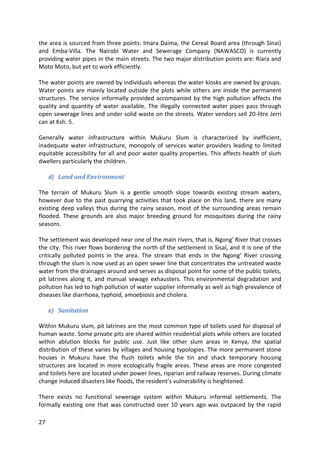
29
service lines. A few of the residents use direct connection from Kenya Power grid and this is
mostly in Moto Moto A. The sambaza method is very dangerous and has caused accidents
like electrical fires or electrocution over the years. The monthly expenditure on electricity is
between Ksh.250 and Ksh.380 per month, with a crossing average of approximately Ksh.300
for Mukuru Kwa Njenga.
In regards to the cooking fuel that is used, about 90% of the respondents in the 7 villages
rely on charcoal and kerosene for cooking. Expenditure on cooking fuel per day ranges from
Kshs. 10 to Ksh.150. This cost depends on whether the cooking is done at the household
level or for a commercial function. Majority of households spend about Kshs. 1,500 per
month on cooking fuel. Based on the above there are great opportunities for providing
cleaner and green energy for lighting and cooking within the settlements. There are also few
streetlights and flood lights some of which do work efficiently. These pose a great insecurity
risk.
j) Infrastructure
The main entry/exit points are through Mombasa road and North Airport road from the
South (MCC and Moto Moto), and Outering road from the North (Sisal). The residents also
use small informal footpaths along and across the railway to access the Industrial Area for
work. The flow rate in the major and minor spines varies with the condition of the road. The
poor road networks are non-motorable and they have a low flow rate due to accessibility
problems mostly caused by solid waste and mud.
Walking is the major mode of movement used in Mukuru Kwa Njenga, and few people also
uses bicycle as a cheap mode of transport. There is a motorcycle terminus near the Al-
Hudaa Mosque (Sisal Mosque) whereby the motorcycles are used occasionally. The
residents also access bus terminals for movement outside the slum.
k) Literacy levels
Majority of the population in Mukuru is bottom heavy and are youth between the ages of
15-35. Due to the economic situation most have attained only primary school education.
The dropout rate is high with most seeking manual labour employment within the adjacent
industrial area. The transition rate is low to secondary and tertiary institutions.
30
4. FINDINGS
4.1 Climate Change and Variability Context
4.1.1 Time Series Analysis
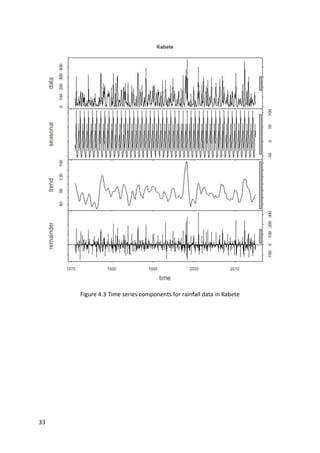
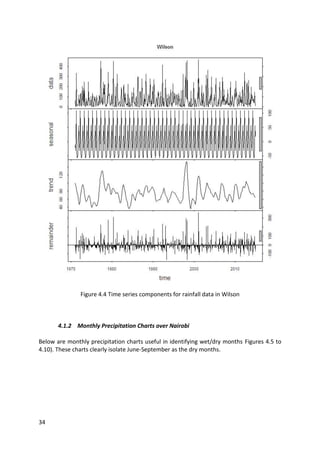
The raw data series over Nairobi shows rainfall is highly variable on monthly timescales and
with significant extreme events of rainfall for the four stations (Figs. 4.1 to 4.4). On the
seasonal scale, rainfall is portrayed to be highly seasonal over the stations in the area of
study. This is the expected scenario given the pattern of synoptic drivers of rainfall in the
region such as the Inter-tropical Convergence Zone (ITCZ).
The trend patterns in the study area shows a cyclic nature of rainfall with a noticeable
similarity indicating that the spatial-temporal pattern of rainfall in the region is nearly
homogenous. With this cyclic nature of rainfall, extreme events occur that threaten
livelihoods in the slums. Therefore, extreme rainfall events pose a large-scale threat the
vulnerable communities in the County. Conspicuous extreme wet events such as 1977,
1997, 2002, 2006 and 2010 were associated with El Nino episodes. Such events caused
devastating impacts to the urban poor in the informal settlements where drainage is poor.
Therefore, rainfall drivers such as the ENSO are crucial factors to monitor in assessing the
susceptibility of the slum population to rainfall scenarios. In the era of climate change, the
expected increase in intensity and frequency of these extreme events will amplify the
destructive impacts of climatic shocks in the slums.
31
Figure 4.1: Time series components for rainfall data from 1972-2014 in Nairobi
32
Figure 4.2 Time series components for rainfall data in Eastleigh
33
Figure 4.3 Time series components for rainfall data in Kabete
34
Figure 4.4 Time series components for rainfall data in Wilson
4.1.2 Monthly Precipitation Charts over Nairobi
Below are monthly precipitation charts useful in identifying wet/dry months Figures 4.5 to
4.10). These charts clearly isolate June-September as the dry months.
35
Figure 4.5 Monthly precipitation chart for Dagoretti
Figure 4.6 Monthly precipitation chart for Eastleigh
Figure 4.7 Monthly precipitation chart for Kabete
36
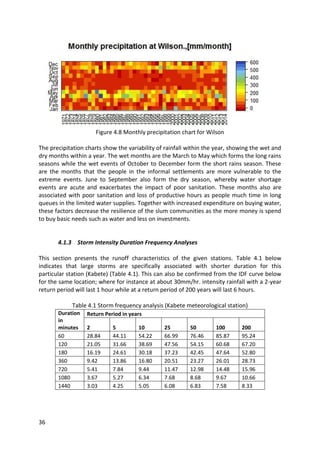
Figure 4.8 Monthly precipitation chart for Wilson
The precipitation charts show the variability of rainfall within the year, showing the wet and
dry months within a year. The wet months are the March to May which forms the long rains
seasons while the wet events of October to December form the short rains season. These
are the months that the people in the informal settlements are more vulnerable to the
extreme events. June to September also form the dry season, whereby water shortage
events are acute and exacerbates the impact of poor sanitation. These months also are
associated with poor sanitation and loss of productive hours as people much time in long
queues in the limited water supplies. Together with increased expenditure on buying water,
these factors decrease the resilience of the slum communities as the more money is spend
to buy basic needs such as water and less on investments.
4.1.3 Storm Intensity Duration Frequency Analyses
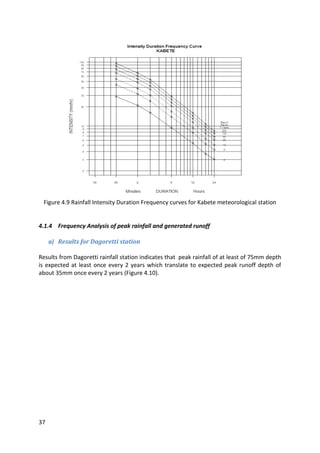
This section presents the runoff characteristics of the given stations. Table 4.1 below
indicates that large storms are specifically associated with shorter duration for this
particular station (Kabete) (Table 4.1). This can also be confirmed from the IDF curve below
for the same location; where for instance at about 30mm/hr. intensity rainfall with a 2-year
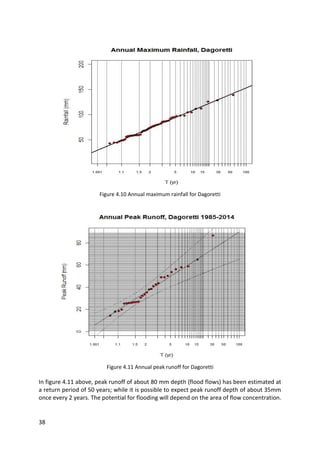
return period will last 1 hour while at a return period of 200 years will last 6 hours.
Table 4.1 Storm frequency analysis (Kabete meteorological station)
Duration
in
minutes
Return Period in years
2 5 10 25 50 100 200
60 28.84 44.11 54.22 66.99 76.46 85.87 95.24
120 21.05 31.66 38.69 47.56 54.15 60.68 67.20
180 16.19 24.61 30.18 37.23 42.45 47.64 52.80
360 9.42 13.86 16.80 20.51 23.27 26.01 28.73
720 5.41 7.84 9.44 11.47 12.98 14.48 15.96
1080 3.67 5.27 6.34 7.68 8.68 9.67 10.66
1440 3.03 4.25 5.05 6.08 6.83 7.58 8.33
37
Figure 4.9 Rainfall Intensity Duration Frequency curves for Kabete meteorological station
4.1.4 Frequency Analysis of peak rainfall and generated runoff
a) Results for Dagoretti station
Results from Dagoretti rainfall station indicates that peak rainfall of at least of 75mm depth
is expected at least once every 2 years which translate to expected peak runoff depth of
about 35mm once every 2 years (Figure 4.10).
38
Figure 4.10 Annual maximum rainfall for Dagoretti
Figure 4.11 Annual peak runoff for Dagoretti
In figure 4.11 above, peak runoff of about 80 mm depth (flood flows) has been estimated at
a return period of 50 years; while it is possible to expect peak runoff depth of about 35mm
once every 2 years. The potential for flooding will depend on the area of flow concentration.
39
These floods have a high likelihood to impact on Kibera slums, which is adjacent to this
rainfall station.
b) Results for Kabete station
In Kabete, peak rainfall of a minimum of 25mm depth is expected at least once a year, which
translate to expected peak runoff depth of about 20mm virtually once every year (Figure
4.12).
Figure 4.12 Annual maximum rainfall for Kabete
In figure 4.13 below, peak runoff of about 110mm depth (flood flows) has been estimated at
a return period of 50 years; while it is possible to expect peak runoff depth of about 45mm
at least once every 2 years. Again, the potential flooding will depend on the area of flow
concentration.
40
Figure 4.13 Annual peak runoff for Kabete
c) Results for Wilson station
At Wilson airport, peak rainfall of about 75mm depth is expected at least once every 2 years
which translate to expect peak runoff depth of about 38mm virtually once every 2 years.
Again, the potential flooding will depend on the area of concentration (Fig. 4.14). In figure
4.15, the flood flows estimated at 95mm at a return period of 50 years would affect Mukuru
slums, which the closest area to this station.
41
Figure 4.14 Annual maximum rainfall for Wilson
Figure 4.15 Annual peak runoff for Wilson
42
d) Results for Eastleigh station
At Eastleigh station, peak runoff estimated at a return period of 50 years is about 82mm
depth (4.16) is expected to affect the adjacent Mathare slums. The potential flooding will
again depend on the area of flow concentration.
Figure 4.16 Annual peak runoff for Eastleigh
4.2 The Biophysical Context
4.2.1 Introduction
This section looks at the observations and findings from the fieldwork carried out in the
biophysical context. The socio-economic context is discussed in section 4.3 below. Rainfall
and flooding can have devastating consequences on informal settlements, as indicated by
the newspaper article below.
43
4.2.2 General Features
Kibera has much higher slopes compared to Mathare and Mukuru (Fig. 4.17). The effect of
slope in flooding is that steep slopes tend to reduce the amount of infiltration of water into
the ground; this water can then flow quickly down to rivers as overland flow. In addition,
steep slopes also cause more through flow within the soil. Both can raise river levels.
Gentle slopes on the other hand would allow water to penetrate into the soil and increase
lag times. All these are dependent on the type of soil as Nairobi soils have a high clay
fraction and tend to have low infiltration rates, therefore this forces water to run off
reducing river lag times and increasing flood risk.
RAIN LEAVES CITY STREETS FLOODED
Monday January 6th 1987:
(Source: Nation Media Group)
This article describes a sudden heavy downpour that made most roads in
Nairobi impassable on Saturday night. The most affected areas were
Eastlands, Langata and the Southlands estates in the city. The traffic jams
were reminiscent of 1988 floods, which killed an estimated 20 people.
 Strong winds blew off roofs from five houses in Korogocho area
displacing the families. Twenty families in all were affected.
 Muddy paths in the slum areas of Korogocho and Mathare were a
common sight making walking to the Soko Mjinga open air market
impossible.
 Kisumu Ndogo in Kibera Estate was also affected. Floods invaded
homes, forcing families to flee to higher ground. The same fate befell
 Kaiyaba five families at; Nakuru Village along Enterprise Road
Industrial Area also fled to higher ground
 The downpour also caused a power blackout in most estates.
Leaders in the slum areas appealed to parents to stop their children from
playing in the floods to avoid contracting water-borne diseases. Leaders also
appealed to residents to cut grass around their houses, to keep away insects
such as mosquitoes and flies. The Meteorological Department reported that
the rains were due to “sudden turbulence in the atmosphere”. Earlier
predictions from the Meteorological department were that the month of
January would be dry but it was not clear when this dry period would start.
44
Figure 4.17 Slope variation in the three locations: Kibera, Mathare and Mukuru.
4.2.3 Biophysical context for Kibera
The general topography of Kibera is higher to east and lower to the west. The elevation of
the settlement ranges between 1762 m asl and 1645 m asl. The main river through Kibera is
the Ngong river and its tributary; the river flows from the west into the Nairobi dam in the East.
The area is classified into 10 zones of 10 m elevation increment as shown in Figure 4.18.
villages such as Ayany, Kianda and Olympic are further from the main river channel. Five
Villages have areas which are below 1689m as i.e. Gatwekera, Kisumu Ndogo, Mashimoni,
Laini Saba, Lindi and Silanga, while the villages in the higher elevation and away over 300m
from the main river channels are Ayany, Kianda, Olympic, and Karanja.
45
Figure 4.18 Digital Elevation model of Kibera area, the settlement is marked in the extent of the slum
area is shown in black outline.
In Kibera, 8 villages (Silanga, Katwekera, Soweto, Lindi, Undugu, San Studio, Lang’ata/Karen
C and Line Saba) were sampled along the Ngong River (Fig. 4.19). The number of the
respondents from each village varied with the majority of responses from Silanga (27%),
Katwekera (20%), Soweto (16%) and Lindi (16%).
46
Figure 4.19 Location map of Kibera informal settlement showing the Ngong’ River as it
passes through the area. The green dots show areas along the river where the fieldwork was
carried out noting important infrastructure and environmental observations.
A fairly gender balanced population with 51% male and 49% female respondents (Figure
4.2.2). The respondents are predominantly youth and middle aged between 20 – 49 yrs. old
(77%) (Fig. 4.20). 51% of the respondents have lived in the settlement for more than 10yrs.
Of the persons interviewed, 10% of the respondents are unemployed whilst the rest work in
the informal jua kali sector (40%), are businesses men and women (18%) and are in the
formal sector in government and private sector (18%) (Fig. 4.20). 60% of the respondents
have attended primary school, 29% secondary school education and 11% have some form of
tertiary education (Fig. 4.20).
47
Figure 4.20: Demographic profile of the respondents from Kibera area showing the gender, age
group, level of education and occupation.
The Ngong’ River is a perennial river that cuts across the settlement does not dry up
although the water levels drop to less than 1 meter depth allowing the local population
including children to walk across it. The flowing water is dirty brown with a heavy sediment
load. The wetted area of the river has reduced over time due to the construction of houses
and sewer line construction. The transportation of solid waste downstream has led to the
shallowing of the river in certain sections to the extent that the river load causes drying up
of the river. The downstream deposition of the material especially plastic waste and sewage
forms 90% of the river load although other sediments, trees and other items are carried
along during the rains. Open spaces are used for dumping solid waste, which are eventually
swept by floodwaters into the river channel. The downstream respondents noted that
drastic changes in sediment and solid waste transport occur during and immediately after
the rains over the recent past. In upstream areas, there are no changes in sediment loading
as the river flows over rocky beds and the sediments derived from the catchment are
deposited downstream during rainy seasons. The gentle terrain and widening of the river
channel downstream has contributed to high flood damage downstream. Despite the
changes in the river sediment loading, the respondents noted that there have been some
changes in the river course linked to lateral erosion of the banks and bed erosion. However,
shifts in the entire channel have not been observed. A section of the river channel has been
reduced and deepened to pave way for a sewer line installation at Lindi village.
The river high stands are noted during the short and long rains (Fig. 4.21). 54% of the
respondents indicated that River Ngong’ has highest water stands in Mar-Apr-May (during
48
the long rains) whilst 35% indicated high water levels in Sep-Oct-Nov (during the short
rains). This disparity in responses could be attributed to the river profile characteristics such
as slope and aspects with impacts of flash floods during the commencement of the rainy
seasons and the sustained high water levels downstream during soon after the rains. The
persistence of flooding following the rains varied from one day to one month with 60% of
the respondents indicating that the flooding generally last for one day whilst 29% indicated
one week whilst the rest of the respondents indicated that the flooding lasts more than two
weeks (Fig. 4.21). However the respondents indicated that the length of the floods depends
on the intensity of rains and state of the slums. Flooding severely affects the respondents
(58%) with the floodwaters making way to the doorstep of most structures that are
constructed approximately less than 5m from the river channel (Fig. 4.21). There are flood
control measures in certain areas where sandbags, gabions and rock barriers have been
constructed. Some structures are elevated from the ground to minimize the effects of
floods.
Figure 4.21: Perception profile of the flood occurrence showing the months with high water levels,
duration of floods, and distance of the houses from floods and the time it takes for the soil to drain
the flood waters.
The soil drainage characteristics are not well known to the local community although the
few that practise urban agriculture (mainly vegetables) along the river stated that there are
changes in how long it takes for the mud to drain relative to the past years (Fig. 4.21). In the
downstream areas, where large quantities of the sediments are deposited, the mud takes
much longer to drain. Further downstream, where a lot of sediments have been deposited
49
near Nairobi dam residents indicated that they constructed their housing structures on land
that was part of the dam. These areas do tend to soak up quickly after the rains and takes a
long time to dry up.
Potable clean water is accessible within walking distance from most of the residents (5 to 10
minutes walk) where 85% of the respondents indicated that the piped water is sold at kiosks
for domestic use (Fig. 4.22). This clean water availability is linked to the small population
(16%) affected by waterborne diseases such as diarrhoea, typhoid and cholera whilst 58% of
the households interviewed indicated that waterborne diseases do not affect them (Fig.
4.22). The respondents indicated that during the flooding seasons, the solid wastes and
sewage seeps into their living structures, which could be linked to some of the waterborne
diseases noted in the area. Most respondents indicated they were not affected by
respiratory diseases except for 27% that indicated some prevalence of pneumonia, common
coughs and asthma among their young ones (Fig. 4.22).
Figure 4.22: Perception profile of clean water accessibility, waterborne diseases and respiratory
diseases of the residents in Kibera area.
4.2.4 Biophysical context for Mukuru
Mukuru slum is downstream of Kibera slum on the Ngong-Motoine River which flows
eastwards, the elevation in Mukuru ranges from 1574 -1666 m asl. The area is classified into
10 zones of equal 10 m topographic increment as seen in Fig. 4.23 over three quarters of the
area has elevation between 1574 and 1629 m above sea level. The general topography
50
around the river channel is low elevation meaning the river does not flow through a narrow
valley rather the river meanders through a laterally unconfined landscape. The settlement
on the western side is a narrow section of less than 200 m at its widest along the river.
Figure 4.23 Digital Elevation model of Mukuru area, the extent of the slum area is shown in black
outline.
The villages visited in the Mukuru informal settlement include Mukuru kwa Reuben, Mukuru
kwa Njenga and Mukuru Sinai. This section was selected due to the high population density,
the presence of the Motoine River that cuts across (Fig. 4.24) and presence of flooding
impacts in these areas of which a majority (45.7%) of the respondents were from Mukuru
kwa Njenga, while 29.3% and 22.8% were from Mukuru kwa Reuben and Mukuru Sinai
respectively.
51
Figure 4.24: Location map of Mukuru informal settlement showing the Motoine River as it passes
through the area. The green dots show areas along the river where important community
infrastructure was noted.
The gender of the respondents consists of 59.8% male and 40.2% female with a majority
(83.7%) aged between 20 – 39yrs old (Fig. 4.25). 52.2% of respondents have gone through
primary school while another 41.3% of the population study had gone secondary school (Fig.
4.25). The remaining respondents had attended certificate, diploma and degree courses. In
terms of occupation 30.4% of the respondents own their own businesses, 28.3% are in the
jua kali sector, 22.8% are unemployed and 17.4% are in the private sector (Fig. 4.25). Most
of the respondents interviewed have resided in this area for 2 – 5 yrs., whilst those who
have stayed in the area for less than 2 yrs. and 5 – 10yrs. tied at 20.7% and while a total of
30.5% had stayed in the area for more 20yrs. 72.8% of the respondents had between 3 to 7
people in their houses.
52
Figure 4.25 Demographic profile of the respondents from Mukuru area showing the gender, age
group, level of education and occupation.
The Motoine River (Fig. 4.24) is a
perennial river that does not dry
up completely although the water
levels tend to fall to less than 1m
deep when the local people can
walk across the river. 44.6% of
the respondents indicated that
flooding commences at the
beginning of rainy season whilst
23.9% indicated that flooding
starts after the rains while 17.4%
of the respondents indicated that
the flooding to takes place at the
end of the rainy season (Fig.
4.26). The respondents perceived
that rains accompany the high
water levels during the long rains
Mar-Apr-May rains 45.7% of the
respondents and the short rains
during Sep-Oct-Nov 44.6%. 29.3
STORM CLAIMS ONE MORE LIFE
Friday December 25th 2009
(Source: Nation Media Group)
One more person died as Nairobi residents
woke up to the reality of the destruction left
behind by a heavy rainstorm.
 The body of the victim was recovered
by the banks of the river at Mukuru-
Kingstone slum, two kilometres away
from his house.
 At Mukuru Fuata Nyayo slum, 11
goats were reported to have been swept
by the floods.
 More than 200 houses were left
roofless.
 Houses were flooded and residents had
to flee to safety at higher grounds
53
% of the respondents (Fig. 4.26). 29.3% and 9.8% of the population noted that the river is
highest in Dec-Jan-Feb and Jun-July-Aug respectively. These intervals correspond to the dry
season following the rains thus indicating that the flooding is an aftermath of the rains (Fig.
4.26). 80.6% of the respondents admitted that flooding that mainly affects the accessibility
to social amenities such as schools and hospitals.
Figure 4.26: Perception profile of the flood occurrence showing the months with high water levels,
duration of floods, and distance of the houses from floods and the time it takes for the soil to drain
the flood waters.
63% of the respondents noted that there have been big changes in the sediments loading of
the river. Soil from the residential areas is normally eroded and transported by the river
during heavy rains. Although those located in the mid sections of the river indicated that
there has been no change in the river sediment loading. Among the materials transported in
the river 40.5% consists of plastics and 30.7% consists of sewerage during the flash floods.
Generally the course of the river has not changed although some of the respondents
(21.7%) indicated that the river meander has changed due to river channel modification
carried out three years ago as a flood mitigation measure. Most of the housing structures
(51.1%) are constructed >10m away from the river and thus the impacts of flooding are
mainly linked to population mobility rather than direct impacts on the housing structures.
55.6% of the respondents indicated that the flooding lasts between one week to two weeks
largely due to the poor drainage system in the area. A small sample size 15.2% of the
respondent indicated that the flood lasts only for one day while 20.6% claim the floods take
a month or more to clear up completely (Fig. 4.26). Urban agriculture of mainly vegetables
54
and bananas is carried out in the floodplains. The community utilizes sandbags as a flood
mitigation measure to avoid property damage.
The soil drainage characteristics have changed over time with 73.9% of the respondents
indicating that the muddy areas take a longer time to drain than in previous years (Fig.
4.26). Although when the local population walk over the muddy patches, the areas tend to
dry up faster. Although a on a contradictory note, some of the respondents attributed the
changes in soil drainage to increase in population that has led to more the construction of
more structures.
Figure 4.27: Perception profile of clean water accessibility, waterborne diseases and respiratory
diseases of the residents in Mukuru area.
Potable clean water is easily accessible to 80.4% of the respondents who indicated that a
clean water point is within 5 – 10minutes walk from their residents (Fig. 4.27). The source of
the clean water is vendors and kiosks that sell 20ltr at 5Ksh. This is coupled with tapped
water from the main pipes provided by the county council that is sold to the residents of
Mukuru. There are few permanent toilets with the predominant sanitation facilities
comprising of modified open defection piped towards the river and pit latrines. During
55
flooding, the waste is transported from the upstream to downstream areas thus increasing
the population vulnerability to waterborne diseases. This is further supported by the fact
that 41.3% of the respondents indicated that diseases like cholera and typhoid have
affected them (Fig. 4.27). Of the respondents 39.1% indicated that due to water treatment
precaution undertaken such as boiling or chlorine treatment the waterborne diseases did
not affect them. 59.7 % of the respondents indicated that they were affected respiratory
diseases (Fig. 4.27) such as flu, cough, pneumonia and chest problems attributed to rapid
weather changes although the air quality of the settlement located near the industrial area
is not well monitored.
4.2.5 Biophysical Context for Mathare
Elevation ranges between 1572 and 1656 m asl in the general area. There are two main
rivers that flow through Mathare slum: Mathare river and Nairobi river flowing to the North
East Direction. The area is classified into 10 zones of equal 10 m elevation intervals (Fig.
4.28). The area of the slum is along the Mathare river and its smaller tributary from the
northwest, where the elevation ranges between 1572 and 1622m above sea level.
Figure 4.28 Digital Elevation Model of Mathare area, the extent of the slum area is shown in black
outline.
The main villages visited in Mathare area during the field study include Mathare 4A,
Mathare B and Gatuthuri along the Mathare River (Fig. 4.29). The respondents were 58%
female and 42% male of which the majority (85%) is aged between 20 – 39yrs. 46% and 48%
56
of the respondents have attended primary and secondary school respectively whilst the
remaining population have tertiary education qualifications (Fig. 4.30).
Figure 4.29: Location map of Mathare informal settlement showing the Ngong River as it
passes through the area. The green dots show areas along the river where the fieldwork was
carried out noting important infrastructure and environmental observations.
Unlike the previous two sites where unemployment was relatively low, 63% of the
respondents indicated that they are unemployed while 29% run their own businesses, 13%
are in the jua kali sector, 8% in the private sector and 6% in small odd jobs (Fig. 4.30). 64% of
the respondents have lived in the area less than 10yrs. with the migration of individuals
from the area linked to floods, diseases, poor housing and infrastructure, fires and land
ownership.
The Mathare River (Fig. 4.29) is a perennial river that does not dry up completely although
the respondents have observed a depth of less than 1m. 85% of the interviewees believe
that the river has not change its course although 10 % believe that the river has changed its
course despite not providing any concrete evidence of the postulated change. 70% of the
respondents’ houses are located close to the river channels such that the high water levels
have been noted less than 5m from their houses (Fig. 4.31). 71% of the respondents
indicated that they experience high floods in the middle of the rainy season. The high water
level in the rivers is during Mar-Apr-May and Sep-Oct-Nov according to 49% of the
respondents (Fig. 4.31). A smaller number of the respondents (39%) noted that during these
two rainy seasons, the high water levels are present in the river.
57
Figure 4.30: Demographic profile of the respondents from Mathare area showing the gender, age
group, level of education and occupation.
The main planting season is during the Mar-Apr-May rains. 48 % of the people interviewed
have seen big changes in the sediment loading and deposition along river. The river
deposition usually takes place following the flash flooding events. These deposited
sediments are useful for the agriculture along the riverbanks through replenishing of
nutrients although during severe flooding, some of the sediments are washed away.
Upstream dams contribute to flooding in this area. Although the dams enable a steady flow,
during the rainy seasons, the communities downstream are not warned before the dam
releases upstream. 71% of the people interviewed feel flooding is a big problem to them
interfering with their normal lives. Depending on the cause of the flooding event (dam
releases or natural event) 52% of the population reported that the floods could last for one
day while 32% reported that the floods could last one week with a smaller percentage (13%)
indicating floods that lasts for 2 weeks. Soil drainage characteristics have changed in
comparison to previous years according to 54% of the population (Fig. 4.31). These
respondents indicated that it takes a little longer time to drain water. This change according
to respondents to could be attributed to the increases in population leading to more
demand for construction of facilities and infrastructure.
58
Figure 4.31: Perception profile of the flood occurrence showing the months with high water levels,
duration of floods, and distance of the houses from floods and the time it takes for the soil to drain
the flood waters.
Clean potable water is accessible within 5 to 10mins walk from the settlements of which
65% of the respondents while 25% of the population require 10 – 30mins and 10% require
1hour to access the closest water point (Fig. 4.32). Despite the disparity in water access
times, quantity and availability of water is still a challenge due the high population
depending on single water points that are strategically located. On average, the clean water
20lits of water cost 2 to 3 Kshs. Waterborne diseases mainly typhoid and diarrhoea affect
56% of the respondents (Fig. 4.32). This prevalence could be attributed poor waste
management and sewage disposal as some of the residents collect the contaminated river
water from time to time due to lack of financial resources. 53% of the respondents are
affected by respiratory diseases and infections mainly asthma and pneumonia in the
children (Fig. 4.32).
59
Figure 4.32: Perception profile of clean water accessibility, waterborne diseases and respiratory
diseases of the residents in Mathare area.
4.3 The Socio-economic Context
4.3.1 Socio-economic context for Kibera
a) Demographic information
A total of 51 respondents were interviewed across 7 Kibera villages (Fig. 4.33). Not everyone
who responded to the questionnaires answered all questions, and for the purpose of
statistical analysis, the respondents were treated as “do not know” which also means the
same as “have not heard” in other fields.
Some respondents gave multiple choices for the field questions. The researchers grouped
these responses as a cluster for statistical purposes. Of the total number of respondents,
53% were male, while 47% were female. About 96% of respondents have been to school,
while 4% have not received any form of education.
60
Figure 4.33: Number of respondents by village in Kibera.
The majority of respondents interviewed were aged 20-29 years. Of these, 41% obtain their
livelihoods from the Jua kali business, engaging in activities such as mjengo (construction
labour), motor vehicle mechanic work, running kiosks, housework in the suburbs, selling of
groceries, security guards work, carpentry, dancing in youth groups, and coaching football.
24% of the respondents interviewed are unemployed. The average household (of
respondents) o comprised of 5 members, as follows; 2 adults and 3 dependents. 25% of the
respondents reported to have stayed in Kibera for 10-20 years, 24% reported to have lived
in Kibera for more than 20 years, while 14 % reported to have stayed in Kibera for less than
2 years. Some of the reasons given for moving into Kibera were: search for employment in
the city, and women moving into the city to join their husbands.
b) Sources of drinking water
The main source of water, as reported by 76% of the respondents, is piped water (Fig. 4.34).
The water is obtained by paying Ksh5 for a 20 Litre water can. 14% of the respondents
reported using water from both water vendors and piped water, because during certain
times of the year there is no water supply from piped water stations. Piped water is
obtained at water kiosks, which are run by Non-Governmental Organizations (NGOs), Faith
Based Organizations (FBO) and the county government. Water vendors charged more or less
the same value for water as community water kiosks did for piped water. On water safety,
33% of the respondents reported drinking water as it was provided from source trusting
that it was safe for human consumption. 32% of the respondents reported adding chlorine
to make the water much safer for drinking. 18% of the respondents boiled their water, while
a small percentage, 2%, used unconventional ways such as bottling and exposing the bottled
water in the sun for a period of time. Some respondents reported using multiple ways of
ensuring water safety, such as boiling and chlorinating, depending on their financial
situation at the time.
61
Figure 4.34: Sources of potable water as reported by respondents in Kibera.
c) Sources of energy for lighting and cooking
The respondents used the following energy sources for cooking: kerosene (35%), charcoal
(24%), and electricity (4%). 35% of the respondents reported an alternation between
charcoal, kerosene and firewood, depending on the financial situation and the type of food
under consideration. For example, charcoal or firewood was deemed to be the better
energy source to cook Githeri (maize and beans mixture) than kerosene was.
For lighting, 67% of the respondents reported using electricity in their houses. They were
able to meet their bill payments without much difficulty owing to a system of tokens that
had been installed for them by the Kenya Power and Lighting Company (KPLC). 24%
reported the use of kerosene lamps, 2% used candles, and 8% reported alternating the use
between different power sources, that is, kerosene, candles, electricity, as well as solar
lamps, depending on their financial situation. The solar lamps were distributed by an NGO
that was running a project in the area.
d) Human waste disposal
The primary mode of human waste disposal was reported as follows: 47% used pit latrines,
41% used the flush toilet system, and 8% opted for open defecation, while 2% reported
alternating between pit latrines and flush toilets (Fig. 4.35). The flushing system is operated
and maintained by youth groups such as: the New Nairobi Dam Community (NNDC); several
NGOs such as Kounkey Design Initiative (KDI) and Shining Hope for Communities (SHOFCO);
and the National Youth Service (NYS). The respondents paid a fee of 5 - 10Ksh depending on
their needs. It was observed that pit latrines were poorly constructed and sited, with some
right along the river and others directly above it. Most of the pit latrines were full and there
was a huge need to empty them using exhauster services since the exposure and odour
posed health risks such as diarrhoea, typhoid, other related water-borne diseases, as well as
62
respiratory problems. Because of the overfilled latrines, some respondents opted for open
defecation.
Figure 4.35: Modes of human waste disposal as reported by respondents in Kibera.
e) Climate change perception and information access
The older respondents stated that they have witnessed a shift in the frequency of rainfall
patterns in the settlement. 75% of the respondents report that the main climate issue that
affected them was floods (Fig. 4.36). 22% reported both droughts and floods at the same
time while 4 % of the respondents had no idea what climate change was and how it affected
the area. 55% of the respondents claimed flooding affected them during heavy rains in the
rainy seasons. Some respondents claimed that flooding of the river was better for them as it
took downstream both household and human waste so that they wouldn’t have to worry
about waste disposal.
Flush toilet,
41%
Flush toilet/
Open
defecation,2%
Open
defecation,8%
Pitlatrine,
47%
Pitlatrine/
Flush toilet, 2%
Respondents' human waste disposal
Flush toilet
Flush toilet/ Open
defecation
Open defecation
Pitlatrine
Pitlatrine/ Flush toilet
TAPS RUN DRY IN NAIROBI
Monday March 6th 1989:
(Source: Nation Media Group)
A number of Nairobi estates went without water for days forcing the residents
to walk or drive for long distances in search of it. Other estates had such little
that it was difficult to flush toilets.
 Affected estates included those in the sprawling Langata area including
Kibera Olympic Estate.
 Also affected was the Kenya School of Aviation where there was a water
shortage for over three months.
 Huruma in the Eastern part of the city with a population of
approximately 60,000, was without water for four days.
Residents reported walking for up to three miles away in search of water.
63
Climate information was obtained through the radio, which scored at 60%. 8% of the
respondents obtained their climate information via word of mouth. 32% of the respondents
obtained climate information from varied sources such as church meetings, chief barazas,
T.V, newspapers.
Figure 4.36: Respondents' perception of climate change impacts in Kibera.
f) Causes and frequency of floods
About 40% of the respondents reported that the main cause of flooding was poor waste
management. 10% reported that flooding was due to lack of outlets for floodwater, while
10% reported overcrowding of houses as being a case. The rest of the respondents
attributed flooding to all three factors: poor waste management, overcrowding of
settlements, and lack of outlets for flood water. Some of the respondents had put measures
in place to alleviate the flooding effects during the rainy seasons: 22% of the respondents
used sand bags to prevent water entry at the base of the houses, 18% dug trenches that led
water away from their houses, while 16% did nothing on account that the rainy season was
a temporary event. Only a few respondents reported movement or relocation to higher
ground due to upward seepage of groundwater into the houses as this caused them
discomfort and also exposed them to diseases such as pneumonia.
g) Floods and livelihoods activities
63% of the respondents reported that flooding affected their livelihoods, 35% reported that
flooding did not affect them so much, while only 2% reported that flooding had no effect on
them (Fig. 4.37). Flooding brought about certain risks such as the spread of waterborne and
water-related diseases such as malaria, typhoid, diarrhoea, and cholera, as well as
Both floods and
droughtat
differenttimes,
18%
Floods, 75%
Floods/
Drought, 4% No Idea, 4%
Respondents' climate perception
Both floods and drought
at differenttimes
Floods
Floods/ Drought
No Idea
64
respiratory diseases such as pneumonia, colds and flu. They were scored as follows: malaria
(26%), diarrhoea (14%), cholera (6%), typhoid (4%), and pneumonia (2%). On movement
within the settlement, 78% reported that flooding impeded their activities in a number of
ways: children found it difficult to access schools while some stayed at home, reducing the
number of those attending school; access to churches, hospitals, and workplaces became
difficult due to collapse of infrastructure such as bridges (which are normally poorly
constructed); and more generally, activities undertaken to meet daily needs, such as buying
of food, were impeded. Wastes such as plastic bags and decomposing organic matter were
carried downstream and into some of the houses of the respondents. Besides risking the
heath of the households, this had further cost implications in terms of repairs to, and or
reconstruction of, the housing units.
Figure 4.37: Effects of floods on livelihoods as reported by respondents in Kibera.
h) Floods and insecurity
76% of the respondents reported that insecurity was heightened during heavy rains, while
22% reported that there was no significant change in security (Fig. 4.38). Some of the
respondents explained that, at those times in the night when it rained heavily, thugs and
took advantage of the fact that the victims were unable to be heard by others if they called
out for help. One of the respondents, an elderly male, added that they have a “nyumba
kumi” initiative that helps them combat insecurity in the settlement. The ‘Nyumba Kumi’
initiative requires citizens to know their neighbours and what they do in life. In this way,
they can stem insecurity as well work together to assist the youth to find employment.
Not affected,
2%
Not so much,
35%
Very much,
63%
Respondents on Effect of Floods on
Livelihoods
Not affected
Not so much
Very much
65
Figure 4.38: Security concerns as reported by respondents in Kibera.
i) Efforts of the county government and other agencies on flood management
84% of the respondents reported receiving no assistance from the county government.
However, it was observed that there was an on-going project to widen the river. This,
however, was bad news for some of those living along the river banks as their houses were
being demolished to create way for the river. It has been stated that many of the water
kiosks in the area are run by the county government, NGOs and FBOs. Apart from provision
of water, clinical facilities/dispensaries, water and sanitation were provided to the
community by NGOs and FBOs operating in the area. The county government runs a slum-
upgrading project in the area, which appears to have stalled.
On the Maji na Ufanisi (MnU) project, 86% of the respondents reported to have not heard of
it or did not know anything about their community service provisions (Fig. 4.39). 8%
reported having heard of MnUs project on provision of toilet facilities. 2% reported that
they obtained their water from MnU, while 4% had witnessed projects being undertaken by
MnU to widen and empty clogged drainage systems.
66
Figure 4.39: Respondents awareness on projects carried out by MnU in Kibera.
j) Recommendations
Most of the respondents recommended that measures be undertaken to improve waste
management, especially plastic waste as these clogged drainage channels as well as the
river itself, hence causing accumulation of water. Efforts by the county government to
manage plastic waste material in the settlement failed as the residents could not afford the
monthly fee of Ksh20 in exchange for garbage collection. Some of the respondents
recommended proper urban planning, and some were looking forward to being relocated to
the upgraded settlements that were under construction.
4.3.2 Socio-economic context for Mukuru
a) Demographic information
A total of 92 respondents were interviewed in three villages: Mukuru in Mukuru Kwa
Njenga, Kwa Ruben, and Mukuru Sinai. Out of the 92 respondents, 40% were female and
60% were male. About 56% of the people who were interviewed were aged between 20-29
years, 27% were aged between 30 and 39 years, 9% were aged between 40 and 49 years,
and those above 50 years were about 4%.
b) Sources of drinking Water
88% of the Mukuru residents have to buy drinking water because they have no access to city
county water (Fig. 4.40). Most of the residents have to walk long distances in search for
clean water. Only 10% have access to piped water and 2% use well water. The main source
67
of the clean water is from water vendors or kiosks which sell water at 5ksh per 20 litre jerry
can.
Figure 4.40: Sources of potable water as reported by respondents in Mukuru.
About 51% of Mukuru residents do not take any measure to make water safe for drinking
(Fig. 4.41). This makes the households vulnerable to various water borne diseases such as
cholera and typhoid. Only 26% and 23% boil or add bleach/chlorine as preventive measures
to water borne diseases.
Figure 4.41: Measures taken by respondents to ensure safe potable water in Mukuru.
c) Sources of energy for lighting and cooking
77% of Mukuru residents use electricity for lighting, which has been illegally connected,
because of inability to pay Kenya Power & Lighting Company electricity bills. 19% use
88%
10%
2%
Main source of drinking water
Water Vendor
Piped water
Well Water
26%
23%
51%
Measures taken to make water safe to drink
Boil
Add bleach/Chlorine
None
68
Kerosene lamps because kerosene is cheaper than electricity (Fig. 4.42). About 3% use
candles while only 1% use solar lamps because of their limited availability.
Figure 4.42: Respondents main sources of lighting in Mukuru.
The main energy source for cooking is kerosene (54%) because of it is relatively cheap (Fig.
4.42). 40% use charcoal, and 5% use firewood because it is a free natural resource and some
of them cannot afford kerosene. Only 1% use gas for cooking because it is very expensive.
Figure 4.42: Respondents main sources of energy for cooking in Mukuru.
d) Human waste disposal
61% of the residents use pit latrines, a traditional way for human waste disposal, because it
is cheap and the area has limited sewer systems (Fig. 4.43). 28% use flush toilets though
19%
1%
77%
3%
Main source of lighting
Kerosene
Solar lamps
Electricity
Candles
5%
40%
54%
1%
Main sources of cooking
Firewood
Charcoal
Kerosene
Gas
69
most have to pay 10ksh each time they use the facility, while 2% use "flying toilets" - a
variant of open defaecation, because they cannot afford to pay for use of the toilets.
Figure 4.43: Main modes of human waste disposal according to the respondents in Mukuru.
e) Climate change perception and information access
Most of the household's relate climate change to flooding because it is recurrent. 28% relate
climate change to drought because of the news they hear from the radio, and 11% attribute
both drought and flooding to climate change because both hazards lead to unfavourable
conditions (Fig. 4.44).
Figure 4.44: Mukuru respondents' perception of climate change impacts.
61
9
28
2
0
10
20
30
40
50
60
70
PitLatrine Open
Defecation
Flush toilet Flying Toilet
Human waste disposal
Human waste Disposal
11%
61%
28%
Perception of climate change
Droughts
Flooding
Droughts& Floods
70
82% of the households access climate information from the radio because the majority
cannot afford to purchase TV sets (Fig. 4.45). Some of the residents get this information by
word of mouth or during chief's baraza's called by the area chief. Others observations
changes of the river level from time to time as an indicator of potential flooding events.
Figure 4.45: Mukuru respondents' sources of climate change information.
f) Causes and frequency of floods
92% of the households say that flooding in Mukuru is seasonal and occurs during the rainy
seasons (Fig. 4.46). 3% say that floods can occur at any time when it rains because of lack of
drainage outlets. Others said they never experience flooding perhaps because they dwell
outside the flood zone, while yet others were unwilling to discuss the issue for as yet
unknown reasons.
82%
11%
2% 1%
4%
Access to climate information
Radio
TV
Chief'sBarazza
Observation
Word of mouth
71
Figure 4.46: Respondents' perception of flood frequency in Mukuru.
Figure 4.47: Respondents' views on causes of flooding in Mukuru.
The respondents recognised multiple causes of flooding: 67% stated that it was due to lack
of outlets for floodwater (poor drainage systems); 29% say it is due to poor waste
management, with uncollected waste blocking drainage channels; 4% attribute flooding to
the short spacing between the houses as a consequence of population increase and hence
housing density (Fig. 4.47).
g) Floods and livelihoods activities
62% of the respondents indicated that their livelihood activities in Mukuru were affected
because of limited access to other places as a consequence of the flooding of pathways and
roads. 8% of the residents say there are not so much affected (Fig. 4.48).
3%
92%
5%
Flood frequency
Always
Sometimes
Never
29%
4%67%
Perception of activities causing flooding
poor waste management
overcrowdingof houses
Lack of outlets for flood
water
72
Figure 4.48: Effects of floods on livelihoods as reported by respondents in Mukuru.
63% of Mukuru residents run small businesses like tuck-shops, garbage collection, posho-
mills and water kiosks Fig. 4.49). About 14% are employed in the industrial area near
Mukuru. 21% are unemployed and most of these are housewives. Only 2% work in the
private sector.
Figure 4.49: Livelihoods as reported by respondents in Mukuru.
62%
18%
20%
Flooding impacts on livelihoods
Very much
Not so much
Not Affected
63%
2%
21%
14%
Livelihood activities
Own Business
Private Sector
Unemployed
Employed
73
h) Floods and health
55% of the household’s health is severely affected by waterborne and respiratory diseases
which have been attributed to flooding and low access to health facilities (Fig. 4.50). 29% is
not as affected since they have access to health care facilities. 16% are not affected because
they live near a health facility and take preventive measures.
Figure 4.50: Impact of floods on household health as reported by respondents in Mukuru.
85 % stated that their movement within the estate is curtailed when it rains because of
floods and muddy pathways, which also hinder children from accessing schools and play
grounds. The 9% who said that they are not much affected tended to belong to the
sedentary category that does not frequently move about, including housewives.
55%
29%
16%
Households health affected by flooding
Very much
Not so much
Not Affected
ASSIST FLOOD VICTIMS URGES PC
Friday May 2nd 1997
(Source: Nation Media Group)
Nairobi PC Zachary Ogongo appealed to the business community to assist
people displaced by floods that ravaged the city's slum areas. He was
addressing the Press on Wednesday after he received KShs I00,000 from the
Chandaria Foundation at his Nyayo House office. The funds were donation to
assist after Ngong River burst its banks following a heavy downpour and
flattened shacks in Mariguini, Fuata Nyayo, Mukuru Kaiyaba and the Nyar
Kisumu slums.
74
Figure 4.51: Types of diseases related to flooding impacts according to respondents in Mukuru.
The most common disease experienced following flooding is malaria/fever because
floodwater eventually creates a breeding ground for mosquitoes (Fig. 4.51). 16% experience
typhoid/diarrhea/cholera because of poor sanitation conditions. Pneumonia, coughs and
chest pains are common during the rainy season.
38%
16%
13%
10%
5%
18%
Diseases experienced following flooding
Malaria/Fever
Typhoid/Diarrhea
None
Cholera
Pnemonia
Chestpain/Cough/Flu
23 MORE DIE OF CHOLERA
Friday December 19th 1997
(Source: Nation Media Group)
Nairobi slums have been suffering bouts of Cholera
 Cholera cases in Nairobi slums decreased community health workers
led residents in a clean-up and disinfection exercise.
 Korogocho's Provide International Centre had 14 patients on drip.
Several had been discharged by I p.m.
 Five patients were at Mathare North Health Centre. Five more were
discharged in the morning
 Two were referred to the Kenyatta National Hospital’.
 The outbreak has so far claimed more than 30 lives in the sprawling
slums of Korogocho, Kibera and Mathare
 Following an outbreak of the disease in Mathare, Korogocho and
Mukuru slums, the city council is to set up additional water points in
the affected areas.
According to Medicins Sans Frontieres (MSF - doctors without borders), the
situation had improved. The MSF team was liaising with the city council to
open a new station at Kibera to avert the spread of the disease in the city.
Nairobi Town Clerk Zipporah Wandera appealed to residents to maintain high
standards of hygiene and boil drinking water.
75
i) Floods and infrastructure
Figure 4.52: The extent to which floods affect infrastructure and access to facilities in Mukuru.
90% of the school children are affected by flooding: sometimes they cannot go to school
because they cannot cross the river which is otherwise normally low and wadeable or
because bridges have been breached by water (Fig. 4.52). Some cases of children drowning
were noted. 2% are not so affected because their children live near the major roads. 8% are
not so affected because some children are infants who are always close to home.
80% of the respondents cannot access facilities such as clinics, hospitals, churches and
supermarkets because they are impeded by flood waters (Fig.4.52). 11% are not so affected
because they take pre-emptive actions to mitigate potential flood impacts, such as digging
of flood drainage outlets. 9% resort to using gumboots. 90% of the residents say flooding
affects the infrastructure because it sweeps away their houses or water enters their houses.
8% are not so much affected because they do not live near the river, 2% are not affected
because they have taken preventive measures to raise their houses.
j) Floods and insecurity
Figure 4.53: The extent to which flooding enhances insecurity according to Mukuru respondents.
90%
8%2%
How flooding affects existing
infrastructure
Very much
Not so much
Not Affected
80%
9%
11%
How Flooding affects access to
important facilities
Very much
Not so much
Not Affected
57%
16%
27%
How flooding affects security in the estate
Very much
Not so much
Not Affected
76
57% of the residents say that flooding affects security because of increased incidence of
theft; 27% say floods occur all the time and the security status has not changed (Fig. 4.53).
16% of the residents say it does not affect security because everyone is their own security.
k) Efforts of the county government and other agencies on flood management
The residents have taken a number of measures to manage floods (Fig. 4.54) but they said
that they did this largely from their own efforts. Of these, 59% have not taken any measures
to manage floods because they have limited or no resources to do so. 25% have dug big
trenches as floodwater outlets. 9% resort to removing water from their houses during or
after the event by using plastic cans or by stacking rocks on their doors to prevent water
from entering their houses. 88% have said they have not received any kind of support from
county government and are still anticipating government support (Fig. 4.55). 12% say they
have received support from the National Youth Service which has dug drainage ditches to
reduce flooding.
Figure 4.54: Measures taken by Mukuru respondents to manage floods.
Figure 4.55: Extent of county government support for flood management according to Mukuru
respondents.
7%
25%
9%
59%
Measures taken to manage floods
Use of sand bags to
preventfloods
Dig big Trenches
Other Methods
None
12%
88%
County government support
Yes
No
77
88% of the residents reported not having heard of Maji na Ufanisi in terms of their work in
supporting flood management, while 12% have heard of Maji na Ufanisi, which has built
ablution blocks for the residents to improve sanitation in Mukuru (Fig. 4.56). 92% of the
residents indicated that they have not seen any NGO assist in flood management while 8%
of the residents say Umande Trust, The Red Cross and Goal International have been
involved in flood management (Fig. 4.56).
Figure 4.56: Respondents awareness of MnU and NGOs supporting flood management in Mukuru.
l) Recommendations
The respondents recommended that roads and proper drainages are constructed to
minimize flooding, and named the county government as the one that should implement
this. They also proposed that the government upgrade the slum. Some other respondents
proposed the institution of proper waste disposal systems, and called for more involvement
of the NYS in all these activities.
4.3.3 Socio-economic context for Mathare
a) Demographic information
In Mathare, 58% of the respondents were female and 42% were male. Most of the
respondents (57%) were in the 20 to 29 years age group, 26% were in the 30 - 39 years age
group, 6% in the 40 - 49 years and less than 20 years age groups, and 5% were older than 50
years. Only 5% of the respondents had college or tertiary level education; most (48%) had
secondary school education. In terms of occupation, most (44%) were unemployed, 29% run
their own businesses, 13% worked in the Jua Kali sector, 8% worked in the private sector,
and 6% did odd/casual labour work.
b) Sources of Drinking Water
All respondent (100%) reported that their source of water is piped water, which is vended to
them from taps nearby at a cost of Ksh. 2-3 per 20 litres. Water is generally always available,
78
but widespread and transient shortages are sometimes experienced across Mathare and in
other parts of Nairobi.
34% of the respondents reported that they boil water for drinking; while 36% did not take
any action to treat the water prior to consumption (Fig. 4.57). 17% of the respondents used
a strain cloth to remove particulate matter from drinking water, while 13% added chlorine
to their water before drinking. Some of the reasons given for not treating or boiling water in
order to make it safe for drinking include:
- Have information, but find it unnecessary to treat water;
- Trusting the water (belief that they are either resistant to water borne diseases or
that water is just safe);
- Water is treated at source (it is already chlorinated by the County Government); and
- Inadequate finances to employ proper water treatment mechanisms.
While some of these were related to ignorance of the threats posed by untreated water to
human health, others were a lack of basic education on water treatment and the inability of
households to afford safe water treatment methods.
Figure 4.57: Actions taken to treat water before use by respondents in Mathare.
c) Sources of Energy for lighting and cooking
Of the total number of respondents, 44% used electricity for lighting their homes at night
while 37% used kerosene (Fig. 4.58). 17% used a combination of both kerosene and
electricity while only 2% used natural light for lighting. The high percentage of people using
electricity for lighting can be attributed to the on-going World Bank lighting project in
Mathare, which has resulted in the connection of many houses to the main grid at a lower
fee. Households using electricity buy pre-paid electricity tokens and can choose at what rate
they consume the power that they buy.
79
Figure 4.58: Sources of lighting used by respondents in Mathare.
Of those interviewed, 48% used kerosene as their main source of energy for cooking (Fig.
4.59). 38% combined both charcoal and kerosene, while 8% used charcoal only. The
remaining 6% used gas and firewood as a source of energy for cooking.
Figure 4.59: Sources of lighting used by respondents in Mathare.
d) Human waste disposal
50% of those interviewed used pit latrines as the main source of human waste disposal
while 45% used flush toilets (Fig. 4.60). The remaining 5% used open defecation methods.
One common aspect of all three waste disposal methods was that they all ended up being
disposed of into the river. The flush toilets had the waste instantaneously deposited into the
river with every flush, while the pit latrines would have pipes directed towards the river, and
would be opened at night to let the waste collected during the day drain into the river.
Open defecation happened when households opted to ease themselves in plastic containers
and later on deposit the waste into the river.
80
Figure 4.60: Human waste disposal methods in Mathare as reported by respondents.
e) Climate change perception and information access
Climate change perceptions varied among respondents: 22% of related only floods to
climate change, while 33% observed that both droughts and floods were a form of climate
change (Fig. 4.61). On the other hand, 45% of them cited other ways in which they had
experienced climate change, including: increasing rainfall amounts; bad air quality;
increasing frequency of disease outbreaks; changes in weather patterns; colder days and
nights, and extreme temperatures.
Figure 4.61: Mathare respondents' perception of climate change impacts.
Common sources of weather and climate information included: radio (66%), television and
newspapers (27%), chiefs’ barazas (1%), and friends (3%) (Fig. 4.62). 3% of the respondents
did not have access to any kind of weather and climate information.
81
Figure 4.62: Mathare respondents' sources of climate change information.
f) Causes and frequency of floods
When asked how often they experience floods, 69% of those interviewed said that they
sometimes experienced floods while 31% said that they always experience floods (Fig. 4.63).
Figure 4.63: Respondents' experience of flooding in Mathare.
The causes of floods were: overcrowding of houses along the riverbank (8%), poor waste
management (25%), lack of outlets for floodwater (0%) and others (67%) (Fig. 4.64).
Flooding was attributed to: excessive rains in Mathare; excessive rains upstream of the
river; poor waste management; construction of structures along the river banks; the shape
of the river banks; and release of dam water in Kiambu. The issue of dam water release was
emphasised by a large number of respondents, who said that the dam gates were often
opened without warning to the people living downstream along the rivers. As a result of
this, the residents of Mathare would experience unexpected floods even during the dry
seasons.
82
Figure 4.64: Respondents' views on causes of flooding in Mathare.
g) Floods and livelihoods activities
In an effort to find out the impact of floods on livelihoods, the respondents were asked to
state whether their livelihoods were affected by floods or not. While 68% of them were very
much affected by floods, 21% indicated that the impacts were not significant, while 11%
stated that they were not affected at all (Fig. 4.65). Flood impacted on livelihoods in the
following ways: impeding access to places of work (for example destruction of bridges,
blocking of paths connecting houses to the main roads, thereby preventing people from
leaving the house, barring customers and clients from accessing businesses); destruction of
equipment used for work; and, impacts on health (workers not able to work because of bad
health).
Figure 4.65: Effects of floods on livelihoods as reported by respondents in Mathare.
83
h) Floods and health
68% of respondents believed that floods affected their health and that of their family
members. 24% believed that they weren’t affected much, while 8% believed that they
weren’t affected at all. Diarrhoea and malaria were stated to be the main diseases
associated with flooding (Fig. 4.66).
Figure 4.66: Impact of floods on household health as reported by respondents in Mathare.
i) Floods and infrastructure
A large number of the respondents (58%) stated that they were very much affected by
flooding impacts on infrastructure, while another 33% indicated that they were affected,
but not so much (Fig. 4.67). Only 9% of the respondents stated that they were not affected.
WOMAN DIES AS RAIN VISITS MISERY ON POOR FAMILIES
Monday May 14th 2012
(Source: Nation Media Group)
A woman died and more than 300 people were left homeless after the Nairobi
River burst its banks in Mathare slums.
 Three other people were left fighting for their lives in hospital.
 The Kenya Red Cross official said floods swept through the area at
about 2am on Sunday.
 The Police said an unknown number of people were missing.
 Residents said it had not rained in Mathare for three days.
 The floods were a result of heavy rains in parts of Kiambu and Limuru
that saw the swollen Nairobi River to burst its banks.
The tragedy occurred when people were in deep sleep. The raging waters
swept away houses and their contents. Most residents fled to safety when they
heard sounds of gushing waters.
84
Figure 4.67: The extent to which floods affect infrastructure according to Mathare respondents.
Of those interviewed, 67% said that their mobility was very much affected during floods,
30% not so much affected while 3% were not affected at all (Fig. 4.68). Respondents stated
that the effects of floods on mobility depended on where a person needed to go. Most
specifically, mobility was limited for those who needed to use toilets/latrines (because they
were mostly located closer to the river banks) and those who would need to use bridges to
cross the river (because during floods, the bridges would also be flooded). Children’s
mobility was also quite affected, and they had great difficulty moving about in the flooded
areas.
Figure 4.68: The extent to which floods affect infrastructure according to Mathare respondents.
j) Floods and insecurity
59% of respondents felt that security was very much affected during floods, while 16% felt
that it was not very much affected. 25% on the other hand stated that it was not affected at
all (Fig. 4.69). All respondents however agreed that security within the estate, and most
specifically along the river, was bad whether there were floods or not. They mentioned a
85
few incidences when people had been mugged and houses broken into at night when it
rained.
Figure 4.69: The extent to which flooding affects security according to Mathare respondents.
k) Efforts of the county government and other agencies on flood management
83% of the respondents felt that the government was not doing anything to help them in
relation to the floods that they faced (Fig. 4.70). 12% acknowledged government efforts
while 5% said that the government would sometimes help. According to the respondents,
the county government, through the National Youth Service and other contractors, had
been doing some work to help deal with floods. These include: digging trenches; providing
people with emergency supplies when floods strike, for example, giving out milk and
blankets; construction of safe public toilets; provision of information regarding floods, and;
construction of health facilities.
Figure 4.70: Awareness of county government and MnU support for flood management according to
Mathare respondents.
Most respondents (70%) had not heard about or interacted with Maji na Ufanisi (Fig. 4.70).
In addition, most respondents could not recall any activities done by NGOs that specifically
related to flood management.
86
l) Recommendations
These included:
- Setting aside specific transparent funds for disaster management in Mathare and
provision of basic assistance e.g. blankets, clean drinking water and food during and
after floods;
- Promoting coordination between communities living on both sides of river so that
there is a coordinated approach to flood management;
- Through the government, provision of rocks that can be used to create gabions and
flood walls;
- Improving security in Mathare, especially along the river - security was noted to be
generally poor; Provision of counselling to the victims of flooding;
- Enforcement of laws prohibiting people from constructing along the riverbanks;
Increase the number of bridges along the river - also build steel bridges instead of
wooden bridges, as they are more resilient to floods;
- Enforce the importance of proper waste disposal and management;
- Improve the conditions of feeder roads so that communities do not come to a stand-
still when there are floods in one part of the area; and
FAMILIES LIVING ON RIPARIAN LAND TO BE MOVED
Monday October 5th 2015
(Source: Nation Media Group)
Families living in slums on riparian land near two rivers in Nairobi will be
moved to school grounds during the El Niño rains.
 200 public schools had already been identified to temporarily
accommodate the families living in the Mathare, Huruma and Kibera
slums.
 Mathare and Ngong-Mutuini rivers cut across the three slums and
some individuals have put up structures on riparian land.
 Buildings erected on the riparian land, obstructing the flow of water,
causing massive flooding in areas such as Mbagathi and South C
estates. will be demolished
 KShs2 billion has been targeted to be raised for emergencies and other
disasters expected during the rains.
 Kshs300 million has been set aside for emergencies and other tragedies
that may occur during the heavy rains. The rest will be sourced from
the National government
The county has so far used Sh50 million from this amount to clear drains in
various parts of the county. City Hall has identified areas where flooding is
expected and has sent a team of youths to clear the drains. Apart from the
areas where rivers cut through, other hotspots are wetlands.
87
- Improve the quality of leadership, so that corruption, waste disposal into the river
and illegal housing constructions along the river are stopped.
4.3.4 Common issues on Socioeconomic Context
It was noted that access to drinking water was mainly through piped water in Kibera and
Mukuru informal settlement, but in Mathare, water was mainly supplied by water vendors.
A significant percentage of the slum residents drink their water without any form of
treatment. Sources of energy for lighting and cooking were mainly electricity and kerosene,
respectively but other energy sources were also used. Floods had clear and adverse impacts
on the residents of all three slum areas, and included impeded/restricted movement
including access to social, business and health facilities, loss of property, and exposure to
water borne and water related diseases. Floods are attributed to both natural (heavy rains)
and anthropogenic causes (poor drainage, poor waste management, congested housing
structures, construction of houses and toilet facilities up to the river banks, and
unannounced releases of water from a dam in Kiambu). Climate change and its impacts are
not clearly understood by the residents, and more needs to be done to increase awareness
and mitigation/adaptation actions. However, most climate-related information is accessed
primarily through the radio, and secondarily through TV and other avenues. Insecurity in
these areas was noted to be a major problem, and that it was periodically enhanced during
rainy periods when victims calls for help go unheard. The County government and NGOs
have been involved to varying degrees in efforts to manage the floods, but clearly, more
needs to be done as most of the residents seem to be unaware of these efforts, as well as
others to improve sanitation. Residents in all three informal settlements welcome the slum
upgrading initiatives.
4.4 The Policy Context
a) Global Urbanization Trends
Rapid urbanization is universally accepted as one of the greatest socio-economic changes. In
the recent decades, it has caused the burgeoning of new kinds of slums, the growth of
squatter and informal housing all around the rapidly expanding cities of the developing
world. Urban populations have increased explosively in the past 50 years, and will continue
to do so for at least the next 30 years as the number of people born in cities increase and as
people continue to be displaced from rural areas that are almost at capacity. In 1950 only
18% of people in developing countries lived in cities. In the year 2000 the proportion was
40%, and by 2030 the developing world is predicted to be 56% urban. Future urban growth
in developing countries will be absorbed by urban centres, which have a high average
annual urban population growth rate of 2.3%, in contrast to the developed world’s rate of
0.4%.
b) Sustainable Development Goals
The sustainable development goals are 17 international accepted development programmes
that set the tone of global development for the next 15 years. They are geared towards
88
ending poverty, protection of the planet and ensuring prosperity for all as part of a new
sustainable development agenda.
The relevant goals that inform and facilitate building Nairobi slums and informal settlement
urban resilience include:
 Goal 1- No Poverty - Focused on reducing and eventually eradicating extreme
poverty in all its forms everywhere around the world.
 Goal 11- Sustainable Cities and Communities - Focused on making cities
inclusive, safe resilient and sustainable.
 Goal 13- Climate Action - Geared towards taking urgent action to combat climate
change and its impacts.
In addressing development challenges such as growth of informal settlements exacerbated
by rapid urbanization, poor housing quality and climate change induced adverse impacts, at
the national level, Kenya has identified guiding legal and policy frameworks as well as
implemented strategic programs that address climate change issues and urban settlements.
4.4.1 Legal Framework
a) Constitution of Kenya 2010
Under Article 42 of the Constitution enshrines the right to a clean and healthy environment
for both current and future generations, while Article 69, makes provisions for obligations
with respect to the environment. It also promotes sound conservation and protection of
ecologically fragile areas. The Constitution classifies land as public, community and private
land.
Article 43 guarantees the right to accessible and adequate housing. Article 21 requires the
Government to take appropriate policy and legislative measures including the setting of
standards to ensure that the right is achieved.
Furthermore, the Fourth Schedule of the Constitution provides for the functions of county
governments. Part 2 section 8, provides for county planning and development including
issues on quality housing and land survey/ mapping. These are core aspects that
contextualize the urban poor and issues regarding slum upgrading.
b) Climate Change Bill 2015
In Article 19 (2), the bill makes provisions for assessment of climate change vulnerability and
climate change threats. This includes vulnerabilities of Nairobi’s urban poor. It makes
provisions for education and creation of awareness regarding maters climate change.
c) The County Government Act, 2012
This is an Act of parliament that gives effect to Chapter 11 of the Constitution of Kenya;
Provides the County governments’ powers, functions and responsibilities.
89
 Articles 5 and 6 establishes County Governments and empowers them to make by-
laws, carry out development control, and approve land subdivision plans among
other functions. Understanding land management issues is key for this project as
land tenure issues are a great concern for the urban poor residing within slums.
 Article 8 institutes the County Assembly and its roles, among them, approval of
county development planning.
 Article 48 provides for decentralized units where functions and provision of services
may be further decentralized to sub-counties, wards, villages and most important to
the study, urban areas and cities, in which the scope of the project is.
 Article 111 discusses the city and municipal plans in which land-use proposals are
made. Understanding and assessing human settlements as a land-use function
becomes paramount as they include slum enclaves, which form residential spaces for
the urban poor.
d) Urban Areas and Cities Act, 2011
One of the key thrusts of the Act is to promote participation by residents in the governance
of urban areas and cities. This is an important requirement which the consultants are
adopting as a core component of the study, particularly in assessing vulnerabilities of
communities in the three case study site; Mathare, Kibera and Mukuru Slums.
e) Physical Planning Act, CAP 286
The third schedule provides for Preparation of the Action Area Plans and Part Development
Plans (PDP). These are used in regularization of plots towards security of tenure during
preparation of resettlement Action Plans (RAPs) and slum upgrading programmes. The Act
stipulates the process and key institutions that are involved in Planning. It gives power to
local authorities (County Governments) to regulate development within their areas of
Jurisdiction. The Physical Planning Bill of 2015, which is still under review, also provides for
sustainable urban management and environmental conversation.
f) Water Bill, 2014
The regulations and strategies from this Act recognize the climate change implications on
health, sanitation and water. Article 61 stipulates that every person in Kenya has the right to
clean and safe water in adequate quantities (section (d)) and to reasonable standards of
sanitation (section (b)) as stipulated in Article 43 of the Constitution. This applies to all
Nairobi’s urban poor and particularly those residing within the project sites of Nairobi’s
slums; Mathare, Mukuru and Kibera. This is among the major indicators of vulnerability
within such settlements.
g) Public Health Act, CAP 242
In line with Article 43 (b) which states that every person has a right to accessible and
adequate housing, and to reasonable standards of sanitation; of the Constitution on
90
Economic and social rights, the Cap 242 makes provisions for sanitation and housing which
is key towards building urban resilience in Nairobi’s informal settlements.
 Article 115 on Nuisances prohibition states that no person shall cause a nuisance or
shall suffer to exist on any land or premises owned or occupied by him or of which
he is in charge any nuisance or other condition liable to be injurious or dangerous to
health.
 Article 116 mandates local authorities (currently county governments) to maintain
cleanliness and prevent nuisances by taking legal action necessary on any persons
who are public health nuisance by preventing clean and sanitary conditions.
 Article 117 mandates health authorities to prevent or remedy danger to health
arising from unsuitable dwellings, (arising from the erection or occupation of
unhealthy dwellings or premises, or the erection of dwellings or premises on
unhealthy sites or on sites of insufficient extent, or from overcrowding).
h) Environmental Management and Co-ordination Act 2007
The Environmental Management and Co-ordination Act (EMCA) of 2007 is the main legal
document guiding the management of natural and environment resources in Kenya. It is in
tandem with the provisions of the constitution on matters related to environmental
conservation and the rights enjoyed by all. These rights include those of future generation
as contemplated in Article 69 of the same Law. The Act has an effective framework for
dealing with environmental risks and can be directed towards ensuring a safer environment
for slum residents.
i) Registration of Titles Act, CAP 281
Slum areas generally face major challenges on insecurity of tenure. The act of parliament
makes provisions for registration of land and issuance of title deeds for freehold land
ownership towards promoting security of tenure. It also makes provisions for registration of
leasehold and transfer of land rights certificates possible. Efforts have been undertaken to
provide some Nairobi slum dwellers with titles, but this has faced many foreseen and
unforeseen obstacles.
j) Survey Act of 2012, CAP 299
Provides for the manner in which land issues particularly fixed and general boundary issues
can best be regularized for clarity of boundaries to improve or establish physical
infrastructure for service provision of roads, sewerage, heath and other social amenities.
This is vital for urban slums so as to be able to facilitate land registration towards security of
tenure.
91
4.5.2 Policy Framework
a) Vision 2030
Its main goal for urban areas is to attain “a well‐housed population living in an
environmentally‐secure urban environment” (Kenya Vision 2030, 2007). The Vision 2030
highlights rapid urbanization as one of four key challenges facing the country. In its First
Medium Term Plan (2003-2012), the vision has drawn attention to the critical need to
efficient urban centres. Further, the vision recognizes that overcrowding, lack of adequate
sanitation and pollution in urban slums pose serious health risks to urban residents. The
overall goal therefore of this policy framework is to provide the country’s population with
adequate and decent housing in a sustainable environment. The vision also aims to expand
access to infrastructure across different social and political structures. This therefore falls in
line with the objectives of the study and can be seen as moving towards fulfilment of Kenya
Vision 2030
b) National Climate Change Response Strategy, 2010
The NCCRS legally acknowledges the reality of climate change as a global problem and a
threat to Kenya’s development. The Strategy is complementary and consistent with existing
development and economic plans, principally the Vision 2030. It provides a detailed
vulnerability assessment of the vulnerable sectors of the economy among which are
relevant to urban informal settlements and slum’s include; water, energy and infrastructure.
It makes provisions for both adaptation and mitigation mechanisms in its proposed sectoral
action plan.
c) National Climate Change Action Plan, 2013 – 2017
It takes forward the implementation of the National Climate Change Response Strategy and
emphasizes on action that can help meet Kenya Vision 2030 while addressing both
sustainable development and climate change. The World Bank affirms that “poverty and
vulnerability to climate change remain the most critical development challenges facing
Kenya. The NCCAP makes explicit provisions for building climate resilience through disaster
preparedness. This thrust also includes disaster preparedness actions on human settlements
and more so, slum areas.
d) National Environment Policy, 2012
The policy contains a component on environmental stewardship, which makes provisions for
sustainable human settlements. It acknowledges rural to urban migration over the last two
decades as a major contributor to rapid urbanization. This has undermined the existing
scarce resources within urban centres thereby challenging the capacities of these urban
areas like Nairobi to provide requisite housing, infrastructure, services and job
opportunities. It is thus seeking to promoting and facilitating sustainable human settlement.
This setting will involve providing people in both rural and urban areas enjoyable, healthy,
92
productive and well-integrated lifestyles. This should ensure that people live in safe, healthy
and dignified conditions, with relatively easy access to amenities.
e) National Disaster Management Policy, 2012
The policy institutionalizes disaster management and mainstreams disaster risk reduction in
the country’s development initiatives. The policy aims to increase and sustain resilience of
vulnerable communities including the urban poor, to hazards.
f) National Land Policy (NLP), 2009
The policy document assertively prods for the urgent need to create a slum upgrading
policy. It further recommends the development of a Slum and Resettlement Programme and
the need to establish specific measures to reduce and prevent further slum growth and
development. The NLP of 2009 also promotes the principle of conservation management of
land-based natural resources and the principle of protection and management of fragile and
critical ecosystems like wetlands. It calls for immediate actions to address environmental
problems that affect land degradation, soil erosion and pollution. The policy envisions
guiding the country towards sustainable and equitable use of land. It addresses issues of
land administration, out-dated legal and institutional framework, access to land (security of
tenure), land use planning, environmental degradation, conflicts and of importance to this
project, unplanned proliferation of informal urban settlements. In furtherance of the
equitable access principle, it pushes for equitable access to land for subsistence, commercial
productivity and settlements as well as the need to achieve a sustainable balance between
these uses. One of the key components of promoting urban resilience in any slum upgrading
process is provision of secure land tenure and equity. In attempting to promote land
reforms, the policy advocates for an extensive overhaul of current overlapping and
redundant policies and institutions.
g) Draft National Urban Development Policy (NUDP) 2014
In line with the Constitution (2010), under Article 176 and 184 on dealing with devolution,
classification and management of urban areas, including popular participation, as well as,
towards achieving the Vision 2030, this policy seeks to guide the spatial allocation of
resources. It also strives to serve as a framework for the governance and management of
our urban areas in keeping with the management of cities and urban areas in Kenya. The
NUDP aims to create a framework for sustainable urban development in the country by
addressing among the following ten thematic areas, relevant to this study: Urban economy;
Urban finance; Urban governance and management; National and county urban
planning; Land, environment, ecological footprint versus regeneration and climate change;
Social development including infrastructure and services; Spatial development including
physical infrastructure and services; Housing; Safety and disaster risk management,
and Equalities including that of gender, needs of children, youth, elderly, disabled and
generally vulnerable and marginalized groups. Towards promoting sustainable urban
development in Kenya for the benefit of all, the framework further makes provisions to
foster urban resilience within its agenda. Specific objectives towards encouraging
adaptation in urban areas and cities are given as follows:
93
 To promote the development of requisite infrastructure and services in urban areas
and cities;
 To support the development of affordable housing of acceptable quality in urban
areas and cities; and,
 To mainstream urban safety and disaster risk management in urban planning and
development.
These ultimately culminate and translate to fostering inclusive urban resilience in Nairobi’s
slums and informal settlements, which is the main focus of this study, particularly in the
case study slum settlements of Mathare, Mukuru and Kibera.
h) National Slum Upgrading and Prevention policy (NSUPP), 2012
For a long time the slum upgrading programmes in Kenya, mainly KISIP and KENSUP, were
operating in the absence of a comprehensive guiding policy and legal framework. The
National Slum Upgrading and Prevention Policy of 2012 were established to bridge this gap.
It is significantly worth noting that there is need to enact a Slum Upgrading Act as a
subsidiary legal framework of the NSUPP. This will aid in directly tackling the issues related
to slum upgrading and prevention such as: Land tenure and security; Accessibility and
infrastructure services; Housing quality and affordability; Institutional synergies; Inclusive
and participatory upgrading initiatives’ among others. Addressing these issues goes a long
way in building urban resilience and adaptation capacities within Nairobi’s Slum areas.
i) National Housing Policy, 2004
Shelter is a basic human need. However, the shelter situation in Kenya as in most
developing countries is such that housing demand is far way outstripped by housing supply,
particularly in Urban Areas. This can be majorly attributed to the rapid rural-urban
migration. The National Housing Policy aims to provide decent and affordable housing for
the medium and low-income groups. The urban poor residing within Nairobi’s slum areas
falls within this category. This is evident in the succeeding development plans including one
of the years, 1997-2001, all of which supports the development of low-cost housing.
4.5.3 County Agenda
It is imperative to identify and understand the previous efforts Kenya as a Country and
Nairobi as a County have made to tackle issues of slum upgrading. These efforts are towards
reducing vulnerabilities of the urban poor and ultimately enhancing urban resilience in
Nairobi’s slum areas. The significant upgrading urban initiatives in which Nairobi City has
benefited are outlined below.
a) Kenya Slum Upgrading Programme (KENSUP) of 2004
The programme was initiated in 2004 as a collaboration between the UN-Habitat and the
Kenya Government. It is a country wide long term strategy expected to run from 2005 to
2025 mainly focusing on improving the livelihoods of people living and working in slums and
94
informal settlements in the urban areas of Kenya. It sought to address issues on:
housing/shelter improvement; provision of physical and social infrastructure/amenities;
community mobilization, organization and participation; in line with the then Millennium
Development Goals, specifically, Number 7 target 11 (improving the lives of 100 million slum
dwellers by 2020). The geographic scope covered mainly the administrative boundaries of
Nairobi (covering housing, Infrastructure and social services), Mavoko in Nairobi (targeting
Housing and infrastructure), Mombasa (focusing on social services‐ schools, markets, health
facilities) and Kisumu (targeting social services‐ schools, markets, and health facilities).
This upgrading initiative targeted Kibera - the largest slum. It started with decanting site
called Soweto East Zone A. This was the largest zone within the Kibera village Soweto East.
The achievements of KENSUP include:
 Formation of Settlement Executive Committees in Soweto East and Laini Saba
villages in Kibera
 Socio‐economic mapping of the Kibera settlement
 Master plan draft for Kibera under formulation as of 2008 by UN‐HABITAT
 Physical mapping of Kibera under way
 Housing at Kibera Decanting Site Housing Scheme: 17 blocks of 5‐story flats totalling
600 three‐room self‐contained units
 More units were under construction in 2013 at Soweto village Kibera
 4.26km spine road under construction as of 2013 in Kibera
 Four cooperatives formed and registered in Soweto East with assistance from the
Ministry of Cooperatives
 Construction works for 405 units in progress in Mavoko
 Allocation of $400,000 to Cities Without Slums (CWS) in Kisumu for the construction
of schools, clinics, water & sanitation facilities, social halls and markets; most of the
classrooms in schools have been constructed
b) Kenya Informal Settlement Improvement Project (KISIP) of 2011
This program was established to complement the KENSUP. It was initiated in 2011 as a
short-term project spanning 5 year from 2011-2016. KISIP was funded by the World Bank
USD 100 Million (60%), Swedish International Development Agency (SIDA) and Agence
Française de Développement (AFD) joint contribution of USD 45 Million and USD 10 Million
respectively (30%) and the Kenyan government USD 10 Million (10%). It targeted 15
municipalities: Nairobi, Mombasa, Eldoret, Naivasha, Machakos, Malindi, Kakamega, Nyeri,
Thika, Kericho, Kitui, Garissa and Embu. The project mainly focused on infrastructure
development and strengthening of tenure security, participatory inclusive upgrading and
urban planning as well as strengthening key institutions of urban management.
The achievements of KISIP include:
 Institutional strengthening in all 15 municipalities
 Land tenure in Nairobi, Mombasa, Eldoret, Malindi, Kakamega, Thika, Kericho,
Garissa, Embu
 Infrastructure in Nairobi, Mombasa, Nakuru, Eldoret, Naivasha, Machakos, Malindi,
Nyeri, Embu
 Planning For Urban Growth in all 15 municipalities.
95
c) Kenya Municipal Programme (KMP), 2010
This is a World Bank initiative that was established in 2010. The main development objective
of this program is to strengthen local governance and improve service delivery in selected
municipalities. The four main components of the program all of which are vital to build
urban resilience in informal settlements and slums are as follows:
 Component 1: institutional strengthening, capacity building and policy development
at both national and municipal levels to facilitate a decentralized and accountable
local government system
 Component 2: Participatory strategic urban development planning
 Component 3: Investments in critical urban infrastructure and services. This
identifies eligible investment areas within the KMP as: Solid waste facilities,
motorized and non-motorized transport facilities (including bus parks, access roads,
sidewalks and paved paths), streetlights, markets, storm water drainage, public
parks and green spaces. Also of great importance to the study, investment in disaster
management and prevention facilities and equipment will be considered.
 Component 4: Project management, monitoring and evaluation
4.5 Vulnerability, Adaptation Options and Alternatives
4.5.1 Demographic vulnerability
The human population in the three slum areas is high, and varies across them. Kibera has
the highest population, estimated at 170,070 people, followed by Mathare with 80,309 and
Mukuru with 66,505 (2009 census). There have been many different figures bandied for
Kibera slum population, with some going as high as 1,500,000 (Fig. 4.71). Part of this
discrepancy may relate to the size of the area considered to be "Kibera", as well as to
different and indirect methodologies for estimating its population (e.g. by remote sensing of
structures and estimating household numbers), and conjecture. The census estimate is
believed to slightly underestimate the population, with the Map Kibera Project giving an
estimate of 235,000 - 270,000 (based on a door to door survey in Kianda village, and
extrapolation of the population density there to all of Kibera), and the KeyObs RESPOND
project (based on a derived estimate using the number of built structures in Kibera from
satellite imagery, coupled with a ground-based sample to estimate population per structure)
giving a figure 199,959 - 205,108 (Mikel, 2010). It is clear that in order to be able to plan to
provide the slum residents with services and improve on the infrastructure, it is necessary to
work with correct figures of the population.
96
Figure 4.71 Varying population estimates for Kibera (by Jennifer Baranoff, from Mikel, 2010)
This study found that there is a very high population density along the stretches of the rivers
running through the three slums, and that this is one primary reason why flood impacts are
severe within the slums. The only concrete policy for flood protection that currently exists in
Nairobi designates a blanket, 30m riparian zones within which all structures are deemed
illegal - in 2009 the National Environmental Management Authority (NEMA) estimated that
implementing the policy would require the eviction of 127,000 people along the Mathare,
Nairobi, and Ngong' rivers at a cost of 1.8 billion KES (Nation, 2009). Therefore, the costs of
simply pushing back the riverfront dwellers is already extremely high, and the question of
alternative location and housing for the evictees also arises, given that there are no "free"
spaces, and that the cost of putting up housing for this large number of people would be
quite high.
4.5.2 Biophysical vulnerability
Significant extreme events of rainfall have been found in the four stations that best capture
the rainfall situation within the three slums in this study (see Section 4.1). Flooding is
expected during the rainy seasons (MAM and OND) and the residents can be sensitised to
this obvious outcome. However, there are also extreme rainfall events that threaten
livelihoods in the slums. Storm intensity duration frequency analyses for Kabete station (see
Section 4.1) show that large storms are specifically associated with short duration, high
intensity rainfall events, where, for instance, rainfall with an intensity of about 30mm/hr
and lasting for one hour has a 2-year return period. Further, it was noted that peak rainfall
of at least 75mm depth has a two year return period at both Dagoretti and Wilson stations,
and this translates to expected peak runoff depths of 35mm and 38mm, respectively. These
high peak runoffs have a high likelihood of major impacts on Kibera and Mukuru slums,
respectively. Apart from these short duration events, there are also other rainfall impacts
associated with the El Nino Southern Oscillation (ENSO) that were noted to have impacted
on these areas in 1977, 1997, 2002, 2006 and 2010. Thus, both high intensity and short
duration rainfall, seasonal rainfall, and ENSO-related rainfall are crucial factors to monitor in
assessing the susceptibility of the slum population to rainfall scenarios, and correlate well
with the respondents views during the questionnaire survey (Table 4.2 below). In the era of
97
climate change, the expected increase in intensity and frequency of these extreme events
will amplify the destructive impacts of climatic shocks in the slums.
Table 4.2 Biophysical vulnerability derived from respondents' analysis
Biophysical Kibera Mukuru Mathare
Issue/Factor (%) (%) (%)
Those affected by floods 75 54.3 71
Months with highest water level (MAM) 54 44.6 49
Months with highest water level (MAM) 35 45.7 21
1 day flood duration (%) 60 15.2 52
1 week or more flood duration 40 84.8 58
Distance of house from river (<5m) 58 8.7 70
Distance of house from (5-20m) 16 28.3 25
Kibera has much higher slopes compared to Mathare and Mukuru (see Fig. 4.17), with the
consequence that the surface runoff reaches the river faster than it would in the latter two
areas, posing a higher risk to flash flooding. Hotspot areas for flooding are illustrated in the
maps in sections 4.2.2, 4.2.3 and 4.2.4). The lowest elevation area in Kibera is 1645 m asl,
and there are a number of villages with areas below 1689m, namely, Gatwekera, Kisumu
Ndogo, Mashimoni, Laini Saba, Lindi and Silanga. These would be more vulnerable to flood
impacts in the eastern part of the slum. The Mukuru slum lies downstream of Kibera slum
along the Ngong-Motoine River, and its most flood vulnerable sections are in the eastern
part of the slum. The Mathare slum is also most vulnerable to flooding on the eastern side.
It has been noted that, as a way of reducing impacts of flooding, residents in informal
settlements have resorted to the use of structural adaptation strategies, and that despite
these efforts, the vulnerability of people and properties in informal settlements is increasing
(Sakijege et al., 2014). Certain factors act singly or in concert to increase the vulnerability of
the slum residents to flooding impacts. Those noted by the respondents are as follows:
 Settlements are located in ecologically fragile areas such as riparian reserves and on
steep slopes;
 Quarry activities have left exposed rock and removed topsoil;
 Slopes are prone to mudslides or collapse in densely populated areas;
 El Nino episodes have caused devastating impacts in the informal settlements where
drainage is poor;
 The wet seasons are a flood risk; and
 During dry seasons, water shortages and fire risks are enhanced.
4.5.3 Social vulnerability
The dense concentration of housing structures, poor drainages, artificial modification of the
river channels, the river and land slope gradients, indiscriminate disposal of solid waste, and
construction right to the river banks, amongst others, coupled with the heavy and/or
prolonged rainfall often experienced in Nairobi, all act together to make flood impacts in the
slums very severe. Further, this problem is bound to worsen under climate change. While
98
almost all respondents had attained primary education, roughly about half of them went on
to secure secondary education (Table 4.2).
Table 4.2 Social vulnerability derived from respondents' analysis
Social Kibera Mukuru Mathare
Issue/Factor (%) (%) (%)
Secondary Education and above 40 47.8 53
Primary Education 60 52.2 46
Experience floods always 41 3 31
Experience floods sometimes 55 92 69
Main cause of flooding (poor waste
management)
40 29 28
Main cause of flooding (poor drainage) 35 67 0
Health very much affected 65.3 55 68
Health not very much affected 22.4 29 24
Very affected by waterborne diseases 16 41.3 32
Very affected by respiratory diseases 7 38 15
Human waste disposal by open
defaecation
8 9 5
Human waste disposal by pit latrine 47 61 50
Human waste disposal by flush toilet 41 28 45
Time taken to walk to nearest water
piped point 95-10 mins)
85 80.4 65
Main source of water is piped (& vended) 76 86 100
Water consumed without treatment 33 51 36
Kerosene energy source for cooking 35 54 48
Main energy source for lighting
(electricity)
67 77 44
Climate information through radio 60 82 66
Flooding is generally attributed to poor drainage and poor solid waste management and
these act in concert to impede water flow and affects residents' mobility and access to
services (Table 4.2). More than half of the respondents reported that flooding affected their
health, while about one third reported that their health was not very much affected. Poor
health outcomes are related primarily to water-borne diseases, and secondarily to
respiratory diseases, the latter more likely being related to high dust levels during the dry
seasons or to the use of kerosene for cooking and lighting, and not to flooding. Water borne
diseases are related to contaminated water sources, and more than one third of the
respondents consumed their water without further treatment, since they believe that piped
water is already treated. The main source of water for the respondents was piped from
NAWASCO but is often bought from water kiosks. The likely points of water contamination
are related to handling, distribution (especially at illegal connection points) and storage.
Human waste disposal is mainly by pit latrine, followed by flush toilets and finally, to a small
degree, open defecation. However, all these three modes have problems: pit latrines tend
to overflow during flooding; flush toilets are emptied directly and without treatment in the
adjacent rivers; waste from open defecation is carried by runoff directly into river water, but
can also contaminate underlying groundwater.
99
Certain other factors, noted by the respondents, act singly or in concert to increase the
social vulnerability of the slum residents to flooding impacts, as follows:
 Lack of access to essential services, such as sanitation, water and electricity;
 Lack of adequate and safe infrastructure e.g. bridges
 Lack of solid waste collection leads to large exposed dumpsites, and generally poor
waste management;
 Few public toilets and pit latrines which are poorly distributed on space and difficult
to use for women and girls;
 Poor accessibility within and between villages;
 Exposure to accidents: e.g. proximity to railway line (Kibera), major roads (Mathare);
 Some toilets are located under power lines, riparian and railway reserves;
 High prevalence of communicable and non communicable diseases such as cholera,
dysentery and other water borne and food borne diseases like bacterial and
protozoal diarrhoea, typhoid fever, and hepatitis A
 Elevated exposure to environmental hazards;
 There are few open spaces and no green spaces for recreation in some villages; and
 Tenure insecurity and violence.
4.5.4 Livelihoods vulnerability
There was a stark difference between the percentage of the employed respondents within
the three slum areas under this study, with a low of 10% in Kibera and a high of 63% in
Mathare (Table 4.3). This is an aspect that was not probed in this study but should be
followed up by researchers. Of those who are employed the majority are in the informal
sector in Kenya, which indicates low productivity, low pay, high levels of unpaid family
employment, and exclusion from social security schemes and labour protection legislation
(KIPPRA, 2013). Almost two thirds of the respondents stated that their livelihoods were very
much affected by floods, and this was mainly due to the fact that flooding affected
accessibility by both workers and potential customers, and Jua Kali activities are constrained
when it rains. About one fifth of the respondents reported that they were not very much
affected. However, at least 80% of livelihoods are affected to some degree amongst the
respondents, a high figure. More than 80% of the respondents stated that they were not
aware of any assistance from the County Government in relation to flooding issues. Again,
about 80% of the respondents were not aware of the Maji na Ufanisi (MnU) projects being
undertaken in their jurisdictions. This information suggests that measures being undertaken
by the County Government and NGOs are not being conducted in a manner that spreads
benefits far and wide, and strategies therefore need to be devised to have a more equitable
distribution of projects and their associated benefits. Further, this occurs against the
backdrop that enterprises operating informally experience challenges that hinder their
growth, as they have limited access to financial services, infrastructure, inter-firm linkages
and the market (KIPPRA, 2013).
100
Table 4.3 Livelihoods vulnerability derived from respondents' analysis
Livelihoods Kibera Mukuru Mathare
Issue/Factor (%) (%) (%)
No. unemployed (%) 10 22.8 63
Livelihood very much affected by floods 63 62 68
Livelihood not very much affected by
floods
35 18 21
No assistance from County Government 84 84 83
Not aware of MnU projects 86 86 70
Other factors related to livelihood vulnerability were reported by the respondents as
follows:
 Widespread poverty;
 Youth/women unemployment;
 Temporary (as compared to permanent) work;
 Job insecurity; and
 The high cost of purchasing water.
4.5.5 Institutional challenges
There are many projects being implemented by both governmental and non-governmental
agencies within the slum areas, with a view to improving their living conditions and
livelihoods, but to a large extent they are not coordinated (no inter-agency collaboration),
duplicate efforts, do not spread the benefits equitably, and some have stalled (see Sections
4.3.1(i), 4.3.2(k) and 4.3.3(k)). The national policy framework and the county agenda (see
Sections 4.5.2 and 4.5.3, respectively) have very rich strategies and programmes laid out to
benefit the poor in informal settlements. However, a number of challenges were noted
through this study, as follows:
 Flood protection: The only regulation existing for flood protection is the
requirement that one maintains a riparian buffer zone of 30m within which no
activities or construction should be undertaken. However, this is widely flouted in
the riparian zones within informal settlements and even in other parts of the city.
The only concrete policy for flood protection that currently exists in Nairobi
designates a blanket, 30m riparian zones within which all structures are deemed
illegal. A project to widen the river in Kibera was not well received by those living
along the river banks as their houses were being demolished to effect this. Issues
relating to compensation and provision of alternative housing make these actions
very expensive.
 Disaster management: During extreme flooding, respondents reported having to
abandon their settlements and seek shelter on roadsides, or in schools, churches or
mosques, as there are no disaster preparedness plans in place. Incidences of fires are
also common during the dry spells and, because of the high density of structures
where fires spread fast, as well as few and narrow access roads that impede access
to firefighting personnel and equipment and slow down evacuation efforts, it is
common for slum residents to lose their lives, household assets and belongings. The
101
residents are also ill prepared to deal with such situations, and this is exacerbated by
the high poverty levels. Illegal electricity connections pose a constant risk of fires and
electrocution.
 Waste management: It has been recognised that solid waste, especially plastic
waste, clogged drainage channels as well as the river itself, hence causing
accumulation of water and accentuating flooding. Efforts by the county government
to manage plastic waste material in Kibera failed as the residents could not afford
the monthly fee of Ksh20 in exchange for garbage collection.
 Access to potable water: Most of residents do not have in-home piped water. Water
quality and supply reliability is inconsistent, with frequent contamination from
vandalized pipes and shut-offs. Many community yard taps are controlled by cartels
and price spikes are frequent, especially during droughts. The high demand on the
few existing water system, illegal water connections and poor maintenance has
caused the system to frequently leak, leading to low pressure flows, contamination
of water and dry taps. The Nairobi Water and Sewerage Company (NAWASCO) is
currently providing water pipes in the main streets in Kibera, but the distribution
points at Riara and Moto Moto, are yet to work efficiently.
 Sanitation: There is no sewerage system, and even though in some areas there are
flush toilets, these are normally emptied directly into the rivers. For example, there
is no functional sewerage system within Mukuru informal settlements: the one that
was constructed over 10 years ago was outpaced by the rapid population increase
and thus burst; however, NAWASCO is in the process of constructing another.
 Health facilities: The slum residents rely heavily on public or government-run health
facilities, many of which are not providing services at optimal level.
 Shelter: Most housing structures within the slums are temporary, poorly
constructed, and in some cases, sited in hazardous areas (e.g. riparian buffer zones).
There is, however, continued intervention by international organizations, NGOs/CBOs/FBOs,
financial institutions, and even the government to improve the living conditions in slums.
They have erected schools, water kiosks, health centres, and toilets but these facilities are
still currently inadequate given the high number of people living in the areas.
4.5.6 Adaptation options and alternatives
The residents undertook the following activities to protect themselves against flooding:
 Digging large trenches to act as floodwater outlets;
 Use of sandbags, gabions and rock barriers to contain flooding;
 Elevating structures above ground level in flood prone areas;
 Stacking sand bags or rocks on doors to prevent water from entering the houses; and
 Manual draining of water from houses using buckets.
102
It can be seen that the slum residents have resulted to structural adaptation strategies that
are based on individual (household) and uncoordinated efforts and that are also ineffective
since they do not address the scale issue in relation to flood impacts. For example, if a flood
wall is erected only along a short section of the river reach because just a few households
have been able to work together to protected themselves and their properties from
flooding, such a wall can be easily breached, and may also cause more extensive problems
to those living downstream of that structure. There is also little or no technical
backstopping, so that the design and construction of such structures is ad hoc, and highly
liable to failure.
EL NINO RAINS ARE ON THE WAY
Sunday September 6th 2009
(Source: Nation Media Group)
Scientists worldwide have predicted a season of storms and floods that may
start sometime this month
 Meteorological Department warns Kenyans to be better prepared than
in earlier years.
 In 1998 the alerts given out were not only confined to media reports but
also disseminated widely to relevant Government offices. They were,
unfortunately, ignored.
 In a normal year, the short rain season is meant to begin in October
and run through to December.
 This was the case in 1997 but the amount of rainfall received through
most parts of the country was more than expected.
 The downpour, which started as normal rains in October, had by early
November brought heavy flooding.
 The result of the four months of heavy rainfall was massive flooding
and landslides resulting in death and destruction.
By January of the following year, the amount of rainfall received in different
parts of the country was increasing. The rains decreased in February 1998.
A 2007 report commissioned by the University Corporation for Atmospheric
Research (UCAR) conducted by Kenyan researchers says that El Nino was
responsible for destruction of several bridges and an estimated 100,000 km of
rural and urban roads. This led to a paralysis of the transport system in many
parts of the country. The estimated cost of the damage was put at $670
million. The UCAR report says that the hardest hit people during the 1997 El
Nino rains were those living in slums and squatters along flood and landslide-
prone areas. Poverty also seriously affects their resilience to disasters given
the constant challenges for survival. Although many countries under the
constant threat of hazardous weather have early warning systems to create
awareness of the impending disasters and, hence, make people more alert to
impending danger, the same may not be said about Kenya. The Meteorological
Department relays data to all the concerned bodies. They have no control over
how they choose to react.
103
The respondents recommended that governmental and non-governmental agencies
undertake the following to help reduce their vulnerability to flooding:
 The county government should draw up a proper urban plan for the slums, inclusive
of construction of upgraded and safe settlements;
 The county government, its relevant agencies, and national agencies such as the NYS
should repair and maintain existing roads, drainages and bridges, as well as construct
new ones to adequately serve the residents - they noted that the National Youth
Service rendered useful services in unclogging drainage channels and digging new
trenches, and that structures such as bridges should be constructed using steel as
these were noted to be more resilient to flood waters;
 Design and implement a waste disposal system for the slums, inclusive of the
construction of safe public toilets and of conducting of awareness and education
programmes on the importance of proper waste disposal and management;
 Implement a flood early warning and management system, including the promotion
of coordination between communities living on both sides of river so that there is a
coordinated approach to flood management
 Plant trees along the river bank, enforce laws prohibiting people from construction
along the river banks;
 Deepen, straighten and/or redirect the river channel and construct a flood wall;
 Provide materials for construction of gabions/flood walls in support of residents
already undertaking such activities, and provide a formal structure and expert
human resource to ensure the technical competence of the erected structures;
 Improve the quality of leadership, so that corruption, waste disposal into the river
and illegal housing constructions along the river are stopped;
 Construct health facilities and optimise the function of the existing ones; and
 More holistically, there is need for a disaster management plan in informal
settlements, including coordinated and effective emergency actions in the case of
any disaster and counselling for disaster victims - funds should be set aside for this.
The following are the recommended adaptation actions:
1) Focus on housing. Continue with the slum upgrading effort, starting with those living
in the riparian zone. This will have the added effort that the riparian buffer zone
regulation can be effected as part of an on-going process. More durable housing is
noted to be a time efficient and cost-effective form of relief (IFRC and RCS, 2002).
Use appropriate materials (concrete foundations, steel frames) and designs that can
be maintained locally.
2) Implement an effective flood early warning system. Weather forecasts from the
Kenya Meteorological Department are of high quality and efforts should be put in
place to tailor the information to the affected areas and disseminate it in a language
understandable to them. The communities and NGOs within the informal
settlements and the Meteorological Department should have a collaborative
structure, where the former can be involved in disseminating messages, as well as
operating and maintaining some of the components of the warning infrastructure.
Liaison with the media is critical for communication and mobilisation of assistance.
104
The Nairobi County Government should establish a County Disaster Management
Policy and develop a response system and structure that includes responses to
disasters in the disaster prone informal settlements. It should also coordinate closely
with the Meteorological Department, and the local communities and NGOs involved
in effecting the early warning system.
3) Construct appropriate infrastructure. Design at appropriate scale (whole slum or by
villages) and implement a road, drainage, river levee, bridge, sewerage, water
supply, and electrical power supply infrastructure that takes into account the
mitigation of flood impacts under current and future climate scenarios when floods
are expected to occur more frequently and be more extreme in magnitude and
severity. In lieu of national or county guidelines on flood damage-resistant materials,
the FEMA (2008) guidelines can be adopted.
4) Facilitate cooperative and integrated actions. The degree of dependency on
institutions or resources beyond the control of a low-income population is a major
contributor to social and economic underdevelopment, and increases their
vulnerability to disasters. Plans and actions that are predetermined or prepared
without the full participation of the potentially affected communities misses the
opportunity to increase the people's ability to make choices and to help them attain
self- confidence in decision making and to progressively build their self-reliance.
Further, a multi-sectoral approach is essential in implementation of Kenya’s National
or County Slum Upgrading Policy to generate sustainable urban environments.
5) Strengthen existing institutions to manage and respond to disasters. There is a
clear need to have a functional disaster risk reduction and management structure to
deal with the varied mixture of needs that is uniquely characteristic of informal
settlements, where multiple and compounded exposures to climatic, environmental
and anthropogenic risks meet with high poverty and vulnerability levels to generate
adverse disaster outcomes on the communities. This structure needs to be
implemented by the County Government and include all relevant stakeholders in its
development and roll out. It is closely linked to the implementation of a flood early
warning system as well as to the other proposed adaptation actions.
6) Strengthen existing policy and regulatory framework. The National Disaster
Management Policy and Plan should be brought in line with the Constitution of
Kenya, 2010, and should be contextualised by the Nairobi County Government.
There is need to enact a slum upgrading act addressing poverty, urban development
and climate change as well as disaster risk reduction components. This should clearly
outline the vulnerabilities of urban poor and provide strategies towards building
urban resilience in informal settlements.
7) Design and implement an education and awareness raising strategy on risk
reduction. Lack of information on appropriate methods to mitigate climate and
environmental risks is a major constraint to building resilience. Initiation of such a
strategy within the informal settlements will go a long way in reducing household
vulnerability to disasters. Such a strategy would best be coordinated by the County
Government and implemented in collaboration with the resident communities,
schools, and NGOs.
8) Implement non-structural adaptation options. In addition to the structural
adaptation options, it is important to implement non-structural adaptation
105
measures, which would include, inter alia, stabilisation of steep slopes by
revegetation, effecting of the riparian buffer zone regulation, and provision of tenure
security which can provide incentives for residents to contribute to building
community infrastructure and to upgrade their own homes.
However, these adaptation options should be implemented with careful consideration of
possible unintended negative impacts, or maladaptation, and strategies should be in place
beforehand on how to circumvent them. For example, legalisation of land ownership can
lead to increased property prices and rents, thus making the settlements unaffordable to
the poor (Roy 2005), and running counter to the ideal of improving their livelihoods and
well-being in situ.
106
5. CONCLUSIONS AND RECOMMENDATIONS
5.1 Conclusions
Cities face significant impacts from climate change, both now and into the future: these
impacts have potentially serious consequences for human health, livelihoods, and assets,
especially for the urban poor, informal settlements, and other vulnerable groups (World
Bank, 2011). The informal settlements in Nairobi are located in relatively low lying areas,
and are clustered along river banks, enhancing risk to flooding relative to other locations.
Due to their high population densities, widespread poverty, closely clustered and poorly
constructed dwellings, poor sanitation, illegal connections to electricity, water, and sewer
lines, and lack of access to essential services, they are also prone to a number of
anthropogenic-related disasters, and fire in particular. This study sought to establish the
vulnerability in relation to flooding, in particular because past El Nino events have had
devastating impacts on the slum dwellers through loss of lives and property, displacement,
and high cost of rehabilitation, and that the flood risk is likely to increase both in frequency
and magnitude as a consequence of climate change, thus enhancing the severity of the
impacts.
Based on climate data analysis, the patterns of rainfall in the study area shows a cyclic
nature of rainfall with a noticeable similarity indicating that the spatial-temporal pattern of
rainfall in the region is nearly homogenous. Flooding has been observed to be associated
primarily with the two wet seasons, MAM and OND. Short duration high intensity rainfall
with the capacity of generating high peak runoff and hence causing widespread flooding are
associated with a two year return period. In addition, another climate phenomenon that
occurs in a part of the globe that is remote from Kenya, the ENSO (El Nino Southern
Oscillation) has been recorded as having significant flooding impacts in Kenya, including
within Nairobi. Climate change projections show that the Eastern Africa region can expect
an increase in the frequency and magnitude of storm rainfall and related flooding events.
Further, from the environmental assessment it was noted that those living in the mid to
downstream sections of the river at relatively low elevations were more vulnerable to
flooding and related destruction of property, water contamination, and water-borne
diseases. Discarded plastics that have found their way into the rivers have slightly modified
its morphology and aggravate the flooding impacts by acting as impoundments to natural
river flow.
Floods, attributed to both natural and anthropogenic causes, had clear and adverse socio-
economic impacts that included: impeded/restricted movement including access to social,
business and health facilities, loss of property, and exposure to water borne and water
related diseases. It was noted that access to drinking water was mainly through piped water
in Kibera and Mukuru informal settlement, but in Mathare, water was mainly supplied by
water vendors. A significant percentage of the slum residents drink their water without any
form of treatment. Sources of energy for lighting and cooking were mainly electricity and
kerosene, respectively, but other energy sources were also used. Climate-related
information is accessed primarily through the radio, and secondarily through TV and other
avenues, but it is not clearly understood and awareness is low. Insecurity is pervasive, but
107
may be periodically enhanced during rainy periods when victims calls for help go unheard.
The County government and NGOs have been involved to varying degrees in efforts to
manage the floods, but clearly, more needs to be done as most of the residents seem to be
unaware of these efforts, and more generally, only a small percentage were aware of other
efforts being carried out by NGOs, FBOs, etc. to improve well-being and livelihoods.
Residents in all three informal settlements welcome the slum upgrading initiatives.
There exist several policy and legal frameworks, some of which have adequate emphasis,
while others are deficient, on the issues facing the informal settlements in Nairobi.
However, there are as many agencies or institutions as there are policies relating to issues
that affect the informal settlements group. This results in an overlap of mandates and poor
coordination between agencies and sectors. In some cases, the policies need to be brought
in line with the Constitution of Kenya 2010 where they were adopted prior to this major
change. The county government also needs to contextualise and domesticate national level
policies and action plans to suit the peculiar needs of the county as it responds to the plight
of the residents of the informal settlements. The National Disaster Management Authority
should be operationalised as has the National Drought Management Authority, whose
mandate covers only one key disaster area. Such an authority can also be created at the
county level so that the county can respond more effectively to disaster situations within its
jurisdiction. Thus, the harmonization of these existing documents is crucial to the
implementation of actions linked to the several issues raised from the study.
In the context of climate change, the media is a key player in its role of creating awareness
both of climate change and of the impacts in its wake. One major challenge with newspaper
reporting and slums is that slum dwellers are not considered a major audience due to their
low purchasing power and inability to advertise in the press. As such, climate incidences in
the slums tend to be under reported unless the incidence is considered news worthy or
unusual by the editorial team. In spite of this, newspapers are still an important medium for
awareness creation as many readers usually share dissemination of information from one
newspaper. However, the radio is the most important medium used by the residents of the
informal settlements. There is need to ensure that journalists are able to improve their
knowledge and understanding of climate change, its potential impacts, and existing
response and resilience building mechanisms so as to be able to play a role, not only in
reporting, but also in helping in climate knowledge sensitisation and communication of
information by participating in early warning as well as disaster risk reduction and response
programmes. The media can also play a role in helping to gauge the effectiveness of the
communication, adaptation, and mobilisation strategies through feedback from
stakeholders as they generate their news stories.
5.2 Recommendations
1. The recommendations on adaptation options and alternatives are already outlined in
section 4.5.6 above, and the strong caution on avoidance of maladaptation through
careful screening of, and planning on how to deal with, potential negative outcomes
should not go unheeded;
2. There is need to generate future climate scenarios that are downscaled to the
Nairobi area (as opposed to using coarse resolution data from the Global Circulation
108
Models) so as to provide a more informative and evidence-based platform for impact
analysis and adaptation interventions that could be both structural and non-
structural;
3. There is need to establish a monitoring and evaluation system with clearly a
identified, uniformly adopted, climatic, environmental and socio-economic indicator
data set, where the data will be routinely collected and analysed so as to enable a
continuous, evidence-based evaluation of the performance of implemented
adaptation options towards building resilience of the slum dwellers to climate
change and its impacts;
4. The process of harmonising the plethora of existing policies and institutional
mandates in government may take a fairly long time to achieve, but it should not be
used as an excuse to not take any actions. A deliberate move by all relevant
government agencies to collectively act on the issue of making the slum dwellers
resilient to climate change while at the same time improving their well-being and
welfare can be undertaken through collaborative agreements that clearly define the
extent to which each agency will undertake the roles and responsibilities defined
under the collaborative framework. NGOs can similarly come together, through
collaborative agreements, to ensure that their efforts have a wider reach and that
benefits are more equitably spread within the informal settlements;
5. The media can play a positive role in communication that supports disaster risk
reduction efforts and relay educative information as they can quickly reach virtually
all residents using the various media available, in particular the radio. As such, their
role is critical and they should be included in such efforts;
6. All organisations and agencies working within the informal settlements should fully
involve the residents, through their representatives such as political and religious
leaders, CBOs and other groupings that also represent the youth, women and other
vulnerable groups, in the planning and decision making process to improve the
conditions in the slums; and finally
7. It has been noted (World Bank, 2011) that the challenges facing cities, such as rapid
urbanization, expansion of informal settlements, substantial poverty, inadequate
infrastructure, and environmental degradation, require that basic poverty reduction
and sustainable development goals are addressed, and that instead of seeing
vulnerability to climate impacts as an additional concern, cities can mainstream
resilience into existing efforts.
109
6. REFERENCES
Adger, Neil, Pramod Aggarwal, Shardul Agrawala et al (2007), Climate Change 2007:
Impacts, Adaptation and Vulnerability: Summary for Policy Makers, Working Group II
Contribution to the Intergovernmental Panel on Climate Change; Fourth Assessment
Report, IPCC Secretariat, WHO AND UNEP, Geneva.
An Inventory of the Slums in Nairobi. http://social3.org/download.php?id=32204
APHRC. 2014. Population and Health Dynamics in Nairobi’s Informal Settlements: Report of
the Nairobi Cross-sectional Slums Survey (NCSS) 2012. Nairobi: African Population and
Health Research Center. http://aphrc.org/wp-content/uploads/2014/08/NCSS2-FINAL-
Report.pdf
Baker, J, 2012. ‘Climate Change, Disaster Risk, and the Urban Poor - Cities Building Resilience
for a Changing World’, The World Bank
Center for Urban Research and Innovation (CURI), Akiba Mashani Trust, Muungano Support
Trust, Slum Dwellers International (SDI), University of Nairobi- Department of Urban and
Regional Planning, , 2012, Mukuru Kwa Njenga Slum Upgrading Project
County Government of Nairobi, 2014, Nairobi County Integrated Development Plan
Kapil Gupta (2011): Climate Change Impacts on and Vulnerability of Water Resources in
Urban Areas: Hydrological Extremes and Water Related Disasters; Collaborative
Research on Flood Resilience in Urban areas (CORFU, Nov.2011)
Desgroppes A & Taupin S. (2011) Kibera: The Biggest Slum in Africa? Les Cahiers de l’Afrique
de l’Est. 44: 23-34
FEMA (2008) Flood Damage-Resistant Materials Requirements for Buildings Located in
Special Flood Hazard Areas in accordance with the National Flood Insurance Program.
Technical Bulletin 2, Federal Emergency Management Agency, Washington DC.
Government of the Republic of Kenya, 2007. Vision 2030, Ministry of Planning and National
Development, Nairobi, Kenya.
Government of the Republic of Kenya, 2011. Kenya Informal Settlements Improvement
Programme (KISIP) Operations Manual
Government of the Republic of Kenya, Ministry of Nairobi Metropolitan Development, 2007.
Nairobi Metro 2030: A World Class African Metropolis.
http://siteresources.worldbank.org/INTURBANDEVELOPMENT/Resources/336387-
1256566800920/6505269-1268260567624/Kinuthia.pdf
http://social3.org/a/adolescence-in-the-kibera-slums-of-nairobi,-kenya-w32211
http://social3.org/a/an-introduction-to-environmental-challenges-of-life-in-e32198
http://social3.org/h/health-status-of-people-of-slums-in-nairobi,kenya-e32227
http://social3.org/h/health-status-of-people-of-slums-in-nairobi, kenya-e32227
http://social3.org/s/slums, -climate-change-and-human-health-in-sub-saharan-africa-
e32223
http://social3.org/s/slums-and-urban-development-questions-on-society-and-w32212
http://spatialcollective.com/2014/10/16/mathare-demographic/
http://www.indexmundi.com/kenya/demographics_profile.html
http://www.irinnews.org/pdf/urban_poverty_and_vulnerability_in_kenya.pdf
Internet Sources: http://www.indexmundi.com/kenya/demographics_profile.html
Jha, A.K., Bloch, R., Lamond, J., 2012. “Cities and Flooding. A Guide to Integrated Urban
Flood Risk Management for the 21st Century”, The World Bank
110
KDI, 2015: Kounkuey Design Initiative (KDI); Building Urban Flood Resilience Integrating
Community Perspectives in Kibera; A project by Kounkuey Design Initiative in 2015 and
2016, funded by the Swiss Re Foundation
Kenya National Bureau of Statistics (KNBS, 2010). Kenya 2009 Population and Housing
Census
Khan, A.N.M.M., 2010. Impact of Climate Change on the Livelihood of the Urban Poor: A
Case Study of Dhaka City (Master’s thesis). North South University, Dhaka.
KIPPRA (2013) Kenya Economic Report 2013: Creating an Enabling Environment for
Stimulating Investment for Competitive and Sustainable Counties. Kenya Institute for
Public Policy Research and Analysis. Nairobi, Kenya.
Mikel (2010) Kibera’s Census: Population, Politics, Precision. Blog posted on September 5th,
2010; http://www.mapkibera.org/blog/2010/09/05/kiberas-census-population-politics-
precision/
Muraguri, L 2012. Kenyan Government Initiatives in Slum Upgrading
Mutisya E. & Yarime M. Understanding the Grassroots Dynamics of Slums in Nairobi: The
Dilemma of Kibera Informal Settlements. ITJEMAS. 2011; 2:197-213. Available from:
http://tuengr.com/V02/197-213.pdf
Muungano Support Trust, Slum Dwellers International (SDI), University of Nairobi-
Department of Urban and Regional Planning, University of California, Berkeley-
Department of City & Regional Planning, 2011, Mathare Valley-Nairobi, Kenya 2011
Collaborative Upgrading Plan.
Muungano Wa Wanavijiji, 2013. KENSUP: INSIDE THE MINISTRY- ON SITE IN KIBERA available
at https://muunganosupporttrust.wordpress.com/2013/03/19/kensup-inside-the-
ministry-on-site-in-kibera/(accessed January 10, 2016).
Mwelu. K and Anderson. M, 2014. Kenyan Slum Upgrading Programs: KISIP & KENSUP,
Berkeley University available at
http://healthycities.berkeley.edu/uploads/1/2/6/1/12619988/kenya.pdf
Nation, 2009. ‘127,000 living near Nairobi River to be moved’, Daily Nation, April 14, 2009.
nation.co.ke/News/-/1056/560462/-/u49ljw/-/index.htm
Nayeem A. 2010. Impact of Climate Change on the Livelihood of the Urban Poor: a Case of
Dhaka City. Available from: http://mppg-
nsu.org/attachments/119_Maruf_climate%20change.pdf
Owuor, S.O. (2010) Climate change vulnerability, risk, impact and adaptation in Nairobi’s
informal settlements of Korogocho and Mukuru Kwa Njenga. Oxfam Workshop. Nairobi,
Kenya, March 18.".; 2010.
Roy, A. 2005. Urban informality: towards an epistemology of planning. Journal of the
American Planning Association, 71(2), 147-158.
Sakijege, T., Sartohadi, J., Marfai, M.A., Kassenga, G.R., Kasala, S.E. (2014) Assessment of
adaptation strategies to flooding: a comparative study between informal settlements of
Keko Machungwa in Dar es Salaam, Tanzania, and Sangkrah in Surukarta, Indonesia.
Journal of Disaster Risk Studies, 6(1), Art. #131, 10 pages.
http://dx.doi.org/10.4102/jamba.v6i1.131.
Satterthwaite D. (2001). Sustainable Cities. Earthscan: London
UN-Habitat (2003): The Challenge of Slums - Global Report on Human Settlements
Water Sanitation Program (2007): Available from: http://www.wsp.org
111
World Bank (2011) Guide to Climate Change Adaptation in Cities. The World Bank Group.
http://siteresources.worldbank.org/INTURBANDEVELOPMENT/Resources/336387-
1318995974398/GuideClimChangeAdaptCities.pdf
UN‐HABITAT and the Kenya Slum Upgrading Programme Strategy Document May 2008
available at http://www.scribd.com/doc/24935826/UN‐HABITAT‐and‐the‐Kenya‐Slum‐
Upgrading‐Programme‐Strategy‐Document.
Yashoda R. The Climate-Health Relationship: An Empirical Study of a Slum Area in Nepal.
NZJAS: 2014; 16: 93-108
112
Annex 1: WORKPLAN
Weeks 1 2 3 4 5 6 7 8 9 10
Activities
1. Biophysical description of study site settings
2. Socio-economic description of study site settings;
identification and mapping of key actors
3. Policy and Regulatory Framework and analysis of
national and county development trajectories
4. Inception Report (end of week 2; based on items 1 to 3, &
elements of items 6, 7)
5. Process launch meeting (Early week 3)
6. Establish current biophysical vulnerabilities to climate change,
evaluate current risks
7. Establish current socio-economic vulnerabilities to climate
change, evaluate current risks,
8. GIS Mapping
9. Assessment of existing adaptation actions, challenges and
barriers
10. Future climate risk assessment
11. Sustainable adaptation options analysis
12. Preparation and submission of draft report
13. Review of draft report by Maji na Ufanisi and incorporation of
comments by ACCESS
14. Dissemination of results meeting with stakeholders
15. Submission of final report to Maji na Ufanisi incorporating
stakeholder inputs
113
Annex 2: Detailed Methodology for Climate and Climate Related Risk Assessment
A2.1 Data and study approach
A2.1.1 Data
Climatic data available for this study was obtained for the following:
Table 1: Station and length of data used
Station name Length of records
Dagoretti 1971-2014
Eastleigh 1971-2014
Wilson Airport 1971-2014
Kabete 1971-2014
A2.1.2 Time series analysis
Time series analysis was done for the available records by isolating the seasonal and the
trend components of the time series. Dominant cycles were discernible from the trend
components.
A2.1.3 Estimation of urban runoff/flash flood by the Curve Number Method
This approach was adopted due to the lack of runoff data within the study location. The
Curve Number (CN) is essentially a coefficient that reduces the total precipitation to runoff
potential, after “losses” – Evaporation, Absorption, Transpiration, and Surface Storage.
Therefore the higher the CN value the higher the runoff potential will be.
The major factors that determine CN are the hydrologic soil group (HSG) cover type,
treatment, hydrologic condition, and antecedent runoff condition (ARC). Another factor
considered is whether impervious areas outlet directly to the drainage system (connected)
or whether the flow spreads over pervious areas before entering the drainage system
(unconnected).
Factors considered in estimating runoff curve numbers are discussed as follows:
Hydrologic Soil Groups (HSG)
Infiltration rates of soils vary widely and are affected by subsurface permeability as
well as surface intake rates. Soils are classified into four HSG's (A, B, C, and D)
according to their minimum infiltration rate, which is obtained for bare soil after
prolonged wetting. The soil remains an important factor in runoff estimates.
Urbanization has a greater effect on runoff in watersheds with soils having high
infiltration rates (sands and gravels) than in watersheds predominately of silts and
clays, which generally have low infiltration rates. Any disturbance of a soil profile can
significantly change its infiltration characteristics. With urbanization, native soil
profiles may be mixed or removed or fill material from other areas may be
introduced.
114
Hydrologic Condition
Hydrologic condition indicates the effects of cover type and treatment on infiltration
and runoff and is generally estimated from density of plant and residue cover on
sample areas. Good hydrologic condition indicates that the soil usually has a low
runoff potential for that specific hydrologic soil group, cover type, and treatment.
Some factors to consider in estimating the effect of cover on infiltration and runoff
are (a) canopy or density of lawns, crops, or other vegetative areas; (b) amount of
year-round over; (c) amount of grass or close-seeded legumes in rotations; (d)
percent of residue cover; and (e) degree of surface roughness.
Antecedent Runoff Condition
The index of runoff potential before a storm event is the antecedent runoff
condition (ARC). ARC is an attempt to account for the variation in CN at a site from
storm to storm. CN for the average ARC at a site is the median value as taken from
sample rainfall and runoff data. The run off depth from the sub-basin can be
estimated through equation (1a) below. In this equation, P represents the basin
average rainfall estimated from available rainfall records.
---------------------------------------------------------------------------------------
(1a)
Equation 1a above gives the value of runoff depth in mm. Thus information on
catchment area is needed to convert this to discharge in m3
/s or cumecs. S is the
potential maximum retention, in mm, after runoff begins and is related to the soil
and cover conditions of the watershed through the CN and can computed from
equation 1b below:
---------------------------------------------------------------------------------------
(1b)
The runoff curve number can be estimated through equation 1c below
----------------------------------------------------------------------------------------
(1c)
The land cover type and hydrologic condition for the study area mainly composed of
paved surfaces (minimum infiltration rate). The curve number for this type of
condition is CN=85.
Equation 1b can then be used to estimate the value of S as: S=1.765
The catchment area corresponding to RGS 1HD06 has been estimated using GIS
techniques as 100 km2.
This area is important in converting the run off depths from
equation 1b to estimate the discharges in cumecs.
Equations 1a through to 1c requires some form of programming as they have to be
used on time series rainfall data.
115
It should be noted that the runoff depths generated by equation (1a) are
equivalent to effective rainfall series in mm given by equation 1d below as:
--------------------------------- (1d)
In this equation, is the required series of discharge.
The discharge series were used for further analysis including flood frequency
analyses and the results are the subject of section 3.
A2.1.4 Storm and Flood Frequency Analysis
The analytical approach of estimating the frequency of occurrence of an event uses the
concept of theoretical distribution and gives probabilities of occurrences in a population.
For flood and drought frequency analysis, the following data can be used:
 Annual maximum series, which consists of the peak flows of each year.
 Partial duration series, which consists of peaks exceeding a certain threshold q0
 Annual minimum series, which is formed from the lowest flow observed in each
year.
 Annual maximum drought volumes, formed by determining the maximum deficiency
of river flow to meet the specified water demand in each year if record at a given
location.
(1) Fitting extreme value distributions
The distribution parameters are conventionally estimated by the method of
moments (MOM), the maximum likelihood (ML) method or the method of
probability weighted moments (PWM). MOM is the most simple calibration method
and commonly used; ML has the disadvantage of being much more complex; and
PWM is regarded as one of the best methods for parameter estimation
The probability density functions of the family of extreme value distributions are
given by:
Where γ, α, and β are the shape parameter (extreme value function), threshold
value and scale parameter respectively.
 For γ=0, the distribution is a Gumbel or Extreme Value Type I (EV1)
distribution.
 For γ>0, the distribution is a Fretchet of EV2
116
 For γ<0, the distribution is a Weibull or EV3
In this study the EV1 was adopted.
(2) Calculation of Return period discharges
The return period T is a function of the GEV function.
T is therefore calculated using the parameters obtained in the distribution that
corresponds to the tails. If F(x) represents the distribution of the annual maximum
series, the return period T can be calculated as follows.
Hence,
Where, is the population survival function
The inverse distributions are given by;
The parameters obtained were used in the extreme value distribution equations
using specified values of T. The results were the storm and runoff (in depths)
corresponding to each return period for each gauging site.
A2.1.4 Flow duration curves
A flow duration curve indicates the percentage of time the river discharge (daily, monthly
etc.) was exceeded over a given period. Flow duration is represented by empirical
exceedance frequency E, which is given by:
Where ’t’ represents the stream flow rank (flow records sorted in descending order), and 's'
is the sample size considered.
The exceedance frequency for high flows can then be calculated as:
117
Where xE is the exceedance level.
The exceedance frequency for high flows with an exponential distribution is therefore given
by:
The E-percentage event can then be calculated as:
Where ‘t’ is the number of observations above the threshold, s is the sample size, β the
location parameter and xt the threshold.
A2.1.5 Intensity-duration-frequency (IDF) analysis of rainfall
In many hydrologic design projects the first step is the determination of the rainfall event to
be used. The event is hypothetical, and is usually termed the design storm event. The most
common approach of determining the design storm event involves a relationship between
rainfall intensity (or depth), duration, and the frequency (or return period) appropriate for
the facility and site location. When local rainfall data are available, IDF curves can be
developed using frequency analysis.
Steps for IDF analysis are:
1. Select a design storm duration D, say D=24 hours.
2. Collect the annual maximum rainfall depth of the selected duration from n years of
historic data.
3. Determine the probability distribution of the D-hr. annual maximum rainfall. The
mean and standard deviation of the D-hr annual maximum rainfall are estimated.
4. Calculate the D-hr T-yr design storm depth XT by using the following frequency
factor equation:  TT KX 
 where ,  and KT are mean, standard deviation and frequency factor, respectively.
Note that the frequency factor is distribution-specific.
5. Calculate the average intensity and repeat Steps 1 through 4 for various design
storm durations.
6. Construct the IDF curves.
Methods of plotting positions can also be used to determine the design storm depths. Most
of these methods are empirical. If n is the total number of values to be plotted and m is the
118
rank of a value in a list ordered by descending magnitude, the exceedance probability of the
mth
largest value, xm, is , for large n, can be computed.
119
Annex 3: Field questionnaires
A3.1 Biophysical questionnaire
CLIMATE RESILIENCE IN INFORMAL SETTLEMENTS IN NAIROBI – Biophysical issues
Section A:
Name of informal settlement: __________________________
Location/Village: ____________________________________
Name of interviewer: _________________________________
General information
Name of interviewee (optional):___________________________
1. Age group?
o <20
o 20 – 29
o 30 – 39
o 40 – 49
o >50
2. Gender
o Male
o Female
3. Education level
o Primary school
o Secondary school
o Certificate
o Diploma/degree
o Masters/PhD
o Others
4. Occupation
o Government
o Private sector
o Own business
o Jua Kali
o Unemployed
o Others
5. How long have you lived in this area?
o <2yrs
o 2 – 5yrs
120
o 5-10yrs
o 10 – 20yrs
o >20yrs
6. How many people live in your household? -----------------
Adults: Dependents:
Community Biophysical Vulnerability Assessment Questions
1. When are high water levels in the river noted?
o December – January – February
o March – April – May
o June – July – August
o September – October - November
2. What is the highest water level you have ever seen the river in relation to your
house?
o <5m from my house
o 10 – 20m from my house
o 20 – 30m from my house
o 30 – 40m from my house
o >40m from my house
3. During the high water levels in the river, do you have a flooding problem?
o Yes, it’s a big problem
o Yes, It’s a problem
o Yes, it’s a small problem
o It’s not a problem
State what impacts these floods have on your settlement/ community/house.
4. What is the lowest you’ve ever seen the river?
o Sometimes the river dries up
o Less than 1m (One can walk across it)
o 2 – 4 m above the river bed
o >4m above the river bed
o No significant changes in water level
5. When do you experience high floods
o At the beginning of rainy season.
o Mid rainy season
o Towards the end of rainy season
o I don’t know
121
6. How long does it last?
o 1 day
o 1 week
o 2 weeks
o 1month.
o >1 month
7. Have you noticed any changes in the amount of sediment moving in the river or
being deposited? (Sediment here means soil and soil like materials)
o Yes, Very big changes
o Yes, big changes
o Yes, some small changes
o Yes sometimes there are changes
o No, I Have not seen any changes
If yes, briefly state the when these changes area evident.
8. Apart from sediments, what other materials does the river carry?
o Plastics
o Construction debris and metal parts
o Tree trunks
o Sewage
o Rocks
o Any other
9. Has the river changed its course since you started living in this area?
o Yes it has
o Maybe it has
o No it has not
o I do not know
If yes, indicate whether the changes relate to river meander or migration.
10.Have you noticed any changes in the rate at which mud drains after heavy rain?
o Yes, the mud takes a longer time to drain compared to some years ago.
o Yes, the mud takes a little longer to drain compared to some years ago
o Yes, the mud takes a little time to drain compared to some years ago.
o No, I have not noticed any changes
11.Do waterborne diseases affect your household?
o Yes my household is very affected
o Yes my household is affected
o Sometimes my household is affected
122
o No my household is not affected
If yes indicate any incidences/ occurrence of waterborne disease outbreak in to members of
your household.
12.Do respiratory diseases affect your household?
o Yes my household is very affected
o Yes my household is affected
o Sometimes my household is affected
o No my household is not affected
If yes indicate which respiratory diseases members of your household have suffered from.
13.How long does it take you to get to the closest access to clean water?
o 5 – 10 mins walk from my house
o 10 – 30 mins walk from my house
o 30 – 1hr walk from my house
o > 1 hour walk from my house
Indicate what is the water source here.
THANK YOU
123
A3.2 Socio-economic questionnaire
CLIMATE RESILIENCE IN INFORMAL SETTLEMENTS IN NAIROBI – Socio – economic issues
Section A
Name of informal settlement: __________________________
Location/Village: ____________________________________
Name of interviewer: _________________________________
General information
Name of interviewee (optional):___________________________
7. Age group?
o <20
o 20 – 29
o 30 – 39
o 40 – 49
o >50
8. Gender
o Male
o Female
9. Education level
o Primary school
o Secondary school
o Certificate
o Diploma/degree
o Masters/PhD
o Others
10. Occupation
o Government
o Private sector
o Own business
o Jua Kali
o Unemployed
o Others
11. How long have you lived in this area?
o <2yrs
o 2 – 5yrs
o 5-10yrs
o 10 – 20yrs
124
o >20yrs
12. How many people live in your household? ------------------
Adults: Dependents:
Socio economic Vulnerability issues
1. What is the main source of drinking water for members of your household?
(1) Water vendors (2) Piped water (3) Well water (4) Surface water
2. What are you doing to make the water safer to drink?
(1) Boil (2) Add bleach/chlorine (3) Strain through a cloth (4) any other--------------
3. What is the main source of power for lighting and cooking in your household?
a) Lighting (1) kerosene (2) solar lamps) (3) electricity (4) any other-------------
b) Cooking (1) firewood ( 2) charcoal (3) kerosene (4) any other---------------
4. What is the Main source of human waste disposal in your household?
(1) Pit latrine ( 2) Open defecation (3) flush toilet (4) any other -------------------
Section B Climate change information
5. What is your perception of climate change in this area?
(1) floods (2) drought ( 3) both drought and floods at different times (4) any other---
--------------
6. How do you access climate change information?
(1) Radio (2) chiefs Baraza (3) in church (4) any other----------------
7. What range of livelihood activities are you engaged in? List them
8. How frequent do you experience devastating flood in your area
(1) Always (2) Sometimes (3) Never (4) any other
9. Does flooding affect your livelihood activities?
(1) Not so much (2) very much (3) not affected
125
10. Does flooding affect your health and other family members?
(1) Not so much (2) very much (3) not affected
11. Which of the following diseases were experienced by the household members
following floods?
(1)Typhoid (2) Diarrhoea (3) Malaria/ Fever (4) any other-----------
12. Does flooding affect general movement around the estate?
(1) Not so much (2) very much (3) not affected
13. Does flooding affect your daily activities in this estate?
(1) Not so much (2) very much (3) not affected
14. Does flooding affect children going to school?
(1) Not so much (2) very much (3) not affected
15. Does flooding affect access to important facilities within the estate (e.g. hospitals,
churches, mosques etc.)?
(1) Not so much (2) very much (3) not affected
16. Does flooding affect existing infrastructure within the estate (road network and
small pathways)?
(1) Not so much (2) very much (3) not affected
17. Does flooding affect security within and around the estate?
(1)Not so much (2) very much (3) not affected
18. What are the various activities that you consider as being cause(s) of the flooding
in your area?
(1) over crowding of houses (2) poor wastage management (3) lack of outlets for
flood water (4) any other ---------------------------
126
19. What measures have you put in place to manage the floods?
(1) Relocate (2) use sand bags to prevent floods (3) dig big trenches (4) any other
20. Is the county government giving any support to combat the floods? Explain
-----------------------------------------------------------------------------------------------------------------
---------------------------------------------------------------------------
21. Is Maji Na Ufanisi or any NGO involved in any flood management activities?
(1) Maji Na Ufanisi--------------------------------------------------------------
(2) NGOs----------------------------------------------------------------------------
22. What is your recommendation on flood management in your estate?
--------------------------------------------------------------------------------------------------------------
-------------------------------------------------------------------------
THANK YOU
127
A3.3 Key Informants Interviews
Checklist for Key Informant interviews
1. What is your perception of climate change in urban informal settlements?
2. How do people in these settlements access climate change information?
3. What livelihood activities are people in informal settlements engaged in?
4. What are the major causes of flooding in the settlements?
5. Does flooding affect livelihood activities/ systems in your area/village/estate?
6. What adaptation strategies do the people in informal urban settlements put in
place to adapt to sustain their livelihoods?

7. When are floods common?

8. In your opinion do you think flooding impacts people’s health and sanitation in the
settlements? How?
9. How is the government working towards addressing the challenge of flooding in
the informal settlements?
10. Are there NGOs working with the communities to solve the challenges of flooding
(names of NGOs and activities engaged in)
11. What would you recommend as a way forward in solving the challenge of
flooding?
12. What would you recommend to Maji Na Ufanisi in handling the challenge of
flooding?

Nairobi Informal Settlements_CC_Final Report_22Apr2016 (1)

  • 1.
    i Research, Analysis ofClimate Resilience Options for Nairobi Slums and Informal Settlements FINAL REPORT BY: Africa Collaborative Centre for Earth Systems Science (ACCESS) & Institute for Climate Change and Adaptation (ICCA) University of Nairobi Chiromo Campus Riverside Drive P.O. Box 30197-00100 Nairobi – KENYA FOR: Maji na Ufanisi (MnU) Nairobi, Kenya (Contract No. MnU/CA/ACC 1.1 2015) April 2016
  • 2.
    ii PROJECT TEAM (1) Researchers: Prof.Daniel Olago - Overall Project Coordinator Ms. Christine Omuombo - Field Coordinator and Biophysical Lead Prof. Eric Odada - Internal Reviewer/Facilitator Dr. Alfred Opere - Climate Lead Prof. Shem Wandiga - Policy Lead Dr. Lydia Olaka - GIS Lead Ms. Eunice Ongoro - Socio-economic Lead Mr. Stanley Atonya - GIS (2) MCCA Students from the ICCA, University of Nairobi: Rosemary Barasa (Media Research Assistant) Dinah Ogara (Policy Research Assistant) Purity Mueni (Climate Risk Analysis Research Assistant) Godwin Mnyika (Biophysical - Kibera) Wentland Muhatia (Biophysical - Mukuru) Edwin Ruto (Biophysical - Mathare) Jessica Omukuti (Socio-economic - Mathare) Sharon Baraza (Socio-economic - Kibera) Tinashe Masimbe (Socio-economic - Mukuru) The students are acknowledged for their assistance in data mining and collation and/or carrying out and reporting on the fieldwork in December 2015.
  • 3.
    iii EXECUTIVE SUMMARY Climate changeis challenging the livelihoods of the residents of the informal settlements in Nairobi. The direct impacts of climate change include loss of human lives, physical injuries to humans, loss of property and assets, disruption and loss of normal livelihoods, permanent or temporary displacement, increased incidences and outbreaks of diseases, and damage to infrastructure. and its impacts are enhanced by the high density population, poor or lack of urban planning, location, socio-political marginalization and exclusion, poverty, and unstable social networks. This occurs against the backdrop of: lack of capacities of national agencies, county government and vulnerable communities to effectively develop coping mechanisms and strategies on adaptation and disaster risk management. The overall objective of the study was "to contribute to the body of knowledge on climate change in Nairobi’s informal settlements and opportunities, provide knowledge on climate change adaptation strategies that have worked elsewhere and create awareness that informs policy". An extensive literature review was undertaken and covered the biophysical and socio-economic factors that underlie vulnerability to climate change driven flooding events with particular reference to informal settlements. Field surveys to identify the biophysical and socioeconomic factors that contribute to vulnerability to flooding were conducted in the three informal settlements from 14th to 18th December 2015 and focused on the riparian residents of those settlements. This work was supported by climate risk and GIS analyses. Several policy, planning, and regulatory documents were reviewed with a view to pointing out the gaps and opportunities that they provide for climate resilience building in informal settlements with particular reference to those in Nairobi. Media reports on flooding impacts in the informal settlements were sourced from the Nation Media Group archives, covering the period 1985 to 2015. This study found that there is a very high population density along the stretches of the rivers running through the three slums, and that this is one primary reason why flood impacts are severe within the slums. Significant extreme events of rainfall have been found in the four stations that best capture the rainfall situation within the three slums in this study. They show that flooding occurs mainly during the two rainy seasons, and tend to be associated with extreme and short duration rainfall events, as well the El Nino Southern Oscillation (ENSO) related rains. Flooding hotspot areas and villages have been identified and all these occur on the eastern sides of the three settlements. However, some non-climatic factors act singly or in concert to increase the vulnerability of the slum residents to flooding impacts, and these include settlements in ecologically fragile areas such as riparian reserves, steep slopes, and former quarrying fields. Flooding is generally attributed to poor drainage and poor solid waste management where these act in concert to impede water flow and affects residents' mobility and access to services, as well as their health. The respondents indicated that their vulnerability is accentuated by other factors such as: lack of access to essential sanitation and water services and lack of adequate and safe infrastructure including bridges. There are many projects being implemented by both governmental and non-governmental agencies within the slum areas, with a view to improving their living conditions and livelihoods, but to a large extent they are not coordinated (no inter-agency collaboration), duplicate efforts, do not spread the benefits equitably, and some have stalled. The majority of the respondents were not aware of County Government and NGO projects that were
  • 4.
    iv being undertaken tomitigate flood impacts, and this information suggests that measures being undertaken by the County Government and NGOs are not reaching most of the residents and that projects need to be better coordinated and that strategies need to be devised to have a more equitable distribution of projects and their associated benefits. Some of the national policy framework and the county agenda have very rich strategies and programmes laid out to benefit the poor in informal settlements, while others are quite deficient. A number of challenges were noted and relate to: flood protection, disaster management, waste management, WASH, access to potable water, inadequate health facilities, and poor housing. The following are the recommended adaptation actions, which should be implemented with careful consideration of possible unintended negative impacts, or maladaptation, for which strategies should be in place beforehand on how to circumvent them: (1) Focus on climate- proofed housing; (2) Implement an effective flood early warning system, (3) Construct appropriate climate-proofed infrastructure; (4) Facilitate cooperative and integrated actions between government agencies, NGOs and affected communities; (5) Strengthen existing institutions to manage and respond to disasters; (6) Strengthen existing policy and regulatory framework for disaster management and upgrading programmes for informal settlements; (7) Design and implement an education and awareness raising strategy on risk reduction; and (8) Implement non-structural adaptation options along with the on-going focus on structural adaptation measures. In order to effectively implement these adaptation options, there is need to identify and plan how to deal with any potential negative outcomes to avoid maladaptation. Data is needed to support these activities and to measure their performance and so should also underpin a strong monitoring and evaluation system. Downscaled future climate scenarios are required for better impact assessments to guide both structural and non-structural interventions. Collaborative agreements which clearly identify roles and responsibilities can be instituted by government agencies in order to circumvent the existing duplication and overlapping of mandates which may take a long time to correct and consequently delay actions that are needed today. NGOs can similarly come together, through collaborative agreements, to ensure that their efforts have a wider reach and that benefits are more equitably spread within the informal settlements. The media should be involved in disaster risk reduction efforts. All organisations and agencies working within the informal settlements should fully involve the residents, through their representatives such as political and religious leaders, CBOs and other groupings that also represent the youth, women and other vulnerable groups, in the planning and decision making process to improve the conditions in the slums. Finally, basic poverty reduction and sustainable development goals should be addressed in all implemented projects as these will support the building of resilience to potentially adverse climate change impacts.
  • 5.
    v TABLE OF CONTENTS PROJECTTEAM................................................................................................................................................... II EXECUTIVE SUMMARY.......................................................................................................................................III TABLE OF CONTENTS....................................................................................................................................... V 1. INTRODUCTION AND TERMS OF REFERENCE ...........................................................................................7 1.1 BACKGROUND ...........................................................................................................................................7 1.2 OBJECTIVES OF THE STUDY...........................................................................................................................7 1.2.1 Overall Objective...............................................................................................................................7 1.2.2 Specific Objectives.............................................................................................................................8 1.3 FOCUS AND SCOPE OF THE TASK....................................................................................................................8 1.4 DELIVERABLES ...........................................................................................................................................9 2. METHODOLOGY ....................................................................................................................................10 3. LITERATURE REVIEW .............................................................................................................................13 3.1 THE VULNERABILITY OF THE URBAN POOR TO CLIMATE CHANGE .......................................................................13 3.1.1 Flooding ..............................................................................................................................................13 3.1.2 Constraints on Water and other Key Natural Resources.....................................................................15 3.1.3 High Temperatures and Heat Waves ..................................................................................................15 3.1.4 Gaps ....................................................................................................................................................16 3.2 NAIROBI INFORMAL SETTLEMENTS - TYPOLOGY OF MATHARE SLUM ..................................................................16 3.2.1 Introduction................................................................................................................................16 3.2.2 Context .......................................................................................................................................17 3.3 NAIROBI INFORMAL SETTLEMENTS - TYPOLOGY OF KIBERA SLUM ......................................................................21 3.3.1 Introduction................................................................................................................................21 3.3.2 Context .......................................................................................................................................21 3.4 NAIROBI INFORMAL SETTLEMENTS - TYPOLOGY OF MUKURU KWA NJENGA SLUM ................................................25 3.4.1 Introduction................................................................................................................................25 3.4.2 Context .......................................................................................................................................25 4. FINDINGS...............................................................................................................................................30 4.1 CLIMATE CHANGE AND VARIABILITY CONTEXT................................................................................................30 4.1.1 Time Series Analysis....................................................................................................................30 4.1.2 Monthly Precipitation Charts over Nairobi.................................................................................34 4.1.3 Storm Intensity Duration Frequency Analyses............................................................................36 4.1.4 Frequency Analysis of peak rainfall and generated runoff.........................................................37 4.2 THE BIOPHYSICAL CONTEXT........................................................................................................................42 4.2.1 Introduction................................................................................................................................42 4.2.2 General Features ........................................................................................................................43 4.2.3 Biophysical context for Kibera ....................................................................................................44 4.2.4 Biophysical context for Mukuru..................................................................................................49 4.2.5 Biophysical Context for Mathare................................................................................................55 4.3 THE SOCIO-ECONOMIC CONTEXT.................................................................................................................59 4.3.1 Socio-economic context for Kibera .............................................................................................59 4.3.2 Socio-economic context for Mukuru...........................................................................................66 4.3.3 Socio-economic context for Mathare .........................................................................................77 4.3.4 Common issues on Socioeconomic Context ........................................................................................87 4.4 THE POLICY CONTEXT ...............................................................................................................................87 4.4.1 Legal Framework........................................................................................................................88 4.5.2 Policy Framework .......................................................................................................................91 4.5.3 County Agenda ...........................................................................................................................93 4.5 VULNERABILITY, ADAPTATION OPTIONS AND ALTERNATIVES.............................................................................95 4.5.1 Demographic vulnerability .........................................................................................................95 4.5.2 Biophysical vulnerability.............................................................................................................96
  • 6.
    vi 4.5.3 Social vulnerability......................................................................................................................97 4.5.4Livelihoods vulnerability .............................................................................................................99 4.5.5 Institutional challenges ............................................................................................................100 4.5.6 Adaptation options and alternatives........................................................................................101 5. CONCLUSIONS AND RECOMMENDATIONS ..........................................................................................106 5.1 CONCLUSIONS .......................................................................................................................................106 5.2 RECOMMENDATIONS ..............................................................................................................................107 6. REFERENCES ........................................................................................................................................109 ANNEX 1: WORKPLAN.............................................................................................................................112 ANNEX 2: DETAILED METHODOLOGY FOR CLIMATE AND CLIMATE RELATED RISK ASSESSMENT.............113 A2.1 DATA AND STUDY APPROACH.........................................................................................................................113 A2.1.1 Data ................................................................................................................................................113 A2.1.2 Time series analysis ........................................................................................................................113 A2.1.3 Estimation of urban runoff/flash flood by the Curve Number Method...........................................113 A2.1.4 Storm and Flood Frequency Analysis ..............................................................................................115 A2.1.4 Flow duration curves.......................................................................................................................116 A2.1.5 Intensity-duration-frequency (IDF) analysis of rainfall ...................................................................117 ANNEX 3: FIELD QUESTIONNAIRES..........................................................................................................119 A3.1 BIOPHYSICAL QUESTIONNAIRE........................................................................................................................119 A3.2 SOCIO-ECONOMIC QUESTIONNAIRE.................................................................................................................123 A3.3 KEY INFORMANTS INTERVIEWS.......................................................................................................................127
  • 7.
    7 1. INTRODUCTION ANDTERMS OF REFERENCE 1.1 Background Global warming is already altering the world's climate. Its impacts are felt in all sectors and regions of society through changes in temperature and precipitation as well as through changes in the frequency and intensity of climate extremes. Adverse impacts of climate change will negatively affect progress toward development in a number of key areas including agriculture and food security, water resources, coastal zones, public health, climate-related disaster risk management and natural resources management. National planning must take these impacts into account. Climate change is challenging the livelihoods of the poor throughout Kenya, including in Nairobi County. There is generally a low knowledge and awareness on climate change and its effects. The impacts of climate change in Kenya include reduced availability of and access to water causing rationing during droughts. Studies indicate that vulnerability to climate change in informal settlements in Nairobi is enhanced by: increasing population, poor or lack of urban planning, location, socio-political marginalization and exclusion; and poverty and unstable social networks (Owuor, 2010). The direct impacts of climate change include loss of human lives, physical injuries to humans, loss of property and assets, disruption and loss of normal livelihoods, permanent or temporary displacement, increased incidences and outbreaks of water-borne, vector-borne, rodent-borne and infectious diseases and damage and destruction of infrastructure. Lack of capacities of national agencies, county government and vulnerable communities to effectively develop coping mechanisms and strategies on adaptation and disaster risk management; lack of tools and systems to enable appropriate planning and implementation of climate change adaptation; and a general lack of information on technological adaptation and sustainable development options is common in Kenya. Adaptation to climate change is a complementary strategy to mitigation to manage effectively climate change risks and must be placed within the context of a country's sustainable development. Therefore, through this study, Maji na Ufanisi contributes to the body of knowledge on climate change in Nairobi’s informal settlements and opportunities, providing knowledge that informs policy on climate change and adaptation in informal settlement areas. 1.2 Objectives of the Study 1.2.1 Overall Objective The overall objective of the study was "to contribute to the body of knowledge on climate change in Nairobi’s informal settlements and opportunities, provide knowledge on climate change adaptation strategies that have worked elsewhere and create awareness that informs policy".
  • 8.
    8 1.2.2 Specific Objectives Thestudy objectives were as follows: 1. Identify the Climate Change indicators in Nairobi. Undertake a contextual analysis of Climate Change trends in Nairobi, identifying the challenges for implementing different adaptation actions currently being undertaken and opportunities for climate resilience, with a focus on the livelihood of the poor. 2. Stock-take existing information, including analysis of the climate related impacts as well as main barriers impeding implementation of immediate adaptation strategies and measures. 3. Highlight adaptation opportunities and alternatives. 4. Current vulnerability assessment, characterization of current climate conditions and natural hazards, impact of climate change in Nairobi County, including impact considerations in National and County Integrated Development Plans and Policies including comprehensive description of the main roles, regulatory issues, policies, actors and planning processes relating to Nairobi County. These will, inter alia, include: 1. Assessing current vulnerability of development objectives to climate change. 2. Assessment of current socio-economic conditions and vulnerability. 3. Future Climate-Risks Assessment 4. Assessing future climate change risks to development 5. Extrapolations of existing socio-economic trends 6. Expected/potential impacts on development 7. Economic and Financial impacts of climate change/ Climate Risk Analysis 1.3 Focus and Scope of the Task The work is to be undertaken in the informal settlements in Nairobi, with a specific focus at the following three informal settlements: Mukuru, Mathare, and Kibera slums. The scope of sectors and biophysical issues that will be considered will be narrowed down to the most critical based on assessment of previous studies in the informal settlements, and will consider, in particular, vulnerability issues related to flooding and their related socio- economic and biophysical impacts within the settlements. This analysis will be supported by all the necessary data information, where possible.
  • 9.
    9 1.4 Deliverables 1. Onemeeting with relevant stakeholders to launch the process (report). 2. Stock-take of the Climate Change situation in Nairobi, Current Vulnerability Assessment and Future Climate-Risks Assessment. 3. An inception, draft and final report on Climate Change Resilience for the Urban Poor in Nairobi. 4. A presentation of these reports to key stakeholders. 5. All deliverables shall be in both two soft copies and two hard copies.
  • 10.
    10 2. METHODOLOGY Desktop studieswere carried out on existing literature to elucidate the baseline conditions, current trends, and to identify knowledge gaps, and vulnerability factors, in the selected informal settlements. A climate risk analysis was carried out by analyzing time series rainfall data from 1972 to 2014 with special interest in the extreme events such as El Niño and storm frequencies that pose threats to the identified vulnerable communities (see Annex A2.1 for details on the time series analysis). A review of the existing and relevant national and county policies and legislation was carried out to identify the institutional and governance framework relating, in particular, to informal settlements. The biophysical characteristics of the physical properties such as the topography, geomorphology and slope were carried out in the ArcGIS environment. A 30m resolution Digital Elevation Model (DEM) of Nairobi was used to characterize the geomorphological properties such as the topography, river channel patterns and length profiles. This DEM was further used to study the slope characteristics of the selected study areas. The desktop studies informed the field surveys that were carried out in the three informal settlements from 14th to 18th December 2015. The main objectives of the field survey were to: 1. Carry out a questionnaire survey aimed at the identification of biophysical and socio- economic indicators of vulnerability to flooding. 2. Evaluate impacts of flooding to the communities living along the main rivers in the informal settlements. 3. Investigate the effectiveness of the flood prevention strategies adopted by different stakeholders in the informal settlements. This field survey was conducted along the main rivers (Ngong’ and Motoine rivers) that cut across the settlements as those living close to the rivers were identified as the most vulnerable to the biophysical and socioeconomic impacts of flooding from literature review and scoping of documented incidents media reports. During the field survey, the students generated primary data on resident/stakeholder perception on flood management, pollution incidents and river changes. Observations made on the environmental impact of the flooding in the different settlements were noted and GPS positions were taken. Key Informants from the various villages within the slums were interviewed to provide narratives supporting evidence collected from the household surveys. Details of the field questionnaire administered are present in Annex 3. The Daily Nation media articles that mainly focused around climate incidences and water borne diseases in informal settlements in Nairobi were collected, covering a 30 year period from 1985 to 2015, and with specific emphasis on study sites. The articles outline the impacts of the incidences recorded as well as the responses made by the city management and other agencies through the years. Nation Media Group is the largest media house in the country with the Daily Nation Newspapers having an audience share of approximately 40%
  • 11.
    11 of the market(Geopoll 2014). The Daily Nation is also the only media house with a digital print media library that has the capacity to allow for this genre of research covering the baseline of 30 years. All these data together informed the proposed resilience framework that encompasses: the understanding of local climate; strategies for reduction of vulnerabilities, risks and impacts; and the assessment and prioritization of adaptation options that would enable the implementation of measures that can be monitored and evaluated for effectiveness through time as the strategies and programmes are rolled out. Approach No. Study Aspects Desk-top Field based 1. Biophysical description of study site settings Literature review, topographic and other types of maps Key informant interviews, transect walks and observations 2. Socio-economic description of study site settings; identification and mapping of key actors Literature review Key informant interviews, transect walks and observations 3. Policy and Regulatory Framework and analysis of national and county development trajectories Review of relevant policies and legislation/regulations at National and County levels Key informant interviews with stakeholders 4. Establish current biophysical vulnerabilities to Climate change, evaluate current risks Literature review; collection, collation, and analysis of secondary data on climate (rainfall, temperature) from KMD and hydrology from WRMA; Flood mapping using GIS; flood frequency analysis; pollution (air, water, land); Assessment of current climate change impacts: Identify factors contributing to vulnerability and compare across the three slum areas. Groundtruthing of GIS maps; site walks for identification of high flood levels and significant surface runoff tracks influent into rivers e.g. roads and pathways; sanitation and drainage
  • 12.
    12 5. Establish current socio-economic vulnerabilitiesto climate change, evaluate current risks, Literature review and analysis of secondary data on, e.g. population growth; poverty; potable water supplies; water infrastructure; surface/groundwater use, climate- sensitive diseases etc. Reference to relevant database(s), reports, maps; Assessment of current climate change impacts; Site walk survey/observation; stakeholder consultations on site; GPS-GIS mapping of previous flood damages along river courses; infrastructure assessment 6. Assessment of existing adaptation actions, challenges and barriers Literature review and analysis of secondary data; implementation processes, challenges, and bottlenecks Site walk survey/observation; stakeholder consultations on and off site where relevant; implementation processes and bottlenecks 7. Future climate risk assessment Analyzing trends and cycles of future climate/extreme events covering selected site(s) and correlate with socio-economic indicators N/a 8. Sustainable adaptation options analysis Global literature review for analogue sites including identification of best and sustainable practices Site walk survey for customization of applicable adaptive actions; proposal of context-determined new adaptive actions
  • 13.
    13 3. LITERATURE REVIEW 3.1The Vulnerability of the Urban Poor to Climate Change Cities in the developing world produce and consume at higher rates than rural areas per capita. They thereby account for a disproportionate share of greenhouse gas emissions. At the same time, with their concentration of economic activity and population, along with the coastal location of many cities, they are disproportionately vulnerable to the effects of climate change. In short, cities are at the heart of the problem both in terms of the source of the carbon emissions and in terms of the effect that global warming will have on human settlements. The urban poor, and particularly those in informal settlements, are uniquely vulnerable. They are the most likely to live in low-lying areas, on steep slopes, in ravines, and in other risk prone areas. The quality of their housing is poorest and least resistant to extreme weather events. They lack the resources, and often the information, to respond in ways to mitigate their increasingly precarious situations. Poor communities tend to have more limited adaptive capacities as climate change affects human settlement. First, the poor cannot afford adaptive technologies, such as improved building materials. Second, their ability to relocate to a less stressed environment is often limited by political/cultural constraints and resources. Finally, they are more dependent on local water and food supplies, with less ability to tap other markets when these local sources become less productive. Among urban centers in low- and middle-income nations, perhaps the most obvious increased risk comes from the likely increase in the number and intensity of extreme weather events such as heavy rainstorms, floods and droughts (associated with dry spells). 3.1.1 Flooding Urban areas always present some risk of flooding when rainfall occurs. Buildings, roads, infrastructure and other paved areas prevent rainfall from infiltrating into the soil – and so produce more runoff. Heavy and/or prolonged rainfall produces very large volumes of surface water in any city, which can easily overwhelm drainage systems. In well-governed cities, this is rarely a problem because good provision for storm and surface drainage is easily built into the urban fabric, with complementary measures to protect against flooding – for instance the use of parks and other areas of open space to accommodate floodwaters safely from unusually serious storms. In most cities, there is also scope for land-use management and incremental adjustments to increase floodwater management capacity. But in poorly governed cities, this does not happen. Most residential areas have no drainage system installed and rely on natural drainage channels - and it is common for buildings or infrastructure to be constructed that actually obstructs these drainage channels. The problem of urban ‘flash’ floods is therefore a serious challenge and is bound to worsen with intense precipitation events. Figure 3.1 below shows the complexity between urbanization, climate change and increased flooding.
  • 14.
    14 Figure 3.1 Urbanflooding and climate change (Kapil Gupta, 2011) The only concrete policy for flood protection that currently exists in Nairobi designates a blanket, 30m riparian zones within which all structures are deemed illegal. In 2009 the National Environmental Management Authority (NEMA) estimated that implementing the policy would require the eviction of 127,000 people along the Mathare, Nairobi, and Ngong' rivers at a cost of 1.8 Billion KES (Nation, 2009) (Fig. 2 below). Floods impact the urban poor in a number of ways. First, their housing, usually of flimsy or sub-standard materials, and household assets, get damaged; water supply gets polluted or becomes unavailable; sanitation gets affected, spreading contagious diseases; and significantly, livelihoods get disrupted (Khan 2010). Second, the urban poor mostly work in the informal sector and livelihoods such as home-based businesses, street hawking, rickshaw driving, and travelling to factories for work, all get affected. In extreme floods, they have to abandon their settlements and seek shelter on roadsides, schools or mosques. Floods/water-logging can perhaps the most serious hazard impacting slums. Figure 3.2 Slums of Nairobi County i.e. Kibera, Mukuru, Dandora, Mathare, Kariobangi and Kawangware (KDI, 2015)
  • 15.
    15 3.1.2 Constraints onWater and other Key Natural Resources IPCC Working Group II noted that, in Africa, “by 2020, between 75 million and 250 million people are projected to be exposed to an increase of water stress due to climate change” (Adger et al., 2007) (high confidence). Many cities and their water catchments will get less precipitation (and have more constrained fresh water sources) – which is particularly problematic for growing cities and large cities already facing serious problems obtaining sufficient fresh water supplies. Nairobi as a city has gone through cycles of freshwater stress to meet the demand of its ever-increasing population. The drought of 2000, for example, not only saw the collapse of the hydropower systems to operate normally; but long queues were witnessed as residents struggle to get the precious commodity. The irony, in these circumstances is that the poor in the slum settlements end up paying more for the water. Rapid and unplanned urban growth and a range of human actions combine with the natural hazards to exacerbate vulnerability, with compounded impacts on the urban poor. Factors such as poor waste management and public health amplify the effects of hazards and trigger a set of cascading secondary impacts such as floods and waterlogging. 3.1.3 High Temperatures and Heat Waves In regard to urban heat islands, higher temperatures occur in urban areas than in outlying rural areas because of diurnal cycles of absorption and later re-radiation of solar energy and (to a much lesser extent) heat generation from built/paved physical structures. These increase the frequency and severity of heat-stress events in cities and can affect the health, labour productivity and leisure activities of the urban population. There are also economic effects, such as the additional cost of climate-control within buildings, and environmental effects, such as the formation of smog in cities and the degradation of green spaces – and increased greenhouse gases if additional demand for cooling is met with electricity generated from fossil fuels. Incidences of fires are also common during the dry spells and because of the high density, firefighting and evacuation are very difficult and it is common for slum residents to lose household assets and belongings, an adversity that the poor are ill prepared to deal with. Even if fire stations are nearby, the incessant traffic congestions and narrow roads in slums, SLUM RESIDENTS RESIGNED TO FATE AS EL NINO LOOMS September 5th 2015 (Source: Nation Media Group) In the informal settlements where a majority of the residents live near riverbanks or abandoned quarries, the lurking danger appears to have been largely ignored.  On May 10th 2015 people died after the perimeter wall of the South B Mosque collapsed on shanties in Mukuru Fuata Nyayo slums at night.  Another four people were swept away in Kayole and one in Ruaraka in June while dozens died when cholera broke out in Kibera.
  • 16.
    16 makes it almostimpossible for fire wagons to reach the site on time. In addition, increasing urban development and traffic will continue to contribute to the ‘urban heat island effect’ by generating more heat and adding to the climate change induced temperature rise, once again with a range of implications for the urban poor including loss of productivity and income, negative impacts on health and disrupted water and energy supplies. Such a situation is conducive for the ignition and rapid spread of urban fires. 3.1.4 Gaps There is a clear gap between the scale of the issue and the current knowledge and capacity- to-respond within governmental and non-governmental organizations. A consistent challenge is that community perspectives on these issues have rarely been integrated into planning processes (Baker, 2012). There is great potential to consider how lower-cost, non- structural approaches that support local resilience can create an integrated approach to flood risk management alongside traditional spatial planning and policy responses (Jha et al., 2012). Examples include early warning systems, flood awareness campaigns, flood management committees and local emergency response centers (ibid). Figure 2 below shows the major rivers and slums of Nairobi. The figure shows the proximity of the settlements to the watercourses. 3.2 Nairobi Informal Settlements - Typology of Mathare Slum 3.2.1 Introduction Mathare is one of the oldest and largest slums in Nairobi, a city where over half the approximately 3.5 million residents live in many different slums. Residents in Nairobi’s slums frequently suffer from tenure insecurity, while widespread poverty and violence further increase their vulnerabilities. Like many informal settlements, Mathare is characterized by unsafe and overcrowded housing, elevated exposure to environmental hazards, high prevalence of communicable diseases, and a lack of access to essential services, such as sanitation, water and electricity. Climate change further exacerbates these myriad of socio- economic vulnerabilities in which people settled in such areas are already predisposed to.
  • 17.
    17 Figure 3.3 Mukuruslum, Nairobi. 3.2.2 Context Mathare Valley lies approximately 6 kilometers to the northeast of Nairobi’s central business district and is bordered by Thika Road to the north and Juja Road to the south. The settlement sits within a valley of the Mathare and Gitathuru Rivers. It is made up of 13 villages: Mashimoni, Mabatini, Village No. 10, Village 2, Kosovo, 3A, 3B, 3C, 4A, 4B, Gitathuru, Kiamutisya, and Kwa Kariuki. a) Population growth According to the Kenya Housing and Census report of 2009, the following population figures were found for Mathare population:
  • 18.
    18  However, due toother factors such as time of enumeration and high mobility of slum dwellers such frequent population shifts may lead to some degree of inaccuracy and under counting. In 1999 Census, an estimated 70,000 people were present within the same sub- locations under Mathare Valley (Fig. 3.4). Figure 3.4 Population in Mathare. This indicates a 7% increase as compared to 2009 census. According to the Kenya Demographic Profile of 2014, Nairobi County’s population growth rate stands at 3.8% as compared to the National rate of 2.1%. This coupled with and a further 4.36% annual urbanization rate, this population is expected to continue increasing rapidly. The average household size in Mathare is around 3.5 people per household. This increase in population puts a heavy strain on the already scarce resources and is further exacerbated by harsh disasters that are induced by climate change.
  • 19.
    19 b) Livelihood sources,Poverty and Income Levels Kenya’s urban population stands at 24%. Poverty levels are high with the poor constitute 51.5% of Kenya’s urban population, which is one of the highest concentrations of urban poverty within East Africa. Unemployment is remarkably high among the youth; and especially high among women in Mathare Valley. Income distribution varies widely between villages but on average earn Ksh. 2500-10,000 per month with average household monthly expenditure. (Muungano Support Trust et al, 2011) household level data from Mathare indicates that 87% of residents are employed in the informal sector, either through casual labour or through small business, and only 10% of Mathare residents are formally employed. Fewer than 40% can find employment outside of the Valley. Common casual employment include clothes washing for women, which earns about Ksh 100 - 200 per day and construction labour for men, which earns Ksh 200-250/day. The unpredictable and inconsistent nature of casual labour leads to income fluctuations, which in turn has a direct impact on household health and food security. This is because such a situation creates susceptibilities to resource limitations for basic needs like food, shelter and clothing. In this case, education, health and sanitation become luxuries. c) Water infrastructure; surface water/ground water use Water provision throughout Mathare Valley is generally either via stand points or water kiosks, which are generally poorly distributed geographically. Populations pay on average Ksh. 2 for a 20-litre jerry can from private sellers. Most of residents do not have in-home piped water. Water quality & reliability is inconsistent, with frequent contamination from vandalized pipes and shut-offs. Many community yard taps are controlled by cartels and price spikes are frequent, especially during droughts. The high demand on the few existing water system, illegal water connections and poor maintenance has caused the system to frequently leak, leading to low pressure flows, contamination of water and dry taps. d) Land and Environment Water, sewage and other pollutants drain into the valley from surrounding communities & facilities. There are settlements in ecologically fragile areas such as riparian reserves and steep slopes. Such areas are prone to flooding during the rainy season. Quarry activities have left exposed rock and removed topsoil. Lack of solid waste collection leads to large exposed dumpsites. There are few open spaces and no green spaces for recreation in some villages. Limited agriculture activities and keeping of livestock occurs along the riverbanks. e) Sanitation Solid waste/garbage pollution is a major concern for residents. There are very few public toilets and pit latrines which are poorly distributed on space and difficult to use for women and girls. Further, poor or non-existent sewerage systems, limited or no solid waste management also greatly contribute to the deplorable sanitation conditions in the Slum. Pit- latrines are mostly shared among households: during the rainy season, waste from the latrines is carried by floods into residential areas causing water borne diseases. Unsafe,
  • 20.
    20 unsanitary and unlittoilets are contributing to sexual violence against women at night across Mathare. f) Climate sensitive diseases Mathare Valley is considered a high-risk area when it comes to health and climate sensitive diseases. Most prevalent and high frequency disease cholera, dysentery and other water borne and food borne diseases like bacterial and protozoal diarrhoea, hepatitis A and typhoid fever. During climate induced varied weather patterns the most prevalent vector borne diseases includes: Malaria, Dengue Fever and Rift Valley Fever. Water contact diseases such as schistosomiasis also occur. g) Social amenities e.g. dispensaries/ medical facilities Urban poor rely heavily on public or government-run health facilities which are in a dilapidated state. In Mathare, social amenities vary by spatial distribution per village but are generally located and far distances, are overstretched in terms of long queues and time taken to access services (poor doctor patient ratio), lack basic personnel and medication required. h) Type and size of houses/structures Most housing structures within Mathare are temporary due to insecurity of tenure. Mathare is an area where both more permanent dwellings, such as high-rise buildings (usually between three and eight floors), and more temporary dwellings, such as mud-huts and tin- shacks, intertwine. Two-thirds of the people interviewed in our survey live in tin-shacks or mud-huts while approximately one third live in semi-permanent, permanent or high-rise buildings. Permanent housing and high-rise buildings differ from tin-shacks in that they are usually units with multiple apartments; however, the apartment size is similar to that of tin- shacks (approximately 9 square meters). High-rise buildings have better access to services, such as electricity, water and sewerage, however, the provision of these services is still very infrequent. Majority of residents are renters while a minority own their structure. Typical housing construction materials are iron sheet roof and walls with most having dirt floors. Some of the villages are located on government owned and managed land. Other villages have greater private and other land control. i) Energy sources/ technologies Access to electricity continues to be a major concern and struggle for many Mathare residents. Mathare slums residents use electricity for lighting and powering of electronic equipment and businesses. According to a survey done in 2014 by Spatial Collective on Mathare demographics, only 9% of residents have a formal, metered electricity connection, 68% tap into the electric grid informally and 22% have no electricity at all. Households pay an average of Ksh 403 (US$5) per month for electricity. Illegal electricity connections pose a constant risk of fires and electrocution (due to haphazard connections). Charcoal & paraffin are the most frequently used cooking fuels. Households pay an average of Ksh 1,368 (US$16) per month for cooking fuel.
  • 21.
    21 j) Infrastructure Mathare isbordered by two main highways of Juja Road and Thika Road. Traffic accidents along Juja Road are frequent, creating health and safety hazards for the residents. The accessibility within and between Mathare’s villages is poor, generating barriers for social relations, economic activities and safety. Many pathways and roads do not have a safe and grade-separated space for pedestrians, and almost all Mathare residents must walk to obtain basic services. k) Literacy levels Majority of the population in Mathare are youth between the ages of 15-35. Due to the economic situation most have attained only primary school education. The transition rate is low to secondary and tertiary institutions. 3.3 Nairobi Informal Settlements - Typology of Kibera Slum 3.3.1 Introduction Kibera is one of the largest slums in Africa with an average population of approximately more than nine hundred thousand people. Like many informal settlements in Nairobi, slum dwellers are frequently plagued by overcrowded housing, tenure insecurity, abject poverty for some residents, forced evictions, elevated exposure to environmental hazards, high prevalence of communicable diseases, lack of access to essential services, such as sanitation, water and electricity, violence just to mention a few. Climate change further exacerbates these myriads of socio-economic vulnerabilities. 3.3.2 Context a) Population growth Kibera settlement is located on two Nairobi divisional administrative areas; Dagoretti and Lang’ata divisions. The slum is divided into 14 villages with varying populations as indicated in the figure below. The slum is estimated at 2.5 square kilometres and is roughly 5 kilometres away from the city centre. Over the years, Kibera slums continued to grow from as low as 6,000 people in 1965 to around one million today. Lack of reliable data on population and growth parameters on Kibera slums has led to discrepancies on the size of the slums as one of the largest in the continent. UN-Habitat estimates the total population at between 350,000 to one million. International Housing Coalition estimates the population to more than half a million people, while experts on urban slums give an estimate of more than 800,000 people. Government statistics on the total population of Kibera slums is around 200,000 people (KNBS, 2010).
  • 22.
    22 Figure 3.5: Villagesin Kibera. b) Sources of livelihoods, incomes and poverty levels A study conducted by Desgroppes and Taupin (2011) indicated that job insecurity is still a real problem in Kibera. 45% of the employed population are self-employed though this activity does not guarantee a regular income; households are still vulnerable and poor. The main activity for women is self-employment (24%) with activities such as selling vegetable or fish and cooking local food. Accordingly, the income per person in this study was calculated by dividing the income per household by the number of individuals; for Kibera it is estimated at 3,977 Kenyan Shillings (KShs) per person per month (39 USD). In 2003, UN- HABITAT set the poverty level at KShs 2,645 per person per month (26 USD) in urban areas in Kenya. This poverty level could be higher in recent times due to inflation. With an average income of KShs 2,260 per person per month (22 USD), single women with children are the most vulnerable. Another vulnerable category is individuals living in a nuclear family where 68 % live with less than KShs 2,645 per month. The study further indicated that people living below the poverty line reside in the western part of Kibera, hence having the highest rates of children possibly making it the poorest area. c) Water infrastructure, surface water/ground water use Most slum dwellers have three main concerns with water: access, cost and quality. There is limited access to water points, which are often located far from residents’ houses, some landlords ration water such that it is only available on specific days of the week and at specific times (Water Sanitation Program, 2007). Those who have access to functional water systems are burdened by the high cost of purchasing water. This is costly when especially compared to income levels of the community. Furthermore, some Kibera slums dwellers use
  • 23.
    23 sewerage water forbathing and washing. They also use borehole, rainwater, and sometimes draw water from broken pipes. This water is highly contaminated. Kibera is heavily polluted by human refuse, garbage, soot, dust, and other wastes; this further exacerbates the already dire situation. d) Sanitation The lack of improved sanitation facilities, including toilets, showers, and sewage disposal has been well documented in Kibera. 94% of the population in informal settlements do not have access to adequate sanitation. Up to 60% of the population in Kibera must share pit latrines with approximately 50 others. Even when toilet facilities are available, there are concerns over the location of these facilities, the cleanliness is questionable or using them at night poses security risks. Children are especially vulnerable to inadequate toilets usage as a result of lacking access to household keys, which unlock the community toilets. With few toilets and pit latrines availed, there has also been a continued growth of “flying toilets”. The reality behind these flying toilets is the inaccessibility of toilet facilities especially during late hours due to uneven distribution and lack of convenience resulting to insecurity. Most toilets and pit latrines are owned and managed by community groups and also individual businessmen who charge Ksh. 5 per person per every visit. e) Climate sensitive diseases Climate change impacts on slum dwellers in two ways: through floods and drainage congestion and through heat stress. Most of slum inhabitants live on high-risk areas such as: on the edges of ravines, flood prone embankments, slopes prone to mudslide or collapse or in densely packed areas. Furthermore, these areas are susceptible to flooding, as well as waterlogging. Studies indicate in such scenarios, the residents are prone to cholera, dysentery and other water borne and food borne diseases like bacterial diarrhoea, hepatitis A and typhoid fever and because of their close proximity, infection rates are elevated. During climate induced varied weather patterns the vector borne diseases most prevalent include malaria, Dengue and Rift Valley Fever. f) Social amenities e.g. dispensaries/medical facilities The residents in these areas live under deplorable conditions with lack of the most basic needs and social amenities and face multi-dimensional challenges which require multi- dimensional interventions such as clean water supply and improved sanitation, energy, solid waste management, housing, schools, and hospitals. There is however a continued intervention by international organizations, NGOs/CBOs/FBOs, financial institutions, and even the government to improve the situation in this slum. These organizations have erected schools, water kiosks, health centres, and toilets in different villages in Kibera slums but these facilities are inadequate given the high number of people living in the area. g) Type and size of houses/structures There are more than 30,000 structures in Kibera slums, which are mud walled and thatched with corrugated iron sheets (Amnesty International, 2009). This is as a result of land tenure
  • 24.
    24 insecurity. A householdin the slums comprises of seven members on average and usually stands on a 12ft by 12ft structure costing almost US$15 per month. The local authorities usually issue temporary occupation licenses to the owners. Around 10% of Kibera residents own the structures and sub-let them to the remaining 90% (UN-Habitat, 2003). The structures are owned by informal owners who are recognized by the tenants, but they have no legal ownership. The tenants pay a monthly micro-lease to the owners. h) Average number of people per household According to a study done by Desgroppes and Taupin (2011), the villages situated in the western part of Kibera have the highest household sizes: Kianda 3.5; Soweto West 4.5 and Raila 4.2 (persons per household). This area of Kibera is mostly composed of young couples from Western Province. The percentage of children (0-17 years) is around 50%, while the average for Kibera is 36.5%. i) Energy sources/ technologies Kibera residents have to rely almost exclusively on firewood and charcoal. Mostly women and girls have to walk for distances to look for firewood. Charcoal is often prepared for commercial purposes. Entire trees are being carbonized and sold in sacks to the poor in urban areas. More than 70% of the slums lack electricity. j) Land and environment Water, sewage and other pollutants drain into the valley from surrounding communities & facilities. There are settlements in ecologically fragile areas such as riparian reserves and steep slopes. Such areas are prone to flooding during the rainy season. Lack of solid waste collection leads to large exposed dumpsites. There are few open spaces and no green spaces for recreation in some villages. k) Access to information/information flow With the current government, opportunities are available to the youth. This has given the youth different developmental areas such as opening of libraries, cyber cafes among others. Therefore, these individuals have access to information to better themselves and their families. l) Infrastructure Kibera slums have railway tracks and dirt roads. However, these are heavily polluted by human refuse, garbage, soot, dust, and other wastes making it difficult to manoeuvre especially when using the roads. Housing structures and shops erected in the area are in close proximity to the railway making the surrounding communities prone to accidents.
  • 25.
    25 m) Literacy levels Majorityof the population in Kibera are youth between the ages of 15-36. Due to the economic situation most have attained primary school education. 3.4 Nairobi Informal Settlements - Typology of Mukuru Kwa Njenga Slum 3.4.1 Introduction Mukuru kwa Njenga is a slum in the East of Nairobi, the capital of Kenya. It belongs to Embakasi Constituency. The genesis of this settlement dates back to 1958. Part of the place was an old quarry where most stones that built the factories were excavated. To solve this problem, different villages were created in 2002 as a way of providing security, pointing leaders in each village in order to have control over the affairs in the area. From then, the area was sub divided into eight villages (zones): Sisal, Milimani, Vietnam, Riara, Moto Moto, Wape Wape, Zone 48 and MCC. Most of the inhabitants are immigrants from rural areas looking for job opportunities. Sisal was the first area built up in 1984, followed by Milimani, Vietnam and the North part of Zone 48 in the next ten years. These areas, built up as demand for shelter increased, are characterized by high urban congestion, an organic and unplanned urban layout but also by a more organized population. The other four villages started from a need of expansion of the congested villages from 1998 to 2000. They were planned by the community and are characterized by a more organized urban layout. The name Mukuru Slum is coined from the Kikuyu word "Mukuru" meaning place of depression. The other four villages started from a need of expansion of the congested villages from 1998 to 2000. They were planned by the community and are characterized by a more organized urban layout. 3.4.2 Context Mukuru Kwa Njenga is part of the larger cluster of Mukuru informal settlements situated about 8 km to the southeastern side of Nairobi’s central business district, along the industrial area. Mukuru Kwa Njenga Settlement is strategically located, within 20-30 minute drive from the city Centre of Nairobi. Its proximity to the city and to the industrial area gives it numerous advantages. The slum is surrounded by three major roads: Mombasa Road on the Southern Side, Outering Road on the North Eastern side and Airport North Road on the South Eastern side. The settlement spreads over two sub locations, namely Imara Daima Sub-location to the West and Mukuru Kwa Njenga Sub-location to the East [IEBC 2011].
  • 26.
    26 a) Population growth The2009 Kenyan Census reported a population of 66,505 in the 7 villages of the study area. According to the Kenya Housing and Census report of 2009, the following population figures were found for Mathare population: VILLAGE POPULATION HOUSEHOLDS POPULATION DENSITY (pers km2 //pers acre) Sisal 6791 2490 73815//299 Milimani 4752 1697 76399//309 Vietnam 14979 5430 68996//279 Riara 8551 3172 44260//179 Wape Wape 11631 4665 82024//332 Zone 48 10901 3686 72336//293 Moto Moto 8900 3195 63345//256 Total 66505 24335 66672//270 However a study carried out by MuST in 2011 enumerated structures and their dwellers within the above 7 villages as 125,292. The average household size within this area is 3 persons per home. b) Livelihood sources, poverty and income levels The settlement is located in close proximity to industrial area. Due to this strategic location most of the people are either employed in the industrial area and outside the settlement or run their own businesses within the slum. This forms part of the Mukuru micro-economy. The predominant types of business activities are grocery/vegetable vendors, bars/restaurants and hotels, charcoal vendors, tailors, barbershops and salons, kiosks and shops. They are located along the motor able road and secondary streets of the settlement due to the vibrancy, good accessibility and high pedestrianization. This increases their client base. Moreover, these businesses are home based and are thus business combined with residential functions. Similarly, the railway line forms another main economic spine as business activities are taking place just around the Ngong' River Bridge. On average livelihood sources earn below Kshs. 150, between Kshs. 150-300 daily while few people earn above Ksh. 5000. On average, the amount of money a household spends on a monthly basis ranges from Kshs. 5,000 to Kshs. 7,200 that covers basic needs such as food, clothing, water, and electricity but also other petty expenses. In regards to expenditure on rent, Mukuru slum residents spend monthly average of 1500 Kenya shillings. The rents are cheaper in the less accessible and poorer conditions areas, flood prone and insecurity common areas. c) Water infrastructure; surface water/ground water use Within Mukuru Slum, water is usually consumed from water points and water kiosks that are distributed throughout the villages. From existing literature, it emerged that water in
  • 27.
    27 the area issourced from three points: Imara Daima, the Cereal Board area (through Sinai) and Emba-Villa. The Nairobi Water and Sewerage Company (NAWASCO) is currently providing water pipes in the main streets. The two major distribution points are: Riara and Moto Moto, but yet to work efficiently. The water points are owned by individuals whereas the water kiosks are owned by groups. Water points are mainly located outside the plots while others are inside the permanent structures. The service informally provided accompanied by the high pollution affects the quality and quantity of water available. The illegally connected water pipes pass through open sewerage lines and under solid waste on the streets. Water vendors sell 20-litre Jerri can at Ksh. 5. Generally water infrastructure within Mukuru Slum is characterized by inefficient, inadequate water infrastructure, monopoly of services water providers leading to limited equitable accessibility for all and poor water quality properties. This affects health of slum dwellers particularly the children. d) Land and Environment The terrain of Mukuru Slum is a gentle smooth slope towards existing stream waters, however due to the past quarrying activities that took place on this land, there are many existing deep valleys thus during the rainy season, most of the surrounding areas remain flooded. These grounds are also major breeding ground for mosquitoes during the rainy seasons. The settlement was developed near one of the main rivers, that is, Ngong' River that crosses the city. This river flows bordering the north of the settlement in Sisal, and it is one of the critically polluted points in the area. The stream that ends in the Ngong' River crossing through the slum is now used as an open sewer line that concentrates the untreated waste water from the drainages around and serves as disposal point for some of the public toilets, pit latrines along it, and manual sewage exhausters. This environmental degradation and pollution has led to high pollution of water supplier informally as well as high prevalence of diseases like diarrhoea, typhoid, amoebiosis and cholera. e) Sanitation Within Mukuru slum, pit latrines are the most common type of toilets used for disposal of human waste. Some private pits are shared within residential plots while others are located within ablution blocks for public use. Just like other slum areas in Kenya, the spatial distribution of these varies by villages and housing typologies. The more permanent stone houses in Mukuru have the flush toilets while the tin and shack temporary housing structures are located in more ecologically fragile areas. These areas are more congested and toilets here are located under power lines, riparian and railway reserves. During climate change induced disasters like floods, the resident’s vulnerability is heightened. There exists no functional sewerage system within Mukuru informal settlements. The formally existing one that was constructed over 10 years ago was outpaced by the rapid
  • 28.
    28 population increase andthus burst, however NAWASCO is in the process of constructing another. The human waste disposal method commonly used is the manual exhauster. The people that provide this service have organized themselves into a group. This may cost between Kshs. 300-600 to empty a drum, which is then disposed off into the existing near- by stream waters. f) Climate sensitive diseases The major diseases in the area are sanitary related and respiratory diseases. The inhabitants of the settlement are prone to sanitary related diseases such as diarrhoea, amoebiosis, typhoid and malaria, due to poor drainage and waste disposal in the settlement. Respiratory diseases such as TB, asthma, pneumonia may be due to lack of proper ventilation within the structures and the location of a quarry nearby. During climate change induced event like droughts and heavy raining seasons, the prevalence of these disease increases drastically. STDs and STIs are also widespread in the area. g) Social amenities e.g. dispensaries/ medical facilities, social halls, open spaces The settlement has both formal and informal health services. The two main formal facilities within the settlement include Medical Missionary of Mary Church and Alice Nursing home. The other facilities in the area are mainly informal chemists and dispensaries. There are very limited numbers of designated open spaces. Depending on the type of function and use required either streets or churches are used as open spaces. The existing playgrounds are often used as dumpsites. With regard to social halls and community centres, there is a shortage of social and community halls in Mukuru slum. Open spaces, churches, personal areas of resident and streets serve as meeting and recreation spaces. The few social premises in the area have been constructed by youth groups as income generating activities. h) Type and size of houses/structures The low-lying non-permanent structures with iron sheet walls and roofs with concrete floors are the most common housing typologies in Mukuru Slum. Other types are made of stone, mud, mesh or wood. But the stone structures go up to 4 storeys and are mostly found in Moto Moto A. Sisal and Milimani have some of these permanent structures that rise up to 1 floor because the high congestion prevents the horizontal expansion of the villages. The typical layout of a structure in Mukuru Kwa Njenga is two rows of 5-12 rooms with a corridor separating the two lines of rooms. i) Energy sources/ technologies There are two main power lines in the settlement. A 220Kw high voltage line along the railway and a 66Kw voltage line border the east part of Sisal and crossing Zone 48. Under both of them, despite having a reserve of 30 and 15 meters way leave respectively, people have settled. The most prevalent method used to acquire and distribute electricity is the “Sambaza” informal method, whereby residents tap electricity directly from the electricity
  • 29.
    29 service lines. Afew of the residents use direct connection from Kenya Power grid and this is mostly in Moto Moto A. The sambaza method is very dangerous and has caused accidents like electrical fires or electrocution over the years. The monthly expenditure on electricity is between Ksh.250 and Ksh.380 per month, with a crossing average of approximately Ksh.300 for Mukuru Kwa Njenga. In regards to the cooking fuel that is used, about 90% of the respondents in the 7 villages rely on charcoal and kerosene for cooking. Expenditure on cooking fuel per day ranges from Kshs. 10 to Ksh.150. This cost depends on whether the cooking is done at the household level or for a commercial function. Majority of households spend about Kshs. 1,500 per month on cooking fuel. Based on the above there are great opportunities for providing cleaner and green energy for lighting and cooking within the settlements. There are also few streetlights and flood lights some of which do work efficiently. These pose a great insecurity risk. j) Infrastructure The main entry/exit points are through Mombasa road and North Airport road from the South (MCC and Moto Moto), and Outering road from the North (Sisal). The residents also use small informal footpaths along and across the railway to access the Industrial Area for work. The flow rate in the major and minor spines varies with the condition of the road. The poor road networks are non-motorable and they have a low flow rate due to accessibility problems mostly caused by solid waste and mud. Walking is the major mode of movement used in Mukuru Kwa Njenga, and few people also uses bicycle as a cheap mode of transport. There is a motorcycle terminus near the Al- Hudaa Mosque (Sisal Mosque) whereby the motorcycles are used occasionally. The residents also access bus terminals for movement outside the slum. k) Literacy levels Majority of the population in Mukuru is bottom heavy and are youth between the ages of 15-35. Due to the economic situation most have attained only primary school education. The dropout rate is high with most seeking manual labour employment within the adjacent industrial area. The transition rate is low to secondary and tertiary institutions.
  • 30.
    30 4. FINDINGS 4.1 ClimateChange and Variability Context 4.1.1 Time Series Analysis The raw data series over Nairobi shows rainfall is highly variable on monthly timescales and with significant extreme events of rainfall for the four stations (Figs. 4.1 to 4.4). On the seasonal scale, rainfall is portrayed to be highly seasonal over the stations in the area of study. This is the expected scenario given the pattern of synoptic drivers of rainfall in the region such as the Inter-tropical Convergence Zone (ITCZ). The trend patterns in the study area shows a cyclic nature of rainfall with a noticeable similarity indicating that the spatial-temporal pattern of rainfall in the region is nearly homogenous. With this cyclic nature of rainfall, extreme events occur that threaten livelihoods in the slums. Therefore, extreme rainfall events pose a large-scale threat the vulnerable communities in the County. Conspicuous extreme wet events such as 1977, 1997, 2002, 2006 and 2010 were associated with El Nino episodes. Such events caused devastating impacts to the urban poor in the informal settlements where drainage is poor. Therefore, rainfall drivers such as the ENSO are crucial factors to monitor in assessing the susceptibility of the slum population to rainfall scenarios. In the era of climate change, the expected increase in intensity and frequency of these extreme events will amplify the destructive impacts of climatic shocks in the slums.
  • 31.
    31 Figure 4.1: Timeseries components for rainfall data from 1972-2014 in Nairobi
  • 32.
    32 Figure 4.2 Timeseries components for rainfall data in Eastleigh
  • 33.
    33 Figure 4.3 Timeseries components for rainfall data in Kabete
  • 34.
    34 Figure 4.4 Timeseries components for rainfall data in Wilson 4.1.2 Monthly Precipitation Charts over Nairobi Below are monthly precipitation charts useful in identifying wet/dry months Figures 4.5 to 4.10). These charts clearly isolate June-September as the dry months.
  • 35.
    35 Figure 4.5 Monthlyprecipitation chart for Dagoretti Figure 4.6 Monthly precipitation chart for Eastleigh Figure 4.7 Monthly precipitation chart for Kabete
  • 36.
    36 Figure 4.8 Monthlyprecipitation chart for Wilson The precipitation charts show the variability of rainfall within the year, showing the wet and dry months within a year. The wet months are the March to May which forms the long rains seasons while the wet events of October to December form the short rains season. These are the months that the people in the informal settlements are more vulnerable to the extreme events. June to September also form the dry season, whereby water shortage events are acute and exacerbates the impact of poor sanitation. These months also are associated with poor sanitation and loss of productive hours as people much time in long queues in the limited water supplies. Together with increased expenditure on buying water, these factors decrease the resilience of the slum communities as the more money is spend to buy basic needs such as water and less on investments. 4.1.3 Storm Intensity Duration Frequency Analyses This section presents the runoff characteristics of the given stations. Table 4.1 below indicates that large storms are specifically associated with shorter duration for this particular station (Kabete) (Table 4.1). This can also be confirmed from the IDF curve below for the same location; where for instance at about 30mm/hr. intensity rainfall with a 2-year return period will last 1 hour while at a return period of 200 years will last 6 hours. Table 4.1 Storm frequency analysis (Kabete meteorological station) Duration in minutes Return Period in years 2 5 10 25 50 100 200 60 28.84 44.11 54.22 66.99 76.46 85.87 95.24 120 21.05 31.66 38.69 47.56 54.15 60.68 67.20 180 16.19 24.61 30.18 37.23 42.45 47.64 52.80 360 9.42 13.86 16.80 20.51 23.27 26.01 28.73 720 5.41 7.84 9.44 11.47 12.98 14.48 15.96 1080 3.67 5.27 6.34 7.68 8.68 9.67 10.66 1440 3.03 4.25 5.05 6.08 6.83 7.58 8.33
  • 37.
    37 Figure 4.9 RainfallIntensity Duration Frequency curves for Kabete meteorological station 4.1.4 Frequency Analysis of peak rainfall and generated runoff a) Results for Dagoretti station Results from Dagoretti rainfall station indicates that peak rainfall of at least of 75mm depth is expected at least once every 2 years which translate to expected peak runoff depth of about 35mm once every 2 years (Figure 4.10).
  • 38.
    38 Figure 4.10 Annualmaximum rainfall for Dagoretti Figure 4.11 Annual peak runoff for Dagoretti In figure 4.11 above, peak runoff of about 80 mm depth (flood flows) has been estimated at a return period of 50 years; while it is possible to expect peak runoff depth of about 35mm once every 2 years. The potential for flooding will depend on the area of flow concentration.
  • 39.
    39 These floods havea high likelihood to impact on Kibera slums, which is adjacent to this rainfall station. b) Results for Kabete station In Kabete, peak rainfall of a minimum of 25mm depth is expected at least once a year, which translate to expected peak runoff depth of about 20mm virtually once every year (Figure 4.12). Figure 4.12 Annual maximum rainfall for Kabete In figure 4.13 below, peak runoff of about 110mm depth (flood flows) has been estimated at a return period of 50 years; while it is possible to expect peak runoff depth of about 45mm at least once every 2 years. Again, the potential flooding will depend on the area of flow concentration.
  • 40.
    40 Figure 4.13 Annualpeak runoff for Kabete c) Results for Wilson station At Wilson airport, peak rainfall of about 75mm depth is expected at least once every 2 years which translate to expect peak runoff depth of about 38mm virtually once every 2 years. Again, the potential flooding will depend on the area of concentration (Fig. 4.14). In figure 4.15, the flood flows estimated at 95mm at a return period of 50 years would affect Mukuru slums, which the closest area to this station.
  • 41.
    41 Figure 4.14 Annualmaximum rainfall for Wilson Figure 4.15 Annual peak runoff for Wilson
  • 42.
    42 d) Results forEastleigh station At Eastleigh station, peak runoff estimated at a return period of 50 years is about 82mm depth (4.16) is expected to affect the adjacent Mathare slums. The potential flooding will again depend on the area of flow concentration. Figure 4.16 Annual peak runoff for Eastleigh 4.2 The Biophysical Context 4.2.1 Introduction This section looks at the observations and findings from the fieldwork carried out in the biophysical context. The socio-economic context is discussed in section 4.3 below. Rainfall and flooding can have devastating consequences on informal settlements, as indicated by the newspaper article below.
  • 43.
    43 4.2.2 General Features Kiberahas much higher slopes compared to Mathare and Mukuru (Fig. 4.17). The effect of slope in flooding is that steep slopes tend to reduce the amount of infiltration of water into the ground; this water can then flow quickly down to rivers as overland flow. In addition, steep slopes also cause more through flow within the soil. Both can raise river levels. Gentle slopes on the other hand would allow water to penetrate into the soil and increase lag times. All these are dependent on the type of soil as Nairobi soils have a high clay fraction and tend to have low infiltration rates, therefore this forces water to run off reducing river lag times and increasing flood risk. RAIN LEAVES CITY STREETS FLOODED Monday January 6th 1987: (Source: Nation Media Group) This article describes a sudden heavy downpour that made most roads in Nairobi impassable on Saturday night. The most affected areas were Eastlands, Langata and the Southlands estates in the city. The traffic jams were reminiscent of 1988 floods, which killed an estimated 20 people.  Strong winds blew off roofs from five houses in Korogocho area displacing the families. Twenty families in all were affected.  Muddy paths in the slum areas of Korogocho and Mathare were a common sight making walking to the Soko Mjinga open air market impossible.  Kisumu Ndogo in Kibera Estate was also affected. Floods invaded homes, forcing families to flee to higher ground. The same fate befell  Kaiyaba five families at; Nakuru Village along Enterprise Road Industrial Area also fled to higher ground  The downpour also caused a power blackout in most estates. Leaders in the slum areas appealed to parents to stop their children from playing in the floods to avoid contracting water-borne diseases. Leaders also appealed to residents to cut grass around their houses, to keep away insects such as mosquitoes and flies. The Meteorological Department reported that the rains were due to “sudden turbulence in the atmosphere”. Earlier predictions from the Meteorological department were that the month of January would be dry but it was not clear when this dry period would start.
  • 44.
    44 Figure 4.17 Slopevariation in the three locations: Kibera, Mathare and Mukuru. 4.2.3 Biophysical context for Kibera The general topography of Kibera is higher to east and lower to the west. The elevation of the settlement ranges between 1762 m asl and 1645 m asl. The main river through Kibera is the Ngong river and its tributary; the river flows from the west into the Nairobi dam in the East. The area is classified into 10 zones of 10 m elevation increment as shown in Figure 4.18. villages such as Ayany, Kianda and Olympic are further from the main river channel. Five Villages have areas which are below 1689m as i.e. Gatwekera, Kisumu Ndogo, Mashimoni, Laini Saba, Lindi and Silanga, while the villages in the higher elevation and away over 300m from the main river channels are Ayany, Kianda, Olympic, and Karanja.
  • 45.
    45 Figure 4.18 DigitalElevation model of Kibera area, the settlement is marked in the extent of the slum area is shown in black outline. In Kibera, 8 villages (Silanga, Katwekera, Soweto, Lindi, Undugu, San Studio, Lang’ata/Karen C and Line Saba) were sampled along the Ngong River (Fig. 4.19). The number of the respondents from each village varied with the majority of responses from Silanga (27%), Katwekera (20%), Soweto (16%) and Lindi (16%).
  • 46.
    46 Figure 4.19 Locationmap of Kibera informal settlement showing the Ngong’ River as it passes through the area. The green dots show areas along the river where the fieldwork was carried out noting important infrastructure and environmental observations. A fairly gender balanced population with 51% male and 49% female respondents (Figure 4.2.2). The respondents are predominantly youth and middle aged between 20 – 49 yrs. old (77%) (Fig. 4.20). 51% of the respondents have lived in the settlement for more than 10yrs. Of the persons interviewed, 10% of the respondents are unemployed whilst the rest work in the informal jua kali sector (40%), are businesses men and women (18%) and are in the formal sector in government and private sector (18%) (Fig. 4.20). 60% of the respondents have attended primary school, 29% secondary school education and 11% have some form of tertiary education (Fig. 4.20).
  • 47.
    47 Figure 4.20: Demographicprofile of the respondents from Kibera area showing the gender, age group, level of education and occupation. The Ngong’ River is a perennial river that cuts across the settlement does not dry up although the water levels drop to less than 1 meter depth allowing the local population including children to walk across it. The flowing water is dirty brown with a heavy sediment load. The wetted area of the river has reduced over time due to the construction of houses and sewer line construction. The transportation of solid waste downstream has led to the shallowing of the river in certain sections to the extent that the river load causes drying up of the river. The downstream deposition of the material especially plastic waste and sewage forms 90% of the river load although other sediments, trees and other items are carried along during the rains. Open spaces are used for dumping solid waste, which are eventually swept by floodwaters into the river channel. The downstream respondents noted that drastic changes in sediment and solid waste transport occur during and immediately after the rains over the recent past. In upstream areas, there are no changes in sediment loading as the river flows over rocky beds and the sediments derived from the catchment are deposited downstream during rainy seasons. The gentle terrain and widening of the river channel downstream has contributed to high flood damage downstream. Despite the changes in the river sediment loading, the respondents noted that there have been some changes in the river course linked to lateral erosion of the banks and bed erosion. However, shifts in the entire channel have not been observed. A section of the river channel has been reduced and deepened to pave way for a sewer line installation at Lindi village. The river high stands are noted during the short and long rains (Fig. 4.21). 54% of the respondents indicated that River Ngong’ has highest water stands in Mar-Apr-May (during
  • 48.
    48 the long rains)whilst 35% indicated high water levels in Sep-Oct-Nov (during the short rains). This disparity in responses could be attributed to the river profile characteristics such as slope and aspects with impacts of flash floods during the commencement of the rainy seasons and the sustained high water levels downstream during soon after the rains. The persistence of flooding following the rains varied from one day to one month with 60% of the respondents indicating that the flooding generally last for one day whilst 29% indicated one week whilst the rest of the respondents indicated that the flooding lasts more than two weeks (Fig. 4.21). However the respondents indicated that the length of the floods depends on the intensity of rains and state of the slums. Flooding severely affects the respondents (58%) with the floodwaters making way to the doorstep of most structures that are constructed approximately less than 5m from the river channel (Fig. 4.21). There are flood control measures in certain areas where sandbags, gabions and rock barriers have been constructed. Some structures are elevated from the ground to minimize the effects of floods. Figure 4.21: Perception profile of the flood occurrence showing the months with high water levels, duration of floods, and distance of the houses from floods and the time it takes for the soil to drain the flood waters. The soil drainage characteristics are not well known to the local community although the few that practise urban agriculture (mainly vegetables) along the river stated that there are changes in how long it takes for the mud to drain relative to the past years (Fig. 4.21). In the downstream areas, where large quantities of the sediments are deposited, the mud takes much longer to drain. Further downstream, where a lot of sediments have been deposited
  • 49.
    49 near Nairobi damresidents indicated that they constructed their housing structures on land that was part of the dam. These areas do tend to soak up quickly after the rains and takes a long time to dry up. Potable clean water is accessible within walking distance from most of the residents (5 to 10 minutes walk) where 85% of the respondents indicated that the piped water is sold at kiosks for domestic use (Fig. 4.22). This clean water availability is linked to the small population (16%) affected by waterborne diseases such as diarrhoea, typhoid and cholera whilst 58% of the households interviewed indicated that waterborne diseases do not affect them (Fig. 4.22). The respondents indicated that during the flooding seasons, the solid wastes and sewage seeps into their living structures, which could be linked to some of the waterborne diseases noted in the area. Most respondents indicated they were not affected by respiratory diseases except for 27% that indicated some prevalence of pneumonia, common coughs and asthma among their young ones (Fig. 4.22). Figure 4.22: Perception profile of clean water accessibility, waterborne diseases and respiratory diseases of the residents in Kibera area. 4.2.4 Biophysical context for Mukuru Mukuru slum is downstream of Kibera slum on the Ngong-Motoine River which flows eastwards, the elevation in Mukuru ranges from 1574 -1666 m asl. The area is classified into 10 zones of equal 10 m topographic increment as seen in Fig. 4.23 over three quarters of the area has elevation between 1574 and 1629 m above sea level. The general topography
  • 50.
    50 around the riverchannel is low elevation meaning the river does not flow through a narrow valley rather the river meanders through a laterally unconfined landscape. The settlement on the western side is a narrow section of less than 200 m at its widest along the river. Figure 4.23 Digital Elevation model of Mukuru area, the extent of the slum area is shown in black outline. The villages visited in the Mukuru informal settlement include Mukuru kwa Reuben, Mukuru kwa Njenga and Mukuru Sinai. This section was selected due to the high population density, the presence of the Motoine River that cuts across (Fig. 4.24) and presence of flooding impacts in these areas of which a majority (45.7%) of the respondents were from Mukuru kwa Njenga, while 29.3% and 22.8% were from Mukuru kwa Reuben and Mukuru Sinai respectively.
  • 51.
    51 Figure 4.24: Locationmap of Mukuru informal settlement showing the Motoine River as it passes through the area. The green dots show areas along the river where important community infrastructure was noted. The gender of the respondents consists of 59.8% male and 40.2% female with a majority (83.7%) aged between 20 – 39yrs old (Fig. 4.25). 52.2% of respondents have gone through primary school while another 41.3% of the population study had gone secondary school (Fig. 4.25). The remaining respondents had attended certificate, diploma and degree courses. In terms of occupation 30.4% of the respondents own their own businesses, 28.3% are in the jua kali sector, 22.8% are unemployed and 17.4% are in the private sector (Fig. 4.25). Most of the respondents interviewed have resided in this area for 2 – 5 yrs., whilst those who have stayed in the area for less than 2 yrs. and 5 – 10yrs. tied at 20.7% and while a total of 30.5% had stayed in the area for more 20yrs. 72.8% of the respondents had between 3 to 7 people in their houses.
  • 52.
    52 Figure 4.25 Demographicprofile of the respondents from Mukuru area showing the gender, age group, level of education and occupation. The Motoine River (Fig. 4.24) is a perennial river that does not dry up completely although the water levels tend to fall to less than 1m deep when the local people can walk across the river. 44.6% of the respondents indicated that flooding commences at the beginning of rainy season whilst 23.9% indicated that flooding starts after the rains while 17.4% of the respondents indicated that the flooding to takes place at the end of the rainy season (Fig. 4.26). The respondents perceived that rains accompany the high water levels during the long rains Mar-Apr-May rains 45.7% of the respondents and the short rains during Sep-Oct-Nov 44.6%. 29.3 STORM CLAIMS ONE MORE LIFE Friday December 25th 2009 (Source: Nation Media Group) One more person died as Nairobi residents woke up to the reality of the destruction left behind by a heavy rainstorm.  The body of the victim was recovered by the banks of the river at Mukuru- Kingstone slum, two kilometres away from his house.  At Mukuru Fuata Nyayo slum, 11 goats were reported to have been swept by the floods.  More than 200 houses were left roofless.  Houses were flooded and residents had to flee to safety at higher grounds
  • 53.
    53 % of therespondents (Fig. 4.26). 29.3% and 9.8% of the population noted that the river is highest in Dec-Jan-Feb and Jun-July-Aug respectively. These intervals correspond to the dry season following the rains thus indicating that the flooding is an aftermath of the rains (Fig. 4.26). 80.6% of the respondents admitted that flooding that mainly affects the accessibility to social amenities such as schools and hospitals. Figure 4.26: Perception profile of the flood occurrence showing the months with high water levels, duration of floods, and distance of the houses from floods and the time it takes for the soil to drain the flood waters. 63% of the respondents noted that there have been big changes in the sediments loading of the river. Soil from the residential areas is normally eroded and transported by the river during heavy rains. Although those located in the mid sections of the river indicated that there has been no change in the river sediment loading. Among the materials transported in the river 40.5% consists of plastics and 30.7% consists of sewerage during the flash floods. Generally the course of the river has not changed although some of the respondents (21.7%) indicated that the river meander has changed due to river channel modification carried out three years ago as a flood mitigation measure. Most of the housing structures (51.1%) are constructed >10m away from the river and thus the impacts of flooding are mainly linked to population mobility rather than direct impacts on the housing structures. 55.6% of the respondents indicated that the flooding lasts between one week to two weeks largely due to the poor drainage system in the area. A small sample size 15.2% of the respondent indicated that the flood lasts only for one day while 20.6% claim the floods take a month or more to clear up completely (Fig. 4.26). Urban agriculture of mainly vegetables
  • 54.
    54 and bananas iscarried out in the floodplains. The community utilizes sandbags as a flood mitigation measure to avoid property damage. The soil drainage characteristics have changed over time with 73.9% of the respondents indicating that the muddy areas take a longer time to drain than in previous years (Fig. 4.26). Although when the local population walk over the muddy patches, the areas tend to dry up faster. Although a on a contradictory note, some of the respondents attributed the changes in soil drainage to increase in population that has led to more the construction of more structures. Figure 4.27: Perception profile of clean water accessibility, waterborne diseases and respiratory diseases of the residents in Mukuru area. Potable clean water is easily accessible to 80.4% of the respondents who indicated that a clean water point is within 5 – 10minutes walk from their residents (Fig. 4.27). The source of the clean water is vendors and kiosks that sell 20ltr at 5Ksh. This is coupled with tapped water from the main pipes provided by the county council that is sold to the residents of Mukuru. There are few permanent toilets with the predominant sanitation facilities comprising of modified open defection piped towards the river and pit latrines. During
  • 55.
    55 flooding, the wasteis transported from the upstream to downstream areas thus increasing the population vulnerability to waterborne diseases. This is further supported by the fact that 41.3% of the respondents indicated that diseases like cholera and typhoid have affected them (Fig. 4.27). Of the respondents 39.1% indicated that due to water treatment precaution undertaken such as boiling or chlorine treatment the waterborne diseases did not affect them. 59.7 % of the respondents indicated that they were affected respiratory diseases (Fig. 4.27) such as flu, cough, pneumonia and chest problems attributed to rapid weather changes although the air quality of the settlement located near the industrial area is not well monitored. 4.2.5 Biophysical Context for Mathare Elevation ranges between 1572 and 1656 m asl in the general area. There are two main rivers that flow through Mathare slum: Mathare river and Nairobi river flowing to the North East Direction. The area is classified into 10 zones of equal 10 m elevation intervals (Fig. 4.28). The area of the slum is along the Mathare river and its smaller tributary from the northwest, where the elevation ranges between 1572 and 1622m above sea level. Figure 4.28 Digital Elevation Model of Mathare area, the extent of the slum area is shown in black outline. The main villages visited in Mathare area during the field study include Mathare 4A, Mathare B and Gatuthuri along the Mathare River (Fig. 4.29). The respondents were 58% female and 42% male of which the majority (85%) is aged between 20 – 39yrs. 46% and 48%
  • 56.
    56 of the respondentshave attended primary and secondary school respectively whilst the remaining population have tertiary education qualifications (Fig. 4.30). Figure 4.29: Location map of Mathare informal settlement showing the Ngong River as it passes through the area. The green dots show areas along the river where the fieldwork was carried out noting important infrastructure and environmental observations. Unlike the previous two sites where unemployment was relatively low, 63% of the respondents indicated that they are unemployed while 29% run their own businesses, 13% are in the jua kali sector, 8% in the private sector and 6% in small odd jobs (Fig. 4.30). 64% of the respondents have lived in the area less than 10yrs. with the migration of individuals from the area linked to floods, diseases, poor housing and infrastructure, fires and land ownership. The Mathare River (Fig. 4.29) is a perennial river that does not dry up completely although the respondents have observed a depth of less than 1m. 85% of the interviewees believe that the river has not change its course although 10 % believe that the river has changed its course despite not providing any concrete evidence of the postulated change. 70% of the respondents’ houses are located close to the river channels such that the high water levels have been noted less than 5m from their houses (Fig. 4.31). 71% of the respondents indicated that they experience high floods in the middle of the rainy season. The high water level in the rivers is during Mar-Apr-May and Sep-Oct-Nov according to 49% of the respondents (Fig. 4.31). A smaller number of the respondents (39%) noted that during these two rainy seasons, the high water levels are present in the river.
  • 57.
    57 Figure 4.30: Demographicprofile of the respondents from Mathare area showing the gender, age group, level of education and occupation. The main planting season is during the Mar-Apr-May rains. 48 % of the people interviewed have seen big changes in the sediment loading and deposition along river. The river deposition usually takes place following the flash flooding events. These deposited sediments are useful for the agriculture along the riverbanks through replenishing of nutrients although during severe flooding, some of the sediments are washed away. Upstream dams contribute to flooding in this area. Although the dams enable a steady flow, during the rainy seasons, the communities downstream are not warned before the dam releases upstream. 71% of the people interviewed feel flooding is a big problem to them interfering with their normal lives. Depending on the cause of the flooding event (dam releases or natural event) 52% of the population reported that the floods could last for one day while 32% reported that the floods could last one week with a smaller percentage (13%) indicating floods that lasts for 2 weeks. Soil drainage characteristics have changed in comparison to previous years according to 54% of the population (Fig. 4.31). These respondents indicated that it takes a little longer time to drain water. This change according to respondents to could be attributed to the increases in population leading to more demand for construction of facilities and infrastructure.
  • 58.
    58 Figure 4.31: Perceptionprofile of the flood occurrence showing the months with high water levels, duration of floods, and distance of the houses from floods and the time it takes for the soil to drain the flood waters. Clean potable water is accessible within 5 to 10mins walk from the settlements of which 65% of the respondents while 25% of the population require 10 – 30mins and 10% require 1hour to access the closest water point (Fig. 4.32). Despite the disparity in water access times, quantity and availability of water is still a challenge due the high population depending on single water points that are strategically located. On average, the clean water 20lits of water cost 2 to 3 Kshs. Waterborne diseases mainly typhoid and diarrhoea affect 56% of the respondents (Fig. 4.32). This prevalence could be attributed poor waste management and sewage disposal as some of the residents collect the contaminated river water from time to time due to lack of financial resources. 53% of the respondents are affected by respiratory diseases and infections mainly asthma and pneumonia in the children (Fig. 4.32).
  • 59.
    59 Figure 4.32: Perceptionprofile of clean water accessibility, waterborne diseases and respiratory diseases of the residents in Mathare area. 4.3 The Socio-economic Context 4.3.1 Socio-economic context for Kibera a) Demographic information A total of 51 respondents were interviewed across 7 Kibera villages (Fig. 4.33). Not everyone who responded to the questionnaires answered all questions, and for the purpose of statistical analysis, the respondents were treated as “do not know” which also means the same as “have not heard” in other fields. Some respondents gave multiple choices for the field questions. The researchers grouped these responses as a cluster for statistical purposes. Of the total number of respondents, 53% were male, while 47% were female. About 96% of respondents have been to school, while 4% have not received any form of education.
  • 60.
    60 Figure 4.33: Numberof respondents by village in Kibera. The majority of respondents interviewed were aged 20-29 years. Of these, 41% obtain their livelihoods from the Jua kali business, engaging in activities such as mjengo (construction labour), motor vehicle mechanic work, running kiosks, housework in the suburbs, selling of groceries, security guards work, carpentry, dancing in youth groups, and coaching football. 24% of the respondents interviewed are unemployed. The average household (of respondents) o comprised of 5 members, as follows; 2 adults and 3 dependents. 25% of the respondents reported to have stayed in Kibera for 10-20 years, 24% reported to have lived in Kibera for more than 20 years, while 14 % reported to have stayed in Kibera for less than 2 years. Some of the reasons given for moving into Kibera were: search for employment in the city, and women moving into the city to join their husbands. b) Sources of drinking water The main source of water, as reported by 76% of the respondents, is piped water (Fig. 4.34). The water is obtained by paying Ksh5 for a 20 Litre water can. 14% of the respondents reported using water from both water vendors and piped water, because during certain times of the year there is no water supply from piped water stations. Piped water is obtained at water kiosks, which are run by Non-Governmental Organizations (NGOs), Faith Based Organizations (FBO) and the county government. Water vendors charged more or less the same value for water as community water kiosks did for piped water. On water safety, 33% of the respondents reported drinking water as it was provided from source trusting that it was safe for human consumption. 32% of the respondents reported adding chlorine to make the water much safer for drinking. 18% of the respondents boiled their water, while a small percentage, 2%, used unconventional ways such as bottling and exposing the bottled water in the sun for a period of time. Some respondents reported using multiple ways of ensuring water safety, such as boiling and chlorinating, depending on their financial situation at the time.
  • 61.
    61 Figure 4.34: Sourcesof potable water as reported by respondents in Kibera. c) Sources of energy for lighting and cooking The respondents used the following energy sources for cooking: kerosene (35%), charcoal (24%), and electricity (4%). 35% of the respondents reported an alternation between charcoal, kerosene and firewood, depending on the financial situation and the type of food under consideration. For example, charcoal or firewood was deemed to be the better energy source to cook Githeri (maize and beans mixture) than kerosene was. For lighting, 67% of the respondents reported using electricity in their houses. They were able to meet their bill payments without much difficulty owing to a system of tokens that had been installed for them by the Kenya Power and Lighting Company (KPLC). 24% reported the use of kerosene lamps, 2% used candles, and 8% reported alternating the use between different power sources, that is, kerosene, candles, electricity, as well as solar lamps, depending on their financial situation. The solar lamps were distributed by an NGO that was running a project in the area. d) Human waste disposal The primary mode of human waste disposal was reported as follows: 47% used pit latrines, 41% used the flush toilet system, and 8% opted for open defecation, while 2% reported alternating between pit latrines and flush toilets (Fig. 4.35). The flushing system is operated and maintained by youth groups such as: the New Nairobi Dam Community (NNDC); several NGOs such as Kounkey Design Initiative (KDI) and Shining Hope for Communities (SHOFCO); and the National Youth Service (NYS). The respondents paid a fee of 5 - 10Ksh depending on their needs. It was observed that pit latrines were poorly constructed and sited, with some right along the river and others directly above it. Most of the pit latrines were full and there was a huge need to empty them using exhauster services since the exposure and odour posed health risks such as diarrhoea, typhoid, other related water-borne diseases, as well as
  • 62.
    62 respiratory problems. Becauseof the overfilled latrines, some respondents opted for open defecation. Figure 4.35: Modes of human waste disposal as reported by respondents in Kibera. e) Climate change perception and information access The older respondents stated that they have witnessed a shift in the frequency of rainfall patterns in the settlement. 75% of the respondents report that the main climate issue that affected them was floods (Fig. 4.36). 22% reported both droughts and floods at the same time while 4 % of the respondents had no idea what climate change was and how it affected the area. 55% of the respondents claimed flooding affected them during heavy rains in the rainy seasons. Some respondents claimed that flooding of the river was better for them as it took downstream both household and human waste so that they wouldn’t have to worry about waste disposal. Flush toilet, 41% Flush toilet/ Open defecation,2% Open defecation,8% Pitlatrine, 47% Pitlatrine/ Flush toilet, 2% Respondents' human waste disposal Flush toilet Flush toilet/ Open defecation Open defecation Pitlatrine Pitlatrine/ Flush toilet TAPS RUN DRY IN NAIROBI Monday March 6th 1989: (Source: Nation Media Group) A number of Nairobi estates went without water for days forcing the residents to walk or drive for long distances in search of it. Other estates had such little that it was difficult to flush toilets.  Affected estates included those in the sprawling Langata area including Kibera Olympic Estate.  Also affected was the Kenya School of Aviation where there was a water shortage for over three months.  Huruma in the Eastern part of the city with a population of approximately 60,000, was without water for four days. Residents reported walking for up to three miles away in search of water.
  • 63.
    63 Climate information wasobtained through the radio, which scored at 60%. 8% of the respondents obtained their climate information via word of mouth. 32% of the respondents obtained climate information from varied sources such as church meetings, chief barazas, T.V, newspapers. Figure 4.36: Respondents' perception of climate change impacts in Kibera. f) Causes and frequency of floods About 40% of the respondents reported that the main cause of flooding was poor waste management. 10% reported that flooding was due to lack of outlets for floodwater, while 10% reported overcrowding of houses as being a case. The rest of the respondents attributed flooding to all three factors: poor waste management, overcrowding of settlements, and lack of outlets for flood water. Some of the respondents had put measures in place to alleviate the flooding effects during the rainy seasons: 22% of the respondents used sand bags to prevent water entry at the base of the houses, 18% dug trenches that led water away from their houses, while 16% did nothing on account that the rainy season was a temporary event. Only a few respondents reported movement or relocation to higher ground due to upward seepage of groundwater into the houses as this caused them discomfort and also exposed them to diseases such as pneumonia. g) Floods and livelihoods activities 63% of the respondents reported that flooding affected their livelihoods, 35% reported that flooding did not affect them so much, while only 2% reported that flooding had no effect on them (Fig. 4.37). Flooding brought about certain risks such as the spread of waterborne and water-related diseases such as malaria, typhoid, diarrhoea, and cholera, as well as Both floods and droughtat differenttimes, 18% Floods, 75% Floods/ Drought, 4% No Idea, 4% Respondents' climate perception Both floods and drought at differenttimes Floods Floods/ Drought No Idea
  • 64.
    64 respiratory diseases suchas pneumonia, colds and flu. They were scored as follows: malaria (26%), diarrhoea (14%), cholera (6%), typhoid (4%), and pneumonia (2%). On movement within the settlement, 78% reported that flooding impeded their activities in a number of ways: children found it difficult to access schools while some stayed at home, reducing the number of those attending school; access to churches, hospitals, and workplaces became difficult due to collapse of infrastructure such as bridges (which are normally poorly constructed); and more generally, activities undertaken to meet daily needs, such as buying of food, were impeded. Wastes such as plastic bags and decomposing organic matter were carried downstream and into some of the houses of the respondents. Besides risking the heath of the households, this had further cost implications in terms of repairs to, and or reconstruction of, the housing units. Figure 4.37: Effects of floods on livelihoods as reported by respondents in Kibera. h) Floods and insecurity 76% of the respondents reported that insecurity was heightened during heavy rains, while 22% reported that there was no significant change in security (Fig. 4.38). Some of the respondents explained that, at those times in the night when it rained heavily, thugs and took advantage of the fact that the victims were unable to be heard by others if they called out for help. One of the respondents, an elderly male, added that they have a “nyumba kumi” initiative that helps them combat insecurity in the settlement. The ‘Nyumba Kumi’ initiative requires citizens to know their neighbours and what they do in life. In this way, they can stem insecurity as well work together to assist the youth to find employment. Not affected, 2% Not so much, 35% Very much, 63% Respondents on Effect of Floods on Livelihoods Not affected Not so much Very much
  • 65.
    65 Figure 4.38: Securityconcerns as reported by respondents in Kibera. i) Efforts of the county government and other agencies on flood management 84% of the respondents reported receiving no assistance from the county government. However, it was observed that there was an on-going project to widen the river. This, however, was bad news for some of those living along the river banks as their houses were being demolished to create way for the river. It has been stated that many of the water kiosks in the area are run by the county government, NGOs and FBOs. Apart from provision of water, clinical facilities/dispensaries, water and sanitation were provided to the community by NGOs and FBOs operating in the area. The county government runs a slum- upgrading project in the area, which appears to have stalled. On the Maji na Ufanisi (MnU) project, 86% of the respondents reported to have not heard of it or did not know anything about their community service provisions (Fig. 4.39). 8% reported having heard of MnUs project on provision of toilet facilities. 2% reported that they obtained their water from MnU, while 4% had witnessed projects being undertaken by MnU to widen and empty clogged drainage systems.
  • 66.
    66 Figure 4.39: Respondentsawareness on projects carried out by MnU in Kibera. j) Recommendations Most of the respondents recommended that measures be undertaken to improve waste management, especially plastic waste as these clogged drainage channels as well as the river itself, hence causing accumulation of water. Efforts by the county government to manage plastic waste material in the settlement failed as the residents could not afford the monthly fee of Ksh20 in exchange for garbage collection. Some of the respondents recommended proper urban planning, and some were looking forward to being relocated to the upgraded settlements that were under construction. 4.3.2 Socio-economic context for Mukuru a) Demographic information A total of 92 respondents were interviewed in three villages: Mukuru in Mukuru Kwa Njenga, Kwa Ruben, and Mukuru Sinai. Out of the 92 respondents, 40% were female and 60% were male. About 56% of the people who were interviewed were aged between 20-29 years, 27% were aged between 30 and 39 years, 9% were aged between 40 and 49 years, and those above 50 years were about 4%. b) Sources of drinking Water 88% of the Mukuru residents have to buy drinking water because they have no access to city county water (Fig. 4.40). Most of the residents have to walk long distances in search for clean water. Only 10% have access to piped water and 2% use well water. The main source
  • 67.
    67 of the cleanwater is from water vendors or kiosks which sell water at 5ksh per 20 litre jerry can. Figure 4.40: Sources of potable water as reported by respondents in Mukuru. About 51% of Mukuru residents do not take any measure to make water safe for drinking (Fig. 4.41). This makes the households vulnerable to various water borne diseases such as cholera and typhoid. Only 26% and 23% boil or add bleach/chlorine as preventive measures to water borne diseases. Figure 4.41: Measures taken by respondents to ensure safe potable water in Mukuru. c) Sources of energy for lighting and cooking 77% of Mukuru residents use electricity for lighting, which has been illegally connected, because of inability to pay Kenya Power & Lighting Company electricity bills. 19% use 88% 10% 2% Main source of drinking water Water Vendor Piped water Well Water 26% 23% 51% Measures taken to make water safe to drink Boil Add bleach/Chlorine None
  • 68.
    68 Kerosene lamps becausekerosene is cheaper than electricity (Fig. 4.42). About 3% use candles while only 1% use solar lamps because of their limited availability. Figure 4.42: Respondents main sources of lighting in Mukuru. The main energy source for cooking is kerosene (54%) because of it is relatively cheap (Fig. 4.42). 40% use charcoal, and 5% use firewood because it is a free natural resource and some of them cannot afford kerosene. Only 1% use gas for cooking because it is very expensive. Figure 4.42: Respondents main sources of energy for cooking in Mukuru. d) Human waste disposal 61% of the residents use pit latrines, a traditional way for human waste disposal, because it is cheap and the area has limited sewer systems (Fig. 4.43). 28% use flush toilets though 19% 1% 77% 3% Main source of lighting Kerosene Solar lamps Electricity Candles 5% 40% 54% 1% Main sources of cooking Firewood Charcoal Kerosene Gas
  • 69.
    69 most have topay 10ksh each time they use the facility, while 2% use "flying toilets" - a variant of open defaecation, because they cannot afford to pay for use of the toilets. Figure 4.43: Main modes of human waste disposal according to the respondents in Mukuru. e) Climate change perception and information access Most of the household's relate climate change to flooding because it is recurrent. 28% relate climate change to drought because of the news they hear from the radio, and 11% attribute both drought and flooding to climate change because both hazards lead to unfavourable conditions (Fig. 4.44). Figure 4.44: Mukuru respondents' perception of climate change impacts. 61 9 28 2 0 10 20 30 40 50 60 70 PitLatrine Open Defecation Flush toilet Flying Toilet Human waste disposal Human waste Disposal 11% 61% 28% Perception of climate change Droughts Flooding Droughts& Floods
  • 70.
    70 82% of thehouseholds access climate information from the radio because the majority cannot afford to purchase TV sets (Fig. 4.45). Some of the residents get this information by word of mouth or during chief's baraza's called by the area chief. Others observations changes of the river level from time to time as an indicator of potential flooding events. Figure 4.45: Mukuru respondents' sources of climate change information. f) Causes and frequency of floods 92% of the households say that flooding in Mukuru is seasonal and occurs during the rainy seasons (Fig. 4.46). 3% say that floods can occur at any time when it rains because of lack of drainage outlets. Others said they never experience flooding perhaps because they dwell outside the flood zone, while yet others were unwilling to discuss the issue for as yet unknown reasons. 82% 11% 2% 1% 4% Access to climate information Radio TV Chief'sBarazza Observation Word of mouth
  • 71.
    71 Figure 4.46: Respondents'perception of flood frequency in Mukuru. Figure 4.47: Respondents' views on causes of flooding in Mukuru. The respondents recognised multiple causes of flooding: 67% stated that it was due to lack of outlets for floodwater (poor drainage systems); 29% say it is due to poor waste management, with uncollected waste blocking drainage channels; 4% attribute flooding to the short spacing between the houses as a consequence of population increase and hence housing density (Fig. 4.47). g) Floods and livelihoods activities 62% of the respondents indicated that their livelihood activities in Mukuru were affected because of limited access to other places as a consequence of the flooding of pathways and roads. 8% of the residents say there are not so much affected (Fig. 4.48). 3% 92% 5% Flood frequency Always Sometimes Never 29% 4%67% Perception of activities causing flooding poor waste management overcrowdingof houses Lack of outlets for flood water
  • 72.
    72 Figure 4.48: Effectsof floods on livelihoods as reported by respondents in Mukuru. 63% of Mukuru residents run small businesses like tuck-shops, garbage collection, posho- mills and water kiosks Fig. 4.49). About 14% are employed in the industrial area near Mukuru. 21% are unemployed and most of these are housewives. Only 2% work in the private sector. Figure 4.49: Livelihoods as reported by respondents in Mukuru. 62% 18% 20% Flooding impacts on livelihoods Very much Not so much Not Affected 63% 2% 21% 14% Livelihood activities Own Business Private Sector Unemployed Employed
  • 73.
    73 h) Floods andhealth 55% of the household’s health is severely affected by waterborne and respiratory diseases which have been attributed to flooding and low access to health facilities (Fig. 4.50). 29% is not as affected since they have access to health care facilities. 16% are not affected because they live near a health facility and take preventive measures. Figure 4.50: Impact of floods on household health as reported by respondents in Mukuru. 85 % stated that their movement within the estate is curtailed when it rains because of floods and muddy pathways, which also hinder children from accessing schools and play grounds. The 9% who said that they are not much affected tended to belong to the sedentary category that does not frequently move about, including housewives. 55% 29% 16% Households health affected by flooding Very much Not so much Not Affected ASSIST FLOOD VICTIMS URGES PC Friday May 2nd 1997 (Source: Nation Media Group) Nairobi PC Zachary Ogongo appealed to the business community to assist people displaced by floods that ravaged the city's slum areas. He was addressing the Press on Wednesday after he received KShs I00,000 from the Chandaria Foundation at his Nyayo House office. The funds were donation to assist after Ngong River burst its banks following a heavy downpour and flattened shacks in Mariguini, Fuata Nyayo, Mukuru Kaiyaba and the Nyar Kisumu slums.
  • 74.
    74 Figure 4.51: Typesof diseases related to flooding impacts according to respondents in Mukuru. The most common disease experienced following flooding is malaria/fever because floodwater eventually creates a breeding ground for mosquitoes (Fig. 4.51). 16% experience typhoid/diarrhea/cholera because of poor sanitation conditions. Pneumonia, coughs and chest pains are common during the rainy season. 38% 16% 13% 10% 5% 18% Diseases experienced following flooding Malaria/Fever Typhoid/Diarrhea None Cholera Pnemonia Chestpain/Cough/Flu 23 MORE DIE OF CHOLERA Friday December 19th 1997 (Source: Nation Media Group) Nairobi slums have been suffering bouts of Cholera  Cholera cases in Nairobi slums decreased community health workers led residents in a clean-up and disinfection exercise.  Korogocho's Provide International Centre had 14 patients on drip. Several had been discharged by I p.m.  Five patients were at Mathare North Health Centre. Five more were discharged in the morning  Two were referred to the Kenyatta National Hospital’.  The outbreak has so far claimed more than 30 lives in the sprawling slums of Korogocho, Kibera and Mathare  Following an outbreak of the disease in Mathare, Korogocho and Mukuru slums, the city council is to set up additional water points in the affected areas. According to Medicins Sans Frontieres (MSF - doctors without borders), the situation had improved. The MSF team was liaising with the city council to open a new station at Kibera to avert the spread of the disease in the city. Nairobi Town Clerk Zipporah Wandera appealed to residents to maintain high standards of hygiene and boil drinking water.
  • 75.
    75 i) Floods andinfrastructure Figure 4.52: The extent to which floods affect infrastructure and access to facilities in Mukuru. 90% of the school children are affected by flooding: sometimes they cannot go to school because they cannot cross the river which is otherwise normally low and wadeable or because bridges have been breached by water (Fig. 4.52). Some cases of children drowning were noted. 2% are not so affected because their children live near the major roads. 8% are not so affected because some children are infants who are always close to home. 80% of the respondents cannot access facilities such as clinics, hospitals, churches and supermarkets because they are impeded by flood waters (Fig.4.52). 11% are not so affected because they take pre-emptive actions to mitigate potential flood impacts, such as digging of flood drainage outlets. 9% resort to using gumboots. 90% of the residents say flooding affects the infrastructure because it sweeps away their houses or water enters their houses. 8% are not so much affected because they do not live near the river, 2% are not affected because they have taken preventive measures to raise their houses. j) Floods and insecurity Figure 4.53: The extent to which flooding enhances insecurity according to Mukuru respondents. 90% 8%2% How flooding affects existing infrastructure Very much Not so much Not Affected 80% 9% 11% How Flooding affects access to important facilities Very much Not so much Not Affected 57% 16% 27% How flooding affects security in the estate Very much Not so much Not Affected
  • 76.
    76 57% of theresidents say that flooding affects security because of increased incidence of theft; 27% say floods occur all the time and the security status has not changed (Fig. 4.53). 16% of the residents say it does not affect security because everyone is their own security. k) Efforts of the county government and other agencies on flood management The residents have taken a number of measures to manage floods (Fig. 4.54) but they said that they did this largely from their own efforts. Of these, 59% have not taken any measures to manage floods because they have limited or no resources to do so. 25% have dug big trenches as floodwater outlets. 9% resort to removing water from their houses during or after the event by using plastic cans or by stacking rocks on their doors to prevent water from entering their houses. 88% have said they have not received any kind of support from county government and are still anticipating government support (Fig. 4.55). 12% say they have received support from the National Youth Service which has dug drainage ditches to reduce flooding. Figure 4.54: Measures taken by Mukuru respondents to manage floods. Figure 4.55: Extent of county government support for flood management according to Mukuru respondents. 7% 25% 9% 59% Measures taken to manage floods Use of sand bags to preventfloods Dig big Trenches Other Methods None 12% 88% County government support Yes No
  • 77.
    77 88% of theresidents reported not having heard of Maji na Ufanisi in terms of their work in supporting flood management, while 12% have heard of Maji na Ufanisi, which has built ablution blocks for the residents to improve sanitation in Mukuru (Fig. 4.56). 92% of the residents indicated that they have not seen any NGO assist in flood management while 8% of the residents say Umande Trust, The Red Cross and Goal International have been involved in flood management (Fig. 4.56). Figure 4.56: Respondents awareness of MnU and NGOs supporting flood management in Mukuru. l) Recommendations The respondents recommended that roads and proper drainages are constructed to minimize flooding, and named the county government as the one that should implement this. They also proposed that the government upgrade the slum. Some other respondents proposed the institution of proper waste disposal systems, and called for more involvement of the NYS in all these activities. 4.3.3 Socio-economic context for Mathare a) Demographic information In Mathare, 58% of the respondents were female and 42% were male. Most of the respondents (57%) were in the 20 to 29 years age group, 26% were in the 30 - 39 years age group, 6% in the 40 - 49 years and less than 20 years age groups, and 5% were older than 50 years. Only 5% of the respondents had college or tertiary level education; most (48%) had secondary school education. In terms of occupation, most (44%) were unemployed, 29% run their own businesses, 13% worked in the Jua Kali sector, 8% worked in the private sector, and 6% did odd/casual labour work. b) Sources of Drinking Water All respondent (100%) reported that their source of water is piped water, which is vended to them from taps nearby at a cost of Ksh. 2-3 per 20 litres. Water is generally always available,
  • 78.
    78 but widespread andtransient shortages are sometimes experienced across Mathare and in other parts of Nairobi. 34% of the respondents reported that they boil water for drinking; while 36% did not take any action to treat the water prior to consumption (Fig. 4.57). 17% of the respondents used a strain cloth to remove particulate matter from drinking water, while 13% added chlorine to their water before drinking. Some of the reasons given for not treating or boiling water in order to make it safe for drinking include: - Have information, but find it unnecessary to treat water; - Trusting the water (belief that they are either resistant to water borne diseases or that water is just safe); - Water is treated at source (it is already chlorinated by the County Government); and - Inadequate finances to employ proper water treatment mechanisms. While some of these were related to ignorance of the threats posed by untreated water to human health, others were a lack of basic education on water treatment and the inability of households to afford safe water treatment methods. Figure 4.57: Actions taken to treat water before use by respondents in Mathare. c) Sources of Energy for lighting and cooking Of the total number of respondents, 44% used electricity for lighting their homes at night while 37% used kerosene (Fig. 4.58). 17% used a combination of both kerosene and electricity while only 2% used natural light for lighting. The high percentage of people using electricity for lighting can be attributed to the on-going World Bank lighting project in Mathare, which has resulted in the connection of many houses to the main grid at a lower fee. Households using electricity buy pre-paid electricity tokens and can choose at what rate they consume the power that they buy.
  • 79.
    79 Figure 4.58: Sourcesof lighting used by respondents in Mathare. Of those interviewed, 48% used kerosene as their main source of energy for cooking (Fig. 4.59). 38% combined both charcoal and kerosene, while 8% used charcoal only. The remaining 6% used gas and firewood as a source of energy for cooking. Figure 4.59: Sources of lighting used by respondents in Mathare. d) Human waste disposal 50% of those interviewed used pit latrines as the main source of human waste disposal while 45% used flush toilets (Fig. 4.60). The remaining 5% used open defecation methods. One common aspect of all three waste disposal methods was that they all ended up being disposed of into the river. The flush toilets had the waste instantaneously deposited into the river with every flush, while the pit latrines would have pipes directed towards the river, and would be opened at night to let the waste collected during the day drain into the river. Open defecation happened when households opted to ease themselves in plastic containers and later on deposit the waste into the river.
  • 80.
    80 Figure 4.60: Humanwaste disposal methods in Mathare as reported by respondents. e) Climate change perception and information access Climate change perceptions varied among respondents: 22% of related only floods to climate change, while 33% observed that both droughts and floods were a form of climate change (Fig. 4.61). On the other hand, 45% of them cited other ways in which they had experienced climate change, including: increasing rainfall amounts; bad air quality; increasing frequency of disease outbreaks; changes in weather patterns; colder days and nights, and extreme temperatures. Figure 4.61: Mathare respondents' perception of climate change impacts. Common sources of weather and climate information included: radio (66%), television and newspapers (27%), chiefs’ barazas (1%), and friends (3%) (Fig. 4.62). 3% of the respondents did not have access to any kind of weather and climate information.
  • 81.
    81 Figure 4.62: Matharerespondents' sources of climate change information. f) Causes and frequency of floods When asked how often they experience floods, 69% of those interviewed said that they sometimes experienced floods while 31% said that they always experience floods (Fig. 4.63). Figure 4.63: Respondents' experience of flooding in Mathare. The causes of floods were: overcrowding of houses along the riverbank (8%), poor waste management (25%), lack of outlets for floodwater (0%) and others (67%) (Fig. 4.64). Flooding was attributed to: excessive rains in Mathare; excessive rains upstream of the river; poor waste management; construction of structures along the river banks; the shape of the river banks; and release of dam water in Kiambu. The issue of dam water release was emphasised by a large number of respondents, who said that the dam gates were often opened without warning to the people living downstream along the rivers. As a result of this, the residents of Mathare would experience unexpected floods even during the dry seasons.
  • 82.
    82 Figure 4.64: Respondents'views on causes of flooding in Mathare. g) Floods and livelihoods activities In an effort to find out the impact of floods on livelihoods, the respondents were asked to state whether their livelihoods were affected by floods or not. While 68% of them were very much affected by floods, 21% indicated that the impacts were not significant, while 11% stated that they were not affected at all (Fig. 4.65). Flood impacted on livelihoods in the following ways: impeding access to places of work (for example destruction of bridges, blocking of paths connecting houses to the main roads, thereby preventing people from leaving the house, barring customers and clients from accessing businesses); destruction of equipment used for work; and, impacts on health (workers not able to work because of bad health). Figure 4.65: Effects of floods on livelihoods as reported by respondents in Mathare.
  • 83.
    83 h) Floods andhealth 68% of respondents believed that floods affected their health and that of their family members. 24% believed that they weren’t affected much, while 8% believed that they weren’t affected at all. Diarrhoea and malaria were stated to be the main diseases associated with flooding (Fig. 4.66). Figure 4.66: Impact of floods on household health as reported by respondents in Mathare. i) Floods and infrastructure A large number of the respondents (58%) stated that they were very much affected by flooding impacts on infrastructure, while another 33% indicated that they were affected, but not so much (Fig. 4.67). Only 9% of the respondents stated that they were not affected. WOMAN DIES AS RAIN VISITS MISERY ON POOR FAMILIES Monday May 14th 2012 (Source: Nation Media Group) A woman died and more than 300 people were left homeless after the Nairobi River burst its banks in Mathare slums.  Three other people were left fighting for their lives in hospital.  The Kenya Red Cross official said floods swept through the area at about 2am on Sunday.  The Police said an unknown number of people were missing.  Residents said it had not rained in Mathare for three days.  The floods were a result of heavy rains in parts of Kiambu and Limuru that saw the swollen Nairobi River to burst its banks. The tragedy occurred when people were in deep sleep. The raging waters swept away houses and their contents. Most residents fled to safety when they heard sounds of gushing waters.
  • 84.
    84 Figure 4.67: Theextent to which floods affect infrastructure according to Mathare respondents. Of those interviewed, 67% said that their mobility was very much affected during floods, 30% not so much affected while 3% were not affected at all (Fig. 4.68). Respondents stated that the effects of floods on mobility depended on where a person needed to go. Most specifically, mobility was limited for those who needed to use toilets/latrines (because they were mostly located closer to the river banks) and those who would need to use bridges to cross the river (because during floods, the bridges would also be flooded). Children’s mobility was also quite affected, and they had great difficulty moving about in the flooded areas. Figure 4.68: The extent to which floods affect infrastructure according to Mathare respondents. j) Floods and insecurity 59% of respondents felt that security was very much affected during floods, while 16% felt that it was not very much affected. 25% on the other hand stated that it was not affected at all (Fig. 4.69). All respondents however agreed that security within the estate, and most specifically along the river, was bad whether there were floods or not. They mentioned a
  • 85.
    85 few incidences whenpeople had been mugged and houses broken into at night when it rained. Figure 4.69: The extent to which flooding affects security according to Mathare respondents. k) Efforts of the county government and other agencies on flood management 83% of the respondents felt that the government was not doing anything to help them in relation to the floods that they faced (Fig. 4.70). 12% acknowledged government efforts while 5% said that the government would sometimes help. According to the respondents, the county government, through the National Youth Service and other contractors, had been doing some work to help deal with floods. These include: digging trenches; providing people with emergency supplies when floods strike, for example, giving out milk and blankets; construction of safe public toilets; provision of information regarding floods, and; construction of health facilities. Figure 4.70: Awareness of county government and MnU support for flood management according to Mathare respondents. Most respondents (70%) had not heard about or interacted with Maji na Ufanisi (Fig. 4.70). In addition, most respondents could not recall any activities done by NGOs that specifically related to flood management.
  • 86.
    86 l) Recommendations These included: -Setting aside specific transparent funds for disaster management in Mathare and provision of basic assistance e.g. blankets, clean drinking water and food during and after floods; - Promoting coordination between communities living on both sides of river so that there is a coordinated approach to flood management; - Through the government, provision of rocks that can be used to create gabions and flood walls; - Improving security in Mathare, especially along the river - security was noted to be generally poor; Provision of counselling to the victims of flooding; - Enforcement of laws prohibiting people from constructing along the riverbanks; Increase the number of bridges along the river - also build steel bridges instead of wooden bridges, as they are more resilient to floods; - Enforce the importance of proper waste disposal and management; - Improve the conditions of feeder roads so that communities do not come to a stand- still when there are floods in one part of the area; and FAMILIES LIVING ON RIPARIAN LAND TO BE MOVED Monday October 5th 2015 (Source: Nation Media Group) Families living in slums on riparian land near two rivers in Nairobi will be moved to school grounds during the El Niño rains.  200 public schools had already been identified to temporarily accommodate the families living in the Mathare, Huruma and Kibera slums.  Mathare and Ngong-Mutuini rivers cut across the three slums and some individuals have put up structures on riparian land.  Buildings erected on the riparian land, obstructing the flow of water, causing massive flooding in areas such as Mbagathi and South C estates. will be demolished  KShs2 billion has been targeted to be raised for emergencies and other disasters expected during the rains.  Kshs300 million has been set aside for emergencies and other tragedies that may occur during the heavy rains. The rest will be sourced from the National government The county has so far used Sh50 million from this amount to clear drains in various parts of the county. City Hall has identified areas where flooding is expected and has sent a team of youths to clear the drains. Apart from the areas where rivers cut through, other hotspots are wetlands.
  • 87.
    87 - Improve thequality of leadership, so that corruption, waste disposal into the river and illegal housing constructions along the river are stopped. 4.3.4 Common issues on Socioeconomic Context It was noted that access to drinking water was mainly through piped water in Kibera and Mukuru informal settlement, but in Mathare, water was mainly supplied by water vendors. A significant percentage of the slum residents drink their water without any form of treatment. Sources of energy for lighting and cooking were mainly electricity and kerosene, respectively but other energy sources were also used. Floods had clear and adverse impacts on the residents of all three slum areas, and included impeded/restricted movement including access to social, business and health facilities, loss of property, and exposure to water borne and water related diseases. Floods are attributed to both natural (heavy rains) and anthropogenic causes (poor drainage, poor waste management, congested housing structures, construction of houses and toilet facilities up to the river banks, and unannounced releases of water from a dam in Kiambu). Climate change and its impacts are not clearly understood by the residents, and more needs to be done to increase awareness and mitigation/adaptation actions. However, most climate-related information is accessed primarily through the radio, and secondarily through TV and other avenues. Insecurity in these areas was noted to be a major problem, and that it was periodically enhanced during rainy periods when victims calls for help go unheard. The County government and NGOs have been involved to varying degrees in efforts to manage the floods, but clearly, more needs to be done as most of the residents seem to be unaware of these efforts, as well as others to improve sanitation. Residents in all three informal settlements welcome the slum upgrading initiatives. 4.4 The Policy Context a) Global Urbanization Trends Rapid urbanization is universally accepted as one of the greatest socio-economic changes. In the recent decades, it has caused the burgeoning of new kinds of slums, the growth of squatter and informal housing all around the rapidly expanding cities of the developing world. Urban populations have increased explosively in the past 50 years, and will continue to do so for at least the next 30 years as the number of people born in cities increase and as people continue to be displaced from rural areas that are almost at capacity. In 1950 only 18% of people in developing countries lived in cities. In the year 2000 the proportion was 40%, and by 2030 the developing world is predicted to be 56% urban. Future urban growth in developing countries will be absorbed by urban centres, which have a high average annual urban population growth rate of 2.3%, in contrast to the developed world’s rate of 0.4%. b) Sustainable Development Goals The sustainable development goals are 17 international accepted development programmes that set the tone of global development for the next 15 years. They are geared towards
  • 88.
    88 ending poverty, protectionof the planet and ensuring prosperity for all as part of a new sustainable development agenda. The relevant goals that inform and facilitate building Nairobi slums and informal settlement urban resilience include:  Goal 1- No Poverty - Focused on reducing and eventually eradicating extreme poverty in all its forms everywhere around the world.  Goal 11- Sustainable Cities and Communities - Focused on making cities inclusive, safe resilient and sustainable.  Goal 13- Climate Action - Geared towards taking urgent action to combat climate change and its impacts. In addressing development challenges such as growth of informal settlements exacerbated by rapid urbanization, poor housing quality and climate change induced adverse impacts, at the national level, Kenya has identified guiding legal and policy frameworks as well as implemented strategic programs that address climate change issues and urban settlements. 4.4.1 Legal Framework a) Constitution of Kenya 2010 Under Article 42 of the Constitution enshrines the right to a clean and healthy environment for both current and future generations, while Article 69, makes provisions for obligations with respect to the environment. It also promotes sound conservation and protection of ecologically fragile areas. The Constitution classifies land as public, community and private land. Article 43 guarantees the right to accessible and adequate housing. Article 21 requires the Government to take appropriate policy and legislative measures including the setting of standards to ensure that the right is achieved. Furthermore, the Fourth Schedule of the Constitution provides for the functions of county governments. Part 2 section 8, provides for county planning and development including issues on quality housing and land survey/ mapping. These are core aspects that contextualize the urban poor and issues regarding slum upgrading. b) Climate Change Bill 2015 In Article 19 (2), the bill makes provisions for assessment of climate change vulnerability and climate change threats. This includes vulnerabilities of Nairobi’s urban poor. It makes provisions for education and creation of awareness regarding maters climate change. c) The County Government Act, 2012 This is an Act of parliament that gives effect to Chapter 11 of the Constitution of Kenya; Provides the County governments’ powers, functions and responsibilities.
  • 89.
    89  Articles 5and 6 establishes County Governments and empowers them to make by- laws, carry out development control, and approve land subdivision plans among other functions. Understanding land management issues is key for this project as land tenure issues are a great concern for the urban poor residing within slums.  Article 8 institutes the County Assembly and its roles, among them, approval of county development planning.  Article 48 provides for decentralized units where functions and provision of services may be further decentralized to sub-counties, wards, villages and most important to the study, urban areas and cities, in which the scope of the project is.  Article 111 discusses the city and municipal plans in which land-use proposals are made. Understanding and assessing human settlements as a land-use function becomes paramount as they include slum enclaves, which form residential spaces for the urban poor. d) Urban Areas and Cities Act, 2011 One of the key thrusts of the Act is to promote participation by residents in the governance of urban areas and cities. This is an important requirement which the consultants are adopting as a core component of the study, particularly in assessing vulnerabilities of communities in the three case study site; Mathare, Kibera and Mukuru Slums. e) Physical Planning Act, CAP 286 The third schedule provides for Preparation of the Action Area Plans and Part Development Plans (PDP). These are used in regularization of plots towards security of tenure during preparation of resettlement Action Plans (RAPs) and slum upgrading programmes. The Act stipulates the process and key institutions that are involved in Planning. It gives power to local authorities (County Governments) to regulate development within their areas of Jurisdiction. The Physical Planning Bill of 2015, which is still under review, also provides for sustainable urban management and environmental conversation. f) Water Bill, 2014 The regulations and strategies from this Act recognize the climate change implications on health, sanitation and water. Article 61 stipulates that every person in Kenya has the right to clean and safe water in adequate quantities (section (d)) and to reasonable standards of sanitation (section (b)) as stipulated in Article 43 of the Constitution. This applies to all Nairobi’s urban poor and particularly those residing within the project sites of Nairobi’s slums; Mathare, Mukuru and Kibera. This is among the major indicators of vulnerability within such settlements. g) Public Health Act, CAP 242 In line with Article 43 (b) which states that every person has a right to accessible and adequate housing, and to reasonable standards of sanitation; of the Constitution on
  • 90.
    90 Economic and socialrights, the Cap 242 makes provisions for sanitation and housing which is key towards building urban resilience in Nairobi’s informal settlements.  Article 115 on Nuisances prohibition states that no person shall cause a nuisance or shall suffer to exist on any land or premises owned or occupied by him or of which he is in charge any nuisance or other condition liable to be injurious or dangerous to health.  Article 116 mandates local authorities (currently county governments) to maintain cleanliness and prevent nuisances by taking legal action necessary on any persons who are public health nuisance by preventing clean and sanitary conditions.  Article 117 mandates health authorities to prevent or remedy danger to health arising from unsuitable dwellings, (arising from the erection or occupation of unhealthy dwellings or premises, or the erection of dwellings or premises on unhealthy sites or on sites of insufficient extent, or from overcrowding). h) Environmental Management and Co-ordination Act 2007 The Environmental Management and Co-ordination Act (EMCA) of 2007 is the main legal document guiding the management of natural and environment resources in Kenya. It is in tandem with the provisions of the constitution on matters related to environmental conservation and the rights enjoyed by all. These rights include those of future generation as contemplated in Article 69 of the same Law. The Act has an effective framework for dealing with environmental risks and can be directed towards ensuring a safer environment for slum residents. i) Registration of Titles Act, CAP 281 Slum areas generally face major challenges on insecurity of tenure. The act of parliament makes provisions for registration of land and issuance of title deeds for freehold land ownership towards promoting security of tenure. It also makes provisions for registration of leasehold and transfer of land rights certificates possible. Efforts have been undertaken to provide some Nairobi slum dwellers with titles, but this has faced many foreseen and unforeseen obstacles. j) Survey Act of 2012, CAP 299 Provides for the manner in which land issues particularly fixed and general boundary issues can best be regularized for clarity of boundaries to improve or establish physical infrastructure for service provision of roads, sewerage, heath and other social amenities. This is vital for urban slums so as to be able to facilitate land registration towards security of tenure.
  • 91.
    91 4.5.2 Policy Framework a)Vision 2030 Its main goal for urban areas is to attain “a well‐housed population living in an environmentally‐secure urban environment” (Kenya Vision 2030, 2007). The Vision 2030 highlights rapid urbanization as one of four key challenges facing the country. In its First Medium Term Plan (2003-2012), the vision has drawn attention to the critical need to efficient urban centres. Further, the vision recognizes that overcrowding, lack of adequate sanitation and pollution in urban slums pose serious health risks to urban residents. The overall goal therefore of this policy framework is to provide the country’s population with adequate and decent housing in a sustainable environment. The vision also aims to expand access to infrastructure across different social and political structures. This therefore falls in line with the objectives of the study and can be seen as moving towards fulfilment of Kenya Vision 2030 b) National Climate Change Response Strategy, 2010 The NCCRS legally acknowledges the reality of climate change as a global problem and a threat to Kenya’s development. The Strategy is complementary and consistent with existing development and economic plans, principally the Vision 2030. It provides a detailed vulnerability assessment of the vulnerable sectors of the economy among which are relevant to urban informal settlements and slum’s include; water, energy and infrastructure. It makes provisions for both adaptation and mitigation mechanisms in its proposed sectoral action plan. c) National Climate Change Action Plan, 2013 – 2017 It takes forward the implementation of the National Climate Change Response Strategy and emphasizes on action that can help meet Kenya Vision 2030 while addressing both sustainable development and climate change. The World Bank affirms that “poverty and vulnerability to climate change remain the most critical development challenges facing Kenya. The NCCAP makes explicit provisions for building climate resilience through disaster preparedness. This thrust also includes disaster preparedness actions on human settlements and more so, slum areas. d) National Environment Policy, 2012 The policy contains a component on environmental stewardship, which makes provisions for sustainable human settlements. It acknowledges rural to urban migration over the last two decades as a major contributor to rapid urbanization. This has undermined the existing scarce resources within urban centres thereby challenging the capacities of these urban areas like Nairobi to provide requisite housing, infrastructure, services and job opportunities. It is thus seeking to promoting and facilitating sustainable human settlement. This setting will involve providing people in both rural and urban areas enjoyable, healthy,
  • 92.
    92 productive and well-integratedlifestyles. This should ensure that people live in safe, healthy and dignified conditions, with relatively easy access to amenities. e) National Disaster Management Policy, 2012 The policy institutionalizes disaster management and mainstreams disaster risk reduction in the country’s development initiatives. The policy aims to increase and sustain resilience of vulnerable communities including the urban poor, to hazards. f) National Land Policy (NLP), 2009 The policy document assertively prods for the urgent need to create a slum upgrading policy. It further recommends the development of a Slum and Resettlement Programme and the need to establish specific measures to reduce and prevent further slum growth and development. The NLP of 2009 also promotes the principle of conservation management of land-based natural resources and the principle of protection and management of fragile and critical ecosystems like wetlands. It calls for immediate actions to address environmental problems that affect land degradation, soil erosion and pollution. The policy envisions guiding the country towards sustainable and equitable use of land. It addresses issues of land administration, out-dated legal and institutional framework, access to land (security of tenure), land use planning, environmental degradation, conflicts and of importance to this project, unplanned proliferation of informal urban settlements. In furtherance of the equitable access principle, it pushes for equitable access to land for subsistence, commercial productivity and settlements as well as the need to achieve a sustainable balance between these uses. One of the key components of promoting urban resilience in any slum upgrading process is provision of secure land tenure and equity. In attempting to promote land reforms, the policy advocates for an extensive overhaul of current overlapping and redundant policies and institutions. g) Draft National Urban Development Policy (NUDP) 2014 In line with the Constitution (2010), under Article 176 and 184 on dealing with devolution, classification and management of urban areas, including popular participation, as well as, towards achieving the Vision 2030, this policy seeks to guide the spatial allocation of resources. It also strives to serve as a framework for the governance and management of our urban areas in keeping with the management of cities and urban areas in Kenya. The NUDP aims to create a framework for sustainable urban development in the country by addressing among the following ten thematic areas, relevant to this study: Urban economy; Urban finance; Urban governance and management; National and county urban planning; Land, environment, ecological footprint versus regeneration and climate change; Social development including infrastructure and services; Spatial development including physical infrastructure and services; Housing; Safety and disaster risk management, and Equalities including that of gender, needs of children, youth, elderly, disabled and generally vulnerable and marginalized groups. Towards promoting sustainable urban development in Kenya for the benefit of all, the framework further makes provisions to foster urban resilience within its agenda. Specific objectives towards encouraging adaptation in urban areas and cities are given as follows:
  • 93.
    93  To promotethe development of requisite infrastructure and services in urban areas and cities;  To support the development of affordable housing of acceptable quality in urban areas and cities; and,  To mainstream urban safety and disaster risk management in urban planning and development. These ultimately culminate and translate to fostering inclusive urban resilience in Nairobi’s slums and informal settlements, which is the main focus of this study, particularly in the case study slum settlements of Mathare, Mukuru and Kibera. h) National Slum Upgrading and Prevention policy (NSUPP), 2012 For a long time the slum upgrading programmes in Kenya, mainly KISIP and KENSUP, were operating in the absence of a comprehensive guiding policy and legal framework. The National Slum Upgrading and Prevention Policy of 2012 were established to bridge this gap. It is significantly worth noting that there is need to enact a Slum Upgrading Act as a subsidiary legal framework of the NSUPP. This will aid in directly tackling the issues related to slum upgrading and prevention such as: Land tenure and security; Accessibility and infrastructure services; Housing quality and affordability; Institutional synergies; Inclusive and participatory upgrading initiatives’ among others. Addressing these issues goes a long way in building urban resilience and adaptation capacities within Nairobi’s Slum areas. i) National Housing Policy, 2004 Shelter is a basic human need. However, the shelter situation in Kenya as in most developing countries is such that housing demand is far way outstripped by housing supply, particularly in Urban Areas. This can be majorly attributed to the rapid rural-urban migration. The National Housing Policy aims to provide decent and affordable housing for the medium and low-income groups. The urban poor residing within Nairobi’s slum areas falls within this category. This is evident in the succeeding development plans including one of the years, 1997-2001, all of which supports the development of low-cost housing. 4.5.3 County Agenda It is imperative to identify and understand the previous efforts Kenya as a Country and Nairobi as a County have made to tackle issues of slum upgrading. These efforts are towards reducing vulnerabilities of the urban poor and ultimately enhancing urban resilience in Nairobi’s slum areas. The significant upgrading urban initiatives in which Nairobi City has benefited are outlined below. a) Kenya Slum Upgrading Programme (KENSUP) of 2004 The programme was initiated in 2004 as a collaboration between the UN-Habitat and the Kenya Government. It is a country wide long term strategy expected to run from 2005 to 2025 mainly focusing on improving the livelihoods of people living and working in slums and
  • 94.
    94 informal settlements inthe urban areas of Kenya. It sought to address issues on: housing/shelter improvement; provision of physical and social infrastructure/amenities; community mobilization, organization and participation; in line with the then Millennium Development Goals, specifically, Number 7 target 11 (improving the lives of 100 million slum dwellers by 2020). The geographic scope covered mainly the administrative boundaries of Nairobi (covering housing, Infrastructure and social services), Mavoko in Nairobi (targeting Housing and infrastructure), Mombasa (focusing on social services‐ schools, markets, health facilities) and Kisumu (targeting social services‐ schools, markets, and health facilities). This upgrading initiative targeted Kibera - the largest slum. It started with decanting site called Soweto East Zone A. This was the largest zone within the Kibera village Soweto East. The achievements of KENSUP include:  Formation of Settlement Executive Committees in Soweto East and Laini Saba villages in Kibera  Socio‐economic mapping of the Kibera settlement  Master plan draft for Kibera under formulation as of 2008 by UN‐HABITAT  Physical mapping of Kibera under way  Housing at Kibera Decanting Site Housing Scheme: 17 blocks of 5‐story flats totalling 600 three‐room self‐contained units  More units were under construction in 2013 at Soweto village Kibera  4.26km spine road under construction as of 2013 in Kibera  Four cooperatives formed and registered in Soweto East with assistance from the Ministry of Cooperatives  Construction works for 405 units in progress in Mavoko  Allocation of $400,000 to Cities Without Slums (CWS) in Kisumu for the construction of schools, clinics, water & sanitation facilities, social halls and markets; most of the classrooms in schools have been constructed b) Kenya Informal Settlement Improvement Project (KISIP) of 2011 This program was established to complement the KENSUP. It was initiated in 2011 as a short-term project spanning 5 year from 2011-2016. KISIP was funded by the World Bank USD 100 Million (60%), Swedish International Development Agency (SIDA) and Agence Française de Développement (AFD) joint contribution of USD 45 Million and USD 10 Million respectively (30%) and the Kenyan government USD 10 Million (10%). It targeted 15 municipalities: Nairobi, Mombasa, Eldoret, Naivasha, Machakos, Malindi, Kakamega, Nyeri, Thika, Kericho, Kitui, Garissa and Embu. The project mainly focused on infrastructure development and strengthening of tenure security, participatory inclusive upgrading and urban planning as well as strengthening key institutions of urban management. The achievements of KISIP include:  Institutional strengthening in all 15 municipalities  Land tenure in Nairobi, Mombasa, Eldoret, Malindi, Kakamega, Thika, Kericho, Garissa, Embu  Infrastructure in Nairobi, Mombasa, Nakuru, Eldoret, Naivasha, Machakos, Malindi, Nyeri, Embu  Planning For Urban Growth in all 15 municipalities.
  • 95.
    95 c) Kenya MunicipalProgramme (KMP), 2010 This is a World Bank initiative that was established in 2010. The main development objective of this program is to strengthen local governance and improve service delivery in selected municipalities. The four main components of the program all of which are vital to build urban resilience in informal settlements and slums are as follows:  Component 1: institutional strengthening, capacity building and policy development at both national and municipal levels to facilitate a decentralized and accountable local government system  Component 2: Participatory strategic urban development planning  Component 3: Investments in critical urban infrastructure and services. This identifies eligible investment areas within the KMP as: Solid waste facilities, motorized and non-motorized transport facilities (including bus parks, access roads, sidewalks and paved paths), streetlights, markets, storm water drainage, public parks and green spaces. Also of great importance to the study, investment in disaster management and prevention facilities and equipment will be considered.  Component 4: Project management, monitoring and evaluation 4.5 Vulnerability, Adaptation Options and Alternatives 4.5.1 Demographic vulnerability The human population in the three slum areas is high, and varies across them. Kibera has the highest population, estimated at 170,070 people, followed by Mathare with 80,309 and Mukuru with 66,505 (2009 census). There have been many different figures bandied for Kibera slum population, with some going as high as 1,500,000 (Fig. 4.71). Part of this discrepancy may relate to the size of the area considered to be "Kibera", as well as to different and indirect methodologies for estimating its population (e.g. by remote sensing of structures and estimating household numbers), and conjecture. The census estimate is believed to slightly underestimate the population, with the Map Kibera Project giving an estimate of 235,000 - 270,000 (based on a door to door survey in Kianda village, and extrapolation of the population density there to all of Kibera), and the KeyObs RESPOND project (based on a derived estimate using the number of built structures in Kibera from satellite imagery, coupled with a ground-based sample to estimate population per structure) giving a figure 199,959 - 205,108 (Mikel, 2010). It is clear that in order to be able to plan to provide the slum residents with services and improve on the infrastructure, it is necessary to work with correct figures of the population.
  • 96.
    96 Figure 4.71 Varyingpopulation estimates for Kibera (by Jennifer Baranoff, from Mikel, 2010) This study found that there is a very high population density along the stretches of the rivers running through the three slums, and that this is one primary reason why flood impacts are severe within the slums. The only concrete policy for flood protection that currently exists in Nairobi designates a blanket, 30m riparian zones within which all structures are deemed illegal - in 2009 the National Environmental Management Authority (NEMA) estimated that implementing the policy would require the eviction of 127,000 people along the Mathare, Nairobi, and Ngong' rivers at a cost of 1.8 billion KES (Nation, 2009). Therefore, the costs of simply pushing back the riverfront dwellers is already extremely high, and the question of alternative location and housing for the evictees also arises, given that there are no "free" spaces, and that the cost of putting up housing for this large number of people would be quite high. 4.5.2 Biophysical vulnerability Significant extreme events of rainfall have been found in the four stations that best capture the rainfall situation within the three slums in this study (see Section 4.1). Flooding is expected during the rainy seasons (MAM and OND) and the residents can be sensitised to this obvious outcome. However, there are also extreme rainfall events that threaten livelihoods in the slums. Storm intensity duration frequency analyses for Kabete station (see Section 4.1) show that large storms are specifically associated with short duration, high intensity rainfall events, where, for instance, rainfall with an intensity of about 30mm/hr and lasting for one hour has a 2-year return period. Further, it was noted that peak rainfall of at least 75mm depth has a two year return period at both Dagoretti and Wilson stations, and this translates to expected peak runoff depths of 35mm and 38mm, respectively. These high peak runoffs have a high likelihood of major impacts on Kibera and Mukuru slums, respectively. Apart from these short duration events, there are also other rainfall impacts associated with the El Nino Southern Oscillation (ENSO) that were noted to have impacted on these areas in 1977, 1997, 2002, 2006 and 2010. Thus, both high intensity and short duration rainfall, seasonal rainfall, and ENSO-related rainfall are crucial factors to monitor in assessing the susceptibility of the slum population to rainfall scenarios, and correlate well with the respondents views during the questionnaire survey (Table 4.2 below). In the era of
  • 97.
    97 climate change, theexpected increase in intensity and frequency of these extreme events will amplify the destructive impacts of climatic shocks in the slums. Table 4.2 Biophysical vulnerability derived from respondents' analysis Biophysical Kibera Mukuru Mathare Issue/Factor (%) (%) (%) Those affected by floods 75 54.3 71 Months with highest water level (MAM) 54 44.6 49 Months with highest water level (MAM) 35 45.7 21 1 day flood duration (%) 60 15.2 52 1 week or more flood duration 40 84.8 58 Distance of house from river (<5m) 58 8.7 70 Distance of house from (5-20m) 16 28.3 25 Kibera has much higher slopes compared to Mathare and Mukuru (see Fig. 4.17), with the consequence that the surface runoff reaches the river faster than it would in the latter two areas, posing a higher risk to flash flooding. Hotspot areas for flooding are illustrated in the maps in sections 4.2.2, 4.2.3 and 4.2.4). The lowest elevation area in Kibera is 1645 m asl, and there are a number of villages with areas below 1689m, namely, Gatwekera, Kisumu Ndogo, Mashimoni, Laini Saba, Lindi and Silanga. These would be more vulnerable to flood impacts in the eastern part of the slum. The Mukuru slum lies downstream of Kibera slum along the Ngong-Motoine River, and its most flood vulnerable sections are in the eastern part of the slum. The Mathare slum is also most vulnerable to flooding on the eastern side. It has been noted that, as a way of reducing impacts of flooding, residents in informal settlements have resorted to the use of structural adaptation strategies, and that despite these efforts, the vulnerability of people and properties in informal settlements is increasing (Sakijege et al., 2014). Certain factors act singly or in concert to increase the vulnerability of the slum residents to flooding impacts. Those noted by the respondents are as follows:  Settlements are located in ecologically fragile areas such as riparian reserves and on steep slopes;  Quarry activities have left exposed rock and removed topsoil;  Slopes are prone to mudslides or collapse in densely populated areas;  El Nino episodes have caused devastating impacts in the informal settlements where drainage is poor;  The wet seasons are a flood risk; and  During dry seasons, water shortages and fire risks are enhanced. 4.5.3 Social vulnerability The dense concentration of housing structures, poor drainages, artificial modification of the river channels, the river and land slope gradients, indiscriminate disposal of solid waste, and construction right to the river banks, amongst others, coupled with the heavy and/or prolonged rainfall often experienced in Nairobi, all act together to make flood impacts in the slums very severe. Further, this problem is bound to worsen under climate change. While
  • 98.
    98 almost all respondentshad attained primary education, roughly about half of them went on to secure secondary education (Table 4.2). Table 4.2 Social vulnerability derived from respondents' analysis Social Kibera Mukuru Mathare Issue/Factor (%) (%) (%) Secondary Education and above 40 47.8 53 Primary Education 60 52.2 46 Experience floods always 41 3 31 Experience floods sometimes 55 92 69 Main cause of flooding (poor waste management) 40 29 28 Main cause of flooding (poor drainage) 35 67 0 Health very much affected 65.3 55 68 Health not very much affected 22.4 29 24 Very affected by waterborne diseases 16 41.3 32 Very affected by respiratory diseases 7 38 15 Human waste disposal by open defaecation 8 9 5 Human waste disposal by pit latrine 47 61 50 Human waste disposal by flush toilet 41 28 45 Time taken to walk to nearest water piped point 95-10 mins) 85 80.4 65 Main source of water is piped (& vended) 76 86 100 Water consumed without treatment 33 51 36 Kerosene energy source for cooking 35 54 48 Main energy source for lighting (electricity) 67 77 44 Climate information through radio 60 82 66 Flooding is generally attributed to poor drainage and poor solid waste management and these act in concert to impede water flow and affects residents' mobility and access to services (Table 4.2). More than half of the respondents reported that flooding affected their health, while about one third reported that their health was not very much affected. Poor health outcomes are related primarily to water-borne diseases, and secondarily to respiratory diseases, the latter more likely being related to high dust levels during the dry seasons or to the use of kerosene for cooking and lighting, and not to flooding. Water borne diseases are related to contaminated water sources, and more than one third of the respondents consumed their water without further treatment, since they believe that piped water is already treated. The main source of water for the respondents was piped from NAWASCO but is often bought from water kiosks. The likely points of water contamination are related to handling, distribution (especially at illegal connection points) and storage. Human waste disposal is mainly by pit latrine, followed by flush toilets and finally, to a small degree, open defecation. However, all these three modes have problems: pit latrines tend to overflow during flooding; flush toilets are emptied directly and without treatment in the adjacent rivers; waste from open defecation is carried by runoff directly into river water, but can also contaminate underlying groundwater.
  • 99.
    99 Certain other factors,noted by the respondents, act singly or in concert to increase the social vulnerability of the slum residents to flooding impacts, as follows:  Lack of access to essential services, such as sanitation, water and electricity;  Lack of adequate and safe infrastructure e.g. bridges  Lack of solid waste collection leads to large exposed dumpsites, and generally poor waste management;  Few public toilets and pit latrines which are poorly distributed on space and difficult to use for women and girls;  Poor accessibility within and between villages;  Exposure to accidents: e.g. proximity to railway line (Kibera), major roads (Mathare);  Some toilets are located under power lines, riparian and railway reserves;  High prevalence of communicable and non communicable diseases such as cholera, dysentery and other water borne and food borne diseases like bacterial and protozoal diarrhoea, typhoid fever, and hepatitis A  Elevated exposure to environmental hazards;  There are few open spaces and no green spaces for recreation in some villages; and  Tenure insecurity and violence. 4.5.4 Livelihoods vulnerability There was a stark difference between the percentage of the employed respondents within the three slum areas under this study, with a low of 10% in Kibera and a high of 63% in Mathare (Table 4.3). This is an aspect that was not probed in this study but should be followed up by researchers. Of those who are employed the majority are in the informal sector in Kenya, which indicates low productivity, low pay, high levels of unpaid family employment, and exclusion from social security schemes and labour protection legislation (KIPPRA, 2013). Almost two thirds of the respondents stated that their livelihoods were very much affected by floods, and this was mainly due to the fact that flooding affected accessibility by both workers and potential customers, and Jua Kali activities are constrained when it rains. About one fifth of the respondents reported that they were not very much affected. However, at least 80% of livelihoods are affected to some degree amongst the respondents, a high figure. More than 80% of the respondents stated that they were not aware of any assistance from the County Government in relation to flooding issues. Again, about 80% of the respondents were not aware of the Maji na Ufanisi (MnU) projects being undertaken in their jurisdictions. This information suggests that measures being undertaken by the County Government and NGOs are not being conducted in a manner that spreads benefits far and wide, and strategies therefore need to be devised to have a more equitable distribution of projects and their associated benefits. Further, this occurs against the backdrop that enterprises operating informally experience challenges that hinder their growth, as they have limited access to financial services, infrastructure, inter-firm linkages and the market (KIPPRA, 2013).
  • 100.
    100 Table 4.3 Livelihoodsvulnerability derived from respondents' analysis Livelihoods Kibera Mukuru Mathare Issue/Factor (%) (%) (%) No. unemployed (%) 10 22.8 63 Livelihood very much affected by floods 63 62 68 Livelihood not very much affected by floods 35 18 21 No assistance from County Government 84 84 83 Not aware of MnU projects 86 86 70 Other factors related to livelihood vulnerability were reported by the respondents as follows:  Widespread poverty;  Youth/women unemployment;  Temporary (as compared to permanent) work;  Job insecurity; and  The high cost of purchasing water. 4.5.5 Institutional challenges There are many projects being implemented by both governmental and non-governmental agencies within the slum areas, with a view to improving their living conditions and livelihoods, but to a large extent they are not coordinated (no inter-agency collaboration), duplicate efforts, do not spread the benefits equitably, and some have stalled (see Sections 4.3.1(i), 4.3.2(k) and 4.3.3(k)). The national policy framework and the county agenda (see Sections 4.5.2 and 4.5.3, respectively) have very rich strategies and programmes laid out to benefit the poor in informal settlements. However, a number of challenges were noted through this study, as follows:  Flood protection: The only regulation existing for flood protection is the requirement that one maintains a riparian buffer zone of 30m within which no activities or construction should be undertaken. However, this is widely flouted in the riparian zones within informal settlements and even in other parts of the city. The only concrete policy for flood protection that currently exists in Nairobi designates a blanket, 30m riparian zones within which all structures are deemed illegal. A project to widen the river in Kibera was not well received by those living along the river banks as their houses were being demolished to effect this. Issues relating to compensation and provision of alternative housing make these actions very expensive.  Disaster management: During extreme flooding, respondents reported having to abandon their settlements and seek shelter on roadsides, or in schools, churches or mosques, as there are no disaster preparedness plans in place. Incidences of fires are also common during the dry spells and, because of the high density of structures where fires spread fast, as well as few and narrow access roads that impede access to firefighting personnel and equipment and slow down evacuation efforts, it is common for slum residents to lose their lives, household assets and belongings. The
  • 101.
    101 residents are alsoill prepared to deal with such situations, and this is exacerbated by the high poverty levels. Illegal electricity connections pose a constant risk of fires and electrocution.  Waste management: It has been recognised that solid waste, especially plastic waste, clogged drainage channels as well as the river itself, hence causing accumulation of water and accentuating flooding. Efforts by the county government to manage plastic waste material in Kibera failed as the residents could not afford the monthly fee of Ksh20 in exchange for garbage collection.  Access to potable water: Most of residents do not have in-home piped water. Water quality and supply reliability is inconsistent, with frequent contamination from vandalized pipes and shut-offs. Many community yard taps are controlled by cartels and price spikes are frequent, especially during droughts. The high demand on the few existing water system, illegal water connections and poor maintenance has caused the system to frequently leak, leading to low pressure flows, contamination of water and dry taps. The Nairobi Water and Sewerage Company (NAWASCO) is currently providing water pipes in the main streets in Kibera, but the distribution points at Riara and Moto Moto, are yet to work efficiently.  Sanitation: There is no sewerage system, and even though in some areas there are flush toilets, these are normally emptied directly into the rivers. For example, there is no functional sewerage system within Mukuru informal settlements: the one that was constructed over 10 years ago was outpaced by the rapid population increase and thus burst; however, NAWASCO is in the process of constructing another.  Health facilities: The slum residents rely heavily on public or government-run health facilities, many of which are not providing services at optimal level.  Shelter: Most housing structures within the slums are temporary, poorly constructed, and in some cases, sited in hazardous areas (e.g. riparian buffer zones). There is, however, continued intervention by international organizations, NGOs/CBOs/FBOs, financial institutions, and even the government to improve the living conditions in slums. They have erected schools, water kiosks, health centres, and toilets but these facilities are still currently inadequate given the high number of people living in the areas. 4.5.6 Adaptation options and alternatives The residents undertook the following activities to protect themselves against flooding:  Digging large trenches to act as floodwater outlets;  Use of sandbags, gabions and rock barriers to contain flooding;  Elevating structures above ground level in flood prone areas;  Stacking sand bags or rocks on doors to prevent water from entering the houses; and  Manual draining of water from houses using buckets.
  • 102.
    102 It can beseen that the slum residents have resulted to structural adaptation strategies that are based on individual (household) and uncoordinated efforts and that are also ineffective since they do not address the scale issue in relation to flood impacts. For example, if a flood wall is erected only along a short section of the river reach because just a few households have been able to work together to protected themselves and their properties from flooding, such a wall can be easily breached, and may also cause more extensive problems to those living downstream of that structure. There is also little or no technical backstopping, so that the design and construction of such structures is ad hoc, and highly liable to failure. EL NINO RAINS ARE ON THE WAY Sunday September 6th 2009 (Source: Nation Media Group) Scientists worldwide have predicted a season of storms and floods that may start sometime this month  Meteorological Department warns Kenyans to be better prepared than in earlier years.  In 1998 the alerts given out were not only confined to media reports but also disseminated widely to relevant Government offices. They were, unfortunately, ignored.  In a normal year, the short rain season is meant to begin in October and run through to December.  This was the case in 1997 but the amount of rainfall received through most parts of the country was more than expected.  The downpour, which started as normal rains in October, had by early November brought heavy flooding.  The result of the four months of heavy rainfall was massive flooding and landslides resulting in death and destruction. By January of the following year, the amount of rainfall received in different parts of the country was increasing. The rains decreased in February 1998. A 2007 report commissioned by the University Corporation for Atmospheric Research (UCAR) conducted by Kenyan researchers says that El Nino was responsible for destruction of several bridges and an estimated 100,000 km of rural and urban roads. This led to a paralysis of the transport system in many parts of the country. The estimated cost of the damage was put at $670 million. The UCAR report says that the hardest hit people during the 1997 El Nino rains were those living in slums and squatters along flood and landslide- prone areas. Poverty also seriously affects their resilience to disasters given the constant challenges for survival. Although many countries under the constant threat of hazardous weather have early warning systems to create awareness of the impending disasters and, hence, make people more alert to impending danger, the same may not be said about Kenya. The Meteorological Department relays data to all the concerned bodies. They have no control over how they choose to react.
  • 103.
    103 The respondents recommendedthat governmental and non-governmental agencies undertake the following to help reduce their vulnerability to flooding:  The county government should draw up a proper urban plan for the slums, inclusive of construction of upgraded and safe settlements;  The county government, its relevant agencies, and national agencies such as the NYS should repair and maintain existing roads, drainages and bridges, as well as construct new ones to adequately serve the residents - they noted that the National Youth Service rendered useful services in unclogging drainage channels and digging new trenches, and that structures such as bridges should be constructed using steel as these were noted to be more resilient to flood waters;  Design and implement a waste disposal system for the slums, inclusive of the construction of safe public toilets and of conducting of awareness and education programmes on the importance of proper waste disposal and management;  Implement a flood early warning and management system, including the promotion of coordination between communities living on both sides of river so that there is a coordinated approach to flood management  Plant trees along the river bank, enforce laws prohibiting people from construction along the river banks;  Deepen, straighten and/or redirect the river channel and construct a flood wall;  Provide materials for construction of gabions/flood walls in support of residents already undertaking such activities, and provide a formal structure and expert human resource to ensure the technical competence of the erected structures;  Improve the quality of leadership, so that corruption, waste disposal into the river and illegal housing constructions along the river are stopped;  Construct health facilities and optimise the function of the existing ones; and  More holistically, there is need for a disaster management plan in informal settlements, including coordinated and effective emergency actions in the case of any disaster and counselling for disaster victims - funds should be set aside for this. The following are the recommended adaptation actions: 1) Focus on housing. Continue with the slum upgrading effort, starting with those living in the riparian zone. This will have the added effort that the riparian buffer zone regulation can be effected as part of an on-going process. More durable housing is noted to be a time efficient and cost-effective form of relief (IFRC and RCS, 2002). Use appropriate materials (concrete foundations, steel frames) and designs that can be maintained locally. 2) Implement an effective flood early warning system. Weather forecasts from the Kenya Meteorological Department are of high quality and efforts should be put in place to tailor the information to the affected areas and disseminate it in a language understandable to them. The communities and NGOs within the informal settlements and the Meteorological Department should have a collaborative structure, where the former can be involved in disseminating messages, as well as operating and maintaining some of the components of the warning infrastructure. Liaison with the media is critical for communication and mobilisation of assistance.
  • 104.
    104 The Nairobi CountyGovernment should establish a County Disaster Management Policy and develop a response system and structure that includes responses to disasters in the disaster prone informal settlements. It should also coordinate closely with the Meteorological Department, and the local communities and NGOs involved in effecting the early warning system. 3) Construct appropriate infrastructure. Design at appropriate scale (whole slum or by villages) and implement a road, drainage, river levee, bridge, sewerage, water supply, and electrical power supply infrastructure that takes into account the mitigation of flood impacts under current and future climate scenarios when floods are expected to occur more frequently and be more extreme in magnitude and severity. In lieu of national or county guidelines on flood damage-resistant materials, the FEMA (2008) guidelines can be adopted. 4) Facilitate cooperative and integrated actions. The degree of dependency on institutions or resources beyond the control of a low-income population is a major contributor to social and economic underdevelopment, and increases their vulnerability to disasters. Plans and actions that are predetermined or prepared without the full participation of the potentially affected communities misses the opportunity to increase the people's ability to make choices and to help them attain self- confidence in decision making and to progressively build their self-reliance. Further, a multi-sectoral approach is essential in implementation of Kenya’s National or County Slum Upgrading Policy to generate sustainable urban environments. 5) Strengthen existing institutions to manage and respond to disasters. There is a clear need to have a functional disaster risk reduction and management structure to deal with the varied mixture of needs that is uniquely characteristic of informal settlements, where multiple and compounded exposures to climatic, environmental and anthropogenic risks meet with high poverty and vulnerability levels to generate adverse disaster outcomes on the communities. This structure needs to be implemented by the County Government and include all relevant stakeholders in its development and roll out. It is closely linked to the implementation of a flood early warning system as well as to the other proposed adaptation actions. 6) Strengthen existing policy and regulatory framework. The National Disaster Management Policy and Plan should be brought in line with the Constitution of Kenya, 2010, and should be contextualised by the Nairobi County Government. There is need to enact a slum upgrading act addressing poverty, urban development and climate change as well as disaster risk reduction components. This should clearly outline the vulnerabilities of urban poor and provide strategies towards building urban resilience in informal settlements. 7) Design and implement an education and awareness raising strategy on risk reduction. Lack of information on appropriate methods to mitigate climate and environmental risks is a major constraint to building resilience. Initiation of such a strategy within the informal settlements will go a long way in reducing household vulnerability to disasters. Such a strategy would best be coordinated by the County Government and implemented in collaboration with the resident communities, schools, and NGOs. 8) Implement non-structural adaptation options. In addition to the structural adaptation options, it is important to implement non-structural adaptation
  • 105.
    105 measures, which wouldinclude, inter alia, stabilisation of steep slopes by revegetation, effecting of the riparian buffer zone regulation, and provision of tenure security which can provide incentives for residents to contribute to building community infrastructure and to upgrade their own homes. However, these adaptation options should be implemented with careful consideration of possible unintended negative impacts, or maladaptation, and strategies should be in place beforehand on how to circumvent them. For example, legalisation of land ownership can lead to increased property prices and rents, thus making the settlements unaffordable to the poor (Roy 2005), and running counter to the ideal of improving their livelihoods and well-being in situ.
  • 106.
    106 5. CONCLUSIONS ANDRECOMMENDATIONS 5.1 Conclusions Cities face significant impacts from climate change, both now and into the future: these impacts have potentially serious consequences for human health, livelihoods, and assets, especially for the urban poor, informal settlements, and other vulnerable groups (World Bank, 2011). The informal settlements in Nairobi are located in relatively low lying areas, and are clustered along river banks, enhancing risk to flooding relative to other locations. Due to their high population densities, widespread poverty, closely clustered and poorly constructed dwellings, poor sanitation, illegal connections to electricity, water, and sewer lines, and lack of access to essential services, they are also prone to a number of anthropogenic-related disasters, and fire in particular. This study sought to establish the vulnerability in relation to flooding, in particular because past El Nino events have had devastating impacts on the slum dwellers through loss of lives and property, displacement, and high cost of rehabilitation, and that the flood risk is likely to increase both in frequency and magnitude as a consequence of climate change, thus enhancing the severity of the impacts. Based on climate data analysis, the patterns of rainfall in the study area shows a cyclic nature of rainfall with a noticeable similarity indicating that the spatial-temporal pattern of rainfall in the region is nearly homogenous. Flooding has been observed to be associated primarily with the two wet seasons, MAM and OND. Short duration high intensity rainfall with the capacity of generating high peak runoff and hence causing widespread flooding are associated with a two year return period. In addition, another climate phenomenon that occurs in a part of the globe that is remote from Kenya, the ENSO (El Nino Southern Oscillation) has been recorded as having significant flooding impacts in Kenya, including within Nairobi. Climate change projections show that the Eastern Africa region can expect an increase in the frequency and magnitude of storm rainfall and related flooding events. Further, from the environmental assessment it was noted that those living in the mid to downstream sections of the river at relatively low elevations were more vulnerable to flooding and related destruction of property, water contamination, and water-borne diseases. Discarded plastics that have found their way into the rivers have slightly modified its morphology and aggravate the flooding impacts by acting as impoundments to natural river flow. Floods, attributed to both natural and anthropogenic causes, had clear and adverse socio- economic impacts that included: impeded/restricted movement including access to social, business and health facilities, loss of property, and exposure to water borne and water related diseases. It was noted that access to drinking water was mainly through piped water in Kibera and Mukuru informal settlement, but in Mathare, water was mainly supplied by water vendors. A significant percentage of the slum residents drink their water without any form of treatment. Sources of energy for lighting and cooking were mainly electricity and kerosene, respectively, but other energy sources were also used. Climate-related information is accessed primarily through the radio, and secondarily through TV and other avenues, but it is not clearly understood and awareness is low. Insecurity is pervasive, but
  • 107.
    107 may be periodicallyenhanced during rainy periods when victims calls for help go unheard. The County government and NGOs have been involved to varying degrees in efforts to manage the floods, but clearly, more needs to be done as most of the residents seem to be unaware of these efforts, and more generally, only a small percentage were aware of other efforts being carried out by NGOs, FBOs, etc. to improve well-being and livelihoods. Residents in all three informal settlements welcome the slum upgrading initiatives. There exist several policy and legal frameworks, some of which have adequate emphasis, while others are deficient, on the issues facing the informal settlements in Nairobi. However, there are as many agencies or institutions as there are policies relating to issues that affect the informal settlements group. This results in an overlap of mandates and poor coordination between agencies and sectors. In some cases, the policies need to be brought in line with the Constitution of Kenya 2010 where they were adopted prior to this major change. The county government also needs to contextualise and domesticate national level policies and action plans to suit the peculiar needs of the county as it responds to the plight of the residents of the informal settlements. The National Disaster Management Authority should be operationalised as has the National Drought Management Authority, whose mandate covers only one key disaster area. Such an authority can also be created at the county level so that the county can respond more effectively to disaster situations within its jurisdiction. Thus, the harmonization of these existing documents is crucial to the implementation of actions linked to the several issues raised from the study. In the context of climate change, the media is a key player in its role of creating awareness both of climate change and of the impacts in its wake. One major challenge with newspaper reporting and slums is that slum dwellers are not considered a major audience due to their low purchasing power and inability to advertise in the press. As such, climate incidences in the slums tend to be under reported unless the incidence is considered news worthy or unusual by the editorial team. In spite of this, newspapers are still an important medium for awareness creation as many readers usually share dissemination of information from one newspaper. However, the radio is the most important medium used by the residents of the informal settlements. There is need to ensure that journalists are able to improve their knowledge and understanding of climate change, its potential impacts, and existing response and resilience building mechanisms so as to be able to play a role, not only in reporting, but also in helping in climate knowledge sensitisation and communication of information by participating in early warning as well as disaster risk reduction and response programmes. The media can also play a role in helping to gauge the effectiveness of the communication, adaptation, and mobilisation strategies through feedback from stakeholders as they generate their news stories. 5.2 Recommendations 1. The recommendations on adaptation options and alternatives are already outlined in section 4.5.6 above, and the strong caution on avoidance of maladaptation through careful screening of, and planning on how to deal with, potential negative outcomes should not go unheeded; 2. There is need to generate future climate scenarios that are downscaled to the Nairobi area (as opposed to using coarse resolution data from the Global Circulation
  • 108.
    108 Models) so asto provide a more informative and evidence-based platform for impact analysis and adaptation interventions that could be both structural and non- structural; 3. There is need to establish a monitoring and evaluation system with clearly a identified, uniformly adopted, climatic, environmental and socio-economic indicator data set, where the data will be routinely collected and analysed so as to enable a continuous, evidence-based evaluation of the performance of implemented adaptation options towards building resilience of the slum dwellers to climate change and its impacts; 4. The process of harmonising the plethora of existing policies and institutional mandates in government may take a fairly long time to achieve, but it should not be used as an excuse to not take any actions. A deliberate move by all relevant government agencies to collectively act on the issue of making the slum dwellers resilient to climate change while at the same time improving their well-being and welfare can be undertaken through collaborative agreements that clearly define the extent to which each agency will undertake the roles and responsibilities defined under the collaborative framework. NGOs can similarly come together, through collaborative agreements, to ensure that their efforts have a wider reach and that benefits are more equitably spread within the informal settlements; 5. The media can play a positive role in communication that supports disaster risk reduction efforts and relay educative information as they can quickly reach virtually all residents using the various media available, in particular the radio. As such, their role is critical and they should be included in such efforts; 6. All organisations and agencies working within the informal settlements should fully involve the residents, through their representatives such as political and religious leaders, CBOs and other groupings that also represent the youth, women and other vulnerable groups, in the planning and decision making process to improve the conditions in the slums; and finally 7. It has been noted (World Bank, 2011) that the challenges facing cities, such as rapid urbanization, expansion of informal settlements, substantial poverty, inadequate infrastructure, and environmental degradation, require that basic poverty reduction and sustainable development goals are addressed, and that instead of seeing vulnerability to climate impacts as an additional concern, cities can mainstream resilience into existing efforts.
  • 109.
    109 6. REFERENCES Adger, Neil,Pramod Aggarwal, Shardul Agrawala et al (2007), Climate Change 2007: Impacts, Adaptation and Vulnerability: Summary for Policy Makers, Working Group II Contribution to the Intergovernmental Panel on Climate Change; Fourth Assessment Report, IPCC Secretariat, WHO AND UNEP, Geneva. An Inventory of the Slums in Nairobi. http://social3.org/download.php?id=32204 APHRC. 2014. Population and Health Dynamics in Nairobi’s Informal Settlements: Report of the Nairobi Cross-sectional Slums Survey (NCSS) 2012. Nairobi: African Population and Health Research Center. http://aphrc.org/wp-content/uploads/2014/08/NCSS2-FINAL- Report.pdf Baker, J, 2012. ‘Climate Change, Disaster Risk, and the Urban Poor - Cities Building Resilience for a Changing World’, The World Bank Center for Urban Research and Innovation (CURI), Akiba Mashani Trust, Muungano Support Trust, Slum Dwellers International (SDI), University of Nairobi- Department of Urban and Regional Planning, , 2012, Mukuru Kwa Njenga Slum Upgrading Project County Government of Nairobi, 2014, Nairobi County Integrated Development Plan Kapil Gupta (2011): Climate Change Impacts on and Vulnerability of Water Resources in Urban Areas: Hydrological Extremes and Water Related Disasters; Collaborative Research on Flood Resilience in Urban areas (CORFU, Nov.2011) Desgroppes A & Taupin S. (2011) Kibera: The Biggest Slum in Africa? Les Cahiers de l’Afrique de l’Est. 44: 23-34 FEMA (2008) Flood Damage-Resistant Materials Requirements for Buildings Located in Special Flood Hazard Areas in accordance with the National Flood Insurance Program. Technical Bulletin 2, Federal Emergency Management Agency, Washington DC. Government of the Republic of Kenya, 2007. Vision 2030, Ministry of Planning and National Development, Nairobi, Kenya. Government of the Republic of Kenya, 2011. Kenya Informal Settlements Improvement Programme (KISIP) Operations Manual Government of the Republic of Kenya, Ministry of Nairobi Metropolitan Development, 2007. Nairobi Metro 2030: A World Class African Metropolis. http://siteresources.worldbank.org/INTURBANDEVELOPMENT/Resources/336387- 1256566800920/6505269-1268260567624/Kinuthia.pdf http://social3.org/a/adolescence-in-the-kibera-slums-of-nairobi,-kenya-w32211 http://social3.org/a/an-introduction-to-environmental-challenges-of-life-in-e32198 http://social3.org/h/health-status-of-people-of-slums-in-nairobi,kenya-e32227 http://social3.org/h/health-status-of-people-of-slums-in-nairobi, kenya-e32227 http://social3.org/s/slums, -climate-change-and-human-health-in-sub-saharan-africa- e32223 http://social3.org/s/slums-and-urban-development-questions-on-society-and-w32212 http://spatialcollective.com/2014/10/16/mathare-demographic/ http://www.indexmundi.com/kenya/demographics_profile.html http://www.irinnews.org/pdf/urban_poverty_and_vulnerability_in_kenya.pdf Internet Sources: http://www.indexmundi.com/kenya/demographics_profile.html Jha, A.K., Bloch, R., Lamond, J., 2012. “Cities and Flooding. A Guide to Integrated Urban Flood Risk Management for the 21st Century”, The World Bank
  • 110.
    110 KDI, 2015: KounkueyDesign Initiative (KDI); Building Urban Flood Resilience Integrating Community Perspectives in Kibera; A project by Kounkuey Design Initiative in 2015 and 2016, funded by the Swiss Re Foundation Kenya National Bureau of Statistics (KNBS, 2010). Kenya 2009 Population and Housing Census Khan, A.N.M.M., 2010. Impact of Climate Change on the Livelihood of the Urban Poor: A Case Study of Dhaka City (Master’s thesis). North South University, Dhaka. KIPPRA (2013) Kenya Economic Report 2013: Creating an Enabling Environment for Stimulating Investment for Competitive and Sustainable Counties. Kenya Institute for Public Policy Research and Analysis. Nairobi, Kenya. Mikel (2010) Kibera’s Census: Population, Politics, Precision. Blog posted on September 5th, 2010; http://www.mapkibera.org/blog/2010/09/05/kiberas-census-population-politics- precision/ Muraguri, L 2012. Kenyan Government Initiatives in Slum Upgrading Mutisya E. & Yarime M. Understanding the Grassroots Dynamics of Slums in Nairobi: The Dilemma of Kibera Informal Settlements. ITJEMAS. 2011; 2:197-213. Available from: http://tuengr.com/V02/197-213.pdf Muungano Support Trust, Slum Dwellers International (SDI), University of Nairobi- Department of Urban and Regional Planning, University of California, Berkeley- Department of City & Regional Planning, 2011, Mathare Valley-Nairobi, Kenya 2011 Collaborative Upgrading Plan. Muungano Wa Wanavijiji, 2013. KENSUP: INSIDE THE MINISTRY- ON SITE IN KIBERA available at https://muunganosupporttrust.wordpress.com/2013/03/19/kensup-inside-the- ministry-on-site-in-kibera/(accessed January 10, 2016). Mwelu. K and Anderson. M, 2014. Kenyan Slum Upgrading Programs: KISIP & KENSUP, Berkeley University available at http://healthycities.berkeley.edu/uploads/1/2/6/1/12619988/kenya.pdf Nation, 2009. ‘127,000 living near Nairobi River to be moved’, Daily Nation, April 14, 2009. nation.co.ke/News/-/1056/560462/-/u49ljw/-/index.htm Nayeem A. 2010. Impact of Climate Change on the Livelihood of the Urban Poor: a Case of Dhaka City. Available from: http://mppg- nsu.org/attachments/119_Maruf_climate%20change.pdf Owuor, S.O. (2010) Climate change vulnerability, risk, impact and adaptation in Nairobi’s informal settlements of Korogocho and Mukuru Kwa Njenga. Oxfam Workshop. Nairobi, Kenya, March 18.".; 2010. Roy, A. 2005. Urban informality: towards an epistemology of planning. Journal of the American Planning Association, 71(2), 147-158. Sakijege, T., Sartohadi, J., Marfai, M.A., Kassenga, G.R., Kasala, S.E. (2014) Assessment of adaptation strategies to flooding: a comparative study between informal settlements of Keko Machungwa in Dar es Salaam, Tanzania, and Sangkrah in Surukarta, Indonesia. Journal of Disaster Risk Studies, 6(1), Art. #131, 10 pages. http://dx.doi.org/10.4102/jamba.v6i1.131. Satterthwaite D. (2001). Sustainable Cities. Earthscan: London UN-Habitat (2003): The Challenge of Slums - Global Report on Human Settlements Water Sanitation Program (2007): Available from: http://www.wsp.org
  • 111.
    111 World Bank (2011)Guide to Climate Change Adaptation in Cities. The World Bank Group. http://siteresources.worldbank.org/INTURBANDEVELOPMENT/Resources/336387- 1318995974398/GuideClimChangeAdaptCities.pdf UN‐HABITAT and the Kenya Slum Upgrading Programme Strategy Document May 2008 available at http://www.scribd.com/doc/24935826/UN‐HABITAT‐and‐the‐Kenya‐Slum‐ Upgrading‐Programme‐Strategy‐Document. Yashoda R. The Climate-Health Relationship: An Empirical Study of a Slum Area in Nepal. NZJAS: 2014; 16: 93-108
  • 112.
    112 Annex 1: WORKPLAN Weeks1 2 3 4 5 6 7 8 9 10 Activities 1. Biophysical description of study site settings 2. Socio-economic description of study site settings; identification and mapping of key actors 3. Policy and Regulatory Framework and analysis of national and county development trajectories 4. Inception Report (end of week 2; based on items 1 to 3, & elements of items 6, 7) 5. Process launch meeting (Early week 3) 6. Establish current biophysical vulnerabilities to climate change, evaluate current risks 7. Establish current socio-economic vulnerabilities to climate change, evaluate current risks, 8. GIS Mapping 9. Assessment of existing adaptation actions, challenges and barriers 10. Future climate risk assessment 11. Sustainable adaptation options analysis 12. Preparation and submission of draft report 13. Review of draft report by Maji na Ufanisi and incorporation of comments by ACCESS 14. Dissemination of results meeting with stakeholders 15. Submission of final report to Maji na Ufanisi incorporating stakeholder inputs
  • 113.
    113 Annex 2: DetailedMethodology for Climate and Climate Related Risk Assessment A2.1 Data and study approach A2.1.1 Data Climatic data available for this study was obtained for the following: Table 1: Station and length of data used Station name Length of records Dagoretti 1971-2014 Eastleigh 1971-2014 Wilson Airport 1971-2014 Kabete 1971-2014 A2.1.2 Time series analysis Time series analysis was done for the available records by isolating the seasonal and the trend components of the time series. Dominant cycles were discernible from the trend components. A2.1.3 Estimation of urban runoff/flash flood by the Curve Number Method This approach was adopted due to the lack of runoff data within the study location. The Curve Number (CN) is essentially a coefficient that reduces the total precipitation to runoff potential, after “losses” – Evaporation, Absorption, Transpiration, and Surface Storage. Therefore the higher the CN value the higher the runoff potential will be. The major factors that determine CN are the hydrologic soil group (HSG) cover type, treatment, hydrologic condition, and antecedent runoff condition (ARC). Another factor considered is whether impervious areas outlet directly to the drainage system (connected) or whether the flow spreads over pervious areas before entering the drainage system (unconnected). Factors considered in estimating runoff curve numbers are discussed as follows: Hydrologic Soil Groups (HSG) Infiltration rates of soils vary widely and are affected by subsurface permeability as well as surface intake rates. Soils are classified into four HSG's (A, B, C, and D) according to their minimum infiltration rate, which is obtained for bare soil after prolonged wetting. The soil remains an important factor in runoff estimates. Urbanization has a greater effect on runoff in watersheds with soils having high infiltration rates (sands and gravels) than in watersheds predominately of silts and clays, which generally have low infiltration rates. Any disturbance of a soil profile can significantly change its infiltration characteristics. With urbanization, native soil profiles may be mixed or removed or fill material from other areas may be introduced.
  • 114.
    114 Hydrologic Condition Hydrologic conditionindicates the effects of cover type and treatment on infiltration and runoff and is generally estimated from density of plant and residue cover on sample areas. Good hydrologic condition indicates that the soil usually has a low runoff potential for that specific hydrologic soil group, cover type, and treatment. Some factors to consider in estimating the effect of cover on infiltration and runoff are (a) canopy or density of lawns, crops, or other vegetative areas; (b) amount of year-round over; (c) amount of grass or close-seeded legumes in rotations; (d) percent of residue cover; and (e) degree of surface roughness. Antecedent Runoff Condition The index of runoff potential before a storm event is the antecedent runoff condition (ARC). ARC is an attempt to account for the variation in CN at a site from storm to storm. CN for the average ARC at a site is the median value as taken from sample rainfall and runoff data. The run off depth from the sub-basin can be estimated through equation (1a) below. In this equation, P represents the basin average rainfall estimated from available rainfall records. --------------------------------------------------------------------------------------- (1a) Equation 1a above gives the value of runoff depth in mm. Thus information on catchment area is needed to convert this to discharge in m3 /s or cumecs. S is the potential maximum retention, in mm, after runoff begins and is related to the soil and cover conditions of the watershed through the CN and can computed from equation 1b below: --------------------------------------------------------------------------------------- (1b) The runoff curve number can be estimated through equation 1c below ---------------------------------------------------------------------------------------- (1c) The land cover type and hydrologic condition for the study area mainly composed of paved surfaces (minimum infiltration rate). The curve number for this type of condition is CN=85. Equation 1b can then be used to estimate the value of S as: S=1.765 The catchment area corresponding to RGS 1HD06 has been estimated using GIS techniques as 100 km2. This area is important in converting the run off depths from equation 1b to estimate the discharges in cumecs. Equations 1a through to 1c requires some form of programming as they have to be used on time series rainfall data.
  • 115.
    115 It should benoted that the runoff depths generated by equation (1a) are equivalent to effective rainfall series in mm given by equation 1d below as: --------------------------------- (1d) In this equation, is the required series of discharge. The discharge series were used for further analysis including flood frequency analyses and the results are the subject of section 3. A2.1.4 Storm and Flood Frequency Analysis The analytical approach of estimating the frequency of occurrence of an event uses the concept of theoretical distribution and gives probabilities of occurrences in a population. For flood and drought frequency analysis, the following data can be used:  Annual maximum series, which consists of the peak flows of each year.  Partial duration series, which consists of peaks exceeding a certain threshold q0  Annual minimum series, which is formed from the lowest flow observed in each year.  Annual maximum drought volumes, formed by determining the maximum deficiency of river flow to meet the specified water demand in each year if record at a given location. (1) Fitting extreme value distributions The distribution parameters are conventionally estimated by the method of moments (MOM), the maximum likelihood (ML) method or the method of probability weighted moments (PWM). MOM is the most simple calibration method and commonly used; ML has the disadvantage of being much more complex; and PWM is regarded as one of the best methods for parameter estimation The probability density functions of the family of extreme value distributions are given by: Where γ, α, and β are the shape parameter (extreme value function), threshold value and scale parameter respectively.  For γ=0, the distribution is a Gumbel or Extreme Value Type I (EV1) distribution.  For γ>0, the distribution is a Fretchet of EV2
  • 116.
    116  For γ<0,the distribution is a Weibull or EV3 In this study the EV1 was adopted. (2) Calculation of Return period discharges The return period T is a function of the GEV function. T is therefore calculated using the parameters obtained in the distribution that corresponds to the tails. If F(x) represents the distribution of the annual maximum series, the return period T can be calculated as follows. Hence, Where, is the population survival function The inverse distributions are given by; The parameters obtained were used in the extreme value distribution equations using specified values of T. The results were the storm and runoff (in depths) corresponding to each return period for each gauging site. A2.1.4 Flow duration curves A flow duration curve indicates the percentage of time the river discharge (daily, monthly etc.) was exceeded over a given period. Flow duration is represented by empirical exceedance frequency E, which is given by: Where ’t’ represents the stream flow rank (flow records sorted in descending order), and 's' is the sample size considered. The exceedance frequency for high flows can then be calculated as:
  • 117.
    117 Where xE isthe exceedance level. The exceedance frequency for high flows with an exponential distribution is therefore given by: The E-percentage event can then be calculated as: Where ‘t’ is the number of observations above the threshold, s is the sample size, β the location parameter and xt the threshold. A2.1.5 Intensity-duration-frequency (IDF) analysis of rainfall In many hydrologic design projects the first step is the determination of the rainfall event to be used. The event is hypothetical, and is usually termed the design storm event. The most common approach of determining the design storm event involves a relationship between rainfall intensity (or depth), duration, and the frequency (or return period) appropriate for the facility and site location. When local rainfall data are available, IDF curves can be developed using frequency analysis. Steps for IDF analysis are: 1. Select a design storm duration D, say D=24 hours. 2. Collect the annual maximum rainfall depth of the selected duration from n years of historic data. 3. Determine the probability distribution of the D-hr. annual maximum rainfall. The mean and standard deviation of the D-hr annual maximum rainfall are estimated. 4. Calculate the D-hr T-yr design storm depth XT by using the following frequency factor equation:  TT KX   where ,  and KT are mean, standard deviation and frequency factor, respectively. Note that the frequency factor is distribution-specific. 5. Calculate the average intensity and repeat Steps 1 through 4 for various design storm durations. 6. Construct the IDF curves. Methods of plotting positions can also be used to determine the design storm depths. Most of these methods are empirical. If n is the total number of values to be plotted and m is the
  • 118.
    118 rank of avalue in a list ordered by descending magnitude, the exceedance probability of the mth largest value, xm, is , for large n, can be computed.
  • 119.
    119 Annex 3: Fieldquestionnaires A3.1 Biophysical questionnaire CLIMATE RESILIENCE IN INFORMAL SETTLEMENTS IN NAIROBI – Biophysical issues Section A: Name of informal settlement: __________________________ Location/Village: ____________________________________ Name of interviewer: _________________________________ General information Name of interviewee (optional):___________________________ 1. Age group? o <20 o 20 – 29 o 30 – 39 o 40 – 49 o >50 2. Gender o Male o Female 3. Education level o Primary school o Secondary school o Certificate o Diploma/degree o Masters/PhD o Others 4. Occupation o Government o Private sector o Own business o Jua Kali o Unemployed o Others 5. How long have you lived in this area? o <2yrs o 2 – 5yrs
  • 120.
    120 o 5-10yrs o 10– 20yrs o >20yrs 6. How many people live in your household? ----------------- Adults: Dependents: Community Biophysical Vulnerability Assessment Questions 1. When are high water levels in the river noted? o December – January – February o March – April – May o June – July – August o September – October - November 2. What is the highest water level you have ever seen the river in relation to your house? o <5m from my house o 10 – 20m from my house o 20 – 30m from my house o 30 – 40m from my house o >40m from my house 3. During the high water levels in the river, do you have a flooding problem? o Yes, it’s a big problem o Yes, It’s a problem o Yes, it’s a small problem o It’s not a problem State what impacts these floods have on your settlement/ community/house. 4. What is the lowest you’ve ever seen the river? o Sometimes the river dries up o Less than 1m (One can walk across it) o 2 – 4 m above the river bed o >4m above the river bed o No significant changes in water level 5. When do you experience high floods o At the beginning of rainy season. o Mid rainy season o Towards the end of rainy season o I don’t know
  • 121.
    121 6. How longdoes it last? o 1 day o 1 week o 2 weeks o 1month. o >1 month 7. Have you noticed any changes in the amount of sediment moving in the river or being deposited? (Sediment here means soil and soil like materials) o Yes, Very big changes o Yes, big changes o Yes, some small changes o Yes sometimes there are changes o No, I Have not seen any changes If yes, briefly state the when these changes area evident. 8. Apart from sediments, what other materials does the river carry? o Plastics o Construction debris and metal parts o Tree trunks o Sewage o Rocks o Any other 9. Has the river changed its course since you started living in this area? o Yes it has o Maybe it has o No it has not o I do not know If yes, indicate whether the changes relate to river meander or migration. 10.Have you noticed any changes in the rate at which mud drains after heavy rain? o Yes, the mud takes a longer time to drain compared to some years ago. o Yes, the mud takes a little longer to drain compared to some years ago o Yes, the mud takes a little time to drain compared to some years ago. o No, I have not noticed any changes 11.Do waterborne diseases affect your household? o Yes my household is very affected o Yes my household is affected o Sometimes my household is affected
  • 122.
    122 o No myhousehold is not affected If yes indicate any incidences/ occurrence of waterborne disease outbreak in to members of your household. 12.Do respiratory diseases affect your household? o Yes my household is very affected o Yes my household is affected o Sometimes my household is affected o No my household is not affected If yes indicate which respiratory diseases members of your household have suffered from. 13.How long does it take you to get to the closest access to clean water? o 5 – 10 mins walk from my house o 10 – 30 mins walk from my house o 30 – 1hr walk from my house o > 1 hour walk from my house Indicate what is the water source here. THANK YOU
  • 123.
    123 A3.2 Socio-economic questionnaire CLIMATERESILIENCE IN INFORMAL SETTLEMENTS IN NAIROBI – Socio – economic issues Section A Name of informal settlement: __________________________ Location/Village: ____________________________________ Name of interviewer: _________________________________ General information Name of interviewee (optional):___________________________ 7. Age group? o <20 o 20 – 29 o 30 – 39 o 40 – 49 o >50 8. Gender o Male o Female 9. Education level o Primary school o Secondary school o Certificate o Diploma/degree o Masters/PhD o Others 10. Occupation o Government o Private sector o Own business o Jua Kali o Unemployed o Others 11. How long have you lived in this area? o <2yrs o 2 – 5yrs o 5-10yrs o 10 – 20yrs
  • 124.
    124 o >20yrs 12. Howmany people live in your household? ------------------ Adults: Dependents: Socio economic Vulnerability issues 1. What is the main source of drinking water for members of your household? (1) Water vendors (2) Piped water (3) Well water (4) Surface water 2. What are you doing to make the water safer to drink? (1) Boil (2) Add bleach/chlorine (3) Strain through a cloth (4) any other-------------- 3. What is the main source of power for lighting and cooking in your household? a) Lighting (1) kerosene (2) solar lamps) (3) electricity (4) any other------------- b) Cooking (1) firewood ( 2) charcoal (3) kerosene (4) any other--------------- 4. What is the Main source of human waste disposal in your household? (1) Pit latrine ( 2) Open defecation (3) flush toilet (4) any other ------------------- Section B Climate change information 5. What is your perception of climate change in this area? (1) floods (2) drought ( 3) both drought and floods at different times (4) any other--- -------------- 6. How do you access climate change information? (1) Radio (2) chiefs Baraza (3) in church (4) any other---------------- 7. What range of livelihood activities are you engaged in? List them 8. How frequent do you experience devastating flood in your area (1) Always (2) Sometimes (3) Never (4) any other 9. Does flooding affect your livelihood activities? (1) Not so much (2) very much (3) not affected
  • 125.
    125 10. Does floodingaffect your health and other family members? (1) Not so much (2) very much (3) not affected 11. Which of the following diseases were experienced by the household members following floods? (1)Typhoid (2) Diarrhoea (3) Malaria/ Fever (4) any other----------- 12. Does flooding affect general movement around the estate? (1) Not so much (2) very much (3) not affected 13. Does flooding affect your daily activities in this estate? (1) Not so much (2) very much (3) not affected 14. Does flooding affect children going to school? (1) Not so much (2) very much (3) not affected 15. Does flooding affect access to important facilities within the estate (e.g. hospitals, churches, mosques etc.)? (1) Not so much (2) very much (3) not affected 16. Does flooding affect existing infrastructure within the estate (road network and small pathways)? (1) Not so much (2) very much (3) not affected 17. Does flooding affect security within and around the estate? (1)Not so much (2) very much (3) not affected 18. What are the various activities that you consider as being cause(s) of the flooding in your area? (1) over crowding of houses (2) poor wastage management (3) lack of outlets for flood water (4) any other ---------------------------
  • 126.
    126 19. What measureshave you put in place to manage the floods? (1) Relocate (2) use sand bags to prevent floods (3) dig big trenches (4) any other 20. Is the county government giving any support to combat the floods? Explain ----------------------------------------------------------------------------------------------------------------- --------------------------------------------------------------------------- 21. Is Maji Na Ufanisi or any NGO involved in any flood management activities? (1) Maji Na Ufanisi-------------------------------------------------------------- (2) NGOs---------------------------------------------------------------------------- 22. What is your recommendation on flood management in your estate? -------------------------------------------------------------------------------------------------------------- ------------------------------------------------------------------------- THANK YOU
  • 127.
    127 A3.3 Key InformantsInterviews Checklist for Key Informant interviews 1. What is your perception of climate change in urban informal settlements? 2. How do people in these settlements access climate change information? 3. What livelihood activities are people in informal settlements engaged in? 4. What are the major causes of flooding in the settlements? 5. Does flooding affect livelihood activities/ systems in your area/village/estate? 6. What adaptation strategies do the people in informal urban settlements put in place to adapt to sustain their livelihoods?  7. When are floods common?  8. In your opinion do you think flooding impacts people’s health and sanitation in the settlements? How? 9. How is the government working towards addressing the challenge of flooding in the informal settlements? 10. Are there NGOs working with the communities to solve the challenges of flooding (names of NGOs and activities engaged in) 11. What would you recommend as a way forward in solving the challenge of flooding? 12. What would you recommend to Maji Na Ufanisi in handling the challenge of flooding?