Experimental
methodology
An Academic presentation by
Dr. Nancy Agnes, Head, Technical Operations, Pubrica
Group: www.pubrica.com
Email: sales@pubrica.com
01
TODAY DISCUSSION
02
03
Methodology in research
Types of Research Data
Why is a methods section important?
Methodology in research
The processes or strategies used to find, select, process,
and analyze information on a topic are referred to as
research methodology.
The methodology portion of a scientific research writing
research paper helps the reader objectively examine the
study's overall validity and reliability.
The methods section provides solutions to two major
questions: How was the information gathered or
generated? How was it examined?
The data collection and analysis methods you utilized in your study are discussed and explained in your
research methodology.
The methodology chapter, an essential section of any thesis, dissertation, or medical research paper
writing, discusses what you did and how you did it, allowing readers to judge the dependability and
validity of your research and dissertation topic.
It should include the following:
1. The type of study you performed
2. The techniques you used to gather and evaluate data
3. Any equipment or materials you utilized in the research
4. Why you chose these methods
Types of Research Data
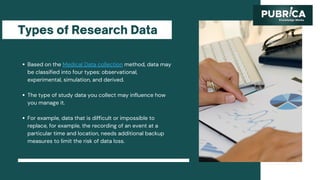
Based on the Medical Data collection method, data may
be classified into four types: observational,
experimental, simulation, and derived.
The type of study data you collect may influence how
you manage it.
For example, data that is difficult or impossible to
replace, for example, the recording of an event at a
particular time and location, needs additional backup
measures to limit the risk of data loss.
Alternatively, if you need to merge data points from many sources, you must adhere to best practices to
avoid data corruption.
1. Observational Data
Observational data is obtained through observing behaviour or action.
2. Experimental Data
When a variable changes, the literature review writing researcher gathers experimental data by
active intervention to cause and assess change or create a difference.
3. Simulation Data
4. Derived / Compiled Data
To generate simulation data, computer test models simulate the operation of a real-world
process or system over time.
Derived data is formed by changing existing data elements, sometimes from several data
sources, into new data via mathematical formulae or aggregation.
Why is a methods section
important?
Your methods section is your chance to explain how
you carried out your study and why you have chosen
the approaches you used.
It is also where you can demonstrate that your study
was thoroughly done and can be repeated.
Finally, it provides your study authority and places it
inside your subject, as well as providing your readers
with somewhere to go if they have any concerns or
comments about other sections.
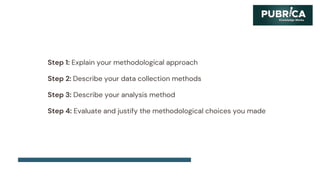
Step 1: Explain your methodological approach
Step 2: Describe your data collection methods
Step 3: Describe your analysis method
Step 4: Evaluate and justify the methodological choices you made
+44 1618186353
UNITED KINGDOM
+91-9884350006
INDIA
EMAIL
sales@pubrica.com
Contact Us

Experimental Methodology.pdf

  • 1.
    Experimental methodology An Academic presentationby Dr. Nancy Agnes, Head, Technical Operations, Pubrica Group: www.pubrica.com Email: sales@pubrica.com
  • 2.
    01 TODAY DISCUSSION 02 03 Methodology inresearch Types of Research Data Why is a methods section important?
  • 3.
    Methodology in research Theprocesses or strategies used to find, select, process, and analyze information on a topic are referred to as research methodology. The methodology portion of a scientific research writing research paper helps the reader objectively examine the study's overall validity and reliability. The methods section provides solutions to two major questions: How was the information gathered or generated? How was it examined?
  • 4.
    The data collectionand analysis methods you utilized in your study are discussed and explained in your research methodology. The methodology chapter, an essential section of any thesis, dissertation, or medical research paper writing, discusses what you did and how you did it, allowing readers to judge the dependability and validity of your research and dissertation topic. It should include the following: 1. The type of study you performed 2. The techniques you used to gather and evaluate data 3. Any equipment or materials you utilized in the research 4. Why you chose these methods
  • 5.
    Types of ResearchData Based on the Medical Data collection method, data may be classified into four types: observational, experimental, simulation, and derived. The type of study data you collect may influence how you manage it. For example, data that is difficult or impossible to replace, for example, the recording of an event at a particular time and location, needs additional backup measures to limit the risk of data loss.
  • 6.
    Alternatively, if youneed to merge data points from many sources, you must adhere to best practices to avoid data corruption. 1. Observational Data Observational data is obtained through observing behaviour or action. 2. Experimental Data When a variable changes, the literature review writing researcher gathers experimental data by active intervention to cause and assess change or create a difference.
  • 7.
    3. Simulation Data 4.Derived / Compiled Data To generate simulation data, computer test models simulate the operation of a real-world process or system over time. Derived data is formed by changing existing data elements, sometimes from several data sources, into new data via mathematical formulae or aggregation.
  • 8.
    Why is amethods section important? Your methods section is your chance to explain how you carried out your study and why you have chosen the approaches you used. It is also where you can demonstrate that your study was thoroughly done and can be repeated. Finally, it provides your study authority and places it inside your subject, as well as providing your readers with somewhere to go if they have any concerns or comments about other sections.
  • 9.
    Step 1: Explainyour methodological approach Step 2: Describe your data collection methods Step 3: Describe your analysis method Step 4: Evaluate and justify the methodological choices you made
  • 10.