CHEMICAL CHANGES 
YEAR 8 – CHEMICAL CHANGES
AIM 
Aim: To observe chemical changes
EQUIPMENT 
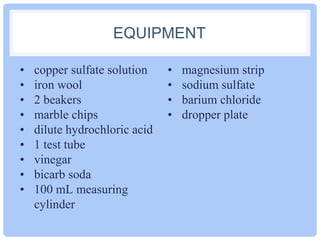
• copper sulfate solution 
• iron wool 
• 2 beakers 
• marble chips 
• dilute hydrochloric acid 
• 1 test tube 
• vinegar 
• bicarb soda 
• 100 mL measuring 
cylinder 
• magnesium strip 
• sodium sulfate 
• barium chloride 
• dropper plate
RISK ASSESSMENT 
Risk Injury Prevention 
Write your risk assessment here.
METHOD 
For each of the 6 experiments, make as many 
observations as you can. 
Part A: Steel wool and copper sulfate 
1. Add 20 mL of copper sulfate solution to a beaker. 
2. Put a small amount of iron wool into a beaker. 
3. Observe what happens to the iron wool and write this 
description in your book.
METHOD 
Part B: Marble chips and hydrochloric acid 
1. Put 5 small marble chips into 1cm depth of 
hydrochloric acid in a test tube. 
2. Record your observations. 
Part C: Sodium sulfate and barium chloride 
1. Add 3 drops of sodium sulfate and 3 drops of barium 
chloride on a dropper plate. 
2. Record your observations.
METHOD 
Part D: Bicarb and vinegar 
1. Dissolve a level teaspoon of bicarbonate of soda in 
50 mL of water. 
2. Add 50 mL of white vinegar in another beaker. 
3. Tip the bicarbonate solution into the beaker with the 
vinegar. 
4. Record your observations.
METHOD 
Part E: Magnesium and hydrochloric acid 
1. Add a small amount (5 cm) of hydrochloric acid in a 
test tube. 
2. Add a small strip of hydrogen to this test tube. 
3. Gently feel the test tube. 
4. Record your observations.
METHOD 
Part F: Burning magnesium (DEMO if 
necessary) 
1. Light a Bunsen burner. 
2. Using tongs to hold a small strip of magnesium near 
the flame. 
3. Record your observations.
RESULTS 
Compile a list of all of the signs of chemical 
reactions you have encountered today.
DISCUSSION 
1. Using your results, identify some common signs that 
show a chemical reaction has taken place. 
2. Were any of your results reversible? Explain why 
this might be so?
CONCLUSION 
Write your conclusion here.

Experiment - chemical changes

  • 1.
    CHEMICAL CHANGES YEAR8 – CHEMICAL CHANGES
  • 2.
    AIM Aim: Toobserve chemical changes
  • 3.
    EQUIPMENT • coppersulfate solution • iron wool • 2 beakers • marble chips • dilute hydrochloric acid • 1 test tube • vinegar • bicarb soda • 100 mL measuring cylinder • magnesium strip • sodium sulfate • barium chloride • dropper plate
  • 4.
    RISK ASSESSMENT RiskInjury Prevention Write your risk assessment here.
  • 5.
    METHOD For eachof the 6 experiments, make as many observations as you can. Part A: Steel wool and copper sulfate 1. Add 20 mL of copper sulfate solution to a beaker. 2. Put a small amount of iron wool into a beaker. 3. Observe what happens to the iron wool and write this description in your book.
  • 6.
    METHOD Part B:Marble chips and hydrochloric acid 1. Put 5 small marble chips into 1cm depth of hydrochloric acid in a test tube. 2. Record your observations. Part C: Sodium sulfate and barium chloride 1. Add 3 drops of sodium sulfate and 3 drops of barium chloride on a dropper plate. 2. Record your observations.
  • 7.
    METHOD Part D:Bicarb and vinegar 1. Dissolve a level teaspoon of bicarbonate of soda in 50 mL of water. 2. Add 50 mL of white vinegar in another beaker. 3. Tip the bicarbonate solution into the beaker with the vinegar. 4. Record your observations.
  • 8.
    METHOD Part E:Magnesium and hydrochloric acid 1. Add a small amount (5 cm) of hydrochloric acid in a test tube. 2. Add a small strip of hydrogen to this test tube. 3. Gently feel the test tube. 4. Record your observations.
  • 9.
    METHOD Part F:Burning magnesium (DEMO if necessary) 1. Light a Bunsen burner. 2. Using tongs to hold a small strip of magnesium near the flame. 3. Record your observations.
  • 10.
    RESULTS Compile alist of all of the signs of chemical reactions you have encountered today.
  • 11.
    DISCUSSION 1. Usingyour results, identify some common signs that show a chemical reaction has taken place. 2. Were any of your results reversible? Explain why this might be so?
  • 12.
    CONCLUSION Write yourconclusion here.