Misconception: Drug Testing by Employers Is Really Just For Safety Reasons
Drug Use and Abuse in the Workplace: Decreases productivity 2.2 times more likely to ask for early dismissal or time off 2.5 times more likely to be absent 8 or more days 3 times more likely to be late for work Marijuana biggest culprit – “laid back, dude” Function at about 67% of capacity
Drug Use and Abuse in the Workplace: Negatively affects the work environment and culture Feelings of “picking up the slack” Behavior Affects on customers Decreased trust in company Credibility issues Increased employee turnover
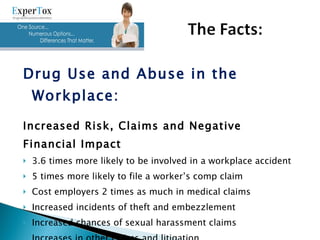
Drug Use and Abuse in the Workplace: Increased Risk, Claims and Negative  Financial Impact 3.6 times more likely to be involved in a workplace accident 5 times more likely to file a worker’s comp claim Cost employers 2 times as much in medical claims Increased incidents of theft and embezzlement Increased chances of sexual harassment claims Increases in other claims and litigation
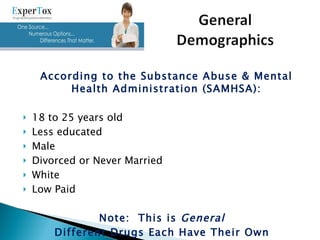
According to the Substance Abuse & Mental Health Administration (SAMHSA): 18 to 25 years old Less educated Male Divorced or Never Married White Low Paid Note:  This is  General Different Drugs Each Have Their Own Demographics
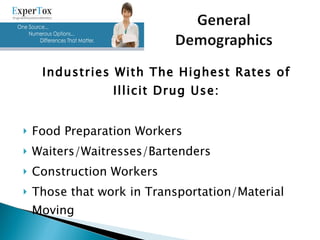
Industries With The Highest Rates of Illicit Drug Use: Food Preparation Workers Waiters/Waitresses/Bartenders Construction Workers Those that work in Transportation/Material Moving
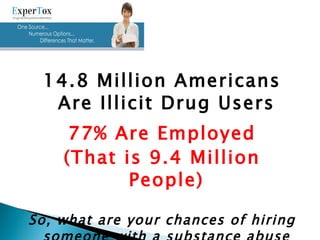
14.8 Million Americans Are Illicit Drug Users 77% Are Employed (That is 9.4 Million People) So, what are your chances of hiring someone with a substance abuse problem?
Most commonly abused drugs in the workplace, according to the DEA: Marijuana (THC) Amphetamine/Methamphetamine Including ADHD Drugs Barbiturates Benzodiazepenes Opioids Prescription Drug Abuse Over-The-Counter Medications
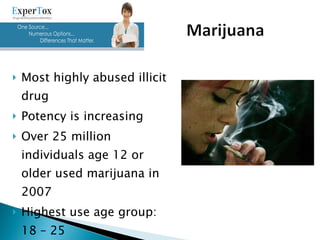
Most highly abused illicit drug Potency is increasing Over 25 million individuals age 12 or older used marijuana in 2007 Highest use age group:  18 – 25
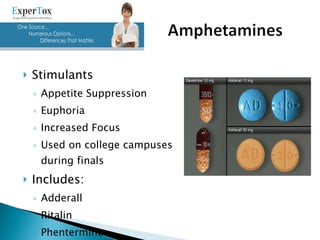
Stimulants Appetite Suppression Euphoria Increased Focus Used on college campuses during finals Includes: Adderall Ritalin Phentermine
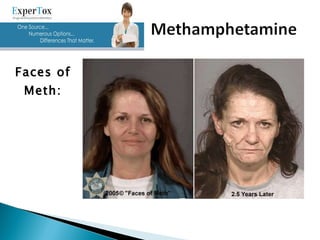
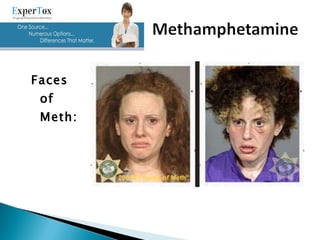
Stimulant Increases alertness and energy Induces euphoria Enhances self-esteem and sexual pleasure “ Tweaking” “ Meth Mouth” Biggest Problem – Usually Entire Families are Hooked Many times “home cooked” Ephedrine and Pseudoephedrine (eg Sudafed, Contac) Red Phosphorous Iodine Other “ingredients” Think “Breaking Bad”
Faces of Meth:
Faces of Meth:
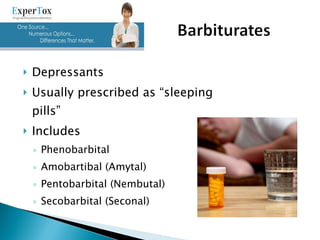
Depressants Usually prescribed as “sleeping pills” Includes Phenobarbital Amobartibal (Amytal) Pentobarbital (Nembutal) Secobarbital (Seconal)
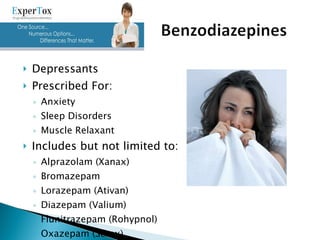
Depressants Prescribed For: Anxiety Sleep Disorders Muscle Relaxant Includes but not limited to: Alprazolam (Xanax) Bromazepam Lorazepam (Ativan) Diazepam (Valium) Flunitrazepam (Rohypnol) Oxazepam (Serax)
Opioids in drug testing panels means “natural opiates” Morphine Codeine Heroin Does not include semi –synthetic or synthetic opiates commonly used for pain management Used for: Pain Cough Diarrhea
Be Aware of the Over-The-Counter Products Hand Sanitizer Dextromethorphan (cough/cold meds) Inhalants/Volatiles
Five (5) Panel Drug Screen  (DOT or Non-DOT) Marijuana (THC) Amphetamine/Methamphetamine Cocaine Opiates Phencyclidine (PCP)
Ten (10) Panel Drug Screen Five (5) Panel Drug Screen Plus Barbiturates Benzodiazepines Propoxyphene Methadone
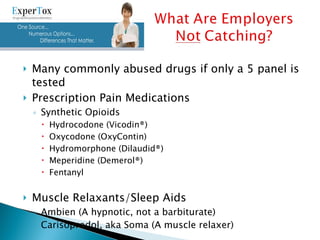
Many commonly abused drugs if only a 5 panel is tested Prescription Pain Medications Synthetic Opioids Hydrocodone (Vicodin®) Oxycodone (OxyContin) Hydromorphone (Dilaudid®) Meperidine (Demerol®) Fentanyl Muscle Relaxants/Sleep Aids Ambien (A hypnotic, not a barbiturate) Carisoprodol, aka Soma (A muscle relaxer)
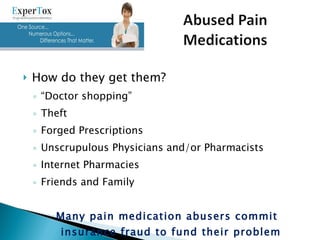
How do they get them? “ Doctor shopping” Theft Forged Prescriptions Unscrupulous Physicians and/or Pharmacists Internet Pharmacies Friends and Family Many pain medication abusers commit insurance fraud to fund their problem
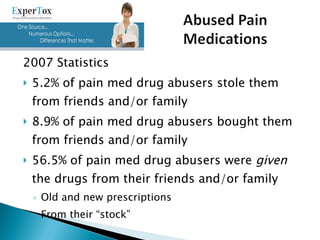
2007 Statistics 5.2% of pain med drug abusers stole them from friends and/or family 8.9% of pain med drug abusers bought them from friends and/or family 56.5% of pain med drug abusers were  given  the drugs from their friends and/or family Old and new prescriptions From their “stock”
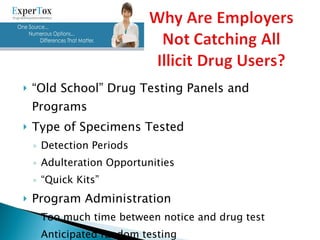
“ Old School” Drug Testing Panels and Programs Type of Specimens Tested Detection Periods Adulteration Opportunities “ Quick Kits” Program Administration Too much time between notice and drug test Anticipated random testing
References used from and Resources: National Institute on Drug & Alcohol (NIDA)  www.drugabuse.gov SAMHSA,  www.workplace.samhsa.gov Dawn Mathis, Drug Enforcement Administration ExperTox, Inc. 1803 Center Street, Suite A Deer Park, TX  77536 281-476-4600 www.expertox.com

Exper Tox Workplace Trends Update 2010

  • 1.
  • 2.
    Misconception: Drug Testingby Employers Is Really Just For Safety Reasons
  • 3.
    Drug Use andAbuse in the Workplace: Decreases productivity 2.2 times more likely to ask for early dismissal or time off 2.5 times more likely to be absent 8 or more days 3 times more likely to be late for work Marijuana biggest culprit – “laid back, dude” Function at about 67% of capacity
  • 4.
    Drug Use andAbuse in the Workplace: Negatively affects the work environment and culture Feelings of “picking up the slack” Behavior Affects on customers Decreased trust in company Credibility issues Increased employee turnover
  • 5.
    Drug Use andAbuse in the Workplace: Increased Risk, Claims and Negative Financial Impact 3.6 times more likely to be involved in a workplace accident 5 times more likely to file a worker’s comp claim Cost employers 2 times as much in medical claims Increased incidents of theft and embezzlement Increased chances of sexual harassment claims Increases in other claims and litigation
  • 6.
    According to theSubstance Abuse & Mental Health Administration (SAMHSA): 18 to 25 years old Less educated Male Divorced or Never Married White Low Paid Note: This is General Different Drugs Each Have Their Own Demographics
  • 7.
    Industries With TheHighest Rates of Illicit Drug Use: Food Preparation Workers Waiters/Waitresses/Bartenders Construction Workers Those that work in Transportation/Material Moving
  • 8.
    14.8 Million AmericansAre Illicit Drug Users 77% Are Employed (That is 9.4 Million People) So, what are your chances of hiring someone with a substance abuse problem?
  • 9.
    Most commonly abuseddrugs in the workplace, according to the DEA: Marijuana (THC) Amphetamine/Methamphetamine Including ADHD Drugs Barbiturates Benzodiazepenes Opioids Prescription Drug Abuse Over-The-Counter Medications
  • 10.
    Most highly abusedillicit drug Potency is increasing Over 25 million individuals age 12 or older used marijuana in 2007 Highest use age group: 18 – 25
  • 11.
    Stimulants Appetite SuppressionEuphoria Increased Focus Used on college campuses during finals Includes: Adderall Ritalin Phentermine
  • 12.
    Stimulant Increases alertnessand energy Induces euphoria Enhances self-esteem and sexual pleasure “ Tweaking” “ Meth Mouth” Biggest Problem – Usually Entire Families are Hooked Many times “home cooked” Ephedrine and Pseudoephedrine (eg Sudafed, Contac) Red Phosphorous Iodine Other “ingredients” Think “Breaking Bad”
  • 13.
  • 14.
  • 15.
    Depressants Usually prescribedas “sleeping pills” Includes Phenobarbital Amobartibal (Amytal) Pentobarbital (Nembutal) Secobarbital (Seconal)
  • 16.
    Depressants Prescribed For:Anxiety Sleep Disorders Muscle Relaxant Includes but not limited to: Alprazolam (Xanax) Bromazepam Lorazepam (Ativan) Diazepam (Valium) Flunitrazepam (Rohypnol) Oxazepam (Serax)
  • 17.
    Opioids in drugtesting panels means “natural opiates” Morphine Codeine Heroin Does not include semi –synthetic or synthetic opiates commonly used for pain management Used for: Pain Cough Diarrhea
  • 18.
    Be Aware ofthe Over-The-Counter Products Hand Sanitizer Dextromethorphan (cough/cold meds) Inhalants/Volatiles
  • 19.
    Five (5) PanelDrug Screen (DOT or Non-DOT) Marijuana (THC) Amphetamine/Methamphetamine Cocaine Opiates Phencyclidine (PCP)
  • 20.
    Ten (10) PanelDrug Screen Five (5) Panel Drug Screen Plus Barbiturates Benzodiazepines Propoxyphene Methadone
  • 21.
    Many commonly abuseddrugs if only a 5 panel is tested Prescription Pain Medications Synthetic Opioids Hydrocodone (Vicodin®) Oxycodone (OxyContin) Hydromorphone (Dilaudid®) Meperidine (Demerol®) Fentanyl Muscle Relaxants/Sleep Aids Ambien (A hypnotic, not a barbiturate) Carisoprodol, aka Soma (A muscle relaxer)
  • 22.
    How do theyget them? “ Doctor shopping” Theft Forged Prescriptions Unscrupulous Physicians and/or Pharmacists Internet Pharmacies Friends and Family Many pain medication abusers commit insurance fraud to fund their problem
  • 23.
    2007 Statistics 5.2%of pain med drug abusers stole them from friends and/or family 8.9% of pain med drug abusers bought them from friends and/or family 56.5% of pain med drug abusers were given the drugs from their friends and/or family Old and new prescriptions From their “stock”
  • 24.
    “ Old School”Drug Testing Panels and Programs Type of Specimens Tested Detection Periods Adulteration Opportunities “ Quick Kits” Program Administration Too much time between notice and drug test Anticipated random testing
  • 25.
    References used fromand Resources: National Institute on Drug & Alcohol (NIDA) www.drugabuse.gov SAMHSA, www.workplace.samhsa.gov Dawn Mathis, Drug Enforcement Administration ExperTox, Inc. 1803 Center Street, Suite A Deer Park, TX 77536 281-476-4600 www.expertox.com

Editor's Notes

  • #9 In October, 2007 the Department of Labor reported that about 147,000,000 people are working. About a 6.5% chance… Discuss internet checking if drug test/where these people then go
  • #11 Potency is increasing due to improved indoor cultivation – moving plants from outdoors to indoors
  • #12 Important to know prescription may clear us positive drug results; however, the MRO will also check to ensure the concentration of the drug in a person’s system matches the prescribed dosage
  • #13 Other ingredients include kitty litter, charcoal lighter fuel This is becoming one of the worst drug trends. Conroe highest population of meth labs. Discuss residue and case.
  • #18 Synthetic opioids include hydrocodone (Vicodin), hydromorphone, oxycodone (Oxycontin), oxymorphone, Tramadol, meperedine
  • #25 Specimens – discuss each, detection periods Oral Fluid Urine Hair/Nails Quest Diagnostics released a recent report that hair reveals 10 times as many job applicants and employees taking cocaine and meth than found in previous urine drug tests