Driving Home the 
Point: 
Medicines, Impaired Driving, 
and You 
RADD-ONDCP Summit 
July 11, 2014 
Ali Mohamadi, MD 
Medical Officer 
Professional Affairs and Stakeholder Engagement
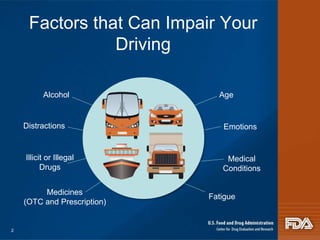
Factors that Can Impair Your 
Driving 
Age 
Emotions 
Medical 
Conditions 
Fatigue 
Alcohol 
Distractions 
Illicit or Illegal 
Drugs 
Medicines 
(OTC and Prescription) 
2
Driving and Medicines: 
Proceed Cautiously 
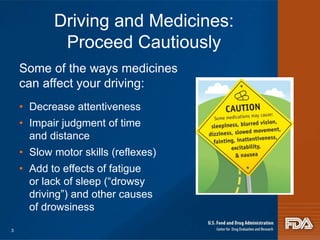
Some of the ways medicines 
can affect your driving: 
• Decrease attentiveness 
• Impair judgment of time 
and distance 
• Slow motor skills (reflexes) 
• Add to effects of fatigue 
or lack of sleep (“drowsy 
driving”) and other causes 
of drowsiness 
3
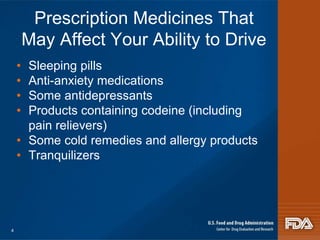
Prescription Medicines That 
May Affect Your Ability to Drive 
• Sleeping pills 
• Anti-anxiety medications 
• Some antidepressants 
• Products containing codeine (including 
pain relievers) 
• Some cold remedies and allergy products 
• Tranquilizers 
4
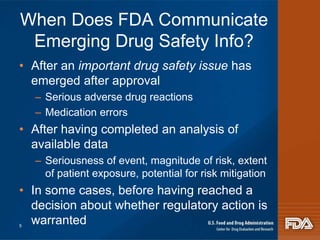
When Does FDA Communicate 
Emerging Drug Safety Info? 
• After an important drug safety issue has 
emerged after approval 
– Serious adverse drug reactions 
– Medication errors 
• After having completed an analysis of 
available data 
– Seriousness of event, magnitude of risk, extent 
of patient exposure, potential for risk mitigation 
• In some cases, before having reached a 
decision about whether regulatory action is 
warranted 5
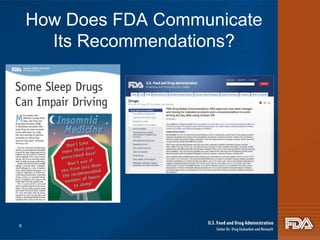
How Does FDA Communicate 
Its Recommendations? 
6
7
8 
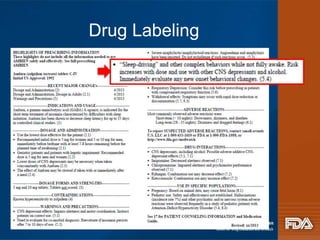
Drug Labeling
9 
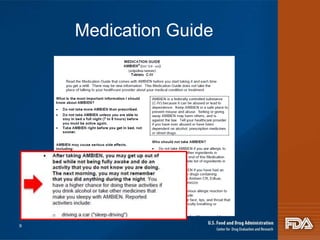
Medication Guide
10 
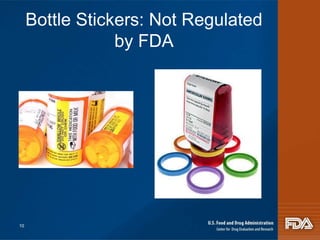
Bottle Stickers: Not Regulated 
by FDA
OTC Medicines: Some Common 
Misconceptions 
• OTC medicines don’t have risks 
• I can take OTC medicine any way and in any 
amount I want to without harm 
• I don’t need to read the label – I know all I need 
to know about the medicine 
• My family and I have used the medicine before 
and we have never been harmed 
• If some medicine is good, more is better 
11
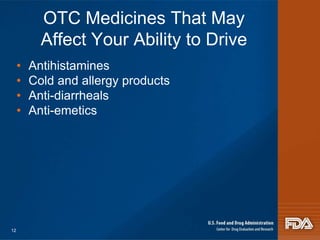
OTC Medicines That May 
Affect Your Ability to Drive 
• Antihistamines 
• Cold and allergy products 
• Anti-diarrheals 
• Anti-emetics 
12
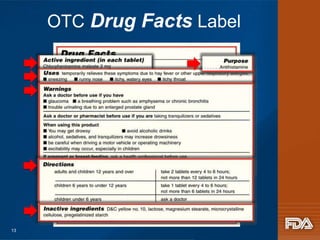
OTC Drug Facts Label 
13
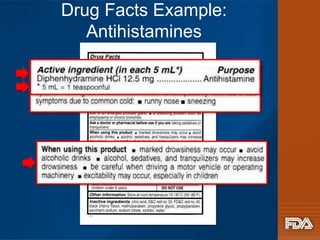
Drug Facts Example: 
Antihistamines
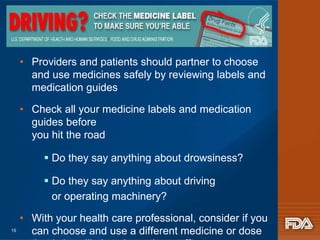
• Providers and patients should partner to choose 
and use medicines safely by reviewing labels and 
medication guides 
• Check all your medicine labels and medication 
guides before 
you hit the road 
 Do they say anything about drowsiness? 
 Do they say anything about driving 
or operating machinery? 
• With your health care professional, consider if you 
can choose and use a different medicine or dose 
that is less likely to have those effects 
15
CDER Professional Affairs and 
Stakeholder Engagement 
Email: ali.mohamadi@fda.hhs.gov 
16

Driving Home the Point: Medicines, Impaired Driving, and You

  • 1.
    Driving Home the Point: Medicines, Impaired Driving, and You RADD-ONDCP Summit July 11, 2014 Ali Mohamadi, MD Medical Officer Professional Affairs and Stakeholder Engagement
  • 2.
    Factors that CanImpair Your Driving Age Emotions Medical Conditions Fatigue Alcohol Distractions Illicit or Illegal Drugs Medicines (OTC and Prescription) 2
  • 3.
    Driving and Medicines: Proceed Cautiously Some of the ways medicines can affect your driving: • Decrease attentiveness • Impair judgment of time and distance • Slow motor skills (reflexes) • Add to effects of fatigue or lack of sleep (“drowsy driving”) and other causes of drowsiness 3
  • 4.
    Prescription Medicines That May Affect Your Ability to Drive • Sleeping pills • Anti-anxiety medications • Some antidepressants • Products containing codeine (including pain relievers) • Some cold remedies and allergy products • Tranquilizers 4
  • 5.
    When Does FDACommunicate Emerging Drug Safety Info? • After an important drug safety issue has emerged after approval – Serious adverse drug reactions – Medication errors • After having completed an analysis of available data – Seriousness of event, magnitude of risk, extent of patient exposure, potential for risk mitigation • In some cases, before having reached a decision about whether regulatory action is warranted 5
  • 6.
    How Does FDACommunicate Its Recommendations? 6
  • 7.
  • 8.
  • 9.
  • 10.
    10 Bottle Stickers:Not Regulated by FDA
  • 11.
    OTC Medicines: SomeCommon Misconceptions • OTC medicines don’t have risks • I can take OTC medicine any way and in any amount I want to without harm • I don’t need to read the label – I know all I need to know about the medicine • My family and I have used the medicine before and we have never been harmed • If some medicine is good, more is better 11
  • 12.
    OTC Medicines ThatMay Affect Your Ability to Drive • Antihistamines • Cold and allergy products • Anti-diarrheals • Anti-emetics 12
  • 13.
  • 14.
    Drug Facts Example: Antihistamines
  • 15.
    • Providers andpatients should partner to choose and use medicines safely by reviewing labels and medication guides • Check all your medicine labels and medication guides before you hit the road  Do they say anything about drowsiness?  Do they say anything about driving or operating machinery? • With your health care professional, consider if you can choose and use a different medicine or dose that is less likely to have those effects 15
  • 16.
    CDER Professional Affairsand Stakeholder Engagement Email: ali.mohamadi@fda.hhs.gov 16

Editor's Notes

  • #3 So to open, and before I talk about what how FDA handles drug safety information related to medicines that affect your ability to drive, it’s important to know that there really are numerous factors that can impair your ability to drive, and they’re not limited to this slide. What you don’t see here are what can be described as “human factors” required for safe driving. Some of these are vision, awareness, perception, motor function. – to be clear, impairments in any of these can result in a crash. What you do see on the slide are a number of other factors can affect your driving. Any of these factors by themselves can impair your driving, so you can probably imagine that when they’re combined, the risk increases. At the bottom here, you’ll find medicines – both OTCs and prescription medicines. Medicines that can make you drowsy can heighten the effects of any of these other factors
  • #4 If medicine has drowsiness as a side effect, that drowsiness can add to the sleepiness drivers feel when have not had enough sleep. Driving when you’re sleepy is called “drowsy driving.” Being drowsy behind the wheel is dangerous because it impairs driving skills. Drowsy drivers make poor decisions. Drowsiness reduces your response time and the ability to react. And drowsiness causes decreased awareness, tunnel vision, wandering thoughts, and shortened attention spans. Drowsy driving alone causes more than 100,000 crashes a year, and it is widely recognized that drowsy driving is underreported as a cause for crashes. If you’re already drowsy when you take a medicine that can make you drowsy, your driving can be very much affected, even if you don’t feel drowsy to start with.
  • #6 After the drug is on the market, the FDA monitors its performance in a number of ways. One of those ways is the through MedWatch, the agency’s safety information and adverse event reporting program, which receives reports of suspected adverse reactions (side effects of medicines) from consumers, health care practitioners and pharmaceutical companies. And the agency has access to databases that collect information on prescription drug use and health outcomes. These data help FDA staff identify and understand side effects of medicines. There are hundreds of thousands of adverse events reported via MedWatch each year, but this reporting system is voluntary and there are serious drug reactions that are never reported. Because the nation’s healthcare system is not integrated, there is no standard way to track the adverse effects of a medicine in any given health system or across different health systems. Health insurance databases can be helpful in this regard, but they are only accurate as long as a patient has the same job and is enrolled with the same insurance system since many people are insured through their employer.  This limits FDA’s ability to monitor the safety of medications taken over many years.  However, FDA, through its Sentinel Initiative, is currently working to develop capabilities to use data from different health systems to better understand the safety of drugs in clinical practice.   
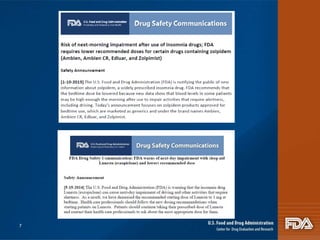
  • #8 If an unexpected drug-related health risk is detected, a Drug Safety Communication may be issued to consumers and healthcare professionals. A statement is added to the drug label about the new safety concern to ensure continued safe and effective use of the drug. Occasionally, approved drugs may be withdrawn from the market for serious safety risks if it is determined that the overall risks outweigh any benefits the drug may provide.
  • #15 Here’s a label for diphenhydramine, which is a very common antihistamine. Let’s go through it together. First off, we see the active ingredient, which is diphenhydramine Hydrochloride. Right next to it, the purpose of this medicine is antihistamine. Next, we’ll move to the uses, which match up with the description of antihistamines that we went over on the last slide. If we move on to the warnings, right off the bat you’ve got one about drowsiness, and as you scan through, there’s the one about other items that can increase drowsiness, followed by a caution about driving. That’s pretty clear-cut, when it comes to communicating the risks related to driving.
  • #16 Some key take home points are listed here, and I’ll go through them one by one for emphasize. First, partner with your health care professional to….(follow the slide up to last bullet, then: If you are going to be driving or operating machinery, consider if you may be able to choose and use a different medicine for your problem, one with the same purpose but with a different active ingredient or combination of active ingredients that do not have a drowsiness or driving or operate machinery warning. Talk to your healthcare professional if you need help finding another medicine to treat your problem.