Exception Handling in Python
Python
Exceptions
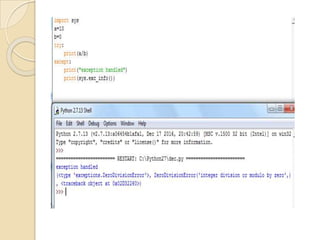
Exception Handling
Try and Except
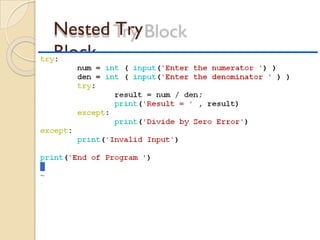
Nested try Block
Handling Multiple Exceptions in single Except Block
Raising Exception
Finally Block
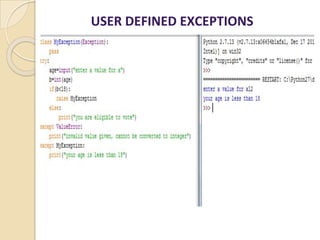
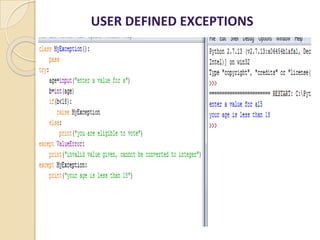
User Defined Exceptions
Exception
⚫ When writing a program, we, more often than
not, will encounter errors.
⚫ Error caused by not following the proper
structure (syntax) of the language is called syntax
error or parsing error
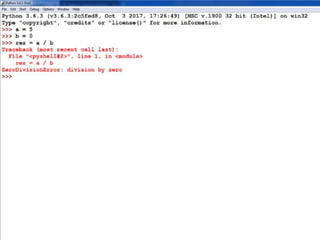
⚫ Errors can also occur at runtime and these are
called exceptions.
⚫ They occur, for example, when a file we try to
open does not exist (FileNotFoundError), dividing
a number by zero (ZeroDivisionError)
⚫ Whenever these type of runtime error occur, Python
creates an exception object. If not handled properly,
it prints a traceback to that error along with some
details about why that error occurred.
Exception Handling
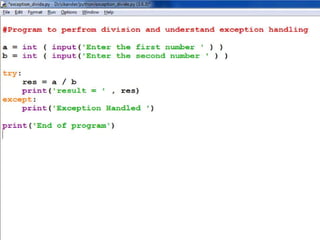
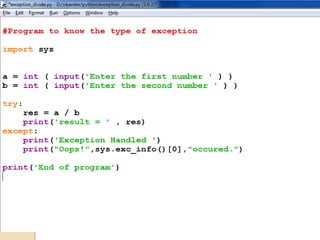
⚫To handle exceptions, and to call code
when an exception occurs, we can use a
try/except statement.
⚫The try block contains code that might
throw an exception.
⚫If that exception occurs, the code in the
try block stops being executed, and the
code in the except block is executed.
⚫If no error occurs, the code in the except
block doesn't execute.
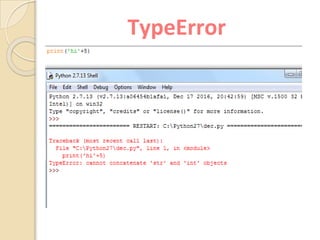
TypeError
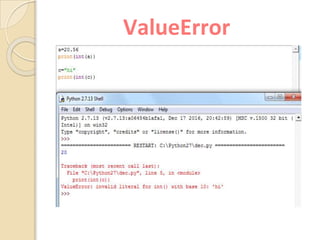
ValueError
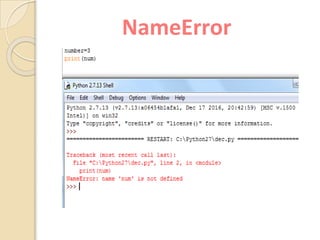
NameError
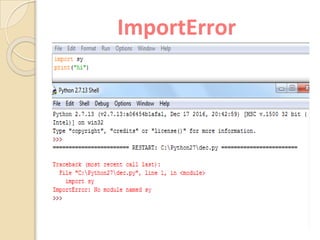
ImportError
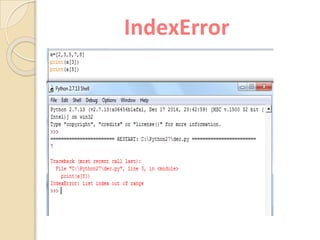
IndexError
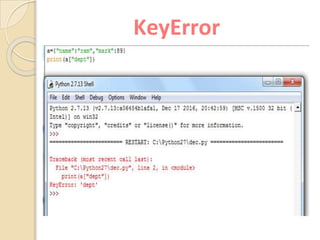
KeyError
Nested Try
Block
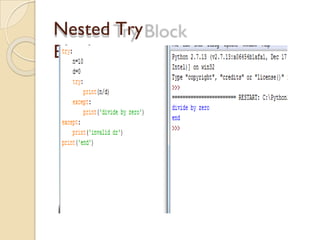
Nested Try
Block
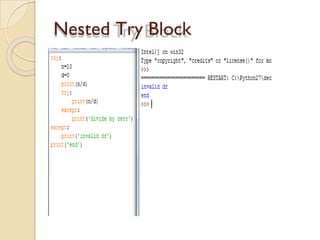
Nested Try Block
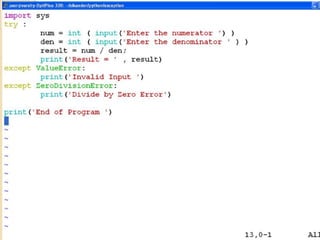
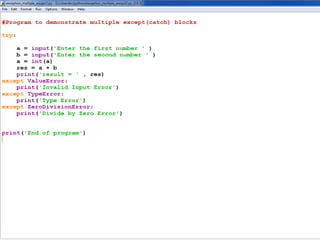
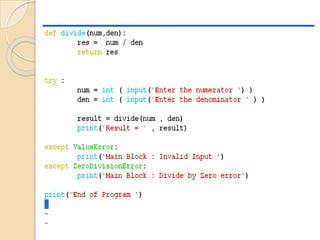
⚫Multiple except blocks
⚫A try statement can have
multiple different except blocks
to handle different exceptions.
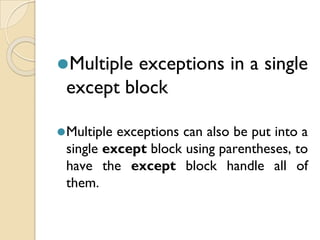
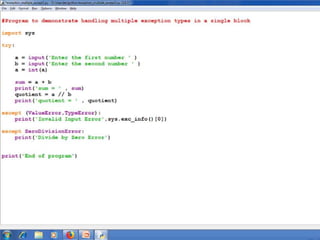
⚫Multiple exceptions in a single
except block
⚫Multiple exceptions can also be put into a
single except block using parentheses, to
have the except block handle all of
them.
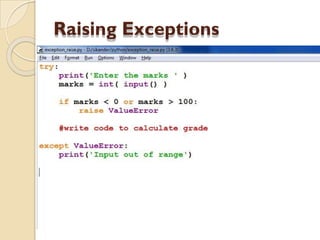
Raising Exceptions
Raising Exception
⚫Raising exception is similar to
throwing exception in C++/Java.
⚫You can raise exceptions by
using the raise statement
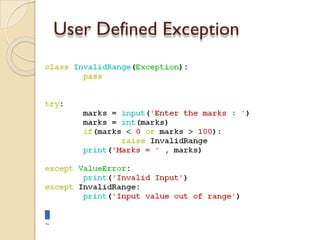
User Defined Exception
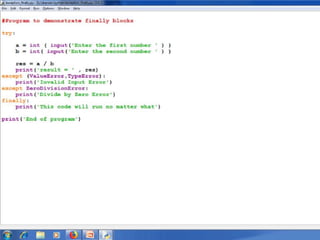
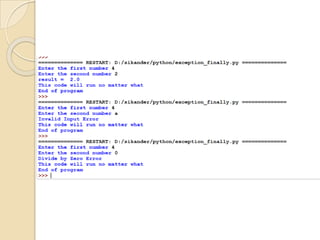
finally
⚫To ensure some code runs no matter
what errors occur, you can use a
finally statement.
⚫The finally statement is placed at the
bottom of a try/except statement.
⚫Code within a finally statement
always runs after execution of the
code in the try, and possibly in the
except, blocks.
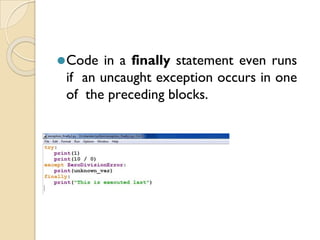
⚫Code in a finally statement even runs
if an uncaught exception occurs in one
of the preceding blocks.
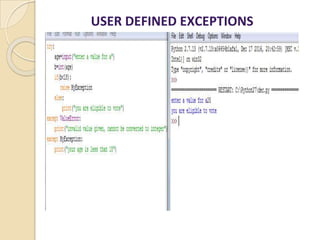
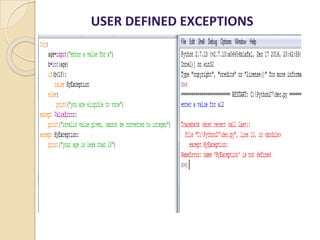
USER DEFINED EXCEPTIONS
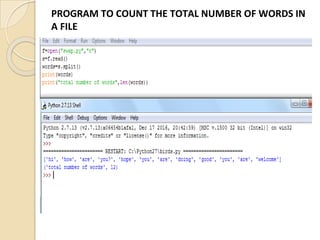
PROGRAM TO COUNT THE TOTAL NUMBER OF WORDS IN
A FILE
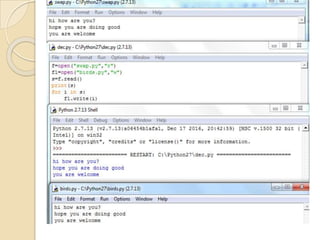
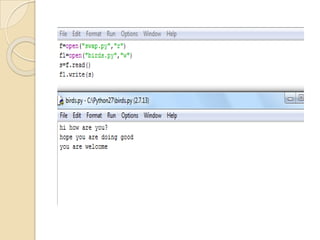
PROGRAM TO COPY THE CONTENT OF ONE FILE INTO
ANOTHER
f=open("swap.py","r")
f1=open("birds.py","w")
s=f.read()
print(s)
for i in s:
f1.write(i)
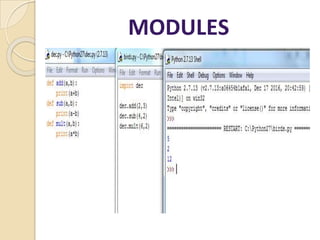
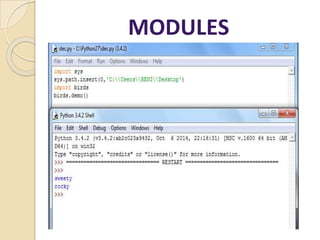
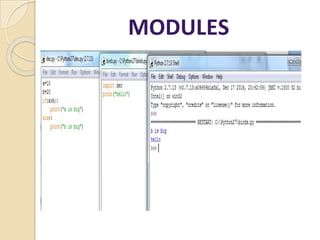
MODULES
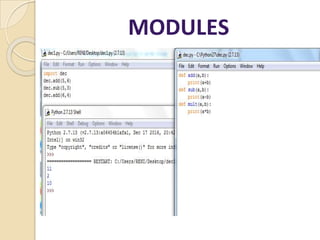
MODULES
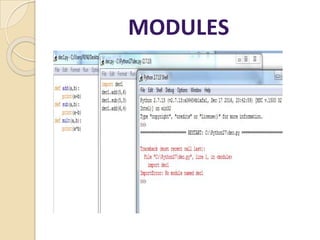
MODULES
MODULES
MODULES
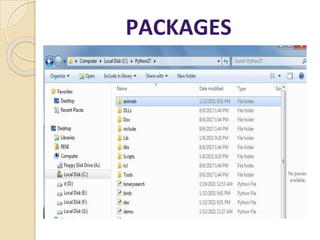
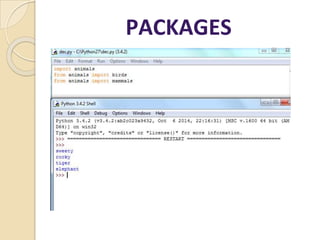
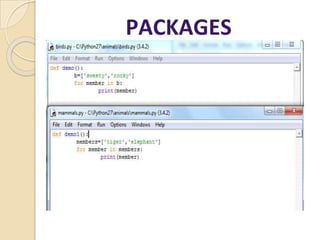
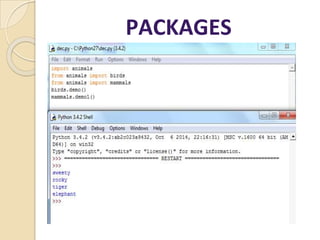
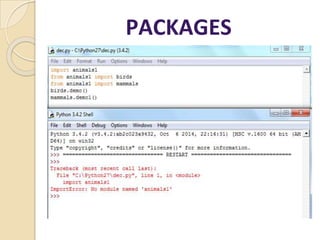
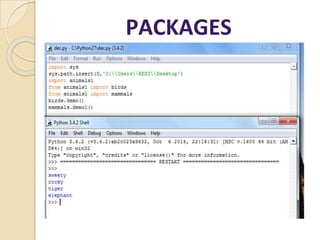
PACKAGES
PACKAGES
PACKAGES
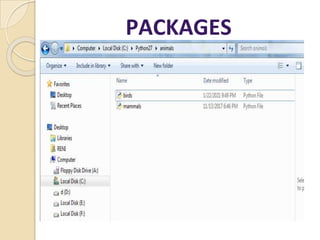
PACKAGES
PACKAGES
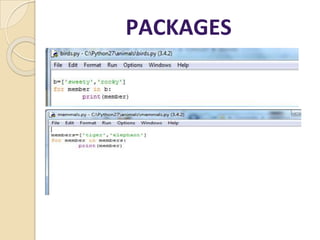
PACKAGES
PACKAGES
PACKAGES

exception handling.pptx