Examination of Skin
Presented by:
Dr Ekta
CBPACS,N.Delhi
Surface area of 1.5-2mm in adults
Layers- mainly two-1.Epidermis
2.Dermis
Skin
• Most superficial layer of skin
• Composed of stratified squamous epithelium
• Thickest on palms and soles
• No nerve ending or blood vessels
Epidermis
• Tough and elastic
• Formed from connective tissue and collagen
fibers
• Main cells-Macrophage
- Mast cells
- Fibroblast
Structures- Blood vessels
-Lymph vessels
-Sabaceous glands
Dermis
• How long has the lesion been
present ?
• Has its distribution changes over
time?
• Has it been associated with sun
exposure / exposure to heat/cold?
Dermatological history
• Is their any associated Pruritis?
• Is the lesion painful?
• Does patient have any constitutional
symptoms?
• Does patient having any past h/o skin
disease or allergy ?
• Does patient having any past h/o
systemic disease e.g DM ?
• Does patient having any h/o
exposure to chemicals ?
• Does patient have family h/o
melanoma ?
• What medications patient is taking ?
• Lesions must be described according to
their color , shape, and using
dermatological terms
• Distribution and pattern must be
described
• Lesion must be palpated for consistency
,tenderness ,temperature ,depth etc.
Points to be assesed -
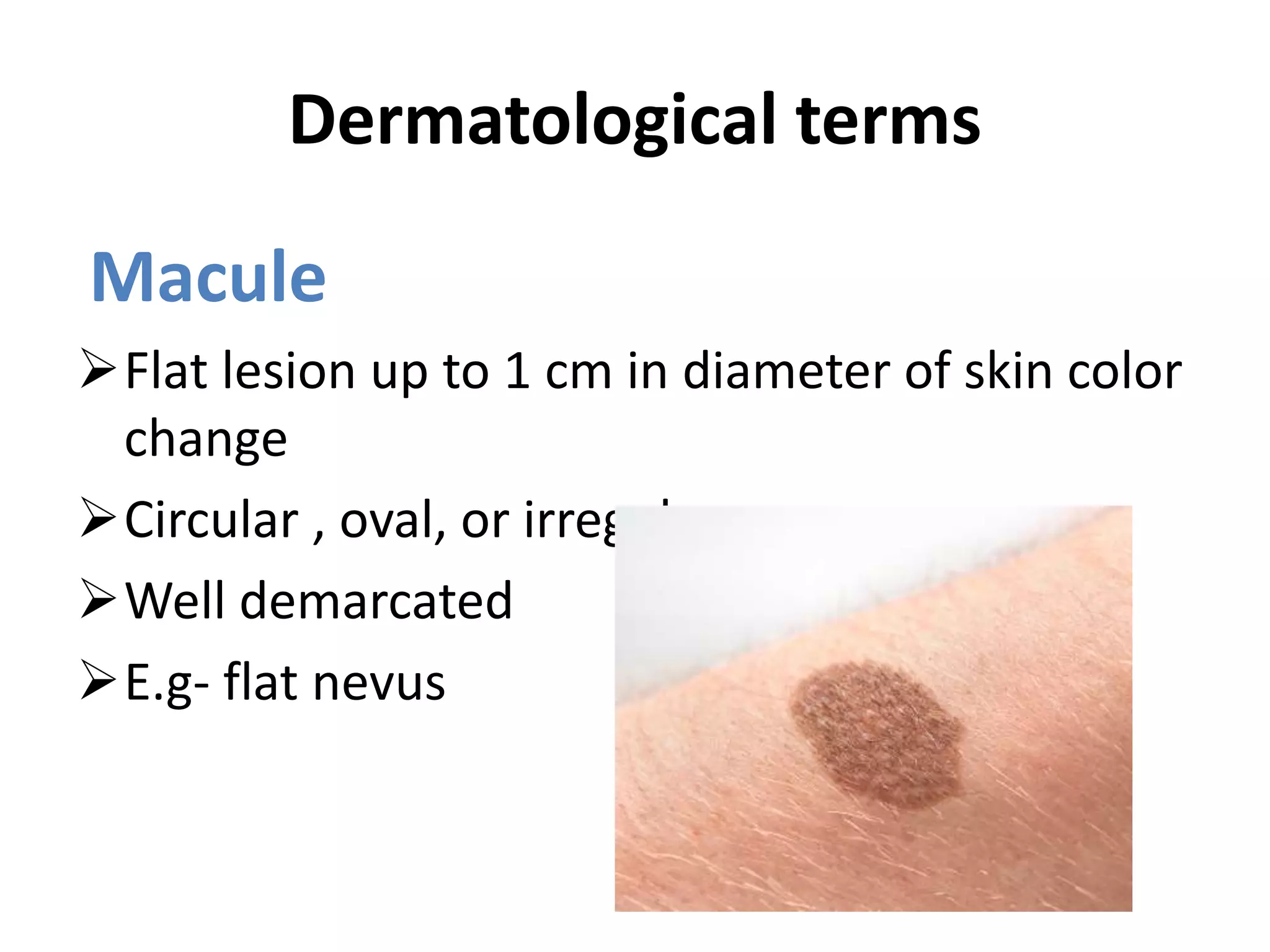
Macule
Flat lesion up to 1 cm in diameter of skin color
change
Circular , oval, or irregular
Well demarcated
E.g- flat nevus
Dermatological terms
Patch
• Flat lesion 1 cm or greater in diameter
• E.g.- vitiligo
Papule
• Elevated superficial solid lesion up to 1 cm
diameter
• Round or flat topped
• Irregularly distributed
• Sharply defined (superficial ) or indistinct
border (deep)
• E.g- acne
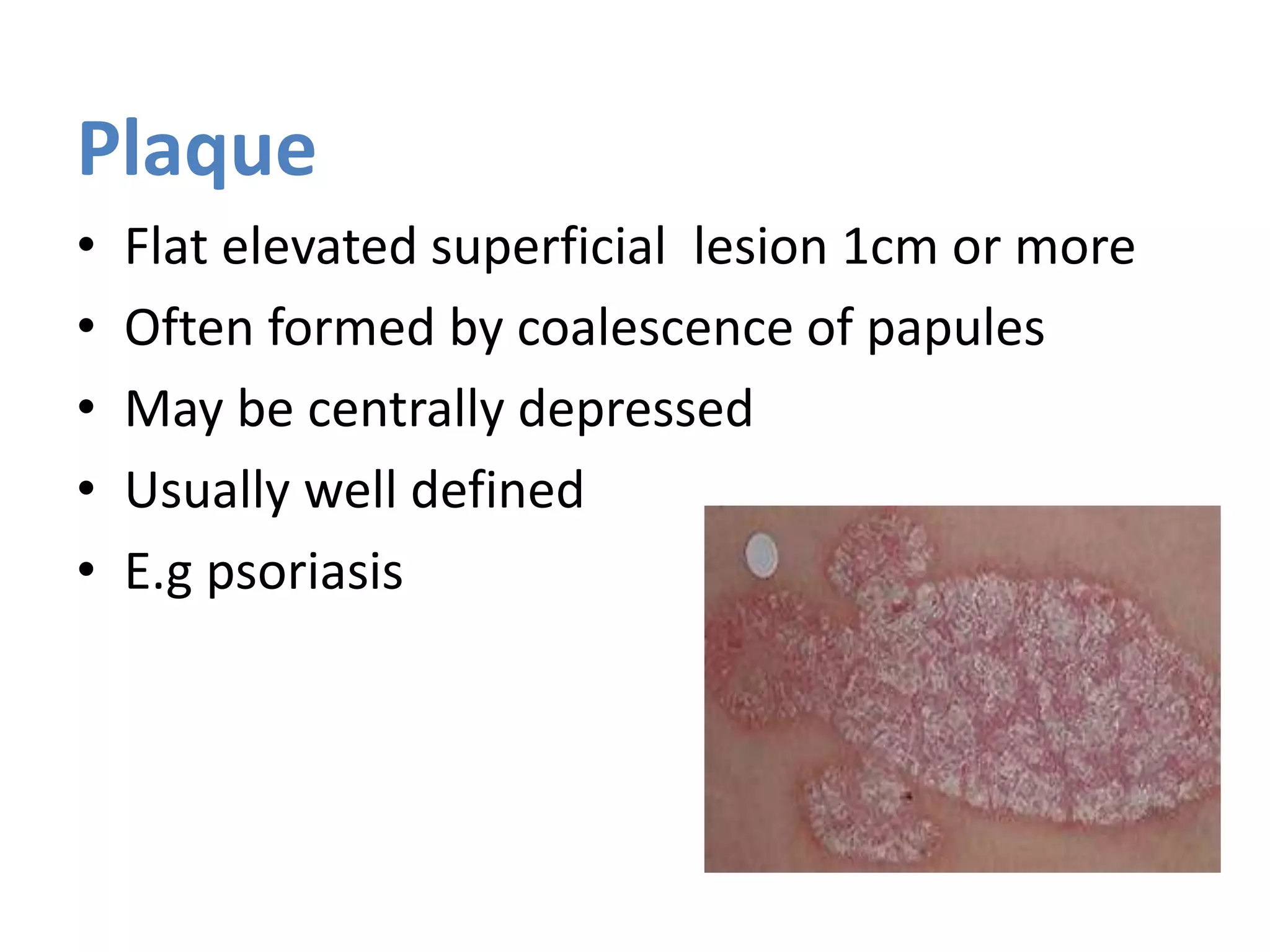
Plaque
• Flat elevated superficial lesion 1cm or more
• Often formed by coalescence of papules
• May be centrally depressed
• Usually well defined
• E.g psoriasis
Nodule
• Superficial solid “marble like” lesion greater
than 1 cm diameter
• Larger , often deeper and firmer than papule
• Hard or soft
• E.g. -acne or keloid
Wheal (“hives”)
• Irregular and oedematous like elevations
• Round ,or irregular
• Discrete or may be coalesce
• E.g. Urticaria
Vesicle
• Well defined superficial elevation containing
serous fluid up to 1cm
• Discrete irregularly scattered grouped or
linear
• E.g. varicella
Bulla
• Superficial elevation containing serous fluid
more than 1 cm
• Differ from vesicles only in size
• E.g contact dermatitis
Pustules
• Small superficial elevation containing turbid
purulent fluid (usually necrotic inflammatory
cells )
• Vary in size and shape
• Exudates may be white-yellow ,greenish-
yellow
• E.g. Pustular acne , Pustular psoriasis
Pustular acne Pustular
psoriasis
THANK YOU

Examination of skin

  • 1.
    Examination of Skin Presentedby: Dr Ekta CBPACS,N.Delhi
  • 2.
    Surface area of1.5-2mm in adults Layers- mainly two-1.Epidermis 2.Dermis Skin
  • 3.
    • Most superficiallayer of skin • Composed of stratified squamous epithelium • Thickest on palms and soles • No nerve ending or blood vessels Epidermis
  • 4.
    • Tough andelastic • Formed from connective tissue and collagen fibers • Main cells-Macrophage - Mast cells - Fibroblast Structures- Blood vessels -Lymph vessels -Sabaceous glands Dermis
  • 6.
    • How longhas the lesion been present ? • Has its distribution changes over time? • Has it been associated with sun exposure / exposure to heat/cold? Dermatological history
  • 7.
    • Is theirany associated Pruritis? • Is the lesion painful? • Does patient have any constitutional symptoms? • Does patient having any past h/o skin disease or allergy ?
  • 8.
    • Does patienthaving any past h/o systemic disease e.g DM ? • Does patient having any h/o exposure to chemicals ? • Does patient have family h/o melanoma ? • What medications patient is taking ?
  • 9.
    • Lesions mustbe described according to their color , shape, and using dermatological terms • Distribution and pattern must be described • Lesion must be palpated for consistency ,tenderness ,temperature ,depth etc. Points to be assesed -
  • 10.
    Macule Flat lesion upto 1 cm in diameter of skin color change Circular , oval, or irregular Well demarcated E.g- flat nevus Dermatological terms
  • 11.
    Patch • Flat lesion1 cm or greater in diameter • E.g.- vitiligo
  • 12.
    Papule • Elevated superficialsolid lesion up to 1 cm diameter • Round or flat topped • Irregularly distributed • Sharply defined (superficial ) or indistinct border (deep) • E.g- acne
  • 13.
    Plaque • Flat elevatedsuperficial lesion 1cm or more • Often formed by coalescence of papules • May be centrally depressed • Usually well defined • E.g psoriasis
  • 14.
    Nodule • Superficial solid“marble like” lesion greater than 1 cm diameter • Larger , often deeper and firmer than papule • Hard or soft • E.g. -acne or keloid
  • 15.
    Wheal (“hives”) • Irregularand oedematous like elevations • Round ,or irregular • Discrete or may be coalesce • E.g. Urticaria
  • 16.
    Vesicle • Well definedsuperficial elevation containing serous fluid up to 1cm • Discrete irregularly scattered grouped or linear • E.g. varicella
  • 17.
    Bulla • Superficial elevationcontaining serous fluid more than 1 cm • Differ from vesicles only in size • E.g contact dermatitis
  • 18.
    Pustules • Small superficialelevation containing turbid purulent fluid (usually necrotic inflammatory cells ) • Vary in size and shape • Exudates may be white-yellow ,greenish- yellow • E.g. Pustular acne , Pustular psoriasis
  • 19.
  • 20.