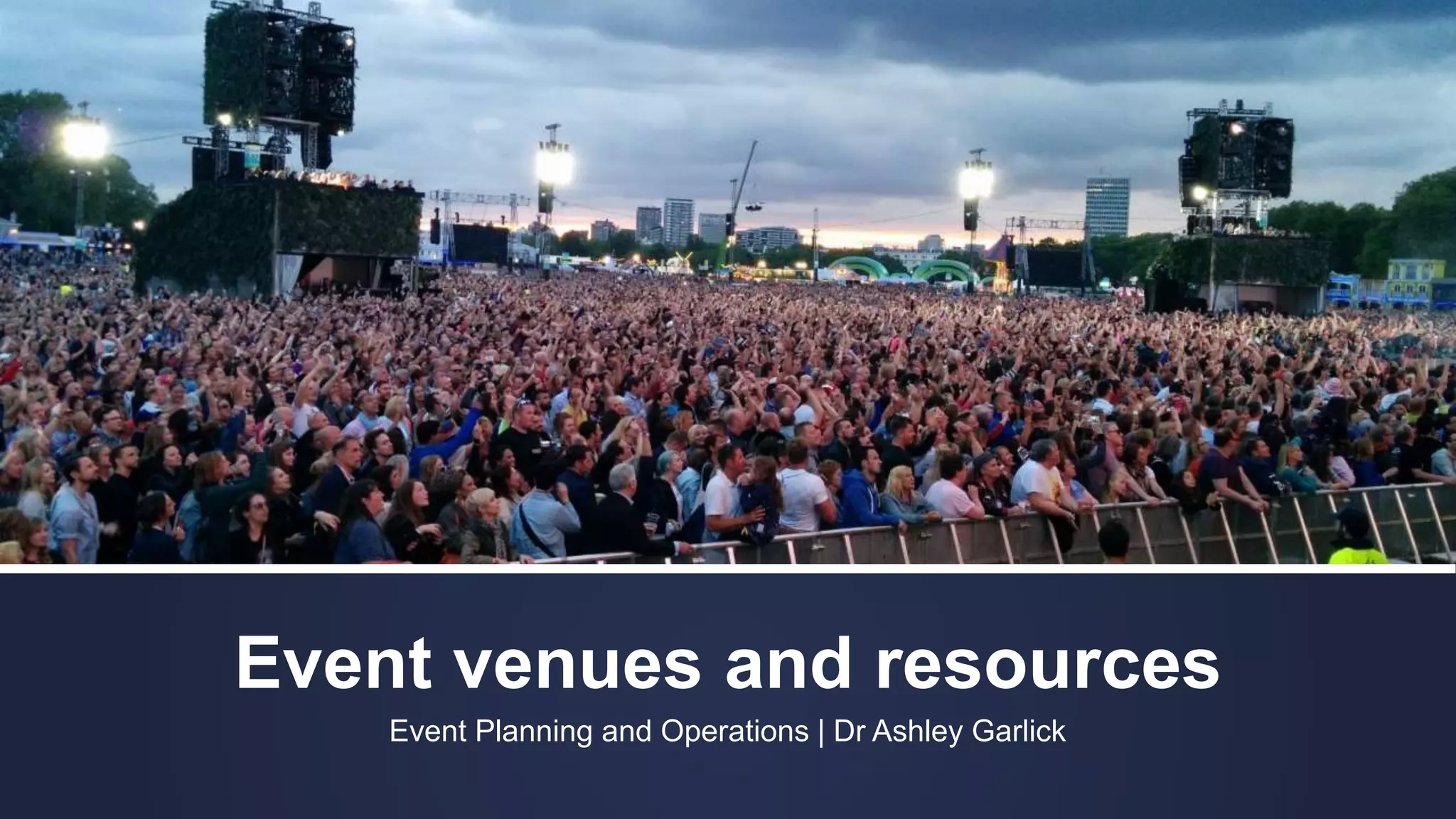



Event venues and resources
Event Planning and Operations | Dr Ashley Garlick
Learning outcomes
By the end of the session, you will be able to:
 Select an appropriate venue for an event
 Explain the importance of the venue choice to the event plan
 Identify the resources required to execute an event plan
Why so important?
Getz D, and Page S.J. (2016)
Event Studies. 3rd Ed. Abingdon:
Routledge
“All events require a venue (often
specific facilities, but sometimes a street
or open space)…”
Types of Venue
 Convention and Conference centres (purpose built)
 Conference hotels
 Stadia and Arenas
 Theatres
 Historical venues
 Outdoor venues
 Unusual indoor venues
Unusual
venues
 Sports centres
 Schools
 Studios
 Airports (hangars)
 Offices
 Shopping centres
 Museums and Art Galleries
 Car parks
Local venues
 Community-based planning is required to
accommodate and monitor the regulation of events
 City event zones and spaces
 Construction of venues
 Experience of the staff and management
 Health and safety
 Idiosyncracies
 Budget
 Ceiling height
 Creativity
 In-house facilities
 Indoor/outdoor – activities / weather
 Impact on surrounding neighbours
 Impact of vehicular and foot traffic
 Where is power and water?
 Accessibility for technical load-in/out and for emergency vehicles
 Protection of the ground from damage
 Perimeter fencing
 Dangerous areas (could be hidden dangers)
 Lighting
Event specific venues
 On-site facilities
 Toilets
 Staff
 Technical
 Furniture
 Décor
 Staging
 Projection
 Sound
 Lighting
 Regulated – Fire, H&S,
 Parking
 Management
 Kitchen / catering
 Break-out rooms
 Sales driven culture
 Cost of extras
Hotels for events
 Position / location
 Accommodation
 Bars
 Ceiling height
 Creativity and style of décor
 Budget
 Landmark venues
 Regulated and graded
 Standardised brands
= Standards
= Services
(expectations)
Where to find
venues
 Brochures
 Websites
 Directories
 Tourist guides
 Tourist offices
 Trade exhibitions
 Word of mouth / reputation
 Local knowledge
 Ground agents
 By foot
Agents
 Venue finding agencies
 Event agencies
 Location agencies
 Event catering companies
 Venue choice is driven by client demand
 Client expectations
 Guest expectations
 Your relationship with the venue
 Management and staff
 Creating the experience
 Identifying what sets one venue against another
 The limitations of a venue help to eliminate it from the venue search
 Lack of parking
 Obstructed sight-lines to stage
 Noise restrictions due to neighbouring properties
 No red wine and brown food
 Low ceiling height
 No fixings to walls or ceilings
Resources
 Covers everything you will need to execute your
event
 Can be goods, services, people, and money
 Money is usually needed to secure the other three
 Cash-flow is just as important as revenue (i.e. where
will the initial money come from?)
 Takes significant time to research, enquire and book
with sufficient notice (‘rush’ jobs cost more!)
 What you will need to source often significantly
impacted by the venue choice
Income
streams
Adapted from: From: Bowdin, G.
Allen, J. O'Toole, W. Harris, R. and
McDonnell, I. (2012) Events
Management. 3rd edn. Abingdon:
Routledge.
 Client purse
 Sponsorship
 Donations
 Ticket sales
 Food & drink sales
 Pitch/stall rental
 Merchandising
 Exhibitors
 Concessions
Value of
ticketing
 Perceived value of an event
 ‘Guarantee’ of attendance
 Generates an attendance count
 Enables the setting of a breakeven point
 Provides data capture
 Income stream
 In-house versus outsourced
 Buy or hire
 Delivery and collection
 Single source or multiple suppliers
 Specialist skills may be needed to operate
 Transport familiar resources or source locally to event
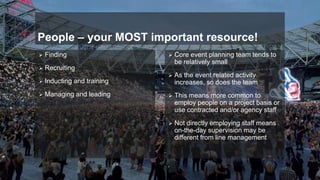
People – your MOST important resource!
 Finding
 Recruiting
 Inducting and training
 Managing and leading
 Core event planning team tends to
be relatively small
 As the event related activity
increases, so does the team
 This means more common to
employ people on a project basis or
use contracted and/or agency staff
 Not directly employing staff means
on-the-day supervision may be
different from line management
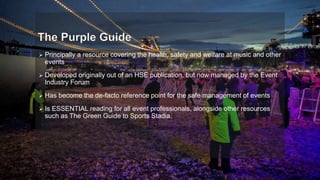
 Principally a resource covering the health, safety and welfare at music and other
events
 Developed originally out of an HSE publication, but now managed by the Event
Industry Forum
 Has become the de-facto reference point for the safe management of events
 Is ESSENTIAL reading for all event professionals, alongside other resources
such as The Green Guide to Sports Stadia.
What does The
Purple Guide
cover?
https://www.thepurpleguide.co.uk/
(But, you should log in via the
Library as we have paid your
subscription!
 Venue and site design
 Medical
 Communication
 Transport management
 Working at height and temporary structures
 Fire safety
 Electrical and lighting
 Barriers, fencing and crowd management
 Special effects , fireworks and amusements
 Waste management and noise
 Food and drink and sanitation
 Welfare and safeguarding children and animals
 Crime, disorder and working with the police
 + chapters that look at safe processes and many other topics!
Any questions?
For further research:
Preda, P. and Watts, T. (2003) Improving the efficiency of sporting venues through
capacity management: the case of the Sydney (Australia) Cricket Ground Trust.
Event Management, 8(2), pp.83-89. Available from:
https://doi.org/10.3727/152599503108751739
Yeoman, I. Robertson, M. and McMahon-Beattie, U. (2004) Visitor management
for festivals and events, in: I. Yeoman, M. Robertson, J. Ali-Knight, S. Drummond,
and U. McMahon-Beattie (eds). Festival and Events Management, Abingdon:
Routledge.

Event venues and resources

  • 1.
    Event venues andresources Event Planning and Operations | Dr Ashley Garlick
  • 2.
    Learning outcomes By theend of the session, you will be able to:  Select an appropriate venue for an event  Explain the importance of the venue choice to the event plan  Identify the resources required to execute an event plan
  • 3.
    Why so important? GetzD, and Page S.J. (2016) Event Studies. 3rd Ed. Abingdon: Routledge “All events require a venue (often specific facilities, but sometimes a street or open space)…”
  • 4.
    Types of Venue Convention and Conference centres (purpose built)  Conference hotels  Stadia and Arenas  Theatres  Historical venues  Outdoor venues  Unusual indoor venues
  • 5.
    Unusual venues  Sports centres Schools  Studios  Airports (hangars)  Offices  Shopping centres  Museums and Art Galleries  Car parks
  • 6.
    Local venues  Community-basedplanning is required to accommodate and monitor the regulation of events  City event zones and spaces  Construction of venues
  • 7.
     Experience ofthe staff and management  Health and safety  Idiosyncracies  Budget  Ceiling height  Creativity  In-house facilities  Indoor/outdoor – activities / weather
  • 8.
     Impact onsurrounding neighbours  Impact of vehicular and foot traffic  Where is power and water?  Accessibility for technical load-in/out and for emergency vehicles  Protection of the ground from damage  Perimeter fencing  Dangerous areas (could be hidden dangers)  Lighting
  • 9.
    Event specific venues On-site facilities  Toilets  Staff  Technical  Furniture  Décor  Staging  Projection  Sound  Lighting  Regulated – Fire, H&S,  Parking  Management  Kitchen / catering  Break-out rooms  Sales driven culture  Cost of extras
  • 10.
    Hotels for events Position / location  Accommodation  Bars  Ceiling height  Creativity and style of décor  Budget  Landmark venues  Regulated and graded  Standardised brands = Standards = Services (expectations)
  • 11.
    Where to find venues Brochures  Websites  Directories  Tourist guides  Tourist offices  Trade exhibitions  Word of mouth / reputation  Local knowledge  Ground agents  By foot
  • 12.
    Agents  Venue findingagencies  Event agencies  Location agencies  Event catering companies
  • 13.
     Venue choiceis driven by client demand  Client expectations  Guest expectations  Your relationship with the venue  Management and staff  Creating the experience  Identifying what sets one venue against another
  • 14.
     The limitationsof a venue help to eliminate it from the venue search  Lack of parking  Obstructed sight-lines to stage  Noise restrictions due to neighbouring properties  No red wine and brown food  Low ceiling height  No fixings to walls or ceilings
  • 15.
    Resources  Covers everythingyou will need to execute your event  Can be goods, services, people, and money  Money is usually needed to secure the other three  Cash-flow is just as important as revenue (i.e. where will the initial money come from?)  Takes significant time to research, enquire and book with sufficient notice (‘rush’ jobs cost more!)  What you will need to source often significantly impacted by the venue choice
  • 16.
    Income streams Adapted from: From:Bowdin, G. Allen, J. O'Toole, W. Harris, R. and McDonnell, I. (2012) Events Management. 3rd edn. Abingdon: Routledge.  Client purse  Sponsorship  Donations  Ticket sales  Food & drink sales  Pitch/stall rental  Merchandising  Exhibitors  Concessions
  • 17.
    Value of ticketing  Perceivedvalue of an event  ‘Guarantee’ of attendance  Generates an attendance count  Enables the setting of a breakeven point  Provides data capture  Income stream
  • 18.
     In-house versusoutsourced  Buy or hire  Delivery and collection  Single source or multiple suppliers  Specialist skills may be needed to operate  Transport familiar resources or source locally to event
  • 19.
    People – yourMOST important resource!  Finding  Recruiting  Inducting and training  Managing and leading  Core event planning team tends to be relatively small  As the event related activity increases, so does the team  This means more common to employ people on a project basis or use contracted and/or agency staff  Not directly employing staff means on-the-day supervision may be different from line management
  • 20.
     Principally aresource covering the health, safety and welfare at music and other events  Developed originally out of an HSE publication, but now managed by the Event Industry Forum  Has become the de-facto reference point for the safe management of events  Is ESSENTIAL reading for all event professionals, alongside other resources such as The Green Guide to Sports Stadia.
  • 21.
    What does The PurpleGuide cover? https://www.thepurpleguide.co.uk/ (But, you should log in via the Library as we have paid your subscription!  Venue and site design  Medical  Communication  Transport management  Working at height and temporary structures  Fire safety  Electrical and lighting  Barriers, fencing and crowd management  Special effects , fireworks and amusements  Waste management and noise  Food and drink and sanitation  Welfare and safeguarding children and animals  Crime, disorder and working with the police  + chapters that look at safe processes and many other topics!
  • 22.
  • 23.
    For further research: Preda,P. and Watts, T. (2003) Improving the efficiency of sporting venues through capacity management: the case of the Sydney (Australia) Cricket Ground Trust. Event Management, 8(2), pp.83-89. Available from: https://doi.org/10.3727/152599503108751739 Yeoman, I. Robertson, M. and McMahon-Beattie, U. (2004) Visitor management for festivals and events, in: I. Yeoman, M. Robertson, J. Ali-Knight, S. Drummond, and U. McMahon-Beattie (eds). Festival and Events Management, Abingdon: Routledge.