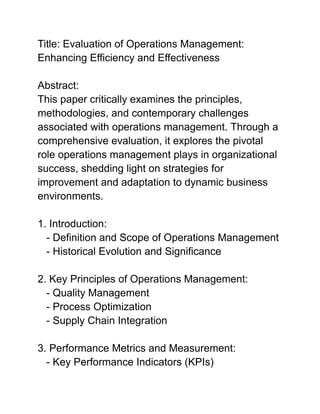
Title: Evaluation of Operations Management:
Enhancing Efficiency and Effectiveness
Abstract:
This paper critically examines the principles,
methodologies, and contemporary challenges
associated with operations management. Through a
comprehensive evaluation, it explores the pivotal
role operations management plays in organizational
success, shedding light on strategies for
improvement and adaptation to dynamic business
environments.
1. Introduction:
- Definition and Scope of Operations Management
- Historical Evolution and Significance
2. Key Principles of Operations Management:
- Quality Management
- Process Optimization
- Supply Chain Integration
3. Performance Metrics and Measurement:
- Key Performance Indicators (KPIs)
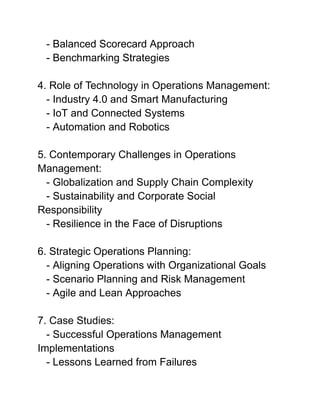
- Balanced Scorecard Approach
- Benchmarking Strategies
4. Role of Technology in Operations Management:
- Industry 4.0 and Smart Manufacturing
- IoT and Connected Systems
- Automation and Robotics
5. Contemporary Challenges in Operations
Management:
- Globalization and Supply Chain Complexity
- Sustainability and Corporate Social
Responsibility
- Resilience in the Face of Disruptions
6. Strategic Operations Planning:
- Aligning Operations with Organizational Goals
- Scenario Planning and Risk Management
- Agile and Lean Approaches
7. Case Studies:
- Successful Operations Management
Implementations
- Lessons Learned from Failures
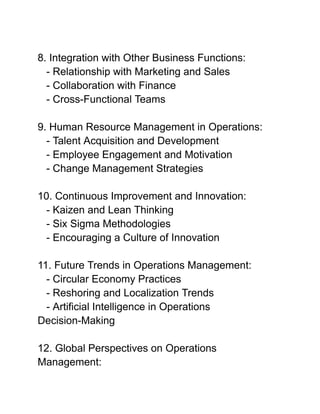
8. Integration with Other Business Functions:
- Relationship with Marketing and Sales
- Collaboration with Finance
- Cross-Functional Teams
9. Human Resource Management in Operations:
- Talent Acquisition and Development
- Employee Engagement and Motivation
- Change Management Strategies
10. Continuous Improvement and Innovation:
- Kaizen and Lean Thinking
- Six Sigma Methodologies
- Encouraging a Culture of Innovation
11. Future Trends in Operations Management:
- Circular Economy Practices
- Reshoring and Localization Trends
- Artificial Intelligence in Operations
Decision-Making
12. Global Perspectives on Operations
Management:
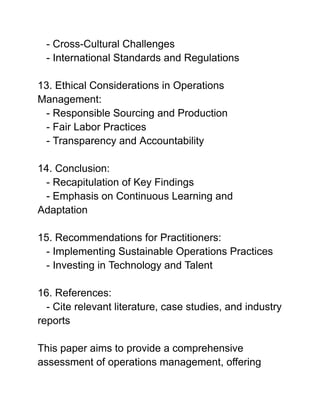
- Cross-Cultural Challenges
- International Standards and Regulations
13. Ethical Considerations in Operations
Management:
- Responsible Sourcing and Production
- Fair Labor Practices
- Transparency and Accountability
14. Conclusion:
- Recapitulation of Key Findings
- Emphasis on Continuous Learning and
Adaptation
15. Recommendations for Practitioners:
- Implementing Sustainable Operations Practices
- Investing in Technology and Talent
16. References:
- Cite relevant literature, case studies, and industry
reports
This paper aims to provide a comprehensive
assessment of operations management, offering
valuable insights for academics, professionals, and
organizations seeking to enhance their operational
efficiency and effectiveness.

Evaluation of operation management

  • 1.
    Title: Evaluation ofOperations Management: Enhancing Efficiency and Effectiveness Abstract: This paper critically examines the principles, methodologies, and contemporary challenges associated with operations management. Through a comprehensive evaluation, it explores the pivotal role operations management plays in organizational success, shedding light on strategies for improvement and adaptation to dynamic business environments. 1. Introduction: - Definition and Scope of Operations Management - Historical Evolution and Significance 2. Key Principles of Operations Management: - Quality Management - Process Optimization - Supply Chain Integration 3. Performance Metrics and Measurement: - Key Performance Indicators (KPIs)
  • 2.
    - Balanced ScorecardApproach - Benchmarking Strategies 4. Role of Technology in Operations Management: - Industry 4.0 and Smart Manufacturing - IoT and Connected Systems - Automation and Robotics 5. Contemporary Challenges in Operations Management: - Globalization and Supply Chain Complexity - Sustainability and Corporate Social Responsibility - Resilience in the Face of Disruptions 6. Strategic Operations Planning: - Aligning Operations with Organizational Goals - Scenario Planning and Risk Management - Agile and Lean Approaches 7. Case Studies: - Successful Operations Management Implementations - Lessons Learned from Failures
  • 3.
    8. Integration withOther Business Functions: - Relationship with Marketing and Sales - Collaboration with Finance - Cross-Functional Teams 9. Human Resource Management in Operations: - Talent Acquisition and Development - Employee Engagement and Motivation - Change Management Strategies 10. Continuous Improvement and Innovation: - Kaizen and Lean Thinking - Six Sigma Methodologies - Encouraging a Culture of Innovation 11. Future Trends in Operations Management: - Circular Economy Practices - Reshoring and Localization Trends - Artificial Intelligence in Operations Decision-Making 12. Global Perspectives on Operations Management:
  • 4.
    - Cross-Cultural Challenges -International Standards and Regulations 13. Ethical Considerations in Operations Management: - Responsible Sourcing and Production - Fair Labor Practices - Transparency and Accountability 14. Conclusion: - Recapitulation of Key Findings - Emphasis on Continuous Learning and Adaptation 15. Recommendations for Practitioners: - Implementing Sustainable Operations Practices - Investing in Technology and Talent 16. References: - Cite relevant literature, case studies, and industry reports This paper aims to provide a comprehensive assessment of operations management, offering
  • 5.
    valuable insights foracademics, professionals, and organizations seeking to enhance their operational efficiency and effectiveness.