• MOOC: Personalized Learning in Virtual Learning
Environments
Week 4-
Evaluation,
Reflection, and
SDG 4 Alignment
Section 1: Evaluating
the Impact of
Personalized Learning
Initiatives
d
Measure to Improve – Reflect
to Grow
Why We’re Here in Week 4
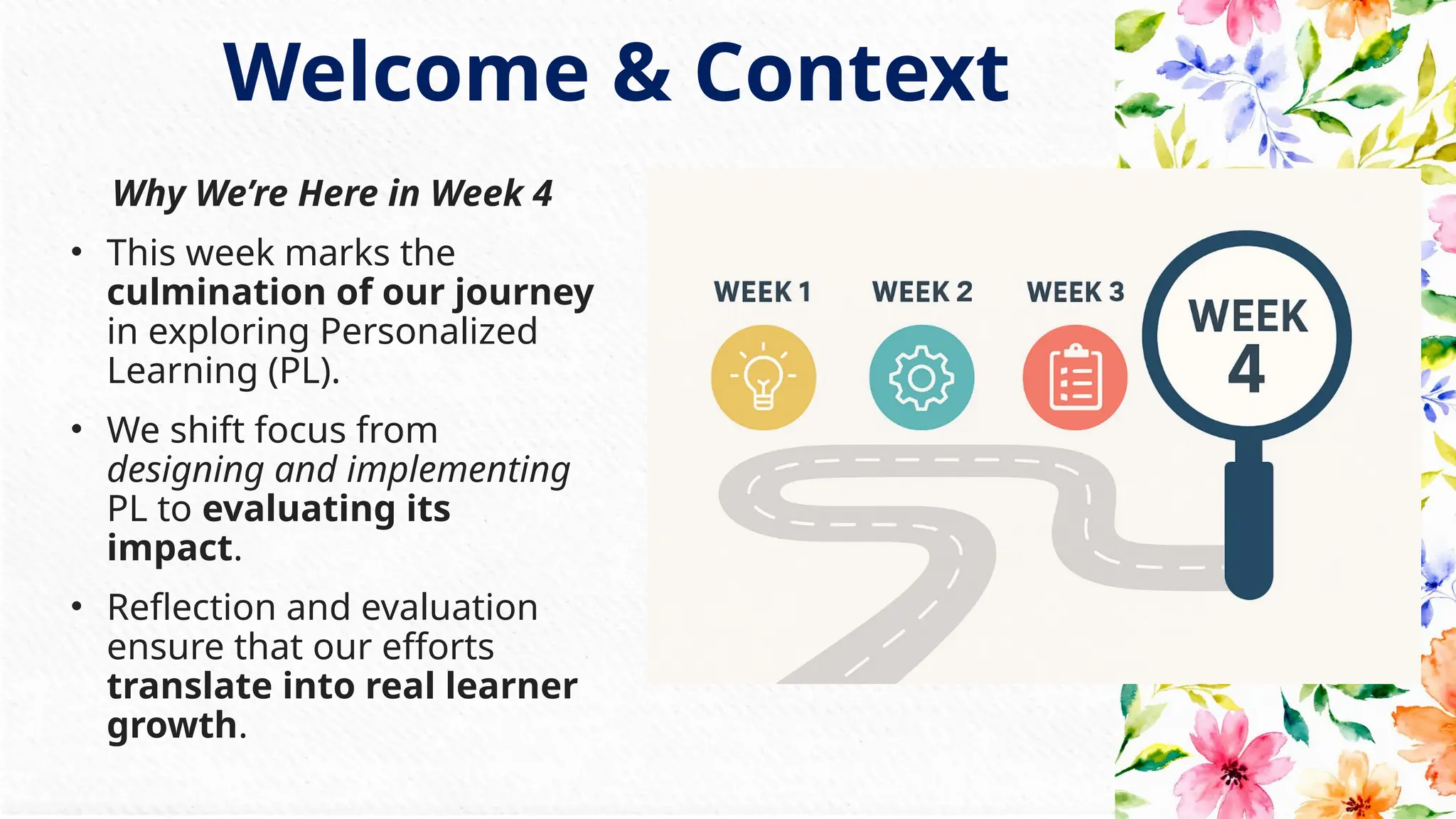
• This week marks the
culmination of our journey
in exploring Personalized
Learning (PL).
• We shift focus from
designing and implementing
PL to evaluating its
impact.
• Reflection and evaluation
ensure that our efforts
translate into real learner
growth.
Welcome & Context
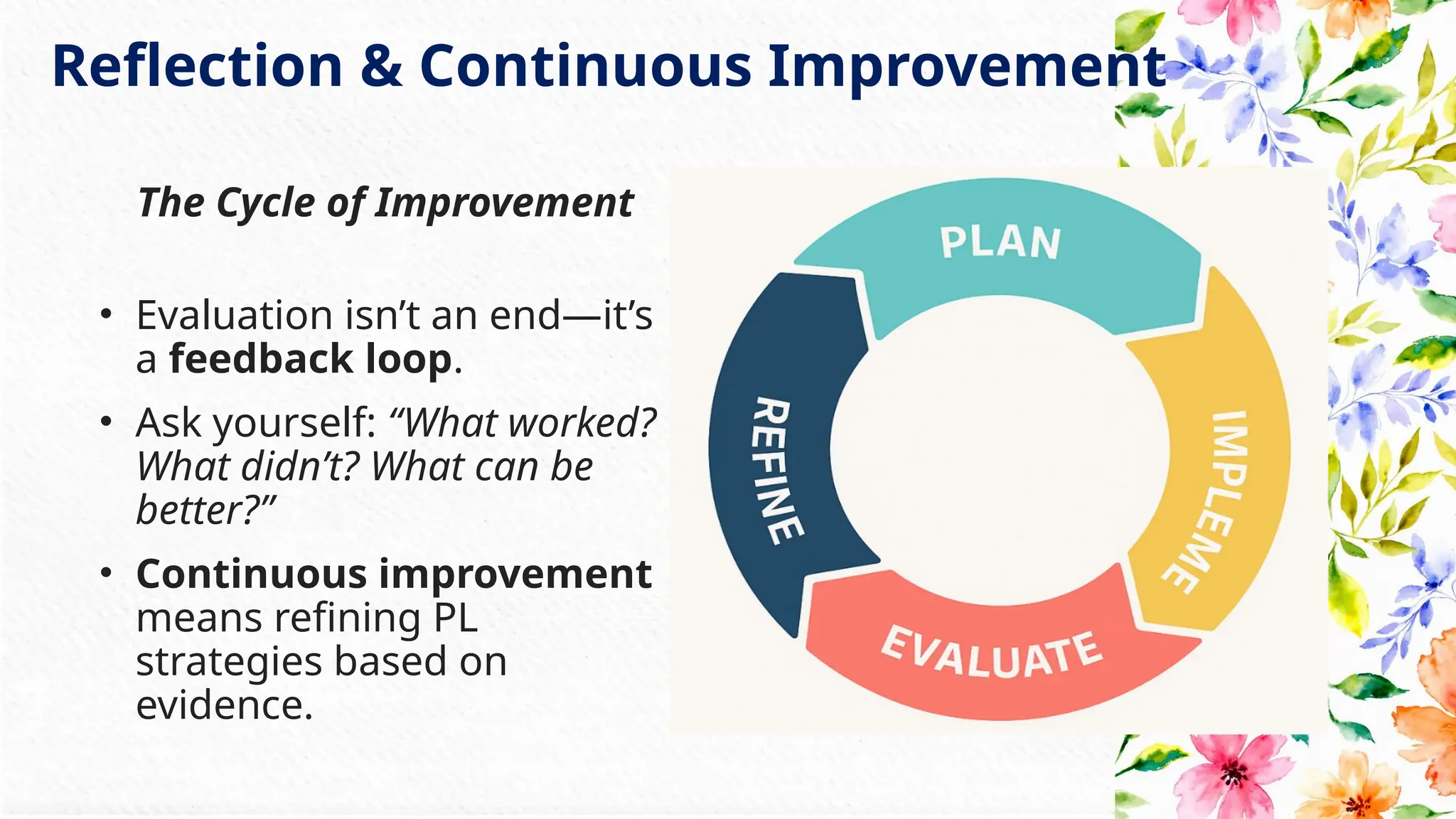
Reflection & Continuous Improvement
The Cycle of Improvement
• Evaluation isn’t an end—it’s
a feedback loop.
• Ask yourself: “What worked?
What didn’t? What can be
better?”
• Continuous improvement
means refining PL
strategies based on
evidence.
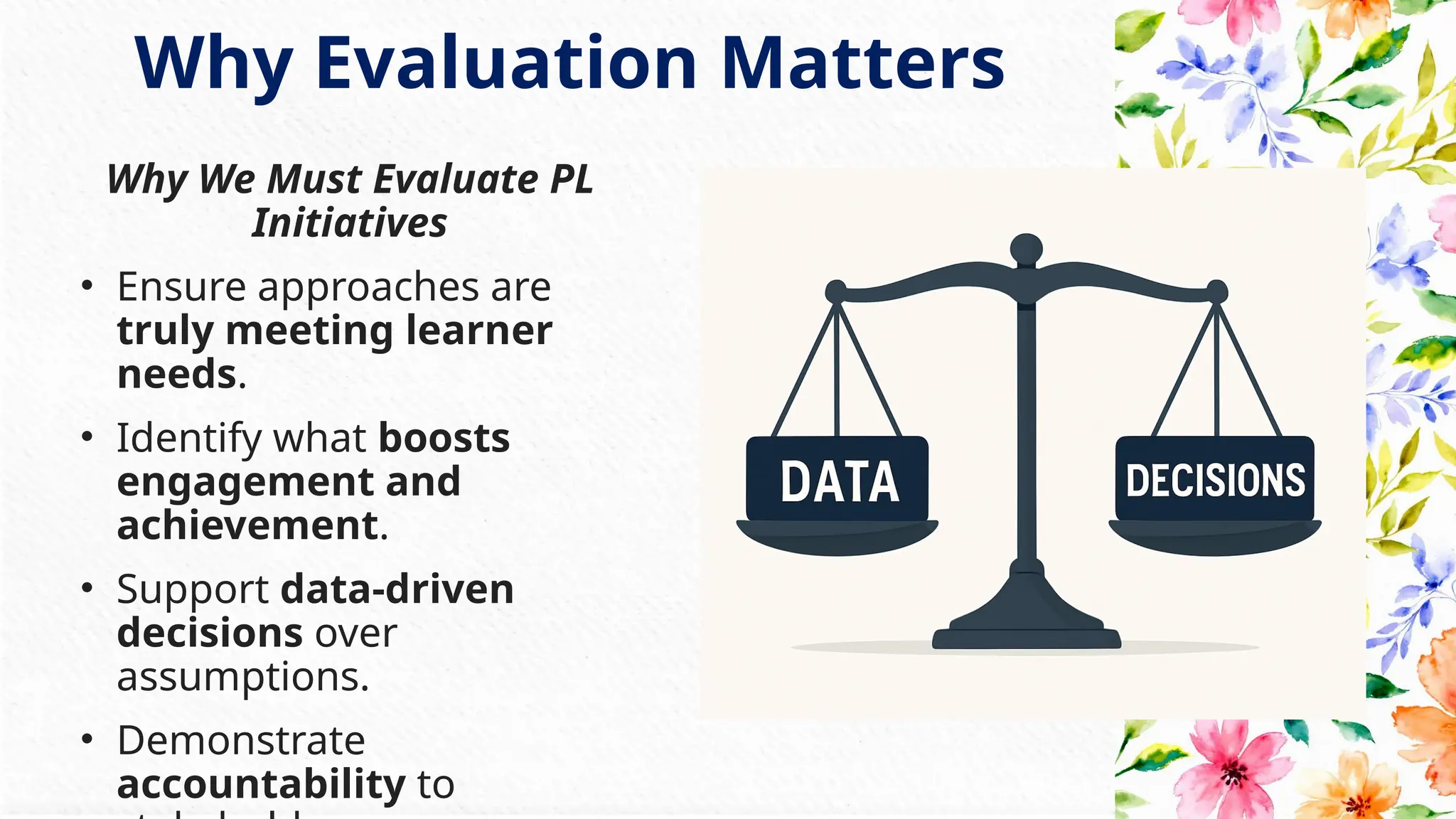
Why Evaluation Matters
Why We Must Evaluate PL
Initiatives
• Ensure approaches are
truly meeting learner
needs.
• Identify what boosts
engagement and
achievement.
• Support data-driven
decisions over
assumptions.
• Demonstrate
accountability to
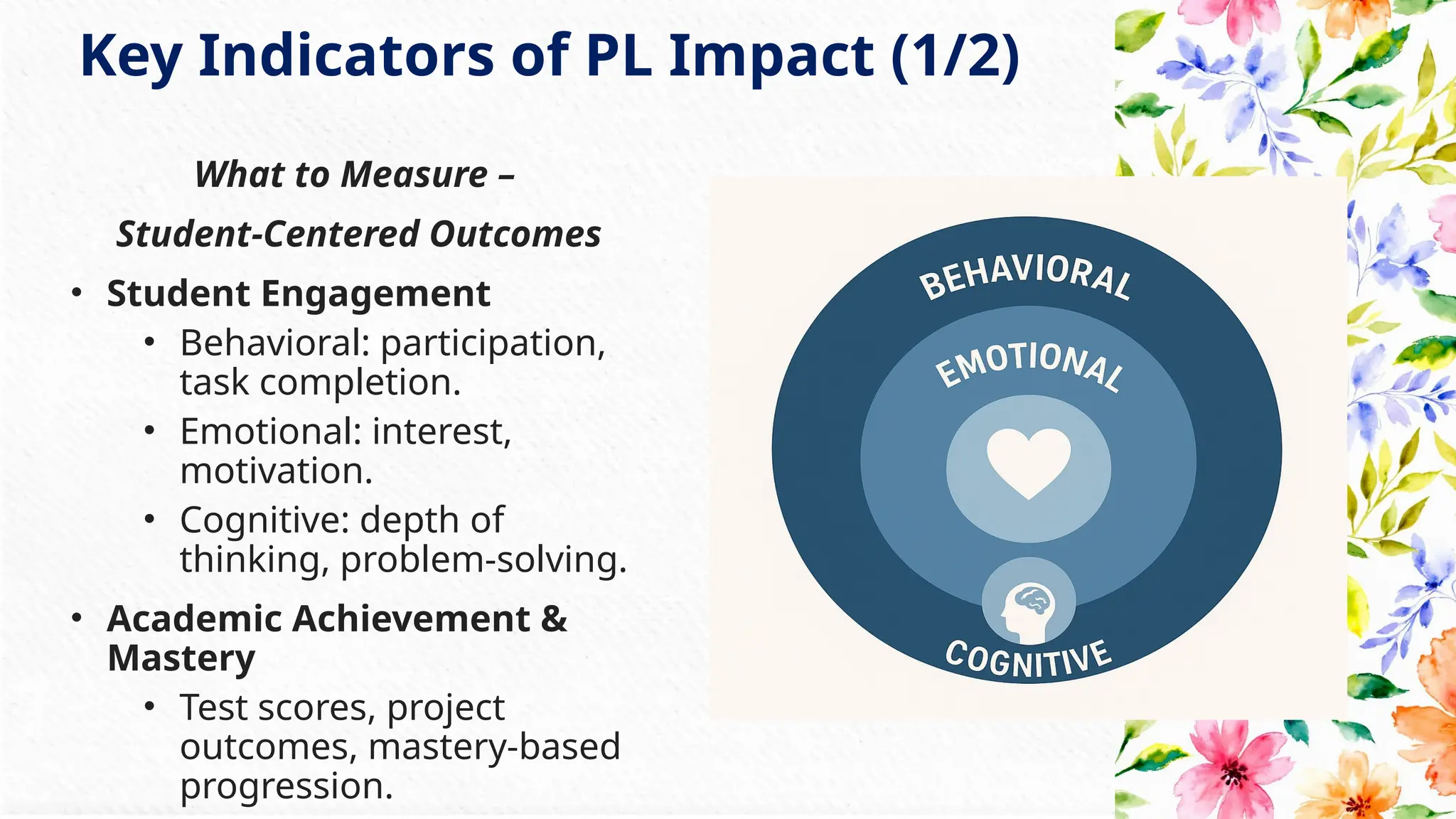
Key Indicators of PL Impact (1/2)
What to Measure –
Student-Centered Outcomes
• Student Engagement
• Behavioral: participation,
task completion.
• Emotional: interest,
motivation.
• Cognitive: depth of
thinking, problem-solving.
• Academic Achievement &
Mastery
• Test scores, project
outcomes, mastery-based
progression.
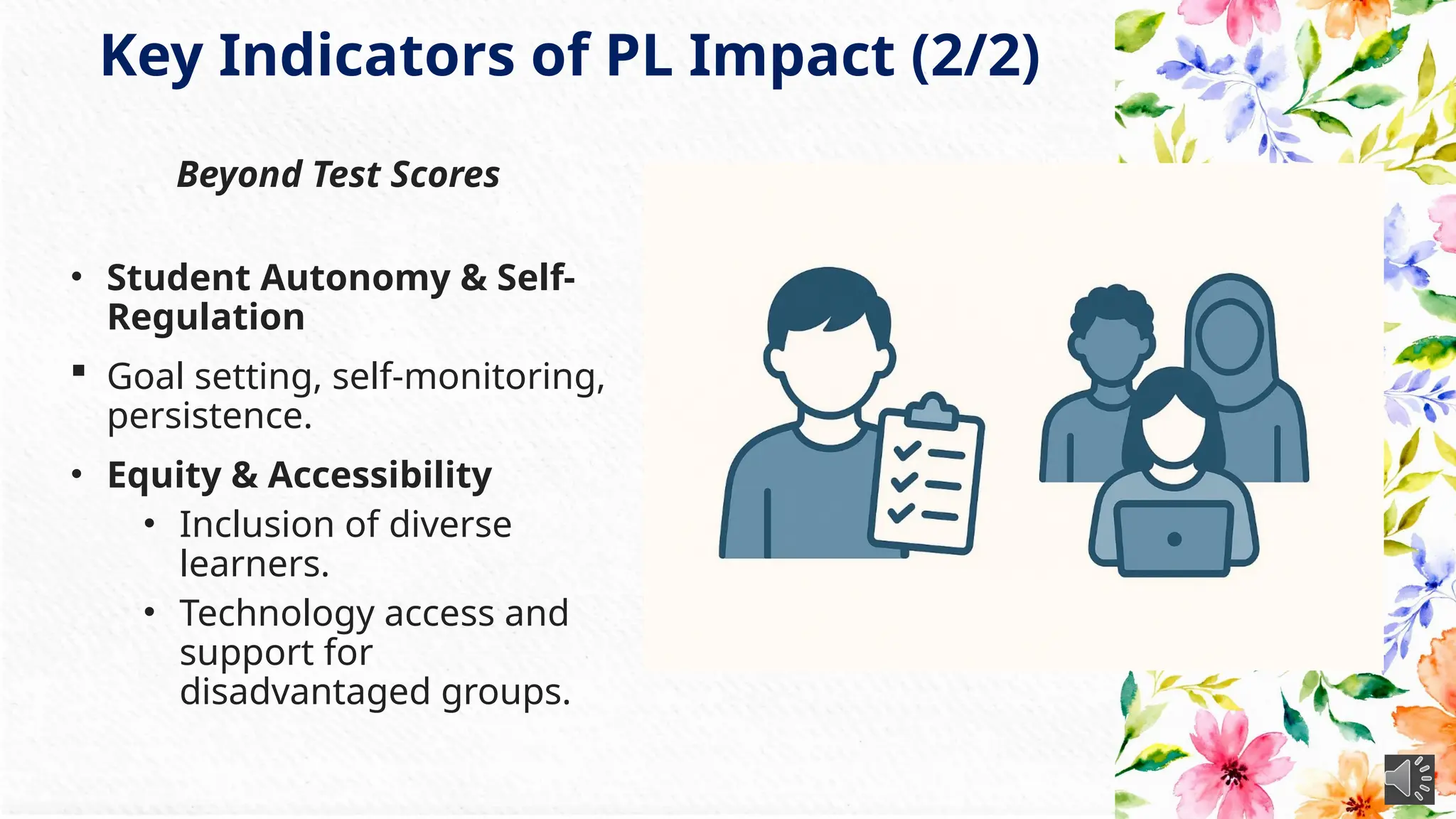
Key Indicators of PL Impact (2/2)
Beyond Test Scores
• Student Autonomy & Self-
Regulation
 Goal setting, self-monitoring,
persistence.
• Equity & Accessibility
• Inclusion of diverse
learners.
• Technology access and
support for
disadvantaged groups.
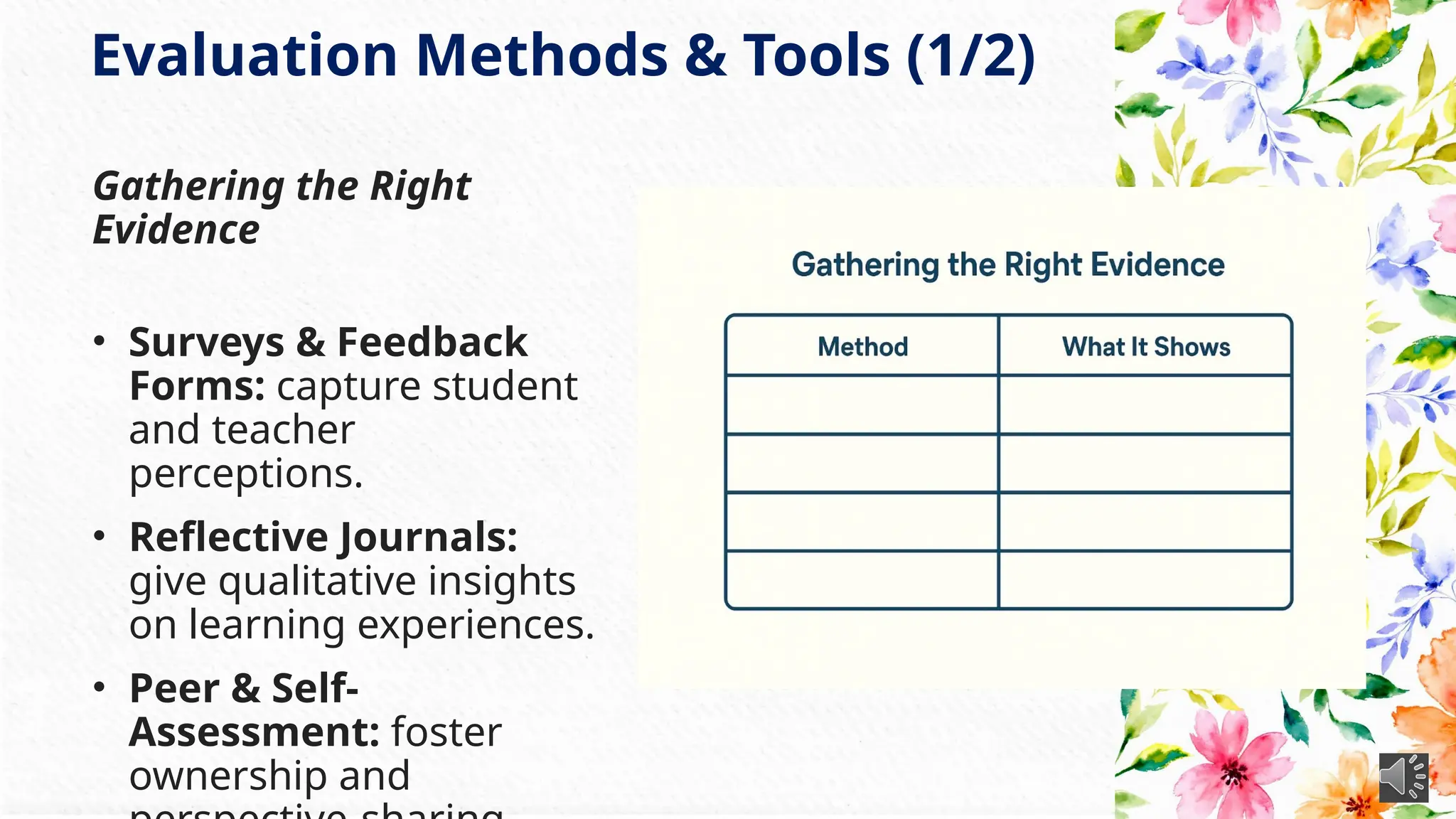
Evaluation Methods & Tools (1/2)
Gathering the Right
Evidence
• Surveys & Feedback
Forms: capture student
and teacher
perceptions.
• Reflective Journals:
give qualitative insights
on learning experiences.
• Peer & Self-
Assessment: foster
ownership and
Evaluation Methods & Tools (2/2)
Leveraging Technology &
Structured Tools
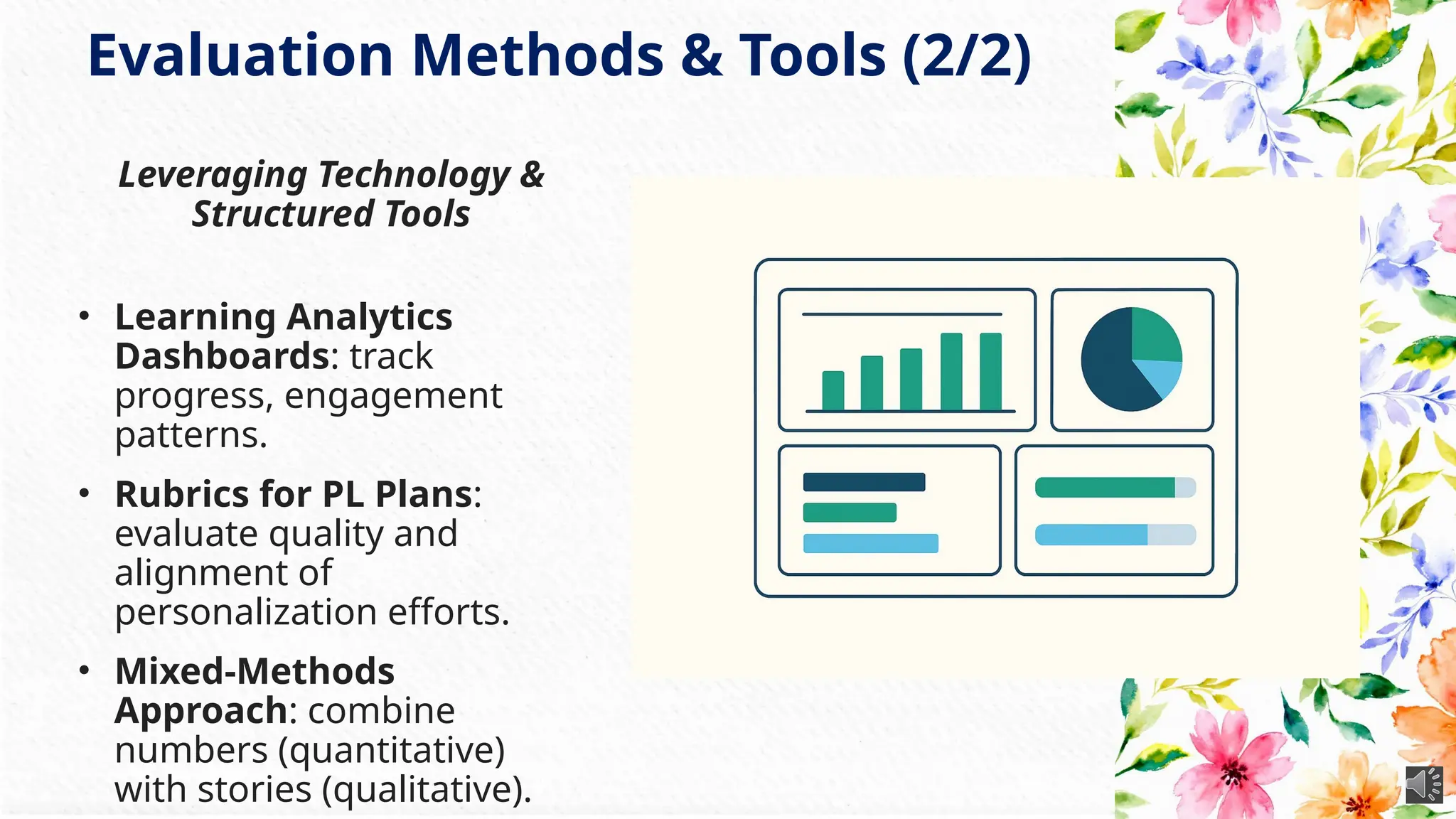
• Learning Analytics
Dashboards: track
progress, engagement
patterns.
• Rubrics for PL Plans:
evaluate quality and
alignment of
personalization efforts.
• Mixed-Methods
Approach: combine
numbers (quantitative)
with stories (qualitative).
Challenges in Measuring PL
What Makes Evaluation
Tricky
• Subjectivity in
perception-based data.
• Time and Resource
Constraints in
collecting and analyzing
evidence.
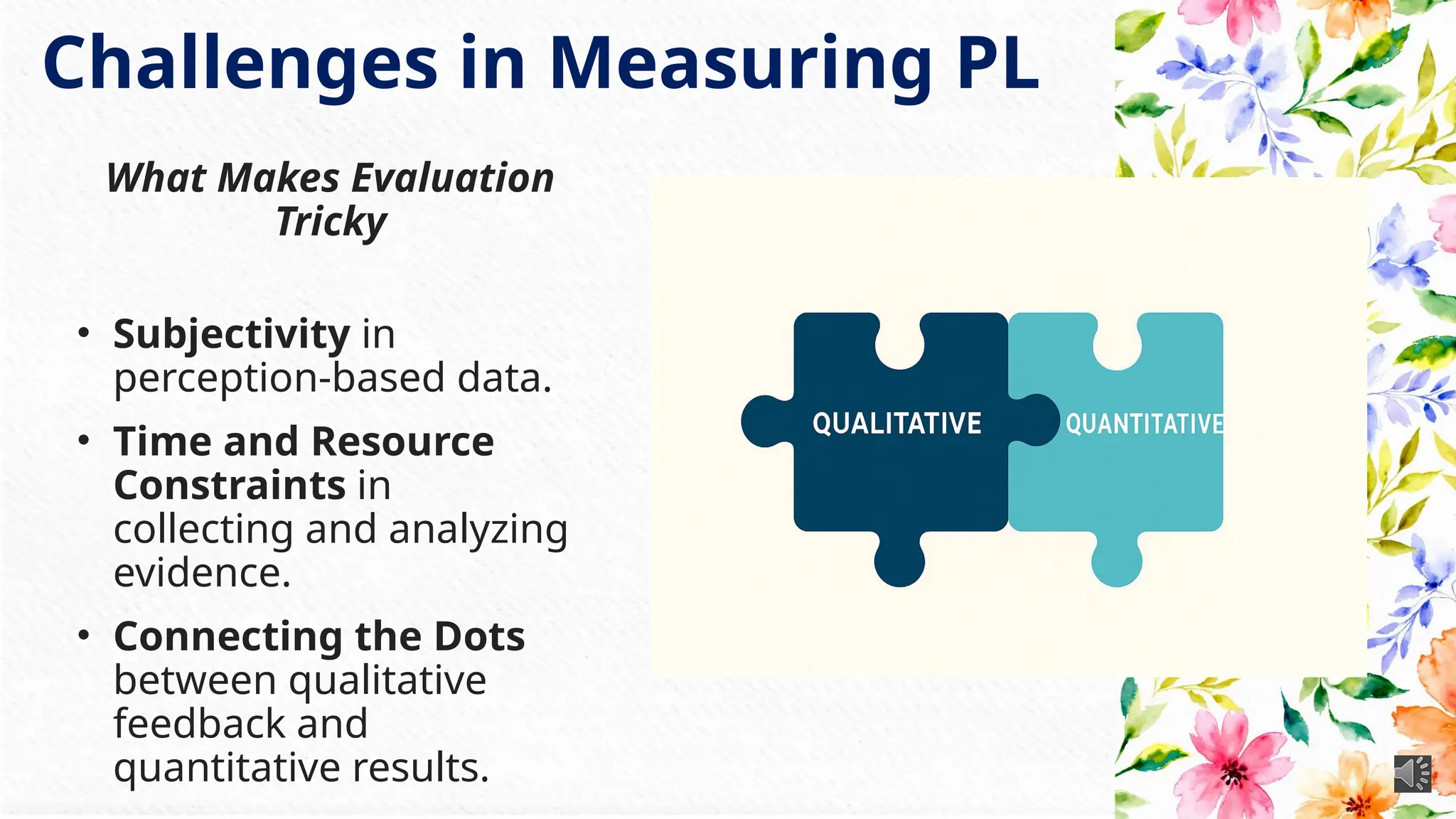
• Connecting the Dots
between qualitative
feedback and
quantitative results.
Closing & Transition
Looking Back to Move
Forward
• Compare your context
with these indicators—
where are you strong,
where do you need
growth?
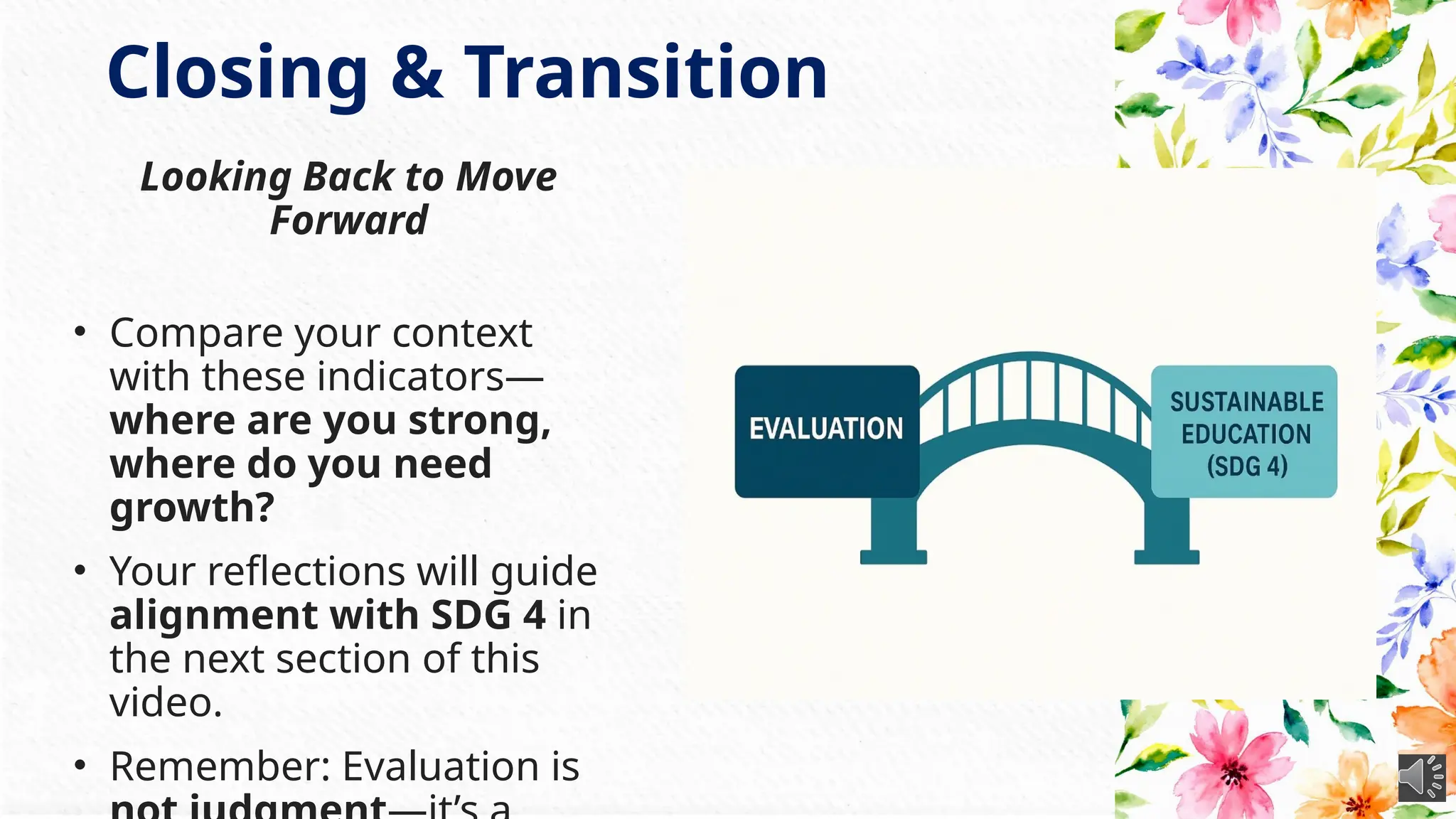
• Your reflections will guide
alignment with SDG 4 in
the next section of this
video.
• Remember: Evaluation is
Section 2:
Personalized Learning
& SDG 4 Alignment
d
Connecting classroom
practice with global goals to
ensure learning is equitable,
inclusive, and lifelong
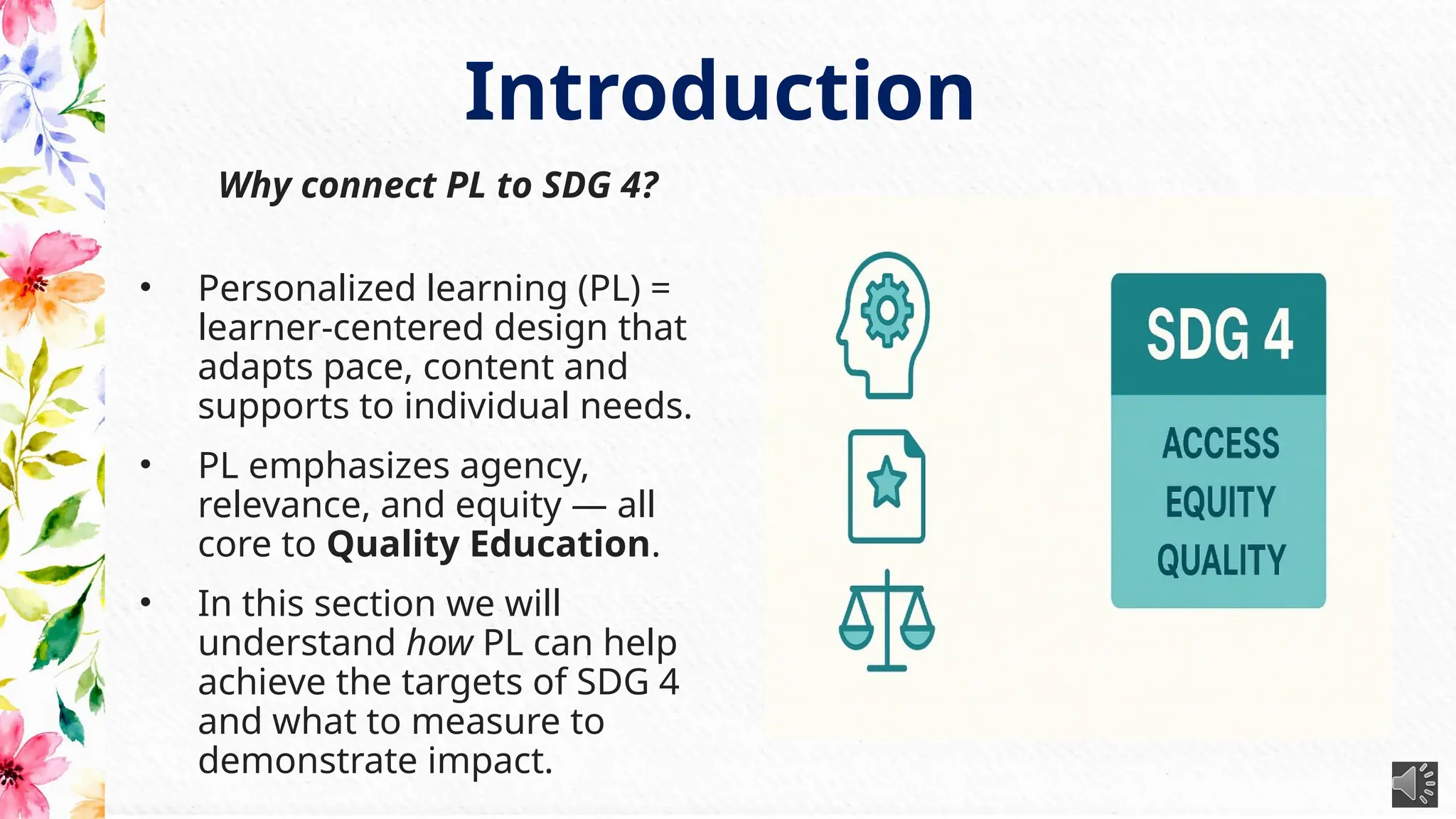
Why connect PL to SDG 4?
• Personalized learning (PL) =
learner-centered design that
adapts pace, content and
supports to individual needs.
• PL emphasizes agency,
relevance, and equity — all
core to Quality Education.
• In this section we will
understand how PL can help
achieve the targets of SDG 4
and what to measure to
demonstrate impact.
Introduction
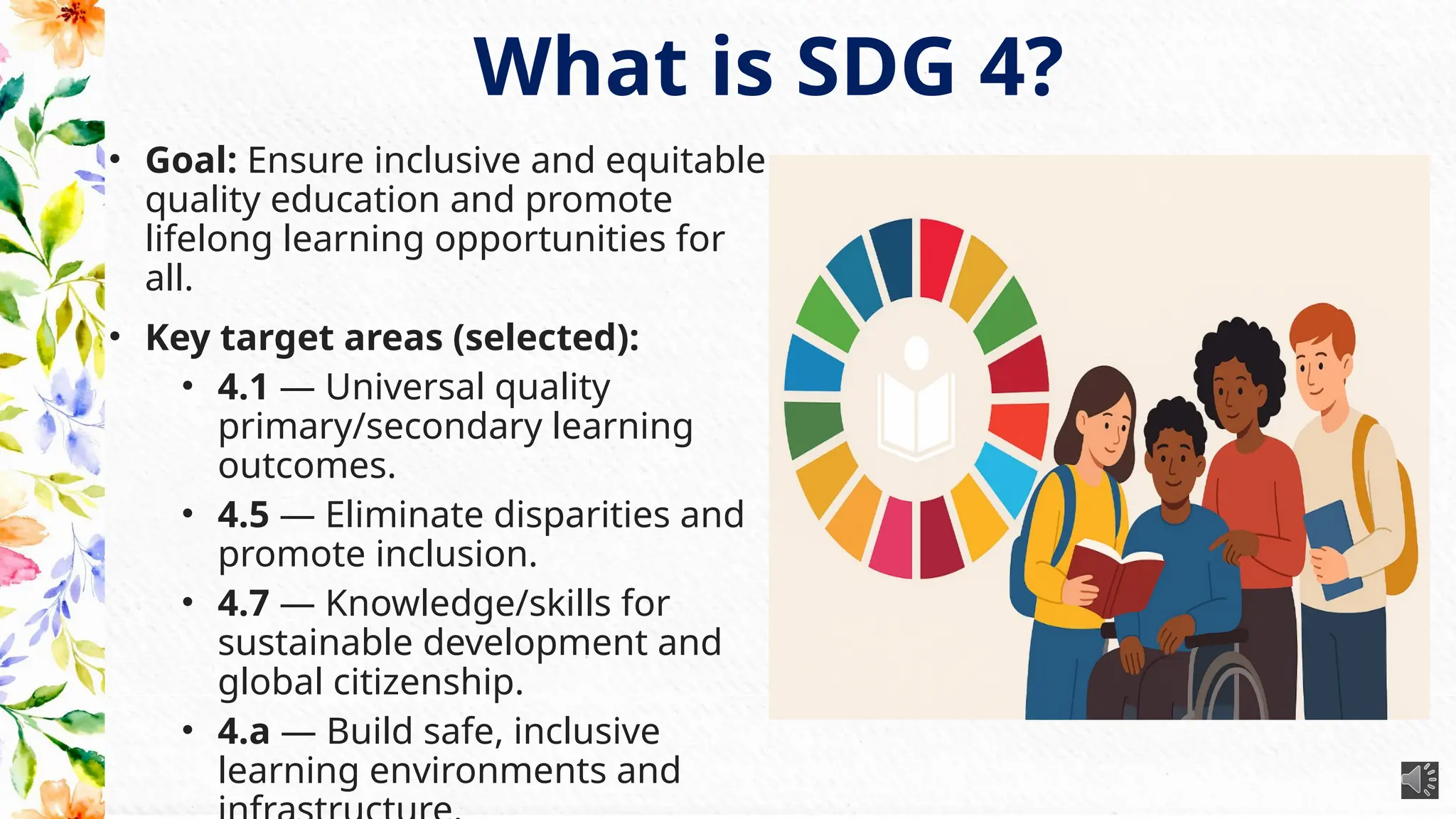
What is SDG 4?
• Goal: Ensure inclusive and equitable
quality education and promote
lifelong learning opportunities for
all.
• Key target areas (selected):
• 4.1 — Universal quality
primary/secondary learning
outcomes.
• 4.5 — Eliminate disparities and
promote inclusion.
• 4.7 — Knowledge/skills for
sustainable development and
global citizenship.
• 4.a — Build safe, inclusive
learning environments and
PL Target 4.1: Improving Learning
→
Outcomes
How PL supports quality learning
(SDG 4.1)
• PL focuses on mastery: learners
progress when they
demonstrate understanding —
improving retention and
achievement.
• Use formative checks, tailored
remediation, and competency-
based progressions to raise
outcomes.
• Measurement ideas: mastery
rates, improvement in formative-
to-summative performance,
PL Target 4.5: Promoting Inclusive
→
Learning
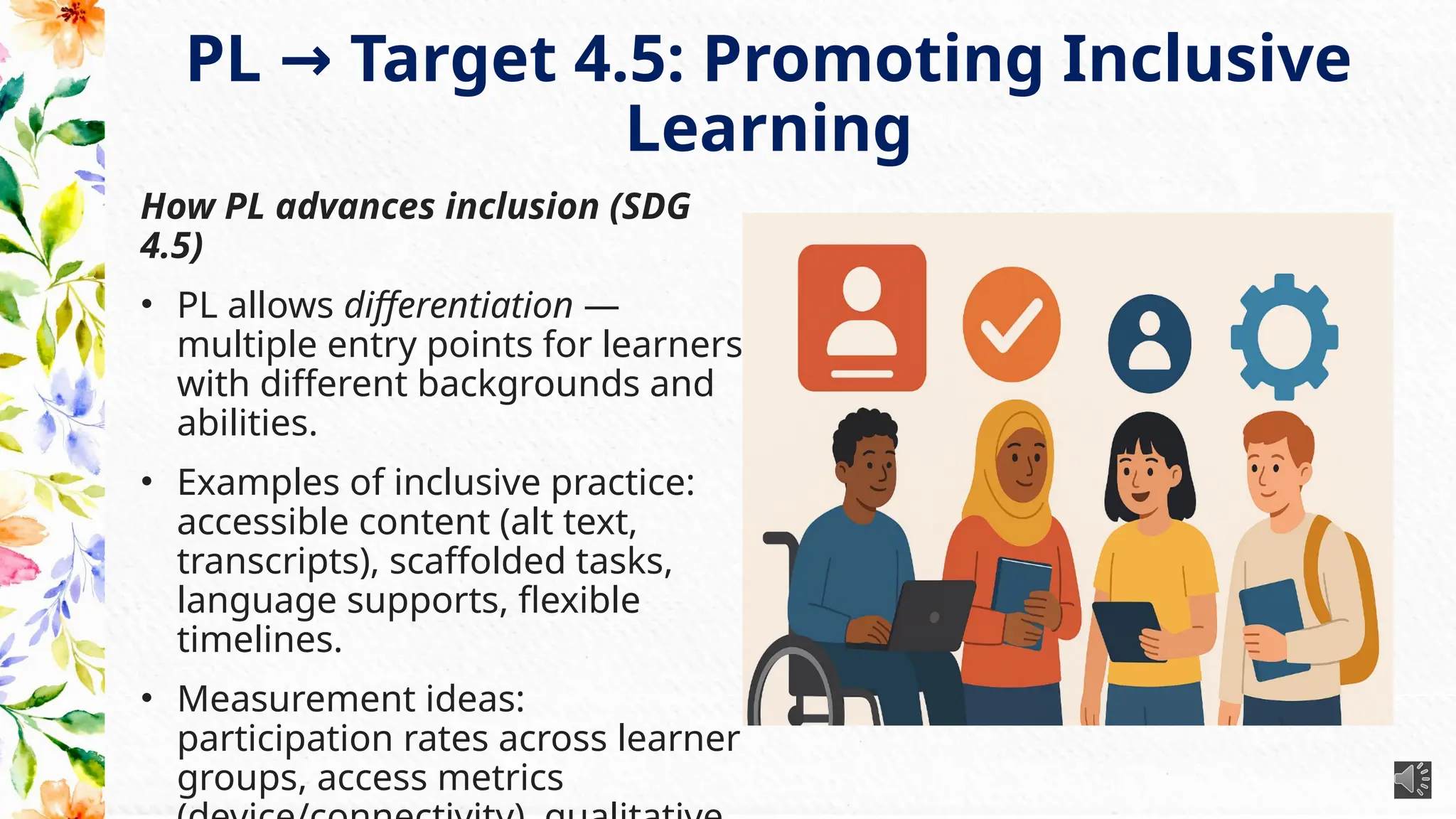
How PL advances inclusion (SDG
4.5)
• PL allows differentiation —
multiple entry points for learners
with different backgrounds and
abilities.
• Examples of inclusive practice:
accessible content (alt text,
transcripts), scaffolded tasks,
language supports, flexible
timelines.
• Measurement ideas:
participation rates across learner
groups, access metrics
PL Target 4.7: Lifelong Learning &
→
21st-Century Skills
How PL builds lifelong learners
(SDG 4.7)
• PL fosters metacognition, digital
literacy, critical thinking, and self-
directed learning — key lifelong
skills.
• Microlearning, modular badges,
and reflective tasks help learners
continue beyond formal courses.
• Measurement ideas: evidence of
transferable skills (portfolios),
micro-credential uptake, learner
reflection quality.
PL Target 4.a: Technology &
→
Infrastructure for Equity
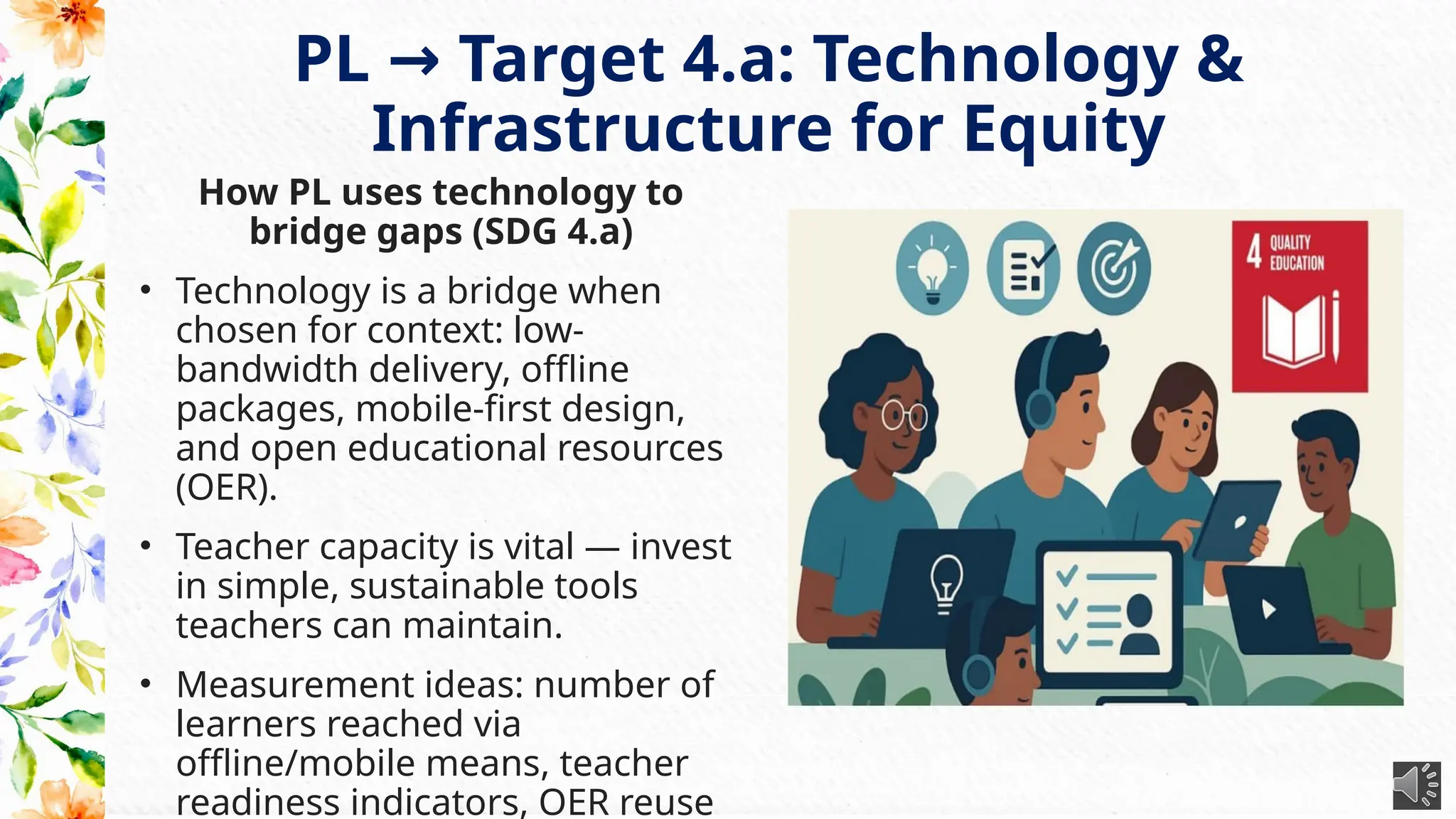
How PL uses technology to
bridge gaps (SDG 4.a)
• Technology is a bridge when
chosen for context: low-
bandwidth delivery, offline
packages, mobile-first design,
and open educational resources
(OER).
• Teacher capacity is vital — invest
in simple, sustainable tools
teachers can maintain.
• Measurement ideas: number of
learners reached via
offline/mobile means, teacher
readiness indicators, OER reuse
Closing & Next Steps
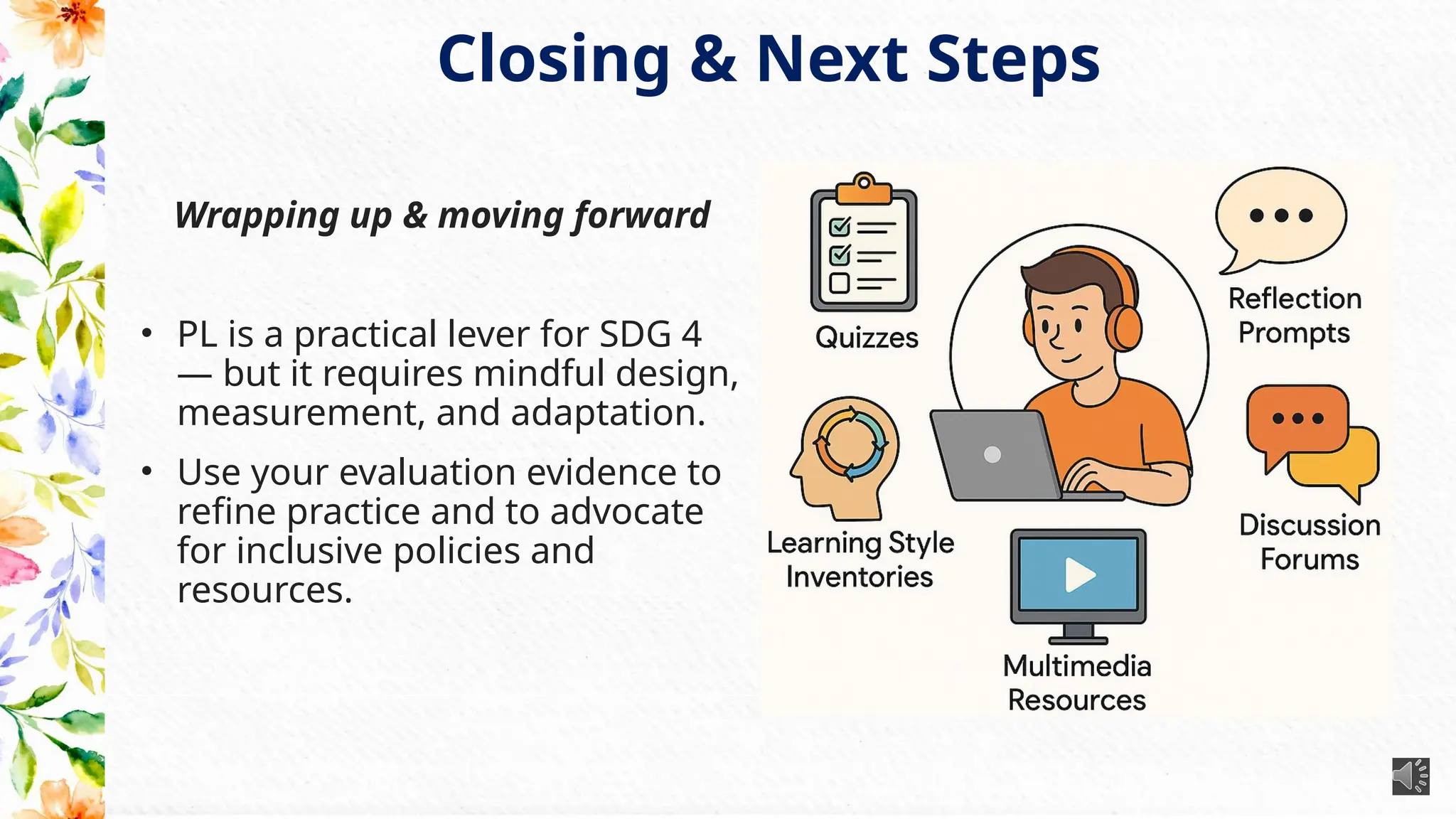
Wrapping up & moving forward
• PL is a practical lever for SDG 4
— but it requires mindful design,
measurement, and adaptation.
• Use your evaluation evidence to
refine practice and to advocate
for inclusive policies and
resources.
CREDITS: This presentation template was created by Slidesgo,
and includes icons, infographics & images by Freepik
Thank you!
📧bushra.workmail@gmail.com
https://shorturl.at/iJEuP

Evaluating Personalized Learning & Aligning with SDG 4

  • 2.
    • MOOC: PersonalizedLearning in Virtual Learning Environments Week 4- Evaluation, Reflection, and SDG 4 Alignment
  • 3.
    Section 1: Evaluating theImpact of Personalized Learning Initiatives d Measure to Improve – Reflect to Grow
  • 4.
    Why We’re Herein Week 4 • This week marks the culmination of our journey in exploring Personalized Learning (PL). • We shift focus from designing and implementing PL to evaluating its impact. • Reflection and evaluation ensure that our efforts translate into real learner growth. Welcome & Context
  • 5.
    Reflection & ContinuousImprovement The Cycle of Improvement • Evaluation isn’t an end—it’s a feedback loop. • Ask yourself: “What worked? What didn’t? What can be better?” • Continuous improvement means refining PL strategies based on evidence.
  • 6.
    Why Evaluation Matters WhyWe Must Evaluate PL Initiatives • Ensure approaches are truly meeting learner needs. • Identify what boosts engagement and achievement. • Support data-driven decisions over assumptions. • Demonstrate accountability to
  • 7.
    Key Indicators ofPL Impact (1/2) What to Measure – Student-Centered Outcomes • Student Engagement • Behavioral: participation, task completion. • Emotional: interest, motivation. • Cognitive: depth of thinking, problem-solving. • Academic Achievement & Mastery • Test scores, project outcomes, mastery-based progression.
  • 8.
    Key Indicators ofPL Impact (2/2) Beyond Test Scores • Student Autonomy & Self- Regulation  Goal setting, self-monitoring, persistence. • Equity & Accessibility • Inclusion of diverse learners. • Technology access and support for disadvantaged groups.
  • 9.
    Evaluation Methods &Tools (1/2) Gathering the Right Evidence • Surveys & Feedback Forms: capture student and teacher perceptions. • Reflective Journals: give qualitative insights on learning experiences. • Peer & Self- Assessment: foster ownership and
  • 10.
    Evaluation Methods &Tools (2/2) Leveraging Technology & Structured Tools • Learning Analytics Dashboards: track progress, engagement patterns. • Rubrics for PL Plans: evaluate quality and alignment of personalization efforts. • Mixed-Methods Approach: combine numbers (quantitative) with stories (qualitative).
  • 11.
    Challenges in MeasuringPL What Makes Evaluation Tricky • Subjectivity in perception-based data. • Time and Resource Constraints in collecting and analyzing evidence. • Connecting the Dots between qualitative feedback and quantitative results.
  • 12.
    Closing & Transition LookingBack to Move Forward • Compare your context with these indicators— where are you strong, where do you need growth? • Your reflections will guide alignment with SDG 4 in the next section of this video. • Remember: Evaluation is
  • 13.
    Section 2: Personalized Learning &SDG 4 Alignment d Connecting classroom practice with global goals to ensure learning is equitable, inclusive, and lifelong
  • 14.
    Why connect PLto SDG 4? • Personalized learning (PL) = learner-centered design that adapts pace, content and supports to individual needs. • PL emphasizes agency, relevance, and equity — all core to Quality Education. • In this section we will understand how PL can help achieve the targets of SDG 4 and what to measure to demonstrate impact. Introduction
  • 15.
    What is SDG4? • Goal: Ensure inclusive and equitable quality education and promote lifelong learning opportunities for all. • Key target areas (selected): • 4.1 — Universal quality primary/secondary learning outcomes. • 4.5 — Eliminate disparities and promote inclusion. • 4.7 — Knowledge/skills for sustainable development and global citizenship. • 4.a — Build safe, inclusive learning environments and
  • 16.
    PL Target 4.1:Improving Learning → Outcomes How PL supports quality learning (SDG 4.1) • PL focuses on mastery: learners progress when they demonstrate understanding — improving retention and achievement. • Use formative checks, tailored remediation, and competency- based progressions to raise outcomes. • Measurement ideas: mastery rates, improvement in formative- to-summative performance,
  • 17.
    PL Target 4.5:Promoting Inclusive → Learning How PL advances inclusion (SDG 4.5) • PL allows differentiation — multiple entry points for learners with different backgrounds and abilities. • Examples of inclusive practice: accessible content (alt text, transcripts), scaffolded tasks, language supports, flexible timelines. • Measurement ideas: participation rates across learner groups, access metrics
  • 18.
    PL Target 4.7:Lifelong Learning & → 21st-Century Skills How PL builds lifelong learners (SDG 4.7) • PL fosters metacognition, digital literacy, critical thinking, and self- directed learning — key lifelong skills. • Microlearning, modular badges, and reflective tasks help learners continue beyond formal courses. • Measurement ideas: evidence of transferable skills (portfolios), micro-credential uptake, learner reflection quality.
  • 19.
    PL Target 4.a:Technology & → Infrastructure for Equity How PL uses technology to bridge gaps (SDG 4.a) • Technology is a bridge when chosen for context: low- bandwidth delivery, offline packages, mobile-first design, and open educational resources (OER). • Teacher capacity is vital — invest in simple, sustainable tools teachers can maintain. • Measurement ideas: number of learners reached via offline/mobile means, teacher readiness indicators, OER reuse
  • 20.
    Closing & NextSteps Wrapping up & moving forward • PL is a practical lever for SDG 4 — but it requires mindful design, measurement, and adaptation. • Use your evaluation evidence to refine practice and to advocate for inclusive policies and resources.
  • 21.
    CREDITS: This presentationtemplate was created by Slidesgo, and includes icons, infographics & images by Freepik Thank you! 📧bushra.workmail@gmail.com https://shorturl.at/iJEuP