ETHICS OF
DISCLOSURE: IN THE
CONTEXT OF COVID 19
PANDEMIC
Dr Bertha C Ekeh
Disclosure
Dr Bertha Chioma Ekeh; B, Med Pharmacology, MBBS, FMCP (Neuro)
Lecturer/Consultant Neurologist
University of Uyo/University of Uyo Teaching Hospital
Adjunct Consultant Neurologist Ibom Specialist Hospital Uyo
webpage https://www.amazon.com/Dr-Bertha-Chioma-Ekeh/e/B07D442KRX
Blog https://medicalinfoblog.net
I HAVE NO CONFLICTS OF INTEREST
Content
 Introduction
 Definition of Medical Ethics
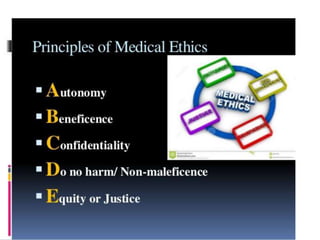
 Principles of Medical Ethics
 Confidentiality
 Disclosure
 Issues in COVID-19
 Summary /Conclusion
Introduction
Medical Ethics
 A system of moral principles that apply values
to the practice of clinical medicine and in
scientific research.
 Medical ethics is based on a set of values that
professionals can refer to in the case of any
confusion or conflict.
 The core values include the respect
for autonomy, non-maleficence, beneficence,
and justice
Contd
 The essence of Medical Ethics is to allow
Doctors, care providers, and families to create
a treatment plan and work towards the same
common goal.
 The values are not ranked in order of
importance or relevance
 However in some cases, some moral elements
overrule others in a difficult medical situation.
Core Ethical Principles
 Medical Ethics is founded on a set of core
principles as follows:
Autonomy
Respect patients as individuals (e.g., respecting their
privacy by maintaining confidentiality and being
truthful about their medical care).
Provide the information and opportunity for patients to
make their own decisions regarding their
care (e.g., informed consent).
Honour and respect patients' decisions regarding their
choice to accept or decline care.
 In addition to having the right to refuse a diagnostic or
therapeutic intervention, patients also have the right to
refuse to receive information
Beneficence
 Act in the best interest of the patient and
advocate for the patient.
 May conflict with autonomy
Obligation to treat
 A physician is obligated to treat patients in a
medical emergency in which failing to provide
treatment would immediately endanger the
patient's life.
 Physicians are not obliged to treat a patient
longitudinally and may end a doctor-
patient relationship if they wish, as long as the
patient or their surrogate decision maker is
notified and has the ability (e.g., time, money) to
establish care with another physician. The
physician is also obligated to facilitate the transfer
of care.
Confidentiality
 Confidentiality is commonly applied to
conversations between doctors and patients
 This concept is commonly known as patient-
physician privilege
 Legal protections prevent physicians from
revealing their discussions with patients, even
under oath in court
Contd
 Traditionally, medical ethics has viewed the duty
of confidentiality as a relatively non-negotiable
tenet of medical practice.
 Few exceptions to the rules have been carved out
over the years.
 --Gunshot wounds
 --Sexually transmitted disease in a patient who
refuses to reveal the diagnosis to a spouse
 --Termination of a pregnancy in an underage
patient, without the knowledge of the patient's
parents
Full Disclosure
 Patients have the right to full medical disclosure
 A family does not have the right to ask a physician
to withhold information from a patient
with decision-making capacity
and competence without good reason
 Exceptions:
 If the patient requests that the physician withholds
information
 Therapeutic privilege: a physician determines that full
disclosure would cause severe harm to the patient's
severe psychological harm (e.g., following an
unfavourable prognosis
Non Maleficence
 Avoid causing injury or suffering to patients:
FIRST, Do no Harm
 May conflict with beneficence
Equity/ Justice
Treat patients fairly and equitably.
Equity is not the same as equality
COVID-19 Pandemic
 Also known as the Corona virus pandemic
 An ongoing pandemic of Corona virus disease
2019 (COVID-19)
 Caused by severe acute respiratory syndrome
corona virus 2 (SARS-CoV-2
 The outbreak was first identified in Wuhan,
China, in December 2019
Contd
 WHO declared the outbreak
 Public Health Emergency of International
Concern on 30 January
 Pandemic on 11 March 2020
 As at May 15th there are 4,525,420 cases
globally
 303,371 deaths globally
 In Nigeria there are 5,162cases; 167 deaths
Ethical Dilemmas in COVID 19
Pandemic
 OVERLOADED HEALTHCARE SYSTEMS ( few
health workers, ventilators, or hospital beds, few
testing kits) leading to
 Unequal Access to care
 Test or not to test: Choosing who should be tested
 Treat or not treat; Choosing who should be placed
on ventilators
 Freeing beds to accommodate COVID patients:
British cancer pts, Hungary ordered freeing of
60% of beds, other patients
Ethical dilemmas Contd
 Allocation of Scarce resources( PPEs, face
masks ETC)
 Public Health measures that cause coercion
and intrusion into peoples lives
 Issues of Vaccines and testing: Response of
Africans
 Maintaining confidentiality
Notable Personal Disclosures
 British Prime Minister
 Queen Elizabeth
 Prince Charles
 Wife of Canadian Prime Minister
 Sportsmen/actors and Actresses
 Nigeria
 Gov of Kaduna State
 UCH CMD
Importance of Disclosure
 Contact tracing
 Isolation and Focused care
 Protection of others/Public Safetys
 Public Health Activities
 Reduction of spread of the virus
Negative Consequences of
disclosure
 Panic/ Fear( increase in the prescription of
Anxiety medications)
 Stigmatisation
 Perceived poor care by Health care workers
 Economic losses( Loss of jobs, investors, etc)
 Wrong perception in Nigeria (disease of the
Rich and travellers)
Response to Disclosures
 Better responses in the developed world
 Worse in countries with challenged Health
care system
 Multinational companies are wary
Company’s Responses
 U.S. companies aren’t required to tell investors
of potential infection of the executives
 But BT Group PLC, one of Europe’s largest
telecommunications companies, disclosed that
its chief executive, Philip Jansen, tested
positive for the corona virus
 This prompted a wave of self-disclosures from
executives at other telecom companies who
recently had come in contact with Mr. Jansen
India
 The central government in an advisory on
Wednesday said that those affected by corona
virus or under quarantine, should not be
identified.
 “Never spread names or identity of those
affected or under quarantine or their locality on
the social media. Avoid spreading fear and
panic. ...
 “Do not label any community or area for
spread of COVID-19. Avoid addressing those
under treatment as COVID victims. Address
them as ‘people recovering from COVID’,” the
Philippines
 MANILA
 The government assured on Monday there will be no public
disclosure of corona virus disease 2019 (COVID-19) patients’
personal information even as it enforces a mandatory
declaration of personal data to augment its contact tracing
efforts.
 The Inter-Agency Task Force (IATF) on Emerging and
Infectious Disease earlier announced the mandatory
disclosure of personal information relating to COVID-19
patients in a bid to ramp up contact tracing efforts.
Nigerian Response
 Early Disclosures
 Gave the wrong impression of ‘Rich Man
Disease’
COVID 19 Patient Disclosures
form
 This patient disclosure form seeks information from you that we
must consider before making treatment decisions in the
circumstance of the COVID‐19 virus.

A weak or compromised immune system (including, but not limited
to, conditions like diabetes, asthma, COPD, cancer treatment,
radiation, chemotherapy, and any prior or current disease or
medical condition), can put you at greater risk for contracting
COVID‐19.
 Please disclose to us any condition that compromises your immune
system and understand that we may ask you to consider
rescheduling treatment after discussing any such conditions with us.
 It is also important that you disclose to this office any indication of
having been exposed to COVID‐19, or whether you, have
experienced any signs or symptoms associated with the COVID‐19
virus.
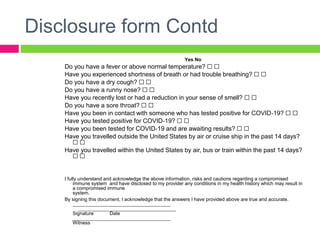
Disclosure form Contd
Yes No
Do you have a fever or above normal temperature? ☐ ☐
Have you experienced shortness of breath or had trouble breathing? ☐ ☐
Do you have a dry cough? ☐ ☐
Do you have a runny nose? ☐ ☐
Have you recently lost or had a reduction in your sense of smell? ☐ ☐
Do you have a sore throat? ☐ ☐
Have you been in contact with someone who has tested positive for COVID‐19? ☐ ☐
Have you tested positive for COVID‐19? ☐ ☐
Have you been tested for COVID‐19 and are awaiting results? ☐ ☐
Have you travelled outside the United States by air or cruise ship in the past 14 days?
☐ ☐
Have you travelled within the United States by air, bus or train within the past 14 days?
☐ ☐
I fully understand and acknowledge the above information, risks and cautions regarding a compromised
immune system and have disclosed to my provider any conditions in my health history which may result in
a compromised immune
system.
By signing this document, I acknowledge that the answers I have provided above are true and accurate.
____________________________________
____________________________________
Signature Date
____________________________________
Witness
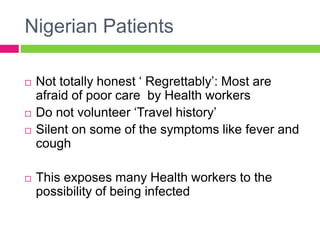
Nigerian Patients
 Not totally honest ‘ Regrettably’: Most are
afraid of poor care by Health workers
 Do not volunteer ‘Travel history’
 Silent on some of the symptoms like fever and
cough
 This exposes many Health workers to the
possibility of being infected
Guidelines for Disclosure
 There are many guidelines
 All countries need to have guidelines tailored
to their needs.
 Below is the British Medical Council Guideline:
it is practical
COVID-19 pandemic and
Disclosure
 How do federal and state laws about patient
confidentiality apply during infectious disease
outbreaks or other emergencies?
1. ALLOWABLE
 Public Health Authorities
 Federal and state laws allow disclosure of health
information without the patient’s authorization to
public health authorities
 Others responsible for ensuring public health and
safety (e.g., CDC, NCDC, State Epidemiologist,
Hospital CMAC ETC).
 To Persons at Risk: Federal and state laws permit
disclosure of a patient’s health information to a
person at risk of contracting or spreading a
disease as necessary to prevent or control the
spread of the disease
2. ALLOWABLE WITH
CAUTION
 • Family and Friends
 To Family, Friends and Others involved in
Patient’s Care:
 Additionally, BMC may share information about
a patient as necessary to identify, locate, and
notify ...anyone else responsible for the
patient’s care, of the patient’s location, general
condition, or death.
 May include ...the police, the press, or the
public at large.
Contd
 When the Patient is Awake, Unconscious or
Incapacitated:
 When possible, obtain verbal permission from
the patient to disclose his or her health
information
 Prevent a Serious and Imminent Threat
 Law Enforcement, Family, Friends and
Caregivers: BMC may disclose a pt’s health
information to anyone who is in a position to
prevent or lessen the serious and imminent
threat
3. Stop and contact legal and
compliance
 Media and Others Not Involved in Patient Care
 No hospital staff person is authorized to speak
to the media without appropriate authorization
 REMEMBER
 Safeguarding Information
 Limit the disclosure to the minimum necessary
The Way Forward
 Disclosure should be regulated
 More Public Enlightenment
 Effective Contact Tracing
 Quarantine and Self Isolation
 Aggressive Testing of Contacts
 Standard Safety procedures for Health
Workers Provide Protective materials needed
 Incentives for Healthworkers
Revised Hippocratic Oath
 A newly revised version of the Declaration of Geneva was adopted
by the World Medical Association (WMA) General Assembly on
October 14, 2017, in Chicago
 The important addition was:
 I will attend to my own health, well-being,
and abilities in order to provide care of the
highest standard.
 Hence, we owe ourselves a duty to take care
of our health.
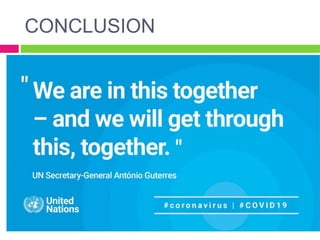
CONCLUSION
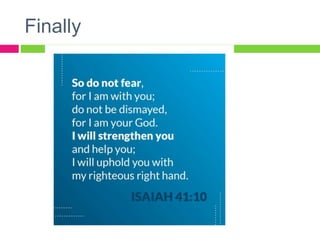
Finally
ETHICS OF DISCLOSURE.pptx

ETHICS OF DISCLOSURE.pptx

  • 1.
    ETHICS OF DISCLOSURE: INTHE CONTEXT OF COVID 19 PANDEMIC Dr Bertha C Ekeh
  • 2.
    Disclosure Dr Bertha ChiomaEkeh; B, Med Pharmacology, MBBS, FMCP (Neuro) Lecturer/Consultant Neurologist University of Uyo/University of Uyo Teaching Hospital Adjunct Consultant Neurologist Ibom Specialist Hospital Uyo webpage https://www.amazon.com/Dr-Bertha-Chioma-Ekeh/e/B07D442KRX Blog https://medicalinfoblog.net I HAVE NO CONFLICTS OF INTEREST
  • 3.
    Content  Introduction  Definitionof Medical Ethics  Principles of Medical Ethics  Confidentiality  Disclosure  Issues in COVID-19  Summary /Conclusion
  • 4.
  • 5.
    Medical Ethics  Asystem of moral principles that apply values to the practice of clinical medicine and in scientific research.  Medical ethics is based on a set of values that professionals can refer to in the case of any confusion or conflict.  The core values include the respect for autonomy, non-maleficence, beneficence, and justice
  • 6.
    Contd  The essenceof Medical Ethics is to allow Doctors, care providers, and families to create a treatment plan and work towards the same common goal.  The values are not ranked in order of importance or relevance  However in some cases, some moral elements overrule others in a difficult medical situation.
  • 8.
    Core Ethical Principles Medical Ethics is founded on a set of core principles as follows:
  • 9.
    Autonomy Respect patients asindividuals (e.g., respecting their privacy by maintaining confidentiality and being truthful about their medical care). Provide the information and opportunity for patients to make their own decisions regarding their care (e.g., informed consent). Honour and respect patients' decisions regarding their choice to accept or decline care.  In addition to having the right to refuse a diagnostic or therapeutic intervention, patients also have the right to refuse to receive information
  • 10.
    Beneficence  Act inthe best interest of the patient and advocate for the patient.  May conflict with autonomy
  • 11.
    Obligation to treat A physician is obligated to treat patients in a medical emergency in which failing to provide treatment would immediately endanger the patient's life.  Physicians are not obliged to treat a patient longitudinally and may end a doctor- patient relationship if they wish, as long as the patient or their surrogate decision maker is notified and has the ability (e.g., time, money) to establish care with another physician. The physician is also obligated to facilitate the transfer of care.
  • 12.
    Confidentiality  Confidentiality iscommonly applied to conversations between doctors and patients  This concept is commonly known as patient- physician privilege  Legal protections prevent physicians from revealing their discussions with patients, even under oath in court
  • 13.
    Contd  Traditionally, medicalethics has viewed the duty of confidentiality as a relatively non-negotiable tenet of medical practice.  Few exceptions to the rules have been carved out over the years.  --Gunshot wounds  --Sexually transmitted disease in a patient who refuses to reveal the diagnosis to a spouse  --Termination of a pregnancy in an underage patient, without the knowledge of the patient's parents
  • 14.
    Full Disclosure  Patientshave the right to full medical disclosure  A family does not have the right to ask a physician to withhold information from a patient with decision-making capacity and competence without good reason  Exceptions:  If the patient requests that the physician withholds information  Therapeutic privilege: a physician determines that full disclosure would cause severe harm to the patient's severe psychological harm (e.g., following an unfavourable prognosis
  • 15.
    Non Maleficence  Avoidcausing injury or suffering to patients: FIRST, Do no Harm  May conflict with beneficence
  • 16.
    Equity/ Justice Treat patientsfairly and equitably. Equity is not the same as equality
  • 17.
    COVID-19 Pandemic  Alsoknown as the Corona virus pandemic  An ongoing pandemic of Corona virus disease 2019 (COVID-19)  Caused by severe acute respiratory syndrome corona virus 2 (SARS-CoV-2  The outbreak was first identified in Wuhan, China, in December 2019
  • 18.
    Contd  WHO declaredthe outbreak  Public Health Emergency of International Concern on 30 January  Pandemic on 11 March 2020  As at May 15th there are 4,525,420 cases globally  303,371 deaths globally  In Nigeria there are 5,162cases; 167 deaths
  • 19.
    Ethical Dilemmas inCOVID 19 Pandemic  OVERLOADED HEALTHCARE SYSTEMS ( few health workers, ventilators, or hospital beds, few testing kits) leading to  Unequal Access to care  Test or not to test: Choosing who should be tested  Treat or not treat; Choosing who should be placed on ventilators  Freeing beds to accommodate COVID patients: British cancer pts, Hungary ordered freeing of 60% of beds, other patients
  • 20.
    Ethical dilemmas Contd Allocation of Scarce resources( PPEs, face masks ETC)  Public Health measures that cause coercion and intrusion into peoples lives  Issues of Vaccines and testing: Response of Africans  Maintaining confidentiality
  • 21.
    Notable Personal Disclosures British Prime Minister  Queen Elizabeth  Prince Charles  Wife of Canadian Prime Minister  Sportsmen/actors and Actresses  Nigeria  Gov of Kaduna State  UCH CMD
  • 22.
    Importance of Disclosure Contact tracing  Isolation and Focused care  Protection of others/Public Safetys  Public Health Activities  Reduction of spread of the virus
  • 23.
    Negative Consequences of disclosure Panic/ Fear( increase in the prescription of Anxiety medications)  Stigmatisation  Perceived poor care by Health care workers  Economic losses( Loss of jobs, investors, etc)  Wrong perception in Nigeria (disease of the Rich and travellers)
  • 24.
    Response to Disclosures Better responses in the developed world  Worse in countries with challenged Health care system  Multinational companies are wary
  • 25.
    Company’s Responses  U.S.companies aren’t required to tell investors of potential infection of the executives  But BT Group PLC, one of Europe’s largest telecommunications companies, disclosed that its chief executive, Philip Jansen, tested positive for the corona virus  This prompted a wave of self-disclosures from executives at other telecom companies who recently had come in contact with Mr. Jansen
  • 26.
    India  The centralgovernment in an advisory on Wednesday said that those affected by corona virus or under quarantine, should not be identified.  “Never spread names or identity of those affected or under quarantine or their locality on the social media. Avoid spreading fear and panic. ...  “Do not label any community or area for spread of COVID-19. Avoid addressing those under treatment as COVID victims. Address them as ‘people recovering from COVID’,” the
  • 27.
    Philippines  MANILA  Thegovernment assured on Monday there will be no public disclosure of corona virus disease 2019 (COVID-19) patients’ personal information even as it enforces a mandatory declaration of personal data to augment its contact tracing efforts.  The Inter-Agency Task Force (IATF) on Emerging and Infectious Disease earlier announced the mandatory disclosure of personal information relating to COVID-19 patients in a bid to ramp up contact tracing efforts.
  • 28.
    Nigerian Response  EarlyDisclosures  Gave the wrong impression of ‘Rich Man Disease’
  • 29.
    COVID 19 PatientDisclosures form  This patient disclosure form seeks information from you that we must consider before making treatment decisions in the circumstance of the COVID‐19 virus.  A weak or compromised immune system (including, but not limited to, conditions like diabetes, asthma, COPD, cancer treatment, radiation, chemotherapy, and any prior or current disease or medical condition), can put you at greater risk for contracting COVID‐19.  Please disclose to us any condition that compromises your immune system and understand that we may ask you to consider rescheduling treatment after discussing any such conditions with us.  It is also important that you disclose to this office any indication of having been exposed to COVID‐19, or whether you, have experienced any signs or symptoms associated with the COVID‐19 virus.
  • 30.
    Disclosure form Contd YesNo Do you have a fever or above normal temperature? ☐ ☐ Have you experienced shortness of breath or had trouble breathing? ☐ ☐ Do you have a dry cough? ☐ ☐ Do you have a runny nose? ☐ ☐ Have you recently lost or had a reduction in your sense of smell? ☐ ☐ Do you have a sore throat? ☐ ☐ Have you been in contact with someone who has tested positive for COVID‐19? ☐ ☐ Have you tested positive for COVID‐19? ☐ ☐ Have you been tested for COVID‐19 and are awaiting results? ☐ ☐ Have you travelled outside the United States by air or cruise ship in the past 14 days? ☐ ☐ Have you travelled within the United States by air, bus or train within the past 14 days? ☐ ☐ I fully understand and acknowledge the above information, risks and cautions regarding a compromised immune system and have disclosed to my provider any conditions in my health history which may result in a compromised immune system. By signing this document, I acknowledge that the answers I have provided above are true and accurate. ____________________________________ ____________________________________ Signature Date ____________________________________ Witness
  • 31.
    Nigerian Patients  Nottotally honest ‘ Regrettably’: Most are afraid of poor care by Health workers  Do not volunteer ‘Travel history’  Silent on some of the symptoms like fever and cough  This exposes many Health workers to the possibility of being infected
  • 32.
    Guidelines for Disclosure There are many guidelines  All countries need to have guidelines tailored to their needs.  Below is the British Medical Council Guideline: it is practical
  • 33.
    COVID-19 pandemic and Disclosure How do federal and state laws about patient confidentiality apply during infectious disease outbreaks or other emergencies?
  • 34.
    1. ALLOWABLE  PublicHealth Authorities  Federal and state laws allow disclosure of health information without the patient’s authorization to public health authorities  Others responsible for ensuring public health and safety (e.g., CDC, NCDC, State Epidemiologist, Hospital CMAC ETC).  To Persons at Risk: Federal and state laws permit disclosure of a patient’s health information to a person at risk of contracting or spreading a disease as necessary to prevent or control the spread of the disease
  • 35.
    2. ALLOWABLE WITH CAUTION • Family and Friends  To Family, Friends and Others involved in Patient’s Care:  Additionally, BMC may share information about a patient as necessary to identify, locate, and notify ...anyone else responsible for the patient’s care, of the patient’s location, general condition, or death.  May include ...the police, the press, or the public at large.
  • 36.
    Contd  When thePatient is Awake, Unconscious or Incapacitated:  When possible, obtain verbal permission from the patient to disclose his or her health information  Prevent a Serious and Imminent Threat  Law Enforcement, Family, Friends and Caregivers: BMC may disclose a pt’s health information to anyone who is in a position to prevent or lessen the serious and imminent threat
  • 37.
    3. Stop andcontact legal and compliance  Media and Others Not Involved in Patient Care  No hospital staff person is authorized to speak to the media without appropriate authorization  REMEMBER  Safeguarding Information  Limit the disclosure to the minimum necessary
  • 38.
    The Way Forward Disclosure should be regulated  More Public Enlightenment  Effective Contact Tracing  Quarantine and Self Isolation  Aggressive Testing of Contacts  Standard Safety procedures for Health Workers Provide Protective materials needed  Incentives for Healthworkers
  • 39.
    Revised Hippocratic Oath A newly revised version of the Declaration of Geneva was adopted by the World Medical Association (WMA) General Assembly on October 14, 2017, in Chicago  The important addition was:  I will attend to my own health, well-being, and abilities in order to provide care of the highest standard.  Hence, we owe ourselves a duty to take care of our health.
  • 41.
  • 42.

Editor's Notes

  • #6 Beauchamp, J. (2013). "Principles of Biomedical Ethics". Principles of Biomedical Ethics. 
  • #20 https://www.channelnewsasia.com/news/commentary/medical-ethics-bioethics-covid-19-coronavirus-triage-ventilators-12723998
  • #27 https://www.hindustantimes.com/india-news/centre-warns-against-disclosing-identities-of-covid-19-patients/story-o1oYjCFGK9nIGXnfELoYWP.html
  • #28 https://newsinfo.inquirer.net/1257747/no-public-disclosure-of-covid-19-patients-personal-info-govt-assures#ixzz6MQYoSqTU
  • #34 COVID-19 Novel Corona Virus and Disclosure of Patient Information Resource “BULLETIN: HIPAA Privacy and Novel Coronavirus” (February 3, 2020). https://www.hhs.gov/sites/default/files/february-2020-hipaa-and-novel-coronavirus.pdf
  • #35 Resource: “BULLETIN: HIPAA Privacy and Novel Coronavirus” (February 3, 2020). https://www.hhs.gov/sites/default/files/february-2020-hipaa-and-novel-coronavirus.pdf
  • #37 COVID-19 Novel Corona Virus and Disclosure of Patient Information Resource: “BULLETIN: HIPAA Privacy and Novel Coronavirus” (February 3, 2020). https://www.hhs.gov/sites/default/files/february-2020-hipaa-and-novel-coronavirus.pdf
  • #40 ©2017 World Medical Association Inc. All Rights Reserved. All intellectual property rights in the Declaration of Geneva are vested in the World Medical Association.