FUNDAMENTALS
OF ETHICS IN
HEALTH CARE
Is a philosophical and
practical science that
deals with the study
of the morality of
human acts or human
conduct.
What is
Ethics?
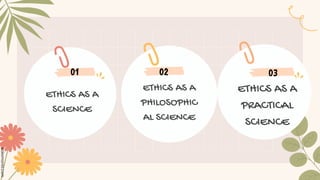
ETHICS AS A
SCIENCE
ETHICS AS A
PHILOSOPHIC
AL SCIENCE
01 02
ETHICS AS A
PRACTICAL
SCIENCE
03
That which is a systematized
body of knowledge is science;
Ethics is a systematized body
of kowledge; Therefore, ethics
is a science.
That which takes a look at the ultimate
cause, principle and truth by the use of
human reason alone is philosophy;
Ethics takes a look at the ultimate cause,
principle and truth by the use of human
reason alone;
Therefore, Ethics is philosophy.
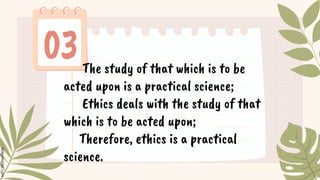
The study of that which is to be
acted upon is a practical science;
Ethics deals with the study of that
which is to be acted upon;
Therefore, ethics is a practical
science.
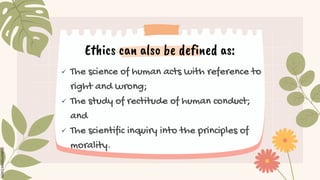
Ethics can also be defined as:
 The science of human acts with reference to
right and wrong;
 The study of rectitude of human conduct;
and
 The scientific inquiry into the principles of
morality.
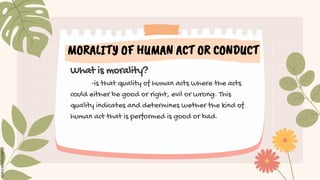
MORALITY OF HUMAN ACT OR CONDUCT
What is morality?
-is that quality of human acts where the acts
could either be good or right, evil or wrong. This
quality indicates and determines wether the kind of
human act that is performed is good or bad.
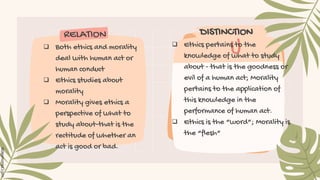
RELATION
 Both ethics and morality
deal with human act or
human conduct
 Ethics studies about
morality
 Morality gives ethics a
perspective of what to
study about-that is the
rectitude of whether an
act is good or bad.
DISTINCTION
 Ethics pertains to the
knowledge of what to study
about - that is the goodness or
evil of a human act; Morality
pertains to the application of
this knowledge in the
performance of human act.
 Ethics is the “word”; Morality is
the “flesh”
RELATION
 Morality provides
ethics with a quality
that determines and
distinguishes right
conduct from wrong
conduct.
DISTINCTION
 Ethics provides learning
about the morality of a
human conduct; Morality
provide ways in practicing
what is learned.
 Ethics indicates the
“theory”; morality
indicates the “practice”.
Your subtitle goes here.
BIOETHICS AND
HEALTH ETHICS
BIOETHICS
● Term was first used by the biologist Van Rensselear
Potter.
● Potter used the term to refer to a new field devoted to
human survival and an improved quality of life.
● Gradually, the term came to refer to the broad terrain
of the moral problems of the life sciences ordinarily taken
to encompass medicine, biology, and some important
aspects of the environmental population and social
sciences.
Is a science that deals with
the study of the morality of
human conduct concerning
human life in all its aspects
from the moment of its
conception to its natural
end.
What is
Bioethics?
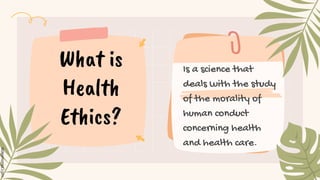
Is a science that
deals with the study
of the morality of
human conduct
concerning health
and health care.
What is
Health
Ethics?
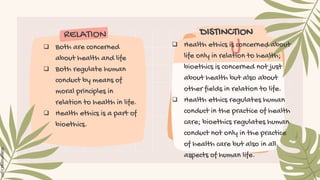
RELATION
 Both are concerned
about health and life
 Both regulate human
conduct by means of
moral principles in
relation to health in life.
 Health ethics is a part of
bioethics.
DISTINCTION
 Health ethics is concerned about
life only in relation to health;
bioethics is concerned not just
about health but also about
other fields in relation to life.
 Health ethics regulates human
conduct in the practice of health
care; bioethics regulates human
conduct not only in the practice
of health care but also in all
aspects of human life.
 Bioethics is not part of
health ethics. It has an
encompassing scope of
discipline.
DISTINCTION
Is the prevention,
treatment, and
management of illness and
the preservation of mental
and physical well-being
through the services offered
by the medical and allied
health professions.
What is
Health
Care?
POINTERS FOR A HEALTH CARE
PRACTITIONER
1. Be constantly aware of and learn by heart the
essential roles ethics plays in the practice of health
care for which you are responsible.
2. Live the knowledge of ethics in the practice of your
profession and share it with other health care
practitioners and patients.
3. In case of doubt, seek counsel from persons in
authority, such as priests, ethicists, and moral
theologians so as to be enlightened and guided
by moral truth in the practice of health care.
4. Be brave in adhering to the objective norm or
standard of morality at all times even
despite contrasting advocacies in the health
care milieu.
EXERCISES
Direction: Answer the ff. questions, write your answers
in a 1/2 crosswise.
(1/2 crosswise ma’am? YES!!)
1. How important is ethics to human person?
2. Why should human persons arrive at the
objective norm or standard of morality?
3. How essential is morality to health care
practice?
Your subtitle goes here.
MORALITY OF
HUMAN ACTS
Is an act that
proceeds from the
deliberate free
will of man.
What is
Human
Act?
● In ethics, being deliberate or
deliberation means merely advertence
or knowledge in the intellect of what
one is about and what it means.
ELEMENTS OF HUMAN ACT
1. KNOWLEDGE means that the act is done in
the light of the agent’s knowing faculty. He is
aware and conscious of what he is doing. He
knows what he is performing means.
2. FREEDOM means that the act is performed
in accordance with and not against the will. It
is under the control of the will determining the
act. In other words, the power resides in the
will to choose to do or not to do an act. It is
therefore, a free act done without any
element of force or coercion.
3. VOLUNTARINESS means that the act done by
the agent is intentional. When he voluntarily
performs an act, the agent intends it as a
product of his decision which is within the power
of his will. In other words, a voluntary act is a
willed act, an act that is willfully done. It
proceeds from the employment of knowledge
and freedom.
Is Health Care Practice a
Human Act?
HEALTH CARE PRACTICE
Is a human act because of the three constitutive
elements at work. The prevention, treatment, and
management of illness and the preservation of
mental and physical well-being through the services
of the health care practitioners are acts knowingly,
freely , and voluntarily done.
What is an Act of Man?
-Is an act that does not proceed from
deliberate free will of man. In contrast with
human act, act of man does not require the
employment of the rational faculties of
intellect and free will. The three elements of
human act are not present.
There is no element of
knowledge.
There is no element
of freedom.
There is no element
of voluntariness.
Very interesting
facts!
Thank you!
Do you have any questions, clarifications?
GOD BLESS!

ETHICS MIDWIFERY 2.pptx

  • 1.
  • 2.
    Is a philosophicaland practical science that deals with the study of the morality of human acts or human conduct. What is Ethics?
  • 3.
    ETHICS AS A SCIENCE ETHICSAS A PHILOSOPHIC AL SCIENCE 01 02 ETHICS AS A PRACTICAL SCIENCE 03
  • 4.
    That which isa systematized body of knowledge is science; Ethics is a systematized body of kowledge; Therefore, ethics is a science.
  • 5.
    That which takesa look at the ultimate cause, principle and truth by the use of human reason alone is philosophy; Ethics takes a look at the ultimate cause, principle and truth by the use of human reason alone; Therefore, Ethics is philosophy.
  • 6.
    The study ofthat which is to be acted upon is a practical science; Ethics deals with the study of that which is to be acted upon; Therefore, ethics is a practical science.
  • 7.
    Ethics can alsobe defined as:  The science of human acts with reference to right and wrong;  The study of rectitude of human conduct; and  The scientific inquiry into the principles of morality.
  • 8.
    MORALITY OF HUMANACT OR CONDUCT What is morality? -is that quality of human acts where the acts could either be good or right, evil or wrong. This quality indicates and determines wether the kind of human act that is performed is good or bad.
  • 9.
    RELATION  Both ethicsand morality deal with human act or human conduct  Ethics studies about morality  Morality gives ethics a perspective of what to study about-that is the rectitude of whether an act is good or bad. DISTINCTION  Ethics pertains to the knowledge of what to study about - that is the goodness or evil of a human act; Morality pertains to the application of this knowledge in the performance of human act.  Ethics is the “word”; Morality is the “flesh”
  • 10.
    RELATION  Morality provides ethicswith a quality that determines and distinguishes right conduct from wrong conduct. DISTINCTION  Ethics provides learning about the morality of a human conduct; Morality provide ways in practicing what is learned.  Ethics indicates the “theory”; morality indicates the “practice”.
  • 11.
    Your subtitle goeshere. BIOETHICS AND HEALTH ETHICS
  • 12.
    BIOETHICS ● Term wasfirst used by the biologist Van Rensselear Potter. ● Potter used the term to refer to a new field devoted to human survival and an improved quality of life. ● Gradually, the term came to refer to the broad terrain of the moral problems of the life sciences ordinarily taken to encompass medicine, biology, and some important aspects of the environmental population and social sciences.
  • 13.
    Is a sciencethat deals with the study of the morality of human conduct concerning human life in all its aspects from the moment of its conception to its natural end. What is Bioethics?
  • 14.
    Is a sciencethat deals with the study of the morality of human conduct concerning health and health care. What is Health Ethics?
  • 15.
    RELATION  Both areconcerned about health and life  Both regulate human conduct by means of moral principles in relation to health in life.  Health ethics is a part of bioethics. DISTINCTION  Health ethics is concerned about life only in relation to health; bioethics is concerned not just about health but also about other fields in relation to life.  Health ethics regulates human conduct in the practice of health care; bioethics regulates human conduct not only in the practice of health care but also in all aspects of human life.
  • 16.
     Bioethics isnot part of health ethics. It has an encompassing scope of discipline. DISTINCTION
  • 17.
    Is the prevention, treatment,and management of illness and the preservation of mental and physical well-being through the services offered by the medical and allied health professions. What is Health Care?
  • 18.
    POINTERS FOR AHEALTH CARE PRACTITIONER 1. Be constantly aware of and learn by heart the essential roles ethics plays in the practice of health care for which you are responsible. 2. Live the knowledge of ethics in the practice of your profession and share it with other health care practitioners and patients.
  • 19.
    3. In caseof doubt, seek counsel from persons in authority, such as priests, ethicists, and moral theologians so as to be enlightened and guided by moral truth in the practice of health care. 4. Be brave in adhering to the objective norm or standard of morality at all times even despite contrasting advocacies in the health care milieu.
  • 20.
    EXERCISES Direction: Answer theff. questions, write your answers in a 1/2 crosswise. (1/2 crosswise ma’am? YES!!) 1. How important is ethics to human person? 2. Why should human persons arrive at the objective norm or standard of morality? 3. How essential is morality to health care practice?
  • 21.
    Your subtitle goeshere. MORALITY OF HUMAN ACTS
  • 22.
    Is an actthat proceeds from the deliberate free will of man. What is Human Act?
  • 23.
    ● In ethics,being deliberate or deliberation means merely advertence or knowledge in the intellect of what one is about and what it means.
  • 24.
    ELEMENTS OF HUMANACT 1. KNOWLEDGE means that the act is done in the light of the agent’s knowing faculty. He is aware and conscious of what he is doing. He knows what he is performing means.
  • 25.
    2. FREEDOM meansthat the act is performed in accordance with and not against the will. It is under the control of the will determining the act. In other words, the power resides in the will to choose to do or not to do an act. It is therefore, a free act done without any element of force or coercion.
  • 26.
    3. VOLUNTARINESS meansthat the act done by the agent is intentional. When he voluntarily performs an act, the agent intends it as a product of his decision which is within the power of his will. In other words, a voluntary act is a willed act, an act that is willfully done. It proceeds from the employment of knowledge and freedom.
  • 27.
    Is Health CarePractice a Human Act?
  • 28.
    HEALTH CARE PRACTICE Isa human act because of the three constitutive elements at work. The prevention, treatment, and management of illness and the preservation of mental and physical well-being through the services of the health care practitioners are acts knowingly, freely , and voluntarily done.
  • 29.
    What is anAct of Man? -Is an act that does not proceed from deliberate free will of man. In contrast with human act, act of man does not require the employment of the rational faculties of intellect and free will. The three elements of human act are not present.
  • 30.
    There is noelement of knowledge.
  • 31.
    There is noelement of freedom.
  • 32.
    There is noelement of voluntariness.
  • 33.
  • 34.
    Thank you! Do youhave any questions, clarifications? GOD BLESS!