
REACTION TO STRESSFUL
EXPERIENCES
By- Dilki Punchihewa
WHAT IS STRESS?
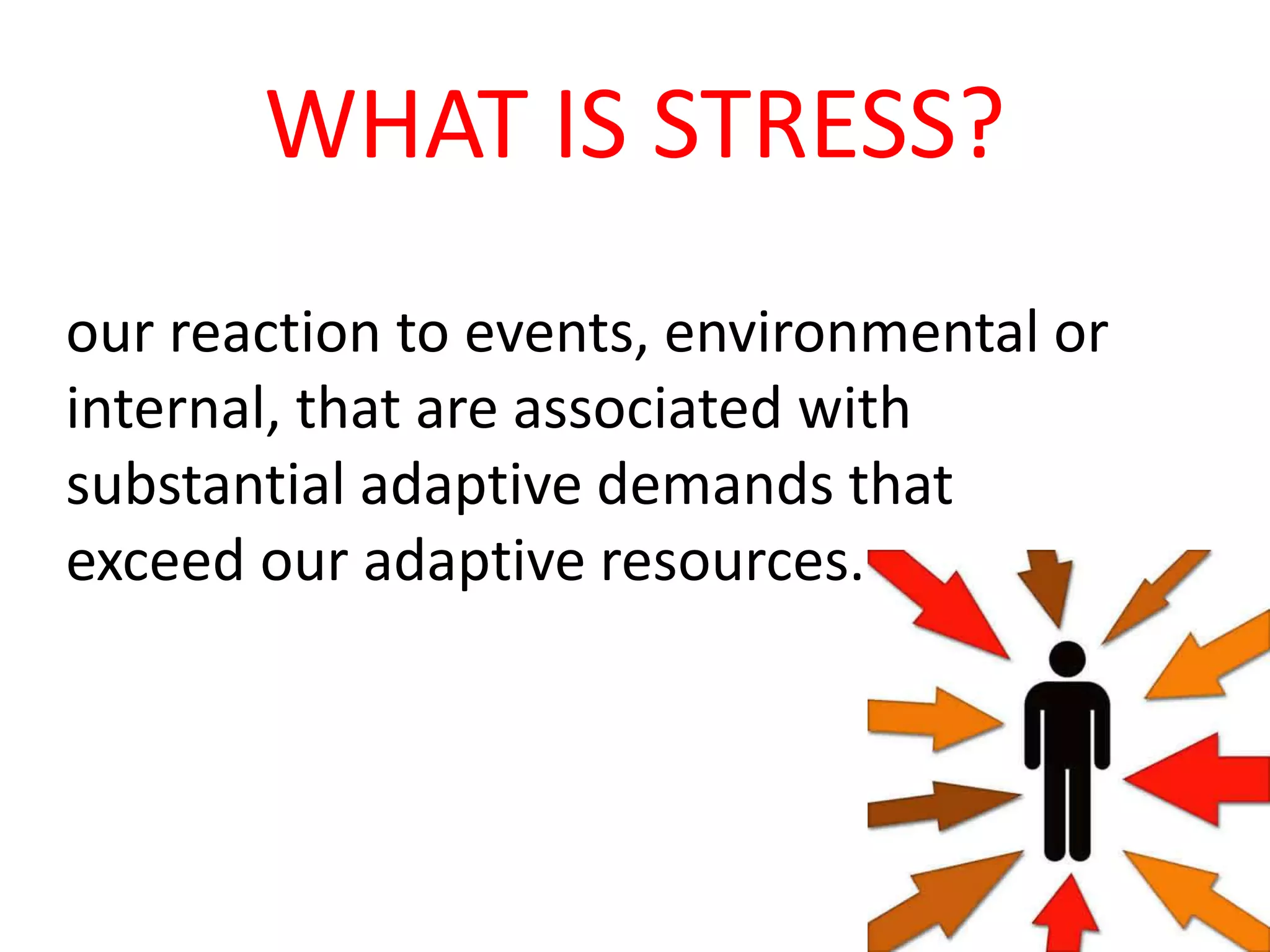
our reaction to events, environmental or
internal, that are associated with
substantial adaptive demands that
exceed our adaptive resources.
Normal response to stressful events
1. Somatic response
2. Emotional response
3. Psychological response
ICD-10
1. Acute stress reaction
2. Post traumatic stress disorder (PTSD)
3. Adjustment disorder
A transient disorder that develops in
an individual without any other apparent mental
disorder in response to exceptional physical and mental
stress and that usually subsides within hours or days.
Individual vulnerability and coping capacity play a role in
the occurrence and severity of acute stress reactions.
(ICD-10)
ACUTE STRESS REACTION
Can present with….
• Emotional response-anxiety, low mood, irritability, emotional ups and
downs, poor sleep, poor concentration, wanting to be alone.
• Somatic symptoms-
– A thumping heart (palpitations)
– Feeling sick (nausea)
– Chest pain
– Headaches
– Tummy (abdominal) pains
– Breathing difficulties
• Dissociative symptoms- emotional numbness and being in a daze,
difficulty in recalling the event, detached from others and surrounding,
recurrent dreams or flashbacks
• Coping stratergies – avoidance, maladpative coping responses
• Symptoms must start within 1 hour of the
stressor
• Symptoms should being to diminish within 48
hours
• Clinical picture should change over time with
no one symptom lasting for more than few
hours.
Differential diagnosis
• PTSD
• Adjustment disorder
• Brief psychotic episode
• Dissociative disorder
• Organic disorder
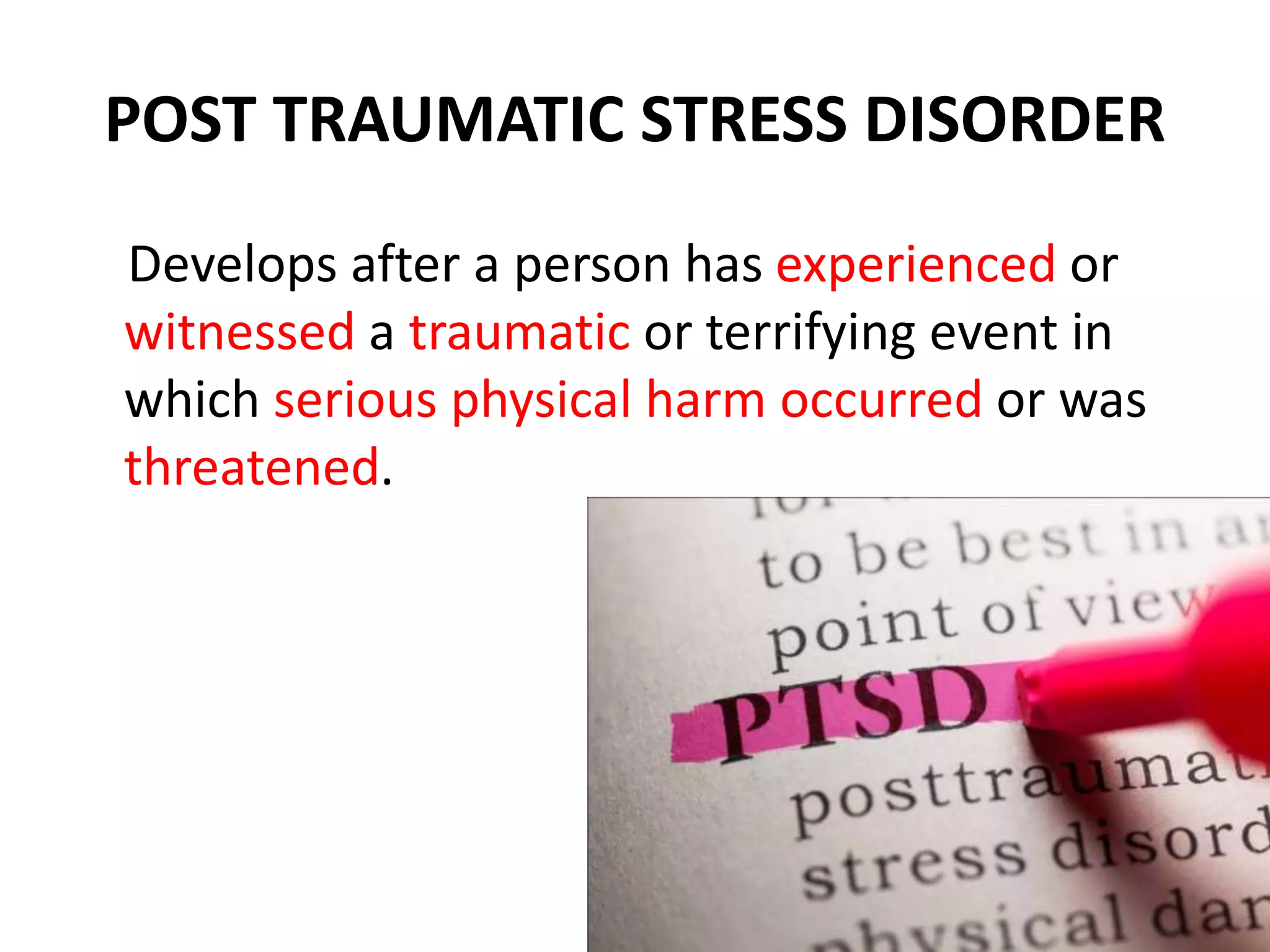
POST TRAUMATIC STRESS DISORDER
Develops after a person has experienced or
witnessed a traumatic or terrifying event in
which serious physical harm occurred or was
threatened.
• Symptoms must occur with 6 months of the event (ICD-10)
• Lasting for more than 4 weeks
• Symptoms similar to Acute stress reaction
• Dissociative symptoms MUST be present
• In addition
- intrusions
- depressive symptoms
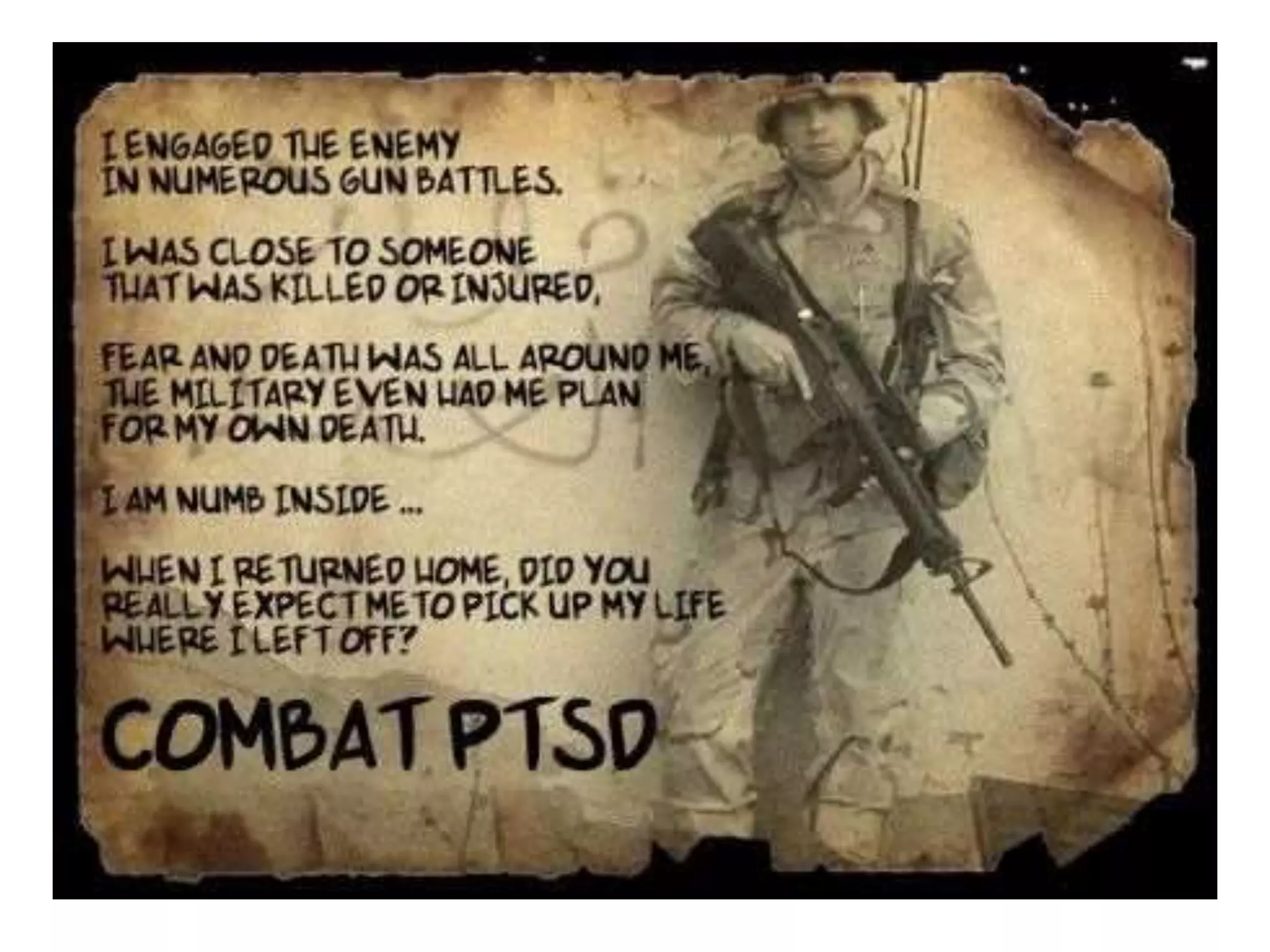
• PTSD is commonly seen in trauma like
rape, exposure to combat during war, sexual molestation,
being kidnapped or held hostage etc.
presentation…
• Risk factors for PTSD
‒ Females
‒ Children and older adults
‒ Ethnic minorities
‒ Family or personal history of psychiatric
illness
‒ Low intelligence
‒ Child abuse
‒ Low self esteem
‒ Exposure to previous trauma
‒ Lack of social support
Differential diagnosis
• Acute stress disorder
• Adjustment disorder
• Depressive disorder
• Anxiety disorder
• Obsessive compulsive disorder
• Brief psychotic disorder
• Substance induce disorder
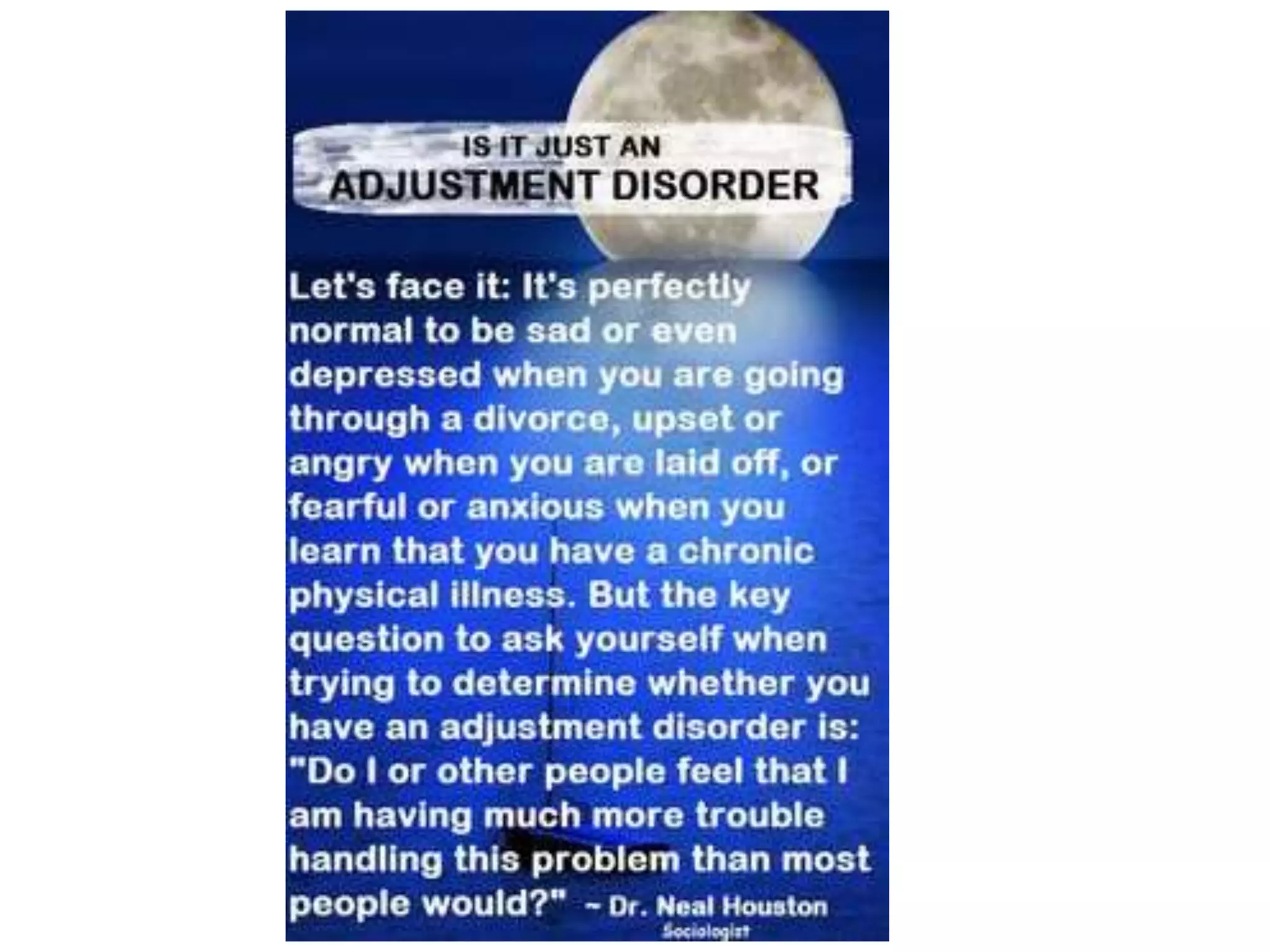
ADJUSTMENT DISORDER
• Adjustment refers to Psychological reaction involved in
adapting to new circumstances.
• It will be considered abnormal if distress
‒ Is greater that what is expected in a particular stressful
event
‒ Has impairment of social functioning
‒ Is close in time to the life change
‒ Not severe enough to diagnose another psychotic illness
• There are no specific symptoms
• Usually present with mild symptoms of anxiety, depression,
emotional and behavioral disturbances
• Symptoms must present within 1 month of the stressor
• Once the stressor is terminated symptoms doesn’t persist
for more than additional 6 months
• When making the diagnosis always think
1. Does the patient have a diagnosable mental disorder
2. If there is a diagnosable mental disorder, does it fit the
criteria for another condition better than those for
adjustment disorder.
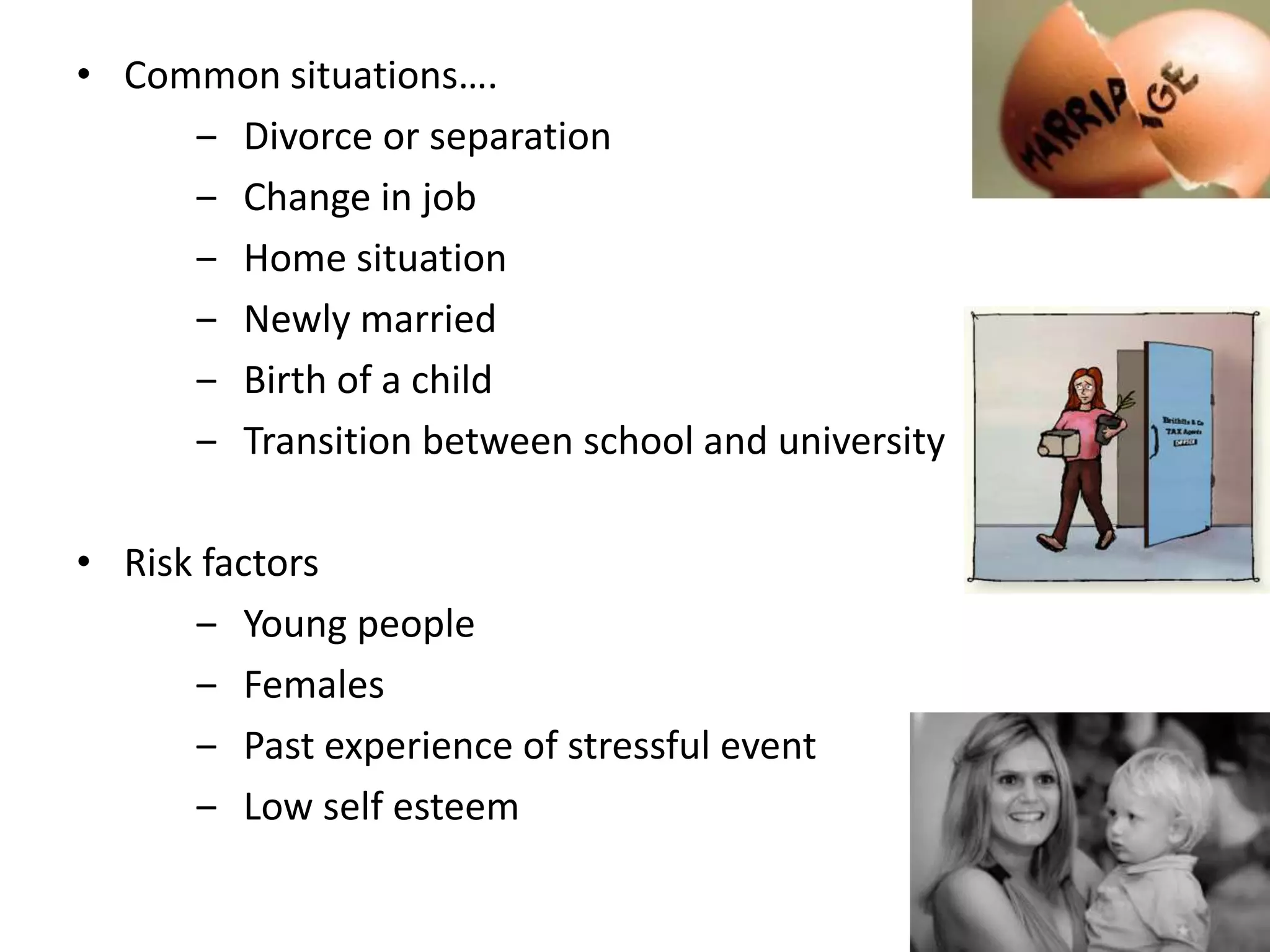
• Common situations….
‒ Divorce or separation
‒ Change in job
‒ Home situation
‒ Newly married
‒ Birth of a child
‒ Transition between school and university
• Risk factors
‒ Young people
‒ Females
‒ Past experience of stressful event
‒ Low self esteem
Differential diagnosis
• Acute stress disorder or PTSD
• Mood disorder
• Anxiety disorder
• Grief reaction
• Organic disorder
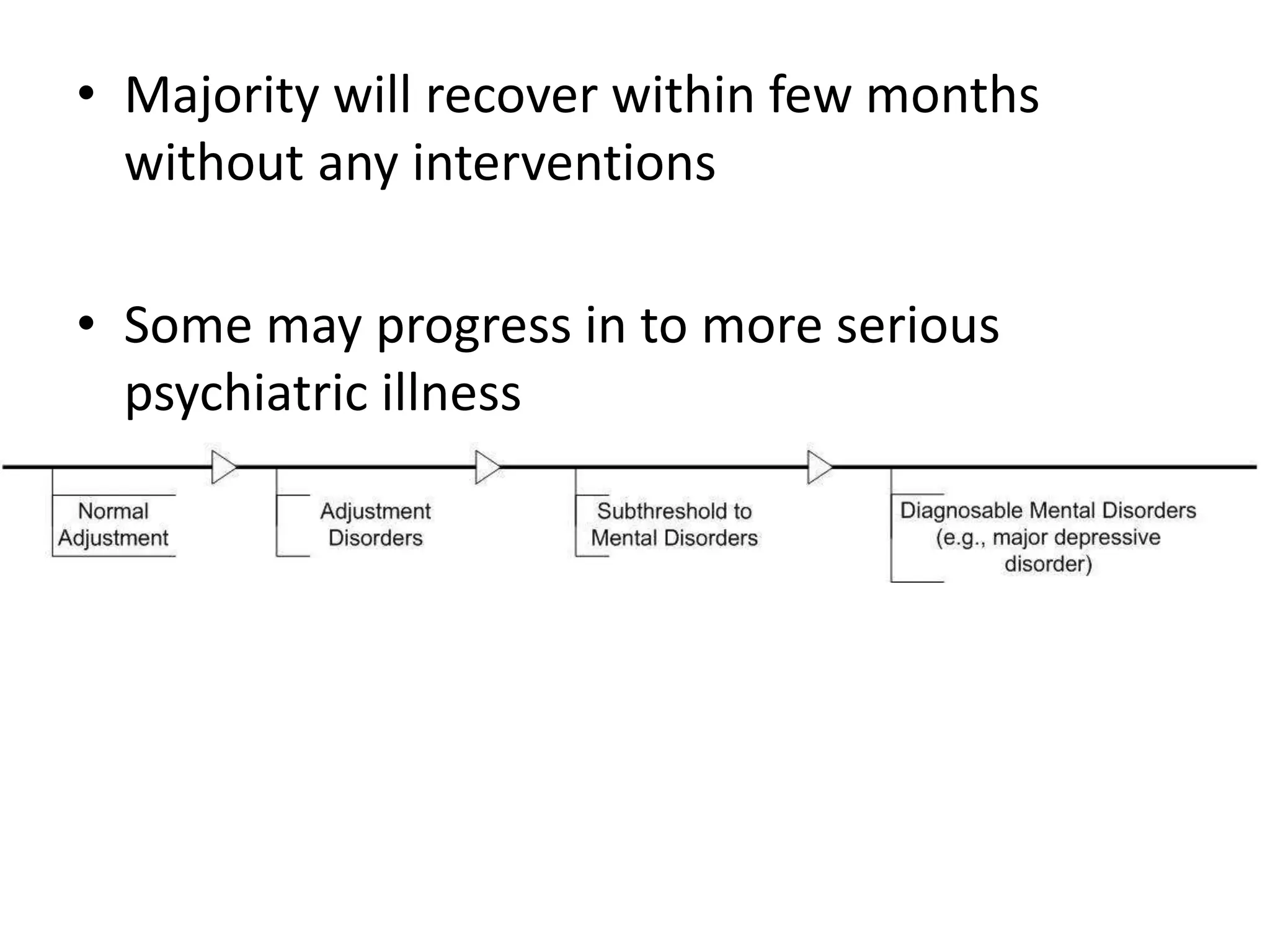
• Majority will recover within few months
without any interventions
• Some may progress in to more serious
psychiatric illness
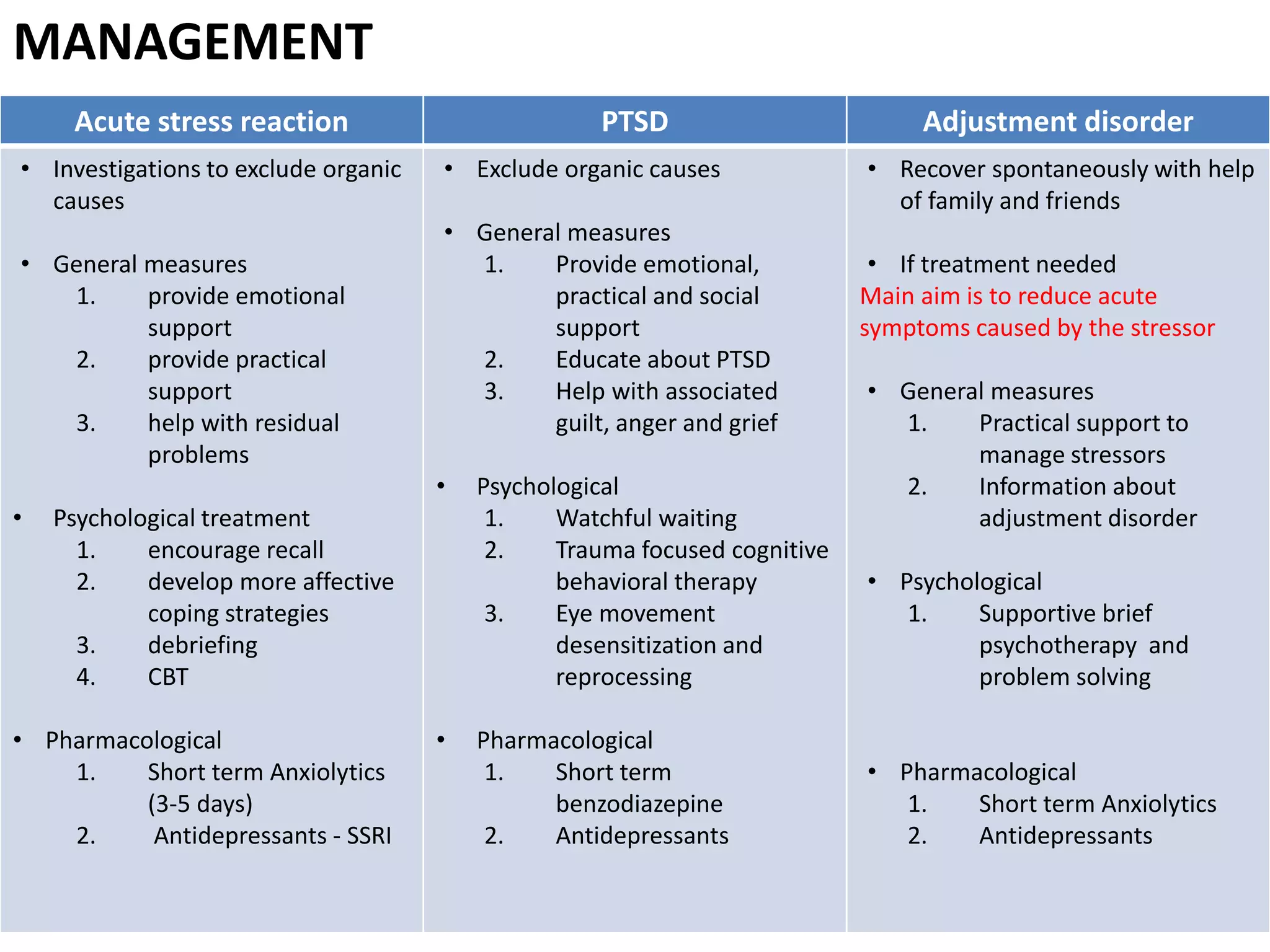
Acute stress reaction PTSD Adjustment disorder
• Investigations to exclude organic
causes
• General measures
1. provide emotional
support
2. provide practical
support
3. help with residual
problems
• Psychological treatment
1. encourage recall
2. develop more affective
coping strategies
3. debriefing
4. CBT
• Pharmacological
1. Short term Anxiolytics
(3-5 days)
2. Antidepressants - SSRI
• Exclude organic causes
• General measures
1. Provide emotional,
practical and social
support
2. Educate about PTSD
3. Help with associated
guilt, anger and grief
• Psychological
1. Watchful waiting
2. Trauma focused cognitive
behavioral therapy
3. Eye movement
desensitization and
reprocessing
• Pharmacological
1. Short term
benzodiazepine
2. Antidepressants
• Recover spontaneously with help
of family and friends
• If treatment needed
Main aim is to reduce acute
symptoms caused by the stressor
• General measures
1. Practical support to
manage stressors
2. Information about
adjustment disorder
• Psychological
1. Supportive brief
psychotherapy and
problem solving
• Pharmacological
1. Short term Anxiolytics
2. Antidepressants
MANAGEMENT
Reaction to stressful experiences

Reaction to stressful experiences

  • 1.
  • 2.
    WHAT IS STRESS? ourreaction to events, environmental or internal, that are associated with substantial adaptive demands that exceed our adaptive resources.
  • 3.
    Normal response tostressful events 1. Somatic response 2. Emotional response 3. Psychological response
  • 4.
    ICD-10 1. Acute stressreaction 2. Post traumatic stress disorder (PTSD) 3. Adjustment disorder
  • 5.
    A transient disorderthat develops in an individual without any other apparent mental disorder in response to exceptional physical and mental stress and that usually subsides within hours or days. Individual vulnerability and coping capacity play a role in the occurrence and severity of acute stress reactions. (ICD-10) ACUTE STRESS REACTION
  • 6.
    Can present with…. •Emotional response-anxiety, low mood, irritability, emotional ups and downs, poor sleep, poor concentration, wanting to be alone. • Somatic symptoms- – A thumping heart (palpitations) – Feeling sick (nausea) – Chest pain – Headaches – Tummy (abdominal) pains – Breathing difficulties • Dissociative symptoms- emotional numbness and being in a daze, difficulty in recalling the event, detached from others and surrounding, recurrent dreams or flashbacks • Coping stratergies – avoidance, maladpative coping responses
  • 7.
    • Symptoms muststart within 1 hour of the stressor • Symptoms should being to diminish within 48 hours • Clinical picture should change over time with no one symptom lasting for more than few hours.
  • 8.
    Differential diagnosis • PTSD •Adjustment disorder • Brief psychotic episode • Dissociative disorder • Organic disorder
  • 9.
    POST TRAUMATIC STRESSDISORDER Develops after a person has experienced or witnessed a traumatic or terrifying event in which serious physical harm occurred or was threatened.
  • 11.
    • Symptoms mustoccur with 6 months of the event (ICD-10) • Lasting for more than 4 weeks • Symptoms similar to Acute stress reaction • Dissociative symptoms MUST be present • In addition - intrusions - depressive symptoms • PTSD is commonly seen in trauma like rape, exposure to combat during war, sexual molestation, being kidnapped or held hostage etc. presentation…
  • 12.
    • Risk factorsfor PTSD ‒ Females ‒ Children and older adults ‒ Ethnic minorities ‒ Family or personal history of psychiatric illness ‒ Low intelligence ‒ Child abuse ‒ Low self esteem ‒ Exposure to previous trauma ‒ Lack of social support
  • 13.
    Differential diagnosis • Acutestress disorder • Adjustment disorder • Depressive disorder • Anxiety disorder • Obsessive compulsive disorder • Brief psychotic disorder • Substance induce disorder
  • 14.
    ADJUSTMENT DISORDER • Adjustmentrefers to Psychological reaction involved in adapting to new circumstances. • It will be considered abnormal if distress ‒ Is greater that what is expected in a particular stressful event ‒ Has impairment of social functioning ‒ Is close in time to the life change ‒ Not severe enough to diagnose another psychotic illness
  • 16.
    • There areno specific symptoms • Usually present with mild symptoms of anxiety, depression, emotional and behavioral disturbances • Symptoms must present within 1 month of the stressor • Once the stressor is terminated symptoms doesn’t persist for more than additional 6 months • When making the diagnosis always think 1. Does the patient have a diagnosable mental disorder 2. If there is a diagnosable mental disorder, does it fit the criteria for another condition better than those for adjustment disorder.
  • 17.
    • Common situations…. ‒Divorce or separation ‒ Change in job ‒ Home situation ‒ Newly married ‒ Birth of a child ‒ Transition between school and university • Risk factors ‒ Young people ‒ Females ‒ Past experience of stressful event ‒ Low self esteem
  • 18.
    Differential diagnosis • Acutestress disorder or PTSD • Mood disorder • Anxiety disorder • Grief reaction • Organic disorder
  • 19.
    • Majority willrecover within few months without any interventions • Some may progress in to more serious psychiatric illness
  • 21.
    Acute stress reactionPTSD Adjustment disorder • Investigations to exclude organic causes • General measures 1. provide emotional support 2. provide practical support 3. help with residual problems • Psychological treatment 1. encourage recall 2. develop more affective coping strategies 3. debriefing 4. CBT • Pharmacological 1. Short term Anxiolytics (3-5 days) 2. Antidepressants - SSRI • Exclude organic causes • General measures 1. Provide emotional, practical and social support 2. Educate about PTSD 3. Help with associated guilt, anger and grief • Psychological 1. Watchful waiting 2. Trauma focused cognitive behavioral therapy 3. Eye movement desensitization and reprocessing • Pharmacological 1. Short term benzodiazepine 2. Antidepressants • Recover spontaneously with help of family and friends • If treatment needed Main aim is to reduce acute symptoms caused by the stressor • General measures 1. Practical support to manage stressors 2. Information about adjustment disorder • Psychological 1. Supportive brief psychotherapy and problem solving • Pharmacological 1. Short term Anxiolytics 2. Antidepressants MANAGEMENT