Logistics Cost and Service 2014
The Establish Davis Database 
•Brief History/Description 
–Since 1974 Establish Davis Database contains logistics costs (transportation, warehousing, customer service/order entry, administration, and inventory carrying costs) and service performance levels for many industries/groups. 
–The submissions are annually summarized to track logistics costs and service performance levels and trends. 
•Why Companies Benchmark? 
–To identify opportunities and trends (cost and service performance drivers) in their logistics costs. 
–To know where to focus next to improve company’s logistics network from the prospective of cost and service.
The Establish Davis Database 
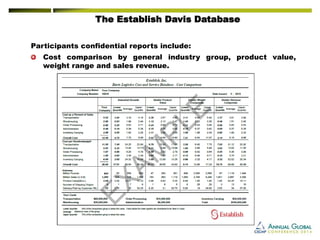
Participantsconfidentialreportsinclude: 
Costcomparisonbygeneralindustrygroup,productvalue, weightrangeandsalesrevenue.
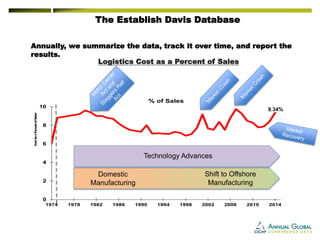
Annually, we summarize the data, track it over time, and report the 
results. 
0 
2 
4 
6 
8 
10 
1974 1978 1982 1986 1990 1994 1998 2002 2006 2010 2014 
Cost As a Percent of Sales 
% of Sales 
Logistics Cost as a Percent of Sales 
The Establish Davis Database 
9.34% 
Domestic 
Manufacturing 
Shift to Offshore 
Manufacturing 
Technology Advances
Establish Davis Database -Average Company2014 -Key Findings 
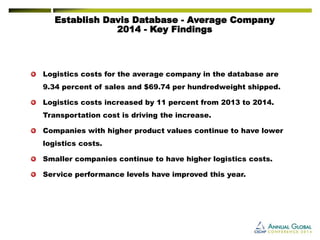
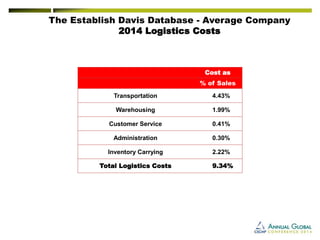
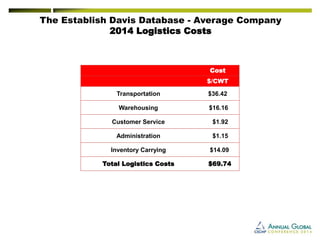
Logistics costs for the average company in the database are 9.34 percent of sales and $69.74 per hundredweight shipped. 
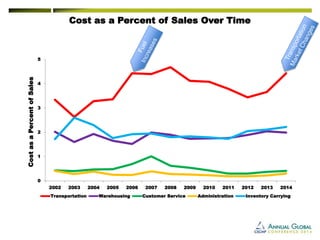
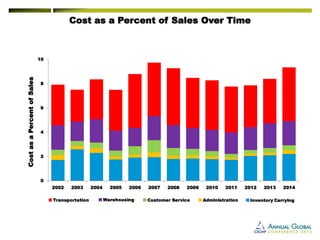
Logistics costs increased by 11 percent from 2013 to 2014. Transportation cost is driving the increase. 
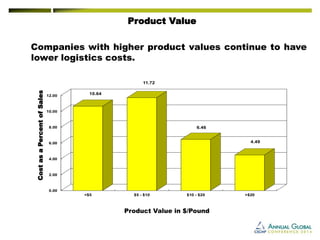
Companies with higher product values continue to have lower logistics costs. 
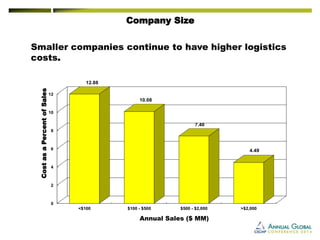
Smaller companies continue to have higher logistics costs. 
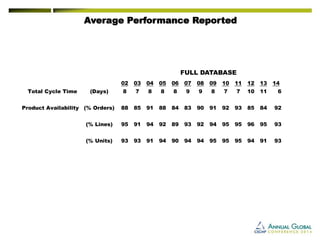
Service performance levels have improved this year.
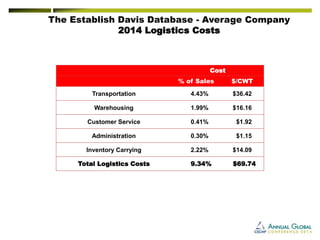
The Establish Davis Database -Average Company 
2014 Logistics Costs 
Cost 
% of Sales 
$/CWT 
Transportation 
4.43% 
$36.42 
Warehousing 
1.99% 
$16.16 
Customer Service 
0.41% 
$1.92 
Administration 
0.30% 
$1.15 
Inventory Carrying 
2.22% 
$14.09 
TotalLogistics Costs 
9.34% 
$69.74
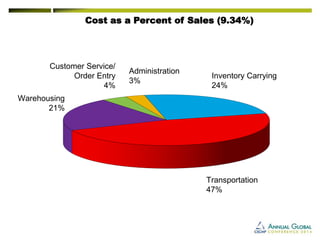
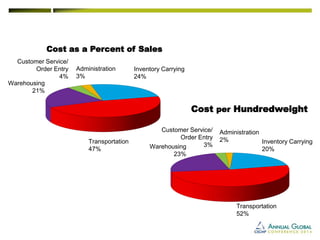
Cost as a Percent of Sales (9.34%) 
Customer Service/ 
Order Entry 
4% 
Warehousing 
21% 
Administration 
3% 
Inventory Carrying 
24% 
Transportation 
47%
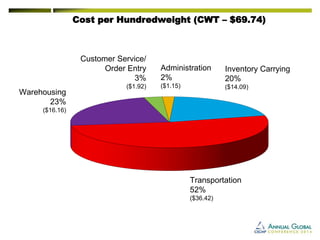
Cost per Hundredweight (CWT – $69.74) 
Warehousing 
23% 
($16.16) 
Customer Service/ 
Order Entry 
3% 
($1.92) 
Administration 
2% 
($1.15) 
Inventory Carrying 
20% 
($14.09) 
Transportation 
52% 
($36.42)
Cost as a Percent of Sales 
Cost per Hundredweight 
Warehousing 
21% 
Customer Service/ 
Order Entry 
4% 
Transportation 
47% 
Administration 
3% 
Inventory Carrying 
24% 
Warehousing 
23% 
Customer Service/ 
Order Entry 
3% 
Transportation 
52% 
Administration 
2% Inventory Carrying 
20%
The Establish Davis Database -Average Company 
2014 Logistics Costs 
Cost as 
% of Sales 
Transportation 
4.43% 
Warehousing 
1.99% 
Customer Service 
0.41% 
Administration 
0.30% 
Inventory Carrying 
2.22% 
TotalLogistics Costs 
9.34%
0 
1 
2 
3 
4 
5 
2002 
2003 
2004 
2005 
2006 
2007 
2008 
2009 
2010 
2011 
2012 
2013 
2014 
Transportation 
Warehousing 
Customer Service 
Administration 
Inventory Carrying 
Cost asa Percent of Sales Over Time 
Cost as a Percent of Sales
0 
2 
4 
6 
8 
10 
2002 2003 2004 2005 2006 2007 2008 2009 2010 2011 2012 2013 2014 
Cost as a Percent of Sales 
Cost as a Percent of Sales Over Time 
2007 2008 2009 2010 2011 
Service Warehousing Transportation 
2003 2004 2005 2006 2007 2008 2009 2010 2011 
Administration Customer Service Warehousing Transportation 
0 
2 
4 
6 
8 
10 
2001 2002 2003 2004 2005 2006 2007 2008 2009 2010 2011 
Inventory Carrying Administration Customer Service Warehousing Transportation 
0 
2 
4 
6 
8 
10 
2001 2002 2003 2004 2005 2006 2007 2008 Inventory Carrying Administration Customer Service Warehousing 0 
2 
4 
6 
8 
10 
2001 2002 2003 2004 Inventory Carrying Administration
The Establish Davis Database -Average Company 
2014 Logistics Costs 
Cost 
$/CWT 
Transportation 
$36.42 
Warehousing 
$16.16 
Customer Service 
$1.92 
Administration 
$1.15 
Inventory Carrying 
$14.09 
TotalLogistics Costs 
$69.74
$0 
$10 
$20 
$30 
$40 
$50 
2002 
2003 
2004 
2005 
2006 
2007 
2008 
2009 
2010 
2011 
2012 
2013 
2014 
Transportation 
Warehousing 
Customer Service 
Administration 
Inventory Carrying 
Cost per HundredweightOver Time 
Cost per Hundredweight
$0 
$20 
$40 
$60 
$80 
$100 
2002 
2003 
2004 
2005 
2006 
2007 
2008 
2009 
2010 
2011 
2012 
2013 
2014 
Cost per Hundredweight 
Cost per HundredweightOver Time 
2007 2008 2009 2010 2011 
Service Warehousing Transportation 2003 2004 2005 2006 2007 2008 2009 2010 2011 
Administration Customer Service Warehousing Transportation 0 
2 
4 
6 
8 
10 
2001 2002 2003 2004 2005 2006 2007 2008 2009 2010 2011 
Inventory Carrying Administration Customer Service Warehousing Transportation 0 
2 
4 
6 
8 
10 
2001 2002 2003 2004 2005 2006 2007 2008 Inventory Carrying Administration Customer Service Warehousing 0 
2 
4 
6 
8 
10 
2001 2002 2003 2004 Inventory Carrying Administration
0 
2 
4 
6 
8 
10 
12 
<$100 $100 - $500 $500 - $2,000 >$2,000 
12.88 
10.08 
7.40 
4.49 
Company Size 
Smaller companies continue to have higher logistics 
costs. 
Cost as a Percent of Sales 
Annual Sales ($ MM)
Cost as a Percent of Sales 
Product Value in $/Pound 
Product Value 
Companieswithhigherproductvaluescontinuetohavelowerlogisticscosts. 
0.002.004.006.008.0010.0012.00<$5$5 - $10$10 - $20>$2010.6411.726.464.49
2014 Measurements 
Total order cycle time -6 days 
Product Availability (Shipped Complete) 
Orders92% Lines93% 
Units93% 
Customer Service Levels
FULL DATABASE 
Average Performance Reported 
02030405060708091011121314Total Cycle Time (Days)878889987710116Product Availability(% Orders)88859188848390919293858492(% Lines)95919492899392949595969593(% Units)93939194909494959595949193
What are companies doing to control/reduce costs?
LOGISTICS NETWORKS
LOGISTICS NETWORKS 
Identifying the correct number of warehouses/DCs to reduce transportation costs and improve service performance levels. 
Reconfiguring networks as a result of: 
―Acquired/merged organizations. 
―Shifts in the manufacturing and customer base. 
―Changes in customer service requirements.
TRANSPORTATION 
(47% of the Logistics Spend)
TRANSPORTATION 
Mitigating carrier increases by renegotiating agreements. 
Reevaluating ordering patterns to identify customer order minimums. 
Reevaluating ordering patterns to identify consolidation, pool point, and cross dock opportunities. 
Shipping intermodal/rail instead of truckload. 
Separating embedded transportation costs from the landed cost of materials/inventory from sources, to: 
―Identify,evaluateandcontrolcosts. 
―Leverageadditionalvolumes. 
Acquiring/upgrading transportation management systems (TMS) to maximize control and cost reduction opportunities.
WAREHOUSING 
(21% of the Logistics Spend)
WAREHOUSING 
Redesigning warehouses to increase storage capacity and improve efficiency. 
Evaluating warehouse processes and procedures to identify opportunities. 
Acquiring new and used material handling equipment to improve efficiency. 
Evaluating the services of third party providers (3PL). 
Adding/upgrading standalone and SaaS (software as a service) Warehouse Management Systems (WMSs).
INVENTORY 
(24% of the Logistics Spend)
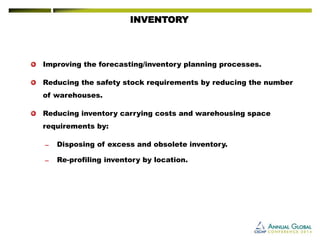
INVENTORY 
Improving the forecasting/inventory planning processes. 
Reducing the safety stock requirements by reducing the number of warehouses. 
Reducing inventory carrying costs and warehousing space requirements by: 
―Disposing of excess and obsolete inventory. 
―Re-profiling inventory by location.
CUSTOMER SERVICE 
(4% of the Logistics Spend)
CUSTOMER SERVICE 
Migratingtoautomatedattendants 
Outsourcingthefunctionalactivities 
Encouragingon-lineorderentry,tracking,etc.
ADMINISTRATION 
(3% of the Logistics Spend)
www.establishinc.com/ 201-283-9000 
Thank you

Establish davis-logistics-cost-and-service-presentation-2014

  • 1.
    Logistics Cost andService 2014
  • 2.
    The Establish DavisDatabase •Brief History/Description –Since 1974 Establish Davis Database contains logistics costs (transportation, warehousing, customer service/order entry, administration, and inventory carrying costs) and service performance levels for many industries/groups. –The submissions are annually summarized to track logistics costs and service performance levels and trends. •Why Companies Benchmark? –To identify opportunities and trends (cost and service performance drivers) in their logistics costs. –To know where to focus next to improve company’s logistics network from the prospective of cost and service.
  • 3.
    The Establish DavisDatabase Participantsconfidentialreportsinclude: Costcomparisonbygeneralindustrygroup,productvalue, weightrangeandsalesrevenue.
  • 4.
    Annually, we summarizethe data, track it over time, and report the results. 0 2 4 6 8 10 1974 1978 1982 1986 1990 1994 1998 2002 2006 2010 2014 Cost As a Percent of Sales % of Sales Logistics Cost as a Percent of Sales The Establish Davis Database 9.34% Domestic Manufacturing Shift to Offshore Manufacturing Technology Advances
  • 5.
    Establish Davis Database-Average Company2014 -Key Findings Logistics costs for the average company in the database are 9.34 percent of sales and $69.74 per hundredweight shipped. Logistics costs increased by 11 percent from 2013 to 2014. Transportation cost is driving the increase. Companies with higher product values continue to have lower logistics costs. Smaller companies continue to have higher logistics costs. Service performance levels have improved this year.
  • 6.
    The Establish DavisDatabase -Average Company 2014 Logistics Costs Cost % of Sales $/CWT Transportation 4.43% $36.42 Warehousing 1.99% $16.16 Customer Service 0.41% $1.92 Administration 0.30% $1.15 Inventory Carrying 2.22% $14.09 TotalLogistics Costs 9.34% $69.74
  • 7.
    Cost as aPercent of Sales (9.34%) Customer Service/ Order Entry 4% Warehousing 21% Administration 3% Inventory Carrying 24% Transportation 47%
  • 8.
    Cost per Hundredweight(CWT – $69.74) Warehousing 23% ($16.16) Customer Service/ Order Entry 3% ($1.92) Administration 2% ($1.15) Inventory Carrying 20% ($14.09) Transportation 52% ($36.42)
  • 9.
    Cost as aPercent of Sales Cost per Hundredweight Warehousing 21% Customer Service/ Order Entry 4% Transportation 47% Administration 3% Inventory Carrying 24% Warehousing 23% Customer Service/ Order Entry 3% Transportation 52% Administration 2% Inventory Carrying 20%
  • 10.
    The Establish DavisDatabase -Average Company 2014 Logistics Costs Cost as % of Sales Transportation 4.43% Warehousing 1.99% Customer Service 0.41% Administration 0.30% Inventory Carrying 2.22% TotalLogistics Costs 9.34%
  • 11.
    0 1 2 3 4 5 2002 2003 2004 2005 2006 2007 2008 2009 2010 2011 2012 2013 2014 Transportation Warehousing Customer Service Administration Inventory Carrying Cost asa Percent of Sales Over Time Cost as a Percent of Sales
  • 12.
    0 2 4 6 8 10 2002 2003 2004 2005 2006 2007 2008 2009 2010 2011 2012 2013 2014 Cost as a Percent of Sales Cost as a Percent of Sales Over Time 2007 2008 2009 2010 2011 Service Warehousing Transportation 2003 2004 2005 2006 2007 2008 2009 2010 2011 Administration Customer Service Warehousing Transportation 0 2 4 6 8 10 2001 2002 2003 2004 2005 2006 2007 2008 2009 2010 2011 Inventory Carrying Administration Customer Service Warehousing Transportation 0 2 4 6 8 10 2001 2002 2003 2004 2005 2006 2007 2008 Inventory Carrying Administration Customer Service Warehousing 0 2 4 6 8 10 2001 2002 2003 2004 Inventory Carrying Administration
  • 13.
    The Establish DavisDatabase -Average Company 2014 Logistics Costs Cost $/CWT Transportation $36.42 Warehousing $16.16 Customer Service $1.92 Administration $1.15 Inventory Carrying $14.09 TotalLogistics Costs $69.74
  • 14.
    $0 $10 $20 $30 $40 $50 2002 2003 2004 2005 2006 2007 2008 2009 2010 2011 2012 2013 2014 Transportation Warehousing Customer Service Administration Inventory Carrying Cost per HundredweightOver Time Cost per Hundredweight
  • 15.
    $0 $20 $40 $60 $80 $100 2002 2003 2004 2005 2006 2007 2008 2009 2010 2011 2012 2013 2014 Cost per Hundredweight Cost per HundredweightOver Time 2007 2008 2009 2010 2011 Service Warehousing Transportation 2003 2004 2005 2006 2007 2008 2009 2010 2011 Administration Customer Service Warehousing Transportation 0 2 4 6 8 10 2001 2002 2003 2004 2005 2006 2007 2008 2009 2010 2011 Inventory Carrying Administration Customer Service Warehousing Transportation 0 2 4 6 8 10 2001 2002 2003 2004 2005 2006 2007 2008 Inventory Carrying Administration Customer Service Warehousing 0 2 4 6 8 10 2001 2002 2003 2004 Inventory Carrying Administration
  • 16.
    0 2 4 6 8 10 12 <$100 $100 - $500 $500 - $2,000 >$2,000 12.88 10.08 7.40 4.49 Company Size Smaller companies continue to have higher logistics costs. Cost as a Percent of Sales Annual Sales ($ MM)
  • 17.
    Cost as aPercent of Sales Product Value in $/Pound Product Value Companieswithhigherproductvaluescontinuetohavelowerlogisticscosts. 0.002.004.006.008.0010.0012.00<$5$5 - $10$10 - $20>$2010.6411.726.464.49
  • 18.
    2014 Measurements Totalorder cycle time -6 days Product Availability (Shipped Complete) Orders92% Lines93% Units93% Customer Service Levels
  • 19.
    FULL DATABASE AveragePerformance Reported 02030405060708091011121314Total Cycle Time (Days)878889987710116Product Availability(% Orders)88859188848390919293858492(% Lines)95919492899392949595969593(% Units)93939194909494959595949193
  • 20.
    What are companiesdoing to control/reduce costs?
  • 21.
  • 22.
    LOGISTICS NETWORKS Identifyingthe correct number of warehouses/DCs to reduce transportation costs and improve service performance levels. Reconfiguring networks as a result of: ―Acquired/merged organizations. ―Shifts in the manufacturing and customer base. ―Changes in customer service requirements.
  • 23.
    TRANSPORTATION (47% ofthe Logistics Spend)
  • 24.
    TRANSPORTATION Mitigating carrierincreases by renegotiating agreements. Reevaluating ordering patterns to identify customer order minimums. Reevaluating ordering patterns to identify consolidation, pool point, and cross dock opportunities. Shipping intermodal/rail instead of truckload. Separating embedded transportation costs from the landed cost of materials/inventory from sources, to: ―Identify,evaluateandcontrolcosts. ―Leverageadditionalvolumes. Acquiring/upgrading transportation management systems (TMS) to maximize control and cost reduction opportunities.
  • 25.
    WAREHOUSING (21% ofthe Logistics Spend)
  • 26.
    WAREHOUSING Redesigning warehousesto increase storage capacity and improve efficiency. Evaluating warehouse processes and procedures to identify opportunities. Acquiring new and used material handling equipment to improve efficiency. Evaluating the services of third party providers (3PL). Adding/upgrading standalone and SaaS (software as a service) Warehouse Management Systems (WMSs).
  • 27.
    INVENTORY (24% ofthe Logistics Spend)
  • 28.
    INVENTORY Improving theforecasting/inventory planning processes. Reducing the safety stock requirements by reducing the number of warehouses. Reducing inventory carrying costs and warehousing space requirements by: ―Disposing of excess and obsolete inventory. ―Re-profiling inventory by location.
  • 29.
    CUSTOMER SERVICE (4%of the Logistics Spend)
  • 30.
    CUSTOMER SERVICE Migratingtoautomatedattendants Outsourcingthefunctionalactivities Encouragingon-lineorderentry,tracking,etc.
  • 31.
    ADMINISTRATION (3% ofthe Logistics Spend)
  • 33.