Esophageal
varices

PRESENTED BY : IRFAN UL HAQ
GMC SRINAGAR.
Introduction
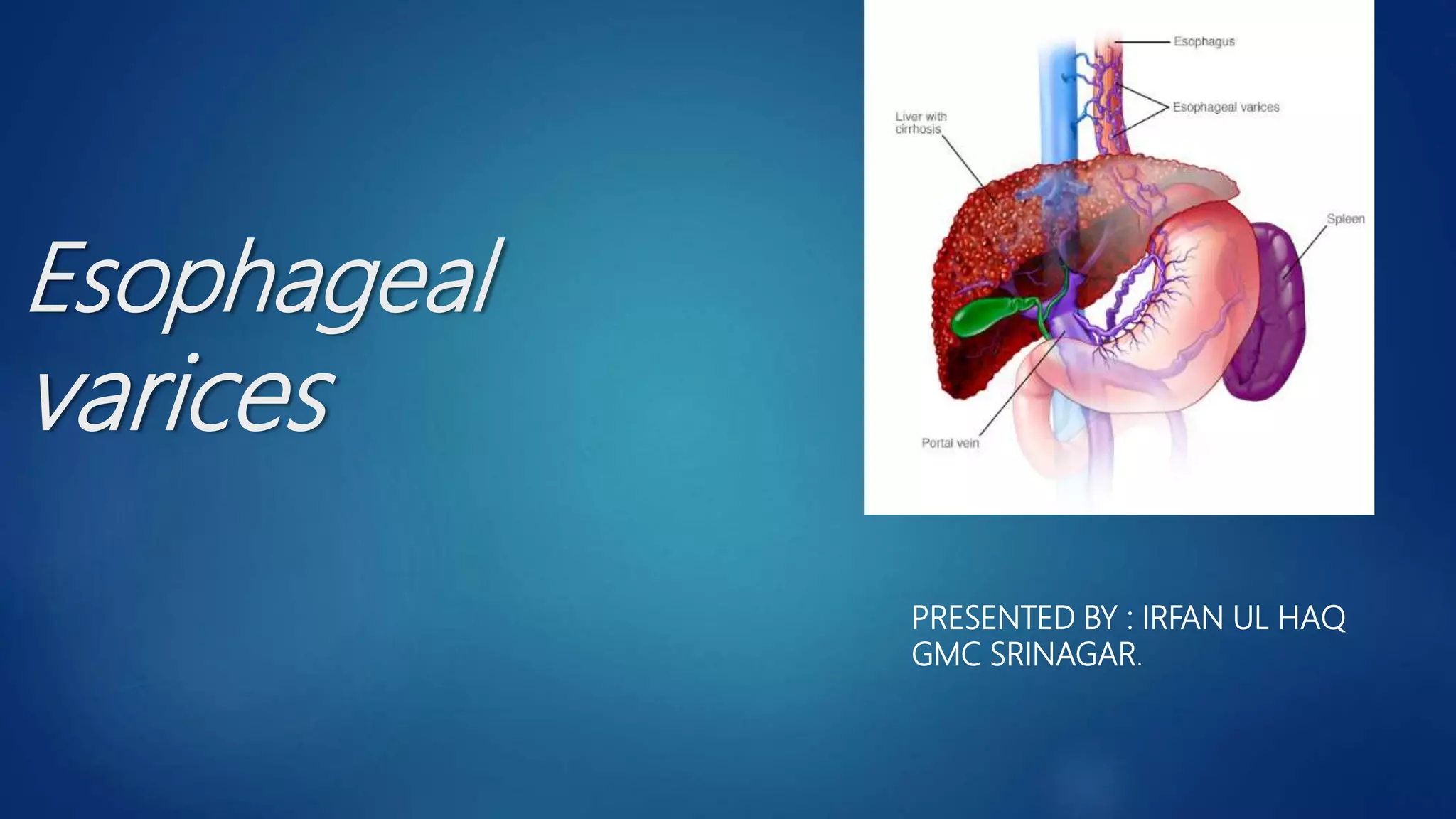
 Esophageal varices are dilated and tortuous veins in the esophageal
wall, secondary to increased venous pressure in the splanchnic venous
bed or in the superior vena cava.
 Dilated veins in the gastrointestinal organs are most common in the
submucosal layer.
 However, in the distal few centimeters of the esophagus, the main
veins, and consequently the varices, run right underneath the
epithelium.
 The development of Esophageal Varices is the most serious
consequence of portal hypertension due to the risk of rupture and
variceal hemorrhage, which is the most common lethal complication
of cirrhosis.
Anatomy and histopathology
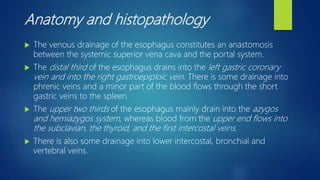
 The venous drainage of the esophagus constitutes an anastomosis
between the systemic superior vena cava and the portal system.
 The distal third of the esophagus drains into the left gastric coronary
vein and into the right gastroepiploic vein. There is some drainage into
phrenic veins and a minor part of the blood flows through the short
gastric veins to the spleen.
 The upper two thirds of the esophagus mainly drain into the azygos
and hemiazygos system, whereas blood from the upper end flows into
the subclavian, the thyroid, and the first intercostal veins.
 There is also some drainage into lower intercostal, bronchial and
vertebral veins.
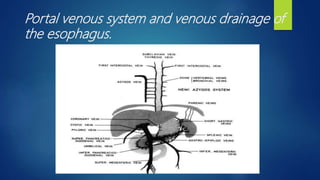
Portal venous system and venous drainage of
the esophagus.
Venous system of Esophagus
 The venous system of the esophagus itself is composed of
 The intrinsic veins, including a subepithelial plexus in the lamina propria, a
submucosal plexus, and perforating veins, which join the two plexuses and drain
into the extrinsic veins.
 The veins accompanying the vagal nerves that run in the adventitial wall of the
esophagus.
 Some twenty extrinsic veins, formed by groups of perforating veins.
 Submucosal and perforating veins are rather sparse in the distal 2 to 3 cm of the
esophagus. The subepithelial localization of the veins favors easy bleeding in the
distal esophagus when varices exist.
 However esophageal submucosal and gastric subglandular veins may also give rise
to bleeding.
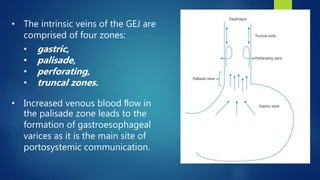
• The intrinsic veins of the GEJ are
comprised of four zones:
• gastric,
• palisade,
• perforating,
• truncal zones.
• Increased venous blood flow in
the palisade zone leads to the
formation of gastroesophageal
varices as it is the main site of
portosystemic communication.
Epidemiology
 The prevalence of esophageal Varices in patients with liver cirrhosis may
range from 60% to 80%, and the reported mortality from variceal bleeding
ranges from 17% to 57%.
 The acute mortality rate with each bleed is approximately 30%,
and the survival rate in past was less than 40% after 1 year with
medical management alone.
 The highest prevalence occurs in patients with more advanced liver disease,
i.e., Child–Pugh B or C class disease.
 The strongest independent predictor for the development of varices is an
HVPG>10 mmHg.
 The 1-year incidence of variceal hemorrhage in patients with esophageal
varices is about 5%–15%.
Etiology
 Secondary to Portal Hypertension:
Presinusoidal Causes :
Presinusoidal Prehepatic Causes:
Arteriovenous shunts in the Portal System.
Portal Vein Thrombosis and Compression.
Splenic Vein Thrombosis.
Presinusoidal Intrahepatic Causes:
Hepatic Schistosomiasis.
Granulomatous Diseases.
Polycystic Liver Disease, Hydatid Cysts.
Liver Metastases.
Wilson's Disease.
Acute Hepatitis.
Sinusoidal Causes:
Acute Hepatitis
Fatty Liver
Primary Biliary Cirrhosis.
 Postsinusoidal Causes:
Postsinusoidal Intrahepatic Causes
Liver Cirrhosis:
Alcoholic Liver Cirrhosis
Post-necrotic Liver Cirrhosis
Cryptogenic Liver Cirrhosis
Primary Biliary Cirrhosis
Secondary Biliary Cirrhosis
Cardiac Cirrhosis
Indian Type of Infantile Cirrhosis
Miscellaneous
Liver Cirrhosis Associated with Metabolic Disorders:
Hemochromatosis
Wilson's Disease
Galactosemia
Deficiency of Alpha1-antitrypsine
Gaucher's Disease
Hepatic Porphyria
Sickle-Cell Disease.
Alcoholic Hepatitis
Partial Nodular Transformation
Veno-occlusive Disease
 Postsinusoidal Extrahepatic Causes:
Budd-Chiari Syndrome
Congestive Heart Failure
Obstruction of Inferior Vena Cava
 Esophageal Varices without Portal Hypertension:
Obstruction of Vena Cava Superior (Downhill Varices)
Carcinoma at the Gastroesophageal Junction
"Idiopathic Esophageal Varices"
Esophageal Varices in Patients with Liver Disease.
 Unclassified Miscellaneous Causes.
Pathophysiology
 Esophageal varices are usually caused by increased pressure in the
venous splanchnic bed, i.e. in the splenic, superior mesenteric, or portal
veins.
 This increased venous pressure, which will be called "Portal
Hypertension" opens up pre-existing collateral vessels that reach the
esophageal veins via the gastric coronary, the gastroepiploic, and the
short gastric veins.
 As portal hypertension develops, there is increased flow through
portosystemic anastomoses which causes dilation of the intrinsic veins
and the formation of oesophageal varices.
 In addition, the valves of the perforating veins become incompetent and
reversal of flow from the extrinsic to intrinsic veins occurs.
Pathophysiology(contd…)
 Esophageal varices are among the most serious consequences of
portal hypertension.
 They appear only when the hepatic venous pressure gradient (HVPG)
is above 10-12 mmHg, and their increasing size is accompanied by an
increasing risk of bleeding.
 Esophageal varices may also be due to obstruction of the superior
vena cava by esophageal or bronchial cancer. As these varices result
from an increased resistance in their own outflow tract they are called
“downhill varices”.
Clinical features
 Bleeding:
 Esophageal varices usually don't cause signs and symptoms unless they
bleed.
 About 16 percent of massive upper gastrointestinal hemorrhages are due to
esophageal varices.
 The mechanisms that trigger the actual bleeding episode are still controversial.
 Esophagitis with erosion, lesions by food substances and sudden increase in
esophageal portal pressure (explosion theory) have all been suggested as the
immediate cause of bleeding.
 Sudden changes in pressure within the varices can be related to local changes
in the distal esophagus or to changes in portal pressure.
Signs and Symptoms
 Signs and symptoms are either due to bleeding or underlying liver disease.
 Those due to bleeding are:
 Vomiting and seeing significant amounts of blood in your vomit,
 Black, tarry or bloody stools,
 Lightheadedness,
 Loss of consciousness (in severe case).
 Those due to liver involvement are:
 Yellow discoloration of skin and eyes (Jaundice),
 Easy bleeding or bruising,
 Ascites.
Diagnosis
 Various investigations done for esophageal varices diagnosis are:
 Endoscope exam.
 Upper gastrointestinal endoscopy is the preferred method of
screening for varices.
 The current recommendation is for all patients with cirrhosis to
undergo an EGD for screening for varices at the time of diagnosis.
 The size of the varices and the presence of red wale marks should be
assessed.
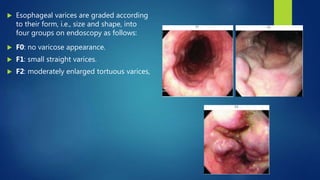
 Esophageal varices are graded according
to their form, i.e., size and shape, into
four groups on endoscopy as follows:
 F0: no varicose appearance.
 F1: small straight varices.
 F2: moderately enlarged tortuous varices,
 There are also endoscopic features of esophageal
varices which have been shown to predict the risk of
hemorrhage, which are referred to as red signs.
 The red color correlates with blood flow through
dilated subepithelial and perforating veins.
 Red signs include red wale marks and cherry red
spots, which are dilated subepithelial veins that
appear as discrete flat red spots overlying varices.
 Hematocystic spots are raised red spots that
overlie varices and resemble blood blisters.
Imaging Tests
 Both abdominal CT scans and Doppler ultrasounds of
the splenic and portal veins can suggest the presence of esophageal
varices.
Capsule Endoscopy
 In this test, capsule containing a tiny camera is swallowed, which takes
pictures of the esophagus as it goes through the digestive tract.
 This might be an option for people who are unable or unwilling to have
an endoscope exam.
 However studies have shown that the accuracy of capsule endoscopy in
the detection of esophageal varices and red signs is not sufficient to
replace EGD at the present time .
 This technology is more expensive than regular endoscopy and not as
available.
Management
 Treatment of gastric variceal bleeding remains a challenge despite
advances in medical therapy, endoscopic hemostasis, and
portosystemic shunt procedures, overall long-term survival rates
have not improved signifcantly for patients with variceal bleeding.
 Liver transplantation can improve survival in selected patients.
 Survival in non transplanted patients with variceal bleeding is heavily
influenced by the severity of underlying liver disease.
Primary prophylaxis
 Primary prophylaxis refers to the prevention of the frst episode
of variceal bleeding in cirrhotic patients at high risk of bleeding.
 Patients can be stratifed into two groups according
to their risk of variceal hemorrhage:
 high-risk patients,i.e., patients with medium/large varices that have red wale signs nor
patients with Child–Pugh B or C cirrhosis; and
 low-risk patients, i.e., patients with small varices without red wale signs
or occurring in patients with Child–Pugh A cirrhosis .
Algorithm for primary prophylaxis
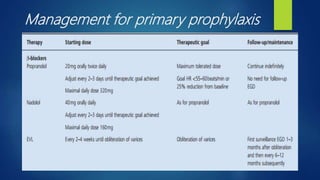
Management for primary prophylaxis
Management of Acute variceal bleeding
 Acute variceal hemorrhage is a medical emergency that requires optimal
management to prevent mortality.
 There have been signifcant advances in the management of variceal
bleeding that have resulted in a decrease in mortality from approximately
40%–50% to 15%–20%.
 These include:
 the use of short-term antibiotic prophylaxis,
 vasoactive drugs,
 endoscopic treatment with variceal ligation and sclerotherapy,
 and TIPS.
Resuscitation and initial management
 Patients with suspected acute variceal bleeding require admission to an
intensive care unit for resuscitation and management.
 Resuscitation is centered on the basic medical principles of establishing
airway, breathing, and circulation.
 Volume resuscitation should be performed promptly to achieve
hemodynamic stability and protect the function of vital organs such as
the kidneys.
 Blood transfusion should be performed conservatively to achieve a
target hemoglobin level of 7–8 g/dL and also it is an ideal fluid.
Antibiotic prophylaxis
 Cirrhotic patients with upper gastrointestinal hemorrhage have been shown to have a
high prevalence of bacterial infections including spontaneous bacterial peritonitis (SBP),
bacteremia, pneumonia, and urinary tract infections .
 The use of short-term prophylactic antibiotics in patients with cirrhosis and
gastrointestinal bleeding, independent of the presence of ascites, has been found to
significantly decrease the rate of bacterial infections as well as increase the survival rate.
 The antibiotic of choice is norfloxacin 400 mg twice daily for 7 days. However over the
time there has been resistance to norfloxacin by different gram negative organisms so
newer antibiotic Ceftriaxone has been recommended as antibiotic choice for
prophylaxis of variceal bleed.
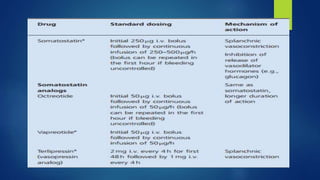
Pharmacological therapy
 Vasoactive drugs that cause splanchnic vasoconstriction and thus
decrease portal venous flow and pressure are the mainstay of
treatment.
 These include:
 Vasopressin and its analog terlipressin and
 Somatostatin and its analogs, octreotide and vapreotide.
 Octreotide is considered the only safe vasoactive agent for the
treatment of acute variceal hemorrhage due to the increased
frequency and severity of side effects associated with vasopressin use.
 Vasoactive drugs have been shown to improve the efcacy of
endoscopic therapy (sclerotherapy or band ligation) in obtaining
control of hemorrhage compared to endoscopic therapy alone.
Endoscopic Therapy
 Patients with cirrhosis and suspected variceal bleed should undergo upper GI
endoscopy as soon as safely possible after admission(within 12 hrs) to confirm
diagnosis and perform endoscopic treatment.
 The diagnosis of variceal bleed is confirmed if one of the following signs are
present viz:
 Active bleeding from the varix,
 White-nipple sign or clot adherent to varix and
 Presence of varices with other potential sources of bleeding.
 Both EVL and sclerotherapy are effective in achieving initial control of bleeding
in about 75-90 percent patients with variceal bleeding.
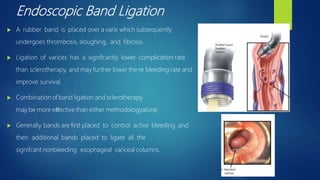
Endoscopic Band Ligation
 A rubber band is placed over a varix which subsequently
undergoes thrombosis, sloughing, and fibrosis.
 Ligation of varices has a signifcantly lower complication rate
than sclerotherapy, and may further lower the re bleeding rate and
improve survival.
 Combination of band ligation and sclerotherapy
may be more effective than either methodologyalone.
 Generally, bands are first placed to control active bleeding and
then additional bands placed to ligate all the
signifcant nonbleeding esophageal variceal columns.
Endoscopic Sclerotherapy
 Endoscopic variceal sclerotherapy involves injecting a sclerosant into or adjacent
to esophageal varices.
 The most commonly used sclerosants are ethanolamine oleate, sodium tetradecyl
sulfate, sodium morrhuate, and ethanol.
 Various techniques are used; their common goals are to achieve
initial hemostasis and reduce the risk of rebleeding by performing sclerotherapy
on a weekly basis until the varices are obliterated.
 Hemostasis can be achieved in 85% to 95% of cases, with a rebleeding rate of
25% to 30%.
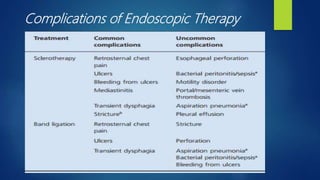
 Complications of endoscopic variceal sclerotherapy include esophageal ulcers
that can bleed or perforate, esophageal strictures, mediastinitis, pleural effusions,
aspiration pneumonia, acute respiratory distress syndrome, chest pain, fever, and
bacteremia.
Complications of Endoscopic Therapy
Salvage therapy for patients with treatment
failure
 Despite appropriate pharmacological and endoscopic therapy,
failure to control bleeding occurs in about 10%–20% of patients
with acute variceal hemorrhage.
 Main predictors of failure are:
 Child–Pugh class C disease,
 HVPG >20 mmHg, and
 active bleeding at endoscopy.
 Interventions done in failure to control bleeding are:
 Balloon Tamponade
 TIPS.
Balloon tamponade:
 Balloon tamponade of varices is seldom used now to control gastroesophageal
variceal bleeding; it may be used to stabilize a patient with massive bleeding prior
to defnitive therapy.
 Most reports suggest that balloon tamponade provides initial control of bleeding
in 85% to 98% of cases, but variceal rebleeding recurs soon after the balloon is
deflated in 21% to 60% of patients.
 The major problem with tamponade balloons is a 30% rate of serious
complications like aspiration pneumonia, esophageal rupture,
and airway obstruction so need of endotracheal intubation before procedure is
done.
Transjugular intrahepatic portosystemic shunts and surgical
portosystemic shunts (TIPS)
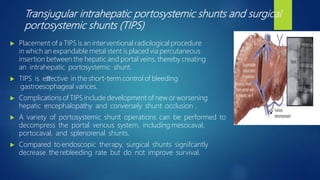
 Placement of a TIPS is an interventional radiological procedure
in which an expandable metal stent is placed via percutaneous
insertion between the hepatic and portal veins, thereby creating
an intrahepatic portosystemic shunt.
 TIPS is effective in the short-term control of bleeding
gastroesophageal varices.
 Complications of TIPS include development of new or worsening
hepatic encephalopathy and conversely shunt occlusion .
 A variety of portosystemic shunt operations can be performed to
decompress the portal venous system, including mesocaval,
portocaval, and splenorenal shunts.
 Compared to endoscopic therapy, surgical shunts signifcantly
decrease the rebleeding rate but do not improve survival.
Secondary Prophylaxis
 Patients with cirrhosis who survive an episode of variceal bleeding are at high risk of
rebleeding.
 The median rebleeding rate in untreated patients is about 60% at 1–2 years, with a
mortality of 33%.
 The highest risk for rebleeding is within the first 6 weeks after the acute bleeding
episode.
 Secondary prophylaxis should be initiated as soon as possible from day 6 of the index
hemorrhage after resolution of acute bleeding occurs and includes:
 Beta blockers
 EVL and Sclerotherapy
 TIPS.
THANK YOU

Esophageal varices

  • 1.
    Esophageal varices PRESENTED BY :IRFAN UL HAQ GMC SRINAGAR.
  • 2.
    Introduction  Esophageal varicesare dilated and tortuous veins in the esophageal wall, secondary to increased venous pressure in the splanchnic venous bed or in the superior vena cava.  Dilated veins in the gastrointestinal organs are most common in the submucosal layer.  However, in the distal few centimeters of the esophagus, the main veins, and consequently the varices, run right underneath the epithelium.  The development of Esophageal Varices is the most serious consequence of portal hypertension due to the risk of rupture and variceal hemorrhage, which is the most common lethal complication of cirrhosis.
  • 3.
    Anatomy and histopathology The venous drainage of the esophagus constitutes an anastomosis between the systemic superior vena cava and the portal system.  The distal third of the esophagus drains into the left gastric coronary vein and into the right gastroepiploic vein. There is some drainage into phrenic veins and a minor part of the blood flows through the short gastric veins to the spleen.  The upper two thirds of the esophagus mainly drain into the azygos and hemiazygos system, whereas blood from the upper end flows into the subclavian, the thyroid, and the first intercostal veins.  There is also some drainage into lower intercostal, bronchial and vertebral veins.
  • 4.
    Portal venous systemand venous drainage of the esophagus.
  • 5.
    Venous system ofEsophagus  The venous system of the esophagus itself is composed of  The intrinsic veins, including a subepithelial plexus in the lamina propria, a submucosal plexus, and perforating veins, which join the two plexuses and drain into the extrinsic veins.  The veins accompanying the vagal nerves that run in the adventitial wall of the esophagus.  Some twenty extrinsic veins, formed by groups of perforating veins.  Submucosal and perforating veins are rather sparse in the distal 2 to 3 cm of the esophagus. The subepithelial localization of the veins favors easy bleeding in the distal esophagus when varices exist.  However esophageal submucosal and gastric subglandular veins may also give rise to bleeding.
  • 6.
    • The intrinsicveins of the GEJ are comprised of four zones: • gastric, • palisade, • perforating, • truncal zones. • Increased venous blood flow in the palisade zone leads to the formation of gastroesophageal varices as it is the main site of portosystemic communication.
  • 7.
    Epidemiology  The prevalenceof esophageal Varices in patients with liver cirrhosis may range from 60% to 80%, and the reported mortality from variceal bleeding ranges from 17% to 57%.  The acute mortality rate with each bleed is approximately 30%, and the survival rate in past was less than 40% after 1 year with medical management alone.  The highest prevalence occurs in patients with more advanced liver disease, i.e., Child–Pugh B or C class disease.  The strongest independent predictor for the development of varices is an HVPG>10 mmHg.  The 1-year incidence of variceal hemorrhage in patients with esophageal varices is about 5%–15%.
  • 8.
    Etiology  Secondary toPortal Hypertension: Presinusoidal Causes : Presinusoidal Prehepatic Causes: Arteriovenous shunts in the Portal System. Portal Vein Thrombosis and Compression. Splenic Vein Thrombosis. Presinusoidal Intrahepatic Causes: Hepatic Schistosomiasis. Granulomatous Diseases. Polycystic Liver Disease, Hydatid Cysts. Liver Metastases. Wilson's Disease. Acute Hepatitis. Sinusoidal Causes: Acute Hepatitis Fatty Liver Primary Biliary Cirrhosis.
  • 9.
     Postsinusoidal Causes: PostsinusoidalIntrahepatic Causes Liver Cirrhosis: Alcoholic Liver Cirrhosis Post-necrotic Liver Cirrhosis Cryptogenic Liver Cirrhosis Primary Biliary Cirrhosis Secondary Biliary Cirrhosis Cardiac Cirrhosis Indian Type of Infantile Cirrhosis Miscellaneous Liver Cirrhosis Associated with Metabolic Disorders: Hemochromatosis Wilson's Disease Galactosemia Deficiency of Alpha1-antitrypsine Gaucher's Disease Hepatic Porphyria Sickle-Cell Disease.
  • 10.
    Alcoholic Hepatitis Partial NodularTransformation Veno-occlusive Disease  Postsinusoidal Extrahepatic Causes: Budd-Chiari Syndrome Congestive Heart Failure Obstruction of Inferior Vena Cava  Esophageal Varices without Portal Hypertension: Obstruction of Vena Cava Superior (Downhill Varices) Carcinoma at the Gastroesophageal Junction "Idiopathic Esophageal Varices" Esophageal Varices in Patients with Liver Disease.  Unclassified Miscellaneous Causes.
  • 11.
    Pathophysiology  Esophageal varicesare usually caused by increased pressure in the venous splanchnic bed, i.e. in the splenic, superior mesenteric, or portal veins.  This increased venous pressure, which will be called "Portal Hypertension" opens up pre-existing collateral vessels that reach the esophageal veins via the gastric coronary, the gastroepiploic, and the short gastric veins.  As portal hypertension develops, there is increased flow through portosystemic anastomoses which causes dilation of the intrinsic veins and the formation of oesophageal varices.  In addition, the valves of the perforating veins become incompetent and reversal of flow from the extrinsic to intrinsic veins occurs.
  • 12.
    Pathophysiology(contd…)  Esophageal varicesare among the most serious consequences of portal hypertension.  They appear only when the hepatic venous pressure gradient (HVPG) is above 10-12 mmHg, and their increasing size is accompanied by an increasing risk of bleeding.  Esophageal varices may also be due to obstruction of the superior vena cava by esophageal or bronchial cancer. As these varices result from an increased resistance in their own outflow tract they are called “downhill varices”.
  • 13.
    Clinical features  Bleeding: Esophageal varices usually don't cause signs and symptoms unless they bleed.  About 16 percent of massive upper gastrointestinal hemorrhages are due to esophageal varices.  The mechanisms that trigger the actual bleeding episode are still controversial.  Esophagitis with erosion, lesions by food substances and sudden increase in esophageal portal pressure (explosion theory) have all been suggested as the immediate cause of bleeding.  Sudden changes in pressure within the varices can be related to local changes in the distal esophagus or to changes in portal pressure.
  • 14.
    Signs and Symptoms Signs and symptoms are either due to bleeding or underlying liver disease.  Those due to bleeding are:  Vomiting and seeing significant amounts of blood in your vomit,  Black, tarry or bloody stools,  Lightheadedness,  Loss of consciousness (in severe case).  Those due to liver involvement are:  Yellow discoloration of skin and eyes (Jaundice),  Easy bleeding or bruising,  Ascites.
  • 15.
    Diagnosis  Various investigationsdone for esophageal varices diagnosis are:  Endoscope exam.  Upper gastrointestinal endoscopy is the preferred method of screening for varices.  The current recommendation is for all patients with cirrhosis to undergo an EGD for screening for varices at the time of diagnosis.  The size of the varices and the presence of red wale marks should be assessed.
  • 16.
     Esophageal varicesare graded according to their form, i.e., size and shape, into four groups on endoscopy as follows:  F0: no varicose appearance.  F1: small straight varices.  F2: moderately enlarged tortuous varices,
  • 17.
     There arealso endoscopic features of esophageal varices which have been shown to predict the risk of hemorrhage, which are referred to as red signs.  The red color correlates with blood flow through dilated subepithelial and perforating veins.  Red signs include red wale marks and cherry red spots, which are dilated subepithelial veins that appear as discrete flat red spots overlying varices.  Hematocystic spots are raised red spots that overlie varices and resemble blood blisters.
  • 18.
    Imaging Tests  Bothabdominal CT scans and Doppler ultrasounds of the splenic and portal veins can suggest the presence of esophageal varices.
  • 19.
    Capsule Endoscopy  Inthis test, capsule containing a tiny camera is swallowed, which takes pictures of the esophagus as it goes through the digestive tract.  This might be an option for people who are unable or unwilling to have an endoscope exam.  However studies have shown that the accuracy of capsule endoscopy in the detection of esophageal varices and red signs is not sufficient to replace EGD at the present time .  This technology is more expensive than regular endoscopy and not as available.
  • 20.
    Management  Treatment ofgastric variceal bleeding remains a challenge despite advances in medical therapy, endoscopic hemostasis, and portosystemic shunt procedures, overall long-term survival rates have not improved signifcantly for patients with variceal bleeding.  Liver transplantation can improve survival in selected patients.  Survival in non transplanted patients with variceal bleeding is heavily influenced by the severity of underlying liver disease.
  • 21.
    Primary prophylaxis  Primaryprophylaxis refers to the prevention of the frst episode of variceal bleeding in cirrhotic patients at high risk of bleeding.  Patients can be stratifed into two groups according to their risk of variceal hemorrhage:  high-risk patients,i.e., patients with medium/large varices that have red wale signs nor patients with Child–Pugh B or C cirrhosis; and  low-risk patients, i.e., patients with small varices without red wale signs or occurring in patients with Child–Pugh A cirrhosis .
  • 22.
  • 23.
  • 24.
    Management of Acutevariceal bleeding  Acute variceal hemorrhage is a medical emergency that requires optimal management to prevent mortality.  There have been signifcant advances in the management of variceal bleeding that have resulted in a decrease in mortality from approximately 40%–50% to 15%–20%.  These include:  the use of short-term antibiotic prophylaxis,  vasoactive drugs,  endoscopic treatment with variceal ligation and sclerotherapy,  and TIPS.
  • 25.
    Resuscitation and initialmanagement  Patients with suspected acute variceal bleeding require admission to an intensive care unit for resuscitation and management.  Resuscitation is centered on the basic medical principles of establishing airway, breathing, and circulation.  Volume resuscitation should be performed promptly to achieve hemodynamic stability and protect the function of vital organs such as the kidneys.  Blood transfusion should be performed conservatively to achieve a target hemoglobin level of 7–8 g/dL and also it is an ideal fluid.
  • 26.
    Antibiotic prophylaxis  Cirrhoticpatients with upper gastrointestinal hemorrhage have been shown to have a high prevalence of bacterial infections including spontaneous bacterial peritonitis (SBP), bacteremia, pneumonia, and urinary tract infections .  The use of short-term prophylactic antibiotics in patients with cirrhosis and gastrointestinal bleeding, independent of the presence of ascites, has been found to significantly decrease the rate of bacterial infections as well as increase the survival rate.  The antibiotic of choice is norfloxacin 400 mg twice daily for 7 days. However over the time there has been resistance to norfloxacin by different gram negative organisms so newer antibiotic Ceftriaxone has been recommended as antibiotic choice for prophylaxis of variceal bleed.
  • 27.
    Pharmacological therapy  Vasoactivedrugs that cause splanchnic vasoconstriction and thus decrease portal venous flow and pressure are the mainstay of treatment.  These include:  Vasopressin and its analog terlipressin and  Somatostatin and its analogs, octreotide and vapreotide.  Octreotide is considered the only safe vasoactive agent for the treatment of acute variceal hemorrhage due to the increased frequency and severity of side effects associated with vasopressin use.  Vasoactive drugs have been shown to improve the efcacy of endoscopic therapy (sclerotherapy or band ligation) in obtaining control of hemorrhage compared to endoscopic therapy alone.
  • 29.
    Endoscopic Therapy  Patientswith cirrhosis and suspected variceal bleed should undergo upper GI endoscopy as soon as safely possible after admission(within 12 hrs) to confirm diagnosis and perform endoscopic treatment.  The diagnosis of variceal bleed is confirmed if one of the following signs are present viz:  Active bleeding from the varix,  White-nipple sign or clot adherent to varix and  Presence of varices with other potential sources of bleeding.  Both EVL and sclerotherapy are effective in achieving initial control of bleeding in about 75-90 percent patients with variceal bleeding.
  • 30.
    Endoscopic Band Ligation A rubber band is placed over a varix which subsequently undergoes thrombosis, sloughing, and fibrosis.  Ligation of varices has a signifcantly lower complication rate than sclerotherapy, and may further lower the re bleeding rate and improve survival.  Combination of band ligation and sclerotherapy may be more effective than either methodologyalone.  Generally, bands are first placed to control active bleeding and then additional bands placed to ligate all the signifcant nonbleeding esophageal variceal columns.
  • 31.
    Endoscopic Sclerotherapy  Endoscopicvariceal sclerotherapy involves injecting a sclerosant into or adjacent to esophageal varices.  The most commonly used sclerosants are ethanolamine oleate, sodium tetradecyl sulfate, sodium morrhuate, and ethanol.  Various techniques are used; their common goals are to achieve initial hemostasis and reduce the risk of rebleeding by performing sclerotherapy on a weekly basis until the varices are obliterated.  Hemostasis can be achieved in 85% to 95% of cases, with a rebleeding rate of 25% to 30%.  Complications of endoscopic variceal sclerotherapy include esophageal ulcers that can bleed or perforate, esophageal strictures, mediastinitis, pleural effusions, aspiration pneumonia, acute respiratory distress syndrome, chest pain, fever, and bacteremia.
  • 32.
  • 33.
    Salvage therapy forpatients with treatment failure  Despite appropriate pharmacological and endoscopic therapy, failure to control bleeding occurs in about 10%–20% of patients with acute variceal hemorrhage.  Main predictors of failure are:  Child–Pugh class C disease,  HVPG >20 mmHg, and  active bleeding at endoscopy.  Interventions done in failure to control bleeding are:  Balloon Tamponade  TIPS.
  • 34.
    Balloon tamponade:  Balloontamponade of varices is seldom used now to control gastroesophageal variceal bleeding; it may be used to stabilize a patient with massive bleeding prior to defnitive therapy.  Most reports suggest that balloon tamponade provides initial control of bleeding in 85% to 98% of cases, but variceal rebleeding recurs soon after the balloon is deflated in 21% to 60% of patients.  The major problem with tamponade balloons is a 30% rate of serious complications like aspiration pneumonia, esophageal rupture, and airway obstruction so need of endotracheal intubation before procedure is done.
  • 35.
    Transjugular intrahepatic portosystemicshunts and surgical portosystemic shunts (TIPS)  Placement of a TIPS is an interventional radiological procedure in which an expandable metal stent is placed via percutaneous insertion between the hepatic and portal veins, thereby creating an intrahepatic portosystemic shunt.  TIPS is effective in the short-term control of bleeding gastroesophageal varices.  Complications of TIPS include development of new or worsening hepatic encephalopathy and conversely shunt occlusion .  A variety of portosystemic shunt operations can be performed to decompress the portal venous system, including mesocaval, portocaval, and splenorenal shunts.  Compared to endoscopic therapy, surgical shunts signifcantly decrease the rebleeding rate but do not improve survival.
  • 36.
    Secondary Prophylaxis  Patientswith cirrhosis who survive an episode of variceal bleeding are at high risk of rebleeding.  The median rebleeding rate in untreated patients is about 60% at 1–2 years, with a mortality of 33%.  The highest risk for rebleeding is within the first 6 weeks after the acute bleeding episode.  Secondary prophylaxis should be initiated as soon as possible from day 6 of the index hemorrhage after resolution of acute bleeding occurs and includes:  Beta blockers  EVL and Sclerotherapy  TIPS.
  • 37.