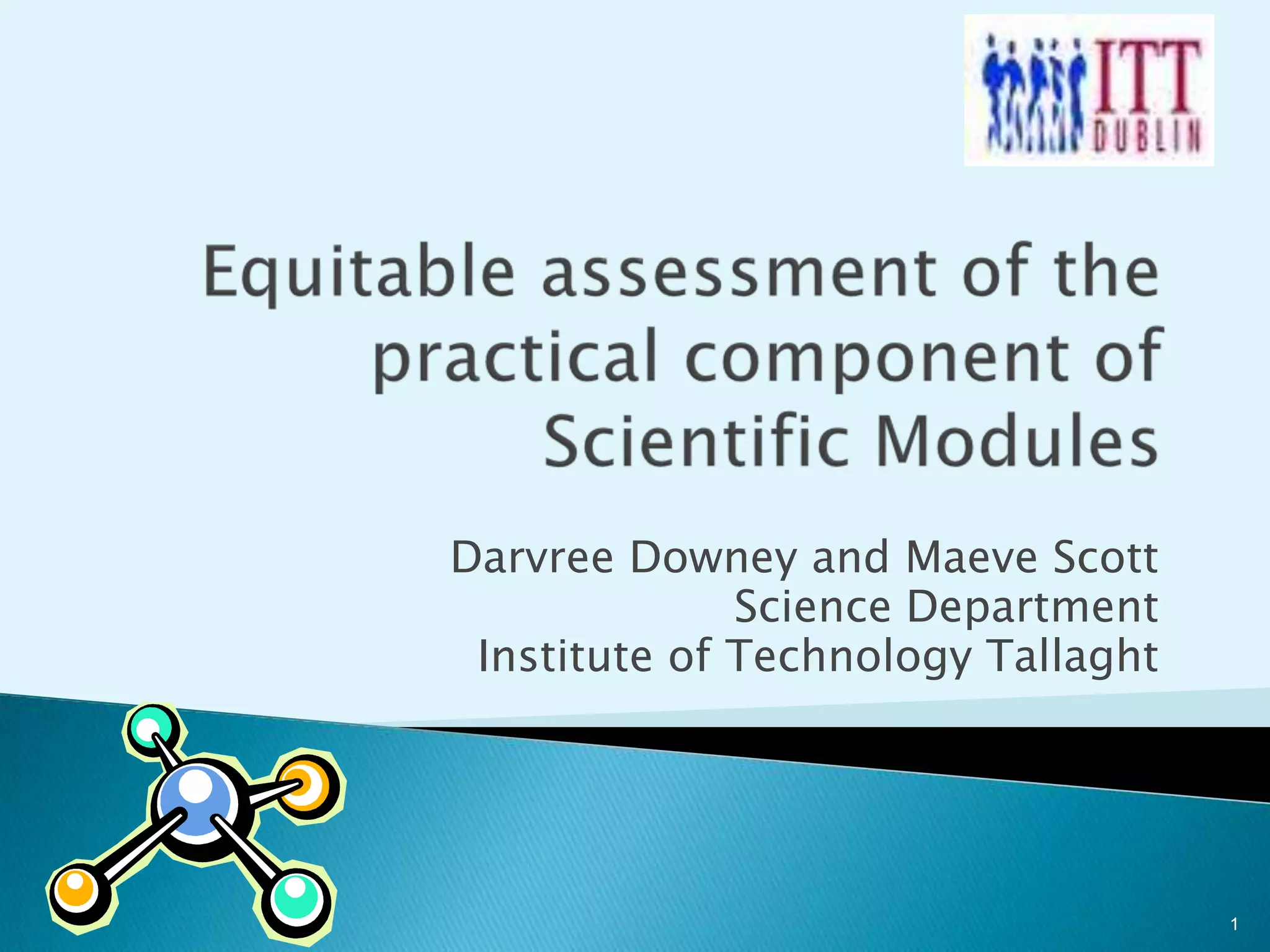
Darvree Downey and Maeve Scott
              Science Department
 Institute of Technology Tallaght


                                    1
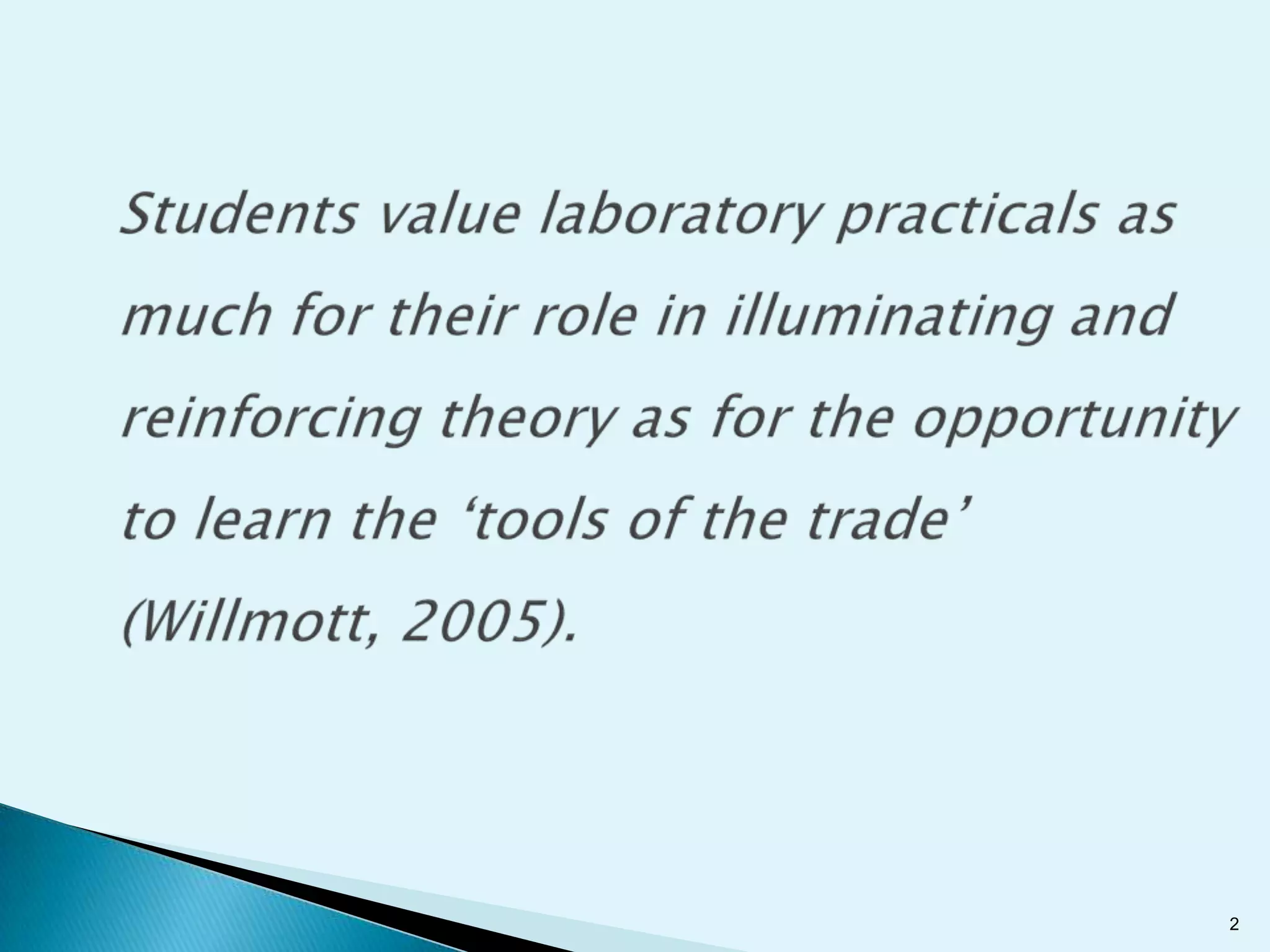
2
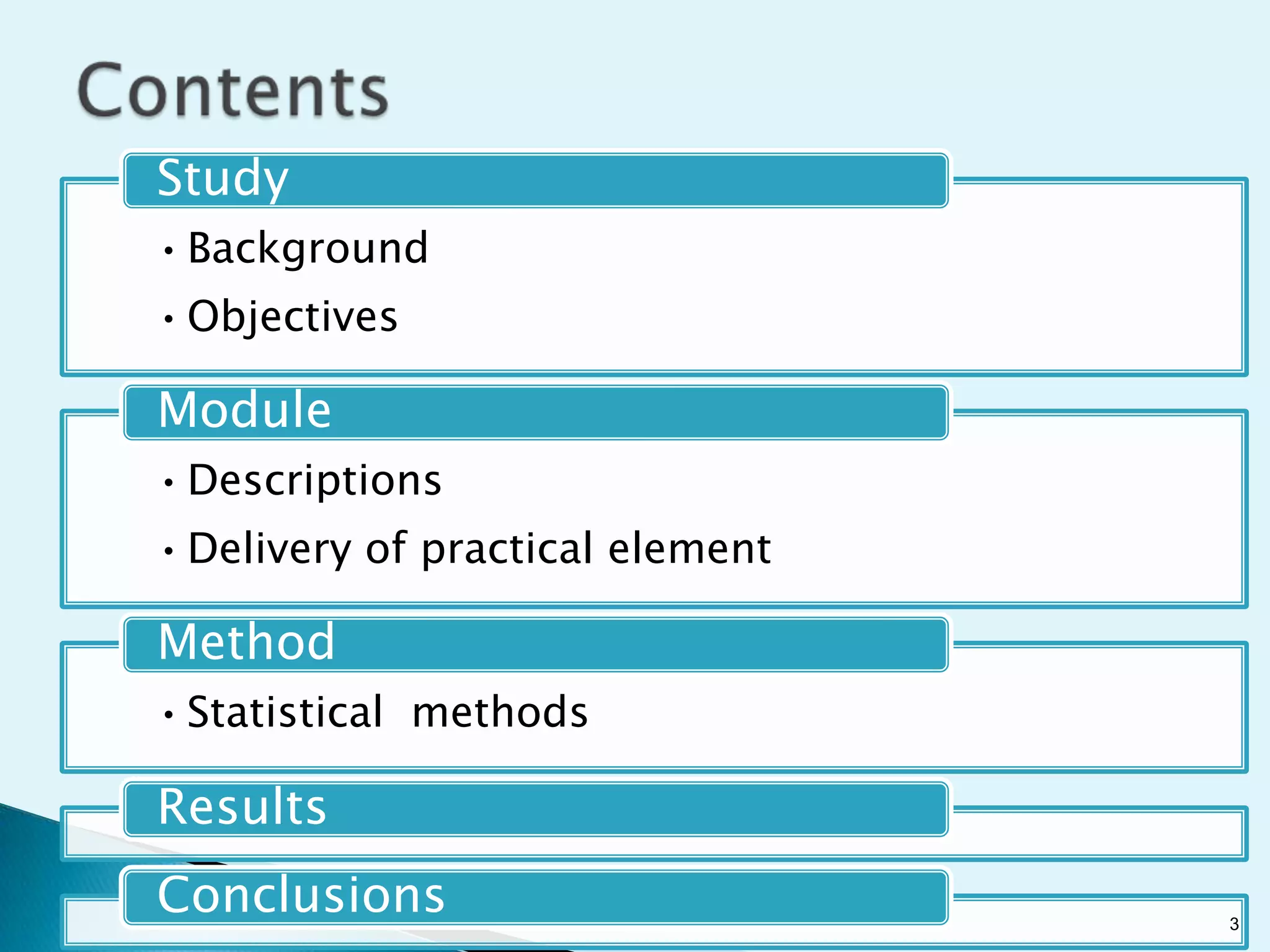
Study
• Background
• Objectives

Module
• Descriptions
• Delivery of practical element

Method
• Statistical methods

Results
Conclusions                       3
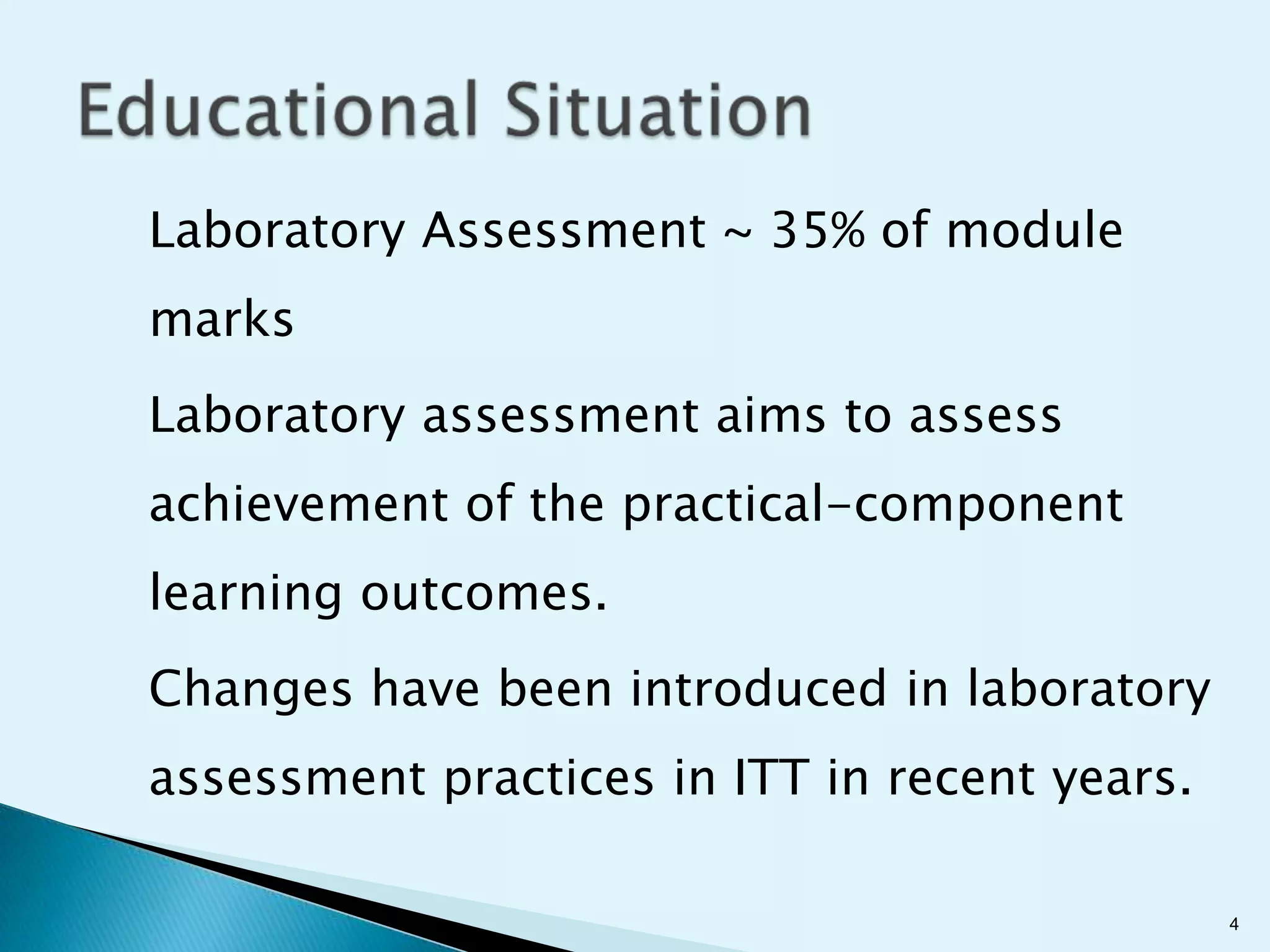
Laboratory Assessment ~ 35% of module
marks
Laboratory assessment aims to assess
achievement of the practical-component
learning outcomes.
Changes have been introduced in laboratory
assessment practices in ITT in recent years.

                                               4
Since the last programmatic review (in 2006) there is
no failed element in any of the laboratory subjects in
ITT’S Science Department.


Anecdotal belief that students are getting sufficient
marks to pass without achieving core learning
outcomes

                                                         5
   How does laboratory assessment equate with
    students achievements in other summative
    assessments within the same module?
   Is correlation with other forms of assessment
    indicative that the laboratory assessment is
    equitable?


                                                    6
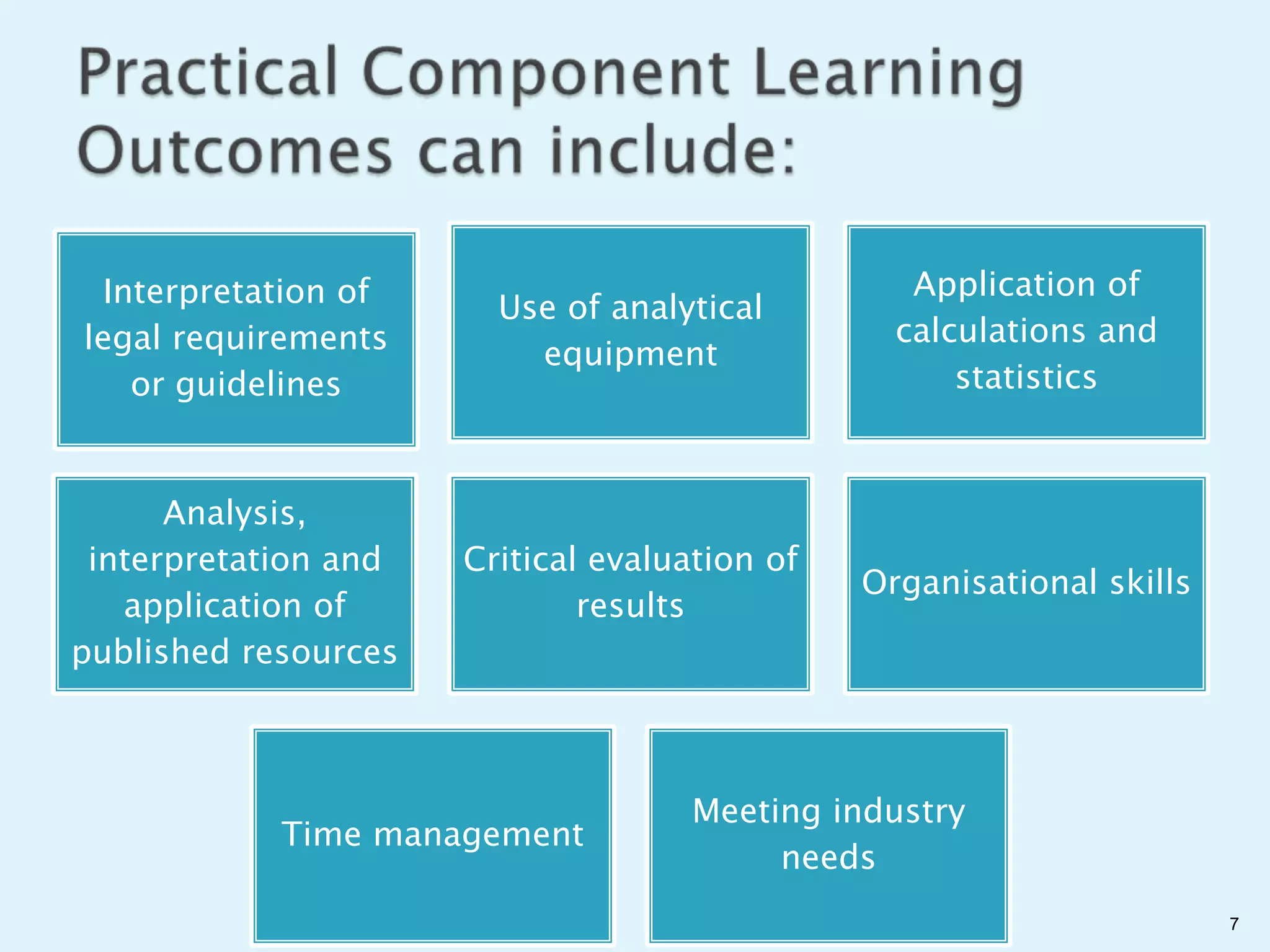
Interpretation of                                Application of
                        Use of analytical
legal requirements                               calculations and
                          equipment
   or guidelines                                     statistics


      Analysis,
 interpretation and   Critical evaluation of
                                               Organisational skills
   application of             results
published resources


                                     Meeting industry
            Time management
                                          needs
                                                                       7
   The practical component of laboratory exams
    are designed to assess laboratory technique
    and equipment usage skills.
   Learning outcomes common to both theory
    (final module exam) and laboratory exams
    include organisational and time management
    skills and data analysis skills.

                                                  8
To determine if current laboratory
     assessment methods used for a range of
     scientific modules in ITT Dublin are
1.   Reliable indicators of a student’s ability to
     meet the overall module learning outcomes.
2.   Equitable for all learning styles


                                                     9
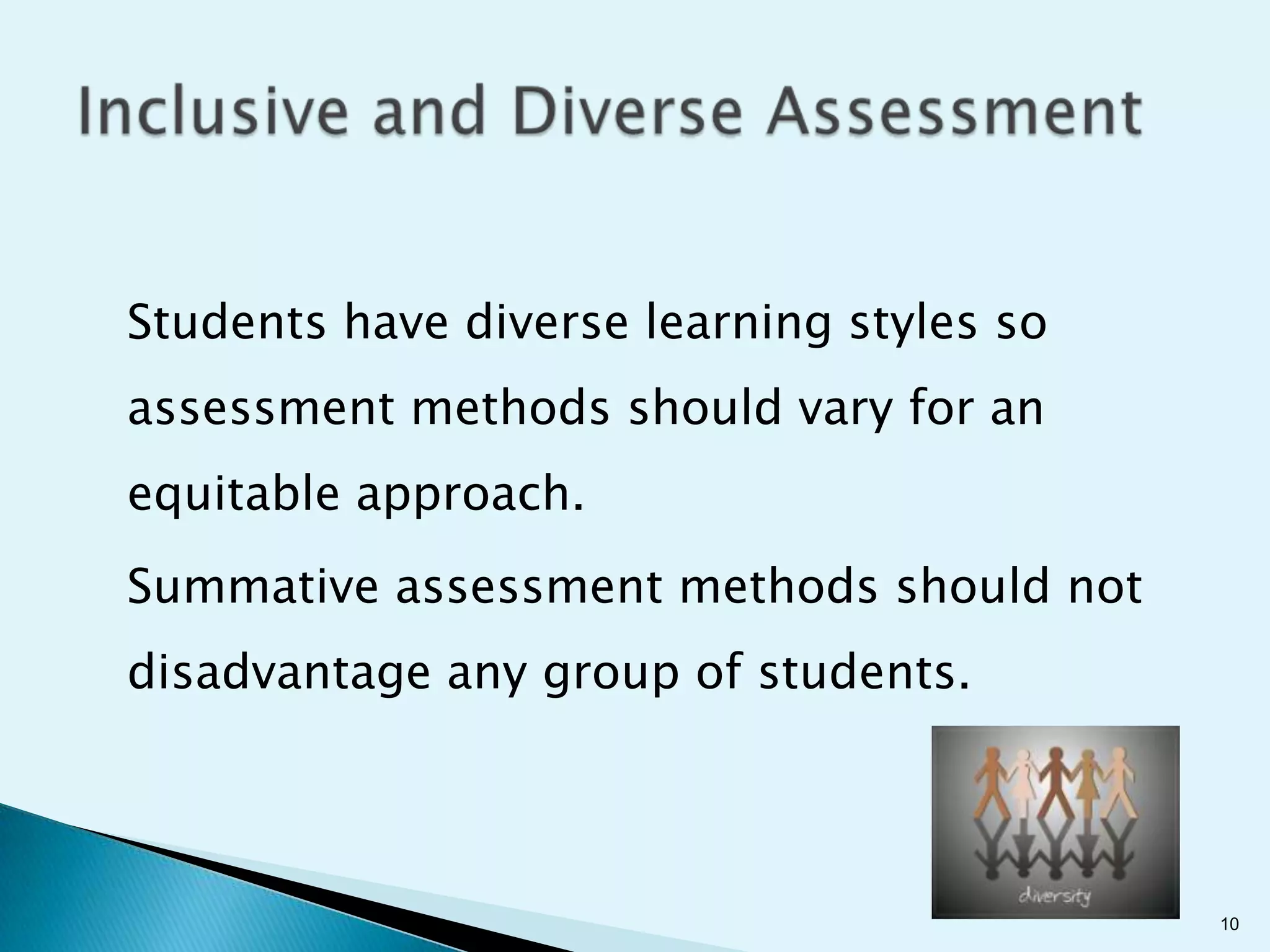
Students have diverse learning styles so
assessment methods should vary for an
equitable approach.
Summative assessment methods should not
disadvantage any group of students.


                                           10
The practical element of a course can be
assessed a number of ways to determine the
same learning outcomes. All assessment
methods have benefits and limitations.


                                             11
   Suits students with good language and planning skills

   Can disadvantage some learners, in particular
      Students with Dyslexia

      Students for whom English is a second language

      Auditory learners

      Students with organisational difficulties

   Too much time spent writing reports at the expense
    of getting to grips with the subject matter (Race, 2006)


                                                               12
1.        Originality?
     ◦    Anti-plagiarism software

2.       High marks not necessarily reflective of
         laboratory competence
     ◦    Revision of marking schemes
     ◦    Introduction of practical lab exams
     ◦    In-class questions & observation


                                                    13
   Helping the students to think about the
    quality of their own work (Rust, 2005)
   Generation of internal feedback


                                              14
   Formal oral laboratory assessment
    exams can disadvantage students with
    poor auditory and language skills
   Challenging for students who suffer
    from anxiety
   Preferred by auditory learners and
    students who have poor written skills.

                                             15
Questioning of students during laboratory
sessions can assess the preparation, depth of
learning and organisational skills.


difficult to assess through other methods?


                                                16
◦ Students with poor language skills can have
 difficulties with providing articulate responses
◦ Students with auditory problems can have
 comprehension difficulties.
◦ Questions during laboratory work can add
 additional stress to students with poor
 organisational skills such as those with specific
 learning difficulties


                                                     17
   A chance to assess students’ laboratory technique and data
    analysis skills
   Should suit sensing learners


   Reflective learners can find practical skills assessment stressful
   Dyslexic students and students with other learning difficulties
    may not be given extra time/special consideration


                                                                         18
19
   4 modules:
    ◦ Systems Validation (Pharmaceutical Science, Semester 7)
    ◦ Scientific Analysis (Pharmaceutical Science, Semester 4)
    ◦ Biochemistry (Bioanalysis & DNA&Forensic Science, Semester 4)
    ◦ Principles of Biochemistry (Pharmaceutical Science, Semester 3)


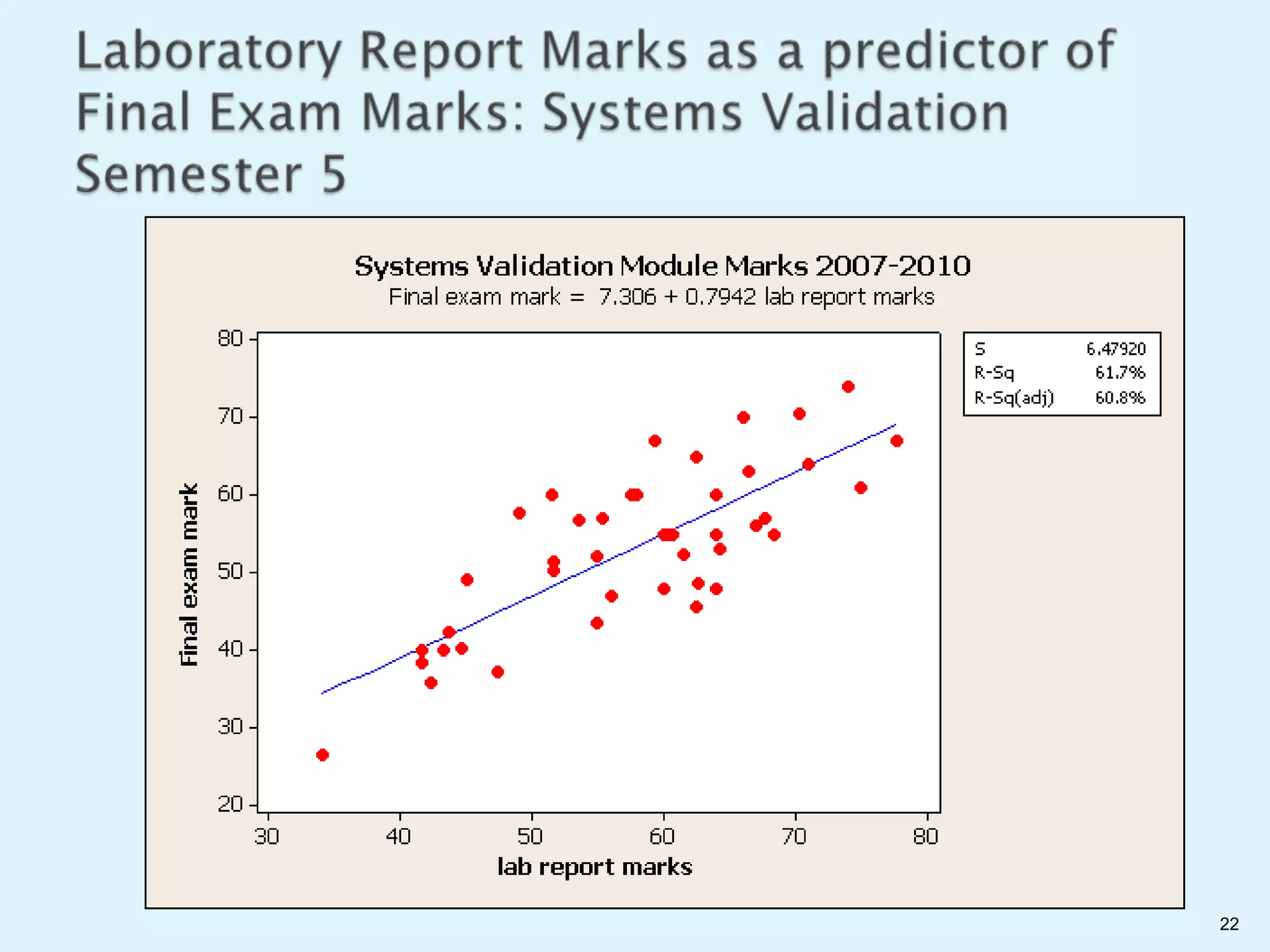
   Final exam as marker of module competence
   Lab assessments methods as predictors
   Statistical analysis: Regression


                                                                        20
21
22
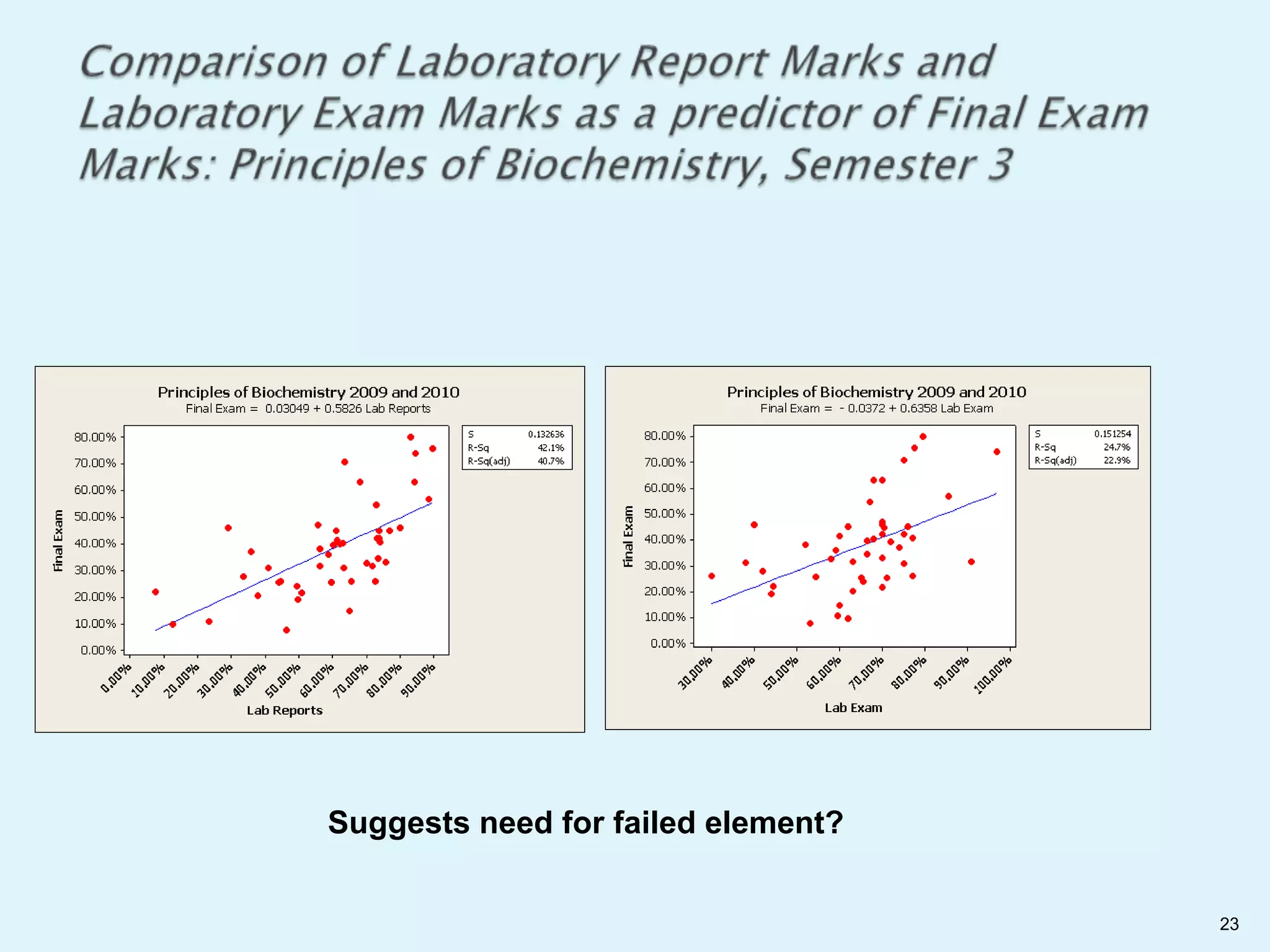
Suggests need for failed element?


                                    23
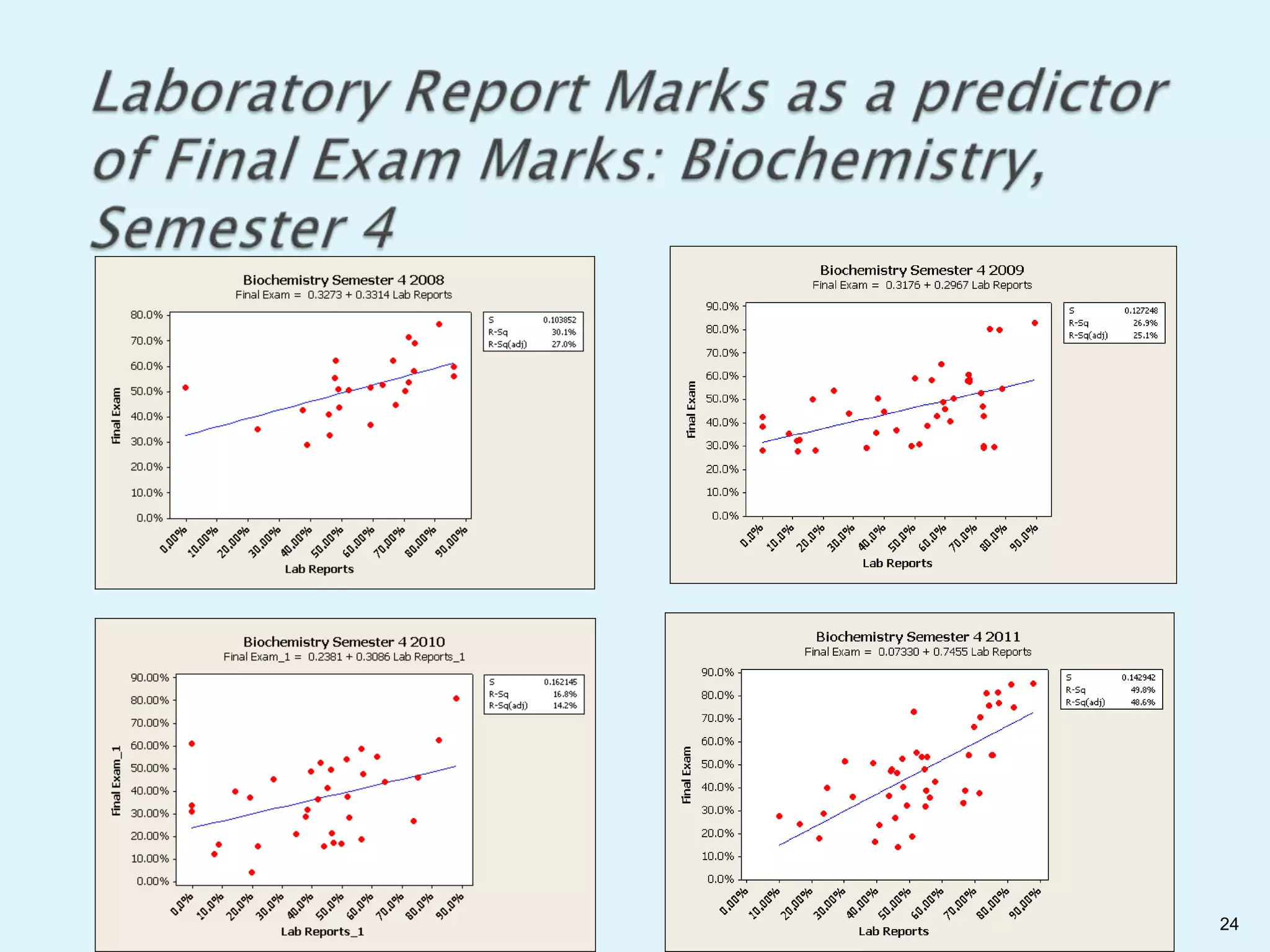
24
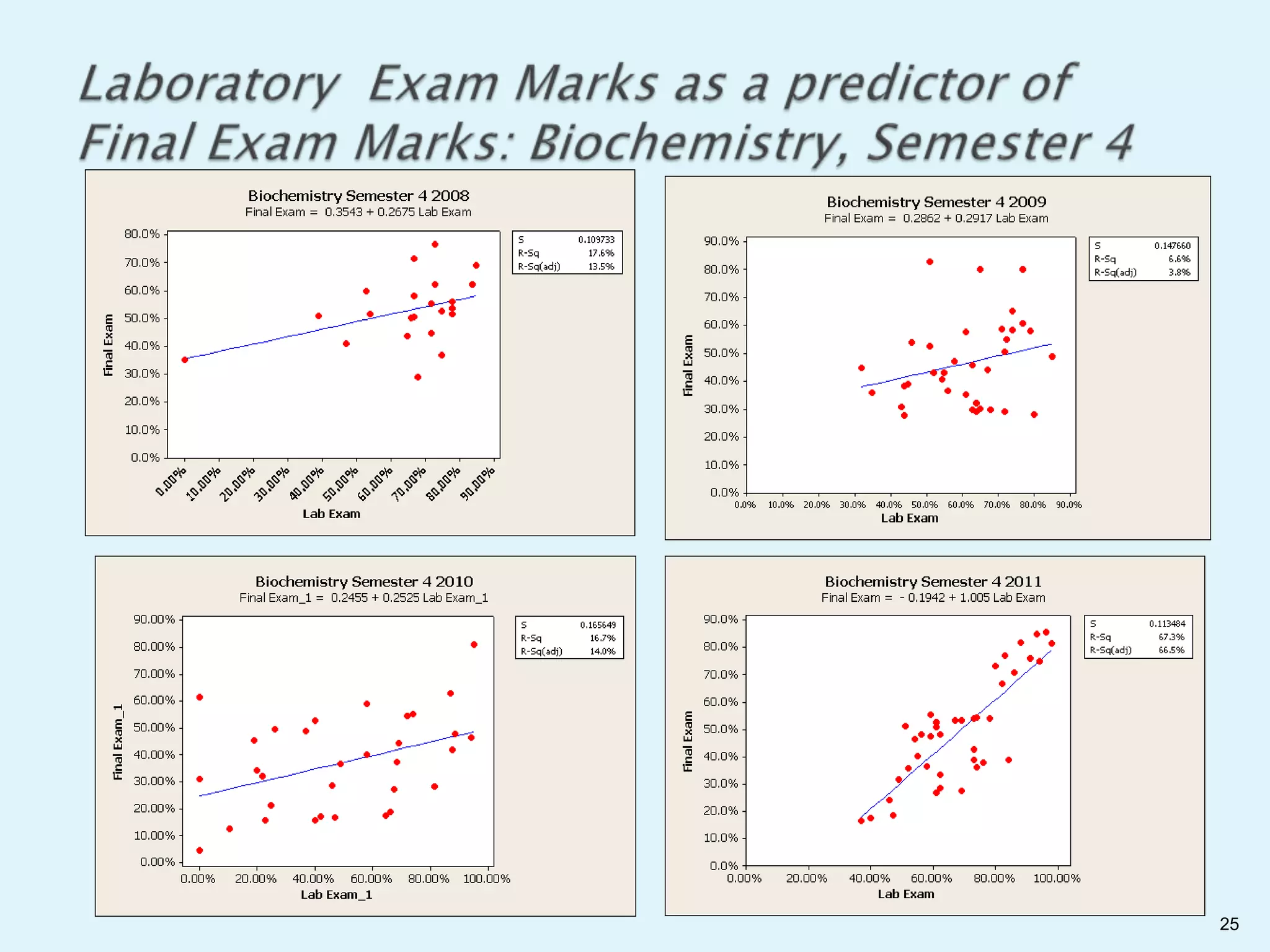
25
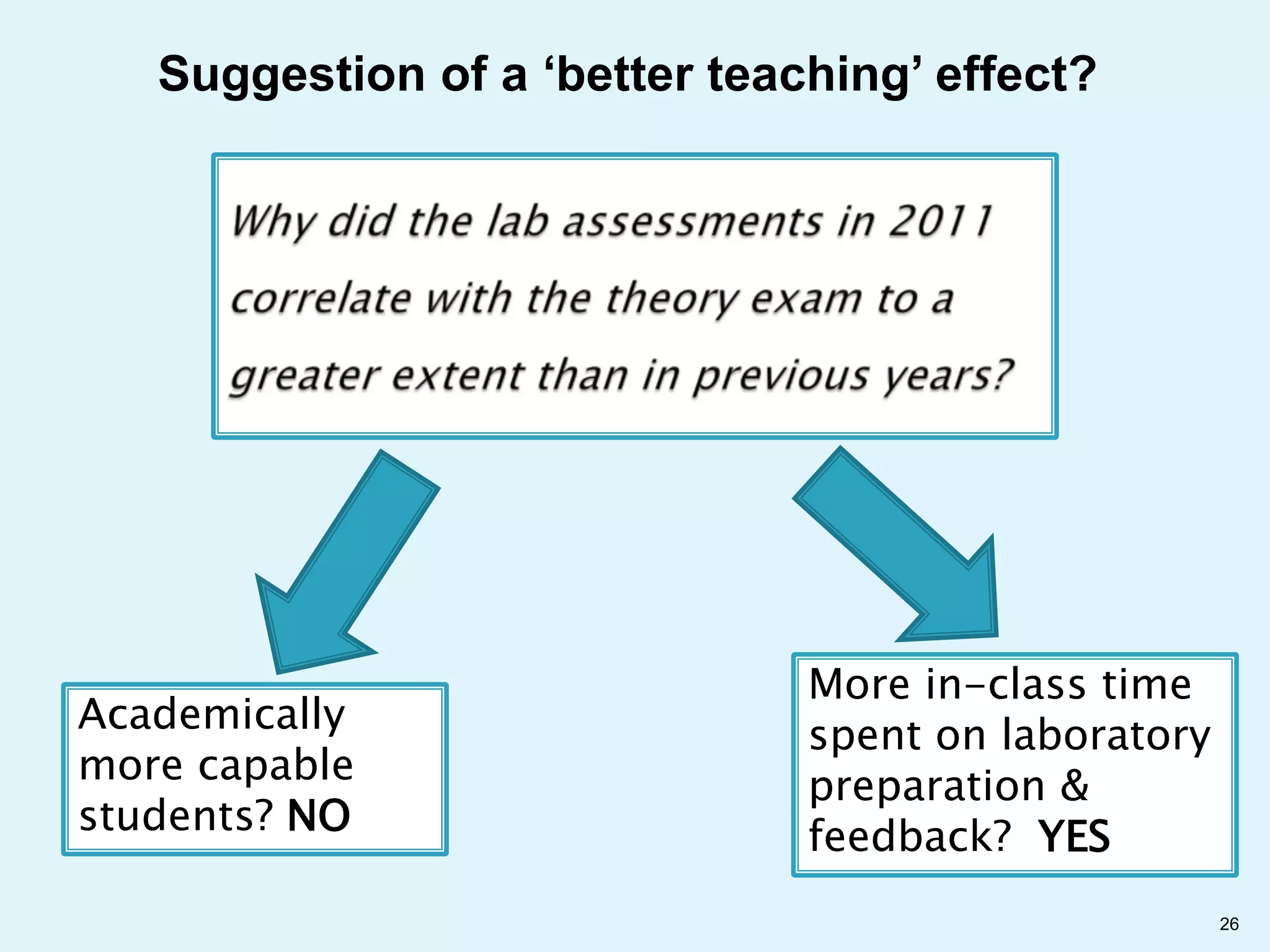
Suggestion of a ‘better teaching’ effect?


                               More in-class time
Academically                   spent on laboratory
more capable                   preparation &
students? NO                   feedback? YES
                                                     26
27
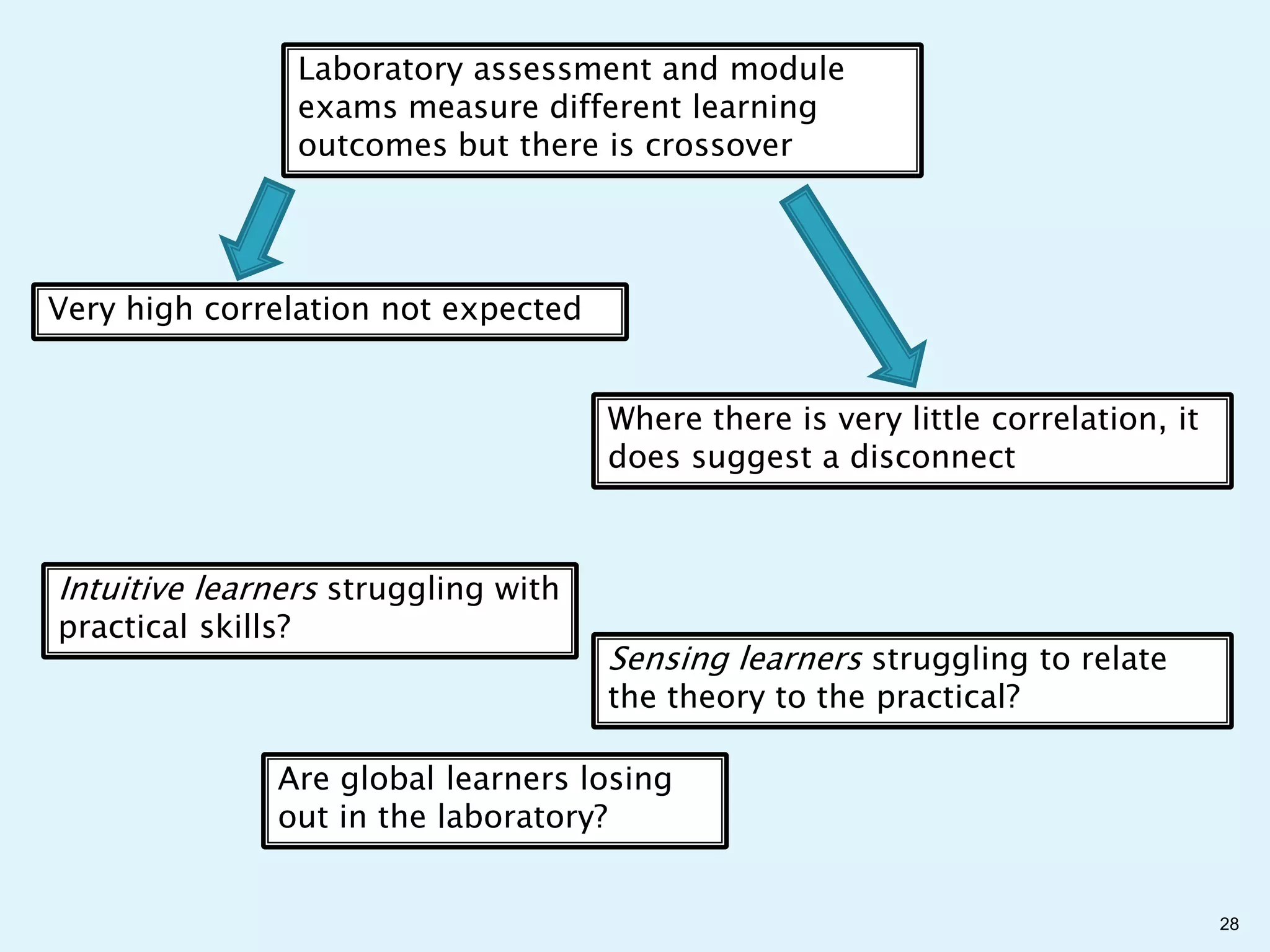
Laboratory assessment and module
                    exams measure different learning
                    outcomes but there is crossover


Very high correlation not expected


                                      Where there is very little correlation, it
                                      does suggest a disconnect


Intuitive learners struggling with
practical skills?
                                      Sensing learners struggling to relate
                                      the theory to the practical?

                Are global learners losing
                out in the laboratory?


                                                                                   28
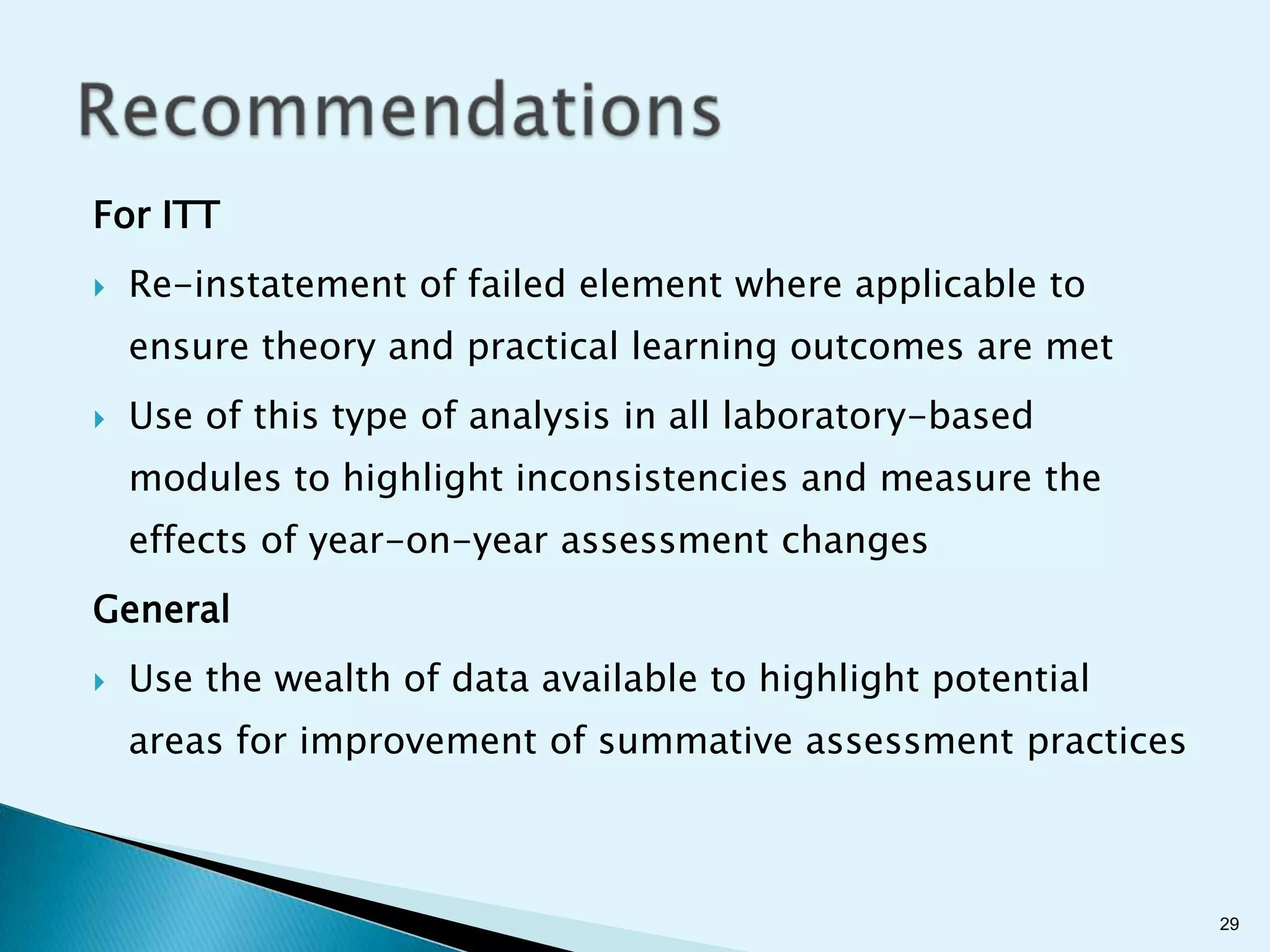
For ITT
   Re-instatement of failed element where applicable to
    ensure theory and practical learning outcomes are met
   Use of this type of analysis in all laboratory-based
    modules to highlight inconsistencies and measure the
    effects of year-on-year assessment changes
General
   Use the wealth of data available to highlight potential
    areas for improvement of summative assessment practices


                                                              29
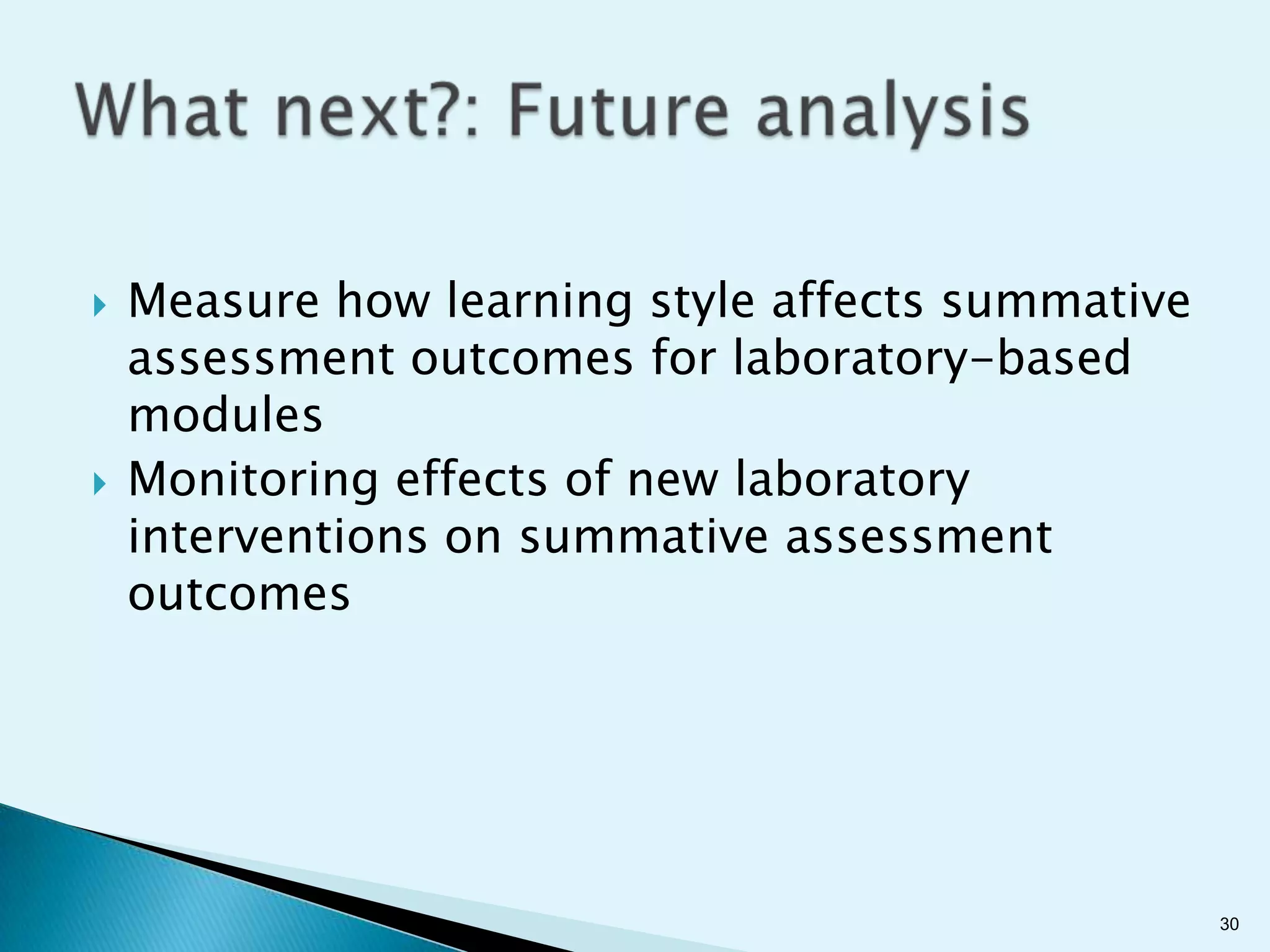
   Measure how learning style affects summative
    assessment outcomes for laboratory-based
    modules
   Monitoring effects of new laboratory
    interventions on summative assessment
    outcomes


                                                   30
Broaden the range of lab assessment
methods…..
VLEs; Mindmaps; Reflective journals; Posters,
Broaden use of questions in labs & oral
assessments


                                                31
Acknowledgement:
Many thanks to James Reilly, ITT Dublin for his help and
advice on statistical methodologies


                                                           32

Equitable assessment of the practical component of scientific modules

  • 1.
    Darvree Downey andMaeve Scott Science Department Institute of Technology Tallaght 1
  • 2.
  • 3.
    Study • Background • Objectives Module •Descriptions • Delivery of practical element Method • Statistical methods Results Conclusions 3
  • 4.
    Laboratory Assessment ~35% of module marks Laboratory assessment aims to assess achievement of the practical-component learning outcomes. Changes have been introduced in laboratory assessment practices in ITT in recent years. 4
  • 5.
    Since the lastprogrammatic review (in 2006) there is no failed element in any of the laboratory subjects in ITT’S Science Department. Anecdotal belief that students are getting sufficient marks to pass without achieving core learning outcomes 5
  • 6.
    How does laboratory assessment equate with students achievements in other summative assessments within the same module?  Is correlation with other forms of assessment indicative that the laboratory assessment is equitable? 6
  • 7.
    Interpretation of Application of Use of analytical legal requirements calculations and equipment or guidelines statistics Analysis, interpretation and Critical evaluation of Organisational skills application of results published resources Meeting industry Time management needs 7
  • 8.
    The practical component of laboratory exams are designed to assess laboratory technique and equipment usage skills.  Learning outcomes common to both theory (final module exam) and laboratory exams include organisational and time management skills and data analysis skills. 8
  • 9.
    To determine ifcurrent laboratory assessment methods used for a range of scientific modules in ITT Dublin are 1. Reliable indicators of a student’s ability to meet the overall module learning outcomes. 2. Equitable for all learning styles 9
  • 10.
    Students have diverselearning styles so assessment methods should vary for an equitable approach. Summative assessment methods should not disadvantage any group of students. 10
  • 11.
    The practical elementof a course can be assessed a number of ways to determine the same learning outcomes. All assessment methods have benefits and limitations. 11
  • 12.
    Suits students with good language and planning skills  Can disadvantage some learners, in particular  Students with Dyslexia  Students for whom English is a second language  Auditory learners  Students with organisational difficulties  Too much time spent writing reports at the expense of getting to grips with the subject matter (Race, 2006) 12
  • 13.
    1. Originality? ◦ Anti-plagiarism software 2. High marks not necessarily reflective of laboratory competence ◦ Revision of marking schemes ◦ Introduction of practical lab exams ◦ In-class questions & observation 13
  • 14.
    Helping the students to think about the quality of their own work (Rust, 2005)  Generation of internal feedback 14
  • 15.
    Formal oral laboratory assessment exams can disadvantage students with poor auditory and language skills  Challenging for students who suffer from anxiety  Preferred by auditory learners and students who have poor written skills. 15
  • 16.
    Questioning of studentsduring laboratory sessions can assess the preparation, depth of learning and organisational skills. difficult to assess through other methods? 16
  • 17.
    ◦ Students withpoor language skills can have difficulties with providing articulate responses ◦ Students with auditory problems can have comprehension difficulties. ◦ Questions during laboratory work can add additional stress to students with poor organisational skills such as those with specific learning difficulties 17
  • 18.
    A chance to assess students’ laboratory technique and data analysis skills  Should suit sensing learners  Reflective learners can find practical skills assessment stressful  Dyslexic students and students with other learning difficulties may not be given extra time/special consideration 18
  • 19.
  • 20.
    4 modules: ◦ Systems Validation (Pharmaceutical Science, Semester 7) ◦ Scientific Analysis (Pharmaceutical Science, Semester 4) ◦ Biochemistry (Bioanalysis & DNA&Forensic Science, Semester 4) ◦ Principles of Biochemistry (Pharmaceutical Science, Semester 3)  Final exam as marker of module competence  Lab assessments methods as predictors  Statistical analysis: Regression 20
  • 21.
  • 22.
  • 23.
    Suggests need forfailed element? 23
  • 24.
  • 25.
  • 26.
    Suggestion of a‘better teaching’ effect? More in-class time Academically spent on laboratory more capable preparation & students? NO feedback? YES 26
  • 27.
  • 28.
    Laboratory assessment andmodule exams measure different learning outcomes but there is crossover Very high correlation not expected Where there is very little correlation, it does suggest a disconnect Intuitive learners struggling with practical skills? Sensing learners struggling to relate the theory to the practical? Are global learners losing out in the laboratory? 28
  • 29.
    For ITT  Re-instatement of failed element where applicable to ensure theory and practical learning outcomes are met  Use of this type of analysis in all laboratory-based modules to highlight inconsistencies and measure the effects of year-on-year assessment changes General  Use the wealth of data available to highlight potential areas for improvement of summative assessment practices 29
  • 30.
    Measure how learning style affects summative assessment outcomes for laboratory-based modules  Monitoring effects of new laboratory interventions on summative assessment outcomes 30
  • 31.
    Broaden the rangeof lab assessment methods….. VLEs; Mindmaps; Reflective journals; Posters, Broaden use of questions in labs & oral assessments 31
  • 32.
    Acknowledgement: Many thanks toJames Reilly, ITT Dublin for his help and advice on statistical methodologies 32

Editor's Notes

  • #2 Should be titles moving laboratory work into the higher orders of the cognitive domain, in line with Blooms taxonomy of learning objectives
  • #13 Written assessment methods favour students with good language and planning skills but can disadvantage some learners in particular anyone with specific learning difficulties such as dyslexia, those with English as a second language, auditory learners. Students with organisational difficulties can struggle when composing a written laboratory report. The originality of written reports can also be dubious and marks can be achieved which may not reflect a students competence or knowledge. Anti-plagerism software can minimise this possibility; however, students who spend excessive hours preparing written work can still achieve inordinately high marks relative to their competence.
  • #16 Formal oral laboratory assessment exams can disadvantage students with poor auditory and language skills but is often preferred by auditory learners and students who have poor written skills. It can also be very challenging for students who suffer from anxiety.
  • #26 Discuss difference between 2011 and other years: greater correlation – may be due to better teaching of the lab element in-classFavours reflective learners & good attenders?Low marks in lab exam for some 2010 students who did well in the module exam may reflect difficulties with the a stretching data interpretation question. A similar question was asked in 2011 lab exam but the theory was more comprehensively explained and discussed in-class.
  • #31 A flexible range of laboratory assessments is a more inclusive approach. Some assessment methods for laboratory work not considered in this study include;The option of laboratory assessments through visual learning environments or multi media tools eg moodle quizzes facilitates visual learners and can be favoured by students with reading, writing and organisational difficulties. Other assessment options which cater for students with poor literacy skills and a global and visual learning style include the option of a mindmap as an alternative to a written laboratory report. Laboratory work is often performed in groups so some level of peer assessment which goes towards the overall practical mark is worthwhile if it can be conducted anonymously.A reflective journal completed throughout the semester can provide evidence of learning. It can again favour students with good written skills.A poster can be a very effective alternative to a laboratory report. The most inclusive assessment approach is to offer students multiple assessment methods throughout the module.
  • #32 A flexible range of laboratory assessments is a more inclusive approach. Some assessment methods for laboratory work not considered in this study include;The option of laboratory assessments through visual learning environments or multi media tools eg moodle quizzes facilitates visual learners and can be favoured by students with reading, writing and organisational difficulties. Other assessment options which cater for students with poor literacy skills and a global and visual learning style include the option of a mindmap as an alternative to a written laboratory report. Laboratory work is often performed in groups so some level of peer assessment which goes towards the overall practical mark is worthwhile if it can be conducted anonymously.A reflective journal completed throughout the semester can provide evidence of learning. It can again favour students with good written skills.A poster can be a very effective alternative to a laboratory report. The most inclusive assessment approach is to offer students multiple assessment methods throughout the module.