EPISTAXIS
Presenter: Dr Mumba F
Outline
• DEFINITION
• ANATOMY
• PATHOPHYSIOLOGY
• ETIOLOGY
• CLINICAL PRESENTATION
• INVESTIGATIONS
• MANAGEMENT
Definition
• Epistaxis is defined as acute hemorrhage from the nostril, nasal
cavity, or nasopharynx
• Most nosebleeds are benign, self-limiting, and spontaneous, but
some can be recurrent.
• lifelong incidence of epistaxis in the general population is about
60%, with fewer than 10% seeking medical attention.
• The age distribution is bimodal, with peaks in young children (2-10
y) and older individuals (50-80 y).
• Prevalence: higher in males (58%) than in females (42%).
Anatomy
Pathophysiology
• Bleeding typically occurs when the mucosa is eroded and vessels become
exposed and subsequently break.
• More than 90% of bleeds occur anteriorly and arise from Little’s area,
where the Kiesselbach plexus forms on the septum. The Kiesselbach plexus
is where vessels from both the ICA (anterior and posterior ethmoidal
arteries) and the ECA (sphenopalatine and branches of the internal
maxillary arteries) converge. Anterior bleeding may also originate anterior
to the inferior turbinate.
• Posterior bleeds arise further back in the nasal cavity, are usually more
profuse, and are often of arterial origin (eg, from branches of the
sphenopalatine artery in the posterior nasal cavity or nasopharynx).
Etiology
• Local vs systemic vs idiopathic
• Trauma: self induced, Facial or nasal trauma, iatrogenic, foreign
bodies
• Dry weather: low humidity
• Drugs: Topical nasal drugs such as antihistamines and
corticosteroids,NSAIDs
• Septal abnormality: Septal deviations and spurs
• Inflammation: Bacterial, viral, and allergic rhinosinusitis causes
mucosal inflammation and may lead to epistaxis.
Etiology
• Tumors: Benign and malignant tumors can manifest as epistaxis. present
with signs and symptoms of nasal obstruction and rhino sinusitis, often
unilateral.
• Blood dyscrasias: Congenital vs acquired
• Vascular abnormalities: Arteriosclerotic vascular disease, vascular
neoplasms, aneurysms, and endometriosis.
• Hypertension
• Migraine :Children with migraine headaches have a higher incidence of
recurrent epistaxis than children without the disease
• Idiopathic: Approximately 10% of patients with epistaxis have no
identifiable causes even after a thorough evaluation
Clinical presentation
• Detailed history:
• Examination preparation: Illumination, anesthesia, vasoconstrictors,
suction, topical medication, cauterization, packing materials, Nasal
speculum
• Anterior epistaxis exhibit unilateral, steady, no massive bleeding. Just
10% of epistaxis are posterior, exhibiting massive bleeding that is
initially bilateral.
• General examination
• vitals
Investigations
• FBC/DC
• Bleeding time
• Coagulation profile
• CT/MRI
• Nasopharyngoscopy
Management
• Acute management
• ABCs
• Manual Hemostasis :direct pressure +/-, gauze moistened with
epinephrine at a ratio of 1:10,000 or phenylephrine
• Humidification and Moisturization
• Cauterization: Bleeding form Kiesselbach plexus treated with silver
nitrate cauterization
• Nasal Packing: adequate anesthesia and vasoconstriction are
necessary.
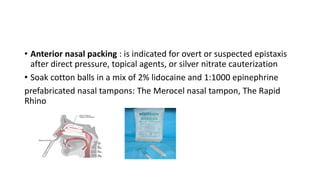
• Anterior nasal packing : is indicated for overt or suspected epistaxis
after direct pressure, topical agents, or silver nitrate cauterization
• Soak cotton balls in a mix of 2% lidocaine and 1:1000 epinephrine
prefabricated nasal tampons: The Merocel nasal tampon, The Rapid
Rhino
• antibiotic as prophylaxis against sinusitis and staphylococcal toxic
shock syndrome
• Pack removal In 48hrs
• Posterior nasal packing
• Failure of anterior packing, Reliable or high suspicion of posterior
bleeding, bleeding diathesis
• Contraindications: facial trauma that may include nasal bone and
cribriform plate fractures, airway obstruction.
• bleeding site is either posterior to the middle turbinate or at the
posterior superior aspect of the nasal cavity.
• Double-Balloon Approach
• Foley Catheter Approach
• Pack removal in 72-96 hrs
• Admit all patients with posterior packing to the hospital for
observation. Antibiotic cover
• Complications: Sinusitis, Nasal septal pressure necrosis, Abscesses,
Neurogenic syncope, Toxic shock syndrome, Persistent bleeding and
restart of bleeding.
• Arterial Ligation
• Embolization
Prevention
• Strenuous activities
• Hot and dry environments – use of humidifiers, better thermostatic
control, saline spray, and antibiotic ointment on the Kiesselbach area.
• Avoid Hot and spicy foods
• avoid Digital trauma . Nose blowing and excessive sneezing - Instruct
patients to sneeze gently with the mouth open.
• avoid drug abuse in adolescents.
References
• Eric Goralnick, M. (2022, December 22). Anterior nasal packing for
epistaxis. Overview, Technique, Preparation.
https://emedicine.medscape.com/article/80526-overview
• Ola Bamimore, M. (2021, July 12). Acute epistaxis. Overview, Clinical
Presentation, Differential Diagnosis.
https://emedicine.medscape.com/article/764719-overview
• Quoc A Nguyen, M. (2022, December 22). Epistaxis. Practice
Essentials, Anatomy, Pathophysiology.
https://emedicine.medscape.com/article/863220-overview

epistaxis.pptx

  • 1.
  • 2.
    Outline • DEFINITION • ANATOMY •PATHOPHYSIOLOGY • ETIOLOGY • CLINICAL PRESENTATION • INVESTIGATIONS • MANAGEMENT
  • 3.
    Definition • Epistaxis isdefined as acute hemorrhage from the nostril, nasal cavity, or nasopharynx • Most nosebleeds are benign, self-limiting, and spontaneous, but some can be recurrent. • lifelong incidence of epistaxis in the general population is about 60%, with fewer than 10% seeking medical attention. • The age distribution is bimodal, with peaks in young children (2-10 y) and older individuals (50-80 y). • Prevalence: higher in males (58%) than in females (42%).
  • 4.
  • 5.
    Pathophysiology • Bleeding typicallyoccurs when the mucosa is eroded and vessels become exposed and subsequently break. • More than 90% of bleeds occur anteriorly and arise from Little’s area, where the Kiesselbach plexus forms on the septum. The Kiesselbach plexus is where vessels from both the ICA (anterior and posterior ethmoidal arteries) and the ECA (sphenopalatine and branches of the internal maxillary arteries) converge. Anterior bleeding may also originate anterior to the inferior turbinate. • Posterior bleeds arise further back in the nasal cavity, are usually more profuse, and are often of arterial origin (eg, from branches of the sphenopalatine artery in the posterior nasal cavity or nasopharynx).
  • 6.
    Etiology • Local vssystemic vs idiopathic • Trauma: self induced, Facial or nasal trauma, iatrogenic, foreign bodies • Dry weather: low humidity • Drugs: Topical nasal drugs such as antihistamines and corticosteroids,NSAIDs • Septal abnormality: Septal deviations and spurs • Inflammation: Bacterial, viral, and allergic rhinosinusitis causes mucosal inflammation and may lead to epistaxis.
  • 7.
    Etiology • Tumors: Benignand malignant tumors can manifest as epistaxis. present with signs and symptoms of nasal obstruction and rhino sinusitis, often unilateral. • Blood dyscrasias: Congenital vs acquired • Vascular abnormalities: Arteriosclerotic vascular disease, vascular neoplasms, aneurysms, and endometriosis. • Hypertension • Migraine :Children with migraine headaches have a higher incidence of recurrent epistaxis than children without the disease • Idiopathic: Approximately 10% of patients with epistaxis have no identifiable causes even after a thorough evaluation
  • 8.
    Clinical presentation • Detailedhistory: • Examination preparation: Illumination, anesthesia, vasoconstrictors, suction, topical medication, cauterization, packing materials, Nasal speculum • Anterior epistaxis exhibit unilateral, steady, no massive bleeding. Just 10% of epistaxis are posterior, exhibiting massive bleeding that is initially bilateral. • General examination • vitals
  • 9.
    Investigations • FBC/DC • Bleedingtime • Coagulation profile • CT/MRI • Nasopharyngoscopy
  • 10.
    Management • Acute management •ABCs • Manual Hemostasis :direct pressure +/-, gauze moistened with epinephrine at a ratio of 1:10,000 or phenylephrine • Humidification and Moisturization • Cauterization: Bleeding form Kiesselbach plexus treated with silver nitrate cauterization • Nasal Packing: adequate anesthesia and vasoconstriction are necessary.
  • 11.
    • Anterior nasalpacking : is indicated for overt or suspected epistaxis after direct pressure, topical agents, or silver nitrate cauterization • Soak cotton balls in a mix of 2% lidocaine and 1:1000 epinephrine prefabricated nasal tampons: The Merocel nasal tampon, The Rapid Rhino
  • 12.
    • antibiotic asprophylaxis against sinusitis and staphylococcal toxic shock syndrome • Pack removal In 48hrs
  • 13.
    • Posterior nasalpacking • Failure of anterior packing, Reliable or high suspicion of posterior bleeding, bleeding diathesis • Contraindications: facial trauma that may include nasal bone and cribriform plate fractures, airway obstruction. • bleeding site is either posterior to the middle turbinate or at the posterior superior aspect of the nasal cavity. • Double-Balloon Approach • Foley Catheter Approach • Pack removal in 72-96 hrs
  • 15.
    • Admit allpatients with posterior packing to the hospital for observation. Antibiotic cover • Complications: Sinusitis, Nasal septal pressure necrosis, Abscesses, Neurogenic syncope, Toxic shock syndrome, Persistent bleeding and restart of bleeding. • Arterial Ligation • Embolization
  • 16.
    Prevention • Strenuous activities •Hot and dry environments – use of humidifiers, better thermostatic control, saline spray, and antibiotic ointment on the Kiesselbach area. • Avoid Hot and spicy foods • avoid Digital trauma . Nose blowing and excessive sneezing - Instruct patients to sneeze gently with the mouth open. • avoid drug abuse in adolescents.
  • 17.
    References • Eric Goralnick,M. (2022, December 22). Anterior nasal packing for epistaxis. Overview, Technique, Preparation. https://emedicine.medscape.com/article/80526-overview • Ola Bamimore, M. (2021, July 12). Acute epistaxis. Overview, Clinical Presentation, Differential Diagnosis. https://emedicine.medscape.com/article/764719-overview • Quoc A Nguyen, M. (2022, December 22). Epistaxis. Practice Essentials, Anatomy, Pathophysiology. https://emedicine.medscape.com/article/863220-overview