Chemistry
ENZYME
ASSISTED
EXTRACTION
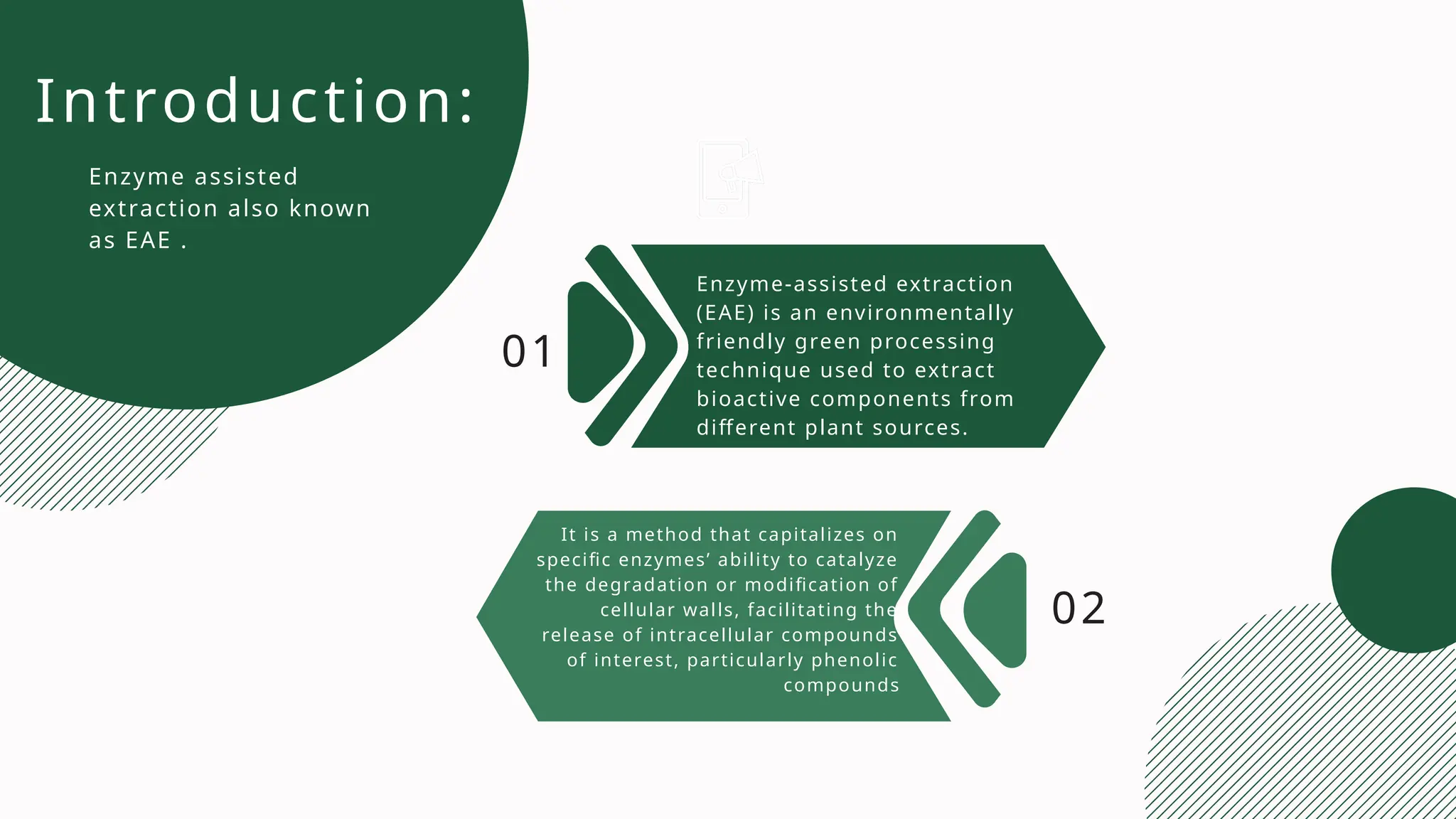
Introduction:
Enzyme-assisted extraction
(EAE) is an environmentally
friendly green processing
technique used to extract
bioactive components from
different plant sources.
01
02
It is a method that capitalizes on
specific enzymes’ ability to catalyze
the degradation or modification of
cellular walls, facilitating the
release of intracellular compounds
of interest, particularly phenolic
compounds
Enzyme assisted
extraction also known
as EAE .
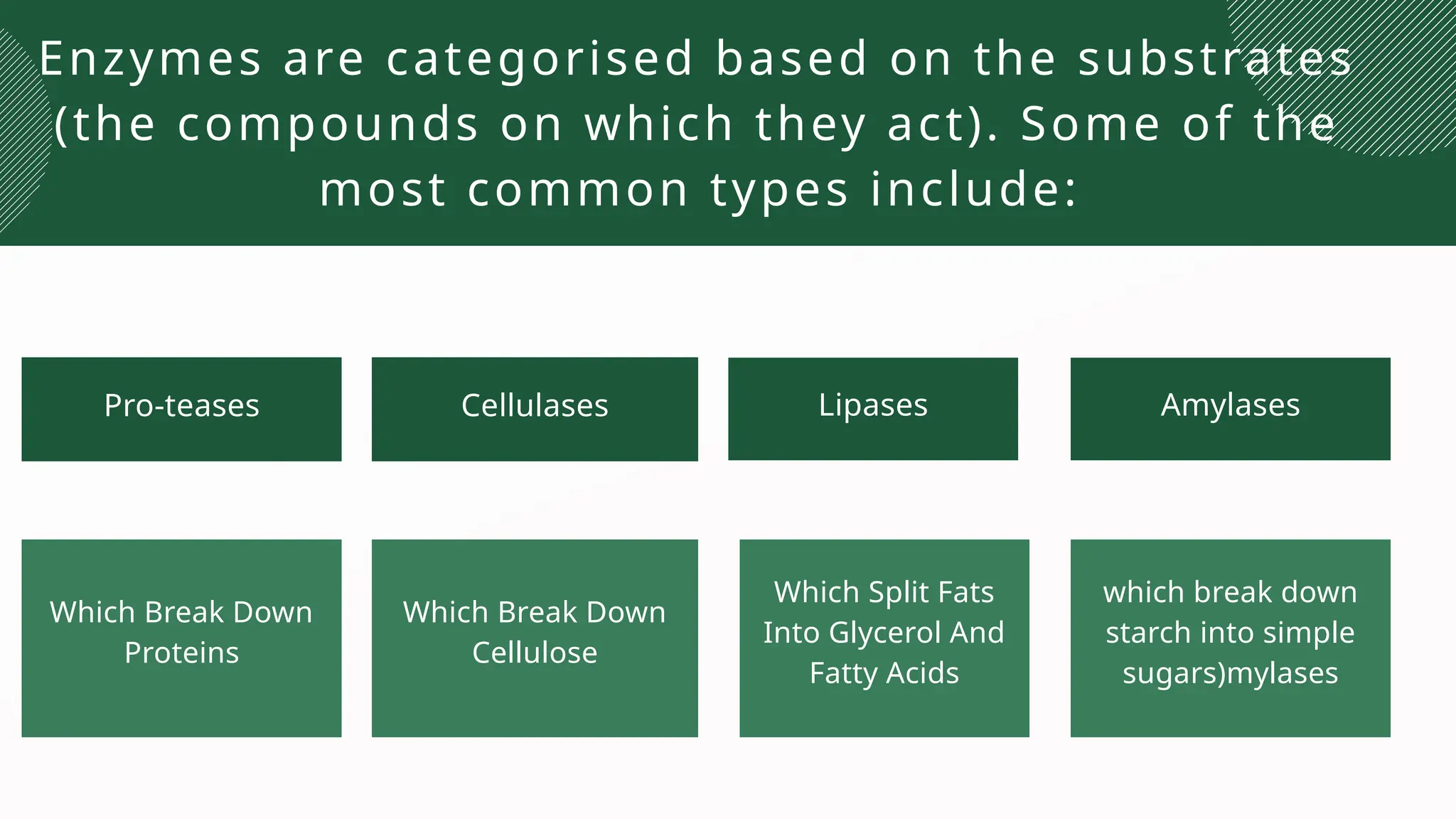
Pro-teases
Enzymes are categorised based on the substrates
(the compounds on which they act). Some of the
most common types include:
Which Break Down
Proteins
Cellulases
Which Break Down
Cellulose
Lipases
Which Split Fats
Into Glycerol And
Fatty Acids
Amylases
which break down
starch into simple
sugars)mylases
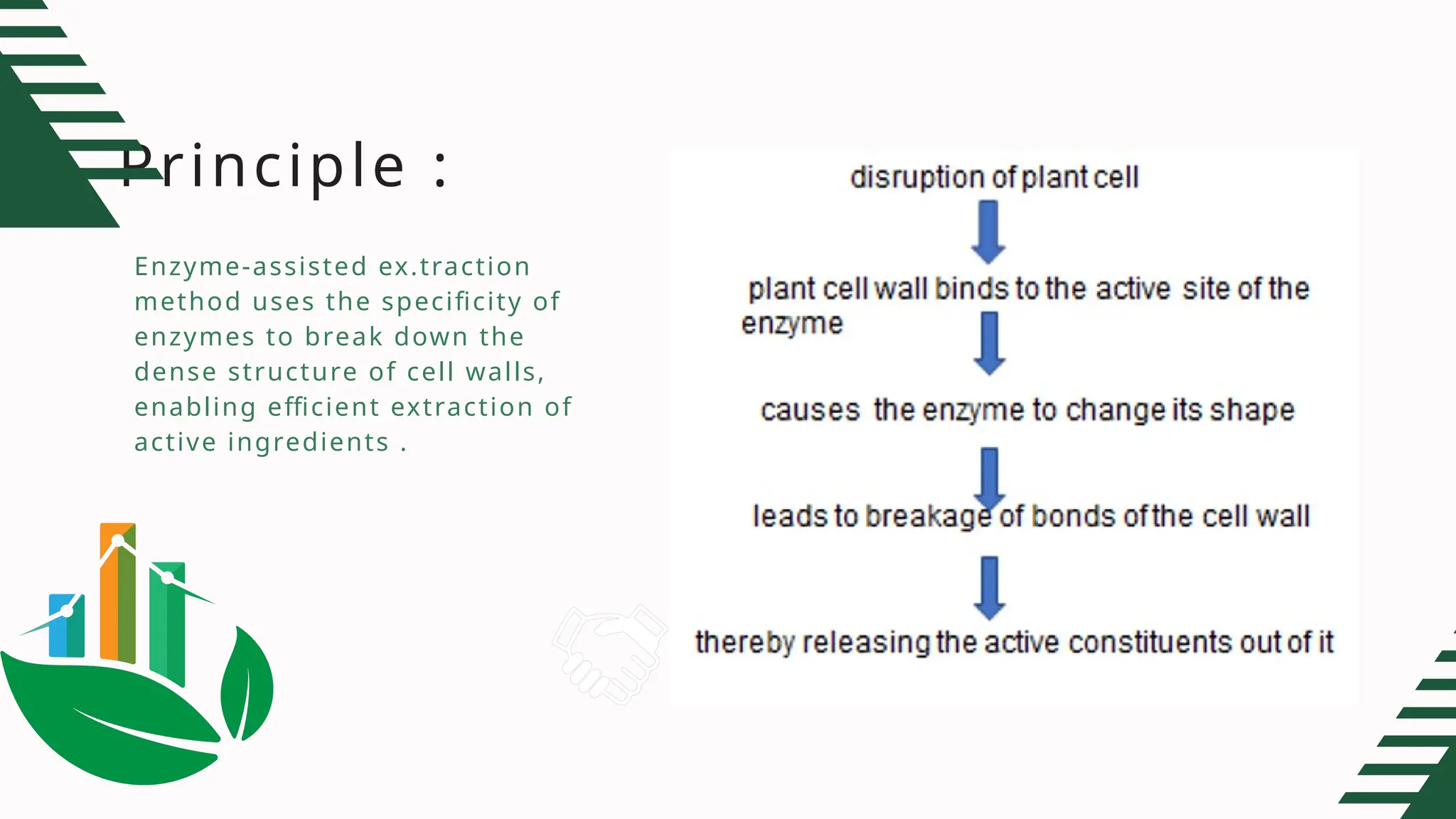
Principle :
Enzyme-assisted ex.traction
method uses the specificity of
enzymes to break down the
dense structure of cell walls,
enabling efficient extraction of
active ingredients .
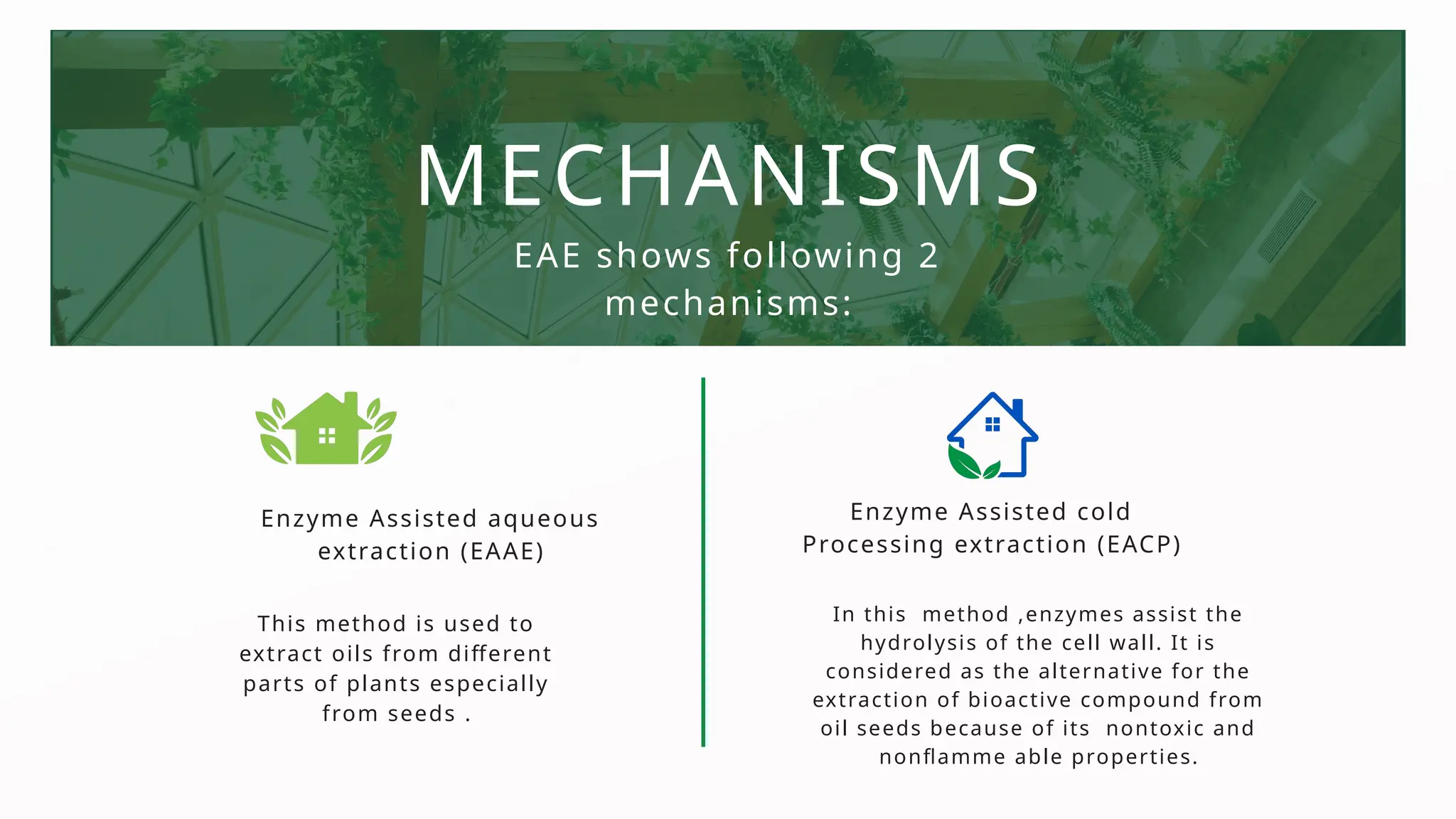
MECHANISMS
EAE shows following 2
mechanisms:
Enzyme Assisted cold
Processing extraction (EACP)
Enzyme Assisted aqueous
extraction (EAAE)
This method is used to
extract oils from different
parts of plants especially
from seeds .
In this method ,enzymes assist the
hydrolysis of the cell wall. It is
considered as the alternative for the
extraction of bioactive compound from
oil seeds because of its nontoxic and
nonflamme able properties.
Factors Affecting EAE ( that
influence yield of extraction):
01
02
03
04
05
06
Enzyme types and
concentration
Ph of sample suspension
Temperature
Water to Substrate ratio
Particle size of the sample
Treatment time
ADVANTAGES &
APPLICATIONS &
DISADVANTAGES
high yield and
also reduced
solvent amount
Mild Reaction
conditions with
no pollutions.
High quality Fast
extraction
Energy
Saving
Advantages
Applications :
Enzyme assisted extraction
represents a potential bioprocess
for the production/extraction of
phenolic compounds with high
stability and high antioxidant
activity for pharmaceutical and food
applications.
Disadvantages & Limitations:
• Highly infuenced by enzyme
digestion
• High Cost
THANK YOU
FOR
WATCHING

Enzyme Assisted extraction.pptx

  • 1.
  • 2.
    Introduction: Enzyme-assisted extraction (EAE) isan environmentally friendly green processing technique used to extract bioactive components from different plant sources. 01 02 It is a method that capitalizes on specific enzymes’ ability to catalyze the degradation or modification of cellular walls, facilitating the release of intracellular compounds of interest, particularly phenolic compounds Enzyme assisted extraction also known as EAE .
  • 3.
    Pro-teases Enzymes are categorisedbased on the substrates (the compounds on which they act). Some of the most common types include: Which Break Down Proteins Cellulases Which Break Down Cellulose Lipases Which Split Fats Into Glycerol And Fatty Acids Amylases which break down starch into simple sugars)mylases
  • 4.
    Principle : Enzyme-assisted ex.traction methoduses the specificity of enzymes to break down the dense structure of cell walls, enabling efficient extraction of active ingredients .
  • 5.
    MECHANISMS EAE shows following2 mechanisms: Enzyme Assisted cold Processing extraction (EACP) Enzyme Assisted aqueous extraction (EAAE) This method is used to extract oils from different parts of plants especially from seeds . In this method ,enzymes assist the hydrolysis of the cell wall. It is considered as the alternative for the extraction of bioactive compound from oil seeds because of its nontoxic and nonflamme able properties.
  • 6.
    Factors Affecting EAE( that influence yield of extraction): 01 02 03 04 05 06 Enzyme types and concentration Ph of sample suspension Temperature Water to Substrate ratio Particle size of the sample Treatment time
  • 7.
  • 8.
    high yield and alsoreduced solvent amount Mild Reaction conditions with no pollutions. High quality Fast extraction Energy Saving Advantages
  • 9.
    Applications : Enzyme assistedextraction represents a potential bioprocess for the production/extraction of phenolic compounds with high stability and high antioxidant activity for pharmaceutical and food applications.
  • 10.
    Disadvantages & Limitations: •Highly infuenced by enzyme digestion • High Cost
  • 11.