WHY SAVE THE ENVIRONMENT
3 R’S

   The most environmental concern is WASTE

   Consumers are recommended to follow 3R

           Reduce

           Recycle

           Reuse

   Waste management practices, such as reducing,
    reusing, recycling and composting, divert materials
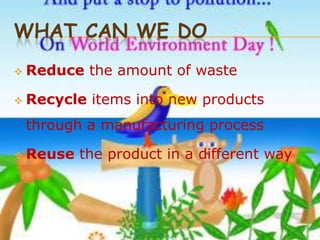
WHAT CAN WE DO
   Reduce the amount of waste

   Recycle items into new products
    through a manufacturing process

   Reuse the product in a different way
REDUCE

Packaging

 Compare  product packaging
 Buy loose items
 Buy economy sizes
 Use concentrated product
 Buy in bulk
TOXICITY
 Use  least amount necessary
 Use non-hazardous alternatives

 Follow use and disposal directions

 Find a hazardous waste collection
  site
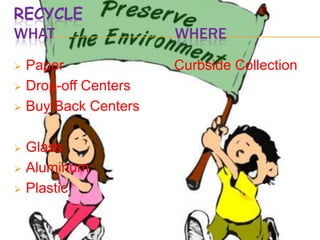
RECYCLE
WHAT                 WHERE
 Paper              Curbside Collection
 Drop-off Centers

 Buy Back Centers


 Glass
 Aluminum

 Plastic
DID YOU KNOW THAT

   1 recycled tin can would save enough energy to
    power a television for 3 hours
   1 recycled glass bottle would save enough
    energy to power a computer for 25 minutes
   1 recycled plastic bottle would save enough
    energy to power a 60-watt light bulb for 3 hours
    70% less energy is required to recycle paper
    compared with making it from raw materials
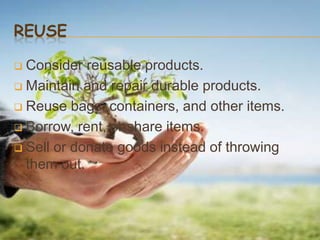
REUSE

 Consider reusable products.
 Maintain and repair durable products.

 Reuse bags, containers, and other items.

 Borrow, rent, or share items.

 Sell or donate goods instead of throwing
  them out.
OUR DIRECT CONTRIBUTE TO SAVE
NATURE
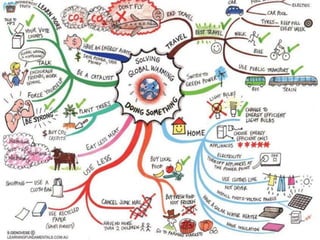
   By switching of lights when not required
   By using cloth/jute bags instead of plastic
    bags
   Using both sides of paper
   Buying materials in bulk/without packing
   By growing plants
   By being vegetarian also you save energy
Daily conservation in a family


 Turn   off tap while cleaning your
 teeth, shaving or washing your
 face. The waste leads to 9 liters a
 minute by just letting the water
 pour down the sink.
 Take a short shower rather
 than a bath could save you up
 to 400 liters a week. If you
 do have baths, just half fill
 them.
 Only use the washing machine and the dishwasher
  when you can put on a full load. It wastes both
  water and energy to run only a half full machine.
Daily conservation in a family

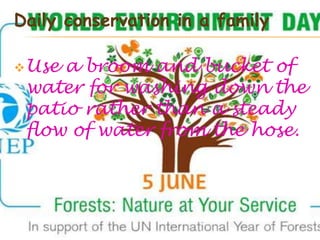
 Usea broom and bucket of
 water for washing down the
 patio rather than a steady
 flow of water from the hose.
Use  a sponge and bucket of
 water to clean your car or if you
 use the hose, ensure you use a
 shut off nozzle so the water is
 not constantly running.
Fix  any dripping tap, you might
 waste 90 liters a week.
OUR RESPONSIBILITY
   It's impossible to eliminate most plastic from daily life,
    but it's prudent for our health and that of our
    environment to curb the use of some.
   Overall reduction in plastic usage, proper management
    for disposal
    and public awareness would bring a great difference in
    present situation.
Separate . . Store. . and hand over for proper recycling
    or disposal.
Teach others about the importance
of the environment and how they
can help save rainforests.
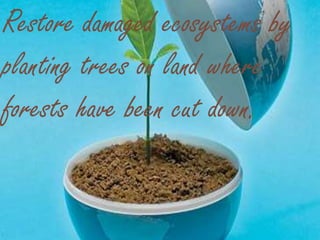
Restore damaged ecosystems by
planting trees on land where
forests have been cut down.
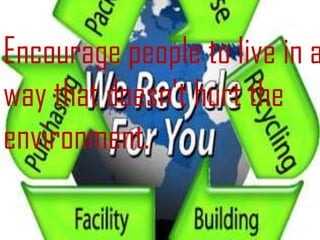
Encourage people to live in a
way that doesn't hurt the
environment.
Establish parks
to protect
rainforests and
     .


wildlife.
Support companies
that operate in ways
that minimize
damage to the
environment.
Save our Environment

Save our Environment

  • 5.
    WHY SAVE THEENVIRONMENT
  • 6.
    3 R’S  The most environmental concern is WASTE  Consumers are recommended to follow 3R  Reduce  Recycle  Reuse  Waste management practices, such as reducing, reusing, recycling and composting, divert materials
  • 7.
    WHAT CAN WEDO  Reduce the amount of waste  Recycle items into new products through a manufacturing process  Reuse the product in a different way
  • 8.
    REDUCE Packaging  Compare product packaging  Buy loose items  Buy economy sizes  Use concentrated product  Buy in bulk
  • 9.
    TOXICITY  Use least amount necessary  Use non-hazardous alternatives  Follow use and disposal directions  Find a hazardous waste collection site
  • 10.
    RECYCLE WHAT WHERE  Paper Curbside Collection  Drop-off Centers  Buy Back Centers  Glass  Aluminum  Plastic
  • 11.
    DID YOU KNOWTHAT  1 recycled tin can would save enough energy to power a television for 3 hours  1 recycled glass bottle would save enough energy to power a computer for 25 minutes  1 recycled plastic bottle would save enough energy to power a 60-watt light bulb for 3 hours  70% less energy is required to recycle paper compared with making it from raw materials
  • 12.
    REUSE  Consider reusableproducts.  Maintain and repair durable products.  Reuse bags, containers, and other items.  Borrow, rent, or share items.  Sell or donate goods instead of throwing them out.
  • 13.
    OUR DIRECT CONTRIBUTETO SAVE NATURE  By switching of lights when not required  By using cloth/jute bags instead of plastic bags  Using both sides of paper  Buying materials in bulk/without packing  By growing plants  By being vegetarian also you save energy
  • 14.
    Daily conservation ina family  Turn off tap while cleaning your teeth, shaving or washing your face. The waste leads to 9 liters a minute by just letting the water pour down the sink.
  • 15.
     Take ashort shower rather than a bath could save you up to 400 liters a week. If you do have baths, just half fill them.
  • 16.
     Only usethe washing machine and the dishwasher when you can put on a full load. It wastes both water and energy to run only a half full machine.
  • 17.
    Daily conservation ina family  Usea broom and bucket of water for washing down the patio rather than a steady flow of water from the hose.
  • 18.
    Use asponge and bucket of water to clean your car or if you use the hose, ensure you use a shut off nozzle so the water is not constantly running.
  • 19.
    Fix anydripping tap, you might waste 90 liters a week.
  • 20.
    OUR RESPONSIBILITY  It's impossible to eliminate most plastic from daily life, but it's prudent for our health and that of our environment to curb the use of some.  Overall reduction in plastic usage, proper management for disposal and public awareness would bring a great difference in present situation. Separate . . Store. . and hand over for proper recycling or disposal.
  • 24.
    Teach others aboutthe importance of the environment and how they can help save rainforests.
  • 25.
    Restore damaged ecosystemsby planting trees on land where forests have been cut down.
  • 26.
    Encourage people tolive in a way that doesn't hurt the environment.
  • 27.
  • 28.
    Support companies that operatein ways that minimize damage to the environment.